Category Archives: shravan charity mission

SHORT STORY: THE INTELLIGENT JACKAL

Copyright@shravancharitymission
    There was once a ferocious lion who lived in a dense jungle.  One day, he could not prey upon a single animal in spite of wandering around in search of food the whole day. It was almost sunset, and the lion started returning, even when, he was very hungry. On his way back, he saw a big cave, and thought to himself, “For sure some animal must be living in this big cave. Such a nice cave cannot be empty, someone has to be there. At sunset, which ever animal lives here, is bound to return. So, I shall hide myself inside the cave and wait for my dinner to arrive.” 
    The cave was home to a jackal, who arrived, a little while after the lion had hidden himself inside. But while entering he noticed the footprints of the lion leading into the cave, but could not find any footprint coming out. 

    He thought, “If a lion has indeed entered the cave, I will be dead as soon as I enter. But, how can I, be sure? There is no reason for me to stay away from my home if there is no lion inside. I must find out a way to confirm if the lion is still inside.”  

    The jackal thought of a plan, and while standing in front of the cave, began to shout, “Hello Cave! Hello Cave! Can I come inside?” For a few moments, he waited in silence and shouted again, “Hello Cave! Have you forgotten our understanding of all these years? I always wait for your reply before I enter. Why are you silent today? I shall then go to some other cave if you do not reply.” 
    Upon hearing this, the lion thought, “The cave must reply to the jackal when he returns at sunset. It is, because I am inside, the cave is not replying today. So, I must invite the jackal on behalf of the cave, or the jackal will go away.” 
    So, the lion replied from inside the cave, “Hello Jackal, you may enter. It is safe inside.” But the reply was frightening due to the echo from the walls of the cave. The jackal at once knew that the lion was waiting for him to enter and make a meal out of him. He ran off, as fast as he could to save himself. 
Moral of the story: Use your brains to protect yourself from destruction.

Posted by Kamlesh Tripathi

*

https://kamleshsujata.wordpress.com

*

Share it if you like it

*

Shravan Charity Mission is an NGO that works for poor children suffering from life threatening diseases especially cancer. Our posts are meant for our readers that includes both children and adults and it has a huge variety in terms of content. We also accept donations for our mission. Should you wish to donate for the cause. The bank details are given below:

NAME OF ACCOUNT: SHRAVAN CHARITY MISSION

Account no: 680510110004635 (BANK OF INDIA)

IFSC code: BKID0006805

*

Our publications

GLOOM BEHIND THE SMILE

(The book is about a young cancer patient. Now archived in 7 prestigious libraries of the US, including, Harvard University and Library of Congress. It can also be accessed in MIT through Worldcat.org. Besides, it is also available for reading in Libraries and archives of Canada and Cancer Aid and Research Foundation Mumbai)  

ONE TO TANGO … RIA’S ODYSSEY

(Is a book on ‘singlehood’ about a Delhi girl now archived in Connemara Library, Chennai and Delhi Public Library, GOI, Ministry of Culture, Delhi)

AADAB LUCKNOW … FOND MEMORIES

(Is a fiction written around the great city of Nawabs—Lucknow. It describes Lucknow in great detail and also talks about its Hindu-Muslim amity. That happens to be its undying characteristic. The book was launched in Lucknow International Literary Festival of 2014)

REFRACTIONS … FROM THE PRISM OF GOD

(Co-published by Cankids–Kidscan, a pan India NGO and Shravan Charity Mission, that works for Child cancer in India. The book is endorsed by Ms Preetha Reddy, MD Apollo Hospitals Group. It was launched in Lucknow International Literary Festival 2016)

TYPICAL TALE OF AN INDIAN SALESMAN

(Is a story of an Indian salesman who is, humbly qualified. Yet he fights his ways through unceasing uncertainties to reach the top. A good read not only for salesmen. The book was launched on 10th February, 2018 in Gorakhpur Lit-Fest. Now available in Amazon, Flipkart and Onlinegatha)

RHYTHM … in poems

(Published in January 2019. The book contains 50 poems. The poems describe our day to day life. The book is available in Amazon, Flipkart and Onlinegatha)

(ALL THE ABOVE TITLES ARE AVAILABLE FOR SALE IN AMAZON, FLIPKART AND OTHER ONLINE STORES OR YOU COULD EVEN WRITE TO US FOR A COPY)

*****



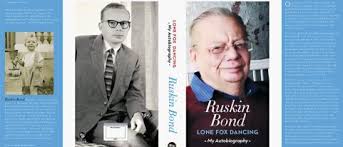
BOOK REVIEW: TOPAZ BY RUSKIN BOND

Copyright@shravancharitymission

Khidki (Window)

–Read India Initiative—

This is only an attempt to create interest in reading. We may not get the time to read all the books in our lifetime. But such reviews, talk and synopsis will at least convey what the book is all about.

    Ruskin Bond as we all know, is an Indian author of British descent. He has made exemplary contribution in the field of children’s books and even ghost stories. Topaz is one such story that I’ve picked up for you. The story is set up in the backdrop of Himalayas. It is written in first person. Where, at a point the narrator or the protagonist confirms he is a writer, and that, in a way also confirms that it is the author himself narrating the story.

    The story opens in the pine-clad slopes of the Himalayas. The protagonist, is, in his room, listening to some music that reminds him of the strains of “The Blue Danube” and concurrently the wonderful sight of Pine-clad slopes of Himalayas. He has a new record player with old records that he has picked up from the junk-shop behind the Mall.

    Below the pines there are oaks. Surprisingly, one oak-tree in particular catches his eye. It is the biggest of the lot and stands by itself on a little hillock below his cottage. There is breeze but not strong enough to sway its heavy branches. There is also something moving, swinging gently from the tree, keeping pace with the music of the waltz, dancing ….

    It appears as if someone is hanging from the tree.

    A rope oscillates in the breeze, when a dead body turns slowly, turns this way and that way, is when he sees the face of a girl, her hair hanging loose, her eyes sightless, hands and feet limp; just turning, turning, while the waltz plays on.

    He turns off the player and runs downstairs.

    Down the path through the trees, and on to the grassy hillock where the big oak stood.

    A long-tailed magpie takes fright and flies out from the branches, swooping low across the ravine. In the tree there is no one. A great branch extends half-way across the hillock, and it is possible for him to reach up and touch it. But a girl could not have reached it without climbing the tree. He thinks.

    As he stands there, gazing at the branches, someone speaks to him from behind.

    ‘What are you looking at?’

    He swings around. Only to see a girl standing around in the clearing, facing him. A girl of seventeen or eighteen; alive, healthy, with bright eyes and a tantalizing smile. She is indeed lovely to look at. He hadn’t seen such a pretty girl in years.

    ‘You startled me,’ he says. ‘You came up so unexpectedly.’ he added.

    ‘Did you see anything—in the tree?’ she asked.

    ‘I thought I saw someone from my window. That’s why I came down. Did you see anything?’ said the writer.

    ‘Oh no!’ She exclaimed and shook her head, the smile escaping her face for a moment. ‘I don’t see anything. But other people do—sometimes.’

    ‘What do they see?’ asked the writer.   

    ‘My sister?’ she replied.

    ‘Your sister?’ rebounded the writer.

    ‘Yes she hanged herself from this tree. It was many years ago. So, sometimes you can see her hanging there.’ She answered in a mechanical fashion.

    She spoke matter-of-factly: whatever had happened seemed very remote to her.

    After which they moved some distance away from the tree. Above the hillock, on a disused private tennis-court (a relic from the hill station’s colonial past) was a small stone bench. She sat on it: and, after a moment’s hesitation, the writer too sat down beside her.

    ‘Do you live close by?’ he asked.

    ‘Further up the hill. My father has a small bakery.’

    She then discloses her name as Hameeda. She also says she has two younger brothers.

    ‘You must have been quite small when your sister died.’ says the writer.

    ‘Yes. But I remember her. She was pretty.’

    ‘Like you.’ interjects the writer.

     She laughs in disbelief. ‘Oh, I am nothing to her. You should have seen my sister.’

    ‘Why did she kill herself?’

    ‘Because she did not want to live. She was to have been married but she loved someone else, someone who was not of our own community. It’s an old story and the end is always sad, isn’t it?’

    ‘Not always. But what happened to the boy—the one she loved? Did he kill himself too?’ asked the writer.

    ‘No, he took up a job in some other place. Jobs are not easy to get, are they?’

    ‘I don’t know. I’ve never tried for one.’

    ‘Then what do you do?’

    ‘I write stories.’ said the writer.

    ‘Do people buy stories?’

    ‘Why not? If your father can sell bread, I can sell stories.’

    ‘People have to have bread. But they can live without stories.’

    ‘No, Hameeda, you’re wrong. People can’t live without stories.’

        By now infatuation had made way in the writer’s heart for Hameeda. He couldn’t help loving her. Although, no fierce desire or passion had taken hold of him. He was happy by just looking at her, watch her while she sat on the grass outside his cottage, her lips stained with the juice of wild bilberries. She chatted away—about her friends, her clothes, her favourite things.

    ‘Won’t your parents mind if you come here every day?’ the writer asked.

    ‘I have told them you are teaching me.’

    ‘Teaching you what?’ he asked.

    ‘They did not ask. So, you can tell me stories.’

    As a result the writer told her some stories.

    It was midsummer.

    The sun glinted on the ring she wore on her third finger: a translucent golden topaz, set in silver.

    ‘That’s a pretty ring,’ remarked the writer.

    ‘You wear it,’ she said, impulsively removing it from her hand. ‘It will give you good thoughts. It will help you to write better stories.’

    She slipped it on to the writer’s little finger.

    ‘I’ll wear it for a few days,’ he said. ‘Then you must let me give it back to you.’ he added.

    On a day that promised rain the writer took the path down to the stream at the bottom of the hill. There he found Hameeda gathering ferns from the shady places along the rocky ledges above the water.

    ‘What will you do with them?’ he asked.

    ‘This is a special kind of fern. You can cook it as a vegetable.’

    ‘Is it tasty?’ he asked.

    ‘No, but it is good for rheumatism.’

    ‘Do you suffer from rheumatism?’

    ‘Of course not. They are for my grandmother, she is very old.’ she said.

    ‘There are more ferns further upstream,’ he said. ‘But we’ll have to get into the water.’

    They remove their shoes and start paddling, up stream. The ravine becomes shadier and narrower, until the sun is completely shut out. The ferns have grown right down up to the water’s edge. They bend to pick them up but instead find themselves in each other’s arms; and sink slowly, as if in a dream, into the soft bed of ferns, while overhearing a whistling thrush burst out in dark sweet song.

    ‘It isn’t time that’s passing by,’ it seemed to say. ‘It is you and I. It is you and I …’

    Post that the writer waits for her the following day, but she doesn’t come.

    Several days pass without, he being able to see her.

    Is she sick? Has she been kept at home? Has she been sent away? He doesn’t even know where she lives, so he cannot ask. And, if at all, he is able to ask, what would he ask?

     Then one day he sees a boy delivering bread and pastries at the little tea-shop about a mile down the road. From the upward slant of his eyes, there is a slight resemblance with Hameeda. As he leaves the shop, the writer follows him up the hill. And, when he comes abreast of him, he asks: ‘Do you have your own bakery?’

    He nods cheerfully, ‘Yes. Do you want anything—bread, biscuits, cakes? I can bring them all to your house.’

    ‘Oh of course. But don’t you have a sister? A girl called Hameeda?’

    His expression changes suddenly. He is no longer friendly. He looks puzzled and slightly apprehensive.

    ‘Why do you want to know?’

    ‘Because, I haven’t seen her for some time now?’ replies the writer

    ‘We have not seen her either.’

    ‘Do you mean she has gone away?’

    ‘Didn’t you know? You must have been away a long time. It is many years since she died. She killed herself. You did not hear about it?’ said the boy.

    ‘But wasn’t that her sister—your other sister?’ asked the writer.

    ‘I had only one sister—Hameeda—and she died, when I was very young. It’s an old story, ask someone else about it.’

    With that he turned away and quickened his pace, and the writer was left standing in the middle of the road, with his head full of questions that couldn’t be answered.

    That night there was a thunderstorm. Writer’s bedroom window kept banging in the wind. He got up to close it and, as he looked out, there was a flash of lightning and he saw that frail body again, swinging from the oak tree.

    He tried a make out the features, but the head hung down and the hair was blowing in the wind.

    Was it all a dream? He thought.

    It was impossible to say. But the topaz ring on him glowed softly in the darkness. And a whisper from the forest seemed to say, ‘It isn’t time that’s passing by, my friend. It is you and I … ‘

    So that’s all for today. It’s a neat little story with a tinge of enigma for you to discover. I would give the story seven out of ten.

Posted by Kamlesh Tripathi

*

https://kamleshsujata.wordpress.com

*

Share it if you like it

*

Shravan Charity Mission is an NGO that works for poor children suffering from life threatening diseases especially cancer. Our posts are meant for our readers that includes both children and adults and it has a huge variety in terms of content. We also accept donations for our mission. Should you wish to donate for the cause. The bank details are given below:

NAME OF ACCOUNT: SHRAVAN CHARITY MISSION

Account no: 680510110004635 (BANK OF INDIA)

IFSC code: BKID0006805

*

Our publications

GLOOM BEHIND THE SMILE

(The book is about a young cancer patient. Now archived in 7 prestigious libraries of the US, including, Harvard University and Library of Congress. It can also be accessed in MIT through Worldcat.org. Besides, it is also available for reading in Libraries and archives of Canada and Cancer Aid and Research Foundation Mumbai)  

ONE TO TANGO … RIA’S ODYSSEY

(Is a book on ‘singlehood’ about a Delhi girl now archived in Connemara Library, Chennai and Delhi Public Library, GOI, Ministry of Culture, Delhi)

AADAB LUCKNOW … FOND MEMORIES

(Is a fiction written around the great city of Nawabs—Lucknow. It describes Lucknow in great detail and also talks about its Hindu-Muslim amity. That happens to be its undying characteristic. The book was launched in Lucknow International Literary Festival of 2014)

REFRACTIONS … FROM THE PRISM OF GOD

(Co-published by Cankids–Kidscan, a pan India NGO and Shravan Charity Mission, that works for Child cancer in India. The book is endorsed by Ms Preetha Reddy, MD Apollo Hospitals Group. It was launched in Lucknow International Literary Festival 2016)

TYPICAL TALE OF AN INDIAN SALESMAN

(Is a story of an Indian salesman who is, humbly qualified. Yet he fights his ways through unceasing uncertainties to reach the top. A good read not only for salesmen. The book was launched on 10th February, 2018 in Gorakhpur Lit-Fest. Now available in Amazon, Flipkart and Onlinegatha)

RHYTHM … in poems

(Published in January 2019. The book contains 50 poems. The poems describe our day to day life. The book is available in Amazon, Flipkart and Onlinegatha)

(ALL THE ABOVE TITLES ARE AVAILABLE FOR SALE IN AMAZON, FLIPKART AND OTHER ONLINE STORES OR YOU COULD EVEN WRITE TO US FOR A COPY)

*****



INTERESTING FACTS FIGURES & QUOTES—EPISODE 27

Copyright@shravancharitymission

The West Indies cricket team is a multinational cricket team representing the Anglophone (English speaking) Caribbean region. It is administered by Cricket West Indies. The players of this composite team are selected from a chain of fifteen Caribbean territories, which are parts of several different countries and dependencies. As of 24 June 2018, the West Indies cricket team was ranked ninth in the world in Tests, ninth in One-Day Internationals (ODIs) and seventh in Twenty20 Internationals (T20Is) in the official International Cricket Council (ICC) rankings.

*

India runs the cheapest space programme in the world, where, she has received the maximum returns when compared to all other space faring nations.

*

Balkanisation- is a geopolitical term, originally used to describe the process of fragmentation or division of a region or a state into smaller regions or states that are often hostile or uncooperative with one another.

*

Once in a blue moon even a thought can become larger than its creator.

*

In a complex churning of data on income tax, national accounts, and household surveys, it concluded, that the top 1%, of income earners, in India in 2014, earned, 22% of the national income, the highest share since 1922 when Income Tax was introduced.

*

 India’s central paramilitary forces are almost a million strong.

*

 Magistracy means office or authority of a magistrate.

*

 India is possibly the most holidaying country in the world.

*

 “Storm in a tea cup”—means great outrage or excitement about a trivial matter.

*

 “Make subject’s hair stand on end”— to make someone very frightened, generally used in informal conversation. The thought of jumping out of a plane makes my hair stand on end. Basically it means frightened and scared.

*

‘Animal spirits’ is a term that refers to the emotions and instincts that guide the behaviour of investors and consumers in a market economy. It was coined by British economist John Maynard Keynes in his 1936 book The General Theory of Employment, Interest, and Money, to explain the persistence of economic fluctuations under capitalism. Keynes argued that investment and consumption are often based on how people feel about the overall economy rather than on unbiased, rational analysis of facts. Critics have argued that while people are not perfectly rational, they are not completely guided by emotions either; hence, animal spirits cannot sufficiently explain economic cycles.

*

 The Great Depression was a severe worldwide economic depression that took place mostly during the 1930s, beginning in the US. The timing of the Great Depression varied across nations. In most countries it started in 1929 and lasted until the late 1930s. It was the longest, deepest, and most widespread depression of the 20th century. In the 21st century, the Great Depression is commonly used as an example of how intensely the world’s economy can decline. The Great Depression started in the United States after a major fall in stock prices that began around September 4, 1929, and became worldwide news with the stock market crash of October 29, 1929, (known as the Black Tuesday). Between 1929 and 1932, worldwide gross domestic product (GDP) fell by an estimated 15%. By comparison, worldwide GDP fell by less than 1% from 2008 to 2009 during the Great Recession. Some economies started to recover by the mid-1930s. However, in many countries the negative effects of the Great Depression lasted until the beginning of the World War II. The Great Depression had devastating effects in countries both rich and poor. Personal income, tax revenue, profits and prices dropped, while international trade plunged by more than 50%. Unemployment in the U.S. rose to 25% and in some countries rose as high as 33%. Cities around the world were hit hard, especially those dependent on heavy industry. Construction was virtually halted in many countries. Farming communities and rural areas suffered as crop prices fell by about 60%.

*

Historian Angus Maddison, shows that India’s share of world GDP shrunk from 24.6% to 3.8% between 1700 and 1952. However, Maddison also notes that in terms of per capita GDP, India has consistently lagged behind several European nations even 2000 years ago. By 1700, per-capita income of countries like the Netherlands and Britain was double or thereabouts that of India.

*

The expression ‘Run of the mill’ means: Not outstanding in quality or rarity: average, ordinary.

*

Whole of India is dogged by rash driving. NCRB (National Crime records Bureau’s) data points to 1.35 lakh incidents of rash driving in 2016 causing 1.5 lakh deaths. Rash driving led to 3.5 lakh cases of causing simple and serious injuries and accounted for 39%, the largest category, of IPC offences against the human body.

*

Everyone talks about the rock these days; the problem is they forget about the roll— This quote is by Keith Richards, English musician, singer, and songwriter.

*

If you regard life as a struggle, it will become one, and you will have little joy. It is far better to think of life as a journey in which the difficulties are hills to climb … and it is worth the effort—RICHARD E TURNER, a fighter pilot with the 9th Air Force in the European Theatre during World War II and early in the Korean War.

*

The more people think only of themselves, the more exclusive they become, and less able they become to accept others.

*

Pen is mightier than the sword.

*

Wealth has no permanence: it comes in the morning, and at night it is scattered to the winds. Physical beauty too has no importance, for a rosy face is made pale by the scratch of a single thorn—JALALUDDIN RUMI, 13th century Persian poet.

****

By Kamlesh Tripathi

*

https://kamleshsujata.wordpress.com

*

Share it if you like it

*

Shravan Charity Mission is an NGO that works for poor children suffering from life threatening diseases especially cancer. Our posts are meant for our readers that includes both children and adults and it has a huge variety in terms of content. We also accept donations for our mission. Should you wish to donate for the cause. The bank details are given below:

NAME OF ACCOUNT: SHRAVAN CHARITY MISSION

Account no: 680510110004635 (BANK OF INDIA)

IFSC code: BKID0006805

*

Our publications

GLOOM BEHIND THE SMILE

(The book is about a young cancer patient. Now archived in 7 prestigious libraries of the US, including, Harvard University and Library of Congress. It can also be accessed in MIT through Worldcat.org. Besides, it is also available for reading in Libraries and archives of Canada and Cancer Aid and Research Foundation Mumbai)  

ONE TO TANGO … RIA’S ODYSSEY

(Is a book on ‘singlehood’ about a Delhi girl now archived in Connemara Library, Chennai and Delhi Public Library, GOI, Ministry of Culture, Delhi)

AADAB LUCKNOW … FOND MEMORIES

(Is a fiction written around the great city of Nawabs—Lucknow. It describes Lucknow in great detail and also talks about its Hindu-Muslim amity. That happens to be its undying characteristic. The book was launched in Lucknow International Literary Festival of 2014)

REFRACTIONS … FROM THE PRISM OF GOD

(Co-published by Cankids–Kidscan, a pan India NGO and Shravan Charity Mission, that works for Child cancer in India. The book is endorsed by Ms Preetha Reddy, MD Apollo Hospitals Group. It was launched in Lucknow International Literary Festival 2016)

TYPICAL TALE OF AN INDIAN SALESMAN

(Is a story of an Indian salesman who is, humbly qualified. Yet he fights his ways through unceasing uncertainties to reach the top. A good read not only for salesmen. The book was launched on 10th February, 2018 in Gorakhpur Lit-Fest. Now available in Amazon, Flipkart and Onlinegatha)

RHYTHM … in poems

(Published in January 2019. The book contains 50 poems. The poems describe our day to day life. The book is available in Amazon, Flipkart and Onlinegatha)

(ALL THE ABOVE TITLES ARE AVAILABLE FOR SALE IN AMAZON, FLIPKART AND OTHER ONLINE STORES OR YOU COULD EVEN WRITE TO US FOR A COPY)

*****


SHORT STORY: GURU

Copyright@shravancharitymission

    Scriptures say that a ‘jiva atma’ meets a guru only when there is an intense yearning  in him for the same. It is only then that the guru comes to the seeker. A true guru destroys illusion and radiates light. The following story illustrates this very point:

    Once there lived a man who developed an intense craving for an embodied guru, but did not know how and where to get one from. So, he started praying earnestly for a guru. He took a vow to abstain from food and other pleasures till a guru came into his life.

    In a nearby village lived a sage who went daily into the forest on a standard path, to collect firewood. The sage would be in meditation and the horse would automatically take him to the fixed spot. One day, he opened his eyes to see that his horse had brought him to the door of a hut. Knowing this could be a divine intervention, he dismounted and knocked the door. The seeker of the guru who had taken the vow opened the door, and bowed to the sage with deep reverence. The all-knowing sage initiated him and took him under his spiritual umbrella.

    Today, material comforts and conveniences are not guaranteeing peace of mind. There is, widespread despair and alarming degree of collective angst. This is where an enlightened guru can show the path of serenity and salvation to his disciple.

By Kamlesh Tripathi

*

https://kamleshsujata.wordpress.com

*

Share it if you like it

*

Shravan Charity Mission is an NGO that works for poor children suffering from life threatening diseases especially cancer. Our posts are meant for our readers that includes both children and adults and it has a huge variety in terms of content. We also accept donations for our mission. Should you wish to donate for the cause. The bank details are given below:

NAME OF ACCOUNT: SHRAVAN CHARITY MISSION

Account no: 680510110004635 (BANK OF INDIA)

IFSC code: BKID0006805

*

Our publications

GLOOM BEHIND THE SMILE

(The book is about a young cancer patient. Now archived in 7 prestigious libraries of the US, including, Harvard University and Library of Congress. It can also be accessed in MIT through Worldcat.org. Besides, it is also available for reading in Libraries and archives of Canada and Cancer Aid and Research Foundation Mumbai)  

ONE TO TANGO … RIA’S ODYSSEY

(Is a book on ‘singlehood’ about a Delhi girl now archived in Connemara Library, Chennai and Delhi Public Library, GOI, Ministry of Culture, Delhi)

AADAB LUCKNOW … FOND MEMORIES

(Is a fiction written around the great city of Nawabs—Lucknow. It describes Lucknow in great detail and also talks about its Hindu-Muslim amity. That happens to be its undying characteristic. The book was launched in Lucknow International Literary Festival of 2014)

REFRACTIONS … FROM THE PRISM OF GOD

(Co-published by Cankids–Kidscan, a pan India NGO and Shravan Charity Mission, that works for Child cancer in India. The book is endorsed by Ms Preetha Reddy, MD Apollo Hospitals Group. It was launched in Lucknow International Literary Festival 2016)

TYPICAL TALE OF AN INDIAN SALESMAN

(Is a story of an Indian salesman who is, humbly qualified. Yet he fights his ways through unceasing uncertainties to reach the top. A good read not only for salesmen. The book was launched on 10th February, 2018 in Gorakhpur Lit-Fest. Now available in Amazon, Flipkart and Onlinegatha)

RHYTHM … in poems

(Published in January 2019. The book contains 50 poems. The poems describe our day to day life. The book is available in Amazon, Flipkart and Onlinegatha)

(ALL THE ABOVE TITLES ARE AVAILABLE FOR SALE IN AMAZON, FLIPKART AND OTHER ONLINE STORES OR YOU COULD EVEN WRITE TO US FOR A COPY)

*****


JOURNEY OF ARTICLE 370

Copyright@shravancharitymission

    Until the Modi government moved to end it with a presidential ordnance, Jammu & Kashmir had enjoyed a special constitutional relationship with the Union of India because of the circumstances in which Maharaja Hari Singh, the ruler of Kashmir, signed the Instrument of Accession after Independence in 1947 ended British paramountcy over his princely state. Government’s move has not repealed 370; it has effectively made it defunct. It has done away with Article 35A, which emanated from it.

1947: WHY MAHARAJA BIT THE ACCESSION BULLET

    The instrument of accession was executed on October 26, 1947 by Hari Singh and accepted by Lord Mountbatten. The circumstances and timing of the signing are important. A few days before that, Pashtun “tribesman” and Pakistani irregulars had crossed into his state and were moving towards Srinagar. The Maharaja turned to India for help, but India could only defend, provided it was a formal part of her territory.

    Clause 5 of the document said that the terms of accession “shall not be varied” by any amendment to the Govt of India Act of 1935 or the Indian independence Act 1947 unless accepted by Hari Singh in a supplementary instrument. Clause 6 disallowed the making of laws to acquire land in the state “for any purpose” but permitted Hari Singh to do so for the Dominion of India for a law applicable to the state. Clause 7 said no future Constitution of India (which was still to be written) could be imposed on the state.

    In 1950, in the original Constitution of India, J&K was listed as a Part B state, along with the other princely states that had merged by Instruments of Accession, including Hyderabad and Mysore.

    Part B states were then abolished and J&K was by an amendment of the Constitution put into Article 1 as India’s 15th state and irrevocably part of the “territory of India.” It continued to enjoy the special status granted to it under Article 370.

PLEBISCITE OUT, SPECIAL STATUS IN

    Article 370 was incorporated in Part XXI (temporary provisions with respect to the State of Jammu and Kashmir) of the Constitution. The state’s constituent assembly had wanted only those aspects of the Indian Constitution that reflected what Hari Singh had signed away. Besides Article 1, it was the only other article of the Indian Constitution that automatically applied to J&K. The other provisions of the Indian statute could apply to the state only if its constituent assembly concurred.

    Article 370 provided Jammu & Kashmir with special status, allowing it, its own state constitution. The Union of India could legislate act only in defence, foreign affairs and communications.

    Since the 1950s, there have been efforts to pull the state into a deeper embrace with the Union, but Article 370 was strengthened when Sheikh Abdullah, who had become the second Prime Minister of J&K in 1948 and was later dismissed came to an agreement—after spells of detention—with Prime Minister Indira Gandhi in 1975. In return for giving up his demand for a plebiscite, special status for J&K was allowed to continue and Sheikh Abdullah became the chief minister.

    However, over the years, the state was made subject to many Indian laws through various amendments in concurrence with the state assembly, the logic being that it was the natural successor to the J&K constituent assembly, which by definition was a transitional body.

    35A DEFINES WHO IS A PERMANENT RESIDENT.

    Article 35A was made part of the Indian Constitution in 1954, through a presidential order—though its genesis goes back to early 20th century Dogra apprehensions of an influx from Punjab, which they feared would change the State’s demographic and land ownership patterns. The article, which defines who is a permanent resident of J&K and lays down laws restricting property purchase and ownership to such permanent residents, also discriminated against women, depriving them of their state subject rights if they married non-permanent residents. The J&K high court ruled against this aspect in 2002.

    It had been the subject of acrimonious political debate and was challenged in the Supreme Court in 2014 on the grounds that it had been added to the Constitution not through an amendment passed by Parliament but by Presidential decree. Recent Constitution (Application to Jammu and Kashmir) Order 2019 supersedes the 1954 order, in effect scrapping Article 35A.

    SADR-I-RIYASAT OR GUV: IT’S ALL IN A WORD

    Article 370 said no changes could be made to the Constitution regarding the status of J&K without the concurrence of the state’s constituent assembly. The constituent assembly, though, was dissolved in November 1956 without providing any alternative to obtaining its concurrence. Article 370, originally written as a temporary measure, was treated in several court orders as therefore having become permanent. However, a presidential declaration on November 15, 1952, under Article 370 (3), had defined the “Government” of J&K as meaning the Sadr-i-Riyasat of the state acting under the advice of the state’s Council of Ministers. Then, in 1965, the term “Sadr-i-Riyasat” was changed to “Governor” by the Constitution of Jammu and Kashmir (6th Amendment) Act, 1965. The change meant that a Sadr-i-Riyasat elected by the state assembly was replaced by a governor appointed by the President of India.

    August 6 Constitution Order 2019 was issued by the President under Article 370, Clause 1, with the concurrence of the “Government of J&K”. “Government” here means the “Governor”.

Posted by Kamlesh Tripathi

*

https://kamleshsujata.wordpress.com

*

Share it if you like it

*

Shravan Charity Mission is an NGO that works for poor children suffering from life threatening diseases especially cancer. Our posts are meant for our readers that includes both children and adults and it has a huge variety in terms of content. We also accept donations for our mission. Should you wish to donate for the cause. The bank details are given below:

NAME OF ACCOUNT: SHRAVAN CHARITY MISSION

Account no: 680510110004635 (BANK OF INDIA)

IFSC code: BKID0006805

*

Our publications

GLOOM BEHIND THE SMILE

(The book is about a young cancer patient. Now archived in 7 prestigious libraries of the US, including, Harvard University and Library of Congress. It can also be accessed in MIT through Worldcat.org. Besides, it is also available for reading in Libraries and archives of Canada and Cancer Aid and Research Foundation Mumbai)  

ONE TO TANGO … RIA’S ODYSSEY

(Is a book on ‘singlehood’ about a Delhi girl now archived in Connemara Library, Chennai and Delhi Public Library, GOI, Ministry of Culture, Delhi)

AADAB LUCKNOW … FOND MEMORIES

(Is a fiction written around the great city of Nawabs—Lucknow. It describes Lucknow in great detail and also talks about its Hindu-Muslim amity. That happens to be its undying characteristic. The book was launched in Lucknow International Literary Festival of 2014)

REFRACTIONS … FROM THE PRISM OF GOD

(Co-published by Cankids–Kidscan, a pan India NGO and Shravan Charity Mission, that works for Child cancer in India. The book is endorsed by Ms Preetha Reddy, MD Apollo Hospitals Group. It was launched in Lucknow International Literary Festival 2016)

TYPICAL TALE OF AN INDIAN SALESMAN

(Is a story of an Indian salesman who is, humbly qualified. Yet he fights his ways through unceasing uncertainties to reach the top. A good read not only for salesmen. The book was launched on 10th February, 2018 in Gorakhpur Lit-Fest. Now available in Amazon, Flipkart and Onlinegatha)

RHYTHM … in poems

(Published in January 2019. The book contains 50 poems. The poems describe our day to day life. The book is available in Amazon, Flipkart and Onlinegatha)

(ALL THE ABOVE TITLES ARE AVAILABLE FOR SALE IN AMAZON, FLIPKART AND OTHER ONLINE STORES OR YOU COULD EVEN WRITE TO US FOR A COPY)

*****


SHORT STORY: LION, CAMEL, CAT, JACKAL AND THE CROW

Copyright@shravancharitymission


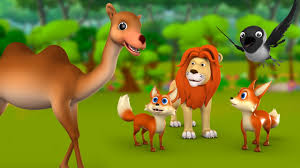
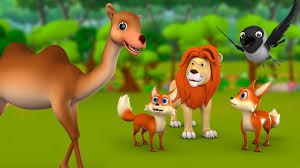
    There was once a jungle that was ruled by a lion called Gabbar. He had a cat, a jackal and a crow at his service, along with other animals. 
    As a routine they were wandering about the jungle one day, when the lion saw a camel at a distance. This camel had separated from its caravan and was feeding itself on the green grass of the jungle. The lion took fancy to the animal that he had not seen before, “Let us go and ask this extraordinary animal, where he comes from.” 
    The crow, who flies to far-off places was aware and replied, “Master, it is called camel and this animal lives in villages. The flesh of this animal tastes very good. So, why not kill him and have him for dinner.” 
    The lion disagreed, “He does not belong to the jungle, so he is our guest. I will not kill him. Please go and assure him that no harm will be done, and bring him to me”. 

    As per lion’s instruction, they went to the camel to assure him that he would be safe. After persuasion they won his confidence, and brought him to the lion. 
 
    The camel stood before the lion and bowed. He also narrated how he got separated from his caravan and how he had reached the jungle. 
     Upon hearing this, the lion said, “Oh Camel, if you return to the village you will be made a beast to carry burden again. Stay in the jungle under my kingdom instead. You can feast on the abundant green grass of the jungle without any fear.” 
    The camel accepted the offer, and they began to live together in peace. Later one day, the lion got severely wounded in a fight with a mad elephant. Such were his injuries that he could not even take a few steps, let alone go out for hunting.

    Due to lack of food, the lion became weaker. The animals who served him were also starving since they were dependent on the lion for their food. 
    When the lion could not bear the hunger anymore, he called them and said, “Go and find any animal that I can prey upon even in my weak condition. This way I will provide food for you, and also for myself.” 
 
    All the animals wandered about the jungle without any success to find such an animal but they couldn’t. On their way back, the jackal had a plan. 
   He said to the crow, “There is no point wandering about the jungle when the food is right in front of us. The camel can provide us with the food for all of us.” 

The crow replied, “Indeed, what you say is correct. But the master has assured the camel of his safety under his rule. He will refuse to kill him.” 
    The jackal said, “Leave that to me. I will influence the master in a manner that he will agree to feast on the camel. You wait till I return after a discussion with the lion”. 

    The jackal met the lion and said, “Master, we have been looking all around the jungle but could not find an animal for you. All of us have not had food for so long. We have become weak and can hardly walk properly. Under the circumstance, if you agree to kill the camel, his flesh can provide food for all of us”. 
    The lion disagreed, “Shame on you! How can I kill the camel when he has my assurance that his life will be safe under my kingdom. It is a sin to think likewise.” 
    But the jackal continued, “Master, it would indeed be a sin to kill him after you have given him the assurance of his safety. But if he offers himself as your food, it would then not be a sin to kill him and you could accept his offer.” 
    The jackal continued, “What good are we, if we cannot be of use to our master in this time of need. Please kill one of us, for yourself, and for our other friends, to save, from the dying hunger.”
    The lion was fed up and failed to justify the jackal and said, “Please do what you think would be the best for all of us.” 
After this, the jackal returned, to other animals, and said, “Our master is sick and weak. If something happens to him, there would be no one to protect us. We have failed, in getting any animal, even after, wandering the length and breadth of the jungle. The only way now, to repay our debts to our master would be to offer ourselves to him. This way the rest of us would also be saved from dying of hunger.” 

    As planned, all of them stood before the lion and bowed. They informed the lion that they did not succeed in finding any animal for their food. 
    The crow said, “Master, we could not find an appropriate animal for your food. So, I offer myself. Please eat me to save yourself from hunger.” 
    The jackal interrupted, “You are too small to provide flesh for the master. Even if he agrees to your offer, it will not be enough for his survival. Indeed, you have proven your devotion by offering yourself. And that frees you from the debts of the master.” 
     He turned to the lion and said, “Please accept my offer instead.” 

    The jackal stood humbly before the lion, “Master, please eat me to save yourself from hunger. If you accept my sacrifice, I will be honoured with a place in heaven”. 
     Upon hearing this, the lion shook his head in refusal. This way, the other animals started offering themselves, but the lion kept refusing to accept their offer. 
     The camel who was observing all this thought, “All of them spoke so beautifully about offering themselves, but the master refused to kill any of them. I too shall seek to impress the master in a similar fashion.” 
     The camel said to other animals, “You all have offered yourself to the master. But the master cannot eat you because all of you are carnivores (flesh eaters) and belong to the same category as the lion himself. So now, stand by, for I shall offer myself”. 

    After this, the camel came forward and bowed before the lion. 
   He said, “Master, you need not kill any of these animals. Please eat me instead. I offer myself in return of your debts. I shall find my way to the heaven, if you will please accept my offer”. 
    No sooner the Camel made the offer, the other animals cheered. Having already been influenced by the jackal, the lion jumped at him. He was killed, and eaten by all the animals together. 

    Moral of the story: The wise indeed say: Always be on guard when you are in the company of wicked people. Don’t get carried away by their sweet words.

By Kamlesh Tripathi

*

https://kamleshsujata.wordpress.com

*

Share it if you like it

*

Shravan Charity Mission is an NGO that works for poor children suffering from life threatening diseases especially cancer. Our posts are meant for our readers that includes both children and adults and it has a huge variety in terms of content. We also accept donations for our mission. Should you wish to donate for the cause. The bank details are given below:

NAME OF ACCOUNT: SHRAVAN CHARITY MISSION

Account no: 680510110004635 (BANK OF INDIA)

IFSC code: BKID0006805

*

Our publications

GLOOM BEHIND THE SMILE

(The book is about a young cancer patient. Now archived in 7 prestigious libraries of the US, including, Harvard University and Library of Congress. It can also be accessed in MIT through Worldcat.org. Besides, it is also available for reading in Libraries and archives of Canada and Cancer Aid and Research Foundation Mumbai)  

ONE TO TANGO … RIA’S ODYSSEY

(Is a book on ‘singlehood’ about a Delhi girl now archived in Connemara Library, Chennai and Delhi Public Library, GOI, Ministry of Culture, Delhi)

AADAB LUCKNOW … FOND MEMORIES

(Is a fiction written around the great city of Nawabs—Lucknow. It describes Lucknow in great detail and also talks about its Hindu-Muslim amity. That happens to be its undying characteristic. The book was launched in Lucknow International Literary Festival of 2014)

REFRACTIONS … FROM THE PRISM OF GOD

(Co-published by Cankids–Kidscan, a pan India NGO and Shravan Charity Mission, that works for Child cancer in India. The book is endorsed by Ms Preetha Reddy, MD Apollo Hospitals Group. It was launched in Lucknow International Literary Festival 2016)

TYPICAL TALE OF AN INDIAN SALESMAN

(Is a story of an Indian salesman who is, humbly qualified. Yet he fights his ways through unceasing uncertainties to reach the top. A good read not only for salesmen. The book was launched on 10th February, 2018 in Gorakhpur Lit-Fest. Now available in Amazon, Flipkart and Onlinegatha)

RHYTHM … in poems

(Published in January 2019. The book contains 50 poems. The poems describe our day to day life. The book is available in Amazon, Flipkart and Onlinegatha)

(ALL THE ABOVE TITLES ARE AVAILABLE FOR SALE IN AMAZON, FLIPKART AND OTHER ONLINE STORES OR YOU COULD EVEN WRITE TO US FOR A COPY)

*****



INTERESTING FACTS FIGURES AND QUOTES–EPISODE 26

Copyright@shravancharitymission

  1. Silicon Valley lives in a bubble and its gods are oblivious of the havoc they have caused. Their technology is wonderful but is subverting elections and you are accessories to it. Liberal democracy is broken and you (Silicon Valley) broke it—says Carole Cadwalladr, the Welsh journalist who had exposed Cambridge Analytica and Facebook’s messing with the Brexit referendum.
  2. Shiva alone is usually not represented by a deity, and instead, is depicted by the lingam. Hindu mythology speaks of Krishna and Rama as avatars, they were born and they died. They are said to have worshipped Shiva. Other Gods also take physical birth, but Shiva neither takes birth, nor dies. Shiva incarnates himself in a human body, an occurrence that is celebrated during Shivratri.
  3. The British pound is the world’s oldest currency still in use. It is 1,200 years old. Dating back to Anglo-Saxon times, the pound has gone through many changes before evolving into the currency we recognise today.
  4. Egypt is considered one of the oldest countries of the world and was first settled around 6000 BC. The first dynasty was believed to be founded around 3100 BC. India and China are the other two world’s oldest countries.
  5. Damascus the present day capital of Syria is widely believed to be the oldest continuously inhabited city of the world, with evidence of habitation dating back at least 11,000 years. Its location and persistence have made the city a nexus for civilizations that have come and gone.
  6. Let me remind you about the great mystic Kabir Das the legendary poet and saint who celebrated the breaking of his earthern pot. For him it meant emancipation from the daily drill of trudging far for filling water. Where, he further alludes to the joy of renouncing the false sense of self-pride.
  7. Kesaria is a place in Bihar about a 90 minute detour enroute to Patna from Motihari. This was where according to the legend, Buddha performed his ‘bal mundan’ and assumed his kesaria (saffron) robe.
  8. Buddha spent his last night in Kesaria en route from Vaishali to Kushinagar where Buddha believed, he attained Pari-nirvana, forseeing his end. When he asked his Lichhavi disciples to disperse and return to Vaishali. He gave them his alms bowl, to still the chorus of dissent. After his death, they built a mud stupa to house the bowl.
  9. The Ordnance Factory Board that supplies ammunition to the Indian army has 41 factories.
  10. Writer Somerset Maugham, a medico who never practiced, learned to play violin to tide over his loneliness in his old age. Bertrand Russel would regularly listen to Beethoven’s ethereal symphonies to fight his sporadic schizophrenic bouts. Victorian English poet Alfred Tennyson started playing the piano at 70 when he felt that his poetic prowess was waning.
  11. Contrary to the general belief that Mughal emperor Aurangzeb abhorred music, some accounts say that the Mughal court chronicler Khafif Khan mentioned in his court despatches written in Persian that Aurangzeb’s chronic insomnia at the age of 78 was cured by the court musician Ahmad Rasool Khan.
  12. In any merger the biggest challenge is always integration of human resources–Arundhati Bhattacharya, Ex-Chairman, SBI.
  13. The direction in which education sets a man will determine his future life–Plato Athenian philosopher.
  14. The Greek tragedian, Aeschylus was right when he said, ‘the first casualty of war is truth.’
  15. John Dryden, English poet wrote, ‘beware of the fury of the patient man.’
  16. If you have surrounded yourself with assholes, you’re going to be more of an asshole.

By Kamlesh Tripathi

*

https://kamleshsujata.wordpress.com

*

Share it if you like it

*

Shravan Charity Mission is an NGO that works for poor children suffering from life threatening diseases especially cancer. Our posts are meant for our readers that includes both children and adults and it has a huge variety in terms of content. We also accept donations for our mission. Should you wish to donate for the cause. The bank details are given below:

NAME OF ACCOUNT: SHRAVAN CHARITY MISSION

Account no: 680510110004635 (BANK OF INDIA)

IFSC code: BKID0006805

*

Our publications

GLOOM BEHIND THE SMILE

(The book is about a young cancer patient. Now archived in 7 prestigious libraries of the US, including, Harvard University and Library of Congress. It can also be accessed in MIT through Worldcat.org. Besides, it is also available for reading in Libraries and archives of Canada and Cancer Aid and Research Foundation Mumbai)  

ONE TO TANGO … RIA’S ODYSSEY

(Is a book on ‘singlehood’ about a Delhi girl now archived in Connemara Library, Chennai and Delhi Public Library, GOI, Ministry of Culture, Delhi)

AADAB LUCKNOW … FOND MEMORIES

(Is a fiction written around the great city of Nawabs—Lucknow. It describes Lucknow in great detail and also talks about its Hindu-Muslim amity. That happens to be its undying characteristic. The book was launched in Lucknow International Literary Festival of 2014)

REFRACTIONS … FROM THE PRISM OF GOD

(Co-published by Cankids–Kidscan, a pan India NGO and Shravan Charity Mission, that works for Child cancer in India. The book is endorsed by Ms Preetha Reddy, MD Apollo Hospitals Group. It was launched in Lucknow International Literary Festival 2016)

TYPICAL TALE OF AN INDIAN SALESMAN

(Is a story of an Indian salesman who is, humbly qualified. Yet he fights his ways through unceasing uncertainties to reach the top. A good read not only for salesmen. The book was launched on 10th February, 2018 in Gorakhpur Lit-Fest. Now available in Amazon, Flipkart and Onlinegatha)

RHYTHM … in poems

(Published in January 2019. The book contains 50 poems. The poems describe our day to day life. The book is available in Amazon, Flipkart and Onlinegatha)

(ALL THE ABOVE TITLES ARE AVAILABLE FOR SALE IN AMAZON, FLIPKART AND OTHER ONLINE STORES OR YOU COULD EVEN WRITE TO US FOR A COPY)

*****

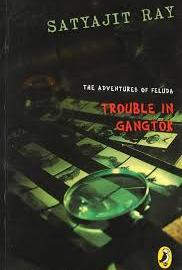
BOOK REVIEW: TROUBLE IN GANGTOK (Gangtokey Gondogol) by Satyajit Ray

Copyright@shravancharitymission

Khidki (Window)

–Read India Initiative—

This is only an attempt to create interest in reading. We may not get the time to read all the books in our lifetime. But such reviews, talk and synopsis will at least convey what the book is all about.

The original Bengali title of this novel is ‘Gangtokey Gondogol.’ In English it would mean, ‘Trouble in Gangtok.’ This novella featuring a private detective Feluda was first published in the Desh Magazine in 1970 and then published in book form in 1971 by Ananda Publishers. The main characters of this book are:

  • Prodosh Chandra Mitter aka Feluda.
  • Tapesh Ranjan Mitter aka Topshe.
  • Sasadhar Bose/Dr. Vaidya are the names of the same character.
  • Nishikanto Sarkar.
  • Helmut Ungar/Virendra Shelvankar are the names of the same character.
  • Shivkumar Shelvankar.
  • The curator of the Tibetan Institute.

    The story is an intricate murder mystery. Feluda and Topshe travel to Gangtok for their summer holidays on the start of the Bengali New Year. While eating breakfast at Bagdogra Airport, they meet a man by the name of Sasadhar Bose, who works for a chemical firm dealing with aromatic perfumes. He tells that he had attended a nephew’s wedding in Ghatshila post which he came to Sikkim. While stopping at a place called Teesta Bazaar, the trio comes to know about an accident that took place in the North Sikkim Highway.

    They learn that a huge boulder crashed on the taxi and the taxi fell off a cliff. But the driver escaped unhurt. Feluda and Topshe are staying at Hotel Snow View while Sasadhar Bose is staying in the dak bungalow.

    In the evening, Sasadhar Bose comes to Feluda’s hotel and informs him that the man who fell off the cliff in the accident, was no one else but his partner Shivkumar Shelvankar, who was also the owner of the company. Sasadhar Bose walks out of the hotel to find a flight to Bombay the next day. This is when Feluda meets another Bengali in the hotel by the name of, Nishikanto Sarkar. He reveals that he had a statue of a Tibetan God named Yamantak, which had nine heads and 34 hands. He says that he had sold the statue to Shelvankar for a 1000 rupees. While walking on the road, they meet a German hippie, Helmut Ungar, who tells them more about Shelvankar. He tells them that he had a son, whom he loved. But the son ran away from his father. Helmut tells Feluda that on the day of the accident, Mr. Shelvankar and he had decided to travel to a gumpha a place on the way to Singik. But Helmut changed his mind and left early to take some photographs. He reveals to Feluda that Shelvankar used to keep the figurine with him in his pocket as he thought it to be a lucky charm. But after the accident, the figurine had gone missing. Helmut also tells that the reason of this superstition is because of the advice of a certain Dr. Vaidya.

    Later in the evening, Feluda and Topshe go to the Tibetan Institute to learn more about the statue. Feluda asks the driver of the taxi he is travelling in, to come in the morning the next day because he wants to see the scene of the accident. They reach the Tibetan Institute, where the curator declares that the Yamantak which Shelvankar had would cost a little more than 10000 rupees. Feluda returns to the hotel to find Bose waiting for him. Bose tells Feluda that tomorrow he will be leaving for Bombay. 

    Next day, Nishikanto Sarkar tells Feluda that someone threw a paper in his room. The paper consisted of a Tibetan word, which simply meant—death. Later Feluda and Topshe travel to the accident site. There Feluda finds a white button. He also reveals that someone had tried to make the boulder fall by using a strong iron rod and that this accident was nothing but a well-planned murder. Feluda sends a telegram to Bose asking him to come back to Gangtok. The next day, Nishikanto Sarkar, Helmut Ungar, Topshe and Feluda travel to Rumtek for seeing the lama dance. Feluda learns, through a telegram, that Shelvankar’s estranged son is present in a Sikkim monastery and a detective agency has found him. Then, Feluda hears someone shouting. He and Topshe come to the source of the sound and find that Mr. Sarkar had been pushed down the cliff. They rescue him and they come back to Gangtok. In the evening, they come to the dak bungalow, where Helmut is staying. There they meet a strange looking man. Helmut introduces himself as Dr. Vaidya.

    Dr. Vaidya, who specializes in talking to souls of the departed, tells all of them (through Shelvankar’s spirit) that he was murdered and Virendra is responsible for his death. Helmut tells that Virendra is Shelvankar’s only son. Dr. Vaidya tells Feluda that tomorrow he will be traveling to Pemiangchi. Next morning, Topshe finds a paper near Feluda’s ashtray. The paper consists of the same Tibetan word, meaning death. Feluda tells Topshe that today he will conduct an experiment on the North Sikkim Highway. After conducting the experiment, Feluda concludes that the murder was done by first hitting Shelvankar with a rod and then throwing the vehicle down the cliff. Then, a boulder was thrown to make it look like an accident. The driver was bribed. While Feluda was telling this, a boulder comes crashing down. Topshe saves Feluda from being crushed.

    In the evening, Helmut comes to Feluda’s room and shows him two photographs. The photographs were taken during the crime. It shows a man wearing red clothes standing on top of the mountain and seeing the car falling down. When Feluda tells that he is that man Virendra, Helmut tells that it is impossible because he is only Virendra. He tells Feluda and Topshe that he did not like his father marrying twice and thus ran away from home. Then his father approached a detective agency to find his son. Then Helmut (or Virendra) came to Sikkim. Helmut tells Feluda that he suspects Dr. Vaidya to be the murderer. They decide to travel to Pemiangchi to apprehend Dr. Vaidya. They pull in Mr. Sarkar also. Next day, while travelling to Pemiangchi, Sasadhar Bose also follows them and requests them to also take him. They reach Pemiangchi in the evening. There they discover that Dr. Vaidya is not there but has left his stick in the dak bungalow.

    Feluda then announces that Sasadhar Bose is the killer. He killed Shelvankar to take over the ownership of the company. When Bose says that he had gone to his nephew’s wedding during the murder, Feluda reminds him that in the Bengali calendar no wedding is held during the month of Chaitra since it is an inauspicious month and that they had come together to Sikkim during the starting of the month of Baishakh, the first month of the Bengali calendar. Feluda tells that Sasadhar Bose and Dr. Vaidya are the same person. Dr. Vaidya told Shel-vankar about his own life and impressed him. While going to the Gumpha, Dr. Vaidya and Shelvankar travelled in the same car. Then Dr. Vaidya or Sasadhar Bose who happen to be the same person hit Shelvankar with a rod and murdered him. Then he came back to Kolkatta. Then as Sasadhar Bose, he travelled in the same plane with Feluda. Dr. Vaidya tried to put the blame on Virendra, even when he did not know that Helmut was actually Virendra. When he saw that Feluda was conducting an investigation, he tried to kill Feluda. Feluda also tells that Mr. Sarkar wanted to steal the figurine of Yamantak from Shelvankar. So after the murder, he came down to find the statue, but Bose saw him and started harassing him. Bose tries to escape but is caught by leeches. Feluda finds the statue in the belongings of Sasadhar Bose. Sasadhar Bose is arrested and Feluda solves one of his most complex cases.

I would give the book seven out of ten.

By Kamlesh Tripathi

*

https://kamleshsujata.wordpress.com

*

Share it if you like it

*

Shravan Charity Mission is an NGO that works for poor children suffering from life threatening diseases especially cancer. Our posts are meant for our readers that includes both children and adults and it has a huge variety in terms of content. We also accept donations for our mission. Should you wish to donate for the cause. The bank details are given below:

NAME OF ACCOUNT: SHRAVAN CHARITY MISSION

Account no: 680510110004635 (BANK OF INDIA)

IFSC code: BKID0006805

*

Our publications

GLOOM BEHIND THE SMILE

(The book is about a young cancer patient. Now archived in 7 prestigious libraries of the US, including, Harvard University and Library of Congress. It can also be accessed in MIT through Worldcat.org. Besides, it is also available for reading in Libraries and archives of Canada and Cancer Aid and Research Foundation Mumbai)  

ONE TO TANGO … RIA’S ODYSSEY

(Is a book on ‘singlehood’ about a Delhi girl now archived in Connemara Library, Chennai and Delhi Public Library, GOI, Ministry of Culture, Delhi)

AADAB LUCKNOW … FOND MEMORIES

(Is a fiction written around the great city of Nawabs—Lucknow. It describes Lucknow in great detail and also talks about its Hindu-Muslim amity. That happens to be its undying characteristic. The book was launched in Lucknow International Literary Festival of 2014)

REFRACTIONS … FROM THE PRISM OF GOD

(Co-published by Cankids–Kidscan, a pan India NGO and Shravan Charity Mission, that works for Child cancer in India. The book is endorsed by Ms Preetha Reddy, MD Apollo Hospitals Group. It was launched in Lucknow International Literary Festival 2016)

TYPICAL TALE OF AN INDIAN SALESMAN

(Is a story of an Indian salesman who is, humbly qualified. Yet he fights his ways through unceasing uncertainties to reach the top. A good read not only for salesmen. The book was launched on 10th February, 2018 in Gorakhpur Lit-Fest. Now available in Amazon, Flipkart and Onlinegatha)

RHYTHM … in poems

(Published in January 2019. The book contains 50 poems. The poems describe our day to day life. The book is available in Amazon, Flipkart and Onlinegatha)

(ALL THE ABOVE TITLES ARE AVAILABLE FOR SALE IN AMAZON, FLIPKART AND OTHER ONLINE STORES OR YOU COULD EVEN WRITE TO US FOR A COPY)

*****


STORY: The Peacock and the Crane

Copyright@shravancharity mission

There was once a peacock who often boasted about his beauty. Every day he would walk up to the banks of a large lake and look at his own reflections and say “Oh! What a beautiful bird I am! Look at my exquisite colourful tail.”

    Once the peacock saw a crane on the banks of the lake. He said with sarcasm to the crane, “What a colourless bird you are! You don’t have beautiful and colourful feathers like me—see I’m the most beautiful”. 
    The crane replied, “O yes of course! I don’t have beautiful feathers. But, my feathers can make me fly across the lake. Can your feathers make you fly?” There was no reply from the peacock. 
MORAL OF THE STORY: It is better to be useful than to be beautiful.

Posted by Kamlesh Tripathi

*

https://kamleshsujata.wordpress.com

*

Share it if you like it

*

Shravan Charity Mission is an NGO that works for poor children suffering from life threatening diseases especially cancer. Our posts are meant for our readers that includes both children and adults and it has a huge variety in terms of content. We also accept donations for our mission. Should you wish to donate for the cause. The bank details are given below:

NAME OF ACCOUNT: SHRAVAN CHARITY MISSION

Account no: 680510110004635 (BANK OF INDIA)

IFSC code: BKID0006805

*

Our publications

GLOOM BEHIND THE SMILE

(The book is about a young cancer patient. Now archived in 7 prestigious libraries of the US, including, Harvard University and Library of Congress. It can also be accessed in MIT through Worldcat.org. Besides, it is also available for reading in Libraries and archives of Canada and Cancer Aid and Research Foundation Mumbai)  

ONE TO TANGO … RIA’S ODYSSEY

(Is a book on ‘singlehood’ about a Delhi girl now archived in Connemara Library, Chennai and Delhi Public Library, GOI, Ministry of Culture, Delhi)

AADAB LUCKNOW … FOND MEMORIES

(Is a fiction written around the great city of Nawabs—Lucknow. It describes Lucknow in great detail and also talks about its Hindu-Muslim amity. That happens to be its undying characteristic. The book was launched in Lucknow International Literary Festival of 2014)

REFRACTIONS … FROM THE PRISM OF GOD

(Co-published by Cankids–Kidscan, a pan India NGO and Shravan Charity Mission, that works for Child cancer in India. The book is endorsed by Ms Preetha Reddy, MD Apollo Hospitals Group. It was launched in Lucknow International Literary Festival 2016)

TYPICAL TALE OF AN INDIAN SALESMAN

(Is a story of an Indian salesman who is, humbly qualified. Yet he fights his ways through unceasing uncertainties to reach the top. A good read not only for salesmen. The book was launched on 10th February, 2018 in Gorakhpur Lit-Fest. Now available in Amazon, Flipkart and Onlinegatha)

RHYTHM … in poems

(Published in January 2019. The book contains 50 poems. The poems describe our day to day life. The book is available in Amazon, Flipkart and Onlinegatha)

(ALL THE ABOVE TITLES ARE AVAILABLE FOR SALE IN AMAZON, FLIPKART AND OTHER ONLINE STORES OR YOU COULD EVEN WRITE TO US FOR A COPY)

*****


STORY: TWO FRIENDS AND THE BEAR

Copyright@shravancharitymission

    Vijay and Raju were friends. Once while they were on a holiday they went into a forest. Where, they were enjoying the beauty of nature. When suddenly they saw a bear charging at them. They were frightened. Raju who knew how to climb a tree, ran towards it and climbed it up in no time. He did not think of Vijay who did not know how to climb a tree.

    Vijay got nervous and thought for a second. He had heard, animals do not prefer dead bodies. So, he fell on the ground and held his breath. The bear sniffed him for a few moments and thought he was dead and decided to carry on. Upon witnessing the scene Raju asked Vijay. ‘What did the bear whisper in your ears?’ 

Vijay replied, The bear asked me to keep away from friends like you.’ 

Moral of the story is: A friend in need is a friend indeed.

Posted by Kamlesh Tripathi

*

https://kamleshsujata.wordpress.com

*

Share it if you like it

*

Shravan Charity Mission is an NGO that works for poor children suffering from life threatening diseases especially cancer. Our posts are meant for our readers that includes both children and adults and it has a huge variety in terms of content. We also accept donations for our mission. Should you wish to donate for the cause. The bank details are given below:

NAME OF ACCOUNT: SHRAVAN CHARITY MISSION

Account no: 680510110004635 (BANK OF INDIA)

IFSC code: BKID0006805

*

Our publications

GLOOM BEHIND THE SMILE

(The book is about a young cancer patient. Now archived in 7 prestigious libraries of the US, including, Harvard University and Library of Congress. It can also be accessed in MIT through Worldcat.org. Besides, it is also available for reading in Libraries and archives of Canada and Cancer Aid and Research Foundation Mumbai)  

ONE TO TANGO … RIA’S ODYSSEY

(Is a book on ‘singlehood’ about a Delhi girl now archived in Connemara Library, Chennai and Delhi Public Library, GOI, Ministry of Culture, Delhi)

AADAB LUCKNOW … FOND MEMORIES

(Is a fiction written around the great city of Nawabs—Lucknow. It describes Lucknow in great detail and also talks about its Hindu-Muslim amity. That happens to be its undying characteristic. The book was launched in Lucknow International Literary Festival of 2014)

REFRACTIONS … FROM THE PRISM OF GOD

(Co-published by Cankids–Kidscan, a pan India NGO and Shravan Charity Mission, that works for Child cancer in India. The book is endorsed by Ms Preetha Reddy, MD Apollo Hospitals Group. It was launched in Lucknow International Literary Festival 2016)

TYPICAL TALE OF AN INDIAN SALESMAN

(Is a story of an Indian salesman who is, humbly qualified. Yet he fights his ways through unceasing uncertainties to reach the top. A good read not only for salesmen. The book was launched on 10th February, 2018 in Gorakhpur Lit-Fest. Now available in Amazon, Flipkart and Onlinegatha)

RHYTHM … in poems

(Published in January 2019. The book contains 50 poems. The poems describe our day to day life. The book is available in Amazon, Flipkart and Onlinegatha)

(ALL THE ABOVE TITLES ARE AVAILABLE FOR SALE IN AMAZON, FLIPKART AND OTHER ONLINE STORES OR YOU COULD EVEN WRITE TO US FOR A COPY)

*****