Category Archives: article

BOOK CORNER: THE LEGEND OF LAKSHMI PRASAD by Twinkle Khanna

Copyright@shravancharitymission

Khidki (Window)

–Read India Initiative—

This is only an attempt to create interest in reading. We may not get the time to read all the books in our lifetime. But such reviews, talk and synopsis will at least convey what the book is all about.
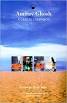
THE LEGEND OF LAKSHMI PRASAD

TWINKLE KHANNA

PUBLISHER: JUGGERNAUT BOOKS

YEAR OF PUBLICATION: 2016

    When Twinkle writes it goes straight into your head and not over your head. I bring to you this title which is a collection of four short stories. The sequencing of which is as follows:

  • The legend of Lakshmi Prasad
  • Salaam Noni Appa
  • If the weather permits
  • The sanitary man from a sacred land.

    If you are interested in light reading that has stories with a social message this indeed is the book. Where, the lady author focusses on women centric issues. Issues, that are in everyone’s mind, but are seldom talked about. The novel has an assortment of stories from Bihar, Mumbai, Kerala and M.P. almost a national integration.

    The book starts with the ‘LEGEND OF LAKSHMI PRASAD.’ It is about a young girl who resides in a village, sandwiched between river Kosi and Ganga, in Bihar. Her name is Lakshmi Prasad (Prasad being the family name). She has an elder sister whose name is Sukriti.

    The village has a rich foliage. Mainly trees of a precious fruit called Jardalu—a golden mango which is very sweet. So sweet that once eaten, its taste, lingers in your mouth for days. Lakshmi’s elder sister, is just three years elder to her and is married off at an early age. Like it happens in most villages. But sadly her marriage runs into a rough weather. After a while she is tortured by her in-laws and sent back home to her parents.

    Where, Sukriti discovers she is pregnant. She hopes for a son but as luck would have it she is blessed with a daughter. Her in-laws refuse to accept the baby girl—calling her an illegitimate child.

    The baby girl is named Radha. But unfortunately there are no resources to raise the child, especially, because Sukriti has been thrown out by her in-laws.

    This is when Lakshmi comes as a saviour. They use a wooden stick to cut ten ripe mangoes off the tree and plant the mango seeds evenly in a straight row. These ten Jardalu trees are Radha’s trees. They will grow along with her, taller and stronger with each other. When Radha will be eight they will bear fruit. We will sell them in Munger and that money will be hers.

    After that every year her trees will bear fruits and the money will be saved for her education and for her marriage. Even the village decides based on Lashmi’s Prasad’s advice that each time a daughter is born. We will celebrate and plant ten Jardalu trees for her and they would belong to her forever. Ten trees like ten fingers with which we women can hold destinies firmly in our hands.

    SALAAM NONI APPA: Is a very touchy and emotional story of an elderly lady Noni Appa who is a Muslim widow and lives in Mumbai. She also has her sister staying in Mumbai in a different house nearby. Noni Appa comes in contact with an elderly yoga teacher Anand ji. Anand ji is married with a grown up son. But he doesn’t get along well with his wife, who keeps insulting her often. Matters precipitate, when, she once insults and gets physical with Anand ji in front of Noni Appa and her sister and servants. That forces Anand ji to take a decision. Meanwhile Noni Appa is admitted into a hospital in a very critical condition but she survives. There is no one to look after her. Just as there is no one to look after Anand ji. They start giving each other company by playing rummy. And gradually one day Anand ji moves into Noni Appa’s flat. She a Muslim and Anand ji a Hindu. But the soul connect is divine. In life when the odds start bothering you what matters most is a one on one relationship. The story truly depicts that.

    IF THE WEATHER PERMITS: This is a story of a girl named Elisa. She is a Keralite born and brought up in Mumbai. Her father puts her through several marriages but none fructify. Finally she is married off to one Chacko. Chacko is from Kerala. He is a drug addict and even smokes hashish. The marriage again goes through rough weathers. I shall not reveal the end. The readers will have to do it themselves.

    THE SANITARY MAN FROM THE SACRED LAND:  The story is based on Padma Shri awardee Arunachalam Muruganantham (better known as Muruga) and his marvellous invention. That happens to be, the low cost machine, for manufacturing sanitary napkins. The chief protagonist of this story is Bablu (official name Prabhash) who is a lowly qualified mechanic-cum-plumber. Yet he is quite perturbed about the fact that Indian women don’t use proper sanitary napkins during their menstrual cycle as a single unit is sold for forty rupees by these multi nationals which women cannot afford.

    As a result of which they use all sorts of unhygienic cloth on account of which they catch infections of various kind. So, Bablu is determined to make a cheap machine for manufacturing cheap sanitary napkins.

     And since he stays in a small town Mohana he keeps his ambition a secret. But then matters do leak out. Because of which he is considered as a mad guy and even a pervert by some ladies and men in the town. As a result his family which includes his mother, sisters, wife and child they all desert him except for his dog Choti.

    But inspite of all these hardships Bablu is adamant and doesn’t give up his mission. In the process he even loses his house and finally shifts to Indore where he works in a dingy rented workshop.

    The story throws up the struggle of Bablu in great detail. Finally he comes out victorious. He is then invited by IIT and even Unilever in London to give a talk on his invention. He even starts visiting a young lady teacher to learn English as he is now a renowned man. The story is quite well written.

    The book is around 232 pages. The book is in easy read format but has a good flourish of vocabulary. The detailing is excellent including little knick knacks.

    I would give the book seven out of ten.

    Price of the book is around Rs 270.

***

Posted by Kamlesh Tripathi

*

https://kamleshsujata.wordpress.com

*

Share it if you like it

*

Shravan Charity Mission is an NGO that works for poor children suffering from life threatening diseases especially cancer. Should you wish to donate for the cause. The bank details are given below:

NAME OF ACCOUNT: SHRAVAN CHARITY MISSION

Account no: 680510110004635 (BANK OF INDIA)

IFSC code: BKID0006805

*

Our publications

GLOOM BEHIND THE SMILE

(The book is about a young cancer patient. Now archived in 7 prestigious libraries of the US, including, Harvard University and Library of Congress. It can also be accessed in MIT through Worldcat.org. Besides, it is also available for reading in Libraries and archives of Canada and Cancer Aid and Research Foundation Mumbai)  

ONE TO TANGO … RIA’S ODYSSEY

(Is a book on ‘singlehood’ about a Delhi girl now archived in Connemara Library, Chennai and Delhi Public Library, GOI, Ministry of Culture, Delhi)

AADAB LUCKNOW … FOND MEMORIES

(Is a fiction written around the great city of Nawabs—Lucknow. It describes Lucknow in great detail and also talks about its Hindu-Muslim amity. That happens to be its undying characteristic. The book was launched in Lucknow International Literary Festival of 2014)

REFRACTIONS … FROM THE PRISM OF GOD

(Co-published by Cankids–Kidscan, a pan India NGO and Shravan Charity Mission, that works for Child cancer in India. The book is endorsed by Ms Preetha Reddy, MD Apollo Hospitals Group. It was launched in Lucknow International Literary Festival 2016)

TYPICAL TALE OF AN INDIAN SALESMAN

(Is a story of an Indian salesman who is, humbly qualified. Yet he fights his ways through unceasing uncertainties to reach the top. A good read not only for salesmen. The book was launched on 10th February, 2018 in Gorakhpur Lit-Fest. Now available in Amazon, Flipkart and Onlinegatha

(ALL THE ABOVE TITLES ARE AVAILABLE FOR SALE IN AMAZON, FLIPKART AND OTHER ONLINE STORES OR YOU COULD EVEN WRITE TO US FOR A COPY)

*****



BOOK CORNER: THIS LOVE THAT FEELS RIGHT … by Ravinder Singh

Copyright@shravancharitymission

Khidki (Window)

–Read India Initiative—

This is only an attempt to create interest in reading. We may not get the time to read all the books in our lifetime. But such reviews, talk and synopsis will at least convey what the book is all about.

THE LOVE THAT FEELS RIGHT

By Ravinder Singh

Publisher: Penguin Metro Reads

Year of publication: 2016

    At times one wonders what life is all about. If love is the bulls-eye in the game of life then one needs to define love. Love, often reminds you of marriage, duty, emotions, attention, aspirations, bindings and possessiveness on one hand. And independence, liberation and ambitions on the other. So then, where does the buck stop? And mind you the tussle between love and life is primordial.

    Well … Ravinder Singh tries to unravel these answers, in this book of his through the triad of Naina, Aarav and Manvika.

    But first the storyline which isn’t very meaty. One can say. It’s like some old Bollywood flick. Naina Singhania is the wife of (Sid) Siddharth Singhania. Her marriage to Sid is an outcome of their parents being family friends. Sid is a builder attempting to expand his father’s business. They stay in a posh apartment in Gurgaon.

    Naina, though smart, educated and even well-read is married into this family that somewhat has a traditional mindset. She leads the life of a traditional bahu and housewife along with her super busy husband—who is even a golfer.

    Sid is highly ambitious and in this pursuit, he knowingly or unknowingly tramples on the aspirations of his wife Naina. Naina after her marriage has become somewhat plum. So she joins a gym where she comes in contact with Manvika. Manvika is from the media world—a TV anchor who conducts TV debates.

    Then, there is Aarav who is young and handsome. He happens to be the gym instructor, as well as the personal trainer of both Manvika and Naina. When Naina comes in contact with Manvika and Aarav, the hitherto dormant storm of aspirations in her stirs up. She begins to feel more vehemently about it. And somewhere she starts blaming Sid for it. Her loneliness accentuates, when Manvika who is very forthright and individualistic and a hardcore women’s lib activist stokes the fire in her.

    The trio of Naina, Manvika and Aarav meet in the gym, almost daily. As a result Naina falls in love with Aarav. Where, Manvika prompts Naina to live life, on her own terms, for there is only one life. Then there is a long conversation and discussion between Naina and Manvika on adultery which doesn’t result into anything tangible in the novel.

    The novel climaxes when all of a sudden Sid is forced to cancel his anniversary trip to Maldives, just as, he had to postpone his honeymoon trip, because he has to fly out to a different destination abroad to meet his investors.

    This breaks Naina emotionally. When her love for Aarav finally unleashes to its zenith. In these difficult times Manvika guides Naina and pulls her out of deep depression. Finally, Naina gathers her guts to voice for a divorce, citing reasons that anyway her marriage remains an unrealised dream.

    It is not very clear in the novel, whether, Naina has decided to join Aarav who has moved to Canada for a course on physical education. Aarav is matured enough to understand the intricacies of attempting to marry a lady who is already married.

    The book finally winds up with a lot of ifs and buts. Where, the author finally puts forth a question for the readers on the definition of adultery.

    Finally, while reading the book my mind was filled with the following thoughts.

    The book is some 232 pages but is extremely slow and not at all moving.

  • It gives you a vivid description of how a gym operates with all its technical nomenclature. In fact the story commences from the gym.
  • Since the book doesn’t have an interesting storyline. It often tunnels through a boring prose and at times even zooms into the ambits of soft porn—and that could be the prime reason for its sale.
  • The book caters more to the younger crowd in the range of college students.
  • It dwells on women’s emancipation.
  • Author has played well with the words in this book.
  • It is deluge of gym-gym and gym and … also emotions—emotions and emotions.
  • It has long monotonous conversations of the stale kind that the society has been dealing with from time immemorial. Nothing is new.
  • In fact up to page 90 the story hardly moves.
  • Even the build-up of love affair between Naina and Aarav consumes about 84 pages.
  • Conversations are well described but then they are over detailed that exceeds the attention and interest span of the present day reader—something like unwanted detailing when Aarav goes to a salon.
  • As a male author he has describes female emotions quite well.
  • Lot of research has gone into fitness. The author also uses certain posh terms when it comes to garments and ladies dresses to build up that snob value.
  • The book is a romantic song without melody.
  • There are also some psycho battles in it.
  • Deals with a lot of day-to-day aspirations such as how to keep looking good, always.
  • There is a tussle between work and wife that Sid faces and which is quite common.
  • The surrounds and ambience becomes a bore as the book is merely confined to the gym and the mall

     Finally it’s a novel that tries to convey a social and emotional message for a tussle that is age old.

    I would give this book 5 out of 10.

Synopsis by Kamlesh Tripathi

*

https://kamleshsujata.wordpress.com

*

Share it if you like it

*

Shravan Charity Mission is an NGO that works for poor children suffering from life threatening diseases especially cancer. Our posts are meant for our readers that includes both children and adults and it has a huge variety in terms of content. We also accept donations for our mission. Should you wish to donate for the cause. The bank details are given below:

NAME OF ACCOUNT: SHRAVAN CHARITY MISSION

Account no: 680510110004635 (BANK OF INDIA)

IFSC code: BKID0006805

*

Our publications

GLOOM BEHIND THE SMILE

(The book is about a young cancer patient. Now archived in 7 prestigious libraries of the US, including, Harvard University and Library of Congress. It can also be accessed in MIT through Worldcat.org. Besides, it is also available for reading in Libraries and archives of Canada and Cancer Aid and Research Foundation Mumbai)  

ONE TO TANGO … RIA’S ODYSSEY

(Is a book on ‘singlehood’ about a Delhi girl now archived in Connemara Library, Chennai and Delhi Public Library, GOI, Ministry of Culture, Delhi)

AADAB LUCKNOW … FOND MEMORIES

(Is a fiction written around the great city of Nawabs—Lucknow. It describes Lucknow in great detail and also talks about its Hindu-Muslim amity. That happens to be its undying characteristic. The book was launched in Lucknow International Literary Festival of 2014)

REFRACTIONS … FROM THE PRISM OF GOD

(Co-published by Cankids–Kidscan, a pan India NGO and Shravan Charity Mission, that works for Child cancer in India. The book is endorsed by Ms Preetha Reddy, MD Apollo Hospitals Group. It was launched in Lucknow International Literary Festival 2016)

TYPICAL TALE OF AN INDIAN SALESMAN

(Is a story of an Indian salesman who is, humbly qualified. Yet he fights his ways through unceasing uncertainties to reach the top. A good read not only for salesmen. The book was launched on 10th February, 2018 in Gorakhpur Lit-Fest. Now available in Amazon, Flipkart and Onlinegatha

(ALL THE ABOVE TITLES ARE AVAILABLE FOR SALE IN AMAZON, FLIPKART AND OTHER ONLINE STORES OR YOU COULD EVEN WRITE TO US FOR A COPY)

*****


SHORT STORY: LAZY SONS

Copyright@shravancharitymission

SHORT STORY: LAZY SONS

    Once there lived an old farmer in a village named Kartarpur. His name was Pritam. He had three sons. But sadly, all three were lazy, and as a result of which even novice. They always thought it was the responsibility of their father to feed them so they never bothered to work. The father often tried to lecture them at their laziness. But they never listened.

    This had started worrying Pritam. He had become shaky. As he was unsure about the fate of his land and even about the future of his lazy sons. Everyday he thought of some new idea to make his lazy sons work. One day Pritam fell sick. Soon his condition started deteriorating. So he called his lazy sons and said.

    ‘My dear sons. It appears with my deteriorating health condition I may not live for long. So, before anything happens to me let me reveal a secret to you. There is a hidden treasure lying buried in our farmland. After I’m gone you all can dig the farmland and retrieve the fortune for your benefit.’ And after saying this, the farmer died.

    The lazy sons were now in a state of quandary. They were feeling sad for having lost their father. But then, they were also happy about the treasure that the farmer had told them about.

    They soon started digging the fields from one end to the other. But could not find the treasure. They didn’t know what to do. Until a good friend of the farmer Kashiram who was passing by, and who knew about the background of these lazy sons. Told them to sow some seeds in the already dug up land, as seeds when they grow might pull the treasure up which is now lying buried deep in the ground. Kashiram, also told them that after the seeds are sown irrigate them well with water because the plants need to be healthy to pull the treasure out.

    The idea appealed to them. Soon the lazy sons, bought seeds from the market and sowed them, and took good care of the farmland.

    After a couple of months. The lazy sons realized. Their their hard work had given results. Mother earth had produced a lush green crop. Soon they sold the crop and got the treasure.

    One day when Kashiram visited their house to enquire after them he was happy to see the lazy sons had transformed into hard working individuals.

    The eldest son asked Kashiram … ‘Uncle ji even with all the hard work we couldn’t find the treasure that Pita ji was talking about.

    Kashiram said, ‘of course you found the treasure. The crop alone was the treasure.’

    Moral of the story: Laziness is a biggest curse and hard work the biggest treasure.

Posted by Kamlesh Tripathi

*

https://kamleshsujata.wordpress.com

*

Share it if you like it

*

Shravan Charity Mission is an NGO that works for poor children suffering from life threatening diseases especially cancer. Should you wish to donate for the cause. The bank details are given below:

NAME OF ACCOUNT: SHRAVAN CHARITY MISSION

Account no: 680510110004635 (BANK OF INDIA)

IFSC code: BKID0006805

*

Our publications

GLOOM BEHIND THE SMILE

(The book is about a young cancer patient. Now archived in 7 prestigious libraries of the US, including, Harvard University and Library of Congress. It can also be accessed in MIT through Worldcat.org. Besides, it is also available for reading in Libraries and archives of Canada and Cancer Aid and Research Foundation Mumbai)  

ONE TO TANGO … RIA’S ODYSSEY

(Is a book on ‘singlehood’ about a Delhi girl now archived in Connemara Library, Chennai and Delhi Public Library, GOI, Ministry of Culture, Delhi)

AADAB LUCKNOW … FOND MEMORIES

(Is a fiction written around the great city of Nawabs—Lucknow. It describes Lucknow in great detail and also talks about its Hindu-Muslim amity. That happens to be its undying characteristic. The book was launched in Lucknow International Literary Festival of 2014)

REFRACTIONS … FROM THE PRISM OF GOD

(Co-published by Cankids–Kidscan, a pan India NGO and Shravan Charity Mission, that works for Child cancer in India. The book is endorsed by Ms Preetha Reddy, MD Apollo Hospitals Group. It was launched in Lucknow International Literary Festival 2016)

TYPICAL TALE OF AN INDIAN SALESMAN

(Is a story of an Indian salesman who is, humbly qualified. Yet he fights his ways through unceasing uncertainties to reach the top. A good read not only for salesmen. The book was launched on 10th February, 2018 in Gorakhpur Lit-Fest. Now available in Amazon, Flipkart and Onlinegatha

(ALL THE ABOVE TITLES ARE AVAILABLE FOR SALE IN AMAZON, FLIPKART AND OTHER ONLINE STORES OR YOU COULD EVEN WRITE TO US FOR A COPY)

*****


SHORT STORY: CHILD REMAND HOME

Copyright@shravancharitymission

    I had once gone to a child remand home, to deliver a lecture, to children who were undergoing a prison term for the crime they had committed. Most of them out there, were under eighteen. They all had innocent faces. And had you not seen them in those confines, you wouldn’t have ever believed their indulgence into, such devious affairs.

    The remand home had a strength of some two hundred children. They were kept under observation. Where, they all had a strict routine. Starting right from morning prayers, to physical exercises, to a good amount of time for their studies and even recreation. It had many classes with proper benches that I could see.

    The warden of the home, as a goodwill gesture took me around. I was enjoying the trip as it was the first of its kind for me. We finally walked into the class room. All the children got up as a mark of respect for the warden. It appeared, the class had been in progress for some time now, and I was the last faculty.

    I spent about an hour with the children. They were indeed quite bright, and I felt quite refreshed interacting with them. Finally, the class was over when these children left for their dormitories.

    But before leaving the remand home. The warden spent some time with me over a cup of tea, quite explaining the reasons for the increase in child crime rate. I was shocked when he told me the story of a child in the red shirt. His name was Ashok and he was sitting on the last bench when I was taking my class. He appeared quite healthy, tough and even mature for the age of sixteen.

    He had murdered his grandfather at the age of fourteen for which he was undergoing a sentence of three years since he was not an adult when he committed the crime. But the grapevine had something else to say, which the warden narrated to me.

   Ashok’s grandfather, Kewal Ram had sixteen acres of farm land with two sons. One happened to be Askok’s father Ghanshyam and the other, his uncle, Sukhram. Both Ghanshyam and Sukhram were pestering their father for quite some time now to sell off their farm land and buy a few shops in the city as they were not interested in farming. But Kewal Ram was not interested in selling his ancestral land. When, the discord reached a flash point. One night after drinks they killed their father and got Ashok to own up the crime since he was only fourteen then. Because, as a juvenile delinquent he would be out in just three years. Whereas, they would have gone in, for a full lifetime.

By Kamlesh Tripathi

*

https://kamleshsujata.wordpress.com

*

Share it if you like it

*

Shravan Charity Mission is an NGO that works for poor children suffering from life threatening diseases especially cancer. Should you wish to donate for the cause. The bank details are given below:

NAME OF ACCOUNT: SHRAVAN CHARITY MISSION

Account no: 680510110004635 (BANK OF INDIA)

IFSC code: BKID0006805

*

Our publications

GLOOM BEHIND THE SMILE

(The book is about a young cancer patient. Now archived in 7 prestigious libraries of the US, including, Harvard University and Library of Congress. It can also be accessed in MIT through Worldcat.org. Besides, it is also available for reading in Libraries and archives of Canada and Cancer Aid and Research Foundation Mumbai)  

ONE TO TANGO … RIA’S ODYSSEY

(Is a book on ‘singlehood’ about a Delhi girl now archived in Connemara Library, Chennai and Delhi Public Library, GOI, Ministry of Culture, Delhi)

AADAB LUCKNOW … FOND MEMORIES

(Is a fiction written around the great city of Nawabs—Lucknow. It describes Lucknow in great detail and also talks about its Hindu-Muslim amity. That happens to be its undying characteristic. The book was launched in Lucknow International Literary Festival of 2014)

REFRACTIONS … FROM THE PRISM OF GOD

(Co-published by Cankids–Kidscan, a pan India NGO and Shravan Charity Mission, that works for Child cancer in India. The book is endorsed by Ms Preetha Reddy, MD Apollo Hospitals Group. It was launched in Lucknow International Literary Festival 2016)

TYPICAL TALE OF AN INDIAN SALESMAN

(Is a story of an Indian salesman who is, humbly qualified. Yet he fights his ways through unceasing uncertainties to reach the top. A good read not only for salesmen. The book was launched on 10th February, 2018 in Gorakhpur Lit-Fest. Now available in Amazon, Flipkart and Onlinegatha

(ALL THE ABOVE TITLES ARE AVAILABLE FOR SALE IN AMAZON, FLIPKART AND OTHER ONLINE STORES OR YOU COULD EVEN WRITE TO US FOR A COPY)

*****



BOOK CORNER: WHAT INDIA MEANT TO ME–Lord Mountbatten of Burma

Copyright@shravancharitymission

Khidki (Window)

–Read India Initiative—

This is only an attempt to create interest in reading. We may not get the time to read all the books in our lifetime. But such reviews, talk and synopsis will at least convey what the book is all about.

WHAT INDIA MEANT TO ME

By Lord Mountbatten of Burma

(An excerpt from the lost pages)

(Lord Mountbatten of Burma is a title in the peerage of the United Kingdom. In 1947 it was for rear admiral Louis Mount Batten, 1st viscount, Mount Batten of Burma and the last viceroy of India)

    Lord Mountbatten had both emotional as well as a professional cause for loving India:

    There was a special reason why Lord Mountbatten had an additional warm spot in his heart for India. While he was in Delhi staying at the old makeshift viceregal lodge, a young girl, of whom he had become very fond in England had come to stay with the viceroy, Lord Reading. Her name was Edwina Ashley. On 14 February 1922, during a dance in the house he sat out with her during the fifth dance in a small sitting room and proposed marriage to her. She accepted his proposal and all his happiness started from there … what you call India.

    The Prince of Wales (the heir apparent to the British throne) was delighted at this and was most helpful. Mountbatten had to have the king’s permission to marry and he saw all that. Later he discovered there had only been one dissenting voice when he and Edwina announced their engagement—and that was the vicereine—lady Reading, who wrote to Edwina’s aunt and said: ‘I’m afraid she has definitely made up her mind about him. I hope she could have cared for someone older, with more of a career behind him.’

    Soon both Edwina and Mountbatten  were tied to India with a possible bond of memory and affection, which clearly played an important part in their lives when he came out in 1947, as the last viceroy and indeed when he started as the first Governor-General of independent India

    Mountbatten makes another interesting highlight. In 1943 when he set up the supreme allied command in South-East Asia, he had closed on a million, Indian sailors, soldiers and airmen serving under him. He was particularly proud of this and admired their courage and steadfastness. They certainly fought magnificently and made a great international name for themselves.

    Thus when he finally came out as a viceroy he could add to his feeling of twenty-five years of love for India his two and a half years association with so many fighting men in war.    

    No wonder it was easy for him to feel the real happiness at being back in India, a country where Edwina and Mountbatten had grown to love among the people they admired and liked so much.

    What India meant to him can be summed up in one phrase in his own words:

    ‘Fascination, affection and happiness.’

    (LOUIS FRANCIS ALBERT NICHOLAS GEORGE MOUNTBATTEN, First Earl Mountbatten of Burma, British admiral and statesman, was the last Viceroy and the first Governor-General of independent India. He died in 1979 at the age of 79).

Synopsis by Kamlesh Tripathi

*

https://kamleshsujata.wordpress.com

*

Share it if you like it

*

Shravan Charity Mission is an NGO that works for poor children suffering from life threatening diseases especially cancer. Should you wish to donate for the cause. The bank details are given below:

NAME OF ACCOUNT: SHRAVAN CHARITY MISSION

Account no: 680510110004635 (BANK OF INDIA)

IFSC code: BKID0006805

*

Our publications

GLOOM BEHIND THE SMILE

(The book is about a young cancer patient. Now archived in 7 prestigious libraries of the US, including, Harvard University and Library of Congress. It can also be accessed in MIT through Worldcat.org. Besides, it is also available for reading in Libraries and archives of Canada and Cancer Aid and Research Foundation Mumbai)  

ONE TO TANGO … RIA’S ODYSSEY

(Is a book on ‘singlehood’ about a Delhi girl now archived in Connemara Library, Chennai and Delhi Public Library, GOI, Ministry of Culture, Delhi)

AADAB LUCKNOW … FOND MEMORIES

(Is a fiction written around the great city of Nawabs—Lucknow. It describes Lucknow in great detail and also talks about its Hindu-Muslim amity. That happens to be its undying characteristic. The book was launched in Lucknow International Literary Festival of 2014)

REFRACTIONS … FROM THE PRISM OF GOD

(Co-published by Cankids–Kidscan, a pan India NGO and Shravan Charity Mission, that works for Child cancer in India. The book is endorsed by Ms Preetha Reddy, MD Apollo Hospitals Group. It was launched in Lucknow International Literary Festival 2016)

TYPICAL TALE OF AN INDIAN SALESMAN

(Is a story of an Indian salesman who is, humbly qualified. Yet he fights his ways through unceasing uncertainties to reach the top. A good read not only for salesmen. The book was launched on 10th February, 2018 in Gorakhpur Lit-Fest. Now available in Amazon, Flipkart and Onlinegatha

(ALL THE ABOVE TITLES ARE AVAILABLE FOR SALE IN AMAZON, FLIPKART AND OTHER ONLINE STORES OR YOU COULD EVEN WRITE TO US FOR A COPY)

*****



BOOK CORNER: SAHIB’S WHO LOVED INDIA … compiled & edited by Khushwant Singh

Copyright@shravancharitymission

Khidki (Window)

–Read India Initiative—

This is only an attempt to create interest in reading. We may not get the time to read all the books in our lifetime. But such reviews, talk and synopsis will at least convey what the book is all about.

SAHIBS WHO LOVED INDIA

Compiled & edited by Khushwant Singh

    For far too long we have despised the English as unwanted rulers. Who exploited India and kept their distance from Indians.  And as soon as their tenures ended, they went back to their homes in England and were happy to forget the time they had spent in India.

This asymmetrical image of the English in India persists in the mind of most Indians. It is true that the majority of those who came here came because they could not find jobs in their own country. They hated everything about India: its climate, mosquitoes, flies, the filth and finally its dirt consummating into reek.

Plainly speaking they hated Indians. There were others who enjoyed the luxury of spacious bungalows with servants, shikar, riding, pig-sticking, drinking, dancing. But even they kept themselves aloof from Indians with their ‘whites only’ clubs.

However, there was a third variety that liked everything about India, stayed away from the racists club, went out of their way to befriend Indians and maintained contacts with them even after returning to England.

Some even lent tacit support to the freedom movement. They stayed on in India after the country gained independence, reluctantly returning to England when their bread winners retired.

Khushwant Singh was quite fortunate in knowing quite a few of this breed. Both, whom he befriended during his long years in England and those whom he got to know in India.

This book, therefore, is a collection of articles written by people who enjoyed India I would say and went back with pleasant memories.

In all there are about twenty-two articles in this book written by renowned Britishers such as Lord Mountbatten of Burma—as he calls him, Taya Zinkin—a prominent French born journalist and author. She was married to ICS officer Maurice Zinkin, J.A.K Martyn—the Head Master of Doon School and many other distinguished personalities.

The flavour that you get is quite contrasting. Like in present times you find so many Indians going abroad to work. Well … in those days of the British Raj, there were many Britishers who came to India to work. Some through the bureaucratic process and some on their own.

Initially they entered India with a lot of apprehension, of it being primitive but when they started working here they started enjoying the country. Especially, the open surroundings, the spacious bungalows and above all the warm people.

While zooming past the articles you’ll find some of them being even critical about the British establishment and the racist culture that they spread in India.

Some even disagreed with the thought process that India was not ready for ‘independence.’ That also brings me to the point that there is always a logical disconnect between the rulers and its citizenry.

It is a rare collection of essays that invites to revisit a vanished era of the sahibs and memsahibs. From Lord Mountbatten to Peggy Holroyde to Maurice and Taya Zinkin.

Britishers who lived and worked in India reminisce, about topics and points of interest as varied as the Indian Civil Service, the Roshanara Club, shikar and hazari, the amateur cine society of India, the Doon School, Rudyard Kipling and of course Mahatma Gandhi.

Selected from a series of articles commissioned by Khushwant Singh when he was editor of the illustrated weekly of India. These delightfully individualistic and refreshingly candid writings reveal a fascinating array of British attitudes, experiences, observations and fond memories. The occasional short-lived grouse and above all, a deep and abiding affection and respect for India.

It’s a less than a lengthy book of around a hundred and ninety pages full of fun. Especially, if you are interested in knowing about episodes that happened during the British Raj.

The articles are by ICS officers, journalists, technocrats, architects, teachers, BBC correspondents, government servants, army officers and bureaucrats.

I would give the book nine out of ten.

***

Synopsis by Kamlesh Tripathi

*

https://kamleshsujata.wordpress.com

*

Share it if you like it

*

Shravan Charity Mission is an NGO that works for poor children suffering from life threatening diseases especially cancer. Should you wish to donate for the cause. The bank details are given below:

NAME OF ACCOUNT: SHRAVAN CHARITY MISSION

Account no: 680510110004635 (BANK OF INDIA)

IFSC code: BKID0006805

*

Our publications

GLOOM BEHIND THE SMILE

(The book is about a young cancer patient. Now archived in 7 prestigious libraries of the US, including, Harvard University and Library of Congress. It can also be accessed in MIT through Worldcat.org. Besides, it is also available for reading in Libraries and archives of Canada and Cancer Aid and Research Foundation Mumbai)  

ONE TO TANGO … RIA’S ODYSSEY

(Is a book on ‘singlehood’ about a Delhi girl now archived in Connemara Library, Chennai and Delhi Public Library, GOI, Ministry of Culture, Delhi)

AADAB LUCKNOW … FOND MEMORIES

(Is a fiction written around the great city of Nawabs—Lucknow. It describes Lucknow in great detail and also talks about its Hindu-Muslim amity. That happens to be its undying characteristic. The book was launched in Lucknow International Literary Festival of 2014)

REFRACTIONS … FROM THE PRISM OF GOD

(Co-published by Cankids–Kidscan, a pan India NGO and Shravan Charity Mission, that works for Child cancer in India. The book is endorsed by Ms Preetha Reddy, MD Apollo Hospitals Group. It was launched in Lucknow International Literary Festival 2016)

TYPICAL TALE OF AN INDIAN SALESMAN

(Is a story of an Indian salesman who is, humbly qualified. Yet he fights his ways through unceasing uncertainties to reach the top. A good read not only for salesmen. The book was launched on 10th February, 2018 in Gorakhpur Lit-Fest. Now available in Amazon, Flipkart and Onlinegatha

(ALL THE ABOVE TITLES ARE AVAILABLE FOR SALE IN AMAZON, FLIPKART AND OTHER ONLINE STORES OR YOU COULD EVEN WRITE TO US FOR A COPY)

*****


Article: Coffee House

Copyright@shravancharitymission


COFFEE HOUSE


    Recently I came across a very interesting article titled, ‘A Spell in Hindustan’ written by one Philip Crossland. A journalist who started his career as an editorial assistant with the ‘Statesman’ in 1938 in Calcutta and was later transferred to Delhi.

    Where, during the Second World War, he joined the Indian Army but not for long. Soon he resumed his career in journalism, once again with the Statesman by becoming a resident editor to begin with, then deputy editor and finally the general manager.

    What is fascinating about this article is the manner, in which, he describes the ‘Coffee House’ of Calcutta. ‘Coffee House’ we all know are located, in various important cities of India and have been the nerve centres of various thought domains. Largely visited by the local intelligentsia.

    Calcutta Coffee House was no different and I haven’t forgotten the old saying … ‘What Bengal thinks today India thinks tomorrow.’

    Coffee House was one of the great institutions of Calcutta of those times located in Chittaranjan Avenue. And since, it was just across the road from the Statesman’s office, it was a popular rendezvous for the members of the staff. It was divided into two sections that were generally known as, the ‘House of Commons’ and the ‘House of Lords.’

    In the ‘House of commons’ your coffee was brought to you with the milk already in it. And you merely had to add sugar. Whereas, in the ‘House of Lords’ milk, sugar and coffee were served on a tray in their separate receptacles. And of course, the customer paid for the refinement. 

    In the house of commons there was a general pandemonium that was but obvious. Whereas, the upper house of lords was generally quiet, still and sedate for the self-styled superior intellectuals. A table near the door was invariably occupied by the Chief Secretary, to Government of West Bengal. Quite immersed in solving the hard to tame ‘Statesman’s crossword.’ Which is unthinkable in present times. So, India, indeed, has changed, as Chief Secretaries, now need to solve their crossword puzzles at home and not in office, overtly. And will certainly become the talk of the town if they attempted to do it in a coffee house.

    In the centre of the room was a galaxy of talent from an advertising agency. One of their members was the would be … Satyajit Ray. Yet to find fame as a film maker. But, a quarter away through the production of ‘Pather Panchali.’ Others seen there included, Dilip Mukherjee and Chidananda Das Gupta.

    And another regular was a gentleman who bore an uncanny resemblance to the Russian dictator and was consequentially known as ‘Stalin.’

   I read somewhere in Google. The Coffee House of Kolkata is now three hundred years old.

By Kamlesh Tripathi

*

https://kamleshsujata.wordpress.com

*

Share it if you like it

*

Shravan Charity Mission is an NGO that works for poor children suffering from life threatening diseases especially cancer. Should you wish to donate for the cause. The bank details are given below:

NAME OF ACCOUNT: SHRAVAN CHARITY MISSION

Account no: 680510110004635 (BANK OF INDIA)

IFSC code: BKID0006805

*

Our publications

GLOOM BEHIND THE SMILE

(The book is about a young cancer patient. Now archived in 7 prestigious libraries of the US, including, Harvard University and Library of Congress. It can also be accessed in MIT through Worldcat.org. Besides, it is also available for reading in Libraries and archives of Canada and Cancer Aid and Research Foundation Mumbai)  

ONE TO TANGO … RIA’S ODYSSEY

(Is a book on ‘singlehood’ about a Delhi girl now archived in Connemara Library, Chennai and Delhi Public Library, GOI, Ministry of Culture, Delhi)

AADAB LUCKNOW … FOND MEMORIES

(Is a fiction written around the great city of Nawabs—Lucknow. It describes Lucknow in great detail and also talks about its Hindu-Muslim amity. That happens to be its undying characteristic. The book was launched in Lucknow International Literary Festival of 2014)

REFRACTIONS … FROM THE PRISM OF GOD

(Co-published by Cankids–Kidscan, a pan India NGO and Shravan Charity Mission, that works for Child cancer in India. The book is endorsed by Ms Preetha Reddy, MD Apollo Hospitals Group. It was launched in Lucknow International Literary Festival 2016)

TYPICAL TALE OF AN INDIAN SALESMAN

(Is a story of an Indian salesman who is, humbly qualified. Yet he fights his ways through unceasing uncertainties to reach the top. A good read not only for salesmen. The book was launched on 10th February, 2018 in Gorakhpur Lit-Fest. Now available in Amazon, Flipkart and Onlinegatha

(ALL THE ABOVE TITLES ARE AVAILABLE FOR SALE IN AMAZON, FLIPKART AND OTHER ONLINE STORES OR YOU COULD EVEN WRITE TO US FOR A COPY)

*****


BOOK CORNER: THE TELL-TALE HEART by Edgar Allan Poe

Copyright@shravancharitymission

Khidki (Window)

–Read India Initiative—

This is only an attempt to create interest in reading. We may not get the time to read all the books in our lifetime. But such reviews, talk and synopsis will at least convey what the book is all about.

THE TELL-TALE HEART

By Edgar Allan Poe

    The Tell-Tale Heart is a short story by American writer Edgar Allan Poe. It was first published in 1843 and is relayed by an unnamed narrator who endeavours to convince the reader of his sanity while simultaneously describing a murder he committed. You could call it self-confession. Since then, some movies have also been made on this particular theme.

    There are only five characters in the story. The narrator, the old man and the three policemen. To me the story appears to be a horror. The entire narration is in first person. Where, the narrator stays with the old man in the same house and is apparently quite fond of him and that also makes him quite friendly. But then an eye of the old man keeps irritating and scaring the narrator who feels it is a ‘devil’s eye’ each time he sees it. He feels the eye has a yellow film because of which it looks like an ‘evil’s eye’ or one could say a ‘vulture’s eye.’

    Even when the narrator is quite friendly with the old man, but whenever he sees that ‘evil eye’ something happens to him. One could call it ‘over acuteness of the senses.’ Upon seeing the eye, he becomes very aggressive and loses his cool. So, one day he decides to murder the old man just to get rid of the ‘evil eye’—you can call it a Nazi’s solution. During Hitler’s time. Nazi’s pursued this methodology of liquidating anything they didn’t like. And that reminds me of the many Jews they had liquidated.

    The narrator soon starts planning for the murder. Consequent to which he enters the chamber of the old man on seven nights. But on seeing the him fast asleep with his eyes closed he goes back. Because he reacts only when he sees the ‘vulture eye.’ The narrator each day carries a lantern along with him. The lantern is covered with a black paper all around. Except for a slit that is kept open and from that, a ray of light almost like a torch beam falls on the face of the old man.

    On the eight night when he enters the old man’s room. He finally finds the evil eye of the old man open. This is when he loses his temper and shrieks out of anger. He then pulls the old man down and overturns the bed on to him and suffocates him to death. But before the death when the narrator enters the room his lantern slips out of his hand and makes a sound and with that the old man gets up.  He looks around for the noise but is unable to find it. And because of the minor mishap the narrator stands still in a corner, so that he doesn’t get noticed. And while standing there in that pin drop silence he listens to the heartbeat of the old man. After, sometime, when the old man decides to go back to sleep he goes close to him when he finds the old man lying maybe half asleep with his evil eye open and this is when he gets enraged and he attacks. After killing him. He dismembers his body and buries it beneath the floorboards of the chamber.

    Upon hearing the narrators scream the cops are informed perhaps by some neighbour. At 4 am in the morning three policemen enter the house to investigate. But by now the narrator has done away with the body. After which he places all the furniture on top of the floor planks so that no one suspects the location where the body is buried.

    The police come and start their interrogation. The narrator very smartly answers all the questions. He feels he is successful in befooling the policemen. And the policemen too, don’t suspect him. He tells them that he has not seen the old man for a couple of days now. Perhaps, he had gone out shopping or even to his village.

    But then things suddenly change when the narrator gets to hear the heart beat of the old man. Initially the beat is low but gradually it starts getting louder. Slowly, he begins to feel scared. Thinking that even the cops are hearing it. But in reality it is the ticking of his conscience that is making the sound and not the heartbeat of the dead old man. So the cops can’t hear it.

    And finally, when he is unable to take it anymore and is overwhelmed with the feeling that the cops are also hearing the heartbeat he screams and confesses. Yes, he has murdered the old man and hid the body below the floorboards.

    This is when he is arrested for the crime.

    Moral of the story: It is hard to carry the baggage of crime solo. Sooner or later, one needs to confess it.   

    I would give the story nine out of ten.

***

Synopsis by Kamlesh Tripathi

*

https://kamleshsujata.wordpress.com

*

Share it if you like it

*

Shravan Charity Mission is an NGO that works for poor children suffering from life threatening diseases especially cancer. Should you wish to donate for the cause. The bank details are given below:

NAME OF ACCOUNT: SHRAVAN CHARITY MISSION

Account no: 680510110004635 (BANK OF INDIA)

IFSC code: BKID0006805

*

Our publications

GLOOM BEHIND THE SMILE

(The book is about a young cancer patient. Now archived in 7 prestigious libraries of the US, including, Harvard University and Library of Congress. It can also be accessed in MIT through Worldcat.org. Besides, it is also available for reading in Libraries and archives of Canada and Cancer Aid and Research Foundation Mumbai)  

ONE TO TANGO … RIA’S ODYSSEY

(Is a book on ‘singlehood’ about a Delhi girl now archived in Connemara Library, Chennai and Delhi Public Library, GOI, Ministry of Culture, Delhi)

AADAB LUCKNOW … FOND MEMORIES

(Is a fiction written around the great city of Nawabs—Lucknow. It describes Lucknow in great detail and also talks about its Hindu-Muslim amity. That happens to be its undying characteristic. The book was launched in Lucknow International Literary Festival of 2014)

REFRACTIONS … FROM THE PRISM OF GOD

(Co-published by Cankids–Kidscan, a pan India NGO and Shravan Charity Mission, that works for Child cancer in India. The book is endorsed by Ms Preetha Reddy, MD Apollo Hospitals Group. It was launched in Lucknow International Literary Festival 2016)

TYPICAL TALE OF AN INDIAN SALESMAN

(Is a story of an Indian salesman who is, humbly qualified. Yet he fights his ways through unceasing uncertainties to reach the top. A good read not only for salesmen. The book was launched on 10th February, 2018 in Gorakhpur Lit-Fest. Now available in Amazon, Flipkart and Onlinegatha

(ALL THE ABOVE TITLES ARE AVAILABLE FOR SALE IN AMAZON, FLIPKART AND OTHER ONLINE STORES OR YOU COULD EVEN WRITE TO US FOR A COPY)

*****



SHRAVAN CHARITY MISSION VISITS APOLLO HOSPITAL DELHI TO CONTRIBUTE TO POOR CHILDREN SUFFERING FROM CANCER.

Copyright@shravancharitymission


Dr Sujata Tripathi and Kamlesh Tripathi with parents of poor child cancer patients

SHRAVAN CHARITY MISSION VISITS APOLLO HOSPITAL DELHI ON 13TH OCTOBER TO CONTRIBUTE FOR POOR CHILDREN SUFFERING FROM CANCER

    SCM (Shravan Charity Mission) was formed to take care of poor children suffering from life threatening diseases. Since then it has been our constant endeavour to serve these bravehearts, so that, they can fight the dreaded disease with greater gumption. We also publish stories of such children. As a matter of fact, we have already published two such books with stories of two such patients.

    On 13th October 2018, SCM visited Apollo Hospital Delhi on a similar mission. Friends it is extremely heart-rending to see these young children suffering so much. And it is even more painful to see their parents seeing them going through it. And mind you parents of these children are mostly in the bracket of an income level of around eight to twelve thousand per month. Apollo Hospital has a ward for economically weaker section where these children are admitted for treatment. Our NGO has been working with Apollo Hospitals Delhi, since 2011 under the guidance of Dr Amita Mahajan, Senior Paediatric Oncologist. Till date we have made financial contributions for the treatment of over hundred children.

    At Apollo we met the following children and their wards and handed over our cheques along with our best wishes. It is extremely important for us to ensure, that these children, suffering from cancer should smile and lead a normal life just as any other child. And there isn’t a more holy feeling than the thought of interacting with these poor bravehearts. In all we made financial intervention for treatment of five children on 13th October as detalied below. Should you desire to contribute for the cause, the details of our bank account are given below.

Sapna

Sapna is female child, around 15 years old from Noida Uttar Pradesh. Her father’s name is Jagannath Dwivedi. He works for a private company with a meagre salary of around 7000/- month. Sapna is suffering from Osteosarcoma. Where, she has suffered the loss of her right leg, that was amputated recently … that reminds me of Arthur Hailey’s final diagnosis coming true. God what a pitiable scenario. Why do some people get everything in life and some need to suffer like this? Her treatment is likely to continue for a year. The expected cost of the treatment is going to be around 8-10 lakhs. May God bless Sapna and may God give strength and courage to her parents to take on this long battle.

Santosh

    Santosh is a four-and—a-half year old male child from Ghaziabad. He is suffering             from ALL (type of blood cancer). His father is a driver, drawing a paltry salary of               rupees eight thousand per month. He is likely to be under treatment for about three         and a half  years. The complete treatment would cost around 7-8 lakhs. Our blessings           to                        Santosh for a speedy recovery and best wishes to his parents.

Ayesha

    Ayesha is eighteen years old. Her father Abdul Qadir works as a labour in Jaipur. He          manages with an income of rupees eight thousand per month. Ayesha is suffering              from HLL, soft tissue sarcoma (a kind of cancer). Her treatment is likely to continue          for 2 years. The treatment is likely to cost around 5-6 lakhs. We wish Ayesha a                      speedy recovery and to her parents a positive attitude.

Asharfi

     Asharfi Parveen is male child of around 14 years. He is from Kishanganj, Bihar.                  Where, his father Atul works as a labour. His monthly income is around Rs 8000/-               month. Asharfi suffers from AML (Blood Cancer). His treatment is likely to continue        for one year and estimated cost would be around 7-8 lakhs. We wish Asharfi a speedy       recovery and best wishes to his parents.

kartik Garg

Kartik Garg is a male child of around 10 years. His father is Manoj Garg. They belong to Gopipur, in district Hapur, Uttar Pradesh. This boy is suffering from AML (Blood cancer). His treatment is likely to continue for a year. The expected treatment cost is going to 8 to 10 lakhs. We wish Kartik Garg a speedy recovery, and his parent’s peace of mind.

***

Synopsis by Kamlesh Tripathi

*

https://kamleshsujata.wordpress.com

*

Share it if you like it

*

Shravan Charity Mission is an NGO that works for poor children suffering from life threatening diseases especially cancer. Should you wish to donate for the cause. The bank details are given below:

NAME OF ACCOUNT: SHRAVAN CHARITY MISSION

Account no: 680510110004635 (BANK OF INDIA)

IFSC code: BKID0006805

*

Our publications

GLOOM BEHIND THE SMILE

(The book is about a young cancer patient. Now archived in 7 prestigious libraries of the US, including, Harvard University and Library of Congress. It can also be accessed in MIT through Worldcat.org. Besides, it is also available for reading in Libraries and archives of Canada and Cancer Aid and Research Foundation Mumbai)  

ONE TO TANGO … RIA’S ODYSSEY

(Is a book on ‘singlehood’ about a Delhi girl now archived in Connemara Library, Chennai and Delhi Public Library, GOI, Ministry of Culture, Delhi)

AADAB LUCKNOW … FOND MEMORIES

(Is a fiction written around the great city of Nawabs—Lucknow. It describes Lucknow in great detail and also talks about its Hindu-Muslim amity. That happens to be its undying characteristic. The book was launched in Lucknow International Literary Festival of 2014)

REFRACTIONS … FROM THE PRISM OF GOD

(Co-published by Cankids–Kidscan, a pan India NGO and Shravan Charity Mission, that works for Child cancer in India. The book is endorsed by Ms Preetha Reddy, MD Apollo Hospitals Group. It was launched in Lucknow International Literary Festival 2016)

TYPICAL TALE OF AN INDIAN SALESMAN

(Is a story of an Indian salesman who is, humbly qualified. Yet he fights his ways through unceasing uncertainties to reach the top. A good read not only for salesmen. The book was launched on 10th February, 2018 in Gorakhpur Lit-Fest. Now available in Amazon, Flipkart and Onlinegatha

(ALL THE ABOVE TITLES ARE AVAILABLE FOR SALE IN AMAZON, FLIPKART AND OTHER ONLINE STORES OR YOU COULD EVEN WRITE TO US FOR A COPY)

*****


BOOK CORNER: THE SNOWS OF KILIMANJARO by Ernest Hemingway

Copyright@shravancharitymission

Khidki (Window)

–Read India Initiative—

This is only an attempt to create interest in reading. We may not get the time to read all the books in our lifetime. But such reviews, talk and synopsis will at least convey what the book is all about.


The Snows of Kilimanjaro

Ernest Hemingway

(1899-1961)

    ‘The Snows of Kilimanjaro’ is regarded as one of Hemingway’s greatest works, alongside, ‘The Sun Also Rises’ and ‘A Farewell to Arms.’ The short story was published in August 1936 in Esquire magazine. Ernest Hemingway is an American Novelist. In the ‘Snows of Kilimanjaro’ the theme is of regret, conflict, redemption, acceptance, introspection and finally death.

    This story opens with a few lines about Mount Kilimanjaro. That happens to be the highest mountain of Africa … around 4900 meters. It is also referred as the ‘House of God.’ There also lies a frozen carcass of a leopard near the summit. But no one knows why it is there at such an altitude.   

    There we come across Helen and Harry. Harry is a writer dying of gangrene. Helen is accompanying him in this safari in Africa. They both are stranded in the camp, because a bearing of their truck’s engine has seized. Harry’s condition makes him extremely irritable. He starts mumbling about his impending death in an unemotional manner but in a sarcastic tone that upsets Helen. He quarrels with her over trivial things like. Whether he should have a whiskey with soda, to whether she should read to him. Helen of course is concerned about his welfare. But the growing frustration of Harry makes him talk to her in an irksome manner.

    Harry starts to ruminate about his vast and varied, life’s experiences. He in fact feels he was unable to climax his potential as a writer because he chose to make a living by marrying a wealthy woman. In the story there are certain italicized portions in the form of text that are scattered all throughout the story. Where, Hemmingway narrates certain experiences of Harry in a stream-of-conscious style. Harry’s initial memories consist of travelling around Europe following a battle, hiding a deserter in a cottage, hunting and skiing in the mountains, playing cards during a blizzard, and even hearing about a bombing-run on a train packed with Austrian officers.

    In spite of deep agony, Harry falls asleep and wakes up in the evening when he finds Helen returning from a shooting expedition. He ponders, on how she is considerate and good to him. And that she should not be blamed for the degradation of his talent as a writer. Helen, he recollects is a rich widow who lost her husband and a child. Thereafter, she was bored by a series of lovers. So, she finally acquired Harry because she wanted someone whom she could respect along with her own self. She loves Harry quite dearly as a writer, as a man, as a companion and as a proud possession. On the contrary Harry makes it clear that he does not love her. He then recalls how he contracted gangrene two weeks ago. They had been trying to take a picture of a waterbuck when Harry scratched his right knee on a thorn. He did not apply iodine right away so the wound got infected. And because all other antiseptics ran out. He used a weak carbolic solution that paralysed the minute blood vessels, because of which the leg developed gangrene.

    Helen returns to drink cocktails with Harry. They make up their quarrel. Thereafter Harry’s second memory sequence begins. He recollects how he once patronized prostitutes in Constantinople … to kill his loneliness. Pining for the very first woman he fell in love with. With whom he quarrelled in Paris and broke up. Harry also had a fight with a British soldier over an Armenian prostitute and he left Constantinople for Anatolia. Where, after escaping from a group of Turkish soldiers he had seen things that he could never have dreamt of and later he saw much worse. Then Harry recalls upon his return to Paris. Where, his then-wife enquires about a letter that was actually from Harry’s first love. A reply to the letter he had written to the woman sometime back that was mailed to New York, asking to write to his office in Paris while he was in Constantinople.

    Helen and Harry eat dinner and then Harry has another reminiscence. This time how his grandfather’s log house burned down one day. He then relates how he fished in the Black Forest. And how he lived in a menial quarter in Paris and felt a kind of kinship with his poor neighbours. Thereafter, he goes on to remember a ranch boy whom he turned into sheriff after the boy protected Harry’s horse feed by shooting and killing a thief.

    Harry ponders: ‘That was one story he could have written. He knew some twenty good stories from there. But he had never written one. But then, ‘why?’ He questioned himself. Then he once again felt he’d prefer to be in a different company rather than with Helen … as rich were dull. Next his thought drifted to beating the fear of death and the limits of being able to bear the pain. He recollects an officer named Williamson who was hit by a bomb and to whom Harry subsequently fed his morphine tablets. Harry considers he needn’t worry about his pain in his current condition.

    As Harry lies in his cot thinking about the happenings. He feels an overwhelming presence of death. And he associates it with the hyena that has been spotted running around the periphery of the campsite. He is unable to speak. Helen, thinking that Harry has fallen asleep has him placed inside the tent for the night. Harry dreams that it is morning and that a man called Compton has come with a plane to rescue him. He is put in the plane that has space only for him and the pilot. He watched the landscape go by, beneath him. Suddenly, he sees the snow covered top of Mount Kilimanjaro. He gets a feeling that is where he is bound for. Helen wakes up in the middle of the night to a strange cry of a hyena and finds Harry unresponsive on his cot. He had actually died.

    COMMENTS

    What is interesting about the story is its tone. Initially it starts with a regretful timbre, but in the final passage when he is flying over Kilimanjaro, Harry appears somewhat hopeful and calm.

    Hemmingway uses animals in the story as foreshadowing devices to highlight to the reader about Harry’s impending death. You can find this in the frozen carcass of the leopard, the vultures flying over the campsite sensing death and finally the sighting of the hyena.

    It is while Harry is waiting to die. Hemmingway, through flashbacks, gives readers some insight into Harry’s life. The flashback also highlights how Harry wasted his life by not writing about incidents that occurred in his own life.

    Each flashback has a theme such as … loss, loneliness and escapism, destruction and happiness, misguided loyalty and finally—there is as assumption that he is flying to heaven when the plane comes to pick him up.

   I would give the story nine out of ten.

      ***

Synopsis by Kamlesh Tripathi

*

https://kamleshsujata.wordpress.com

*

Share it if you like it

*

Shravan Charity Mission is an NGO that works for poor children suffering from life threatening diseases especially cancer. Should you wish to donate for the cause. The bank details are given below:

NAME OF ACCOUNT: SHRAVAN CHARITY MISSION

Account no: 680510110004635 (BANK OF INDIA)

IFSC code: BKID0006805

*

Our publications

GLOOM BEHIND THE SMILE

(The book is about a young cancer patient. Now archived in 7 prestigious libraries of the US, including, Harvard University and Library of Congress. It can also be accessed in MIT through Worldcat.org. Besides, it is also available for reading in Libraries and archives of Canada and Cancer Aid and Research Foundation Mumbai)  

ONE TO TANGO … RIA’S ODYSSEY

(Is a book on ‘singlehood’ about a Delhi girl now archived in Connemara Library, Chennai and Delhi Public Library, GOI, Ministry of Culture, Delhi)

AADAB LUCKNOW … FOND MEMORIES

(Is a fiction written around the great city of Nawabs—Lucknow. It describes Lucknow in great detail and also talks about its Hindu-Muslim amity. That happens to be its undying characteristic. The book was launched in Lucknow International Literary Festival of 2014)

REFRACTIONS … FROM THE PRISM OF GOD

(Co-published by Cankids–Kidscan, a pan India NGO and Shravan Charity Mission, that works for Child cancer in India. The book is endorsed by Ms Preetha Reddy, MD Apollo Hospitals Group. It was launched in Lucknow International Literary Festival 2016)

TYPICAL TALE OF AN INDIAN SALESMAN

(Is a story of an Indian salesman who is, humbly qualified. Yet he fights his ways through unceasing uncertainties to reach the top. A good read not only for salesmen. The book was launched on 10th February, 2018 in Gorakhpur Lit-Fest. Now available in Amazon, Flipkart and Onlinegatha

(ALL THE ABOVE TITLES ARE AVAILABLE FOR SALE IN AMAZON, FLIPKART AND OTHER ONLINE STORES OR YOU COULD EVEN WRITE TO US FOR A COPY)

*****