Category Archives: article on career

JOB & CAREER: THE IRONY OF PROFESSIONALS, THEIR FAMILIES FROM LAGGARDS STATES OF INDIA

Copyright@shravancharitymission

 

c1c3c6

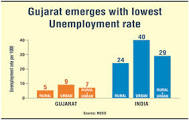
    Recently when I was in Lucknow. My hometown. I met quite a few of my old school friends. Whom I had not met for an eon. It was nostalgic. Seeing them and their better-halves. Some of whom. I was interfacing for the first time in my life. Ever since they had got married. But, strangely, I couldn’t meet their children barring a few. As most of them had moved out, to either Mumbai, Bengaluru, Pune, Chennai, Hyderabad, Delhi-NCR and some even abroad. In pursuit of professional careers and greener pastures. But as a saving grace. I could meet the children of two of my friends. One in business and the other in politics. Both readying themselves. To take on the mantle from their father.  This got me thinking. As to why, all these children had to leave their hometown. Perhaps, it was in pursuit of their careers. And, in the process they had to leave behind their parents, many of them now old. In fact, what I came to know later was. They had to leave their homes much earlier and way before. They even started their professional careers. First for professional education and then for jobs. This brings me to the sad point. That most of my friends are now living alone, with their spouses. 

    Post, India’s independence. When Jawahar Lal Nehru became the Prime Minister of India. He towed with an interesting idea of having one ‘heavy Industry’ in every district. That could have given employment and career opportunities to many, locally. But, unfortunately the bright idea never saw the light of the day. Perhaps, Nehru had realised. Though India is an agrarian society. Agriculture alone will not be able to take the load of its population explosion. From around thirty crore then. To a hundred and twenty five now.

    Meanwhile, some smart states of India. Driven by their vibrant and entrepreneurial combo of PBEs (politicians-bureaucrats-entrepreneurs). Took lead in developing pockets of industrial corridors in their states. That served as an early bird advantage. Such pockets came up mainly in the states of Maharashtra, Gujarat, Karnataka, Tamil Nadu, Haryana, Punjab, Delhi, parts of Rajasthan and Madhya Pradesh. To name a few, soon after independence. This now gives them, an exponential edge over other states. That did not follow suit, only to become laggard states. And, how quickly and craftily. The business savvy PBE of these states also realised. That Industry and entrepreneurship should not be close to the seat of power that is Delhi. Therefore they made Mumbai the financial and business hub of India. Now let’s see what happened to some other big key states of India after independence.

c2c7

    Let us start with Bengal. A front line state of India then. Much promoted and hyped as a business-savvy state by the Britishers. But, it stopped thinking about business. The moment Stalin, Lenin and Marx started parading the streets of Bengal. The tremors of which were felt in the entire North East. When existing businesses started closing down and new ones feared to enter. The age old  and much hyped Bengal centric boast of, “What Bengal thinks today, India will think tomorrow,’ died down. Entrepreneurial drive vanished. In fact, on a lighter vein. I even remember a joke that goes on as follows:

    ‘What will happen if you give a dozen Bananas each. To a needy Punjabi, Bengali or a person from the Hindi heartland of UP-Bihar? The most likely answer would be. Bengali will eat all the bananas in one go, UP-Bihar will eat six and save six for the next meal and Punjabi would eat six and sell six. And ergo, that sizes it up, quite well.

    But, what happened to Bihar including the present day Jharkhand. And Uttar Pradesh including Uttarakhand. The political nerve centre of India. Is historically amazing, and to be more precise, pathetic. We have had eight Prime Ministers from Uttar Pradesh. They all have served India including UP and Bihar for 44 years. But still U.P. is where it was-Laggard. Further, many important portfolios under these Prime Ministers have been held by great stalwarts as ministers from Bihar. But still, Bihar is where it was- both backward and laggard. Except, for adding a few new trains as a royalty of sorts. Not much has been done for these states by these ministers. In fact a stray Integral Coach Factory that was once gifted to Allahabad, was also handed over by Mrs Indira Gandhi to Kapurthala during Punjab agitation to please the Sikhs. When easily she could have announced any other project. Or given an additional coach factory to Punjab, or could have announced something in return, for Allahabad. But she did nothing of that sort.

    UP-Bihar is a typical case of Chirag tale andhera. U.P. only knows how to make Prime Ministers. Which is an old loaded pride of the state. In return. These Prime Ministers who hailed from Uttar Pradesh genuinely thought of serving and developing India. But not the state of U.P. as a whole, where they hailed from. On the contrary they only focused on their own constituencies for development and that too. Not in a professional manner. And never ever concentrated on the entire state. For example take the case of Rae-Bareilly. It has been the bastion of Gandhi family for decades. But is still nothing to pride upon, even after so many years. Specifically, if we were to compare it with Baramati. The bastion of Sharad Pawar.

    The other point that comes to my mind was the combo of PBE in UP-Bihar. That never worked in unison and ran their own agendas. Unlike the ones in the advanced states. Where entrepreneurial bench marking, economic progress and educational sufficiency of the state was an important cardinal rule, irrespective of which party ruled. Truly, a tacit understanding. And, in all of this. The much complacent populace of these states also need to be blamed. As they never demanded the best out of their PBEs. Rather, they kept smiling at whatever they got. Not realising that their children, one day will have to face the brunt of all this.

    And, last but not the least. Netas from UP-Bihar did not fare well in business, entrepreneurial and industrial astuteness. They never had a hidden string of understanding among themselves, while they belonged to several parties. To take their state on the path of progress. As compared to their counterparts from advance states. Where they also bickered. But when it came to intrinsic issues about the progress of state. They joined cause and had some form of understanding and unity. In fact netas from UP-Bihar were far ahead in political brinkmanship. But that only helped their party, themselves personally and their family and friends.

    In domino effect. I’m sure the present generation of job seekers and professionals from the laggard states must be asking. Why Bengal, Bihar, Jharkhand, UP and Uttarakhand are not like Maharashtra, Gujarat, or Karnataka? What have the dynamic combo of PBEs of these advanced states done which our PBEs couldn’t do?   When will people from Mumbai, Bengaluru and Gurgaon come to work in Lucknow, Patna and Ranchi. And more specifically when will I get a chance to work in Ranchi, Patna, Lucknow and more specifically my hometown. The harsh answer remains the same. Not during their lifetime. But I don’t rule out miracles.

By Kamlesh Tripathi

*****

COMMUNICATION SKILLS AT WORKPLACE

Copyright@shravancharitymission

c2c1c3

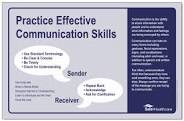
Just think of the modes in which our distant forebears communicated long ago- the evolution of the written word, speech, smoke signals, semaphores and the Morse code-one can go on and on. Here, of course, we need to concern ourselves with communication skills and time management in work place and home in the present times. Popular work culture does not perceive separate rules for men and women. We are all global managers in the local set up. Consider home, for a moment, as an extension of work place, particularly in the context of Indian women. While life at home may be laid back, care free, but is not without responsibility. And there the difference ends. The modern employee needs oral, written and technological skills to excel. Even the most naïve housewife is expected to operate the washing machine, handle the microwave oven, run the mixie, to draw money from an ATM and even to drive a car- that is if she wants to contribute meaningfully to the chores of routine but modern domestic life.

Nearly all work involves interaction and communication with others. Clear and effective communication between individuals, between teams and among departments is a vital part of any successful organization. Without effective communication in work place, business results and team relationships suffer. Poor performers continue to perform poorly and productivity drops. Good people are overburdened with more responsibility. In our personal lives we blame each other for lack of communication and agree to live in companionable silence.

We can see that employees still need written communication skills. Yet interpersonal oral communication skills are the ones most prized by employers in the new informal workplace atmosphere. At home the oral word has to be more precise as well as concise to avoid attrition. The ability to follow oral instructions is an important parameter in the overall persona of an employee, especially for front office employees. Considering the important nature of this faculty even CBSE has incorporated it in the form of ‘Listening & Writing skills, in their curricula. Employees who work with the public or closely with teams need skills in empathy and feedback techniques, especially in fields such as customer service, medical, and legal. Critical thinking and the ability to function as part of a problem-solving group are also skills that employers look for. Today’s worker must remain cool under pressure, adaptable to new technology and to a fast pace.

With benefit of hindsight I’ve shortlisted a few points which may be of some help to you while interacting with people.

  1. Clarity: Ensure the information you need to convey is, firstly, intelligible to you. Communicate it clearly and directly. Use language that is specific and unambiguous. Check that the receiver understands the message as you intended. Avoid acronyms lest they be confused.
  2. Be attentive Without becoming an active listener means you cannot make a conscious effort to truly hear what the other person is saying—don’t interrupt or respond until the other person has quite finished. It should come as no surprise that the best communicators are also the best listeners.
  3. Deportment: this means using the other person’s name, looking them in the eye, and nodding to aid in demonstrating you understand what they are saying. If you are communicating in writing, reread before sending your message to ensure that it could not be misinterpreted or taken as disrespectful.
  4. Message & Medium. Some of us are better communicating in writing and some are better at speaking. Consider the preference of your receiver.
  5. Who is the end-user : you may have to style your communication with your boss, co-worker, customer or supplier, differently.
  6. Mode: More and more of our workplace communication is done via email, voice mail and text messaging. There are advantages and disadvantages to each of these, depending on the message and the audience. Texting can be especially effective when a quick question or answer is required without further explanation or repeated follow up, e.g., “What time is the school council meeting.”

The important thing is to stay focused on behavior or performance and not character. You are not a judge of character. Avoid being biased or opinionated. When you are on the receiving end, avoid getting triggered by difficult messages. Keep in mind the bigger picture and the long term implications.

Don’t be yourself all the time. Be someone a little nicer and never confuse motion with action. After all, “ a man diligent at his work shall stand before kings”

A.K.Tripathi

Anubhab Apartments                                                                       26/03/2015

Title : Mahindra rise moment of Life

‘MAHINDRA RISE MOMENT’ OF MY LIFE

BECOMING MARKET LEADER IN TAMILNADU

    In the year 1991 I was transferred from Jaipur to Chennai as Area Manager. It was a sector shift from Automotive to Farm Equipment. A cross country movement and an exposure to a new work culture. And I vividly remember, how a colleague of mine had even jokingly remarked at that time about my transfer from automobiles to tractors–‘So Kamlesh! now your ‘speed’ reduces but ‘torque’ increases.’ Quite connoting to the characteristics of an automobile and a tractor. But there was a bigger barrier beyond speed and torque. That was the local vernacular ‘Tamil language’ that was utter Greek to me. And my palate that was not akin to the local culinary in all frankness. So, I felt, overall, it was a dim and a losing proposition for me. I landed in Chennai draped in apprehensions. Not knowing fully the local ball game. Yet I was oozing with some valid convictions and arrived procedures as a springboard.

    As a territory, I had Tamilnadu (TN), Kerala and the Andamans. To sell and service, the rugged, Red Mahindra Tractor. Therefore, I needed to rub shoulders with TAFE the local giant. I was told we had an effective network of well laid out, ebullient, dealers and officers. The HO mandate was to become Market leader in two years. More pronounced and reminded often by M&M icon Mr Alan Durante, President and Head of Marketing, AD & FES then.

    If my memory serves me right. TN market was then on an upswing and hovering around 8k-10k tractors annually, between 1992 -1996. TAFE were market leaders, followed by us. But the gap was only widening. With great expectations I had landed in Chennai. When, I decided to do three simple things that I thought would help us achieve our goals:

1.     I took a whirlwind tour of all Dealerships. Basically to establish an effective interpersonal rapport with the owners and their employees that was required as a force multiplier, and even more because I hailed from the North. Bought an English to Tamil translation book to learn and remember some key words. Required for day to day business.

2.     Took a complete inventory of Dealer infrastructure- (hardware, software, systems and processes) from all our Dealerships and branches and did a similar exercise for competitors. To understand where we stood. And, that was an eye opener.

3.     Launched a local ground level tactics “To be the best in each activity.”  Such as paid up stock, availability of spare parts, Dealer finance, Manpower training, Showroom display, Field contact, Tractor workshop record, Vehicle downtimes, Dealer branches and service points for doorstep service.

    During my first year in Chennai. We did not get significant results. To establish ourselves as market leaders. But on realising our level of activities. TAFE too pulled up their socks and started with aggressive wholesale, in districts of Chengalpet, Madurai and Tirunelvelli. I still remember the stinkers I then used to get from Mr Alan for not becoming market leaders.

    But the crafty tempest of TAFE did not deter us, and we continued with our sincere efforts in programming and monitoring the market almost on a daily basis.

    And then on a particular month in F-93, if I remember correctly. We did become Market Leaders for that particular month beating TAFE in their own home ground. For a couple of months we played down this big achievement. To let any fluke pass over. But our efforts were beginning to manifest and soon we became market leaders in all 25, 35 and 45 HP categories.

    Soon Chennai office was also adjudged runners-up, winners and runners-up in financial year’s f-93, f-94 and f-95 in Area Office performance award.

        Today I realise. That was truly a ‘Mahindra rise moment’ for me.

By Kamlesh Tripathi

shravancharitymission@gmail.com

By Kamlesh Tripathi

*

https://kamleshsujata.wordpress.com

*

Share it if you like it

*

Shravan Charity Mission is an NGO that works for poor children suffering from life threatening diseases. Should you wish to donate for the cause the bank details are given below:

NAME OF ACCOUNT: SHRAVAN CHARITY MISSION

Account no: 680510110004635 (BANK OF INDIA)

IFSC code: BKID0006805

*

Our publications

GLOOM BEHIND THE SMILE

(Archived in 7 prestigious libraries of the US, including, Harvard University and Library of Congress. It can also be accessed in MIT through Worldcat.org. Besides, it is also available for reading in Libraries and archives of Canada and Cancer Aid and Research Foundation Mumbai)  

ONE TO TANGO … RIA’S ODYSSEY

(Archived in Connemara Library, Chennai and Delhi Public Library, GOI, Ministry of Culture)

AADAB LUCKNOW … FOND MEMORIES

(Launched in Lucknow International Literary Festival 2014)

REFRACTIONS … FROM THE PRISM OF GOD

(Co-published by Cankids–Kidscan, a pan India NGO and Shravan Charity Mission, that works for Child cancer in India. The book is endorsed by Ms Preetha Reddy, MD Apollo Hospitals Group. Book was launched in Lucknow International Literary Festival 2016)

TYPICAL TALE OF AN INDIAN SALESMAN

Story of an Indian salesman who is lowly qualified but fights his ways through uncertainities to reach the top. A good read for all salesmen. Now available in Amazon.com

(CAN BE BOUGHT FROM ON LINE BOOK STORES OR WRITE TO US FOR COPIES)

*****


article: SHOULD TEXT BOOKS BE AVAILABLE, BOTH IN PRINT AND E-BOOK FORMAT FOR SCHOOL CHILDREN?

Copyright@shravancharitymission


134

SHOULD TEXT BOOKS BE AVAILABLE, BOTH IN PRINT AND E-BOOK FORMAT FOR SCHOOL CHILDREN?


    Every day when I go for my morning walk. I see innumerable school children and some very young, carrying their heavy rucksacks filled with books up to a bursting point. Many out of them are even unable to walk in the normal manner because of the weight. Some even walk sluggishly and at times are helped by their nannies or their young parents or even their old grand parents. To, be on time for their school bus or any other mode of conveyance that they take. And I am more than sure this must be causing a great amount of unspoken dissonance in these children. Considering, the matrix and size of India. I consider this as an important issue to be looked at seriously. When it affects 52% of our population. The hypothesis finds more ground when we dig into some relevant statistics as given below.

526

MIX OF PRIMARY AND SECONDARY EDUCATION

    India has approximately 113.8 million children attending primary school and another 88.5 million attending secondary. While PE (Primary Education) covers an age group of 5 to 14 years, SE (Secondary Education) covers children in the age group of 14-18 years. PE is up to class 8 and SE spills over to class 12 and beyond that is the HE (Higher Education)

    Now, if we were to analyse the demographic structure of education in India in the table below, we would find:

DEMOGRAPHIC STRUCTURE IN EDUCATION 2009  
AGE GROUP EDUCATION GROUP POPULATION IN CRORE PERCENTAGE OF POPULATION
0-3   7.5 6.50%
4-6 Pre Primary 7.9 6.80%
7-11 Primary (I-V) 14.4 12.40%
12-14 Upper Primary (VI-VIII) 8.5 7.30%
15-18 Secondary (IX-XI) 9.7 8.30%
19-24 Higher (XII+) 12.6 10.90%
  Population 60.6 52.30%

    The population in the age group between 4 to 18 years, which comprises of Pre-Primary to Secondary level, is around 40 crore and around 35% of our total population; which is sizeable. So, at no cost can we condone their issues, especially when they are not adults and cannot speak for themselves. The existing state of play, where they use printed text books may not be that convenient, both for them and their families, but then they have no choice.

SOME MAJOR DISADVANTAGES OF PRINT TEXT BOOKS

  • Bulky and heavy to carry and the weight only increases as you go up, the classes.
  • Often these books are out of print especially when the text is modified or when a new session starts and are even sold at a premium.
  • Print books are subject to wear and tear.
  • Expensive as compared to an e-book, and with the rise in paper, print, labour and transportation costs the prices will only increase.
  • May not be readily available at multiple locations.
  • In many areas we don’t have regular electricity supply or have long power cuts, when you can’t read these books and this is a great disadvantage, during times of examinations and even routine study. Whereas, an e-book can be read in the dark.

INDIAN PRINT TEXT BOOK MARKET

    If we take the Indian text book market it is at a level of $ 1.2 billion, with an addition of $510 million of supplementary books. However, private publishers have access to just 60% of the market. Given the monopoly of state boards and NCERT in 95% of the school text books. And a large chunk of schools are vernacular with local languages; and often out of print.

BENEFITS OF E-BOOKS

    If Finland can say good bye to ‘cursive handwriting’ by 2016, why can’t India move towards e-books. When the advantages are so many,

  • Except for a onetime cost of purchasing the e-reader the recurring costs of purchasing text books will reduce substantially. Government can incentivise purchase of e-readers.
  • It will always be available, both in India and globally. And never out of print.
  • You can even read in the dark.
  • Very light to carry and not bulky.
  • Will give even a rural child a sense of advancement in life.
  • One book for many books: e-reader.

WAY FORWARD

     The government should introduce e-book as a parallel option for children. To assess the ground reality the project could be piloted in a particular district or a state. It could even start with a particular subject. E-books could be readied out of print books and loaded in to simple e-readers, with white paper technology. The project can be launched in identified schools where it could be monitored by an IT instructor of the school along with teachers. And I am sure with this even our rural child will go global.

*

By Kamlesh Tripathi

*

                                                   https://kamleshsujata.wordpress.com

*

Share if you like it

*

Shravan Charity Mission is an NGO that works for poor children suffering from life threatening diseases. Should you wish to donate for the cause the bank details are given below:

NAME OF ACCOUNT: SHRAVAN CHARITY MISSION

Account no: 680510110004635 (BANK OF INDIA)

IFSC code: BKID0006805

*

Our publications

GLOOM BEHIND THE SMILE

ONE TO TANGO … RIA’S ODYSSEY

AADAB LUCKNOW … FOND MEMORIES

REFRACTIONS … FROM THE PRISM OF GOD

(CAN BE BOUGHT FROM ON LINE BOOK STORES OR WRITE TO US FOR COPIES)

*****


ARTICLE: THE HYPE OF #LITERACY AND DILEMMA OF #EMPLOYABILITY

Copyright@shravancharitymission

961

DEFINITION OF LITERACY

    Literacy, as defined in Census operations, is the ability to read and write with understanding in any language. A person who can merely read but cannot write is not classified as literate. Any formal education or minimum educational standard is not necessarily to be considered literate.

    (UNESCO) has drafted a definition of literacy which is, “the ability to identify, understand, interpret, create, communicate, compute and use printed and written materials associated with varying contexts. Literacy involves a continuum of learning in enabling individuals to achieve their goals, to develop their knowledge and potential, and to participate fully in their community and wider society.”

235

    The National Literacy Mission defines literacy as “acquiring the skills of reading, writing and arithmetic and the ability to apply them to one’s day-to-day life. The achievement of functional literacy implies (i) self-reliance in 3 R’s-reading, writing and arithmetic, (ii) awareness of the causes of deprivation and the ability to move towards amelioration of their condition by participating in the process of development, (iii) acquiring skills to improve economic status and general well being, and (iv) imbibing values such as national integration, conservation of environment, women’s equality, observance of small family norms.”

    According to the latest report released on 31 March 2011 the literacy rate of India has increased to 74%. This means a decadal growth of around 10 %.

BUT CAN MERE LITERACY GUARANTEE EMPLOYMENT?

Is the moot point, as literacy only provides general ability to read, write and a sense of better awareness, but jobs, require deeper and varied skills that need to be created. In the recent Times Ascent edition of 27th November, I read; in the just concluded PAN-IIM World Management Conference held at IIM-KOZHIKODE our HRD Minister Smriti Zubin Irani harping on some appreciative facts about India as a routine lullaby.

    That India is one of the world’s largest democracies and according to some studies 57% of our population is under 30. Our average age is expected to be less than China and the US by 2050. This means more workers, or in other words, a demographic dividend. India has a large pool of workforce that is predominantly English-speaking. 4.4 million Graduates join the Indian job market annually, so there is no shortage of skilled workers in our country. So be it.

    But then do we have appropriate jobs for all as she has not spoken about those unpleasant figures of unemployment. ILO indicates sluggishness in the job market over the last two years where jobless rate could be around 3.8% this year which sounds optimistic. On a more historic note the unemployment rate has been hovering around 6-8 % on an average over the last decade or so. So, can one say, each time when literacy levels have gone up unemployment hasn’t come down?

7

    This necessitates, we should take up skill building on fast track. Which horrifyingly comes up in India at a later stage of our educational system. And considering, the alarming school dropout rate of 40% with more girls facing the brunt, this should start at secondary school level.

CAUSE OF SYSTEMIC WORRY

    It is worrying to see, important ministers making isolated parroted statements in coveted milieus like IIMs and IITs, where even otherwise everything is hunky dory. And it goes without saying the stark reality continues to remain as it is and nothing much has changed on the ground. So the big question is how will the additional annual workforce of 4.4 million per annum be adjusted in the job market, and what is the road map for creating such jobs each year. Time has come when at least 74% of the literate Indians would want to know end-to-end on how these jobs would be created, before one brags about the English speaking workforce of 4.4 million and the young India. The central point therefore is the job-creators and the workforce creators of India need to meet on one platform to align, which is still missing.

    In any case most IIT and IIM graduates or post graduates won’t remain unemployed, rather would be gainfully employed. But what is more worrying is the lower end of the pyramid that will bear the brunt of unemployment.

    Considering the present unemployment rate. HRD minister would have done well by initiating a dialogue with those states and departments where huge vacancies are lying unfilled, especially teachers and police constables. The low hanging fruits. Which I guess is also the baby of HRD ministry. Needful to mention teacher appointments in some states have been subjected to scams, and appointments cancelled subsequently.

INDUSTRY INTERFACE

    One of the biggest sources of employment in any country, with India being no exception is through business and industries. Where, according to the World Bank we are still at an agonizing 142 in the ease of doing business out of 189 countries. And time taken for registration of a business is currently at 27 days that needs to be cut down to one day, as in Canada and New Zealand.

    Government intends to go online on approvals, for over 200 state and central permits by April next year which is laudable. Currently 81 state level clearances and another 133 at the central level are being put on line and out of these more than 50 relate to railway ministry, alone. But the big question remains; whether we can set up industries at a pace matching 4.4 million jobs a year, which will only increase by leaps and bounds. The answer as of now is no and that necessitates searching for other alternatives. And so; where is the MEA proposal (Ministry of External Affairs) if we were to export our workforce to various aging countries about which our Prime Minister talks so often? And which new countries have been identified where our young English speaking workforce can go and work safely with proper work permits and visas, in a safe manner. I guess, the two distinguished ladies Sushma Swaraj and Smriti Irani should meet on this agenda and at least identify the countries, and if for some reason it happens to be Germany, Smriti should not think of replacing German by Sanskrit.

THE ROUTE AHEAD

    For brand India, literacy to full employment will be a long and arduous walk, considering its size and scale. Where, premier institutions such as IIT and IIM should also brainstorm to show the way out. And we will have to figure out other avenues also, where I guess PM Narendra Modi’s team needs to come together on one platform.

*

By Kamlesh Tripathi

*

Share if you like it

*

Shravan Charity Mission is an NGO that works for poor children suffering from life threatening diseases. Should you wish to donate for the cause the bank details are given below:

NAME OF ACCOUNT: SHRAVAN CHARITY MISSION

Account no: 680510110004635 (BANK OF INDIA)

IFSC code: BKID0006805

*

Our publications

GLOOM BEHIND THE SMILE

ONE TO TANGO … RIA’S ODYSSEY

AADAB LUCKNOW … FOND MEMORIES

REFRACTIONS … FROM THE PRISM OF GOD

(CAN BE BOUGHT FROM ON LINE BOOK STORES OR WRITE TO US FOR COPIES)

*****