DASTAN-E-AWADH WITHOUT DASTANGOI? TIMES OF INDIA 30/8/25
The Urdu oral storytelling art form, which flourished in Awadh during the 1800s, is seeing a revival, again mostly from Lucknow, says Neha Lalchandani
The shifting of Nawab Asaf-ud-Daula’s court from Faizabad to Awadh in 1775 marked the birth of Lucknow as a cultural and administrative hub. Already an important centre of Urdu learning, the city soon emerged as an attractive destination for artists, musicians, and storytellers who once thrived in Mughal courts in Delhi. What started as a steady movement of art connoisseurs to Awadh in the early 1800s intensified around the time of the Uprising of 1857. It was during this phase that Lucknow was introduced to the art of Dastangoi or storytelling, which came to the Mughal courts enveloped in Persian and gradually shifted to the use of Urdu. Mughal emperor Akbar, a known Dastangoi lover, is credited for pushing the evolution of one of the most popular stories, that of Amir Hamza, now etched as Hamzanama. Mehmood Farooqi, who is credited for with reviving the art of Dastangoi in 2005, writes that Hamza was supposedly an uncle of Prophet Mohammed, and the stories about him abound with tales of fairies and djinns, and adventures that took him on long travels. Around the 16th century, stories of Hamza started to be narrated by specialised storytellers, called Dastangos. Valentina Trivedi, a Dastango, says Akbar had the story of Hamza illustrated in large panels, which came to be known as Hamzanama. “It is said that a Dastango would stand behind different panels to relate specific stories to highlight the shift in the scene,” she said. Himanshu Bajpai, whose pride in the city reflects in his name ‘Lakhnauaa’, relates that Dastan-e-Hamza created quite a flutter in Delhi before moving to Lucknow in the second phase of Dastangoi’s development. Abdul Halim Sharar, in his seminal book on Lucknow called Guzashta Lucknow, talks about how Dastangoi suddenly burst out into Lucknow’s cultural scene once the dust from the Uprising of 1857 settled. Dastangoi performances could be witnessed in markets and chowks, and Lucknow’s “shaukeen” noblemen ensured that they had their favoured Dastango as part of their retinue. Lucknow also played a crucial role in ensuring that Hamzanama, which for years was passed on through oral traditions, was finally etched in print. Trivedi, explaining how the revival of the art took place almost a century later, when there are barely any recordings of the original art form, said that it was to the credit of Munshi Nawal Kishore, the founder of the Nawal Kishore Press in Lucknow, that Hamzanama was finally printed, “Munshi Nawal Kishore played a key role in the preservation of Hamzanama. Around the 1890s, Kishore must have realised the importance of having the story written down. Under him, 46 volumes, each with 1,000 pages, were finally compiled. Sadly, most of those are also now lost,” she says. Some of the volumes were with late Shamsur Rehman Faruqi, a well-known Urdu poet and writer. At one point, Faruqi, apparently impressed with his nephew Mehmood, asked him to take up the recital of the volumes of Hamzanama, which he preserved. Askari Naqvi, Dastango, actor, and founder of Naimat Khana in Lucknow, remembers an interview of Mehmood’s where he talks about his ‘chacha’ encouraging him to take up Dastangoi. “If I remember correctly, his ‘chacha’ told him, ‘maare maare phir rahe ho. Yeh (Hamzanama) padho, tumhara bhi bhala hoga aur inka (books) bhi,” Naqvi says. In 2005, Farooqi, who took his uncle’s advice seriously, brought back the art of Dastangoi to life. Mir Baqar Ali from Delhi, the last known Dastango of that era, passed away in 1928, and with him, the art of Urdu Dastangoi also died. “Ali’s art was such that when he related a story, you could see it unfold in front of you,” says Bajpai. “His projection, modulation, and expression were so perfect that he could persuade you to believe that you were hearing a woman, and in the next second someone declaring a war,” he says. Now, 7-8 decades later, the art of Urdu storytelling has returned to the stage. In its current form, the setting of the state, the white angrakha and do palli topi can also be traced to Farooqi, who has since groomed several Dastangos like Trivedi and Bajpai. “Even this costume is inspired by Lucknow from a time when the libaas (attire) was not restricted to any religion but instead defined the cultural identity of those residing in Lucknow,” Bajpai says. Where storytellers were once dependent on literature like Alif Laila, Bagh-o-Bahar, Qissa-e-Meherafroz-o-Dilbar, etc., now, Dastangoi is an evolving art form which has had to adapt and adopt. Even though Urdu remains the primary language, Dastangos are delving into Hindustani as well. Stories have changed and, as Naqvi explains, moved from classical to modern. “Of course, the classical version still thrives, but to reach out to a wider audience who may not be very familiar with theth Urdu, it was important to simplify the language. People are writing their own stories now. Very often works are commissioned to commemorate some recent event, etc,” he says.
Shravan Charity Mission is an NGO that works for poor children suffering from life-threatening diseases, especially cancer. Our posts are meant for our readers, including children and adults, and have a huge variety of content. We also accept donations for our mission. Should you wish to donate to the cause of cancer? The bank details are given below:
Five Go to Demon’s Rocks is the nineteenth novel in The Famous Five series by Enid Blyton. It was first published in 1961.
Irascible scientist Quentin Kirrin informs his wife, Fanny, that his colleague, Professor Hayling, will be arriving a week early for a stay at Kirrin Cottage. The professor is accompanied by his son, Tinker, who often has a sudden urge to start imitating vehicular noises and has brought his pet monkey, Mischief. It is also described that Tinker imitates such noises when he is upset or when someone has been ‘horrid’ to him. Also arriving are Quentin and Fanny’s daughter, George, and her cousins, Julian, Dick and Anne, and George’s dog, Timmy. The ensuing crowded and noisy household upsets the two scientists, prompting Tinker to propose that the children spend their holiday at his abandoned lighthouse at Demon’s Rocks, located 10 miles away.
After settling in at the lighthouse, the children meet an elderly retired sailor, Jeremiah Boogle, who tells them of his youthful encounters with three villains who lured ships to Demon’s Rocks and plundered the wrecks. He says the ringleader, One-Ear Bill, hid a treasure trove which has never been found. Two of One-Ear Bill’s descendants, Jacob and Ebenezer, now show tourists through the wreckers’ cave. Jacob burgles some items from the lighthouse and also steals the key. When the children visit the cave, Mischief discovers a gold coin. Later, Ebenezer and Jacob lock the children in the lighthouse to prevent them from returning to the cave to hunt for the treasure, but Julian and Dick enter the cave network via a tunnel and discover the treasure. Unable to reach the mainland because of the rising tide, they return to the lighthouse, light its lamp and ring an old warning bell amid a fierce gale to alert the villagers to their fate. Jacob and Ebenezer flee, and the children are rescued the next morning. Julian and Dick declare they will recover the treasure for the police, and then the children will return to Kirrin Cottage.
Shravan Charity Mission is an NGO that works for poor children suffering from life-threatening diseases, especially cancer. Our posts are meant for our readers, including children and adults, and have a huge variety of content. We also accept donations for our mission. Should you wish to donate to the cause of cancer? The bank details are given below:
14/9/25 MYSTERY OF AGATHA CHRISTIE’S INDIA STORY FINALLY SOLVED
— WHY DIDN’T THEY ASK MATHEW? THERE WAS CONSTANT SPECULATION OVER WHETHER AGATHA CHRISTIE EVER CAME TO INDIA, BUT NEVER ANY PROOF, EVEN THOUGH SHE WAS KNOWN TO BE AN AVID TRAVELLER. NOW, HER GRANDSON TELLS WRITER MANJIRI PRABHU THAT SHE DEFINITELY HAD VISITED – NOT ONCE, BUT TWICE–
Some mysteries need to be actively cracked, but some solve themselves with time.
There has been constant speculation about Agatha Christie’s India connection. One question has recurred over the years, but has never really been accurately answered: Did Agatha Christie ever visit India? The internet and popular belief will state that she did not. I, too, had often puzzled over how Christie, a world traveller, had never actually been to India. In fact, in a video in 2021, I had even concluded that she hadn’t. Until one cool but sunny Easter day in Wales. In March 2024, I met Christie’s grandson, Mathew Prichard, and his lovely wife, Lucy, at their charming home in Wales. Prichard, now in his 80s, had been very close to his grandmother. It was a memorable day, but it turned momentous when Mathew showed me Christie’s personal memorabilia — her passports, her first typed and edited manuscripts, rare photos, her camera, and her last portrait painting, which hung on one of the walls of his house. When Mathew signed and gifted me a copy of his grandmother’s latest biography, I also realised what a mammoth task he had been entrusted with-to preserve her legacy, and how he had upheld that trust: a proud grandson of the Queen of Crime. It was when I mentioned how strange it was that Christie had never visited India that he glanced at me with a twinkle in his blue eyes and said, “Oh, but she did!” I was startled. This was contrary to all that we believed. A few minutes later, as I skimmed through the numerous black-and-white, well-preserved photos, I found some that made my heart race-pictures of Christie with a garland, descending from an Indian Airlines plane. Here, finally, was the missing link to a long-standing puzzle. I was on the threshold of solving a real mystery, but I needed to know more. At my request, the archivist Joseph Keogh dug deeper and came up with some fascinating, unpublicised facts. Christie had indeed visited India-not once, but twice. From her passport stamps, he traced her travel itinerary for the two trips. Her first trip was in Jan 1960, when she visited Ceylon (present-day Sri Lanka), then India and Pakistan. From Jan 11 to Feb 2, she travelled to Bombay (now Mumbai), headed to South India’s Madras (now Chennai), did some sightseeing at the Ajanta Caves, and then on to Delhi. Between Feb 2 and 9, she went to Nepal and returned to Patna and Delhi, finally leaving for Karachi on Feb 17. Some letters were also found that referenced her trips. It appeared that the 1960 trip was for a lecture tour by her second husband, the archaeologist Max Mallowan. The following are extracts from two letters that Christie wrote to Edmund Cork in Cyprus, her literary agent and lifelong friend. Jan 11, 1960 | Future plans are, roughly, leave for Madras today – go via southern India to Bombay arriving 17th or 18th–Then some sightseeing near Bombay Agenta Caves (sic) etc and on to Delhi and then to Nepal on Jan 31st for a week — c/o British Embassy would find us there as I’m not sure what the hotel is. Jan 20, 1960 | Our plans are a bit different at the moment as accommodation at hotels is very hard to get exactly when one wants it but we shall be in and out of the Ashoka Hotel at Delhi between Jan 28th and Feb 2nd– and then Nepal (c/o British Embassy Kathmandu) 2nd to 9th then in and out of Ashoka again finally leaving it on Feb 17th for Karachi. So forward anything you think I ought to see to the Ashoka at Delhi — but nothing that I needn’t!! Another letter was from Christie, then staying at the Ashoka Hotel in New Delhi, to Rosalind, her daughter. Feb 16, 1960 | On our arrival here yesterday evening, several archaeologists were waiting with two porters and loads of archaeological material from their … dig. The examination of the same intrigued the Ashoka guests very much. Christie’s second trip to India, a year later, seemed to be for leisure. The passport has a Palam, New Delhi stamp (month not specified) in 1961. This time she visited Srinagar in Kashmir and stayed at the Oberoi Palace. This is what she wrote to he daughter Rosalind: Oct 30, 1961 | Lake and mountains rather lovely. This is a Hotel rather like at Jaipur — converted Rajah’s Palace — miles and miles of corridors — enormous rooms and we are in a kind of supersuite looking over lake. It’s all terribly dried up by this time of year — one ought really to come in May-June. Now one must be content by rich beds of red salvia and dahlias in the Hotel garden. Temp is about 50 at night. Delicious hot sun to sit in and about 60 in a day. Suits me very well. We made some excursions — to the various Mogul gardens — and to a lake … Which is very beautiful and ringed with snowclad mountains. You can see the mountains now after the rain. We have to leave here and go to the Hotel in the town– but expect that our booking for Nov 2nd to Delhi will be all right. From Delhi, she wrote again to Rosalind. Here we are in the Ashoka. I’m glad we had a good ten days and in a perfect Hotel for old ladies (very few of them nowadays) where I could sit, in the sun — and look at a view like a Japanese print. Lovely! The letters revealed Christie’s bright, chirpy personality and tongue-in-cheek humour, her eagerness to explore India and her appreciation of scenic beauty. She seemed happy to be in India. But I pondered why her trips were not well-known. Was it because photographs were a rarity then or because she checked into the hotels in her husband’s name — or perhaps simply because Agatha Christie was a private person? Whatever the reason, I was thrilled with my discovery. That sunny day with Mathew, Lucy and Gwynnie, the dog carried an extra fulfilling zing because of this exciting revelation. I had always sensed a deep connection to Agatha Christie. But being the chosen one to unravel the mystery of her India trips felt truly special. PICTURES IN THE ARTICLE
Agatha Christie descended from an Indian Airlines plane during one or two visits to India.
Agatha Christie autographs copies of her books.
Mathew Prichard (also in the photo right), who has settled the India question once and for all, with his grandmother Agatha Christie.
Pages from Christie’s passport, showing (top) arrival at Palam, and (above) a Patna Police stamp that says ‘To Kathmandu’
TOMORROW IS THE 135TH BIRTH ANNIVERSARY OF ‘QUEEN OF CRIME’ BORN | SEPTEMBER 15, 1890 DIED | JANUARY 12, 1976 – SHE WROTE THE WORLD’S LONGEST-RUNNING PLAY. THE MOUSETRAP, PERFORMED CONTINUOUSLY IN LONDON’S WEST END SINCE 1952, EXCEPT FOR A BREAK DURING COVID (2020-2021) – MARRIED TWICE, DIVORCED HER FIRST HUSBAND, ARCHIBALD CHRISTIE, IN 1928, AND MARRIED ARCHAEOLOGIST MAX MALLOWAN IN 1930 – FOLLOWING THE BREAKDOWN OF HER FIRST MARRIAGE IN 1926, SHE MADE HEADLINES BY GOING MISSING FOR 11 DAYS. SHE WAS LOCATED AT A HOTEL 296 KM FROM HER HOME, REGISTERED AS MRS TRESSA NEELE, HER HUSBAND’S LOVER’S SURNAME. BOOKS: 66 DETECTIVE NOVELS, 14 SHORT STORIES FAMOUS CHARACTERS: HERCULE POIROT, MISS MARPLE The author is an award-winning writer of mystery novels [Extracts and photographs used with permission from Mathew Prichard and the Christie Archive Trust. Special thanks to Lucy Prichard and Joseph Keogh of the Christie Archive Trust]
Shravan Charity Mission is an NGO that works for poor children suffering from life-threatening diseases, especially cancer. Our posts are meant for our readers, including children and adults, and have a huge variety of content. We also accept donations for our mission. Should you wish to donate to the cause of cancer? The bank details are given below:
VIKING SAGAS ON COMBAT AND CURIOSITY ECONOMIC TIMES 17/2/24 LIFE WAS TOUGH FOR VIKINGS, THEY WERE FIERCELY INDEPENDENT PEOPLE, AND VALUED TRUST AND TEAMWORK DEVDUTT PATTNAIK… AUTHOR OF BUSINESS SUTRA
The Greeks had inspired the Romans 2500 years ago. The Romans established a great empire around the Mediterranean for over a thousand years. Around the time they turned Christians, they began encountering barbarians from the North. The Celts, the Gauls, the Goths, in the western or Latin end of the Empire, around 500 AD, and later, the Vikings, in the eastern or Greek end of the Empire, around 1000 AD. Like the Greeks, life was tough for the Vikings, and they were fiercely independent people. Some, not all of them, travelled on ships to distant lands to raid. The shipping experience taught them the value of trust and teamwork. Vikings lived in Northern Europe (Scandinavia), in cold, dark, wintry lands, close to the Arctic. They had to fight to survive. So their mythological sagas spoke of battle all the time. Their gods fought frost giants in icy lands, and trolls who lived in dark, damp spaces. The gods even fought each other. The realm of the gods was located on branches of a giant tree, and it was feared that the roots of this would eventually be gnawed by demons, and everything would one day come to an end, even for the gods. A depressing worldview. The Vikings believed that if they died bravely in battle, they would be taken by Valkyries to Valhalla, a great hall to wine, dine, and fight with the gods themselves. This motivated the Vikings to fight. And to face death fearlessly. Those Vikings who died non-violent deaths, because of disease, accidents, and old age, had an unremarkable afterlife in the land of shadows ruled by Hel, a goddess who never smiled. The Vikings had two sets of gods, the Vanir, who enjoyed trade and the Aesir, who preferred the raid, as revealed in the following story. The Vanir and the Aesir were both gods, but very different. Vanir had magic, and Aesir had strength. Freyja of the Vanir visited the Aesir and displayed her gold, giving it to all those who made her happy. Under the spell of gold, the Aesir soon forgot all about loyalty to the clan and kept seeking more and more of the shiny stuff, offering gods and services in exchange. They stored more and shared less. Aesir blamed Freya’s magical gold for this shift in values. Aesir tried to burn Freya alive, but she resurrected herself each time, for she had magic. This led to war between Vanir and Aesir, which was inconclusive. Finally, the Vanir and the Aesir decided to make peace. Two Vanir went to live with the Aesir, and two Aesir went to live with the Vanir. Thus, they would learn about each other’s ways. The two Vanir, Freyr and Frerja, children of the wealthy Njord, taught the Aesir how the fertility of the earth and the sea can help them survive, and how accounting ensures fairness. The two Aesir, Hoenir and Mimir, taught Vanir about the value of loyalty and comradeship over being calculative. The Vanir liked the handsome well spoken Hoenir, but not the silent Mimir, who only whispered in Hoenir’s ear and spoke to no one else. Hoenir and Mimir always travelled together, talking to each other secretly, and this made the Vanir so uncomfortable that they killed Mimir. They did not realise that while Hoenir was handsome and charming, he needed Mimir’s counsel to make smart decisions. The two worked well as a team. Without Mimir, Hoenir had no good counsel. All he could say to the Vanir in meetings when they sought a decision was, ‘Let others decide!’ This story reminds us that different cultures value different things, and for a civilisation to thrive, we have to learn how different cultures function. The Aesir had to learn the trading ways of the Vanir based on agreements and negotiations. The Vanir had to learn the raiding ways of the Aesir based on trust, teamwork, and unquestioning loyalty. The Aesir were traders and accountants who valued policies and profit over people. This creates a fair professional ecosystem where relationships do not matter and nepotism does not take root. The Vanir were all about people, about bonding, about passion and trust. Here, connections matter: you bypass the rule for the relationship, like breaking the protocol for the benefit of a friend. The Romans saw the Vikings are barbarians and were eager to make them Christian, for they believed their truth was the universal truth. They were not interested in learning from ‘lesser’ people. For Romans, the other had to be subjugated. They were resources and rivals to be enslaved and brought into the Roman fold. In time, the Viking lands of Scandinavia would give rise to the Dutch, who would change the world forever by inventing the stock market, a financial revolution that provided vast amounts of credit to the newly emerging industrial economy. Was this because the Vikings turned Christians, or was it because the Vikings remembered their old ways– the ways of the Aesir and the Vanir? We can only speculate.
Shravan Charity Mission is an NGO that works for poor children suffering from life-threatening diseases, especially cancer. Our posts are meant for our readers, including children and adults, and have a huge variety of content. We also accept donations for our mission. Should you wish to donate to the cause of cancer? The bank details are given below:
The dilapidated villa was crouched between the dark gorge and the sloping hillock. Its windows were like vacant eyes. Beyond the hillock, tea gardens stretched away, like a patchwork of shadow and the fading green, under the encroaching dusk. My car had stalled on the single, empty road, leaving me stranded. I decided to walk, hoping to find help in the nearest village, not expecting the crumbling double-story structure to materialise from the gloom.
Rain began to fall, a cold drizzle that quickly soaked my clothes. The darkness deepened, pressing in. That’s when the villa caught my eye, a flicker of warm light in the front room, a beacon of desperate hope. Relief washed over me; shelter, and perhaps a mechanic in the morning.
Approaching, I noticed the name etched above the door: ‘Poropkar Villa’. The path to it was flanked by tea shrubs that released a damp, aromatic scent. I hesitated on the road; the villa’s other windows were swallowed by blackness. Only that single light flickered. Finally, chilled and weary, I decided to knock on the door.
My first knock was tentative, met only by the drumming rain. I waited, then knocked harder. Footsteps shuffled inside. Relief surged again. A male voice, thin and reedy, called out, “Who’s there?”
‘I’m Ajoy. My car broke down nearby. Could I trouble you for shelter for the night?’
The door creaked open. An old man stood silhouetted against the light. ‘Please, come in, Ajoy. Call me Dibyajyoti.’
His voice snagged at a memory. Familiar, yet altered by age. Voices didn’t usually jar like that.
On the wall, an ornate clock ticked. Its hands pointed at 7:30 pm. My watch read 8:00 pm. ‘Your clock seems to have stopped,’ I said.
He smiled faintly. ‘I prefer it slow. The world rushes enough. Let my time crawl.’
The lagging clock echoed another memory: Pranjal, a colleague years ago, who always kept his watch half an hour behind. We’d worked together briefly before losing touch. Pranjal, the one who disappeared after that awful business with a girl…
A jolt went through me. ‘Dibyajyoti… are you by any chance Pranjal?’ His eyes, deep-set and shadowed, fixed on me. ‘Who are you?’
‘Ajoy. We worked together. Pranjal, where is that girl you were seeing? And why here? Why change your name?’
He sighed, a sound like dry leaves skittering. ‘A long story. After we lost contact, the affair continued. One night, after a movie, I dropped her off near her home. But she never arrived. They found her… in the river days later. Raped and murdered. The police came for me. No alibi, no defence. They sentenced me. Job gone, family gone. Years in prison. I screamed my innocence, but her family… they wouldn’t listen. Later, after I was locked away, friends found evidence – she was taken by goons that night. But it was too late for me. When I came out, I couldn’t face anyone. I came here, to the hills. Did some charity, saved some money, bought this place and changed my name. Pranjal is dead. Call me Dibyajyoti.’
A chill deeper than the rain settled in my bones. Hunger gnawed, but the villa was bare except for water. Dibyajyoti suggested we check the car. Maybe it would start now. ‘Nothing to eat here,’ he said. ‘The distant village might have something.’
We walked back. To my surprise, the car started on the first crank. I thanked him profusely, promising to visit again soon.
An hour’s drive brought me to a cluster of lights, a village. A roadside dhaba glowed invitingly. It was well past midnight. I ordered a meal, shivering despite the warmth inside. An old man nursing a chai looked up.
‘Sir, you’re far from home. Where are you coming from?’
‘From the Poropkar Villa. Met an old friend there, Dibyajyoti.’
The old man’s face hardened. ‘Dibyajyoti? He died five years ago. No one lives in that cursed house. He murdered a girl, served his sentence and came back here to rot.’
‘What nonsense!’ I protested. ‘I spent hours with him just now! We were colleagues! He told me he was framed for a murder that he didn’t commit! His real name is Pranjal!’
The dhaba owner leaned forward, his voice low and grave. ‘Framed? Perhaps. And the girl’s family knew that he was framed. He confessed this on his deathbed, they say. He changed his name to Dibyajyoti to avoid embarrassment—to escape his own ghost.’
The hot food turned to ash in my mouth. Hours spent with a ghost? His plea for understanding? His desperate need to tell me the truth before he parted?
The old man’s words hung in the smoky air. ‘Dibyajyoti came to see you, then. He needed to tell someone whom he knew from before. Someone who might understand him. You were the right person. He told you that he was innocent. Now, maybe, his soul will finally rest.’
Outside, the rain had stopped. The silence felt heavy, filled with the weight of a terrible secret finally spoken, and a spirit, perhaps, finally set free. I recollected suddenly. Dibyajyoti never shook hands nor served any food. Well, ghosts don’t do that, but they have a heart. The Poropkar Villa that night crumbled under heavy rains.
Shravan Charity Mission is an NGO that works for poor children suffering from life-threatening diseases, especially cancer. Our posts are meant for our readers, including children and adults, and have a huge variety of content. We also accept donations for our mission. Should you wish to donate to the cause of cancer? The bank details are given below:
World Music Day is also known as Fête de la Musique. It is celebrated annually on June 21. It originated in France, where citizens were encouraged to play music in their homes and neighbourhoods. The English word ‘music’ originates from the Arabic word ‘Mausiki.’
The world has never been bereft of music. The veena of Goddess Saraswati symbolises the harmony of the universe. It is the melodic balance of speech, sound, and silence. Meera Bai’s bhajans captivate listeners with love and devotion. She sang for Lord Krishna. “Mere to Giridhar Gopal, doosro na koi” (I belong only to Giridhar Gopal, no one else.) In her Vakhs, Lal Ded, the 14th-century Kashmiri mystic poet, speaks of an inner sound or vibration that leads to spiritual awakening. The idea supports the Indian philosophical concept of Nada Brahma—the belief that the universe itself is the divine sound.
“Mujh se pehli si mohabbat meri mehboob na maang, Mausiki mein bhi ab woh halaat nahin rahe.” (Do not ask me for the love I once gave you. Music no longer holds the same sweetness.) In this line, Urdu poet Faiz Ahmed Faiz intertwines lost love with the fading joy in music, linking emotion with melody.
Tansen believed music was the path to the divine. His practice was deeply spiritual, and he often sang in praise of Lord Krishna. According to legends, Tansen could light lamps with Raga Deepak, bring rain with Raga Megh Malhar, and calm wild animals with appropriate ragas. Though these tales may be exaggerated, they reflect the belief that music is a natural force, not merely an art form, but a form of sadhana (spiritual discipline). Tansen said, “Raag aur taal ke bina sangeet adhoora hai. Sangeet vo hai jo man ko shaant kare aur bhagwan se milaye.” (“Music without raga and rhythm is incomplete. True music is that which calms the mind and brings one closer to God.”)
Mystic poet Kabir did not regard music merely as an art but as a sacred practice and a direct path to the divine. His verses (dohas) often express the idea that true music arises from within, when the soul becomes attuned to the divine presence.
Greek composer Vangelis, whose iconic theme ‘Çhariots of Fire’ (fit to be the Olympic hymn) won him an Academy Award in 1981, conveys his underlying craving for music. He believed that music shaped the universe and that he understood the world through music. Vangelis believed in ‘Sadhana’.
André Rieu, the famous Dutch violinist and conductor, emphasises the emotional and universal nature of music: “I make music to touch the souls of people as it’s a language we all can speak.” German philosopher Friedrich Nietzsche famously stated, “Without music, life would be a mistake.” Persian Poet Rumi believed passionately in the use of music, poetry, and dance as a path for reaching God. For Rumi, music helped devotees concentrate their whole being on the divine. Rumi encouraged Sama to listen to music and engage in the sacred dance. Rumi’s favourite musical instrument was the reed flute … ‘Listen to the reed and the tale it tells’.
“The music is not in the notes, but in the silence between,” was Mozart’s take, and “Music should strike fire from the heart of man and bring tears from the eyes of woman,” proclaimed Beethoven. “If music be the food of love, play on,” wrote Shakespeare, in Twelfth Night.
And finally, life is best described in the musical song ‘Que Sera Sera. Whatever will be will be,’ written by Jay Livingston and Ray Evans. Let music be your companion in joy, in sorrow, and in silence. Happy World Music Day.
Shravan Charity Mission is an NGO that works for poor children suffering from life-threatening diseases, especially cancer. Our posts are meant for our readers, including children and adults, and have a huge variety of content. We also accept donations for our mission. Should you wish to donate to the cause of cancer? The bank details are given below:
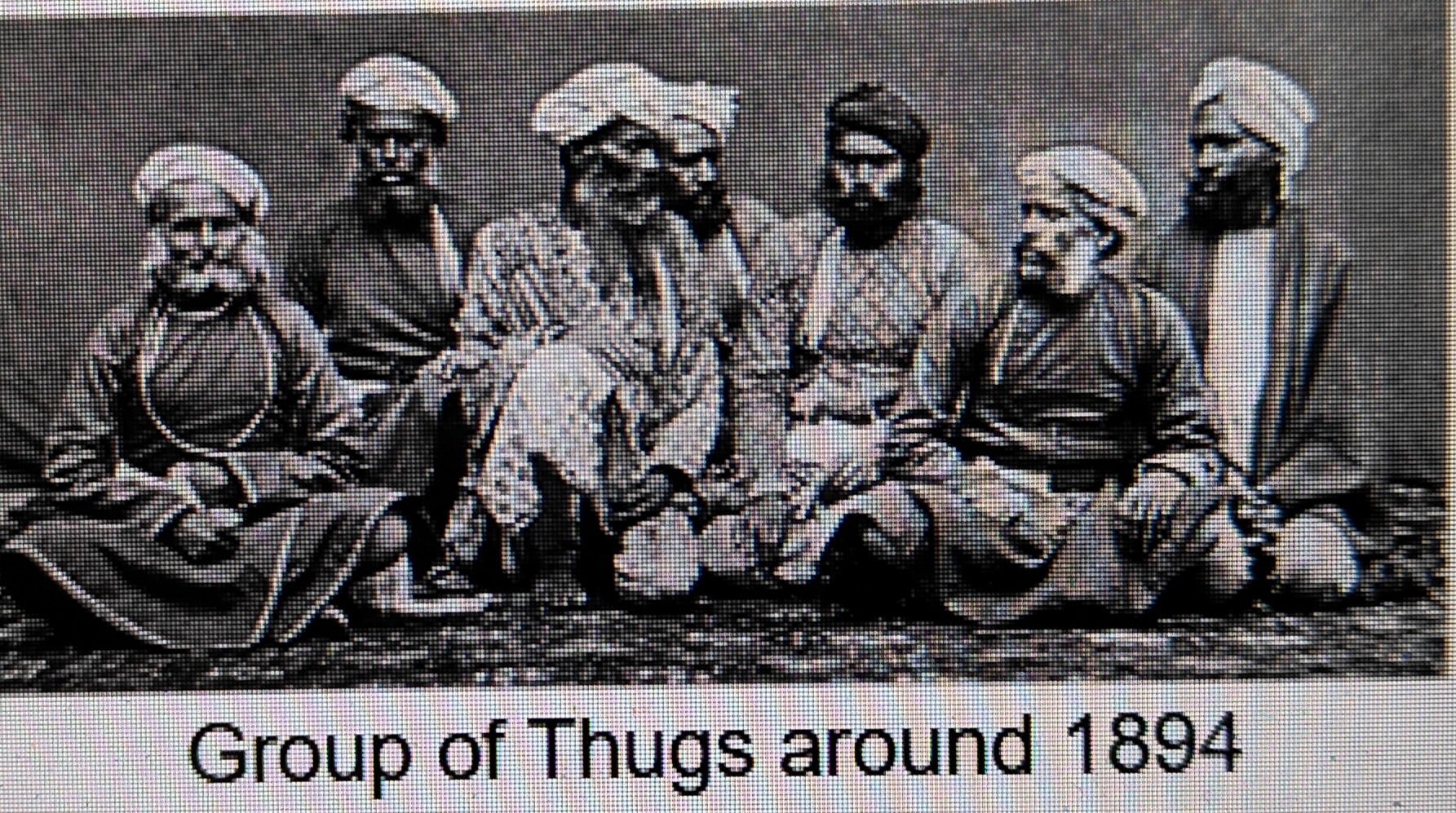
The heinous acts of ‘Thugs’ were called ‘Thuggee.’ They were organised gangs of robbers and murderers. The English word ‘Thug’ originates from the Hindi word Thug which means a ‘swindler’ or a ‘deceiver’.’ ‘Thugee’ entailed an act of murder and robbery of travellers. It was rampant in the northern parts of the Indian subcontinent.
Thugs travelled in groups. There are numerous folklore about their origin. One recorded by D.F. McLeod an Anglo-Indian civil servant traced it back to the Muslim tribes originating from those who fled Delhi after murdering a physician. Another traced it to certain renowned Muslim families who fled after murdering a favourite slave of Akbar. These original Muslim thugs cultivated thuggee, amongst various communities and castes of Hindus. According to some other folklore, thugs were Kanjars or descended from those, who worked in Mughal barracks. Others blamed the rise of thugs on the disbanding of armies in the employment of Indian rulers after the British conquest. Thugs operated in gangs as highway robbers, first tricking and later strangling their victims.
To take advantage of the victims, the thugs would join travellers to first gain their confidence. This would facilitate them to surprise and strangle the travellers with a handkerchief or a noose. They would then rob, kill and bury the victims. This gave the thugs the name Phansigar, one who kills with a noose. During the 1830s, the Governor-General of India, Lord William Bentinck and his chief captain, William Henry Sleeman, targeted the elimination of thugs.
In physical appearance, the thugs resembled the travellers. They wore turbans and carried some baggage in person. Their attire would deceive, any traveller.
The idea of ‘Thugee’ was to steal maximum loot without being apprehended. The thugs did not accost travellers until their own numbers were greater than their target. They first flattered the travellers they met, which gave them a chance to gauge how many valuables they were carrying. Thugs avoided committing thuggee close to their native place, so their crimes were difficult to discover. They pretended to be either Hindu or Muslim to fool their victims.
They usually attacked in the evening. A common way was to distract their targets while attempting to strangle them from behind. They carried only a few swords for self-defence to avoid any suspicion. At times they even mutilated the corpses of their victims to avoid detection. The corpse was then hidden or buried.
The leader of the gang was called Jamadar. They used ranks such as jamadar and subedar, to suggest that their organisation had a military construct. They spoke a secret language called ‘Ramasee’ to disguise their real intentions from their targets. Although strangulation was one of their most recognised methods of murder, they also used blades and poison.
Thugs were made up of men, who inherited thuggee as a family vocation, as well as those, who were forced to turn to it because of circumstances. The head of the gang was based on inheritance with family members sometimes serving together in the same band. These thugs were known as aseel. Certain thugs, insisted, that beginners were not taught thuggee, by their own family members but by outsiders who were often more skilled and experienced. They were called gurus. Thugs usually kept their acts secret. There were female thugs too who were called baronee in their secret language Ramasee, while an important male thug was called baroo.
Thugs often avoided, the killing of a victim’s child, instead they would adopt the child. At times they murdered women and children to eliminate witnesses. Some thugs avoided killing of victims they considered proscribed according to their beliefs and let other unscrupulous members commit the murder.
It is on record that during the 14th century, a thousand thugs were captured and hanged on the streets of Delhi. Two-hundred years later Sher Shah Suri organised a cavalry of 1,200 men to keep them at bay. Akbar and his successors launched drives against the thugs, but it was only in the 19th century that Sir W. H. Sleeman succeeded in wiping them out after a relentless operation lasting seven years.
The initial references to the thugs as a fraternity, rather than ordinary thieves, is found in Zia-ud-din Barni’s History of Firoz Shah written around 1356, where he narrated an incident of sultan Jalal-ud-din Khalji, having arrested 1,000 thugs.
Poet Surdas, in his couplets, mentioned, robbers called “thugs.” The Janamsakhis, the legendary biographies of Guru Nanak, used the term thug to refer to a robber who used to lure pilgrims. Jean de Thevenot, a French traveller in his account referred to a band of robbers who used a “certain slip with a running noose” to strangle their victims. John Fryer an English doctor of the Royal Society, mentioned a similar method of strangling used by robbers from Surat whom he saw being given capital punishment by the Mughals in 1675. An edict issued by Aurangzeb in 1672 refers to a similar method and uses the term “Phansigar”.
The garrotte (killing by strangulation) is often depicted as a weapon of the thuggee. Thugs committed their murders with nooses of rope or catgut, but later they adopted the use of a length of cloth that could be used as a sash or scarf, and thus more easily concealed. This cloth is sometimes described as a rumal (head covering or kerchief), translated as “yellow scarf”; “yellow”, in this case, may refer to a natural cream or khaki colour rather than bright yellow.
Thug’s preference for strangulation might have originated from a quirk of the law under the Mughal Empire that ruled most of India from the 1500s. For a murderer to be sentenced to death, he or she must have shed the blood of the victim. Those who murdered but did not shed blood might face imprisonment, hard labour and paying of a penalty—but they would not risk execution.
A poison called Datura, derived from a plant in the Nightshade family, was sometimes used by thugs to induce drowsiness making strangulation easier.
The “River Thugs” killed people which included Hindu pilgrims, travelling through the River Ganga, and were active mostly during the winter. Their vocabulary of Ramasee differed from the one used by the thugs on land. They used boats taken on lease from the boat-builders or a jamadar called Khuruck Baboo. Sleeman states that they tapped three times to give the signal to murder, which they always committed during the day. To avoid detection of a corpse, they broke its back and threw it in the river to be eaten by crocodiles and only looted money or jewels.
By the 1870s, the ‘thug cult’ was largely extinct. However, the history of thuggee contributed to the establishment of the Criminal Tribes Act (CTA) of 1871. The CTA was repealed after India gained independence. The Thuggee and Dacoity Department continued to operate until 1904 when it was replaced by the Central Criminal Intelligence Department (CID). Numerous Bollywood movies have been made on ‘Thuggee’, including Gunga Din (1939), Sunghursh (1968), and Thugs of Hindostan.
Shravan Charity Mission is an NGO that works for poor children suffering from life-threatening diseases, especially cancer. Our posts are meant for our readers, including children and adults, and have a huge variety of content. We also accept donations for our mission. Should you wish to donate to the cause of cancer? The bank details are given below:
NAME OF ACCOUNT: SHRAVAN CHARITY MISSION
Account no: 680510110004635 (BANK OF INDIA)
IFSC code: BKID0006805
*
Publications of Kamlesh Tripathi
BOOK TITLE: GLOOM BEHIND THE SMILE
(The book is about a young cancer patient. Now archived in eight prestigious libraries of the US which include Harvard College Library; Harvard University Library; Library of Congress; University of Washington, Seattle; University of Minnesota, Minneapolis; Yale University, New Haven; University of Chicago; University of North Carolina, at Chapel Hill University Libraries. It can also be accessed at MIT through Worldcat.org. Besides, it is also available for reading in the libraries and archives of Canada; the Open Library; Cancer Aid and Research Foundation Mumbai; Jaipuria Institute of Management, Noida, India; Shoolini University, Yogananda Knowledge Center, Himachal Pradesh and Azim Premzi University, Bangalore and the Library of Cancer Aid and Research Foundation, Mumbai. The title also finds a mention in a book titled ‘Enduring Cancer: Life, Death and Diagnosis in Delhi’ by Dwaipayan Banerjee published by the Duke University Press).
BOOK TITLE: ONE TO TANGO … RIA’S ODYSSEY
(It is a book on ‘singlehood’ about a Delhi girl now archived in Connemara Library, Chennai and Delhi Public Library, GOI, Ministry of Culture, Delhi; It is also available for reading in the Indian National Bibliography, March 2016, in the literature section, in Central Reference Library, Ministry of Culture, India, Belvedere, Kolkata-700022)
BOOK TITLE: AADAB LUCKNOW … FOND MEMORIES
(This is a fiction written around the great city of Nawabs—Lucknow. It describes Lucknow in great detail and also talks about its Hindu-Muslim amity, which is the undying characteristic of Lucknow. The book was launched at the Lucknow International Literary Festival in 2014. It is catalogued and included for reading in Askews and Holts Library Services, Lancashire, U.K; Herrick District Library, Holland; Charlotte-Mecklenburg Library, Mecklenburg County, North Carolina, USA; Black Gold Cooperative Library Administration, Arroyo Grande, California; Berkeley Library, University of California; The Peshastin Public Library and The George Public Library near Washington, a Northern Central Washington Libraries branch; the Flagstaff City-Coconino County Public Library in Arizona in the US and the Salina Public Library, Kansas, USA.
BOOK TITLE: REFRACTIONS … FROM THE PRISM OF GOD
(Co-published by Cankids–Kidscan, a pan India NGO and Shravan Charity Mission, that works for child cancer in India. The book is endorsed by Ms Preetha Reddy, MD Apollo Hospitals Group. It was launched at the Lucknow International Literary Festival in 2016).
BOOK TITLE: TYPICAL TALE OF AN INDIAN SALESMAN
(Is a story of an Indian salesman who is, humbly qualified. Yet he fights his way through unceasing uncertainties to reach the top. A good read not only for salesmen but for any reader. The book was launched on 10th February 2018 at Gorakhpur Lit-Fest. Now available on Amazon, Flipkart and Onlinegatha)
BOOK TITLE: RHYTHM … IN POEMS
(Published in January 2019. The book contains 50 poems. The poems are about our day-to-day life. Poems from this book have been published in Shillong Times, Bandra Times, Bhavan’s Journal and Arunachal Times and Goan net. The book is available on Amazon, Flipkart and Onlinegatha)
BOOK TITLE: MIRAGE
(Published in February 2020. The book is a collection of eight short stories available on Amazon, Flipkart and Notion Press)
BOOK TITLE: AWADH ASSAM AND DALAI LAMA … The Kalachakra
(It is the story of the man who received His Holiness The Dalai Lama and his retinue in 1959 as a GOI representative when he fled Tibet in 1959. The book was launched on 21st November 2022 by His Holiness The Dalai Lama at Dharmshala. The title is archived in the library of the Department of Information and International Relations (DIIR) Government of Tibet, Tibet Policy Institute (TPI) and the personal library of His Holiness The Dalai Lama. The title is also archived in The Ohio Digital Library, USA. It was recently included in the digital library of the world-renowned company APPLE. Included in the library of Friends of Tibet and Maharashtra Mitra Mandal Library in Bandra, Mumbai.
(POEMS, SHORT STORIES AND ARTICLES OF KAMLESH TRIPATHI PUBLISHED IN JOURNALS AND MAGAZINES)
BHAVANS JOURNAL
Short stories, Book reviews and Articles published in Bhavan’s Journal: 1. Reality and Perception, 15.10.19; 2. Sending the Wrong Message, 31.5.20; 3. Eagle versus Scholars, June, 15 & 20, 2020; 4. Indica, 15.8.20; 5. The Story of King Chitraketu, August 31 2020; 6. Breaking Through the Chakravyuh, September 30 2020. 7. The Questioning Spouse, October 31, 2020; 8. Happy Days, November 15, 2020; 9. The Karma Cycle of Paddy and Wheat, December 15, 2020; 10. Power Vs Influence, January 31, 2021; 11. Three Refugees, March 15, 2021; 12. Rise and Fall of Ajatashatru, March 31, 2021; 13. Reformed Ruler, May 15, 2021; 14. A Lasting Name, May 31, 2021; 15. Are Animals Better Teachers? June 16, 2021; 16. Book Review: The Gram Swaraj, 1.7.21; 17. Right Age for Achievements, 15.7.21; 18. Big Things Have Small Beginnings, 15.8.21; 19. Where is Gangaridai?, 15.9.21; 20. Confront the Donkey Within You 30.9.21; 21. Know Your Strengths 15.10.21; 22. Poverty 15.11.21; 23. Top View 30.11.21; 24. The Bansuriwala 15.1.22; 25. Sale of Alaska 15.2.22; 26. The Dimasa Kingdom 28.2.22;27. Buried Treasure 15.4.22; 28. The Kingdom of Pragjyotisha 30.4.22; 29. Who is more useful? 15.5.22; 30. The White Swan from Lake Mansarovar 30.6.22; 31. Bhool Bhulayya 15.9.22; 32. Good Karma 30.9.22; 33. Good Name vs Bad Name 15.10.22; 34. Uttarapath—The Grand Trunk Road 1.12.22; 35. When Gods Get Angry 1.1.23; 36. Holinshed’s Chronicles 15.1.23; 37. Theogony 15.2.23; 38. Poem: Mother 14.5.23; 39. The Nag Mandir 30.6.23; 40. The Story of Garuda 30.7.23; 41. Janmabhoomi vs Karmabhoomi 31.8.23; 42. The Ghost Town of Kuldhara 15.9.23; 43. The Tale of Genji 15.10.23; 44. The Soul Connection 1.12.23; 45.Book review: Jungle Nama … a story of the Sundarban 16.3.24; 46. Book review: A Forgotten Chapter 16.5.24; 47. Exploring Ancient Egypt, 1.8.24; 48. The Story of Dhruva, 16.8.24; 49. Two Hundred Years of Tea in Assam 16.9.24; 50. The Cosmic Messenger 16.10.24; 51. Biblioburro: The Four-Legged Library 16.11.24
THE SHILLONG TIMES
Articles & Poems: 1. Poem: Happy New Year 8.1.23; 2.Poem: Spring 12.3.23; 3.Poem: Right and Wrong 20.3.23; 4.The Gush of Emotion—Writing, 26.3.23; 5. The Nag Mandir, 7.5.23; 6. Poem: Mother 7.5.23; 7. Poem: Rain Rain 9.7.23; 8. Poem:You Come Alone You Go Alone 6.8.23; 9. Poem: Rain Rain (Second Time) 10.8.23; 10. Poem: Guru Teacher 1.10.23; 11. Poem: Autumn … The Interim Heaven 15.10.23; 12. Poem: Happy Diwali 12.11.23; 13. Overcoming Blindness: Learn it the John Milton Way 10.12.23; 14. The Happy Prince and The Happy Man’s Shirt 31.12.23; 15. Annus Mirabilis -2024 7.1.24; 16. Gandhi to Mahatma Gandhi- Incidents that Shaped Gandhi in South Africa 28.1.24; 17. Poem: Together But Not Made For Each Other, 11.2.24; 18. The Birds Bees and The Spiders of Nicholas Guildford and Jonathan Swift 25.2.24; 19. The Overcoats of Nikolai Gogol and Ruskin Bond 10.3.24; 20. The Ethnic Colours of Holi 24.3.24; 21. A Lesson from Dalai Lama, 21.4.24; 22. Poem: Morning Walk 28.4.24; 23. Trip to Rhine Falls, Switzerland, 19.5.24; 24. Poem: Hurt 2.6.24; 25. Poem: Your Conscience Was My Sign On 16.6.24; 26.Poem: The Eerie Ways of Time 7.7.24; 27.Poem: Celebrating the T20 World Champions 14.7.24;28. Read to Rise above mediocrity, 4.8.24; 29. Poem: Desire vs Reality 11.8.24; 30. Jack Ma’s Pristine Advice to Employers, Employees and the Youth 22.9.24; 31. Tagore and Kipling 3.11.24; 32. Poem: Merry Christmas 22.12.24;
THE ASSAM TRIBUNE
Article: 1. The Magic of Reading 11.12.23; 2. Gandhi to Mahatma 29.1.24; 3. Geography of Solitude 8.4.24; 4. A Lesson From Dalai Lama, 22.4.24; 5. A Source of Inspiration, 29.4.24; 6. The Four-LeggedLibrary, 12.5.24; 7. Age and Achievement, 10.6.24; 8. Read … To Rise Above Mediocrity, 1.7.24; 9. Crusade for a College, 25.8.24; 10. Hemingway’s Iceberg Theory (Panorama) 27.9.24; 11. Short story: Love in the Air, 20.10.24;
THE ARUNACHAL TIMES
Poem: 1. Hope—In The Arc of Twilight, 13.8.23; 2.Poem: Spring 3.3.24; 3.Poem: The Morning Walk 10.3.24;
BANDRA TIMES, MUMBAI
Articles & Poems: 1. Poem: SPRING, 1.4.23; 2. Poem: Mother, 1.6.23; 3. Poem: Rain Rain, 1.8.23; 4. A Lesson From Dalai Lama, 1.6.24; 5. Read to rise above Mediocrity 1.8.24
THE GOAN NET
Poem: 1. Autumn – The Interim Heaven, 6.10.24; 2. Reader’s Rewind 17.11.84; 3. Reader’s Rewind: The Irony of Tash Moustache or Mooch 5.12.24; 4. The Sunset Point 22.12.24;
ARTICLES IN THE DIGITAL MAGAZINE ESAMSKRITI
Aritcles: 29.12.2020: Indica by Megasthenes; 14.3.22: About The Dimasa Kingdom Assam; 10.12.22: Grand Trunk Road–Uttarapath; 5.10.23: The Ghost Town of Kuldhara Near Jaisalmer;
(ALL THE ABOVE BOOK TITLES ARE AVAILABLE FOR SALE ON AMAZON, FLIPKART AND OTHER ONLINE STORES OR YOU COULD EVEN WRITE TO US FOR A COPY)
Pigeons or ‘Kabootars’ as referred in English and Hindi language respectively, have had a long history of human contact. Both in war and peace time and as the civilization kept unfolding. They have made contributions of considerable importance to humanity, especially in times of war. And quite admirably during war times, the homing ability of pigeons have been put to use by making them messengers. To carry important messages. During peace time they have contributed royally in sports. By participating in the ever royal game of Kabootarbazi. Generally enjoyed by pigeon fanciers. The so-called war pigeons have also been decorated for their services with medals such as the Croix de guerre.
While pigeons are good at carrying out orders. They also risk their lives unknowingly. And it’ll be a bit of a news, when one hears, that even today security forces keep a hawk’s eye on them. Says the column below:
QUOTE
You might think birds are free to fly; but there’s the security risk…
BIRD BRAINS AND CLOAK AND DAGGER
Indian security forces must be commended for spotting a single pigeon flying suspiciously off Gujarat’s coastline. Not dismissing it as just a seagull in mufti or even a hopelessly off-course pied harrier. That alert guards managed to apprehend the flying object is a further feather in their collective cap. After all, this is not the first time that pigeons have been in the thick of clandestine activities. Though they have not been used seriously for surveillance, espionage and message-running since World War II, considering a similar questionable bird was nabbed in Punjab in 2010, investigators should not deem it a mere coincidence. Back then, police had seized an empty ring around its claw and noted a Pakistani telephone number and address stamped in red ink on its body. As this latest pigeon also had puzzling appendages and markings, a wider probe to net any other accomplices, unwitting or otherwise, is surely warranted.
Interrogation and debriefing of this suspect would be difficult- as was the case in Punjab- so the only option is to keep an eagle eye out for possible undercover avians in the future, especially in this era of spy drones. The authorities should also keep a close watch on all pigeons around sensitive government buildings, given the nationwide preponderance of the bird and its ability to blend in.
Shravan Charity Mission is an NGO that works for poor children suffering from life threatening diseases. Should you wish to donate for the cause the bank details are given below:
NAME OF ACCOUNT: SHRAVAN CHARITY MISSION
Account no: 680510110004635 (BANK OF INDIA)
IFSC code: BKID0006805
*
Our publications
GLOOM BEHIND THE SMILE
ONE TO TANGO … RIA’S ODYSSEY
AADAB LUCKNOW … FOND MEMORIES
REFRACTIONS … FROM THE PRISM OF GOD
(CAN BE BOUGHT FROM ON LINE BOOK STORES OR WRITE TO US FOR COPIES)




 Shravan charity mission