Tag Archives: sp

NO PLACE FOR FAILURE, IN CHANGING INDIA: INDIAN MEDIA & SOCIAL NETWORKING SITES JOKE AND RIDICULE 44 YEAR OLD SON OF THE SOIL RAHUL GANDHI WHO COULDN’T MEET UP WITH SUCCESS

Copyright@shravancharitymission

By Kamlesh Tripathi

12

Ever since the stormy news of Rahul Gandhi’s sabbatical for ‘personal introspection’ during the ensuing budget session came in. Both the media and the social networking sites in India have hounded him to cruel smithereens. A parallel of which one cannot remember, at least in the recent past.

When, other, light and more decent ‘critical’ phrases could have been used to put him down. Double-meaning expressions like ‘missing in action’ (MIA) were continuously aired by certain TV channels, knowingly or unknowingly.

‘MIA is a casualty classification assigned to armed services personnel and other combatants who are reported missing during wartime. They may have been killed, wounded, become a prisoner of war, or even deserted. If deceased, neither their remains nor grave has been positively identified.’ And, so the usage of MIA was in bad taste and a clear case of media going overboard.

34

And that brings us to the moot point. Is the youth of this country (as reflected in social networking sites) which is sixty five percent of the Indian population, getting intolerant to failures. That they won’t even spare a person around, their own age group. While this is a welcome sign and also an insignia of progress. It is also a double edge sword. For, in times to come Indian youth with lack of opportunities and explosion of population will surely witness failures in every family, and will every family then treat their loved ones in the manner they have treated Rahul Gandhi, over the last couple of days. For let us not forget he is still part of the great Indian family.

56

Most blame Rahul Gandhi for ditching the Congress party at the crucial Budget session. There are other reports that say he is set to bid adieu to politics. Some say he is unable to have his way with the old guard and therefore beating a tactical retreat.

And we all know, with all the effort put in by him he could not win a single election for his party, in the near past. Many of his own party men are blaming him for the state in which Congress is today. When most of them are either, arm chair politicians, lawyers or inconsequential statesmen. But there are certain other points also to be considered before we rip this man completely.

Rahul Gandhi signals a new kind of India. Where, a politician may leave the turf and decide to do something else. Which may be worth his while and worth his salt, during his lifetime. And that should be taken in the stride; and not be indecently reported by the media. For one will see more politicians behaving in this fashion in times to come. So, give the loser his due.

Prime Minister Narendra Modi says ‘I don’t dream for success in what I do. I only dream to do something worthwhile.’ This is a very powerful statement in today’s context and more so in Rahul Gandhi’s context. So whether you lose or win keep moving. As there is no intrinsic insult in moving away from politics. For politics is only heart burning and time consuming mistress for some. Perhaps, Narendra Modi could have nudged the media to be a little more relenting towards Rahul Gandhi this time, more so when the youth of India looks up to him.

Let us not forget in the emerging India there won’t be any fixed route to politics. For it won’t be necessary to remain a politician all your life. For one could also be a politician like Kiran Bedi who excels in one field and takes away Satish Upadhyay’s due. Or be a tornado like Arvind Kejriwal to take Delhi by storm.

But coming back to Rahul. At least he goes on leave all by himself. Whereas, some like LK Advani and MM Joshi are sent on leave. So which is better? And, India shouldn’t forget its great culture of being humane to all. Irrespective of a winner or a loser.

*****

#OSHO INTERNATIONAL FOUNDATION CROSSES LAXMAN REKHA BY DEMEANING INDIAN FREEDOM FIGHTERS-shouldn’t they apologise to the nation?

Copyright@shravancharitymission

#OSHO INTERNATIONAL FOUNDATION CROSSES LAXMAN REKHA BY DEMEANING INDIAN FREEDOM FIGHTERS-shouldn’t they apologise to the nation?

index    We all know what Chandra Mohan Jain (11December 1931-19 January 1990) aka Acharya Rajneesh from 1960s onwards, aka Bhagwan Shree Rajneesh during 1970s and 1980s, and aka Osho from 1989 stood for:

ss    As a professor of philosophy he drew enough polemics while he traveled throughout India during 1960s as a public speaker. And his outspokenness and out-of-turn criticism of politicians and the political mind space, that included Mahatma Gandhi and the institutionalized religion made him controversial of the irreparable sort. And the legacy goes on even after his death. But this time the Osho International Foundation has crossed the holy Laxman Rekha as this is what they wrote in #The speaking tree on February 7th 2015.

Quote

Why Politicians Create Chaos In The Country

Osho

    ‘Freedom came to India very suddenly, without any preparation. All the so called leaders were only efficient in creating a little bit of chaos here and there, and when freedom came they were absolutely at a loss as to what to do because all their efficiency was in creating chaos.

    So even though freedom did come, those leaders still know only one thing; how to create chaos. They go on doing the same. And those leaders know perfectly well that the only way to be in power is to go on creating chaos. The whole concern of those who are in power is to remain in power, and they can only remain in power if the country remains in chaos. So people go on fighting and they go on managing somehow, proving to the world that they are very much needed, otherwise the country will fall apart. And the interest of the people who are not in power is also in creating chaos because that is the only way to come back into power or to come into power.’

Unquote

osho_international_pune_20111015    While the column targets the Indian Politicians and rulers. The first paragraph cited above, targets even the freedom fighters of India. Perhaps, the author tried to continue moving in the shoes of Chandra Mohan Jain alias Bhagwan Shree Rajneesh alias Osho without realizing the battle for freedom had started way back in 1857 with the 1st mutiny, and so, to say “freedom came to India very suddenly, without any preparation. All the so-called leaders were only efficient in creating a little bit of chaos here and there, and when freedom came they were absolutely at a loss as to what to do because all their efficiency was in creating chaos” is completely wrong and ill willed.

ll    Secondly, freedom struggle and gaining of Independence was not the brain child of any single Politician. Rather, it was the aspiration of approximately 30-35 crore Indians that was ably driven by father of the nation Mahatma Gandhi, together with Jawaharlal Nehru, Sardar Patel to name a few, and many more freedom fighters who even died for the cause of Independent India.

And, moreover the first breed of Politicians, were actually freedom-fighters who definitely did not want chaos for the nation; and took up to the role of Politicians only to steer India out of the woods and therefore to paint freedom fighters with same brush as Politicians is criminal.

Self-styled Gurus and foundations, who have hallucinated all their lives about love and sex, should be well advised not to touch upon certain hallow chords of the nation which are beyond them, and especially for a foundation that has a sobriquet of “sex guru.”

For make no mistake Freedom-Fighters are above any self-styled God-man; so please watch out.

*****

Title: DALBADLUS, TURNCOATS, POACHED AND WILD CARD ENTRIES- HAVING A FIELD DAY IN INDIAN POLITICS

    Probity has always been the hallmark of public life. As a result of which it has always been bracketed as a ‘domain ideology’ suiting a certain section of the society. Therefore, it always required the platform of an ‘ideology’ from where it could operate with probity being, it’s chastity belt.

    This gave the world many ideological terminologies such as Communist, Marxist, Socialist, Capitalist, Secular, Rightist, Leftist to name a few. Almost, like poster signs for various sections of society to choose and follow. And, individual add-ups of these manifested as political parties flagging their brand of ideology. It was therefore difficult to swim through politics without ideological waters until sometime back. But the scenario is now fast changing.

IS TRADITIONAL POLITICKING IRKING THE PRESENT DAY POLITICAN?

Yes, and if I were to say the genesis of traditional ‘ideology’ in politics has become the nemesis of Indian Politics today. I won’t be wrong. Because the heart-throb, of Traditional Indian Politics, the so called the ‘isms’ that behaved as attractive flag-posts such as Communism, Socialism, Capitalism, Secularism to name a few have slowly vaporized into thin air. The pledge to ‘serve’ has transformed into ‘somehow rule.’ The competencies and prowess required earlier to stay afloat in politics too have changed to winnability, glamour, backstabbing, chamchagiri and of course criminality.

BUT WHO GAINS IN ALL OF THIS?

Traditional politicians, who still delve deep in rooted ‘isms’ may lose out to the new wild card entries. As, in the present, a courtship with politics is deemed fashionable only if it is flirting with those political parties, that are high on political libido.

Glaringly in the case of Delhi elections, and that too specifically in BJP. Where, Kiran Bedi was made to paratroop as a CM candidate. Leaving the entire cadre of BJP high and dry. Turncoats like Krishna Tirath, a dalit leader and former union minister who when out of power walked into BJP shamelessly, as if poached like a sitting duck.

But the craziest of all was the induction of dalbadlus like Shazia Ilmi into BJP. Who until a year back was a staunch supporter of AAP. But when it did not suit her, on some flimsy grounds, she left the party. Ostentatiously, exhibiting that she didn’t believe in any moral ‘isms.’ And what was more surprising was her entry into the number one, national ruling party BJP. Just because she happened to be a local glamorous Muslim face. BJP not only didn’t shirk in inducting her but also made her a front line canvasser. Thereby, in many ways announcing ‘isms’ don’t matter anymore. What shockingly matters is the ‘wining of elections’ says a desperate Amit Shah- BJP Head.

TALENT POACHING IN POLITICS

The complexity of present day politics, demands talent of poaching which is more of a lift-off from the ever old corporate inc. Where domain experts are hired laterally to serve certain specialized skill-sets. But there also, in spite of intense competition, corporate professionals don’t forget the salt of the previous company. Unlike poached politicians who spew venom at their previous mentors, and that reminds me of Shazia Ilmi and her tirade against Arvind Kejriwal. That was bereft of any moral standards, and also Kiran Bedi’s out of turn and unwarranted comments about Kejriwal. So does this exhibit the final nailing of ‘isms’in the coffin?

MUFFLER TAKES ON THE TEN LAKH NAME EMBLAZONED SUIT

Some political parties are moving at a pace at which the Indian voter is not moving, and that may take them, to a disconnect with the voters; and there lies the caution.

For make no mistake, at the fall of many ‘isms’ rises the ‘ist’ the ‘anarchist.’ Whose muffler takes on the ten lakh name emblazoned suit. So are ‘isms’ converting into ‘ists’ is what we have to wait and watch?

*****


ARTICLE: KILLING FOR FALSE HONOUR, BUT DYING FOR REAL LOVE

Islamabad and Delhi are located around seven hundred km apart and are divided by an explosive and turbulent international border, with ever increasing aggressive efforts to keep each side sanitized from the overall influence of the other. Yet there appears to be a commonality of sorts that refuses to die. The madness of honour killing. The ethnicity of large parts of Pakistan and that of north India was never too different before independence and even now per se. But post independence India opened up, and moved on- though not whole hog. But Pakistan preferred to remain where it was, rather took some steps backwards.


index rr jjj ppp

Yalda Hakim, Afghanistan born correspondent and presenter of BBC World News, highlights. How in Pakistan women who dare to pursue relationships of their own choice are in danger of losing their lives. She says in her recently published article in TOI- “Dying for Love”

‘In a country fighting to preserve patriarchal and tribal traditions, Pakistan’s women can face brutality- and even death- if they fall in love with the wrong person.

Arifa 25, dared to stand up to her family, running away with the man she fell in love with and secretly marrying him. The following day in a busy street in Karachi, Pakistan’s most populous city, her male family members surrounded the newlyweds and, at gunpoint, dragged Arifa away. After great difficulty her husband, Abdul Malik, managed to establish that she was alive and had been hidden somewhere. Fearing for his life, he has lived in hiding for three months. He says,

“In Pakistan, love is a big sin. Centuries have passed, the world has made so much progress- men have reached the heavens. But our men are still following age-old customs –which focus on denying women freedom.”

In May 2014, the case of the young pregnant woman Farzana Parveen shocked the world. She was stoned to death by her family for marrying the man she was in love with, rather than the man they had chosen for her. This happened outside Lahore high court, in front of the policemen and passersby.

In November, following worldwide media attention, Parveen’s father, brother, cousin and former fiancé were all found guilty of murder and given death sentence. But more often than not, those who commit these brutal acts against women are never charged, protected by tribal laws.

Last year alone, more than 1,000 women were murdered for so-called honour crimes. Some hard-line religious scholars believe that only through the killing of an offending family member-usually a woman-can honour be restored to the rest of the family and tribe. Few people in Pakistan nowadays are willing to challenge these tribal traditions and customs. In fact, according to a recent survey, an overwhelming majority of Pakistanis support the full implementation of Sharia law- Islam’s legal system.’

In 1979, General Zia-ul-Haq, Pakistan’s military dictator, introduced the so called Hudood Ordinance- a controversial set of laws that attempted to Islamise Pakistan. Among other things, it made adultery punishable by stoning and lashing. In 2006, the then President Pervez Musharraf tried to protect women, but the enforcement of his reforms has been limited and adultery remains a crime. Karachi’s central prison for women is where many of those accused of adultery end up.’

BUT IS NORTH INDIA ANY DIFFERENT THAN PAKISTAN IN TERMS OF HONOUR KILLINGS?

Yes only in terms of the scale which is less. While we can say what happens in Pakistan is barbaric, but then honour killings are often reported in the northern regions of India also, and mainly from the states of Punjab, Haryana, Rajasthan and Uttar Pradesh as a result of marrying without their family’s acceptance and sometimes also for marrying outside their caste.

And in contrast honour killings are a rarity in South India and the western states of Maharastra and Gujarat. In some other parts of India, notably West Bengal, honour killings completely ceased about a century ago, largely due to activism and influence of reformists such as Vivekananda, Ramakrishna, Vidyasagar and Raja Ram Mohan Roy. Wish they had also spread their activism in North India.

REPORTS OF SOME SPECIFIC HONOUR KILLINGS IN NORTH INDIA

The Indian state of Punjab has a large number of honour killings. According to the data compiled by the Punjab Police, 34 honour killings were reported in the state between 2008 and 2010: 10 in 2008, 20 in 2009 and four in 2010’

Haryana is also notorious for incidents of honour killing, mainly in the upper caste of the society, among Rajputs and Jaats; considered literate. And, so can we say it has nothing to do with literacy levels?

Bhagalpur in the eastern state of Bihar has also been notorious for honour killings. Recent cases include a 16-year-old girl, Imrana, from Bhojpur who was set on fire inside her house in a case of what the police called ‘moral vigilantism.’ The victim had screamed for help for about 20 minutes before neighbours arrived, only to find her smouldering body. She was admitted to a local hospital, where she later died from her injuries. In May 2008, Jayvirsingh Bhadodiya shot his daughter Vandana Bhadodiya and struck her on the head with an axe. In June some incidents were reported from Delhi.

In June 2012, a man chopped off his 20-year-old daughter’s head with a sword in Rajasthan after learning that she was dating men. According to police officer Omkar Singh, the accused told the court that his daughter Manju had relations with several men. He had asked her to mend her ways several times in the past. However, she did not pay heed. Out of pure rage, he chopped off her head with the sword.

A young couple who were planning to marry were brutally murdered in Garnauthi village, state of Haryana on 18 September 2013 because they were having a love affair. The woman, Nidhi, was beaten to death and the man, Dharmender, was dismembered alive. People in the village and neighbouring villages approved of the killings.

MEASURES AGAINST HONOUR KILLINGS

In 1990 the National Commission for Women set up a statutory body in order to address the issues of honor killings among some ethnic groups in North India. This body reviewed constitutional, legal, and other provisions as well as challenges women faced. The NCW’s activism has contributed significantly towards the reduction of honor killings in rural areas of North India. According to Pakistani activists Hina Jilani and Eman M. Ahmed, Indian women are considerably better protected against honor killings by Indian law and government than Pakistani women, and they have suggested that governments of countries affected by honor killings use Indian law as a model in order to prevent honor killings in their respective societies.

In a landmark judgement in March 2010, Karnal district court ordered the execution of five perpetrators of an honour killing in Kaithal, and imprisoning for life the khap (local caste-based council) chief who ordered the killings of Manoj Banwala (23) and Babli (19) a man and woman of the same clan who eloped and married in June 2007. Despite having been given police protection on court orders, they were kidnapped; their mutilated bodies were found a week later in an irrigation canal.

In June 2010, scrutinizing the increasing number of honor killings, the Supreme Court of India issued notices to the Central Government and six states including Uttar Pradesh, Punjab, Haryana and Rajasthan, to take preventive measures against honor killings.

Alarmed by the rise of honor killings, the Government planned to bring a bill in the Monsoon Session of Parliament July 2010 to provide for deterrent punishment for ‘honor’ killings.

In recent times, the Khap system has attracted criticism from groups, citing the stark prejudice that such groups allegedly hold against others. Women’s Organisation AIDWA has made allegations, in some cases where the Khaps are alleged to have initiated threats of murder and violence to couples who marry outside of the circle.

Supreme Court has declared these ‘Khap panchayats’ as illegal, which often decree or encourage honour killings or other institutionalised atrocities against boys and girls of different castes and religions who wish to get married or have married.

So honour killing is utterly illegal and has to be ruthlessly stamped out. There is no honour in these killings and atrocities. In fact, it is nothing else but barbaric and shameful. Brutal atrocities committed by feudal-minded persons deserve very harsh punishments. And only by acting against it can we stamp out this atrocious feudal mentality. The other thing that needs to be crushed along with it are the Kangaroo courts that are mushrooming all over.

But in all of this the most scathing has been the behavior of some political parties both in Pakistan and India who in the interest of votes have never taken a bulldozing approach either jointly or severally towards all such individuals and self styled institutions who promote honour killings.

*****
ARTICLE- MIND THE BRAND IMAGE OF YOUR SURNAME

copyright@shravancharitymission

16

Oxford dictionary defines the word ‘surname’ as a ‘hereditary name common to all members of a family.’ And in India many families can have the same surname, provided it comes down their lineage and is acceptable to them. In other words surnames are just family, caste or even trade and trait names. But certain towering personalities take their surnames to unimaginable heights and some bring it down. But bringing it down is only okay till it doesn’t start affecting the generic surname in an adverse manner.

Let us start with the father of the nation’s surname- Gandhi. I would call it one of the tallest surnames of the world. Today, Gandhi is almost a synonym for non-violence, freedom struggle and nobility. Many Gandhis may have come and gone thereafter, but this one Gandhi, the father of the nation has stood the ground; thereby raising the brand image of this surname.

Today, some contemporary and tall Gandhis, appear in certain ways, to be in ethereal sync with the father of the nation’s surname, even if they are not up there. Just as Indra and Rajiv Gandhi became the Prime Minister of India, Sonia Gandhi the Congress President and Chairperson of the UPA and Rahul Gandhi Vice President of the Congress Party. And, so the overall brand image of surname ‘Gandhi’ deceptively conveys, as if all Gandhis are a towering personality by default. And in some way or the other guiding India, and could even be dynastical. Surname ‘Nehru’ too had a strong brand image but never got the critical mass to surge ahead, I guess.

32

It is typical of India, certain surnames always zoom you to certain professions, traits and banners. Just as the Khans, the three top stars of India; remind you of acting under the Bollywood banner- the famous trio of Shahrukh, Salman and Amir. But then one Khan could be known as a trouble maker that pulls down the brand image of other Khans. And, the Kapoors, who too remind you of the erstwhile number one family of Bollywood; Prithviraj and Raj Kapoor. And this is how certain brand images of certain surnames have been built.

And, then the Ambanis sounding generic to business; reminds you of Dhirubhai Ambani and his sons Mukesh and Anil now running the biggest business empire of the country. While we come to sports, Tendulkar, Gavaskar and Amarnath brothers connect you to cricket in the manner Amritraj brothers connected you to lawn tennis to name a few sportsmen.

And, I can’t move ahead unless I talk about one of India’s most famous surnames ‘Singh.’ It signifies the ruling class of India. Even the Sikhs as a community wear this famous surname. Many Rajas and erstwhile rulers have used this surname Singh and have given it a high brand image. Lord Rama too was from this clan. Some famous Singhs of India are Dr Karan Singh, Giani Zail Singh and Dr Manmohan Singh who unfortunately got reworded to Maunmohan Singh. But, then, where do we place the famous Yadav Singh involved in this huge scam in Noida.

Then you have one of the oldest and strongest surnames in the name and style of ‘Yadav.’ It originates from Lord Krishna, a Yaduvanshi and therefore considered holy. But then how does it battle the whining cry of criminals such as Pappu Yadav, Lalu Yadav and the more recent ones Shiv Kumar Yadav involved in rape crime. And the lackluster Mulayam Singh Yadav and Akhilesh Yadav who need to do much more in the stream of governance. Probably boxer Vikas Yadav and psephologist-cum-politician Yogendra Yadav bring some reprieve.

‘Modi’ was never a strong surname brand in India. But there again one towering personality like Narendra Modi has made the surname ‘Modi’ as an international brand now having being picked as number two out of thirty most performing of the world leaders.

article: The magic art of ‘Chamchagiri’

Copyright@shravancharitymission

kkkqqq


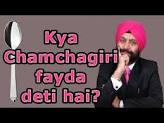
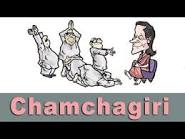
    Word #chamchagiri (sycophancy) requires no introduction. Even the so-called English gentry of our country understands it well enough. And, in India, nothing meaty can be obtained without this art of arts, more precisely, the mother of all arts.

    During our lifetime, we all aspire to become qualified professionals, such as an engineer, a doctor, a lawyer, a bureaucrat, a chartered accountant, and the list goes on and on, for which we go to professional colleges and even qualify through tough exams. But, for this particular ‘art’, you needn’t go to any University to obtain a degree. Yet it remains the most powerful tool of success in contemporary times.

BUT, WHY CHAMCHAGIRI?

    Because it is a two-way requirement and has now become a status symbol. If you call yourself a VIP, you must have chamchas around you. Without chamchas, you don’t qualify as a VIP. Conversely, to survive, grow and secure yourself, you also need to do Chamchagiri. Perhaps that increases your tailwind and catapults you way ahead of the competition.

add

HISTORY OF CHAMCHAGIRI

    It was always there. We have glaring examples of Chamchas operating out of darbars and courts of erstwhile Rajwaras and Kings, in tall Empires, and even in hallowed establishments.

    But in earlier times, it was considered a menial habit almost close to beggary, which has now evolved into a refined and potent art that pays handsome lifetime dividends, which not everyone can learn. Its crafty students are found buzzing around the bureaucratic circles, in corporate corridors, swarming the political circles around parliament and Assembly, and at times it also seeps into the forbidden judiciary.

    While some people through chamchagiri have escalated the growth of their career by coining catchy statements like ‘Indira is India and India is Indira’ made by Dev Kant Barua, the then Congress President. Others have shown it through self-arrival, traits and gestures. Such as a Chief Minister picking up the chappals of the Prime Minister’s son and making him wear them again, while they slipped out in a muddy field during a political campaign. Some more examples that stand tall in my memory are a Police officer touching a senior neta’s feet, in full Police uniform. Security personnel cleaning the sandal of the lady Chief Minister, and also the state-of-the-art gesture of prostrating in front of the lady Chief Minister of Tamil Nadu, Mrs J Jayalalithaa.

    But a recent one that I saw looked a little desperate. This Chamcha had a red plate above his car number plate that read, ‘Vidhayak ka Pratinidhi’ (Representative of MLA). Trying to please his master by becoming his representative. Some Chamchas learn this telling art just to make a living and not to catapult their careers, which is still understandable, like the one above.

    I have often thought about the genesis of this disease called ‘Chamchagiri.’ To me, it always appeared as a colonial and a feudal requirement for better survival. But the hangover of it has only increased when it should have gone down with the world becoming more business-like.

    And, if chamchagiri can get you two square meals, I would send calling for the HRD ministry to at least announce a ‘Certificate course’ in the subject to reduce unemployment for now.

*

By Kamlesh Tripathi

*

https://kamleshsujata.wordpress.com

*

Share if you like it

*

Shravan Charity Mission is an NGO that works for poor children suffering from life threatening diseases. Should you wish to donate for the cause the bank details are given below:

NAME OF ACCOUNT: SHRAVAN CHARITY MISSION

Account no: 680510110004635 (BANK OF INDIA)

IFSC code: BKID0006805

*

Our publications

GLOOM BEHIND THE SMILE

ONE TO TANGO … RIA’S ODYSSEY

AADAB LUCKNOW … FOND MEMORIES

REFRACTIONS … FROM THE PRISM OF GOD

(CAN BE BOUGHT FROM ON LINE BOOK STORES OR WRITE TO US FOR COPIES)

*****


Article: RAPE CRIME IN INDIA

Copyright@ shravan charity mission

By Kamlesh Tripathi

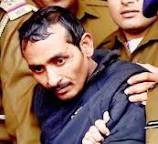
There is no doubt about the fact that someone runs India. But when a heinous crime such as rape is committed in a Uber Cab it appears no runs India. On the contrary it runs on its own inertia. As the powers to be, feign ignorance, about how the crime was committed and ask for one last chance to fight the menace. So, then who runs India? One answer could be these criminals who always succeed in hoodwinking the dispensation while committing such nasty crimes. In front of whom our meek society and the establishment appear as simpleton. Where, these men in high places come out with some face saving, stereotype statements such as the ‘culprit will not be spared’ and just then another culprit surfaces, even before the previous one is forgotten.

There was only one 9/11 in the US, and with that they learnt their lesson and ensured it never happened again. Surely, they must have done something worth the while, to fox and ensnare such criminals as a strong preventive. Similar mindset we find in Israel. But the story in India is quite different. For we are not aspiring that high as of now, as it doesn’t suit us and it could be grossly inconvenient for our establishment. Therefore, in India there is never a last time but always the next time and we deal it, with the gift of the gab.

REALITY CHECK

Today’s TOI reports 1706 cabbies were booked in the uber-crackdown. But then where was Delhi Police before this rape in the Uber-cab? I guess this is all, that Delhi Police knows in terms of prevention of crime–to book people after the crime. And, beyond this they don’t have the competence to deal with the subject. One can also make this out, from the many Delhi Police Commissioners that have come and gone. Not one has proposed a different unconventional, out-of-the-box plan to prevent rape crime in the capital and that itself exhibits the mental bankruptcy. Most have just kicked the can on the road. And, what can one poor commissioner of police anyway do, even the criminal knows.

GOVERNMENT’S INTENTION

Also, government’s intention to come out with a foolproof plan to prevent rape crime is a suspect across various political establishments that we have seen till now. Whether it is the will or mental or physical lethargy we don’t know. A management thought says if you keep taking the same action each time and expect a different result it will never happen. But, in case of rape crime forget the action; government has not even proposed a new template for prevention of rape crimes. And, that it self speaks volumes. Moreover, the new trend, that the higher courts need to direct the executive on all important issues to act is also alarming.

WAY FORWARD

The traditional method of policing is not effective in preventing rape crimes. Rather it is failing miserably. The traditional policemen are only good for writing FIRs. That too when they are told from the top and to some extent catching criminals at a later date. So we need something different. And can that be technology based is something we need to study? We should also emulate best police practices in terms of crime prevention from other countries and implement the same for rape crimes but all of this requires political will.

Political parties and governments need to realize. If you want to continue in power, merely being ahead of your nearest political rival is not going to be enough. You will have to beat them by leaps and bounds. And for that you will have to deliver what you’ve promised. Remember, the public of India has an elephant’s memory and coming to their aid are countless sound bites where you’ve promised prevention of rape crime. So wake up.

*****

SNIPPET- THERE EXISTS A DIFFERENCE BETWEEN COMMAND AND RESPECT

Copyright@shravancharitymission

122

By Kamlesh Tripathi

Yesterday while I was driving down from Lucknow to Delhi something very pathetic happened that I must share with you all. After we crossed Kanpur we entered #Kanpur Dehaat a separate district of UP just before Orai.

There I stopped at a Dhaba and ordered for a cup of tea. Meanwhile, I noticed some five policemen were seated on the adjacent table, having a cup of tea early in the morning along with some snacks. Soon, I felt something was amiss or unusual, and sure enough one out of them who appeared, as their head by tone and tenor was not having tea; but whisky early in the morning and that too in uniform. And, that wasn’t all. He then came down to his choicest ones and started delivering it royally to the chain of command-the establishment, ending at his top boss the Superintendent of Police. In some sympathy I uttered ‘poor SP.’ The best part was each time he abused his seniors, he swore by his upright sterling character.

And when he was done with the green bottle- the whisky pint. He arrogantly chucked it at the wall, and it came crashing down like his own values. The remaining four, appearing his juniors only kept watching in embarrassment, and that included me, and some others around, along with the Dhaba owner.

3344

But I am more than sure the rogue policeman’s boss- the SP sitting in his office must still be thinking all those constables who salute him day in and day out also respect him.

Perhaps the rogue cop was also trying to say ‘values start from the top.’

Jaihind