Tag Archives: shravancharitymission

FACTS FIGURES & QUOTES (FFQ): THE MAKING OF FILM BENHUR

Copyright@shravancharitymission
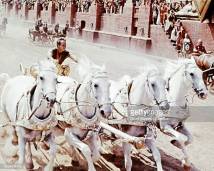
    The making of a movie is extremely taxing. After watching a movie for three hours in a theatre we do get the flavour of the movie but not the aches and pains suffered by the team that brings the movie to you.

    Benhur is a 1959 American epic historical film directed by William Wyler, produced by Sam Zimbalist, starring Charlton Heston as the title character. It was actually a remake of the 1925 silent film with a similar title. It was adapted from Lew Wallace’s 1880 novel Benhur: A Tale of the Christ.

    I will not go to the plot of this movie as it a famous one. But yes let me take you through the film production of this great all time movie. Especially, the chariot race.  It may not be difficult to film such scenes today because of numerous computer aids available. But way back in 1958 it was one humungous task to accomplish

    The budget of Benhur was approximately $132 million. The chariot race in Benhur was directed by Andrew Marton and Yakima Canutt, both filmmakers The “pageantry sequence” before the race, is a shot-by-shot remake of the same sequence from the 1925 silent film version.

    Marton and Canutt wrote 38 pages of script that outlined every aspect of the race, including action, stunts, and camera shots and angles. Producer Sam Zimbalist was deeply involved in the planning and shooting of the chariot sequence, and the construction of the arena.

    The chariot arena was modelled on a historic circus in Jerusalem. Covering 18 acres (7.3 ha), it was the largest film set ever built at that time. Constructed at a cost of $1 million, it took a thousand workmen more than a year to carve the oval out of a rock quarry. The racetrack, featured 1,500-foot (460 m) long straightaways and five-story-high grandstands. Over 250 miles (400 km) of metal tubing were used to erect the grandstands. Matte paintings created the illusion of upper stories of the grandstands, and the background mountains. The production crew researched ancient Roman racetracks, but were unable to determine what a historic track surface was like. The crew decided to create their own racecourse surface, one that would be hard enough to support the steel-rimmed chariot wheels but soft enough, to not harm the horses even after hundreds of laps. The construction crew laid down a bed of crushed rock, topped by a layer of ground lava, and finely grounded yellow rock. More than 40,000 short tons (36,000 t) of sand were brought in from beaches in the Mediterranean to cover the track. Other elements of the circus were also historically accurate. Imperial Roman racecourses featured a raised 10 feet (3.0 m) high spina (the center section), metae (columnar goalposts at each end of the spina), dolphin-shaped lap counters, and carceres (the columned building at the rear that housed the cells where horses waited prior to the race). The four statues atop the spina were 30 feet (9.1 m) high. A chariot track identical in size was constructed next to the set and was used to train the horses and lay out camera shots.

    Planning for the chariot race took nearly a year to complete. Seventy-eight horses were bought and imported from Yugoslavia and Sicily, the largest Mediterranean island, near Italy in November 1957 that were exercised into peak physical condition, and trained by Hollywood animal handler Glenn Randall to pull the quadriga (the Roman Empire chariot drawn by four horses abreast).

    Andalusian horses (pure Spanish horses) played Benhur’s Arabians, while the others in the chariot race were primarily Lipizzans (originating in Lipica in Slovenia). A veterinarian, a harness maker, and 20 stable boys were employed to care for the horses and ensure they were outfitted for racing each day. When a blacksmith for making horseshoes could not be found, an 18-year-old Italian boy was trained in the art of blacksmithing in order to do so. The firm of Danesi Brothers in Rome built 18 chariots, each weighing 900 pounds (410 kg). Out of that nine were practice chariots. Principal cast members, stand-ins, and stunt people made 100 practice laps of the arena in preparation for shooting. Because the chariot race was considered so dangerous, a 20-bed infirmary, staffed by two doctors and two nurses was also built next to the set to care for anyone injured during shooting.

    Actors Charlton Heston and Stephen Boyd both had to learn how to drive a chariot. Heston, an experienced horseman, took daily a three-hour lesson in chariot driving after he arrived in Rome and picked up the skill quickly. (He also learned sword fighting, how to throw a javelin, camel riding, and rowing). Heston was outfitted with special contact lenses to prevent the grit kicked up during the race from injuring his eyes. Stephen Boyd, however, needed four weeks of training to feel comfortable (but not an expert) at driving the quadriga. For the other charioteers, six actors with extensive experience with horses were flown in from Hollywood. Local actors also portrayed as charioteers. Among them were Giuseppe Tosi, who had once been the bodyguard for Victor Emmanuel III of Italy.

    The original shoot production schedule, called for the chariot race to be shot in the spring season, when the weather was cooler for the horses and when Wyler would not be placing heavy demands on Heston and Boyd’s time. But sadly, the arena surface was not ready; the arena set was not finished, and the horses had not finished their training. Shooting of the chariot sequence began on the same day as the principal photography (Principal photography is the phase of film production in which the bulk of the movie is filmed). So, for various reasons once again the filming was delayed. The racecourse surface provided was so soft that it slowed the horses down and a day of shooting was lost as the yellow rock and all but 3.5 inches (8.9 cm) of crushed lava was removed.

    Marton and Canutt filmed the entire, chariot sequence, with stunt doubles in long shot, edited the footage together, and showed the footage to Zimbalist, Wyler, and Heston to show them what the race should look like and to indicate where close-up shots with Heston and Boyd should go. Seven thousand extras were hired to cheer in the stands. Economic conditions in Italy were poor at the time, and as shooting for the chariot scene wound down, only 1,500 extras were needed on any given day. On June 6, more than 3,000 people seeking work were turned away. The crowd rioted, throwing stones and assaulting the set’s gates until police arrived and dispersed them. Dynamite charges were used to show the chariot wheels and axles splintering from the effects of Messala’s barbed-wheel attacks. Three lifelike dummies were placed at key points in the race to give the appearance of men being run over by chariots.

    The cameras used during the chariot race also presented problems. The 70mm lenses had a minimum focal length of 50 feet (15 m), and the camera was mounted on a small Italian-made car so the camera crew could keep in front of the chariots. The horses, however, accelerated down the 1,500-foot (460 m) straightaway much faster than the car could, and the long focal length left Marton and Canutt with too little time to get their shots. The production company purchased a more powerful American car, but the horses still proved too fast. Even with a head start, the larger American car could give the filmmakers only a few more seconds of shot time. Since the horses had to be running at top speed for the best visual impact, Marton chose to film the chariot race with a smaller lens, with a much shorter, minimum focal length. He also decided that the car should stay only a few feet ahead of the horses. This was highly dangerous, for if the car did not make its turns or slowed down, a deadly crash with the horses could occur. The changes, however, solved the problems the camera crew was encountering. As filming progressed, vast amounts of footage were shot for this sequence. The ratio of footage (raw unedited material) shot to footage used was 263:1, one of the highest ratios ever for a film.

    John Dunning and Ralph E. Winters edited the footage of the chariot sequence. The two editors decided that, once the race was under way, one of the charioteers should be killed immediately to demonstrate to the audience that the race was a deadly one. Inserts of the sharp barbs on the hub of Messala’s chariot were inserted repeatedly throughout the sequence to make it obvious that his chariot was highly dangerous. As the footage was shot, it was edited by Ralph Winters. If the footage was poor, the stunts didn’t come off on the camera well, and if the coverage was lacking, then more footage had to be shot. So, with all these uncertainties at the end of three months, Dunning says, ‘Winters had so much footage in hand that he asked Dunning to come to Rome to help him edit together the final sequence.’

    One of the most notable moments in the race came from a near-fatal accident. Joe Canutt, Yakima Canutt’s son, did Heston’s most dangerous stunts during the sequence. When Judah Benhur’s chariot jumps over the wreckage of a chariot in its path, Benhur is almost thrown out of his chariot. He hangs on and climbs back aboard to continue the race. While the jump was planned (the horses were trained to leap over the wreckage, and a telephone pole had been half-buried in the earth to force the chariot to jump into the air), stunt man Joe Canutt was tossed into the air by accident; he incurred a minor chin injury. Marton wanted to keep the shot, but Zimbalist felt the footage was unusable. Marton conceived the idea of showing that Benhur was able to land on and cling to the front of his chariot, then scramble back into the quadriga while the horses kept going. The long shot of Canutt’s accident was cut together with a close-up of Heston climbing back aboard constitutes one of the race’s most memorable moments. Stephen Boyd did all but two of his own stunts. For the sequence where Messala is dragged beneath a chariot’s horses and trampled to near death, Boyd wore steel armour under his costume and acted out the close-up shot on his back, attempting to climb up into the horses’ harness to escape injury. A dummy was used to obtain the trampling shot in this sequence.

    In all, the chariot scene took five weeks (spread over three months) to film at a total cost of $1 million and required more than 200 miles (320 km) of racing to complete. Two of the $100,000 70mm lenses were destroyed during the filming of the close-up shots. Once the “pageantry” and victory parade sequences of the race were finished, Wyler did not visit the chariot race set, again. Yet according to Zimbalist, Wyler said “it’s one of the greatest cinematic achievements” he had ever seen. Wyler did not see the final cut of the chariot race until the press screening of Ben-Hur.

    A total of 1,100,000 feet (340,000 m) was shot for the film. According to editor John D Dunning, the first cut of the film was four and a half hours long. William Wyler stated that his goal was to bring the running time down to three and a half hours. The most difficult editing decisions, according to Dunning, came during scenes which involved Jesus Christ, as these contained almost no dialogue and most of the footage was purely reaction shots by actors. When the film was edited into its final form, it ran 213 minutes and included just 19,000 feet (5,800 m) of film. It was the third-longest motion picture ever made at the time, behind Gone With The Wind and The Ten Commandments.

     We often belittle a movie that we don’t like. Henceforth before doing that think of the hard work that has gone to make that film.

 By Kamlesh Tripathi

*

https://kamleshsujata.wordpress.com

*

Share it if you like it

*

Shravan Charity Mission is an NGO that works for poor children suffering from life threatening diseases especially cancer. Our posts are meant for our readers that includes both children and adults and it has a huge variety in terms of content. We also accept donations for our mission. Should you wish to donate for the cause. The bank details are given below:

NAME OF ACCOUNT: SHRAVAN CHARITY MISSION

Account no: 680510110004635 (BANK OF INDIA)

IFSC code: BKID0006805

*

Our publications

GLOOM BEHIND THE SMILE

(The book is about a young cancer patient. Now archived in 7 prestigious libraries of the US, including, Harvard University and Library of Congress. It can also be accessed in MIT through Worldcat.org. Besides, it is also available for reading in Libraries and archives of Canada and Cancer Aid and Research Foundation Mumbai)  

ONE TO TANGO … RIA’S ODYSSEY

(Is a book on ‘singlehood’ about a Delhi girl now archived in Connemara Library, Chennai and Delhi Public Library, GOI, Ministry of Culture, Delhi)

AADAB LUCKNOW … FOND MEMORIES

(Is a fiction written around the great city of Nawabs—Lucknow. It describes Lucknow in great detail and also talks about its Hindu-Muslim amity. That happens to be its undying characteristic. The book was launched in Lucknow International Literary Festival of 2014)

REFRACTIONS … FROM THE PRISM OF GOD

(Co-published by Cankids–Kidscan, a pan India NGO and Shravan Charity Mission, that works for Child cancer in India. The book is endorsed by Ms Preetha Reddy, MD Apollo Hospitals Group. It was launched in Lucknow International Literary Festival 2016)

TYPICAL TALE OF AN INDIAN SALESMAN

(Is a story of an Indian salesman who is, humbly qualified. Yet he fights his ways through unceasing uncertainties to reach the top. A good read not only for salesmen. The book was launched on 10th February, 2018 in Gorakhpur Lit-Fest. Now available in Amazon, Flipkart and Onlinegatha)

RHYTHM … in poems

(Published in January 2019. The book contains 50 poems. The poems describe our day to day life. The book is available in Amazon, Flipkart and Onlinegatha)

MIRAGE

(Published in February 2020. The book is a collection of eight short stories. It is available in Amazon, Flipkart and Notion Press)

(ALL THE ABOVE TITLES ARE AVAILABLE FOR SALE IN AMAZON, FLIPKART AND OTHER ONLINE STORES OR YOU COULD EVEN WRITE TO US FOR A COPY)

*****
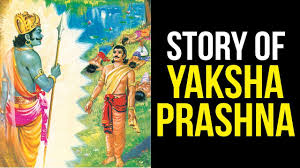


CONVERSATION BETWEEN YUDHISHTIR AND YAKSH (Mahabharat)

Copyright@shravancharitymission

    At the end of the 12 years of exile in the forests, time had come for the Pandavas to live in Agyat Vasa (living Incognito). As they were discussing their course of action the Pandava Princes came across a Brahmin who complained that a deer had taken, on its antlers (its horns)—his Arani (pair of wooden blocks) that he used to generate fire with by friction – and therefore he was not able to light the fire for his Vedic rituals. So, the valorous Pandavas immediately set out to retrieve the Brahmin’s Arani by following the hoof-marks of the deer.

    In the quest for the mysterious deer, Yudhishtir, became exhausted and thirsty. His brother Nakul thus ventured out, to fetch water and found a beautiful lake. The lake was devoid of any living creature except a crane (Baka). When he attempted to take water from the lake, the crane spoke, “O Nakul! The water of this lake will turn into poison if you take it without satisfactorily answering my questions.” But Nakul, in sheer arrogance, did not pay heed and hurriedly took the water from the lake. And upon drinking the crystal clear water, Nakul instantly died of poisoning. Nakul’s twin Sahadev, coming in search of his brother, also found the same lake, but saw Nakul dead, and as in the case of Nakul he too was warned by the crane. But Sahadev too, ignored the crane and died after drinking the water. In the same manner, both valiant Arjun, and powerful Bhim met with the same fate.

    Since none of the brothers returned with water, Yudhishtir engaged himself in search of them. Following the same path, Yudhishtir came across the same lake and found his brothers lying dead. Before searching for the killer of his brothers, Yudhishtir decided to drink some water from the lake. But when the crane warned him, Yudhishtir realised that the crane held the answer to the turn of events. So, virtuous Yudhishtir, proceeded to answer the questions put forth by the crane.

    Before putting the questions to Yudhishtir, the crane revealed itself as a Yaksha. Yaksha asked certain questions with philosophical ramifications

    Question 1. “Who makes the sun rise in the skies? Who moves the Sun around? Who makes the sunset in the horizons? What is the true nature of the Sun and where is the Sun established”?

    Yudhishtir answered, “Brahma makes the sun rise and ascend. The Gods perambulate about the Sun. Truth is the actual Sun and the Sun is established in Truth alone.”

    Question 2. What instils ‘divinity’ in Brahmins? What is the quality of virtuosity in a Brahmin? What is the humanlike quality of a Brahmin? What is the conduct akin to a non-virtuous person in a Brahmin?

    Yudhistir replied: The self-study (Swadhyayana) of the Vedas is divinity in a Brahmin. Penance is the quality of virtuosity in a Brahmin. Death is human-like quality in a Brahmin. Criticising others is a conduct in a Brahmin that resembles a non-virtuous person.

    Question 3. “What instils divinity in Kshatriyas? What is the quality of virtuosity in a Kshatriya? What is the humanity of a Kshatriya? What is the conduct akin to a non-virtuous person in a Kshatriya”?

    Yudhishtir replied, “The art of archery instils divinity in a Kshatriya. Oblation to God (Yagya) is the quality of virtuosity in a Kshatriya. Fear is his humanity. Abandoning people under his protection is the unbecoming conduct of a Kshatriya”.

    Question 4. “What is that thing which is like a Mantra in the performance of oblations (Yagya)? Who is the performer of rites and ceremonies during a Yagya? Who accepts the oblations of a Yagya? What is that which even a Yagya cannot transgress”?

    Yudhishtir replied, “Breath is like the Mantra in the performance of rites or Yagya. Mind is the performer of all rites in the course of Yagya. Only Shlokas of the Vedas, termed rucha or the richa accept oblation. The Yagya cannot surpass nor transgress the richas”.

    Question 5. “What is heavier than Earth, higher than heavens, faster than the wind and more numerous than straws”?

   Yudhishtir replied, “One’s mother is heavier than the Earth, one’s father is higher than the heavens, the mind is faster than the wind and our worries are more numerous than straws “.

    Question 6. “Who is the friend of a traveller? Who is the friend of the one who is ill and the one who is dying”?

   Yudhishtir’s replied, “The friend of a traveller is his companion. The physician is the friend of one who is sick and a dying man’s friend is charity”.

    Question 7. “What is that, which when renounced, makes one lovable? What is that which when renounced makes a person happy and wealthy”?

    Yudhishtir said, “Pride, if renounced makes one lovable, by renouncing desire one becomes wealthy and by renouncing extreme greed and avarice one obtains happiness”.

    Question 8. “Which enemy is invincible? What constitutes an incurable disease? What sort of man is noble and what sort of a man is not honourable or ignoble”?

    Yudhishtir responded, “Anger is the invincible enemy. Covetousness constitutes a disease that is incurable. He is noble who desires the well-being of all creatures, and he is ignoble who is without mercy”.

Question 9. “Who is truly happy? What is the greatest wonder? What is the path? And what is the news”?

    Yudhishthira replied, “He who has no debts is truly happy. Day after day countless people die. Yet the living wish to live forever. O Lord, what can be a greater wonder than that? Argument leads to no certain conclusion, the Srutis (the religious texts) are different from one another. There is not even one Rishi whose opinion can be accepted by all. The truth about Dharma and duty is hidden in the cave of our hearts therefore that alone is the path along which the great have trod. This world full of ignorance is like a pan. Where, the sun is fire, the days and nights are fuel. The months and the seasons constitute the wooden ladle. Time is the cook that is cooking all creatures in that pan (with such aids). This in fact is the news”.

    Even though Yudhishtir had answered all questions in a satisfactory manner, Yaksh allowed him to choose only one of his brothers to come back to life. Yudhishtir said, “I choose my younger brother, Nakul.” When Yaksh asked him why he chose Nakul when he could choose sharp Arjun or brave Bheem. Yudhishtir replied, “I love Kunti, my mother and Madri, my stepmother equally, If I choose my blood brothers it will be injustice to Madri, hence I chose Nakul who is her biological son.

    Yaksh was impressed the manner in which Yudhishtir followed Dharma in every little thing that he did. At the end of the questions, Yaksh revealed himself to be Yamaraj, the God of death. He also admitted to Yudhishtir that it was he who had stolen the arani (the wooden blocks) disguised as a deer. He blessed him saying, since he had adhered to Dharma (righteousness), Dharma would protect them all and no-one would recognise them during the Agyat Vasa. Yudhishtir also got his brothers back from heaven.

    No matter which religion you follow the end of all religions is only righteousness.

By Kamlesh Tripathi

*

https://kamleshsujata.wordpress.com

*

Share it if you like it

*

Shravan Charity Mission is an NGO that works for poor children suffering from life threatening diseases especially cancer. Our posts are meant for our readers that includes both children and adults and it has a huge variety in terms of content. We also accept donations for our mission. Should you wish to donate for the cause. The bank details are given below:

NAME OF ACCOUNT: SHRAVAN CHARITY MISSION

Account no: 680510110004635 (BANK OF INDIA)

IFSC code: BKID0006805

*

Our publications

GLOOM BEHIND THE SMILE

(The book is about a young cancer patient. Now archived in 7 prestigious libraries of the US, including, Harvard University and Library of Congress. It can also be accessed in MIT through Worldcat.org. Besides, it is also available for reading in Libraries and archives of Canada and Cancer Aid and Research Foundation Mumbai)  

ONE TO TANGO … RIA’S ODYSSEY

(Is a book on ‘singlehood’ about a Delhi girl now archived in Connemara Library, Chennai and Delhi Public Library, GOI, Ministry of Culture, Delhi)

AADAB LUCKNOW … FOND MEMORIES

(Is a fiction written around the great city of Nawabs—Lucknow. It describes Lucknow in great detail and also talks about its Hindu-Muslim amity. That happens to be its undying characteristic. The book was launched in Lucknow International Literary Festival of 2014)

REFRACTIONS … FROM THE PRISM OF GOD

(Co-published by Cankids–Kidscan, a pan India NGO and Shravan Charity Mission, that works for Child cancer in India. The book is endorsed by Ms Preetha Reddy, MD Apollo Hospitals Group. It was launched in Lucknow International Literary Festival 2016)

TYPICAL TALE OF AN INDIAN SALESMAN

(Is a story of an Indian salesman who is, humbly qualified. Yet he fights his ways through unceasing uncertainties to reach the top. A good read not only for salesmen. The book was launched on 10th February, 2018 in Gorakhpur Lit-Fest. Now available in Amazon, Flipkart and Onlinegatha)

RHYTHM … in poems

(Published in January 2019. The book contains 50 poems. The poems describe our day to day life. The book is available in Amazon, Flipkart and Onlinegatha)

MIRAGE

(Published in February 2020. The book is a collection of eight short stories. It is available in Amazon, Flipkart and Notion Press)

(ALL THE ABOVE TITLES ARE AVAILABLE FOR SALE IN AMAZON, FLIPKART AND OTHER ONLINE STORES OR YOU COULD EVEN WRITE TO US FOR A COPY)

*****
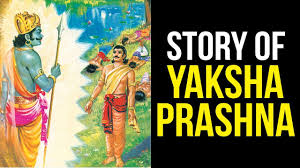


FFQ: FACTS, FIGURES & QUOTES: THE NUREMBERG TRIALS

Copyright@shravancharitymission

   The Nuremberg trials were a series of military tribunals held after World War II by the Allied Forces (The Allies or the Allied Forces of World War II, were called so, by the United Nations, in their January 1 1942 declaration.) They were the countries that together opposed the Rome-Berlin-Tokyo Axis powers during the Second World War (1939-1945). The Allies promoted the alliance as a means to control German, Japanese and the Italian aggression under international law and the laws of the war. The trials were most notable for the prosecution of prominent members of the political, military, judicial, and economic leadership of Nazi Germany. Nazi Germany was the common English name for Germany between 1933 and 1945, when Adolf Hitler and his Nazi Party (NSDAP) ruled the country through dictatorship.

    Under Hitler’s rule, Germany became a totalitarian state when nearly all aspects of life were controlled by the government who planned, supervised, and horrendously carried out the holocaust. The holocaust, also known as the Shoah, was World War II’s genocide of the European Jews, between 1941 and 1945 across German-occupied Europe when, Nazi Germany and its collaborators systematically murdered some six million Jews, around two-thirds of Europe’s Jewish population and committed other war crimes.

    War Crime is an act that constitutes a serious violation of the laws of war that gives rise to individual criminal responsibility. Examples of war crimes include intentionally killing civilians or prisoners, torturing, destroying civilian property, taking hostages, performing perfidy, raping, using child soldiers and pillaging. The trials were held in Nuremberg. Nuremberg is the second-largest city of the German federal state of Bavaria after its capital Munich. The trials marked a turning point between classical and contemporary international law.

    The first and the best known trials was that of the major war criminals before the International Military Tribunal (IMT). It was described as “the greatest trial in history” by Sir Norman Birkett, a British barrister, judge, politician and preacher who served as the alternate British judge during the Nuremberg trials, and one of the British judges present throughout. The trial was held between 20 November 1945 and 1 October 1946.

    The Tribunal was given the task of trying 24 of the most important political and military leaders of the Third Reich. Reich is a German word analogous to the English word meaning ‘realm of a king.’ Some important names that were put to trial were as follows:

    Let me begin with Martin Bormann who had died in May 1945 but the fact was not known to the allies and he was tried in absentia. Martin Ludwig Bormann was a German Nazi Party official and head of the Nazi Party Chancellery. He gained immense power by using his position as Adolf Hitler’s private secretary to control the flow of information and access to Hitler. After Hitler’s suicide on 30 April 1945, another defendant, Robert Ley, committed suicide within a week of his trial’s commencement.

    Adolf Hitler killed himself by a gunshot on 30 April 1945 in his Fuhrerbunker in Berlin. Eva Braun, his wife too committed suicide along with him by taking cyanide. In accordance with Hitler’s prior written and verbal instructions that afternoon, their remains were carried up the stairs through the bunker’s emergency exit, doused in petrol, and set alight in the Reich Chancellery garden outside the bunker. Records in the Soviet archives show that their burned remains were recovered and interred in successive locations until 1946. They were exhumed again and cremated in 1970, and the ashes were scattered. 

    Hitler had retreated to his bunker on January 16, after deciding to remain in Berlin for the last great siege of the war. Fifty-five feet under the chancellery (Hitler’s headquarters as chancellor), the shelter contained 18 small rooms and was fully self-sufficient, with its own water and electricity supply. He went out very rarely (once to decorate a squadron of Hitler Youth) and spent most of his time micromanaging what was left of German defenses and entertaining guests such as Hermann Goering, Heinrich Himmler, and Joachim von Ribbentrop. At his side was Eva Braun, whom he married only two days before their double suicide, and his dog, an Alsatian named Blondi.

    Warned by officers that the Russians were only a day or so away from overtaking the chancellery and urged him to escape to Berchtesgarden, a small town in the Bavarian Alps where Hitler owned a home, but the dictator instead chose suicide. It is believed that both he and his wife swallowed cyanide capsules which had been tested for its efficacy on his “beloved” dog and her pups. And for good measure, he even shot himself with his service pistol.

    The bodies of Hitler and Eva were cremated in the chancellery garden by the bunker survivors as per Der Fuhrer’s orders, and reportedly later recovered in parts by Russian troops. A German court finally officially declared Hitler dead, but not until 1956.

    Adolf Hitler and Joseph Goebbels a German Nazi politician and a Reich Minister for Propoganda of the Nazi Germany from 1933 to 1945, had both committed suicide in the spring of 1945 to avoid capture. Heinrich Himmler another leader of the Nazi Party, attempted to commit suicide, but was captured before he could succeed. He committed suicide one day after being arrested by British forces. On the other hand Heinrich Muller better known as Gestapo Muller the SS Gestapo chief of Hitler, who was central in planning the holocaust disappeared the day after Hitler’s suicide. He was the most senior figure of the Nazi regime whose fate remains unknown. He was neither captured nor confirmed to have died.

     Further Reinhard Heydrich a high-ranking German SS and police official of the Nazi era and the main architect of the holocaust was assassinated by Czech partisans in 1942. Josef Terboven another Nazi leader killed himself with dynamite in Norway in 1945. Adolf Eichmann fled to Argentina to avoid capture but was apprehended by Israel’s intelligence service (Mossad) and hanged after a trial in Jerusalem in 1962. Hermann Goring was sentenced to death but he committed suicide by swallowing cyanide the night before his execution.

    Primarily conducted in Nuremberg were the first initial trials, adjudicated by the International Military Tribunal. Further trials of lesser war criminals were conducted under Control Council Law No. 10 at the U.S. Nuremberg Military Tribunal (NMT), which included Doctors’ and Judges’ trial who too were part of war crimes.

    The categorization of the crimes and the constitution of the court represented a juridical advance that was to be followed afterward by the United Nations for the development of an international jurisprudence in matters of war crimes, crimes against humanity, and wars of aggression, and led to the creation of the International Criminal Court. For the first time in international law, the Nuremberg indictments also mentioned genocide (count three, war crimes: “the extermination of racial and national groups, against the civilian populations of certain occupied territories in order to destroy particular races and classes of people and national, racial, or religious groups, particularly Jews, Poles, Gypsies and others”).

    A precedent for trying those accused, of war crimes, had also been set up, at the end of World War I, in the Leipzig War Crimes Trials. The Leipzig War Crimes Trials were a series of trials held in 1921 to try alleged German war criminals of the First World War before the German Reichsgericht (the Supreme Court) in Leipzig, as part of the penalties imposed on the German government under the Treaty of Versailles. Only twelve individuals were brought to trial with mixed results, and the proceedings were widely regarded at the time as a failure. In the longer term, however, the trials were seen as a significant step towards the introduction of a comprehensive system for the prosecution of violations of international law.

 By Kamlesh Tripathi

*

https://kamleshsujata.wordpress.com

*

Share it if you like it

*

Shravan Charity Mission is an NGO that works for poor children suffering from life threatening diseases especially cancer. Our posts are meant for our readers that includes both children and adults and it has a huge variety in terms of content. We also accept donations for our mission. Should you wish to donate for the cause. The bank details are given below:

NAME OF ACCOUNT: SHRAVAN CHARITY MISSION

Account no: 680510110004635 (BANK OF INDIA)

IFSC code: BKID0006805

*

Our publications

GLOOM BEHIND THE SMILE

(The book is about a young cancer patient. Now archived in 7 prestigious libraries of the US, including, Harvard University and Library of Congress. It can also be accessed in MIT through Worldcat.org. Besides, it is also available for reading in Libraries and archives of Canada and Cancer Aid and Research Foundation Mumbai)  

ONE TO TANGO … RIA’S ODYSSEY

(Is a book on ‘singlehood’ about a Delhi girl now archived in Connemara Library, Chennai and Delhi Public Library, GOI, Ministry of Culture, Delhi)

AADAB LUCKNOW … FOND MEMORIES

(Is a fiction written around the great city of Nawabs—Lucknow. It describes Lucknow in great detail and also talks about its Hindu-Muslim amity. That happens to be its undying characteristic. The book was launched in Lucknow International Literary Festival of 2014)

REFRACTIONS … FROM THE PRISM OF GOD

(Co-published by Cankids–Kidscan, a pan India NGO and Shravan Charity Mission, that works for Child cancer in India. The book is endorsed by Ms Preetha Reddy, MD Apollo Hospitals Group. It was launched in Lucknow International Literary Festival 2016)

TYPICAL TALE OF AN INDIAN SALESMAN

(Is a story of an Indian salesman who is, humbly qualified. Yet he fights his ways through unceasing uncertainties to reach the top. A good read not only for salesmen. The book was launched on 10th February, 2018 in Gorakhpur Lit-Fest. Now available in Amazon, Flipkart and Onlinegatha)

RHYTHM … in poems

(Published in January 2019. The book contains 50 poems. The poems describe our day to day life. The book is available in Amazon, Flipkart and Onlinegatha)

MIRAGE

(Published in February 2020. The book is a collection of eight short stories. It is available in Amazon, Flipkart and Notion Press)

(ALL THE ABOVE TITLES ARE AVAILABLE FOR SALE IN AMAZON, FLIPKART AND OTHER ONLINE STORES OR YOU COULD EVEN WRITE TO US FOR A COPY)

*****


The Story of Rodriguez and the Learning it has for Everyone’s Life

Copyright@shravancharitymission

    There have been times in our career when we start questioning the value of the work that we do. It is quite easy for us to fall prey and sometime become doubtful about the meaningfulness of the work that we do. However, such doubts shouldn’t be a deterrent for us to give our best to the work that we do as you never know how this work will manifest in future?

    After some contemplation, I felt I should tell you a story. A beautiful story and a real one!!
    It is the story of Sixto Rodriguez, a Mexican migrant settled in downtown Detroit in 1970s. Sixto was a small time musician playing gigs in bars of rundown part of Detroit. Sixto caught attention of a producer of a big music label, as a result ‘Viola!’ Sixto’s first music album was out! However, it badly flopped. His second album did even worse. This setback pushed Sixto out of music industry and Sixto returned to a demolition company in Detroit working as a blue collar worker. Where, Sixto Rodriguez was living a simple, low-key life. Unbeknown to him, that a handful of his 1970 debut album, “Cold Fact,” had reached Austrailia months after it failed in America.
    Some Austrailian Radio DJs got their hands on the album and began playing “Sugar Man” on the radio. As a result the Australian record stores went crazy about the album. “Cold Fact” became as popular as an album could be in Austrailia. Sixto had no idea about all this.

    In Australia and then in South Africa, Rodriguez’s lyrics, about overcoming hardship, made him more popular than even Elvis Presley and also bigger than the Rolling Stones. Part of the reason why his album became so popular in South Africa was that many of his songs served as anti-apartheid anthems and were used in protests. Other than his music, people around the world knew nothing about “Rodriguez.” They had no idea what he looked like, where he lived, or anything about his personal life. He was an international man of mystery! There were also rumours that Sixto committed suicide during one of his live performances. This however didn’t deter some hardcore Australian fans to finally track down Sixto Rodriguez. They got him to Australia for a series of concerts in 1979. He had never played a concert before, just bars and clubs was all that he handled. This time Sixto Rodriguez played to 15,000 people in Sydney and the show was a roaring success with fans signing every word of his decades old songs. After this successful tour of his Sixto once again went back to work as a demolition man!

    While all this was happened, South Africa continued simmering under Rodriguez’s craze. A music journalist and Rodriguez”s fan Stephen Segermen  launched a website dedicated to him and was able to get in touch with Rodriguez’s daughter in 1997.Rodriguez’s was in awe to learn about his fame in South Africa. Rodriguez then went on tour in South Africa! He performed in 6 concerts, in front of thousands and thousands of fans! Sixto was now living his dream! His rediscovery in South Africa in 1998 allowed him to retire from his job, and tour the country for a couple of years. Afterwards, he began to perform in Europe.

    A Swedish filmmaker named Malik Bendjelloul first heard about Sixto Rodriguez while traveling through Africa. He immediately thought his story was incredible and wanted to capture his life into a short film for the Swedish television. Pretty quickly, Malik knew he had a huge story on his hands. But he had one main issue: funding. He decided to approach two of Britain’s top documentary producers for help. But even with the help of the two big-named producers, Malik Benjelloul only secured funding that covered a year of expenses and production costs. The film actually took three years to make! When funding ran out, Benjelloul used the one dollar Super 8 app on his iPhone to finish the documentary.

    There was only one other problem in the making of the film: Sixto Rodriguez initially refused to appear in it. “His kids told me I could probably meet him, but I shouldn’t get my hopes up about an interview,” Bendjelloul explained. “I went to Detroit every year for four years. He didn’t agree to be interviewed until my third visit.

    After overcoming all obstacles, Malik Benjellou’s film, “Searching For Sugar Man” was nominated for the best documentary feature at the Academy Awards. And it went on to win the award for the best documentary feature at the 85th Academy Awards in 2002. “Searching For Sugar Man” was a roaring success at the box office when it was released in the U.S. Malik Bendjelloul begged Rodriguez to attend the Oscars, but in vain. Sixto thought it would take the attention away from the filmmakers. Rodriguez said, “I was asleep when it won, but my daughter Sandra called to tell me. I don’t have TV service anyway.” So not only did he refuse to attend, he was asleep when the film won the award! Sixto Rodriguez’s life was totally transformed since “Searching for Sugar Man.” The Academy Award victory took his fame to the next level. After the Oscar win, Sixto began to play sold out shows all over New York and in music festivals around the world. Some of his shows even sell out in minutes!

    People just love to see him perform live and he loves to do that! Despite all the success and money, Sixto still lives in the same old modest house in downtown Detroit that he has for the last 40 years. Sixto Rodriguez has no computer, car or television. He still lives a very Spartan life. Sixto once told his daughter “there’s three basic needs – food, clothing and shelter. Once you get down to that level, everything else is icing.”
Sixto is still the same person he was before all the fame. He is friendly, down to earth and he is doing what he loves most-“creating music”!!

Posted by Niraj Trivedi

*

https://kamleshsujata.wordpress.com

*

Share it if you like it

*

Shravan Charity Mission is an NGO that works for poor children suffering from life threatening diseases especially cancer. Our posts are meant for our readers that includes both children and adults and it has a huge variety in terms of content. We also accept donations for our mission. Should you wish to donate for the cause. The bank details are given below:

NAME OF ACCOUNT: SHRAVAN CHARITY MISSION

Account no: 680510110004635 (BANK OF INDIA)

IFSC code: BKID0006805

*

Our publications

GLOOM BEHIND THE SMILE

(The book is about a young cancer patient. Now archived in 7 prestigious libraries of the US, including, Harvard University and Library of Congress. It can also be accessed in MIT through Worldcat.org. Besides, it is also available for reading in Libraries and archives of Canada and Cancer Aid and Research Foundation Mumbai)  

ONE TO TANGO … RIA’S ODYSSEY

(Is a book on ‘singlehood’ about a Delhi girl now archived in Connemara Library, Chennai and Delhi Public Library, GOI, Ministry of Culture, Delhi)

AADAB LUCKNOW … FOND MEMORIES

(Is a fiction written around the great city of Nawabs—Lucknow. It describes Lucknow in great detail and also talks about its Hindu-Muslim amity. That happens to be its undying characteristic. The book was launched in Lucknow International Literary Festival of 2014)

REFRACTIONS … FROM THE PRISM OF GOD

(Co-published by Cankids–Kidscan, a pan India NGO and Shravan Charity Mission, that works for Child cancer in India. The book is endorsed by Ms Preetha Reddy, MD Apollo Hospitals Group. It was launched in Lucknow International Literary Festival 2016)

TYPICAL TALE OF AN INDIAN SALESMAN

(Is a story of an Indian salesman who is, humbly qualified. Yet he fights his ways through unceasing uncertainties to reach the top. A good read not only for salesmen. The book was launched on 10th February, 2018 in Gorakhpur Lit-Fest. Now available in Amazon, Flipkart and Onlinegatha)

RHYTHM … in poems

(Published in January 2019. The book contains 50 poems. The poems describe our day to day life. The book is available in Amazon, Flipkart and Onlinegatha)

MIRAGE

(Published in February 2020. The book is a collection of eight short stories. It is available in Amazon, Flipkart and Notion Press)

(ALL THE ABOVE TITLES ARE AVAILABLE FOR SALE IN AMAZON, FLIPKART AND OTHER ONLINE STORES OR YOU COULD EVEN WRITE TO US FOR A COPY)

*****



DRIVING AWAY THE ENGLISH BLUES

Copyright@shravancharitymission

    Verbal ability is among the most important skills one may possess. Throughout your life people form opinions on the basis of how you speak, how your write, in fact your total deportment. An example comes to my mind: an IAS candidate entering the board room for interview tripped, faltered fell down. One of the members light heartedly said, “So Mr Ram you have fallen down.” The quick witted candidate countered, “I hope in good hands.” That last line probably got him the coveted job. In areas where communication is of the essence, it is vital to use words effectively and speak without being self-conscious. This will engender increased confidence and pave way to success in school and social life.

    How often do we hear teachers ruing lack of speaking skills in students? “The fault dear Brutus is not in our stars but in ourselves” just to borrow a convenient phrase. “Where’s your homework? Asked an irritated teacher. The student snugly replied, “I did not brought it”—an oft-repeated mistake which teachers seldom correct on the spot; why, I’ve not been able to figure out—maybe because of inertia or maybe it is too much trouble. In fact we never insist on the student to explain, communicate and inform in the prescribed language of the period. Thus, a student carries a backlog of wrong usage, mispronunciation and the incorrigible habit of mentally translating from mother tongue, at least up to class XII. No amount of ‘speaking & hearing skills’ can undo the damage already done in the formative and primary stages of schooling.

    Unfortunately, apart from the draconian rules of grammar and forbidding norms of etiquette, there is very little handy material to groom the budding aspirant. We could have wished for modern day Mrs. Grundy, that personification of conventional propriety who had all the answers.

By A.K. Tripathi

*

https://kamleshsujata.wordpress.com

*

Share it if you like it

*

Shravan Charity Mission is an NGO that works for poor children suffering from life threatening diseases especially cancer. Our posts are meant for our readers that includes both children and adults and it has a huge variety in terms of content. We also accept donations for our mission. Should you wish to donate for the cause. The bank details are given below:

NAME OF ACCOUNT: SHRAVAN CHARITY MISSION

Account no: 680510110004635 (BANK OF INDIA)

IFSC code: BKID0006805

*

Our publications

GLOOM BEHIND THE SMILE

(The book is about a young cancer patient. Now archived in 7 prestigious libraries of the US, including, Harvard University and Library of Congress. It can also be accessed in MIT through Worldcat.org. Besides, it is also available for reading in Libraries and archives of Canada and Cancer Aid and Research Foundation Mumbai)  

ONE TO TANGO … RIA’S ODYSSEY

(Is a book on ‘singlehood’ about a Delhi girl now archived in Connemara Library, Chennai and Delhi Public Library, GOI, Ministry of Culture, Delhi)

AADAB LUCKNOW … FOND MEMORIES

(Is a fiction written around the great city of Nawabs—Lucknow. It describes Lucknow in great detail and also talks about its Hindu-Muslim amity. That happens to be its undying characteristic. The book was launched in Lucknow International Literary Festival of 2014)

REFRACTIONS … FROM THE PRISM OF GOD

(Co-published by Cankids–Kidscan, a pan India NGO and Shravan Charity Mission, that works for Child cancer in India. The book is endorsed by Ms Preetha Reddy, MD Apollo Hospitals Group. It was launched in Lucknow International Literary Festival 2016)

TYPICAL TALE OF AN INDIAN SALESMAN

(Is a story of an Indian salesman who is, humbly qualified. Yet he fights his ways through unceasing uncertainties to reach the top. A good read not only for salesmen. The book was launched on 10th February, 2018 in Gorakhpur Lit-Fest. Now available in Amazon, Flipkart and Onlinegatha)

RHYTHM … in poems

(Published in January 2019. The book contains 50 poems. The poems describe our day to day life. The book is available in Amazon, Flipkart and Onlinegatha)

MIRAGE

(Published in February 2020. The book is a collection of eight short stories. It is available in Amazon, Flipkart and Notion Press)

(ALL THE ABOVE TITLES ARE AVAILABLE FOR SALE IN AMAZON, FLIPKART AND OTHER ONLINE STORES OR YOU COULD EVEN WRITE TO US FOR A COPY)

*****


BOOK REVIEW: LOVE by Guy De Maupassant

Copyright@shravancharitymission

Khidki (Window)

–Read India Initiative—

This is only an attempt to create interest in reading. We may not get the time to read all the books in our lifetime. But such reviews, talk and synopsis will at least convey what the book is all about.

Maupassant is a 19th-century French author. He is remembered for his genius in the oeuvre of short stories. His title ‘Love’ will only make sense to kind and passionate human beings. Love is an emotion that abodes both in human beings and animals. But on a raw comparison one might find it to be more unalloyed in animals than in men.

Haven’t you heard of the love tragedy? He killed her then he killed himself, therefore, he loved her. So then, what does he or she signify singly and separately? Well they signify nothing. It is only when they unify in love the world comes alive for both of them.

In this story “Love” the narrator is reminded of a story after reading a tragic love story in one of the papers. The narrator’s story takes place long back in the days of his youth, during a hunting expedition at his cousin’s estate.

Narrator’s cousin, Karl de Rauville, invites the narrator to join him in a duck shooting expedition held early in the morning. Karl’s estate lies in a valley that has a river running through it. During dinner, in the great hall whose sideboards, walls, and ceiling were all covered with stuffed birds, with outstretched wings, or perched upon branches—hawks, herons, owls, nightjars, buzzards, vultures, falcons—and my cousin himself like some strange animal of the Arctic region, in his sealskin jacket, puts before me all the plans he had made for this night.

It is very scenic there. The river has naturally promoted healthy plant growth along its banks. There are many trees with good foliage that attracts birds of all kinds on the land. At some point, the river expands into a marsh that the narrator describes as “the best hunting ground” he has ever seen.

The group leaves for the marsh a little after three in the morning. It consists of the narrator, his cousin Karl, the gamekeeper and the dogs Plongeon and Pierrot. The narrator describes his cousin Karl, ‘as a jolly red-headed and big bearded, immensely powerful fellow of forty, a lively and likeable sort of a beast, who had within him just that pinch of Attic-salt that makes mediocrity tolerable, lived the life of a country gentleman in a house which was half-farm, half-mansion, in a broad valley through which a river flowed.’

The narrator further goes on to describe the surroundings. Woods covered the hills on either side, with magnificent trees, in which were to be found, rare examples of game-birds than in any other district close by. Sometimes eagles were shot, and also birds flying south, which hardly ever came near the over-populated parts of the country.

The valley was covered with huge pastures, irrigated by ditches and divided by hedges. The river narrow at first, spreads out at a distance way into an immense marsh. This marsh, was the best bit for shooting I have ever known, and was my cousin’s biggest love. He looked after it, as he would look after a treasure.

The narrator further describes the scenery around. I love water passionately and whole-heartedly. The sea, although it is too vast, too turbulent, impossible to call one’s own, rivers on the contrary are so pretty, but then they hurry by and vanish forever. A marsh is a world of its own upon this earth of ours.

There is at times nothing more disturbing, disquieting, or more terrifying, than a bog-land. Whence, comes this fear which hovers over low-lying tracts of land covered with water? Is it in the whispering of the reeds, the weird will-o-the-wisps, the deep silence in which they were wrapped on still nights, or the fantastic mists which cover the rushes as with a shroud, or the barely-noticeable noises. So light, so gentle, yet, at times, more terrifying than the thunder of man or of the gods? Do these give marshes the appearance of some dreamland, of some dread country, which hides some secret, harmful and not to be known by mortal man?

It was freezing hard enough to split stones. We were to leave at half-past three in the morning so as to arrive about half-past four at the place chosen for our shooting expedition. At this place a hut had been constructed out of blocks of ice to shelter us a little from the terrible wind which rises just before dawn.

I woke up at 3’o clock. I put on a sheepskin and found my cousin Karl clothed in bearskin. After two cups of hot coffee and a couple of glasses of cognac, we set out with our game-keeper and our dogs, Plongeon and Pierrot.

It was freezing and I felt frozen to the bones. It was one of those nights when the earth seemed to be frozen to death. The icy air rose as a veritable wall which one could feel horribly and painfully. No breath of wind moves it. There it is, solid and immovable. It bites, pierces, withers, kills trees, plants, insects, even little birds, which fall from the branches on to the hard ground, and themselves become hard in the embrace of the cold

With bent backs, hand in pockets, and guns under our arms, Karl and I strode along. Our boots, wrapped round with wool to prevent us slipping on the frozen brooks, made no noise. I noticed how our dogs’ breath turned into steam in the cold air.

We soon reached the edge of the marsh, and we entered one of the avenues of dry reeds leading through the low forest.

Suddenly, at the bend of one of the avenues, I saw the hut made of ice, which had been set up as a shelter for us. I went in, and as we had still an hour to pass before the birds awakened, I rolled myself up in my sheepskin to try to get warm.

My cousin Karl was alarmed. ‘It will be a great nuisance if we don’t shoot something today’, he said. ‘I don’t want you to catch cold, so we must have a fire.’

He then ordered the gamekeeper to cut some reeds for the fire.

Slowly the day broke, clear with a blue sky. The sun came up over the bottom of the valley and we were thinking of going home, when two birds, with necks and wings out stretched, suddenly glided over our heads, I fired, and one of them, a teal with a silver breast, fell almost at my feet. Then, high above me, the cry of a bird was heard—a shrill heart rending wail, which it uttered again and again. And the little creature, the survivor of the two, began to circle around in the blue sky above us, watching its dead companion which I was holding.

Karl was watching it keenly, waiting till it came within range.

‘You have killed the hen,’ he said, ‘the cock won’t go away.’

Indeed it did not go away, but continued to circle and to cry piteously over our heads. Never has the groan of one in pain harrowed my heart so much as that call of distress, as that wail of reproach from the poor creature high up in the sky.

Once or twice it fled as it saw the threat of the gun which followed its flight, and it seemed prepared to continue its journey across the sky, all alone. Then as if unable to make up its mind, it would soon return to look for its companion.

‘Put the other one down, as it will return by and by,’ said Karl.

In reality, it came back, indifferent to the danger, maddened by its wild love for the creature I had killed.

Karl fired. It was as if the cord which was holding the bird above us had been cut. I saw a black thing come down. I heard the noise of its fall in the reeds. And Pierrot the dog brought it to me.

I put the two, already cold, into the same bag … and I went back to Paris that very day.

After knowing the narrator’s story, one can see why the newspaper story—where a man kills his lover, then kills himself— appeals to the narrator. The two stories are about love, the only difference being that one talks about love between humans, and the other about love between animals. In both, the surviving lovers choose death over life.

The narrator shoots down a duck, and its mate remains, crying piteously over his dead love. The male duck the drake “does not fly away, instead, he circles over their heads continually, and continues his cries.” The narrator and his cousin Karl, don’t even spare the mourning drake. They shoot him down, using its dead mate as an emotional bait.

The story has a long build up but at the end it delivers a great message of deviousness that a man is used to. The description of the jungle, woods and the birds is par-excellence. I would give the story seven out of ten.

By Kamlesh Tripathi

*

https://kamleshsujata.wordpress.com

*

Share it if you like it

*

Shravan Charity Mission is an NGO that works for poor children suffering from life threatening diseases especially cancer. Our posts are meant for our readers that includes both children and adults and it has a huge variety in terms of content. We also accept donations for our mission. Should you wish to donate for the cause. The bank details are given below:

NAME OF ACCOUNT: SHRAVAN CHARITY MISSION

Account no: 680510110004635 (BANK OF INDIA)

IFSC code: BKID0006805

*

Our publications

GLOOM BEHIND THE SMILE

(The book is about a young cancer patient. Now archived in 7 prestigious libraries of the US, including, Harvard University and Library of Congress. It can also be accessed in MIT through Worldcat.org. Besides, it is also available for reading in Libraries and archives of Canada and Cancer Aid and Research Foundation Mumbai)

ONE TO TANGO … RIA’S ODYSSEY

(Is a book on ‘singlehood’ about a Delhi girl now archived in Connemara Library, Chennai and Delhi Public Library, GOI, Ministry of Culture, Delhi)

AADAB LUCKNOW … FOND MEMORIES

(Is a fiction written around the great city of Nawabs—Lucknow. It describes Lucknow in great detail and also talks about its Hindu-Muslim amity. That happens to be its undying characteristic. The book was launched in Lucknow International Literary Festival of 2014)

REFRACTIONS … FROM THE PRISM OF GOD

(Co-published by Cankids–Kidscan, a pan India NGO and Shravan Charity Mission, that works for Child cancer in India. The book is endorsed by Ms Preetha Reddy, MD Apollo Hospitals Group. It was launched in Lucknow International Literary Festival 2016)

TYPICAL TALE OF AN INDIAN SALESMAN

(Is a story of an Indian salesman who is, humbly qualified. Yet he fights his ways through unceasing uncertainties to reach the top. A good read not only for salesmen. The book was launched on 10th February, 2018 in Gorakhpur Lit-Fest. Now available in Amazon, Flipkart and Onlinegatha)

RHYTHM … in poems

(Published in January 2019. The book contains 50 poems. The poems describe our day to day life. The book is available in Amazon, Flipkart and Onlinegatha)

MIRAGE

(Published in February 2020. The book is a collection of eight short stories. It is available in Amazon, Flipkart and Notion Press)

(ALL THE ABOVE TITLES ARE AVAILABLE FOR SALE IN AMAZON, FLIPKART AND OTHER ONLINE STORES OR YOU COULD EVEN WRITE TO US FOR A COPY)

*****

Facts Figures & Quotes: The Auschwitz concentration camp–Nazi Germany

Copyright@shravancharitymission

    The Auschwitz concentration camp (Konzentrationslager Auschwitz) was a complex of over 40 concentration and extermination camps operated by Nazi Germany in occupied Poland during World War II and the Holocaust. But before we move ahead let me explain Nazi Germany and holocaust in a few words.

    The term Nazi Germany is the common English name for Germany between 1933 and 1945, when Hitler and his Nazi Party (NSDAP) controlled the country through a dictatorship under Hitler’s rule. Germany became a totalitarian state where nearly all aspects of life were controlled by the government. The term holocaust is also known as the Shoah—mass murder of Jews, was in fact the World War II’s genocide, of the European Jews, between 1941 and 1945 across, German occupied Europe, where Nazi Germany and its collaborators systematically murdered some six million Jews, which was around two-thirds of, Europe’s Jewish population.

    Auschwitz I, was the main camp (Stammlager) in Oswiecim; Auschwitz II-Birkenau, and Aaoshwit II were other concentration and extermination camps built with several gas chambers. Auschwitz III, was a labor camp created to staff a factory for the chemical con-glomerate IG Farben and dozens of sub-camps. These camps became a major site of the Nazis’ Final Solution to the Jewish Question.

    After Germany sparked World War II by invading Poland in September 1939, the Schutzstaffel (in short known as SS) became a major paramilitary organisation under Adolf Hitler and the Nazi Party (NSDAP) in Nazi Germany, and later throughout German—occupied Europe during World War II. It began with a small guard unit known as the Saal-Schutz. They converted Auschwitz I, which used to be army barracks, into a prisoner-of-war camp for Polish political prisoners. The first inmates were German criminals that were brought to the camp in May 1940 as functionaries. They established the camp’s reputation for sadism, beating, torturing, and executing prisoners for the most trivial of reasons. The first gassings—of Soviet and Polish prisoners—took place in block 11 of Auschwitz I around August 1941.

    Prisoners were beaten and killed by guards and Kapos. Kapos were prison functionaries. It was their job to brutally force prisoners to do forced labor, despite the prisoners being sick and starving and for the slightest infraction of the rules they could be killed. Polish historian Irena Strzelecka writes that kapos were given nicknames such as “Bloody”, “Iron”, “The Strangler”, “The Boxer” that reflected their sadism. 

    Construction of Auschwitz II began from 1942 until late 1944. Freight trains delivered Jews from all over German-occupied Europe to its gas chambers. Out of the 1.3 million people sent to Auschwitz, 1.1 million died. The death toll includes 960,000 Jews (out of which 865,000 were gassed on arrival), 74,000 non-Jewish Poles, 21,000 Roma, 15,000 Soviet prisoners of war, and up to 15,000 other Europeans were also gassed to death. Those not gassed died of starvation, exhaustion, disease, individual executions, or beatings. Others were killed during medical experiments.

    At least 802 prisoners tried to escape, 144 successfully. On 7 October 1944 two Sonderkommando (they were units made up of German Nazi death camp prisoners, usually Jews, who were forced, on the threat of their own deaths, to aid with the disposal of gas chamber victims during the Holocaust. The death-camp Sonderkommandos, who were always inmates, were unrelated to the SS-Sonderkommandos which were adhoc units formed from various SS offices between 1938 and 1945.

The German term itself was part of the vague and euphemistic language which the Nazis used to refer to aspects of the Final Solution (e.g., Einsatzkommando “deployment units”).

 On 7 October 1944 two Sonderkommando units, consisting of prisoners who staffed the gas chambers, launched an unsuccessful uprising. Only 789 staff (not more than 15 percent) stood trial when several, including camp commandant Rudolf Hoss, were executed.

    The major allied powers that is Britain, France, Russia, and the United States, failure to act on the early reports of atrocities in the camp by bombing it or its railways remains a controversy.

    Sonderkommando wearing gas masks dragged the bodies from the chamber. They removed glasses and artificial limbs and shaved off the women’s hair. Women’s hair was removed before they entered the gas chamber at Belzec, Sobibor, and Treblinka, but at Auschwitz it was done after death. By 6 February 1943, the Reich—Economic Ministry of Nazi Germany had received 3,000 kg of women’s hair from Auschwitz and Majdanek. The hair was first cleaned in a solution of sal-ammoniac, dried on the brick floor of the crematoria, combed, and placed in paper bags. The hair was shipped to various companies, including one manufacturing plant in Bremen-Bluementhal, where workers found tiny coins with Greek letters on some of the braids that possibly belonged some of the 50,000 Greek Jews deported to Auschwitz in 1943. When they liberated the camp in January 1945, the Red Army found 7,000 kg of human hair in bags ready to ship.

    Just before cremation, jewelry was removed, along with denture and teeth containing precious metals from the dead bodies. Gold was removed from the teeth of dead prisoners from 23 September 1940 onwards by order of Heinrich Himmler—German Nazi leader. The work was carried out by members of the Sonderkommando who were dentists. Anyone caught overlooking or spying over the dental work were cremated alive. The gold was sent to the SS Health Service and was used by dentists to treat the SS and their families. 50 kg had been collected by 8 October 1942. By early 1944, around 10–12 kg of gold was extracted every month from various victims’ teeth.

    The corpses were burned in the nearby incinerators, and the ashes were buried, or thrown in the Vistula river or even used as fertilizer. Any bits of bone that had not burned properly were grounded down in wooden mortars.

    As the Soviet Red Army approached Auschwitz in January 1945, toward the end of the war, the SS sent most of the camp’s population west on a death march to camps inside Germany and Austria. Soviet troops entered the camp on 27 January 1945, a day commemorated since 2005 as International Holocaust Remembrance Day. In the decades after the war, survivors such as Primo Levi, Viktor Frankl, and Elie Wiesel wrote memoirs of their experiences, and the camp became a dominant symbol of the Holocaust. In 1947 Poland founded the Auschwitz-Birkenau State Museum on the site of Auschwitz I and II, and in 1979 it was named a World Heritage Site by UNESCO.

    Man is the most brutal beast on this planet when it comes to greed and power.

By Kamlesh Tripathi

*

https://kamleshsujata.wordpress.com

*

Share it if you like it

*

Shravan Charity Mission is an NGO that works for poor children suffering from life threatening diseases especially cancer. Our posts are meant for our readers that includes both children and adults and it has a huge variety in terms of content. We also accept donations for our mission. Should you wish to donate for the cause. The bank details are given below:

NAME OF ACCOUNT: SHRAVAN CHARITY MISSION

Account no: 680510110004635 (BANK OF INDIA)

IFSC code: BKID0006805

*

Our publications

GLOOM BEHIND THE SMILE

(The book is about a young cancer patient. Now archived in 7 prestigious libraries of the US, including, Harvard University and Library of Congress. It can also be accessed in MIT through Worldcat.org. Besides, it is also available for reading in Libraries and archives of Canada and Cancer Aid and Research Foundation Mumbai)  

ONE TO TANGO … RIA’S ODYSSEY

(Is a book on ‘singlehood’ about a Delhi girl now archived in Connemara Library, Chennai and Delhi Public Library, GOI, Ministry of Culture, Delhi)

AADAB LUCKNOW … FOND MEMORIES

(Is a fiction written around the great city of Nawabs—Lucknow. It describes Lucknow in great detail and also talks about its Hindu-Muslim amity. That happens to be its undying characteristic. The book was launched in Lucknow International Literary Festival of 2014)

REFRACTIONS … FROM THE PRISM OF GOD

(Co-published by Cankids–Kidscan, a pan India NGO and Shravan Charity Mission, that works for Child cancer in India. The book is endorsed by Ms Preetha Reddy, MD Apollo Hospitals Group. It was launched in Lucknow International Literary Festival 2016)

TYPICAL TALE OF AN INDIAN SALESMAN

(Is a story of an Indian salesman who is, humbly qualified. Yet he fights his ways through unceasing uncertainties to reach the top. A good read not only for salesmen. The book was launched on 10th February, 2018 in Gorakhpur Lit-Fest. Now available in Amazon, Flipkart and Onlinegatha)

RHYTHM … in poems

(Published in January 2019. The book contains 50 poems. The poems describe our day to day life. The book is available in Amazon, Flipkart and Onlinegatha)

(ALL THE ABOVE TITLES ARE AVAILABLE FOR SALE IN AMAZON, FLIPKART AND OTHER ONLINE STORES OR YOU COULD EVEN WRITE TO US FOR A COPY)

*****


The Story of Mura and Murari

Copyright@shravancharitymission

    Mura was a powerful asura who had a boon from Brahma that if he touched anyone during a battle, that person—mortal or immortal—would immediately die.

    Mura was also the best friend of Narakasura, whom he always assisted, in the wars against Krishna. Mura had two sons, and together they protected Narakasura’s capital very strongly. Where, any trespasser in the capital was ruthlessly killed.

    With the special boon from Brahma, Mura and his sons were able to protect the city from many Gods including Indra, and they invaded many kingdoms. So much so that Mura even invaded Yamraj’s city when the god of death frantically fled on his buffalo.

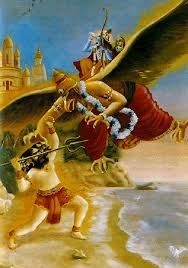
    Krishna then knew he would have to intervene. So he sent a word to Mura that he was waiting for him on the seashore.

    When Mura finally arrived, the lord softly asked. “Tell me Mura, what do you want? Why are you causing trouble everywhere?

    I love to fight Krishna. If you are ready for a battle, then let us fight each other. Otherwise, please do not waste my time,’ he replied.

    ‘But I am scared Mura,’ said Krishna, pretending to be afraid.

    ‘How can I fight an asura who has chased away the likes of Yama and Indra? My heart is beating loudly. And I can even hear your heart beating equally loudly. Are you frightened too?’

    ‘Of course not,’ replied Mura immediately.

    ‘But I can feel it,’ said Krishna. ‘Your heart is clearly palpating and pounding.’

    ‘It isn’t!’ said Mura and placed his hand on his heart to check. This was when the boon that Brahma had given him came to play, and before Mura even realized what he had done, he lay dead at Krishna’s feet.

    From this day on Krishna also came to be known as Murari.

By Kamlesh Tripathi

*

https://kamleshsujata.wordpress.com

*

Share it if you like it

*

Shravan Charity Mission is an NGO that works for poor children suffering from life threatening diseases especially cancer. Our posts are meant for our readers that includes both children and adults and it has a huge variety in terms of content. We also accept donations for our mission. Should you wish to donate for the cause. The bank details are given below:

NAME OF ACCOUNT: SHRAVAN CHARITY MISSION

Account no: 680510110004635 (BANK OF INDIA)

IFSC code: BKID0006805

*

Our publications

GLOOM BEHIND THE SMILE

(The book is about a young cancer patient. Now archived in 7 prestigious libraries of the US, including, Harvard University and Library of Congress. It can also be accessed in MIT through Worldcat.org. Besides, it is also available for reading in Libraries and archives of Canada and Cancer Aid and Research Foundation Mumbai)  

ONE TO TANGO … RIA’S ODYSSEY

(Is a book on ‘singlehood’ about a Delhi girl now archived in Connemara Library, Chennai and Delhi Public Library, GOI, Ministry of Culture, Delhi)

AADAB LUCKNOW … FOND MEMORIES

(Is a fiction written around the great city of Nawabs—Lucknow. It describes Lucknow in great detail and also talks about its Hindu-Muslim amity. That happens to be its undying characteristic. The book was launched in Lucknow International Literary Festival of 2014)

REFRACTIONS … FROM THE PRISM OF GOD

(Co-published by Cankids–Kidscan, a pan India NGO and Shravan Charity Mission, that works for Child cancer in India. The book is endorsed by Ms Preetha Reddy, MD Apollo Hospitals Group. It was launched in Lucknow International Literary Festival 2016)

TYPICAL TALE OF AN INDIAN SALESMAN

(Is a story of an Indian salesman who is, humbly qualified. Yet he fights his ways through unceasing uncertainties to reach the top. A good read not only for salesmen. The book was launched on 10th February, 2018 in Gorakhpur Lit-Fest. Now available in Amazon, Flipkart and Onlinegatha)

RHYTHM … in poems

(Published in January 2019. The book contains 50 poems. The poems describe our day to day life. The book is available in Amazon, Flipkart and Onlinegatha)

(ALL THE ABOVE TITLES ARE AVAILABLE FOR SALE IN AMAZON, FLIPKART AND OTHER ONLINE STORES OR YOU COULD EVEN WRITE TO US FOR A COPY)

*****


Book Review: ‘A Sale’ by Guy De Maupassant

Copyright@shravancharitymission

Khidki (Window)

–Read India Initiative—

This is only an attempt to create interest in reading. We may not get the time to read all the books in our lifetime. But such reviews, talk and synopsis will at least convey what the book is all about.

    This is a unique and interesting story with a lot of tongue twisting French names. The story picks up only after the first half. It opens in the courtroom.

    There are two defendants, Cesaire-Isidore Brument and Prosper-Napoleon Cornu. They appear before the Court of Assizes of the Seine-Inferieure, on a charge of attempted murder, by drowning, of Mme (Madam)Brument, the lawful wife of Brument mentioned earlier.

    The two prisoners are seated side by side on a traditional bench. They are two peasants. The first one Brument is small and stout, with short arms, short legs, and a round head with a red pimply face, planted directly on his trunk, which is also round and short, and with apparently no neck. He is a raiser of pigs and lives somewhere in France at Cacheville-la-Goupil, in the district of Criquetot.

    On the other hand Cornu is thin, of medium height, with enormously long arms. His head was on crooked, his jaw awry, and he squinted. He wore a blue blouse, as long as a shirt that hung down to his knees, and his yellow hair, which was scanty and plastered down on his head, gave his face a worn-out, dirty look, a dilapidated look that is was frightful. He was nicknamed “the cure” because he could imitate to perfection the chanting in church, and even the sound of the serpent. This talent attracted people to his cafe — for he was a saloon keeper at Criquetot — a great many customers who preferred the “mass at Cornu” to the mass in church.

    The court scene begins with Mme. Brument. She is seated on the witness bench. She is a thin peasant woman who seems to be always asleep. She has been sitting there motionless, her hands crossed on her knees, gazing fixedly before her with a stupid expression.

    The judge continues with his interrogation.

    “Well, then, Mme. Brument, they came into your house and threw you into a barrel full of water. Tell us the details. Stand up.”

    She rose. She looked as tall as a flag pole with her cap that looked like a white skull cap. She said in a drawling tone:

    “I was shelling beans. Just then they came in. I said to myself, ‘What is the matter with them? They do not seem natural, they seem, up to some mischief.’ They watched me sideways, like this, especially Cornu, because he squints. I do not like to see them together, for the two collectively are good-for-nothing when they are in the company of each other. I said: ‘What do you want from me?’ They did not answer. And with that I had a sort of mistrust ——”

    The defendant Brument interrupted the witness hastily, saying:

    “I was full.” (Full means drunk here).

    Then Cornu, turned towards his accomplice and said in a deep tone … like the deep tone of an organ:

    “Say that we were both full, and you will be telling no lie.”

    The judge, intervened:

    “You mean by that that you were both drunk?”

    “There can be no question about it.” replied Brument.

    “That might happen to anyone.” said Cornu.

    The judge said to the victim: “Continue with your testimony, lady Brument.”

  Lady Brument continued, “Well, Mr Brument said to me, ‘Do you wish to earn a hundred sous?’ (French coins) ‘Yes,’ I replied. Then he said: ‘Open your eyes and do as I do,’ and he went to fetch the large empty barrel which was lying under the rain pipe in the corner, and he turned it over and brought it into my kitchen, and kept it in the middle of the floor, and then he said to me: ‘Go and fetch water until it is full.’

    “So I went to the pond with two pails and carried water, and still more water for an hour, seeing that the barrel was as large as a huge tank.

    “All this time Brument and Cornu were drinking, drinking and drinking—a glass, and then another glass, and then another. When they were finishing their drinks I said to them: ‘You are full, fuller than this barrel.’ Brument answered. ‘Do not worry, go on with your work, your turn will come, each one has his share.’ I paid no attention to what he said as he was full.

    “When the barrel was full to the brim, I said: ‘There, that’s done.’

    “And then Cornu gave me a hundred sous, and not Brument.

    Brument said: ‘Do you wish to earn a hundred sous more?’ ‘Yes,’ I said, for I am not accustomed to presents like that. Then he said: ‘Take off your clothes!

    ‘Take off my clothes?’ I reacted.

    ‘Yes,’ he said.

    ‘How many shall I take off?’

    ‘If it worries you at all, keep on your chemise on, that won’t bother us.’

    “A hundred sous is a hundred sous, even if I have to undress myself. But I did not fancy undressing before those two, good-for-nothings. I took off my cap, and then my jacket, and then my skirt, and then my sabots. Brument said, ‘Keep your stockings on, as we are good fellows.’

    “And Cornu added, ‘We are good fellows.’

    “So there I was, almost like mother Eve. And they got up from their chairs, but could not stand straight, they were so full, your honour.”

    “I said to myself: ‘What are they up to?’

    “Brument asked: ‘Are you ready?’

    “Cornu replied: ‘I’m ready!’

    “And then they lifted me, Brument by the head, and Cornu by the feet, as one might take, for instance, a sheet that has been washed. Then I began to bawl.

    “And Brument said: ‘Keep still, wretched creature!’

    “And they lifted me up in the air and put me into the barrel, which was full of water. I had a check of the circulation, a chill went to my very insides.

    “Brument said: ‘Is that all?’

    “Cornu said: ‘That is all.’

    “Brument said: ‘The head is not in, that will make a difference in the measure.’

    “Cornu said: ‘Put in her head.’

    “And then Brument pushed down my head down as if to drown me, so that the water ran into my nose. He pushed me down further and I disappeared.

    “And then he must have been frightened. He pulled me out and said: ‘Go and get dry, carcass.’

    “I took to my heels and ran to my father as far as M. le cure’s. He lent me a skirt belonging to his servant, for I was almost in a state of nature, and he went to fetch Maitre Chicot, the country watchman who in turn went to Criquetot to fetch the police who came to my house with me.

    “Then we found Brument and Cornu fighting each other like two rams.

    “Brument was bawling: ‘It isn’t true, I tell you that there is at least a cubic metre in it. It is the method that was no good.’

    “Cornu bawled: ‘Four pails that is almost half a cubic metre. You need not reply, that’s what it is.’

    “The police captain put them both under arrest. I have nothing more to tell.”

    She sat down. The audience in the court room laughed. The jurors looked at one another in astonishment. The judge said:

    “Defendant Cornu, you seem to have been the instigator of this infamous plot. What have you to say?” Cornu rose in his turn.

    “Your honour Judge,” he replied, “I was full.”

    The Judge answered gravely:

    “I know it. Proceed.”

    “I will. Well, Brument came to my place about nine o’clock, and ordered two drinks, and said: ‘There’s one for you, Cornu.’ I sat down opposite him and drank, and out of politeness, I offered him a glass. Then he returned the compliment and so did I, and so it went on from glass to glass until noon, when we were full.

    “Then Brument began to cry. That touched me. I asked him what was the matter. He said: ‘I must have a thousand francs by Thursday.’ That cooled me off a little, you understand. Then he said to me all at once:

    ‘I will sell you my wife.’

    “I was full, and I was a widower. That stirred me up. I did not know his wife, but she was a woman, wasn’t she? I asked him: ‘How much would you sell her for?’

    “He reflected, or pretended to reflect. When, one is full one is not very clear-headed, and he replied: ‘I will sell her by the cubic metre.’

    “That did not surprise me, for I was as drunk as he was, and I knew what a cubic metre is in my business. It is a thousand litres, and that suited me.

    “But the price remained to be settled. All depends on the quality. I said: ‘How much do you want for a cubic metre?’

    “He answered: ‘Two thousand francs.’

    “I jumped like a rabbit, and then reflected that a woman ought, not to measure more than three hundred litres. So I said: ‘That’s too dear.’

    “He answered: ‘I cannot do it for less, as I would lose.’

    “You understand, one is not a dealer in hogs for nothing. One understands one’s business. But, if he is smart, the seller of bacon, I am smarter, seeing that I sell them also. Ha, Ha, Ha! So I said to him: ‘If she were new, I would not say anything, but she has been married to you for some time, so she is not as fresh as she was. I will give you fifteen hundred francs a cubic metre, not a sou more. Will that suit you?’ said Cornu.

    “He answered: ‘That will do. That’s a bargain!’

    “I agreed, and we started out, arm in arm. We must help each other in times of need.”

    “But a thought came to me: ‘How can you measure her, unless you dip her in liquid?’

    “Then he explained his idea, not without difficulty for he was full. He said to me: ‘I’ll take a barrel, and fill it with water up to the brim. I’ll put her in it. All the water that comes out we will measure, that is the way to fix it.’

    “I said: ‘I see, I understand. But the water that overflows will run away; so how will you measure it? How will you gather it back?’

    “Then he began stuffing me and explained to me that all we will have to do would be to refill the barrel with the water his wife had displaced as soon as she comes out of it. All the water we pour in would be the measure. I supposed about ten pails; that would be a cubic metre.

    “We finally reached his house and I took a look at his wife. She was certainly not a beautiful woman. And anyone could see that, for there she is. I said to myself, ‘I am disappointed, but never mind, she will be off value handsome or ugly, it is all the same, is it not monsieur le president (your honour)?’ And then I saw that she was as thin as a rail. I said to myself: ‘She will not measure four hundred litres.’ I understand the matter better, being in liquor trade.

    “She has already told you about the proceeding your honour. I even let her keep on her chemise and stockings, to my own disadvantage.

    “When that was done she ran away. I said: ‘Look out, Brument! She is escaping.’

    “He replied: ‘Do not be afraid. I will catch her all right. She will have to come back to sleep, I will measure the deficit.’

    “We measured. It was not four bucket fulls. Ha, Ha, Ha!”

    At this Brument began to laugh so hysterically that a cop was obliged to punch him in the back. Having quieted down, he resumed:

    “In short, Brument exclaimed: ‘Nothing doing that is not enough.’ I shouted, and shouted and shouted again, he punched me, I hit back.

    That would have kept on till the Day of judgment, seeing we were both drunk.

    “Then came the gendarmes (policemen)! They stared at us, and took us off to prison.”

    Cornu finally He sat down after his long statement.

    Brument corroborated the statements of his accomplice. The jury, in consternation, retired to deliberate.

    At the end of an hour they returned a verdict of acquittal for the defendants, with some severe strictures on the dignity of marriage, and establishing the precise limitations of business transactions.

    Brument went home accompanied by his wife.

    Cornu went back to his business.

    I would give the story seven out of ten. As always if reflects how some perverted men get away with ghastly crime on women. And it happens even today.

By Kamlesh Tripathi

*

https://kamleshsujata.wordpress.com

*

Share it if you like it

*

Shravan Charity Mission is an NGO that works for poor children suffering from life threatening diseases especially cancer. Our posts are meant for our readers that includes both children and adults and it has a huge variety in terms of content. We also accept donations for our mission. Should you wish to donate for the cause. The bank details are given below:

NAME OF ACCOUNT: SHRAVAN CHARITY MISSION

Account no: 680510110004635 (BANK OF INDIA)

IFSC code: BKID0006805

*

Our publications

GLOOM BEHIND THE SMILE

(The book is about a young cancer patient. Now archived in 7 prestigious libraries of the US, including, Harvard University and Library of Congress. It can also be accessed in MIT through Worldcat.org. Besides, it is also available for reading in Libraries and archives of Canada and Cancer Aid and Research Foundation Mumbai)  

ONE TO TANGO … RIA’S ODYSSEY

(Is a book on ‘singlehood’ about a Delhi girl now archived in Connemara Library, Chennai and Delhi Public Library, GOI, Ministry of Culture, Delhi)

AADAB LUCKNOW … FOND MEMORIES

(Is a fiction written around the great city of Nawabs—Lucknow. It describes Lucknow in great detail and also talks about its Hindu-Muslim amity. That happens to be its undying characteristic. The book was launched in Lucknow International Literary Festival of 2014)

REFRACTIONS … FROM THE PRISM OF GOD

(Co-published by Cankids–Kidscan, a pan India NGO and Shravan Charity Mission, that works for Child cancer in India. The book is endorsed by Ms Preetha Reddy, MD Apollo Hospitals Group. It was launched in Lucknow International Literary Festival 2016)

TYPICAL TALE OF AN INDIAN SALESMAN

(Is a story of an Indian salesman who is, humbly qualified. Yet he fights his ways through unceasing uncertainties to reach the top. A good read not only for salesmen. The book was launched on 10th February, 2018 in Gorakhpur Lit-Fest. Now available in Amazon, Flipkart and Onlinegatha)

RHYTHM … in poems

(Published in January 2019. The book contains 50 poems. The poems describe our day to day life. The book is available in Amazon, Flipkart and Onlinegatha)

(ALL THE ABOVE TITLES ARE AVAILABLE FOR SALE IN AMAZON, FLIPKART AND OTHER ONLINE STORES OR YOU COULD EVEN WRITE TO US FOR A COPY)

*****


RUSSIAN AUTHOR: ANTON CHEKOV

Copyright@shravancharitymission

    Anton Pavlovich Chekhov (29 January 1860 – 15 July 1904) was a Russian playwright and short-story writer considered among the greatest writers of short fiction in history. He died very young. He died at 44, just like Swami Vivekanand who died at 39 (1863-1902). His career as a playwright produced four classics. His best short stories are held in high esteem by writers and critics. Chekhov is often referred to, as one of the three seminal figures, in the birth of early modernism in the theatre. Chekhov practiced as a medical doctor during most of his literary career: “Medicine is my lawful wife”, he once said, “and literature is my mistress.”

    His famous works include: The Seagull, Uncle Vanya, Three sisters, The Cherry Orchard, At Dusk, The Steppe, Fatherless, Oskolki (Fragments), Ivanov, Ostrov Sakhalin (or The Island of Sakhalin. I particularly liked two of his short stories, Lady with the dog and The Bet.

    Anton Chekhov was born on 29 January 1860 the feast day of St. Anthony the Great in Taganrog, a port on the Sea of Azoz in southern Russia. He was the third of six surviving children. His father, Pavel Yegorovich Chekhov, was the son of a former serf and his Ukrainian wife, was from the village Olho-vatka (Voronezh Governorate) and ran a grocery store. He was a director of the parish choir, a devout Orthodox Christian, but a physically abusive father. Pavel Chekhov was seen by some historians as the model for his son’s many portraits of hypocrisy. Chekhov’s mother, Yevgeniya (Morozova), was an excellent storyteller who entertained children with tales of her travels with her cloth-merchant father all over Russia. “Our talents we got from our father,” Chekhov remembered, “but our soul from our mother.” 

    Chekhov attended the Greek School in Taganrog and the Taganrog Gymnasium has since been renamed as the Chekhov Gymnasium, where he was held back for a year at fifteen, for failing, Ancient Greek examination. He sang at the Greek Orthodox monastery in Taganrog and in his father’s choirs. In a letter of 1892, he used the word “suffering” to describe his childhood.

    When my brothers and I used to stand in the middle of the church and sing in trio “May my prayer be exalted”, or “The Archangel’s Voice”, everyone looked at us with emotion and envied our parents, but we at that moment felt like little convicts.

    In 1876, Chekhov’s father was declared bankrupt because he over-stretched his finances while building a new house, and having been cheated by a contractor. To avoid debtor’s prison he fled to Moscow, where his two eldest sons, Alexander and Nikolay, were attending university. The family lived in poverty in Moscow. Chekhov’s mother was physically and emotionally broken by the experience. Chekhov was left behind to sell the family’s possessions and finish his education.

    Chekhov remained in Taganrog for three more years, boarding with a man who, bailed out the family for the price of their house. He had to pay for his own education, which he managed by private tutoring, and catching and selling of gold-finches, (a type of bird) and by selling short sketches to the newspapers, among other jobs. He sent every rouble he could spare, to his family in Moscow, along with humorous letters to cheer them up. During this time he read widely, the works of Cervantes, Turgenev, Goncharov, and Schopenhauer, and wrote a full-length comic drama, Fatherless. Chekhov also experienced a series of love affairs, one with the wife of a teacher.

    In 1879, Chekhov completed his schooling and joined his family in Moscow, having obtained admission to the Moscow State Medical University.

    Chekhov renounced theatre after the reception of The Seagull in 1896, but the play was revived to acclaim in 1898 by Konstantin Stanis-lavski’s Moscow Art Theatre, which subsequently also produced Chekhov’s ‘Uncle Vanya’ and premiered his last two plays, Three Sisters and The Cherry Orchard.    Chekhov had at first written stories to earn money, but as his artistic ambition grew, he made formal innovations which have influenced the evolution of the modern short story. 

    He assumed the responsibility of the whole family. To support them and to pay his tuition fees, he wrote short, humorous sketches and vignettes of contemporary Russian life almost daily, many under pseudonyms such as “Antosha Chekhonte” and “Man without a Spleen”. His prodigious output gradually earned him a reputation as a satirical chronicler of Russian street life. By 1882 he was writing for Oskolki (Fragments), owned by Nikolai Leykin, one of the leading publishers of the time.     In 1884, Chekhov qualified as a physician, which he considered his principal profession though he made little money from it and treated the poor free of charge.

    In 1884 and 1885, Chekhov found himself coughing blood, and in 1886 the attacks worsened, but he did not admit his tuberculosis to his family or his friends.  He continued writing for weekly periodicals, earning enough money to move the family into progressively better accommodations.

    Early in 1886 he was invited to write for one of the most popular papers in St. Petersburg, Novoye Vremya, owned and edited by millionaire magnate Alexey Suvorin, who paid a rate per line double of Leykin’s and also allowed Chekhov three times the space. Suvorin became a lifelong friend of Chekov, perhaps his closest.

    Before long, Chekhov was attracting literary as well as popular attention. The sixty-four-year-old Dmitry Grigorovich, a celebrated Russian writer of the day, wrote to Chekhov after reading his short story “The Huntsman” that “You have real talent, a talent that places you in the front rank among writers in the new generation.” But he went on to advice Chekhov to slow down, write less, and concentrate on literary quality.

    Chekhov replied that the letter had struck him “like a thunderbolt” and confessed, “I have written my stories the way reporters write their notes about fires – mechanically, half-consciously, caring nothing about either the reader or myself.” The admission may have done Chekhov a disservice, since early manuscripts reveal that he often wrote with extreme care, continually revising. Grigorovich’s advice nevertheless inspired a more serious, artistic ambition in the twenty-six-year-old. In 1888, his short story collection At Dusk won Chekhov the coveted ‘Pushkin Prize’ for the best literary production distinguished by high artistic worth.

    In 1887, exhausted from work and ill health, Chekhov took a trip to Ukraine, which reawakened him to the beauty of the steppe (steppe means dry, cold grassland). On his return, he began the novella-length short story “The Steppe,” which was eventually published in Severny Vestnik (The Northern Herald). In the narrative Chekhov evokes a chaise (horse-carriage) journey across the steppe through the eyes of a young boy sent to live away from home, and his companions, a priest and a merchant. “The Steppe” is called the “dictionary of Chekhov’s poetics.”

    In the autumn of 1887, a theatre manager named Korsh commissioned Chekhov to write a play, the result being ‘Ivanov’ written in a fortnight and produced that November. Though Chekhov found the experience “sickening” and painted a comic portrait of the chaotic production in a letter to his brother Alexander, the play was a hit and was praised, to Chekhov’s bemusement, as a work of originality. Although Chekhov did not fully realise it at the time, Chekhov’s plays, such as The Seagull (written in 1895), Uncle Vanya (written in 1897), The Three Sisters (written in 1900), and The Cherry Orchard (written in 1903) served as a revolutionary backbone to what is common sense to the medium of acting to this day.        —     In 1890, Chekhov undertook an arduous journey by train, horse-drawn carriage, and river steamer to the Russian Far East and the Katorga, or penal colony, on Sakhalin Island, (a large Russian island in the Sea of Okhotsk), north of Japan, where he spent three months interviewing thousands of convicts and settlers for a census. The letters Chekhov wrote during the two-and-a-half-month journey from Sakhalin are considered to be among his best. 

    In 1892, Chekhov bought a small country estate, about forty miles south of Moscow, where he lived with his family until 1899. “It’s nice to be a lord” he joked but he took his responsibilities as a landlord seriously and soon made himself useful to the local peasants.

    In 1894, Chekhov began writing his play ‘The Seagull’ in a lodge that he had built in the orchard at Melikhovo. The first night of ‘The Seagull’ at the theatre in St. Petersburg on 17 October 1896, was a fiasco, as the play was booed by the audience, forcing Chekhov into renouncing the theatre. But the play so impressed the theatre director that he convinced his colleague to direct a new production for the innovative Moscow Art Theatre. This restored Chekov’s interest in Playwriting. The Art Theatre commissioned more plays of Chekhov and the following year staged Uncle Vanya, which Chekhov had completed in 1896.

    In March 1897, Chekhov suffered a major haemorrhage of the lungs while on a visit to Moscow. With great difficulty he was persuaded to enter a clinic, where the doctors diagnosed tuberculosis on the upper part of his lungs and suggested a change in his lifestyle.

    After his father’s death in 1898, Chekhov bought a plot of land on the outskirts of Yalta and built a villa, into which he moved with his mother and sister the following year. Though he planted trees and flowers, kept dogs and tamed cranes. He also received guests such as Leo Tolstoy and Maxim Gorky. In Yalta he completed two more plays for the Art Theatre.

    On 25 May 1901, Chekhov married Olga Knipper quietly, owing to his horror of weddings. She was a former protégée and sometime lover of Nemirovich-Danchenko whom he had first met at the rehearsals of The Seagull. Until this time, Chekhov, known as “Russia’s most elusive literary bachelor,” preferred passing relationships and visits to brothels. 

    By May 1904, Chekhov was terminally ill with tuberculosis. Mikhail Chekhov recalled “that everyone who saw him secretly thought the end was not far off, but the nearer he was to the end, the less he seemed to realise it.” On 3 June, he set off with Olga for the German spa town of Badenweiler in the Black Forest, from where he wrote jovial letters to his sister Masha, describing the food and surroundings, and assuring her and his mother that he was getting better. In his last letter, he complained about the way German women dressed.

    Chekhov’s death has become one of “the great set pieces of literary history,” retold, embroidered, and fictionalised many times since, notably in the short story “Errand” by Raymond Carver. In 1908, his wife Olga wrote the account of her husband’s last moments which goes as follows:

    Anton sat up unusually straight and said loudly and clearly (although he knew almost no German): Ich sterbe (“I’m dying”). The doctor calmed him, took a syringe, gave him an injection of camphor, and ordered champagne. Anton took a full glass, examined it, smiled at me and said: “It’s a long time since I drank champagne.” He drained it and lay quietly on his left side, and I just had time to run to him and lean across the bed and call to him, but he had stopped breathing and was sleeping peacefully as a child.

    Chekhov’s body was transported to Moscow in a refrigerated railway car meant for oysters, an incident that offended Gorky. Chekhov was buried next to his father at the Novodevichy Cemetery.

    Some people do great things in a small life span. Anton Chekhov was one of them.

By Kamlesh Tripathi

*

https://kamleshsujata.wordpress.com

*

Share it if you like it

*

Shravan Charity Mission is an NGO that works for poor children suffering from life threatening diseases especially cancer. Our posts are meant for our readers that includes both children and adults and it has a huge variety in terms of content. We also accept donations for our mission. Should you wish to donate for the cause. The bank details are given below:

NAME OF ACCOUNT: SHRAVAN CHARITY MISSION

Account no: 680510110004635 (BANK OF INDIA)

IFSC code: BKID0006805

*

Our publications

GLOOM BEHIND THE SMILE

(The book is about a young cancer patient. Now archived in 7 prestigious libraries of the US, including, Harvard University and Library of Congress. It can also be accessed in MIT through Worldcat.org. Besides, it is also available for reading in Libraries and archives of Canada and Cancer Aid and Research Foundation Mumbai)  

ONE TO TANGO … RIA’S ODYSSEY

(Is a book on ‘singlehood’ about a Delhi girl now archived in Connemara Library, Chennai and Delhi Public Library, GOI, Ministry of Culture, Delhi)

AADAB LUCKNOW … FOND MEMORIES

(Is a fiction written around the great city of Nawabs—Lucknow. It describes Lucknow in great detail and also talks about its Hindu-Muslim amity. That happens to be its undying characteristic. The book was launched in Lucknow International Literary Festival of 2014)

REFRACTIONS … FROM THE PRISM OF GOD

(Co-published by Cankids–Kidscan, a pan India NGO and Shravan Charity Mission, that works for Child cancer in India. The book is endorsed by Ms Preetha Reddy, MD Apollo Hospitals Group. It was launched in Lucknow International Literary Festival 2016)

TYPICAL TALE OF AN INDIAN SALESMAN

(Is a story of an Indian salesman who is, humbly qualified. Yet he fights his ways through unceasing uncertainties to reach the top. A good read not only for salesmen. The book was launched on 10th February, 2018 in Gorakhpur Lit-Fest. Now available in Amazon, Flipkart and Onlinegatha)

RHYTHM … in poems

(Published in January 2019. The book contains 50 poems. The poems describe our day to day life. The book is available in Amazon, Flipkart and Onlinegatha)

(ALL THE ABOVE TITLES ARE AVAILABLE FOR SALE IN AMAZON, FLIPKART AND OTHER ONLINE STORES OR YOU COULD EVEN WRITE TO US FOR A COPY)

*****