Shravan Charity Mission is an NGO that works for poor children suffering from life-threatening diseases, especially cancer. Our posts are meant for our readers, including children and adults, and have a huge variety of content. We also accept donations for our mission. Should you wish to donate to the cause of cancer? The bank details are given below:
‘An author whom we have read only in translation and have no direct acquaintance; we only have to infer him. Entities such as ultraviolet light and Hertzian waves are invisible and intangible. Still, they produce observable effects on the world around them, and from these effects, we can infer the nature of the forces which produce them. It is the same with literature which we cannot read in its original language. Such literature produces certain observable effects upon the translator and from the nature of these effects, we can infer the nature of their cause. It will be possible to draw a reasonably accurate inference from a good translation than from a bad one. But even the best translation permits only inferential knowledge, never of direct acquaintance with the spirit and essence of the original. In most cases the substitution of inferential knowledge for direct acquaintance results in a loss to the reader. Though not always.’ Wrote renowned author Aldous Huxley.
Huxley dwells on the challenges of understanding literature through translations and the complexities of portraying virtuous characters in fiction. He begins by drawing a parallel between the process of understanding works of literature in translation and the way we infer the existence of invisible forces like ultraviolet light based on their effects. He argues that while translations offer indirect knowledge of a script, they cannot replicate the direct and original experience of reading the original text. The quality of the translation influences how accurately we can present the essence of the original work.
Huxley uses Russian writer Maxim Gorky’s works to illustrate his point. (Gorky was nominated for the Nobel Prize five times but was never awarded one). He explains that Gorky’s writing is difficult to translate because much of its depth lies in the texture of his language, which cannot be fully captured in another language. For Gorky, the meaning often arises from shifts in tone and style within his prose, from brutal colloquialism to moments of lyrical intensity.
Huxley dwells into a wider rumination on the portrayal of virtuous characters in literature. He points out that many writers have found it difficult to depict goodness in a complex, intelligent, and grown-up manner. Characters who are virtuous in literature are often portrayed with flaws—such as ignorance, childishness, or social naivety—because a perfect, intelligent, and virtuous character would be uncomfortable for readers, who might feel inferior in comparison. By portraying virtuous characters with defects, writers allow readers to maintain a sense of superiority.
In the foreword that Huxley wrote for Maxim Gorky’s short stories, he reflects on two main topics: the difficulty of understanding literature in translation and the challenge of portraying virtuous characters in fiction. While translations provide indirect knowledge, they cannot replace the direct experience of reading the original text. The quality of a translation affects how accurately we can grasp the original work’s essence.
He uses Maxim Gorky’s writing as an example. He explains that Gorky’s work is hard to translate because its depth lies in the texture of his language, which is difficult to convey in another language. Gorky’s writing shifts from harsh, everyday language to moments of beauty and lyricism, which create a unique emotional quality that can be inferred even in imperfect translations.
His analysis of Maxim Gorky’s translated works highlights the challenges and insights that arise from engaging with literature in translation. Huxley emphasizes that while translations offer inferential knowledge of the original text, they can never fully convey the essence and spirit of the original work. The act of translating, especially for a writer like Gorky, inevitably distorts certain subtleties, particularly the use of verbal texture to convey complex ideas.
He identifies a key aspect of Gorky’s writing: his reliance on the surface quality of his language to express deeper themes, particularly the tension between the brutality of life and the potential for beauty and goodness beneath it. Gorky’s unique stylistic approach includes sudden transitions from harsh, colloquial language to lyrical and elevated expressions. This modulation, though powerful in the original Russian, is difficult to capture in translation, but even poor translations reveal Gorky’s expressive intent. Gorky is notable for creating good characters who are not idealized, but rather flawed in some way. These characters, like Gorky’s “hermit,” may be well-meaning but naïve, uneducated, or socially unaware. Huxley observes that this difficulty in portraying virtuous characters reflects a broader challenge in literature.
In summary, Huxley’s insights underscore the challenge of translating not only language but also the unique texture and subtleties of a writer’s style. While some of Gorky’s thematic and artistic intentions can be inferred from translations, the richness of his original expression remains elusive, highlighting the complexities inherent in literary translation.
But have things changed now, especially with technology? The ‘Tomb of Sand’, a 2018, Hindi-language novel by Geetanjali Shree, was the first translated novel from an Indian language to win the International Booker Prize in 2022. The book was originally titled ‘Ret Samadhi’ and was translated into English by Daisy Rockwell. Does this impair Aldous Huxley’s theory? Can translated novels become better than the original version?
Shravan Charity Mission is an NGO that works for poor children suffering from life-threatening diseases, especially cancer. Our posts are meant for our readers, including children and adults, and have a huge variety of content. We also accept donations for our mission. Should you wish to donate to the cause of cancer? The bank details are given below:
NAME OF ACCOUNT: SHRAVAN CHARITY MISSION
Account no: 680510110004635 (BANK OF INDIA)
IFSC code: BKID0006805
*
Publications of Kamlesh Tripathi
BOOK TITLE: GLOOM BEHIND THE SMILE
(The book is about a young cancer patient. Now archived in eight prestigious libraries of the US which include Harvard College Library; Harvard University Library; Library of Congress; University of Washington, Seattle; University of Minnesota, Minneapolis; Yale University, New Haven; University of Chicago; University of North Carolina, at Chapel Hill University Libraries. It can also be accessed at MIT through Worldcat.org. Besides, it is also available for reading in the libraries and archives of Canada; the Open Library; Cancer Aid and Research Foundation Mumbai; Jaipuria Institute of Management, Noida, India; Shoolini University, Yogananda Knowledge Center, Himachal Pradesh and Azim Premzi University, Bangalore and the Library of Cancer Aid and Research Foundation, Mumbai. The title also finds a mention in a book titled ‘Enduring Cancer: Life, Death and Diagnosis in Delhi’ by Dwaipayan Banerjee published by the Duke University Press).
BOOK TITLE: ONE TO TANGO … RIA’S ODYSSEY
(It is a book on ‘singlehood’ about a Delhi girl now archived in Connemara Library, Chennai and Delhi Public Library, GOI, Ministry of Culture, Delhi; It is also available for reading in the Indian National Bibliography, March 2016, in the literature section, in Central Reference Library, Ministry of Culture, India, Belvedere, Kolkata-700022)
BOOK TITLE: AADAB LUCKNOW … FOND MEMORIES
(This is a fiction written around the great city of Nawabs—Lucknow. It describes Lucknow in great detail and also talks about its Hindu-Muslim amity, which is the undying characteristic of Lucknow. The book was launched at the Lucknow International Literary Festival in 2014. It is catalogued and included for reading in Askews and Holts Library Services, Lancashire, U.K; Herrick District Library, Holland; Charlotte-Mecklenburg Library, Mecklenburg County, North Carolina, USA; Black Gold Cooperative Library Administration, Arroyo Grande, California; Berkeley Library, University of California; The Peshastin Public Library and The George Public Library near Washington, a Northern Central Washington Libraries branch; the Flagstaff City-Coconino County Public Library in Arizona in the US and the Salina Public Library, Kansas, USA.
BOOK TITLE: REFRACTIONS … FROM THE PRISM OF GOD
(Co-published by Cankids–Kidscan, a pan India NGO and Shravan Charity Mission, that works for child cancer in India. The book is endorsed by Ms Preetha Reddy, MD Apollo Hospitals Group. It was launched at the Lucknow International Literary Festival in 2016).
BOOK TITLE: TYPICAL TALE OF AN INDIAN SALESMAN
(Is a story of an Indian salesman who is, humbly qualified. Yet he fights his way through unceasing uncertainties to reach the top. A good read not only for salesmen but for any reader. The book was launched on 10th February 2018 at Gorakhpur Lit-Fest. Now available on Amazon, Flipkart and Onlinegatha)
BOOK TITLE: RHYTHM … IN POEMS
(Published in January 2019. The book contains 50 poems. The poems are about our day-to-day life. Poems from this book have been published in Shillong Times, Bandra Times, Bhavan’s Journal and Arunachal Times and Goan net. The book is available on Amazon, Flipkart and Onlinegatha)
BOOK TITLE: MIRAGE
(Published in February 2020. The book is a collection of eight short stories available on Amazon, Flipkart and Notion Press)
BOOK TITLE: AWADH ASSAM AND DALAI LAMA … The Kalachakra
(It is the story of the man who received His Holiness The Dalai Lama and his retinue in 1959 as a GOI representative when he fled Tibet in 1959. The book was launched on 21st November 2022 by His Holiness The Dalai Lama at Dharmshala. The title is archived in the library of the Department of Information and International Relations (DIIR) Government of Tibet, Tibet Policy Institute (TPI) and the personal library of His Holiness The Dalai Lama. The title is also archived in The Ohio Digital Library, USA. It was recently included in the digital library of the world-renowned company APPLE. Included in the library of Friends of Tibet and Maharashtra Mitra Mandal Library in Bandra, Mumbai.
(POEMS, SHORT STORIES AND ARTICLES OF KAMLESH TRIPATHI PUBLISHED IN JOURNALS AND MAGAZINES)
BHAVANS JOURNAL
Short stories, Book reviews and Articles published in Bhavan’s Journal: 1. Reality and Perception, 15.10.19; 2. Sending the Wrong Message, 31.5.20; 3. Eagle versus Scholars, June, 15 & 20, 2020; 4. Indica, 15.8.20; 5. The Story of King Chitraketu, August 31 2020; 6. Breaking Through the Chakravyuh, September 30 2020. 7. The Questioning Spouse, October 31, 2020; 8. Happy Days, November 15, 2020; 9. The Karma Cycle of Paddy and Wheat, December 15, 2020; 10. Power Vs Influence, January 31, 2021; 11. Three Refugees, March 15, 2021; 12. Rise and Fall of Ajatashatru, March 31, 2021; 13. Reformed Ruler, May 15, 2021; 14. A Lasting Name, May 31, 2021; 15. Are Animals Better Teachers? June 16, 2021; 16. Book Review: The Gram Swaraj, 1.7.21; 17. Right Age for Achievements, 15.7.21; 18. Big Things Have Small Beginnings, 15.8.21; 19. Where is Gangaridai?, 15.9.21; 20. Confront the Donkey Within You 30.9.21; 21. Know Your Strengths 15.10.21; 22. Poverty 15.11.21; 23. Top View 30.11.21; 24. The Bansuriwala 15.1.22; 25. Sale of Alaska 15.2.22; 26. The Dimasa Kingdom 28.2.22;27. Buried Treasure 15.4.22; 28. The Kingdom of Pragjyotisha 30.4.22; 29. Who is more useful? 15.5.22; 30. The White Swan from Lake Mansarovar 30.6.22; 31. Bhool Bhulayya 15.9.22; 32. Good Karma 30.9.22; 33. Good Name vs Bad Name 15.10.22; 34. Uttarapath—The Grand Trunk Road 1.12.22; 35. When Gods Get Angry 1.1.23; 36. Holinshed’s Chronicles 15.1.23; 37. Theogony 15.2.23; 38. Poem: Mother 14.5.23; 39. The Nag Mandir 30.6.23; 40. The Story of Garuda 30.7.23; 41. Janmabhoomi vs Karmabhoomi 31.8.23; 42. The Ghost Town of Kuldhara 15.9.23; 43. The Tale of Genji 15.10.23; 44. The Soul Connection 1.12.23; 45.Book review: Jungle Nama … a story of the Sundarban 16.3.24; 46. Book review: A Forgotten Chapter 16.5.24; 47. Exploring Ancient Egypt, 1.8.24; 48. The Story of Dhruva, 16.8.24; 49. Two Hundred Years of Tea in Assam 16.9.24; 50. The Cosmic Messenger 16.10.24; 51. Biblioburro: The Four-Legged Library 16.11.24; 52. The Cologne Cathedral 1.1.25;
THE SHILLONG TIMES
Articles & Poems: 1. Poem: Happy New Year 8.1.23; 2.Poem: Spring 12.3.23; 3.Poem: Right and Wrong 20.3.23; 4.The Gush of Emotion—Writing, 26.3.23; 5. The Nag Mandir, 7.5.23; 6. Poem: Mother 7.5.23; 7. Poem: Rain Rain 9.7.23; 8. Poem:You Come Alone You Go Alone 6.8.23; 9. Poem: Rain Rain (Second Time) 10.8.23; 10. Poem: Guru Teacher 1.10.23; 11. Poem: Autumn … The Interim Heaven 15.10.23; 12. Poem: Happy Diwali 12.11.23; 13. Overcoming Blindness: Learn it the John Milton Way 10.12.23; 14. The Happy Prince and The Happy Man’s Shirt 31.12.23; 15. Annus Mirabilis -2024 7.1.24; 16. Gandhi to Mahatma Gandhi- Incidents that Shaped Gandhi in South Africa 28.1.24; 17. Poem: Together But Not Made For Each Other, 11.2.24; 18. The Birds Bees and The Spiders of Nicholas Guildford and Jonathan Swift 25.2.24; 19. The Overcoats of Nikolai Gogol and Ruskin Bond 10.3.24; 20. The Ethnic Colours of Holi 24.3.24; 21. A Lesson from Dalai Lama, 21.4.24; 22. Poem: Morning Walk 28.4.24; 23. Trip to Rhine Falls, Switzerland, 19.5.24; 24. Poem: Hurt 2.6.24; 25. Poem: Your Conscience Was My Sign On 16.6.24; 26.Poem: The Eerie Ways of Time 7.7.24; 27.Poem: Celebrating the T20 World Champions 14.7.24;28. Read to Rise above mediocrity, 4.8.24; 29. Poem: Desire vs Reality 11.8.24; 30. Jack Ma’s Pristine Advice to Employers, Employees and the Youth 22.9.24; 31. Tagore and Kipling 3.11.24; 32. Poem: Merry Christmas 22.12.24;
THE ASSAM TRIBUNE
Article: 1. The Magic of Reading 11.12.23; 2. Gandhi to Mahatma 29.1.24; 3. Geography of Solitude 8.4.24; 4. A Lesson From Dalai Lama, 22.4.24; 5. A Source of Inspiration, 29.4.24; 6. The Four-LeggedLibrary, 12.5.24; 7. Age and Achievement, 10.6.24; 8. Read … To Rise Above Mediocrity, 1.7.24; 9. Crusade for a College, 25.8.24; 10. Hemingway’s Iceberg Theory (Panorama) 27.9.24; 11. Short story: Love in the Air, 20.10.24;
THE ARUNACHAL TIMES
Poem: 1. Hope—In The Arc of Twilight, 13.8.23; 2.Poem: Spring 3.3.24; 3.Poem: The Morning Walk 10.3.24;
BANDRA TIMES, MUMBAI
Articles & Poems: 1. Poem: SPRING, 1.4.23; 2. Poem: Mother, 1.6.23; 3. Poem: Rain Rain, 1.8.23; 4. A Lesson From Dalai Lama, 1.6.24; 5. Read to rise above Mediocrity 1.8.24
THE GOAN NET
Poem: 1. Autumn – The Interim Heaven, 6.10.24; 2. Reader’s Rewind 17.11.84; 3. Reader’s Rewind: The Irony of Tash Moustache or Mooch 5.12.24; 4. The Sunset Point 22.12.24;
ARTICLES IN THE DIGITAL MAGAZINE ESAMSKRITI
Aritcles: 29.12.2020: Indica by Megasthenes; 14.3.22: About The Dimasa Kingdom Assam; 10.12.22: Grand Trunk Road–Uttarapath; 5.10.23: The Ghost Town of Kuldhara Near Jaisalmer;
(ALL THE ABOVE BOOK TITLES ARE AVAILABLE FOR SALE ON AMAZON, FLIPKART AND OTHER ONLINE STORES OR YOU COULD EVEN WRITE TO US FOR A COPY)
This is only an attempt to create interest in reading. We may not get the time to read all the books in our lifetime. But such reviews, talk and synopsis will at least convey what the book is all about.
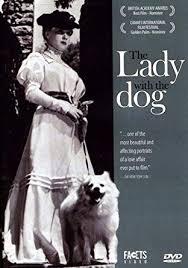
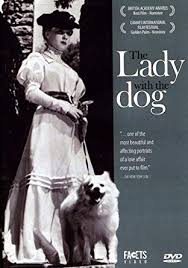
“The Lady with the Dog” is a short story by Anton Chekhov. First published in 1899. It describes an adulterous affair between Dmitri Dmitritch Gurov, an unhappily married, Moscow banker, and Anna Sergeyevna Von Diderits, a young married woman. The affair begins while both are vacationing alone in the Crimean sea resort of Yalta. The story comprises of four parts: Part I describes the initial meeting in Yalta, Part II the consummation of the affair and the remaining time in Yalta, Part III Gurov’s return to Moscow and his visit to Anna’s town, and Part IV Anna’s visits to Moscow. This is one of Chekhov’s most famous pieces of short fiction. Vladimir Nabokov, (Russian-born American novelist) for instance, considers it as one of the greatest short stories ever written. It has an average plot to my mind but then it is an interesting read.
Dmitri Gurov works for a Moscow bank. He is under 40, married and has a daughter and two sons. But he is unhappy in his marriage, resulting in monotony and meaninglessness of his life. He is frequently unfaithful to his wife, and considers women to be of “a lower race”. While vacationing in Yalta, he sees a young woman walking along the seafront with her little Pomeranian, and endeavours to know her. The lady, Anna Sergeyevna, is also unhappily married and vacationing without her spouse. Anna and Dmitri soon commence an affair, and spend most of their time together, often walking and taking drives to the nearby village of Oreanda. Though, she is expecting her husband to come to Yalta, he eventually sends for her to come home, saying that something is wrong with his eyes. Gurov sees her off at the station. As they part, both feel that they would never see each other again, and that their brief affair is over.
Returning to Moscow, to his loveless marriage, and to his daily routine, working by the day and clubbing by the night, Gurov expects to soon forget young Anna. But to his surprise, her memory keeps haunting him. Unexpectedly, he feels, he is deeply in love for the first time in his life, after many affairs and just as he is approaching middle age. He strongly feels that he must see Anna, despite the obvious complications. On the ruse of going to St. Petersburg to take care of some business, he sets off to her town to find her. Learning the location of the family’s residence from a hotel porter, he finds the house, only to realize that it would be futile to intrude. In despair, he rationalizes that Anna has probably forgotten him and found someone else, and heads back to his hotel.
In the evening, he remembers having seen a sign earlier in the day announcing the opening performance of ‘The Geisha.’ When he reasons that Anna and her husband might come to see the play. So, he goes to the theatre. And, as expected the couple enters the theatre and he watches them intently. When the husband goes out for a smoke during the first interval, Gurov greets Anna, who is bewildered and runs from him. After following her through the theatre, he confronts her and she confides that she has been thinking of him constantly. Frightened, she begs him to leave and promises to come see him in Moscow.
She makes excuses to occasionally come to Moscow, telling her husband that she is going there to see a doctor, which he “believes and does not believe”. They are both now fully aware that for the first time in their lives they have actually fallen in love, and they both wonder how they might overcome the many challenges that face them and achieve their fervent wish to permanently live together. They desperately try to come up with a plan, but the story ends without offering a resolution:
“They . . . talked of how to avoid the necessity for secrecy, for deception, for living in different towns and not seeing each other for long stretches of time. . . . and it was clear to both of them that . . . the most complicated and difficult part of their journey was just beginning.”
Nabokov wrote about that unconventional ending:
“All the traditional rules … have been broken in this wonderful short story…. no problem, no regular climax, no point at the end. And it is one of the greatest stories ever written.”
Interpretations and philosophical reflections
The story beautifully captures the quiet desperation of the two protagonists, their dissatisfaction with their meaningless lives and loveless marriages, and their craving for something better. Their deep love for each other fills that void and radically transforms their outlook on life. But that love also breaks their hearts, for, in 19th century Russia, they find it almost impossible to break away and start a new life together.
The story can be seen as “Gurov’s spiritual journey—his transformation from a connoisseur of women to a man tenderly devoted to a single ordinary woman.” The story can also be seen as “playing with the paradox that a lie—a husband deceiving a wife or a wife deceiving a husband—can be the fulcrum of truth of feeling, a vehicle of authenticity.”
Maxim Gorky, another great Russian writer from a working-class background, saw the importance of the story as a wake-up call to people “to let go of sleepy, half-dead existence.”
Robert Fulford offers yet another interpretation of the story:
“What Chekhov says in this sophisticated parable is that love radically alters the landscape of existence. When touched by love, we know the world in a different way. Love changes the inner landscape, too. Under the pressure of love, Gurov looks inside himself and sees someone he has not known before, someone capable of feelings that he barely knew existed.”
Gurov often looks behind his immediate surroundings and reflects on the meaning of our existence. Here for instance is one poetic passage:
‘Yalta was hardly visible through the morning mist; white clouds stood motionless on the mountaintops. The leaves did not stir on the trees, crickets chirped, and the monotonous hollow sound of the sea, rising up from below, spoke of the peace, of the eternal sleep awaiting us. So it must have sounded when there was no Yalta, no Oreanda here; so it sounds now; and it will sound as indifferently and monotonously when we are all no more. And in this constancy, in this complete indifference to the life and death of each of us, there lies hidden, perhaps, a pledge of our eternal salvation, of the unceasing movement of life upon earth, of unceasing progress towards perfection. Sitting beside a young woman who in the dawn seemed so lovely, soothed and spellbound in these magical surroundings—the sea, mountains, clouds, the wide open sky—Gurov thought how in reality everything is beautiful in this world when one reflects: everything except what we think or do ourselves when we forget our human dignity and the higher aims of our existence.”
Chekhov poetically describes his vision of what real love could be like:
“Anna Sergeyevna and he loved each other like people very close and akin, like husband and wife, like tender friends; it seemed to them that fate itself had meant them for one another, and they could not understand why he had a wife and she a husband; and it was as though they were a pair of birds of passage, caught and forced to live in different cages. They forgave each other for what they were ashamed of in their past, they forgave everything in the present, and felt that this love of theirs had changed them both.”
In the story we see Dmitri Gurov who is bored with his wife and views women as the lower race and uses women to bring an excitement to his other-wise dull life. Dmitri falls in love with the lady, Anna, when on vacation in Yalta. They are forced to go back to their normal life. Gurov cant stop thinking about her and realizes he loves her. He travels through the country to try and find her and tell her how he doesn’t want to live without her. The story brings a strong ironic ending because Gurov who thought of women to be inferior and using them only for excitement, is now chasing one across the country wanting nothing more than to be with her.
Shravan Charity Mission is an NGO that works for poor children suffering from life threatening diseases especially cancer. Our posts are meant for our readers that includes both children and adults and it has a huge variety in terms of content. We also accept donations for our mission. Should you wish to donate for the cause. The bank details are given below:
NAME OF ACCOUNT: SHRAVAN CHARITY MISSION
Account no: 680510110004635 (BANK OF INDIA)
IFSC code: BKID0006805
*
Our publications
GLOOM BEHIND THE SMILE
(The book is about a young cancer patient. Now archived in 7 prestigious libraries of the US, including, Harvard University and Library of Congress. It can also be accessed in MIT through Worldcat.org. Besides, it is also available for reading in Libraries and archives of Canada and Cancer Aid and Research Foundation Mumbai)
ONE TO TANGO … RIA’S ODYSSEY
(Is a book on ‘singlehood’ about a Delhi girl now archived in Connemara Library, Chennai and Delhi Public Library, GOI, Ministry of Culture, Delhi)
AADAB LUCKNOW … FOND MEMORIES
(Is a fiction written around the great city of Nawabs—Lucknow. It describes Lucknow in great detail and also talks about its Hindu-Muslim amity. That happens to be its undying characteristic. The book was launched in Lucknow International Literary Festival of 2014)
REFRACTIONS … FROM THE PRISM OF GOD
(Co-published by Cankids–Kidscan, a pan India NGO and Shravan Charity Mission, that works for Child cancer in India. The book is endorsed by Ms Preetha Reddy, MD Apollo Hospitals Group. It was launched in Lucknow International Literary Festival 2016)
TYPICAL TALE OF AN INDIAN SALESMAN
(Is a story of an Indian salesman who is, humbly qualified. Yet he fights his ways through unceasing uncertainties to reach the top. A good read not only for salesmen. The book was launched on 10th February, 2018 in Gorakhpur Lit-Fest. Now available in Amazon, Flipkart and Onlinegatha)
RHYTHM … in poems
(Published in January 2019. The book contains 50 poems. The poems describe our day to day life. The book is available in Amazon, Flipkart and Onlinegatha)
(ALL THE ABOVE TITLES ARE AVAILABLE FOR SALE IN AMAZON, FLIPKART AND OTHER ONLINE STORES OR YOU COULD EVEN WRITE TO US FOR A COPY)


 Shravan charity mission