World Music Day is also known as Fête de la Musique. It is celebrated annually on June 21. It originated in France, where citizens were encouraged to play music in their homes and neighbourhoods. The English word ‘music’ originates from the Arabic word ‘Mausiki.’
The world has never been bereft of music. The veena of Goddess Saraswati symbolises the harmony of the universe. It is the melodic balance of speech, sound, and silence. Meera Bai’s bhajans captivate listeners with love and devotion. She sang for Lord Krishna. “Mere to Giridhar Gopal, doosro na koi” (I belong only to Giridhar Gopal, no one else.) In her Vakhs, Lal Ded, the 14th-century Kashmiri mystic poet, speaks of an inner sound or vibration that leads to spiritual awakening. The idea supports the Indian philosophical concept of Nada Brahma—the belief that the universe itself is the divine sound.
“Mujh se pehli si mohabbat meri mehboob na maang, Mausiki mein bhi ab woh halaat nahin rahe.” (Do not ask me for the love I once gave you. Music no longer holds the same sweetness.) In this line, Urdu poet Faiz Ahmed Faiz intertwines lost love with the fading joy in music, linking emotion with melody.
Tansen believed music was the path to the divine. His practice was deeply spiritual, and he often sang in praise of Lord Krishna. According to legends, Tansen could light lamps with Raga Deepak, bring rain with Raga Megh Malhar, and calm wild animals with appropriate ragas. Though these tales may be exaggerated, they reflect the belief that music is a natural force, not merely an art form, but a form of sadhana (spiritual discipline). Tansen said, “Raag aur taal ke bina sangeet adhoora hai. Sangeet vo hai jo man ko shaant kare aur bhagwan se milaye.” (“Music without raga and rhythm is incomplete. True music is that which calms the mind and brings one closer to God.”)
Mystic poet Kabir did not regard music merely as an art but as a sacred practice and a direct path to the divine. His verses (dohas) often express the idea that true music arises from within, when the soul becomes attuned to the divine presence.
Greek composer Vangelis, whose iconic theme ‘Çhariots of Fire’ (fit to be the Olympic hymn) won him an Academy Award in 1981, conveys his underlying craving for music. He believed that music shaped the universe and that he understood the world through music. Vangelis believed in ‘Sadhana’.
André Rieu, the famous Dutch violinist and conductor, emphasises the emotional and universal nature of music: “I make music to touch the souls of people as it’s a language we all can speak.” German philosopher Friedrich Nietzsche famously stated, “Without music, life would be a mistake.” Persian Poet Rumi believed passionately in the use of music, poetry, and dance as a path for reaching God. For Rumi, music helped devotees concentrate their whole being on the divine. Rumi encouraged Sama to listen to music and engage in the sacred dance. Rumi’s favourite musical instrument was the reed flute … ‘Listen to the reed and the tale it tells’.
“The music is not in the notes, but in the silence between,” was Mozart’s take, and “Music should strike fire from the heart of man and bring tears from the eyes of woman,” proclaimed Beethoven. “If music be the food of love, play on,” wrote Shakespeare, in Twelfth Night.
And finally, life is best described in the musical song ‘Que Sera Sera. Whatever will be will be,’ written by Jay Livingston and Ray Evans. Let music be your companion in joy, in sorrow, and in silence. Happy World Music Day.
Shravan Charity Mission is an NGO that works for poor children suffering from life-threatening diseases, especially cancer. Our posts are meant for our readers, including children and adults, and have a huge variety of content. We also accept donations for our mission. Should you wish to donate to the cause of cancer? The bank details are given below:
(THE TIMES OF INDIA 21/7/24 SWEET MANGO FACES A BITTER HEAT CHALLENGE
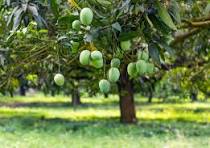
Be it the sweet and succulent Dussehri of Maal-Malihabad, Langda of Varanasi, Saharanpur’s Chausa, or Rataul variety of Baghpat – mango, the king of fruits, continues to reign supreme. Another significant constituent of UP’s diverse mango wealth is Gaurjeet of Gorakhpur, for which the UP government is trying to get a GI tag. If this happens, UP will become the state with the maximum GI-tagged mango varieties. What, however, has emerged as a challenge for mangoes in UP in the last few years is the unpredictable weather. Lucknow-based ICAR lab, Central Institute for Subtropical Horticulture (CISH), is working to make mangoes climate-resilient by introducing new technologies and, also, new varieties. “Last year, it was the untimely rain, and this time, it was the extreme temperature and heat which affected the crops.” Said director, CISH, T Damodaran. CISH Lab conducts research on mandated subtropical fruits, mangoes being the one, to come with improved varieties. In the case of mangoes, Dussehri, being an early ripening variety, is 80% more susceptible to heat and high temperatures. “In many fruits, we saw premature ripening this time, ” the director said. To deal with the impact of weather on mangoes, CISH is working at two levels – developing climate-resilient technologies and making efforts to come up with genetically improved hybrids. Many orchards in Malihabad had mangoes covered with paper bags this year, to control the impact of the heat. “This was only one of the ways devised to tackle the impact of heat. We have also come up with technologies to control the attack of pests on mangoes, as unpredictable weather may also trigger that,” he said. The institute has already released two hybrid mangoes – Ambika and Arunika. The varieties are genetically improved and were tested over a period before they were released for commercial production. Each is a cross of two types of mangoes. Ambika is a cross of Amrapali and Janardan Pasand, and Arunika is a cross of Amrapali and Vanraj, a mango from Gujarat. Two more varieties developed by CISH, Samriddhi and Madhurika, are ready for release shortly. Besides, at least 11 other hybrid mangoes may be up for screening by the institute to be released for commercial production. The hybrids are genetically improved, have high productivity and yield a better-quality fruit. They are also tolerant to heat waves and biotic stress due to the attack of pests and insects. The varieties developed scientifically are also nutraceutically improved. Along with this, CISH has also come up with improved varieties of Dussehri. It is by mid-March that a Dussehri tree usually completes its flowering stage, and within a week, the fruit may set in. In Dussehri’s cycle of growth, rain in March may be damaging because that is when the flowers just open and pollination takes place. “Rain may make flowers either drop or turn black, something that happened last year,” said Naseeb Khan, a mango entrepreneur in Malihabad. In that case, some fruits that develop may be false fruits as they would lack seeds. Mangoes need a temperature between 27 degrees Celsius and 35 degrees Celsius to grow ideally in March and April. The varying temperature damages the fruit. Cloudy weather, high humidity and high velocity winds may further hit the crop. “In many fruits, this year, the seed may become soggy, affecting the taste. It was because of the extreme heat,” said Khan. UP accounts for over 23% of the total mango production in the country. Lucknow, Saharanpur and Meerut are the main mango-producing regions. In the last few years, mango varieties from the state have been exported to Singapore, Malaysia, the US, England and Dubai. (PICTURES OF MANGO VARIETIES ON A PLATTER) (‘OG’ (ORIGINAL) MANGOES OF UP) – Dussehri from Maal-Malihabad in Lucknow, Langda from Varanasi, Rataul from Baghpat, Gaurpreet from Gorakhpur and Chausa from Saharanpur grow naturally in UP. – Dussehri, Rataul and Langda are GI tagged. The UP government has sought a GI tag for Chausa and Gaurpreet. – Dussehri, Langda and Chausa are exported outside UP and India and are commercially successful and popular. FIRST HYBRID MANGO VARIETIES – Work to develop hybrid varieties of mangoes started in the 1960s at the Indian Agricultural Research Institute, New Delhi – The purpose was to develop varieties that would bear every year and have high productivity, besides yielding good quality fruits. – Amrapali (cross of Dussehri and Neelam) and Mallika (cross of Neelam and Dussehri) were the first hybrids. – Dussehri is from North India, and Neelam is from South India. While North Indian varieties are biennial, those from South India bear annually. – CISH CONSERVES AND PROPAGATES 775 MANGO VARIETIES – CISH has the biggest collection of mango germplasm in the world. – Many varieties are now extinct at their places of origin – Collection started in 1975 when the institute started as the Central Mango Research Station. – Kensington Pride from Australia was the first exotic variety brought to the institute. – Today, it has 17 others, including Tommy Atkins, Sensation, Edward, Eldon, Keitt, Kent, Osteen, Palmer, Kitchner, Starch, Filipino, Lilly, Maya, Carabao, Kowasaji Patel, St Alexander & Prior-de-Amroesia. – Mangoes have been sourced from nurseries and orchard owners over a period of time, and are used to develop new varieties.
Shravan Charity Mission is an NGO that works for poor children suffering from life-threatening diseases, especially cancer. Our posts are meant for our readers, including children and adults, and have a huge variety of content. We also accept donations for our mission. Should you wish to donate to the cause of cancer? The bank details are given below:
BIGGER, MESSIER DELHI STILL HAS ITS ARMS WIDE OPEN
…. DELHI IS A RARE CITY WITH A LONG PAST BUT NO HANKERING TO TIE ITSELF DOWN TO IT. WHETHER IT’S PEOPLE OR SPACES, IT ABSORBS THEM ALL WITHOUT RESERVE
Delhi changed for me forever one day in the mid-1980s when a friend took me with him to the site where he was planning to buy a flat. There wasn’t much to see. The large tracts of nothingness, which became what we know today as Vasant Kunj, had no redeeming features. What was astonishing to me, however, was that when I looked towards Delhi, between me and the city stood the visage of Qutub Minar. That there could be a Delhi beyond Qutub Minar was something that made no sense to me. For in my imagination, it was pretty much at the very edge of the city. After all, that was a time when I remember going on a picnic in a bus with family friends to the exotic destination called Deer Park, far from our residence in Karol Bagh. . The Delhi that resides permanently in my mind is a cross between the city shown in Chashme Buddoor (the original, not the ghastly remake) and Oye Lucky, Lucky Oye. On the one hand, there are memories of wide open roads, a time scented with languidness, glorious winter mornings, neighbourhoods basking in leafy silence, and on the other hand, the untidy energy, the hustle, the ability to live loudly and publicly, and friends called Lovely, Pinky, Tinkle, Kuki and OK. The biggest change Delhi has seen is physical. It has burst out of its seams in all directions and has colonised spaces around it. It began with the conquest of Jamnapaar, which started out as a relocation drive of ‘unauthorised settlements’ under the watch of Sanjay Gandhi, but then took on a life of its own. Noida and Gurgaon are now cities in their own right, with their own cultural imprints, while drawing liberally from the mother ship. There are many more cars and there is a lot more money, which gives Delhi more mediums to express itself in. Delhi traffic nips at the heels of those in front, ready to kill to gain an inch of space. The murderous intent is expressed first in sound, achieved by honking persistently, and then sometimes followed by action, as evidenced by the number of road rage incidents. The money is visible everywhere – the old colony markets that continue to thrive, lavish weddings at farmhouses, crowds at high-end restaurants, and homes that overflow with decor. Perhaps the biggest loss is that of the Delhi winter. Delhi’s best, most glorious feature is now shrouded in noxious pollution that hangs like a foreboding and stings like regret. The joy of the outdoors, the enlivening experience of bone-chilling cold being thawed out by the sun as one sat on a charpoy and ate rewari and moongphali, basking for several glorious hours, is now an alleged memory, so far removed it has become. Winters are the time now to start muttering about migrating out of the city, while anxiously looking out for an AQI reading that tells us it is safe to step out of the home for a short walk. There are other losses, too. The cinema theatres, which served as a practical guide to different localities in the city, included Plaza, Odeon, Regal, and Rivoli in CP; Golcha, Novelty, Ritz, Delite, and Moti, which marked out Old Delhi; and Anupam, Savitri, Sapna, and the infamous Uphaar, which dotted areas of South Delhi. Some of these theatres remain, some have been refurbished, while others lie in dilapidated disuse. Nirula’s exists, but it is hard to believe it was at the cultural heart of Delhi’s upper-middle-class youth once. The classic Delhi restaurants – Kwality, Embassy, Moti Mahal and Gaylord- are still around, but their role today is to serve as nostalgic artefacts. One goes there to savour the memory of a Delhi that once was. And while street food in Delhi continues to be as delicious, the famous names are now tourist spots more than unselfconscious, humble eating places. And yet, while Delhi has changed in so many ways, at its core, it feels the same. The life that one leads today is poles apart from one’s experiences growing up, but the idea of Delhi has not shown much change. It still lives fiercely in the present and remains unmindful of the history it is set smack in the middle of. Contrary to its popular image, Delhi is India’s only genuinely cosmopolitan city, in that only a small fraction of its residents can claim to be originally from the city. Everyone is a stranger, and everyone is in the city as a user. Delhi hones our appetite, keeps our competitive edge intact and gives us many opportunities to advertise our success. It might have sprawled in ungainly ways in the last few decades and become even louder and shinier, but there is nothing unrecognisable about Delhi.
(WRITTEN BY SANTOSH DESAI. TOI COLUMNIST AND AUTHOR) TIMES OF INDIA ARTICLE 12.9.21
Shravan Charity Mission is an NGO that works for poor children suffering from life-threatening diseases, especially cancer. Our posts are meant for our readers, including children and adults, and have a huge variety of content. We also accept donations for our mission. Should you wish to donate to the cause of cancer? The bank details are given below:
MEAT FOR THOUGHT: WHY 100 BN ANIMALS DIE EVERY YEAR …. THE SCALE OF ANIMAL SLAUGHTER FOR FOOD IS UNSUSTAINABLE. MAY BE, JUST MAYBE, SCIENCE WILL FIND A WAY…..
The global demand for animal protein is growing fast. That demand has been met by a sharp increase in meat and fish production. Animal farming has grown to the point that almost a third of all land is used for raising livestock. This, in turn, has increased carbon emissions. The most jarring statistic is that to meet this demand, 900,000 cows, 1.4 million goats, 1.7 million sheep, 3.8 million pigs, 12 million ducks and 202 million chickens are slaughtered daily for human consumption, per FAO 2021 data. Add to that, fish consumed – an average of 211 million killed daily, by one estimate. Caveat: fish sticks, production and consumption are reported in tonnes, so the number of fish killed daily has various estimates. Annually, close to 100 billion farmed animals are killed worldwide for human consumption. The scale at which meat is farmed is unsustainable on several fronts, not least for the environmental impact. The numbers are an eye-opener. Over 70% of bird biomass is poultry livestock. Poultry outweighs wild birds by a factor of more than 3 to 1. It’s worse for mammals. Almost 95% of global mammal biomass, excluding humans, is livestock. Livestock outweigh wild mammals by a factor of 15 to 1. The world is getting weighed down by the need for meat. And the global population of farmed animals is not only a driver of climate change but also its victim.
PRESSURE ON LAND: About 45% of the world’s habitable land is used for agriculture. Crops are grown on just a third of this; the rest of it is mostly grazing land. Just half of the cropland is grown for crops that humans consume. The other half is used to grow crops for animal feed, biofuels, etc. In short, the majority of the world’s cropland is used to raise livestock for meat and dairy. Worse, animal feed is largely monoculture crops, which results in soil degradation.
RISK OF DISEASE: As demand increases, farms that ‘grow’ cows, chickens and pigs face their own challenges. Burgeoning populations mean animals are packed close together, often in cramped and unhygienic conditions. This is a direct risk for epidemic-level viruses to spread. The African swine fever (ASF) is estimated to have killed one in four pigs worldwide since it was first detected in 2018, and has a 100% case fatality rate. FAO’s 2023 outlook noted that the global impact of ASF resulted in a dip in demand for pork and its products, accompanied by a rise in demand for poultry.
ANTIBIOTIC RESISTANCE: There is excessive use of antibiotics in livestock farming, especially poultry. This leads to antibiotic resistance. Animals are often given antibiotics routinely to promote growth and prevent illness in their crowded conditions. Such overuse allows antibiotic-resistant bacteria to thrive and spread. These resistant bacteria pass from livestock to humans via food. This impacts how we respond to life-saving antibiotics if we fall ill.
CHAOTIC CLIMATE: Weather extremes impact all farming. But the loss to animals is not given due recognition. Freak storms, floods and forest fires burn farms, killing livestock. Heavy rains and floods in East Africa in June not only devastated cropland but also killed almost 10,000 farm animals. Floods contaminated rivers, lakes and ponds from where fish are sourced. All of this has sparked fears of a food crisis.
EMISSIONS & MORE: The cattle industry is a significant contributor to greenhouse gases (GHGs), primarily through the production of methane from livestock digestion and manure management. Cattle belch large amounts of methane, a GHG more harmful than carbon dioxide. Additionally, deforestation for grazing land, fertiliser use, and fossil fuel consumption in meat production processes all generate substantial GHG emissions. Beef typically has the largest emissions, followed by lamb, pork, chicken, then eggs and fish. About 26% of global GHG emissions are from food: grains, pulses, dairy, meat, the works. Of this, livestock and fisheries contribute almost a third. As scientists, environmentalists, governments and civil society grapple with climate change, the focus is largely on curbing plastics, focusing on energy mix, on pollutants and development models, but as the human population booms, and meat-eating spreads faster, the impact of a plate of food cannot be ignored. So, what are the solutions? For sure, not for much longer can it be business as usual on the animal farm. It is essential to use science and technology to reconstruct and upgrade how meat is sourced.
EAT LESS: Less meat is nearly always better than current options of lab-grown meat, both for the environment and health, given that today’s lab-grown meat (single-cell cultures) falls not only in the highly processed foods category but also did not quite impress consumers once the initial novelty wore off. ENGINEER THE BIOLOGY: Called “cellular agriculture”, the essence of such tissue engineering is just that – farming cells and growing meat from them. The idea behind it, under research in labs across the world, is to grow meat from cells extracted from animal organs and grown in a lab. Pioneer and proponent of cellular agriculture, bioengineer Isha Datar argues that we already consume several such cell culture products – as vitamins, flavours and enzymes. If the question on meat is how to feed more using less land, without emitting GHGs and without killing animals, science will – must – provide the answer.
(TIMES OF INDIA 20/6/24) TEXT: NANDITA SENGUPTA. SOURCES: POORE & NEMECEK (2018), HANNAH RITCHIE, MAX ROSER (OUR WORLD IN DATA), TED CLIMATE.
Shravan Charity Mission is an NGO that works for poor children suffering from life-threatening diseases, especially cancer. Our posts are meant for our readers, including children and adults, and have a huge variety of content. We also accept donations for our mission. Should you wish to donate to the cause of cancer? The bank details are given below:
The tiger’s tail takes me back to Shillong of the 60s. Once, I was returning from Guwahati to Shillong in my father’s sky-blue Chevrolet Bel-Air car. Father had returned to Gauhati from Delhi via Kolkata, and the car had gone from Shillong to pick him up from Guwahati airport. (Shillong airport was not operational till mid 70s). I was very young and had tagged along with our friendly chauffeur, Bahadur, to receive Father. Father was a member of the Assam Cabinet. This was before Meghalaya was carved out of the state of Assam; until then, Shillong happened to be the capital of Assam. The sky-blue Chevrolet was cruising along quietly on the winding, hilly road. In those days, the drive from Guwahati to Shillong took about three hours, on account of the single road with a half-hour stop at the picturesque Nongpoh circuit house (midway) surrounded by tall pine trees and lush green hills. Nongpoh was famous for delicious mutton chops.
We were close to Barapani, on the Shillong-Guwahati Road, aka the GS Road. Father was taking a well-deserved rest on the back seat after a hectic tour, and I was in the front seat with Bahadur. I was talking in undertones with him, and he too was replying in the same manner, as we didn’t want to disturb Father. Since Bahadur was well versed with Shillong and the vicinity, I was trying to find out if there was any wildlife around, even when I had seen plenty of wolves and foxes frequenting the iconic Brightwell Bungalow, our home in Barik Point, Shillong.
Suddenly, Bahadur pointed at something unusual as well as bizarre on the roadside, a little before the Umiam Dam Project coming up in Barapani near Shillong. A group of about eight tribals were carrying a tiger with its legs bound on a sturdy pole, and the body lashed with strong and thick creepers. They were resting there while the tiger was lying by their side. Bahadur and I promptly got out of the car and approached the party. I started circling the tiger, not knowing how to approach it. Bahadur offered that I wanted to feel the tiger, especially its ears, whiskers, paws, body or the tail. I realised that even a fallen tiger looked so ferocious. I gradually gathered some guts and touched its tail. The tail wasn’t soft and silky as generally made out. I was anxious that the tiger might get up and pounce on me. But sadly, it was lying dead. I ran my fingers on the tail from one end to the other and finally lifted it with both my hands. It was an amazing experience. Bahadur explained, the tiger uses its tail for balancing, counterbalancing and signalling while chasing targets. Soon we were back in the car. The car was filled with the scent of tiger.
Father enquired if the tiger was dead. We felt the question was strange, as a tiger alive would have threatened and jeopardised our lives, as no one possessed a gun. We then came to know about the extent of the father’s knowledge about the local flora and fauna. He informed us that different tribes used dissimilar poisons to traumatise and kill the prey. The availability of poisons varied with locales, and in the present case, the poison appeared strong enough to kill the tiger immediately and not just make him unconscious. The Khasi Hills had several little-known Asiatic poisons but very powerful ones. Some strong poisons were extracted from flowers that bloomed once in two years or maybe three. This, however, cannot be authenticated now, but the local wisdom still believes in it. The tiger had probably been killed by a poisonous arrow (Teer) and chased after being hit. Tiger meat is still a delicacy and is used as an aphrodisiac in many parts of Asia. The hapless tiger with its upturned body was a grotesque sight. They lifted the pole along with the tiger and vanished into thin air, taking a shortcut through some glade, shouting ‘Khublei.’ (‘Thank you’ or ‘God bless you’ in Khasi language). This method of hunting was primitive, though much followed by the old veterans of the village. It was economical as guns and bullets were unnecessary, and was mostly manpower oriented.
This one-off episode, just twenty minutes of screen time, wrapped around my soul like the tail of a tiger. It struck me not with a roar, but with a whisper so powerful that it echoed through the quiet chambers of my heart. It was a scene that stuck in my mind for life. A mix of danger and beauty.
Since then, whenever I visit Shillong, I stop at the location near the dam to remember the animal that had found space in my heart, and I don’t know why. How could an animal carcass find space in my heart, I could never figure out? I have seen umpteen tigers since then, some in zoos and some in sanctuaries, but that sleeping beauty of my childhood days was different, and the feel of the tiger’s tail was indelible. It lives in me even now as I watch the world in silence. The memory doesn’t fade. It has only grown sharper with time and refuses to forget me. That is why I scripted this story with freshness, as if it had happened only yesterday. Childhood memories always stay alive.
Shravan Charity Mission is an NGO that works for poor children suffering from life-threatening diseases, especially cancer. Our posts are meant for our readers, including children and adults, and have a huge variety of content. We also accept donations for our mission. Should you wish to donate to the cause of cancer? The bank details are given below:
Biryani is Maharani. The chicken variety is India’s favourite Swiggy-ordered khana.
2021 BIRYANI IS MAHARANI OF ONLINE DELIVERY.
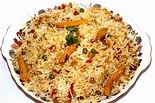
You may have a wishlist of items for Santa to deliver tonight. But when it comes to paet puja – worship of the stomach – Indians have wished for a biryani meal the most this last year. In a survey conducted by food delivery aggregator Swiggy, over 115 biryanis have been ordered every minute in 2021, up from 90 in 2020. That’s a whopping 1.91 biryanis being ordered by someone, somewhere across India every second. And within the glorious ‘one-pot’ dish, it’s the chicken biryani that’s the most popular item ordered online – 4.3 times more than its vegetarian (sic) variety. Cities where the murgh biryani has come out on top of the home delivery menu are Chennai, Kolkata, Lucknow and Hyderabad, with Mumbai choosing the more easily digestible daal khichdi as their No.1 Swiggy-ordered khana. While the top snack ordered in 2021 is the samosa – 5 million orders on Swiggy, ahead of pav bhaji by 4.9 million, and six times more than chicken wings – it is the biryani that is maharani. The mutton biryani lingering behind is possibly because it is for more tender gourmands with more refined taste. But if there is a silver lining that Covid has brought to the country and its palate, it’s that it has made the Great Mughal Khana in its various forms more ubiquitous – and more easily consumed in the finger-licking comfort of home.
Published on 24/12/21, Just in jest, Economic Times
Shravan Charity Mission is an NGO that works for poor children suffering from life-threatening diseases, especially cancer. Our posts are meant for our readers, including children and adults, and have a huge variety of content. We also accept donations for our mission. Should you wish to donate to the cause of cancer? The bank details are given below:
Sabharwal and Swami were both way senior to me in the company in every manner. Our office was on the illustrious Parliament Street in New Delhi, right opposite the VIP police station and not too far from Connaught Circus—the lifeline of New Delhi.
Sabharwal, a carefree Punjabi Khatri, lived in Kirti Nagar, while Swami, a sober Tamil Brahmin, called Karol Bagh his home. Karol Bagh then was the South Indian capital of Delhi. Sabharwal and Swami were a bubbling mix of Punjabi bhangra and Tamil classical music. Sabharwal was the liaison manager, living life on the edge, completely embodying the “YOLO” spirit. Swami, on the other hand, was the company’s admin manager and lived like he had just stepped out of a spiritual retreat—practically a walking textbook of South Indian customs. And yes, he had the chandantilak on his forehead every day, which by the time he reached the office used to dry up and change colour as if displaying his mood swing.
Despite their differences, they were the office’s cynosure. Sabharwal, with his hair flying in the wind, would race to work on his rickety Vespa, and Swami, like a well-trained disciple, would sit behind him. Until one, unforgettable day.
It started like any other morning. Sabharwal, helmet strapped, so tight that it made him virtually deaf to the world, zipped through the chaotic traffic of Karol Bagh, expecting Swami to hop on the scooter behind him. Like a seasoned Vespa rider, he revved the engine and took off, full throttle, into the mayhem of Delhi traffic—completely convinced that Swami was behind him.
After thirty minutes, Sabharwal rolled into the office parking lot, feeling like a hero in an action movie, only to realize something felt… off. The scooter felt unusually light. Too light. That’s when it struck him: Oh no, I’ve left Swami behind!! Like a man who just realized he’s lost his car keys in his own pocket. Sabharwal stood there, frozen, looking around in a panic, half-expecting Swami to appear out of thin air and shake his head at him like some kind of divine reprimand.
After what felt like a thousand years of awkward silence (well, more like five minutes), Sabharwal trudged up to the office. Still in denial, still thinking “Maybe Swami’s taking a longer route. Maybe he’s meditating on the way.” But no, Swami wasn’t there.
And then, out of nowhere—entered Swami, storming in like a man on a mission. He marched in, red-faced and fuming, his deportment like an ancient sage on a warpath. Without missing a beat, he trod right up to Sabharwal, fists clenched like he was about to drop the wisdom of the ages on him. And he did.
“Arrey Baba, kya hua? I was all set to hop on, and then… vroom!! You moved the scooter when my leg was midair and I was left behind! I almost pulled a muscle, yaar!” he exploded as if this was the greatest betrayal.
Sabharwal, still recovering from the shock of his mistake, sputtered, “Arrey Swami, I am so sorry, yaar! I was in deep thought about how to deal with that bloke in Udyog Bhawan. I thought you were on board! You were so quiet today, I figured you were stressed about work! It wasn’t until I reached Patel Chowk and realized my scooter was suspiciously light that I turned around—and boom, you weren’t there!”
Swami appeared like he was about to lose his mind, but realized how ridiculous it was, and let out a sigh. And just then both of them burst into laughter. The kind of laugh where you can’t help but snort, giggle, and question your life choices.
We all laughed so hard that we nearly toppled over from our chairs. Sabharwal was practically in tears with laughter, and Swami, despite his serious demeanour, couldn’t help but chuckle too. Life is full of misunderstandings, missteps, and plenty of laughter.
Shravan Charity Mission is an NGO that works for poor children suffering from life-threatening diseases, especially cancer. Our posts are meant for our readers, including children and adults, and have a huge variety of content. We also accept donations for our mission. Should you wish to donate to the cause of cancer? The bank details are given below:
NAME OF ACCOUNT: SHRAVAN CHARITY MISSION
Account no: 680510110004635 (BANK OF INDIA)
IFSC code: BKID0006805
*
Publications of Kamlesh Tripathi
BOOK TITLE: GLOOM BEHIND THE SMILE
(The book is about a young cancer patient. Now archived in eight prestigious libraries of the US which include Harvard College Library; Harvard University Library; Library of Congress; University of Washington, Seattle; University of Minnesota, Minneapolis; Yale University, New Haven; University of Chicago; University of North Carolina, at Chapel Hill University Libraries. It can also be accessed at MIT through Worldcat.org. Besides, it is also available for reading in the libraries and archives of Canada; the Open Library; Cancer Aid and Research Foundation Mumbai; Jaipuria Institute of Management, Noida, India; Shoolini University, Yogananda Knowledge Center, Himachal Pradesh and Azim Premzi University, Bangalore and the Library of Cancer Aid and Research Foundation, Mumbai. The title also finds a mention in a book titled ‘Enduring Cancer: Life, Death and Diagnosis in Delhi’ by Dwaipayan Banerjee published by the Duke University Press).
BOOK TITLE: ONE TO TANGO … RIA’S ODYSSEY
(It is a book on ‘singlehood’ about a Delhi girl now archived in Connemara Library, Chennai and Delhi Public Library, GOI, Ministry of Culture, Delhi; It is also available for reading in the Indian National Bibliography, March 2016, in the literature section, in Central Reference Library, Ministry of Culture, India, Belvedere, Kolkata-700022)
BOOK TITLE: AADAB LUCKNOW … FOND MEMORIES
(This is a fiction written around the great city of Nawabs—Lucknow. It describes Lucknow in great detail and also talks about its Hindu-Muslim amity, which is the undying characteristic of Lucknow. The book was launched at the Lucknow International Literary Festival in 2014. It is catalogued and included for reading in Askews and Holts Library Services, Lancashire, U.K; Herrick District Library, Holland; Charlotte-Mecklenburg Library, Mecklenburg County, North Carolina, USA; Black Gold Cooperative Library Administration, Arroyo Grande, California; Berkeley Library, University of California; The Peshastin Public Library and The George Public Library near Washington, a Northern Central Washington Libraries branch; the Flagstaff City-Coconino County Public Library in Arizona in the US and the Salina Public Library, Kansas, USA.
BOOK TITLE: REFRACTIONS … FROM THE PRISM OF GOD
(Co-published by Cankids–Kidscan, a pan India NGO and Shravan Charity Mission, that works for child cancer in India. The book is endorsed by Ms Preetha Reddy, MD Apollo Hospitals Group. It was launched at the Lucknow International Literary Festival in 2016).
BOOK TITLE: TYPICAL TALE OF AN INDIAN SALESMAN
(Is a story of an Indian salesman who is, humbly qualified. Yet he fights his way through unceasing uncertainties to reach the top. A good read not only for salesmen but for any reader. The book was launched on 10th February 2018 at Gorakhpur Lit-Fest. Now available on Amazon, Flipkart and Onlinegatha)
BOOK TITLE: RHYTHM … IN POEMS
(Published in January 2019. The book contains 50 poems. The poems are about our day-to-day life. Poems from this book have been published in Shillong Times, Bandra Times, Bhavan’s Journal and Arunachal Times and Goan net. The book is available on Amazon, Flipkart and Onlinegatha)
BOOK TITLE: MIRAGE
(Published in February 2020. The book is a collection of eight short stories available on Amazon, Flipkart and Notion Press)
BOOK TITLE: AWADH ASSAM AND DALAI LAMA … The Kalachakra
(It is the story of the man who received His Holiness The Dalai Lama and his retinue in 1959 as a GOI representative when he fled Tibet in 1959. The book was launched on 21st November 2022 by His Holiness The Dalai Lama at Dharmshala. The title is archived in the library of the Department of Information and International Relations (DIIR) Government of Tibet, Tibet Policy Institute (TPI) and the personal library of His Holiness The Dalai Lama. The title is also archived in The Ohio Digital Library, USA. It was recently included in the digital library of the world-renowned company APPLE. Included in the library of Friends of Tibet and Maharashtra Mitra Mandal Library in Bandra, Mumbai.
(POEMS, SHORT STORIES AND ARTICLES OF KAMLESH TRIPATHI PUBLISHED IN NEWSPAPERS, JOURNALS AND MAGAZINES)
THE TIMES OF INDIA
SPEAKING TREE: Basant Celebrates Ma Saraswati, Shiv, And Spring 1.2.25; 2. Mahashivratri: A Night of Divine Illumination, 26.2.25;
BHAVANS JOURNAL
Short stories, Book reviews and Articles published in Bhavan’s Journal: 1. Reality and Perception, 15.10.19; 2. Sending the Wrong Message, 31.5.20; 3. Eagle versus Scholars, June, 15 & 20, 2020; 4. Indica, 15.8.20; 5. The Story of King Chitraketu, August 31 2020; 6. Breaking Through the Chakravyuh, September 30 2020. 7. The Questioning Spouse, October 31, 2020; 8. Happy Days, November 15, 2020; 9. The Karma Cycle of Paddy and Wheat, December 15, 2020; 10. Power Vs Influence, January 31, 2021; 11. Three Refugees, March 15, 2021; 12. Rise and Fall of Ajatashatru, March 31, 2021; 13. Reformed Ruler, May 15, 2021; 14. A Lasting Name, May 31, 2021; 15. Are Animals Better Teachers? June 16, 2021; 16. Book Review: The Gram Swaraj, 1.7.21; 17. Right Age for Achievements, 15.7.21; 18. Big Things Have Small Beginnings, 15.8.21; 19. Where is Gangaridai?, 15.9.21; 20. Confront the Donkey Within You 30.9.21; 21. Know Your Strengths 15.10.21; 22. Poverty 15.11.21; 23. Top View 30.11.21; 24. The Bansuriwala 15.1.22; 25. Sale of Alaska 15.2.22; 26. The Dimasa Kingdom 28.2.22;27. Buried Treasure 15.4.22; 28. The Kingdom of Pragjyotisha 30.4.22; 29. Who is more useful? 15.5.22; 30. The White Swan from Lake Mansarovar 30.6.22; 31. Bhool Bhulayya 15.9.22; 32. Good Karma 30.9.22; 33. Good Name vs Bad Name 15.10.22; 34. Uttarapath—The Grand Trunk Road 1.12.22; 35. When Gods Get Angry 1.1.23; 36. Holinshed’s Chronicles 15.1.23; 37. Theogony 15.2.23; 38. Poem: Mother 14.5.23; 39. The Nag Mandir 30.6.23; 40. The Story of Garuda 30.7.23; 41. Janmabhoomi vs Karmabhoomi 31.8.23; 42. The Ghost Town of Kuldhara 15.9.23; 43. The Tale of Genji 15.10.23; 44. The Soul Connection 1.12.23; 45.Book review: Jungle Nama … a story of the Sundarban 16.3.24; 46. Book review: A Forgotten Chapter 16.5.24; 47. Exploring Ancient Egypt, 1.8.24; 48. The Story of Dhruva, 16.8.24; 49. Two Hundred Years of Tea in Assam 16.9.24; 50. The Cosmic Messenger 16.10.24; 51. Biblioburro: The Four-Legged Library 16.11.24; 52. The Cologne Cathedral 1.1.25; 53. Gandhi to Mahatma 16.1.25; 54. Huxley’s Take on Translated Works 16.2.25;
THE SHILLONG TIMES
Articles & Poems: 1. Poem: Happy New Year 8.1.23; 2.Poem: Spring 12.3.23; 3.Poem: Right and Wrong 20.3.23; 4.The Gush of Emotion—Writing, 26.3.23; 5. The Nag Mandir, 7.5.23; 6. Poem: Mother 7.5.23; 7. Poem: Rain Rain 9.7.23; 8. Poem:You Come Alone You Go Alone 6.8.23; 9. Poem: Rain Rain (Second Time) 10.8.23; 10. Poem: Guru Teacher 1.10.23; 11. Poem: Autumn … The Interim Heaven 15.10.23; 12. Poem: Happy Diwali 12.11.23; 13. Overcoming Blindness: Learn it the John Milton Way 10.12.23; 14. The Happy Prince and The Happy Man’s Shirt 31.12.23; 15. Annus Mirabilis -2024 7.1.24; 16. Gandhi to Mahatma Gandhi- Incidents that Shaped Gandhi in South Africa 28.1.24; 17. Poem: Together But Not Made For Each Other, 11.2.24; 18. The Birds Bees and The Spiders of Nicholas Guildford and Jonathan Swift 25.2.24; 19. The Overcoats of Nikolai Gogol and Ruskin Bond 10.3.24; 20. The Ethnic Colours of Holi 24.3.24; 21. A Lesson from Dalai Lama, 21.4.24; 22. Poem: Morning Walk 28.4.24; 23. Trip to Rhine Falls, Switzerland, 19.5.24; 24. Poem: Hurt 2.6.24; 25. Poem: Your Conscience Was My Sign On 16.6.24; 26.Poem: The Eerie Ways of Time 7.7.24; 27.Poem: Celebrating the T20 World Champions 14.7.24;28. Read to Rise above mediocrity, 4.8.24; 29. Poem: Desire vs Reality 11.8.24; 30. Jack Ma’s Pristine Advice to Employers, Employees and the Youth 22.9.24; 31. Tagore and Kipling 3.11.24; 32. Poem: Merry Christmas 22.12.24; 33. Poem: The Sunset Point, 5.1.25; 34. Cancer Warning Labels on Alcoholic Beverages, 12.1.25; 35. Poem: Hope … In the Arc of Twilight, 19.1.25; 36. Basant Panchami, celebrates the Arrival of Spring 2.2.25; 37. Poem: The Falling World Order, 9.2.25; 38. A Peep into Native American Literature’ 39. Poem: Good day Bad day 9.3.25;
THE ASSAM TRIBUNE
Article: 1. The Magic of Reading 11.12.23; 2. Gandhi to Mahatma 29.1.24; 3. Geography of Solitude 8.4.24; 4. A Lesson From Dalai Lama, 22.4.24; 5. A Source of Inspiration, 29.4.24; 6. The Four-LeggedLibrary, 12.5.24; 7. Age and Achievement, 10.6.24; 8. Read … To Rise Above Mediocrity, 1.7.24; 9. Crusade for a College, 25.8.24; 10. Hemingway’s Iceberg Theory (Panorama) 27.9.24; 11. Short story: Love in the Air, 20.10.24; 12. Short story: The Prick of Conscience, 5.1.25; 13. Lost in translation, 6.1.25; 14. Travellers’ tales 20.1.2025; 15. Audit your days 17.2.25;
THE ARUNACHAL TIMES
Poem: 1. Hope—In The Arc of Twilight, 13.8.23; 2.Poem: Spring 3.3.24; 3.Poem: The Morning Walk 10.3.24;
BANDRA TIMES, MUMBAI
Articles & Poems: 1. Poem: SPRING, 1.4.23; 2. Poem: Mother, 1.6.23; 3. Poem: Rain Rain, 1.8.23; 4. A Lesson From Dalai Lama, 1.6.24; 5. Read to rise above Mediocrity 1.8.24; 6. Poem: Merry Christmas 1.12.24; 7. Poem: Happy New Year 1.12.24; 8. The Enduring Colours of Holi 1.2.25;
THE GOAN NET
Poem: 1. Autumn – The Interim Heaven, 6.10.24; 2. Reader’s Rewind 17.11.84; 3. Reader’s Rewind: The Irony of Tash Moustache or Mooch 5.12.24; 4. The Sunset Point 22.12.24; 5. Reader’s Rewind: The Joy of a Morning Walk, 3.1.25; 6. Harmony in creation 26.1.25; 7. Poem: What is truly Good for me? 2.1.25; 8. Poem: We both were left behind, 9.2.25; 9. India Afloat like Ship of Theseus; 10. Maha Shivratri: A night of divine illumination, spiritual awakening, 26.2.25; 11. Poem: Good Day Bad Day, 2.3.25;
ARTICLES IN THE DIGITAL MAGAZINE ESAMSKRITI
Articles: 1. 29.12.2020: Indica by Megasthenes; 2. 14.3.22: About The Dimasa Kingdom Assam; 3. 10.12.22: Grand Trunk Road–Uttarapath; 4. 5.10.23: The Ghost Town of Kuldhara Near Jaisalmer;
(ALL THE ABOVE BOOK TITLES ARE AVAILABLE FOR SALE ON AMAZON, FLIPKART AND OTHER ONLINE STORES OR YOU COULD EVEN WRITE TO US FOR A COPY)
Primordial times are privy to the fact that nothing is achieved in life without effort. The effort could be either positive or negative. The choice is yours as God doesn’t control your Karma. A negative effort could lead to the dropping of the atomic bomb on Japan’s Hiroshima and Nagasaki, destroying it completely, whereas a positive effort could be the construction of the Suez Canal, which shortened the maritime distance considerably, between Asia and Europe, thereby accelerating the cargo and passenger movement by sea. And every inch of effort bears a proportionate result, as per the law of nature.
Hu Shih, a former Chinese diplomat to America who was also an essayist, fiction writer, literary scholar, philosopher and politician once said, ‘Life on its own does not mean anything – it takes on any meaning that you decide to give it. Instead of spending all day contemplating the meaning of life, we may as well attempt to do something that gives it one.
Be bold when making a case and cautious in seeking evidence; be earnest in all matters and solemn in your conduct. We must be firm in believing that today’s failure is yesterday’s lack of hard work and effort and that today’s effort and hard work will surely lead to tomorrow’s great success.
The moments when you are sad and disappointed are the times when you need courage and faith the most. You need to firmly believe that no effort and hard work ever goes wasted in this world. I may not be the one to succeed – yet no effort will go in vain.
Every part of yesterday makes up for what I am today; do not think too far ahead and grieve. From now on, I shall reap as I sow.’
The sane advice from the Buddhist Dharmapada is, ‘The effort is like a treasure. Those who make positive efforts are mindful, pure in conduct, self-disciplined, and live in accordance with the Dharma, have ever-increasing glory. Through effort, heedfulness, and self-discipline, the wise make a continent for themselves that cannot be submerged by flood. The foolish and ignorant indulge in heedlessness, while the wise guard his heedlessness as if protecting a gem.’
‘There is a story of effort behind every success’ says the Chinese venerable master Hsing Yun. He says ‘The name of the effort may vary. Just as, to succeed, one needs hardships; to be celebrated one needs pressure; to gain honour one needs to labour; to achieve one needs to sacrifice and be dedicated. An ancient tree survives wind and frost. A skyscraper is raised with money and sweat. An old business has its ups and downs. An old man is tested by misfortune. Those who don’t look back have no past. Those who don’t look forward have no future. Those who don’t seize the moment have no present. Those who don’t master themselves will not change the society.’
Hsing Yun further says ‘Repeated action becomes a habit, the habit becomes a character, the character becomes fate and fate rules your life and when you work hard, don’t worry about success or failure. When you have done your best don’t worry if you’ve failed, for no effort goes in vain.’
Here I’m also reminded of the Greek tragedian Sophocles who said, ‘Success is dependent on effort’, and have you ever seen an idle man succeed?
Shravan Charity Mission is an NGO that works for poor children suffering from life-threatening diseases, especially cancer. Our posts are meant for our readers, including children and adults, and have a huge variety of content. We also accept donations for our mission. Should you wish to donate to the cause of cancer? The bank details are given below:
NAME OF ACCOUNT: SHRAVAN CHARITY MISSION
Account no: 680510110004635 (BANK OF INDIA)
IFSC code: BKID0006805
*
Publications of Kamlesh Tripathi
BOOK TITLE: GLOOM BEHIND THE SMILE
(The book is about a young cancer patient. Now archived in eight prestigious libraries of the US which include Harvard College Library; Harvard University Library; Library of Congress; University of Washington, Seattle; University of Minnesota, Minneapolis; Yale University, New Haven; University of Chicago; University of North Carolina, at Chapel Hill University Libraries. It can also be accessed at MIT through Worldcat.org. Besides, it is also available for reading in the libraries and archives of Canada; the Open Library; Cancer Aid and Research Foundation Mumbai; Jaipuria Institute of Management, Noida, India; Shoolini University, Yogananda Knowledge Center, Himachal Pradesh and Azim Premzi University, Bangalore and the Library of Cancer Aid and Research Foundation, Mumbai. The title also finds a mention in a book titled ‘Enduring Cancer: Life, Death and Diagnosis in Delhi’ by Dwaipayan Banerjee published by the Duke University Press).
BOOK TITLE: ONE TO TANGO … RIA’S ODYSSEY
(It is a book on ‘singlehood’ about a Delhi girl now archived in Connemara Library, Chennai and Delhi Public Library, GOI, Ministry of Culture, Delhi; It is also available for reading in the Indian National Bibliography, March 2016, in the literature section, in Central Reference Library, Ministry of Culture, India, Belvedere, Kolkata-700022)
BOOK TITLE: AADAB LUCKNOW … FOND MEMORIES
(This is a fiction written around the great city of Nawabs—Lucknow. It describes Lucknow in great detail and also talks about its Hindu-Muslim amity, which is the undying characteristic of Lucknow. The book was launched at the Lucknow International Literary Festival in 2014. It is catalogued and included for reading in Askews and Holts Library Services, Lancashire, U.K; Herrick District Library, Holland; Charlotte-Mecklenburg Library, Mecklenburg County, North Carolina, USA; Black Gold Cooperative Library Administration, Arroyo Grande, California; Berkeley Library, University of California; The Peshastin Public Library and The George Public Library near Washington, a Northern Central Washington Libraries branch; the Flagstaff City-Coconino County Public Library in Arizona in the US and the Salina Public Library, Kansas, USA.
BOOK TITLE: REFRACTIONS … FROM THE PRISM OF GOD
(Co-published by Cankids–Kidscan, a pan India NGO and Shravan Charity Mission, that works for child cancer in India. The book is endorsed by Ms Preetha Reddy, MD Apollo Hospitals Group. It was launched at the Lucknow International Literary Festival in 2016).
BOOK TITLE: TYPICAL TALE OF AN INDIAN SALESMAN
(Is a story of an Indian salesman who is, humbly qualified. Yet he fights his way through unceasing uncertainties to reach the top. A good read not only for salesmen but for any reader. The book was launched on 10th February 2018 at Gorakhpur Lit-Fest. Now available on Amazon, Flipkart and Onlinegatha)
BOOK TITLE: RHYTHM … IN POEMS
(Published in January 2019. The book contains 50 poems. The poems are about our day-to-day life. Poems from this book have been published in Shillong Times, Bandra Times, Bhavan’s Journal and Arunachal Times and Goan net. The book is available on Amazon, Flipkart and Onlinegatha)
BOOK TITLE: MIRAGE
(Published in February 2020. The book is a collection of eight short stories available on Amazon, Flipkart and Notion Press)
BOOK TITLE: AWADH ASSAM AND DALAI LAMA … The Kalachakra
(It is the story of the man who received His Holiness The Dalai Lama and his retinue in 1959 as a GOI representative when he fled Tibet in 1959. The book was launched on 21st November 2022 by His Holiness The Dalai Lama at Dharmshala. The title is archived in the library of the Department of Information and International Relations (DIIR) Government of Tibet, Tibet Policy Institute (TPI) and the personal library of His Holiness The Dalai Lama. The title is also archived in The Ohio Digital Library, USA. It was recently included in the digital library of the world-renowned company APPLE. Included in the library of Friends of Tibet and Maharashtra Mitra Mandal Library in Bandra, Mumbai.
(POEMS, SHORT STORIES AND ARTICLES OF KAMLESH TRIPATHI PUBLISHED IN NEWSPAPERS, JOURNALS AND MAGAZINES)
THE TIMES OF INDIA
Speaking Tree: 1. Basant Celebrates Ma Saraswati, Shiv, And Spring 1.2.25; 2. Mahashivratri: A Night of Divine Illumination, 26.2.25;
BHAVANS JOURNAL
Short stories, Book reviews and Articles published in Bhavan’s Journal: 1. Reality and Perception, 15.10.19; 2. Sending the Wrong Message, 31.5.20; 3. Eagle versus Scholars, June, 15 & 20, 2020; 4. Indica, 15.8.20; 5. The Story of King Chitraketu, August 31 2020; 6. Breaking Through the Chakravyuh, September 30 2020. 7. The Questioning Spouse, October 31, 2020; 8. Happy Days, November 15, 2020; 9. The Karma Cycle of Paddy and Wheat, December 15, 2020; 10. Power Vs Influence, January 31, 2021; 11. Three Refugees, March 15, 2021; 12. Rise and Fall of Ajatashatru, March 31, 2021; 13. Reformed Ruler, May 15, 2021; 14. A Lasting Name, May 31, 2021; 15. Are Animals Better Teachers? June 16, 2021; 16. Book Review: The Gram Swaraj, 1.7.21; 17. Right Age for Achievements, 15.7.21; 18. Big Things Have Small Beginnings, 15.8.21; 19. Where is Gangaridai?, 15.9.21; 20. Confront the Donkey Within You 30.9.21; 21. Know Your Strengths 15.10.21; 22. Poverty 15.11.21; 23. Top View 30.11.21; 24. The Bansuriwala 15.1.22; 25. Sale of Alaska 15.2.22; 26. The Dimasa Kingdom 28.2.22;27. Buried Treasure 15.4.22; 28. The Kingdom of Pragjyotisha 30.4.22; 29. Who is more useful? 15.5.22; 30. The White Swan from Lake Mansarovar 30.6.22; 31. Bhool Bhulayya 15.9.22; 32. Good Karma 30.9.22; 33. Good Name vs Bad Name 15.10.22; 34. Uttarapath—The Grand Trunk Road 1.12.22; 35. When Gods Get Angry 1.1.23; 36. Holinshed’s Chronicles 15.1.23; 37. Theogony 15.2.23; 38. Poem: Mother 14.5.23; 39. The Nag Mandir 30.6.23; 40. The Story of Garuda 30.7.23; 41. Janmabhoomi vs Karmabhoomi 31.8.23; 42. The Ghost Town of Kuldhara 15.9.23; 43. The Tale of Genji 15.10.23; 44. The Soul Connection 1.12.23; 45.Book review: Jungle Nama … a story of the Sundarban 16.3.24; 46. Book review: A Forgotten Chapter 16.5.24; 47. Exploring Ancient Egypt, 1.8.24; 48. The Story of Dhruva, 16.8.24; 49. Two Hundred Years of Tea in Assam 16.9.24; 50. The Cosmic Messenger 16.10.24; 51. Biblioburro: The Four-Legged Library 16.11.24; 52. The Cologne Cathedral 1.1.25; 53. Gandhi to Mahatma 16.1.25;
THE SHILLONG TIMES
Articles & Poems: 1. Poem: Happy New Year 8.1.23; 2.Poem: Spring 12.3.23; 3.Poem: Right and Wrong 20.3.23; 4.The Gush of Emotion—Writing, 26.3.23; 5. The Nag Mandir, 7.5.23; 6. Poem: Mother 7.5.23; 7. Poem: Rain Rain 9.7.23; 8. Poem:You Come Alone You Go Alone 6.8.23; 9. Poem: Rain Rain (Second Time) 10.8.23; 10. Poem: Guru Teacher 1.10.23; 11. Poem: Autumn … The Interim Heaven 15.10.23; 12. Poem: Happy Diwali 12.11.23; 13. Overcoming Blindness: Learn it the John Milton Way 10.12.23; 14. The Happy Prince and The Happy Man’s Shirt 31.12.23; 15. Annus Mirabilis -2024 7.1.24; 16. Gandhi to Mahatma Gandhi- Incidents that Shaped Gandhi in South Africa 28.1.24; 17. Poem: Together But Not Made For Each Other, 11.2.24; 18. The Birds Bees and The Spiders of Nicholas Guildford and Jonathan Swift 25.2.24; 19. The Overcoats of Nikolai Gogol and Ruskin Bond 10.3.24; 20. The Ethnic Colours of Holi 24.3.24; 21. A Lesson from Dalai Lama, 21.4.24; 22. Poem: Morning Walk 28.4.24; 23. Trip to Rhine Falls, Switzerland, 19.5.24; 24. Poem: Hurt 2.6.24; 25. Poem: Your Conscience Was My Sign On 16.6.24; 26.Poem: The Eerie Ways of Time 7.7.24; 27.Poem: Celebrating the T20 World Champions 14.7.24;28. Read to Rise above mediocrity, 4.8.24; 29. Poem: Desire vs Reality 11.8.24; 30. Jack Ma’s Pristine Advice to Employers, Employees and the Youth 22.9.24; 31. Tagore and Kipling 3.11.24; 32. Poem: Merry Christmas 22.12.24; 33. Poem: The Sunset Point, 5.1.25; 34. Cancer Warning Labels on Alcoholic Beverages, 12.1.25; 35. Poem: Hope … In the Arc of Twilight, 19.1.25; 36. Basant Panchami, celebrates the Arrival of Spring 2.2.25; 37. Poem: The Falling World Order, 9.2.25; 38. A Peep into Native American Literature’ 39. Poem: Good day Bad day 9.3.25;
THE ASSAM TRIBUNE
Article: 1. The Magic of Reading 11.12.23; 2. Gandhi to Mahatma 29.1.24; 3. Geography of Solitude 8.4.24; 4. A Lesson From Dalai Lama, 22.4.24; 5. A Source of Inspiration, 29.4.24; 6. The Four-LeggedLibrary, 12.5.24; 7. Age and Achievement, 10.6.24; 8. Read … To Rise Above Mediocrity, 1.7.24; 9. Crusade for a College, 25.8.24; 10. Hemingway’s Iceberg Theory (Panorama) 27.9.24; 11. Short story: Love in the Air, 20.10.24; 12. Short story: The Prick of Conscience, 5.1.25; 13. Lost in translation, 6.1.25; 14. Travellers’ tales 20.1.2025; 15. Audit your days 17.2.25;
THE ARUNACHAL TIMES
Poem: 1. Hope—In The Arc of Twilight, 13.8.23; 2.Poem: Spring 3.3.24; 3.Poem: The Morning Walk 10.3.24;
BANDRA TIMES, MUMBAI
Articles & Poems: 1. Poem: SPRING, 1.4.23; 2. Poem: Mother, 1.6.23; 3. Poem: Rain Rain, 1.8.23; 4. A Lesson From Dalai Lama, 1.6.24; 5. Read to rise above Mediocrity 1.8.24
THE GOAN NET
Poem: 1. Autumn – The Interim Heaven, 6.10.24; 2. Reader’s Rewind 17.11.84; 3. Reader’s Rewind: The Irony of Tash Moustache or Mooch 5.12.24; 4. The Sunset Point 22.12.24; 5. Reader’s Rewind: The Joy of a Morning Walk, 3.1.25; 6. Harmony in creation 26.1.25; 7. Poem: What is truly Good for me? 2.1.25; 8. Poem: We both were left behind, 9.2.25; 9. India Afloat like Ship of Theseus; 10. Maha Shivratri: A night of divine illumination, spiritual awakening, 26.2.25; 11. Poem: Good Day Bad Day, 2.3.25;
ARTICLES IN THE DIGITAL MAGAZINE ESAMSKRITI
Aritcles: 29.12.2020: Indica by Megasthenes; 14.3.22: About The Dimasa Kingdom Assam; 10.12.22: Grand Trunk Road–Uttarapath; 5.10.23: The Ghost Town of Kuldhara Near Jaisalmer;
(ALL THE ABOVE BOOK TITLES ARE AVAILABLE FOR SALE ON AMAZON, FLIPKART AND OTHER ONLINE STORES OR YOU COULD EVEN WRITE TO US FOR A COPY)
The heinous acts of ‘Thugs’ were called ‘Thuggee.’ They were organised gangs of robbers and murderers. The English word ‘Thug’ originates from the Hindi word Thug which means a ‘swindler’ or a ‘deceiver’.’ ‘Thugee’ entailed an act of murder and robbery of travellers. It was rampant in the northern parts of the Indian subcontinent.
Thugs travelled in groups. There are numerous folklore about their origin. One recorded by D.F. McLeod an Anglo-Indian civil servant traced it back to the Muslim tribes originating from those who fled Delhi after murdering a physician. Another traced it to certain renowned Muslim families who fled after murdering a favourite slave of Akbar. These original Muslim thugs cultivated thuggee, amongst various communities and castes of Hindus. According to some other folklore, thugs were Kanjars or descended from those, who worked in Mughal barracks. Others blamed the rise of thugs on the disbanding of armies in the employment of Indian rulers after the British conquest. Thugs operated in gangs as highway robbers, first tricking and later strangling their victims.
To take advantage of the victims, the thugs would join travellers to first gain their confidence. This would facilitate them to surprise and strangle the travellers with a handkerchief or a noose. They would then rob, kill and bury the victims. This gave the thugs the name Phansigar, one who kills with a noose. During the 1830s, the Governor-General of India, Lord William Bentinck and his chief captain, William Henry Sleeman, targeted the elimination of thugs.
In physical appearance, the thugs resembled the travellers. They wore turbans and carried some baggage in person. Their attire would deceive, any traveller.
The idea of ‘Thugee’ was to steal maximum loot without being apprehended. The thugs did not accost travellers until their own numbers were greater than their target. They first flattered the travellers they met, which gave them a chance to gauge how many valuables they were carrying. Thugs avoided committing thuggee close to their native place, so their crimes were difficult to discover. They pretended to be either Hindu or Muslim to fool their victims.
They usually attacked in the evening. A common way was to distract their targets while attempting to strangle them from behind. They carried only a few swords for self-defence to avoid any suspicion. At times they even mutilated the corpses of their victims to avoid detection. The corpse was then hidden or buried.
The leader of the gang was called Jamadar. They used ranks such as jamadar and subedar, to suggest that their organisation had a military construct. They spoke a secret language called ‘Ramasee’ to disguise their real intentions from their targets. Although strangulation was one of their most recognised methods of murder, they also used blades and poison.
Thugs were made up of men, who inherited thuggee as a family vocation, as well as those, who were forced to turn to it because of circumstances. The head of the gang was based on inheritance with family members sometimes serving together in the same band. These thugs were known as aseel. Certain thugs, insisted, that beginners were not taught thuggee, by their own family members but by outsiders who were often more skilled and experienced. They were called gurus. Thugs usually kept their acts secret. There were female thugs too who were called baronee in their secret language Ramasee, while an important male thug was called baroo.
Thugs often avoided, the killing of a victim’s child, instead they would adopt the child. At times they murdered women and children to eliminate witnesses. Some thugs avoided killing of victims they considered proscribed according to their beliefs and let other unscrupulous members commit the murder.
It is on record that during the 14th century, a thousand thugs were captured and hanged on the streets of Delhi. Two-hundred years later Sher Shah Suri organised a cavalry of 1,200 men to keep them at bay. Akbar and his successors launched drives against the thugs, but it was only in the 19th century that Sir W. H. Sleeman succeeded in wiping them out after a relentless operation lasting seven years.
The initial references to the thugs as a fraternity, rather than ordinary thieves, is found in Zia-ud-din Barni’s History of Firoz Shah written around 1356, where he narrated an incident of sultan Jalal-ud-din Khalji, having arrested 1,000 thugs.
Poet Surdas, in his couplets, mentioned, robbers called “thugs.” The Janamsakhis, the legendary biographies of Guru Nanak, used the term thug to refer to a robber who used to lure pilgrims. Jean de Thevenot, a French traveller in his account referred to a band of robbers who used a “certain slip with a running noose” to strangle their victims. John Fryer an English doctor of the Royal Society, mentioned a similar method of strangling used by robbers from Surat whom he saw being given capital punishment by the Mughals in 1675. An edict issued by Aurangzeb in 1672 refers to a similar method and uses the term “Phansigar”.
The garrotte (killing by strangulation) is often depicted as a weapon of the thuggee. Thugs committed their murders with nooses of rope or catgut, but later they adopted the use of a length of cloth that could be used as a sash or scarf, and thus more easily concealed. This cloth is sometimes described as a rumal (head covering or kerchief), translated as “yellow scarf”; “yellow”, in this case, may refer to a natural cream or khaki colour rather than bright yellow.
Thug’s preference for strangulation might have originated from a quirk of the law under the Mughal Empire that ruled most of India from the 1500s. For a murderer to be sentenced to death, he or she must have shed the blood of the victim. Those who murdered but did not shed blood might face imprisonment, hard labour and paying of a penalty—but they would not risk execution.
A poison called Datura, derived from a plant in the Nightshade family, was sometimes used by thugs to induce drowsiness making strangulation easier.
The “River Thugs” killed people which included Hindu pilgrims, travelling through the River Ganga, and were active mostly during the winter. Their vocabulary of Ramasee differed from the one used by the thugs on land. They used boats taken on lease from the boat-builders or a jamadar called Khuruck Baboo. Sleeman states that they tapped three times to give the signal to murder, which they always committed during the day. To avoid detection of a corpse, they broke its back and threw it in the river to be eaten by crocodiles and only looted money or jewels.
By the 1870s, the ‘thug cult’ was largely extinct. However, the history of thuggee contributed to the establishment of the Criminal Tribes Act (CTA) of 1871. The CTA was repealed after India gained independence. The Thuggee and Dacoity Department continued to operate until 1904 when it was replaced by the Central Criminal Intelligence Department (CID). Numerous Bollywood movies have been made on ‘Thuggee’, including Gunga Din (1939), Sunghursh (1968), and Thugs of Hindostan.
Shravan Charity Mission is an NGO that works for poor children suffering from life-threatening diseases, especially cancer. Our posts are meant for our readers, including children and adults, and have a huge variety of content. We also accept donations for our mission. Should you wish to donate to the cause of cancer? The bank details are given below:
NAME OF ACCOUNT: SHRAVAN CHARITY MISSION
Account no: 680510110004635 (BANK OF INDIA)
IFSC code: BKID0006805
*
Publications of Kamlesh Tripathi
BOOK TITLE: GLOOM BEHIND THE SMILE
(The book is about a young cancer patient. Now archived in eight prestigious libraries of the US which include Harvard College Library; Harvard University Library; Library of Congress; University of Washington, Seattle; University of Minnesota, Minneapolis; Yale University, New Haven; University of Chicago; University of North Carolina, at Chapel Hill University Libraries. It can also be accessed at MIT through Worldcat.org. Besides, it is also available for reading in the libraries and archives of Canada; the Open Library; Cancer Aid and Research Foundation Mumbai; Jaipuria Institute of Management, Noida, India; Shoolini University, Yogananda Knowledge Center, Himachal Pradesh and Azim Premzi University, Bangalore and the Library of Cancer Aid and Research Foundation, Mumbai. The title also finds a mention in a book titled ‘Enduring Cancer: Life, Death and Diagnosis in Delhi’ by Dwaipayan Banerjee published by the Duke University Press).
BOOK TITLE: ONE TO TANGO … RIA’S ODYSSEY
(It is a book on ‘singlehood’ about a Delhi girl now archived in Connemara Library, Chennai and Delhi Public Library, GOI, Ministry of Culture, Delhi; It is also available for reading in the Indian National Bibliography, March 2016, in the literature section, in Central Reference Library, Ministry of Culture, India, Belvedere, Kolkata-700022)
BOOK TITLE: AADAB LUCKNOW … FOND MEMORIES
(This is a fiction written around the great city of Nawabs—Lucknow. It describes Lucknow in great detail and also talks about its Hindu-Muslim amity, which is the undying characteristic of Lucknow. The book was launched at the Lucknow International Literary Festival in 2014. It is catalogued and included for reading in Askews and Holts Library Services, Lancashire, U.K; Herrick District Library, Holland; Charlotte-Mecklenburg Library, Mecklenburg County, North Carolina, USA; Black Gold Cooperative Library Administration, Arroyo Grande, California; Berkeley Library, University of California; The Peshastin Public Library and The George Public Library near Washington, a Northern Central Washington Libraries branch; the Flagstaff City-Coconino County Public Library in Arizona in the US and the Salina Public Library, Kansas, USA.
BOOK TITLE: REFRACTIONS … FROM THE PRISM OF GOD
(Co-published by Cankids–Kidscan, a pan India NGO and Shravan Charity Mission, that works for child cancer in India. The book is endorsed by Ms Preetha Reddy, MD Apollo Hospitals Group. It was launched at the Lucknow International Literary Festival in 2016).
BOOK TITLE: TYPICAL TALE OF AN INDIAN SALESMAN
(Is a story of an Indian salesman who is, humbly qualified. Yet he fights his way through unceasing uncertainties to reach the top. A good read not only for salesmen but for any reader. The book was launched on 10th February 2018 at Gorakhpur Lit-Fest. Now available on Amazon, Flipkart and Onlinegatha)
BOOK TITLE: RHYTHM … IN POEMS
(Published in January 2019. The book contains 50 poems. The poems are about our day-to-day life. Poems from this book have been published in Shillong Times, Bandra Times, Bhavan’s Journal and Arunachal Times and Goan net. The book is available on Amazon, Flipkart and Onlinegatha)
BOOK TITLE: MIRAGE
(Published in February 2020. The book is a collection of eight short stories available on Amazon, Flipkart and Notion Press)
BOOK TITLE: AWADH ASSAM AND DALAI LAMA … The Kalachakra
(It is the story of the man who received His Holiness The Dalai Lama and his retinue in 1959 as a GOI representative when he fled Tibet in 1959. The book was launched on 21st November 2022 by His Holiness The Dalai Lama at Dharmshala. The title is archived in the library of the Department of Information and International Relations (DIIR) Government of Tibet, Tibet Policy Institute (TPI) and the personal library of His Holiness The Dalai Lama. The title is also archived in The Ohio Digital Library, USA. It was recently included in the digital library of the world-renowned company APPLE. Included in the library of Friends of Tibet and Maharashtra Mitra Mandal Library in Bandra, Mumbai.
(POEMS, SHORT STORIES AND ARTICLES OF KAMLESH TRIPATHI PUBLISHED IN JOURNALS AND MAGAZINES)
BHAVANS JOURNAL
Short stories, Book reviews and Articles published in Bhavan’s Journal: 1. Reality and Perception, 15.10.19; 2. Sending the Wrong Message, 31.5.20; 3. Eagle versus Scholars, June, 15 & 20, 2020; 4. Indica, 15.8.20; 5. The Story of King Chitraketu, August 31 2020; 6. Breaking Through the Chakravyuh, September 30 2020. 7. The Questioning Spouse, October 31, 2020; 8. Happy Days, November 15, 2020; 9. The Karma Cycle of Paddy and Wheat, December 15, 2020; 10. Power Vs Influence, January 31, 2021; 11. Three Refugees, March 15, 2021; 12. Rise and Fall of Ajatashatru, March 31, 2021; 13. Reformed Ruler, May 15, 2021; 14. A Lasting Name, May 31, 2021; 15. Are Animals Better Teachers? June 16, 2021; 16. Book Review: The Gram Swaraj, 1.7.21; 17. Right Age for Achievements, 15.7.21; 18. Big Things Have Small Beginnings, 15.8.21; 19. Where is Gangaridai?, 15.9.21; 20. Confront the Donkey Within You 30.9.21; 21. Know Your Strengths 15.10.21; 22. Poverty 15.11.21; 23. Top View 30.11.21; 24. The Bansuriwala 15.1.22; 25. Sale of Alaska 15.2.22; 26. The Dimasa Kingdom 28.2.22;27. Buried Treasure 15.4.22; 28. The Kingdom of Pragjyotisha 30.4.22; 29. Who is more useful? 15.5.22; 30. The White Swan from Lake Mansarovar 30.6.22; 31. Bhool Bhulayya 15.9.22; 32. Good Karma 30.9.22; 33. Good Name vs Bad Name 15.10.22; 34. Uttarapath—The Grand Trunk Road 1.12.22; 35. When Gods Get Angry 1.1.23; 36. Holinshed’s Chronicles 15.1.23; 37. Theogony 15.2.23; 38. Poem: Mother 14.5.23; 39. The Nag Mandir 30.6.23; 40. The Story of Garuda 30.7.23; 41. Janmabhoomi vs Karmabhoomi 31.8.23; 42. The Ghost Town of Kuldhara 15.9.23; 43. The Tale of Genji 15.10.23; 44. The Soul Connection 1.12.23; 45.Book review: Jungle Nama … a story of the Sundarban 16.3.24; 46. Book review: A Forgotten Chapter 16.5.24; 47. Exploring Ancient Egypt, 1.8.24; 48. The Story of Dhruva, 16.8.24; 49. Two Hundred Years of Tea in Assam 16.9.24; 50. The Cosmic Messenger 16.10.24; 51. Biblioburro: The Four-Legged Library 16.11.24
THE SHILLONG TIMES
Articles & Poems: 1. Poem: Happy New Year 8.1.23; 2.Poem: Spring 12.3.23; 3.Poem: Right and Wrong 20.3.23; 4.The Gush of Emotion—Writing, 26.3.23; 5. The Nag Mandir, 7.5.23; 6. Poem: Mother 7.5.23; 7. Poem: Rain Rain 9.7.23; 8. Poem:You Come Alone You Go Alone 6.8.23; 9. Poem: Rain Rain (Second Time) 10.8.23; 10. Poem: Guru Teacher 1.10.23; 11. Poem: Autumn … The Interim Heaven 15.10.23; 12. Poem: Happy Diwali 12.11.23; 13. Overcoming Blindness: Learn it the John Milton Way 10.12.23; 14. The Happy Prince and The Happy Man’s Shirt 31.12.23; 15. Annus Mirabilis -2024 7.1.24; 16. Gandhi to Mahatma Gandhi- Incidents that Shaped Gandhi in South Africa 28.1.24; 17. Poem: Together But Not Made For Each Other, 11.2.24; 18. The Birds Bees and The Spiders of Nicholas Guildford and Jonathan Swift 25.2.24; 19. The Overcoats of Nikolai Gogol and Ruskin Bond 10.3.24; 20. The Ethnic Colours of Holi 24.3.24; 21. A Lesson from Dalai Lama, 21.4.24; 22. Poem: Morning Walk 28.4.24; 23. Trip to Rhine Falls, Switzerland, 19.5.24; 24. Poem: Hurt 2.6.24; 25. Poem: Your Conscience Was My Sign On 16.6.24; 26.Poem: The Eerie Ways of Time 7.7.24; 27.Poem: Celebrating the T20 World Champions 14.7.24;28. Read to Rise above mediocrity, 4.8.24; 29. Poem: Desire vs Reality 11.8.24; 30. Jack Ma’s Pristine Advice to Employers, Employees and the Youth 22.9.24; 31. Tagore and Kipling 3.11.24; 32. Poem: Merry Christmas 22.12.24;
THE ASSAM TRIBUNE
Article: 1. The Magic of Reading 11.12.23; 2. Gandhi to Mahatma 29.1.24; 3. Geography of Solitude 8.4.24; 4. A Lesson From Dalai Lama, 22.4.24; 5. A Source of Inspiration, 29.4.24; 6. The Four-LeggedLibrary, 12.5.24; 7. Age and Achievement, 10.6.24; 8. Read … To Rise Above Mediocrity, 1.7.24; 9. Crusade for a College, 25.8.24; 10. Hemingway’s Iceberg Theory (Panorama) 27.9.24; 11. Short story: Love in the Air, 20.10.24;
THE ARUNACHAL TIMES
Poem: 1. Hope—In The Arc of Twilight, 13.8.23; 2.Poem: Spring 3.3.24; 3.Poem: The Morning Walk 10.3.24;
BANDRA TIMES, MUMBAI
Articles & Poems: 1. Poem: SPRING, 1.4.23; 2. Poem: Mother, 1.6.23; 3. Poem: Rain Rain, 1.8.23; 4. A Lesson From Dalai Lama, 1.6.24; 5. Read to rise above Mediocrity 1.8.24
THE GOAN NET
Poem: 1. Autumn – The Interim Heaven, 6.10.24; 2. Reader’s Rewind 17.11.84; 3. Reader’s Rewind: The Irony of Tash Moustache or Mooch 5.12.24; 4. The Sunset Point 22.12.24;
ARTICLES IN THE DIGITAL MAGAZINE ESAMSKRITI
Aritcles: 29.12.2020: Indica by Megasthenes; 14.3.22: About The Dimasa Kingdom Assam; 10.12.22: Grand Trunk Road–Uttarapath; 5.10.23: The Ghost Town of Kuldhara Near Jaisalmer;
(ALL THE ABOVE BOOK TITLES ARE AVAILABLE FOR SALE ON AMAZON, FLIPKART AND OTHER ONLINE STORES OR YOU COULD EVEN WRITE TO US FOR A COPY)