Copyright@shravancharitymission

Marine navigation is the art and science of steering a ship from a starting point and sailing it to a destination, efficiently and responsibly. It is an art because of the skill that the navigator must have to avoid the dangers of navigation, and it is a science because it is based on physical, mathematical, oceanographic, cartographic, astronomical, and other kinds of knowledge.
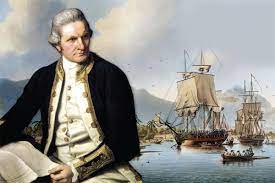
Captain James Cook was a British explorer of seas. He was also a cartographer and naval officer for his three voyages between 1768 and 1779 in the Pacific Ocean, particularly to New Zealand and Australia.
He made comprehensive maps of Newfoundland prior to embarking on his three voyages. Cook has a significant role in bringing about science and equipment into the field of navigation. His eleven years of sailing around the Pacific Ocean contributed significantly to the learning curve of the Europeans.
Cook’s mapping of large areas of the Pacific was his major achievement. This gave navigational accuracy on account of which the Europeans were able to sail to several sets of islands, which also included the Hawaiian group of islands.
Please note for accurate maps you need to determine accurate latitude and longitude. Between latitude and longitude, longitude was always more difficult to measure correctly. Navigators were able to work out latitude accurately for centuries by measuring the angle of the sun or a star above the horizon with an instrument such as a backstaff or a quadrant– A navigational instrument that was used to measure the altitude of a celestial body, particularly the Sun or the Moon.
But longitude was always more difficult to measure accurately because it required the exact knowledge of the time difference between points on the surface of the earth. The Earth turns a full 360 degrees in relation to the sun each day. Thus longitude corresponds to time which is 15 degrees every hour, or 1 degree every 4 minutes. In all three voyages of Captain Cook, he gathered detailed information that helped him in his navigation. During his first voyage, he gathered accurate longitude measurements with his navigational skills and with the help of British astronomer Charles Green who helped him gather all the information. They also used newly published Nautical Almanac tables which were part of the official British Alamanac using the lunar distance method – measuring the angular distance from the moon to either the sun during the daytime or one of the eight bright stars during the nighttime to determine the time at the Royal Observatory, Greenwich, and comparing that to his local time determined via the altitude of the sun, moon, or stars.
Many faces were behind Captain Cook in making his voyages successful, especially, watchmakers who had a great sense of purpose vis-a-vis sailors. On his second voyage, Cook used the K1 chronometer developed by Larcum Kendall, a British watchmaker, which was in the shape of a large pocket watch, 5 inches (13 cm) in diameter. It was a copy of the H4 clock made by John Harrison, a self-educated English carpenter and clockmaker who proved to be the first to keep accurate time at sea when used on Deptford’s journey to Jamaica in 1761-62.
Cook was a man with a treasure of common sense. He was successful in circumnavigating the world on his first voyage without losing a single sailor to scurvy (a disease resulting from lack of vitamin C), which was an unusual achievement of those times. He tested several preventive measures, the most important one being frequent replenishment of fresh food. He later on presented a paper on this perspective of the voyage to the Royal Society for which he was awarded the Copley Medal, a prestigious award of the Royal Society in 1776. Cook became the first European to develop extensive contacts with various communities in the Pacific. He correctly postulated a language link among all the people of the Pacific despite their being separated by great ocean stretches (see Malayo- Polynesian languages a subgroup of the Austronesian languages, spoken by approximately 385.5 million people). Cook theorised that Polynesians originated from Asia, which scientist Bryan Sykes a British geneticist later verified. In New Zealand, the coming of Cook is often used to signify the onset of the colonization which officially started more than 70 years after his crew became the second group of Europeans to visit that archipelago.
Without scientists, there are no discoveries. Cook carried several scientists on his voyages. They made significant observations and discoveries. Two botanists, Joseph Banks and the Swede Daniel Solander, sailed on the first voyage. The two collected over 3,000 plant species. Joseph Banks subsequently promoted the British settlement of Australia, establishing New South Wales as a penal settlement in 1788. Artists too sailed on Cook’s first voyage. Sydney Parkinson, a Scottish botanical illustrator was heavily involved in documenting the botanists’ findings, completing 264 drawings before his death near the end of the voyage. They were of immense scientific value to British botanists. Cook’s second expedition included William Hodges, who produced notable landscape paintings of Tahiti, Easter Island, and other locations. Several officers who served under Cook went on to distinctive accomplishments. William Bligh, a British officer in the Royal Navy who was Cook’s sailing master. He was given command of HMS Bounty in 1787 to sail to Tahiti and return with breadfruit. William Bligh became known for the mutiny of his crew, which resulted in his being set adrift in 1789. He later became Governor of New South Wales, where he was the subject of another mutiny – the 1808 Rum Rebellion. George Vancouver, one of Cook’s midshipmen, (officer of a low rank) led a voyage of exploration to the Pacific Coast of North America (a four-and-a-half-year voyage of exploration and diplomacy, commanded by Captain George Vancouver of the Royal Navy) from 1791 to 1794. In honour of Vancouver’s former commander, his ship was named Discovery. George Dixon, who sailed under Cook on his third expedition, later commanded his own ship. Henry Roberts, a lieutenant under Cook, spent many years after that voyage preparing the detailed charts that went into Cook’s posthumous atlas, published around 1784.
Cook’s contributions to knowledge gained international recognition during his lifetime. In 1779, while the American colonies were fighting Britain for their independence, Benjamin Franklin, an American polymath wrote to captains of colonial warships at sea, recommending that if they came into contact with Cook’s vessel, they were to “not consider her an enemy, nor suffer any plunder to be made of the effects contained in her, nor obstruct her immediate return to England by detaining her or sending her into any other part of Europe or to America; but that you treat the said Captain Cook and his people with all civility and kindness … as common friends to mankind.
***
By Kamlesh Tripathi
*
https://kamleshsujata.wordpress.com
*
Share it please
*
Shravan Charity Mission is an NGO that works for poor children suffering from life threatening diseases especially cancer. Our posts are meant for our readers that includes both children and adults and it has a huge variety in terms of content. We also accept donations for our mission. Should you wish to donate for the cause. The bank details are given below:
NAME OF ACCOUNT: SHRAVAN CHARITY MISSION
Account no: 680510110004635 (BANK OF INDIA)
IFSC code: BKID0006805
*
Our Publications
GLOOM BEHIND THE SMILE
(The book is about a young cancer patient. Now archived in 8 prestigious libraries of the US that includes Harvard College Library; Harvard University Library; Library of Congress; University of Washington, Seattle; University of Minnesota, Minneapolis; Yale University, New Haven; University of Chicago; University of North Carolina, at Chapel Hill University Libraries. It can also be accessed in MIT through Worldcat.org. Besides, it is also available for reading in libraries and archives of Canada, Cancer Aid and Research Foundation Mumbai; Jaipuria Institute of Management, Noida; India. Shoolini University, Yogananda Knowledge Center, Himachal Pradesh and Azim Premzi University, Bangalore).
ONE TO TANGO … RIA’S ODYSSEY
(Is a book on ‘singlehood’ about a Delhi girl now archived in Connemara Library, Chennai and Delhi Public Library, GOI, Ministry of Culture, Delhi; Available for reading in Indian National Bibliography, March 2016, in the literature section, in Central Reference Library, Ministry of Culture, India, Belvedere, Kolkata-700022)
AADAB LUCKNOW … FOND MEMORIES
(Is a fiction written around the great city of Nawabs—Lucknow. It describes Lucknow in great detail and also talks about its Hindu-Muslim amity. That happens to be the undying characteristic of Lucknow. The book was launched in the Lucknow International Literary Festival of 2014. It is included for reading in Askews and Holts Library Services, Lancashire, U.K; Herrick District Library, Holland and Charlotte-Mecklenburg Library, Mecklenburg County in North Carolina, USA; Black Gold Cooperative Library Administration, Arroyo Grande, California).
REFRACTIONS … FROM THE PRISM OF GOD
(Co-published by Cankids–Kidscan, a pan India NGO and Shravan Charity Mission, that works for Child cancer in India. The book is endorsed by Ms Preetha Reddy, MD Apollo Hospitals Group. It was launched at Lucknow International Literary Festival in 2016)
TYPICAL TALE OF AN INDIAN SALESMAN
(Is a story of an Indian salesman who is, humbly qualified. Yet he fights his way through unceasing uncertainties to reach the top. A good read not only for salesmen. The book was launched on 10th February 2018 at Gorakhpur Lit-Fest. Now available on Amazon, Flipkart and Onlinegatha)
RHYTHM … in poems
(Published in January 2019. The book contains 50 poems. The poems describe our day-to-day life. A few poems from the book have been published in Shillong Times, Bandra Times and Bhavan’s Journal. The book is available on Amazon, Flipkart and Onlinegatha)
MIRAGE
(Published in February 2020. The book is a collection of eight short stories available in Amazon, Flipkart and Notion Press)
AWADH ASSAM AND DALAI LAMA … The Kalachakra
(The story of the man who received His Holiness The Dalai Lama and his retinue in 1959 as a GOI representative when he fled Tibet in 1959. The book was launched on 21st November 2022 by His Holiness The Dalai Lama at Dharmshala. The title is archived in the library of the Department of Information and International Relations (DIIR) Government of Tibet, Tibet Policy Institute (TPI) and the personal library of His Holiness. The title is also archived in The Ohio Digital Library, USA).
BHAVANS JOURNAL
Short stories, Book reviews and Articles published in Bhavan’s Journal: 1. Reality and Perception, 15.10.19; 2. Sending the Wrong Message, 31.5.20; 3. Eagle versus Scholars June, 15 & 20 2020; 4. Indica, 15.8.20; 5. The Story of King Chitraketu, August 31 2020; 6. Breaking Through the Chakravyuh, September 30 2020. 7. The Questioning Spouse, October 31, 2020; 8. Happy Days, November 15, 2020; 9. The Karma Cycle of Paddy and Wheat, December 15, 2020; 10. Power Vs Influence, January 31, 2021; 11. Three Refugees, March 15, 2021; 12. Rise and Fall of Ajatashatru, March 31, 2021; 13. Reformed Ruler, May 15, 2021; 14. A Lasting Name, May 31, 2021; 15. Are Animals Better Teachers? June 16, 2021; 16. Book Review: The Gram Swaraj, 1.7.21; 17. Right Age for Achievements, 15.7.21; 18. Big Things Have Small Beginnings, 15.8.21; 19. Where is Gangaridai?, 15.9.21; 20. Confront the Donkey Within You 30.9.21; 21. Know Your Strengths 15.10.21; 22. Poverty 15.11.21; 23. Top View 30.11.21; 24. The Bansuriwala 15.1.22; 25. Sale of Alaska 15.2.22; 26. The Dimasa Kingdom 28.2.22; 27. Buried Treasure 15.4.22; 28. The Kingdom of Pragjyotisha 30.4.22; 29. Who is more useful? 15.5.22; 30. The White Swan from Lake Mansarovar 30.6.22; 31. Bhool Bhulayya 15.9.22; 32. Good Karma 30.9.22; 33. Good Name vs Bad Name 15.10.22; 34. Uttarapath—The Grand Trunk Road 1.12.22; 35. When Gods Get Angry 1.1.23; 36. Holinshed’s Chronicles 15.1.23; 37. Theogony 15.2.23; 38. Poem: Mother 14.5.23
SUNDAY SHILLONG TIMES
ARTICLES & POEMS: 1. POEM: HAPPY NEW YEAR 8.1.23; 2. POEM: SPRING 12.3.23; 3. POEM: RIGHT AND WRONG 20.3.23, 4. THE GUSH OF EMOTION—WRITING, 26.3.23; 5. THE NAG MANDIR 7.5.23; 6. POEM: MOTHER 7.5.23;
BANDRA TIMES, MUMBAI
ARTICLES & POEMS: 1. POEM SPRING, 1.4.23; POEM MOTHER, 1.6.23;
(ALL THE ABOVE BOOK TITLES ARE AVAILABLE FOR SALE ON AMAZON, FLIPKART AND OTHER ONLINE STORES OR YOU COULD EVEN WRITE TO US FOR A COPY)
*****








 Shravan charity mission