Category Archives: short story

BOOK REVIEW: TOPAZ BY RUSKIN BOND

Copyright@shravancharitymission
Khidki (Window)

–Read India Initiative—

This is only an attempt to create interest in reading. We may not get the time to read all the books in our lifetime. But such reviews, talk and synopsis will at least convey what the book is all about.

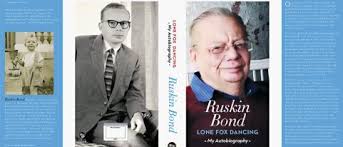
    Ruskin Bond as we all know, is an Indian author of British descent. He has made exemplary contribution in the field of children’s books and even ghost stories. Topaz is one such story that I’ve picked up for you. The story is set up in the backdrop of Himalayas. It is written in first person. Where, at a point the narrator or the protagonist confirms he is a writer, and that, in a way also confirms that it is the author himself narrating the story.

    The story opens in the pine-clad slopes of the Himalayas. The protagonist, is, in his room, listening to some music that reminds him of the strains of “The Blue Danube” and concurrently the wonderful sight of Pine-clad slopes of Himalayas. He has a new record player with old records that he has picked up from the junk-shop behind the Mall.

    Below the pines there are oaks. Surprisingly, one oak-tree in particular catches his eye. It is the biggest of the lot and stands by itself on a little hillock below his cottage. There is breeze but not strong enough to sway its heavy branches. There is also something moving, swinging gently from the tree, keeping pace with the music of the waltz, dancing ….

    It appears as if someone is hanging from the tree.

    A rope oscillates in the breeze, when a dead body turns slowly, turns this way and that way, is when he sees the face of a girl, her hair hanging loose, her eyes sightless, hands and feet limp; just turning, turning, while the waltz plays on.

    He turns off the player and runs downstairs.

    Down the path through the trees, and on to the grassy hillock where the big oak stood.

    A long-tailed magpie takes fright and flies out from the branches, swooping low across the ravine. In the tree there is no one. A great branch extends half-way across the hillock, and it is possible for him to reach up and touch it. But a girl could not have reached it without climbing the tree. He thinks.

    As he stands there, gazing at the branches, someone speaks to him from behind.

    ‘What are you looking at?’

    He swings around. Only to see a girl standing around in the clearing, facing him. A girl of seventeen or eighteen; alive, healthy, with bright eyes and a tantalizing smile. She is indeed lovely to look at. He hadn’t seen such a pretty girl in years.

    ‘You startled me,’ he says. ‘You came up so unexpectedly.’ he added.

    ‘Did you see anything—in the tree?’ she asked.

    ‘I thought I saw someone from my window. That’s why I came down. Did you see anything?’ said the writer.

    ‘Oh no!’ She exclaimed and shook her head, the smile escaping her face for a moment. ‘I don’t see anything. But other people do—sometimes.’

    ‘What do they see?’ asked the writer.   

    ‘My sister?’ she replied.

    ‘Your sister?’ rebounded the writer.

    ‘Yes she hanged herself from this tree. It was many years ago. So, sometimes you can see her hanging there.’ She answered in a mechanical fashion.

    She spoke matter-of-factly: whatever had happened seemed very remote to her.

    After which they moved some distance away from the tree. Above the hillock, on a disused private tennis-court (a relic from the hill station’s colonial past) was a small stone bench. She sat on it: and, after a moment’s hesitation, the writer too sat down beside her.

    ‘Do you live close by?’ he asked.

    ‘Further up the hill. My father has a small bakery.’

    She then discloses her name as Hameeda. She also says she has two younger brothers.

    ‘You must have been quite small when your sister died.’ says the writer.

    ‘Yes. But I remember her. She was pretty.’

    ‘Like you.’ interjects the writer.

     She laughs in disbelief. ‘Oh, I am nothing to her. You should have seen my sister.’

    ‘Why did she kill herself?’

    ‘Because she did not want to live. She was to have been married but she loved someone else, someone who was not of our own community. It’s an old story and the end is always sad, isn’t it?’

    ‘Not always. But what happened to the boy—the one she loved? Did he kill himself too?’ asked the writer.

    ‘No, he took up a job in some other place. Jobs are not easy to get, are they?’

    ‘I don’t know. I’ve never tried for one.’

    ‘Then what do you do?’

    ‘I write stories.’ said the writer.

    ‘Do people buy stories?’

    ‘Why not? If your father can sell bread, I can sell stories.’

    ‘People have to have bread. But they can live without stories.’

    ‘No, Hameeda, you’re wrong. People can’t live without stories.’

        By now infatuation had made way in the writer’s heart for Hameeda. He couldn’t help loving her. Although, no fierce desire or passion had taken hold of him. He was happy by just looking at her, watch her while she sat on the grass outside his cottage, her lips stained with the juice of wild bilberries. She chatted away—about her friends, her clothes, her favourite things.

    ‘Won’t your parents mind if you come here every day?’ the writer asked.

    ‘I have told them you are teaching me.’

    ‘Teaching you what?’ he asked.

    ‘They did not ask. So, you can tell me stories.’

    As a result the writer told her some stories.

    It was midsummer.

    The sun glinted on the ring she wore on her third finger: a translucent golden topaz, set in silver.

    ‘That’s a pretty ring,’ remarked the writer.

    ‘You wear it,’ she said, impulsively removing it from her hand. ‘It will give you good thoughts. It will help you to write better stories.’

    She slipped it on to the writer’s little finger.

    ‘I’ll wear it for a few days,’ he said. ‘Then you must let me give it back to you.’ he added.

    On a day that promised rain the writer took the path down to the stream at the bottom of the hill. There he found Hameeda gathering ferns from the shady places along the rocky ledges above the water.

    ‘What will you do with them?’ he asked.

    ‘This is a special kind of fern. You can cook it as a vegetable.’

    ‘Is it tasty?’ he asked.

    ‘No, but it is good for rheumatism.’

    ‘Do you suffer from rheumatism?’

    ‘Of course not. They are for my grandmother, she is very old.’ she said.

    ‘There are more ferns further upstream,’ he said. ‘But we’ll have to get into the water.’

    They remove their shoes and start paddling, up stream. The ravine becomes shadier and narrower, until the sun is completely shut out. The ferns have grown right down up to the water’s edge. They bend to pick them up but instead find themselves in each other’s arms; and sink slowly, as if in a dream, into the soft bed of ferns, while overhearing a whistling thrush burst out in dark sweet song.

    ‘It isn’t time that’s passing by,’ it seemed to say. ‘It is you and I. It is you and I …’

    Post that the writer waits for her the following day, but she doesn’t come.

    Several days pass without, he being able to see her.

    Is she sick? Has she been kept at home? Has she been sent away? He doesn’t even know where she lives, so he cannot ask. And, if at all, he is able to ask, what would he ask?

     Then one day he sees a boy delivering bread and pastries at the little tea-shop about a mile down the road. From the upward slant of his eyes, there is a slight resemblance with Hameeda. As he leaves the shop, the writer follows him up the hill. And, when he comes abreast of him, he asks: ‘Do you have your own bakery?’

    He nods cheerfully, ‘Yes. Do you want anything—bread, biscuits, cakes? I can bring them all to your house.’

    ‘Oh of course. But don’t you have a sister? A girl called Hameeda?’

    His expression changes suddenly. He is no longer friendly. He looks puzzled and slightly apprehensive.

    ‘Why do you want to know?’

    ‘Because, I haven’t seen her for some time now?’ replies the writer

    ‘We have not seen her either.’

    ‘Do you mean she has gone away?’

    ‘Didn’t you know? You must have been away a long time. It is many years since she died. She killed herself. You did not hear about it?’ said the boy.

    ‘But wasn’t that her sister—your other sister?’ asked the writer.

    ‘I had only one sister—Hameeda—and she died, when I was very young. It’s an old story, ask someone else about it.’

    With that he turned away and quickened his pace, and the writer was left standing in the middle of the road, with his head full of questions that couldn’t be answered.

    That night there was a thunderstorm. Writer’s bedroom window kept banging in the wind. He got up to close it and, as he looked out, there was a flash of lightning and he saw that frail body again, swinging from the oak tree.

    He tried a make out the features, but the head hung down and the hair was blowing in the wind.

    Was it all a dream? He thought.

    It was impossible to say. But the topaz ring on him glowed softly in the darkness. And a whisper from the forest seemed to say, ‘It isn’t time that’s passing by, my friend. It is you and I … ‘

    So that’s all for today. It’s a neat little story with a tinge of enigma for you to discover. I would give the story seven out of ten.

Posted by Kamlesh Tripathi

*

https://kamleshsujata.wordpress.com

*

Share it if you like it

*

Shravan Charity Mission is an NGO that works for poor children suffering from life threatening diseases especially cancer. Our posts are meant for our readers that includes both children and adults and it has a huge variety in terms of content. We also accept donations for our mission. Should you wish to donate for the cause. The bank details are given below:

NAME OF ACCOUNT: SHRAVAN CHARITY MISSION

Account no: 680510110004635 (BANK OF INDIA)

IFSC code: BKID0006805

*

Our publications

GLOOM BEHIND THE SMILE

(The book is about a young cancer patient. Now archived in 7 prestigious libraries of the US, including, Harvard University and Library of Congress. It can also be accessed in MIT through Worldcat.org. Besides, it is also available for reading in Libraries and archives of Canada and Cancer Aid and Research Foundation Mumbai)  

ONE TO TANGO … RIA’S ODYSSEY

(Is a book on ‘singlehood’ about a Delhi girl now archived in Connemara Library, Chennai and Delhi Public Library, GOI, Ministry of Culture, Delhi)

AADAB LUCKNOW … FOND MEMORIES

(Is a fiction written around the great city of Nawabs—Lucknow. It describes Lucknow in great detail and also talks about its Hindu-Muslim amity. That happens to be its undying characteristic. The book was launched in Lucknow International Literary Festival of 2014)

REFRACTIONS … FROM THE PRISM OF GOD

(Co-published by Cankids–Kidscan, a pan India NGO and Shravan Charity Mission, that works for Child cancer in India. The book is endorsed by Ms Preetha Reddy, MD Apollo Hospitals Group. It was launched in Lucknow International Literary Festival 2016)

TYPICAL TALE OF AN INDIAN SALESMAN

(Is a story of an Indian salesman who is, humbly qualified. Yet he fights his ways through unceasing uncertainties to reach the top. A good read not only for salesmen. The book was launched on 10th February, 2018 in Gorakhpur Lit-Fest. Now available in Amazon, Flipkart and Onlinegatha)

RHYTHM … in poems

(Published in January 2019. The book contains 50 poems. The poems describe our day to day life. The book is available in Amazon, Flipkart and Onlinegatha)

(ALL THE ABOVE TITLES ARE AVAILABLE FOR SALE IN AMAZON, FLIPKART AND OTHER ONLINE STORES OR YOU COULD EVEN WRITE TO US FOR A COPY)

*****


SHORT STORY: GURU

Copyright@shravancharitymission

    Scriptures say that a ‘jiva atma’ meets a guru only when there is an intense yearning  in him for the same. It is only then that the guru comes to the seeker. A true guru destroys illusion and radiates light. The following story illustrates this very point:

    Once there lived a man who developed an intense craving for an embodied guru, but did not know how and where to get one from. So, he started praying earnestly for a guru. He took a vow to abstain from food and other pleasures till a guru came into his life.

    In a nearby village lived a sage who went daily into the forest on a standard path, to collect firewood. The sage would be in meditation and the horse would automatically take him to the fixed spot. One day, he opened his eyes to see that his horse had brought him to the door of a hut. Knowing this could be a divine intervention, he dismounted and knocked the door. The seeker of the guru who had taken the vow opened the door, and bowed to the sage with deep reverence. The all-knowing sage initiated him and took him under his spiritual umbrella.

    Today, material comforts and conveniences are not guaranteeing peace of mind. There is, widespread despair and alarming degree of collective angst. This is where an enlightened guru can show the path of serenity and salvation to his disciple.

By Kamlesh Tripathi

*

https://kamleshsujata.wordpress.com

*

Share it if you like it

*

Shravan Charity Mission is an NGO that works for poor children suffering from life threatening diseases especially cancer. Our posts are meant for our readers that includes both children and adults and it has a huge variety in terms of content. We also accept donations for our mission. Should you wish to donate for the cause. The bank details are given below:

NAME OF ACCOUNT: SHRAVAN CHARITY MISSION

Account no: 680510110004635 (BANK OF INDIA)

IFSC code: BKID0006805

*

Our publications

GLOOM BEHIND THE SMILE

(The book is about a young cancer patient. Now archived in 7 prestigious libraries of the US, including, Harvard University and Library of Congress. It can also be accessed in MIT through Worldcat.org. Besides, it is also available for reading in Libraries and archives of Canada and Cancer Aid and Research Foundation Mumbai)  

ONE TO TANGO … RIA’S ODYSSEY

(Is a book on ‘singlehood’ about a Delhi girl now archived in Connemara Library, Chennai and Delhi Public Library, GOI, Ministry of Culture, Delhi)

AADAB LUCKNOW … FOND MEMORIES

(Is a fiction written around the great city of Nawabs—Lucknow. It describes Lucknow in great detail and also talks about its Hindu-Muslim amity. That happens to be its undying characteristic. The book was launched in Lucknow International Literary Festival of 2014)

REFRACTIONS … FROM THE PRISM OF GOD

(Co-published by Cankids–Kidscan, a pan India NGO and Shravan Charity Mission, that works for Child cancer in India. The book is endorsed by Ms Preetha Reddy, MD Apollo Hospitals Group. It was launched in Lucknow International Literary Festival 2016)

TYPICAL TALE OF AN INDIAN SALESMAN

(Is a story of an Indian salesman who is, humbly qualified. Yet he fights his ways through unceasing uncertainties to reach the top. A good read not only for salesmen. The book was launched on 10th February, 2018 in Gorakhpur Lit-Fest. Now available in Amazon, Flipkart and Onlinegatha)

RHYTHM … in poems

(Published in January 2019. The book contains 50 poems. The poems describe our day to day life. The book is available in Amazon, Flipkart and Onlinegatha)

(ALL THE ABOVE TITLES ARE AVAILABLE FOR SALE IN AMAZON, FLIPKART AND OTHER ONLINE STORES OR YOU COULD EVEN WRITE TO US FOR A COPY)

*****



BOOK REVIEW: TROUBLE IN GANGTOK (Gangtokey Gondogol) by Satyajit Ray

Copyright@shravancharitymission

Khidki (Window)

–Read India Initiative—

This is only an attempt to create interest in reading. We may not get the time to read all the books in our lifetime. But such reviews, talk and synopsis will at least convey what the book is all about.

The original Bengali title of this novel is ‘Gangtokey Gondogol.’ In English it would mean, ‘Trouble in Gangtok.’ This novella featuring a private detective Feluda was first published in the Desh Magazine in 1970 and then published in book form in 1971 by Ananda Publishers. The main characters of this book are:

  • Prodosh Chandra Mitter aka Feluda.
  • Tapesh Ranjan Mitter aka Topshe.
  • Sasadhar Bose/Dr. Vaidya are the names of the same character.
  • Nishikanto Sarkar.
  • Helmut Ungar/Virendra Shelvankar are the names of the same character.
  • Shivkumar Shelvankar.
  • The curator of the Tibetan Institute.

    The story is an intricate murder mystery. Feluda and Topshe travel to Gangtok for their summer holidays on the start of the Bengali New Year. While eating breakfast at Bagdogra Airport, they meet a man by the name of Sasadhar Bose, who works for a chemical firm dealing with aromatic perfumes. He tells that he had attended a nephew’s wedding in Ghatshila post which he came to Sikkim. While stopping at a place called Teesta Bazaar, the trio comes to know about an accident that took place in the North Sikkim Highway.

    They learn that a huge boulder crashed on the taxi and the taxi fell off a cliff. But the driver escaped unhurt. Feluda and Topshe are staying at Hotel Snow View while Sasadhar Bose is staying in the dak bungalow.

    In the evening, Sasadhar Bose comes to Feluda’s hotel and informs him that the man who fell off the cliff in the accident, was no one else but his partner Shivkumar Shelvankar, who was also the owner of the company. Sasadhar Bose walks out of the hotel to find a flight to Bombay the next day. This is when Feluda meets another Bengali in the hotel by the name of, Nishikanto Sarkar. He reveals that he had a statue of a Tibetan God named Yamantak, which had nine heads and 34 hands. He says that he had sold the statue to Shelvankar for a 1000 rupees. While walking on the road, they meet a German hippie, Helmut Ungar, who tells them more about Shelvankar. He tells them that he had a son, whom he loved. But the son ran away from his father. Helmut tells Feluda that on the day of the accident, Mr. Shelvankar and he had decided to travel to a gumpha a place on the way to Singik. But Helmut changed his mind and left early to take some photographs. He reveals to Feluda that Shelvankar used to keep the figurine with him in his pocket as he thought it to be a lucky charm. But after the accident, the figurine had gone missing. Helmut also tells that the reason of this superstition is because of the advice of a certain Dr. Vaidya.

    Later in the evening, Feluda and Topshe go to the Tibetan Institute to learn more about the statue. Feluda asks the driver of the taxi he is travelling in, to come in the morning the next day because he wants to see the scene of the accident. They reach the Tibetan Institute, where the curator declares that the Yamantak which Shelvankar had would cost a little more than 10000 rupees. Feluda returns to the hotel to find Bose waiting for him. Bose tells Feluda that tomorrow he will be leaving for Bombay. 

    Next day, Nishikanto Sarkar tells Feluda that someone threw a paper in his room. The paper consisted of a Tibetan word, which simply meant—death. Later Feluda and Topshe travel to the accident site. There Feluda finds a white button. He also reveals that someone had tried to make the boulder fall by using a strong iron rod and that this accident was nothing but a well-planned murder. Feluda sends a telegram to Bose asking him to come back to Gangtok. The next day, Nishikanto Sarkar, Helmut Ungar, Topshe and Feluda travel to Rumtek for seeing the lama dance. Feluda learns, through a telegram, that Shelvankar’s estranged son is present in a Sikkim monastery and a detective agency has found him. Then, Feluda hears someone shouting. He and Topshe come to the source of the sound and find that Mr. Sarkar had been pushed down the cliff. They rescue him and they come back to Gangtok. In the evening, they come to the dak bungalow, where Helmut is staying. There they meet a strange looking man. Helmut introduces himself as Dr. Vaidya.

    Dr. Vaidya, who specializes in talking to souls of the departed, tells all of them (through Shelvankar’s spirit) that he was murdered and Virendra is responsible for his death. Helmut tells that Virendra is Shelvankar’s only son. Dr. Vaidya tells Feluda that tomorrow he will be traveling to Pemiangchi. Next morning, Topshe finds a paper near Feluda’s ashtray. The paper consists of the same Tibetan word, meaning death. Feluda tells Topshe that today he will conduct an experiment on the North Sikkim Highway. After conducting the experiment, Feluda concludes that the murder was done by first hitting Shelvankar with a rod and then throwing the vehicle down the cliff. Then, a boulder was thrown to make it look like an accident. The driver was bribed. While Feluda was telling this, a boulder comes crashing down. Topshe saves Feluda from being crushed.

    In the evening, Helmut comes to Feluda’s room and shows him two photographs. The photographs were taken during the crime. It shows a man wearing red clothes standing on top of the mountain and seeing the car falling down. When Feluda tells that he is that man Virendra, Helmut tells that it is impossible because he is only Virendra. He tells Feluda and Topshe that he did not like his father marrying twice and thus ran away from home. Then his father approached a detective agency to find his son. Then Helmut (or Virendra) came to Sikkim. Helmut tells Feluda that he suspects Dr. Vaidya to be the murderer. They decide to travel to Pemiangchi to apprehend Dr. Vaidya. They pull in Mr. Sarkar also. Next day, while travelling to Pemiangchi, Sasadhar Bose also follows them and requests them to also take him. They reach Pemiangchi in the evening. There they discover that Dr. Vaidya is not there but has left his stick in the dak bungalow.

    Feluda then announces that Sasadhar Bose is the killer. He killed Shelvankar to take over the ownership of the company. When Bose says that he had gone to his nephew’s wedding during the murder, Feluda reminds him that in the Bengali calendar no wedding is held during the month of Chaitra since it is an inauspicious month and that they had come together to Sikkim during the starting of the month of Baishakh, the first month of the Bengali calendar. Feluda tells that Sasadhar Bose and Dr. Vaidya are the same person. Dr. Vaidya told Shel-vankar about his own life and impressed him. While going to the Gumpha, Dr. Vaidya and Shelvankar travelled in the same car. Then Dr. Vaidya or Sasadhar Bose who happen to be the same person hit Shelvankar with a rod and murdered him. Then he came back to Kolkatta. Then as Sasadhar Bose, he travelled in the same plane with Feluda. Dr. Vaidya tried to put the blame on Virendra, even when he did not know that Helmut was actually Virendra. When he saw that Feluda was conducting an investigation, he tried to kill Feluda. Feluda also tells that Mr. Sarkar wanted to steal the figurine of Yamantak from Shelvankar. So after the murder, he came down to find the statue, but Bose saw him and started harassing him. Bose tries to escape but is caught by leeches. Feluda finds the statue in the belongings of Sasadhar Bose. Sasadhar Bose is arrested and Feluda solves one of his most complex cases.

I would give the book seven out of ten.

By Kamlesh Tripathi

*

https://kamleshsujata.wordpress.com

*

Share it if you like it

*

Shravan Charity Mission is an NGO that works for poor children suffering from life threatening diseases especially cancer. Our posts are meant for our readers that includes both children and adults and it has a huge variety in terms of content. We also accept donations for our mission. Should you wish to donate for the cause. The bank details are given below:

NAME OF ACCOUNT: SHRAVAN CHARITY MISSION

Account no: 680510110004635 (BANK OF INDIA)

IFSC code: BKID0006805

*

Our publications

GLOOM BEHIND THE SMILE

(The book is about a young cancer patient. Now archived in 7 prestigious libraries of the US, including, Harvard University and Library of Congress. It can also be accessed in MIT through Worldcat.org. Besides, it is also available for reading in Libraries and archives of Canada and Cancer Aid and Research Foundation Mumbai)  

ONE TO TANGO … RIA’S ODYSSEY

(Is a book on ‘singlehood’ about a Delhi girl now archived in Connemara Library, Chennai and Delhi Public Library, GOI, Ministry of Culture, Delhi)

AADAB LUCKNOW … FOND MEMORIES

(Is a fiction written around the great city of Nawabs—Lucknow. It describes Lucknow in great detail and also talks about its Hindu-Muslim amity. That happens to be its undying characteristic. The book was launched in Lucknow International Literary Festival of 2014)

REFRACTIONS … FROM THE PRISM OF GOD

(Co-published by Cankids–Kidscan, a pan India NGO and Shravan Charity Mission, that works for Child cancer in India. The book is endorsed by Ms Preetha Reddy, MD Apollo Hospitals Group. It was launched in Lucknow International Literary Festival 2016)

TYPICAL TALE OF AN INDIAN SALESMAN

(Is a story of an Indian salesman who is, humbly qualified. Yet he fights his ways through unceasing uncertainties to reach the top. A good read not only for salesmen. The book was launched on 10th February, 2018 in Gorakhpur Lit-Fest. Now available in Amazon, Flipkart and Onlinegatha)

RHYTHM … in poems

(Published in January 2019. The book contains 50 poems. The poems describe our day to day life. The book is available in Amazon, Flipkart and Onlinegatha)

(ALL THE ABOVE TITLES ARE AVAILABLE FOR SALE IN AMAZON, FLIPKART AND OTHER ONLINE STORES OR YOU COULD EVEN WRITE TO US FOR A COPY)

*****


STORY: The Peacock and the Crane

Copyright@shravancharity mission

There was once a peacock who often boasted about his beauty. Every day he would walk up to the banks of a large lake and look at his own reflections and say “Oh! What a beautiful bird I am! Look at my exquisite colourful tail.”

    Once the peacock saw a crane on the banks of the lake. He said with sarcasm to the crane, “What a colourless bird you are! You don’t have beautiful and colourful feathers like me—see I’m the most beautiful”. 
    The crane replied, “O yes of course! I don’t have beautiful feathers. But, my feathers can make me fly across the lake. Can your feathers make you fly?” There was no reply from the peacock. 
MORAL OF THE STORY: It is better to be useful than to be beautiful.

Posted by Kamlesh Tripathi

*

https://kamleshsujata.wordpress.com

*

Share it if you like it

*

Shravan Charity Mission is an NGO that works for poor children suffering from life threatening diseases especially cancer. Our posts are meant for our readers that includes both children and adults and it has a huge variety in terms of content. We also accept donations for our mission. Should you wish to donate for the cause. The bank details are given below:

NAME OF ACCOUNT: SHRAVAN CHARITY MISSION

Account no: 680510110004635 (BANK OF INDIA)

IFSC code: BKID0006805

*

Our publications

GLOOM BEHIND THE SMILE

(The book is about a young cancer patient. Now archived in 7 prestigious libraries of the US, including, Harvard University and Library of Congress. It can also be accessed in MIT through Worldcat.org. Besides, it is also available for reading in Libraries and archives of Canada and Cancer Aid and Research Foundation Mumbai)  

ONE TO TANGO … RIA’S ODYSSEY

(Is a book on ‘singlehood’ about a Delhi girl now archived in Connemara Library, Chennai and Delhi Public Library, GOI, Ministry of Culture, Delhi)

AADAB LUCKNOW … FOND MEMORIES

(Is a fiction written around the great city of Nawabs—Lucknow. It describes Lucknow in great detail and also talks about its Hindu-Muslim amity. That happens to be its undying characteristic. The book was launched in Lucknow International Literary Festival of 2014)

REFRACTIONS … FROM THE PRISM OF GOD

(Co-published by Cankids–Kidscan, a pan India NGO and Shravan Charity Mission, that works for Child cancer in India. The book is endorsed by Ms Preetha Reddy, MD Apollo Hospitals Group. It was launched in Lucknow International Literary Festival 2016)

TYPICAL TALE OF AN INDIAN SALESMAN

(Is a story of an Indian salesman who is, humbly qualified. Yet he fights his ways through unceasing uncertainties to reach the top. A good read not only for salesmen. The book was launched on 10th February, 2018 in Gorakhpur Lit-Fest. Now available in Amazon, Flipkart and Onlinegatha)

RHYTHM … in poems

(Published in January 2019. The book contains 50 poems. The poems describe our day to day life. The book is available in Amazon, Flipkart and Onlinegatha)

(ALL THE ABOVE TITLES ARE AVAILABLE FOR SALE IN AMAZON, FLIPKART AND OTHER ONLINE STORES OR YOU COULD EVEN WRITE TO US FOR A COPY)

*****


STORY: TWO FRIENDS AND THE BEAR

Copyright@shravancharitymission

    Vijay and Raju were friends. Once while they were on a holiday they went into a forest. Where, they were enjoying the beauty of nature. When suddenly they saw a bear charging at them. They were frightened. Raju who knew how to climb a tree, ran towards it and climbed it up in no time. He did not think of Vijay who did not know how to climb a tree.

    Vijay got nervous and thought for a second. He had heard, animals do not prefer dead bodies. So, he fell on the ground and held his breath. The bear sniffed him for a few moments and thought he was dead and decided to carry on. Upon witnessing the scene Raju asked Vijay. ‘What did the bear whisper in your ears?’ 

Vijay replied, The bear asked me to keep away from friends like you.’ 

Moral of the story is: A friend in need is a friend indeed.

Posted by Kamlesh Tripathi

*

https://kamleshsujata.wordpress.com

*

Share it if you like it

*

Shravan Charity Mission is an NGO that works for poor children suffering from life threatening diseases especially cancer. Our posts are meant for our readers that includes both children and adults and it has a huge variety in terms of content. We also accept donations for our mission. Should you wish to donate for the cause. The bank details are given below:

NAME OF ACCOUNT: SHRAVAN CHARITY MISSION

Account no: 680510110004635 (BANK OF INDIA)

IFSC code: BKID0006805

*

Our publications

GLOOM BEHIND THE SMILE

(The book is about a young cancer patient. Now archived in 7 prestigious libraries of the US, including, Harvard University and Library of Congress. It can also be accessed in MIT through Worldcat.org. Besides, it is also available for reading in Libraries and archives of Canada and Cancer Aid and Research Foundation Mumbai)  

ONE TO TANGO … RIA’S ODYSSEY

(Is a book on ‘singlehood’ about a Delhi girl now archived in Connemara Library, Chennai and Delhi Public Library, GOI, Ministry of Culture, Delhi)

AADAB LUCKNOW … FOND MEMORIES

(Is a fiction written around the great city of Nawabs—Lucknow. It describes Lucknow in great detail and also talks about its Hindu-Muslim amity. That happens to be its undying characteristic. The book was launched in Lucknow International Literary Festival of 2014)

REFRACTIONS … FROM THE PRISM OF GOD

(Co-published by Cankids–Kidscan, a pan India NGO and Shravan Charity Mission, that works for Child cancer in India. The book is endorsed by Ms Preetha Reddy, MD Apollo Hospitals Group. It was launched in Lucknow International Literary Festival 2016)

TYPICAL TALE OF AN INDIAN SALESMAN

(Is a story of an Indian salesman who is, humbly qualified. Yet he fights his ways through unceasing uncertainties to reach the top. A good read not only for salesmen. The book was launched on 10th February, 2018 in Gorakhpur Lit-Fest. Now available in Amazon, Flipkart and Onlinegatha)

RHYTHM … in poems

(Published in January 2019. The book contains 50 poems. The poems describe our day to day life. The book is available in Amazon, Flipkart and Onlinegatha)

(ALL THE ABOVE TITLES ARE AVAILABLE FOR SALE IN AMAZON, FLIPKART AND OTHER ONLINE STORES OR YOU COULD EVEN WRITE TO US FOR A COPY)

*****


BOOK REVIEW: THE BROWN HAND by Sir Arthur Conan Doyle

Copyright@shravancharitymission

Khidki (Window)

–Read India Initiative—

This is only an attempt to create interest in reading. We may not get the time to read all the books in our lifetime. But such reviews, talk and synopsis will at least convey what the book is all about.

    Sir Arthur Conan Doyle as we all know was a British writer best known for his detective fiction featuring the character Sherlock Holmes. Originally a physician, in 1887 he published ‘A Study in Scarlet’ the first of his four novels and thereafter more than fifty short stories about Holmes and Dr. Watson. Brown Hand was first published in The Strand Magazine in May 1899.

    The story is based on an Indian urban legend that tells about a Muslim who was forced to have his arm amputated after an accident, but died a few months later, and after death became a ghost and began wandering about in search of his limb.

    The central character of the story is a doctor, Sir Dominic Holden, who has had a long spell of service in British India first as a military doctor and then as a private surgeon in Bombay. Once when he was posted at Peshawar, then a main city of undivided Punjab (hence a part of India), he had to attend to a poor Afghan whose one hand was in such a bad state due to the spread of gangrene, that the only way to save his life was to amputate it. The operation was performed and Dr. Holden asked for the amputated hand as his fee. Dr. Holden had a hobby of collecting discarded limbs, organs, cysts from living and dead humans and thus wanted to add the “brown hand” to his collection. Whereas, the Afghan being Islamic, refused to part with his amputated hand, as it breached the rule of his religion which stated amputated body parts should be kept with the owner himself. But Dr. Holden promised to return the Afghan his hand before his death and took the hand with him to his house in Bombay. Thereafter Dr. Holden soon retired and settled in Wiltshire, England. One night he was awakened when someone started pulling his clothes. It was the ghost of his old Afghan patient. Dr. Holden understood that the Afghan had died and his ghost wanted back the amputated hand. From then onwards, the ghost started haunting the doctor’s lab every night for four years looking for his hand. But the ghost failed to find the hand since it had been damaged in a fire that had broken out at the doctor’s house in Bombay. The recurring visits of the ghost, had made the life of Dr. Holden and his wife, Lady Holden, miserable and the ill effects of which on their health was prominent. A doctor known for his steel nerves had now become a scared individual.
When, Dr. Holden’s nephew, by the name of Dr Hardacre decided to solve this problem. He spent his first night in the lab and saw the Afghan searching for his hand. The next day, Dr. Holden explained him everything in detail and Hardacre left for London. Hardacre, a doctor himself, went through a book on spirits and found that certain spirits could not leave the living world because of them being strongly attached to something or someone existing in this world. Hardacre decided to try his luck and left for Chadwell where a friend of his was the home surgeon at a hospital for sailors. The home surgeon provided Hardacre with an amputated hand of an Indian sailor as the requirement was a “brown hand”.
    Hardacre returned to Wiltshire and placed the hand in a jar in his uncle’s lab. Hardacre stayed awake as the Afghan ghost came visiting as usual. But Hardacre’s experiment failed as the Afghan on seeing the hand, wailed in agony and smashed the jar on the floor before disappearing. Next morning, Hardacre realised his mistake as he had brought the left hand of the sailor while the Afghan had had his right hand separated. Hardacre rushed back to Chadwell and luckily got the right hand of the sailor. He returned and placed the hand in a jar in the lab just like the previous day. Dr. Holden forbade Hardacre from sleeping in the lab as he feared risking his nephew’s life.
That night, Hardacre again saw somebody approaching him while he tried to sleep. But it wasn’t any ghost but his uncle who seemed overwhelmed with joy and had suddenly regained some of the energy he possessed earlier. Dr. Holden stated that the ghost had finally found his amputated hand and before leaving, he offered the Eastern Salaam bowed thrice in front of him, in a way similar to how Afghans pay respect. Thereafter Holdens lived on peacefully and consulted Hardacre for every major decisions they took thereafter. Before he died, Dr. Holden named Hardacre as the heir to his property.

    The story has mild horror and conveys a message that if one is intensely attached to something in this world it becomes difficult for the soul to leave the world without that object.

    It makes an interesting read. I would give it seven out of ten.

By Kamlesh Tripathi

*

https://kamleshsujata.wordpress.com

*

Share it if you like it

*

Shravan Charity Mission is an NGO that works for poor children suffering from life threatening diseases especially cancer. Our posts are meant for our readers that includes both children and adults and it has a huge variety in terms of content. We also accept donations for our mission. Should you wish to donate for the cause. The bank details are given below:

NAME OF ACCOUNT: SHRAVAN CHARITY MISSION

Account no: 680510110004635 (BANK OF INDIA)

IFSC code: BKID0006805

*

Our publications

GLOOM BEHIND THE SMILE

(The book is about a young cancer patient. Now archived in 7 prestigious libraries of the US, including, Harvard University and Library of Congress. It can also be accessed in MIT through Worldcat.org. Besides, it is also available for reading in Libraries and archives of Canada and Cancer Aid and Research Foundation Mumbai)  

ONE TO TANGO … RIA’S ODYSSEY

(Is a book on ‘singlehood’ about a Delhi girl now archived in Connemara Library, Chennai and Delhi Public Library, GOI, Ministry of Culture, Delhi)

AADAB LUCKNOW … FOND MEMORIES

(Is a fiction written around the great city of Nawabs—Lucknow. It describes Lucknow in great detail and also talks about its Hindu-Muslim amity. That happens to be its undying characteristic. The book was launched in Lucknow International Literary Festival of 2014)

REFRACTIONS … FROM THE PRISM OF GOD

(Co-published by Cankids–Kidscan, a pan India NGO and Shravan Charity Mission, that works for Child cancer in India. The book is endorsed by Ms Preetha Reddy, MD Apollo Hospitals Group. It was launched in Lucknow International Literary Festival 2016)

TYPICAL TALE OF AN INDIAN SALESMAN

(Is a story of an Indian salesman who is, humbly qualified. Yet he fights his ways through unceasing uncertainties to reach the top. A good read not only for salesmen. The book was launched on 10th February, 2018 in Gorakhpur Lit-Fest. Now available in Amazon, Flipkart and Onlinegatha)

RHYTHM … in poems

(Published in January 2019. The book contains 50 poems. The poems describe our day to day life. The book is available in Amazon, Flipkart and Onlinegatha)

(ALL THE ABOVE TITLES ARE AVAILABLE FOR SALE IN AMAZON, FLIPKART AND OTHER ONLINE STORES OR YOU COULD EVEN WRITE TO US FOR A COPY)

*****


STORY: SATAN IN DISGUISE

Copyright@shravancharitymission

    There once lived an old tiger in a forest. He could not hunt animals as he used to do when he was young. It was therefore becoming difficult for him, to get his prey. One day the tiger thought, “I have lost the strength and speed of my youth. Unless, I discover some trick to catch my prey, I will starve to death”.

    After a serious thought, the tiger came out with a plan. He began by telling everyone, “I am now old. So I have turned into a vegetarian. I have become a sanyasi. I will no more hunt animals.” 

    Soon his words spread across the jungle. Innocent animals who were otherwise scared of him came to pay their respect to the aged tiger, thinking, that the tiger had turned into a saint. But in reality the tiger pounced on all the animals when they came to his cave.
    This information fell in the ears of a fox. The fox began to think, “Can a tiger become a vegetarian, and thereby a saint?” He was now eager to unearth the truth.
    Stealthily, the fox approached the tiger’s cave. He minutely and carefully examined the foot prints of the all animals that had gone to meet the tiger. He found to his dismay, all foot prints going towards the cave but not returning from the there. He then told all the animals in the forest. “The tiger is a cheat. So, don’t go to his cave as he has eaten up all the animals that went there”. 
    The tiger had to starve to death. 
MORAL OF THE STORY: Satanic words are not to be believed.

Posted by Kamlesh Tripathi

*

https://kamleshsujata.wordpress.com

*

Share it if you like it

*

Shravan Charity Mission is an NGO that works for poor children suffering from life threatening diseases especially cancer. Our posts are meant for our readers that includes both children and adults and it has a huge variety in terms of content. We also accept donations for our mission. Should you wish to donate for the cause. The bank details are given below:

NAME OF ACCOUNT: SHRAVAN CHARITY MISSION

Account no: 680510110004635 (BANK OF INDIA)

IFSC code: BKID0006805

*

Our publications

GLOOM BEHIND THE SMILE

(The book is about a young cancer patient. Now archived in 7 prestigious libraries of the US, including, Harvard University and Library of Congress. It can also be accessed in MIT through Worldcat.org. Besides, it is also available for reading in Libraries and archives of Canada and Cancer Aid and Research Foundation Mumbai)  

ONE TO TANGO … RIA’S ODYSSEY

(Is a book on ‘singlehood’ about a Delhi girl now archived in Connemara Library, Chennai and Delhi Public Library, GOI, Ministry of Culture, Delhi)

AADAB LUCKNOW … FOND MEMORIES

(Is a fiction written around the great city of Nawabs—Lucknow. It describes Lucknow in great detail and also talks about its Hindu-Muslim amity. That happens to be its undying characteristic. The book was launched in Lucknow International Literary Festival of 2014)

REFRACTIONS … FROM THE PRISM OF GOD

(Co-published by Cankids–Kidscan, a pan India NGO and Shravan Charity Mission, that works for Child cancer in India. The book is endorsed by Ms Preetha Reddy, MD Apollo Hospitals Group. It was launched in Lucknow International Literary Festival 2016)

TYPICAL TALE OF AN INDIAN SALESMAN

(Is a story of an Indian salesman who is, humbly qualified. Yet he fights his ways through unceasing uncertainties to reach the top. A good read not only for salesmen. The book was launched on 10th February, 2018 in Gorakhpur Lit-Fest. Now available in Amazon, Flipkart and Onlinegatha)

RHYTHM … in poems

(Published in January 2019. The book contains 50 poems. The poems describe our day to day life. The book is available in Amazon, Flipkart and Onlinegatha)

(ALL THE ABOVE TITLES ARE AVAILABLE FOR SALE IN AMAZON, FLIPKART AND OTHER ONLINE STORES OR YOU COULD EVEN WRITE TO US FOR A COPY)

*****


BOOK REVIEW: FRITZ by Satyajit Ray

Copyright@shravancharitymission

Khidki (Window)

–Read India Initiative—

This is only an attempt to create interest in reading. We may not get the time to read all the books in our lifetime. But such reviews, talk and synopsis will at least convey what the book is all about.

    This short story was published in The Penguin Book of ‘Indian GHOST stories, edited by Ruskin Bond, is about a Swiss doll named Fritz. The price of this book is Rs 250.
We all know Satyajit Ray, an Indian filmmaker, screenwriter, music composer, graphic artist, lyricist and author, widely regarded as one of the greatest filmmakers of the 20th Century. Ray was born in Calcutta into a Bengali family which was prominent in the field of arts and literature.
    In this short story there are two main protagonists. One is Jayant, who works in the editorial section of a newspaper and the other is his friend Shankar, the narrator, who is a school teacher. They are great friends and have finally managed sometime to go on a holiday together. They decide to go to Bundi a small town in Rajasthan around two hundred km from Jaipur. Incidentally Jayant had been to this town in his childhood along with his parents. Jayant’s father was in the Archaeological Survey of India and that gave him the opportunity to visit many tourist locations.
    They plan to stay at the Circuit House where Jayant had stayed before, when he had come along with his father many years ago on an official visit. When they reach Bundi, Shankar notices Jayant is not his usual self. He is in a pensive mood and thinking about something. Shankar tries to query Jayant about his mood. Jayant says it’s nothing but old memories inundating his mind. Shankar thinks that Jayant being the over-emotional type. Is now getting nostalgic, so he doesn’t say anything further in the matter.
They go for a stroll in the beautiful compound of the Circuit House when Jayant suddenly remembers that there was a tall Deodar tree there. He searches for it by looking around and finds it at the end of the compound. He looks at the trunk searchingly and says, it was out here he had met a European in the form of a doll, but doesn’t quite remember who it was or how they had met.
    They return to the Circuit House where Jayant remembers Dilawar, the cook, who had prepared their dinner when he had come with his father. His reminiscences don’t stop there. They continue full flow and then he is inundated with the memories of Fritz. He tells Shankar, the tale of Fritz, the European doll, which Shankar hears amusedly. It was a one-foot tall Swiss doll brought from Switzerland by his uncle for him. He says he was very attached to the doll and was devastated when two stray dogs had mutilated it. He had buried the doll’s remnants under the very same deodar tree.
Shankar is quite tired so he goes to bed but wakes up abruptly in the middle of the night and finds Jayant sitting on his bed, looking perplexed. Upon asking the reason, Jayant says that something had walked over his chest when he was asleep. Shankar assures that it could have been a dream but Jayant shows him his pillow. Where, there were faint marks pointing to the fact that an animal had walked over it. Shankar does a thorough search of the place but doesn’t find any small animal like mice or rats. Shankar feels that his friend is just exaggerating his pent up emotions, nevertheless, he offers him some soothing words. After which they both go off to sleep.
    The following day, they visit ‘Bundi Fort.’ About which Shankar is happy, as he remembers the famous poem of Tagore ‘The Fort of Bundi.’ During the visit to the fort on the hills, Jayant remains lost in his thoughts. After returning, Shankar queries about his state of mind persistently. Jayant says, that Fritz, the doll, had come back alive, and it was the doll last night who had walked over his chest leaving his footprints. Shankar, now annoyed with Jayant’s irrational fears, suggests to dig up the doll’s grave and see for himself that the doll isn’t back.
    Jayant agrees. Together, they have the gardener dig the place where Fritz was buried. To their horror, they find a pure white, 12-inch, human skeleton, lying there exactly, of the same size as Fritz. They both are confused and horrified when they see it. Eerie thoughts and weird assumptions come to their mind. The story ends there, on a cliff-hanger, with various connotations to suit the reader.
    The story is narrated in first person from Shankar’s perspective and that provides a realistic depth into Jayant’s emotions, unclouded by Jayant’s irrational fears and beliefs.
The story is built on short conversations between the two protagonists. The author within the limited space has also described the scenic surroundings quite well. Even Jayant’s childhood memories are well captured. The story unwinds on flashbacks. Where, the sequencing of flashbacks is quite perfect.
    The characters are well-portrayed. Where, Jayant is projected as a serious person and even emotional. Whereas, Shankar is a smart, rational man who believes only in what he sees. Hence, he is annoyed at Jayant’s assumption that Fritz is back. And it’ll only be right to say that Shankar is quite a determined person, because even when Jayant was reluctant to dig the grave, he was sure about what he wanted to do and how to get it done.
    The story is set in Bundi, Rajasthan. The author has used plain English, easy to understand. It is a good read. I would give the story seven out of ten.

By Kamlesh Tripathi

*

https://kamleshsujata.wordpress.com

*

Share it if you like it

*

Shravan Charity Mission is an NGO that works for poor children suffering from life threatening diseases especially cancer. Our posts are meant for our readers that includes both children and adults and it has a huge variety in terms of content. We also accept donations for our mission. Should you wish to donate for the cause. The bank details are given below:

NAME OF ACCOUNT: SHRAVAN CHARITY MISSION

Account no: 680510110004635 (BANK OF INDIA)

IFSC code: BKID0006805

*

Our publications

GLOOM BEHIND THE SMILE

(The book is about a young cancer patient. Now archived in 7 prestigious libraries of the US, including, Harvard University and Library of Congress. It can also be accessed in MIT through Worldcat.org. Besides, it is also available for reading in Libraries and archives of Canada and Cancer Aid and Research Foundation Mumbai)  

ONE TO TANGO … RIA’S ODYSSEY

(Is a book on ‘singlehood’ about a Delhi girl now archived in Connemara Library, Chennai and Delhi Public Library, GOI, Ministry of Culture, Delhi)

AADAB LUCKNOW … FOND MEMORIES

(Is a fiction written around the great city of Nawabs—Lucknow. It describes Lucknow in great detail and also talks about its Hindu-Muslim amity. That happens to be its undying characteristic. The book was launched in Lucknow International Literary Festival of 2014)

REFRACTIONS … FROM THE PRISM OF GOD

(Co-published by Cankids–Kidscan, a pan India NGO and Shravan Charity Mission, that works for Child cancer in India. The book is endorsed by Ms Preetha Reddy, MD Apollo Hospitals Group. It was launched in Lucknow International Literary Festival 2016)

TYPICAL TALE OF AN INDIAN SALESMAN

(Is a story of an Indian salesman who is, humbly qualified. Yet he fights his ways through unceasing uncertainties to reach the top. A good read not only for salesmen. The book was launched on 10th February, 2018 in Gorakhpur Lit-Fest. Now available in Amazon, Flipkart and Onlinegatha)

RHYTHM … in poems

(Published in January 2019. The book contains 50 poems. The poems describe our day to day life. The book is available in Amazon, Flipkart and Onlinegatha)

(ALL THE ABOVE TITLES ARE AVAILABLE FOR SALE IN AMAZON, FLIPKART AND OTHER ONLINE STORES OR YOU COULD EVEN WRITE TO US FOR A COPY)

*****



STORY: LESSON FROM THE BEST FRIEND

Copyright@shravancharitymission

    Once, two friends were walking through the desert. At some point of the journey they had an argument, and in the heat of the moment one friend slapped the other on the face.

   The one who got slapped was hurt, but without saying a word he wrote on the sand.  

“Today my best friend slapped me on the face.”

    Thereafter, they kept on walking until they found an oasis, where they decided to take a bath and rest. But by accident the one who had been slapped got stuck in the wetland and started drowning, but the friend saved him. After he recovered from the near drowning, he wrote on a stone;

“Today my best friend saved my life.”

    The friend who had slapped and saved his best friend asked him;

 “After I hurt you, you wrote in the sand and now, you write on a stone, why?”

    The friend replied;

 “When someone hurts us we should write it down in sand where winds of forgiveness can erase it away. But, when someone does something good for us, we must engrave it in stone where no wind can ever erase it.”

By Kamlesh Tripathi

*

https://kamleshsujata.wordpress.com

*

Share it if you like it

*

Shravan Charity Mission is an NGO that works for poor children suffering from life threatening diseases especially cancer. Our posts are meant for our readers that includes both children and adults and it has a huge variety in terms of content. We also accept donations for our mission. Should you wish to donate for the cause. The bank details are given below:

NAME OF ACCOUNT: SHRAVAN CHARITY MISSION

Account no: 680510110004635 (BANK OF INDIA)

IFSC code: BKID0006805

*

Our publications

GLOOM BEHIND THE SMILE

(The book is about a young cancer patient. Now archived in 7 prestigious libraries of the US, including, Harvard University and Library of Congress. It can also be accessed in MIT through Worldcat.org. Besides, it is also available for reading in Libraries and archives of Canada and Cancer Aid and Research Foundation Mumbai)  

ONE TO TANGO … RIA’S ODYSSEY

(Is a book on ‘singlehood’ about a Delhi girl now archived in Connemara Library, Chennai and Delhi Public Library, GOI, Ministry of Culture, Delhi)

AADAB LUCKNOW … FOND MEMORIES

(Is a fiction written around the great city of Nawabs—Lucknow. It describes Lucknow in great detail and also talks about its Hindu-Muslim amity. That happens to be its undying characteristic. The book was launched in Lucknow International Literary Festival of 2014)

REFRACTIONS … FROM THE PRISM OF GOD

(Co-published by Cankids–Kidscan, a pan India NGO and Shravan Charity Mission, that works for Child cancer in India. The book is endorsed by Ms Preetha Reddy, MD Apollo Hospitals Group. It was launched in Lucknow International Literary Festival 2016)

TYPICAL TALE OF AN INDIAN SALESMAN

(Is a story of an Indian salesman who is, humbly qualified. Yet he fights his ways through unceasing uncertainties to reach the top. A good read not only for salesmen. The book was launched on 10th February, 2018 in Gorakhpur Lit-Fest. Now available in Amazon, Flipkart and Onlinegatha)

RHYTHM … in poems

(Published in January 2019. The book contains 50 poems. The poems describe our day to day life. The book is available in Amazon, Flipkart and Onlinegatha)

(ALL THE ABOVE TITLES ARE AVAILABLE FOR SALE IN AMAZON, FLIPKART AND OTHER ONLINE STORES OR YOU COULD EVEN WRITE TO US FOR A COPY)

*****



THE BLIND MEN AND THE ELEPHANT

Copyright@shravancharitymission

    Once a group of blind men heard that a strange animal, called elephant, had been brought to town, but none of them were aware of its shape and form. Out of curiosity, they said: “We must inspect and know it by touch, of which we are capable”. Soon, they decided to experience it out, and when they found the elephant they started groping it. In the case of the first person, whose hand landed on the trunk of the elephant said, “This animal is like a thick snake.” For another one whose hand reached its ear, it seemed like a fan. As for another person, whose hand was upon its leg, said, the elephant is a pillar like a tree-trunk. The blind man who placed his hand upon its side said the elephant, “is a wall”. Another who felt its tail, described it as a rope. The last felt its tusk and said, ‘the elephant is hard, smooth and like a spear.

    The moral of the parable is that human beings have a tendency to claim about the absolute truth based on their limited, subjective experience as they ignore other people’s limited, subjective experiences which may be equally true.

    In some versions, of the blind men, they discover their disagreements. They suspect the others to be not telling the truth and come to blows. The stories also differ primarily in how the elephant’s body parts are described, and how violent the conflict becomes and how the conflict among the men and their perspectives is resolved. In some versions, they stop talking, and start listening and collaborate to “see” the full elephant. In another, a sighted man enters the parable and describes the entire elephant from various perspectives, the blind men then learn that they were all partially correct and partially wrong. While one’s subjective experience is true, it may not be the totality of truth.

    The parable has been used to illustrate a range of truths and fallacies; broadly, the parable implies that one’s subjective experience can be true, but that experience is inherently limited by its failure to account for other truths or a totality of truth.

By Kamlesh Tripathi

*

https://kamleshsujata.wordpress.com

*

Share it if you like it

*

Shravan Charity Mission is an NGO that works for poor children suffering from life threatening diseases especially cancer. Our posts are meant for our readers that includes both children and adults and it has a huge variety in terms of content. We also accept donations for our mission. Should you wish to donate for the cause. The bank details are given below:

NAME OF ACCOUNT: SHRAVAN CHARITY MISSION

Account no: 680510110004635 (BANK OF INDIA)

IFSC code: BKID0006805

*

Our publications

GLOOM BEHIND THE SMILE

(The book is about a young cancer patient. Now archived in 7 prestigious libraries of the US, including, Harvard University and Library of Congress. It can also be accessed in MIT through Worldcat.org. Besides, it is also available for reading in Libraries and archives of Canada and Cancer Aid and Research Foundation Mumbai)  

ONE TO TANGO … RIA’S ODYSSEY

(Is a book on ‘singlehood’ about a Delhi girl now archived in Connemara Library, Chennai and Delhi Public Library, GOI, Ministry of Culture, Delhi)

AADAB LUCKNOW … FOND MEMORIES

(Is a fiction written around the great city of Nawabs—Lucknow. It describes Lucknow in great detail and also talks about its Hindu-Muslim amity. That happens to be its undying characteristic. The book was launched in Lucknow International Literary Festival of 2014)

REFRACTIONS … FROM THE PRISM OF GOD

(Co-published by Cankids–Kidscan, a pan India NGO and Shravan Charity Mission, that works for Child cancer in India. The book is endorsed by Ms Preetha Reddy, MD Apollo Hospitals Group. It was launched in Lucknow International Literary Festival 2016)

TYPICAL TALE OF AN INDIAN SALESMAN

(Is a story of an Indian salesman who is, humbly qualified. Yet he fights his ways through unceasing uncertainties to reach the top. A good read not only for salesmen. The book was launched on 10th February, 2018 in Gorakhpur Lit-Fest. Now available in Amazon, Flipkart and Onlinegatha)

RHYTHM … in poems

(Published in January 2019. The book contains 50 poems. The poems describe our day to day life. The book is available in Amazon, Flipkart and Onlinegatha)

(ALL THE ABOVE TITLES ARE AVAILABLE FOR SALE IN AMAZON, FLIPKART AND OTHER ONLINE STORES OR YOU COULD EVEN WRITE TO US FOR A COPY)

*****