The world has become colourful. But the ‘Happy Prince’ is no longer alive to see it. So is the swallow, who carried out his last orders, but died in the frost, at his feet, before he could escape to Egypt. The lead metal statue of the ‘Happy Prince’ cracks in agony, but his leaden heart still beats for his kingdom and his subjects. But are there any such rulers left, anymore? Well, they are practically extinct or very rare. Perhaps you might remember the name of the author who wrote the story ‘The Happy Prince.’ I’m forgetting his name. Oh! I remember now. It was Oscar Wilde. But “What’s in a name? Wrote Shakespeare. “That which we call a rose / By any other name would smell as sweet.” Maybe Oscar Wilde would like to rewrite the story ‘Happy Prince’ in the context of the present day while residing in heaven. But does a happy man without a shirt exist anymore, as told in the Italian tale ‘The Happy Man’s Shirt’? A quintessential example in recent times was India’s Mahatma Gandhi, the father of the nation, whose simple attire—a loincloth and shawl (without shirt) during the 1930s, particularly around the 1931 Round Table Conference- was given the abrasive title of ‘half-naked fakir’ by the British Prime Minister, Winston Churchill, to mock him. I’m more than sure there isn’t a happy man without a shirt anymore because the man now wears not only shirts but also colourful shirts, yet he remains unhappy.
Utopia is now seized of polarising colours, such as red, blue, green and saffron, and certain adamant tenets and philosophies that rule the roost, along with the so-called isms, the right wing and the left wing, in the central pillar of democracy. Have we gone back in time? Are we proving the Greek epic poem Hesiod’s Theogony correct, which propagated the initial theory that dense darkness covered everything until the earth was born out of chaos? With Earth came the mountains, the sea, the sky and Uranus. Uranus and Earth came together and gave birth to the Titans. Later, the Titans and Gods, both from the same lineage and class, fought for supremacy, in which the Greek God Zeus won, just like Lord Krishna.
But halt there. Take time off to think because the world leaders of today suffer from the same fear as Uranus, Cronus or the Kansa Mama of Mathura, who killed their would-be adversaries. Even Nigas tried to swallow Lord Vishnu in a television series, but that was in a different context. Ajatashatru killed his father Bimbisara to ascend the throne of the Magadha Empire, and in return, his son too killed him for the same throne. The Robinhoods are extinct now. The two biggest democracies are always in the news, but at times for the wrong reasons. The world is full of Brutus in present times, which may put the original Brutus to shame and the Bard into a wonder, ‘to be or not to be’.
One can say goodness has eclipsed and is rarely seen and experienced. Much has evolved, but more is yet to come. So wait and watch. Be on the lookout for that happy man without a shirt, and the happy prince, with a lead heart that beats for the public even now. Fortunately, I dreamt, Utopia shall remain Utopia and not become a Dystopia.
Shravan Charity Mission is an NGO that works for poor children suffering from life-threatening diseases, especially cancer. Our posts are meant for our readers, including children and adults, and have a huge variety of content. We also accept donations for our mission. Should you wish to donate to the cause of cancer? The bank details are given below:
Shravan Charity Mission is an NGO that works for poor children suffering from life-threatening diseases, especially cancer. Our posts are meant for our readers, including children and adults, and have a huge variety of content. We also accept donations for our mission. Should you wish to donate to the cause of cancer? The bank details are given below:
There is an intrinsic animality in man, a violence which he brings with his birth. Even small babies will find some ants and will kill for no reason: killing is a joy. And the same… There are so many hunters who are hunting deer, lions and tigers, and they call it ‘game’. But it is strange: when a lion eats a hunter … then it is a ‘tragedy’. Strange! And the lion kills you with bare hands, and you kill the lion from far away, with guns, arrows, and all kinds of devices. You are a coward. I used to stay in the palace of the maharaja of Bhavnagar, and his whole palace was full of lions’ heads, deer heads, and tigers’ heads on all the walls. And he used to be very proud to introduce people… telling who killed which animal – this one was killed by his father, this one was killed by his grandfather, this one was killed by himself, this was killed by his brother, by his son. In the same way, he also introduced those things to me the first time I stayed with him … I said, “…. All that you have been doing is killing animals. What is the purpose? You have enough food; you don’t need to kill them.” He said. “It is a game.” I said, “But the game has some rules. Both parties should be provided with the same instruments. Both parties should be confronting each other in full light. You are hiding behind a tree, with a gun, and you kill an innocent deer, and you think you are playing a game? And what part does the deer to play in the game? Has he consented to play the game? And this is very unfair: why are you sitting on top of a tree? “You are simply a coward, even with your gun. And this is not a game. This is simply your intrinsic violence, which is finding some way to destroy. And if you have any sense of humanity, remove all this nonsense from this palace! This shows your real face. These are not the heads of the animals; these are your heads.” He could not understand … Just as you are here, a guest, a tiger is also a guest. And it simply means that if you kill the tiger, you are insensate. I am not concerned with the tiger, because it is going to die one day. I am concerned with you, because killing each human or animal or anything that is living, goes on making your heart a stone. And if your heart becomes a stone, a rock, then your spiritual growth becomes impossible. A rock will not allow you to reach your own being. Anything that stops your evolution in consciousness is evil- it is a sin – and anything that helps you to move towards more consciousness is a virtue. That’s the only definition that I can give to you. Be more aesthetic, be more sensitive, be more respectful of life, because you are part of it. Whoever you are killing, you are killing yourself. Your destructiveness is suicidal. Abridged from The Path of the Mystic, courtesy Osho International Foundation.
Shravan Charity Mission is an NGO that works for poor children suffering from life-threatening diseases, especially cancer. Our posts are meant for our readers, including children and adults, and have a huge variety of content. We also accept donations for our mission. Should you wish to donate to the cause of cancer? The bank details are given below:
What is the right age to achieve something in life? Is 40 years, too little time, or adequate time to achieve something in life? Let us consider the lives of five lit luminaries of the 19th century who were more or less contemporaries and who became world-renowned figures in their short lifespans. Let’s start with Swami Vivekananda a Hindu monk, a spiritual guru and a literary-luminary, lifespan 12 January 1863- 4 July 1902, a total of 39 years. Then you have the American writer Edgar Allan Poe, who was born on 19 January 1809 and died on 7 October 1849, a life span of 40 years, followed by the French writer Guy De Maupassant, born on 5 August 1850 and passed away on 6 July 1893 a life span of 42 years. On the rostrum, there is also Nikolai Gogol, a Russian writer of Ukrainian origin, who was born on 20 March 1809 and died on 21 February 1852, a life span of 42 years. And last but not least we have Anton Pavlovich Chekhov, a Russian playwright and short-story writer born on 29 January 1860, and died on 15 July 1904, at the age of 44. They all left behind a phenomenal legacy of success and heaps of lessons for future generations within the ebbs and flows of their limited lifespan.
The mean life expectancy in the 19th century was 40-45 years. Global life expectancy today is around 72 years. There are two off-shoots to this. One, the subject authors lived for around ninety to hundred per cent of the average life expectancy of those times. Two, they only lived for around forty years – a period, perhaps, too less for any milestone achievement, barring sports and maybe some other careers. When we compare 40 years with today’s life expectancy, it is only 55% in terms of years. The point then is: Does life expectancy have anything to do with your major achievements in life? The case study of the quintet doesn’t say so. There are authors, poets, and literary figures from other countries too, who gained fame but died very young, prominent among them is John Keats to cite an example who died at the age of 25. So, isn’t it ironic that some in a short lifespan of 25 to 40 years made gigantic strides, while others couldn’t manage to do that even in a century?
In the 19th century, these five authors witnessed watershed changes in their countries. Some major events were as follows: India had the First War of Independence in 1857. British East India Company was replaced by the British Crown in 1858. Russia had the Crimean War between 1853 and 1856; the Caucasian War, between 1817 and 1864; and the capture of Tashkent by the Russian Army in 1865. In addition, Alaska was sold in a sale in 1867; the Russian-Turkish War happened in 1877, and the Russian famine in 1891. Alexander III the emperor of Russia passed away in 1894, and the first congress of the Russian Social Democratic Labour Party (RSDLP) was held in 1898 in Minsk now in Belarus. In America and Europe, slavery was abolished through an act; the First and Second Industrial Revolutions which overlapped with the 18th and 20th centuries respectively led to massive urbanization. Construction of the Suez Canal commenced in 1859, linking the Mediterranean Sea with the Indian Ocean through the Red Sea, providing a more direct shipping route between Europe and Asia. The Islamic gunpowder empires (Ottoman Empire, Safavid and the Mughal) were formerly dissolved and the European imperialism, brought much of South Asia, Southeast Asia and almost all of Africa under colonial rule. It was also marked by the collapse of the Spanish, Zulu Kingdom, First French Empire, Holy Roman and the Mughal Empire.
Even with all the hullabaloo in their country and continent, there was calm and composure in these five lit luminaries. They had a single focus, just like the Arjuna’s concentration – the eye of the fish and that was – to keep writing till their last breath. Though born in a Bengali Kayastha family in Calcutta, Swami Vivekananda was inclined towards spirituality. He was influenced by his guru, Ramakrishna, from whom he learnt that all living beings, were an embodiment of the divine self. Therefore, service to God could only be rendered by service to mankind. Anton Chekhov even when he fell sick in 1885, kept writing till he died of tuberculosis in 1904. Edgar Allan Poe was born in Boston, the second child of actors David and Elizabeth Poe. His father abandoned the family in 1810, and his mother died the following year. He became an orphan yet he fought back to become one of the most formidable writers of short stories. When Maupassant was 11, his mother, an independent-minded woman, divorced her husband. Afterwards, Maupassant lived with his mother, who was the single biggest influence on him, but that entailed hardships. Gogol lost his father at the age of fifteen, yet he aspired to become a writer.
The short lifespan of these great writers only teaches us that achievements are not a function of a long lifespan.
Shravan Charity Mission is an NGO that works for poor children suffering from life-threatening diseases, especially cancer. Our posts are meant for our readers, including children and adults, and have a huge variety in content. We also accept donations for our mission. Should you wish to donate to the cause? The bank details are given below:
NAME OF ACCOUNT: SHRAVAN CHARITY MISSION
Account no: 680510110004635 (BANK OF INDIA)
IFSC code: BKID0006805
*
Kamlesh Tripathi’s Publications
GLOOM BEHIND THE SMILE
(The book is about a young cancer patient. Now archived in 8 prestigious libraries of the US which include Harvard College Library; Harvard University Library; Library of Congress; University of Washington, Seattle; University of Minnesota, Minneapolis; Yale University, New Haven; University of Chicago; University of North Carolina, at Chapel Hill University Libraries. It can also be accessed at MIT through Worldcat.org. Besides, it is also available for reading in libraries and archives of Canada; Cancer Aid and Research Foundation Mumbai; Jaipuria Institute of Management, Noida, India; Shoolini University, Yogananda Knowledge Center, Himachal Pradesh and Azim Premzi University, Bangalore).
ONE TO TANGO … RIA’S ODYSSEY
(Is a book on ‘singlehood’ about a Delhi girl now archived in Connemara Library, Chennai and Delhi Public Library, GOI, Ministry of Culture, Delhi; It is also available for reading in the Indian National Bibliography, March 2016, in the literature section, in Central Reference Library, Ministry of Culture, India, Belvedere, Kolkata-700022)
AADAB LUCKNOW … FOND MEMORIES
(Is a fiction written around the great city of Nawabs—Lucknow. It describes Lucknow in great detail and also talks about its Hindu-Muslim amity, which is the undying characteristic of Lucknow. The book was launched at the Lucknow International Literary Festival in 2014. It is included for reading in Askews and Holts Library Services, Lancashire, U.K; Herrick District Library, Holland and Charlotte-Mecklenburg Library, Mecklenburg County in North Carolina, USA; Black Gold Cooperative Library Administration, Arroyo Grande, California; Berkeley Library, University of California).
REFRACTIONS … FROM THE PRISM OF GOD
(Co-published by Cankids–Kidscan, a pan India NGO and Shravan Charity Mission, that works for child cancer in India. The book is endorsed by Ms Preetha Reddy, MD Apollo Hospitals Group. It was launched at the Lucknow International Literary Festival in 2016).
TYPICAL TALE OF AN INDIAN SALESMAN
(Is a story of an Indian salesman who is, humbly qualified. Yet he fights his way through unceasing uncertainties to reach the top. A good read not only for salesmen. The book was launched on 10th February 2018 at Gorakhpur Lit-Fest. Now available on Amazon, Flipkart and Onlinegatha)
RHYTHM … in poems
(Published in January 2019. The book contains 50 poems. The poems describe our day-to-day life. A few poems from the book have been published in Shillong Times, Bandra Times and Bhavan’s Journal. The book is available on Amazon, Flipkart and Onlinegatha)
MIRAGE
(Published in February 2020. The book is a collection of eight short stories available on Amazon, Flipkart and Notion Press)
AWADH ASSAM AND DALAI LAMA … The Kalachakra
(The story of the man who received His Holiness The Dalai Lama and his retinue in 1959 as a GOI representative when he fled Tibet in 1959. The book was launched on 21st November 2022 by His Holiness The Dalai Lama at Dharmshala. The title is archived in the library of the Department of Information and International Relations (DIIR) Government of Tibet, Tibet Policy Institute (TPI) and the personal library of His Holiness The Dalai Lama. The title is also archived in The Ohio Digital Library, USA. It was recently included in the digital library of the world-renowned company APPLE).
BHAVANS JOURNAL
Short stories, Book reviews and Articles published in Bhavan’s Journal: 1. Reality and Perception, 15.10.19; 2. Sending the Wrong Message, 31.5.20; 3. Eagle versus Scholars June, 15 & 20, 2020; 4. Indica, 15.8.20; 5. The Story of King Chitraketu, August 31 2020; 6. Breaking Through the Chakravyuh, September 30 2020. 7. The Questioning Spouse, October 31, 2020; 8. Happy Days, November 15, 2020; 9. The Karma Cycle of Paddy and Wheat, December 15, 2020; 10. Power Vs Influence, January 31, 2021; 11. Three Refugees, March 15, 2021; 12. Rise and Fall of Ajatashatru, March 31, 2021; 13. Reformed Ruler, May 15, 2021; 14. A Lasting Name, May 31, 2021; 15. Are Animals Better Teachers? June 16, 2021; 16. Book Review: The Gram Swaraj, 1.7.21; 17. Right Age for Achievements, 15.7.21; 18. Big Things Have Small Beginnings, 15.8.21; 19. Where is Gangaridai?, 15.9.21; 20. Confront the Donkey Within You 30.9.21; 21. Know Your Strengths 15.10.21; 22. Poverty 15.11.21; 23. Top View 30.11.21; 24. The Bansuriwala 15.1.22; 25. Sale of Alaska 15.2.22; 26. The Dimasa Kingdom 28.2.22;27. Buried Treasure 15.4.22; 28. The Kingdom of Pragjyotisha 30.4.22; 29. Who is more useful? 15.5.22; 30. The White Swan from Lake Mansarovar 30.6.22; 31. Bhool Bhulayya 15.9.22; 32. Good Karma 30.9.22; 33. Good Name vs Bad Name 15.10.22; 34. Uttarapath—The Grand Trunk Road 1.12.22; 35. When Gods Get Angry 1.1.23; 36. Holinshed’s Chronicles 15.1.23; 37. Theogony 15.2.23; 38. Poem: Mother 14.5.23; 39. THE NAG MANDIR 30.6.23; 40. The Story of Garuda 30.7.23; 41. Janmabhoomi vs Karmabhoomi 31.8.23; 42. The Ghost Town of Kuldhara 15.9.23; 43. The Tale of Genji 15.10.23; 44. The Soul Connection 1.12.23; 45.Book review: Jungle Nama … a story of the Sundarban 16.3.24; 46. Book review: A Forgotten Chapter 16.5.24;
THE SHILLONG TIMES
ARTICLES & POEMS: 1. POEM: HAPPY NEW YEAR 8.1.23; 2. POEM: SPRING 12.3.23; 3. POEM: RIGHT AND WRONG 20.3.23; 4.THE GUSH OF EMOTION—WRITING, 26.3.23; 5. THE NAG MANDIR, 7.5.23; 6. POEM:MOTHER 7.5.23; 7. POEM: RAIN RAIN 9.7.23; 8. POEM:YOU COME ALONE YOUGO ALONE 6.8.23; 9. RAIN RAIN (SECOND TIME) 10.8.23; 10. POEM: GURU TEACHER 10.8.23; 11. POEM: AUTUMN … THE INTERIM HEAVEN 15.10.23; 12. POEM: HAPPY DIWALI 12.11.23; 13. OVERCOMING BLINDNESS: LEARN IT THE JOHN MILTON WAY 10.12.23; 14. THE HAPPY PRINCE AND THE HAPPY MAN’S SHIRT 31.12.23; 15. ANNUS MIRABILIS 2024 7.1.24; 16. GANDHI TO MAHATMA GANDHI- Incidents that Shaped Gandhi in South Africa 28.1.24; 17. POEM: TOGETHER BUT NOT MADE FOR EACH OTHER, 11.2.24; 18. THE BIRDS BEES AND THE SPIDERS OF NICHOLAS GUILDFORD AND JONATHAN SWIFT 25.2.24; 19. THE OVERCOATS OF NIKOLAI GOGOL AND RUSKIN BOND 10.3.24; 20. THE ETHNIC COLOURS OF HOLI 24.3.24; 21. A LESSON FROM DALAI LAMA, 21.4.24; 22. POEM: MORNING WALK 28.4.24; 23. TRIP TO RHINE FALLS, SWITZERLAND, 19.5.24;
THE ASSAM TRIBUNE
ARTICLE: 1. THE MAGIC OF READING 11.12.23; 2. GANDHI TO MAHATMA 29.1.24; 3. GEOGRAPHY OF SOLITUDE 8.4.24; 4. A LESSON FROM DALAI LAMA, 22.4.24; 5. A SOURCE OF INSPIRATION, 29.4.24; 6. THE FOUR-LEGGED LIBRARY, 12.5.24;
29.12.2020: INDICA BY MEGASTHENES; 14.3.22: ABOUT THE DIMASA KINGDOM ASSAM; 10.12.22: GRAND TRUNK ROAD-UTTARAPATH; 5.10.23: THE GHOST TOWN OF KULDHARA NEAR JAISALMER;
(ALL THE ABOVE BOOK TITLES ARE AVAILABLE FOR SALE ON AMAZON, FLIPKART AND OTHER ONLINE STORES OR YOU COULD EVEN WRITE TO US FOR A COPY)
Shravan Charity Mission is an NGO that works for poor children suffering from life-threatening diseases, especially cancer. Our posts are meant for our readers, including children and adults, and have a huge variety in content. We also accept donations for our mission. Should you wish to donate to the cause? The bank details are given below:
NAME OF ACCOUNT: SHRAVAN CHARITY MISSION
Account no: 680510110004635 (BANK OF INDIA)
IFSC code: BKID0006805
*
Kamlesh Tripathi’s Publications
GLOOM BEHIND THE SMILE
(The book is about a young cancer patient. Now archived in 8 prestigious libraries of the US which include Harvard College Library; Harvard University Library; Library of Congress; University of Washington, Seattle; University of Minnesota, Minneapolis; Yale University, New Haven; University of Chicago; University of North Carolina, at Chapel Hill University Libraries. It can also be accessed at MIT through Worldcat.org. Besides, it is also available for reading in libraries and archives of Canada; Cancer Aid and Research Foundation Mumbai; Jaipuria Institute of Management, Noida, India; Shoolini University, Yogananda Knowledge Center, Himachal Pradesh and Azim Premzi University, Bangalore).
ONE TO TANGO … RIA’S ODYSSEY
(Is a book on ‘singlehood’ about a Delhi girl now archived in Connemara Library, Chennai and Delhi Public Library, GOI, Ministry of Culture, Delhi; It is also available for reading in the Indian National Bibliography, March 2016, in the literature section, in Central Reference Library, Ministry of Culture, India, Belvedere, Kolkata-700022)
AADAB LUCKNOW … FOND MEMORIES
(Is a fiction written around the great city of Nawabs—Lucknow. It describes Lucknow in great detail and also talks about its Hindu-Muslim amity, which is the undying characteristic of Lucknow. The book was launched at the Lucknow International Literary Festival in 2014. It is included for reading in Askews and Holts Library Services, Lancashire, U.K; Herrick District Library, Holland and Charlotte-Mecklenburg Library, Mecklenburg County in North Carolina, USA; Black Gold Cooperative Library Administration, Arroyo Grande, California; Berkeley Library, University of California).
REFRACTIONS … FROM THE PRISM OF GOD
(Co-published by Cankids–Kidscan, a pan India NGO and Shravan Charity Mission, that works for child cancer in India. The book is endorsed by Ms Preetha Reddy, MD Apollo Hospitals Group. It was launched at the Lucknow International Literary Festival in 2016).
TYPICAL TALE OF AN INDIAN SALESMAN
(Is a story of an Indian salesman who is, humbly qualified. Yet he fights his way through unceasing uncertainties to reach the top. A good read not only for salesmen. The book was launched on 10th February 2018 at Gorakhpur Lit-Fest. Now available on Amazon, Flipkart and Onlinegatha)
RHYTHM … in poems
(Published in January 2019. The book contains 50 poems. The poems describe our day-to-day life. A few poems from the book have been published in Shillong Times, Bandra Times and Bhavan’s Journal. The book is available on Amazon, Flipkart and Onlinegatha)
MIRAGE
(Published in February 2020. The book is a collection of eight short stories available on Amazon, Flipkart and Notion Press)
AWADH ASSAM AND DALAI LAMA … The Kalachakra
(The story of the man who received His Holiness The Dalai Lama and his retinue in 1959 as a GOI representative when he fled Tibet in 1959. The book was launched on 21st November 2022 by His Holiness The Dalai Lama at Dharmshala. The title is archived in the library of the Department of Information and International Relations (DIIR) Government of Tibet, Tibet Policy Institute (TPI) and the personal library of His Holiness The Dalai Lama. The title is also archived in The Ohio Digital Library, USA. It was recently included in the digital library of the world-renowned company APPLE).
BHAVANS JOURNAL
Short stories, Book reviews and Articles published in Bhavan’s Journal: 1. Reality and Perception, 15.10.19; 2. Sending the Wrong Message, 31.5.20; 3. Eagle versus Scholars June, 15 & 20, 2020; 4. Indica, 15.8.20; 5. The Story of King Chitraketu, August 31 2020; 6. Breaking Through the Chakravyuh, September 30 2020. 7. The Questioning Spouse, October 31, 2020; 8. Happy Days, November 15, 2020; 9. The Karma Cycle of Paddy and Wheat, December 15, 2020; 10. Power Vs Influence, January 31, 2021; 11. Three Refugees, March 15, 2021; 12. Rise and Fall of Ajatashatru, March 31, 2021; 13. Reformed Ruler, May 15, 2021; 14. A Lasting Name, May 31, 2021; 15. Are Animals Better Teachers? June 16, 2021; 16. Book Review: The Gram Swaraj, 1.7.21; 17. Right Age for Achievements, 15.7.21; 18. Big Things Have Small Beginnings, 15.8.21; 19. Where is Gangaridai?, 15.9.21; 20. Confront the Donkey Within You 30.9.21; 21. Know Your Strengths 15.10.21; 22. Poverty 15.11.21; 23. Top View 30.11.21; 24. The Bansuriwala 15.1.22; 25. Sale of Alaska 15.2.22; 26. The Dimasa Kingdom 28.2.22;27. Buried Treasure 15.4.22; 28. The Kingdom of Pragjyotisha 30.4.22; 29. Who is more useful? 15.5.22; 30. The White Swan from Lake Mansarovar 30.6.22; 31. Bhool Bhulayya 15.9.22; 32. Good Karma 30.9.22; 33. Good Name vs Bad Name 15.10.22; 34. Uttarapath—The Grand Trunk Road 1.12.22; 35. When Gods Get Angry 1.1.23; 36. Holinshed’s Chronicles 15.1.23; 37. Theogony 15.2.23; 38. Poem: Mother 14.5.23; 39. THE NAG MANDIR 30.6.23; 40. The Story of Garuda 30.7.23; 41. Janmabhoomi vs Karmabhoomi 31.8.23; 42. The Ghost Town of Kuldhara 15.9.23; 43. The Tale of Genji 15.10.23; 44. The Soul Connection 1.12.23; 45.Book review: Jungle Nama … a story of the Sundarban 16.3.24;
THE SHILLONG TIMES
ARTICLES & POEMS: 1. POEM: HAPPY NEW YEAR 8.1.23; 2. POEM: SPRING 12.3.23; 3. POEM: RIGHT AND WRONG 20.3.23; 4.THE GUSH OF EMOTION—WRITING, 26.3.23; 5. THE NAG MANDIR, 7.5.23; 6. POEM:MOTHER 7.5.23; 7. POEM: RAIN RAIN 9.7.23; 8. POEM:YOU COME ALONE YOUGO ALONE 6.8.23; 9. RAIN RAIN (SECOND TIME) 10.8.23; 10. POEM: GURU TEACHER 10.8.23; 11. POEM: AUTUMN … THE INTERIM HEAVEN 15.10.23; 12. POEM: HAPPY DIWALI 12.11.23; 13. OVERCOMING BLINDNESS: LEARN IT THE JOHN MILTON WAY 10.12.23; 14. THE HAPPY PRINCE AND THE HAPPY MAN’S SHIRT 31.12.23; 15. ANNUS MIRABILIS 2024 7.1.24; 16. GANDHI TO MAHATMA GANDHI- Incidents that Shaped Gandhi in South Africa 28.1.24; 17. POEM: TOGETHER BUT NOT MADE FOR EACH OTHER, 11.2.24; 18. THE BIRDS BEES AND THE SPIDERS OF NICHOLAS GUILDFORD AND JONATHAN SWIFT 25.2.24; 19. THE OVERCOATS OF NIKOLAI GOGOL AND RUSKIN BOND 10.3.24; 20. THE ETHNIC COLOURS OF HOLI 24.3.24
THE ASSAM TRIBUNE
ARTICLE: 1. THE MAGIC OF READING 11.12.23; 2. GANDHI TO MAHATMA 29.1.24;
29.12.2020: INDICA BY MEGASTHENES; 14.3.22: ABOUT THE DIMASA KINGDOM ASSAM; 10.12.22: GRAND TRUNK ROAD-UTTARAPATH; 5.10.23: THE GHOST TOWN OF KULDHARA NEAR JAISALMER;
(ALL THE ABOVE BOOK TITLES ARE AVAILABLE FOR SALE ON AMAZON, FLIPKART AND OTHER ONLINE STORES OR YOU COULD EVEN WRITE TO US FOR A COPY)
Shravan Charity Mission is an NGO that works for poor children suffering from life-threatening diseases, especially cancer. Our posts are meant for our readers, including children and adults, and have a huge variety in content. We also accept donations for our mission. Should you wish to donate to the cause? The bank details are given below:
NAME OF ACCOUNT: SHRAVAN CHARITY MISSION
Account no: 680510110004635 (BANK OF INDIA)
IFSC code: BKID0006805
*
Kamlesh Tripathi’s Publications
GLOOM BEHIND THE SMILE
(The book is about a young cancer patient. Now archived in 8 prestigious libraries of the US which include Harvard College Library; Harvard University Library; Library of Congress; University of Washington, Seattle; University of Minnesota, Minneapolis; Yale University, New Haven; University of Chicago; University of North Carolina, at Chapel Hill University Libraries. It can also be accessed at MIT through Worldcat.org. Besides, it is also available for reading in libraries and archives of Canada; Cancer Aid and Research Foundation Mumbai; Jaipuria Institute of Management, Noida, India; Shoolini University, Yogananda Knowledge Center, Himachal Pradesh and Azim Premzi University, Bangalore).
ONE TO TANGO … RIA’S ODYSSEY
(Is a book on ‘singlehood’ about a Delhi girl now archived in Connemara Library, Chennai and Delhi Public Library, GOI, Ministry of Culture, Delhi; It is also available for reading in the Indian National Bibliography, March 2016, in the literature section, in Central Reference Library, Ministry of Culture, India, Belvedere, Kolkata-700022)
AADAB LUCKNOW … FOND MEMORIES
(Is a fiction written around the great city of Nawabs—Lucknow. It describes Lucknow in great detail and also talks about its Hindu-Muslim amity, which is the undying characteristic of Lucknow. The book was launched at the Lucknow International Literary Festival in 2014. It is included for reading in Askews and Holts Library Services, Lancashire, U.K; Herrick District Library, Holland and Charlotte-Mecklenburg Library, Mecklenburg County in North Carolina, USA; Black Gold Cooperative Library Administration, Arroyo Grande, California; Berkeley Library, University of California).
REFRACTIONS … FROM THE PRISM OF GOD
(Co-published by Cankids–Kidscan, a pan India NGO and Shravan Charity Mission, that works for child cancer in India. The book is endorsed by Ms Preetha Reddy, MD Apollo Hospitals Group. It was launched at the Lucknow International Literary Festival in 2016).
TYPICAL TALE OF AN INDIAN SALESMAN
(Is a story of an Indian salesman who is, humbly qualified. Yet he fights his way through unceasing uncertainties to reach the top. A good read not only for salesmen. The book was launched on 10th February 2018 at Gorakhpur Lit-Fest. Now available on Amazon, Flipkart and Onlinegatha)
RHYTHM … in poems
(Published in January 2019. The book contains 50 poems. The poems describe our day-to-day life. A few poems from the book have been published in Shillong Times, Bandra Times and Bhavan’s Journal. The book is available on Amazon, Flipkart and Onlinegatha)
MIRAGE
(Published in February 2020. The book is a collection of eight short stories available on Amazon, Flipkart and Notion Press)
AWADH ASSAM AND DALAI LAMA … The Kalachakra
(The story of the man who received His Holiness The Dalai Lama and his retinue in 1959 as a GOI representative when he fled Tibet in 1959. The book was launched on 21st November 2022 by His Holiness The Dalai Lama at Dharmshala. The title is archived in the library of the Department of Information and International Relations (DIIR) Government of Tibet, Tibet Policy Institute (TPI) and the personal library of His Holiness The Dalai Lama. The title is also archived in The Ohio Digital Library, USA. It was recently included in the digital library of the world-renowned company APPLE).
BHAVANS JOURNAL
Short stories, Book reviews and Articles published in Bhavan’s Journal: 1. Reality and Perception, 15.10.19; 2. Sending the Wrong Message, 31.5.20; 3.Eagle versus Scholars June, 15 & 20, 2020; 4.Indica, 15.8.20; 5.The Story of King Chitraketu, August 31 2020; 6.Breaking Through the Chakravyuh, September 30 2020. 7. The Questioning Spouse, October 31, 2020; 8. Happy Days, November 15, 2020; 9.The Karma Cycle of Paddy and Wheat, December 15, 2020; 10.Power Vs Influence, January 31, 2021; 11.Three Refugees, March 15, 2021; 12.Rise and Fall of Ajatashatru, March 31, 2021; 13.Reformed Ruler, May 15, 2021; 14.A Lasting Name, May 31, 2021; 15.Are Animals Better Teachers? June 16, 2021; 16.Book Review: The Gram Swaraj, 1.7.21; 17.Right Age for Achievements, 15.7.21; 18.Big Things Have Small Beginnings, 15.8.21; 19.Where is Gangaridai?, 15.9.21; 20.Confront the Donkey Within You 30.9.21; 21. Know Your Strengths 15.10.21; 22. Poverty 15.11.21; 23. Top View 30.11.21; 24. The Bansuriwala 15.1.22; 25.Sale of Alaska 15.2.22; 26.The Dimasa Kingdom 28.2.22; 27. Buried Treasure 15.4.22; 28. The Kingdom of Pragjyotisha 30.4.22; 29.Who is more useful? 15.5.22; 30. The White Swan from Lake Mansarovar 30.6.22; 31. Bhool Bhulayya 15.9.22; 32. Good Karma 30.9.22; 33. Good Name vs Bad Name 15.10.22; 34.Uttarapath—The Grand Trunk Road 1.12.22; 35.When Gods Get Angry 1.1.23; 36. Holinshed’s Chronicles 15.1.23; 37. Theogony 15.2.23; 38. Poem: Mother 14.5.23; 39. THE NAG MANDIR 30.6.23; 40. The Story of Garuda 30.7.23; 41. Janmabhoomi vs Karmabhoomi 31.8.23; 42. The Ghost Town of Kuldhara 15.9.23; 43. The Tale of Genji 15.10.23; 44. The Soul Connection 1.12.23;
SHILLONG TIMES—SUNDAY EDITION
ARTICLES & POEMS: 1. POEM: HAPPY NEW YEAR 8.1.23; 2. POEM: SPRING 12.3.23; 3. POEM: RIGHT AND WRONG 20.3.23; 4. THE GUSH OF EMOTION—WRITING, 26.3.23; 5. THE NAG MANDIR, 7.5.23; 6. POEM:MOTHER 7.5.23; 7. POEM: RAIN RAIN 9.7.23; 8. POEM:YOU COME ALONE YOUGO ALONE 6.8.23; 9. RAIN RAIN (SECOND TIME) 10.8.23; 10. POEM: GURU TEACHER 10.8.23; 11. POEM: AUTUMN … THE INTERIM HEAVEN 15.10.23; 12. POEM: HAPPY DIWALI 12.11.23; 13. OVERCOMING BLINDNESS: LEARN IT THE JOHN MILTON WAY 10.12.23; 14. THE HAPPY PRINCE AND THE HAPPY MAN’S SHIRT 31.12.23; 15. ANNUS MIRABILIS 2024 7.1.24; 16. GANDHI TO MAHATMA GANDHI- Incidents that Shaped Gandhi in South Africa 28.1.24; 17. POEM: TOGETHER BUT NOT MADE FOR EACH OTHER 11.2.24;
THE ASSAM TRIBUNE
ARTICLE: 1. THE MAGIC OF READING 11.12.23; 2. GANDHI TO MAHATMA 29.1.24
29.12.2020: INDICA BY MEGASTHENES; 14.3.22: ABOUT THE DIMASA KINGDOM ASSAM; 10.12.22: GRAND TRUNK ROAD-UTTARAPATH; 5.10.23: THE GHOST TOWN OF KULDHARA NEAR JAISALMER;
(ALL THE ABOVE BOOK TITLES ARE AVAILABLE FOR SALE ON AMAZON, FLIPKART AND OTHER ONLINE STORES OR YOU COULD EVEN WRITE TO US FOR A COPY)
Veblen effect is an abnormal market behaviour where consumers purchase the higher-priced goods, even when, similar low-priced (but not identical) substitutes are available. It is caused either by the belief that higher price means higher quality, or by the desire for conspicuous consumption, which is to be seen as buying an expensive and prestigious item. The word ‘Veblen’ is named after its discoverer, the American economist, Thorstein Bunde Veblen (1857-1929).
Veblen goods such as luxury cars are considered as desirable consumer products for conspicuous consumption because of their high prices. Veblen goods are generally luxury goods for which the demand for good increases, as the price increases, in apparent contradiction of the law of demand, resulting in an upward-sloping demand curve. A higher price may make a product desirable as a status symbol in the practices of conspicuous consumption and conspicuous leisure. A product may be Veblen good because it is a positional good, something that few can own.
Positional goods are goods, valued only by how they are distributed among the population, and not by how many of them there, are available in total, as would be the case with other consumer goods. The source of greater worth of positional goods is their desirability as a status symbol, which usually results in them, greatly exceeding, the value of comparable goods.
Thorstein Veblen first identified conspicuous consumption as a mode of status-seeking in, ‘The Theory of the Leisure Class’ (1899). A corollary of the Veblen effect says that, lowering of price decreases the demand in quantity. Itis a treatise on economics, and a detailed, social critique of conspicuous consumption as a function of social class and of consumerism, derived from the social stratification of people and the division of labour, which are social institutions of the feudal period (9th–15th century) that have continued up to the modern era.
The theory posits that social stratification represents the inherently unequal value of different works. Certain tasks in society are more valuable than others. Qualified people who fill those positions must be rewarded more than others.
Champagne or a Rolls-Royce car are some perfect examples of Veblen goods.
The Veblen effect is one of a family of theoretical anomalies in the general law of demand in microeconomics. Related effects include:
– The snob effect: expresses preference for goods because they are different from those commonly preferred. In other words, for consumers who want to use exclusive products, price is quality.
– The common law of business balance: Low price of a good indicates that the producer may have compromised quality, that is, “you get what you pay for.”
– The hot-hand fallacy: Stock buyers fall prey to the fallacy that previous price increases suggest future price increases. Other rationales for buying a high-priced stock are that previous buyers who bid up the price are proof of the issue’s quality, or conversely, that an issue’s low price may be evidence of viability problems. The hot hand fallacy is therefore the psychological condition that people believe an individual is “hot” or “cold” depending on past performance, when that performance has no bearing on future outcomes. For instance, rolling a die is independent of how you rolled it in the past.
The snob effect: expresses preference for goods because they are different from those commonly preferred. In other words, for consumers who want to use exclusive products, price is quality.
The common law of business balance: Low price of a good indicates that the producer may have compromised quality, that is, “you get what you pay for.”
The hot-hand fallacy: Stock buyers fall prey to the fallacy that previous price increases suggest future price increases. Other rationales for buying a high-priced stock are that previous buyers who bid up the price are proof of the issue’s quality, or conversely, that an issue’s low price may be evidence of viability problems. The hot hand fallacy is therefore the psychological condition that people believe an individual is “hot” or “cold” depending on past performance, when that performance has no bearing on future outcomes. For instance, rolling a die is independent of how you rolled it in the past.
Sometimes, the value of a good increases as the number of buyers or users increases. This is called the bandwagon effect and it depends on the psychology of buying a product because it seems popular, or the network effect when a large number of buyers or users itself increases the value of a good. For example, as the number of people with telephones or Facebook accounts increased, the value of having a telephone or Facebook account also increased, because the user could reach more people. However, neither of these effects suggests that, at a given level of saturation, raising the price would boost demand.
Some of these effects are discussed in a 1950 article by economist Harvey Leibenstein. Counter-examples have been called the counter-Veblen effect.
The effect on demand depends on the range of other goods available, their prices, and whether they serve as substitutes for the goods in question. The effects are anomalies within demand theory, because the theory normally assumes that preferences are independent of price or the number of units being sold. They are therefore collectively referred to as interaction effects.
Interaction effects are a different kind of anomaly from that posed by Giffen goods. The Giffen goods theory is the one for which, observed quantity demanded, rises as price rises, but the effect arises without any interaction between price and preference—it results from the interplay of the income effect and the substitutions of a change in price.
Shravan Charity Mission is an NGO that works for poor children suffering from life threatening diseases especially cancer. Our posts are meant for our readers that includes both children and adults and it has a huge variety in terms of content. We also accept donations for our mission. Should you wish to donate for the cause. The bank details are given below:
NAME OF ACCOUNT: SHRAVAN CHARITY MISSION
Account no: 680510110004635 (BANK OF INDIA)
IFSC code: BKID0006805
*
Our publications
GLOOM BEHIND THE SMILE
(The book is about a young cancer patient. Now archived in 8 prestigious libraries of the US that includes Harvard College Library; Harvard University Library; Library of Congress; University of Washington, Seattle; University of Minnesota, Minneapolis; Yale University, New Haven; University of Chicago; University of North Carolina, at Chapel Hill University Libraries. It can also be accessed in MIT through Worldcat.org. Besides, it is also available for reading in libraries and archives of Canada, Cancer Aid and Research Foundation Mumbai and Jaipuria Institute of Management, Noida, India)
ONE TO TANGO … RIA’S ODYSSEY
(Is a book on ‘singlehood’ about a Delhi girl now archived in Connemara Library, Chennai and Delhi Public Library, GOI, Ministry of Culture, Delhi; Available for reading in Indian National Bibliography, March 2016, in the literature section, in Central Reference Library, Ministry of Culture, India, Belvedere, Kolkata-700022)
AADAB LUCKNOW … FOND MEMORIES
(Is a fiction written around the great city of Nawabs—Lucknow. It describes Lucknow in great detail and also talks about its Hindu-Muslim amity. That happens to be the undying characteristics of Lucknow. The book was launched in Lucknow International Literary Festival of 2014. It is included for reading in Askews and Holts Library Services, Lancashire, U.K.)
REFRACTIONS … FROM THE PRISM OF GOD
(Co-published by Cankids–Kidscan, a pan India NGO and Shravan Charity Mission, that works for Child cancer in India. The book is endorsed by Ms Preetha Reddy, MD Apollo Hospitals Group. It was launched in Lucknow International Literary Festival 2016)
TYPICAL TALE OF AN INDIAN SALESMAN
(Is a story of an Indian salesman who is, humbly qualified. Yet he fights his ways through unceasing uncertainties to reach the top. A good read not only for salesmen. The book was launched on 10th February, 2018 in Gorakhpur Lit-Fest. Now available in Amazon, Flipkart and Onlinegatha)
RHYTHM … in poems
(Published in January 2019. The book contains 50 poems. The poems describe our day to day life. The book is available in Amazon, Flipkart and Onlinegatha)
MIRAGE
(Published in February 2020. The book is a collection of eight short stories. It is available in Amazon, Flipkart and Notion Press)
Short stories and Articles published in Bhavan’s Journal: Reality and Perception, 15.10.19; Sending the Wrong Message, 31.5.20; Eagle versus Scholars June, 15 & 20 2020; Indica, 15.8.20; The Story of King Chitraketu, August 31 2020; Breaking Through the Chakravyuh, September 30 2020. The Questioning Spouse, October 31, 2020; Happy Days, November 15, 2020; The Karma Cycle of Paddy and Wheat, December 15,2020;
(ALL THE ABOVE TITLES ARE AVAILABLE FOR SALE IN AMAZON, FLIPKART AND OTHER ONLINE STORES OR YOU COULD EVEN WRITE TO US FOR A COPY)
Once a tiger sneaked into a town during the day. The town was quiet with not a soul around. The doors of all the houses were closed and so were the shops and the market. There were no children playing outside. The tiger felt quite elated at the scenario thinking how much people were scared of him, that upon his arrival, the whole town has shut down.
While he was observing the sombre ambience very keenly, he came across a wandering cow. He asked, ‘Hey you what’s going on here. Kya chal raha hai? Where is everyone, and why is this city under a lockdown?’
The cow replied, ‘There is a new beast in town so everyone has gone into a hiding.’
‘Hiding … beast!! O yes—yes. I’m the deadliest of all the beasts, so they have all gone into a hiding because of me.’ Cheered the tiger.
‘No I’m sorry tiger bhai. Your days are over. Now no one is scared of you, because there is a new beast in town.’
‘My days are over … New beast in town? But where is this new beast? What is his name and where has he come from?’ Asked the tiger.
‘Well he has come all the way from China. His name is Corona and he comes from a killer family called Virus.’ Replied the cow.
‘And what does he look like?’ Asked the tiger.
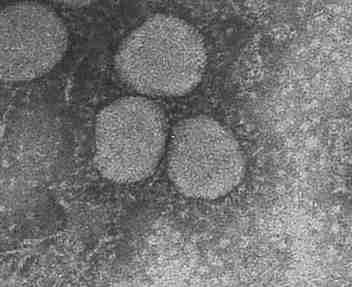
‘Well … He is as big as the tip of your whisker or may be even smaller. You actually can’t see him with naked eyes. There are some posters of his that human beings have erected in the town so that one can at least imagine how he looks like. He resembles a tiny ball with thorns on it. If I understand correctly he has already killed about half a million people across the world. And tiger ji, you now, pale in front of him.’ Replied the cow.
‘But yaar, who produced this little deadly beast?’ Asked the tiger.
‘The other day Tommy my neighbourhood dog was telling me, that he had heard from someone, that this micro beast called Corona-Virus, was actually, produced by the Chinese in their own lab without the permission of God, and it has gone on to kill so many human beings already.’
‘But yaar cow, can something, as tragic as this, happen without the aegis of God.’ Asked the tiger.
‘Well if you believe in God the answer is no, as nothing can happen without God’s permission. And if you don’t believe in God the answer is yes, as things can happen without the permission of God. So where do you stand in all of this?’ Asked the cow.
‘Well … well.’ The tiger took his own time thinking and then he said.
‘I would like to be an atheist and not believe in God just as the dragon.’
By becoming an atheist and not believing in God almighty, the tiger had actually absolved God from the responsibility of the pandemic of Corona, for he couldn’t have imagined God perpetrating such a calamity on mankind.
Where do you stand on this pandemic? Do you think God is responsible for the pandemic, or you too, are an atheist like the tiger. I am holding God responsible for this pandemic.
Shravan Charity Mission is an NGO that works for poor children suffering from life threatening diseases especially cancer. Our posts are meant for our readers that includes both children and adults and it has a huge variety in terms of content. We also accept donations for our mission. Should you wish to donate for the cause. The bank details are given below:
NAME OF ACCOUNT: SHRAVAN CHARITY MISSION
Account no: 680510110004635 (BANK OF INDIA)
IFSC code: BKID0006805
*
Our publications
GLOOM BEHIND THE SMILE
(The book is about a young cancer patient. Now archived in 7 prestigious libraries of the US, including, Harvard University and Library of Congress. It can also be accessed in MIT through Worldcat.org. Besides, it is also available for reading in Libraries and archives of Canada and Cancer Aid and Research Foundation Mumbai)
ONE TO TANGO … RIA’S ODYSSEY
(Is a book on ‘singlehood’ about a Delhi girl now archived in Connemara Library, Chennai and Delhi Public Library, GOI, Ministry of Culture, Delhi)
AADAB LUCKNOW … FOND MEMORIES
(Is a fiction written around the great city of Nawabs—Lucknow. It describes Lucknow in great detail and also talks about its Hindu-Muslim amity. That happens to be its undying characteristic. The book was launched in Lucknow International Literary Festival of 2014)
REFRACTIONS … FROM THE PRISM OF GOD
(Co-published by Cankids–Kidscan, a pan India NGO and Shravan Charity Mission, that works for Child cancer in India. The book is endorsed by Ms Preetha Reddy, MD Apollo Hospitals Group. It was launched in Lucknow International Literary Festival 2016)
TYPICAL TALE OF AN INDIAN SALESMAN
(Is a story of an Indian salesman who is, humbly qualified. Yet he fights his ways through unceasing uncertainties to reach the top. A good read not only for salesmen. The book was launched on 10th February, 2018 in Gorakhpur Lit-Fest. Now available in Amazon, Flipkart and Onlinegatha)
RHYTHM … in poems
(Published in January 2019. The book contains 50 poems. The poems describe our day to day life. The book is available in Amazon, Flipkart and Onlinegatha)
MIRAGE
(Published in February 2020. The book is a collection of eight short stories. It is available in Amazon, Flipkart and Notion Press)
(ALL THE ABOVE TITLES ARE AVAILABLE FOR SALE IN AMAZON, FLIPKART AND OTHER ONLINE STORES OR YOU COULD EVEN WRITE TO US FOR A COPY)
Until the Modi government moved to end it with a presidential ordnance, Jammu & Kashmir had enjoyed a special constitutional relationship with the Union of India because of the circumstances in which Maharaja Hari Singh, the ruler of Kashmir, signed the Instrument of Accession after Independence in 1947 ended British paramountcy over his princely state. Government’s move has not repealed 370; it has effectively made it defunct. It has done away with Article 35A, which emanated from it.
1947: WHY MAHARAJA BIT THE ACCESSION BULLET
The instrument of accession was executed on October 26, 1947 by Hari Singh and accepted by Lord Mountbatten. The circumstances and timing of the signing are important. A few days before that, Pashtun “tribesman” and Pakistani irregulars had crossed into his state and were moving towards Srinagar. The Maharaja turned to India for help, but India could only defend, provided it was a formal part of her territory.
Clause 5 of the document said that the terms of accession “shall not be varied” by any amendment to the Govt of India Act of 1935 or the Indian independence Act 1947 unless accepted by Hari Singh in a supplementary instrument. Clause 6 disallowed the making of laws to acquire land in the state “for any purpose” but permitted Hari Singh to do so for the Dominion of India for a law applicable to the state. Clause 7 said no future Constitution of India (which was still to be written) could be imposed on the state.
In 1950, in the original Constitution of India, J&K was listed as a Part B state, along with the other princely states that had merged by Instruments of Accession, including Hyderabad and Mysore.
Part B states were then abolished and J&K was by an amendment of the Constitution put into Article 1 as India’s 15th state and irrevocably part of the “territory of India.” It continued to enjoy the special status granted to it under Article 370.
PLEBISCITE OUT, SPECIAL STATUS IN
Article 370 was incorporated in Part XXI (temporary provisions with respect to the State of Jammu and Kashmir) of the Constitution. The state’s constituent assembly had wanted only those aspects of the Indian Constitution that reflected what Hari Singh had signed away. Besides Article 1, it was the only other article of the Indian Constitution that automatically applied to J&K. The other provisions of the Indian statute could apply to the state only if its constituent assembly concurred.
Article 370 provided Jammu & Kashmir with special status, allowing it, its own state constitution. The Union of India could legislate act only in defence, foreign affairs and communications.
Since the 1950s, there have been efforts to pull the state into a deeper embrace with the Union, but Article 370 was strengthened when Sheikh Abdullah, who had become the second Prime Minister of J&K in 1948 and was later dismissed came to an agreement—after spells of detention—with Prime Minister Indira Gandhi in 1975. In return for giving up his demand for a plebiscite, special status for J&K was allowed to continue and Sheikh Abdullah became the chief minister.
However, over the years, the state was made subject to many Indian laws through various amendments in concurrence with the state assembly, the logic being that it was the natural successor to the J&K constituent assembly, which by definition was a transitional body.
35A DEFINES WHO IS A PERMANENT RESIDENT.
Article 35A was made part of the Indian Constitution in 1954, through a presidential order—though its genesis goes back to early 20th century Dogra apprehensions of an influx from Punjab, which they feared would change the State’s demographic and land ownership patterns. The article, which defines who is a permanent resident of J&K and lays down laws restricting property purchase and ownership to such permanent residents, also discriminated against women, depriving them of their state subject rights if they married non-permanent residents. The J&K high court ruled against this aspect in 2002.
It had been the subject of acrimonious political debate and was challenged in the Supreme Court in 2014 on the grounds that it had been added to the Constitution not through an amendment passed by Parliament but by Presidential decree. Recent Constitution (Application to Jammu and Kashmir) Order 2019 supersedes the 1954 order, in effect scrapping Article 35A.
SADR-I-RIYASAT OR GUV: IT’S ALL IN A WORD
Article 370 said no changes could be made to the Constitution regarding the status of J&K without the concurrence of the state’s constituent assembly. The constituent assembly, though, was dissolved in November 1956 without providing any alternative to obtaining its concurrence. Article 370, originally written as a temporary measure, was treated in several court orders as therefore having become permanent. However, a presidential declaration on November 15, 1952, under Article 370 (3), had defined the “Government” of J&K as meaning the Sadr-i-Riyasat of the state acting under the advice of the state’s Council of Ministers. Then, in 1965, the term “Sadr-i-Riyasat” was changed to “Governor” by the Constitution of Jammu and Kashmir (6th Amendment) Act, 1965. The change meant that a Sadr-i-Riyasat elected by the state assembly was replaced by a governor appointed by the President of India.
August 6 Constitution Order 2019 was issued by the President under Article 370, Clause 1, with the concurrence of the “Government of J&K”. “Government” here means the “Governor”.
Shravan Charity Mission is an NGO that works for poor children suffering from life threatening diseases especially cancer. Our posts are meant for our readers that includes both children and adults and it has a huge variety in terms of content. We also accept donations for our mission. Should you wish to donate for the cause. The bank details are given below:
NAME OF ACCOUNT: SHRAVAN CHARITY MISSION
Account no: 680510110004635 (BANK OF INDIA)
IFSC code: BKID0006805
*
Our publications
GLOOM BEHIND THE SMILE
(The book is about a young cancer patient. Now archived in 7 prestigious libraries of the US, including, Harvard University and Library of Congress. It can also be accessed in MIT through Worldcat.org. Besides, it is also available for reading in Libraries and archives of Canada and Cancer Aid and Research Foundation Mumbai)
ONE TO TANGO … RIA’S ODYSSEY
(Is a book on ‘singlehood’ about a Delhi girl now archived in Connemara Library, Chennai and Delhi Public Library, GOI, Ministry of Culture, Delhi)
AADAB LUCKNOW … FOND MEMORIES
(Is a fiction written around the great city of Nawabs—Lucknow. It describes Lucknow in great detail and also talks about its Hindu-Muslim amity. That happens to be its undying characteristic. The book was launched in Lucknow International Literary Festival of 2014)
REFRACTIONS … FROM THE PRISM OF GOD
(Co-published by Cankids–Kidscan, a pan India NGO and Shravan Charity Mission, that works for Child cancer in India. The book is endorsed by Ms Preetha Reddy, MD Apollo Hospitals Group. It was launched in Lucknow International Literary Festival 2016)
TYPICAL TALE OF AN INDIAN SALESMAN
(Is a story of an Indian salesman who is, humbly qualified. Yet he fights his ways through unceasing uncertainties to reach the top. A good read not only for salesmen. The book was launched on 10th February, 2018 in Gorakhpur Lit-Fest. Now available in Amazon, Flipkart and Onlinegatha)
RHYTHM … in poems
(Published in January 2019. The book contains 50 poems. The poems describe our day to day life. The book is available in Amazon, Flipkart and Onlinegatha)
(ALL THE ABOVE TITLES ARE AVAILABLE FOR SALE IN AMAZON, FLIPKART AND OTHER ONLINE STORES OR YOU COULD EVEN WRITE TO US FOR A COPY)
It happened many years ago, in what was then called Calcutta, where I lived. The city had a vibrant theatre culture, with groups of actors, both professional and amateur, staging plays in Bengali, Hindi and English.
An English-language group called, ‘The Amateurs was very prominent on the theatre circuit. I went to a number of performances put up by them. One, in particular, turned out to be especially memorable, thanks to later events. The play written by British playwright, James Saunders, was called, ‘Next Time I’ll Sing to You.’
It was a compelling play an existential narrative open to many interpretations. Where, all the characters gave forceful performances, but I was struck by one particular actor, a very tall young man, with striking features and a lean athletic build. He exuded what drama critics would call ‘stage presence’, dominating the space around him by the sheer force of a personal magnetism, and exclamation mark in human form.
A few days later, at a small dinner party, I was introduced to him. He was a junior executive in a mercantile house who’d taken up acting as a hobby. I told him I’d seen the play he’d acted in and had been very impressed by his performance.
He accepted the compliment with genuine, disarming modesty. I said that the play he’d acted in had caused quite a lot of debate and conjecture in theatre-going circles as to what exactly was its central message. I had my own interpretation as to what it was, which I outlined, and asked him if he agreed with me.
With charming candour, he replied that he didn’t have a clue what the play was all about. In fact he didn’t even read the whole thing, on the contrary just crammed or learnt the lines he had to say. “I don’t understand all that stuff,” he confided. “I just do what the director of the play tells me to do: look angry, look sad, look happy.”
He didn’t put it in those words, but he was like a slate on which anything could be written. In short, a great natural-born actor. Which is what he went on to prove himself to be. That was the first, and the only, time I met Amitabh Bachchan.
This short story is inspired by a column written by Jug Suraiya.
Shravan Charity Mission is an NGO that works for poor children suffering from life threatening diseases especially cancer. Our posts are meant for our readers that includes both children and adults and it has a huge variety in terms of content. We also accept donations for our mission. Should you wish to donate for the cause. The bank details are given below:
NAME OF ACCOUNT: SHRAVAN CHARITY MISSION
Account no: 680510110004635 (BANK OF INDIA)
IFSC code: BKID0006805
*
Our publications
GLOOM BEHIND THE SMILE
(The book is about a young cancer patient. Now archived in 7 prestigious libraries of the US, including, Harvard University and Library of Congress. It can also be accessed in MIT through Worldcat.org. Besides, it is also available for reading in Libraries and archives of Canada and Cancer Aid and Research Foundation Mumbai)
ONE TO TANGO … RIA’S ODYSSEY
(Is a book on ‘singlehood’ about a Delhi girl now archived in Connemara Library, Chennai and Delhi Public Library, GOI, Ministry of Culture, Delhi)
AADAB LUCKNOW … FOND MEMORIES
(Is a fiction written around the great city of Nawabs—Lucknow. It describes Lucknow in great detail and also talks about its Hindu-Muslim amity. That happens to be its undying characteristic. The book was launched in Lucknow International Literary Festival of 2014)
REFRACTIONS … FROM THE PRISM OF GOD
(Co-published by Cankids–Kidscan, a pan India NGO and Shravan Charity Mission, that works for Child cancer in India. The book is endorsed by Ms Preetha Reddy, MD Apollo Hospitals Group. It was launched in Lucknow International Literary Festival 2016)
TYPICAL TALE OF AN INDIAN SALESMAN
(Is a story of an Indian salesman who is, humbly qualified. Yet he fights his ways through unceasing uncertainties to reach the top. A good read not only for salesmen. The book was launched on 10th February, 2018 in Gorakhpur Lit-Fest. Now available in Amazon, Flipkart and Onlinegatha)
RHYTHM … in poems
(Published in January 2019. The book contains 50 poems. The poems describe our day to day life. The book is available in Amazon, Flipkart and Onlinegatha)
(ALL THE ABOVE TITLES ARE AVAILABLE FOR SALE IN AMAZON, FLIPKART AND OTHER ONLINE STORES OR YOU COULD EVEN WRITE TO US FOR A COPY)







 Shravan charity mission