All posts by shravancharitymission

Unknown's avatar

About shravancharitymission

Ex- Senior corporate- writer, author and social activist currently working for poor children suffering from life threatening diseases.

Book Review: ‘A Sale’ by Guy De Maupassant

Copyright@shravancharitymission
Khidki (Window)

–Read India Initiative—

This is only an attempt to create interest in reading. We may not get the time to read all the books in our lifetime. But such reviews, talk and synopsis will at least convey what the book is all about.

    This is a unique and interesting story with a lot of tongue twisting French names. The story picks up only after the first half. It opens in the courtroom.

    There are two defendants, Cesaire-Isidore Brument and Prosper-Napoleon Cornu. They appear before the Court of Assizes of the Seine-Inferieure, on a charge of attempted murder, by drowning, of Mme (Madam)Brument, the lawful wife of Brument mentioned earlier.

    The two prisoners are seated side by side on a traditional bench. They are two peasants. The first one Brument is small and stout, with short arms, short legs, and a round head with a red pimply face, planted directly on his trunk, which is also round and short, and with apparently no neck. He is a raiser of pigs and lives somewhere in France at Cacheville-la-Goupil, in the district of Criquetot.

    On the other hand Cornu is thin, of medium height, with enormously long arms. His head was on crooked, his jaw awry, and he squinted. He wore a blue blouse, as long as a shirt that hung down to his knees, and his yellow hair, which was scanty and plastered down on his head, gave his face a worn-out, dirty look, a dilapidated look that is was frightful. He was nicknamed “the cure” because he could imitate to perfection the chanting in church, and even the sound of the serpent. This talent attracted people to his cafe — for he was a saloon keeper at Criquetot — a great many customers who preferred the “mass at Cornu” to the mass in church.

    The court scene begins with Mme. Brument. She is seated on the witness bench. She is a thin peasant woman who seems to be always asleep. She has been sitting there motionless, her hands crossed on her knees, gazing fixedly before her with a stupid expression.

    The judge continues with his interrogation.

    “Well, then, Mme. Brument, they came into your house and threw you into a barrel full of water. Tell us the details. Stand up.”

    She rose. She looked as tall as a flag pole with her cap that looked like a white skull cap. She said in a drawling tone:

    “I was shelling beans. Just then they came in. I said to myself, ‘What is the matter with them? They do not seem natural, they seem, up to some mischief.’ They watched me sideways, like this, especially Cornu, because he squints. I do not like to see them together, for the two collectively are good-for-nothing when they are in the company of each other. I said: ‘What do you want from me?’ They did not answer. And with that I had a sort of mistrust ——”

    The defendant Brument interrupted the witness hastily, saying:

    “I was full.” (Full means drunk here).

    Then Cornu, turned towards his accomplice and said in a deep tone … like the deep tone of an organ:

    “Say that we were both full, and you will be telling no lie.”

    The judge, intervened:

    “You mean by that that you were both drunk?”

    “There can be no question about it.” replied Brument.

    “That might happen to anyone.” said Cornu.

    The judge said to the victim: “Continue with your testimony, lady Brument.”

  Lady Brument continued, “Well, Mr Brument said to me, ‘Do you wish to earn a hundred sous?’ (French coins) ‘Yes,’ I replied. Then he said: ‘Open your eyes and do as I do,’ and he went to fetch the large empty barrel which was lying under the rain pipe in the corner, and he turned it over and brought it into my kitchen, and kept it in the middle of the floor, and then he said to me: ‘Go and fetch water until it is full.’

    “So I went to the pond with two pails and carried water, and still more water for an hour, seeing that the barrel was as large as a huge tank.

    “All this time Brument and Cornu were drinking, drinking and drinking—a glass, and then another glass, and then another. When they were finishing their drinks I said to them: ‘You are full, fuller than this barrel.’ Brument answered. ‘Do not worry, go on with your work, your turn will come, each one has his share.’ I paid no attention to what he said as he was full.

    “When the barrel was full to the brim, I said: ‘There, that’s done.’

    “And then Cornu gave me a hundred sous, and not Brument.

    Brument said: ‘Do you wish to earn a hundred sous more?’ ‘Yes,’ I said, for I am not accustomed to presents like that. Then he said: ‘Take off your clothes!

    ‘Take off my clothes?’ I reacted.

    ‘Yes,’ he said.

    ‘How many shall I take off?’

    ‘If it worries you at all, keep on your chemise on, that won’t bother us.’

    “A hundred sous is a hundred sous, even if I have to undress myself. But I did not fancy undressing before those two, good-for-nothings. I took off my cap, and then my jacket, and then my skirt, and then my sabots. Brument said, ‘Keep your stockings on, as we are good fellows.’

    “And Cornu added, ‘We are good fellows.’

    “So there I was, almost like mother Eve. And they got up from their chairs, but could not stand straight, they were so full, your honour.”

    “I said to myself: ‘What are they up to?’

    “Brument asked: ‘Are you ready?’

    “Cornu replied: ‘I’m ready!’

    “And then they lifted me, Brument by the head, and Cornu by the feet, as one might take, for instance, a sheet that has been washed. Then I began to bawl.

    “And Brument said: ‘Keep still, wretched creature!’

    “And they lifted me up in the air and put me into the barrel, which was full of water. I had a check of the circulation, a chill went to my very insides.

    “Brument said: ‘Is that all?’

    “Cornu said: ‘That is all.’

    “Brument said: ‘The head is not in, that will make a difference in the measure.’

    “Cornu said: ‘Put in her head.’

    “And then Brument pushed down my head down as if to drown me, so that the water ran into my nose. He pushed me down further and I disappeared.

    “And then he must have been frightened. He pulled me out and said: ‘Go and get dry, carcass.’

    “I took to my heels and ran to my father as far as M. le cure’s. He lent me a skirt belonging to his servant, for I was almost in a state of nature, and he went to fetch Maitre Chicot, the country watchman who in turn went to Criquetot to fetch the police who came to my house with me.

    “Then we found Brument and Cornu fighting each other like two rams.

    “Brument was bawling: ‘It isn’t true, I tell you that there is at least a cubic metre in it. It is the method that was no good.’

    “Cornu bawled: ‘Four pails that is almost half a cubic metre. You need not reply, that’s what it is.’

    “The police captain put them both under arrest. I have nothing more to tell.”

    She sat down. The audience in the court room laughed. The jurors looked at one another in astonishment. The judge said:

    “Defendant Cornu, you seem to have been the instigator of this infamous plot. What have you to say?” Cornu rose in his turn.

    “Your honour Judge,” he replied, “I was full.”

    The Judge answered gravely:

    “I know it. Proceed.”

    “I will. Well, Brument came to my place about nine o’clock, and ordered two drinks, and said: ‘There’s one for you, Cornu.’ I sat down opposite him and drank, and out of politeness, I offered him a glass. Then he returned the compliment and so did I, and so it went on from glass to glass until noon, when we were full.

    “Then Brument began to cry. That touched me. I asked him what was the matter. He said: ‘I must have a thousand francs by Thursday.’ That cooled me off a little, you understand. Then he said to me all at once:

    ‘I will sell you my wife.’

    “I was full, and I was a widower. That stirred me up. I did not know his wife, but she was a woman, wasn’t she? I asked him: ‘How much would you sell her for?’

    “He reflected, or pretended to reflect. When, one is full one is not very clear-headed, and he replied: ‘I will sell her by the cubic metre.’

    “That did not surprise me, for I was as drunk as he was, and I knew what a cubic metre is in my business. It is a thousand litres, and that suited me.

    “But the price remained to be settled. All depends on the quality. I said: ‘How much do you want for a cubic metre?’

    “He answered: ‘Two thousand francs.’

    “I jumped like a rabbit, and then reflected that a woman ought, not to measure more than three hundred litres. So I said: ‘That’s too dear.’

    “He answered: ‘I cannot do it for less, as I would lose.’

    “You understand, one is not a dealer in hogs for nothing. One understands one’s business. But, if he is smart, the seller of bacon, I am smarter, seeing that I sell them also. Ha, Ha, Ha! So I said to him: ‘If she were new, I would not say anything, but she has been married to you for some time, so she is not as fresh as she was. I will give you fifteen hundred francs a cubic metre, not a sou more. Will that suit you?’ said Cornu.

    “He answered: ‘That will do. That’s a bargain!’

    “I agreed, and we started out, arm in arm. We must help each other in times of need.”

    “But a thought came to me: ‘How can you measure her, unless you dip her in liquid?’

    “Then he explained his idea, not without difficulty for he was full. He said to me: ‘I’ll take a barrel, and fill it with water up to the brim. I’ll put her in it. All the water that comes out we will measure, that is the way to fix it.’

    “I said: ‘I see, I understand. But the water that overflows will run away; so how will you measure it? How will you gather it back?’

    “Then he began stuffing me and explained to me that all we will have to do would be to refill the barrel with the water his wife had displaced as soon as she comes out of it. All the water we pour in would be the measure. I supposed about ten pails; that would be a cubic metre.

    “We finally reached his house and I took a look at his wife. She was certainly not a beautiful woman. And anyone could see that, for there she is. I said to myself, ‘I am disappointed, but never mind, she will be off value handsome or ugly, it is all the same, is it not monsieur le president (your honour)?’ And then I saw that she was as thin as a rail. I said to myself: ‘She will not measure four hundred litres.’ I understand the matter better, being in liquor trade.

    “She has already told you about the proceeding your honour. I even let her keep on her chemise and stockings, to my own disadvantage.

    “When that was done she ran away. I said: ‘Look out, Brument! She is escaping.’

    “He replied: ‘Do not be afraid. I will catch her all right. She will have to come back to sleep, I will measure the deficit.’

    “We measured. It was not four bucket fulls. Ha, Ha, Ha!”

    At this Brument began to laugh so hysterically that a cop was obliged to punch him in the back. Having quieted down, he resumed:

    “In short, Brument exclaimed: ‘Nothing doing that is not enough.’ I shouted, and shouted and shouted again, he punched me, I hit back.

    That would have kept on till the Day of judgment, seeing we were both drunk.

    “Then came the gendarmes (policemen)! They stared at us, and took us off to prison.”

    Cornu finally He sat down after his long statement.

    Brument corroborated the statements of his accomplice. The jury, in consternation, retired to deliberate.

    At the end of an hour they returned a verdict of acquittal for the defendants, with some severe strictures on the dignity of marriage, and establishing the precise limitations of business transactions.

    Brument went home accompanied by his wife.

    Cornu went back to his business.

    I would give the story seven out of ten. As always if reflects how some perverted men get away with ghastly crime on women. And it happens even today.

By Kamlesh Tripathi

*

https://kamleshsujata.wordpress.com

*

Share it if you like it

*

Shravan Charity Mission is an NGO that works for poor children suffering from life threatening diseases especially cancer. Our posts are meant for our readers that includes both children and adults and it has a huge variety in terms of content. We also accept donations for our mission. Should you wish to donate for the cause. The bank details are given below:

NAME OF ACCOUNT: SHRAVAN CHARITY MISSION

Account no: 680510110004635 (BANK OF INDIA)

IFSC code: BKID0006805

*

Our publications

GLOOM BEHIND THE SMILE

(The book is about a young cancer patient. Now archived in 7 prestigious libraries of the US, including, Harvard University and Library of Congress. It can also be accessed in MIT through Worldcat.org. Besides, it is also available for reading in Libraries and archives of Canada and Cancer Aid and Research Foundation Mumbai)  

ONE TO TANGO … RIA’S ODYSSEY

(Is a book on ‘singlehood’ about a Delhi girl now archived in Connemara Library, Chennai and Delhi Public Library, GOI, Ministry of Culture, Delhi)

AADAB LUCKNOW … FOND MEMORIES

(Is a fiction written around the great city of Nawabs—Lucknow. It describes Lucknow in great detail and also talks about its Hindu-Muslim amity. That happens to be its undying characteristic. The book was launched in Lucknow International Literary Festival of 2014)

REFRACTIONS … FROM THE PRISM OF GOD

(Co-published by Cankids–Kidscan, a pan India NGO and Shravan Charity Mission, that works for Child cancer in India. The book is endorsed by Ms Preetha Reddy, MD Apollo Hospitals Group. It was launched in Lucknow International Literary Festival 2016)

TYPICAL TALE OF AN INDIAN SALESMAN

(Is a story of an Indian salesman who is, humbly qualified. Yet he fights his ways through unceasing uncertainties to reach the top. A good read not only for salesmen. The book was launched on 10th February, 2018 in Gorakhpur Lit-Fest. Now available in Amazon, Flipkart and Onlinegatha)

RHYTHM … in poems

(Published in January 2019. The book contains 50 poems. The poems describe our day to day life. The book is available in Amazon, Flipkart and Onlinegatha)

(ALL THE ABOVE TITLES ARE AVAILABLE FOR SALE IN AMAZON, FLIPKART AND OTHER ONLINE STORES OR YOU COULD EVEN WRITE TO US FOR A COPY)

*****



RUSSIAN AUTHOR: ANTON CHEKOV

Copyright@shravancharitymission

    Anton Pavlovich Chekhov (29 January 1860 – 15 July 1904) was a Russian playwright and short-story writer considered among the greatest writers of short fiction in history. He died very young. He died at 44, just like Swami Vivekanand who died at 39 (1863-1902). His career as a playwright produced four classics. His best short stories are held in high esteem by writers and critics. Chekhov is often referred to, as one of the three seminal figures, in the birth of early modernism in the theatre. Chekhov practiced as a medical doctor during most of his literary career: “Medicine is my lawful wife”, he once said, “and literature is my mistress.”

    His famous works include: The Seagull, Uncle Vanya, Three sisters, The Cherry Orchard, At Dusk, The Steppe, Fatherless, Oskolki (Fragments), Ivanov, Ostrov Sakhalin (or The Island of Sakhalin. I particularly liked two of his short stories, Lady with the dog and The Bet.

    Anton Chekhov was born on 29 January 1860 the feast day of St. Anthony the Great in Taganrog, a port on the Sea of Azoz in southern Russia. He was the third of six surviving children. His father, Pavel Yegorovich Chekhov, was the son of a former serf and his Ukrainian wife, was from the village Olho-vatka (Voronezh Governorate) and ran a grocery store. He was a director of the parish choir, a devout Orthodox Christian, but a physically abusive father. Pavel Chekhov was seen by some historians as the model for his son’s many portraits of hypocrisy. Chekhov’s mother, Yevgeniya (Morozova), was an excellent storyteller who entertained children with tales of her travels with her cloth-merchant father all over Russia. “Our talents we got from our father,” Chekhov remembered, “but our soul from our mother.” 

    Chekhov attended the Greek School in Taganrog and the Taganrog Gymnasium has since been renamed as the Chekhov Gymnasium, where he was held back for a year at fifteen, for failing, Ancient Greek examination. He sang at the Greek Orthodox monastery in Taganrog and in his father’s choirs. In a letter of 1892, he used the word “suffering” to describe his childhood.

    When my brothers and I used to stand in the middle of the church and sing in trio “May my prayer be exalted”, or “The Archangel’s Voice”, everyone looked at us with emotion and envied our parents, but we at that moment felt like little convicts.

    In 1876, Chekhov’s father was declared bankrupt because he over-stretched his finances while building a new house, and having been cheated by a contractor. To avoid debtor’s prison he fled to Moscow, where his two eldest sons, Alexander and Nikolay, were attending university. The family lived in poverty in Moscow. Chekhov’s mother was physically and emotionally broken by the experience. Chekhov was left behind to sell the family’s possessions and finish his education.

    Chekhov remained in Taganrog for three more years, boarding with a man who, bailed out the family for the price of their house. He had to pay for his own education, which he managed by private tutoring, and catching and selling of gold-finches, (a type of bird) and by selling short sketches to the newspapers, among other jobs. He sent every rouble he could spare, to his family in Moscow, along with humorous letters to cheer them up. During this time he read widely, the works of Cervantes, Turgenev, Goncharov, and Schopenhauer, and wrote a full-length comic drama, Fatherless. Chekhov also experienced a series of love affairs, one with the wife of a teacher.

    In 1879, Chekhov completed his schooling and joined his family in Moscow, having obtained admission to the Moscow State Medical University.

    Chekhov renounced theatre after the reception of The Seagull in 1896, but the play was revived to acclaim in 1898 by Konstantin Stanis-lavski’s Moscow Art Theatre, which subsequently also produced Chekhov’s ‘Uncle Vanya’ and premiered his last two plays, Three Sisters and The Cherry Orchard.    Chekhov had at first written stories to earn money, but as his artistic ambition grew, he made formal innovations which have influenced the evolution of the modern short story. 

    He assumed the responsibility of the whole family. To support them and to pay his tuition fees, he wrote short, humorous sketches and vignettes of contemporary Russian life almost daily, many under pseudonyms such as “Antosha Chekhonte” and “Man without a Spleen”. His prodigious output gradually earned him a reputation as a satirical chronicler of Russian street life. By 1882 he was writing for Oskolki (Fragments), owned by Nikolai Leykin, one of the leading publishers of the time.     In 1884, Chekhov qualified as a physician, which he considered his principal profession though he made little money from it and treated the poor free of charge.

    In 1884 and 1885, Chekhov found himself coughing blood, and in 1886 the attacks worsened, but he did not admit his tuberculosis to his family or his friends.  He continued writing for weekly periodicals, earning enough money to move the family into progressively better accommodations.

    Early in 1886 he was invited to write for one of the most popular papers in St. Petersburg, Novoye Vremya, owned and edited by millionaire magnate Alexey Suvorin, who paid a rate per line double of Leykin’s and also allowed Chekhov three times the space. Suvorin became a lifelong friend of Chekov, perhaps his closest.

    Before long, Chekhov was attracting literary as well as popular attention. The sixty-four-year-old Dmitry Grigorovich, a celebrated Russian writer of the day, wrote to Chekhov after reading his short story “The Huntsman” that “You have real talent, a talent that places you in the front rank among writers in the new generation.” But he went on to advice Chekhov to slow down, write less, and concentrate on literary quality.

    Chekhov replied that the letter had struck him “like a thunderbolt” and confessed, “I have written my stories the way reporters write their notes about fires – mechanically, half-consciously, caring nothing about either the reader or myself.” The admission may have done Chekhov a disservice, since early manuscripts reveal that he often wrote with extreme care, continually revising. Grigorovich’s advice nevertheless inspired a more serious, artistic ambition in the twenty-six-year-old. In 1888, his short story collection At Dusk won Chekhov the coveted ‘Pushkin Prize’ for the best literary production distinguished by high artistic worth.

    In 1887, exhausted from work and ill health, Chekhov took a trip to Ukraine, which reawakened him to the beauty of the steppe (steppe means dry, cold grassland). On his return, he began the novella-length short story “The Steppe,” which was eventually published in Severny Vestnik (The Northern Herald). In the narrative Chekhov evokes a chaise (horse-carriage) journey across the steppe through the eyes of a young boy sent to live away from home, and his companions, a priest and a merchant. “The Steppe” is called the “dictionary of Chekhov’s poetics.”

    In the autumn of 1887, a theatre manager named Korsh commissioned Chekhov to write a play, the result being ‘Ivanov’ written in a fortnight and produced that November. Though Chekhov found the experience “sickening” and painted a comic portrait of the chaotic production in a letter to his brother Alexander, the play was a hit and was praised, to Chekhov’s bemusement, as a work of originality. Although Chekhov did not fully realise it at the time, Chekhov’s plays, such as The Seagull (written in 1895), Uncle Vanya (written in 1897), The Three Sisters (written in 1900), and The Cherry Orchard (written in 1903) served as a revolutionary backbone to what is common sense to the medium of acting to this day.        —     In 1890, Chekhov undertook an arduous journey by train, horse-drawn carriage, and river steamer to the Russian Far East and the Katorga, or penal colony, on Sakhalin Island, (a large Russian island in the Sea of Okhotsk), north of Japan, where he spent three months interviewing thousands of convicts and settlers for a census. The letters Chekhov wrote during the two-and-a-half-month journey from Sakhalin are considered to be among his best. 

    In 1892, Chekhov bought a small country estate, about forty miles south of Moscow, where he lived with his family until 1899. “It’s nice to be a lord” he joked but he took his responsibilities as a landlord seriously and soon made himself useful to the local peasants.

    In 1894, Chekhov began writing his play ‘The Seagull’ in a lodge that he had built in the orchard at Melikhovo. The first night of ‘The Seagull’ at the theatre in St. Petersburg on 17 October 1896, was a fiasco, as the play was booed by the audience, forcing Chekhov into renouncing the theatre. But the play so impressed the theatre director that he convinced his colleague to direct a new production for the innovative Moscow Art Theatre. This restored Chekov’s interest in Playwriting. The Art Theatre commissioned more plays of Chekhov and the following year staged Uncle Vanya, which Chekhov had completed in 1896.

    In March 1897, Chekhov suffered a major haemorrhage of the lungs while on a visit to Moscow. With great difficulty he was persuaded to enter a clinic, where the doctors diagnosed tuberculosis on the upper part of his lungs and suggested a change in his lifestyle.

    After his father’s death in 1898, Chekhov bought a plot of land on the outskirts of Yalta and built a villa, into which he moved with his mother and sister the following year. Though he planted trees and flowers, kept dogs and tamed cranes. He also received guests such as Leo Tolstoy and Maxim Gorky. In Yalta he completed two more plays for the Art Theatre.

    On 25 May 1901, Chekhov married Olga Knipper quietly, owing to his horror of weddings. She was a former protégée and sometime lover of Nemirovich-Danchenko whom he had first met at the rehearsals of The Seagull. Until this time, Chekhov, known as “Russia’s most elusive literary bachelor,” preferred passing relationships and visits to brothels. 

    By May 1904, Chekhov was terminally ill with tuberculosis. Mikhail Chekhov recalled “that everyone who saw him secretly thought the end was not far off, but the nearer he was to the end, the less he seemed to realise it.” On 3 June, he set off with Olga for the German spa town of Badenweiler in the Black Forest, from where he wrote jovial letters to his sister Masha, describing the food and surroundings, and assuring her and his mother that he was getting better. In his last letter, he complained about the way German women dressed.

    Chekhov’s death has become one of “the great set pieces of literary history,” retold, embroidered, and fictionalised many times since, notably in the short story “Errand” by Raymond Carver. In 1908, his wife Olga wrote the account of her husband’s last moments which goes as follows:

    Anton sat up unusually straight and said loudly and clearly (although he knew almost no German): Ich sterbe (“I’m dying”). The doctor calmed him, took a syringe, gave him an injection of camphor, and ordered champagne. Anton took a full glass, examined it, smiled at me and said: “It’s a long time since I drank champagne.” He drained it and lay quietly on his left side, and I just had time to run to him and lean across the bed and call to him, but he had stopped breathing and was sleeping peacefully as a child.

    Chekhov’s body was transported to Moscow in a refrigerated railway car meant for oysters, an incident that offended Gorky. Chekhov was buried next to his father at the Novodevichy Cemetery.

    Some people do great things in a small life span. Anton Chekhov was one of them.

By Kamlesh Tripathi

*

https://kamleshsujata.wordpress.com

*

Share it if you like it

*

Shravan Charity Mission is an NGO that works for poor children suffering from life threatening diseases especially cancer. Our posts are meant for our readers that includes both children and adults and it has a huge variety in terms of content. We also accept donations for our mission. Should you wish to donate for the cause. The bank details are given below:

NAME OF ACCOUNT: SHRAVAN CHARITY MISSION

Account no: 680510110004635 (BANK OF INDIA)

IFSC code: BKID0006805

*

Our publications

GLOOM BEHIND THE SMILE

(The book is about a young cancer patient. Now archived in 7 prestigious libraries of the US, including, Harvard University and Library of Congress. It can also be accessed in MIT through Worldcat.org. Besides, it is also available for reading in Libraries and archives of Canada and Cancer Aid and Research Foundation Mumbai)  

ONE TO TANGO … RIA’S ODYSSEY

(Is a book on ‘singlehood’ about a Delhi girl now archived in Connemara Library, Chennai and Delhi Public Library, GOI, Ministry of Culture, Delhi)

AADAB LUCKNOW … FOND MEMORIES

(Is a fiction written around the great city of Nawabs—Lucknow. It describes Lucknow in great detail and also talks about its Hindu-Muslim amity. That happens to be its undying characteristic. The book was launched in Lucknow International Literary Festival of 2014)

REFRACTIONS … FROM THE PRISM OF GOD

(Co-published by Cankids–Kidscan, a pan India NGO and Shravan Charity Mission, that works for Child cancer in India. The book is endorsed by Ms Preetha Reddy, MD Apollo Hospitals Group. It was launched in Lucknow International Literary Festival 2016)

TYPICAL TALE OF AN INDIAN SALESMAN

(Is a story of an Indian salesman who is, humbly qualified. Yet he fights his ways through unceasing uncertainties to reach the top. A good read not only for salesmen. The book was launched on 10th February, 2018 in Gorakhpur Lit-Fest. Now available in Amazon, Flipkart and Onlinegatha)

RHYTHM … in poems

(Published in January 2019. The book contains 50 poems. The poems describe our day to day life. The book is available in Amazon, Flipkart and Onlinegatha)

(ALL THE ABOVE TITLES ARE AVAILABLE FOR SALE IN AMAZON, FLIPKART AND OTHER ONLINE STORES OR YOU COULD EVEN WRITE TO US FOR A COPY)

*****


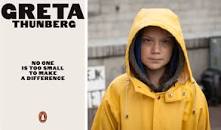
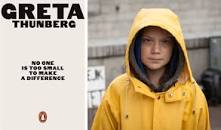
BOOK REVIEW: NO ONE IS TOO SMALL TO MAKE A DIFFERENCE

Copyright@shravancharitymission

Khidki (Window)

–Read India Initiative—

This is only an attempt to create interest in reading. We may not get the time to read all the books in our lifetime. But such reviews, talk and synopsis will at least convey what the book is all about.

    This is a book by teenager climate activist Greta Thunberg, published on 30 May 2019. It consists of a collection of eleven speeches which she has written and orated about global warming and climate crisis.

    Greta Thunberg, born in 2003, August, one day decided not to go to school. Instead, she started to strike outside the Swedish Parliament. Her actions sparked off a global movement on climate crisis, inspiring millions of pupils to go on strike to save our planet. This helped her earning the prestigious Prix Liberte, as well as the Nobel Peace Prize nomination. Greta has Asperger’s syndrome (a developmental disorder characterised by significant difficulties in social interaction and nonverbal communication, along with restricted and repetitive patterns of behaviour and interests). She considers it a gift that has enabled her to see the climate crisis ‘in black and white.’

    ‘No One Is Too Small to Make a Difference is Greta’s first book in English, a collection of her speeches from climate rallies across Europe to audiences at the UN, the World Economic Forum, and the British Parliament. Her next book, ‘Scenes from the Heart’ is a memoir, jointly written with her mother, the opera singer, Malena Ernman, her sister Beata Ernman, and her father Svante Thurnberg.

    The subject book is by Penguin. In all 68 pages. In her speeches she makes some very relevant points that are as follows:

  • When school started in August this year I decided enough is enough. I sat on the ground outside the Swedish Parliament. I school-striked for the climate.
  • Climate scientist Johan Rockstrom and some other people wrote that we have at most three years to reverse growth in greenhouse –gas emissions if we were to reach the goals set in the Paris Agreement. Since then over a year and two months have already passed, and in that time many other scientists have said the same thing. Since then a lot of things have got worse and greenhouse emissions continue to increase.
  • In Sweden we live our lives as if we had the resources of 4.2 planets. Our carbon foot-print is one of the ten worst in the world. This means Sweden steals 3.2 years of natural resources from future generations every year. Those of us who are part of these future generations would like Sweden to stop doing that. She is not shy of criticizing her own country while trying to save the planet from global warming.
  • Many people say that Sweden is a small country, and that it doesn’t matter what we do. But I think it does matter what we do. I think if a few girls can get headlines all over the world by just not going to school for a few weeks, imagine what we could do together if we wanted to.
  • Newspapers continue not to write about climate change even when they know climate is a critical question of our time.
  • Many politicians have ridiculed me and us. They have called me retarded, a bitch, a terrorist and many other things.
  • When I was eight years old, I first heard about something called climate change, or global warming. Apparently a thing human beings had created by their way of living.
  • If burning fossil fuels was so very bad that it threatened our very existence, how could we just continue like before? Why were there no restrictions? Why wasn’t it made illegal?
  • Countries like Sweden, the US and UK need to start reducing emissions by at least 15 percent every year to stay below a 2 degree Celsius warming target. Now IPCC (Inter-governmental Panel on Climate Change) say that we have to aim for 1.5 degree Celsius.
  • No one ever speaks about the aspect of equity, or climate justice, clearly stated all over in the Paris Agreement and the Kyoto Protocol, which is absolutely essential to make the Paris Agreement work on a global scale. This means rich countries need to get down to zero emissions, within six to twelve years, so that people in poorer countries can heighten their standard of living by building some of the infrastructure that we have already built, such as roads, hospitals, electricity, schools and clean drinking water. Otherwise, how can we expect countries like India or Nigeria to care about the climate crisis if we, who already have everything, don’t care even a second about it, basis our actual commitments to the Paris Agreement?
  • Why should I be studying for a future that’ll soon not be there, and moreover, when no one is doing anything whatsoever to save it?
  • Today we use 100 million barrels of oil every day. There are no policies to change that. There are no rules to keep that oil in the ground.
  • According to the IPCC, we are less than twelve years away from the point of no return to disaster. There are no grey areas when it comes to survival.
  • Here in Davos—just like everywhere else—everyone is talking about money. It seems that money and growth are our only main concerns.
  • We are now at a time in history where everyone with any insight of the climate crisis that threatens our civilization and the entire biosphere must speak out. The bigger your carbon footprint—the bigger your moral duty. The bigger your platform—the bigger your responsibility.
  • In May 2018 I was one of the winners in a writing competition about the environment held by Svenska Dagbladet, a Swedish newspaper. I got my article published when some people contacted me, among them was Bo Thoren from Fossil Free Dalsland.
  • On the 20th August I sat down outside the Swedish Parliament. I handed out fliers with a long list of facts about the climate crisis and explanations on why I was striking. The first thing I did was to post on Twitter and Instagram what I was doing and it soon went viral. Then journalists and newspapers started arriving. A Swedish entrepreneur and businessman active in the climate movement, Ingmar Rentzhog, was among the first to arrive. He spoke with me and took pictures that he posted on facebook.
  • Many people say that we don’t have any solutions to the climate crisis. And they are right. Because how do you ‘solve’ the greatest crisis that humanity has ever faced? How do you ‘solve’ a war? How do you ‘solve’ going to the moon for the first time? How do you ‘solve’ inventing new inventions?
  • The climate crisis is both the easiest and the hardest issue mankind has ever faced.

    This is a priceless book written by a teenager activist hence I would not like to rate it. Instead, I would like to recommend the book to every citizen of the world.

By Kamlesh Tripathi

*

https://kamleshsujata.wordpress.com

*

Share it if you like it

*

Shravan Charity Mission is an NGO that works for poor children suffering from life threatening diseases especially cancer. Our posts are meant for our readers that includes both children and adults and it has a huge variety in terms of content. We also accept donations for our mission. Should you wish to donate for the cause. The bank details are given below:

NAME OF ACCOUNT: SHRAVAN CHARITY MISSION

Account no: 680510110004635 (BANK OF INDIA)

IFSC code: BKID0006805

*

Our publications

GLOOM BEHIND THE SMILE

(The book is about a young cancer patient. Now archived in 7 prestigious libraries of the US, including, Harvard University and Library of Congress. It can also be accessed in MIT through Worldcat.org. Besides, it is also available for reading in Libraries and archives of Canada and Cancer Aid and Research Foundation Mumbai)  

ONE TO TANGO … RIA’S ODYSSEY

(Is a book on ‘singlehood’ about a Delhi girl now archived in Connemara Library, Chennai and Delhi Public Library, GOI, Ministry of Culture, Delhi)

AADAB LUCKNOW … FOND MEMORIES

(Is a fiction written around the great city of Nawabs—Lucknow. It describes Lucknow in great detail and also talks about its Hindu-Muslim amity. That happens to be its undying characteristic. The book was launched in Lucknow International Literary Festival of 2014)

REFRACTIONS … FROM THE PRISM OF GOD

(Co-published by Cankids–Kidscan, a pan India NGO and Shravan Charity Mission, that works for Child cancer in India. The book is endorsed by Ms Preetha Reddy, MD Apollo Hospitals Group. It was launched in Lucknow International Literary Festival 2016)

TYPICAL TALE OF AN INDIAN SALESMAN

(Is a story of an Indian salesman who is, humbly qualified. Yet he fights his ways through unceasing uncertainties to reach the top. A good read not only for salesmen. The book was launched on 10th February, 2018 in Gorakhpur Lit-Fest. Now available in Amazon, Flipkart and Onlinegatha)

RHYTHM … in poems

(Published in January 2019. The book contains 50 poems. The poems describe our day to day life. The book is available in Amazon, Flipkart and Onlinegatha)

(ALL THE ABOVE TITLES ARE AVAILABLE FOR SALE IN AMAZON, FLIPKART AND OTHER ONLINE STORES OR YOU COULD EVEN WRITE TO US FOR A COPY)

*****


INTERESTING FACTS FIGURES & QUOTES–51: THE FIRST OPIUM WAR

Copyright@shravancharitymission

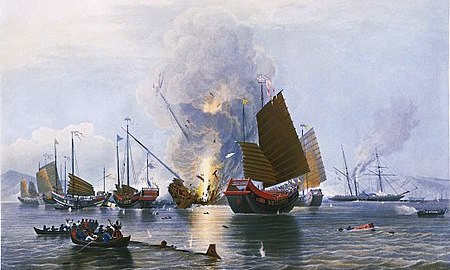
    The First Opium War was fought over illegal opium trade. In the late 18th century, the British East India Company or EIC, contravening Chinese laws, began smuggling Indian opium to China through various means, and became the leading suppliers by 1773. By 1787, the Company was illegally sending 4,000 chests of opium to China a year, each chest weighing 170 lbs or 77 kilos.

    The Chinese Jiaqing Emperor passed many decrees making opium trade illegal in 1729, 1799, 1814 and 1831, but smuggling still continued as the British paid smugglers kept taking opium to China, causing the population to become more and more addicted. This in turn let tons of opium into China’s markets.  Some Americans too entered the trade by smuggling opium from Turkey into China. Some of the individual American opium smugglers included the grandfather of President Franklin D Roosevelt and ancestors of Secretary of State John Forbes Kerry. By 1833, the number of chests of opium trafficked into China soared to some 30,000. According to United Nations Office on Drugs and Crime, the East India Company sent the opium to their warehouses in the free trade region of Canton (also known as Guangzhou), from where Chinese smugglers would take the opium deeper into China. In 1834, the East India Company monopoly ceased. But the illegal trade, however, continued. In 1839, after Chinese scholar Lin Tsehsu wrote a letter to the British monarch Queen Victoria, pleading for a halt of opium contraband, ignored until now, the Chinese Emperor issued a proclamation ordering the seizure of all the opium in Canton, including that held by foreign governments and placed matters in the hands of the scholar, Lin Tse-hsu. The smugglers lost 20,000 chests (1,300 metric tons) of opium without compensation.

    China initially attempted to get foreign companies to forfeit their opium stores in exchange for tea, but this ultimately failed. Then China resorted to using force in the western merchants’ enclave. Forces confiscated all supplies and ordered a blockade of foreign ships to get them to surrender their illegal opium supply.

    The British trade commissioner in Canton, Captain Charles Elliot, wrote to London advising the use of military force against the Chinese. Almost a year passed before the British government decided, in May 1840, to send troops to impose reparations for the economic losses of the British illegal traders in Canton including financial compensation, and to guarantee future security for smugglers. However, the first hostilities had occurred some months earlier with a skirmish between British and Chinese vessels in the Kowloon Estuary on 4 September 1839. On 21 June 1840 a British naval force arrived off Macao then moving to bombard the port of Ting-ha. In the ensuing conflict, the Royal Navy used its naval and gunnery power to inflict a series of decisive defeats on the Chinese Empire, a tactic later referred to as gunboat diplomacy.

    The war was concluded by the Treaty of Nanking (or Nanjing) in 1842. It was the first of the treaties between China and foreign and illegal drug trading imperialist powers. The treaty forced China to cede the Hongkong Island with surrounding smaller islands, to the United Kingdom in perpetuity, and it established five treaty ports at Shanghai, Canton, Ningbo, Fuzhou, and Amoy (Xiamen). The treaty also demanded a twenty-one million dollar payment to Great Britain, with six million paid immediately and the rest through specified instalments thereafter. Another treaty the following year gave most favoured nation status to the British Empire and added provisions for British extraterritoriality. France secured concessions on the same terms as the British, in treaties of 1843 and 1844. Well the opium war did not stop there. It was followed by a second opium war.

By Kamlesh Tripathi

*

https://kamleshsujata.wordpress.com

*

Share it if you like it

*

Shravan Charity Mission is an NGO that works for poor children suffering from life threatening diseases especially cancer. Our posts are meant for our readers that includes both children and adults and it has a huge variety in terms of content. We also accept donations for our mission. Should you wish to donate for the cause. The bank details are given below:

NAME OF ACCOUNT: SHRAVAN CHARITY MISSION

Account no: 680510110004635 (BANK OF INDIA)

IFSC code: BKID0006805

*

Our publications

GLOOM BEHIND THE SMILE

(The book is about a young cancer patient. Now archived in 7 prestigious libraries of the US, including, Harvard University and Library of Congress. It can also be accessed in MIT through Worldcat.org. Besides, it is also available for reading in Libraries and archives of Canada and Cancer Aid and Research Foundation Mumbai)  

ONE TO TANGO … RIA’S ODYSSEY

(Is a book on ‘singlehood’ about a Delhi girl now archived in Connemara Library, Chennai and Delhi Public Library, GOI, Ministry of Culture, Delhi)

AADAB LUCKNOW … FOND MEMORIES

(Is a fiction written around the great city of Nawabs—Lucknow. It describes Lucknow in great detail and also talks about its Hindu-Muslim amity. That happens to be its undying characteristic. The book was launched in Lucknow International Literary Festival of 2014)

REFRACTIONS … FROM THE PRISM OF GOD

(Co-published by Cankids–Kidscan, a pan India NGO and Shravan Charity Mission, that works for Child cancer in India. The book is endorsed by Ms Preetha Reddy, MD Apollo Hospitals Group. It was launched in Lucknow International Literary Festival 2016)

TYPICAL TALE OF AN INDIAN SALESMAN

(Is a story of an Indian salesman who is, humbly qualified. Yet he fights his ways through unceasing uncertainties to reach the top. A good read not only for salesmen. The book was launched on 10th February, 2018 in Gorakhpur Lit-Fest. Now available in Amazon, Flipkart and Onlinegatha)

RHYTHM … in poems

(Published in January 2019. The book contains 50 poems. The poems describe our day to day life. The book is available in Amazon, Flipkart and Onlinegatha)

(ALL THE ABOVE TITLES ARE AVAILABLE FOR SALE IN AMAZON, FLIPKART AND OTHER ONLINE STORES OR YOU COULD EVEN WRITE TO US FOR A COPY)

*****
INTERESTING FACTS FIGURES & QUOTES–50

Copyright@shravancharitymission

GREEN CAPITAL OF EUROPE: Denmark was the first country in the world to enact an environmental law. Its capital, Copenhagen boasts of a unique collaboration of its residents, institutions and government in making it one of the world’s most environment friendly cities in the world. It aims at becoming carbon neutral by 2025 by increasing the use of renewable energy sources. About 40% of its population uses bicycles to commute over its 350 km long network of bicycle paths. To further facilitate fast, safe and pleasant bike rides, the municipality is building ‘greenways’ (interconnected bicycle routes) which cover more than 100 km from one end of the city to the other. The large offshore wind turbine farm generates 4% of the city’s electricity. The city is harnessing solar and sound energy as well. Organic food is very popular—one in every ten purchases is organic, accounting for 45% of all food consumption in the city. Copenhagen is one of the few places in Europe where the inner harbour allows people to swim in its waters which are effectively cleaned by sewage treatment plants. In June 2010, the municipality enforced a mandatory green roof policy which requires vegetation and soil to cover the roofs of all new buildings.

*

GREEN POWER The concept of eco-city was introduced by Richard Register in his book “Ecocity Berkeley: Building Cities for a Healthy Future (1987).” The features of an eco-friendly city are: Pollution is kept to the minimum. Use of fossil fuels is reduced or eliminated. Renewable energy sources like wind turbines, solar panels, bio-gas from sewage etc., are used. Waste is recycled. Buildings are built in accordance with green norms. At least 20 percent of the city surface is covered with water features and green space. Energy-efficient public transport, footpaths and biking routes reduce the use of cars.

*

JEANS FROM GARBAGE: A label on a pair of waste<Less denim jeans made by a top American manufacturer proudly announces: “These jeans are made of garbage.” The company has taken the lead in reusing the massive amounts of plastic waste produced by modern society. In the U.S. alone, around a million plastic bottles are used every twenty minutes. Where, only a minuscule amount, less than 30 percent, is recycled. The company’s partial solution to the problem was to create two lines of clothing—jeans and trucker jackets—that contain 20 percent recycled plastic. The plastic bottles and food trays collected from dumps are cleaned, sorted and crushed into flakes. A special technology then spins the plastic into polyester fibre. It is blended with cotton fibre, then woven into yarn to create the denim. The denim looks and feels like traditional denim except that the colour of the plastic used. The company reused more than 3.6 million bottles and food trays for the 300,000 Waste<Less jeans and jackets produced in 2013.

*

 The word Lynch—“Lynching” once meant any kind of on-the-spot punishment without trial, through flogging. Today, it means to thrash someone in a mob frenzy without a trial. From William Lynch, the author of ‘Lynch’s Law.’ The ‘law’ was an agreement with the Virginia General Assembly in 1782 that allowed Lynch to capture and punish criminals in Pittsylvania County without trial. The county had no official courts.

*

Oscar—‘Statuette is awarded for excellence in film acting, directing etc, given annually since 1928 by the Academy of Motion Picture Arts and Sciences.’ The name Óscar’ was first applied to the statuette in 1936. The story: Margaret Herrick, the Academy’s librarian, took a look at the first statuette and said: ‘He reminds me of my Uncle Oscar!’ Her uncle was Oscar Pierce, and the statuette was named Oscar. Remember big things have small beginnings.

By Kamlesh Tripathi

*

https://kamleshsujata.wordpress.com

*

Share it if you like it

*

Shravan Charity Mission is an NGO that works for poor children suffering from life threatening diseases especially cancer. Our posts are meant for our readers that includes both children and adults and it has a huge variety in terms of content. We also accept donations for our mission. Should you wish to donate for the cause. The bank details are given below:

NAME OF ACCOUNT: SHRAVAN CHARITY MISSION

Account no: 680510110004635 (BANK OF INDIA)

IFSC code: BKID0006805

*

Our publications

GLOOM BEHIND THE SMILE

(The book is about a young cancer patient. Now archived in 7 prestigious libraries of the US, including, Harvard University and Library of Congress. It can also be accessed in MIT through Worldcat.org. Besides, it is also available for reading in Libraries and archives of Canada and Cancer Aid and Research Foundation Mumbai)  

ONE TO TANGO … RIA’S ODYSSEY

(Is a book on ‘singlehood’ about a Delhi girl now archived in Connemara Library, Chennai and Delhi Public Library, GOI, Ministry of Culture, Delhi)

AADAB LUCKNOW … FOND MEMORIES

(Is a fiction written around the great city of Nawabs—Lucknow. It describes Lucknow in great detail and also talks about its Hindu-Muslim amity. That happens to be its undying characteristic. The book was launched in Lucknow International Literary Festival of 2014)

REFRACTIONS … FROM THE PRISM OF GOD

(Co-published by Cankids–Kidscan, a pan India NGO and Shravan Charity Mission, that works for Child cancer in India. The book is endorsed by Ms Preetha Reddy, MD Apollo Hospitals Group. It was launched in Lucknow International Literary Festival 2016)

TYPICAL TALE OF AN INDIAN SALESMAN

(Is a story of an Indian salesman who is, humbly qualified. Yet he fights his ways through unceasing uncertainties to reach the top. A good read not only for salesmen. The book was launched on 10th February, 2018 in Gorakhpur Lit-Fest. Now available in Amazon, Flipkart and Onlinegatha)

RHYTHM … in poems

(Published in January 2019. The book contains 50 poems. The poems describe our day to day life. The book is available in Amazon, Flipkart and Onlinegatha)

(ALL THE ABOVE TITLES ARE AVAILABLE FOR SALE IN AMAZON, FLIPKART AND OTHER ONLINE STORES OR YOU COULD EVEN WRITE TO US FOR A COPY)

*****


INTERESTING FACTS FIGURES & QUOTES 49: THE BERLIN WALL

Copyright@shravancharitymission

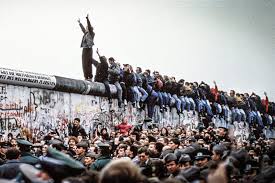
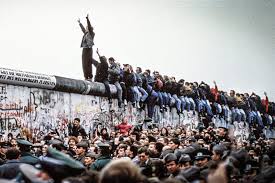
    Berlin wall is the wall that divided the world. More than a physical barrier the Berlin wall stood as a solid political and ideological symbol of the divide between a democratic Western Germany and a Communist Eastern Germany. Looking back on the rise and fall of the Berlin wall 30 years on:

WHAT WAS BERLIN WALL

    A guarded concrete wall that physically and ideologically divided Germany’s capital, the Berlin wall stood tall between 1961 and 1989.

    Construction of the wall commenced on August 13, 1961, by the German Democratic Republic (GDR) to ensure, people from East Germany did not emigrate to West Germany. The wall finally fell on November 9, 1989 after East Germany declared all the crossing points along the wall open.

BACKDROP TO THE BUILDING OF THE WALL

    In 1949 a war torn Germany formally split into two independent nations—The Federal Republic of Germany and the German Democratic Republic—with the FDR allied to the Western Democracies led by the US and the GDR allied to the Soviet Union led by Russia. These superpowers had growing geopolitical tension between them, in what is today known as the cold-war. The city of Berlin, was at the centre of this heated split, with one part under the eastern bloc and the remaining three with the west under US, Britain and France.

    Needless to say that the ideologies of the two power blocs were enforced on the Germans, with East Germany following communism and the west following a democratic approach.

WHY WAS THE WALL BUILT

    Free flow of people between the two parts was allowed through Berlin as East Germany had sealed its mainland border from the west along the Elbe River and the mountains of Harz with barbed wire and fire-zones.

    As time passed, many people from East Germany migrated to the West in search of better jobs and infrastructure.

    One in six people fled from the east to the west. This irked the GDR as its economy was deeply affected due to this ‘brain-drain.’ Thus in a bid to halt this migration, East German Communists were given the permission by Moscow to close the border and build a physical barrier along it.

    With information from their informers in the western part, that the west will not react, East German Police in a top-secret operation, established a human cordon along the border with West Berlin. The border forces then went on to build a solid breeze block wall topped with barbed-wire from what was earlier just a wire-mesh fence.

THE WALL AND ATTEMPTS TO CROSS IT

    The Berlin Wall was more than 140 kilometres long. The houses contained between the fences were razed and the inhabitants relocated, thus establishing what later became known as the death strip. The death strip was covered with raked sand or gravel, rendering footprints easy to notice, easing the detection of trespassers and also enabling officers to see which guards had neglected their task. It offered no cover, and, most importantly, it offered clear fields of fire for the Wall guards.

    The top of the wall was lined with a smooth pipe, intended to make it more difficult to scale. The Wall was reinforced by mesh fencing, signal fencing, anti-vehicle trenches, barbed wire, dogs on long lines, “beds of nails” (also known as “Stalin’s Carpet”) under balconies hanging over the “death strip”, there were over 116 watchtowers, and 20 bunkers with hundreds of guards. This version of the Wall is the one most commonly seen in photographs, and the surviving fragments of the Wall in Berlin and elsewhere around the world are generally pieces of the fourth-generation Wall.

    There were nine border crossings between East and West Berlin. These allowed visits by West Berliners, other West Germans, Western foreigners and Allied personnel into East Berlin, as well as visits by GDR citizens and citizens of other socialist countries into West Berlin, provided that they held the necessary permits.

FALL OF THE BERLIN WALL

    Things started to deteriorate for the Eastern Bloc in the 1980s with the start of an energy crisis and political struggle within the bloc. Rising civil unrest also put pressure on the East German Government. However, what started the downfall of the GDR was the fail of the ‘Íron Curtain’ between Hungary and Austria. The opening of that border led to several East Germans migrating to West Germany through Hungary. However, this attempt was quickly blocked, but East Germans began to camp at the West German embassies across the Eastern Bloc and refused to return. Meanwhile, demonstrations began within East Germany in full swing.

    East Germany was pressurised to relax some of its regulations on travel to West Germany. On November 9, 1989, at a press conference to announce the same an East German spokesman Gunter Schabowski announced that East Germans would be free to travel into West Germany, starting immediately. However, he failed to clarify that some regulations would still apply. This led to the western media reporting that the border had been opened, leading to large crowds gathering at either sides of the checkpoints. Eventually, passports checks were abandoned and people crossed the border unrestricted. The evening on November 9, 1989 is known as the night the wall came down.

    The Berlin wall had fallen and this fall marked the beginning of the unification of Germany which took place on October 3, 1990.

By Kamlesh Tripathi

*

https://kamleshsujata.wordpress.com

*

Share it if you like it

*

Shravan Charity Mission is an NGO that works for poor children suffering from life threatening diseases especially cancer. Our posts are meant for our readers that includes both children and adults and it has a huge variety in terms of content. We also accept donations for our mission. Should you wish to donate for the cause. The bank details are given below:

NAME OF ACCOUNT: SHRAVAN CHARITY MISSION

Account no: 680510110004635 (BANK OF INDIA)

IFSC code: BKID0006805

*

Our publications

GLOOM BEHIND THE SMILE

(The book is about a young cancer patient. Now archived in 7 prestigious libraries of the US, including, Harvard University and Library of Congress. It can also be accessed in MIT through Worldcat.org. Besides, it is also available for reading in Libraries and archives of Canada and Cancer Aid and Research Foundation Mumbai)  

ONE TO TANGO … RIA’S ODYSSEY

(Is a book on ‘singlehood’ about a Delhi girl now archived in Connemara Library, Chennai and Delhi Public Library, GOI, Ministry of Culture, Delhi)

AADAB LUCKNOW … FOND MEMORIES

(Is a fiction written around the great city of Nawabs—Lucknow. It describes Lucknow in great detail and also talks about its Hindu-Muslim amity. That happens to be its undying characteristic. The book was launched in Lucknow International Literary Festival of 2014)

REFRACTIONS … FROM THE PRISM OF GOD

(Co-published by Cankids–Kidscan, a pan India NGO and Shravan Charity Mission, that works for Child cancer in India. The book is endorsed by Ms Preetha Reddy, MD Apollo Hospitals Group. It was launched in Lucknow International Literary Festival 2016)

TYPICAL TALE OF AN INDIAN SALESMAN

(Is a story of an Indian salesman who is, humbly qualified. Yet he fights his ways through unceasing uncertainties to reach the top. A good read not only for salesmen. The book was launched on 10th February, 2018 in Gorakhpur Lit-Fest. Now available in Amazon, Flipkart and Onlinegatha)

RHYTHM … in poems

(Published in January 2019. The book contains 50 poems. The poems describe our day to day life. The book is available in Amazon, Flipkart and Onlinegatha)

(ALL THE ABOVE TITLES ARE AVAILABLE FOR SALE IN AMAZON, FLIPKART AND OTHER ONLINE STORES OR YOU COULD EVEN WRITE TO US FOR A COPY)

*****


INTERESTING FACTS FIGURES & QUOTES 48: The Correlation between British Empire and English Language

Copyright@shravancharitymission

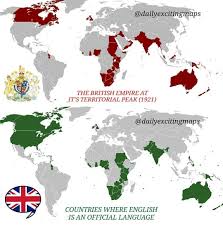
    There was a time when the sun did not set on the British Empire. The saying implied the vastness of the British Empire. Historians inferred that roughly 25% of the earth’s landmass was in control of the British. The Empire was so extensive, that at any point of time, there was daylight in one of its colonies. This resulted in English language, travelling to several continents and many countries across the globe. India was no exception. English gradually became the lingua-franca in many countries.

    There was also a deluge of Europeans who started migrating to America from the Continent and British Isles. So English language too, travelled with them to Amercia. Historically speaking, Europeans were one of the most aggressive and ambitious race on planet earth. They managed to change the name of New Amsterdam to New York (in the honour the Duke of York). They bought New Amsterdam from the local tribe (the Lenapes). And with all this the spread of English language continued hammer and tongs. Gradually, it even travelled, to down and under (Australia and New Zealand) and even Africa. In other words, wherever, British established colonies English language gained roots. Europe has given to the world great seafarers and explorers. English language concomitantly travelled to wherever they went. The language of English was also skilfully taught and used in administration and day-to-day living, and today it connects the world.

    British rule in India began around 1757. English language in India is therefore, over 250 years old. The British left India around 70 years ago, after which English language in India has stood on its own spine. Since then the language has Indianised and even undergone a change in tone and tenor. With the advent of social media English Language has even made deep inroads into rural areas.

    A number of high-flying authors have emerged in India and they have been able to decolonise the traditional English oeuvre. The assortment of Indian authors is wide. But there is a threat to English language in India and that is from Hinglish (a blend of Hindi and English) and conversely there is also a threat to Hindi from English.  

    There is nothing definitive about which way the camel is going to sit, but yes, one can only leave it to the long term opportunities that the languages wish to partner with.

By Kamlesh Tripathi

*

https://kamleshsujata.wordpress.com

*

Share it if you like it

*

Shravan Charity Mission is an NGO that works for poor children suffering from life threatening diseases especially cancer. Our posts are meant for our readers that includes both children and adults and it has a huge variety in terms of content. We also accept donations for our mission. Should you wish to donate for the cause. The bank details are given below:

NAME OF ACCOUNT: SHRAVAN CHARITY MISSION

Account no: 680510110004635 (BANK OF INDIA)

IFSC code: BKID0006805

*

Our publications

GLOOM BEHIND THE SMILE

(The book is about a young cancer patient. Now archived in 7 prestigious libraries of the US, including, Harvard University and Library of Congress. It can also be accessed in MIT through Worldcat.org. Besides, it is also available for reading in Libraries and archives of Canada and Cancer Aid and Research Foundation Mumbai)  

ONE TO TANGO … RIA’S ODYSSEY

(Is a book on ‘singlehood’ about a Delhi girl now archived in Connemara Library, Chennai and Delhi Public Library, GOI, Ministry of Culture, Delhi)

AADAB LUCKNOW … FOND MEMORIES

(Is a fiction written around the great city of Nawabs—Lucknow. It describes Lucknow in great detail and also talks about its Hindu-Muslim amity. That happens to be its undying characteristic. The book was launched in Lucknow International Literary Festival of 2014)

REFRACTIONS … FROM THE PRISM OF GOD

(Co-published by Cankids–Kidscan, a pan India NGO and Shravan Charity Mission, that works for Child cancer in India. The book is endorsed by Ms Preetha Reddy, MD Apollo Hospitals Group. It was launched in Lucknow International Literary Festival 2016)

TYPICAL TALE OF AN INDIAN SALESMAN

(Is a story of an Indian salesman who is, humbly qualified. Yet he fights his ways through unceasing uncertainties to reach the top. A good read not only for salesmen. The book was launched on 10th February, 2018 in Gorakhpur Lit-Fest. Now available in Amazon, Flipkart and Onlinegatha)

RHYTHM … in poems

(Published in January 2019. The book contains 50 poems. The poems describe our day to day life. The book is available in Amazon, Flipkart and Onlinegatha)

(ALL THE ABOVE TITLES ARE AVAILABLE FOR SALE IN AMAZON, FLIPKART AND OTHER ONLINE STORES OR YOU COULD EVEN WRITE TO US FOR A COPY)

*****



SHORT STORY: The Wise Blind Man

Copyright@shravancharitymission

    There was once an old blind man who was walking past his farm located near a jungle in the night. He was carrying a lantern … so that he could see his way through.

    On the way he met a fellow villager who recognised the blind man. The villager asked.

    ‘Bhaiya if you can’t see where is the need to carry a lantern?’

    The old blind man halted where he was and said.

    ‘So that fools don’t stumble against me and thieves should know that I can see.’

    The fellow villager was stunned at the blind man’s clever logic.

Moral of the story: You don’t always get hit by your own mistake always. You could be hit by other’s foolishness too. And don’t always put your shortcomings in front of the public.

By Kamlesh Tripathi

*

https://kamleshsujata.wordpress.com

*

Share it if you like it

*

Shravan Charity Mission is an NGO that works for poor children suffering from life threatening diseases especially cancer. Our posts are meant for our readers that includes both children and adults and it has a huge variety in terms of content. We also accept donations for our mission. Should you wish to donate for the cause. The bank details are given below:

NAME OF ACCOUNT: SHRAVAN CHARITY MISSION

Account no: 680510110004635 (BANK OF INDIA)

IFSC code: BKID0006805

*

Our publications

GLOOM BEHIND THE SMILE

(The book is about a young cancer patient. Now archived in 7 prestigious libraries of the US, including, Harvard University and Library of Congress. It can also be accessed in MIT through Worldcat.org. Besides, it is also available for reading in Libraries and archives of Canada and Cancer Aid and Research Foundation Mumbai)  

ONE TO TANGO … RIA’S ODYSSEY

(Is a book on ‘singlehood’ about a Delhi girl now archived in Connemara Library, Chennai and Delhi Public Library, GOI, Ministry of Culture, Delhi)

AADAB LUCKNOW … FOND MEMORIES

(Is a fiction written around the great city of Nawabs—Lucknow. It describes Lucknow in great detail and also talks about its Hindu-Muslim amity. That happens to be its undying characteristic. The book was launched in Lucknow International Literary Festival of 2014)

REFRACTIONS … FROM THE PRISM OF GOD

(Co-published by Cankids–Kidscan, a pan India NGO and Shravan Charity Mission, that works for Child cancer in India. The book is endorsed by Ms Preetha Reddy, MD Apollo Hospitals Group. It was launched in Lucknow International Literary Festival 2016)

TYPICAL TALE OF AN INDIAN SALESMAN

(Is a story of an Indian salesman who is, humbly qualified. Yet he fights his ways through unceasing uncertainties to reach the top. A good read not only for salesmen. The book was launched on 10th February, 2018 in Gorakhpur Lit-Fest. Now available in Amazon, Flipkart and Onlinegatha)

RHYTHM … in poems

(Published in January 2019. The book contains 50 poems. The poems describe our day to day life. The book is available in Amazon, Flipkart and Onlinegatha)

(ALL THE ABOVE TITLES ARE AVAILABLE FOR SALE IN AMAZON, FLIPKART AND OTHER ONLINE STORES OR YOU COULD EVEN WRITE TO US FOR A COPY)

*****


BOOK REVIEW: SUDHA MURTHY … The Upside Down King

Copyright@shravancharitymission

Khidki (Window)

–Read India Initiative—

This is only an attempt to create interest in reading. We may not get the time to read all the books in our lifetime. But such reviews, talk and synopsis will at least convey what the book is all about.

    This book is about—‘Unusual tales of Rama and Krishna.’ But before that let me give you a brief introduction of Sudha Murthy.

    Sudha Murthy was born in 1950 in Shiggaon, north Karnataka. She did her M-Tech in computer science, and is now the chairperson of the Infosys Foundation. A prolific writer both in English and Kannada, she has written novels, technical books, travelogues, collections of short stories and non-fictional pieces. She has also written eight bestselling books for children. Her books have been translated into, all major Indian languages. Sudha Murthy is the recipient of the R.K. Narayan Award for Literature (2006), the Padma Shri (2006), the Attimabbe Award from the Government of Karnataka for excellence in Kannada literature (2011) and, most recently the Lifetime Achievement Award at the 2018 Crossword Book Awards.

    Mythology is an appropriate means to connect the past with the present, and it also keeps the future in focus.  Talking of mythology did you know there was a time when bears spoke, the moon laughed and babies were found inside the fish? And have you ever seen a man with a thousand arms?

    The tales in this collection of short stories revolve around the two most popular avatars of Lord Vishnu—Rama and Krishna—and their lineages. There are countless stories on the two, yet most are simply disappearing from the hearts and minds of the present generation. So there is a great need to connect the youth of today with these stories. This is what the book does.

    Bestselling author Sudha Murthy, takes you on a whirlwind tour, where she narrates about the days, when demons and deities walked alongside humans, where animals could talk and gods granted the most glorious boons to common people.

    The book is a publication of Puffin Books. The content has some twenty three short stories out of Hindu mythology. All very interesting. Written in lucid English. The power of such short stories is immense as it often reveals what you don’t know and therefore comes to you as a surprise. It gives you a very precise moral lesson most of the times.

    The book brings to you unusual tales of Lord Rama and Krishna. It brings to you, life lessons, of various kinds, where you learn about the lineages of so many Devtas and Asuras. Most of these stories are available in our mythological texts such as Ramayana, Gita, Vedas and Puranas. Sudha Murthy as an author has put them in a logical sequence. To give you a flavour of the book I will briefly narrate one such story that the author has incorporated in this book from the ilk of mythology. It goes as follows …

    The kingdom of Kishkindha was ruled by the monkey king Bali along with his brother Sugriva. Kishkinda lies on the banks of river Tungabhadra and is surrounded by mountains.

    One day, Mayavi, a demon, approached the gates of the kingdom and challenged Bali to take up a fight with him, which Bali couldn’t have refused. He accepted the challenge and agreed to fight with him. Soon, the battle began. Sugriva became a witness to the fight. As the fight progressed, Mayavi entered a nearby cave and Bali in his haste followed suit. But before entering the cave, Bali asked Sugriva to wait for him and went inside alone.

    Six months passed but Bali did not emerge from the cave. Finally, Sugriva heard screams and saw blood flowing out of the cave. He concluded that his brother had been killed. So, with a heavy heart, and great effort Sugriva rolled a bolder to seal the cave’s mouth to contain the demon within.

    The kingdom of Kishkindha was now without a king. Sugriva took over, and became the acting ruler. But one day, Bali walked into the kingdom unexpected—hale and hearty. When he saw Sugriva, he got upset with him and said. ‘How dare you rule my kingdom? And why did you seal the mouth of the cave, when I, only told you, to wait for me.’

    Sugriva folded his hands and replied earnestly, ‘my dear brother, I heard terrible screams and saw a lot of blood on the ground near the cave. I mistakenly assumed that the demon perhaps had killed you, and in the interest of, wanting to save the subjects of the kingdom, I blocked the mouth of the cave. I am only the acting ruler and took over in your absence. Kindly forgive me and take back your kingdom.’

    Bali, however, was in no mood to listen and forgive. ‘Do you think I can die so easily at the hands of a mere demon? Aren’t you aware of my boons and my strength? Sugriva, your actions stink of deceit. You never intended to let me out. On the contrary, you did your best to ensure, that I remain trapped. And you have always had your lustful eyes on my beautiful wife Tara. Come on, admit, all of this is true.’

    Sugriva’s response in return did not satisfy Bali. He yelled at his brother, ‘Leave my kingdom now. If you enter my kingdom again I will kill you. And as an act of revenge I will detain your wife Ruma. She will not be accompanying you.’

    Sugriva was now choice less, so he left the kingdom immediately.

    Gradually, Bali became very powerful and a cause of concern for sage Matanga who lived close by, on Rishyamukha Mountain. Bali’s arrogance grew by leaps and bounds. This was when he was noticed by sage Matanga, who then cursed and commanded him to leave the kingdom of Kishkindha or he would die, and that, he shall also die instantly, the moment he re-enters the kingdom of Kishkindha.

        Bali, therefore, stayed away from Kishkindha. Sugriva took advantage of this situation and came back to the kingdom to rule it. But he was aware that he must not cross the kingdom’s boundaries at any cost for he’ll get killed by Bali.

    But in spite of all odds, Bali remained extremely powerful. He had the ability to travel in all directions and offer his daily prayers to Lord Surya, who moved from east to west. He even had a special boon that allowed him to gain half of his opponent’s energy whenever he fought anyone in a solo combat. It made him virtually indestructible, but he remained unhappy at the loss of his kingdom.

    Kishkindha is recognised today as the heritage site of the Hampi in northern Karnataka. It is this kingdom that gave rise to the great empire of Vijayanagara.

    This was just a sample. The stories indeed are interesting, but the book lacks proper editing. I would give it seven out of ten.

By Kamlesh Tripathi

*

https://kamleshsujata.wordpress.com

*

Share it if you like it

*

Shravan Charity Mission is an NGO that works for poor children suffering from life threatening diseases especially cancer. Our posts are meant for our readers that includes both children and adults and it has a huge variety in terms of content. We also accept donations for our mission. Should you wish to donate for the cause. The bank details are given below:

NAME OF ACCOUNT: SHRAVAN CHARITY MISSION

Account no: 680510110004635 (BANK OF INDIA)

IFSC code: BKID0006805

*

Our publications

GLOOM BEHIND THE SMILE

(The book is about a young cancer patient. Now archived in 7 prestigious libraries of the US, including, Harvard University and Library of Congress. It can also be accessed in MIT through Worldcat.org. Besides, it is also available for reading in Libraries and archives of Canada and Cancer Aid and Research Foundation Mumbai)  

ONE TO TANGO … RIA’S ODYSSEY

(Is a book on ‘singlehood’ about a Delhi girl now archived in Connemara Library, Chennai and Delhi Public Library, GOI, Ministry of Culture, Delhi)

AADAB LUCKNOW … FOND MEMORIES

(Is a fiction written around the great city of Nawabs—Lucknow. It describes Lucknow in great detail and also talks about its Hindu-Muslim amity. That happens to be its undying characteristic. The book was launched in Lucknow International Literary Festival of 2014)

REFRACTIONS … FROM THE PRISM OF GOD

(Co-published by Cankids–Kidscan, a pan India NGO and Shravan Charity Mission, that works for Child cancer in India. The book is endorsed by Ms Preetha Reddy, MD Apollo Hospitals Group. It was launched in Lucknow International Literary Festival 2016)

TYPICAL TALE OF AN INDIAN SALESMAN

(Is a story of an Indian salesman who is, humbly qualified. Yet he fights his ways through unceasing uncertainties to reach the top. A good read not only for salesmen. The book was launched on 10th February, 2018 in Gorakhpur Lit-Fest. Now available in Amazon, Flipkart and Onlinegatha)

RHYTHM … in poems

(Published in January 2019. The book contains 50 poems. The poems describe our day to day life. The book is available in Amazon, Flipkart and Onlinegatha)

(ALL THE ABOVE TITLES ARE AVAILABLE FOR SALE IN AMAZON, FLIPKART AND OTHER ONLINE STORES OR YOU COULD EVEN WRITE TO US FOR A COPY)

*****


SHORT STORY: HANUMAN’S VISIT TO PATALA LOK

Copyright@shravancharitymission

    Whenever Yamraj, the Lord of Death attempted to meet Lord Rama, to tell him about, the amount of time, he had, in his human form, Hanuman would refuse entry to him. Yamraj was aware of Hanuman’s strength and the boon of immortality granted to him, so he did not wish to cross him.

    Rama, however, understood, that a human life has to complete the cycle of birth and death. He knew Hanuman was trying to protect him from his death by avoiding his meeting with Yamaraj. But Rama knew at some point in time he has to meet Yamaraj. But he realised that it was not possible to do so with Hanuman around.

    One day Rama and Hanuman went out for a walk. Rama took off his ring and began playing with it. He then discreetly dropped it into a small crack on the ground, and then requested Hanuman, ‘I have dropped my ring somewhere. Will you please retrieve it for me.?’

    Hanuman nodded. He then transformed his body into a miniature so that he could easily get into the crack on the ground. But the closer he got to the ring, the more, the ring fell below and below. He had no choice but to follow it.

    After sometime the ring reached Patala Lok. There Hanuman met Nagaraja, the king of the serpents. Hanuman said, ‘Dear Sir, Rama’s ring has fallen somewhere here. Will you please give it back to me? I must return it to him. Nagaraja replied.

    ‘I have a room full of rings. Everything that falls from the earth is kept there. You can go to the room and search for it yourself.’

    Hanuman acquiesced and entered the room, where he saw hundreds of rings on display. He kept searching until he found the ring that he was looking for. It seemed to take barely a few minutes. Hanuman thanked Nagaraja and made his way back to Ayodhya. But time takes on a different meaning in Patala Lok. A second there is worth many years on earth. By the time Hanuman reached the city, a lot of time had already passed, and Rama had already left his mortal body and achieved Nirvana.

    To his dismay, Hanuman realized that he had missed seeing Lord Rama exit the earth. Hanuman felt miserable but knew that Lord Rama wanted things to play out in that manner.

    Even today, Hanuman continues to live on our planet. There is a strong belief that whenever there are prayers for Rama. Hanuman appears in his invisible form to bless the devotees.

By Kamlesh Tripathi

*

https://kamleshsujata.wordpress.com

*

Share it if you like it

*

Shravan Charity Mission is an NGO that works for poor children suffering from life threatening diseases especially cancer. Our posts are meant for our readers that includes both children and adults and it has a huge variety in terms of content. We also accept donations for our mission. Should you wish to donate for the cause. The bank details are given below:

NAME OF ACCOUNT: SHRAVAN CHARITY MISSION

Account no: 680510110004635 (BANK OF INDIA)

IFSC code: BKID0006805

*

Our publications

GLOOM BEHIND THE SMILE

(The book is about a young cancer patient. Now archived in 7 prestigious libraries of the US, including, Harvard University and Library of Congress. It can also be accessed in MIT through Worldcat.org. Besides, it is also available for reading in Libraries and archives of Canada and Cancer Aid and Research Foundation Mumbai)  

ONE TO TANGO … RIA’S ODYSSEY

(Is a book on ‘singlehood’ about a Delhi girl now archived in Connemara Library, Chennai and Delhi Public Library, GOI, Ministry of Culture, Delhi)

AADAB LUCKNOW … FOND MEMORIES

(Is a fiction written around the great city of Nawabs—Lucknow. It describes Lucknow in great detail and also talks about its Hindu-Muslim amity. That happens to be its undying characteristic. The book was launched in Lucknow International Literary Festival of 2014)

REFRACTIONS … FROM THE PRISM OF GOD

(Co-published by Cankids–Kidscan, a pan India NGO and Shravan Charity Mission, that works for Child cancer in India. The book is endorsed by Ms Preetha Reddy, MD Apollo Hospitals Group. It was launched in Lucknow International Literary Festival 2016)

TYPICAL TALE OF AN INDIAN SALESMAN

(Is a story of an Indian salesman who is, humbly qualified. Yet he fights his ways through unceasing uncertainties to reach the top. A good read not only for salesmen. The book was launched on 10th February, 2018 in Gorakhpur Lit-Fest. Now available in Amazon, Flipkart and Onlinegatha)

RHYTHM … in poems

(Published in January 2019. The book contains 50 poems. The poems describe our day to day life. The book is available in Amazon, Flipkart and Onlinegatha)

(ALL THE ABOVE TITLES ARE AVAILABLE FOR SALE IN AMAZON, FLIPKART AND OTHER ONLINE STORES OR YOU COULD EVEN WRITE TO US FOR A COPY)

*****