“Every child is a different kind of flower, and all together they make this world a beautiful garden.” This fascinating popular quote reminds us of the uniqueness of each child and the collective beauty they bring to our lives and the world. Let the world be free from the shadow of the Pied Piper, who led the children away from their village to the top of Koppelberg Hill, never to return. The street in Hamelin, called Bungelosenstrasse (street without drums), is believed to be the place where the children were last seen. Ever since, music and dancing is not allowed there. Children’s Day, however, is a celebration meant to overcome such dark associations. It is supposed to build on powerful child characters such as ‘The Famous Five,’ the hit novel of Enid Blyton, where children, while holidaying in an old dilapidated lighthouse, recover a lost treasure all by themselves. But the quintessential example of children’s day could be from the escapades of young bubbly Krishna in Mathura and Vrindavan. Did William Wordsworth think of child Krishna when he wrote, “Child is the father of the man”?
It is a day dedicated to celebrating children. The idea dates back to the early 20th century. The first official communique of Children’s Day was made in 1925 at the World Conference on Child Welfare held in Geneva, Switzerland. Since then, many countries have designed their own versions of the celebration. The day aims to raise awareness about children’s rights, their needs, and their well-being. Although celebrated on different dates around the world, the underlying message is universal: every child deserves love, care, protection, and theopportunity to grow in a safe and nurturing environment.While the day is often filled with fun and joy, its true essence lies in recognising that children are the future of the world.
In 1954, the United Nations declared November 20 as Universal Children’s Day. This was done to promote global togetherness, increase awareness among children worldwide, and improve their overall welfare.
In India, Children’s Day is celebrated to highlight children’s rights, education, and welfare. It is observed on 14 November each year, marking the birthday of the first prime minister of India, Jawaharlal Nehru. Nehru was known for his fondness for children. On this day, many schools across the country organise educational and motivational programmes. Some schools declare a holiday, while others host fairs and cultural events for their students.
The first Children’s Day was observed on November 5, 1948. It was referred to as the ‘Flower Day’. On July 30, 1949, “Children’s Day” received wider attention and was promoted through radio, print media, and cinema.
In 1951, V. M. Kulkarni, a United Nations Social Welfare Fellow, was conducting a study on the rehabilitation of juvenile delinquents in the UK. He discovered that India lacked a systematic approach to support underprivileged children. Inspired by Flag Day in England, which raised funds for the ‘Save the Children Fund’ on the birthday of Queen Elizabeth II, he proposed that Pandit Nehru’s birthday be observed as Flag Day for raising funds for NGOs working for child welfare in India. Although initially embarrassed by the idea, Nehru eventually consented.
Though Nehru’s birthday, on 14 November, was celebrated publicly for years, it was only in 1954 that the day was celebrated as Children’s Day for the first time. Thousands of school children attended the celebration held at the National Stadium in Delhi.
In 1957, 14 November was officially declared as Children’s Day in India. On November 14, 1957, during the celebration, white pigeons were released into the sky. That same year, the government issued a special notification, officially declaring 14th November as Children’s Day in India. The Department of Posts and Telegraphs also released first-day covers and threecommemorative stamps in honour of Bal Divas (Children’s Day).
Jawaharlal Nehru was fondly called Chacha Nehru (“Uncle Nehru”) by children. As Rabindranath Tagore once said, “Every child comes with the message that God is not yet discouraged of man.”
Shravan Charity Mission is an NGO that works for poor children suffering from life-threatening diseases, especially cancer. Our posts are meant for our readers, including children and adults, and have a huge variety of content. We also accept donations for our mission. Should you wish to donate to the cause of cancer? The bank details are given below:
Hi friends. I’ve just finished reading this book titled ‘India’s Greatest Speeches’ compiled by Nitin Agarwal. The publisher of this book is Grapevine India Publishers Ltd. The title was published in 2014, but it got to my hands late. The price of this book is Rs 195. It comprises 325 pages. Most of these speeches are available in the archives. Yet, I would say Nitin has done a good job of providing them in a readymade platter. The selection of speeches and the introduction of the personality before each speech is also quite absorbing. At times, we feel we know a celebrity quite well, but when you start reading about them, you feel otherwise.
Overall, it’s a stimulating collection of thoughtful speeches delivered by some of the most prominent personalities of India. But then, one viewpoint could be, why read these speeches at all? What do you gain from them? Well, let me tell you. Behind every speech lies the covert and overt accomplishment of the personality. Rather, the essence of an orator’s personality, which knowingly or unknowingly, directly or indirectly comes out for the betterment of the common man. There is a verse in the Gita that says, ‘Masses follow the classes.’ Moreover, speeches often silhouette the inveterate mindset of the orator. It, at times, even doubles up as a mini biography of the personality.
Set to inspire, the book includes some of the most stirring and eloquent addresses by Rabindranath Tagore, Swami Vivekananda, Sardar Vallabhbhai Patel, Mother Teresa, JRD Tata, Abdul Kalam, Narendra Modi and many other influential Indian leaders.
The book starts with a short insight from the Bhagavad Gita. It then goes on to cover twenty-five speeches of 23 cynosure personalities of India. One will find a good amount of historical perspective in some of the speeches. Almost all speeches are loaded with aspects of challenge, failure, success, struggle, decision making, telling tough tales and life lessons and ultimately, the making of those towering personalities.
An interesting pattern that inadvertently emerges from the book is the ground feel of what India and the bigwigs of India were, towards the end of the nineteenth century, when Swami Vivekananda delivered that famous speech in Chicago in 1893. And it extends to almost a decade and a half after independence, say 1965. It also gives you a flavour of how India changed after 1965, because of the altered mindsets of Indian personalities, which included their viewpoints, their values and even their ambitions.
The world today has become extremely complex. Competition has intensified, and struggles have become longer and even tougher. Global perspectives have taken over issues, and nothing is isolated; most things are transparent. The speeches post 1965 in the book reflect that in some way or the other. The collection of speeches extends from 1893 to 2014.
There are two speeches of Mahatma Gandhi delivered in the years 1912 and 1922. When you read these speeches, you get an eerie feeling as to how different India has become since then. Shaheed Bhagat Singh’s famous and daring statement before the Lahore High Court Bench exhibits his jasba … passion for his motherland–India. The narration is a bouquet of important speeches.
In the year 1937, Veer Damodar Savarkar, then president of Akhil Bharatiya Hindu Mahasabha, delivered a speech in Karnavati defining Hinduism. There are other master pieces from Tagore in 1941, and Dr Radhakrishnan in 1947. Then you have the famous speeches of Subhas Chandra Bose—Give me Blood and I promise you Freedom, and Nehru’s ‘Tryst with Destiny.’
In the year 1948, Sardar Vallabhbhai Patel delivered his famous speech at Calcutta Maidan on the unification of states. Pandit Deendayal Upadhyaya, a very important leader of Jana Sangh (now BJP) in the year 1965, addressed a full house on Integral Humanism.
One is really moved by the humbleness of Mother Teresa when she made that historic speech in 1979 upon the acceptance of the Nobel Peace Prize, and JRD Tata’s superlative speech in the year 1982 on his Historic Flight Re-enactment, and the famous speech of Mrs Gandhi, her last in 1984, after which she was assassinated.
Who can forget Atal Bihari Vajpayee’s famous 2001 address at the United Nations General Assembly? And, Natayana Murthy, in 2007, during the pre-commencement address at New York University, describing his volatile journey.
There are two Speeches by Prime Minister Modi delivered in 2014, at FICCI Ahmedabad and the Independence Day, that outline India’s future and what he intends to do for the country. The speech of Par excellence Ex-President, APJ Abdul Kalam, in 2011, defining the vision of India, can never be forgotten. It is superb and so very educational.
On the creative side, there is AR Rahman’s 2009 Oscar Awards Acceptance address and Shah Rukh Khan’s famous ‘Courage in Success’ delivered in 2013.
Lifetime Achievement Awards don’t come easy. Everyone knows about the struggle Azim Premji had to undertake to establish his mighty company. His speech on the occasion at the Economic Times Awards in the year 2013 is also in the list of speeches.
And last but not least, the making of the world champions. Sports achievements are one of the toughest, where you start alone, and if you’re not successful, you go into a depression followed by oblivion. There are three wonderful speeches by Viswanathan Anand, 2007, Speech at NIIT Chennai, Abhinav Bindra, 2013, GoSports Foundation Conclave and Master Blaster Sachin Tendulkar, 2013, A Farewell to Cricket.
Overall, it’s an interesting read if you want to know about these personalities and their tedious journey to success.
The list of speeches:
Swami Vivekananda, 1893, The Chicago Address (Opening Day)
Mahatma Gandhi, 1912 Banaras Hindu University Speech
Mahatma Gandhi, 1922 The Great Trial of 1922
Shaheed Bhagat Singh 1930 Statement before the Lahore High Court Bench
Shravan Charity Mission is an NGO that works for poor children suffering from life-threatening diseases, especially cancer. Our posts are meant for our readers, including children and adults, and have a huge variety of content. We also accept donations for our mission. Should you wish to donate to the cause of cancer? The bank details are given below:
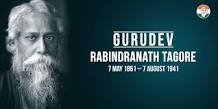
Rabindranath Tagore and Rudyard Kipling never met each other but their admirers often hailed them together in the newsstand. Both are contemporary Indians. Tagore (1861-1941) and Rudyard Kipling (1865-1936). Tagore is considered the father of modern Indian literature. Like Tagore, Kipling too is an Indian, but of Caucasian stock, whose life ran parallel with that of Tagore. While Kipling was among the Anglo-Indian population who administered the British Empire in India, Tagore was a native Indian who resented the colonial presence. He wasn’t overtly political in his activities, but he wasn’t afraid to expose his feelings, either.
Kipling of ‘The Jungle Book’ fame wrote many short stories and poems focusing on the Indian subcontinent which inevitably have a similar feel to Tagore. It would be fair to say that both writers shared a similar gift for their tireless work and both were awarded the Nobel Prize for Literature; Kipling in 1907 and Tagore in 1913. Tagore was a polymath and an all-round creative talent. He became a celebrity in the West during the second half of his lifetime. In 1878 Tagore moved to England intending to obtain a degree but he was ill-suited to formal education and returned to India in 1880, having failed in his academic ambitions.
Kipling was sometimes seen as a racist and had a particular dislike for Bengalis, of which Tagore was one. As a result, there was no love lost between the two literary giants. Tagore had interactions with other European writers, but he ignored Kipling as if he were a pariah. Kipling would not acknowledge Tagore’s work as having any literary worth, because his prejudice was so strong. He insinuated that Tagore was a pretentious pseudo-intellectual, incapable of writing anything of value. Kipling’s view was typically imperialist due to his upbringing. He had been conditioned to believe that “good” Indians were those who knew their place as servants to the ruling elite. His racism towards Tagore was intensified by his resentment that a native Indian had achieved the same literary stature as himself. Kipling needed to feel superior to mask his insecurities, so Tagore’s success presented a psychological impasse.
Both writers offered an overlap in literary approach and content, as if they were mirrors reflecting the same influences, but with a slightly different perspective. In many ways, Tagore appeared wiser than Kipling, for he was drawn to writing his poetry from an early age and was far more open-minded and accommodating of contrasting cultural influences. Kipling deployed writing as a form of escapism, to hide and express his emotions, having suffered a rather unfortunate childhood as described in his short story ‘Baa Baa, Black Sheep’. Tagore intellectualised the human condition and essentially put himself within the characters so that they were imbued with empathy and sympathy. This was because of his vast ancestral estates where he would travel to collect rents and interact with the tenants. This exposed him to traditional storytelling and songs, as well as philosophical and religious ideas. Tagore wrote while travelling, for example, while he was in Ghazipur—U.P., he wrote most of the poems published in his book Manasi. Kipling could not do this so his characters are more stereotyped and lack the complexity and diverseness observed in real people.
Tagore the ‘Bard of Bengal’, and Kipling the ‘Bard of the Empire’, were contemporary literature giants. They were poles apart in thoughts and ideals, viewing society and the Empire from opposite ends of the spectrum. Kipling was strongly nationalistic, while Tagore was a humanist and against the idea of nationalism and the British Empire, though, ironically, Tagore’s poems are today national anthems of two nations, India and Bangladesh. While Kipling was from an educated middle-class family, they were not moneyed, and gaining financial security was important for them. Kipling’s father Lockwood’s decision to come to India as a teacher in the JJ School of Arts was driven by financial need. Tagore on the other hand was born wealthy, in a family of enormous influence and privilege in Calcutta. Despite his privileged background, he had a strong empathy for fellow human beings, which is largely why he was able to write stories and poems with humility and connection.
Tagore’s stories are typically a hybrid between fairy-tale ghost effects and fables. They convey the traditional Indian belief system. Many are short in length and are over-descriptive so it won’t be possible to condense them further and some do not have a conclusive ending.
In the year 1913, Tagore became the first non-European to win the Nobel Prize in Literature as a result he remains one of the most important voices of Bengali culture. On the other hand, Kipling was the first English-language writer to receive the Nobel Prize in Literature, and at 41, its youngest recipient to date. He was also sounded out for the British Poet Laureateship and several times for a knighthood, but he declined both. It is not possible to list the extensive work of these two writers in this short piece, but it appears writers of the following generation drew inspiration from them. For example, one can sense a fleeting similarity between Satyajit Ray’s short story ‘Anath Babu’s Terror’ and Tagore’s ‘The Hungry Stones’; and Kipling’s poem ‘Mandalay’, can, as if, mesh with the pages of George Orwell’s book ‘Burmese Days’. Not surprising, to see the connection in literature.
Shravan Charity Mission is an NGO that works for poor children suffering from life-threatening diseases, especially cancer. Our posts are meant for our readers, including children and adults, and have a huge variety of content. We also accept donations for our mission. Should you wish to donate to the cause of cancer? The bank details are given below:
NAME OF ACCOUNT: SHRAVAN CHARITY MISSION
Account no: 680510110004635 (BANK OF INDIA)
IFSC code: BKID0006805
*
Publications of Kamlesh Tripathi
BOOK TITLE: GLOOM BEHIND THE SMILE
(The book is about a young cancer patient. Now archived in eight prestigious libraries of the US which include Harvard College Library; Harvard University Library; Library of Congress; University of Washington, Seattle; University of Minnesota, Minneapolis; Yale University, New Haven; University of Chicago; University of North Carolina, at Chapel Hill University Libraries. It can also be accessed at MIT through Worldcat.org. Besides, it is also available for reading in the libraries and archives of Canada; the Open Library; Cancer Aid and Research Foundation Mumbai; Jaipuria Institute of Management, Noida, India; Shoolini University, Yogananda Knowledge Center, Himachal Pradesh and Azim Premzi University, Bangalore and the Library of Cancer Aid and Research Foundation, Mumbai. The title also finds a mention in a book titled ‘Enduring Cancer: Life, Death and Diagnosis in Delhi’ by Dwaipayan Banerjee published by the Duke University Press).
BOOK TITLE: ONE TO TANGO … RIA’S ODYSSEY
(It is a book on ‘singlehood’ about a Delhi girl now archived in Connemara Library, Chennai and Delhi Public Library, GOI, Ministry of Culture, Delhi; It is also available for reading in the Indian National Bibliography, March 2016, in the literature section, in Central Reference Library, Ministry of Culture, India, Belvedere, Kolkata-700022)
BOOK TITLE: AADAB LUCKNOW … FOND MEMORIES
(This is a fiction written around the great city of Nawabs—Lucknow. It describes Lucknow in great detail and also talks about its Hindu-Muslim amity, which is the undying characteristic of Lucknow. The book was launched at the Lucknow International Literary Festival in 2014. It is catalogued and included for reading in Askews and Holts Library Services, Lancashire, U.K; Herrick District Library, Holland; Charlotte-Mecklenburg Library, Mecklenburg County, North Carolina, USA; Black Gold Cooperative Library Administration, Arroyo Grande, California; Berkeley Library, University of California; The Peshastin Public Library and The George Public Library near Washington, a Northern Central Washington Libraries branch; the Flagstaff City-Coconino County Public Library in Arizona in the US and the Salina Public Library, Kansas, USA.
BOOK TITLE: REFRACTIONS … FROM THE PRISM OF GOD
(Co-published by Cankids–Kidscan, a pan India NGO and Shravan Charity Mission, that works for child cancer in India. The book is endorsed by Ms Preetha Reddy, MD Apollo Hospitals Group. It was launched at the Lucknow International Literary Festival in 2016).
BOOK TITLE: TYPICAL TALE OF AN INDIAN SALESMAN
(Is a story of an Indian salesman who is, humbly qualified. Yet he fights his way through unceasing uncertainties to reach the top. A good read not only for salesmen but for any reader. The book was launched on 10th February 2018 at Gorakhpur Lit-Fest. Now available on Amazon, Flipkart and Onlinegatha)
BOOK TITLE: RHYTHM … IN POEMS
(Published in January 2019. The book contains 50 poems. The poems are about our day-to-day life. Poems from this book have been published in Shillong Times, Bandra Times, Bhavan’s Journal and Arunachal Times. The book is available on Amazon, Flipkart and Onlinegatha)
BOOK TITLE: MIRAGE
(Published in February 2020. The book is a collection of eight short stories available on Amazon, Flipkart and Notion Press)
BOOK TITLE: AWADH ASSAM AND DALAI LAMA … The Kalachakra
(It is the story of the man who received His Holiness The Dalai Lama and his retinue in 1959 as a GOI representative when he fled Tibet in 1959. The book was launched on 21st November 2022 by His Holiness The Dalai Lama at Dharmshala. The title is archived in the library of the Department of Information and International Relations (DIIR) Government of Tibet, Tibet Policy Institute (TPI) and the personal library of His Holiness The Dalai Lama. The title is also archived in The Ohio Digital Library, USA. It was recently included in the digital library of the world-renowned company APPLE). Included in the library of Friends of Tibet.
(POEMS AND ARTICLES OF KAMLESH TRIPATHI PUBLISHED IN JOURNALS AND MAGAZINES)
BHAVANS JOURNAL
Short stories, Book reviews and Articles published in Bhavan’s Journal: 1. Reality and Perception, 15.10.19; 2. Sending the Wrong Message, 31.5.20; 3. Eagle versus Scholars, June, 15 & 20, 2020; 4. Indica, 15.8.20; 5. The Story of King Chitraketu, August 31 2020; 6. Breaking Through the Chakravyuh, September 30 2020. 7. The Questioning Spouse, October 31, 2020; 8. Happy Days, November 15, 2020; 9. The Karma Cycle of Paddy and Wheat, December 15, 2020; 10. Power Vs Influence, January 31, 2021; 11. Three Refugees, March 15, 2021; 12. Rise and Fall of Ajatashatru, March 31, 2021; 13. Reformed Ruler, May 15, 2021; 14. A Lasting Name, May 31, 2021; 15. Are Animals Better Teachers? June 16, 2021; 16. Book Review: The Gram Swaraj, 1.7.21; 17. Right Age for Achievements, 15.7.21; 18. Big Things Have Small Beginnings, 15.8.21; 19. Where is Gangaridai?, 15.9.21; 20. Confront the Donkey Within You 30.9.21; 21. Know Your Strengths 15.10.21; 22. Poverty 15.11.21; 23. Top View 30.11.21; 24. The Bansuriwala 15.1.22; 25. Sale of Alaska 15.2.22; 26. The Dimasa Kingdom 28.2.22;27. Buried Treasure 15.4.22; 28. The Kingdom of Pragjyotisha 30.4.22; 29. Who is more useful? 15.5.22; 30. The White Swan from Lake Mansarovar 30.6.22; 31. Bhool Bhulayya 15.9.22; 32. Good Karma 30.9.22; 33. Good Name vs Bad Name 15.10.22; 34. Uttarapath—The Grand Trunk Road 1.12.22; 35. When Gods Get Angry 1.1.23; 36. Holinshed’s Chronicles 15.1.23; 37. Theogony 15.2.23; 38. Poem: Mother 14.5.23; 39. The Nag Mandir 30.6.23; 40. The Story of Garuda 30.7.23; 41. Janmabhoomi vs Karmabhoomi 31.8.23; 42. The Ghost Town of Kuldhara 15.9.23; 43. The Tale of Genji 15.10.23; 44. The Soul Connection 1.12.23; 45.Book review: Jungle Nama … a story of the Sundarban 16.3.24; 46. Book review: A Forgotten Chapter 16.5.24; 47. Exploring Ancient Egypt, 1.8.24; 48. The Story of Dhruva, 16.8.24; 49. Two Hundred Years of Tea in Assam 16.9.24;
THE SHILLONG TIMES
Articles & Poems: 1. Poem: Happy New Year 8.1.23; 2.Poem: Spring 12.3.23; 3.Poem: Right and Wrong 20.3.23; 4.The Gush of Emotion—Writing, 26.3.23; 5. The Nag Mandir, 7.5.23; 6. Poem: Mother 7.5.23; 7. Poem: Rain Rain 9.7.23; 8. Poem:You Come Alone You Go Alone 6.8.23; 9. Poem: Rain Rain (Second Time) 10.8.23; 10. Poem: Guru Teacher 1.10.23; 11. Poem: Autumn … The Interim Heaven 15.10.23; 12. Poem: Happy Diwali 12.11.23; 13. Overcoming Blindness: Learn it the John Milton Way 10.12.23; 14. The Happy Prince and The Happy Man’s Shirt 31.12.23; 15. Annus Mirabilis -2024 7.1.24; 16. Gandhi to Mahatma Gandhi- Incidents that Shaped Gandhi in South Africa 28.1.24; 17. Poem: Together But Not Made For Each Other, 11.2.24; 18. The Birds Bees and The Spiders of Nicholas Guildford and Jonathan Swift 25.2.24; 19. The Overcoats of Nikolai Gogol and Ruskin Bond 10.3.24; 20. The Ethnic Colours of Holi 24.3.24; 21. A Lesson from Dalai Lama, 21.4.24; 22. Poem: Morning Walk 28.4.24; 23. Trip to Rhine Falls, Switzerland, 19.5.24; 24. Poem: Hurt 2.6.24; 25. Poem: Your Conscience Was My Sign On 16.6.24; 26.Poem: The Eerie Ways of Time 7.7.24; 27.Poem: Celebrating the T20 World Champions 14.7.24;28. Read to Rise above mediocrity, 4.8.24; 29. Poem: Desire vs Reality 11.8.24; 30. Jack Ma’s Pristine Advice to Employers, Employees and the Youth 22.9.24;
THE ASSAM TRIBUNE
Article: 1. The Magic of Reading 11.12.23; 2. Gandhi to Mahatma 29.1.24; 3. Geography of Solitude 8.4.24; 4. A Lesson From Dalai Lama, 22.4.24; 5. A Source of Inspiration, 29.4.24; 6. The Four-LeggedLibrary, 12.5.24; 7. Age and Achievement, 10.6.24; 8. Read … To Rise Above Mediocrity, 1.7.24; 9. Crusade for a College, 25.8.24; 10. Hemingway’s Iceberg Theory (Panorama) 27.9.24;
THE ARUNACHAL TIMES
Poem: 1. Hope—In The Arc of Twilight, 13.8.23; 2.Poem: Spring 3.3.24; 3.Poem: The Morning Walk 10.3.24;
BANDRA TIMES, MUMBAI
Articles & Poems: 1. Poem: SPRING, 1.4.23; 2. Poem: Mother, 1.6.23; 3. Poem: Rain Rain, 1.8.23; 4. A Lesson From Dalai Lama, 1.6.24; 5. Read to rise above Mediocrity 1.8.24
THE GOAN
Poem 1: Autumn – The Interim Heaven, 6.10.24
ARTICLES IN THE DIGITAL MAGAZINE ESAMSKRITI
29.12.2020: Indica by Megasthenes; 14.3.22: About The Dimasa Kingdom Assam; 10.12.22: Grand Trunk Road–Uttarapath; 5.10.23: The Ghost Town of Kuldhara Near Jaisalmer;
(ALL THE ABOVE BOOK TITLES ARE AVAILABLE FOR SALE ON AMAZON, FLIPKART AND OTHER ONLINE STORES OR YOU COULD EVEN WRITE TO US FOR A COPY)
This is only an attempt to create interest in reading. We may not get the time to read all the books in our lifetime. But such reviews, talk and synopsis will at least convey what the book is all about.
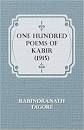
This book was published in India by Macmillan. An imprint of Pan Macmillan Publishing India Private Ltd in the year 1915. The price of this book is Rs 125. It is a slim book of around 160 pages in all.
Kabir says, “I have attained the unattainable, and my heart is coloured with the colour of love.”
Who doesn’t know Kabir? A selection of his songs is here for the first time offered to English readers. Kabir is one of the most interesting personalities in the history of Indian mysticism.
But before that let me give you a brief on poet Kabir. Born in or near Benares, of Mohammedan parents, probably about the year 1440, he became in early life, a disciple of the celebrated Hindu ascetic Ramananda. Ramananda had brought to Northern India the religious revival which Ramanuja, the great twelfth-century reformer of Brahmanism, had initiated in the South.
Ramananda, was the person through whom the spirit of Ramanuja is said to have reached Kabir. Kabir was a man of wide religious culture and tolerance, and full of missionary enthusiasm. He passed through the earth in times when impassioned poetry and deep philosophy of the great Persian mystics such as, Attar, Sadi, Jalalu’din Rumi, and Hafiz ruled the roost. They exercised a powerful influence on the religious paradigm of India. Kabir always dreamt of reconciling his intense and personal Mohammedan mysticism with the traditional theology of Brahminism.
Kabir’s story is surrounded by contradictory legends, but none of which can be relied upon hundred percent. Some of these emanate from Hindu sources, and some from Mohammedan. They both claimed him by turns, as a Sufi and a Brahman ascetic. His name, in umpteen ways, is practically a conclusive proof of, he being a liberal Muslim. In today’s reference one can even relate him as the biggest emissary of Hindu-Muslim Amity.
In the collection of songs translated here in this book one will find examples that illustrate nearly every aspect of Kabir’s thought panorama, and all his fluctuations of the mystic emotions. It runs through: the ecstasy of despair, the still beatitude, the eager self-devotion, the flashes of wide illumination and the moments of intimate love.
The book starts with a long introduction of Kabir by Evelyn Underhill. The boy Kabir, in whom the religious passion was innate, saw in Ramananda his destined teacher. But he wasn’t sure if a Hindu guru would accept a Mohammedan as a disciple. He therefore lay hidden on the steps of the river Ganga, where Ramananda was accustomed to bathe, with the result that the master, while walking down to the water, stepped on his body unknowingly and exclaimed in his astonishment, “Ram! Ram!” –the very name of the deity that he worshipped. Kabir declared that he had received the mantra of initiation from Ramananda’s lips, and by virtue of which he was admitted to his discipleship. And, in spite of the protests of orthodox Brahmans and Mohammendans, both equally annoyed by this contempt of theological landmarks he persisted with his claim.
Ramananda appears to have accepted him. Though Mohammedan legends speak of the famous Sufi Pir, Takki of Jhansi, as Kabir’s master in later life, but the Hindu saint is the only human teacher to whom, in his songs, he acknowledges the indebtedness.
The comprehensive introduction written by Evelyn Underhill, includes Kabir, in the elite group of some supreme mystics—among whom are, St. Augustine, Ruysbroeck and the Sufi poet Jalau’ddin Rumi, who are perhaps the chief—and have achieved what we may call the syncretic vision of God.
After the 26 page introduction that describes the credentials of Kabir by Evelyn Underhill the book captures some top of the chart dohas—verses-quatrains (poems) of Kabir. I would take you through a few of them. These verses in the book are written in Roman Hindi words and then translated into English. Let me recite a few dohas to you and then translate them to English:
Mo ko kahan dhunro bande,
Main toh tere paas mein,
Naa main deval naa main masjid,
Naa kaabe kailaas mein,
Naa main koune kriya karam mein,
Nahi yog vairaag mein,
Khoji ho to turate mila-ihe pal bhar ki talaas mein,
Kahyeen kabir suno bhai saadho sab swason ki swans mein.
This translates into a beautiful life-lesson:
O servant where dost thou seek Me? I am neither in a temple nor in a mosque: I am neither in Kaaba nor in Kailash: Neither am I in any rites nor in ceremonies, nor in Yoga nor renunciation. If thou art a true seeker, thou shalt at once see Me: thou shalt meet me in a moment of time. Kabir says, “O Sadhu! God is the breath of all breath.”
And another one:
Na jaane sahib kaisa hai.
Na jaane teraa sahib kaisaa hai,
Mulla hokar bang jo dyeve,
Kya tera sahab bahraa hai,
Keedee ke pag nahi baaje, toh-bhee sahab suntaa hai,
Antar tere Kuphar—kataaree, yon nahin sahab milta hai.
This translates into …
I DO NOT know what kind of God you have: The Mullah cries aloud to Him, but why? Is your Lord deaf? When even the subtle anklets that ring on the feet of an insect when it moves are heard by him.
You count the beads, paint your forehead with the mark of your God, and you wear matted locks long and showy, but a deadly weapon is in your heart, so why will you have God?
There is another one for you:
Jo khuda masjid vasat hai aur muluk keh kara,
Teerath-moorat Raam-niwaasee bahar kare ko heraa,
Poorab disaa Haree ka vaas pachchhim Alah ka mukaam,
Dil mein khoj dilhee mein khojou, yahin Kareem-yahin Raam,
Jete aurat-marad upaan-ee so sab roop tumhaaraa,
Kabir –hai Alah-Ram ka so guru peer hamaaraa
If God is within the mosque, then whom does this world belong to? If Ram is within the image that you find in your pilgrimage, then who is there to know what happens without him? Hari is in the East. Allah is in the West. Look within your heart, for there you will find both Karim and Ram. All the men and women of the world are, His living forms. Kabir is the child of Allah and of Ram. He is my Guru, He is my Ram.
Over all it’s a niche book for people who have a poetic bent of mind. The Hindi to English translation of the book is not very good. But yes, since, it’s a translation, it is good for people who cannot read Hindi as it’s, written in Roman Hindi along with a translation. I would give the book six out of ten.
Shravan Charity Mission is an NGO that works for poor children suffering from life threatening diseases especially cancer. Our posts are meant for our readers that includes both children and adults and it has a huge variety in terms of content. We also accept donations for our mission. Should you wish to donate for the cause. The bank details are given below:
NAME OF ACCOUNT: SHRAVAN CHARITY MISSION
Account no: 680510110004635 (BANK OF INDIA)
IFSC code: BKID0006805
*
Our publications
GLOOM BEHIND THE SMILE
(The book is about a young cancer patient. Now archived in 7 prestigious libraries of the US, including, Harvard University and Library of Congress. It can also be accessed in MIT through Worldcat.org. Besides, it is also available for reading in Libraries and archives of Canada and Cancer Aid and Research Foundation Mumbai)
ONE TO TANGO … RIA’S ODYSSEY
(Is a book on ‘singlehood’ about a Delhi girl now archived in Connemara Library, Chennai and Delhi Public Library, GOI, Ministry of Culture, Delhi)
AADAB LUCKNOW … FOND MEMORIES
(Is a fiction written around the great city of Nawabs—Lucknow. It describes Lucknow in great detail and also talks about its Hindu-Muslim amity. That happens to be its undying characteristic. The book was launched in Lucknow International Literary Festival of 2014)
REFRACTIONS … FROM THE PRISM OF GOD
(Co-published by Cankids–Kidscan, a pan India NGO and Shravan Charity Mission, that works for Child cancer in India. The book is endorsed by Ms Preetha Reddy, MD Apollo Hospitals Group. It was launched in Lucknow International Literary Festival 2016)
TYPICAL TALE OF AN INDIAN SALESMAN
(Is a story of an Indian salesman who is, humbly qualified. Yet he fights his ways through unceasing uncertainties to reach the top. A good read not only for salesmen. The book was launched on 10th February, 2018 in Gorakhpur Lit-Fest. Now available in Amazon, Flipkart and Onlinegatha)
RHYTHM … in poems
(Published in January 2019. The book contains 50 poems. The poems describe our day to day life. The book is available in Amazon, Flipkart and Onlinegatha)
MIRAGE
(Published in February 2020. The book is a collection of eight short stories. It is available in Amazon, Flipkart and Notion Press)
(ALL THE ABOVE TITLES ARE AVAILABLE FOR SALE IN AMAZON, FLIPKART AND OTHER ONLINE STORES OR YOU COULD EVEN WRITE TO US FOR A COPY)
There is a tendency in India if something is good, mix some kind of politics in it and destroy it. After all politics is the will of the people.
Double, double, toil and trouble; fire burn and cauldron bubble.‘ is one of the most famous lines in English literature. These lines are spoken in unison by three witches who predict Macbeth’s future throughout the play. These lines show how what the witches say can have double meanings and can be contradictory.
Non-violence is the first article of my faith. It is also the last article of my creed—Mahatma Gandhi.
A country has a trade-deficit when it imports more than it exports. Trump thinks of it as as something bad which it is not. I run a trade deficit with my domestic help and my local grocery store. I buy more from them then they do from me.
The greater misfortune is that the Englishmen and their Indian associates in the administration of the country do not know that they are engaged in a crime I have attempted to describe—Mahatma Gandhi in his oral statement on March 18, 1922.
That quintessential American product, the I-Phone, uses parts from 43 countries. As local products rise in price because of expensive foreign parts, price rise, demand goes down, jobs are lost and everyone is worse off.
According to a German philosopher, we are what we eat, as what we eat makes up not just our bodies but also shapes our tastes, inclinations and personality in general.
‘Don’t let the fox guard the hen house’ means don’t assign the duty of protecting or controlling valuable information or resources to someone who is likely to exploit that opportunity.
The proverb ‘fence eating the crop’ comes from a skepticism of those who break laws they are supposed to uphold.
When you are finished changing, you are finished—Benjamin Franklin.
The Kingdom of Nepal stands out today as the only Hindu Kingdom in the world whose independence is recognised by England, France, Italy and other great powers—Vinayak Damodar Savarkar, 1937.
One cannot believe that Indians are in any way inferior to the Japanese in intellectual capacity. The most effective difference between these two eastern peoples is that whereas India lies at the mercy of the British, Japan has been spared the shadow of domination—Rabindranath Tagore, 1941.
All brands of people are arrayed on Congress Platform. If there can be a magic box which contains a Cobra and a mongoose living together, it is Congress—Pandit Deendayal Upadhyaya.
Britishers were a representative of the West, ruled this country for over a century and, during this period adopted such measures whereby in the minds of our people, a contempt for things Bharatiya and respect for everything Western were subtly created.—Pandit Deendayal Upadhyaya, 1965.
Mother Teresa believed that abortion is the highest form of evil, as it is the killing of a life that has already been conceived.
It is less important, I believe, where you start. It is more important how and what you learn. If the learning is high, the development gradient is steep, and, given time, you can find yourself in a previously unattainable place. I believe the Infosys story is living proof of this—Narayana Murthy.
Sometimes when you have a goal in front of you it is easy to focus. Cyclists have pelotons who give them that focus as to what they should achieve in short bursts—Viswanathan Anand.
China and India have two of the world’s four largest militaries.
The Folger Shakespeare Library is an independent research library on Capitol Hill in Washington, D.C., in the United States. It has the world’s largest collection of the printed works of William Shakespeare, and is a primary repository for rare materials from the early modern period (1500–1750). The library was established by Henry Clay Folger in association with his wife, Emily Jordan Folger. It opened in 1932, two years after his death.
From Alexander onwards, the Greeks, the Turks, the Moguls, the Portuguese, the British, the French, the Dutch, all of them came and looted us, took over what was ours. Yet we have not done this to any other nation. We have not conquered anyone. We have not grabbed their land, their culture, their history and tried to enforce our way of life on them. Why? Because we respect the freedom of others—APJ Abdul Kalam.
No matter how many people support you and help you, when you perform, you are alone—Abhinav Bindra.
I may never be perfect. That’s okay. But I can always be better than I was yesterday—Abinav Bindra.
India imports 90% oil, 100% gold and 100% copper.
There is an old racist saying ‘once you go black you can’t go back’ (a Google search will reveal its meaning).
What makes PM2.5 particles extremely dangerous is their cancerous ability to penetrate human body and stick onto to the insides of the lungs. According to a recent study conducted by IIT Kanpur the mix sources responsible for PM2.5 changes seasonally in the region. In winters vehicular emissions account for 25% of PM2.5; 30% is accounted for by sulphur and nitrogen oxide emissions from vehicles, industry and power generation facilities; 26% comes from burning of wood, cow dung, and agricultural waste for cooking and heating; 8% comes from burning of garbage; 5% from the burning of coal and fly ash; 4% from agricultural and road dust; and 2% from construction dust.
Shravan Charity Mission is an NGO that works for poor children suffering from life threatening diseases especially cancer. Our posts are meant for our readers that includes both children and adults and it has a huge variety in terms of content. We also accept donations for our mission. Should you wish to donate for the cause. The bank details are given below:
NAME OF ACCOUNT: SHRAVAN CHARITY MISSION
Account no: 680510110004635 (BANK OF INDIA)
IFSC code: BKID0006805
*
Our publications
GLOOM BEHIND THE SMILE
(The book is about a young cancer patient. Now archived in 7 prestigious libraries of the US, including, Harvard University and Library of Congress. It can also be accessed in MIT through Worldcat.org. Besides, it is also available for reading in Libraries and archives of Canada and Cancer Aid and Research Foundation Mumbai)
ONE TO TANGO … RIA’S ODYSSEY
(Is a book on ‘singlehood’ about a Delhi girl now archived in Connemara Library, Chennai and Delhi Public Library, GOI, Ministry of Culture, Delhi)
AADAB LUCKNOW … FOND MEMORIES
(Is a fiction written around the great city of Nawabs—Lucknow. It describes Lucknow in great detail and also talks about its Hindu-Muslim amity. That happens to be its undying characteristic. The book was launched in Lucknow International Literary Festival of 2014)
REFRACTIONS … FROM THE PRISM OF GOD
(Co-published by Cankids–Kidscan, a pan India NGO and Shravan Charity Mission, that works for Child cancer in India. The book is endorsed by Ms Preetha Reddy, MD Apollo Hospitals Group. It was launched in Lucknow International Literary Festival 2016)
TYPICAL TALE OF AN INDIAN SALESMAN
(Is a story of an Indian salesman who is, humbly qualified. Yet he fights his ways through unceasing uncertainties to reach the top. A good read not only for salesmen. The book was launched on 10th February, 2018 in Gorakhpur Lit-Fest. Now available in Amazon, Flipkart and Onlinegatha)
RHYTHM … in poems
(Published in January 2019. The book contains 50 poems. The poems describe our day to day life. The book is available in Amazon, Flipkart and Onlinegatha)
(ALL THE ABOVE TITLES ARE AVAILABLE FOR SALE IN AMAZON, FLIPKART AND OTHER ONLINE STORES OR YOU COULD EVEN WRITE TO US FOR A COPY)
This is only an attempt to create interest in reading. We may not get the time to read all the books in our lifetime. But such reviews, talk and synopsis will at least convey what the book is all about.
SHAZADPUR JULY 1891
There is another boat at this landing-place and on the shore in front of it a crowd of village women. Some are evidently embarking on a journey and the others seeing them off; infants, veils, and grey hairs are all mixed up in the gathering.
One girl in particular attracts my attention. She must be about eleven or twelve; but buxom and sturdy, she might pass for fourteen or fifteen. She has a winsome face—very dark, but very pretty. Her hair is cut short like a boy’s, which well becomes her simple, frank, and alert expression. She has a child in her arms and is staring at me with unabashed curiosity, and certainly no lack of straightforwardness or intelligence in her glance. Her half-boyish, half-girlish manner is singularly attractive—a novel blend of masculine nonchalance and feminine charm. I had no idea there were such types among our village women in Bengal.
None of this family, apparently, is troubled with too much bashfulness. One of them has unfastened hair in the sun and is combing it out with her ringers, while conversing about their domestic affairs at the top of her voice with another, on board. I gather she has no other children except a girl, a foolish creature who knows neither how to behave or talk, nor even the difference between kin and stranger. I also learn that Gopal’s son-in-law has turned out a neér-do-well, and that his daughter refuses to go to her husband.
When, at length, it was time to start, they escorted my short-haired damsel, with plump shapely arms, her golden bangles and her guileless, radiant face, into the boat. I could divine that she is returning from her father’s to her husband’s home. They all stood there, following the boat with their gaze as it cast off, one or two wiping their eyes with the loose end of their saris. A little girl, with her hair tightly tied into a knot, clung to the neck of an older woman and silently wept on her shoulder. Perhaps, she was losing a darling Didimani who joined in her doll games and also slapped her when she was naughty …
The quiet floating away of a boat on the stream seems to add to the pathos of a separation—it is so like death—the departing one lost to sight, those left behind returning to their daily life, wiping their eyes. True, the pang lasts but a while, and is perhaps already wearing of both in those who have gone and those who remain,–pain being temporary, oblivion permanent. But none the less it is not the forgetting, but the pain which is true; and every now and then, in separation or in death, we realise how terribly true.
Shravan Charity Mission is an NGO that works for poor children suffering from life threatening diseases especially cancer. Our posts are meant for our readers that includes both children and adults and it has a huge variety in terms of content. We also accept donations for our mission. Should you wish to donate for the cause. The bank details are given below:
NAME OF ACCOUNT: SHRAVAN CHARITY MISSION
Account no: 680510110004635 (BANK OF INDIA)
IFSC code: BKID0006805
*
Our publications
GLOOM BEHIND THE SMILE
(The book is about a young cancer patient. Now archived in 7 prestigious libraries of the US, including, Harvard University and Library of Congress. It can also be accessed in MIT through Worldcat.org. Besides, it is also available for reading in Libraries and archives of Canada and Cancer Aid and Research Foundation Mumbai)
ONE TO TANGO … RIA’S ODYSSEY
(Is a book on ‘singlehood’ about a Delhi girl now archived in Connemara Library, Chennai and Delhi Public Library, GOI, Ministry of Culture, Delhi)
AADAB LUCKNOW … FOND MEMORIES
(Is a fiction written around the great city of Nawabs—Lucknow. It describes Lucknow in great detail and also talks about its Hindu-Muslim amity. That happens to be its undying characteristic. The book was launched in Lucknow International Literary Festival of 2014)
REFRACTIONS … FROM THE PRISM OF GOD
(Co-published by Cankids–Kidscan, a pan India NGO and Shravan Charity Mission, that works for Child cancer in India. The book is endorsed by Ms Preetha Reddy, MD Apollo Hospitals Group. It was launched in Lucknow International Literary Festival 2016)
TYPICAL TALE OF AN INDIAN SALESMAN
(Is a story of an Indian salesman who is, humbly qualified. Yet he fights his ways through unceasing uncertainties to reach the top. A good read not only for salesmen. The book was launched on 10th February, 2018 in Gorakhpur Lit-Fest. Now available in Amazon, Flipkart and Onlinegatha)
RHYTHM … in poems
(Published in January 2019. The book contains 50 poems. The poems describe our day to day life. The book is available in Amazon, Flipkart and Onlinegatha)
(ALL THE ABOVE TITLES ARE AVAILABLE FOR SALE IN AMAZON, FLIPKART AND OTHER ONLINE STORES OR YOU COULD EVEN WRITE TO US FOR A COPY)
This is only an attempt to create interest in reading. We may not get the time to read all the books in our lifetime. But such reviews, talk and synopsis will at least convey what the book is all about
KALIGRAM 1891
By Gurudev Rabindranath Tagore
When Gurudev was young he had written many letters that later on got published as a book, after they were translated into English. In these letters Gurudev has mostly described a village scene in Bengal. He calls letter writing a form of literary extravagance. These letters have now become part of his published works. Kaligram 1891 happens to be once such letter and below is the synopsis of this letter.
I am feeling listlessly comfortable and delightfully irresponsible. (Perhaps that gives him time to indulge in letter writing). This is the prevailing mood all around here. There is a river here. But it has no current to speak of. And is merely lying, snugly tucked up in its coverlet of floating weeds. Perhaps, it seems to think—‘since it is possible to get on without getting along. Why should I bestir myself to stir?’ The sentence has a deep meaning. The edge that lines the bank knows hardly of any disturbance until the fishermen come with their nets.
There are four or five large size boats moored nearby. They are floating alongside. On the upper deck of one, the boatman is fast asleep. He is rolled up in a sheet from head to foot. On another, the boatman—while basking in the sun—is leisurely twirling some yarn into rope. And on the lower deck of another boat there is an oldish looking bare bodied fellow leaning over an oar, staring vacantly at our boat. God knows why.
All along the bank there are various other people. But why they come and why they go, with the slowest of idle steps, or remain seated in their haunches embracing their knees, or keep on gazing at nothing in particular, no one can guess.
The only signs of activity that one gets to see are the ducks. Who quacking clamorously, thrust their heads under and then bob up again to shake off water with equal energy. It appears as if they repeatedly tried to explore the mysteries below the surface, and every time, shaking their heads, had to report. ‘Nothing there! Nothing there!’
The days drowse all their twelve hours in the sun. and then silently sleep away the other twelve, wrapped in the mantle of darkness. The only thing you want to do in a place like this is, to gaze and gaze on the landscape, swinging your fancies to and fro, alternately humming a tune and nodding dreamily, as the mother on a winter’s noonday, with her back to the sun, rocks and croons her baby to sleep.
Shravan Charity Mission is an NGO that works for poor children suffering from life threatening diseases especially cancer. Should you wish to donate for the cause. The bank details are given below:
NAME OF ACCOUNT: SHRAVAN CHARITY MISSION
Account no: 680510110004635 (BANK OF INDIA)
IFSC code: BKID0006805
*
Our publications
GLOOM BEHIND THE SMILE
(The book is about a young cancer patient. Now archived in 7 prestigious libraries of the US, including, Harvard University and Library of Congress. It can also be accessed in MIT through Worldcat.org. Besides, it is also available for reading in Libraries and archives of Canada and Cancer Aid and Research Foundation Mumbai)
ONE TO TANGO … RIA’S ODYSSEY
(Is a book on ‘singlehood’ about a Delhi girl now archived in Connemara Library, Chennai and Delhi Public Library, GOI, Ministry of Culture, Delhi)
AADAB LUCKNOW … FOND MEMORIES
(Is a fiction written around the great city of Nawabs—Lucknow. It describes Lucknow in great detail and also talks about its Hindu-Muslim amity. That happens to be its undying characteristic. The book was launched in Lucknow International Literary Festival of 2014)
REFRACTIONS … FROM THE PRISM OF GOD
(Co-published by Cankids–Kidscan, a pan India NGO and Shravan Charity Mission, that works for Child cancer in India. The book is endorsed by Ms Preetha Reddy, MD Apollo Hospitals Group. It was launched in Lucknow International Literary Festival 2016)
TYPICAL TALE OF AN INDIAN SALESMAN
(Is a story of an Indian salesman who is, humbly qualified. Yet he fights his ways through unceasing uncertainties to reach the top. A good read not only for salesmen. The book was launched on 10th February, 2018 in Gorakhpur Lit-Fest. Now available in Amazon, Flipkart and Onlinegatha
(ALL THE ABOVE TITLES ARE AVAILABLE FOR SALE IN AMAZON, FLIPKART AND OTHER ONLINE STORES OR YOU COULD EVEN WRITE TO US FOR A COPY)






 Shravan charity mission