Tag Archives: Gandhi

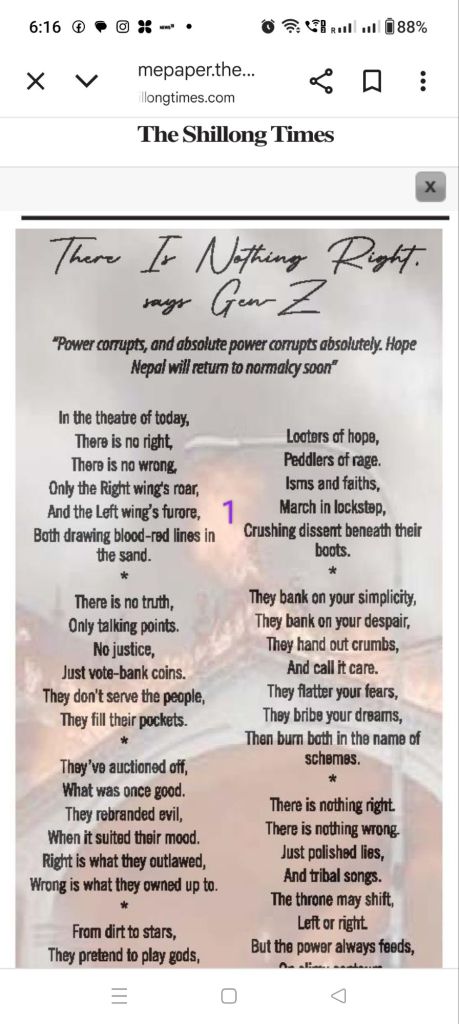
Poem: There Is Nothing Right … Says Gen Z by Kamlesh Tripathi

Should India Include All-Time Classic Movies in School and College Syllabi in This Digital Age? by Kamlesh Tripathi

Pakistan: An Atrocious Copy-Paste Master … by Kamlesh Tripathi


THE GUJARATI DNA

GANDHI TO MAHATMA GANDHI … Incidents that Shaped Gandhi in South Africa

***

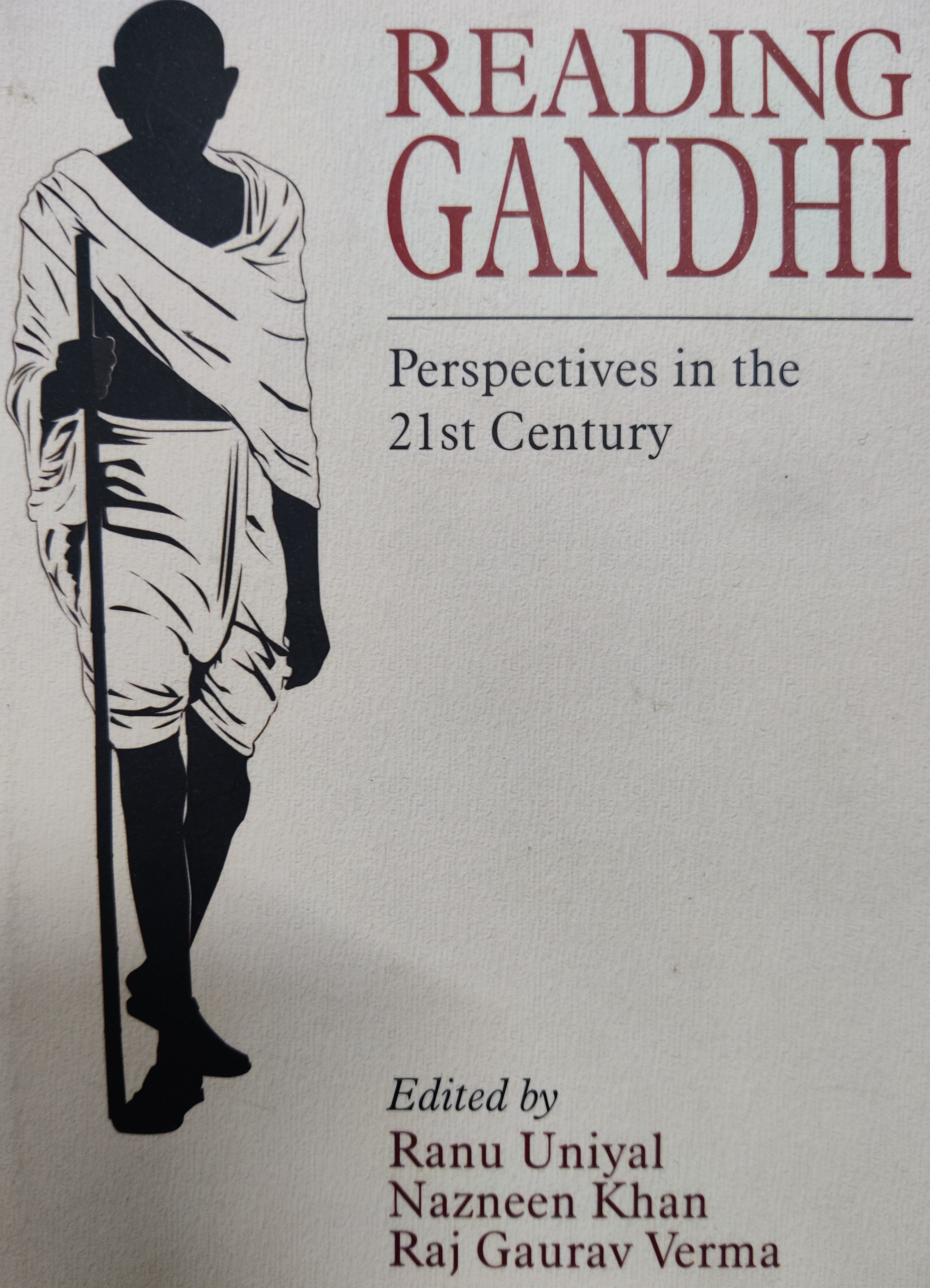
BOOK CORNER: “READING GANDHI–Perspectives in the 21st Century … by Ranu Uniyal, Nazneen Khan and Raj Gaurav Verma

Copyright@shravancharitymission

     This treasure of essays is edited by Ranu Uniyal, Nazneen Khan and Raj Gaurav Verma. All are distinguished academicians. The trinity teaches English at Lucknow University. The book is a publication of Pencraft International published in 2022. The price of the book is Rupees 800. The spine of the book is less than 200 pages. Let me begin by saying that the book is too complex for an average reader. It is an assortment of fourteen articles written by renowned academicians. Perhaps their normal diction would also be complex for the average reader, I guess so. And I only wish the content was simpler and easy to read just like the simple persona of Gandhi.  

    Gandhi is a revered surname in the world. The subject book explores the relevance of M. K. Gandhi in contemporary times and also links it up with times to come. It covers the dispensation of justice, human rights, conflict and peace-building, along with his evergreen mechanism of non-violence and Satyagraha which were focal to him. The essays in this volume focus on inner strength, brotherhood and self-discipline. His persona becomes a rendezvous a nukkad for discourse in the post-colonial era. Practical ideas on food, dress and day-to-day living are included in this study so also his impact on world literature. His philosophical ideals and spiritual experiences reflect his views on truth, identity and nationhood. The book covers the impact of Gandhian thoughts on late capitalism, neo-colonialism and post-truth. It opens debates on many significant issues troubling mankind. Therefore, it will be of interest to scholars of postcolonial literature, gender and cultural studies. Simply put, the book coaches you on the Gandhian way of living and reacting in today’s utopian and dystopian world.

    The august trinity has edited some painstakingly written articles by historians, academicians and writers such as Bhikhu Parekh, John Thieme, Neelam Saran Gour, Pritish Acharya, Alok Kumar, Papia Sengupta, Hardeep Ranjitsinh Gohil, Neena Gupta Vij, Roopa Vijay and Meenakshi Vijay, Amrita Sharma, Suchitra Awasthi, Vishakha Sen, Fatima Sahrish and Raj Gaurav Verma. After reading the book I wondered if the learned authors had simplified the dhoti-clad half-naked fakir called Mahatma Gandhi or complicated him. The title of Mahatma was bestowed upon Gandhi by Gurudev Rabindranath Tagore. Mahatma is a simple soul as we all know. But being simple is not so simple, as it generates complexities for others, perhaps. Surely, this book is not for an average reader but more for academicians who already know Gandhi and it’ll help them in further hair-splitting on his larger-than-life persona.

    The narration gives a full-circle view of Mahatma Gandhi. It offers you the following: The title starts with an introduction by the trinity. Thereafter, the cynosure, Gandhi, is discussed in various articles and in various ways. There are several silhouettes of him. Then comes the juxtaposition of R.K. Narayan, Politics and Gandhi, and isn’t it amusing when a child labels Gandhiji as a man who kept three monkeys and made salt, says the next article titled, ‘On Gandhi.’ Gandhiji became renowned because of the Champaran Satyagraha. He used to walk for 18 km a day which he did for many years. In the process, he may have walked more than 59000 km. Then comes, Truth, Ethics and Theory: Gandhi and the Heuristics of Living. A mental shortcut to living. These are all improbable-sounding words in today’s context. Despite all our ideological compulsions why does it seem so difficult to disown Gandhi completely? Writing about Gandhi in the twenty-first century, to begin with requires a good amount of ground-clearing.  There is so much muck in the air because of the language row in India. But Gandhi had his own thoughts on a Common Language for India. The Ramayan and the Bhagwat Gita were very dear to the Mahatma and he had done two Gujarati translations of the Bhagwat Gita which is mentioned in the article titled, ‘The Purpose and Perfection: Two Gujarati Translations of Bhagwat Gita by Mohandas Karamchand Gandhi.’ Mahatma Gandhi is seen as an exceptional force in world politics because he fought with a technologically superior imperial force without resorting to modern weaponry. Gandhi had a diet chart for every Indian in his book titled ‘Gram Swaraj.’ The article ‘Gandhi and Food’ says it all in its narration. What a personality Gandhi was. His dress code had the lusciousness of a fakir that became the national symbol and his sartorial flavour also had the insignia of Colonial Protest. On a true vibrant civilization and the real edifice of education Gandhi’s book ‘Hind Swaraj’ still stands out.

There are so many descriptions of Gandhi by so many researchers in the book. The book is well-edited with a good flow of sentences. There is relevant day-to-day information about Gandhi in the narration for eg he used to write 700 words every day and used to walk 18 km a day. Since the book is a recent publication I would desist from being a spoiler so I won’t reveal more. But yes unlike violence Gandhi’s non-violence acted silently and slowly, and took its own time, but in the end, it delivered.

The book needs to be simplified for an average reader. The articles are well-researched and give you a plethora of facts about Gandhi that will entice you to read the book. There should have been a summary at the end of each chapter to simplify the deliberations. Who could imagine a 5ft 5 inches tall person weighing about 46.7 kg with a BMI of 17.1 kg—which means underweight will lead India to freedom from the fierce British Raj? But why should anyone read this book? Well if you want to know if Gandhi was responsible for the partition read this book. In the same manner, if you want to know more about Gandhi here is the book.

By Kamlesh Tripathi

*

https://kamleshsujata.wordpress.com

*

Share it if you like it

*

Shravan Charity Mission is an NGO that works for poor children suffering from life threatening diseases especially cancer. Our posts are meant for our readers that includes both children and adults and it has a huge variety in terms of content. We also accept donations for our mission. Should you wish to donate for the cause. The bank details are given below:

NAME OF ACCOUNT: SHRAVAN CHARITY MISSION

Account no: 680510110004635 (BANK OF INDIA)

IFSC code: BKID0006805

*

Our Publications

GLOOM BEHIND THE SMILE

(The book is about a young cancer patient. Now archived in 8 prestigious libraries of the US that includes Harvard College Library; Harvard University Library; Library of Congress; University of Washington, Seattle; University of Minnesota, Minneapolis; Yale University, New Haven; University of Chicago; University of North Carolina, at Chapel Hill University Libraries. It can also be accessed in MIT through Worldcat.org. Besides, it is also available for reading in libraries and archives of Canada, Cancer Aid and Research Foundation Mumbai; Jaipuria Institute of Management, Noida; India. Shoolini University, Yogananda Knowledge Center, Himachal Pradesh and Azim Premzi University, Bangalore).  

ONE TO TANGO … RIA’S ODYSSEY

(Is a book on ‘singlehood’ about a Delhi girl now archived in Connemara Library, Chennai and Delhi Public Library, GOI, Ministry of Culture, Delhi; Available for reading in Indian National Bibliography, March 2016, in the literature section, in Central Reference Library, Ministry of Culture, India, Belvedere, Kolkata-700022)

AADAB LUCKNOW … FOND MEMORIES

(Is a fiction written around the great city of Nawabs—Lucknow. It describes Lucknow in great detail and also talks about its Hindu-Muslim amity. That happens to be the undying characteristics of Lucknow. The book was launched in Lucknow International Literary Festival of 2014. It is included for reading in Askews and Holts Library Services, Lancashire, U.K; Herrick District Library, Holland and Charlotte-Mecklenburg Library, Mecklenburg County in North Carolina, USA; Black Gold Cooperative Library Administration, Arroyo Grande, California).

REFRACTIONS … FROM THE PRISM OF GOD

(Co-published by Cankids–Kidscan, a pan India NGO and Shravan Charity Mission, that works for Child cancer in India. The book is endorsed by Ms Preetha Reddy, MD Apollo Hospitals Group. It was launched in Lucknow International Literary Festival 2016)

TYPICAL TALE OF AN INDIAN SALESMAN

(Is a story of an Indian salesman who is, humbly qualified. Yet he fights his way through unceasing uncertainties to reach the top. A good read not only for salesmen. The book was launched on 10th February 2018 in Gorakhpur Lit-Fest. Now available on Amazon, Flipkart and Onlinegatha)

RHYTHM … in poems

(Published in January 2019. The book contains 50 poems. The poems describe our day-to-day life. The book is available on Amazon, Flipkart and Onlinegatha)

MIRAGE

(Published in February 2020. The book is a collection of eight short stories available in Amazon, Flipkart and Notion Press)

AWADH ASSAM AND DALAI LAMA … The Kalachakra

(The story of the man who received His Holiness The Dalai Lama and his retinue in 1959 as a GOI representative when he fled Tibet in 1959. The book was recently launched on 21st November 2022 by His Holiness The Dalai Lama).

Short stories, Book reviews and Articles published in Bhavan’s Journal: 1. Reality and Perception, 15.10.19; 2. Sending the Wrong Message, 31.5.20; 3. Eagle versus Scholars June, 15 & 20 2020; 4. Indica, 15.8.20; 5. The Story of King Chitraketu, August 31 2020; 6. Breaking Through the Chakravyuh, September 30 2020. 7. The Questioning Spouse, October 31, 2020; 8. Happy Days, November 15, 2020; 9. The Karma Cycle of Paddy and Wheat, December 15, 2020; 10. Power Vs Influence, January 31, 2021; 11. Three Refugees, March 15, 2021; 12. Rise and Fall of Ajatashatru, March 31, 2021; 13. Reformed Ruler, May 15, 2021; 14. A Lasting Name, May 31, 2021; 15. Are Animals Better Teachers?, June 16, 2021; 16. Book Review: The Gram Swaraj, 1.7.21; 17. Right Age for Achievements, 15.7.21; 18. Big Things Have Small Beginnings, 15.8.21; 19. Where is Gangaridai?, 15.9.21; 20. Confront the Donkey Within You 30.9.21; 21. Know Your Strengths 15.10.21; 22. Poverty 15.11.21; 23. Top View 30.11.21; 24. The Bansuriwala 15.1.22; 25. Sale of Alaska 15.2.22; 26. The Dimasa Kingdom 28.2.22; 27. Buried Treasure 15.4.22; 28. The Kingdom of Pragjyotisha 30.4.22; 29. Who is more useful? 15.5.22; 30. The White Swan from Lake Mansarovar 30.6.22; 31. Bhool Bhulayya 15.9.22; 32. Good Karma 30.9.22; 33. Good name vs Bad Name 15.10.22; Uttarapath—The Grand Trunk Road 1.12.22;

(ALL THE ABOVE BOOK TITLES ARE AVAILABLE FOR SALE IN AMAZON, FLIPKART AND OTHER ONLINE STORES OR YOU COULD EVEN WRITE TO US FOR A COPY)

*****
BOOK REVIEW: JINNAH – Often Came To Our House– Kiran Doshi

Copyright@shravancharitymission

Khidki (Window)

–Read India Initiative—

This is only an attempt to create interest in reading. We may not get the time to read all the books in our lifetime. But such reviews, talk and synopsis will at least convey what the book is all about

    Let me first begin by introducing the author Kiran Doshi. Kiran Doshi studied history, politics and law in Bombay before he joined the Indian Foreign Service in the year 1962, where, he had a 35-year-long career that frequently saw him tackling, India’s relations with Pakistan, always an important, exciting, but eventually a frustrating task.

    The book falls in the genre of historical fiction, published by Tranquebar Westlandbooks in 2015. It is available in both print and e-book format, and is a thick spine—some 490 pages. It is divided into 35 rhapsodic chapters and spans between the eventful years of the making of India. That is from 1904 to 1948 which includes the struggle for freedom, Partition of India and the formation of Pakistan out of India.

    Kiran has two more books in his oeuvre titled, ‘Birds of Passage’ which I believe is an engrossing and hilarious novel set in the diplomatic space of India-Pakistan-USA diplomacy, and the other book is titled, ‘Diplomatic Tales’ which is a collection of short stories in comic verse. Kiran lives in Delhi with his wife Razia.

    I’m not aware of the spark that prompted the author to write this book. But since the author has dedicated the book, to his mother-in-law Umrao Baig, (1915-1981), it does suggest, a character in the book could be resembling her. But this is only my hunch. Umrao Baig was expelled from her convent school for wearing khadi and singing Bande Mataram. She went on to study medicine at Grant Medical College and set up a hospital named after, Lokmanya Tilak in a part of Bombay, then inhabited, by mill workers.

    The book although titled Jinnah is a work of historical fiction cautions the author—all the incidents and characters in it (except those known to history) are fictitious—even if touched, here and there, by the brush of family lore.

    Coming to the brief plot. The young and dashing Sultan Kowaishi has just returned from London to Bombay after acquiring a barrister’s degree. Among the first persons he meets in Bombay is Mohammed Ali Jinnah, already a quintessential advocate, and is quickly drawn to him. It is around this time Jinnah decides to join the Indian National Congress, soon to become its brightest star in the fight for freedom. But the stir for freedom holds no interest for Sultan, but yes, it attracts his wife Rehana, and, inexorably weaves its way, into their lives. Another strong character happens to be Barri Phuphi. The main story is about Rehana opening a school, Sultan succeeding as a lawyer, them separating, and years later Sultan going in search of his children and finally his grandchild.

    The book has a large canvass of characters and events. It makes, its presence, felt in, more than one ways. It starts with the showcasing of, the lifestyle of, upper class Muslims, in Bombay, largely with, familial, connect, in Gujarat and Hyderabad around the beginning of the twentieth century.

    Kiran has focused on the core topic of freedom struggle leading to independence quite well. He brings alive the court cases along with decades of India’s struggle for freedom that is interrupted by the British in various ways, especially, when they change the laws for partition of Bengal, revocation of partition of Bengal. Tilak’s exile, Morley Minto Reforms, formation of Muslim League, the Rowlatt Act, the Montagu-Chelmsford Reforms, Simon Commission and its opposition, the two World Words, provincial elections and Constituent Assembly and the Khilafat movement—linked to the Ottoman Empire and of course the partition of India.

    The book revolves around Rehana, Sultan and Jinnah mostly in Bombay, London, Delhi, Lucknow, Hyderabad, Ahmedabad, Afghanistan and Pakistan. It has many other characters such as Dhondav—Rehana’s thread brother and the tall politicians of those times. But Rehana happens to be the longest and the toughest string that connects the book from the beginning to the end.

    The book eventually serves India with independence but not before breaking and destroying the complete family of Sultan Kowaishi who on a mere doubt of infidelity, disowns his wife and children without realising how devious, can an Englishman of, the British Raj, could be. Shak destroys Sultan completely.  Jiska ilaj hakeem Luqman ke pas bhi nahi tha.

    The story thereon moves like a tragedy and finally ends like a family tragedy. The hatred between Hindus and Muslims has been captured quite comprehensively. The book picks up somewhere between page 23 and page 45. There are too many a characters in the story and it takes a while before one can actually imbibe and familiarise oneself with the characters.

    There are certain pages in the book that I quite liked, such as, description of a voyage from Bombay to London which is now a rarity. The relation between Jinnah and Rehana is well written. The presentation of Gokhale, Tilak and Gandhi from time to time and some other leaders is interesting. The conversation about Rasool and Koran is quite informative. Overall, it’s a very happening book. But towards the last hundred pages it becomes quite depressing. Perhaps, had the author squeezed the book around 400 pages the action points of the novel could have been more intense.

The author pays homage to Shakespeare by using his quotes quite generously and aptly. His lines make for an engaging conversation-long repartee between Rehana and Jinnah.

The tone of the writer is quite flowing and inviting with the prowess to alter the reader’s emotion without provoking him. The author has used easy English with a mix of Urdu, Hindi and the colloquials.  

    The novel has a host of characters, some are well-known in history such as Gandhi, Tilak, Nehru, Subhash Chandra Bose and many are fictional characters such as, Dhondav, Griffiths, Pandey, Tehmina, Firoz, Hina and others whose lives change with the turn of pages. The rigour of writing is evident in how the writer ties up every thread and no character is left hanging. A resounding line that Kiran picks is attributed to Sir Syed Ahmed Khan, “Hindus and Muslims are the two eyes of India, they can never be separated. But sadly, the novel ends with the independence and partition of India,

    Through Jinnah and the Congress, the author shows how random laws define the fate of societies, through Dhondav he shows how bans on the freedom of press or media influence public opinion, through the main character Rehana and her travails at school, he shows how language and text books can become a conflict point.

For older readers, this novel would be a delight, but for the younger generation, twice removed from Independence and partition, the novel would serve as a space to reflect over the ironies of our times. For the sweeping story Jinnah… I would give the book four stars. A must read.

By Kamlesh Tripathi

*

https://kamleshsujata.wordpress.com

*

Share it if you like it

*

Shravan Charity Mission is an NGO that works for poor children suffering from life threatening diseases especially cancer. Our posts are meant for our readers that includes both children and adults and it has a huge variety in terms of content. We also accept donations for our mission. Should you wish to donate for the cause. The bank details are given below:

NAME OF ACCOUNT: SHRAVAN CHARITY MISSION

Account no: 680510110004635 (BANK OF INDIA)

IFSC code: BKID0006805

*

Our publications

GLOOM BEHIND THE SMILE

(The book is about a young cancer patient. Now archived in 7 prestigious libraries of the US, including, Harvard University and Library of Congress. It can also be accessed in MIT through Worldcat.org. Besides, it is also available for reading in Libraries and archives of Canada and Cancer Aid and Research Foundation Mumbai)  

ONE TO TANGO … RIA’S ODYSSEY

(Is a book on ‘singlehood’ about a Delhi girl now archived in Connemara Library, Chennai and Delhi Public Library, GOI, Ministry of Culture, Delhi)

AADAB LUCKNOW … FOND MEMORIES

(Is a fiction written around the great city of Nawabs—Lucknow. It describes Lucknow in great detail and also talks about its Hindu-Muslim amity. That happens to be its undying characteristic. The book was launched in Lucknow International Literary Festival of 2014)

REFRACTIONS … FROM THE PRISM OF GOD

(Co-published by Cankids–Kidscan, a pan India NGO and Shravan Charity Mission, that works for Child cancer in India. The book is endorsed by Ms Preetha Reddy, MD Apollo Hospitals Group. It was launched in Lucknow International Literary Festival 2016)

TYPICAL TALE OF AN INDIAN SALESMAN

(Is a story of an Indian salesman who is, humbly qualified. Yet he fights his ways through unceasing uncertainties to reach the top. A good read not only for salesmen. The book was launched on 10th February, 2018 in Gorakhpur Lit-Fest. Now available in Amazon, Flipkart and Onlinegatha)

RHYTHM … in poems

(Published in January 2019. The book contains 50 poems. The poems describe our day to day life. The book is available in Amazon, Flipkart and Onlinegatha)

MIRAGE

(Published in February 2020. The book is a collection of eight short stories. It is available in Amazon, Flipkart and Notion Press)

(ALL THE ABOVE TITLES ARE AVAILABLE FOR SALE IN AMAZON, FLIPKART AND OTHER ONLINE STORES OR YOU COULD EVEN WRITE TO US FOR A COPY)

*****


SHORT STORY: GREED

Copyright@shravancharitymission

    Once upon a time there was a poor man who found a magic cup. He discovered, that if he wept into the cup, his tears would turn into pearls. The poor man, had been poor all his life but he was always happy and he rarely shed a tear. So he found ways and means to make himself sad so that his tears could make him rich. As the pearls piled up, so did his greed. The story ends with the man sitting on a mountain of pearls weeping with his beloved wife’s slain body in his arms.

Moral of the story: Never be greedy, it is against the tenets of a healthy life. Mahatma Gandhi said, ‘there is enough for everyone’s need but not greed.’

By Kamlesh Tripathi

*

https://kamleshsujata.wordpress.com

*

Share it if you like it

*

Shravan Charity Mission is an NGO that works for poor children suffering from life threatening diseases especially cancer. Our posts are meant for our readers that includes both children and adults and it has a huge variety in terms of content. We also accept donations for our mission. Should you wish to donate for the cause. The bank details are given below:

NAME OF ACCOUNT: SHRAVAN CHARITY MISSION

Account no: 680510110004635 (BANK OF INDIA)

IFSC code: BKID0006805

*

Our publications

GLOOM BEHIND THE SMILE

(The book is about a young cancer patient. Now archived in 7 prestigious libraries of the US, including, Harvard University and Library of Congress. It can also be accessed in MIT through Worldcat.org. Besides, it is also available for reading in Libraries and archives of Canada and Cancer Aid and Research Foundation Mumbai)  

ONE TO TANGO … RIA’S ODYSSEY

(Is a book on ‘singlehood’ about a Delhi girl now archived in Connemara Library, Chennai and Delhi Public Library, GOI, Ministry of Culture, Delhi)

AADAB LUCKNOW … FOND MEMORIES

(Is a fiction written around the great city of Nawabs—Lucknow. It describes Lucknow in great detail and also talks about its Hindu-Muslim amity. That happens to be its undying characteristic. The book was launched in Lucknow International Literary Festival of 2014)

REFRACTIONS … FROM THE PRISM OF GOD

(Co-published by Cankids–Kidscan, a pan India NGO and Shravan Charity Mission, that works for Child cancer in India. The book is endorsed by Ms Preetha Reddy, MD Apollo Hospitals Group. It was launched in Lucknow International Literary Festival 2016)

TYPICAL TALE OF AN INDIAN SALESMAN

(Is a story of an Indian salesman who is, humbly qualified. Yet he fights his ways through unceasing uncertainties to reach the top. A good read not only for salesmen. The book was launched on 10th February, 2018 in Gorakhpur Lit-Fest. Now available in Amazon, Flipkart and Onlinegatha)

RHYTHM … in poems

(Published in January 2019. The book contains 50 poems. The poems describe our day to day life. The book is available in Amazon, Flipkart and Onlinegatha)

(ALL THE ABOVE TITLES ARE AVAILABLE FOR SALE IN AMAZON, FLIPKART AND OTHER ONLINE STORES OR YOU COULD EVEN WRITE TO US FOR A COPY)

*****


BOOK REVIEW: INDIA’S GREATEST SPEECHES compiled by Nitin Agarwal

Copyright@shravancharitymission


Khidki (Window)

–Read India Initiative—

This is only an attempt to create interest in reading. We may not get the time to read all the books in our lifetime. But such reviews, talk and synopsis will at least convey what the book is all about.

‘INDIA’S GREATEST SPEECHES’

compiled by Nitin Agarwal.

Publisher: Grapevine India Publishers Ltd.

Published in 2014.

Price Rs/ 195.

Pages 325

    Most of the speeches are available in the archives. Yet, I would say Nitin has done a good job of providing them in a ready made platter.  The selection of speeches and the introduction of the personality before each speech is also quite absorbing. At times we all feel we know a celebrity quite well but when you start reading about him you feel otherwise.

    On the whole, it’s a stimulating collection of thoughtful speeches delivered by some of the most prominent personalities of India. But then, one view point could be, why, read these speeches at all? Why look back? What do you gain out of them? Well, let me tell you. Behind, every speech lies the covert and overt accomplishment of the personality. The essence of the orator’s personality, which knowingly or unknowingly, directly or indirectly comes out for the betterment of the common man. There is a verse in Gita that says, ‘Masses follow the classes.’ Moreover, speeches often silhouette the inveterate mind-set of the orator. It at times, even, doubles up as a mini biography of the personality.

    Set to inspire, the book includes, some of the most stirring and eloquent addresses by Rabindranath Tagore, Swami Vivekananda, Sardar Vallabhbhai Patel, Mother Teresa, JRD Tata, Abdul Kalam, Narendra Modi and many other influential Indian leaders.

    Book starts with a short insight from Bhagavad Gita. It then goes on to cover twenty five speeches of 23 cynosure personalities of India. One will find, a good amount of historical perspective in some of the speeches. Almost all speeches are loaded with aspects of challenge, failure, success struggle, decision making, telling of tough tales and life lessons and in the ultimate, the making of those towering personalities.

    An interesting pattern that unknowingly emerges out of the book is, the feel of what India, or the bigwigs of India were, towards the end of the nineteenth century, when Swami Vivekananda delivered that famous speech in Chicago in 1893 up to almost a decade and a half after independence say 1965, and how India changed after 1965, and with that, the personalities, the viewpoints, the values and even the ambitions. The world of today has become more complex, where competition has intensified, struggles, have become long and even tougher. Globalisation has taken over issues and nothing is isolated and everything is known to everyone. The speeches post 1965 reflect that in some way or the other.  So, times have changed. The span of speeches is from 1893 to present days.

    There are two speeches of Mahatma Gandhi delivered in the years 1912 and 1922. When you read these speeches you get an eerie feeling, as to how different, India has become, since then. Shaheed Bhagat Singh’s famous daring statement before Lahore High Court Bench exhibits his jasba … his passion for his motherland—India.

    In the year 1937 Veer Damodar Savarkar then president of Akhil Bharatiya Hindu Mahasabha delivered a speech in Karnavati defining Hinduism which is very interesting. There are other master pieces too, namely Tagore in 1941, and Dr Radhakrishnan in 1947.

    Then you have the famous speeches of Subhas Chandra Bose—Give me Blood and I promise you Freedom, and Nehru’s ‘Tryst with Destiny.’

    In the year 1948 Sardar Vallabhbai Patel delivered his famous speech at Calcutta Maidan on unification of India. Pandit Deendayal Upadhyaya a very important leader of Jana Sangh, (now morphed into BJP) in the year 1965 had addressed a full house on Integral Humanism.

    One is really moved by the humbleness of Mother Teresa when one goes through her address that she made in 1979 in that historic speech at the time of accepting the Nobel Peace Prize and JRD Tata’s, superlative speech in the year 1982 on his Historic Flight Re-enactment and that famous speech of Mrs Gandhi, her last one in 1984 after which she was assassinated.

    Who can forget Atal Bihari Vajpayee’s famous 2001 address in United Nations General Assembly? And, Narayana Murthy, in his 2007, pre-commencement address at New York University describing his volatile journey.

    There are two speeches of Prime Minister Narendra Modi delivered in 2014, one at FICCI Ahmedabad and the second on Independence Day that outlines India’s future and what he intends doing for the country. Then we have President Abdul Kalam’s par-excellence speech that he delivered in 2011 which is so very educative.

    On the creative side there is AR Rahman’s 2009, Oscar Awards Acceptance address and Shahrukh Khan’s famous, ‘Courage in Success’ delivered in 2013.

    Lifetime Achievement Awards don’t come easy. Everyone knows about the struggle Azim Premji took to erect his mighty Empire. He speaks on the occasion in the year 2013, at the Economic Times Awards.

    And last but not the least the making of the world champions. Sports achievements are one of the toughest where you start alone and if you’re not successful you go into oblivion followed by depression. There are three wonderful speeches. One is by Viswanathan Anand, 2007, Speech at NIIT Chennai, second is by Abhinav Bindra, 2013, at GoSports Foundation Conclave and the third is by Master Blaster Sachin Tendular, 2013, A Farewell to Cricket.

    Overall it’s an interesting read, if you want to know about these personalities and their tedious journey to fame.

A list of speeches is as follows:     

  1. Swami Vivekananda 1893 The Chicago Address (Opening Day).
  2. Mahatma Gandhi 1912 Banaras Hindu University Speech.
  3. Mahatma Gandhi 1922 The Great Trial of 1922.
  4. Shaheed Bhagat Singh 1930 Statement before the Lahore High Court Bench.
  5. Veer Damodar Savarkar 1937 Presidential Address, Akhil Bharatiya Hindu Mahasabha defining Hinduism.
  6. Rabindranath Tagore, 1941, Civilization’s Crisis, The Last Testament of Tagore.
  7. Subhas Chandra Bose, 1944, Give Me Blood and I Promise You Freedom.
  8. Dr Sarvepalli Radhakrishnan, 1947, Speech as First Vice-President of India.
  9. Pandit Jawaharlal Nehru, 1947, Tryst with Destiny.
  10. Sardar Vallabhbhai Patel, 1948, Speech at Calcutta Maidan.
  11. Pandit Deendayal Upadhyaya, 1965, Lecture on Integral Humanism.
  12. Mother Teresa, 1979, Nobel Peace Prize Acceptance.
  13. JRD Tata, 1982, Historic Flight Re-enactment.
  14. Indira Gandhi, 1984, The Last Speech.
  15. Atal Bihari Vajpayee, 2001, United Nations General Assembly Speech.
  16. Narayana Murthy, 2007, Pre-commencement address at New York University.
  17. Viswanathan Anand, 2007, Speech at NIIT, Chennai.
  18. AR Rahman, 2009, Oscar Awards Acceptance.
  19. APJ Abdul Kalam, 2011, Vision of India.
  20. Abhinav Bindra, 2013, GoSports Foundation Conclave.
  21. Shahrukh Khan, 2013, Courage in Success.
  22. Sachin Tendulkar, 2013, A Farewell to Cricket.
  23. Azim Premji, 2013, Lifetime Achievement Award Acceptance, Economic Times Awards.
  24. Narendra Modi, 2014, Speech at FICCI, Ahmedabad.
  25. Narendra Modi, 2014, Independence Day Speech.

By Kamlesh Tripathi

*

https://kamleshsujata.wordpress.com

*

Share it if you like it

*

Shravan Charity Mission is an NGO that works for poor children suffering from life threatening diseases especially cancer. Our posts are meant for our readers that includes both children and adults and it has a huge variety in terms of content. We also accept donations for our mission. Should you wish to donate for the cause. The bank details are given below:

NAME OF ACCOUNT: SHRAVAN CHARITY MISSION

Account no: 680510110004635 (BANK OF INDIA)

IFSC code: BKID0006805

*

Our publications

GLOOM BEHIND THE SMILE

(The book is about a young cancer patient. Now archived in 7 prestigious libraries of the US, including, Harvard University and Library of Congress. It can also be accessed in MIT through Worldcat.org. Besides, it is also available for reading in Libraries and archives of Canada and Cancer Aid and Research Foundation Mumbai)  

ONE TO TANGO … RIA’S ODYSSEY

(Is a book on ‘singlehood’ about a Delhi girl now archived in Connemara Library, Chennai and Delhi Public Library, GOI, Ministry of Culture, Delhi)

AADAB LUCKNOW … FOND MEMORIES

(Is a fiction written around the great city of Nawabs—Lucknow. It describes Lucknow in great detail and also talks about its Hindu-Muslim amity. That happens to be its undying characteristic. The book was launched in Lucknow International Literary Festival of 2014)

REFRACTIONS … FROM THE PRISM OF GOD

(Co-published by Cankids–Kidscan, a pan India NGO and Shravan Charity Mission, that works for Child cancer in India. The book is endorsed by Ms Preetha Reddy, MD Apollo Hospitals Group. It was launched in Lucknow International Literary Festival 2016)

TYPICAL TALE OF AN INDIAN SALESMAN

(Is a story of an Indian salesman who is, humbly qualified. Yet he fights his ways through unceasing uncertainties to reach the top. A good read not only for salesmen. The book was launched on 10th February, 2018 in Gorakhpur Lit-Fest. Now available in Amazon, Flipkart and Onlinegatha)

RHYTHM … in poems

(Published in January 2019. The book contains 50 poems. The poems describe our day to day life. The book is available in Amazon, Flipkart and Onlinegatha)

(ALL THE ABOVE TITLES ARE AVAILABLE FOR SALE IN AMAZON, FLIPKART AND OTHER ONLINE STORES OR YOU COULD EVEN WRITE TO US FOR A COPY)

*****


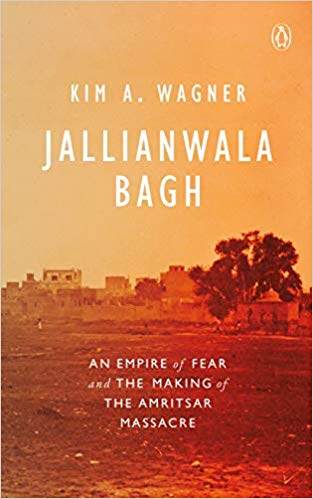
LITERARY CORNER: “Jallianwala Bagh: An Empire of Fear and the Making of the Amritsar Massacre,” by Kim A Wagner.

Copyright@shravancharitymission

Khidki (Window)

–Read India Initiative—

This is only an attempt to create interest in reading. We may not get the time to read all the books in our lifetime. But such reviews, talk and synopsis will at least convey what the book is all about.

    Time doesn’t dilute the scars of hateful crimes. I’m pointing at the “Jallianwala Bagh” massacre, a crime perpetrated by Brigadier General Reginald Dyer. People who died in that slaughter, I’m sure, must be turning in their graves on each anniversary of the crime that was unleashed on April 13, 1919 by this devil. With that logic the victims by now must have turned at least a hundred times in their proverbial grave. But the apology from the British is yet to come. This monster, Brigadier Dyer later died on 23 July 1927. Winston Churchill called him a rotten apple simply to disavow his own responsibility.

    But then the rotten apple grew in his own backyard colony called India. General Dyer is also called, “the Butcher of Amritsar,” because of his order to fire repeatedly on a crowd of peaceful protesters. This resulted in the murder of at least 500-600 people and injuries to over a thousand more. Subsequently, Dyer was removed from duty and widely condemned both in Britain and in India. But he became a celebrated hero among some with connections to the British Raj. Some historians argue the episode was a decisive event towards the end of the British rule in India.

    Many books have been written on this particular massacre. Latest being “Jallianwala Bagh: An Empire of Fear and the Making of the Amritsar Massacre,” by historian Kim A Wagner. Wagner teaches, the history of colonial India and the British Empire at Queen Mary, University of London. He has written extensively on the subject of ‘Thuggee,’ the Indian Uprising of 1857, and resistance and colonial violence more generally in 19th and 20th century global history. The book has been published by Penguin, and the price is below Rs 500 in Amazon. Even though it has been a century since Brigadier General Reginald Dyer ordered Indian Army troops to open fire upon an unarmed crowd at Jallianwala Bagh on April 13, 1919, the memory of it is still painful for Indians. British historian Kim Wagner has taken a fresh look at the incident in this book. There are some advance praises about the book, a couple of them are as follows:

  1. “In the cautionary tale provided in Jallianwala Bagh, it is enduring racist fear that lies at the heart of precipitate violence. Analytically sharp but gripping to read, the book is a page turner.”—says Barbara D. Metcalf, Co-Author of “A Concise History of India.”
  1. In the compelling yet exacting study Kim Wagner combines the intimacy of the storyteller and the distance of the historian to evoke the “micro story” of the massacre while understanding it as the “final stage of the much longer process”, stretching back to Sepoy Uprising. Mining a variety of sources—diaries, memoirs and court testimonies—he uncovers fresh perspectives and examines the relation between colonial panic and state brutality with sophistication, sincerity and style rare in published accounts of this much-trodden ground.”–says Santanu Das, Author of, “India, Empire and First War Culture.”

    The book gives a good overview of the massacre from all corners and all stakeholders. Was Jallianwala Bagh massacre a one-off incident, as portrayed back then and even today by many? The book tries to answer that. The author feels rather than being an unprecedented event, the Amritsar massacre revealed the racialized logic of a colonial violence, and we find the exact sentiments expressed by British officers involved in the suppression of the Indian Uprising of 1857, for instance.

    An apology that describes General Dyer as a rotten apple, which is, essentially what Winston Churchill said in 1920, is not an apology at all but rather an attempt to disavow any form of responsibility in terms of the Raj and the British Empire in general.

    There is often a debate about the troops who open fired. Some say they were Gorkhas and Pathan troops. The author with his research tries to clear the air when he says. There probably were a few Sikh troops also present but we have to remember that the British at the same time did not think of the local population in communal terms. Dyer refers to the protesters simply as ‘rebels.’ The composition of the force he took with him to ‘Jallianwala Bagh’ was largely accidental.

    To a question about Indian Army veterans who had served in World War-I, being among the unfortunate crowd that got killed and injured the eyewitnesses describe how veterans called out for people to lie down to avoid being shot, so there were clearly demobilised soldiers in the crowd.

    British Empire apologists often dismiss the Indian National Congress’s findings about the tragedy and settle for government estimates to save their skin. The Indian National Congress actually estimated that 500 had been killed but that 1,000 might not be an exaggerated estimate—based on the door-to-door inquiry made by local agencies, some 540 names were found, and the author feels that somewhere between 500 to 600 were killed and, perhaps, three times that many wounded.

    As per the book it was not a pre-meditated plan. Dyer believed he was entering a war zone and was fully prepared to shoot at anyone who defied his ban on public meetings. He did not know what the layout of the city or Jallianwala Bagh was. Once he arrived at the Bagh, he did not care much about who was actually present but simply open fired without using his brains.

   There is no evidence about the 120 bodies that were recovered from the well. Eye-witnesses describe one or two people falling in it, and Motilal Nehru and Madan Mohan Malviya thought they saw one or two bodies floating in the well, later that summer—which was nothing more than a clay-pot and some old clothes floating in the well. There was a merging of the canal feeding with the holy tank, which runs under Jallianwala Bagh, since we know that some people climbed into that to flee the bullets and that several bodies were later recovered.

    Lastly, Churchill denounced Dyer in 1920 but it was not because he found indiscriminate violence in the Empire unacceptable, but rather because Dyer’s actions made it so difficult to defend British rule in India. That is also why he was eager to depict Dyer and the massacre as ‘un-British.’

    The massacre has been portrayed in several movies, starting with Attenborough’s Gandhi. But author Kim Wagner thinks none of them make more impact than re-enact the set of visual tropes first deployed by Attenborough. There is almost a checklist of recurrent motifs, including Dyer ordering his troops to fire, and people throwing themselves into the well or getting crushed against a locked gate, crying kids sitting next to their dead parents. To break new ground in this respect would require a break from these filmic conventions.

    Jallianwalla Bagh is often the least talked about episode in the British circles but yes to an extent or rather to quite an extent during the trial it helped in understanding the British colonial policy. The Hunter Commission was set up partly to assuage moderate Indian nationalists and Montagu, the Secretary of State for India, never expected it to reveal the things it did. The fact that this was such a large inquiry, which elicited so much evidence, not least Dyer’s own testimony, means that this was probably the best-recorded colonial atrocity within the British Empire up till that point.

    Well if you’re interested in history and the sad chapters of Indian history this book is for you. Well written and great in detailing and largely unbiased barring certain chapters where you get some eerie feeling it sails through in the Indian Ocean without turbulence. A historians prime job is to lay down history in proper perspective where the author I think has not failed. I would give the book seven out of ten.

Posted by Kamlesh Tripathi

*

https://kamleshsujata.wordpress.com

*

Share it if you like it

*

Shravan Charity Mission is an NGO that works for poor children suffering from life threatening diseases especially cancer. Our posts are meant for our readers that includes both children and adults and it has a huge variety in terms of content. We also accept donations for our mission. Should you wish to donate for the cause. The bank details are given below:

NAME OF ACCOUNT: SHRAVAN CHARITY MISSION

Account no: 680510110004635 (BANK OF INDIA)

IFSC code: BKID0006805

*

Our publications

GLOOM BEHIND THE SMILE

(The book is about a young cancer patient. Now archived in 7 prestigious libraries of the US, including, Harvard University and Library of Congress. It can also be accessed in MIT through Worldcat.org. Besides, it is also available for reading in Libraries and archives of Canada and Cancer Aid and Research Foundation Mumbai)  

ONE TO TANGO … RIA’S ODYSSEY

(Is a book on ‘singlehood’ about a Delhi girl now archived in Connemara Library, Chennai and Delhi Public Library, GOI, Ministry of Culture, Delhi)

AADAB LUCKNOW … FOND MEMORIES

(Is a fiction written around the great city of Nawabs—Lucknow. It describes Lucknow in great detail and also talks about its Hindu-Muslim amity. That happens to be its undying characteristic. The book was launched in Lucknow International Literary Festival of 2014)

REFRACTIONS … FROM THE PRISM OF GOD

(Co-published by Cankids–Kidscan, a pan India NGO and Shravan Charity Mission, that works for Child cancer in India. The book is endorsed by Ms Preetha Reddy, MD Apollo Hospitals Group. It was launched in Lucknow International Literary Festival 2016)

TYPICAL TALE OF AN INDIAN SALESMAN

(Is a story of an Indian salesman who is, humbly qualified. Yet he fights his ways through unceasing uncertainties to reach the top. A good read not only for salesmen. The book was launched on 10th February, 2018 in Gorakhpur Lit-Fest. Now available in Amazon, Flipkart and Onlinegatha)

RHYTHM … in poems

(Published in January 2019. The book contains 50 poems. The poems describe our day to day life. The book is available in Amazon, Flipkart and Onlinegatha)

(ALL THE ABOVE TITLES ARE AVAILABLE FOR SALE IN AMAZON, FLIPKART AND OTHER ONLINE STORES OR YOU COULD EVEN WRITE TO US FOR A COPY)

*****