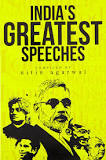
INDIA’S GREATEST SPEECHES compiled by Nitin Agarwal

Copyright@shravancharitymission
Khidki (Window)

–Read India Initiative—

This is only an attempt to create interest in reading. We may not get the time to read all the books in our lifetime. But such reviews, talk and synopsis will at least convey what the book is all about.

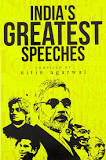
     The publisher of this book is Grapevine India Publishers Ltd, published in 2014. The price of this book is Rs 195. It comprises of 325 pages. Most of the speeches are available in the archives. Yet, I would say Nitin has done a good job of providing them in a readymade platter.  The selection of speeches and the introduction of the personality before each speech is also quite absorbing. Friends, at times we all feel we know a celebrity quite well but when you start reading about him you feel otherwise.

    Overall, it’s a stimulating collection of thoughtful speeches delivered by some of the most prominent personalities of India. But then, one view point could be, why, read these speeches at all? And, what do you gain out of them? Well, let me tell you. Behind every speech lies the covert and overt accomplishment of the personality. Rather, the essence of the orator’s personality, which knowingly or unknowingly, directly or indirectly comes out for the betterment of the common man. There is a verse in Gita that says, ‘Masses follow the classes.’ Moreover, speeches often silhouette the inveterate mindset of the orator. It at times even doubles up as a mini biography of the personality.

    Set to inspire, the book includes some of the most stirring and eloquent addresses by Rabindranath Tagore, Swami Vivekananda, Sardar Vallabhbhai Patel, Mother Teresa, JRD Tata, Abdul Kalam, Narendra Modi and many other influential Indian leaders.

    Book starts with a short insight from Bhagavad Gita. It then goes on to cover twenty five speeches of 23 cynosure personalities of India. One will find, a good amount of historical perspective in some of the speeches. Almost all speeches are loaded with aspects of challenge, failure, success struggle, decision making, telling of tough tales and life lessons and in the ultimate, the making of those towering personalities.

    An interesting pattern that unknowingly emerges out of the book is, the feel, of what India, or the bigwigs of India were, towards the end of the nineteenth century, when Swami Vivekananda delivered that famous speech in Chicago in 1893 up to almost a decade and a half after independence say 1965, and how India changed after 1965, and with that, the personalities, the viewpoints, the values and even the ambitions. The world of today has become more complex, competition has intensified, struggles have become long and even tougher. Globalisation has taken over issues and nothing is isolated and everything is known to everyone. The speeches post 1965 reflect that in some way or the other.  So, times have changed. The span of speeches is from 1893 to present days.

    There are two speeches of Mahatma Gandhi delivered in the years 1912 and 1922. When you read these speeches you get an eerie feeling, as to how different, India has become, since then. Shaheed Bhagat Singh’s famous daring statement before Lahore High Court Bench exhibits his jasba … his passion for his motherland—India.

    In the year 1937 Veer Damodar Savarkar then president of Akhil Bharatiya Hindu Mahasabha delivered a speech in Karnavati defining Hinduism which is very interesting. There are other master pieces too, namely Tagore in 1941, and Dr Radhakrishnan in 1947.

    Then you have the famous speeches of Subhas Chandra Bose—Give me Blood and I promise you Freedom, and Nehru’s ‘Tryst with Destiny.’

    In the year 1948 Sardar Vallabhbai Patel delivered his famous speech at Calcutta Maidan on unification of India. Pandit Deendayal Upadhyaya a very important leader of Jana Sangh, (now morphed into BJP) in the year 1965 had addressed a full house on Integral Humanism. One is really moved by the humbleness of Mother Teresa when one goes through her address that she made in 1979 in that historic speech at the time of accepting the Nobel Peace Prize and JRD Tata’s, superlative speech in the year 1982 on his Historic Flight Re-enactment and that famous speech of Mrs Gandhi, her last one in 1984 after which she was assassinated.

    Who can forget Atal Bihari Vajpayee’s famous 2001 address in United Nations General Assembly. And, Narayana Murthy, in his 2007, Pre-commencement address at New York University describing his volatile journey.

    There are two Speeches of Prime Minister Narendra Modi delivered in 2014, one at FICCI Ahmedabad and the second on Independence Day that outlines India’s future and what he intends doing for the country. Then we have President Abdul Kalam’s par-excellence speech that he delivered in 2011 which is so very educative.

    On the creative side there are AR Rahman’s 2009, Oscar Awards Acceptance address and Shahrukh Khan’s famous, ‘Courage in Success’ delivered in 2013.

    Lifetime Achievement Awards don’t come easy. Everyone knows about the struggle Azim Premji took to erect his mighty Empire. He speaks on the occasion in the year 2013, at the Economic Times Awards.  And last but not the least the making of the world champions. Sports achievements are one of the toughest where you start alone and if you’re not successful you go into oblivion followed by depression. There are three wonderful speeches. One is by Viswanathan Anand, 2007, Speech at NIIT Chennai, second is by Abhinav Bindra, 2013, at GoSports Foundation Conclave and the third is by Master Blaster Sachin Tendular, 2013, A Farewell to Cricket.

    Overall it’s an interesting read, if you want to know about these personalities and their tedious journey to fame.

    A list of speeches follows:     

  1. Swami Vivekananda 1893 The Chicago Address (Opening Day)
  2. Mahatma Gandhi 1912 Banaras Hindu University Speech
  3. Mahatma Gandhi 1922 The Great Trial of 1922
  4. Shaheed Bhagat Singh 1930 Statement before the Lahore High Court Bench
  5. Veer Damodar Savarkar 1937 Presidential Address, Akhil Bharatiya Hindu Mahasabha defining Hinduism.
  6. Rabindranath Tagore, 1941, Civilization’s Crisis, The Last Testament of Tagore
  7. Subhas Chandra Bose, 1944, Give Me Blood and I Promise You Freedom
  8. Dr Sarvepalli Radhakrishnan, 1947, Speech as First Vice-President of India
  9. Pandit Jawaharlal Nehru, 1947, Tryst with Destiny
  10. Sardar Vallabhbhai Patel, 1948, Speech at Calcutta Maidan
  11. Pandit Deendayal Upadhyaya, 1965, Lecture on Integral Humanism
  12. Mother Teresa, 1979, Nobel Peace Prize Acceptance
  13. JRD Tata, 1982, Historic Flight Re-enactment
  14. Indira Gandhi, 1984, The Last Speech
  15. Atal Bihari Vajpayee, 2001, United Nations General Assembly Speech
  16. Narayana Murthy, 2007, Pre-commencement address at New York University
  17. Viswanathan Anand, 2007, Speech at NIIT, Chennai
  18. AR Rahman, 2009, Oscar Awards Acceptance
  19. APJ Abdul Kalam, 2011, Vision of India
  20. Abhinav Bindra, 2013, GoSports Foundation Conclave
  21. Shahrukh Khan, 2013, Courage in Success
  22. Sachin Tendulkar, 2013, A Farewell to Cricket
  23. Azim Premji, 2013, Lifetime Achievement Award Acceptance, Economic Times Awards
  24. Narendra Modi, 2014, Speech at FICCI, Ahmedabad
  25. Narendra Modi, 2014, Independence Day Speech

By Kamlesh Tripathi

*

https://kamleshsujata.wordpress.com

*

Share it if you like it

*

Shravan Charity Mission is an NGO that works for poor children suffering from life threatening diseases especially cancer. Our posts are meant for our readers that includes both children and adults and it has a huge variety in terms of content. We also accept donations for our mission. Should you wish to donate for the cause. The bank details are given below:

NAME OF ACCOUNT: SHRAVAN CHARITY MISSION

Account no: 680510110004635 (BANK OF INDIA)

IFSC code: BKID0006805

*

Our publications

GLOOM BEHIND THE SMILE

(The book is about a young cancer patient. Now archived in 7 prestigious libraries of the US, including, Harvard University and Library of Congress. It can also be accessed in MIT through Worldcat.org. Besides, it is also available for reading in Libraries and archives of Canada and Cancer Aid and Research Foundation Mumbai)  

ONE TO TANGO … RIA’S ODYSSEY

(Is a book on ‘singlehood’ about a Delhi girl now archived in Connemara Library, Chennai and Delhi Public Library, GOI, Ministry of Culture, Delhi)

AADAB LUCKNOW … FOND MEMORIES

(Is a fiction written around the great city of Nawabs—Lucknow. It describes Lucknow in great detail and also talks about its Hindu-Muslim amity. That happens to be its undying characteristic. The book was launched in Lucknow International Literary Festival of 2014)

REFRACTIONS … FROM THE PRISM OF GOD

(Co-published by Cankids–Kidscan, a pan India NGO and Shravan Charity Mission, that works for Child cancer in India. The book is endorsed by Ms Preetha Reddy, MD Apollo Hospitals Group. It was launched in Lucknow International Literary Festival 2016)

TYPICAL TALE OF AN INDIAN SALESMAN

(Is a story of an Indian salesman who is, humbly qualified. Yet he fights his ways through unceasing uncertainties to reach the top. A good read not only for salesmen. The book was launched on 10th February, 2018 in Gorakhpur Lit-Fest. Now available in Amazon, Flipkart and Onlinegatha)

RHYTHM … in poems

(Published in January 2019. The book contains 50 poems. The poems describe our day to day life. The book is available in Amazon, Flipkart and Onlinegatha)

(ALL THE ABOVE TITLES ARE AVAILABLE FOR SALE IN AMAZON, FLIPKART AND OTHER ONLINE STORES OR YOU COULD EVEN WRITE TO US FOR A COPY)

*****



INTERESTING FACTS FIGURES AND QUOTES–38

Copyright@shravancharitymission

The world moves with GPS. But how does GPS work? Let’s find out. GPS—global positioning system—is a space-age version of triangulation. Originally developed for military use, GPS has three components: satellites orbiting earth, master control stations around the world, and receivers installed in locations ranging from naval destroyers to private golf carts.             In the U.S. GPS system, two dozen Navstar satellites     orbit the planet every 12 hours, following six different orbits. Three additional satellites orbit as backup. The satellites contain atomic clocks that send precise times with each signal. The control stations monitor the satellites, using remote controlled on-board thrusters to manage their positions.     When a GPS user on land or sea calls for location information, signals pass from orbiting satellites to user’s receiver. The length of time taken by the transmissions—usually a fraction of a second—helps determine distance to a point on an imaginary sphere, and the user’s latitude and longitude can be calculated by using the mathematics and triangulation. Three satellites would suffice, but more provide redundancy and compensate for inaccuracies. GPS signals are broadcast on two different frequencies, one for military use and one for civilian use. Civilian augmentation can provide precise location to within 0.4 of an inch.

***

WHY ARE THERE 360 DEGREES IN A CIRCLE?

    A degree is a fraction of a circle, and there are 360 degrees in each of the imaginary circles that describe the surface of the Earth. The number 360, in this context, usually is, attributed to the Babylonians, (present day Iraq) who devised a base—60 number system. (Our modern system is 10). They probably were the first to divide a circle into 360 degrees (6 x 60). Some historians think that the base—60 system derives from the approximate length in days of a calendar year, but others claim that the Babylonians chose 60 because it is divisible by so many numbers. Hipparchus, the Greek astronomer, who invented the formal system of latitude and longitude, divided each Earth circle into 360 degrees, each degree, having 60 minutes. and each minute, having 60 seconds.

***

India Inc. is a common term used by the Indian media to refer to the formal sector (comprising government and corporate) sector of the nation. It employed 7 percent of the workforce in 2000 and contributed 60 per cent of the nominal GDP of the nation.

***

Famous English novelist George Orwell who wrote the famous novel ‘Animal Farm’ was born in Motihari, Bihar.

***

J&K became part of India 10 weeks after Independence when Maharaja Hari Singh, alarmed by the rapid advance of armed Pakistani tribesman, hurriedly signed the instrument of accession. In legal—if not moral—terms, the decision was his alone.

By Kamlesh Tripathi

*

https://kamleshsujata.wordpress.com

*

Share it if you like it

*

Shravan Charity Mission is an NGO that works for poor children suffering from life threatening diseases especially cancer. Our posts are meant for our readers that includes both children and adults and it has a huge variety in terms of content. We also accept donations for our mission. Should you wish to donate for the cause. The bank details are given below:

NAME OF ACCOUNT: SHRAVAN CHARITY MISSION

Account no: 680510110004635 (BANK OF INDIA)

IFSC code: BKID0006805

*

Our publications

GLOOM BEHIND THE SMILE

(The book is about a young cancer patient. Now archived in 7 prestigious libraries of the US, including, Harvard University and Library of Congress. It can also be accessed in MIT through Worldcat.org. Besides, it is also available for reading in Libraries and archives of Canada and Cancer Aid and Research Foundation Mumbai)  

ONE TO TANGO … RIA’S ODYSSEY

(Is a book on ‘singlehood’ about a Delhi girl now archived in Connemara Library, Chennai and Delhi Public Library, GOI, Ministry of Culture, Delhi)

AADAB LUCKNOW … FOND MEMORIES

(Is a fiction written around the great city of Nawabs—Lucknow. It describes Lucknow in great detail and also talks about its Hindu-Muslim amity. That happens to be its undying characteristic. The book was launched in Lucknow International Literary Festival of 2014)

REFRACTIONS … FROM THE PRISM OF GOD

(Co-published by Cankids–Kidscan, a pan India NGO and Shravan Charity Mission, that works for Child cancer in India. The book is endorsed by Ms Preetha Reddy, MD Apollo Hospitals Group. It was launched in Lucknow International Literary Festival 2016)

TYPICAL TALE OF AN INDIAN SALESMAN

(Is a story of an Indian salesman who is, humbly qualified. Yet he fights his ways through unceasing uncertainties to reach the top. A good read not only for salesmen. The book was launched on 10th February, 2018 in Gorakhpur Lit-Fest. Now available in Amazon, Flipkart and Onlinegatha)

RHYTHM … in poems

(Published in January 2019. The book contains 50 poems. The poems describe our day to day life. The book is available in Amazon, Flipkart and Onlinegatha)

(ALL THE ABOVE TITLES ARE AVAILABLE FOR SALE IN AMAZON, FLIPKART AND OTHER ONLINE STORES OR YOU COULD EVEN WRITE TO US FOR A COPY)

*****


BOOK REVIEW: MY PRINCELY COLLEGES BY HARIKISHAN LAL DUTT

Copyright@shravancharitymission

Khidki (Window)

–Read India Initiative—

This is only an attempt to create interest in reading. We may not get the time to read all the books in our lifetime. But such reviews, talk and synopsis will at least convey what the book is all about.

    Mr H.L. Dutt happens to be my college teacher, my Guru, and the erstwhile Principal of Colvin Taluqdar’s College Lucknow, where I studied. He taught me English. I still remember the splendour of his English class, especially, that of Sheakespeare’s, Merchant of Venice, in 1974-75, that is, still etched, like the sparkle of a diamond in my mind, where, even, the onslaught of time has not been able to faint it, in any manner.

    ‘It is a wise father that knows his own child’—says Lancelot, in act 2 scene 2 of Merchant of Venice. Mr Dutt knew each student like his father. Most certainly one of the best English teachers I’ve ever known. Erudite, handsome, with a tall pedigree, and, an, appropriate convent English accent—something that everyone, envied those days. The manner in which he monitored the college reminds me of another quote from Merchant of Venice—‘young in limbs, in Judgment old’—Morocco in act 2 scene 7.

    The publishers of this book are Notion Press. They have done a good job. The author dedicates the book to his wife—Bina Dutt, his rock of Gibraltar, his daughters Alka & Anu and his son Harsh. The price of the book is Rs 450 for a print copy and Rs 60 for a Kindle one.

    The book is a personal account of Mr H.L.Dutt—his auto-biography. A book I would recommend to teachers and students especially. It is a 161 page book, constructed over twenty eight chapters, describing the journey of his career life, and thereafter his retreat, his retirement that he is now enjoying.

    The book starts with the chapter destiny, his early days, his outdoors, and co-curricular activities. Then the scene changes to England, where, he goes for a bursary, acquires a foreign degree and then returns to Mayo College Ajmer again, where, he teaches for a good number of years and then bids adieu in the year 1966 looking for wider exposure in career terms.

    He then joins Cambridge school, followed by Pilani and then he marches into Colvin Taluqdars College Lucknow. He further goes on to teach in Hyderabad Public School, The Daly College Indore, and then returns to Mayo College Ajmer again, and even starts Mayo College Girls School.

    In short Mr Dutt started his teaching career from Mayo College Ajmer in 1954. He had splendid days there. Full of learnings and excitement. He gives a very animated account of his stay in Mayo Ajmer that includes a plethora of campus activities, excursions, sighting of animals and even shikar when it was permitted. Mayo in those times was a princely college, with children of, most princely states, of India studying there.

    He talks of the various college houses like Bharatpur House, Udaipur House, Jhalawar House, Jaisalmer House, Kota House and even talks about his campus accommodation.

    After leaving Mayo in 1966 he joined Cambridge School Delhi, followed by Pilani and then Colvin Taluqdar’s College Lucknow, spread across 99 acres on the banks of river Gomti.

    In Colvin he took over from Principal H.N. Kashyap. Reading about Colvin was nostalgic as I had studied there. The author has given quite a detailed account of his tenure in Colvin-Lucknow. He starts with the titling of Lucknow as the ‘City of Nawabs.’ He then goes on to describe the college houses such as—Hind, Anjuman, Awadh Taxila. The celebration of Janmashtami. And he hasn’t forgotten the nawabs and the Rajahs and the Taluqdars of Uttar Pradesh such as—Raja of Oel, Mankapur, Kotwara, Pratapgarh, Amethi, Kalakankar, Bhinga and Mahmoodabad. He highlights the Tandoori Chicken, Kababs and Roomali Roti and the dinner invitation of Raja Sajid Husain of Kotwara.

    The author vividly remembers Mrs M Seeley, Head Mistress of the junior school, faculty L.P. Bhardwaj and senior master P.C. Chaube.

    Colvin indeed was a powerhouse of academics producing IITians, doctors and bureaucrats galore. Some unforgettable sportsmen that he remembers are Hamidullah, Birbal, Razdan and Puri. Then the ace debaters like Trivedi, Pandey, Sharma brothers, Lakhtakia and Luv-Kush Verma, and of course Ashok Prasad and Head Prefect Satnam Singh.

    He also hasn’t forgotten S.N. Tandon, S.B Singh, Samiullah, Amanat Ullah, Sudhir Dayal, Jaiswal, G.V. Singh and Brinda Shankar.

    He fondly remembers his exquisite bungalow and even his gardeners, and the famous Darbar Day the busiest day of the college. And the old boys and their parents.

    An interesting point that the author makes is that he found certain names starting with the letter “A” to be more prominent in class and academics such as Alok, Ashok, Anil, Arun and Arunendra. In the process in no way he disparages other letters.

    The author then goes on to narrate his experiences of Hyderabad Public School. In June 1979 he takes up a new assignment—The Daly College, Indore. A princely college built by princes of Malwa.

    Finally the author returns to Mayo College, Ajmer with a great amount of nostalgia. The book also covers his starting of Mayo Girls College. But the author’s career circle is yet not complete.

    Then in 2006 Mr Dutt is invited by Dr Sanjay Singh, Raja Amethi, to head the college once again to bring back its glory at the age of 76 which he does, after which Mr H.L Dutt takes his retirement and settles in Gurgaon. His contribution to public colleges shall always be remembered. He stood for excellence.

    Friends before I close this review let me tell you. The book is a treat to read and I’m not saying this just because the author happens to be my Guru and Principal.

    What I liked about the book was the segmentation and presentation of the text into small chapters where the emotions of the author were captured very well and without being obvious. He has used plain but enticing English keeping students in mind and has desisted from verbosity. The sentences are soothing, pleasing and inviting where you don’t feel like putting the book down—a real page turner.

    I wish Mr H.L. Dutt good health and a happy retired life.

By Kamlesh Tripathi

*

https://kamleshsujata.wordpress.com

*

Share it if you like it

*

Shravan Charity Mission is an NGO that works for poor children suffering from life threatening diseases especially cancer. Our posts are meant for our readers that includes both children and adults and it has a huge variety in terms of content. We also accept donations for our mission. Should you wish to donate for the cause. The bank details are given below:

NAME OF ACCOUNT: SHRAVAN CHARITY MISSION

Account no: 680510110004635 (BANK OF INDIA)

IFSC code: BKID0006805

*

Our publications

GLOOM BEHIND THE SMILE

(The book is about a young cancer patient. Now archived in 7 prestigious libraries of the US, including, Harvard University and Library of Congress. It can also be accessed in MIT through Worldcat.org. Besides, it is also available for reading in Libraries and archives of Canada and Cancer Aid and Research Foundation Mumbai)  

ONE TO TANGO … RIA’S ODYSSEY

(Is a book on ‘singlehood’ about a Delhi girl now archived in Connemara Library, Chennai and Delhi Public Library, GOI, Ministry of Culture, Delhi)

AADAB LUCKNOW … FOND MEMORIES

(Is a fiction written around the great city of Nawabs—Lucknow. It describes Lucknow in great detail and also talks about its Hindu-Muslim amity. That happens to be its undying characteristic. The book was launched in Lucknow International Literary Festival of 2014)

REFRACTIONS … FROM THE PRISM OF GOD

(Co-published by Cankids–Kidscan, a pan India NGO and Shravan Charity Mission, that works for Child cancer in India. The book is endorsed by Ms Preetha Reddy, MD Apollo Hospitals Group. It was launched in Lucknow International Literary Festival 2016)

TYPICAL TALE OF AN INDIAN SALESMAN

(Is a story of an Indian salesman who is, humbly qualified. Yet he fights his ways through unceasing uncertainties to reach the top. A good read not only for salesmen. The book was launched on 10th February, 2018 in Gorakhpur Lit-Fest. Now available in Amazon, Flipkart and Onlinegatha)

RHYTHM … in poems

(Published in January 2019. The book contains 50 poems. The poems describe our day to day life. The book is available in Amazon, Flipkart and Onlinegatha)

(ALL THE ABOVE TITLES ARE AVAILABLE FOR SALE IN AMAZON, FLIPKART AND OTHER ONLINE STORES OR YOU COULD EVEN WRITE TO US FOR A COPY)

*****
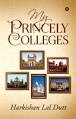


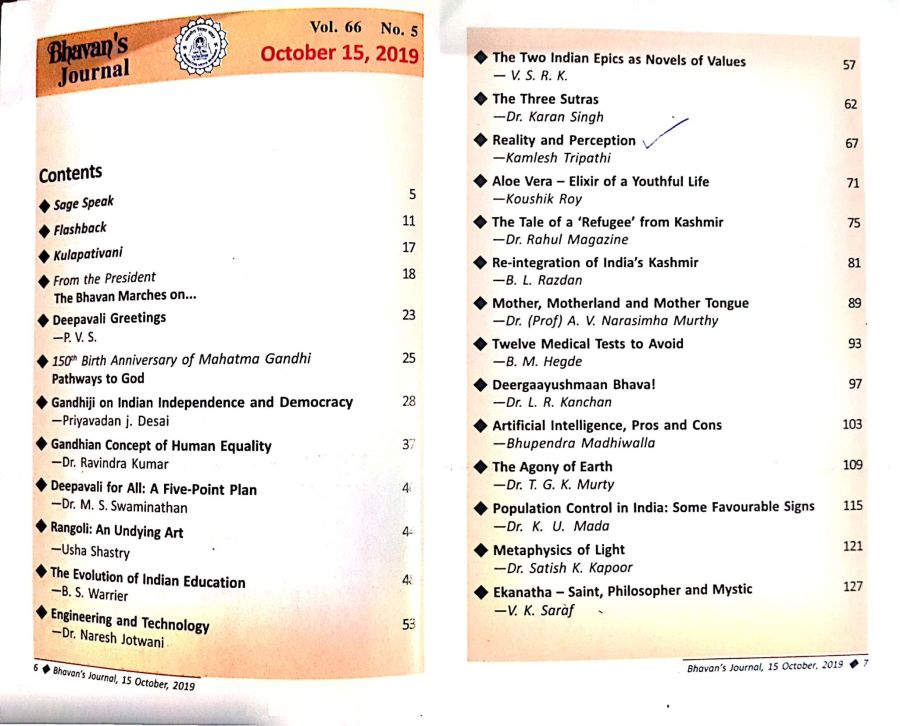
SHORT STORY: PERCEPTION & REALITY by Kamlesh Tripathi

My story as published in Bhavan’s Journal

By Kamlesh Tripathi

*

https://kamleshsujata.wordpress.com

*

Share it if you like it

*

Shravan Charity Mission is an NGO that works for poor children suffering from life threatening diseases especially cancer. Our posts are meant for our readers that includes both children and adults and it has a huge variety in terms of content. We also accept donations for our mission. Should you wish to donate for the cause. The bank details are given below:

NAME OF ACCOUNT: SHRAVAN CHARITY MISSION

Account no: 680510110004635 (BANK OF INDIA)

IFSC code: BKID0006805

*

Our publications

GLOOM BEHIND THE SMILE

(The book is about a young cancer patient. Now archived in 7 prestigious libraries of the US, including, Harvard University and Library of Congress. It can also be accessed in MIT through Worldcat.org. Besides, it is also available for reading in Libraries and archives of Canada and Cancer Aid and Research Foundation Mumbai)  

ONE TO TANGO … RIA’S ODYSSEY

(Is a book on ‘singlehood’ about a Delhi girl now archived in Connemara Library, Chennai and Delhi Public Library, GOI, Ministry of Culture, Delhi)

AADAB LUCKNOW … FOND MEMORIES

(Is a fiction written around the great city of Nawabs—Lucknow. It describes Lucknow in great detail and also talks about its Hindu-Muslim amity. That happens to be its undying characteristic. The book was launched in Lucknow International Literary Festival of 2014)

REFRACTIONS … FROM THE PRISM OF GOD

(Co-published by Cankids–Kidscan, a pan India NGO and Shravan Charity Mission, that works for Child cancer in India. The book is endorsed by Ms Preetha Reddy, MD Apollo Hospitals Group. It was launched in Lucknow International Literary Festival 2016)

TYPICAL TALE OF AN INDIAN SALESMAN

(Is a story of an Indian salesman who is, humbly qualified. Yet he fights his ways through unceasing uncertainties to reach the top. A good read not only for salesmen. The book was launched on 10th February, 2018 in Gorakhpur Lit-Fest. Now available in Amazon, Flipkart and Onlinegatha)

RHYTHM … in poems

(Published in January 2019. The book contains 50 poems. The poems describe our day to day life. The book is available in Amazon, Flipkart and Onlinegatha)

(ALL THE ABOVE TITLES ARE AVAILABLE FOR SALE IN AMAZON, FLIPKART AND OTHER ONLINE STORES OR YOU COULD EVEN WRITE TO US FOR A COPY)

*****



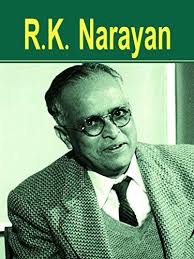
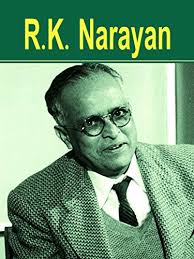
BOOK CORNER: AROUND A TEMPLE by R K Narayan

Copyright@shravancharitymission

Khidki (Window)

–Read India Initiative—

This is only an attempt to create interest in reading. We may not get the time to read all the books in our lifetime. But such reviews, talk and synopsis will at least convey what the book is all about.

In the short story The Talkative Man narrates:

    ‘Some years ago there was a forestry officer in this town who always scoffed at things. He was sent for this posting by his department for some special work in Mempi Forest and he had his headquarters here. He had spent a couple of years abroad, and after returning home he was full of contempt for all our practices and institutions He was a hard core ‘rational’ by which he meant that he believed only in things he could touch, see, hear and smell. God didn’t pass any of these tests, at any rate the God we believed in. Accordingly to most of us, God resides in the Anjaneya (hanuman) temple we see on the way.

    ‘It is a very small temple, no doubt, but it is very ancient. It is right in the centre of the town, at the cutting of the two most important roads—Lawley Road running east and west and the Trunk Road running north and south; and any person going out anywhere, whether to the court or the college, the market or the Extension, has to pass the temple. And no one is so foolish as to ignore God and carry on as He is very real and He can make His power felt. I do not say that He showers good fortune only on those who bow at Him … I do not mean that at all. But I also do not mean that it is very simple to please a god. It costs about a quarter-of-an-anna a week and five minutes of prayer on a Saturday evening. Ninety-nine out of a hundred do it. On any Saturday evening you will find a thousand people at the temple, going round the image and burning camphor.

    ‘I have said that the temple is at an important crossing and every time our friend passed up and down either to his office or club, he had to pass it, and you may be sure, particularly Saturday evenings, the crowd around the temple caused dislocation of traffic. Where, lesser beings faced it cheerfully. But our friend was always annoyed. He would remark to his driver. “Run over the blasted crowd. Superstitious mugs. If this town had a sane municipality this temple would have been pulled down years ago ….”

    ‘On a Sunday morning the driver asked: “May I have the afternoon off, sir?”

    ‘Why?’

    ‘When my child fell ill some days ago I vowed I would visit the crossroad shrine with my family …’

    ‘Today?’

    ‘Yes, sir. On other days it is crowded.’

    ‘You can’t go today.’

    ‘I have to, sir. It is a duty ….’

    ‘You can’t go. You can’t have leave for all your superstitious humbugging.’ The driver was so insistent that the officer told him a few minutes later: ‘All right, go. Come on the first of next month and take your pay. You are dismissed.’

    ‘At five o’clock when he started for his club he felt irritated. He had no driver. ‘I will do without these fellows,’ he said to himself. ‘Why should I depend upon anyone?’

    ‘The chief reason why he depended upon others was that he was too nervous to handle a car. His head was a whirl of confusion when he sat at the wheel. He had not driven more than fifty miles in all his life though he had a driving licence and renewed it punctually every year. Now as he thought of the race of chauffeurs he felt bitter. ‘I will teach these beggars a lesson. Drivers aren’t heaven-born. Just ordinary fellows. It is all a question of practice; one has to make a beginning somewhere. I will teach these superstitious beggars a lesson. India will never become a first-rate nation as long as it worships traffic-obstructing gods, which any sensible municipality ought to remove.’

     ‘It was years since he had driven a car. With trepidation he opened the garage door and climbed in. At a speed of about twenty-five miles an hour his car shot out of the gate after it had finally emerged from the throes of gear-changing. It flew past the temple when our friend realised that somehow he could not turn to his left, which he must, if he wanted to reach his club. He could only steer to his right. Nor could he stop the car when he wanted. He felt that applying the brakes was an extraordinary queer business. When he tried to stop he committed so many blunders that the car rocked, danced and threatened to burst. He felt it safest to go up the road till a favourable opportunity presented itself for him to turn right, and then again right, and about-turn. He whizzed past the temple back to his bungalow, where he could not stop, and so had to proceed again, turn right, go up to Trunk Road, turn right again, and come down the road past the temple.

    ‘Half-an-hour later the dismissed driver arrived at the shrine with his family and was nearly run over. He stepped aside and had hardly recovered from the shock when the car reappeared. The driver put away his basket of offerings, took his family to a place of safety, and came out.

    When the car appeared again he asked, “What is the matter sir?” His master looked at him pathetically and before he could answer the car came around again: “Can’t stop.”

    “Use the hand-brake, sir, the foot-brake’s rather loose.”

    “I can’t,” panted our friend.

    The driver realised that the only thing his master could do with a car was to turn its wheel right and blow the horn. He asked, “Have you put in any petrol, sir?”

    “No.”

    “It had only one-and-a-half gallons; let it run it out.” The driver went in, performed puja, sent away his family and attempted to jump on the footboard. He couldn’t. He stood aside on a temple step with folded hands, patiently waiting for the car to exhaust its petrol.

    The car soon came to a stop. The gentleman gave a gasp and fainted on the steering-wheel. He was revived. When he regained consciousness, the priest of the temple held before him a plate and said, “Sir, you have circled the temple over five hundred times today. Ordinarily people go around only nine times, and on special occasions one hundred-and-eight times. I haven’t closed the doors thinking you might like to offer coconut and camphor at the end of your rounds.”

    The officer flung a coin on the tray.

    The driver asked, “Can I be of any service, sir?”

    “Yes drive the car home.”

    He reinstated the driver, who demanded a raise a fortnight later. And thereafter whenever our friend passed the temple, he exercised great self-control and never let an impatient word cross his lips. I won’t say that he became very devout all of a sudden, but he certainly checked his temper and tongue when he was in the vicinity of the temple. And wasn’t it enough achievement for a god?

Such are the ways of God friends.

By Kamlesh Tripathi

*

https://kamleshsujata.wordpress.com

*

Share it if you like it

*

Shravan Charity Mission is an NGO that works for poor children suffering from life threatening diseases especially cancer. Our posts are meant for our readers that includes both children and adults and it has a huge variety in terms of content. We also accept donations for our mission. Should you wish to donate for the cause. The bank details are given below:

NAME OF ACCOUNT: SHRAVAN CHARITY MISSION

Account no: 680510110004635 (BANK OF INDIA)

IFSC code: BKID0006805

*

Our publications

GLOOM BEHIND THE SMILE

(The book is about a young cancer patient. Now archived in 7 prestigious libraries of the US, including, Harvard University and Library of Congress. It can also be accessed in MIT through Worldcat.org. Besides, it is also available for reading in Libraries and archives of Canada and Cancer Aid and Research Foundation Mumbai)  

ONE TO TANGO … RIA’S ODYSSEY

(Is a book on ‘singlehood’ about a Delhi girl now archived in Connemara Library, Chennai and Delhi Public Library, GOI, Ministry of Culture, Delhi)

AADAB LUCKNOW … FOND MEMORIES

(Is a fiction written around the great city of Nawabs—Lucknow. It describes Lucknow in great detail and also talks about its Hindu-Muslim amity. That happens to be its undying characteristic. The book was launched in Lucknow International Literary Festival of 2014)

REFRACTIONS … FROM THE PRISM OF GOD

(Co-published by Cankids–Kidscan, a pan India NGO and Shravan Charity Mission, that works for Child cancer in India. The book is endorsed by Ms Preetha Reddy, MD Apollo Hospitals Group. It was launched in Lucknow International Literary Festival 2016)

TYPICAL TALE OF AN INDIAN SALESMAN

(Is a story of an Indian salesman who is, humbly qualified. Yet he fights his ways through unceasing uncertainties to reach the top. A good read not only for salesmen. The book was launched on 10th February, 2018 in Gorakhpur Lit-Fest. Now available in Amazon, Flipkart and Onlinegatha)

RHYTHM … in poems

(Published in January 2019. The book contains 50 poems. The poems describe our day to day life. The book is available in Amazon, Flipkart and Onlinegatha)

(ALL THE ABOVE TITLES ARE AVAILABLE FOR SALE IN AMAZON, FLIPKART AND OTHER ONLINE STORES OR YOU COULD EVEN WRITE TO US FOR A COPY)

*****


KHUSHWANT SINGH

Copyright@shravancharitymission

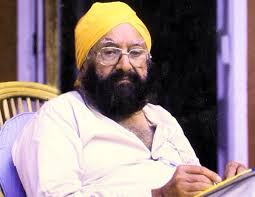
    Khushwant Singh (born Khushal Singh, 2 February 1915 – 20 March 2014) was an Indian author, lawyer, diplomat, journalist and politician and. His experience in the 1947 Partition of India inspired him to write ‘Train to Pakistan’ in 1956 (made into a film in 1998), which became his most well-known novel. He is one of the prime English authors of India.

    Born in Punjab, Khushwant Singh was educated in New Delhi, and studied law at St, Stephen’s College, Delhi, and King’s College London. After working as a lawyer in Lahore Court for eight years, he joined the Indian Foreign Service upon Independence of India from British Empire in 1947. He was appointed journalist in the All India Radio in 1951, and then moved to the Department of Mass Communications in UNESCO at Paris in 1956. His last two careers encouraged him to pursue a literary career. As a writer, he was best known for his trenchant secularism, humour, sarcasm and an abiding love of poetry. His comparisons of social and behaviour characteristics of Westerners and Indians are laced with acid wit. He served as the editor of several literary and news magazines, as well as two newspapers, through the 1970s and 1980s. Between, 1980-1986 he served as Member of Parliament in Rajya Sabha, the upper house of the Parliament of India.

    Khushwant Singh was bestowed with Padma Bhushan in 1974. But he returned the award in 1984 as a protest against Operation Blue Star in which the Indian Army raided Darbar Sahab in Amritsar. In 2007 he was awarded the Padma Vibhushan, the second-highest civilian award of India.

    Khushwant Singh was born in Hadali, Khushab District, Punjab (which now lies in Pakistan), into a Sikh family. He was the younger son of Sir Sobha Singh and Veeran Bai. Since births and deaths were not recorded in those times, his father simply made up 2 February 1915 for his school enrolment at Modern School, New Delhi. But his grandmother Lakshmi Bai asserted that he was born in August, so he later set the date for himself as 15 August. Sobha Singh was a prominent builder in Lutyens Delhi. His uncle Sardar Ujjal Singh (1895–1983) was previously Governor of Punjab and Tamil Nadu.

    His birth name, given by his grandmother, was Khushal Singh (meaning a “Prosperous Lion”). He was called by a pet name “Shalee”. At school his name earned him ridicule as other boys would mock at him with an expression, “Shalee Shoolie, Bagh dee Moolee” (meaning, “This shalee or shoolee is the radish of some garden.”) He chose Khushwant so that it rhymes with his elder brother’s name Bhagwant. (He declared that his new name was “self-manufactured and meaningless”. But he later discovered that there was a Hindu physician with the same name, and the number subsequently increased).

    He entered Delhi Modern School in 1920 and studied there till 1930. There he met his future wife, Kawal Malik, one year his junior. He continued higher education at Government College, Lahore, St. Stephen’s College Delhi, and King’s College London, before reading for the Bar at the Inner Temple.

    Khushwant Singh started his professional career as a practising lawyer in 1939. He worked at Lahore Court for eight years. In 1947 he entered the Indian Foreign Service for the newly independent India. He started as Information Officer of the Government of India in Toronto, Canada. He was a Press Attaché and Public Officer for the Indian High Commission for four years in London and Ottawa. In 1951 he joined the All India Radio as a journalist. Between 1954 and 1956 he worked in Department of Mass Communication of the UNESCO at Paris. From 1956 he turned to editorial services. He founded and edited Yojana, an Indian government journal in 1951 -1953; and also The Illustrated Weekly of India, a newsweekly; and two major Indian newspapers, The National Herald and the Hindustan Times. During his tenure, The Illustrated Weekly became India’s pre-eminent newsweekly, with its circulation raising from 65,000 to 400000. After working for nine years in the weekly, on 25 July 1978, a week before he was to retire, the management asked Singh to leave “with immediate effect”. A new editor was installed the same day. After Singh’s departure, the weekly suffered a huge drop in readership. In 2016 Khushwant Singh entered Limca Book of Records as a tribute.

    From 1980 to 1986, Singh was a member of Rajya Sabha, the upper house of the Indian parliament. He was awarded Padma Bhushan in 1974 for his service to the country. In 1984, he returned the award in protest against the siege of the Golden Temple by the Indian Army. In 2007, the Indian government awarded Khushwant Singh the Padma Vibhushan. As a public figure, Khushwant Singh was accused of favouring the ruling Congress Party, especially during the reign of Indira Gandhi. He was derisively called an ‘establishment liberal’. Singh’s faith in the Indian political system was shaken by the anti-Sikh riots that followed Indira Gandhi’s assassination, in which major Congress politicians are alleged to be involved; but he remained resolutely positive on the promise of Indian democracy and worked via Citizen’s Justice Committee floated by H.S. Phoolka a senior advocate of Delhi High Court.

    Singh was a votary of greater diplomatic relations with Israel at a time when India did not want to displease Arab nations where thousands of Indians found employment. He visited Israel in the 1970s and was impressed by its progress.

    Khushwant Singh was married to Kawal Malik. Malik was his childhood friend who had moved to London earlier. They met again when he studied law at King’s College London, and soon got married. They had a son, named Rahul Singh, and a daughter, named Mala. His wife predeceased him in 2001. Actress Amrita Singh is the daughter of his brother Daljit Singh’s son – Shavinder Singh and Rukhsana Sultana. He stayed in “Sujan Singh Park”, near Khan Market New Delhi, Delhi’s first apartment complex, built by his father in 1945, and named after his grandfather. His grandniece Tisca Chopra is a noted TV and Film Actress.

    Khushwant Singh was a self-proclaimed agnostic, as the title of his 2011 book suggests: ‘Agnostic Khushwant: There is no God explicitly revealed.’ He was particularly against organised religion. He was evidently inclined towards atheism, as he once said, “One can be a saintly person without believing in God and also a detestable villain while believing in him. In my personalised religion, There Is No God!” He also once said, “I don’t believe in rebirth or in reincarnation, in the day of judgement or in heaven or hell. I accept the finality of death.” His last book, ‘The Good, The Bad and The Ridiculous’ was published in October 2013, following which he retired from writing. The book was his continued critique of religion and especially its practice in India, including the critique of the clergy and the priests. It earned a lot of acclaim in India.

    Singh died of natural causes on 20 March 2014 at his Delhi residence, at the age of 99. His death was mourned by many including the President, Vice-President and Prime Minister of India. He is survived by his son and daughter. He was cremated at Lodhi Crematorium in Delhi at 4 in the afternoon of the same day. During his lifetime, Khushwant Singh was keen on burial because he believed that with a burial we give back to the earth what we have taken. He had requested the management of Bahai Faith if he could be buried in their cemetery. After initial agreement, they had proposed some conditions which were unacceptable to Singh, and hence the idea was later abandoned. He was born in Hadali, Khushab District,  in the Punjab Province of modern Pakistan, in 1915. According to his wishes, some of his ashes were brought and scattered in Hadali.

    In 1943 he had already written his own obituary, included in his collection of short stories Posthumous. Under the headline “Sardar Khushwant Singh Dead”, the text reads:

    We regret to announce the sudden death of Sardar Khushwant Singh at 6 pm last evening. He leaves behind a young widow, two infant children and a large number of friends and admirers. Amongst those who called at the late sardar’s residence were the PA to the chief justice, several ministers, and judges of the high court.

    He also prepared an epitaph for himself, which runs as follows:

Here lies one who spared neither man nor God;
Waste not your tears on him, he was a sod;
Writing nasty things he regarded as great fun;
Thank the Lord he is dead, this son of a gun.

He was cremated and his ashes are buried in Hadali school, where a plaque is placed bearing the inscription:

IN MEMORY OF
SARDAR KHUSHWANT SINGH
(1915–2014)

A SIKH, A SCHOLAR AND A SON OF HADALI (Punjab)
‘This is where my roots are. I have nourished them with tears of nostalgia.

By Kamlesh Tripathi

*

https://kamleshsujata.wordpress.com

*

Share it if you like it

*

Shravan Charity Mission is an NGO that works for poor children suffering from life threatening diseases especially cancer. Our posts are meant for our readers that includes both children and adults and it has a huge variety in terms of content. We also accept donations for our mission. Should you wish to donate for the cause. The bank details are given below:

NAME OF ACCOUNT: SHRAVAN CHARITY MISSION

Account no: 680510110004635 (BANK OF INDIA)

IFSC code: BKID0006805

*

Our publications

GLOOM BEHIND THE SMILE

(The book is about a young cancer patient. Now archived in 7 prestigious libraries of the US, including, Harvard University and Library of Congress. It can also be accessed in MIT through Worldcat.org. Besides, it is also available for reading in Libraries and archives of Canada and Cancer Aid and Research Foundation Mumbai)  

ONE TO TANGO … RIA’S ODYSSEY

(Is a book on ‘singlehood’ about a Delhi girl now archived in Connemara Library, Chennai and Delhi Public Library, GOI, Ministry of Culture, Delhi)

AADAB LUCKNOW … FOND MEMORIES

(Is a fiction written around the great city of Nawabs—Lucknow. It describes Lucknow in great detail and also talks about its Hindu-Muslim amity. That happens to be its undying characteristic. The book was launched in Lucknow International Literary Festival of 2014)

REFRACTIONS … FROM THE PRISM OF GOD

(Co-published by Cankids–Kidscan, a pan India NGO and Shravan Charity Mission, that works for Child cancer in India. The book is endorsed by Ms Preetha Reddy, MD Apollo Hospitals Group. It was launched in Lucknow International Literary Festival 2016)

TYPICAL TALE OF AN INDIAN SALESMAN

(Is a story of an Indian salesman who is, humbly qualified. Yet he fights his ways through unceasing uncertainties to reach the top. A good read not only for salesmen. The book was launched on 10th February, 2018 in Gorakhpur Lit-Fest. Now available in Amazon, Flipkart and Onlinegatha)

RHYTHM … in poems

(Published in January 2019. The book contains 50 poems. The poems describe our day to day life. The book is available in Amazon, Flipkart and Onlinegatha)

(ALL THE ABOVE TITLES ARE AVAILABLE FOR SALE IN AMAZON, FLIPKART AND OTHER ONLINE STORES OR YOU COULD EVEN WRITE TO US FOR A COPY)

*****


INTERESTING FACTS FIGURES & QUOTES-37

Copyright@shravancharitymission

A river is a permanent body of running water. The United Nations, recognizes in all 193 countries, some of which host impressive rivers like the Amazon and Mississippi. In fact, some countries have a network of more than 1,000 rivers. For example, Russia has approximately 100,000 rivers, which is more than any other country in the world. Rivers are important sources of livelihood, as they provide water, and are important sources for fish and hydroelectric power. Additionally, rivers such as Amazon even attract thousands of tourists annually. However, there are 17 countries that do not have any rivers. They are Bahamas, Bahrain, Comoros in Africa, Kiribati in Pacific, Saudi Arabia, Kuwait, Oman, Yemen, Qatar, Malta, Maldives, Nauru in Oceania, Libya, Monaco, Marshall Islands in Central Pacific, Tuvalu in Pacific, UAE and The Vatican city.

    The British pound is the world’s oldest currency still in use – it is 1,200 years old. Dating back to Anglo-Saxon times. Pound has gone through many changes before evolving into the currency we recognise today. On the other hand Sterling silver pennies have been around since 775AD, with King  Offa, of Mercia, generally credited, for being responsible for the widespread adoption of the coins. The first fully printed banknotes were introduced in 1853. Before that, following its establishment in 1694, the Bank of England only issued partially printed notes with the ‘£’ sign as well as the first digit. The numbers had to be added by hand and each note had to be signed by one of the bank’s cashiers. Today’s banknotes developed out of these original handwritten notes.

The smallest bird is the bee hummingbird (Mellisuga helenae) of Cuba and the Isle of Youth. Males measure 57 mm (2.24 in) in total length, half of which is taken up by the bill and the tail, and weigh 1.6 g (0.056 oz). Females are slightly larger. This is believed to be the lowest weight limit for any warm blooded animal.

A research study on worry reveals that more than one-third of what people worry about, are things that never happen. Another one-third of worry deals with things that have already happened in the past and that cannot be changed. The remaining one-third of the worry is divided between worrying about things that concern other people, and a small percentage are the real things about which we should worry. Just think of how often we worry about things, yet they never happen. So ponder well before you worry.

The primary problem with Indian Agricultue is that the average size of land holding at 2.28 hectares in (1970-71) has now halved to 1.08 hectares in (2015-16), creating immense pressure on land. Persons dependent on agriculture are still 43% of all Indians. Thus most of the farmers are shifting to cash crops and or allied activities to survive.

By Kamlesh Tripathi

*

https://kamleshsujata.wordpress.com

*

Share it if you like it

*

Shravan Charity Mission is an NGO that works for poor children suffering from life threatening diseases especially cancer. Our posts are meant for our readers that includes both children and adults and it has a huge variety in terms of content. We also accept donations for our mission. Should you wish to donate for the cause. The bank details are given below:

NAME OF ACCOUNT: SHRAVAN CHARITY MISSION

Account no: 680510110004635 (BANK OF INDIA)

IFSC code: BKID0006805

*

Our publications

GLOOM BEHIND THE SMILE

(The book is about a young cancer patient. Now archived in 7 prestigious libraries of the US, including, Harvard University and Library of Congress. It can also be accessed in MIT through Worldcat.org. Besides, it is also available for reading in Libraries and archives of Canada and Cancer Aid and Research Foundation Mumbai)  

ONE TO TANGO … RIA’S ODYSSEY

(Is a book on ‘singlehood’ about a Delhi girl now archived in Connemara Library, Chennai and Delhi Public Library, GOI, Ministry of Culture, Delhi)

AADAB LUCKNOW … FOND MEMORIES

(Is a fiction written around the great city of Nawabs—Lucknow. It describes Lucknow in great detail and also talks about its Hindu-Muslim amity. That happens to be its undying characteristic. The book was launched in Lucknow International Literary Festival of 2014)

REFRACTIONS … FROM THE PRISM OF GOD

(Co-published by Cankids–Kidscan, a pan India NGO and Shravan Charity Mission, that works for Child cancer in India. The book is endorsed by Ms Preetha Reddy, MD Apollo Hospitals Group. It was launched in Lucknow International Literary Festival 2016)

TYPICAL TALE OF AN INDIAN SALESMAN

(Is a story of an Indian salesman who is, humbly qualified. Yet he fights his ways through unceasing uncertainties to reach the top. A good read not only for salesmen. The book was launched on 10th February, 2018 in Gorakhpur Lit-Fest. Now available in Amazon, Flipkart and Onlinegatha)

RHYTHM … in poems

(Published in January 2019. The book contains 50 poems. The poems describe our day to day life. The book is available in Amazon, Flipkart and Onlinegatha)

(ALL THE ABOVE TITLES ARE AVAILABLE FOR SALE IN AMAZON, FLIPKART AND OTHER ONLINE STORES OR YOU COULD EVEN WRITE TO US FOR A COPY)

*****


INTERESTING FACTS FIGURES AND QUOTES-36

Copyright@shravancharitymission

India carries out a census, of its tiger population, at intervals of four years. The result of the most recent one, released in July 19 shows the tiger population has increased by one-third over the last five years. And that indeed is good news.

Project tiger, is now known as National Tiger Conservation Authority (NTCA).

Lok Sabha recently passed the Dam Safety Bill, 2019, which provides an institutional mechanism for inspection and maintenance, to avert dam breaches.

Discipline is the soul of an army. It makes small numbers formidable— GEORGE WASHINGTON.

It’s welcome that the first batch of army reforms is slated to kick off any day, entailing the relocating of 229 officers to operational posts from the army’s headquarters in Delhi. In any case, the army is too top heavy with a shortage of officers in fighting ranks of Lt-Colonels and below. Overall the army needs to shed around 1.5 lakh personnel over the next six to seven years. That’ll save around Rs 7,000 crore annually.

China has slashed its army strength by three lakh troops. Plus it has a head start in integration with the PLA (Peoples Liberation Army), and then they have PLA strategic support force, PLA rocket force, PLA navy and PLA air force much better integrated under Beijing’s central military commission.

 Danube is Europe’s second longest river, after the Volga. It is located in Central and Eastern Europe. The Danube was once a long-standing frontier of the Roman Empire, and today flows through 10 countries, more than any other river in the world.

Many call Indians in America the model minority. Their success is most visible in technology, where Indians have ascended to the top of the biggest firms and have founded an estimated 10-20% of Silicon Valley start-ups.

 The term Laffer Curve in economics illustrates a theoretical relationship between rates of taxation and the resulting levels of government revenue. It illustrates the concept of taxable income elasticity—i.e., taxable income changes in response to changes in the rate of taxation.

Cutting off the nose to spite the face” is an expression to describe a needlessly self-destructive over-reaction to a problem: “Don’t cut off your nose to spite your face” is a warning against acting out of pique, or against pursuing revenge in a way that would damage oneself more than the object of one’s anger.

The third verse of the Book of Genesis in the King James Bible says I quote, “And God said, Let there be light: and there was light.” Similarly when a Hindu God is pleased with a bhakt and wants to favour him, he just has to say “Tathastu” and the bhakt is blessed.

It was in the year 49 BC when a general in northeast Italy, Gaius Julius, took the momentous decision to cross a shallow river called Rubicon to march into the city of Rome. Roman law forbade entering the city of Rome with armies. Julius’s action led to a civil war and eventual conquest of the empire by him. He became Julius Caesar. Through this action he gave birth to the metaphor ‘crossing the Rubicon.’

“Life is like riding a bicycle. To keep your balance, you must keep moving.” This famous quote is by Albert Einstein.

A UN report highlights how the population in India living in multi-dimensional poverty has almost halved itself from 55.1% to 27.9% between 2005-2006 and 2015-16, uplifting as many as 271 million people.

Mark Twain once said: Kindness is the language which the deaf can hear, and blind can see.

 Lao Tzu wrote: Kindness in words, creates confidence. Kindness in thinking, creates profoundness. Kindness in giving, creates Love.”

When Nakul asked Bhishma, the grand patriarch of the Mahabharata, the night before Kurukshetra war, as to what was the actual reason for this inevitable confrontation between Kauravas and Pandavas, Bhishma told him in one line, ‘Paarsparyam avnati vedanti’—In English it would mean, ‘The decline of reciprocity between the two.’ When reciprocity suffers or dwindles, misunderstanding raises its ugly head and things go haywire.

 Life is short, but there is always time enough for courtesy—said Ralph Waldo Emerson.

Are you aware of the situation where the army’s Eastern Command works from Kolkata, the navy’s from Vishakapatnam and air force from Shillong. Perhaps, the chief of staff is required to streamline operations.

Numerous studies show that forests have been best preserved where tribal communities reside.

Your best ideas, those eureka  moments that turn the world upside down, seldom come when you’re juggling emails, rushing to meet deadlines or in a high-stress meeting. They come when you’re walking the dog, soaking in the bath or swinging in a hammock—says best selling author CARL HONORE

The government bowls many loose balls, but can the opposition score off them?

The Dingo Fence in south-east Australia, is the longest fence in the world having a length of 5,614 km (3,488 mi). The construction of which was finished in 1885.

If foreigners cannot sell their goods to us, they will not have the revenues to pay for the goods they buy from us.

A research group that conducted a survey across 24 countries found 47% of the respondents believed in the existence of an intelligent alien civilisation, of which 60% said we should try to communicate with these aliens. The survey found 68% believers of alien life to be in Russia, and 24% Dutch and balance elsewhere.

By Kamlesh Tripathi

*

https://kamleshsujata.wordpress.com

*

Share it if you like it

*

Shravan Charity Mission is an NGO that works for poor children suffering from life threatening diseases especially cancer. Our posts are meant for our readers that includes both children and adults and it has a huge variety in terms of content. We also accept donations for our mission. Should you wish to donate for the cause. The bank details are given below:

NAME OF ACCOUNT: SHRAVAN CHARITY MISSION

Account no: 680510110004635 (BANK OF INDIA)

IFSC code: BKID0006805

*

Our publications

GLOOM BEHIND THE SMILE

(The book is about a young cancer patient. Now archived in 7 prestigious libraries of the US, including, Harvard University and Library of Congress. It can also be accessed in MIT through Worldcat.org. Besides, it is also available for reading in Libraries and archives of Canada and Cancer Aid and Research Foundation Mumbai)  

ONE TO TANGO … RIA’S ODYSSEY

(Is a book on ‘singlehood’ about a Delhi girl now archived in Connemara Library, Chennai and Delhi Public Library, GOI, Ministry of Culture, Delhi)

AADAB LUCKNOW … FOND MEMORIES

(Is a fiction written around the great city of Nawabs—Lucknow. It describes Lucknow in great detail and also talks about its Hindu-Muslim amity. That happens to be its undying characteristic. The book was launched in Lucknow International Literary Festival of 2014)

REFRACTIONS … FROM THE PRISM OF GOD

(Co-published by Cankids–Kidscan, a pan India NGO and Shravan Charity Mission, that works for Child cancer in India. The book is endorsed by Ms Preetha Reddy, MD Apollo Hospitals Group. It was launched in Lucknow International Literary Festival 2016)

TYPICAL TALE OF AN INDIAN SALESMAN

(Is a story of an Indian salesman who is, humbly qualified. Yet he fights his ways through unceasing uncertainties to reach the top. A good read not only for salesmen. The book was launched on 10th February, 2018 in Gorakhpur Lit-Fest. Now available in Amazon, Flipkart and Onlinegatha)

RHYTHM … in poems

(Published in January 2019. The book contains 50 poems. The poems describe our day to day life. The book is available in Amazon, Flipkart and Onlinegatha)

(ALL THE ABOVE TITLES ARE AVAILABLE FOR SALE IN AMAZON, FLIPKART AND OTHER ONLINE STORES OR YOU COULD EVEN WRITE TO US FOR A COPY)

*****


ABOUT AUTHOR: NIRAD C CHAUDHURI

Copyright@shravancharitymission

    Nirad Chandra Chaudhuri – lifespan (23 November 1897 – 2001) was an English-language writer of Indian origin. He authored numerous works in English and Bengali. His oeuvre provides a magisterial appraisal of the histories and cultures of India, especially in the context of British colonialism of the 19th and 20th centuries. Chaudhuri is best known for ‘The Autobiography of an Unknown Indian’ published in 1951. Over the course of his literary career, he received numerous accolades for his writing. In 1966, his work ‘The Continent of Circe’ was awarded, the Duff Cooper Memorial Award, making Chaudhuri the first and the only Indian till date, to be given the prize. The Sahitya Akedemi, India’s national Academy of Letters, awarded Chaudhuri the Sahitya Akademi Award for his biography on Max Muller, Scholar Extraordinary.

    In 1990, Oxford University awarded Chaudhuri, who by then had become a long-time resident of the city of Oxford, an Honorary Degree in Letters. In 1992, he was made an honorary Commander of the Order of the British Empire (CBE). Although, he was highly critical of the post-independence Congress party establishment, Chaudhuri was more sympathetic to the right-wing Hindu nationalist movement in India. He refused to criticise the destruction of mosques. He wrote “Muslims do not have the slightest right to complain about the desecration of one mosque in Ayodhya. From 1000 AD every temple from Kathiawar to Bihar, from the Himalayas to the Vindhyas has been sacked and ruined. Not one temple was left standing all over northern India. They escaped destruction only where Muslim power did not gain access to them for reasons such as dense forests. Otherwise, it was a continuous spell of vandalism. No nation with any self-respect will forgive this. What happened in Ayodhya would not have happened had the Muslims acknowledged this historical argument even once.”

    Chaudhuri was born in Kishoregunj, Mymensingh, East Bengal, British India (now Bangladesh), the second of eight children of Upendra Narayan Chaudhuri, a lawyer, and of Sushila Sundarani Chaudhurani. His parents were liberal middle-class Hindus who belonged to the Brahmo Samaj movement.

    Chaudhuri was educated in Kishorganj and Kolkata (then, Calcutta). For his FA (school-leaving) course he attended Ripon College in Calcutta along with the famous Bengali writer Bibhutibhushan Bandopadhyay. Following this, he attended Scottish Church College, Calcutta, where he studied history as his undergraduate major. He graduated with honors in history and topped the University of Calcutta merit list. At Scottish Church College, Calcutta, he attended the seminars of the noted historian, Professor Kalidas Nag. After graduation, he enrolled for M.A. at the University of Calcutta. However, he did not attend all of his final exams, and consequently was not able to complete his M.A. degree. From 1937 to 1941 he worked as a secretary to Sharatchandra Bose (Subhas Chandra Bose’s brother).

    After studies, he took a position as a clerk in the Accounting Department of the Indian Army. At the same time, he started contributing articles to popular magazines. His first article on Bharat Chandra (a famous Bengali poet of the 18th century) appeared in the most prestigious English magazine of the time, Modern Review.

    Chaudhuri left his position in the Accounting Department shortly after, and started a new career as a journalist and editor. During this period he was a boarder in Mirzapur Street near College Square, Kolkata, living together with the writers Bibhuti Bhushan Banerjee and Dakshinaranjan Mitra Majumder. He was involved in the editing of the then well-known English and Bengali magazines Modern Review, Prabasi and Sonibarer Chithi. In addition, he also founded two short-lived but highly esteemed Bengali magazines, Sama-samayik and Notun Patrika. Fed up with Bengali insularity, he later left Calcutta to settle down in Delhi, and took up a government job there. He worked for All India Radio from 1941 to 1952. But sadly he found Delhi, too, was full of Philistines.

    In 1932, he married Amiya Dhar, a well-known writer herself. The couple had three sons.     In 1938, when Chaudhuri obtained a job, as a secretary, to Sarat Chandra Bose, a political leader in the freedom movement of India. He was able to interact with political leaders such as Mahatma Gandhi, Jawaharlal Nehru, and the brother of Sarat Chandra Bose, Subhas Chandra Bose (also known as Netaji).

    Apart from his career as secretary, Chaudhuri continued to contribute articles in Bengali and English, to newspapers and magazines. He was also appointed as a political commentator on the Kolkata branch of the All India Radio. In 1941, he started working for the Delhi Branch of the All India Radio.

    He was a prolific writer even in the very last years of his life, publishing his last work at the age of 99. His wife Amiya Chaudhuri died in 1994 in Oxford, England. He too died in Oxford, three months short of his 102nd birthday, in 1999.         He lived at 20 Lathbury Road from 1982 until his death, where, a blue plaque is installed by the Oxfordshire Blue Placks Plaques Board in 2008.

    Student historian Dipayan Pal wrote some interesting things about Nirad C. Chaudhuri in The Statesman in 2016. Why was he always in love with England, though he had never visited the land before the age of 57? These questions perplexed me and the only answer I could decipher is that perhaps Nirad Chaudhuri was in search of a home that he could call his own. And perhaps this street in Oxfordshire of 1980s took him closer to the novels of Hardy and Austen. Lovers of literature not only see texts through their lives but also sculpt life through the texts they read. His textual affinity was coupled with the colonial aura he grew up with. We must remember that he spent his first 50 years in an empire where the sun never set.

    His England was a realisation of certain dominant sensibilities and visions he idealized but they were far from reality. Places like 20, Lathbury Road makes me wonder why people choose to migrate and why certain places receive more sanctity than others. For Nirad Chaudhuri, England was sacred as for some America is. The solution to this onerous puzzle cannot be found in better living standard or socio-economic conditions of higher wages.

    Furthermore, certain places celebrate certain people. Nirad Chaudhuri would have been immensely happy if he knew about the blue plaque as it would fit his sensibilities perfectly. Even Oxford County Council was happy enough to remember this person who was, “an original thinker, forthright in his opinions and an internationalist, in the sense of one who embraces the best of all cultures but never loses his own.”

    His masterpiece, The Autobiography of an Unknown Indian, published in 1951, put him on the long list of great Indian writers. Chaudhari had said that The Autobiography of an Unknown Indian is ‘more of an exercise in descriptive ethology than autobiography.’

    The book describes Kishanganj, the country town in which he lived till he was twelve. Bangram, his ancestral village, and Kalikutch, his mother’s village. A fourth chapter is devoted to England, which occupied a large place in his imagination. Later in the book he talks about Kolkatta, the Indian Renaissance, the beginnings of the Nationalist Movement, and his experience of Englishmen in India, as opposed to the idyllic pictures of a civilization he considered perhaps the greatest in the world. These themes remain his preoccupations in most of his works, as does his deterministic view of culture and politics. He courted controversy in the newly independent India due to the dedication of this book to the British Empire that said, ‘To the memory of the British Empire in India,
Which conferred subject hood upon us, but withheld citizenship. To which yet every one of us threw out the challenge: “Civis Britannicus sum.” Because all that was good and living within us was made, shaped and quickened by the same British rule.

    The dedication infuriated many Indians, particularly the political and bureaucratic establishment. “The wogs took the bait and having read only dedication sent up howls of protest,” commented Chaudhuri’s friend, editor, historian and novelist, Khushwant Singh. Chaudhuri was hounded out of government service, deprived of his pension, blacklisted as a writer in India and forced to live a life of penury. Furthermore, he had to give up his job as a political commentator in All India Radio as the Government of India promulgated a law that prohibited employees from publishing memoirs. Chaudhuri argued that his critics were not careful-enough readers; “the dedication was really a condemnation of the British rulers for not treating us as equals”, he wrote in a 1997 special edition of Granta a magazine. Typically, to demonstrate what exactly he had been trying to say, he drew on a parallel with Ancient Rome. The book’s dedication, Chaudhuri observed, “was an imitation of what Cicero said about the conduct of Verres, a Roman proconsul of Sicily who oppressed Sicilian Roman citizens, who in their desperation cried out: “Civis Romanus Sum.”

    In 1955, the British Council and the BBC jointly made arrangements to take Chaudhuri to England for eight weeks. He was asked to contribute lectures to the BBC, and wrote eight of these. His impressions of England and Europe were later collected in his book ‘A Passage to England.’ on the other hand ‘The Continent of Circe,’ published in 1965, traces Chaudhuri’s doggedly independent-minded ideas on the social, geopolitical, and historical aspects of sub-continental India across millennia. An extended sequel to his famous autobiography, titled, ‘Thy Hand, Great Anarch’ was published in 1988. His last book Three Horsemen of the New Apocalypse, was published in 1997, coincided with his hundredth year.

    At the age of 57, in 1955 for the first time Chaudhari went abroad. After coming back he wrote a novel Passage to England (1959). In this novel he talked about his visits, and an account of five weeks in England, two weeks in Paris and one week in Rome.

    Chaudhuri was deeply distressed by what he saw as the deep hypocrisy in Bengali social life and in particular those that resulted from class and caste distinctions. His historical research revealed to him that the rigid Victorianesque morality of middle class Bengali women was a socially enforced construct, that had less to do with religion, choice and judgment, but more to do with upbringing, social acceptance and intergenerational transference of values.

    His prose was highly influenced by Sanskrit and the older version of the Bengali language, the Shadhu-bhasha. He had little respect for the proletarian language, Choltibhasha, which he regarded as being common in taste and scope. He avoided the use of words and very common expressions originating from Arabic, Urdu and Persian in modern Bengali.

Controversies

Nirad C Chaudhuri is accused of being in secret connivance with the British and leaked information about the whereabouts of Sarat Chandra Bose. This may have led to arrest of Sarat Bose in 1941. He was awarded DLitt from Oxford University in 1990. Sahitya Akademi Award in 1975.

By Kamlesh Tripathi

*

https://kamleshsujata.wordpress.com

*

Share it if you like it

*

Shravan Charity Mission is an NGO that works for poor children suffering from life threatening diseases especially cancer. Our posts are meant for our readers that includes both children and adults and it has a huge variety in terms of content. We also accept donations for our mission. Should you wish to donate for the cause. The bank details are given below:

NAME OF ACCOUNT: SHRAVAN CHARITY MISSION

Account no: 680510110004635 (BANK OF INDIA)

IFSC code: BKID0006805

*

Our publications

GLOOM BEHIND THE SMILE

(The book is about a young cancer patient. Now archived in 7 prestigious libraries of the US, including, Harvard University and Library of Congress. It can also be accessed in MIT through Worldcat.org. Besides, it is also available for reading in Libraries and archives of Canada and Cancer Aid and Research Foundation Mumbai)  

ONE TO TANGO … RIA’S ODYSSEY

(Is a book on ‘singlehood’ about a Delhi girl now archived in Connemara Library, Chennai and Delhi Public Library, GOI, Ministry of Culture, Delhi)

AADAB LUCKNOW … FOND MEMORIES

(Is a fiction written around the great city of Nawabs—Lucknow. It describes Lucknow in great detail and also talks about its Hindu-Muslim amity. That happens to be its undying characteristic. The book was launched in Lucknow International Literary Festival of 2014)

REFRACTIONS … FROM THE PRISM OF GOD

(Co-published by Cankids–Kidscan, a pan India NGO and Shravan Charity Mission, that works for Child cancer in India. The book is endorsed by Ms Preetha Reddy, MD Apollo Hospitals Group. It was launched in Lucknow International Literary Festival 2016)

TYPICAL TALE OF AN INDIAN SALESMAN

(Is a story of an Indian salesman who is, humbly qualified. Yet he fights his ways through unceasing uncertainties to reach the top. A good read not only for salesmen. The book was launched on 10th February, 2018 in Gorakhpur Lit-Fest. Now available in Amazon, Flipkart and Onlinegatha)

RHYTHM … in poems

(Published in January 2019. The book contains 50 poems. The poems describe our day to day life. The book is available in Amazon, Flipkart and Onlinegatha)

(ALL THE ABOVE TITLES ARE AVAILABLE FOR SALE IN AMAZON, FLIPKART AND OTHER ONLINE STORES OR YOU COULD EVEN WRITE TO US FOR A COPY)

*****


INTERESTING FACTS FIGURES & QUOTES-35

Copyright@shravancharitymission

Of all the waste we generate, plastic bags are perhaps the greatest symbol of our throwaway society: They leave a terrible legacy—ZAC GOLSMITH, UK politician.

The secret to modern life is finding the measure of time management. I have two kids, career and I travel, and I don’t think my life is any different than most couples. The most valuable commodity now for many people is time and how to parcel that out—Hugh Jackman.

An argument that has gained currency is that the economic motive for Bangladeshis to cross the border into India has begun to decline with an improvement in economic conditions at home. Data of last eight years lends credence to this argument.

Bangladesh has economically performed better since Census 2011. It has grown at over 7% over the last few years. IMF estimates that it’s likely to grow faster than India in 2019-20, at over 7.5%

The fact that 44.1% of the workers employed in agriculture produce only 15% of GDP means that output per worker in this sector is less than one-fourth of that in Industry and services combined.

Fire is generated by fire, fire is sustained by fire. Finally fire is consumed by fire.

The battle for the rosogolla has intensified with Odisha claiming that the legendary sweet wasn’t native of Bengal after all. This caused outrage among Bengalis who argued that those who attempt to take the rosogolla out of Bengal, deserve nothing but a (golla) zero in the mishti test.

Richness gives right direction to money, Whereas, greed gives wrong direction to money. Therefore, do understand that money is not the problem but your approach to money is the problem. The knife is not the problem but the one who uses the knife can use it either to cut a loaf of bread or someone’s throat.

Long back I read a book called the Richest Man in Babylon. A king approached a rich merchant and asked him, ‘How did you manage to earn money in this poor country?’ He said, ‘From whatever I earn, I give back 10% in charity.’ Even if you earn less give in charity, for then you are telling yourself that you’re bigger than money. It is only such a person who can create money.

‘When we meet real tragedy in life, we can react in two ways—either by losing hope and falling into self-destructive habits or by using the challenge to find our inner strength. Thanks to Buddha, I have been able to take the second way’—The XIV Dalai Lama

The difference between patriotism and nationalism is that the patriot is proud of his country for what it does, and the nationalist is proud of his country no matter what it does. No country is correct all the time and criticising a wrong course does not make one unpatriotic.

When people are emotionally depleted, they stop focusing on their jobs and instead work on improving their moods.

Bosses with grit regard work as a marathon, not a sprint.

Myanmar ranks as the world’s most generous country, with almost all of its population donating for charity.

A recent CSDS opinion poll shows that 2014 onwards the support for Narendra Modi has grown dramatically in the 18-25 age group, up from 33% in 2018 to 40% in 2019.

Calmness of mind according to Patanjali, comes when we focus on a single thought for a long time. This process helps the brain to loosen other mental knots and allows the processing power of released neurons to focus on a single thought and helps in reducing traumatic memories.

India is world’s 3rd largest network of railways spanning 64,600 km and 25,000 km of new lines to be added by 2020.

Increase in infrastructure investments of 1% of GDP results in additional 34 lakh jobs in India (Compared to 15 lakh in USA and 13 lakh in Brazil).

Indian wedding industry is now valued at 25.5 billion dollars a year.

Hindu India has been the sole nation on earth where the Jewish community has never been persecuted even though they have been living here for more than two thousand years.

The slum population of India has increased from 5.23 crores in 2001 to 6.55 crores in 2011.

The value of goods that lay unused in urban India is pegged at over Rs 56,000 crore.

It takes Rs 2.5 lacs per minute to run the Indian Parliament.

More than 1 billion people live on less than $1.25 a day.

SUVs have grown to more than 30% of the total luxury vehicles sold in India.

By Kamlesh Tripathi

*

https://kamleshsujata.wordpress.com

*

Share it if you like it

*

Shravan Charity Mission is an NGO that works for poor children suffering from life threatening diseases especially cancer. Our posts are meant for our readers that includes both children and adults and it has a huge variety in terms of content. We also accept donations for our mission. Should you wish to donate for the cause. The bank details are given below:

NAME OF ACCOUNT: SHRAVAN CHARITY MISSION

Account no: 680510110004635 (BANK OF INDIA)

IFSC code: BKID0006805

*

Our publications

GLOOM BEHIND THE SMILE

(The book is about a young cancer patient. Now archived in 7 prestigious libraries of the US, including, Harvard University and Library of Congress. It can also be accessed in MIT through Worldcat.org. Besides, it is also available for reading in Libraries and archives of Canada and Cancer Aid and Research Foundation Mumbai)  

ONE TO TANGO … RIA’S ODYSSEY

(Is a book on ‘singlehood’ about a Delhi girl now archived in Connemara Library, Chennai and Delhi Public Library, GOI, Ministry of Culture, Delhi)

AADAB LUCKNOW … FOND MEMORIES

(Is a fiction written around the great city of Nawabs—Lucknow. It describes Lucknow in great detail and also talks about its Hindu-Muslim amity. That happens to be its undying characteristic. The book was launched in Lucknow International Literary Festival of 2014)

REFRACTIONS … FROM THE PRISM OF GOD

(Co-published by Cankids–Kidscan, a pan India NGO and Shravan Charity Mission, that works for Child cancer in India. The book is endorsed by Ms Preetha Reddy, MD Apollo Hospitals Group. It was launched in Lucknow International Literary Festival 2016)

TYPICAL TALE OF AN INDIAN SALESMAN

(Is a story of an Indian salesman who is, humbly qualified. Yet he fights his ways through unceasing uncertainties to reach the top. A good read not only for salesmen. The book was launched on 10th February, 2018 in Gorakhpur Lit-Fest. Now available in Amazon, Flipkart and Onlinegatha)

RHYTHM … in poems

(Published in January 2019. The book contains 50 poems. The poems describe our day to day life. The book is available in Amazon, Flipkart and Onlinegatha)

(ALL THE ABOVE TITLES ARE AVAILABLE FOR SALE IN AMAZON, FLIPKART AND OTHER ONLINE STORES OR YOU COULD EVEN WRITE TO US FOR A COPY)

*****