Category Archives: storytelling

LITERARY CORNER: THE INDIAN MUTINY OF 1857

Copyright@shravancharitymission

Khidki (Window)

–Read India Initiative—

This is only an attempt to create interest in reading. We may not get the time to read all the books in our lifetime. But such reviews, talk and synopsis will at least convey what the book is all about.

THE INDIAN MUTINY OF 1857

by

George Bruce Malleson.

Pages 278

Publisher: Rupa Publications.

Price Rs 278.

(Caveat: Most foreign writers especially of British origin call it a ‘mutiny’ which means a rebellion against authority. Whereas, Indian writers and more so Indians like calling it a ‘War of Independence)

    The fifth print or impression of this book came out in 2016. Malleson lived from (8 May 1825 to 1 March 1898). He was an English officer born in Wimbledon and educated at Winchester. Thereafter, he obtained a cadetship in the Bengal infantry in 1842, and served through the second Burmese War. He was a prolific writer. He had written extensively on the Sepoy Mutiny. His important works include, ‘History of the Indian Mutiny of 1857-58’ that runs into six volumes, ‘History of the French in India’ and the ‘Decisive Battles of India.’

    He even authored the biographies of the Mughal Emperor Akbar, the French Governor-General Dupleix and the British officer Robert Clive for the Rulers of India series. He died in London on 1st march 1898.

        Mutiny of 1857 remains an event shrouded in mystery and intrigue. Its very significance, whether it can be considered as the first war of Independence, continues to be questioned. The causes of the mutiny are many but all elusive, and so are the consequences of the mutiny. But the moot point is did the mutiny ring the death knell of the British Empire, or was it a mere speck of exaggerated trouble? The book takes you through that.

    It serves to fill a tremendous gap in narrative accounts of the mutiny, and demystifies lay assumptions. It begins with a sizeable background on the genesis of the British Raj in India—a move not deliberate but powerful enough to shape history for decades to come. The author delves in great detail into the causes of the mutiny, unlike preceding writers who mostly concentrated on the consequences. And this the author could do because he was a serving officer and therefore privy to many decisions and happenings. With the aid of personal knowledge and observation he attempts to pin-point the ‘latent power’ that drove the mutiny on.

    He provides a realistic account of all the important operations that took place, praising the heroic and criticizing the undeserving. He is careful not to overlay his work with too much tedious detail, where his writing remains lucid and interesting. 

    The subject book captures successfully, and even uncompromisingly, an event that was perhaps disorganized but large in scale. It deals with each individual and geographical area separately, analysing the causes and effects, both locally and nation-wide. It captures the spirit of the time, its people who fought and died, and the changing attitudes of the British Raj, which was gradually losing control of its Empire.

    In writing this short History of the Indian Mutiny of 1857. The author has aimed at the compilation of a work, which when complete in itself, should narrate the causes as well as the consequences of a movement unforeseen, and even undreamt of. For the mutiny as per the author was sudden and swift in its action, and therefore taxed utmost the energies of the British people. Preceding writers on the same subject, whilst dealing very amply with the consequences, have, with one exception, but dimply shadowed forth the causes. Even the very actors of the Mutiny failed to detect them.

    Sir John Lawrence the then Viceroy of India from 1864 to 1869, himself, writing with full knowledge of events in which he played a very conspicuous part, mistook the instrument for the chief cause. He stopped at the greased cartridge. But the greased cartridge was never issued to the great body of troops, if indeed to any. There must have been a latent motive power to make of an unissued cartridge a grievance so terrible as to rouse into revolting men whose fathers and whose father’s father had contributed in the making of the British Empire in India. The greased cartridge, too, did not concern those landowners and cultivators of Oudh and the North-Western Provinces, who rose almost to a man. What that latent motive power was, the author has described fully, in this volume.

    In the early chapters of the book the author communicates, ‘That his belief about the mutiny is founded on personal knowledge and personal observation. Locally chief of the Commissariat Department at Kanhpur when, in January 1856, Sir James Outram crossed the Ganges to depose or remove from office the King of Oudh, I had witnessed the indignation which the very rumour of his purpose caused among the sipahis of my own guard. I reported their excited state to my superiors, and was laughed at for my pains. But, impressed with the accuracy of my forecast, viz., that the annexation of Oudh would rouse indignation and anger in the sipahi army. Nevertheless, I continued. After my transfer, two months later, to an appointment in the Military Audit Department in Calcutta, to keep a careful record of several occurrences, all apparently of minor importance, which supervened when the effects of the annexation of Oudh had been thoroughly realised by the sipahis. My observations led to the conclusion that they were thoroughly angered, and, a little later, that their minds were being mysteriously worked upon. I kept copious notes of the matters I observed, and discussed them with my brother officers, without, finding that my views were shared by any one of them. Essentially, it was not alone the greased cartridge but a host of other factors that brought about the mutiny of 1857. It would seem, however, that the officer who held the responsible post of Town major. His name Major, Orfeur Cavenagh, had, from his own observation, arrived at conclusions not dissimilar. He has narrated in his admirable work the observations forced upon him by the changed demeanour of the natives of the North-Western Provinces in 1856. But he too, stood, amongst high-placed Europeans, almost alone in his convictions. The fact is that, up to the very outbreak of the mutiny at Mirath, which is present day Meerut, no one, from highest to lowest, believed in the possibility of a general combination. Those, and they could be counted on the fingers of one hand, who endeavoured to hint at an opposite conclusion were ridiculed as alarmists. So ingrained was the belief in the loyalty of the sipahis, and so profound was the ignorance as to the manner in which their minds were affected, that neither the outbreak at Mirath nor the seizure of Delhi entirely removed it.

    The book is divided into twenty eight chapters that begins with the introduction and then talks about the conspirators, to the first mutterings of the storm and the happenings at Barrackpur, Calcutta and the North-West. The revolt at Mirath present day Meerut is significant along with the seizure of Delhi. The effect of the seizure of Delhi across India. The author then goes on to describe the progress of the insurrection in the North-West. There are several other chapters as a spill over of the mutiny that leads to the march to Delhi and the author has listed the reactions and activities that flared up in Kanhpur, Lakhnao, Allahabad, and Calcutta. It also describes in great detail the Britishers taking back famous monuments from the mutineers such as ‘The Residency’ at Lucknow after Havelock’s first attempts to relieve it failed.

    The other places that the book covers are the events in Sagar and Narbada territories, Central India, Rajputana, the Mirath Districts, Rohilkhand and the Punjab province and even Gwalior.

   It then talks of the second attempt to takeover Lakhnao Residency and the Gwalior contingent. It also describes how Sir, Colin Campbell recovers the Duab area of Punjab.

    The book also covers the rebellion in Eastern Bengal, Eastern Bihar, Azamgarh, Allahabad and Eastern Oudh.

    The author has used the old names of the cities and places as they were spelt during those times.

    The book does impact you only if you read it in a continuous stretch. It brings you to a point where you start thinking that sure enough the ‘mutiny of 1857’ the forerunner to the fight for freedom in India that the Indians launched on the British Raj in the twentieth century under Mahatma Gandhi.

    Overall the book is a treat for history lovers. It is meticulously punctuated and that changes the style of writing automatically, and with that the speed of reading, where, you might take some extra hours to finish the book, as compared to some other present day book of similar pages. I would give the book seven out of ten. A must read for history students.

By Kamlesh Tripathi

*

https://kamleshsujata.wordpress.com

*

Share it if you like it

*

Shravan Charity Mission is an NGO that works for poor children suffering from life threatening diseases especially cancer. Our posts are meant for our readers that includes both children and adults and it has a huge variety in terms of content. We also accept donations for our mission. Should you wish to donate for the cause. The bank details are given below:

NAME OF ACCOUNT: SHRAVAN CHARITY MISSION

Account no: 680510110004635 (BANK OF INDIA)

IFSC code: BKID0006805

*

Our publications

GLOOM BEHIND THE SMILE

(The book is about a young cancer patient. Now archived in 7 prestigious libraries of the US, including, Harvard University and Library of Congress. It can also be accessed in MIT through Worldcat.org. Besides, it is also available for reading in Libraries and archives of Canada and Cancer Aid and Research Foundation Mumbai)  

ONE TO TANGO … RIA’S ODYSSEY

(Is a book on ‘singlehood’ about a Delhi girl now archived in Connemara Library, Chennai and Delhi Public Library, GOI, Ministry of Culture, Delhi)

AADAB LUCKNOW … FOND MEMORIES

(Is a fiction written around the great city of Nawabs—Lucknow. It describes Lucknow in great detail and also talks about its Hindu-Muslim amity. That happens to be its undying characteristic. The book was launched in Lucknow International Literary Festival of 2014)

REFRACTIONS … FROM THE PRISM OF GOD

(Co-published by Cankids–Kidscan, a pan India NGO and Shravan Charity Mission, that works for Child cancer in India. The book is endorsed by Ms Preetha Reddy, MD Apollo Hospitals Group. It was launched in Lucknow International Literary Festival 2016)

TYPICAL TALE OF AN INDIAN SALESMAN

(Is a story of an Indian salesman who is, humbly qualified. Yet he fights his ways through unceasing uncertainties to reach the top. A good read not only for salesmen. The book was launched on 10th February, 2018 in Gorakhpur Lit-Fest. Now available in Amazon, Flipkart and Onlinegatha)

RHYTHM … in poems

(Published in January 2019. The book contains 50 poems. The poems describe our day to day life. The book is available in Amazon, Flipkart and Onlinegatha)

(ALL THE ABOVE TITLES ARE AVAILABLE FOR SALE IN AMAZON, FLIPKART AND OTHER ONLINE STORES OR YOU COULD EVEN WRITE TO US FOR A COPY)

*****



SHORT STORY: JOB ENRICHMENT … learn it from a tehsildar in Karnataka

Copyright@shravancharitymission

    Some bureaucrats have the gumption to transform even small positions, into powerful and meaningful ones, and some indolent bureaucrats would transform, even powerful and prestigious positions, into inconsequential jobs. So it’s all in the incumbent, and depends on the person occupying the chair. This is where B.N. Girish a tehsildar in Karnataka’s Shivamogga district outshines his bureaucratic fraternity. He shows the way as to how an upright bureaucracy can make a difference.

    As a tehsildar in Karnataka’s Shivamogga district he went undercover as a labourer to work at a stone quarry and check for irregularities then returned to raid the place.  This exemplifies the critical role of bureaucracy in India. Since January 2017, BN Girish has been on a crusade against illegal stone and sand mining in the taluk, following up on tips from local people, conducting raids and seizing vehicles. Sand mining owing to the construction boom has become a lucrative industry in rural India but the state’s limited capacity for regulation has inflicted severe ecological damage to hills, rivers and forests.

    Imagine, for a moment, if a corrupt or indifferent officer was in Girish’s place. He would have made enough black money for himself, and at the same time damaged the environment. Now size up the damage such rapacious mining in just one taluk wreaks on the environment, and the losses to public exchequer; and the weakening of law and order machinery when illegal activity gains impunity and profit. Then multiply this by the thousands of taluks in India and we will get a sense of the importance of the lower bureaucracy. Politics was meant to take power to the people and cut through red tape. But in India the Neta-Babu nexus has for long taken advantage of hierarchical inequalities to subvert the system.

    Says Girish. “Locals told me about the Gejjinahalli quarry in March. I had raided it earlier. But labourers stopped work when they spotted my vehicle. Miners have such a strong network that when unknown vehicles enter, they stop work and flee. That’s when I decided to go in disguise so that no one would recognise me.”

    He adds further. “They realised he was an officer only when he started the inquiry. Gejjenahalli has several stone quarries, but I could raid only four as the men in other places got information and ran away. I plan to use a similar method to tackle illegal sand mining problem in the taluk.”

    Such illegal happenings have run their course and have to change now. The RTI Act, the spread of education, ubiquitous smartphones, rising aspirations and worries over environmental degradation are empowering communities to speak up against illegality. It also helps when honest officers come to the aid of hapless citizens. Not surprisingly, the struggles of bureaucrats like Ashok Khemka against successive Haryana governments struck a chord with the public. Perhaps, a new breed of civil servants with a can-do attitude has emerged in recent years with popular following that even rivals politicians. But the likes of B.N. Girish who go the extra mile must become the norm, not the exception.

   So, a big salute to Tehsildar B.N Girish.

By Kamlesh Tripathi

*

https://kamleshsujata.wordpress.com

*

Share it if you like it

*

Shravan Charity Mission is an NGO that works for poor children suffering from life threatening diseases especially cancer. Our posts are meant for our readers that includes both children and adults and it has a huge variety in terms of content. We also accept donations for our mission. Should you wish to donate for the cause. The bank details are given below:

NAME OF ACCOUNT: SHRAVAN CHARITY MISSION

Account no: 680510110004635 (BANK OF INDIA)

IFSC code: BKID0006805

*

Our publications

GLOOM BEHIND THE SMILE

(The book is about a young cancer patient. Now archived in 7 prestigious libraries of the US, including, Harvard University and Library of Congress. It can also be accessed in MIT through Worldcat.org. Besides, it is also available for reading in Libraries and archives of Canada and Cancer Aid and Research Foundation Mumbai)  

ONE TO TANGO … RIA’S ODYSSEY

(Is a book on ‘singlehood’ about a Delhi girl now archived in Connemara Library, Chennai and Delhi Public Library, GOI, Ministry of Culture, Delhi)

AADAB LUCKNOW … FOND MEMORIES

(Is a fiction written around the great city of Nawabs—Lucknow. It describes Lucknow in great detail and also talks about its Hindu-Muslim amity. That happens to be its undying characteristic. The book was launched in Lucknow International Literary Festival of 2014)

REFRACTIONS … FROM THE PRISM OF GOD

(Co-published by Cankids–Kidscan, a pan India NGO and Shravan Charity Mission, that works for Child cancer in India. The book is endorsed by Ms Preetha Reddy, MD Apollo Hospitals Group. It was launched in Lucknow International Literary Festival 2016)

TYPICAL TALE OF AN INDIAN SALESMAN

(Is a story of an Indian salesman who is, humbly qualified. Yet he fights his ways through unceasing uncertainties to reach the top. A good read not only for salesmen. The book was launched on 10th February, 2018 in Gorakhpur Lit-Fest. Now available in Amazon, Flipkart and Onlinegatha)

RHYTHM … in poems

(Published in January 2019. The book contains 50 poems. The poems describe our day to day life. The book is available in Amazon, Flipkart and Onlinegatha)

(ALL THE ABOVE TITLES ARE AVAILABLE FOR SALE IN AMAZON, FLIPKART AND OTHER ONLINE STORES OR YOU COULD EVEN WRITE TO US FOR A COPY)

*****


LITERARY CORNER: CATCH-22 by Joseph Heller

Copyright@shravancharitymission

Khidki (Window)

–Read India Initiative—

This is only an attempt to create interest in reading. We may not get the time to read all the books in our lifetime. But such reviews, talk and synopsis will at least convey what the book is all about.

    In our normal day-to-day life we often use the phrase Catch-22. It means a dilemma or difficult circumstance from which there is no escape because of mutually conflicting or dependent conditions.

    Catch-22 is a satirical novel by American author Joseph Heller who began writing it in 1953. The novel was first published in 1961. Often cited as one of the most significant novels of the twentieth century, it uses a distinctive non-chronological third-person omniscient narration, describing events from the points of view of different characters (where, the author has, or seems to have, access to knowledge of all characters, places, and events of the story, including any given characters and thoughts). The book has separate storylines which are out of sequence so the timeline of the novel develops along with the plot.

    The novel is set during World War II, from 1942 to 1944. It mainly follows the life of Captain John Yossarian, a U.S. Army Air Forces B-25 Bombardier (Bombardier is a member of the bomber crew in the US Air-force). Most of the events in the book occur while the fictional 256th Squadron is based on the island of Pianosa, in the Mediterranean Sea, west of Italy. The novel looks into the experiences of Yossarian and the other airmen in the camp, who attempt to maintain their sanity while fulfilling their service requirements so that they may return home.

    PLOT

    During the second half of World War II, a soldier named Yossarian is stationed with his Air Force squadron on the island of Pianosa, near the Italian coast in the Mediterranean Sea. Yossarian and his friends endure a nightmarish, absurd existence defined by bureaucracy and violence: they are like inhuman resources in the eyes of their blindly ambitious superior officers. The squadron is thrown thoughtlessly into brutal combat situations and bombing runs in which it is more important for the squadron members to capture good aerial photographs of explosions than to destroy their targets. Their colonels continually raise the number of missions that they are required to fly before being sent home, so that no one is ever sent home. Still, no one but Yossarian seems to realize that there is a war going on; everyone thinks he is crazy when he insists that millions of people are trying to kill him.

    Yossarian’s story forms the core of the novel, so most events are refracted through his point of view. Yossarian takes the whole war personally: unswayed by national ideals or abstract principles, Yossarian is furious that his life is in constant danger through no fault of his own. He has a strong desire to live and is determined to be immortal or die trying. As a result, he spends a great deal of his time in the hospital, faking various illnesses in order to avoid the war. As the novel progresses through its loosely connected series of recurring stories and anecdotes, Yossarian is continually troubled by his memory of Snowden, a soldier who died in his arms on a mission when Yossarian lost all his desire to participate in the war. Yossarian is placed in ridiculous, absurd, desperate, and tragic circumstances—where he sees friends die and disappear, his squadron gets bombed by its own mess officer, and colonels and generals volunteer their men for the most perilous battle in order to enhance their own reputation.

    Catch-22 is a law defined in various ways throughout the novel. First, Yossarian discovers that it is possible to be discharged from military service because of insanity. Always looking for a way out, Yossarian claims that he is insane, only to find out that by claiming that he is insane he has proved that he is obviously sane—since any sane person would claim that he or she is insane in order to avoid flying bombing missions. Elsewhere, Catch-22 is defined as a law that is illegal to read. Ironically, the place where it is written that it is illegal is in Catch-22 itself. It is yet again defined as the law that the enemy is allowed to do anything that one can’t keep him from doing. In short, then, Catch-22 is any paradoxical, circular reasoning that catches its victim in its illogic and serves those who have made the law. Catch-22 can be found in the novel not only where it is explicitly defined but also throughout the characters stories, which are full of catches and instances of circular reasoning that trap unwitting bystanders in their snares—for instance, the ability of the powerful officer Milo Minderbinder to make great sums of money by trading among the companies that he himself owns.

    As Yossarian struggles to stay alive, a number of secondary stories unfold around him. His friend Nately falls in love with a whore from Rome and woos her constantly, despite her continued indifference and the fact that her kid sister constantly interferes with their romantic rendezvous. Finally, she falls in love with Nately, but he is killed on his very next mission.

    When Yossarian brings her the bad news, she blames him for Nately’s death and tries to stab him every time she sees him thereafter. Another subplot follows the rise of the black-market empire of Milo Minderbinder, the squadron’s mess hall officer. Milo runs a syndicate in which he borrows military planes and pilots to transport food between various points in Europe, making a massive profit from his sales. Although he claims that “everyone has a share” in the syndicate, this promise is later proven false. Milo’s enterprise flourishes nonetheless, and he is revered almost religiously by communities all over Europe.

The novel draws to a close as Yossarian, troubled by Nately’s death, refuses to fly any more missions. He wanders the streets of Rome, encountering every kind of human horror—rape, disease, murder. He is eventually arrested for being in Rome without a pass, and his superior officers, Colonel Cathcart and Colonel Korn, offer him a choice. He can either face a court-martial or be released and sent home with an honorable discharge.But there is only one condition: in order to be released, he must approve of Cathcart and Korn and state his support for their policy, which requires all the men in the squadron to fly eighty missions. Although he is tempted by the offer, Yossarian realizes that to comply would be to endanger the lives of other innocent men. So he chooses another way out, deciding to desert the army and flee to neutral Sweden. In doing so, he turns his back on the dehumanizing machinery of the military, rejects the rule of Catch-22, and strives to gain control of his own life.

    So friends if you’ve not read this book you have indeed missed something in life. I would give the book eight out of ten.

By Kamlesh Tripathi

*

https://kamleshsujata.wordpress.com

*

Share it if you like it

*

Shravan Charity Mission is an NGO that works for poor children suffering from life threatening diseases especially cancer. Our posts are meant for our readers that includes both children and adults and it has a huge variety in terms of content. We also accept donations for our mission. Should you wish to donate for the cause. The bank details are given below:

NAME OF ACCOUNT: SHRAVAN CHARITY MISSION

Account no: 680510110004635 (BANK OF INDIA)

IFSC code: BKID0006805

*

Our publications

GLOOM BEHIND THE SMILE

(The book is about a young cancer patient. Now archived in 7 prestigious libraries of the US, including, Harvard University and Library of Congress. It can also be accessed in MIT through Worldcat.org. Besides, it is also available for reading in Libraries and archives of Canada and Cancer Aid and Research Foundation Mumbai)  

ONE TO TANGO … RIA’S ODYSSEY

(Is a book on ‘singlehood’ about a Delhi girl now archived in Connemara Library, Chennai and Delhi Public Library, GOI, Ministry of Culture, Delhi)

AADAB LUCKNOW … FOND MEMORIES

(Is a fiction written around the great city of Nawabs—Lucknow. It describes Lucknow in great detail and also talks about its Hindu-Muslim amity. That happens to be its undying characteristic. The book was launched in Lucknow International Literary Festival of 2014)

REFRACTIONS … FROM THE PRISM OF GOD

(Co-published by Cankids–Kidscan, a pan India NGO and Shravan Charity Mission, that works for Child cancer in India. The book is endorsed by Ms Preetha Reddy, MD Apollo Hospitals Group. It was launched in Lucknow International Literary Festival 2016)

TYPICAL TALE OF AN INDIAN SALESMAN

(Is a story of an Indian salesman who is, humbly qualified. Yet he fights his ways through unceasing uncertainties to reach the top. A good read not only for salesmen. The book was launched on 10th February, 2018 in Gorakhpur Lit-Fest. Now available in Amazon, Flipkart and Onlinegatha)

RHYTHM … in poems

(Published in January 2019. The book contains 50 poems. The poems describe our day to day life. The book is available in Amazon, Flipkart and Onlinegatha)

(ALL THE ABOVE TITLES ARE AVAILABLE FOR SALE IN AMAZON, FLIPKART AND OTHER ONLINE STORES OR YOU COULD EVEN WRITE TO US FOR A COPY)

*****


LITERARY CORNER VIDEO: WHY I AM A HINDU by Shashi Tharoor

Copyright@shravancharitymission


By Kamlesh Tripathi

Author & Blogger

*

https://kamleshsujata.wordpress.com

*

Share it if you like it

*

Shravan Charity Mission is an NGO that works for poor children suffering from life threatening diseases especially cancer. Our posts are meant for our readers that includes both children and adults and it has a huge variety in terms of content. We also accept donations for our mission. Should you wish to donate for the cause. The bank details are given below:

NAME OF ACCOUNT: SHRAVAN CHARITY MISSION

Account no: 680510110004635 (BANK OF INDIA)

IFSC code: BKID0006805

*

Our publications

GLOOM BEHIND THE SMILE

(The book is about a young cancer patient. Now archived in 7 prestigious libraries of the US, including, Harvard University and Library of Congress. It can also be accessed in MIT through Worldcat.org. Besides, it is also available for reading in Libraries and archives of Canada and Cancer Aid and Research Foundation Mumbai)  

ONE TO TANGO … RIA’S ODYSSEY

(Is a book on ‘singlehood’ about a Delhi girl now archived in Connemara Library, Chennai and Delhi Public Library, GOI, Ministry of Culture, Delhi)

AADAB LUCKNOW … FOND MEMORIES

(Is a fiction written around the great city of Nawabs—Lucknow. It describes Lucknow in great detail and also talks about its Hindu-Muslim amity. That happens to be its undying characteristic. The book was launched in Lucknow International Literary Festival of 2014)

REFRACTIONS … FROM THE PRISM OF GOD

(Co-published by Cankids–Kidscan, a pan India NGO and Shravan Charity Mission, that works for Child cancer in India. The book is endorsed by Ms Preetha Reddy, MD Apollo Hospitals Group. It was launched in Lucknow International Literary Festival 2016)

TYPICAL TALE OF AN INDIAN SALESMAN

(Is a story of an Indian salesman who is, humbly qualified. Yet he fights his ways through unceasing uncertainties to reach the top. A good read not only for salesmen. The book was launched on 10th February, 2018 in Gorakhpur Lit-Fest. Now available in Amazon, Flipkart and Onlinegatha)

RHYTHM … in poems

(Published in January 2019. The book contains 50 poems. The poems describe our day to day life. The book is available in Amazon, Flipkart and Onlinegatha)

(ALL THE ABOVE TITLES ARE AVAILABLE FOR SALE IN AMAZON, FLIPKART AND OTHER ONLINE STORES OR YOU COULD EVEN WRITE TO US FOR A COPY)

*****


LITERARY CORNER: WHY I AM A HINDU by Shashi Tharoor

Copyright@shravancharitymission

Khidki (Window)

–Read India Initiative—

This is only an attempt to create interest in reading. We may not get the time to read all the books in our lifetime. But such reviews, talk and synopsis will at least convey what the book is all about.

WHY I AM A HINDU’

by Shashi Tharoor

Publisher Aleph

Year of publication: 2018

    The price of the book is Rs 699. It’s a 300 page book loaded with some palpable stuff—quite typical of Shashi Tharoor. The book has three main chapters divided into seven sub chapters.

    It starts off quite well with the author glossing over reasons as to why he decided to write this book. Where, he takes you through the essence of Hinduism, but not so much through the rituals but essentially through the religious-socio-cultural plank. He gets into meticulous detailing such as how a Sanskrit word ‘Jagannath’ came to be known as ‘Juggernaut.’ He takes you through the Bhakti movement. He talks about the Advaita Vedanta, the vedic learnings with lots of anecdotes—interesting ones. He describes in great detail the wisdom of Swami Vivekananda and Adi Shankracharya. Talks about his own childhood entangled in Hinduism. The ‘sanskars’ that he got from his parents. While Shashi loves Hinduism he admonishes Hindutva in his hot narration.

    The author, initially appears, quite as a baby faced admirer and a harmless volunteer of Hinduism till around page hundred and forty. But thereafter he changes gear and moves into the domain of political Hinduism.

    Where, he goes unsparingly after Savarkar, Golwalkar and Deen Dayal Upadhyay all stalwarts of the Sangh Parivar. And, as expected of Shashi Tharoor, he does make, a piercing commotion about the atrocities committed by the British Raj on Hinduism, but remains somewhat vague about the atrocities of the Muslim invaders, perhaps, offering them benefit of doubt. He feigns or genuinely believes Hindus are large hearted or even dodos, and will never react to the persecution that they were subjected to at the hands of the British Raj and the devious invaders, even in a millennium which is not quite clear. While he allows Deen Dayal Upadhyay to pass off as a more tolerable face of the Sangh Parivar. For Savarkar and Golwalkar, he projects unalloyed despise rising up to hate, but doesn’t really touch Hedgewar the founding Sangh Chalak even with a bargepole.  Shashi cannot imagine leave alone believing that RSS may have been an initial emotional reaction to the atrocities of the British Raj and the Islamization during Jinnah before and even after the partition. Just as Islamization could have been a reaction to American atrocities on the Muslims as believed by many and not some. And why forget the fascism of Europe that arose primarily because of Communism.

    Beyond page 140 the author shows his real face and that is his attack on Hindutva. The point that he makes is about the ancient Indian culture of hospitality where India has always been a great host to all communities. The population of India is 80% Hindus but they have always looked after the minority communities in terms of Muslims, Christians, Sikhs, Jains, Parsis and others. When you cruise through the book further what becomes more apparent is that Hindutva is the brain child of RSS. And till the time Congress was well in control of India the Indian society was an Utopia and now it has become a dystopia. The book is excellent in terms of narration and flow. And is action packed with all the appreciated fantasies of the Congress regime. Yet, I was left with the following gaps for which I did not find answers or were the answers held back. I really don’t know?

   The book has a good spread of Hinduism’s history but lacks in precipitating/ Hindu emotions because of obvious reasons. It churns out great details about Hinduism yet it does make you feel a depreciated Hindu. The author talks about large scale conversion of Hindus, at the hands of Muslims and even Christians but at the same time is short of saying that both Muslims and Christians are fanatics in that manner.

    Although, he goes after Hindutva with a gun yet he doesn’t give any plausible explanation as to why Hindutva flourished in the last 25-30 years. Was it a pent up emotional need of the Hindus or the failure of Congress party that ruled for so many years. All he does is to blame the Sangh and the BJP. The author having criticised the BJP and the Sangh so vehemently, should have suggested a socio-religious-cultural alternative to BJP which he hasn’t. Muslims have their mosque and Christians their Church but where do Hindus go barring their defining book Gita. And is BJP a reaction to 70 years of Congress rule is the question the author needs to answer to complete the book? BJP has come up through a democratic process. It started with just two seats in the parliament and now occupies almost a full house. If all was going so well for the Hindus in India why did Hindutva gain so much ground. For which there is no elaborate answer from the author barring the cliché of the divisive policy of the RSS and BJP.

    Book is a little too much to digest in one go for an average reader. It’s outright verbose—Shashi Tharoor style. And yes read it with a pinch of salt. The book leans towards Congress. In which he has mixed society, religion and politics. It has excellent flow and detailing. Author admits his erudite team has also helped him in this narration. A large part of the book is all about RSS and BJP bashing. Though India is projected well in the eyes of the world, which, Shashi always does. The first half and even all along, the book is all about the uniqueness of Hindu religion. It covers the Sikh riots in just about half a paragraph just because Congress was to blame for it. Whereas, he criticizes forcefully the doctrine of Hindutva. And mildly conveys about the invaders who came and plundered India from time to time. He sings the same old tune of secularism. He compares India with Pakistan. In Pakistan all non-Muslims have it written on their passports as non-Muslims, signifying they are second rate citizens.

    The book doesn’t reveal the dynamics of an evolving society. One will agree, Hindutva was not in the agenda of things when India got independence. But obviously, there have been factors that propagated the concept of Hindutva later on. Intermittently Shashi criticizes the caste system propagated by the Britishers and subsequently upheld by the Congress party.

    Author doesn’t accept Hindutva as a reaction to Muslim radicalisation. And even fails to say that if Muslim radicalisation continues there is a likelihood of Christian radicalisation too, maybe not in India but in various Christian majority states of the world.

    The book is excellent in terms of detailing and of course the content, language and the flow.

    But surprisingly, it nowhere deciphers between the temperaments of Hindus settled in south and the ones in the north who mostly took the wrath of these Muslim invaders.

    Towards the final chapters the author takes you through some iconic inventions in the realm of Hinduism and Science, especially the inventions of numerals in terms of Shunya or zero. At one point he also tries to justify the invaders and that includes the Mughals starting from Babar. He compares them with the Britishers only to say that Britishers took the loot to their own country whereas, the Muslim invaders spent it here in India. Then he goes on to talk about holy cows, changing the name of Aurangzeb road and even the independence movement.

    Overall it’s an excellent read if you don’t mind the politics that the book generates. I would give the book eight out of ten for the content, detailing, information, language flow and of course Shashi’s guts in being one-sided and the frankness.

By Kamlesh Tripathi

*

https://kamleshsujata.wordpress.com

*

Share it if you like it

*

Shravan Charity Mission is an NGO that works for poor children suffering from life threatening diseases especially cancer. Our posts are meant for our readers that includes both children and adults and it has a huge variety in terms of content. We also accept donations for our mission. Should you wish to donate for the cause. The bank details are given below:

NAME OF ACCOUNT: SHRAVAN CHARITY MISSION

Account no: 680510110004635 (BANK OF INDIA)

IFSC code: BKID0006805

*

Our publications

GLOOM BEHIND THE SMILE

(The book is about a young cancer patient. Now archived in 7 prestigious libraries of the US, including, Harvard University and Library of Congress. It can also be accessed in MIT through Worldcat.org. Besides, it is also available for reading in Libraries and archives of Canada and Cancer Aid and Research Foundation Mumbai)  

ONE TO TANGO … RIA’S ODYSSEY

(Is a book on ‘singlehood’ about a Delhi girl now archived in Connemara Library, Chennai and Delhi Public Library, GOI, Ministry of Culture, Delhi)

AADAB LUCKNOW … FOND MEMORIES

(Is a fiction written around the great city of Nawabs—Lucknow. It describes Lucknow in great detail and also talks about its Hindu-Muslim amity. That happens to be its undying characteristic. The book was launched in Lucknow International Literary Festival of 2014)

REFRACTIONS … FROM THE PRISM OF GOD

(Co-published by Cankids–Kidscan, a pan India NGO and Shravan Charity Mission, that works for Child cancer in India. The book is endorsed by Ms Preetha Reddy, MD Apollo Hospitals Group. It was launched in Lucknow International Literary Festival 2016)

TYPICAL TALE OF AN INDIAN SALESMAN

(Is a story of an Indian salesman who is, humbly qualified. Yet he fights his ways through unceasing uncertainties to reach the top. A good read not only for salesmen. The book was launched on 10th February, 2018 in Gorakhpur Lit-Fest. Now available in Amazon, Flipkart and Onlinegatha)

RHYTHM … in poems

(Published in January 2019. The book contains 50 poems. The poems describe our day to day life. The book is available in Amazon, Flipkart and Onlinegatha)

(ALL THE ABOVE TITLES ARE AVAILABLE FOR SALE IN AMAZON, FLIPKART AND OTHER ONLINE STORES OR YOU COULD EVEN WRITE TO US FOR A COPY)

*****


LITERARY CORNER: “Jallianwala Bagh: An Empire of Fear and the Making of the Amritsar Massacre,” by Kim A Wagner.

Copyright@shravancharitymission

Khidki (Window)

–Read India Initiative—

This is only an attempt to create interest in reading. We may not get the time to read all the books in our lifetime. But such reviews, talk and synopsis will at least convey what the book is all about.

    Time doesn’t dilute the scars of hateful crimes. I’m pointing at the “Jallianwala Bagh” massacre, a crime perpetrated by Brigadier General Reginald Dyer. People who died in that slaughter, I’m sure, must be turning in their graves on each anniversary of the crime that was unleashed on April 13, 1919 by this devil. With that logic the victims by now must have turned at least a hundred times in their proverbial grave. But the apology from the British is yet to come. This monster, Brigadier Dyer later died on 23 July 1927. Winston Churchill called him a rotten apple simply to disavow his own responsibility.

    But then the rotten apple grew in his own backyard colony called India. General Dyer is also called, “the Butcher of Amritsar,” because of his order to fire repeatedly on a crowd of peaceful protesters. This resulted in the murder of at least 500-600 people and injuries to over a thousand more. Subsequently, Dyer was removed from duty and widely condemned both in Britain and in India. But he became a celebrated hero among some with connections to the British Raj. Some historians argue the episode was a decisive event towards the end of the British rule in India.

    Many books have been written on this particular massacre. Latest being “Jallianwala Bagh: An Empire of Fear and the Making of the Amritsar Massacre,” by historian Kim A Wagner. Wagner teaches, the history of colonial India and the British Empire at Queen Mary, University of London. He has written extensively on the subject of ‘Thuggee,’ the Indian Uprising of 1857, and resistance and colonial violence more generally in 19th and 20th century global history. The book has been published by Penguin, and the price is below Rs 500 in Amazon. Even though it has been a century since Brigadier General Reginald Dyer ordered Indian Army troops to open fire upon an unarmed crowd at Jallianwala Bagh on April 13, 1919, the memory of it is still painful for Indians. British historian Kim Wagner has taken a fresh look at the incident in this book. There are some advance praises about the book, a couple of them are as follows:

  1. “In the cautionary tale provided in Jallianwala Bagh, it is enduring racist fear that lies at the heart of precipitate violence. Analytically sharp but gripping to read, the book is a page turner.”—says Barbara D. Metcalf, Co-Author of “A Concise History of India.”
  1. In the compelling yet exacting study Kim Wagner combines the intimacy of the storyteller and the distance of the historian to evoke the “micro story” of the massacre while understanding it as the “final stage of the much longer process”, stretching back to Sepoy Uprising. Mining a variety of sources—diaries, memoirs and court testimonies—he uncovers fresh perspectives and examines the relation between colonial panic and state brutality with sophistication, sincerity and style rare in published accounts of this much-trodden ground.”–says Santanu Das, Author of, “India, Empire and First War Culture.”

    The book gives a good overview of the massacre from all corners and all stakeholders. Was Jallianwala Bagh massacre a one-off incident, as portrayed back then and even today by many? The book tries to answer that. The author feels rather than being an unprecedented event, the Amritsar massacre revealed the racialized logic of a colonial violence, and we find the exact sentiments expressed by British officers involved in the suppression of the Indian Uprising of 1857, for instance.

    An apology that describes General Dyer as a rotten apple, which is, essentially what Winston Churchill said in 1920, is not an apology at all but rather an attempt to disavow any form of responsibility in terms of the Raj and the British Empire in general.

    There is often a debate about the troops who open fired. Some say they were Gorkhas and Pathan troops. The author with his research tries to clear the air when he says. There probably were a few Sikh troops also present but we have to remember that the British at the same time did not think of the local population in communal terms. Dyer refers to the protesters simply as ‘rebels.’ The composition of the force he took with him to ‘Jallianwala Bagh’ was largely accidental.

    To a question about Indian Army veterans who had served in World War-I, being among the unfortunate crowd that got killed and injured the eyewitnesses describe how veterans called out for people to lie down to avoid being shot, so there were clearly demobilised soldiers in the crowd.

    British Empire apologists often dismiss the Indian National Congress’s findings about the tragedy and settle for government estimates to save their skin. The Indian National Congress actually estimated that 500 had been killed but that 1,000 might not be an exaggerated estimate—based on the door-to-door inquiry made by local agencies, some 540 names were found, and the author feels that somewhere between 500 to 600 were killed and, perhaps, three times that many wounded.

    As per the book it was not a pre-meditated plan. Dyer believed he was entering a war zone and was fully prepared to shoot at anyone who defied his ban on public meetings. He did not know what the layout of the city or Jallianwala Bagh was. Once he arrived at the Bagh, he did not care much about who was actually present but simply open fired without using his brains.

   There is no evidence about the 120 bodies that were recovered from the well. Eye-witnesses describe one or two people falling in it, and Motilal Nehru and Madan Mohan Malviya thought they saw one or two bodies floating in the well, later that summer—which was nothing more than a clay-pot and some old clothes floating in the well. There was a merging of the canal feeding with the holy tank, which runs under Jallianwala Bagh, since we know that some people climbed into that to flee the bullets and that several bodies were later recovered.

    Lastly, Churchill denounced Dyer in 1920 but it was not because he found indiscriminate violence in the Empire unacceptable, but rather because Dyer’s actions made it so difficult to defend British rule in India. That is also why he was eager to depict Dyer and the massacre as ‘un-British.’

    The massacre has been portrayed in several movies, starting with Attenborough’s Gandhi. But author Kim Wagner thinks none of them make more impact than re-enact the set of visual tropes first deployed by Attenborough. There is almost a checklist of recurrent motifs, including Dyer ordering his troops to fire, and people throwing themselves into the well or getting crushed against a locked gate, crying kids sitting next to their dead parents. To break new ground in this respect would require a break from these filmic conventions.

    Jallianwalla Bagh is often the least talked about episode in the British circles but yes to an extent or rather to quite an extent during the trial it helped in understanding the British colonial policy. The Hunter Commission was set up partly to assuage moderate Indian nationalists and Montagu, the Secretary of State for India, never expected it to reveal the things it did. The fact that this was such a large inquiry, which elicited so much evidence, not least Dyer’s own testimony, means that this was probably the best-recorded colonial atrocity within the British Empire up till that point.

    Well if you’re interested in history and the sad chapters of Indian history this book is for you. Well written and great in detailing and largely unbiased barring certain chapters where you get some eerie feeling it sails through in the Indian Ocean without turbulence. A historians prime job is to lay down history in proper perspective where the author I think has not failed. I would give the book seven out of ten.

Posted by Kamlesh Tripathi

*

https://kamleshsujata.wordpress.com

*

Share it if you like it

*

Shravan Charity Mission is an NGO that works for poor children suffering from life threatening diseases especially cancer. Our posts are meant for our readers that includes both children and adults and it has a huge variety in terms of content. We also accept donations for our mission. Should you wish to donate for the cause. The bank details are given below:

NAME OF ACCOUNT: SHRAVAN CHARITY MISSION

Account no: 680510110004635 (BANK OF INDIA)

IFSC code: BKID0006805

*

Our publications

GLOOM BEHIND THE SMILE

(The book is about a young cancer patient. Now archived in 7 prestigious libraries of the US, including, Harvard University and Library of Congress. It can also be accessed in MIT through Worldcat.org. Besides, it is also available for reading in Libraries and archives of Canada and Cancer Aid and Research Foundation Mumbai)  

ONE TO TANGO … RIA’S ODYSSEY

(Is a book on ‘singlehood’ about a Delhi girl now archived in Connemara Library, Chennai and Delhi Public Library, GOI, Ministry of Culture, Delhi)

AADAB LUCKNOW … FOND MEMORIES

(Is a fiction written around the great city of Nawabs—Lucknow. It describes Lucknow in great detail and also talks about its Hindu-Muslim amity. That happens to be its undying characteristic. The book was launched in Lucknow International Literary Festival of 2014)

REFRACTIONS … FROM THE PRISM OF GOD

(Co-published by Cankids–Kidscan, a pan India NGO and Shravan Charity Mission, that works for Child cancer in India. The book is endorsed by Ms Preetha Reddy, MD Apollo Hospitals Group. It was launched in Lucknow International Literary Festival 2016)

TYPICAL TALE OF AN INDIAN SALESMAN

(Is a story of an Indian salesman who is, humbly qualified. Yet he fights his ways through unceasing uncertainties to reach the top. A good read not only for salesmen. The book was launched on 10th February, 2018 in Gorakhpur Lit-Fest. Now available in Amazon, Flipkart and Onlinegatha)

RHYTHM … in poems

(Published in January 2019. The book contains 50 poems. The poems describe our day to day life. The book is available in Amazon, Flipkart and Onlinegatha)

(ALL THE ABOVE TITLES ARE AVAILABLE FOR SALE IN AMAZON, FLIPKART AND OTHER ONLINE STORES OR YOU COULD EVEN WRITE TO US FOR A COPY)

*****


SHORT STORY: MAHAVIRA AND HIS TEACHINGS OF AHIMSA

Copyright@shravancharitymission

    Mahavir Jayanti is one of the most significant festivals of Jainism. It is observed to commemorate the birth of Mahavira, the 24th and the last Jain tirthankara. A tirthankara is an enlightened soul, who is born as a human being and attains perfection through intense meditation.

    Many incidents and stories reveal the character of Mahavira. Mahavira, once said that, “Anger causes degradation of soul.” A popular story talks about Mahavira and Chandkaushik (a poisonous cobra). Once on his way to village Vachala, where lived Chandkaushik, Mahavira heard that the people of the village near the forest lived in absolute terror. Mahavira stopped in the forest where Chandkaushik lived, and started meditating. Feelings of peace, tranquillity and concern for the well-being of every living being flowed in Mahavira’s heart. On the other hand, Chandkaushik, on encountering Mahavira, hissed in anger, but saw no sign of fear in him and this made him more angry and he blew poisonous venom at Mahavira three times, but still the tirthankara was in absolute meditation posture. Now Chandkaushik was really mad and concentrated on all his power and bit Mahavira’s toe. He saw white milk flow out of his toe. This was when Mahavira opened his eyes but was so calm and compassionate. He looked at Chandkaushik and said, ‘Hey Chand, shant ho ja, shant ho ja’ and requested the cobra to overcome his anger and bitterness and instead, forgive and remain peaceful. Chandkaushik acceded and became calm, and peacefully retreated back to his hole.

    Moral of the story: Peace and harmony in society come from the feeling of love and equality of all living beings. This is the concept of Mahavira’s non-violence.

By Kamlesh Tripathi

*

https://kamleshsujata.wordpress.com

*

Share it if you like it

*

Shravan Charity Mission is an NGO that works for poor children suffering from life threatening diseases especially cancer. Our posts are meant for our readers that includes both children and adults and it has a huge variety in terms of content. We also accept donations for our mission. Should you wish to donate for the cause. The bank details are given below:

NAME OF ACCOUNT: SHRAVAN CHARITY MISSION

Account no: 680510110004635 (BANK OF INDIA)

IFSC code: BKID0006805

*

Our publications

GLOOM BEHIND THE SMILE

(The book is about a young cancer patient. Now archived in 7 prestigious libraries of the US, including, Harvard University and Library of Congress. It can also be accessed in MIT through Worldcat.org. Besides, it is also available for reading in Libraries and archives of Canada and Cancer Aid and Research Foundation Mumbai)  

ONE TO TANGO … RIA’S ODYSSEY

(Is a book on ‘singlehood’ about a Delhi girl now archived in Connemara Library, Chennai and Delhi Public Library, GOI, Ministry of Culture, Delhi)

AADAB LUCKNOW … FOND MEMORIES

(Is a fiction written around the great city of Nawabs—Lucknow. It describes Lucknow in great detail and also talks about its Hindu-Muslim amity. That happens to be its undying characteristic. The book was launched in Lucknow International Literary Festival of 2014)

REFRACTIONS … FROM THE PRISM OF GOD

(Co-published by Cankids–Kidscan, a pan India NGO and Shravan Charity Mission, that works for Child cancer in India. The book is endorsed by Ms Preetha Reddy, MD Apollo Hospitals Group. It was launched in Lucknow International Literary Festival 2016)

TYPICAL TALE OF AN INDIAN SALESMAN

(Is a story of an Indian salesman who is, humbly qualified. Yet he fights his ways through unceasing uncertainties to reach the top. A good read not only for salesmen. The book was launched on 10th February, 2018 in Gorakhpur Lit-Fest. Now available in Amazon, Flipkart and Onlinegatha)

RHYTHM … in poems

(Published in January 2019. The book contains 50 poems. The poems describe our day to day life. The book is available in Amazon, Flipkart and Onlinegatha)

(ALL THE ABOVE TITLES ARE AVAILABLE FOR SALE IN AMAZON, FLIPKART AND OTHER ONLINE STORES OR YOU COULD EVEN WRITE TO US FOR A COPY)

*****


SHORT STORY: TEN FOOLS

Copyright@shravancharitymission

    We spend a lot of time in knowing about others. But we hardly spend time, in knowing about our own ourselves. The reason is very simple, because we always think we know ourselves inside out. But the reality is quite the reverse.  The story below is a satire on this very thought process.

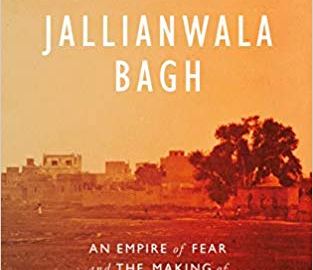
    Once there were ten friends who had embarked upon an adventure. They Crossed rivers, scaled mountains, traversed across forests, and finally they arrived in open fields. When suddenly one screamed. ‘O my God, one of us is missing. We started off as ten and now there are only nine.’ They hurriedly sat in a circle, and  started counting, and then started crying for the missing tenth. Once again, the first counted each one and wailed loudly as he reached the ninth. Number one was on his left and number nine was on his right. Where was the tenth? The second did the same and so did the third, fourth, fifth, sixth, seventh, eighth and the ninth … but the tenth was nowhere to be seen. They all kept crying till a wise man pointed out that each one counted everyone, except himself.

The moral of the story is, in this busy and crowded world keep good track of yourself, or you’ll get lost.

By Kamlesh Tripathi

*

https://kamleshsujata.wordpress.com

*

Share it if you like it

*

Shravan Charity Mission is an NGO that works for poor children suffering from life threatening diseases especially cancer. Our posts are meant for our readers that includes both children and adults and it has a huge variety in terms of content. We also accept donations for our mission. Should you wish to donate for the cause. The bank details are given below:

NAME OF ACCOUNT: SHRAVAN CHARITY MISSION

Account no: 680510110004635 (BANK OF INDIA)

IFSC code: BKID0006805

*

Our publications

GLOOM BEHIND THE SMILE

(The book is about a young cancer patient. Now archived in 7 prestigious libraries of the US, including, Harvard University and Library of Congress. It can also be accessed in MIT through Worldcat.org. Besides, it is also available for reading in Libraries and archives of Canada and Cancer Aid and Research Foundation Mumbai)  

ONE TO TANGO … RIA’S ODYSSEY

(Is a book on ‘singlehood’ about a Delhi girl now archived in Connemara Library, Chennai and Delhi Public Library, GOI, Ministry of Culture, Delhi)

AADAB LUCKNOW … FOND MEMORIES

(Is a fiction written around the great city of Nawabs—Lucknow. It describes Lucknow in great detail and also talks about its Hindu-Muslim amity. That happens to be its undying characteristic. The book was launched in Lucknow International Literary Festival of 2014)

REFRACTIONS … FROM THE PRISM OF GOD

(Co-published by Cankids–Kidscan, a pan India NGO and Shravan Charity Mission, that works for Child cancer in India. The book is endorsed by Ms Preetha Reddy, MD Apollo Hospitals Group. It was launched in Lucknow International Literary Festival 2016)

TYPICAL TALE OF AN INDIAN SALESMAN

(Is a story of an Indian salesman who is, humbly qualified. Yet he fights his ways through unceasing uncertainties to reach the top. A good read not only for salesmen. The book was launched on 10th February, 2018 in Gorakhpur Lit-Fest. Now available in Amazon, Flipkart and Onlinegatha)

RHYTHM … in poems

(Published in January 2019. The book contains 50 poems. The poems describe our day to day life. The book is available in Amazon, Flipkart and Onlinegatha)

(ALL THE ABOVE TITLES ARE AVAILABLE FOR SALE IN AMAZON, FLIPKART AND OTHER ONLINE STORES OR YOU COULD EVEN WRITE TO US FOR A COPY)

*****


LITERARY CORNER: HAMLET by William Shakespeare

Copyright@shravancharitymission

    Hamlet is Shakespeare’s longest play and is considered among the most powerful and influential works of world literature, with a story capable of being retold and adapted by others. It was one of Shakespeare’s most popular works during his lifetime and still ranks among his most performed, topping the performance list of the Royal Shakespeare Company and its predecessors in Stratford-upon-Avon since 1879. It has even inspired many other writers from Johann Wolfgang Von Goethe and Charles Dickens to James Joyce and Iris Murdoch—and has been described as “the world’s most filmed story after Cinderella. Hindi film “Haider” released in 2014 is a modern day adaptation of Shakespere’s tragedy Hamlet.

    The play is divided into four acts.

Act I.

    Prince Hamlet of Denmark happens to be the main protagonist of this play. He is the son of the recently deceased or killed King Hamlet, so essentially there are two characters by the name of Hamlet in this play. Then you have King Claudius, who is Hamlet’s uncle and his father’s brother and also the successor. After the death of King Hamlet, Claudius hastily marries his widow. Her name is Gertrude, who is also Hamlet’s mother, and occupies the throne himself. The play goes on to say that the country of Denmark has a long-standing feud with the neighbouring Norway, in which King Hamlet had once killed King Fortinbras of Norway in a battle some years ago.

    Although, Denmark defeated Norway and the Norwegian throne fell to King Fortinbras’s infirm brother, Denmark does fear a retaliation led by the dead Norwegian king’s son, Prince Fortinbras, as imminent. Then the scene changes to a cold night on the ramparts of Elsinore, the Danish royal castle, where the sentries Bernardo and Marcellus discuss a ghost resembling the late King Hamlet which they have recently seen, and bring Prince Hamlet’s friend Horatio as a witness. After the ghost appears again, the three vow to tell Prince Hamlet what they have witnessed. As the court gathers the next day, while King Claudius and Queen Gertrude discuss affairs of the state with their elderly adviser Polonius, where Hamlet looks on glumly. During the court, Claudius grants permission for Polonius’s son Laertes to return to school in France and also sends envoys to inform the King of Norway about Fortinbras. Claudius scolds Hamlet for continuing to grieve over his father and refuses him permission to return to his schooling in Wittenberg. After the court adjourns, Hamlet despairs on his father’s death and his mother’s hasty remarriage. Learning of the ghost from Horatio, Hamlet resolves to see it himself.

    As Polonius’s son Laertes prepares to depart for a visit to France, Polonius decides to give him a contradictory advice that culminates in the famous ironic maxim, “to thine own self be true.” (Meaning he must think of his own benefit first). Meanwhile Polonius’s daughter, Ophelia, admits her interest in Hamlet, but Laertes warns her against seeking the prince’s attention, and Polonius orders her to reject his advances. That night on the rampart, the ghost reappears in Hamlet’s, presence telling the prince that he was murdered by Claudius, his own brother and demands that Hamlet avenge him. Hamlet agrees, and the ghost vanishes. The prince confides in Horatio and the sentries that from now on he plans to put an ‘antic disposition’ on, or act as though he has gone mad, and forces them to swear to keep his plans for revenge a secret. But privately, however, he remains uncertain of the ghost’s reliability.

Act II

    Ophelia rushes to her father, telling him that Hamlet arrived at her door the prior night half-undressed and behaving erratically. Polonius blames love for Hamlet’s madness and resolves to inform Claudius and Gertrude. But as he enters to do so, he finds the king and queen finish welcoming Rosencrantz and Guildenstern, two student acquaintances of Hamlet, at Elsinore the royal palace. The royal couple requests that the students investigate the cause of Hamlet’s mood and behaviour. In the meanwhile some additional news requires that Polonius waits further to be heard. When messengers from Norway inform Claudius that the King of Norway has rebuked Prince Fortinbras for attempting to refight his father’s battles. The forces that Fortinbras had drafted to march against Denmark will instead be sent against Poland, though they will pass through the Danish territory to get there.

    Polonius tells Claudius and Gertrude his theory regarding Hamlet’s behaviour and speaks to Hamlet in a hall of the castle to try to uncover more information. Hamlet feigns madness but subtly insults Polonius all along. When Rosencrantz and Guildenstern arrive, Hamlet greets his “friends” warmly but quickly discerns that they are spies. Hamlet becomes bitter, admitting that he is upset at his situation but refuses to give the true reason why. Instead he comments on “what a piece of work” humanity is. Rosencrantz and Guildenstern tell Hamlet that they have brought along a troupe of actors that they met while traveling to Elsinore. Hamlet, after welcoming the actors and dismissing his friends-turned-spies, asks them to deliver a soliloquy about the death of King Priam and Queen Hecuba at the climax of the Trojan War. Impressed by their delivery of speech, he plots to stage, “The Murder of Gonzago,” a play featuring a death in the style of his father’s murder (that reminds of the last song of Rishi Kapoor’s film Karz) to determine the truth of the ghost’s story, as well as Claudius’s guilt or innocence, by studying Claudius’s reaction.

Act III

    Polonius forces Ophelia to return Hamlet’s love letters and tokens of affection to the prince while he and Claudius watch from afar to evaluate Hamlet’s reaction. Hamlet is walking alone in the hall as the king and Polonius await Ophelia’s entrance, musing whether, “to be or not to be.” (The famous phrase that means to act or not to act). When Ophelia enters and tries to return Hamlet’s things, Hamlet accuses her of immodesty and cries, “get thee to a nunnery,” (give her to the whore house) though it is unclear whether this, too, is a show of madness or genuine distress. His reaction convinces Claudius that Hamlet is not mad for love. Shortly thereafter, the court assembles to watch the play that Hamlet has commissioned. In which after seeing the protagonist King being murdered by his rival by pouring poison in his ear, Claudius abruptly rises and runs away from the room. For Hamlet, this indeed is a positive proof of his uncle’s guilt.

    After which Gertrude his mother summons Hamlet to her room to demand an explanation. Meanwhile, Claudius talks to himself about the impossibility of repenting, since he still has possession of his ill-gotten goods that is his brother’s crown and his wife. He sinks to his knees in frustration. Meanwhile, Hamlet, on his way to visit his mother, sneaks up behind Claudius but does not kill him, reasoning that killing Claudius while he is praying will send him straight to heaven while his father’s ghost is still stuck in purgatory. In the queen’s bedchamber, Hamlet and Gertrude fight bitterly. Where Polonius, spies on the conversation from behind a tapestry, calls for help as Gertrude, believing Hamlet wants to kill her, also calls out for help herself.

    Hamlet, believing it is Claudius behind the tapestry, stabs wildly, but in the process he kills Polonius. He pulls aside the curtain and discovers his mistake. In a rage, Hamlet unsparingly insults his mother for her apparent ignorance of Claudius’s villainy. But just then the King Hamlet’s ghost enters and reprimands Prince Hamlet for his inaction and harsh words. Unable to see or hear the ghost herself, Gertrude takes Hamlet’s conversation with the ghost as a further evidence of his madness. After begging the queen to stop sleeping with Claudius, Hamlet leaves, dragging Polonius’s corpse away.

Act IV

    Hamlet jokes with Claudius about where he has hidden Polonius’s body, and the king, fearing for his life, sends Rosencrantz and Guildenstern to accompany Hamlet to England with a sealed letter to the English king requesting that Hamlet be executed immediately.

    Shocked by grief at Polonius’s death, Ophelia wanders aimlessly around Elsinore. Meanwhile Laertes returns from France, enraged by his father’s death and his sister’s madness. Claudius convinces Laertes that Hamlet is solely responsible for the killing, but a letter soon arrives indicating that Hamlet has returned to Denmark, foiling Claudius’s plan. Claudius switches tactics, proposing a fencing match—a sword fight between Laertes and Hamlet to settle their differences. Laertes will be given a poison-tipped sword, and Claudius will offer Hamlet poisoned wine as a congratulation if that fails. Gertrude interrupts to report that Ophelia has drowned, though it is unclear whether it was a suicide or an accident exacerbated by her madness.

    In the meanwhile Horatio receives a letter from Hamlet, explaining that the prince escaped by negotiating with pirates who attempted to attack his England-bound ship, and the friends reunite offstage. Two grave-diggers discuss Ophelia’s apparent suicide while digging her grave. Hamlet arrives with Horatio and banters with one of the grave-diggers, who unearths the skull of a court jester from Hamlet’s childhood that he loved. His name was Yorick. Hamlet picks up the skull, saying “alas, poor Yorick” as he thinks of death. Meanwhile, Ophelia’s funeral procession approaches, led by Laertes. Hamlet and Horatio initially hide, but when Hamlet realizes that Ophelia is the one being buried, he reveals himself, proclaiming his love for her. Laertes and Hamlet fight by Ophelia’s graveside, but the brawl is soon broken up.

    Back at Elsinore, Hamlet explains to Horatio that he had discovered Claudius’s letter in Rosencrantz and Guildenstern’s belongings and that he had replaced it with a forged copy indicating that his former friends should be killed instead. A foppish courtier, by the name of Osric, interrupts the conversation to deliver the fencing challenge to Hamlet. Hamlet, despite Horatio’s pleas, accepts it. Hamlet does well at first, leading the match by two hits to none, when Gertrude raises a toast to him using the poisoned glass of wine Claudius had set aside for Hamlet. Claudius tries to stop her but is too late in doing so. She drinks, and Laertes realizes the plot will now be revealed. He slashes Hamlet with his poisoned blade. In the ensuing scuffle, they switch weapons, when Hamlet wounds Laertes with his own poisoned sword.

    In the meantime Gertrude collapses exclaiming she has been poisoned, she dies. Further, in his dying moments, Laertes reconciles with Hamlet and reveals Claudius’s plan. Enraged Hamlet rushes at Claudius and kills him. Soon the poison takes effect on Hamlet. Who upon hearing that Fortinbras is marching through the area, names the Norwegian prince as his successor. Horatio, distraught at the thought of being the last survivor and living whilst Hamlet does not, says he will commit suicide by drinking the dregs of Gertrude’s poisoned wine, but Hamlet begs him to live on and tell his story. Hamlet dies in Horatio’s arms, proclaiming “the rest is silence.” Meanwhile, Fortinbras, who was ostensibly marching towards Poland with his army, arrives at the palace, along with an English ambassador bringing news of Rosencrantz and Guildenstern’s deaths. Horatio promises to recount the full story of what happened, and Fortinbras, seeing the entire Danish royal family dead, takes the crown for himself and orders a military funeral to honour Hamlet.

    In the final analysis a demon such as Claudius is sufficient to destroy the entire clan.

Synopsis by Kamlesh Tripathi

*

https://kamleshsujata.wordpress.com

*

Share it if you like it

*

Shravan Charity Mission is an NGO that works for poor children suffering from life threatening diseases especially cancer. Our posts are meant for our readers that includes both children and adults and it has a huge variety in terms of content. We also accept donations for our mission. Should you wish to donate for the cause. The bank details are given below:

NAME OF ACCOUNT: SHRAVAN CHARITY MISSION

Account no: 680510110004635 (BANK OF INDIA)

IFSC code: BKID0006805

*

Our publications

GLOOM BEHIND THE SMILE

(The book is about a young cancer patient. Now archived in 7 prestigious libraries of the US, including, Harvard University and Library of Congress. It can also be accessed in MIT through Worldcat.org. Besides, it is also available for reading in Libraries and archives of Canada and Cancer Aid and Research Foundation Mumbai)  

ONE TO TANGO … RIA’S ODYSSEY

(Is a book on ‘singlehood’ about a Delhi girl now archived in Connemara Library, Chennai and Delhi Public Library, GOI, Ministry of Culture, Delhi)

AADAB LUCKNOW … FOND MEMORIES

(Is a fiction written around the great city of Nawabs—Lucknow. It describes Lucknow in great detail and also talks about its Hindu-Muslim amity. That happens to be its undying characteristic. The book was launched in Lucknow International Literary Festival of 2014)

REFRACTIONS … FROM THE PRISM OF GOD

(Co-published by Cankids–Kidscan, a pan India NGO and Shravan Charity Mission, that works for Child cancer in India. The book is endorsed by Ms Preetha Reddy, MD Apollo Hospitals Group. It was launched in Lucknow International Literary Festival 2016)

TYPICAL TALE OF AN INDIAN SALESMAN

(Is a story of an Indian salesman who is, humbly qualified. Yet he fights his ways through unceasing uncertainties to reach the top. A good read not only for salesmen. The book was launched on 10th February, 2018 in Gorakhpur Lit-Fest. Now available in Amazon, Flipkart and Onlinegatha)

RHYTHM … in poems

(Published in January 2019. The book contains 50 poems. The poems describe our day to day life. The book is available in Amazon, Flipkart and Onlinegatha)

(ALL THE ABOVE TITLES ARE AVAILABLE FOR SALE IN AMAZON, FLIPKART AND OTHER ONLINE STORES OR YOU COULD EVEN WRITE TO US FOR A COPY)

*****


SHORT STORY: THE CAVE AND THE LIGHT

Copyright@shravancharitymission

    There was once a cave that lived underground as most caves do. The cave had spent its entire life in darkness. It had never seen light. One day, a voice came up to him and said, ‘Come up … into the light. Come up … and enjoy the sunlight.’

     ‘I don’t know what you mean by light. All I have ever known and seen is darkness.’ The cave replied. ‘Come and see it for yourself,’ said the voice again.

    The cave mustered up enough courage and climbed slowly up from the depths of the earth. Suddenly, it reached the top of the earth and was surrounded by magnificent light, the likes of which he had never seen before in its life.

    ‘This is beautiful,’ said the cave. And after enjoying the light for a while the cave said to the sunlight, ‘Now it is your turn to come with me and see the darkness.’

    ‘What is darkness?’ Asked the Sunlight. The cave answered, ‘come and see it for yourself.’ The Sunlight decided to visit the cave’s home. And as the Sunlight entered the cave, it said. ‘Now show me where your darkness is.’ But with the Sunlight there was no darkness to be found.

    What the anecdote illustrates is the power of light. Wherever there is light there can be no darkness. Whenever we feel we are in the dark spell of our life, we need only to tap into the light of our soul.

Posted by Kamlesh Tripathi

*

https://kamleshsujata.wordpress.com

*

Share it if you like it

*

Shravan Charity Mission is an NGO that works for poor children suffering from life threatening diseases especially cancer. Our posts are meant for our readers that includes both children and adults and it has a huge variety in terms of content. We also accept donations for our mission. Should you wish to donate for the cause. The bank details are given below:

NAME OF ACCOUNT: SHRAVAN CHARITY MISSION

Account no: 680510110004635 (BANK OF INDIA)

IFSC code: BKID0006805

*

Our publications

GLOOM BEHIND THE SMILE

(The book is about a young cancer patient. Now archived in 7 prestigious libraries of the US, including, Harvard University and Library of Congress. It can also be accessed in MIT through Worldcat.org. Besides, it is also available for reading in Libraries and archives of Canada and Cancer Aid and Research Foundation Mumbai)  

ONE TO TANGO … RIA’S ODYSSEY

(Is a book on ‘singlehood’ about a Delhi girl now archived in Connemara Library, Chennai and Delhi Public Library, GOI, Ministry of Culture, Delhi)

AADAB LUCKNOW … FOND MEMORIES

(Is a fiction written around the great city of Nawabs—Lucknow. It describes Lucknow in great detail and also talks about its Hindu-Muslim amity. That happens to be its undying characteristic. The book was launched in Lucknow International Literary Festival of 2014)

REFRACTIONS … FROM THE PRISM OF GOD

(Co-published by Cankids–Kidscan, a pan India NGO and Shravan Charity Mission, that works for Child cancer in India. The book is endorsed by Ms Preetha Reddy, MD Apollo Hospitals Group. It was launched in Lucknow International Literary Festival 2016)

TYPICAL TALE OF AN INDIAN SALESMAN

(Is a story of an Indian salesman who is, humbly qualified. Yet he fights his ways through unceasing uncertainties to reach the top. A good read not only for salesmen. The book was launched on 10th February, 2018 in Gorakhpur Lit-Fest. Now available in Amazon, Flipkart and Onlinegatha)

RHYTHM … in poems

(Published in January 2019. The book contains 50 poems. The poems describe our day to day life. The book is available in Amazon, Flipkart and Onlinegatha)

(ALL THE ABOVE TITLES ARE AVAILABLE FOR SALE IN AMAZON, FLIPKART AND OTHER ONLINE STORES OR YOU COULD EVEN WRITE TO US FOR A COPY)

*****