Category Archives: story

SHORT STORY: DESPERATION

Copyright@shravancharitymission

    One day, a strong and powerful hound was chasing a strongly built hare in the jungle. The hare was applying all kinds of tricks available in his quiver and within the purview of sam-dam-dand-bhed to save himself from this ferocious hound.

    After running for a long while, the tired hound finally gave up the hunt and stopped under a tree, gasping. A herd of goats that was watching this event from a distance mocked at the hound, by saying that the little hare was better than the beast. To this, the hound responded by saying: “The hare was running for his life, whereas, I was only running for my dinner. That was the difference between us.”

Moral of the story: Incentives stimulate action. There was a great difference between the incentives. Hare was running for his life. There, cannot be a bigger desperation than that, whereas the hound was only running for his dinner.

Posted by Kamlesh Tripathi

*

https://kamleshsujata.wordpress.com

*

Share it if you like it

*

Shravan Charity Mission is an NGO that works for poor children suffering from life threatening diseases especially cancer. Our posts are meant for our readers that includes both children and adults and it has a huge variety in terms of content. We also accept donations for our mission. Should you wish to donate for the cause. The bank details are given below:

NAME OF ACCOUNT: SHRAVAN CHARITY MISSION

Account no: 680510110004635 (BANK OF INDIA)

IFSC code: BKID0006805

*

Our publications

GLOOM BEHIND THE SMILE

(The book is about a young cancer patient. Now archived in 7 prestigious libraries of the US, including, Harvard University and Library of Congress. It can also be accessed in MIT through Worldcat.org. Besides, it is also available for reading in Libraries and archives of Canada and Cancer Aid and Research Foundation Mumbai)  

ONE TO TANGO … RIA’S ODYSSEY

(Is a book on ‘singlehood’ about a Delhi girl now archived in Connemara Library, Chennai and Delhi Public Library, GOI, Ministry of Culture, Delhi)

AADAB LUCKNOW … FOND MEMORIES

(Is a fiction written around the great city of Nawabs—Lucknow. It describes Lucknow in great detail and also talks about its Hindu-Muslim amity. That happens to be its undying characteristic. The book was launched in Lucknow International Literary Festival of 2014)

REFRACTIONS … FROM THE PRISM OF GOD

(Co-published by Cankids–Kidscan, a pan India NGO and Shravan Charity Mission, that works for Child cancer in India. The book is endorsed by Ms Preetha Reddy, MD Apollo Hospitals Group. It was launched in Lucknow International Literary Festival 2016)

TYPICAL TALE OF AN INDIAN SALESMAN

(Is a story of an Indian salesman who is, humbly qualified. Yet he fights his ways through unceasing uncertainties to reach the top. A good read not only for salesmen. The book was launched on 10th February, 2018 in Gorakhpur Lit-Fest. Now available in Amazon, Flipkart and Onlinegatha)

RHYTHM … in poems

(Published in January 2019. The book contains 50 poems. The poems describe our day to day life. The book is available in Amazon, Flipkart and Onlinegatha)

(ALL THE ABOVE TITLES ARE AVAILABLE FOR SALE IN AMAZON, FLIPKART AND OTHER ONLINE STORES OR YOU COULD EVEN WRITE TO US FOR A COPY)

*****


BOOK REVIEW: IKIGAI BY HECTOR GARCIA AND CO-AUTHOR FRANSESC MIRALLES

Copyright@shravancharitymission

Khidki (Window)

–Read India Initiative—

This is only an attempt to create interest in reading. We may not get the time to read all the books in our lifetime. But such reviews, talk and synopsis will at least convey what the book is all about.

    Ikigai is a Japanese word. The meaning of which translates roughly to a reason for being in this world, it encompasses a sense of joy, a sense of purpose and meaning in life, and an overall feeling of well-being. The word derives from iki, meaning life and kai, meaning the realisation of hopes and expectations in Japanese.

    Japanese ikigai is the thing that makes you get out of bed happy every morning. A few years ago, everyone was talking about hygge, a Danish concept that cannot be translated to one single word but encompasses a feeling of cozy contentment and well-being through enjoying the simple things in life. For example on a snowy day, you’ve might have experienced hygge without even knowing about it. In the same vein, another untranslatable word—ikigai—has captured the imagination of those searching for the key to living a long and happy life. Hector Garcia, a software engineer who was born in Spain but has lived in Japan for over a decade, and his co-author Fransesc Miralles delved deep into the secrets of Japan’s super-centenarians to distil the essence of this Japanese philosophy to produce a bestselling book titled ‘Ikigai: The Japanese secret to a long and happy life’.

    Ikigai is a Japanese word, that’s almost, impossible to translate—that’s why we had to write a book about it, say the authors. You can think of it, as the thing that makes you, get out of bed happy every morning. The literal meaning of it is the purpose of your life, but it’s a lot more than that. For me, one of my most significant Ikigai is, writing the best I can, in order to make, other people’s lives better, says the author. The book is all about connecting with everything—what you love, what you’re good at, what you can be paid for and what the world needs.

    Ogimi is a village in Okinawa, Japan, where people live the longest in the world. The authors learn from their interviews with hundreds of elders there that they always keep themselves busy, but in a good manner. Elders shouldn’t have a dream that they’ll retire and then do nothing in life they say. In big cities, people are too busy racing through life. Their lifestyle is either doing a lot or doing nothing. That’s an extreme, and they need to find a middle ground.

    The book has some interesting tips on food and diet. These days there are thousands of diet charts out there, and each one tells you to do something different. It becomes very aimless and stressful to follow them. The idea here is you eat whatever you want, but you stop when you’re 80% full. That could mean not having that ice cream or a sweet to round off your meal.

    Start of the day is very important. So, ask yourself, what are the important things you want to do when you wake up in the morning? If that’s difficult for you to answer, you can spend some minutes every morning writing down what you’re looking forward to, in your day. After some days of doing this, you will start noticing a pattern. For example, you might realise that you enjoy your job, but don’t like your boss. So, you can try to find a job in the same industry. An interesting statistic that the author finds is that 90% of people in their 40s and 50s, have changed careers—and only 10% study something and then work on it forever. Connecting with your Ikigai isn’t going to be sudden, the key is discovering yourself and the things you like and dislike.

    But what does one do in cases where their Ikigai is financially unviable? It’s the most difficult question, and the one the author is still trying to find an answer to. With the internet, one can try various things while doing a job. Maybe, you can start pursuing whatever interests, one has, and slowly try to get paid for it. Interesting things start happening when one starts pursuing what one loves. It’s worse to not even try.

     There is a great amount of sense in being with a community for living a long and happy life. Ogimi is a small village full of people with similar life philosophies. But this indeed is a rare case as most of us live in unequal societies rife with disagreement.

    In Ogimi people are neither poor nor rich so it’s easy to make communities where everyone puts the same amount of money together for common goals. But this doesn’t work so smoothly in different environments. However, one can start developing these communities with the people they trust. Where, one will gradually feel supported, and the community will only grow.

    The book also talks about anti-fragility as a concept. It’s like bacteria—the more they get attacked, the stronger they become. In everyone’s lives, disaster and bad things happen. A family member may die, or you could get an illness. It’s important to remember that you get stronger by each damage done to you.

    The response to this book has been overwhelming. It is being translated into more than 54 languages around the world. In fact it has become the most translated Spanish book in history. Soon, it will be translated into Telugu, Hindi and Marathi. In case you have not found your Ikigai in life this indeed is the book. I won’t hesitate in giving it a rating of eight out of ten.

By Kamlesh Tripathi

*

https://kamleshsujata.wordpress.com

*

Share it if you like it

*

Shravan Charity Mission is an NGO that works for poor children suffering from life threatening diseases especially cancer. Our posts are meant for our readers that includes both children and adults and it has a huge variety in terms of content. We also accept donations for our mission. Should you wish to donate for the cause. The bank details are given below:

NAME OF ACCOUNT: SHRAVAN CHARITY MISSION

Account no: 680510110004635 (BANK OF INDIA)

IFSC code: BKID0006805

*

Our publications

GLOOM BEHIND THE SMILE

(The book is about a young cancer patient. Now archived in 7 prestigious libraries of the US, including, Harvard University and Library of Congress. It can also be accessed in MIT through Worldcat.org. Besides, it is also available for reading in Libraries and archives of Canada and Cancer Aid and Research Foundation Mumbai)  

ONE TO TANGO … RIA’S ODYSSEY

(Is a book on ‘singlehood’ about a Delhi girl now archived in Connemara Library, Chennai and Delhi Public Library, GOI, Ministry of Culture, Delhi)

AADAB LUCKNOW … FOND MEMORIES

(Is a fiction written around the great city of Nawabs—Lucknow. It describes Lucknow in great detail and also talks about its Hindu-Muslim amity. That happens to be its undying characteristic. The book was launched in Lucknow International Literary Festival of 2014)

REFRACTIONS … FROM THE PRISM OF GOD

(Co-published by Cankids–Kidscan, a pan India NGO and Shravan Charity Mission, that works for Child cancer in India. The book is endorsed by Ms Preetha Reddy, MD Apollo Hospitals Group. It was launched in Lucknow International Literary Festival 2016)

TYPICAL TALE OF AN INDIAN SALESMAN

(Is a story of an Indian salesman who is, humbly qualified. Yet he fights his ways through unceasing uncertainties to reach the top. A good read not only for salesmen. The book was launched on 10th February, 2018 in Gorakhpur Lit-Fest. Now available in Amazon, Flipkart and Onlinegatha)

RHYTHM … in poems

(Published in January 2019. The book contains 50 poems. The poems describe our day to day life. The book is available in Amazon, Flipkart and Onlinegatha)

(ALL THE ABOVE TITLES ARE AVAILABLE FOR SALE IN AMAZON, FLIPKART AND OTHER ONLINE STORES OR YOU COULD EVEN WRITE TO US FOR A COPY)

*****



SHORT STORY: PERCEPTION VS REALITY BY KAMLESH TRIPATHI

Copyright@shravancharitymission

    Once a baby lamb was going with his mother. They were walking on a jungle road when all of a sudden they saw a tiger approaching them from the front. It appeared the tiger was either hungry or sick and therefore it was growling off and on. Upon seeing the hungry tiger both mother and the baby lamb froze, and stood on the road quietly as there was no time to hide. The tiger in meantime kept walking towards them. The mother lamb started worrying profusely. She signalled the baby lamb to remain quiet. Soaked in fraught she started getting horrible thoughts of they being, eaten up, by the hungry tiger. She decided she would offer herself to the tiger first, and in exchange plead, to let go, her baby lamb. With all these terrifying thoughts they were now waiting for the tiger to attack them. When the tiger was about twenty feet away there was a gush of strong breeze announcing a dust storm but the tiger was undeterred and kept walking towards them. Both mother and the baby were now shivering out of fear, but to their utter surprise the tiger soon went past them, when suddenly, a fowl ran out of the bushes that was close to the tiger. There was flapping of wings resulting in commotion. The tiger upon hearing the flapping sound, ran after the fowl and managed to lay his paw on the bird and killed it on the spot. In the meanwhile, the frightened mother and the baby lamb, tiptoed their way back to their home.

    Can you guess, as to why, the mother and the baby lamb were given a gift of life by the tiger? If not then let me tell you why. The fact is, that the tiger was blind so he couldn’t see the baby lamb and his mother standing there, and when he was about twenty feet away from the mother and the lamb, God created a dust storm to stop the body smell of the mother and baby lamb to reach the tiger. But the unfortunate fowl who was sitting pretty behind the bushes did not know that the tiger was blind even when he saw the tiger walking past the baby lamb and the mother, and so, he ran, out of the bush, to save himself, thinking that the tiger had seen him. But sadly for the fowl, the tiger could kill him only because of his sense of sound—the flapping of wings, as even his faculty to smell had momentarily vanished in the dust storm … and of course he was blind.

   Moral of the story: Stop worrying and never jump to fast conclusions for there could be a humongous difference between perception, optics and reality. Think of all possibilities before taking a leap.

    This short story of mine was published in Bhavan’s Journal, October 15, 2019 edition.

By Kamlesh Tripathi

*

https://kamleshsujata.wordpress.com

*

Share it if you like it

*

Shravan Charity Mission is an NGO that works for poor children suffering from life threatening diseases especially cancer. Our posts are meant for our readers that includes both children and adults and it has a huge variety in terms of content. We also accept donations for our mission. Should you wish to donate for the cause. The bank details are given below:

NAME OF ACCOUNT: SHRAVAN CHARITY MISSION

Account no: 680510110004635 (BANK OF INDIA)

IFSC code: BKID0006805

*

Our publications

GLOOM BEHIND THE SMILE

(The book is about a young cancer patient. Now archived in 7 prestigious libraries of the US, including, Harvard University and Library of Congress. It can also be accessed in MIT through Worldcat.org. Besides, it is also available for reading in Libraries and archives of Canada and Cancer Aid and Research Foundation Mumbai)  

ONE TO TANGO … RIA’S ODYSSEY

(Is a book on ‘singlehood’ about a Delhi girl now archived in Connemara Library, Chennai and Delhi Public Library, GOI, Ministry of Culture, Delhi)

AADAB LUCKNOW … FOND MEMORIES

(Is a fiction written around the great city of Nawabs—Lucknow. It describes Lucknow in great detail and also talks about its Hindu-Muslim amity. That happens to be its undying characteristic. The book was launched in Lucknow International Literary Festival of 2014)

REFRACTIONS … FROM THE PRISM OF GOD

(Co-published by Cankids–Kidscan, a pan India NGO and Shravan Charity Mission, that works for Child cancer in India. The book is endorsed by Ms Preetha Reddy, MD Apollo Hospitals Group. It was launched in Lucknow International Literary Festival 2016)

TYPICAL TALE OF AN INDIAN SALESMAN

(Is a story of an Indian salesman who is, humbly qualified. Yet he fights his ways through unceasing uncertainties to reach the top. A good read not only for salesmen. The book was launched on 10th February, 2018 in Gorakhpur Lit-Fest. Now available in Amazon, Flipkart and Onlinegatha)

RHYTHM … in poems

(Published in January 2019. The book contains 50 poems. The poems describe our day to day life. The book is available in Amazon, Flipkart and Onlinegatha)

(ALL THE ABOVE TITLES ARE AVAILABLE FOR SALE IN AMAZON, FLIPKART AND OTHER ONLINE STORES OR YOU COULD EVEN WRITE TO US FOR A COPY)

*****



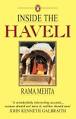
BOOK REVIEW: INSIDE THE HAVELI BY RAMA MEHTA

Copyright@shravancharitymission


Khidki (Window)

–Read India Initiative—

This is only an attempt to create interest in reading. We may not get the time to read all the books in our lifetime. But such reviews, talk and synopsis will at least convey what the book is all about.

    ‘Inside the Haveli’ is a novel written by Rama Mehta. For this novel Rama Mehta was conferred ‘Sahitya Akademi Award’ in the year 1979. The story of the novel revolves around a young girl from Mumbai, India. She gets married to the son of a former Indian prince and post-marriage she relocates to Udaipur, Rajasthan. This book was first published by Gulab Vazirani in 1977. The initial price of this book at the time of publication was Rs 40. The book completes in about 264 pages. But before I move ahead let me tell you a few things about author Rama Mehta.

    Rama Mehta was born in Nainital, India, in 1923. She rose to become a top sociologist, lecturer and even a novelist. Her non-fiction writings include The Western Educated Hindu Woman, The Hindu Divorced Woman, and ‘From Purdah to Modernity.’ One of the first women to be appointed to India’s Foreign Service, Rama Mehta was forced to resign from her position upon marriage. She died in 1978. The novel has received several compliments. Some are as follows:

    ‘A wonderfully interesting account … women should not miss it; neither should men—John Kenneth Galbraith, Canadian-born economist, public official, and diplomat.

    Says novelist Anita Desai, ‘I remember the surprised delight with which I first came upon Rama Mehta’s novel and encountered the freshness of her prose, the simplicity and tenderness of her evocation of an ancient and traditional way of life, and the understanding she brought to it.’

    Throughout her life, the principal theme of Rama Mehta’s writings was the position of women in tradition-bound but rapidly changing India. For, in addition to her three novels, she wrote a number of sociological books about the contemporary Indian woman including The Western Educated Hindu Woman and The Hindu Divorced Woman. And, just before she died in June 1978, Mehta completed a study of women in the Hindu nuclear family. It is, therefore, appropriate that her last novel, Inside the Haveli, should have won, though posthumously, that year’s Sahitya Akademy award for the best Indian novel in English.

    In essence it’s a modern classic about an independent young woman’s struggle to hold on to her identity in a traditional world.    The book in no manner has a very engrossing storyline. As mentioned earlier it is about Geeta, an educated and vivacious Bombay girl, who marries into a conservative family and abruptly finds herself living in purdah in her husband’s ancestral haveli at Udaipur. Faced with this and even certain other age old traditions that threaten to snuff out, her independence and progressive views, Geeta puts up an unnoticed fight to maintain her modernity that she has always lived by.

    It is always tough for an author to churn out a novel without a piercing story line, which Rama Mehta has done quite successfully. She has detailed it so very well that one gets to feel as if she was part of the family and has lived with them for a duration of time only to write this novel.

    Some other important characters apart from Geeta in the novel are Ajay Singh, husband of Geeta; Pari an old maid; Lakshmi another maid; Vijay Geeta’s daughter and Sita Lakshmi’s daughter.

    The novel depicts the beginnings of a social change in the life of the women from Mewar who continued, until 20th century, to practice the system of purdah long after Hindu women discarded it as an out-moded custom. It gives a detailed account of old Udaipur. Something like they eat in Silver thalis.

    In that manner ‘Inside the Haveli’ is an excellent novel about a young, college-educated girl of Bombay who marries the son of an ex-prime minister of the former princely state of Mewar and comes to her husband’s traditional haveli in Udaipur.

   The moment she steps out of the train, Geeta the main protagonist gets the biggest shock of her life, for not only is her face instantaneously covered by her women relatives and maid-servants who take complete charge of her, but she, also, immediately finds, herself, engulfed in a pattern of life which is totally alien to her modern upbringing in Bombay.

    As soon as she reaches “home”, she is further shocked by the realisation that the men and women live in different parts of the huge haveli, without any contact with each other. Indeed, life inside the haveli is governed by an impossibly rigid etiquette of dos and don’ts, and for her, as for all the other women, there is no life outside the high walls of the haveli.

    The youthful Geeta finds herself unable to reconcile with the idea of spending the rest of her life in purdah. But at the same time she sees no escape from this out-dated way of life, for her husband is too deeply rooted in his traditions and too deeply attached to his parents to take up a job in some other city.

    Moreover, she gradually comes to realise that, in spite of their exacting demands of conformity with the family tradition, her parents-in-law are essentially warm hearted and generous.

    Slowly and painfully Geeta finds herself adjusting with the life in the haveli with the thought of merging her identity and that of her children in the tradition of her husband’s ancient family.

    But in the process she succeeds in initiating certain reforms for the women of these ancient havelis by starting literacy classes for them and by sending the female children to school. Her women relatives, of course, oppose her plans, but her father-in-law, realising that with the end of the princely era, the old pattern of life could not possibly continue for long, supports Geeta’s attempt to make the women less dependent on the havelis.

    It is a fascinating novel in which the author has succeeded in conveying the essence and feel of a world which is fast disappearing.

    Jeewan Niwas is the centre-stage around which the entire clan of the ruling class, Rana’s stay. Traditionally these families have also served the Maharana of Udaipur, who was like God to them. They all seem to be together but yes there are internal rivalries too.

    A change of mindset is in the offing when Geeta is blessed with a daughter and celebrations break through. Lakshmi their maid leaves the haveli on some misunderstanding. Thereafter her daughter Sita is brought up by Bhagwat Singh ji’s wife who is Geeta’s mother-in-law.

    There is almost a chapter on young Sita’s wedding who is daughter of Lakshmi. The scene is very emotional and well described. It gives a vivid description of such marriages.

    Author has crafted some original and interesting words such as, ‘twig fire lit in a earthenware pot,’ than you have butter lamp’ and ‘fire-hot rotis’ to name a few.

    Overall it’s a very slow moving book, but well detailed with precise punctuation and simple language easy to understand. The book doesn’t sink in you unless you complete it in five to six sittings, nor does it have any recall quotient barring a peep into the havelis this is because of the faint story line. It has too many characters difficult to remember especially when it’s not a very happening book.

    You can pick up this book to understand what really goes on inside a haveli. I would give it eight out of ten for it meets the purpose for which it was written.

By Kamlesh Tripathi

*

https://kamleshsujata.wordpress.com

*

Share it if you like it

*

Shravan Charity Mission is an NGO that works for poor children suffering from life threatening diseases especially cancer. Our posts are meant for our readers that includes both children and adults and it has a huge variety in terms of content. We also accept donations for our mission. Should you wish to donate for the cause. The bank details are given below:

NAME OF ACCOUNT: SHRAVAN CHARITY MISSION

Account no: 680510110004635 (BANK OF INDIA)

IFSC code: BKID0006805

*

Our publications

GLOOM BEHIND THE SMILE

(The book is about a young cancer patient. Now archived in 7 prestigious libraries of the US, including, Harvard University and Library of Congress. It can also be accessed in MIT through Worldcat.org. Besides, it is also available for reading in Libraries and archives of Canada and Cancer Aid and Research Foundation Mumbai)  

ONE TO TANGO … RIA’S ODYSSEY

(Is a book on ‘singlehood’ about a Delhi girl now archived in Connemara Library, Chennai and Delhi Public Library, GOI, Ministry of Culture, Delhi)

AADAB LUCKNOW … FOND MEMORIES

(Is a fiction written around the great city of Nawabs—Lucknow. It describes Lucknow in great detail and also talks about its Hindu-Muslim amity. That happens to be its undying characteristic. The book was launched in Lucknow International Literary Festival of 2014)

REFRACTIONS … FROM THE PRISM OF GOD

(Co-published by Cankids–Kidscan, a pan India NGO and Shravan Charity Mission, that works for Child cancer in India. The book is endorsed by Ms Preetha Reddy, MD Apollo Hospitals Group. It was launched in Lucknow International Literary Festival 2016)

TYPICAL TALE OF AN INDIAN SALESMAN

(Is a story of an Indian salesman who is, humbly qualified. Yet he fights his ways through unceasing uncertainties to reach the top. A good read not only for salesmen. The book was launched on 10th February, 2018 in Gorakhpur Lit-Fest. Now available in Amazon, Flipkart and Onlinegatha)

RHYTHM … in poems

(Published in January 2019. The book contains 50 poems. The poems describe our day to day life. The book is available in Amazon, Flipkart and Onlinegatha)

(ALL THE ABOVE TITLES ARE AVAILABLE FOR SALE IN AMAZON, FLIPKART AND OTHER ONLINE STORES OR YOU COULD EVEN WRITE TO US FOR A COPY)

*****



SHORT STORY: THE INTELLIGENT JACKAL

Copyright@shravancharitymission

    There was once a ferocious lion who lived in a dense jungle.  One day, he could not prey upon a single animal in spite of wandering around in search of food the whole day. It was almost sunset, and the lion started returning, even when, he was very hungry. On his way back, he saw a big cave, and thought to himself, “For sure some animal must be living in this big cave. Such a nice cave cannot be empty, someone has to be there. At sunset, which ever animal lives here, is bound to return. So, I shall hide myself inside the cave and wait for my dinner to arrive.” 
    The cave was home to a jackal, who arrived, a little while after the lion had hidden himself inside. But while entering he noticed the footprints of the lion leading into the cave, but could not find any footprint coming out. 

    He thought, “If a lion has indeed entered the cave, I will be dead as soon as I enter. But, how can I, be sure? There is no reason for me to stay away from my home if there is no lion inside. I must find out a way to confirm if the lion is still inside.”  

    The jackal thought of a plan, and while standing in front of the cave, began to shout, “Hello Cave! Hello Cave! Can I come inside?” For a few moments, he waited in silence and shouted again, “Hello Cave! Have you forgotten our understanding of all these years? I always wait for your reply before I enter. Why are you silent today? I shall then go to some other cave if you do not reply.” 
    Upon hearing this, the lion thought, “The cave must reply to the jackal when he returns at sunset. It is, because I am inside, the cave is not replying today. So, I must invite the jackal on behalf of the cave, or the jackal will go away.” 
    So, the lion replied from inside the cave, “Hello Jackal, you may enter. It is safe inside.” But the reply was frightening due to the echo from the walls of the cave. The jackal at once knew that the lion was waiting for him to enter and make a meal out of him. He ran off, as fast as he could to save himself. 
Moral of the story: Use your brains to protect yourself from destruction.

Posted by Kamlesh Tripathi

*

https://kamleshsujata.wordpress.com

*

Share it if you like it

*

Shravan Charity Mission is an NGO that works for poor children suffering from life threatening diseases especially cancer. Our posts are meant for our readers that includes both children and adults and it has a huge variety in terms of content. We also accept donations for our mission. Should you wish to donate for the cause. The bank details are given below:

NAME OF ACCOUNT: SHRAVAN CHARITY MISSION

Account no: 680510110004635 (BANK OF INDIA)

IFSC code: BKID0006805

*

Our publications

GLOOM BEHIND THE SMILE

(The book is about a young cancer patient. Now archived in 7 prestigious libraries of the US, including, Harvard University and Library of Congress. It can also be accessed in MIT through Worldcat.org. Besides, it is also available for reading in Libraries and archives of Canada and Cancer Aid and Research Foundation Mumbai)  

ONE TO TANGO … RIA’S ODYSSEY

(Is a book on ‘singlehood’ about a Delhi girl now archived in Connemara Library, Chennai and Delhi Public Library, GOI, Ministry of Culture, Delhi)

AADAB LUCKNOW … FOND MEMORIES

(Is a fiction written around the great city of Nawabs—Lucknow. It describes Lucknow in great detail and also talks about its Hindu-Muslim amity. That happens to be its undying characteristic. The book was launched in Lucknow International Literary Festival of 2014)

REFRACTIONS … FROM THE PRISM OF GOD

(Co-published by Cankids–Kidscan, a pan India NGO and Shravan Charity Mission, that works for Child cancer in India. The book is endorsed by Ms Preetha Reddy, MD Apollo Hospitals Group. It was launched in Lucknow International Literary Festival 2016)

TYPICAL TALE OF AN INDIAN SALESMAN

(Is a story of an Indian salesman who is, humbly qualified. Yet he fights his ways through unceasing uncertainties to reach the top. A good read not only for salesmen. The book was launched on 10th February, 2018 in Gorakhpur Lit-Fest. Now available in Amazon, Flipkart and Onlinegatha)

RHYTHM … in poems

(Published in January 2019. The book contains 50 poems. The poems describe our day to day life. The book is available in Amazon, Flipkart and Onlinegatha)

(ALL THE ABOVE TITLES ARE AVAILABLE FOR SALE IN AMAZON, FLIPKART AND OTHER ONLINE STORES OR YOU COULD EVEN WRITE TO US FOR A COPY)

*****



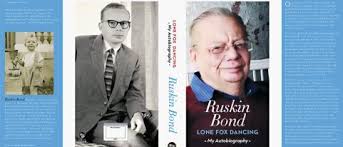
BOOK REVIEW: TOPAZ BY RUSKIN BOND

Copyright@shravancharitymission

Khidki (Window)

–Read India Initiative—

This is only an attempt to create interest in reading. We may not get the time to read all the books in our lifetime. But such reviews, talk and synopsis will at least convey what the book is all about.

    Ruskin Bond as we all know, is an Indian author of British descent. He has made exemplary contribution in the field of children’s books and even ghost stories. Topaz is one such story that I’ve picked up for you. The story is set up in the backdrop of Himalayas. It is written in first person. Where, at a point the narrator or the protagonist confirms he is a writer, and that, in a way also confirms that it is the author himself narrating the story.

    The story opens in the pine-clad slopes of the Himalayas. The protagonist, is, in his room, listening to some music that reminds him of the strains of “The Blue Danube” and concurrently the wonderful sight of Pine-clad slopes of Himalayas. He has a new record player with old records that he has picked up from the junk-shop behind the Mall.

    Below the pines there are oaks. Surprisingly, one oak-tree in particular catches his eye. It is the biggest of the lot and stands by itself on a little hillock below his cottage. There is breeze but not strong enough to sway its heavy branches. There is also something moving, swinging gently from the tree, keeping pace with the music of the waltz, dancing ….

    It appears as if someone is hanging from the tree.

    A rope oscillates in the breeze, when a dead body turns slowly, turns this way and that way, is when he sees the face of a girl, her hair hanging loose, her eyes sightless, hands and feet limp; just turning, turning, while the waltz plays on.

    He turns off the player and runs downstairs.

    Down the path through the trees, and on to the grassy hillock where the big oak stood.

    A long-tailed magpie takes fright and flies out from the branches, swooping low across the ravine. In the tree there is no one. A great branch extends half-way across the hillock, and it is possible for him to reach up and touch it. But a girl could not have reached it without climbing the tree. He thinks.

    As he stands there, gazing at the branches, someone speaks to him from behind.

    ‘What are you looking at?’

    He swings around. Only to see a girl standing around in the clearing, facing him. A girl of seventeen or eighteen; alive, healthy, with bright eyes and a tantalizing smile. She is indeed lovely to look at. He hadn’t seen such a pretty girl in years.

    ‘You startled me,’ he says. ‘You came up so unexpectedly.’ he added.

    ‘Did you see anything—in the tree?’ she asked.

    ‘I thought I saw someone from my window. That’s why I came down. Did you see anything?’ said the writer.

    ‘Oh no!’ She exclaimed and shook her head, the smile escaping her face for a moment. ‘I don’t see anything. But other people do—sometimes.’

    ‘What do they see?’ asked the writer.   

    ‘My sister?’ she replied.

    ‘Your sister?’ rebounded the writer.

    ‘Yes she hanged herself from this tree. It was many years ago. So, sometimes you can see her hanging there.’ She answered in a mechanical fashion.

    She spoke matter-of-factly: whatever had happened seemed very remote to her.

    After which they moved some distance away from the tree. Above the hillock, on a disused private tennis-court (a relic from the hill station’s colonial past) was a small stone bench. She sat on it: and, after a moment’s hesitation, the writer too sat down beside her.

    ‘Do you live close by?’ he asked.

    ‘Further up the hill. My father has a small bakery.’

    She then discloses her name as Hameeda. She also says she has two younger brothers.

    ‘You must have been quite small when your sister died.’ says the writer.

    ‘Yes. But I remember her. She was pretty.’

    ‘Like you.’ interjects the writer.

     She laughs in disbelief. ‘Oh, I am nothing to her. You should have seen my sister.’

    ‘Why did she kill herself?’

    ‘Because she did not want to live. She was to have been married but she loved someone else, someone who was not of our own community. It’s an old story and the end is always sad, isn’t it?’

    ‘Not always. But what happened to the boy—the one she loved? Did he kill himself too?’ asked the writer.

    ‘No, he took up a job in some other place. Jobs are not easy to get, are they?’

    ‘I don’t know. I’ve never tried for one.’

    ‘Then what do you do?’

    ‘I write stories.’ said the writer.

    ‘Do people buy stories?’

    ‘Why not? If your father can sell bread, I can sell stories.’

    ‘People have to have bread. But they can live without stories.’

    ‘No, Hameeda, you’re wrong. People can’t live without stories.’

        By now infatuation had made way in the writer’s heart for Hameeda. He couldn’t help loving her. Although, no fierce desire or passion had taken hold of him. He was happy by just looking at her, watch her while she sat on the grass outside his cottage, her lips stained with the juice of wild bilberries. She chatted away—about her friends, her clothes, her favourite things.

    ‘Won’t your parents mind if you come here every day?’ the writer asked.

    ‘I have told them you are teaching me.’

    ‘Teaching you what?’ he asked.

    ‘They did not ask. So, you can tell me stories.’

    As a result the writer told her some stories.

    It was midsummer.

    The sun glinted on the ring she wore on her third finger: a translucent golden topaz, set in silver.

    ‘That’s a pretty ring,’ remarked the writer.

    ‘You wear it,’ she said, impulsively removing it from her hand. ‘It will give you good thoughts. It will help you to write better stories.’

    She slipped it on to the writer’s little finger.

    ‘I’ll wear it for a few days,’ he said. ‘Then you must let me give it back to you.’ he added.

    On a day that promised rain the writer took the path down to the stream at the bottom of the hill. There he found Hameeda gathering ferns from the shady places along the rocky ledges above the water.

    ‘What will you do with them?’ he asked.

    ‘This is a special kind of fern. You can cook it as a vegetable.’

    ‘Is it tasty?’ he asked.

    ‘No, but it is good for rheumatism.’

    ‘Do you suffer from rheumatism?’

    ‘Of course not. They are for my grandmother, she is very old.’ she said.

    ‘There are more ferns further upstream,’ he said. ‘But we’ll have to get into the water.’

    They remove their shoes and start paddling, up stream. The ravine becomes shadier and narrower, until the sun is completely shut out. The ferns have grown right down up to the water’s edge. They bend to pick them up but instead find themselves in each other’s arms; and sink slowly, as if in a dream, into the soft bed of ferns, while overhearing a whistling thrush burst out in dark sweet song.

    ‘It isn’t time that’s passing by,’ it seemed to say. ‘It is you and I. It is you and I …’

    Post that the writer waits for her the following day, but she doesn’t come.

    Several days pass without, he being able to see her.

    Is she sick? Has she been kept at home? Has she been sent away? He doesn’t even know where she lives, so he cannot ask. And, if at all, he is able to ask, what would he ask?

     Then one day he sees a boy delivering bread and pastries at the little tea-shop about a mile down the road. From the upward slant of his eyes, there is a slight resemblance with Hameeda. As he leaves the shop, the writer follows him up the hill. And, when he comes abreast of him, he asks: ‘Do you have your own bakery?’

    He nods cheerfully, ‘Yes. Do you want anything—bread, biscuits, cakes? I can bring them all to your house.’

    ‘Oh of course. But don’t you have a sister? A girl called Hameeda?’

    His expression changes suddenly. He is no longer friendly. He looks puzzled and slightly apprehensive.

    ‘Why do you want to know?’

    ‘Because, I haven’t seen her for some time now?’ replies the writer

    ‘We have not seen her either.’

    ‘Do you mean she has gone away?’

    ‘Didn’t you know? You must have been away a long time. It is many years since she died. She killed herself. You did not hear about it?’ said the boy.

    ‘But wasn’t that her sister—your other sister?’ asked the writer.

    ‘I had only one sister—Hameeda—and she died, when I was very young. It’s an old story, ask someone else about it.’

    With that he turned away and quickened his pace, and the writer was left standing in the middle of the road, with his head full of questions that couldn’t be answered.

    That night there was a thunderstorm. Writer’s bedroom window kept banging in the wind. He got up to close it and, as he looked out, there was a flash of lightning and he saw that frail body again, swinging from the oak tree.

    He tried a make out the features, but the head hung down and the hair was blowing in the wind.

    Was it all a dream? He thought.

    It was impossible to say. But the topaz ring on him glowed softly in the darkness. And a whisper from the forest seemed to say, ‘It isn’t time that’s passing by, my friend. It is you and I … ‘

    So that’s all for today. It’s a neat little story with a tinge of enigma for you to discover. I would give the story seven out of ten.

Posted by Kamlesh Tripathi

*

https://kamleshsujata.wordpress.com

*

Share it if you like it

*

Shravan Charity Mission is an NGO that works for poor children suffering from life threatening diseases especially cancer. Our posts are meant for our readers that includes both children and adults and it has a huge variety in terms of content. We also accept donations for our mission. Should you wish to donate for the cause. The bank details are given below:

NAME OF ACCOUNT: SHRAVAN CHARITY MISSION

Account no: 680510110004635 (BANK OF INDIA)

IFSC code: BKID0006805

*

Our publications

GLOOM BEHIND THE SMILE

(The book is about a young cancer patient. Now archived in 7 prestigious libraries of the US, including, Harvard University and Library of Congress. It can also be accessed in MIT through Worldcat.org. Besides, it is also available for reading in Libraries and archives of Canada and Cancer Aid and Research Foundation Mumbai)  

ONE TO TANGO … RIA’S ODYSSEY

(Is a book on ‘singlehood’ about a Delhi girl now archived in Connemara Library, Chennai and Delhi Public Library, GOI, Ministry of Culture, Delhi)

AADAB LUCKNOW … FOND MEMORIES

(Is a fiction written around the great city of Nawabs—Lucknow. It describes Lucknow in great detail and also talks about its Hindu-Muslim amity. That happens to be its undying characteristic. The book was launched in Lucknow International Literary Festival of 2014)

REFRACTIONS … FROM THE PRISM OF GOD

(Co-published by Cankids–Kidscan, a pan India NGO and Shravan Charity Mission, that works for Child cancer in India. The book is endorsed by Ms Preetha Reddy, MD Apollo Hospitals Group. It was launched in Lucknow International Literary Festival 2016)

TYPICAL TALE OF AN INDIAN SALESMAN

(Is a story of an Indian salesman who is, humbly qualified. Yet he fights his ways through unceasing uncertainties to reach the top. A good read not only for salesmen. The book was launched on 10th February, 2018 in Gorakhpur Lit-Fest. Now available in Amazon, Flipkart and Onlinegatha)

RHYTHM … in poems

(Published in January 2019. The book contains 50 poems. The poems describe our day to day life. The book is available in Amazon, Flipkart and Onlinegatha)

(ALL THE ABOVE TITLES ARE AVAILABLE FOR SALE IN AMAZON, FLIPKART AND OTHER ONLINE STORES OR YOU COULD EVEN WRITE TO US FOR A COPY)

*****


SHORT STORY: GURU

Copyright@shravancharitymission

    Scriptures say that a ‘jiva atma’ meets a guru only when there is an intense yearning  in him for the same. It is only then that the guru comes to the seeker. A true guru destroys illusion and radiates light. The following story illustrates this very point:

    Once there lived a man who developed an intense craving for an embodied guru, but did not know how and where to get one from. So, he started praying earnestly for a guru. He took a vow to abstain from food and other pleasures till a guru came into his life.

    In a nearby village lived a sage who went daily into the forest on a standard path, to collect firewood. The sage would be in meditation and the horse would automatically take him to the fixed spot. One day, he opened his eyes to see that his horse had brought him to the door of a hut. Knowing this could be a divine intervention, he dismounted and knocked the door. The seeker of the guru who had taken the vow opened the door, and bowed to the sage with deep reverence. The all-knowing sage initiated him and took him under his spiritual umbrella.

    Today, material comforts and conveniences are not guaranteeing peace of mind. There is, widespread despair and alarming degree of collective angst. This is where an enlightened guru can show the path of serenity and salvation to his disciple.

By Kamlesh Tripathi

*

https://kamleshsujata.wordpress.com

*

Share it if you like it

*

Shravan Charity Mission is an NGO that works for poor children suffering from life threatening diseases especially cancer. Our posts are meant for our readers that includes both children and adults and it has a huge variety in terms of content. We also accept donations for our mission. Should you wish to donate for the cause. The bank details are given below:

NAME OF ACCOUNT: SHRAVAN CHARITY MISSION

Account no: 680510110004635 (BANK OF INDIA)

IFSC code: BKID0006805

*

Our publications

GLOOM BEHIND THE SMILE

(The book is about a young cancer patient. Now archived in 7 prestigious libraries of the US, including, Harvard University and Library of Congress. It can also be accessed in MIT through Worldcat.org. Besides, it is also available for reading in Libraries and archives of Canada and Cancer Aid and Research Foundation Mumbai)  

ONE TO TANGO … RIA’S ODYSSEY

(Is a book on ‘singlehood’ about a Delhi girl now archived in Connemara Library, Chennai and Delhi Public Library, GOI, Ministry of Culture, Delhi)

AADAB LUCKNOW … FOND MEMORIES

(Is a fiction written around the great city of Nawabs—Lucknow. It describes Lucknow in great detail and also talks about its Hindu-Muslim amity. That happens to be its undying characteristic. The book was launched in Lucknow International Literary Festival of 2014)

REFRACTIONS … FROM THE PRISM OF GOD

(Co-published by Cankids–Kidscan, a pan India NGO and Shravan Charity Mission, that works for Child cancer in India. The book is endorsed by Ms Preetha Reddy, MD Apollo Hospitals Group. It was launched in Lucknow International Literary Festival 2016)

TYPICAL TALE OF AN INDIAN SALESMAN

(Is a story of an Indian salesman who is, humbly qualified. Yet he fights his ways through unceasing uncertainties to reach the top. A good read not only for salesmen. The book was launched on 10th February, 2018 in Gorakhpur Lit-Fest. Now available in Amazon, Flipkart and Onlinegatha)

RHYTHM … in poems

(Published in January 2019. The book contains 50 poems. The poems describe our day to day life. The book is available in Amazon, Flipkart and Onlinegatha)

(ALL THE ABOVE TITLES ARE AVAILABLE FOR SALE IN AMAZON, FLIPKART AND OTHER ONLINE STORES OR YOU COULD EVEN WRITE TO US FOR A COPY)

*****


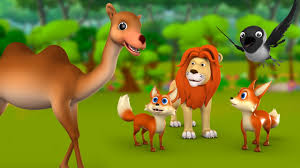
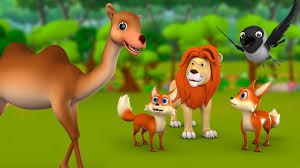
SHORT STORY: LION, CAMEL, CAT, JACKAL AND THE CROW

Copyright@shravancharitymission


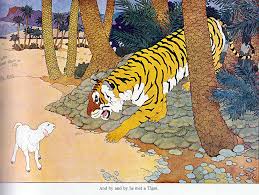
    There was once a jungle that was ruled by a lion called Gabbar. He had a cat, a jackal and a crow at his service, along with other animals. 
    As a routine they were wandering about the jungle one day, when the lion saw a camel at a distance. This camel had separated from its caravan and was feeding itself on the green grass of the jungle. The lion took fancy to the animal that he had not seen before, “Let us go and ask this extraordinary animal, where he comes from.” 
    The crow, who flies to far-off places was aware and replied, “Master, it is called camel and this animal lives in villages. The flesh of this animal tastes very good. So, why not kill him and have him for dinner.” 
    The lion disagreed, “He does not belong to the jungle, so he is our guest. I will not kill him. Please go and assure him that no harm will be done, and bring him to me”. 

    As per lion’s instruction, they went to the camel to assure him that he would be safe. After persuasion they won his confidence, and brought him to the lion. 
 
    The camel stood before the lion and bowed. He also narrated how he got separated from his caravan and how he had reached the jungle. 
     Upon hearing this, the lion said, “Oh Camel, if you return to the village you will be made a beast to carry burden again. Stay in the jungle under my kingdom instead. You can feast on the abundant green grass of the jungle without any fear.” 
    The camel accepted the offer, and they began to live together in peace. Later one day, the lion got severely wounded in a fight with a mad elephant. Such were his injuries that he could not even take a few steps, let alone go out for hunting.

    Due to lack of food, the lion became weaker. The animals who served him were also starving since they were dependent on the lion for their food. 
    When the lion could not bear the hunger anymore, he called them and said, “Go and find any animal that I can prey upon even in my weak condition. This way I will provide food for you, and also for myself.” 
 
    All the animals wandered about the jungle without any success to find such an animal but they couldn’t. On their way back, the jackal had a plan. 
   He said to the crow, “There is no point wandering about the jungle when the food is right in front of us. The camel can provide us with the food for all of us.” 

The crow replied, “Indeed, what you say is correct. But the master has assured the camel of his safety under his rule. He will refuse to kill him.” 
    The jackal said, “Leave that to me. I will influence the master in a manner that he will agree to feast on the camel. You wait till I return after a discussion with the lion”. 

    The jackal met the lion and said, “Master, we have been looking all around the jungle but could not find an animal for you. All of us have not had food for so long. We have become weak and can hardly walk properly. Under the circumstance, if you agree to kill the camel, his flesh can provide food for all of us”. 
    The lion disagreed, “Shame on you! How can I kill the camel when he has my assurance that his life will be safe under my kingdom. It is a sin to think likewise.” 
    But the jackal continued, “Master, it would indeed be a sin to kill him after you have given him the assurance of his safety. But if he offers himself as your food, it would then not be a sin to kill him and you could accept his offer.” 
    The jackal continued, “What good are we, if we cannot be of use to our master in this time of need. Please kill one of us, for yourself, and for our other friends, to save, from the dying hunger.”
    The lion was fed up and failed to justify the jackal and said, “Please do what you think would be the best for all of us.” 
After this, the jackal returned, to other animals, and said, “Our master is sick and weak. If something happens to him, there would be no one to protect us. We have failed, in getting any animal, even after, wandering the length and breadth of the jungle. The only way now, to repay our debts to our master would be to offer ourselves to him. This way the rest of us would also be saved from dying of hunger.” 

    As planned, all of them stood before the lion and bowed. They informed the lion that they did not succeed in finding any animal for their food. 
    The crow said, “Master, we could not find an appropriate animal for your food. So, I offer myself. Please eat me to save yourself from hunger.” 
    The jackal interrupted, “You are too small to provide flesh for the master. Even if he agrees to your offer, it will not be enough for his survival. Indeed, you have proven your devotion by offering yourself. And that frees you from the debts of the master.” 
     He turned to the lion and said, “Please accept my offer instead.” 

    The jackal stood humbly before the lion, “Master, please eat me to save yourself from hunger. If you accept my sacrifice, I will be honoured with a place in heaven”. 
     Upon hearing this, the lion shook his head in refusal. This way, the other animals started offering themselves, but the lion kept refusing to accept their offer. 
     The camel who was observing all this thought, “All of them spoke so beautifully about offering themselves, but the master refused to kill any of them. I too shall seek to impress the master in a similar fashion.” 
     The camel said to other animals, “You all have offered yourself to the master. But the master cannot eat you because all of you are carnivores (flesh eaters) and belong to the same category as the lion himself. So now, stand by, for I shall offer myself”. 

    After this, the camel came forward and bowed before the lion. 
   He said, “Master, you need not kill any of these animals. Please eat me instead. I offer myself in return of your debts. I shall find my way to the heaven, if you will please accept my offer”. 
    No sooner the Camel made the offer, the other animals cheered. Having already been influenced by the jackal, the lion jumped at him. He was killed, and eaten by all the animals together. 

    Moral of the story: The wise indeed say: Always be on guard when you are in the company of wicked people. Don’t get carried away by their sweet words.

By Kamlesh Tripathi

*

https://kamleshsujata.wordpress.com

*

Share it if you like it

*

Shravan Charity Mission is an NGO that works for poor children suffering from life threatening diseases especially cancer. Our posts are meant for our readers that includes both children and adults and it has a huge variety in terms of content. We also accept donations for our mission. Should you wish to donate for the cause. The bank details are given below:

NAME OF ACCOUNT: SHRAVAN CHARITY MISSION

Account no: 680510110004635 (BANK OF INDIA)

IFSC code: BKID0006805

*

Our publications

GLOOM BEHIND THE SMILE

(The book is about a young cancer patient. Now archived in 7 prestigious libraries of the US, including, Harvard University and Library of Congress. It can also be accessed in MIT through Worldcat.org. Besides, it is also available for reading in Libraries and archives of Canada and Cancer Aid and Research Foundation Mumbai)  

ONE TO TANGO … RIA’S ODYSSEY

(Is a book on ‘singlehood’ about a Delhi girl now archived in Connemara Library, Chennai and Delhi Public Library, GOI, Ministry of Culture, Delhi)

AADAB LUCKNOW … FOND MEMORIES

(Is a fiction written around the great city of Nawabs—Lucknow. It describes Lucknow in great detail and also talks about its Hindu-Muslim amity. That happens to be its undying characteristic. The book was launched in Lucknow International Literary Festival of 2014)

REFRACTIONS … FROM THE PRISM OF GOD

(Co-published by Cankids–Kidscan, a pan India NGO and Shravan Charity Mission, that works for Child cancer in India. The book is endorsed by Ms Preetha Reddy, MD Apollo Hospitals Group. It was launched in Lucknow International Literary Festival 2016)

TYPICAL TALE OF AN INDIAN SALESMAN

(Is a story of an Indian salesman who is, humbly qualified. Yet he fights his ways through unceasing uncertainties to reach the top. A good read not only for salesmen. The book was launched on 10th February, 2018 in Gorakhpur Lit-Fest. Now available in Amazon, Flipkart and Onlinegatha)

RHYTHM … in poems

(Published in January 2019. The book contains 50 poems. The poems describe our day to day life. The book is available in Amazon, Flipkart and Onlinegatha)

(ALL THE ABOVE TITLES ARE AVAILABLE FOR SALE IN AMAZON, FLIPKART AND OTHER ONLINE STORES OR YOU COULD EVEN WRITE TO US FOR A COPY)

*****


BOOK REVIEW: TROUBLE IN GANGTOK (Gangtokey Gondogol) by Satyajit Ray

Copyright@shravancharitymission

Khidki (Window)

–Read India Initiative—

This is only an attempt to create interest in reading. We may not get the time to read all the books in our lifetime. But such reviews, talk and synopsis will at least convey what the book is all about.

The original Bengali title of this novel is ‘Gangtokey Gondogol.’ In English it would mean, ‘Trouble in Gangtok.’ This novella featuring a private detective Feluda was first published in the Desh Magazine in 1970 and then published in book form in 1971 by Ananda Publishers. The main characters of this book are:

  • Prodosh Chandra Mitter aka Feluda.
  • Tapesh Ranjan Mitter aka Topshe.
  • Sasadhar Bose/Dr. Vaidya are the names of the same character.
  • Nishikanto Sarkar.
  • Helmut Ungar/Virendra Shelvankar are the names of the same character.
  • Shivkumar Shelvankar.
  • The curator of the Tibetan Institute.

    The story is an intricate murder mystery. Feluda and Topshe travel to Gangtok for their summer holidays on the start of the Bengali New Year. While eating breakfast at Bagdogra Airport, they meet a man by the name of Sasadhar Bose, who works for a chemical firm dealing with aromatic perfumes. He tells that he had attended a nephew’s wedding in Ghatshila post which he came to Sikkim. While stopping at a place called Teesta Bazaar, the trio comes to know about an accident that took place in the North Sikkim Highway.

    They learn that a huge boulder crashed on the taxi and the taxi fell off a cliff. But the driver escaped unhurt. Feluda and Topshe are staying at Hotel Snow View while Sasadhar Bose is staying in the dak bungalow.

    In the evening, Sasadhar Bose comes to Feluda’s hotel and informs him that the man who fell off the cliff in the accident, was no one else but his partner Shivkumar Shelvankar, who was also the owner of the company. Sasadhar Bose walks out of the hotel to find a flight to Bombay the next day. This is when Feluda meets another Bengali in the hotel by the name of, Nishikanto Sarkar. He reveals that he had a statue of a Tibetan God named Yamantak, which had nine heads and 34 hands. He says that he had sold the statue to Shelvankar for a 1000 rupees. While walking on the road, they meet a German hippie, Helmut Ungar, who tells them more about Shelvankar. He tells them that he had a son, whom he loved. But the son ran away from his father. Helmut tells Feluda that on the day of the accident, Mr. Shelvankar and he had decided to travel to a gumpha a place on the way to Singik. But Helmut changed his mind and left early to take some photographs. He reveals to Feluda that Shelvankar used to keep the figurine with him in his pocket as he thought it to be a lucky charm. But after the accident, the figurine had gone missing. Helmut also tells that the reason of this superstition is because of the advice of a certain Dr. Vaidya.

    Later in the evening, Feluda and Topshe go to the Tibetan Institute to learn more about the statue. Feluda asks the driver of the taxi he is travelling in, to come in the morning the next day because he wants to see the scene of the accident. They reach the Tibetan Institute, where the curator declares that the Yamantak which Shelvankar had would cost a little more than 10000 rupees. Feluda returns to the hotel to find Bose waiting for him. Bose tells Feluda that tomorrow he will be leaving for Bombay. 

    Next day, Nishikanto Sarkar tells Feluda that someone threw a paper in his room. The paper consisted of a Tibetan word, which simply meant—death. Later Feluda and Topshe travel to the accident site. There Feluda finds a white button. He also reveals that someone had tried to make the boulder fall by using a strong iron rod and that this accident was nothing but a well-planned murder. Feluda sends a telegram to Bose asking him to come back to Gangtok. The next day, Nishikanto Sarkar, Helmut Ungar, Topshe and Feluda travel to Rumtek for seeing the lama dance. Feluda learns, through a telegram, that Shelvankar’s estranged son is present in a Sikkim monastery and a detective agency has found him. Then, Feluda hears someone shouting. He and Topshe come to the source of the sound and find that Mr. Sarkar had been pushed down the cliff. They rescue him and they come back to Gangtok. In the evening, they come to the dak bungalow, where Helmut is staying. There they meet a strange looking man. Helmut introduces himself as Dr. Vaidya.

    Dr. Vaidya, who specializes in talking to souls of the departed, tells all of them (through Shelvankar’s spirit) that he was murdered and Virendra is responsible for his death. Helmut tells that Virendra is Shelvankar’s only son. Dr. Vaidya tells Feluda that tomorrow he will be traveling to Pemiangchi. Next morning, Topshe finds a paper near Feluda’s ashtray. The paper consists of the same Tibetan word, meaning death. Feluda tells Topshe that today he will conduct an experiment on the North Sikkim Highway. After conducting the experiment, Feluda concludes that the murder was done by first hitting Shelvankar with a rod and then throwing the vehicle down the cliff. Then, a boulder was thrown to make it look like an accident. The driver was bribed. While Feluda was telling this, a boulder comes crashing down. Topshe saves Feluda from being crushed.

    In the evening, Helmut comes to Feluda’s room and shows him two photographs. The photographs were taken during the crime. It shows a man wearing red clothes standing on top of the mountain and seeing the car falling down. When Feluda tells that he is that man Virendra, Helmut tells that it is impossible because he is only Virendra. He tells Feluda and Topshe that he did not like his father marrying twice and thus ran away from home. Then his father approached a detective agency to find his son. Then Helmut (or Virendra) came to Sikkim. Helmut tells Feluda that he suspects Dr. Vaidya to be the murderer. They decide to travel to Pemiangchi to apprehend Dr. Vaidya. They pull in Mr. Sarkar also. Next day, while travelling to Pemiangchi, Sasadhar Bose also follows them and requests them to also take him. They reach Pemiangchi in the evening. There they discover that Dr. Vaidya is not there but has left his stick in the dak bungalow.

    Feluda then announces that Sasadhar Bose is the killer. He killed Shelvankar to take over the ownership of the company. When Bose says that he had gone to his nephew’s wedding during the murder, Feluda reminds him that in the Bengali calendar no wedding is held during the month of Chaitra since it is an inauspicious month and that they had come together to Sikkim during the starting of the month of Baishakh, the first month of the Bengali calendar. Feluda tells that Sasadhar Bose and Dr. Vaidya are the same person. Dr. Vaidya told Shel-vankar about his own life and impressed him. While going to the Gumpha, Dr. Vaidya and Shelvankar travelled in the same car. Then Dr. Vaidya or Sasadhar Bose who happen to be the same person hit Shelvankar with a rod and murdered him. Then he came back to Kolkatta. Then as Sasadhar Bose, he travelled in the same plane with Feluda. Dr. Vaidya tried to put the blame on Virendra, even when he did not know that Helmut was actually Virendra. When he saw that Feluda was conducting an investigation, he tried to kill Feluda. Feluda also tells that Mr. Sarkar wanted to steal the figurine of Yamantak from Shelvankar. So after the murder, he came down to find the statue, but Bose saw him and started harassing him. Bose tries to escape but is caught by leeches. Feluda finds the statue in the belongings of Sasadhar Bose. Sasadhar Bose is arrested and Feluda solves one of his most complex cases.

I would give the book seven out of ten.

By Kamlesh Tripathi

*

https://kamleshsujata.wordpress.com

*

Share it if you like it

*

Shravan Charity Mission is an NGO that works for poor children suffering from life threatening diseases especially cancer. Our posts are meant for our readers that includes both children and adults and it has a huge variety in terms of content. We also accept donations for our mission. Should you wish to donate for the cause. The bank details are given below:

NAME OF ACCOUNT: SHRAVAN CHARITY MISSION

Account no: 680510110004635 (BANK OF INDIA)

IFSC code: BKID0006805

*

Our publications

GLOOM BEHIND THE SMILE

(The book is about a young cancer patient. Now archived in 7 prestigious libraries of the US, including, Harvard University and Library of Congress. It can also be accessed in MIT through Worldcat.org. Besides, it is also available for reading in Libraries and archives of Canada and Cancer Aid and Research Foundation Mumbai)  

ONE TO TANGO … RIA’S ODYSSEY

(Is a book on ‘singlehood’ about a Delhi girl now archived in Connemara Library, Chennai and Delhi Public Library, GOI, Ministry of Culture, Delhi)

AADAB LUCKNOW … FOND MEMORIES

(Is a fiction written around the great city of Nawabs—Lucknow. It describes Lucknow in great detail and also talks about its Hindu-Muslim amity. That happens to be its undying characteristic. The book was launched in Lucknow International Literary Festival of 2014)

REFRACTIONS … FROM THE PRISM OF GOD

(Co-published by Cankids–Kidscan, a pan India NGO and Shravan Charity Mission, that works for Child cancer in India. The book is endorsed by Ms Preetha Reddy, MD Apollo Hospitals Group. It was launched in Lucknow International Literary Festival 2016)

TYPICAL TALE OF AN INDIAN SALESMAN

(Is a story of an Indian salesman who is, humbly qualified. Yet he fights his ways through unceasing uncertainties to reach the top. A good read not only for salesmen. The book was launched on 10th February, 2018 in Gorakhpur Lit-Fest. Now available in Amazon, Flipkart and Onlinegatha)

RHYTHM … in poems

(Published in January 2019. The book contains 50 poems. The poems describe our day to day life. The book is available in Amazon, Flipkart and Onlinegatha)

(ALL THE ABOVE TITLES ARE AVAILABLE FOR SALE IN AMAZON, FLIPKART AND OTHER ONLINE STORES OR YOU COULD EVEN WRITE TO US FOR A COPY)

*****
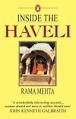


BOOK REVIEW: THE 21 ABSOLUTELY UNBREAKABLE LAWS OF MONEY by BRIAN TRACY.

Copyright@shravancharitymission

    Brian Tracy is a Canadian-American motivational public speaker and self-development author. He is the author of over seventy books that have been translated into dozens of languages..

    Brian Tracy says one of your major goals in life should be financial independence. One must aim to reach the point where one has enough money so that one doesn’t have to worry about money again. The good news is that financial independence is easier to achieve today. We are surrounded by more wealth and affluence than ever before.

    I have summarised the book for you to basically give you a synopsis where I have picked the important laws of money from the book. So here we go:

  1. The Law of Cause and Effect:

    Everything happens for a reason, and there is a cause for every effect that takes place. You can acquire whatever amount of money you really want if you will only do what others have done before you to achieve the same results. And if you don’t, you won’t earn the same amount of money that they earned. It is as simple as that. The most important expression of this universal law is that “Thoughts are causes and conditions are effects.” The most important principle of personal or business is simply this: You become what you think about most of the time.

  1. The Law of Belief:

    Whatever you truly believe, with strong feelings and conviction, becomes your reality. When you are absolutely convinced that you are a financial success in the making, you will engage in such behaviours that will make it come through.

  1. The Law of Attraction:

    Human being is like a living magnet where he or she invariably attracts people, situations and circumstances that are in harmony with his or her own dominant thoughts. When a person develops a burning desire for financial success and thinks about it all the time, the person sets up a force field of positive emotional energy that attracts people, ideas and opportunities into one’s own life to help convert one’s goals into realities.

  1. The law of Abundance:

    We live in an abundant universe in which there is sufficient money for all those who really want it and are willing to obey the laws governing its acquisition. There is plenty of money available for you. There is no real shortage. You can have virtually all you want and need. The first corollary of the Law of Abundance says that, people become wealthy because they decide to become wealthy. The second corollary of this law says: People are poor because they have not yet decided to become rich.

    Why aren’t you rich already? Write down all the reasons you can think of. Go over your answers one by one with someone who knows you well and ask them for their opinion. You may be surprised to find that your reasons are mostly excuses that you have fallen in love with.

  1. The Law of Time Perspective.

    Successful people in any society are those who take the long term period into consideration when making their day-to-day decisions. People with long term perspectives are always willing to pay the price of success for a long—long time before they achieve it. They think about the consequences of their financial choices and decisions in terms of what they might mean in five, ten, fifteen and even twenty years from now. As you begin thinking long term and organising your financial life and priorities with your future goals and ambitions in mind, the quality of your decisions improves and your life starts to become better almost immediately.

    The first corollary of the Law of Time Perspective says: Delayed gratification is the key to financial success. The second corollary of this law says: Self-discipline is the most important personal quality for assuring long-term success. The third corollary of this law says: Sacrifice in the short-term is the price you pay for security in the long-term.

  1. The Law of Saving:

    Financial freedom comes to the person who saves ten percent or more of his income throughout his lifetime. One of the smartest things that you can do is to develop the habit of saving part of your salary, with every pay-check. Begin today to save ten percent of your income, and never touch it. This is your fund for long-term financial accumulation and you never use it for any other reason except to assure your financial future.

    If you are in debt and ten percent is too much for you, start by saving one percent of your income and living on the other ninety-nine percent. When you become comfortable living on ninety-nine percent of your income, increase, your, saving rate to two percent. Equally important to earning is saving.

  1. The Law of Conservation:

    It’s not how much you make, but how much you keep, that determines your financial future. Many people make a lot of money in the course of their working career. Sometimes, during boom periods, people munificently exceed their expectations and make more money than they ever would have thought it was possible. The true measure of how well you are really doing is how much you keep out of the amount that you earn.

    Calculate your true net worth as of today. Make a list of all your assets and value them at the amounts you could actually get for them if you had to turn them into cash in the immediate. Add up all your bills, credit card balances and mortgages and then subtract them from your assets to get your net rupee worth of today. Now divide the number of years you have been working by your net worth. The result is the net amount you have actually earned each year after your costs of living. Are you happy with it? If not. Start doing something about it immediately.

  1. Parkinson’s Law: Expenses rise to meet income. Just as the old adage that says “work expands so as to fill the time available for its completion.” Parkinson’s Law is one of the best known and the most important law for money and wealth accumulation. It was developed by English writer C. Northcote Parkinson many years ago and it explains why most people retire poor. This law says that, no matter how much money people earn, they tend to spend the entire amount and a little more besides. Their expenses rise in direct proportion of their incomes.
  2. The law of Investing.

    Investigate before you invest. This is one of the most important of all the laws of money. You should spend as much time studying a particular investment as you do earning the money before you put that money into a particular investment. Remember. You have worked very hard to earn it and taken far too long to accumulate it. Investigate every aspect of the investment well before you make any commitment. Ask for full and complete disclosure of every detail. If you have any doubt or misgivings at all, you will probably be better off keeping your money in the bank or in a money market investment account.

    The corollary of the Law of Investing says: If you think you can afford to lose a little, you’re going to end up losing a lot. Another corollary of the law of Investing says: Only invest with experts who have a proven track record of success with their own money. Invest only in things that you fully understand and believe in. Take investment advice only from people who are financially successful.

  1. The law of Compound Interest.

    Investing your money carefully and allowing it to grow at compound interest will eventually make you rich. Compound interest is considered one of the greatest miracles of all human history and economics. Albert Einstein described it as the most powerful force in our society. When you let money accumulate at compound interest over a long period of time, it increases more than you can imagine.

    For example, if you were receiving eight-percent interest on your investment, and you divided the number 72 by eight, you would get number nine. This means that it would take you nine years to double your money at eight percent interest.

    The first corollary of this law says: The key to compound interest is to put the money away and never touch it. If you ever touch that money, you lose the power of compound interest, and though you spend only a small amount today, you will be giving up what could be an enormous amount later on. If you start early enough, invest con-sistently enough, never draw on your funds and rely on the miracle of compound interest, it will make you rich.

    An average person earning an average income who invested Rs 1000 per month from the age of 21 to the age of 65, and who earned a compounded rate of 10% over that time, would retire with a net worth of (1.12 crore) or say 1,11,80,000 to be exact. Begin a regular, monthly investment account and commit yourself to investing a fixed amount for the next five, ten or even twenty years. Select a company with a family of mutual funds and investment instruments, and keep your money working, month after month and year after year.

  1. The Law of Accelerating Acceleration.

    It says. The faster you move towards financial freedom, the faster financial freedom moves towards you. The more money you accumulate and the more success you achieve, the more faster money and success seem to move towards you, from a range of different directions. Everyone who is financially successful today has had the experience of working extremely hard, sometimes for years, before they got their first real opportunity. But after that, more and more opportunities flowed to them, from all corners.

    The first corollary of the law of Accelerating Acceleration says: 80% of your success will come in the last 20% of the time you invest.

    This is a remarkable discovery. Just think! You will achieve only about 20% of the total success possible for you in the first 80% of the time and money that you invest in an enterprise, a career or a project. And you will achieve the other 80% in the last 20% of the time and money that you invest.

    Peter Lynch, the former manager of the Magellan Mutual Fund, one of the most successful mutual funds in history would often buy the stock of a company that did not increase in value for several years. Then it would take off and go up ten or twenty times in price. This strategy of picking stocks for the long term eventually made him one of the most successful and highest paid money managers in America.

  1. The Law of Real Estate.

    The value of a piece of Real Estate is the future earning power of that particular piece of property. The value of any piece of property is determined by the income that can be generated by that property when it is developed to its highest and best use from this moment to time onward and into the future. A piece of property may have sentimental value for a particular owner but its dollar value is directly related to its future earning power.

    There are vast areas of many large cities where property values are declining because growth and development have come and gone and will probably not return. Every day, men and women are selling homes and properties at less than they paid for them, or losing them to foreclosure because these properties have declined in earning power and therefore in value.

    The first corollary of real estate is: You make your money when you buy and you realize it when you sell. This is very important. It is only by purchasing a piece of property at the right price and under the right terms that enables you to sell it at a profit. Many people think that they will make their money when they sell the property irrespective of how they purchased the property or at what price. The more carefully you investigate a piece of property and the more thoroughly you prepare a purchase offer, the more likely it is that you will get the kind of deal that will enable you to sell that property at a profit later on.

    The second corollary of the Law of Real Estate is: The three keys to real estate selection which are location, location and location. Your ability to choose a piece of property in an excellent location will have more of an impact on the future earning power of that property than any other decision that you make.

    Another corollary of this law is: Real estate values are largely determined by general economic activity in the area and by the number of jobs and the level of wages. Generally, property increases at three times the level of population growth and two times the rate of inflation. When you purchase a property in a fast growing community, you are virtually ensured of above average increases in value.

Conclusion

    There are four keys to success with money. First, earn as much as you possibly can. Do everything possible to excel in your field so that you are paid extremely well for what you do.

    The second key to money is to hold on to it as much as you possibly can.

    The third key to money is to reduce and control your costs of living. Buy less expensive items. Put off important buying decisions for a day, week or even a month so that when you finally do make the decision, it is a good one. All wealthy people are very careful with their money and their expenditures. That’s how they became wealthy.

    This is a wonderful time to live. It has never been more favourable a time for you to make more, save more, accumulate more and grow your money faster than it is today. Your job is to take full advantage of the wide range of opportunities that are available to you. Your job is to apply these laws to fulfil your financial destiny and become wealthy in your working lifetime.

A must read. I would give the book seven out of ten. Goodbye and see you soon.

By Kamlesh Tripathi

*

https://kamleshsujata.wordpress.com

*

Share it if you like it

*

Shravan Charity Mission is an NGO that works for poor children suffering from life threatening diseases especially cancer. Our posts are meant for our readers that includes both children and adults and it has a huge variety in terms of content. We also accept donations for our mission. Should you wish to donate for the cause. The bank details are given below:

NAME OF ACCOUNT: SHRAVAN CHARITY MISSION

Account no: 680510110004635 (BANK OF INDIA)

IFSC code: BKID0006805

*

Our publications

GLOOM BEHIND THE SMILE

(The book is about a young cancer patient. Now archived in 7 prestigious libraries of the US, including, Harvard University and Library of Congress. It can also be accessed in MIT through Worldcat.org. Besides, it is also available for reading in Libraries and archives of Canada and Cancer Aid and Research Foundation Mumbai)  

ONE TO TANGO … RIA’S ODYSSEY

(Is a book on ‘singlehood’ about a Delhi girl now archived in Connemara Library, Chennai and Delhi Public Library, GOI, Ministry of Culture, Delhi)

AADAB LUCKNOW … FOND MEMORIES

(Is a fiction written around the great city of Nawabs—Lucknow. It describes Lucknow in great detail and also talks about its Hindu-Muslim amity. That happens to be its undying characteristic. The book was launched in Lucknow International Literary Festival of 2014)

REFRACTIONS … FROM THE PRISM OF GOD

(Co-published by Cankids–Kidscan, a pan India NGO and Shravan Charity Mission, that works for Child cancer in India. The book is endorsed by Ms Preetha Reddy, MD Apollo Hospitals Group. It was launched in Lucknow International Literary Festival 2016)

TYPICAL TALE OF AN INDIAN SALESMAN

(Is a story of an Indian salesman who is, humbly qualified. Yet he fights his ways through unceasing uncertainties to reach the top. A good read not only for salesmen. The book was launched on 10th February, 2018 in Gorakhpur Lit-Fest. Now available in Amazon, Flipkart and Onlinegatha)

RHYTHM … in poems

(Published in January 2019. The book contains 50 poems. The poems describe our day to day life. The book is available in Amazon, Flipkart and Onlinegatha)

(ALL THE ABOVE TITLES ARE AVAILABLE FOR SALE IN AMAZON, FLIPKART AND OTHER ONLINE STORES OR YOU COULD EVEN WRITE TO US FOR A COPY)

*****