Category Archives: book launch

LITERARY CORNER: HAMLET by William Shakespeare

Copyright@shravancharitymission

    Hamlet is Shakespeare’s longest play and is considered among the most powerful and influential works of world literature, with a story capable of being retold and adapted by others. It was one of Shakespeare’s most popular works during his lifetime and still ranks among his most performed, topping the performance list of the Royal Shakespeare Company and its predecessors in Stratford-upon-Avon since 1879. It has even inspired many other writers from Johann Wolfgang Von Goethe and Charles Dickens to James Joyce and Iris Murdoch—and has been described as “the world’s most filmed story after Cinderella. Hindi film “Haider” released in 2014 is a modern day adaptation of Shakespere’s tragedy Hamlet.

    The play is divided into four acts.

Act I.

    Prince Hamlet of Denmark happens to be the main protagonist of this play. He is the son of the recently deceased or killed King Hamlet, so essentially there are two characters by the name of Hamlet in this play. Then you have King Claudius, who is Hamlet’s uncle and his father’s brother and also the successor. After the death of King Hamlet, Claudius hastily marries his widow. Her name is Gertrude, who is also Hamlet’s mother, and occupies the throne himself. The play goes on to say that the country of Denmark has a long-standing feud with the neighbouring Norway, in which King Hamlet had once killed King Fortinbras of Norway in a battle some years ago.

    Although, Denmark defeated Norway and the Norwegian throne fell to King Fortinbras’s infirm brother, Denmark does fear a retaliation led by the dead Norwegian king’s son, Prince Fortinbras, as imminent. Then the scene changes to a cold night on the ramparts of Elsinore, the Danish royal castle, where the sentries Bernardo and Marcellus discuss a ghost resembling the late King Hamlet which they have recently seen, and bring Prince Hamlet’s friend Horatio as a witness. After the ghost appears again, the three vow to tell Prince Hamlet what they have witnessed. As the court gathers the next day, while King Claudius and Queen Gertrude discuss affairs of the state with their elderly adviser Polonius, where Hamlet looks on glumly. During the court, Claudius grants permission for Polonius’s son Laertes to return to school in France and also sends envoys to inform the King of Norway about Fortinbras. Claudius scolds Hamlet for continuing to grieve over his father and refuses him permission to return to his schooling in Wittenberg. After the court adjourns, Hamlet despairs on his father’s death and his mother’s hasty remarriage. Learning of the ghost from Horatio, Hamlet resolves to see it himself.

    As Polonius’s son Laertes prepares to depart for a visit to France, Polonius decides to give him a contradictory advice that culminates in the famous ironic maxim, “to thine own self be true.” (Meaning he must think of his own benefit first). Meanwhile Polonius’s daughter, Ophelia, admits her interest in Hamlet, but Laertes warns her against seeking the prince’s attention, and Polonius orders her to reject his advances. That night on the rampart, the ghost reappears in Hamlet’s, presence telling the prince that he was murdered by Claudius, his own brother and demands that Hamlet avenge him. Hamlet agrees, and the ghost vanishes. The prince confides in Horatio and the sentries that from now on he plans to put an ‘antic disposition’ on, or act as though he has gone mad, and forces them to swear to keep his plans for revenge a secret. But privately, however, he remains uncertain of the ghost’s reliability.

Act II

    Ophelia rushes to her father, telling him that Hamlet arrived at her door the prior night half-undressed and behaving erratically. Polonius blames love for Hamlet’s madness and resolves to inform Claudius and Gertrude. But as he enters to do so, he finds the king and queen finish welcoming Rosencrantz and Guildenstern, two student acquaintances of Hamlet, at Elsinore the royal palace. The royal couple requests that the students investigate the cause of Hamlet’s mood and behaviour. In the meanwhile some additional news requires that Polonius waits further to be heard. When messengers from Norway inform Claudius that the King of Norway has rebuked Prince Fortinbras for attempting to refight his father’s battles. The forces that Fortinbras had drafted to march against Denmark will instead be sent against Poland, though they will pass through the Danish territory to get there.

    Polonius tells Claudius and Gertrude his theory regarding Hamlet’s behaviour and speaks to Hamlet in a hall of the castle to try to uncover more information. Hamlet feigns madness but subtly insults Polonius all along. When Rosencrantz and Guildenstern arrive, Hamlet greets his “friends” warmly but quickly discerns that they are spies. Hamlet becomes bitter, admitting that he is upset at his situation but refuses to give the true reason why. Instead he comments on “what a piece of work” humanity is. Rosencrantz and Guildenstern tell Hamlet that they have brought along a troupe of actors that they met while traveling to Elsinore. Hamlet, after welcoming the actors and dismissing his friends-turned-spies, asks them to deliver a soliloquy about the death of King Priam and Queen Hecuba at the climax of the Trojan War. Impressed by their delivery of speech, he plots to stage, “The Murder of Gonzago,” a play featuring a death in the style of his father’s murder (that reminds of the last song of Rishi Kapoor’s film Karz) to determine the truth of the ghost’s story, as well as Claudius’s guilt or innocence, by studying Claudius’s reaction.

Act III

    Polonius forces Ophelia to return Hamlet’s love letters and tokens of affection to the prince while he and Claudius watch from afar to evaluate Hamlet’s reaction. Hamlet is walking alone in the hall as the king and Polonius await Ophelia’s entrance, musing whether, “to be or not to be.” (The famous phrase that means to act or not to act). When Ophelia enters and tries to return Hamlet’s things, Hamlet accuses her of immodesty and cries, “get thee to a nunnery,” (give her to the whore house) though it is unclear whether this, too, is a show of madness or genuine distress. His reaction convinces Claudius that Hamlet is not mad for love. Shortly thereafter, the court assembles to watch the play that Hamlet has commissioned. In which after seeing the protagonist King being murdered by his rival by pouring poison in his ear, Claudius abruptly rises and runs away from the room. For Hamlet, this indeed is a positive proof of his uncle’s guilt.

    After which Gertrude his mother summons Hamlet to her room to demand an explanation. Meanwhile, Claudius talks to himself about the impossibility of repenting, since he still has possession of his ill-gotten goods that is his brother’s crown and his wife. He sinks to his knees in frustration. Meanwhile, Hamlet, on his way to visit his mother, sneaks up behind Claudius but does not kill him, reasoning that killing Claudius while he is praying will send him straight to heaven while his father’s ghost is still stuck in purgatory. In the queen’s bedchamber, Hamlet and Gertrude fight bitterly. Where Polonius, spies on the conversation from behind a tapestry, calls for help as Gertrude, believing Hamlet wants to kill her, also calls out for help herself.

    Hamlet, believing it is Claudius behind the tapestry, stabs wildly, but in the process he kills Polonius. He pulls aside the curtain and discovers his mistake. In a rage, Hamlet unsparingly insults his mother for her apparent ignorance of Claudius’s villainy. But just then the King Hamlet’s ghost enters and reprimands Prince Hamlet for his inaction and harsh words. Unable to see or hear the ghost herself, Gertrude takes Hamlet’s conversation with the ghost as a further evidence of his madness. After begging the queen to stop sleeping with Claudius, Hamlet leaves, dragging Polonius’s corpse away.

Act IV

    Hamlet jokes with Claudius about where he has hidden Polonius’s body, and the king, fearing for his life, sends Rosencrantz and Guildenstern to accompany Hamlet to England with a sealed letter to the English king requesting that Hamlet be executed immediately.

    Shocked by grief at Polonius’s death, Ophelia wanders aimlessly around Elsinore. Meanwhile Laertes returns from France, enraged by his father’s death and his sister’s madness. Claudius convinces Laertes that Hamlet is solely responsible for the killing, but a letter soon arrives indicating that Hamlet has returned to Denmark, foiling Claudius’s plan. Claudius switches tactics, proposing a fencing match—a sword fight between Laertes and Hamlet to settle their differences. Laertes will be given a poison-tipped sword, and Claudius will offer Hamlet poisoned wine as a congratulation if that fails. Gertrude interrupts to report that Ophelia has drowned, though it is unclear whether it was a suicide or an accident exacerbated by her madness.

    In the meanwhile Horatio receives a letter from Hamlet, explaining that the prince escaped by negotiating with pirates who attempted to attack his England-bound ship, and the friends reunite offstage. Two grave-diggers discuss Ophelia’s apparent suicide while digging her grave. Hamlet arrives with Horatio and banters with one of the grave-diggers, who unearths the skull of a court jester from Hamlet’s childhood that he loved. His name was Yorick. Hamlet picks up the skull, saying “alas, poor Yorick” as he thinks of death. Meanwhile, Ophelia’s funeral procession approaches, led by Laertes. Hamlet and Horatio initially hide, but when Hamlet realizes that Ophelia is the one being buried, he reveals himself, proclaiming his love for her. Laertes and Hamlet fight by Ophelia’s graveside, but the brawl is soon broken up.

    Back at Elsinore, Hamlet explains to Horatio that he had discovered Claudius’s letter in Rosencrantz and Guildenstern’s belongings and that he had replaced it with a forged copy indicating that his former friends should be killed instead. A foppish courtier, by the name of Osric, interrupts the conversation to deliver the fencing challenge to Hamlet. Hamlet, despite Horatio’s pleas, accepts it. Hamlet does well at first, leading the match by two hits to none, when Gertrude raises a toast to him using the poisoned glass of wine Claudius had set aside for Hamlet. Claudius tries to stop her but is too late in doing so. She drinks, and Laertes realizes the plot will now be revealed. He slashes Hamlet with his poisoned blade. In the ensuing scuffle, they switch weapons, when Hamlet wounds Laertes with his own poisoned sword.

    In the meantime Gertrude collapses exclaiming she has been poisoned, she dies. Further, in his dying moments, Laertes reconciles with Hamlet and reveals Claudius’s plan. Enraged Hamlet rushes at Claudius and kills him. Soon the poison takes effect on Hamlet. Who upon hearing that Fortinbras is marching through the area, names the Norwegian prince as his successor. Horatio, distraught at the thought of being the last survivor and living whilst Hamlet does not, says he will commit suicide by drinking the dregs of Gertrude’s poisoned wine, but Hamlet begs him to live on and tell his story. Hamlet dies in Horatio’s arms, proclaiming “the rest is silence.” Meanwhile, Fortinbras, who was ostensibly marching towards Poland with his army, arrives at the palace, along with an English ambassador bringing news of Rosencrantz and Guildenstern’s deaths. Horatio promises to recount the full story of what happened, and Fortinbras, seeing the entire Danish royal family dead, takes the crown for himself and orders a military funeral to honour Hamlet.

    In the final analysis a demon such as Claudius is sufficient to destroy the entire clan.

Synopsis by Kamlesh Tripathi

*

https://kamleshsujata.wordpress.com

*

Share it if you like it

*

Shravan Charity Mission is an NGO that works for poor children suffering from life threatening diseases especially cancer. Our posts are meant for our readers that includes both children and adults and it has a huge variety in terms of content. We also accept donations for our mission. Should you wish to donate for the cause. The bank details are given below:

NAME OF ACCOUNT: SHRAVAN CHARITY MISSION

Account no: 680510110004635 (BANK OF INDIA)

IFSC code: BKID0006805

*

Our publications

GLOOM BEHIND THE SMILE

(The book is about a young cancer patient. Now archived in 7 prestigious libraries of the US, including, Harvard University and Library of Congress. It can also be accessed in MIT through Worldcat.org. Besides, it is also available for reading in Libraries and archives of Canada and Cancer Aid and Research Foundation Mumbai)  

ONE TO TANGO … RIA’S ODYSSEY

(Is a book on ‘singlehood’ about a Delhi girl now archived in Connemara Library, Chennai and Delhi Public Library, GOI, Ministry of Culture, Delhi)

AADAB LUCKNOW … FOND MEMORIES

(Is a fiction written around the great city of Nawabs—Lucknow. It describes Lucknow in great detail and also talks about its Hindu-Muslim amity. That happens to be its undying characteristic. The book was launched in Lucknow International Literary Festival of 2014)

REFRACTIONS … FROM THE PRISM OF GOD

(Co-published by Cankids–Kidscan, a pan India NGO and Shravan Charity Mission, that works for Child cancer in India. The book is endorsed by Ms Preetha Reddy, MD Apollo Hospitals Group. It was launched in Lucknow International Literary Festival 2016)

TYPICAL TALE OF AN INDIAN SALESMAN

(Is a story of an Indian salesman who is, humbly qualified. Yet he fights his ways through unceasing uncertainties to reach the top. A good read not only for salesmen. The book was launched on 10th February, 2018 in Gorakhpur Lit-Fest. Now available in Amazon, Flipkart and Onlinegatha)

RHYTHM … in poems

(Published in January 2019. The book contains 50 poems. The poems describe our day to day life. The book is available in Amazon, Flipkart and Onlinegatha)

(ALL THE ABOVE TITLES ARE AVAILABLE FOR SALE IN AMAZON, FLIPKART AND OTHER ONLINE STORES OR YOU COULD EVEN WRITE TO US FOR A COPY)

*****


BOOK CORNER:GODS AND ROBOTS: Myths, Machines, and Ancient Dreams of Technology … by Adrienne Mayor

Copyright@shravancharitymission


Khidki (Window)

–Read India Initiative—

This is only an attempt to create interest in reading. We may not get the time to read all the books in our lifetime. But such reviews, talk and synopsis will at least convey what the book is all about.

Gods and Robots: Myths, Machines and Ancient Dreams of Technology’

Adriyana Mayor in 2018.

Published by Princeton University Press, New Jersey

    Albert Einstein had once said. “Imagination is more important than knowledge. For knowledge is limited, whereas imagination embraces the entire world, stimulating progress, giving birth to evolution.” So, let ‘imagination’ be the tagline of this write-up. As books are indeed an exercise of the author’s imagination. For who could first imagine the concepts of robots, automation, human enhancements, and Artificial Intelligence? Historians tend to trace the idea of automation back to the medieval craftsmen who developed self- moving machines.

    Let me now take you to a research scholar at Stanford University. Her name is Adrienne Mayor. She is a historian of ancient science and warfare, and a classical forklorist who investigates natural knowledge contained in pre-scientific myths and oral traditions. She has recently come out with a book titled, ‘Gods and Robots: Myths, Machines and Ancient Dreams of Technology.’ It’s a long title.

    Adrienne feels Hindu epics are full of AI (Artificial Intelligence) and robots, and legend has it, that they guarded Buddha’s relics.

    In this book the lady author explores how ancient culture imagined futuristic technologies and left behind those imaginations in epics and scriptures. She tells how Ashoka battled robots, and other tech tales from the past.    Faith can move mountains. There is a belief in India among the Hindus that ancient Indians had invented everything from spacecraft to missiles to the internet. Lady author tries to link this theory with her research work. She feels her research got her into the first inklings of the scientific impulse and that took her into the world of mythology, where ancient people first envisioned making artificial life, automation (or robots), self-moving devices, and other marvelous things long before the present day technology made them possible. She states these stories about robots and other machines in ancient oral traditions were first written down during the time of Homer, about some 2,700 years ago. But the Greeks were not the only people to imagine automation and machines in antiquity. Similar stories exist in the Ramayana, Mahabharata, and other epics. In Hindu myths, automations are made by the engineer God Vishwakarma and the sorceress or more appropriately the mystique of Maya. In Greek myths they are made by the God of technology. His name is Hephaestus—the Greek God of fire and metal working and the brilliant artisan Daedalus, a craftsman and artist again from Greek mythology. I consider such myths to be the world’s first science fiction stories. No single civilisation had a monopoly on such ancient dreams of advanced technology. Whether one looks at Greek, Egyptian, Hindu, Islamic, Chinese, Etruscan—the modern name given to the powerful and wealthy civilization of ancient Italy or any other ancient cultural myths about artificial life. They all contemplate what wonders might have been achieved if only one could possess the divine creativity and abilities of the Gods. But it’s not possible to draw a direct line of development from mythology over the millennia to the modern scientific knowledge.

    Further the lady author goes on to say that the Indian and Hellenistic cultures borrowed and influenced each other, beginning in about the fifth century BC, The syncretism only intensified, after Alexander of Macedon and King Porus began relations in the fourth century BC. Jain texts mention that the engineers of Ajatasatru, the  king of Haryanka dynasty of Magadha, invented armoured war chariots with spinning blades, which may have inspired later the Persian scythed chariots. Ajatasatru had powerful machines to hurl massive boulders,  even before Philip—II of Macedon obtained torsion catapults—those huge launchers. India was known for perpetually burning oil lamps, suggesting knowledge of naphtha, that was unknown to the Greeks and the Romans until much later. The travelling Greek sage Apollodorus of Tyana observed automated servants and self-propelled carts in the court of a ruler of India, and India was centuries ahead of Europe in the technologies of distillation and hydraulics. There was probably more give and take than we know about.

    Myths featuring flying chariots and synthetic swans, animated servants, giant robots, machines, and the like appear in the Mahabharata, Ramayana, Kathasaritasagara, Harivamsa, and other works. Self-navigating ships appear in Egyptian texts and Homer’s odyssey; android and animal automations are described in Homer’s Iliad and in Chinese chronicles. And further examples are myriad.

    The book goes on to share the story of android warriors guarding Buddha’s relics. The most detailed account is in the Lokapanatti, a complicated compilation of tales from Burma. After Buddha’s death, the story recounts that King Ajatasatru preserved his bodily remains in a hidden chamber under a stupa. The precious relics were guarded by ‘bhuta vahana yantra’ (spirit transporting machine). These were robotic warriors with whirling swords—reminiscent of the king’s novel war machines with spinning blades. Greek myths tell of automation guardians in human and animal form defending palaces and treasures, but the historical and technological details of this legend make it unique. The story says the robots were constructed from plans and were secretly transported to Patliputra from Romavisaya, the Greek-influenced west, by a yantrakara, that is a robot maker who was originally from Patliputra. The automation soldiers guarded Buddha’s relics until the great Indian emperor Ashoka heard about the secret chamber. Ashoka battled the robots and after he defeated them he learned how to control them. They obeyed him. Historically, we know that Ashoka did unearth and distribute long hidden relics of Buddha across the land.

    By third century BC, craftspeople and engineers in the Greek world, Alexandria, Arabia, India and China began making self-moving devices, flying bird models, animated machines, and automations like those described in myths. Some were miniature and some monumental, some had simple mechanisms but some were quite complex. These inventions were powered by springs, levers, pulleys, water, air, heat, and so on.

    Overall it’s an extremely interesting book of around three hundred pages. The book really impacts you and leaves you enlightened. Where, you might just be inclined to even change your mindset. But yes don’t rush through the book as it is a little complex in terms of old historical words and even geographies and names. You might even have to refer the glossary or even the dictionary a little too often. I would give the book eight out of ten.

Synopsis by Kamlesh Tripathi

*

https://kamleshsujata.wordpress.com

*

Share it if you like it

*

Shravan Charity Mission is an NGO that works for poor children suffering from life threatening diseases especially cancer. Our posts are meant for our readers that includes both children and adults and it has a huge variety in terms of content. We also accept donations for our mission. Should you wish to donate for the cause. The bank details are given below:

NAME OF ACCOUNT: SHRAVAN CHARITY MISSION

Account no: 680510110004635 (BANK OF INDIA)

IFSC code: BKID0006805

*

Our publications

GLOOM BEHIND THE SMILE

(The book is about a young cancer patient. Now archived in 7 prestigious libraries of the US, including, Harvard University and Library of Congress. It can also be accessed in MIT through Worldcat.org. Besides, it is also available for reading in Libraries and archives of Canada and Cancer Aid and Research Foundation Mumbai)  

ONE TO TANGO … RIA’S ODYSSEY

(Is a book on ‘singlehood’ about a Delhi girl now archived in Connemara Library, Chennai and Delhi Public Library, GOI, Ministry of Culture, Delhi)

AADAB LUCKNOW … FOND MEMORIES

(Is a fiction written around the great city of Nawabs—Lucknow. It describes Lucknow in great detail and also talks about its Hindu-Muslim amity. That happens to be its undying characteristic. The book was launched in Lucknow International Literary Festival of 2014)

REFRACTIONS … FROM THE PRISM OF GOD

(Co-published by Cankids–Kidscan, a pan India NGO and Shravan Charity Mission, that works for Child cancer in India. The book is endorsed by Ms Preetha Reddy, MD Apollo Hospitals Group. It was launched in Lucknow International Literary Festival 2016)

TYPICAL TALE OF AN INDIAN SALESMAN

(Is a story of an Indian salesman who is, humbly qualified. Yet he fights his ways through unceasing uncertainties to reach the top. A good read not only for salesmen. The book was launched on 10th February, 2018 in Gorakhpur Lit-Fest. Now available in Amazon, Flipkart and Onlinegatha)

RHYTHM … in poems

(Published in January 2019. The book contains 50 poems. The poems describe our day to day life. The book is available in Amazon, Flipkart and Onlinegatha)

(ALL THE ABOVE TITLES ARE AVAILABLE FOR SALE IN AMAZON, FLIPKART AND OTHER ONLINE STORES OR YOU COULD EVEN WRITE TO US FOR A COPY)

*****


BOOK CORNER: “JAWS” by Peter Benchley

Copyright@shravancharitymission

Khidki (Window)

–Read India Initiative—

This is only an attempt to create interest in reading. We may not get the time to read all the books in our lifetime. But such reviews, talk and synopsis will at least convey what the book is all about.

    This book was written in the year 1974 by American writer Peter Benchley. It tells the story of a great white shark that preys upon a small resort town and the voyage and determination of three men trying to kill it. So it’s a superb adventure novel. The novel, emanates out of Benchley’s interest in shark attacks after he learned about the exploits of a shark fisherman Frank Mundus in 1964. Doubleday is the publisher of this book, who commissioned Benchley to write the novel in 1971, a period when he worked as a freelance journalist. The book was a great hit. It stayed in the bestseller list for 44 weeks. The novel was later adapted into an exciting movie, by film producers, Richard Zanuck and David Brown, at Universal Pictures.

    The story is set in Amity, a seaside resort town, on Long Island, New York. Before I enter the plot. Let me describe in brief, the main characters to you, because it’s a very fast moving story, where, one needs to be crystal clear about each character. There are eleven of them and their names and brief descriptions are as follows:

  1. Chrissie Watkins—she is the young lady tourist killed by the shark.
  2. Martin Brody—is the police chief of Long island.
  3. Larry Vaughan—is the mayor of the island.
  4. Harry Meadows—Editor of the local newspaper.
  5. Alex Kintner—a young boy killed by shark.
  6. Ben Gardner—Local fisherman.
  7. Leonard Hendricks—Deputy Police Chief.
  8. Matt Hooper—Marine Biologist and also the younger brother of David Hooper.
  9. Ellen—Brody’s wife.
  10. David Hooper—a man whom Ellen used to date earlier.
  11. Quint—a professional shark hunter.

    One night, a massive great white shark kills a young tourist named Chrissie Watkins while she skinny dips in the open waters. After finding the remains of her body washed up on the beach, the investigators realize she was attacked by a shark. Police chief Martin Brody orders closure of Amity beach. But the mayor Larry Vaughan and the town’s selectmen overrule him out of fear for damage to summer tourism, which happens to be the town’s main industry. So, with the connivance of Harry Meadows, the editor of the local newspaper, they hush up the attack.

    But a few days later, the shark kills a young boy named Alex Kintner and thereafter an old man not far from the shore. A local fisherman, Ben Gardner, is then sent by Amity’s authorities to kill the shark, but he too disappears in the water. Brody and his deputy Leonard Hendricks find Gardner’s boat anchored off-shore, empty but with large bite holes, one of which has a massive shark tooth stuck in it. Blaming himself for these deaths, Brody again tries to close the beaches, while Meadows this time investigates the Mayor’s business contacts, only to determine why he wants to keep the beaches open. Finally, Meadows, uncovers, the mayor’s links with the Mafia, who pressure Vaughan to keep the beaches open in order to protect the value of Amity’s real estate, in which the Mafia has invested a great deal of money. Meadows in the meanwhile recruits a marine biologist by the name of Matt Hooper from the Woods Hole Institute to advise them on how to deal with the shark.

    Meanwhile, Brody’s wife Ellen starts missing the affluent life she once had before marrying Brody and having children. She therefore starts a romantic relationship with Matt Hooper, the marine biologist who is also the younger brother of David Hooper, a man Ellen used to date earlier, and the two have a brief affair in a motel outside the town. Throughout the rest of the novel, Brody suspects Ellen and Matt to be having a relationship and is continuously haunted by these miserable thoughts.

    With the beaches still open, people pour into the town, hoping to glimpse the killer shark. Brody sets up patrols to track the fish. After a boy narrowly escapes another attack close to the shore. Brody this time closes the beaches and hires Quint, a professional shark hunter, to kill the shark. After which Brody, Quint and Hooper set out on Quint’s vessel, the name of which is Orca. But the trio are soon at odds with one another. Quint’s ways, anger Hooper, especially when he disembowels a blue shark, and then uses an illegally fished unborn baby dolphin for bait. All the while, Quint pokes fun at Hooper as a rich college boy when Hooper refuses to shoot at the beer cans with them. Brody and Hooper also argue, as Brody’s suspicion about Hooper’s possible affair with Ellen grows stronger; at one point, Brody unsuccessfully attempts to strangle Hooper.

    Their first two days at sea are unproductive, although they do come in contact with the shark by the end of the second day. Upon seeing it for the first time, Hooper estimates the animal to be at least twenty feet long. He is visibly excited and in awe at the size of it. Meanwhile Mayor Larry Vaughan arrives at Brody’s house before Brody returns home and informs Ellen that he and his wife are leaving Amity. But before he leaves, he tells Ellen that he always thought they would make a great couple. After he leaves, Ellen reflects that her life with Brody is much more fulfilling than any other life she might have had with Vaughan, and feels somewhat guilty for her prior thoughts of missing the life she had before marrying Brody.

    After seeing the size of the shark, on the third day Matt Hooper wants to bring along a shark-proof cage, to help take photos of it, and then to use it for killing it with a bang stick. Initially Quint refuses to bring the cage on board, even after Hooper’s offer of hundred dollars, considering it a suicidal idea, but he relents later after Hooper and Brody get into a big argument with him.

        Later that day, after several unsuccessful attempts by Quint to harpoon the shark, Hooper goes underwater and into the shark cage. Where, the shark attacks the cage, something Hooper did not expect it would do, and, after ramming the bars apart, kills and eats Hooper. In the meanwhile Brody informs Quint that the town can no longer afford to pay him to hunt the shark. But Quint no longer cares about the money and resolves to continue until he has killed it.

    When they return to sea the following day, the shark starts ramming the boat. Quint is able to harpoon it several times. The shark leaps out of the water and onto the stern of the Orca ripping a huge hole in the aft section of the boat thereby causing the boat to start sinking. Quint plunges another harpoon into the shark’s belly. With that it falls back into the water, but sadly Quint’s foot gets entangled in the rope of the harpoon, and he is dragged underwater to his death. Brody, now floating on a seat cushion, spots the shark swimming towards him and since he has no choice now he prepares for his death. However, just as the shark gets within a few feet of him, it succumbs to its many wounds, and rolls over in the water and dies before it can kill Brody. The deadly fish sinks down, and goes out of sight, dragging Quint’s still entangled body behind it. The lone survivor of the ordeal, Brody now paddles back to the shore on his makeshift float.

     It’s an excellent book both in terms of storyline, adventure, speed and even the narration. Where, the author has quite vividly described the action scenes in perfect vocabulary, which is not easy, on the contrary extremely painstaking. It leaves a spine chilling impact on you. You begin to hate sharks … at least for some time. I would give the book eight out of ten.

Synopsis by Kamlesh Tripathi

*

https://kamleshsujata.wordpress.com

*

Share it if you like it

*

Shravan Charity Mission is an NGO that works for poor children suffering from life threatening diseases especially cancer. Our posts are meant for our readers that includes both children and adults and it has a huge variety in terms of content. We also accept donations for our mission. Should you wish to donate for the cause. The bank details are given below:

NAME OF ACCOUNT: SHRAVAN CHARITY MISSION

Account no: 680510110004635 (BANK OF INDIA)

IFSC code: BKID0006805

*

Our publications

GLOOM BEHIND THE SMILE

(The book is about a young cancer patient. Now archived in 7 prestigious libraries of the US, including, Harvard University and Library of Congress. It can also be accessed in MIT through Worldcat.org. Besides, it is also available for reading in Libraries and archives of Canada and Cancer Aid and Research Foundation Mumbai)  

ONE TO TANGO … RIA’S ODYSSEY

(Is a book on ‘singlehood’ about a Delhi girl now archived in Connemara Library, Chennai and Delhi Public Library, GOI, Ministry of Culture, Delhi)

AADAB LUCKNOW … FOND MEMORIES

(Is a fiction written around the great city of Nawabs—Lucknow. It describes Lucknow in great detail and also talks about its Hindu-Muslim amity. That happens to be its undying characteristic. The book was launched in Lucknow International Literary Festival of 2014)

REFRACTIONS … FROM THE PRISM OF GOD

(Co-published by Cankids–Kidscan, a pan India NGO and Shravan Charity Mission, that works for Child cancer in India. The book is endorsed by Ms Preetha Reddy, MD Apollo Hospitals Group. It was launched in Lucknow International Literary Festival 2016)

TYPICAL TALE OF AN INDIAN SALESMAN

(Is a story of an Indian salesman who is, humbly qualified. Yet he fights his ways through unceasing uncertainties to reach the top. A good read not only for salesmen. The book was launched on 10th February, 2018 in Gorakhpur Lit-Fest. Now available in Amazon, Flipkart and Onlinegatha)

RHYTHM … in poems

(Published in January 2019. The book contains 50 poems. The poems describe our day to day life. The book is available in Amazon, Flipkart and Onlinegatha)

(ALL THE ABOVE TITLES ARE AVAILABLE FOR SALE IN AMAZON, FLIPKART AND OTHER ONLINE STORES OR YOU COULD EVEN WRITE TO US FOR A COPY)

*****


SHORT STORY: BEWARE OF TOO MANY CHOICES

Copyright@shravancharitymission

    Once a jackal and a cat met in the middle of a forest. The jackal asked the cat how he would get away from a tiger. The cat said: ‘I know only one way and that is to climb the tree as fast as possible.’  Then the cat asked the jackal what would you do in case you come across a tiger? The jackal replied: ‘Brother,  I know 101 ways of getting away. For example, I can go into the bush. I can climb up the rocks and can even hide behind the tree, or can even go into a hole.’

    Just then all of a sudden a tiger appeared. The cat immediately climbed the tree while the jackal pondered—which solution should he adopt? In the meanwhile the tiger pounced on the jackal and killed it.

    Moral of the story: Too many choices at times create conflicts and problems, and leads to unhappiness. In fact too many choices can paralyse anyone.

By Kamlesh Tripathi

*

https://kamleshsujata.wordpress.com

*

Share it if you like it

*

Shravan Charity Mission is an NGO that works for poor children suffering from life threatening diseases especially cancer. Our posts are meant for our readers that includes both children and adults and it has a huge variety in terms of content. We also accept donations for our mission. Should you wish to donate for the cause. The bank details are given below:

NAME OF ACCOUNT: SHRAVAN CHARITY MISSION

Account no: 680510110004635 (BANK OF INDIA)

IFSC code: BKID0006805

*

Our publications

GLOOM BEHIND THE SMILE

(The book is about a young cancer patient. Now archived in 7 prestigious libraries of the US, including, Harvard University and Library of Congress. It can also be accessed in MIT through Worldcat.org. Besides, it is also available for reading in Libraries and archives of Canada and Cancer Aid and Research Foundation Mumbai)  

ONE TO TANGO … RIA’S ODYSSEY

(Is a book on ‘singlehood’ about a Delhi girl now archived in Connemara Library, Chennai and Delhi Public Library, GOI, Ministry of Culture, Delhi)

AADAB LUCKNOW … FOND MEMORIES

(Is a fiction written around the great city of Nawabs—Lucknow. It describes Lucknow in great detail and also talks about its Hindu-Muslim amity. That happens to be its undying characteristic. The book was launched in Lucknow International Literary Festival of 2014)

REFRACTIONS … FROM THE PRISM OF GOD

(Co-published by Cankids–Kidscan, a pan India NGO and Shravan Charity Mission, that works for Child cancer in India. The book is endorsed by Ms Preetha Reddy, MD Apollo Hospitals Group. It was launched in Lucknow International Literary Festival 2016)

TYPICAL TALE OF AN INDIAN SALESMAN

(Is a story of an Indian salesman who is, humbly qualified. Yet he fights his ways through unceasing uncertainties to reach the top. A good read not only for salesmen. The book was launched on 10th February, 2018 in Gorakhpur Lit-Fest. Now available in Amazon, Flipkart and Onlinegatha)

RHYTHM … in poems

(Published in January 2019. The book contains 50 poems. The poems describe our day to day life. The book is available in Amazon, Flipkart and Onlinegatha)

(ALL THE ABOVE TITLES ARE AVAILABLE FOR SALE IN AMAZON, FLIPKART AND OTHER ONLINE STORES OR YOU COULD EVEN WRITE TO US FOR A COPY)

*****


BOOK STALL: TO BUILD A FIRE by Jack London

Copyright@shravancharitymission

Khidki (Window)

–Read India Initiative—

This is only an attempt to create interest in reading. We may not get the time to read all the books in our lifetime. But such reviews, talk and synopsis will at least convey what the book is all about.

    “To Build a Fire” is a short story by American author Jack London. There are two versions of this story. One published in 1902 and the other in 1908. The story that was written in 1908 has become an anthologized classic, while the 1902 story is lesser known. The 1908 version is about an unnamed protagonist who ventures out in the sub-zero boreal forest (located in the Arctic zone) of the Yukon Territory, along with his dog, to visit some of his friends. While doing so he ignores the warnings from an older man about the dangers of hiking alone. The protagonist underestimates the harsh conditions and slowly begins to freeze to death. After trying and then failing to build a fire, he slips into unconsciousness and dies of hypothermia—low body temperature.

    The 1902 version describes a similar situation, but with a different plot. Though the structure and storyline are similar in both. In 1902 the weather is not as cold and horrendous, and no dog follows the protagonist, the fire is not doused, and the man (named Tom Vincent) suffers only from permanent frostbite. And he survives to become a melancholic but wiser person.

    Whereas, the 1908 version of the story is an example of the naturalist movement that portrays the conflict of man versus nature. It also reflects what Jack London perhaps learned in the Yukon Territory. And it details as follows:

    An unnamed man sets out to hike through the forests bordering the Yukon River on a winter day when the temperature has reached -75°F (-59°C). Having ignored the advice of an old prospector against traveling alone in such weather, he is accompanied only by his large husky dog. The animal’s instincts warn about the dangers of the extreme cold weather. Yet, it follows the man unwillingly. And as they follow the course of a frozen creek, the man is careful to avoid patches of thin ice, hidden in the snow, that cover pockets of unfrozen water. His goal is to reach a group of prospectors (“the boys”) at their camp by 6:00 that evening.

    At half past noon, the man stops and builds a fire so that he can warm up and also eat his lunch. He shortly resumes his hike, when he breaks through the ice and drenches his feet and lower legs, forcing him to stop and build another fire. This one under a tree, in order to dry himself. But as he pulls the twigs, from the brush pile around the tree to feed the flames. The vibrations cause the snow to tumble down from the branches overhead and extinguish the fire. This creates a crisis. The man quickly begins to lose sensation in the extremities and hurries to light another fire. He now begins to premonition the life-threatening danger posed by the cold. He tries to light the fire by igniting all his matches and in the process he exhausts, all of it. Now with no more matches in hand, the man tries to kill the dog for warmth. But his hands are so stiff that he can neither strangle it nor draw his knife. Finally, he tries to restore his circulation by running towards the camp, but stumbles and falls in the snow. The man dies of hypothermia, imagining himself standing with “the boys” as they find his body. The dog leaves the body after dark to find food and shelter at the camp.

    The man and the dog’s relationship is followed throughout the story. The man is in absolute control of the dog, as explicitly mentioned by London. The dog is almost like a slave to him and is shown cowering before the man and following orders. However, there is no physical intimacy between the two. The man doesn’t pet the dog or treat him fondly. In fact, the man forces the dog to go ahead of him when he suspects the ice will break. This helps to build the idea that the man believes nature is intended to serve him. The man’s interactions, in this relationship, is how the reader discovers the man’s personality and character to be. By including the dog in the story, the author makes the man less likable. London even describes the dog as his “toil-slave”.

    “Man vs Nature” is one of the themes presented in this short story. The protagonist decides to face the brutal cold temperatures of the Yukon Territory, despite being warned by an older man. The short story depicts the protagonist’s battle of life and death while highlighting the importance of the fire.

    Another theme illustrated in the story is the man’s human sense of judgment contrasted with the dog’s animal instincts. Throughout the story, London hints that the dog has more knowledge of survival than the man. The judgment versus instinct theme is evident when the man builds the first fire. While the dog wants to stay by the fire to keep warm, the man is determined to keep moving. And as the dog reluctantly follows the man across a frozen river, the dog is more cautious than the man.

    The protagonist’s desperation is evident throughout the story. It is noticeable soon after the man falls into a frozen river. In order to save himself, he scrambles to build a fire but is too busy worrying about his health to notice the mistake of building a fire underneath a tree that has collected an enormous amount of snow. After the first fire is put out, his desperation becomes even more defined as he seemingly will do anything to survive. Including attempting to kill his dog for warmth and using all his matches at once in a final attempt to light his last fire. His desperation for survival and his fear of death causes his demise as he freezes to death at the end of the story.

    Another evident theme in the story is perseverance. Although the man makes several mistakes and is getting frostbite in his fingers and toes, he continues to fight for survival.

    Stupidity and arrogance are personified in the story’s protagonist. For example, he goes through the extremely cold territory alone, despite going for the first time. He laughs off the crucial advice of traveling with an acquaintance because he thinks he knows what he’s doing. This arrogance results in the protagonist putting himself in a dangerous situation that was preventable. At first, he thinks it’s nothing and that everything will be fine. By the end of the story, he dies as a result of his arrogance. Another example of arrogance occurs when the protagonist disregards the possibility that there may be situations he cannot overcome. The old man warns the protagonist of this and also seems to have a better understanding of the natural world, respecting the fact that there are some situations the man will be unable to control. Not only does the old man see the protagonist’s stupidity, but the dog notices the man’s lack of knowledge about the terrain and its obstacles after he fails to keep a fire going.

    Succumbing to death is another theme in the story: more specifically the peace that may be found in death. London foreshadows the death of the man early in the story, so it is not a surprise that the man dies. London depicts the death quite differently than many other authors do. The man drifts off into a calm and peaceful slumber devoid of suffering and pain. London’s use of relaxing words dissuades the reader from feeling a great deal of sympathy for the man, as the death is merciful and graciously anticipated, rather than sad. In contrast to more dramatic depictions of death, London’s depiction reveals death as a peaceful escape from tumult and pain.

    Individualism is another common theme London portrays in the story. The man only relies on himself to get him through the Yukon; he doesn’t believe that he needs any help. This theme can also be connected to the theme mentioned above of the man’s judgement, and the man’s arrogance.

Synopsis by Kamlesh Tripathi

*

https://kamleshsujata.wordpress.com

*

Share it if you like it

*

Shravan Charity Mission is an NGO that works for poor children suffering from life threatening diseases especially cancer. Our posts are meant for our readers that includes both children and adults and it has a huge variety in terms of content. We also accept donations for our mission. Should you wish to donate for the cause. The bank details are given below:

NAME OF ACCOUNT: SHRAVAN CHARITY MISSION

Account no: 680510110004635 (BANK OF INDIA)

IFSC code: BKID0006805

*

Our publications

GLOOM BEHIND THE SMILE

(The book is about a young cancer patient. Now archived in 7 prestigious libraries of the US, including, Harvard University and Library of Congress. It can also be accessed in MIT through Worldcat.org. Besides, it is also available for reading in Libraries and archives of Canada and Cancer Aid and Research Foundation Mumbai)  

ONE TO TANGO … RIA’S ODYSSEY

(Is a book on ‘singlehood’ about a Delhi girl now archived in Connemara Library, Chennai and Delhi Public Library, GOI, Ministry of Culture, Delhi)

AADAB LUCKNOW … FOND MEMORIES

(Is a fiction written around the great city of Nawabs—Lucknow. It describes Lucknow in great detail and also talks about its Hindu-Muslim amity. That happens to be its undying characteristic. The book was launched in Lucknow International Literary Festival of 2014)

REFRACTIONS … FROM THE PRISM OF GOD

(Co-published by Cankids–Kidscan, a pan India NGO and Shravan Charity Mission, that works for Child cancer in India. The book is endorsed by Ms Preetha Reddy, MD Apollo Hospitals Group. It was launched in Lucknow International Literary Festival 2016)

TYPICAL TALE OF AN INDIAN SALESMAN

(Is a story of an Indian salesman who is, humbly qualified. Yet he fights his ways through unceasing uncertainties to reach the top. A good read not only for salesmen. The book was launched on 10th February, 2018 in Gorakhpur Lit-Fest. Now available in Amazon, Flipkart and Onlinegatha)

RHYTHM … in poems

(Published in January 2019. The book contains 50 poems. The poems describe our day to day life. The book is available in Amazon, Flipkart and Onlinegatha)

(ALL THE ABOVE TITLES ARE AVAILABLE FOR SALE IN AMAZON, FLIPKART AND OTHER ONLINE STORES OR YOU COULD EVEN WRITE TO US FOR A COPY)

*****


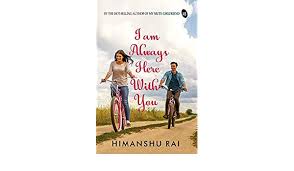
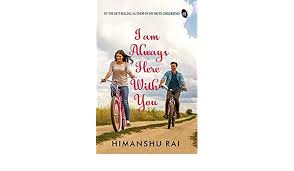
BOOK CORNER: I AM ALWAYS HERE WITH YOU by Himanshu Rai

Copyright@shravancharitymission

Khidki (Window)

–Read India Initiative—

This is only an attempt to create interest in reading. We may not get the time to read all the books in our lifetime. But such reviews, talk and synopsis will at least convey what the book is all about.


I AM ALWAYS HERE WITH YOU

By Himanshu Rai

Publisher: Srishti Publishers

Price Rs 195

    They say love acknowledges no boundaries. I agree to that. But then love is also a state of mind that often stands on the crutches of tragedies. In this flurry of viewpoints let me add one more—‘Love knows no time, or distance, and it certainly knows no reason- says lady author Genevieve Dewey, and then again there is that famous Hindi song ‘janam-janam ka sath hai nibha ne ko. Sao sao bar mene janam liye, a Mohd Rafi song enacted on the screen by Babita and Shammi Kapur in film, ‘Tum se accha kaun hai’ released in the year 1966. So in sum, love is ever-green and the oldest plaything that mankind pulled out from the treasures of mother earth.

    I have just finished reading this title, ‘I am Always Here With You’ written by young author Himanshu Rai who happens to be a telecom professional and also a fraternity friend of mine. It so happened by the stroke of luck I had read one of his earlier titles, this being his second one. India being a young nation, is deep in love, and therefore a number of love stories are flowering all over the place. There was once the deluge of Mills & Boon that took the ‘rustic India’ by storm. And now we have the unlimited, ‘Indian love stories’ that is taking the ‘unrealised India’ by storm.

     Since the book was published only recently I’ll refrain myself from being a spoiler. But yes of course there is Kartik and Ashima entangled in deep puppy love. Both are good students studying in Dehradun. Kartik’s father wants him to be an engineer. But his love takes him somewhere else both academically and emotionally. This only creates a deep rift between the father and the son after Kartik’s marriage with Ashima. As the story unfolds, after seven years of courtship, and two years of marriage they are now about to graduate into the next hierarchy of life. And all along Kartik attempts to mend his relationship with his father where he even seeks the support of his wife Ashima.

    All is moving well until here. But then life is, so very, unpredictable as they say. And you’ll have to read the book to find out why Ashima is now marrying someone else? And why is Kartik accepting that helplessly?

    I would desist from going any further on the storyline. But yes, the book definitely appears to be written, keeping in mind the young readers. It goes on to pass the im-memorial message, that love is crazy.

    It’s an offbeat story. Where, the author has tried to bring in, some innovative ideas that are somewhat unconventional, but not filled with cheer. The book paces well but within the same context so it gets over-descriptive at spaces where it can be avoided. There are enchanting pages about school and college romance that will mostly delight the young age group. The author has used the methodology of quote-unquote where he could have used simple narration to make the story move faster. For in the first forty pages I found the book to be slow and it picks up a little after seventy pages. But then it slows down again before the end and that is because of some meticulous descriptions that the author takes us through. The book has titillating love scenes but they do not culminate at any point. It has well captured emotions. But the author could have done well with lesser of detailing and more of events in the story. Or he could have ended the book at around, a hundred and fifty pages. To me it was like a fairy tale. High on emotions that made my own love story look pale. Once again the book is descriptive where a plethora of emotions inter-twine within the ambit of high emotions with less of engaging events or episodes.

    Some books impact you for their meaty storyline, some for the wisdom, that they provide you, some for the narration and language, and some for all of these. So, the readers need to find it out for themselves by reading the book which way the book has impacted them.

    The book is around two hundred pages written in lucid language easy to understand.

    Overall, it’s a good read, for the college crowd and even other grown up youngsters where slow moving stories with high pitch emotions can be a selling point.

    A line that I liked out of the book was, ‘friendship is the start, but togetherness is the end.’

    I wish Himanshu Rai the very best in is his future titles.

Synopsis by Kamlesh Tripathi

*

https://kamleshsujata.wordpress.com

*

Share it if you like it

*

Shravan Charity Mission is an NGO that works for poor children suffering from life threatening diseases especially cancer. Our posts are meant for our readers that includes both children and adults and it has a huge variety in terms of content. We also accept donations for our mission. Should you wish to donate for the cause. The bank details are given below:

NAME OF ACCOUNT: SHRAVAN CHARITY MISSION

Account no: 680510110004635 (BANK OF INDIA)

IFSC code: BKID0006805

*

Our publications

GLOOM BEHIND THE SMILE

(The book is about a young cancer patient. Now archived in 7 prestigious libraries of the US, including, Harvard University and Library of Congress. It can also be accessed in MIT through Worldcat.org. Besides, it is also available for reading in Libraries and archives of Canada and Cancer Aid and Research Foundation Mumbai)  

ONE TO TANGO … RIA’S ODYSSEY

(Is a book on ‘singlehood’ about a Delhi girl now archived in Connemara Library, Chennai and Delhi Public Library, GOI, Ministry of Culture, Delhi)

AADAB LUCKNOW … FOND MEMORIES

(Is a fiction written around the great city of Nawabs—Lucknow. It describes Lucknow in great detail and also talks about its Hindu-Muslim amity. That happens to be its undying characteristic. The book was launched in Lucknow International Literary Festival of 2014)

REFRACTIONS … FROM THE PRISM OF GOD

(Co-published by Cankids–Kidscan, a pan India NGO and Shravan Charity Mission, that works for Child cancer in India. The book is endorsed by Ms Preetha Reddy, MD Apollo Hospitals Group. It was launched in Lucknow International Literary Festival 2016)

TYPICAL TALE OF AN INDIAN SALESMAN

(Is a story of an Indian salesman who is, humbly qualified. Yet he fights his ways through unceasing uncertainties to reach the top. A good read not only for salesmen. The book was launched on 10th February, 2018 in Gorakhpur Lit-Fest. Now available in Amazon, Flipkart and Onlinegatha)

RHYTHM … in poems

(Published in January 2019. The book contains 50 poems. The poems describe our day to day life. The book is available in Amazon, Flipkart and Onlinegatha)

(ALL THE ABOVE TITLES ARE AVAILABLE FOR SALE IN AMAZON, FLIPKART AND OTHER ONLINE STORES OR YOU COULD EVEN WRITE TO US FOR A COPY)

*****



BOOK CORNER: THE SUBTLE ART OF NOT GIVING A F*CK by Mark Manson

Coypright@shravancharitymission


By Kamlesh Tripathi

*

https://kamleshsujata.wordpress.com

*

Share it if you like it

*

Shravan Charity Mission is an NGO that works for poor children suffering from life threatening diseases especially cancer. Our posts are meant for our readers that includes both children and adults and it has a huge variety in terms of content. We also accept donations for our mission. Should you wish to donate for the cause. The bank details are given below:

NAME OF ACCOUNT: SHRAVAN CHARITY MISSION

Account no: 680510110004635 (BANK OF INDIA)

IFSC code: BKID0006805

*

Our publications

GLOOM BEHIND THE SMILE

(The book is about a young cancer patient. Now archived in 7 prestigious libraries of the US, including, Harvard University and Library of Congress. It can also be accessed in MIT through Worldcat.org. Besides, it is also available for reading in Libraries and archives of Canada and Cancer Aid and Research Foundation Mumbai)  

ONE TO TANGO … RIA’S ODYSSEY

(Is a book on ‘singlehood’ about a Delhi girl now archived in Connemara Library, Chennai and Delhi Public Library, GOI, Ministry of Culture, Delhi)

AADAB LUCKNOW … FOND MEMORIES

(Is a fiction written around the great city of Nawabs—Lucknow. It describes Lucknow in great detail and also talks about its Hindu-Muslim amity. That happens to be its undying characteristic. The book was launched in Lucknow International Literary Festival of 2014)

REFRACTIONS … FROM THE PRISM OF GOD

(Co-published by Cankids–Kidscan, a pan India NGO and Shravan Charity Mission, that works for Child cancer in India. The book is endorsed by Ms Preetha Reddy, MD Apollo Hospitals Group. It was launched in Lucknow International Literary Festival 2016)

TYPICAL TALE OF AN INDIAN SALESMAN

(Is a story of an Indian salesman who is, humbly qualified. Yet he fights his ways through unceasing uncertainties to reach the top. A good read not only for salesmen. The book was launched on 10th February, 2018 in Gorakhpur Lit-Fest. Now available in Amazon, Flipkart and Onlinegatha)

RHYTHM … in poems

(Published in January 2019. The book contains 50 poems. The poems describe our day to day life. The book is available in Amazon, Flipkart and Onlinegatha)

(ALL THE ABOVE TITLES ARE AVAILABLE FOR SALE IN AMAZON, FLIPKART AND OTHER ONLINE STORES OR YOU COULD EVEN WRITE TO US FOR A COPY)

*****


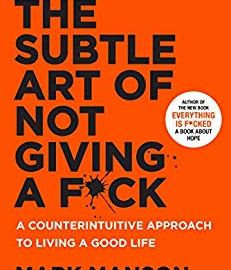
BOOK CORNER: THE SUBTLE ART OF NOT GIVING A F*CK–a counterintuitive approach to living a good life by Mark Manson

Copyright@shravancharitymission


Khidki (Window)

–Read India Initiative—

This is only an attempt to create interest in reading. We may not get the time to read all the books in our lifetime. But such reviews, talk and synopsis will at least convey what the book is all about.


    ‘Fuck’ is a scandalous and a vulgar cuss word not meant for the civilized society. But then it has a lot to do with the making and breaking of life. Before, I move ahead let me refresh you with the meaning of this word. One of course is the usual one—to have a sexual intercourse. And running alongside that, it is also used, while expressing, extreme anger, or to add force, to what is being said. Some words get ostracised because of its dirty meaning. According to Oxford dictionary, fuck also means ‘your ruins.’ Let me now construct, two sentences for you, using the four letter word. One is.

  1. I don’t give a fuck—which means I don’t care.
  2. I give a fuck—which means I care.

    I am telling you all of this, to make you understand the book even better. The book has a long title supported by an even longer sub-title that goes as, “THE SUBTLE ART OF NOT GIVING A F*CK—a counter-intuitive approach to living a good life.” by Mark Manson. Counterintuitive means, contrary to intuition, or a kind of common-sense expectation. I would call this book a wonder book, because the author converts the four letter word ‘fuck’ into a handy an appropriate life lesson for readers. New York Times and Globe and mail a Canadian chronicle have declared it, as a bestseller. The other word extensively used in this book is sucks which is an expression of disappointment. The book is priced at $17.99, published in 2016 by Harperone.   The book lives up to its title in all boisterousness. Mark Manson is a star blogger, with more than two million readers. He lives in New York City. The Subtle Art of Not Giving a F*ck, is his, first book.

     For this day and age the book is a self-help guide, written by a super-star blogger. It charts the course for us, to make us happier and stronger. The real panacea of which is how to handle adversity better, and stop trying to be positive all the time. Of course the gap between the two is quite wide.

    For the past few years, Mark Manson through his ecstatically popular blog, has been working on correcting, our delusional expectations, for ourselves and for the world. He now brings his hard fought wisdom to this ground breaking book. Manson makes the argument that human beings by nature are imperfects and even limited. As he writes, ‘not everybody can be extraordinary—there are winners and losers in society, and some of it is not fair or your fault.” Manson advises us to get to know your limitations and accept them as they are. This he says, is the real source of empowerment. Once we embrace our fears, faults and uncertainties. Once we stop running from and avoiding, and start confronting, painful truths—we will begin to find the courage and confidence we desperately need.

    In life, we all have a limited amount of fucks to give. So, you must choose your fucks wisely. Manson brings a much needed, grab-you-by-the-shoulders-an-look-you-in-the-eyes moment, of real-talk, filled with entertaining stories, and profane, ruthless humor. This narration is a refreshing pat on the face of all, so that we can start living a more contented and grounded life.

     The book is a little over two hundred pages and if one goes at an uninterrupted pace, one could finish it within two days. It is in many ways a page turner written in lucid English quite easy to comprehend. It has long gripping sentences with appropriate pauses in terms of sentence breaks and well suited prepositions. The author has curtailed unnecessary flab in his narration. Within a para, the breaks are few and that gives a good flow of thoughts so very necessary for such life-lesson emitting books. Many sentences are somewhat unconventional, and more than that the thoughts are quite out-of-the-box. It is divided into nine chapters with sub-chapters. The book hinges on two prime words—‘fuck’ and ‘sucks.’

    Everyone believes. The key to a good life is a nice job, a sexy limousine, or a pretty girlfriend. The world keeps telling you over-and-over again, that the matrix for a successful life is to have more … more … and … more. Buy more, own more. You are constantly bombarded with messages to give a fuck about everything, and at all times. But the key to a good life is not giving a fuck about more; but giving a fuck about less, or giving a fuck about only what is true and immediate and important. I’m sorry for having used the four letter word so very often in this narration. But without which you wouldn’t have got the real feel of the book.

    The book has many interesting stories and anecdotes that I would not like to disclose in great detail. But yes of course. I liked the one about the Japanese second lieutenant and the Rock Star band. The book teaches that life is essentially an endless series of problems. Problems never stop they only get exchanged or upgraded. Happiness is a constant work-in-progress. It teaches you the value of suffering. Human beings often dedicate a large part of their lives to seemingly useless and destructive causes.

    It says happiness is a problem yet happiness comes by solving problems. And mind you, you are not special. The book defines certain values as shitty and even obsolete. It says a lot of time in our life is wasted in choosing. And of course failure is the way forward. It talks about action, inspiration and even motivation. Most of us commit to action only if we feel a certain level of motivation. And we feel motivated only when we find enough emotional inspiration.

    The book inspires you to believe that you’re wrong about everything. The author cites examples in terms of cartographers who some five hundred years ago believed that California was an island. Doctors believed that by slicing a person’s arm open (or by causing bleeding anywhere) one could cure a disease. Scientists believed that fire was made out of something called phlogiston (a combustible substance). Women believed that rubbing dog urine on their face had anti-aging benefits. Astronomers believed that the sun revolved around the earth. But then were they right?

    I would recommend this book. If not for anything else, at least it will advise you how to be comfortable in negative situations. While reading this book I was even reminded of my own poem that I wrote sometime back. The title of which is … ‘Bad times is a friend of all times’ published in a book titled, ‘Rhythm … in poems.’ I would give this debut book of Mark Manson eight out of ten.

   Synopsis by Kamlesh Tripathi

*

https://kamleshsujata.wordpress.com

*

Share it if you like it

*

Shravan Charity Mission is an NGO that works for poor children suffering from life threatening diseases especially cancer. Our posts are meant for our readers that includes both children and adults and it has a huge variety in terms of content. We also accept donations for our mission. Should you wish to donate for the cause. The bank details are given below:

NAME OF ACCOUNT: SHRAVAN CHARITY MISSION

Account no: 680510110004635 (BANK OF INDIA)

IFSC code: BKID0006805

*

Our publications

GLOOM BEHIND THE SMILE

(The book is about a young cancer patient. Now archived in 7 prestigious libraries of the US, including, Harvard University and Library of Congress. It can also be accessed in MIT through Worldcat.org. Besides, it is also available for reading in Libraries and archives of Canada and Cancer Aid and Research Foundation Mumbai)  

ONE TO TANGO … RIA’S ODYSSEY

(Is a book on ‘singlehood’ about a Delhi girl now archived in Connemara Library, Chennai and Delhi Public Library, GOI, Ministry of Culture, Delhi)

AADAB LUCKNOW … FOND MEMORIES

(Is a fiction written around the great city of Nawabs—Lucknow. It describes Lucknow in great detail and also talks about its Hindu-Muslim amity. That happens to be its undying characteristic. The book was launched in Lucknow International Literary Festival of 2014)

REFRACTIONS … FROM THE PRISM OF GOD

(Co-published by Cankids–Kidscan, a pan India NGO and Shravan Charity Mission, that works for Child cancer in India. The book is endorsed by Ms Preetha Reddy, MD Apollo Hospitals Group. It was launched in Lucknow International Literary Festival 2016)

TYPICAL TALE OF AN INDIAN SALESMAN

(Is a story of an Indian salesman who is, humbly qualified. Yet he fights his ways through unceasing uncertainties to reach the top. A good read not only for salesmen. The book was launched on 10th February, 2018 in Gorakhpur Lit-Fest. Now available in Amazon, Flipkart and Onlinegatha)

RHYTHM … in poems

(Published in January 2019. The book contains 50 poems. The poems describe our day to day life. The book is available in Amazon, Flipkart and Onlinegatha)

(ALL THE ABOVE TITLES ARE AVAILABLE FOR SALE IN AMAZON, FLIPKART AND OTHER ONLINE STORES OR YOU COULD EVEN WRITE TO US FOR A COPY)

*****
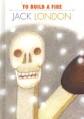


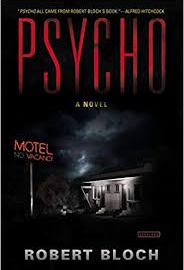
BOOK CORNER: PSYCHO by Robert Bloch

Copyright@shravancharitymission

Khidki (Window)

–Read India Initiative—

This is only an attempt to create interest in reading. We may not get the time to read all the books in our lifetime. But such reviews, talk and synopsis will at least convey what the book is all about.

Psycho was written in the year 1959 by American author Robert Bloch. The book is so-so-so-so very scary that one might even feel scared, in meeting its author.  The novel is widely recognized, as Bloch’s, most illustrious work. So intensely written, that even while narrating it to you now, I get a feeling as if someone is standing behind me.

    The book was later adapted into Alfred Hitchcock’s seminal 1960 film of the same name, and was loosely adapted into the Bates Motel television series of (2013-2017). Bloch later wrote two sequels, which are unrelated to any of the film sequels.

    The novel tells the story of Norman Bates, caretaker of an isolated motel who struggles under his domineering Mother and gets embroiled in a series of murders. 

     Norman Bates is the main protagonist of this novel, who traces his struggles with insanity, particularly, split personality disorder. In the novel, Norman is described, as in mid-forties, overweight, pale, and balding. As a child, Norman had an extremely dysfunctional, even abusive relationship, with his Mother that forever changed his ability to relate normally in society. As an adult, Norman lives alone with his Mother and runs the Bates Motel. When the novel opens, Norman is reading about the Oedipus Situation or Complex with the hope of understanding more about his strange relationship with his Mother. It’s clear that Norman’s relationship with his Mother has deeply affected the way he views all women, particularly women, to whom he is sexually attracted. Norman drinks as an excuse to block the strange voices in his head—arguably his Mother’s voice—telling him that he’s not good enough, and reminding him that he’s impotent.

    All in all ‘Psycho’ is a horror story of Norman Bates, and his strange relationship with his Mother, and the motel he runs on the side of a deserted highway.

    The novel opens with an image of a forty-year-old Norman Bates reading in his office. His Mother approaches and chides him for reading filthy material. The two get into a vicious fight is when the Mother lambasts Norman. He is too weak, and too afraid to stand up to her. She challenges everything of Norman, from his social skills to his sexual predilections while he silently takes the abuse. In his head, however, he imagines the release he would feel if he killed his Mother, but the buzzer ringing at the front door breaks him from his thoughts. Someone needs a room in the motel.

    Its a woman who needs a room. Mary Crane, has just driven across several states in the pouring rain. Norman doesn’t know that Mary Crane has stolen $40,000 from her real estate boss. She hopes to meet Sam Loomis, her fiancé with whom she’s been having a long distance relationship, and with this money she wants to settle his debts, and start a married life together. After getting lost on the highway, Mary pulls into the Bates Motel and asks for a room. Norman, who has clearly never interacted with young women, shyly asks Mary, up to the house for dinner. She accepts, but when she hears of the horrific, and seemingly abusive, relationship that Norman has with his Mother, she gently suggests that Norman put her in an institution. This idea outrages Norman, who shouts and screams that his Mother is normal: “She’s not crazy!” Mary quietly excuses herself, and returns to her motel room, and vows to return the money she’s stolen so that she doesn’t end up being tortured by guilt. Moments later, an old woman enters Mary’s room while she’s in the shower and beheads her.

    In the moments before Mary was murdered, Norman had been watching her undress through a peephole in his office. He was drinking at that time, and passed out in his chair. He awoke to find Mary’s corpse and immediately suspected his Mother to be the murderer. He momentarily considers letting Mother go to the prison, but the thought of being separated from her is too much for him. He knows he must protect her, help cover up her crimes. Norman methodically cleans up the murder scene, just as he remembers cleaning up the scene with Mother and “Uncle Joe” all those years ago. He deposits Mary’s corpse and the car into the sinkhole behind the motel and assumes he has got away with the murder. Meanwhile, Mary’s old boss, Mr. Lowery, hires a private detective to track Mary in order to recover his $40,000 that she had stolen. The detective, Mr. Arbogast, traces Mary to the motel and now stands knocking at the door, demanding to speak with Norman, or his Mother. Moments later, the same mysterious figure, who appears to be an old woman, attacks Arbogast and slits his throat. Norman deposits Arbogast’s body and the car in the same sinkhole.

    Unfortunately for Norman, Mary Crane’s little sister Lila by now had grown suspicious of her sister’s disappearance. She meets up with Sam Loomis to search for her. They too trace Mary back to the Bates Motel, Lila is now convinced that something terrible has happened to Mary in the motel only.

    She notifies the local sheriff, but he insists that she is wrong. He tells her that Norman Bates is harmless, and that his mother has been dead for years now (after she poisoned herself and her lover, “Uncle Joe”). Unconvinced, Lila arranges for Sam Loomis to distract Norman while she explores the house searching for clues. Although Sam does his best to distract Norman, he drops his guard when Norman smashes a whisky bottle over Sam’s head, knocking him unconscious. Meanwhile, as Lila explores the house, she finds a tiny shrivelled woman whom she assumes is Mrs. Bates. But as she approaches, she discovers that the woman is actually a taxidermal corpse or you could say a stuffed corpse. Norman appears behind Lila, dressed in his mother’s clothes and speaking in a high, affected voice saying, “I am Norma Bates.” He raises a butcher knife and pounces on Lila, but Sam, who wakes up from his stupor well on time, manages to wrestle Norman away from her and hold him there until he is arrested. In the weeks that follow, it is discovered that Norman only had murdered his mother and her lover, “Uncle Joe.” To mask the guilt he felt over the murders, Norman developed a split personality in which Mother became his alternate self. At the trial, Norman is found to be insane and is institutionalized or you could say imprisoned in a house prison for life.

Synopsis by Kamlesh Tripathi

*

https://kamleshsujata.wordpress.com

*

Share it if you like it

*

Shravan Charity Mission is an NGO that works for poor children suffering from life threatening diseases especially cancer. Our posts are meant for our readers that includes both children and adults and it has a huge variety in terms of content. We also accept donations for our mission. Should you wish to donate for the cause. The bank details are given below:

NAME OF ACCOUNT: SHRAVAN CHARITY MISSION

Account no: 680510110004635 (BANK OF INDIA)

IFSC code: BKID0006805

*

Our publications

GLOOM BEHIND THE SMILE

(The book is about a young cancer patient. Now archived in 7 prestigious libraries of the US, including, Harvard University and Library of Congress. It can also be accessed in MIT through Worldcat.org. Besides, it is also available for reading in Libraries and archives of Canada and Cancer Aid and Research Foundation Mumbai)  

ONE TO TANGO … RIA’S ODYSSEY

(Is a book on ‘singlehood’ about a Delhi girl now archived in Connemara Library, Chennai and Delhi Public Library, GOI, Ministry of Culture, Delhi)

AADAB LUCKNOW … FOND MEMORIES

(Is a fiction written around the great city of Nawabs—Lucknow. It describes Lucknow in great detail and also talks about its Hindu-Muslim amity. That happens to be its undying characteristic. The book was launched in Lucknow International Literary Festival of 2014)

REFRACTIONS … FROM THE PRISM OF GOD

(Co-published by Cankids–Kidscan, a pan India NGO and Shravan Charity Mission, that works for Child cancer in India. The book is endorsed by Ms Preetha Reddy, MD Apollo Hospitals Group. It was launched in Lucknow International Literary Festival 2016)

TYPICAL TALE OF AN INDIAN SALESMAN

(Is a story of an Indian salesman who is, humbly qualified. Yet he fights his ways through unceasing uncertainties to reach the top. A good read not only for salesmen. The book was launched on 10th February, 2018 in Gorakhpur Lit-Fest. Now available in Amazon, Flipkart and Onlinegatha)

RHYTHM … in poems

(Published in January 2019. The book contains 50 poems. The poems describe our day to day life. The book is available in Amazon, Flipkart and Onlinegatha)

(ALL THE ABOVE TITLES ARE AVAILABLE FOR SALE IN AMAZON, FLIPKART AND OTHER ONLINE STORES OR YOU COULD EVEN WRITE TO US FOR A COPY)

*****


BOOK CORNER: Amitav Ghosh … A CRITICAL COMPANION

Copyright@shravancharitymission


Khidki (Window)

–Read India Initiative—

This is only an attempt to create interest in reading. We may not get the time to read all the books in our lifetime. But such reviews, talk and synopsis will at least convey what the book is all about.

Amitav Ghosh

A CRITICAL COMPANION

Edited by Tabish Khair

    In the next twenty minutes or so I would take you through one of the finest pieces of narration. Where, one legend describes the other. Yes, when, Amitav Ghosh describes Satyajit Ray this is all one can say. Amitav Ghosh is a winner of 54th Jnanpith award and also a Padma Shri. I have pulled out this narration from a book titled ‘Amitav Ghosh … a critical companion.’ I have summarised and simplified the article for you to the best of my ability.

    Amitav in this article of his, has gone back to 1989. When he was enjoying his extended stay in the overwhelming city of New York. He had then finished writing of The Shadow Lines. The novel for some reason had a striking influence of Ray in it.

    He was then struck by a sudden wave of Ray nostalgia. And it struck to him that Ray too had once been a stranger in this city and that he too had walked the streets of Manhattan in Kolkata—bought shoes.

     One day, these pent up thoughts propelled Amitav to meet director James Ivory, who he knew to be a good friend of Ray. And later that week he went to interview Ivory, cassette recorder in hand. This is how Ivory described his first meeting with Ray, in the winter of 1960.

    “I looked him up in Calcutta,’ Ivory said. I had never met him. I had seen at that point, Pather Panchali (Song of the Road) and Aparijito (Undefeated). I knew that Apur Sansar (The World of Apu) existed and that sooner or later it would get to New York, but up till then it hadn’t come. And then some Indian friends of mine in Delhi said that apart from The Trilogy he had also made some other films in that time—the late fifties. They described Jalsaghar (The Music Room) to me and that sounded like something I would love to see. Then I made a long trip to Calcutta and went down to Puri and Bhubaneshwar and Madras. While I was in Calcutta I just decided to call him. Just to meet him, but also to ask him if it would be possible to see Jalsaghar. My friend in Delhi said he was very approachable (which he was) and I just called him up. He was in the phone book, so I just called him up and told him who I was. He said fine, he would try and arrange Jalsaghar for me. We agreed to meet in Coffee House and I went there. He was alone and we talked.

    He was immensely tall; he was probably the tallest Indian I have ever met and that seemed symbolically apt. He had a kind of straight forward majesty about him; he was obviously a king, but he was an approachable king. We were friends all his life as long as he lived. Whenever there was something he needed we tried to help. He always helped us. When there was some tremendous thing that would happen to us in the course of our own movie making in India—for instance when Utpal Dutt was put in prison (for his Maoist sympathies) while we were making ‘The Guru’ he helped to get him out. He called up or wrote to Mrs Gandhi and said this is a disgrace, this shouldn’t be allowed—things like that.”

    I asked Ivory what they talked about at that first meeting. ‘He was waiting in the coffee house.’ Ivory said, ‘while the censor was seeing Devi (the Coffee House was in the shadow of the Metro Cinema). Then somebody came from his staff and said that Devi had gone down well with the censors. He was kind of nervous about it because of the retrograde view of Hindu life at its most superstitious let’s say. He was afraid they would make him cut it. But no, it had gone down all right, and he said, would I like to come to the premiere of it, which I did, so I saw the film at the premiere and I was also introduced to Sharmila Tagore, who was very young then. And then he arranged for me to see ‘Jalsaghar’ so he went to the studio in Tollygunge where he made all his films and he sat next to me and translated for me at important moments. I thought it was a marvellous, marvellous movie and I jumped up and told him so at the end. He was surprised that I thought it was so marvellous. He said, well, he thought technically it wasn’t so good, wasn’t quite up to the mark. I said well, it didn’t strike me like that and I asked if there were any plans to show it in the west for I thought people would really like it. He said no, he didn’t have any plans. It had been shown at the Moscow Film Festival but the Russians didn’t like it because they thought it was decadent and that had discouraged him. I said, I thought he might get a different reception in the west if he pursued it. It was released here in the fall of 1963, and as you know a few years ago it was released in Paris and it was a tremendous success—ran for a year or something.’

    Ray was to collaborate with James Ivory and Ismail Merchant on two of their films: he wrote the music of Shakespeare-wallah and helped with the editing of ‘The Householder.’ I asked Ivory how the collaboration had come about.’ After ‘Householder’ was edited,’ he said ‘he still seemed very unwieldy, not very nicely done. I didn’t really have a very good editor—by this time I had met him (Ray) and I asked if I could bring the film to show him. He said sure come on. So Ismail (Merchant) and I climbed on the train—we took the Hindi version of it, all those cans, there must have 24 cans or something. We went from Bombay to Calcutta with all that film. He saw it and liked it—he thought there was something there to work with. I asked him whether he could give us any suggestions about the cutting and he said, yes. He would recut it, but he didn’t want me to interfere while doing that. He said let me have a go at it, I’ll do it my way, you can be in the editing room if you want to be, when we’re all done you can change it if you want to, that’s your business, but let me do what I want to do. So then, he and his editor Dulal Dutt recut the film. They took about four days, and gave it a new shape. It was he (Ray) who suggested that it go into a flashback form.

    Ray was always awfully generous with his time, always, always. I don’t know how he did it; because there was always many many people there, who wanted things done, people who just came to catch a glimpse of him and so on. How he had any kind of life of his own and how he made his movies I don’t know.

    Pather Panchali, to my mind the greatest of Ray’s films, was completed in 1955. It premiered not in Kolkata, but in New York, at the museum of Modern Art. This is how it came about: in 1954 Huston was on his way to India to scout locations for The Man Who Would Be King, when he came to hear of a young advertising-executive who was making a film on a tiny budget. By the time Huston arrived in Kolkata, the film had been stalled for several months, because of lack of money. At the time of Huston’s visit the dominant genre in India was the Bombay film. Ray’s work took Huston by surprise. It was apparent from the rushes that this film belonged in a different order of film-making. Huston was quick to recognize the genius of work. He viewed only twenty-minutes or so of the film, but recalling the occasion in 1987, he said: I’ recognised the footage as the work of a great film-maker.’ Returning to the United States, Huston’s reports of the film were instrumental in persuading the Museum of Modern Art to send Ray some money. MOMA’s advance went a long way towards the completion of Pather Panchali.

    Hollywood had long cast a binding spell on Ray: he was an ardent admirer of such American film-makers as John Ford and Billy Wilder. Although he never worked there. Hollywood came to play a peculiarly serendipitous role in his life; never more so than when one of his idols, John Huston, made it possible for him to complete Pather Panchali. And thus it happened that this most famous of contemporary Indian films premiered not in Kolkata or Mumbai, but in New York. It was first shown at the Museum of Modern Art in April 1955, to a small invited audience.

    Pather Panchali was released in the US (by Edward Harrison) in September 1958 at New York’s Fifth Avenue Theatre. The release was the occasion of Ray’s first visit to the country: he was then thirty-seven. The reception of the film was by no means uniformly enthusiastic. As Ivory describes it: ‘There was a famous review by Bosley Crowther which was meant to have been such a putdown. I read that again the other day and actually he was trying to like it. He was baffled, he made false assumptions, he didn’t really know what to say, but he had to admit that he knew or felt, somehow, dimly that there was something great there and he better not say something too bad about it. And apparently there were many people who wrote angry letters about his review.”

    Thirty one years later, in Columbia University’s Butler Library, I dug up a copy of an interview that Ray gave to Howard Thompson (of the New York Times) on the day of the release. Ray evidently made quite an impression on Thompson: ‘A strapping swarthy chap, with strong features, he (Ray) talks like a realistic poet, without the slightest foreign accent, looking fresh from the American gridiron.’

    Thompson continues: ‘On the day after his arrival he (Ray) stepped inside a fashionable hotel dining room, comfortably clad in occidental garb, and gamely stooped to let the head waiter pin on a Plaza tie. Presently, wearing a casually alert expression, the big rangy Calcuttan sat at a table, opening a package of cigarettes with long, tapering fingers. He had been up early, he said, just walking, camera in hand, an old habit of ‘an old film fam.’

    This is how Ray described the filming of Pather Panchali to Thompson: ‘We shot in and around Calcutta, then had to stop for six months because I was flat broke. I even sold part of my record collection, some old seventy-eights of Bach, Mozart and Beethoven—and part of my wife’s jewelry, not that her mother knew. All that was shown again to the same (financiers). No reaction. Then a year’s gap.’

    Ray was able to continue filming only because of an unlikely intervention: a powerful West Bengal politician, reputed to be ‘close’ to one of Ray’s aunts, authorised a grant from the state government. He was under the impression evidently, that Pather Panchali was a documentary about community development.

    In response to a question about the future of Indian film, Ray told Thompson: ‘I don’t know if our pictures generally will ever spread to a world market, though we have two or three young directors with the right ideas. Our industry centers productionally in Bengal, Madras and Bombay, but those from Bengal are better, more serious. As for why you don’t see more of ours—well, we have our own problems and we’re not so sure Westerners care.’

    ‘The generous mouth widened slightly,’ Thompson continues. ‘Do you?’ he enquired. The penetrating brown eyes twinkled pensively.

    Looking back now, I am sure more than ever aware of the part that Ray played in shaping the imaginary universe of my childhood and youth. I see this even in such details as my interest in science and science fiction; in ghost stories and the fantastical. One of my favourite Ray films to this day, remains Paras Pathar (The Philosopher’s Stone), a neglected masterpiece that deserves a place of honour in the canon of surrealist cinema. When I saw Agantuk (The Stranger), in which the main character is an anthropologist, I began to wonder whether my interest in anthropology too, owed something, perhaps subconsciously, to Ray: I recalled suddenly that references to anthropology go back to some of his earliest work, starting with the African mask in Apur Sansar.

    Ray’s influence extended even to the material world that I inhabited in my early years; a world which he formed to a quite astonishing degree through his influence on typography and through his visual style—a style that was itself a development on a distinctive design traditions of Bengal. That he could exert such great influence was due in part to the fact that this work extended and developed the legacy of the generations preceding his. His greatness as an artist is no way diminished by the fact that he was a rivet in an unbroken chain of aesthetic and intellectual effort that stretches back to mid-nineteenth century—a chain in which I too am, I hope, a small link.

    Ray was for me, not just a great artist; he was something even rarer; an artist who had crafted his life so that it could serve as an example to others. In a world where people in the arts are often expected, even encouraged, to be mindful of those around them, he was exemplary in his dealings with people. This was, I think one of the reasons why he was able to sustain his creative energies for as long as he did: because he refused to make a fetish of himself. As a student I had heard him speak on several occasions: it always seemed to me that there was something very private about his manner. I had the sense that it was by holding the world at arm’s length that he had managed to be as productive as he had. This was a stance I respected then and respect even more today, now that I am more aware of how easy it is to be distracted by the demands of public life.

    Ray was consistent in fighting off the pressures of the wider world. After the success of Pather Panchali he was feted by Jawaharlal Nehru and Indira Gandhi. It was a measure of his integrity that he never allowed their praise and attention to distract him from his own projects. Unlike many other film-makers in India, Ray consciously avoided seeking government financing for his projects, preferring to raise the money from commercial sponsors. He was always deeply aware of his audience in Kolkata and gloried in the discipline they imposed on him—primarily that of keeping his work accessible. This meant that he could never permit himself the luxury of avant-gardism in the manner of his European contemporaries such as Fellini, Bergman and Godard: nor indeed did he ever want to. To the end one of his greatest strengths was his ability to resolve enormously complex plots and themes into deceptively simple narrative structures.

    My favourite Ray story is one I came upon soon after I learnt of the appalling human cost of Werner Herzog’s Fitzcarraldo. Once, while filming an overhead shot, a falling piece of machinery gravely injured a studio-hand who was working on one of Ray’s sets. Ray never used an overhead shot again.

    In 1992 when Hollywood awarded him an Oscar for Lifetime Achievement, Ray was so ill that he received the award lying in his hospital bed. The scene was broadcast on TV and when I saw it I realized that Ray’s illness was so serious that he might not recover. I had always assumed I would meet Ray one day, but I had never made an effort to seek him out. He was such an integral part of my imaginative world that I’d fought shy of meeting him face-to-face: what can one possibly say to someone to whom one owes so great a debt? In 1989 and 1990 I had had several telephone conversations with him. In one of them he’d told me that he greatly enjoyed my first novel, The Circle of Reason. Now I saw that it was I who had been remiss in expressing my admiration and gratitude. In light of his condition this assumed a sudden urgency. I decided to write a letter to Ray, asking if I could visit him. My letter began:

    Dear Mr Ray,

    I have wanted to write to you for many years now, but have always put it off because I knew it would not be easy to say what I wanted too …

It ended:

    The Japanese have a custom which allows people to pay homage to artists they admire by standing outside their houses, alone and in silence, until they are invited in. you are the only person in the world for whom I would gladly do that …

    The letter was dated February 6, 1992. I gave it to Shri Nirmalaya Acharya, a close associate of Ray’s and himself one Kolkata’s legendary literary figures (now sadly deceased and much-missed by all who knew him). Nirmalaya-babu promised to hand it to Ray once he was well enough to read. Alas that day never came: Satyajit Ray died on April 23 1992.

    The day of Satyajit Ray’s death was like none that Kolkata had ever seen before. When the news began to spread, a pall of silence descended on the city. Next morning hundreds of thousands of people filed past his body, braving the intense heat. In the evening when his body was taken to the crematorium, the streets were thickly lined up with people standing in silent vigil. Many held up placards which referred to him as ‘The King.’ The whole city was sunk in an inexpressible sadness: everybody knew that an era had ended, and with it, Kolkata’s claim to primacy in arts. The city was orphaned: its king was gone and there was none to take his place.

    I wandered the streets for hours that night, watching the silent crowds, reading the placards. I was surprised by the depth of my own sense of loss. Yet I was conscious also of an immense sense of privilege, of gratitude, that having been born in Kolkata I had, in some small way, been endowed with a special entitlement to Ray’s universe; gratitude at having had his work to illuminate my surroundings and my past. This is what narrative arts do, at their very best: they shape the world as they relate them. To this day Ray’s work is one of the main anchors that moors me—often despite myself—to the imaginative landscape of Bengal: indeed, to the essential terrain of my own work.

Amitav Ghosh

January 17, 2002

Posted by Kamlesh Tripathi

*

https://kamleshsujata.wordpress.com

*

Share it if you like it

*

Shravan Charity Mission is an NGO that works for poor children suffering from life threatening diseases especially cancer. Our posts are meant for our readers that includes both children and adults and it has a huge variety in terms of content. We also accept donations for our mission. Should you wish to donate for the cause. The bank details are given below:

NAME OF ACCOUNT: SHRAVAN CHARITY MISSION

Account no: 680510110004635 (BANK OF INDIA)

IFSC code: BKID0006805

*

Our publications

GLOOM BEHIND THE SMILE

(The book is about a young cancer patient. Now archived in 7 prestigious libraries of the US, including, Harvard University and Library of Congress. It can also be accessed in MIT through Worldcat.org. Besides, it is also available for reading in Libraries and archives of Canada and Cancer Aid and Research Foundation Mumbai)  

ONE TO TANGO … RIA’S ODYSSEY

(Is a book on ‘singlehood’ about a Delhi girl now archived in Connemara Library, Chennai and Delhi Public Library, GOI, Ministry of Culture, Delhi)

AADAB LUCKNOW … FOND MEMORIES

(Is a fiction written around the great city of Nawabs—Lucknow. It describes Lucknow in great detail and also talks about its Hindu-Muslim amity. That happens to be its undying characteristic. The book was launched in Lucknow International Literary Festival of 2014)

REFRACTIONS … FROM THE PRISM OF GOD

(Co-published by Cankids–Kidscan, a pan India NGO and Shravan Charity Mission, that works for Child cancer in India. The book is endorsed by Ms Preetha Reddy, MD Apollo Hospitals Group. It was launched in Lucknow International Literary Festival 2016)

TYPICAL TALE OF AN INDIAN SALESMAN

(Is a story of an Indian salesman who is, humbly qualified. Yet he fights his ways through unceasing uncertainties to reach the top. A good read not only for salesmen. The book was launched on 10th February, 2018 in Gorakhpur Lit-Fest. Now available in Amazon, Flipkart and Onlinegatha)

RHYTHM … in poems

(Published in January 2019. The book contains 50 poems. The poems describe our day to day life. The book is available in Amazon, Flipkart and Onlinegatha)

(ALL THE ABOVE TITLES ARE AVAILABLE FOR SALE IN AMAZON, FLIPKART AND OTHER ONLINE STORES OR YOU COULD EVEN WRITE TO US FOR A COPY)

*****