Tag Archives: usa

READER’S REWIND: CANCER WARNING LABELS ON ALCOHOLIC BEVERAGES

POEM: THE FAILING WORLD ORDER

ANNUS MIRABILUS-2024

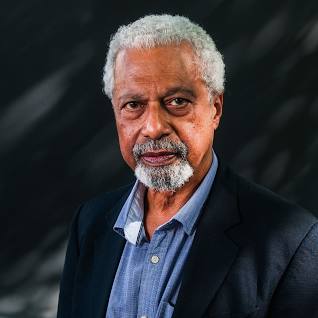
AUTHOR: ABDULRAZAK GURNAH

Copyright@shravancharitymission

ABDULRAZAK GURNAH

Nobel winner – Tanzanian British Novelist

Abdulrazak Gurnah FRSL (born 20 December 1948) is a Tanzanian-born British novelist and academician. He was born in the Sultanate of Zanzibar but moved to the United Kingdom in the 1960s as a refugee during the Zanzibar Revolution. His novels include Paradise (1994), which was shortlisted for both the Booker and the Whitbread Prizes; By the Sea (2001), which was long-listed for the Booker and shortlisted for the Los Angeles Times Book Prize; and Desertion (2005), shortlisted for the Commonwealth Writer’s Prize.

    Gurnah was awarded the 2021 Nobel Prize in Literature for his uncompromising and compassionate penetration of the effects of colonialism and the fates of the refugee in the gulf between cultures and continents”. He is an Emeritus Professor of English and Postcolonial Literature at the University of Kent. Gurnah has his own viewpoints on various subjects which he revealed in a recent interview.

    West’s response to migrants is almost inhuman, says Nobel winner Gurnah.

    In 1967, Abdul Razak Gurnah fled an uprising in Zanzibar for the safer shores of England. But asylum came with overt racism and the tag of ‘illegal immigrant’. Those experiences have shaped his oeuvre, with novels like Paradise and Desertion. The 73-year-old is only the fourth black person to have won the Nobel Literature. He hails the role of fiction in telling stories about the migrant experience.

    Gurnah came from Zanzibar to the UK as a refugee when he was only 18. His beginning to write after arriving in the UK wasn’t a conscious decision according to him. It was more like going through certain kinds of feelings and experiences such as being young and homesick in a strange country and dealing with all sorts of uncertainties –like not having money, a job, or a family around. And it was because of that sense of alienation that he began to write things down.

    He says sometimes we write to clarify our own thinking or just simply to try and disentangle ideas or feelings. In the process, you also read about other people’s experiences and something that approximates to what you’re feeling, and you get infected by the desire to reconstruct it in your own way. But it took a while, and my first book came out when I was almost 40. Here are the answers to some of the questions that were asked of him in a recent interview:

    On being asked if the racist response to the pandemic surprise him- first, towards China, and then Africa because of Omicron?

    He replied. ‘No, it didn’t surprise me. In the first instance, you will remember it was led by the US and their mad emperor who, at the time, was at war with China in every respect, as well as at war with everybody really within striking distance, including being in denial of the existence of this contagion. So China was the obvious target of this angst. Now there is a variant discovered in Africa, so it is Africa. The same thing happened with AIDS. This is the same blame game that plays out in routine.’

    By mad emperor, Gurnah means Trump and his idea of a wall to keep the migrants out. On being asked about Poland who too is planning a similar barrier, Gurnah said.

    ‘This particular attitude towards migrants and refugees is almost incomprehensible, particularly in Europe and the US. Only just seven to eight decades ago, Europe experienced a huge movement in population because of World War II. So Europeans are quite familiar with the condition of the refugee and many of them, of course, would have been refugees themselves or children of refugees, including, of course, the British Home Secretary (Priti Patel), and yet there is this kind of inhuman response to the difficulties that these migrants are going through – risking their lives, even dying while crossing the Mediterranean. As for the US, the so-called nation of immigrants, putting up borders to keep Central Americans and Mexicans out, that’s just as hard to understand. Should we be vilifying these migrants rather than treating them as human beings who, in most cases, are escaping violence, wars and poverty?

    Upon being asked that besides writing about post-colonialism, you have also taught the subject. Do you feel that colonialism should be taught at the school level in Britain? His reply was:

    ‘Well, it’s being done, and there is a debate going on about whether we should focus more on it. There are people with power who are still defensive about issues like colonialism. But as I see it, it’s quite clear that the argument has been lost, and that there is no way of defending imperialism. Its consequences are around us every day, with border closures and this deep problem with poverty, and so on.

    To a question: Do you feel that the British have romanticized imperial history, especially, when it comes to India? He replied.

    In some respects, certainly, when they speak about India, there is this glow about the Raj and all that sort of stuff, which I think is a mutual appreciation. I don’t think there’s anything like this in most African former colonies where it was a largely brutal relationship with the British. Of course, it was much shorter than the 200 years or so they were in India, not long enough for any affection to grow though its impact cut deep.

    In their statement, the Nobel note committee said your “dedication to truth and aversion to simplification” can make your work “bleak and uncompromising”. Do you agree with that description? The author replied.

    Well, I’m not going to argue with a Nobel jury. There may be other ways also to describe my work but I don’t argue with people, so long as they’re saying, generally approving things.

    Your writing deals a lot with the experience of being a refugee. Do you feel fiction addresses these themes better than, say, academic texts?

    Yes, I do. Of course, there’s a lot of scholarship already about this but people in a popular way do not read scholarship. Fiction can provide a kind of bridge between what scholars do and what the popular imagination lacks or doesn’t know or doesn’t understand. If you’re talking historical writing you’re also providing a link between history and popular knowledge by allowing people to live in that period. I do think that fiction has a role, which is both to give pleasure but also to broaden our understanding.

****

By Kamlesh Tripathi

*

https://kamleshsujata.wordpress.com

*

Share it please

*

Shravan Charity Mission is an NGO that works for poor children suffering from life threatening diseases especially cancer. Our posts are meant for our readers that includes both children and adults and it has a huge variety in terms of content. We also accept donations for our mission. Should you wish to donate for the cause. The bank details are given below:

NAME OF ACCOUNT: SHRAVAN CHARITY MISSION

Account no: 680510110004635 (BANK OF INDIA)

IFSC code: BKID0006805

*

Our Publications

GLOOM BEHIND THE SMILE

(The book is about a young cancer patient. Now archived in 8 prestigious libraries of the US that includes Harvard College Library; Harvard University Library; Library of Congress; University of Washington, Seattle; University of Minnesota, Minneapolis; Yale University, New Haven; University of Chicago; University of North Carolina, at Chapel Hill University Libraries. It can also be accessed in MIT through Worldcat.org. Besides, it is also available for reading in libraries and archives of Canada, Cancer Aid and Research Foundation Mumbai; Jaipuria Institute of Management, Noida; India. Shoolini University, Yogananda Knowledge Center, Himachal Pradesh and Azim Premzi University, Bangalore).  

ONE TO TANGO … RIA’S ODYSSEY

(Is a book on ‘singlehood’ about a Delhi girl now archived in Connemara Library, Chennai and Delhi Public Library, GOI, Ministry of Culture, Delhi; Available for reading in Indian National Bibliography, March 2016, in the literature section, in Central Reference Library, Ministry of Culture, India, Belvedere, Kolkata-700022)

AADAB LUCKNOW … FOND MEMORIES

(Is a fiction written around the great city of Nawabs—Lucknow. It describes Lucknow in great detail and also talks about its Hindu-Muslim amity. That happens to be the undying characteristics of Lucknow. The book was launched in Lucknow International Literary Festival of 2014. It is included for reading in Askews and Holts Library Services, Lancashire, U.K; Herrick District Library, Holland and Charlotte-Mecklenburg Library, Mecklenburg County in North Carolina, USA; Black Gold Cooperative Library Administration, Arroyo Grande, California).

REFRACTIONS … FROM THE PRISM OF GOD

(Co-published by Cankids–Kidscan, a pan India NGO and Shravan Charity Mission, that works for Child cancer in India. The book is endorsed by Ms Preetha Reddy, MD Apollo Hospitals Group. It was launched in Lucknow International Literary Festival 2016)

TYPICAL TALE OF AN INDIAN SALESMAN

(Is a story of an Indian salesman who is, humbly qualified. Yet he fights his way through unceasing uncertainties to reach the top. A good read not only for salesmen. The book was launched on 10th February 2018 in Gorakhpur Lit-Fest. Now available on Amazon, Flipkart and Onlinegatha)

RHYTHM … in poems

(Published in January 2019. The book contains 50 poems. The poems describe our day-to-day life. The book is available on Amazon, Flipkart and Onlinegatha) . They have also been published in newspapers such as Shillong Times and Bandra Times.

MIRAGE

(Published in February 2020. The book is a collection of eight short stories available in Amazon, Flipkart and Notion Press)

AWADH ASSAM AND DALAI LAMA … The Kalachakra

(The story of the man who received His Holiness The Dalai Lama and his retinue in 1959 as a GOI representative when he fled Tibet in 1959. The book was launched on 21st November 2022 by His Holiness The Dalai Lama at Dharmshala. The titled is archived in the library of the Department of Information and International Relations (DIIR) Government of Tibet, Tibet Policy Institute (TPI) and the personal library of His Holiness. The title is also archived in The Ohio Digital Library, USA).

BHAVANS JOURNAL

Short stories, Book reviews and Articles published in Bhavan’s Journal: 1. Reality and Perception, 15.10.19; 2. Sending the Wrong Message, 31.5.20; 3. Eagle versus Scholars June, 15 & 20 2020; 4. Indica, 15.8.20; 5. The Story of King Chitraketu, August 31 2020; 6. Breaking Through the Chakravyuh, September 30 2020. 7. The Questioning Spouse, October 31, 2020; 8. Happy Days, November 15, 2020; 9. The Karma Cycle of Paddy and Wheat, December 15, 2020; 10. Power Vs Influence, January 31, 2021; 11. Three Refugees, March 15, 2021; 12. Rise and Fall of Ajatashatru, March 31, 2021; 13. Reformed Ruler, May 15, 2021; 14. A Lasting Name, May 31, 2021; 15. Are Animals Better Teachers?, June 16, 2021; 16. Book Review: The Gram Swaraj, 1.7.21; 17. Right Age for Achievements, 15.7.21; 18. Big Things Have Small Beginnings, 15.8.21; 19. Where is Gangaridai?, 15.9.21; 20. Confront the Donkey Within You 30.9.21; 21. Know Your Strengths 15.10.21; 22. Poverty 15.11.21; 23. Top View 30.11.21; 24. The Bansuriwala 15.1.22; 25. Sale of Alaska 15.2.22; 26. The Dimasa Kingdom 28.2.22; 27. Buried Treasure 15.4.22; 28. The Kingdom of Pragjyotisha 30.4.22; 29. Who is more useful? 15.5.22; 30. The White Swan from Lake Mansarovar 30.6.22; 31. Bhool Bhulayya 15.9.22; 32. Good Karma 30.9.22; 33. Good Name vs Bad Name 15.10.22; 34. Uttarapath—The Grand Trunk Road 1.12.22; 35. When Gods Get Angry 1.1.23; 36. Holinshed’s Chronicles 15.1.23; 37. Theogony 15.2.23; 38. Poem: Mother 14.5.23

SUNDAY SHILLONG TIMES

ARTICLES & POEMS: 1. POEM: HAPPY NEW YEAR 8.1.23; 2. POEM: SPRING 12.3.23; 3. POEM: RIGHT AND WRONG 20.3.23, 4. THE GUSH OF EMOTION—WRITING, 26.3.23; 5. THE NAG MANDIR 7.5.23; 6. POEM: MOTHER 7.5.23;

BANDRA TIMES, MUMBAI

ARTICLES & POEMS: 1. POEM SPRING, 1.4.23;

(ALL THE ABOVE BOOK TITLES ARE AVAILABLE FOR SALE ON AMAZON, FLIPKART AND OTHER ONLINE STORES OR YOU COULD EVEN WRITE TO US FOR A COPY)

*****
BOOK CORNER: “CHIP WAR: The fight for the World’s Most Critical Technology” by Chris Miller.

Copyright@shravancharitymission

    Today’s title for review is “CHIP WAR: The fight for the World’s Most Critical Technology” by Chris Miller. The book is vivaciously convincing. It’s about semiconductors and the coming US-China confrontation. Just like the semiconductor chips, Miller has packed a million history and information in this extraordinary book. The title is a remarkable, eye-popping work, a unique combination of economic and technological and strategic analysis … says PAUL KENNEDY, the bestselling author of “The Rise and Fall of the Great Powers.”

    As India takes baby steps into chip manufacturing, the history of this technology turns out to be a useful guide. A chip which is also called a semiconductor or an integrated circuit is a piece of silicon with tiny transistors carved into it that switch the 1s and the 0s. It is the material on which the entire digital world rests. It is what gives Silicon Valley its fancy name, and it is fuelling the biggest US-China confrontation.

    The book is about the evolution of the semiconductor business, and its role in the global economy and international politics. In the 1960s, Fairchild Semiconductor (and later Intel) co-founder Gordon Moore famously predicted that computing power on chips would grow exponentially, doubling every two years. Moore’s law has exceeded all expectations. Sixty years ago, a cutting-edge chip had four transistors. It has about 11.8 billion now. Each 3D transistor is smaller than a coronavirus.

    Chips are the core of digital computing, which also makes them essential to the modern world, undergirding aeroplanes, weapons, appliances, drones and toys. The next generation of networking technology and AI (Artificial Intelligence) applications make them only more necessary. And so, the clutch of firms that design and produce chips are of immense strategic importance.

    All personal computing relies on DRAM (Dynamic Random Access Memory) chips, which are made by two companies in Korea and one in the US. Further five firms—(American, Dutch and Japanese)—control the lighting process by which patterns are carved into silicon wafers. Fabricating and miniaturising chips are the greatest engineering challenge of our time, claims the book, for which Taiwan’s TSMC (Taiwan Semiconductor Manufacturing Company) is indispensable at the moment.

    As their uses proliferated, chips have become central to strategic interests. This evolution was not shaped just by corporations and consumers, but also by governments and militaries. While the Soviets had tried to keep up with the US advances in semiconductor technology, they were largely forced to rely on stealing and copying.

    In the 1980s, the Japanese juggernaut of high-quality low-cost DRAM chips posed competition to the US. Chips powered personal electronics, microwaves, camcorders and walkmans. It became clear that this technology was the crude oil of the 1980s—a resource whose control mattered to military supremacy.

    So, other Asian nations became contenders. As the US-Japan rivalry grew—South Korea and Taiwan too got into it, and so did China later. There have been missteps along the way. In the 90s, Japan failed to see the PC revolution coming, just as Intel later failed to spot the smartphone boom when it passed up on making chips for iPhones.

    Today, despite the fact that the US dissipated its lead in semiconductor fabrication and lithography, it still remains the design hub and maintains its chokehold on the technology, even as China puts billions of dollars and its best engineers into it. America’s unipolar moment and globalisation rhetoric have receded, and the tech wars have heated up as Xi Jinping crafts a new digital authoritarianism. Donald Trump called Huawei, ‘Spyway’, and slapped an export ban on China, grinding to a halt, its most advanced DRAM firm, SMIC (Semiconductor Manufacturing International Corporation).

    The disruptions during the pandemic revealed just how critical, this chip supply chain is—if any of the steps in the interconnected production process is endangered, so is the world’s supply of computing power.

By Kamlesh Tripathi

*

https://kamleshsujata.wordpress.com

*

Share it if you like it

*

Shravan Charity Mission is an NGO that works for poor children suffering from life threatening diseases especially cancer. Our posts are meant for our readers that includes both children and adults and it has a huge variety in terms of content. We also accept donations for our mission. Should you wish to donate for the cause. The bank details are given below:

NAME OF ACCOUNT: SHRAVAN CHARITY MISSION

Account no: 680510110004635 (BANK OF INDIA)

IFSC code: BKID0006805

*

Our Publications

GLOOM BEHIND THE SMILE

(The book is about a young cancer patient. Now archived in 8 prestigious libraries of the US that includes Harvard College Library; Harvard University Library; Library of Congress; University of Washington, Seattle; University of Minnesota, Minneapolis; Yale University, New Haven; University of Chicago; University of North Carolina, at Chapel Hill University Libraries. It can also be accessed in MIT through Worldcat.org. Besides, it is also available for reading in libraries and archives of Canada, Cancer Aid and Research Foundation Mumbai; Jaipuria Institute of Management, Noida; India. Shoolini University, Yogananda Knowledge Center, Himachal Pradesh and Azim Premzi University, Bangalore).  

ONE TO TANGO … RIA’S ODYSSEY

(Is a book on ‘singlehood’ about a Delhi girl now archived in Connemara Library, Chennai and Delhi Public Library, GOI, Ministry of Culture, Delhi; Available for reading in Indian National Bibliography, March 2016, in the literature section, in Central Reference Library, Ministry of Culture, India, Belvedere, Kolkata-700022)

AADAB LUCKNOW … FOND MEMORIES

(Is a fiction written around the great city of Nawabs—Lucknow. It describes Lucknow in great detail and also talks about its Hindu-Muslim amity. That happens to be the undying characteristics of Lucknow. The book was launched in Lucknow International Literary Festival of 2014. It is included for reading in Askews and Holts Library Services, Lancashire, U.K; Herrick District Library, Holland and Charlotte-Mecklenburg Library, Mecklenburg County in North Carolina, USA; Black Gold Cooperative Library Administration, Arroyo Grande, California).

REFRACTIONS … FROM THE PRISM OF GOD

(Co-published by Cankids–Kidscan, a pan India NGO and Shravan Charity Mission, that works for Child cancer in India. The book is endorsed by Ms Preetha Reddy, MD Apollo Hospitals Group. It was launched in Lucknow International Literary Festival 2016)

TYPICAL TALE OF AN INDIAN SALESMAN

(Is a story of an Indian salesman who is, humbly qualified. Yet he fights his way through unceasing uncertainties to reach the top. A good read not only for salesmen. The book was launched on 10th February 2018 in Gorakhpur Lit-Fest. Now available on Amazon, Flipkart and Onlinegatha)

RHYTHM … in poems

(Published in January 2019. The book contains 50 poems. The poems describe our day-to-day life. The book is available on Amazon, Flipkart and Onlinegatha)

MIRAGE

(Published in February 2020. The book is a collection of eight short stories available in Amazon, Flipkart and Notion Press)

AWADH ASSAM AND DALAI LAMA … The Kalachakra

(The story of the man who received His Holiness The Dalai Lama and his retinue in 1959 as a GOI representative when he fled Tibet in 1959. The book was recently launched on 21st November 2022 by His Holiness The Dalai Lama).

Short stories, Book reviews and Articles published in Bhavan’s Journal: 1. Reality and Perception, 15.10.19; 2. Sending the Wrong Message, 31.5.20; 3. Eagle versus Scholars June, 15 & 20 2020; 4. Indica, 15.8.20; 5. The Story of King Chitraketu, August 31 2020; 6. Breaking Through the Chakravyuh, September 30 2020. 7. The Questioning Spouse, October 31, 2020; 8. Happy Days, November 15, 2020; 9. The Karma Cycle of Paddy and Wheat, December 15, 2020; 10. Power Vs Influence, January 31, 2021; 11. Three Refugees, March 15, 2021; 12. Rise and Fall of Ajatashatru, March 31, 2021; 13. Reformed Ruler, May 15, 2021; 14. A Lasting Name, May 31, 2021; 15. Are Animals Better Teachers?, June 16, 2021; 16. Book Review: The Gram Swaraj, 1.7.21; 17. Right Age for Achievements, 15.7.21; 18. Big Things Have Small Beginnings, 15.8.21; 19. Where is Gangaridai?, 15.9.21; 20. Confront the Donkey Within You 30.9.21; 21. Know Your Strengths 15.10.21; 22. Poverty 15.11.21; 23. Top View 30.11.21; 24. The Bansuriwala 15.1.22; 25. Sale of Alaska 15.2.22; 26. The Dimasa Kingdom 28.2.22; 27. Buried Treasure 15.4.22; 28. The Kingdom of Pragjyotisha 30.4.22; 29. Who is more useful? 15.5.22; 30. The White Swan from Lake Mansarovar 30.6.22; 31. Bhool Bhulayya 15.9.22; 32. Good Karma 30.9.22; 33. Good name vs Bad Name 15.10.22

(ALL THE ABOVE BOOK TITLES ARE AVAILABLE FOR SALE IN AMAZON, FLIPKART AND OTHER ONLINE STORES OR YOU COULD EVEN WRITE TO US FOR A COPY)

*****
BOOK CORNER: DANGER ZONE: The Coming Conflict with China … by Hal Brands and Michael Beckley

Copyright@shravancharitymission


    The book enumerates the possibility of why the US-China conflict can happen soon. It is because Beijing is worried that its power is peaking soon. The subject book claims that a decisive showdown between the US and China could come sooner than anyone thinks. Sino-US rivalry is not a marathon, but a sprint that will play out in this very decade only, says the book.

    The book starts with a highly plausible doomsday scenario in January 2025, in a situation where China has invaded Taiwan, putting the US in a bind, and the world on the brink of World War III. It could have been avoided, by reading the signs right, the book claims.

    The authors counter the Thucydides trap theory about a great power replacing another—the threat is not because of China’s inexorable rise but because it knows it has peaked and is desperate. It is strong enough to disrupt the existing order but is losing confidence that time is on its side. This gives it incentives to use force against Japan, and India or teach the Philippines a lesson, or even bring Taiwan to heel.

    The Chinese Communist Party wants to maintain its iron grip on power, regain territories like Taiwan, and force settlements on border disputes with countries from India to Japan. It aims to marginalise the US in Asia.

    This means nothing less than an epochal change in regional and global rules. China’s relentless military build-up, its trade, infrastructure and investment gambits across Eurasia (ie. land consisting of Europe and Asia), its overland supply routes and access to the Indian Ocean, its power play in international institutions and its ideological offensive against liberal democracy—in all of this China knows the US is in its way, invested as it is in preventing a rival in Eurasia.

    The US-China relationship, the book says, unravelled gradually, then suddenly in recent years, with Donald Trump’s presidency, Covid and Xi Jinping’s own sense of urgency. China has been concealing a sharp slowdown, resource shortfalls, and a demographic catastrophe brought on by its one-child policy. They see the red alerts about their country’s rise and the CCP’s (Chinese Communist Party’s) fate.

    The confrontation is forcing others to take sides, creating a ring of rivals. The Galwan clash of 2020 with India might be a victory for China, but it lost more than it gained, as New Delhi accelerated its swing towards America. Chinese aggression is beginning to backfire, as it creates fear and resistance from countries near and far that have benefitted from the American world order.

    Australia has leaned towards the US, the EU calls China a ‘systematic rival’. As China seeks greater arks of influence, it is confronting greater arcs of hostility. Even the Sino-Russian autocratic axis has its costs, as Vladimir Putin’s aggression in Ukraine raises the costs of teaming up with him. CCP officials are haunted by the twin spectres of economic decay and geopolitical encirclement, claims the book—and this peaking-power dynamic is precisely where the danger lies. A revisionist power that feels its moment is slipping away will act more impulsively than the one that thinks tomorrow will be better than today.

    The book advises the US to take calculated risks, and avoid reckless ones. It must take on China’s high-tech economic imperialism, digital authoritarianism and its intent to take Taiwan. It must be willing to anger China and bait it into strategic blunders, rather than push it into a corner where violence becomes the only option.

By Kamlesh Tripathi

*

https://kamleshsujata.wordpress.com

*

Share it if you like it

*

Shravan Charity Mission is an NGO that works for poor children suffering from life threatening diseases especially cancer. Our posts are meant for our readers that includes both children and adults and it has a huge variety in terms of content. We also accept donations for our mission. Should you wish to donate for the cause. The bank details are given below:

NAME OF ACCOUNT: SHRAVAN CHARITY MISSION

Account no: 680510110004635 (BANK OF INDIA)

IFSC code: BKID0006805

*

Our Publications

GLOOM BEHIND THE SMILE

(The book is about a young cancer patient. Now archived in 8 prestigious libraries of the US that includes Harvard College Library; Harvard University Library; Library of Congress; University of Washington, Seattle; University of Minnesota, Minneapolis; Yale University, New Haven; University of Chicago; University of North Carolina, at Chapel Hill University Libraries. It can also be accessed in MIT through Worldcat.org. Besides, it is also available for reading in libraries and archives of Canada, Cancer Aid and Research Foundation Mumbai; Jaipuria Institute of Management, Noida; India. Shoolini University, Yogananda Knowledge Center, Himachal Pradesh and Azim Premzi University, Bangalore).  

ONE TO TANGO … RIA’S ODYSSEY

(Is a book on ‘singlehood’ about a Delhi girl now archived in Connemara Library, Chennai and Delhi Public Library, GOI, Ministry of Culture, Delhi; Available for reading in Indian National Bibliography, March 2016, in the literature section, in Central Reference Library, Ministry of Culture, India, Belvedere, Kolkata-700022)

AADAB LUCKNOW … FOND MEMORIES

(Is a fiction written around the great city of Nawabs—Lucknow. It describes Lucknow in great detail and also talks about its Hindu-Muslim amity. That happens to be the undying characteristics of Lucknow. The book was launched in Lucknow International Literary Festival of 2014. It is included for reading in Askews and Holts Library Services, Lancashire, U.K; Herrick District Library, Holland and Charlotte-Mecklenburg Library, Mecklenburg County in North Carolina, USA; Black Gold Cooperative Library Administration, Arroyo Grande, California).

REFRACTIONS … FROM THE PRISM OF GOD

(Co-published by Cankids–Kidscan, a pan India NGO and Shravan Charity Mission, that works for Child cancer in India. The book is endorsed by Ms Preetha Reddy, MD Apollo Hospitals Group. It was launched in Lucknow International Literary Festival 2016)

TYPICAL TALE OF AN INDIAN SALESMAN

(Is a story of an Indian salesman who is, humbly qualified. Yet he fights his ways through unceasing uncertainties to reach the top. A good read not only for salesmen. The book was launched on 10th February, 2018 in Gorakhpur Lit-Fest. Now available in Amazon, Flipkart and Onlinegatha)

RHYTHM … in poems

(Published in January 2019. The book contains 50 poems. The poems describe our day to day life. The book is available in Amazon, Flipkart and Onlinegatha)

MIRAGE

(Published in February 2020. The book is a collection of eight short stories available in Amazon, Flipkart and Notion Press)

Short stories, Book reviews and Articles published in Bhavan’s Journal: 1.Reality and Perception, 15.10.19; 2.Sending the Wrong Message, 31.5.20; 3. Eagle versus Scholars June, 15 & 20 2020; 4. Indica, 15.8.20; 5. The Story of King Chitraketu, August 31 2020; 6. Breaking Through the Chakravyuh, September 30 2020. 7. The Questioning Spouse, October 31, 2020; 8. Happy Days, November 15, 2020; 9. The Karma Cycle of Paddy and Wheat, December 15, 2020; 10. Power Vs Influence, January 31, 2021; 11. Three Refugees, March 15, 2021; 12. Rise and Fall of Ajatashatru, March 31, 2021; 13. Reformed Ruler, May 15, 2021; 14. A Lasting Name, May 31, 2021; 15. Are Animals Better Teachers?, June 16, 2021; 16. Book Review: The Gram Swaraj, 1.7.21; 17. Right Age for Achievements, 15.7.21; 18. Big Things Have Small Beginnings, 15.8.21; 19. Where is Gangaridai?, 15.9.21; 20. Confront the Donkey Within You 30.9.21; 21. Know Your Strengths 15.10.21; 22. Poverty 15.11.21; 23. Top View 30.11.21; 24. The Bansuriwala 15.1.22; 25. Sale of Alaska 15.2.22; 26. The Dimasa Kingdom 28.2.22; 27. Buried Treasure 15.4.22; 28. The Kingdom of Pragjyotisha 30.4.22; 29. Who is more useful? 15.5.22; 30. The White Swan from Lake Mansarovar 30.6.22; 31. Bhool Bhulayya 15.9.22; 32. Good Karma 30.9.22; 33. Good name vs Bad Name 15.10.22

(ALL THE ABOVE BOOK TITLES ARE AVAILABLE FOR SALE IN AMAZON, FLIPKART AND OTHER ONLINE STORES OR YOU COULD EVEN WRITE TO US FOR A COPY)

*****

SHORT STORY: Albert Bourla-CEO Pfizer

Copyright@shravancharitymission


More than 80 years ago in Greece, sixty thousand Jews lived peacefully in the port city of Thessaloniki. They were a valued and vibrant community. Most of these Jews worked in the port, and since, they had a majority, the port of Thessaloniki was even closed on Saturday or Shabbat, the Jewish day, when religion, forbids work. The rabbis also lived and studied there, and everyone just hung out in the city, and were very fond of each other.

    But on September 2, 1939, at the outbreak of World War II, this peaceful community one day felt the terror of Nazis, when on April 6, 1941 Hitler invaded Greece, in order to secure his southern front before launching the famous ‘Operation Barbarossa’ the code name for the invasion of the Soviet Union by Nazi Germany and his great offensive against Russia.

    Sadly, of the 60,000 Jews in Thessaloniki, around 50,000 Jews were exterminated at the Birkenau concentration camp. The massacre of the Jews in Greece was brief but intense. Very few could escape. Among the survivors, there was a family, known as Bourla. After the war, in 1961, a son was born into this miraculous family in the camps. His parents called him Israel – Abraham. He grew up and studied veterinary medicine in Greece. A brilliant student, Abraham got his doctorate in reproductive biotechnology at the veterinary school of Aristotle University of Salonika, also known as Thessaloniki, in Greece.

    At the age of 34, he decided to move to the United States. He changed his first name Abraham to Albert and met a Jewish woman named Miriam who then became his wife. Together they had two children.

    In the United States, Albert was absorbed in the medical industry, where he progressed very quickly and joined a pharmaceutical company and became its “Head manager.” From there, the road was short for little Abraham (Albert) to rise through the ranks to become Chief Operation Officer before obtaining his appointment as CEO of the company in 2019.

    Throughout 2020 Albert decided to direct all the efforts of the company to try and find a vaccine against the new virus which had just struck the world—Covid. He expended great financial and technological efforts to achieve his goal. A year later his work paid off and the WHO and the US government authorized his company to produce the long-awaited vaccine. Today this vaccine will be distributed in several countries including Germany, which counted thousands of deaths due to the pandemic.

    Ironically, this vaccine, which will save the lives of millions of people around the world including many Germans was led by a little Jew from Thessaloniki, son of a Holocaust survivor, whose, major part of the community was exterminated by the Nazi Germany. And that is why Israel became the first country to receive the vaccine, in the memory of his grandparents and his parents who gave birth to Israel-Abraham Bourla, today known as Albert Bourla: CEO of Pfizer. Such is the irony of destiny.

By Kamlesh Tripathi

*

https://kamleshsujata.wordpress.com

*

Share it if you like it

*

Shravan Charity Mission is an NGO that works for poor children suffering from life threatening diseases especially cancer. Our posts are meant for our readers that includes both children and adults and it has a huge variety in terms of content. We also accept donations for our mission. Should you wish to donate for the cause. The bank details are given below:

NAME OF ACCOUNT: SHRAVAN CHARITY MISSION

Account no: 680510110004635 (BANK OF INDIA)

IFSC code: BKID0006805

*

Our Publications

GLOOM BEHIND THE SMILE

(The book is about a young cancer patient. Now archived in 8 prestigious libraries of the US that includes Harvard College Library; Harvard University Library; Library of Congress; University of Washington, Seattle; University of Minnesota, Minneapolis; Yale University, New Haven; University of Chicago; University of North Carolina, at Chapel Hill University Libraries. It can also be accessed in MIT through Worldcat.org. Besides, it is also available for reading in libraries and archives of Canada, Cancer Aid and Research Foundation Mumbai and Jaipuria Institute of Management, Noida, India)  

ONE TO TANGO … RIA’S ODYSSEY

(Is a book on ‘singlehood’ about a Delhi girl now archived in Connemara Library, Chennai and Delhi Public Library, GOI, Ministry of Culture, Delhi; Available for reading in Indian National Bibliography, March 2016, in the literature section, in Central Reference Library, Ministry of Culture, India, Belvedere, Kolkata-700022)

AADAB LUCKNOW … FOND MEMORIES

(Is a fiction written around the great city of Nawabs—Lucknow. It describes Lucknow in great detail and also talks about its Hindu-Muslim amity. That happens to be the undying characteristics of Lucknow. The book was launched in Lucknow International Literary Festival of 2014. It is included for reading in Askews and Holts Library Services, Lancashire, U.K.)

REFRACTIONS … FROM THE PRISM OF GOD

(Co-published by Cankids–Kidscan, a pan India NGO and Shravan Charity Mission, that works for Child cancer in India. The book is endorsed by Ms Preetha Reddy, MD Apollo Hospitals Group. It was launched in Lucknow International Literary Festival 2016)

TYPICAL TALE OF AN INDIAN SALESMAN

(Is a story of an Indian salesman who is, humbly qualified. Yet he fights his ways through unceasing uncertainties to reach the top. A good read not only for salesmen. The book was launched on 10th February, 2018 in Gorakhpur Lit-Fest. Now available in Amazon, Flipkart and Onlinegatha)

RHYTHM … in poems

(Published in January 2019. The book contains 50 poems. The poems describe our day to day life. The book is available in Amazon, Flipkart and Onlinegatha)

MIRAGE

(Published in February 2020. The book is a collection of eight short stories available in Amazon, Flipkart and Notion Press)

Short stories and Articles published in Bhavan’s Journal: Reality and Perception, 15.10.19; Sending the Wrong Message, 31.5.20; Eagle versus Scholars June, 15 & 20 2020; Indica, 15.8.20; The Story of King Chitraketu, August 31 2020; Breaking Through the Chakravyuh, September 30 2020. The Questioning Spouse, October 31, 2020; Happy Days, November 15, 2020; The Karma Cycle of Paddy and Wheat, December 15,2020; Power Vs Influence, January 31, 2021; Three Refugees, March 15, 2021;

(ALL THE ABOVE TITLES ARE AVAILABLE FOR SALE IN AMAZON, FLIPKART AND OTHER ONLINE STORES OR YOU COULD EVEN WRITE TO US FOR A COPY)

*****

UTOPIA TO DYSTOPIA

Copyright@shravancharitymission

Utopia to Dystopia The world has become colourful. But the ‘Happy Prince’ is no more alive to see it. So is the swallow, who carried out his last orders, but died in the frost, at his feet, before escaping to Egypt. The lead metal statue of the ‘Happy Prince’ cracks in agony but his leaden heart still beats for his kingdom and his junta. But are there any such rulers, anymore? Well they are extinct. Perhaps, the author, you know, about whom, I’m talking, I’m forgetting his name, par naam me kya rakha hai, can rewrite the story again, while flourishing in the heaven. And, is there a ‘happy man’ without a shirt anymore? No!! I’m sure not. For the man now, not only, wears, shirts, but he wears colourful shirts, yet remains unhappy.

The Utopia is now seized of bright colours, such as red—blue, green and the saffron, and some adamant tenets, and philosophies, to rule with, the so called isms, the right wing and the left wing in the central hall of democracy. Have we gone back in time? Are we proving Hesiod’s Theogony as right, that said, initially, the dense darkness, covered everything, until the earth was born out of chaos? With earth came the mountains, the sea and the sky, the Uranus. Uranus and Earth came together and gave birth to the Titans. Later Titans and Gods both from the same lineage fought for supremacy where Zeus won just like Lord Krishna. But halt here. Take time off to think. For world leaders of today suffer from the same fear as Uranus, Cronus and the Kansa Mama of Mathura, who swallowed, there would be adversaries. Even Nigas tried swallowing Lord Vishnu but in a different context. The Robinhoods are extinct now.

The two biggest democracies are in the news often for the wrong reasons. There are too many Brutus’ that may put the original one to shame and the Bard into a wonder. To be or not to be. Much has evolved, but more is yet to come. Wait and watch. Be on the lookout for that happy man without a shirt, and the happy prince, with a lead heart that beats for the public even now.

By Kamlesh Tripathi

*

https://kamleshsujata.wordpress.com

*

Share it if you like it

*

Shravan Charity Mission is an NGO that works for poor children suffering from life threatening diseases especially cancer. Our posts are meant for our readers that includes both children and adults and it has a huge variety in terms of content. We also accept donations for our mission. Should you wish to donate for the cause. The bank details are given below:

NAME OF ACCOUNT: SHRAVAN CHARITY MISSION

Account no: 680510110004635 (BANK OF INDIA)

IFSC code: BKID0006805

*

Our publications

GLOOM BEHIND THE SMILE

(The book is about a young cancer patient. Now archived in 8 prestigious libraries of the US that includes Harvard College Library; Harvard University Library; Library of Congress; University of Washington, Seattle; University of Minnesota, Minneapolis; Yale University, New Haven; University of Chicago; University of North Carolina, at Chapel Hill University Libraries. It can also be accessed in MIT through Worldcat.org. Besides, it is also available for reading in libraries and archives of Canada, Cancer Aid and Research Foundation Mumbai and Jaipuria Institute of Management, Noida, India)  

ONE TO TANGO … RIA’S ODYSSEY

(Is a book on ‘singlehood’ about a Delhi girl now archived in Connemara Library, Chennai and Delhi Public Library, GOI, Ministry of Culture, Delhi; Available for reading in Indian National Bibliography, March 2016, in the literature section, in Central Reference Library, Ministry of Culture, India, Belvedere, Kolkata-700022)

AADAB LUCKNOW … FOND MEMORIES

(Is a fiction written around the great city of Nawabs—Lucknow. It describes Lucknow in great detail and also talks about its Hindu-Muslim amity. That happens to be the undying characteristics of Lucknow. The book was launched in Lucknow International Literary Festival of 2014. It is included for reading in Askews and Holts Library Services, Lancashire, U.K.)

REFRACTIONS … FROM THE PRISM OF GOD

(Co-published by Cankids–Kidscan, a pan India NGO and Shravan Charity Mission, that works for Child cancer in India. The book is endorsed by Ms Preetha Reddy, MD Apollo Hospitals Group. It was launched in Lucknow International Literary Festival 2016)

TYPICAL TALE OF AN INDIAN SALESMAN

(Is a story of an Indian salesman who is, humbly qualified. Yet he fights his ways through unceasing uncertainties to reach the top. A good read not only for salesmen. The book was launched on 10th February, 2018 in Gorakhpur Lit-Fest. Now available in Amazon, Flipkart and Onlinegatha)

RHYTHM … in poems

(Published in January 2019. The book contains 50 poems. The poems describe our day to day life. The book is available in Amazon, Flipkart and Onlinegatha)

MIRAGE

(Published in February 2020. The book is a collection of eight short stories available in Amazon, Flipkart and Notion Press)

Short stories and Articles published in Bhavan’s Journal: Reality and Perception, 15.10.19; Sending the Wrong Message, 31.5.20; Eagle versus Scholars June, 15 & 20 2020; Indica, 15.8.20; The Story of King Chitraketu, August 31 2020; Breaking Through the Chakravyuh, September 30 2020. The Questioning Spouse, October 31, 2020; Happy Days, November 15, 2020; The Karma Cycle of Paddy and Wheat, December 15,2020;

(ALL THE ABOVE TITLES ARE AVAILABLE FOR SALE IN AMAZON, FLIPKART AND OTHER ONLINE STORES OR YOU COULD EVEN WRITE TO US FOR A COPY)

*****

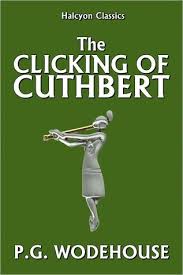
BOOK REVIEW: “THE CLICKING OF CUTHBERT”

Copyright@shravancharitymission

Khidki (Window)

–Read Initiative—

This is only an attempt to create interest in reading. We may not get the time to read all the books in our lifetime. But such reviews, talk and synopsis will at least convey what the book is all about.

    The Clicking of Cuthbert is a collection of ten short stories by P. G Wodehouse, in full, Sir Pelham Grenville Wodehouse. All the stories have a golfing theme. It was first published in the United Kingdom on 3 February 1922 by Herbert Jenkins Ltd., of London. Later it was published in the United States by George H. Doran of New York, on 28 May 1924, under the title, ‘Golf Without Tears.’ These short stories, were originally published, in magazines, between 1919 and 1922. There are some minor differences between the two editions, chiefly, the names of characters, places, and the famous golfers, which are adapted to suit the country of publication.

    Sir P G Wodehouse, lifespan (15 October 1881 – 14 February 1975), was an English author and one of the most widely read humorist of the 20th century. Born in Guildford, Southern England, the third son of a British magistrate based in Hong Kong. Wodehouse spent happy teenage years at Dulwich College, to which he remained devoted all his life. After leaving school he was employed by a bank but disliked the work and turned to writing in his spare time. His early novels were mostly school stories, but he later switched to comic fiction, creating several regular characters, who became familiar to the public over the years. They include the feather-brained Bertie Wooster and his sagacious valet, Jeeves. The immaculate and loquacious Psmith; Lord Emsworth and the Blandings Castle. Wodehouse has created a character termed, ‘The Oldest Member,’ of a golf club with varying names. He is a fictional character from the short stories and novels of the author. He narrates the majority of Wodehouse’s golf stories from the terrace of a golf club whose location is not clear. The location and name of the club keep changing between the stories, and between the US and UK versions of the stories. The oldest member narrates stories about golf with tall tales on subjects ranging from bibulous bishops to megalomaniac movie moguls.  Then you have Mr Mulliner, who is a fictional character from the short stories of P.G. Wodehouse. Mr. Mulliner again is a loquacious pub raconteur who, no matter what the topic of conversation is, can find an appropriate story about a member of his family to match it. Most of Wodehouse’s fiction is set in his native United Kingdom, although he spent much of his life in the US and used New York and Hollywood as settings for some of his novels and short stories. He wrote a series of Broadway musical comedies during and after the First World War. In 1930 he also wrote for MGM in Hollywood.

    Now coming to this book. There are in all ten stories. The first story in the collection introduces the Oldest Member, a repeat Wodehouse character, who narrates all but the last story. Let me quickly enumerate the titles of these stories:

  1. The Clicking of Cuthbert
  2. A Woman is only a Woman
  3. A Mixed threesome
  4. Sundered Hearts
  5. The Salvation of George Mackintosh
  6. Ordeal by Golf
  7. The Long Hole
  8. The Heel of Achilles
  9. The Rough Stuff
  10. The Coming of Gowf

    Friends all the ten stories are just hilarious with … very sharp wit, and high on vocabulary for an average reader. The story that I liked the most was, ‘The Heel of Achilles.’ The setting of each story is around the links of a Golf course that refreshes your mood especially if you are into golf. The way he has dissected the game of golf and its components, the male, female and star players, the caddies, and their moods and their hunches and superstitions, are par-excellence. And how sweetly and politely he has bantered about the Russians is not at all offending. One of his characters describes the game as, ‘this beast of a game that is only fit for lunatics.’ In one of the stories he uses the name ‘Gunga Din’ who happens to be a famous character in one of Rudyard Kiplings famous poem ‘Gunga Din.’ He makes an interesting, contemporaneous, analogy when a golfer misses his shot and goes on to say that he then stands there motionless, wrapped in thoughts like some Indian fakir, thus bringing out a golfers emotions. He describes the usage of clubs, driver, iron, niblicks, drives, mashie-shots and putts so very precisely. The combinations he uses for a foursome game are quite well thought off. And can you beat this when PG Wodehouse says, that there are twenty-three things possible for a golf drive to go wrong. Surely, he must have been a good student of golf to register this. He brings in ladies in to the script very effortlessly and the description of the Golf-club canteen makes one go hungry. That spread of omelette, poached eggs, lemonade and coffee really takes you amid the real meal.

    Friends just in case you are not a golfer this book will give you a real feel of the game. The other book that takes you close to golf is James Bond’s Gold-Finger by Ian Fleming. We definitely won’t have another PG Wodehouse, so find an opportunity to read his works, even when, it’s nearing a century.

By Kamlesh Tripathi

*

https://kamleshsujata.wordpress.com

*

Share it if you like it

*

Shravan Charity Mission is an NGO that works for poor children suffering from life threatening diseases especially cancer. Our posts are meant for our readers that includes both children and adults and it has a huge variety in terms of content. We also accept donations for our mission. Should you wish to donate for the cause. The bank details are given below:

NAME OF ACCOUNT: SHRAVAN CHARITY MISSION

Account no: 680510110004635 (BANK OF INDIA)

IFSC code: BKID0006805

*

Our publications

GLOOM BEHIND THE SMILE

(The book is about a young cancer patient. Now archived in 8 prestigious libraries of the US that includes Harvard College Library; Harvard University Library; Library of Congress; University of Washington, Seattle; University of Minnesota, Minneapolis; Yale University, New Haven; University of Chicago; University of North Carolina, at Chapel Hill University Libraries. It can also be accessed in MIT through Worldcat.org. Besides, it is also available for reading in libraries and archives of Canada, Cancer Aid and Research Foundation Mumbai and Jaipuria Institute of Management, Noida, India)  

ONE TO TANGO … RIA’S ODYSSEY

(Is a book on ‘singlehood’ about a Delhi girl now archived in Connemara Library, Chennai and Delhi Public Library, GOI, Ministry of Culture, Delhi)

AADAB LUCKNOW … FOND MEMORIES

(Is a fiction written around the great city of Nawabs—Lucknow. It describes Lucknow in great detail and also talks about its Hindu-Muslim amity. That happens to be the undying characteristics of Lucknow. The book was launched in Lucknow International Literary Festival of 2014. It is included for reading in Askews and Holts Library Services, Lancashire, U.K.)

REFRACTIONS … FROM THE PRISM OF GOD

(Co-published by Cankids–Kidscan, a pan India NGO and Shravan Charity Mission, that works for Child cancer in India. The book is endorsed by Ms Preetha Reddy, MD Apollo Hospitals Group. It was launched in Lucknow International Literary Festival 2016)

TYPICAL TALE OF AN INDIAN SALESMAN

(Is a story of an Indian salesman who is, humbly qualified. Yet he fights his ways through unceasing uncertainties to reach the top. A good read not only for salesmen. The book was launched on 10th February, 2018 in Gorakhpur Lit-Fest. Now available in Amazon, Flipkart and Onlinegatha)

RHYTHM … in poems

(Published in January 2019. The book contains 50 poems. The poems describe our day to day life. The book is available in Amazon, Flipkart and Onlinegatha)

MIRAGE

(Published in February 2020. The book is a collection of eight short stories. It is available in Amazon, Flipkart and Notion Press)

Short stories and Articles published in Bhavan’s Journal: Reality and Perception, 15.10.19; Sending the Wrong Message, 31.5.20; Eagle versus Scholars June, 15 & 20 2020; Indica, 15.8.20; The Story of King Chitraketu, August 31 2020; Breaking Through the Chakravyuh, September 30 2020. The Questioning Spouse, October 31, 2020;

(ALL THE ABOVE TITLES ARE AVAILABLE FOR SALE IN AMAZON, FLIPKART AND OTHER ONLINE STORES OR YOU COULD EVEN WRITE TO US FOR A COPY)

*****

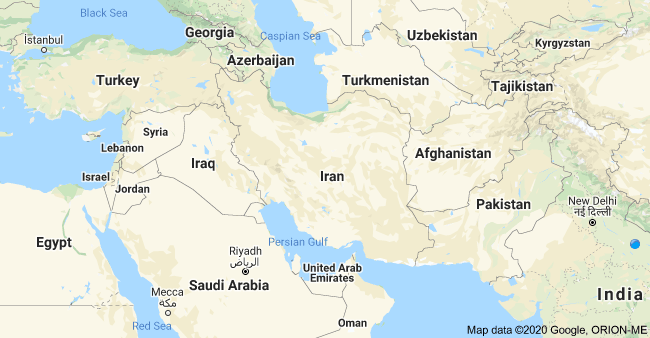
INTERESTING FACTS: THE THORNS IN IRAN-US RELATIONS

Copyright@shravancharitymission

    Welcome to ‘Interesting Facts.’ Let me give you a gist of the inimical relations that exist between Iran and the US over the past many decades. They have had no formal diplomatic relations since April 1980. Pakistan serves as Iran’s protecting power in the United States, while Switzerland serves as the United States’ protecting power in Iran. Protecting power is a country that represents another sovereign state in a country where it lacks its own diplomatic representation. It is common to appoint protecting powers when two countries break off diplomatic relations with each other. The protecting power is responsible for looking after the sending state’s diplomatic property and citizens in the hosting state. If diplomatic relations are broken by the outbreak of war, the protecting power will also inquire into the welfare of prisoners of war and look after the interests of civilians in enemy-occupied territory.

    Political relations between Iran (Persia) and the United States began when the Shah of Iran, Nassereddin Shah Qajar, officially despatched Iran’s first ambassador, Mirza Abolhasan to Washington, D.C., in 1856. In 1883, Samuel G. Benjamin was appointed by the United States as the first official diplomatic envoy to Iran, however, the ambassadorial relations were not established until 1944. 

    Until the outbreak of the World War II, the US had no active policy towards Iran. In 1953, the government of Prime Minister Mohammad Mosaddeq was overthrown in a coup organized by the British and American governments. Many Iranians argue that the coup and the subsequent U.S. support for the Shah of Iran was largely responsible for the shah’s arbitrary rule, which led to the anti-American 1979 revolution.

    When the Cold War began the US was alarmed by the attempt of the Soviet Union to set up separatist states in Iranian Azerbaijan and Kurdistan. This fear was enhanced by the loss of China to communism and uncovering of the Soviet spy rings. Cold War was a period of geopolitical tension between the Soviet Union and the United States and their respective allies, i.e. the Eastern Bloc and the Western Bloc, after the World War II. The period is generally considered to live along the 1947 Truman Doctrine (an American foreign policy whose stated purpose was to contain Soviet geopolitical expansion during the Cold War) to the 1991 dissolution of the Soviet Union. More generally, the Truman Doctrine implied American support for nations thought to be threatened by Soviet communism.

    During 1952 and 1953 there happened the Abadan Crisis, when Iranian Prime Minister, Mohammad Mosaddeq, began nationalization of, the Anglo-Iranian Oil Company (AIOC). Established by the British in the early 20th century, Britain’s share in the profits of the company was 85%, and Iran’s share was 15%. But Britain kept its financial records hidden from the Iranian government. By 1951, the Iranians had agreed to support the nationalization of the AIOC, and as a consequence the Iranian Parliament unanimously agreed to nationalize its holding which was at that time, the British Empire’s largest company. The British retaliated with an embargo on Iranian oil, which was supported by international oil companies. Over the months that followed, negotiations over control and compensation for the Iranian oil were deadlocked, and Iran’s economy deteriorated.

    U.S. President Harry S. Truman pressed Britain to moderate its position in the negotiations, and not invade Iran. A gamut of American policies created a feeling in Iran that the United States was on Mosaddeq’s side, and that created a sense of optimism, that the oil dispute would soon be settled, with a series of innovative proposals to settle the dispute, giving Iran “significant amounts of economic aid”. Mosaddeq visited Washington, when the American government made “frequent statements expressing support for him.”

    But at the same time, the United States also honoured the British embargo and, without Truman’s knowledge, the American CIA stationed in Tehran kept “carrying out covert activities” against Mosaddeq and the National Front since the summer of 1952.

    As the Cold War intensified, oil negotiations stalled. The Republican President Dwight D. Eisenhower replaced Democratic President Truman, when the United States helped destabilize Mossadeq on the theory that “rising internal tensions and continued economic deterioration…might lead to a breakdown of government authority and opened the way for at least a gradual assumption of control by Iran’s well organized Tudeh communist party. In 1953, the US and Britain, through a covert operation of the CIA called Operation Ajax, conducted from the American Embassy in Tehran, helped organize a coup d’etat to overthrow the Mosaddeq government. The operation initially failed, and the Shah fled to Italy, but in a second attempt the coup succeeded, and Mosaddeq was imprisoned.

    Following the coup, the United States helped re-install Shah. In the first three weeks, the U.S. government gave Iran $68 million in emergency aid, and an additional $1.2 billion over the next decade. In the era that ensued, until the fall of Shah in 1979, Iran was one of United States’ closest ally. The US also played a critical role in founding the Shah’s brutal secret police to keep him in power. A US Army colonel working for the CIA was sent to Persia in September 1953 to guide local personnel in creating the organization and in March 1955, the Army colonel was replaced with a more permanent team of five career CIA officers, including specialists in covert operations, intelligence analysis, and counterintelligence, including Major General Herbert Norman Schwarzkopf, who virtually trained, the entire first generation of SAVAK personnel. In 1956 this agency was reorganized and given the name Sazeman-e Ettela’at va Amniyat-e Keshvar (SAVAK). These in turn were replaced by SAVAK’s own instructors in 1965.

    Shah received significant American support during his reign. He made frequent visits to the White House earning praise from numerous American presidents. Shah’s close ties to Washington and his modernization policies soon angered some Iranians, especially the hardcore Islamic conservatives. In the 1960s and 1970s, Iran’s oil revenues grew considerably. This weakened U.S. influence in Iranian politics while strengthening the power of the Iranian state versus Iranian public.

    The U.S. helped Iran create its nuclear program starting in 1957 by providing Iran its first nuclear reactor and nuclear fuel, and after 1967 by providing Iran with weapons grade enriched uranium. Iran’s nuclear program was launched in the 1950s with the help of the United States as part of the Atoms for Peace program. The participation of the United States and Western European governments in Iran’s nuclear program continued until the 1979. But the Iranian Revolution toppled the last Shah of Iran. United States reached a deal in 2015 to limit Iran’s nuclear capabilities. Sanctions relief under the terms of the deal freed over 100 billion dollars in frozen assets overseas for Iran and increased foreign access to the Iranian economy. In return, Iran had to temporarily agree not to engage in activities, including R&D of a nuclear bomb. The United States withdrew from the deal in 2018.

    The 1979 Revolution, ousted the pro-American Shah and replaced him with the anti-American Supreme Leader Ayatollah Ruhollah Khomeini. This surprised the United States government, its State Department and intelligence services, which consistently underestimated the magnitude and long-term implications of this unrest. Six months before the revolution culminated, the CIA had produced a report, stating that “Iran is not in a revolutionary or even a ‘pre-revolutionary’ mode.

    Revolutionary students feared the power of the United States, particularly its CIA, about whom they thought, would overthrow, the new Iranian government. Many students thought that the CIA would attempt to implement this through a countercoup strategy.

    Khomeini, referred to America as the “Great Satan.” He immediately got rid of the Shah’s prime minister and replaced him with a moderate politician named Mehdi Bazargan. Until this point, the Carter Administration was still hoping for normal relations with Iran, by sending its National Security Adviser Zbigniew Brzezinski.

    Meanwhile, the Islamic revolutionaries wished to execute the ousted Shah. On the other hand, Carter refused to give him any further support or help him to return to power. The Shah, suffering from terminal cancer, requested entry into the United States for treatment. The American embassy in Tehran opposed the request, as they were intending to stabilize relations between the new interim revolutionary government of Iran and the United States. However, President Carter agreed to let the Shah in, after severe pressure from Henry Kissinger, Nelson Rockefeller and other pro-Shah lobby in the US. Iranians’ suspicion that Shah, was actually trying to conspire, against the Iranian Revolution, only grew with time. Thus, this incident was often used by the Iranian revolutionaries to justify their claims that the former monarch was an American puppet, and this led to the storming of the American embassy by radical students allied with the Khomeini faction.

    On 4 November 1979, the revolutionary group of Muslim students, followers of the Imam’s line, were grossly angered, that the recently deposed Shah had been allowed entry into the United States. As a consequence they occupied the American embassy in Tehran and took American diplomats hostage. The 52 American diplomats were held hostage for 444 days. In Iran, the incident was seen by many, as a blow to American influence, and the liberal-moderate interim government of Prime Minister Mehdi Bazargan, who opposed the hostage taking resigned soon after. Some Iranians were concerned that the United States may have been plotting another coup against their country in 1979 from the American embassy itself. In the United States, the hostage-taking was seen as a violation of a centuries-old principle of international law that granted diplomats immunity from arrest and diplomatic compounds, the sovereignty, in the territory of the host country they occupy.

    The United States military attempted a rescue operation, Operation Eagle Claw, on April 24, 1980, which resulted in an aborted mission and the death of eight American military men. The crisis ended with the signing of the Algiers Accord in Algeria on January 19, 1981. On January 20, 1981, the hostages were released. The crisis led to lasting economic and diplomatic damage.

    In 1988, the US launched Operation Praying Mantis against Iran, claiming that it was a retaliation for the Iranian mining, of areas, of the Persian Gulf as part of the Iran–Iraq War. The American attack was the largest American naval combat operation since World War II.

    On July 3, 1988, near the end of the Iran–Iraq War, the US Navy guided missile cruiser USS Vincennes, shot down Iranian Airbus A300B2, which was on a scheduled commercial flight within Iranian airspace over the Strait of Hormuz. The attack killed 290 civilians from six nations, including 66 children. The United States has expressed regret for the loss of innocent life but has not apologized to the Iranian government.

   The tensions between the two countries have been going on and on, for years now, and God alone knows when it’ll end.

By Kamlesh Tripathi

*

https://kamleshsujata.wordpress.com

*

Share it if you like it

*

Shravan Charity Mission is an NGO that works for poor children suffering from life threatening diseases especially cancer. Our posts are meant for our readers that includes both children and adults and it has a huge variety in terms of content. We also accept donations for our mission. Should you wish to donate for the cause. The bank details are given below:

NAME OF ACCOUNT: SHRAVAN CHARITY MISSION

Account no: 680510110004635 (BANK OF INDIA)

IFSC code: BKID0006805

*

Our publications

GLOOM BEHIND THE SMILE

(The book is about a young cancer patient. Now archived in 7 prestigious libraries of the US, including, Harvard University and Library of Congress. It can also be accessed in MIT through Worldcat.org. Besides, it is also available for reading in Libraries and archives of Canada and Cancer Aid and Research Foundation Mumbai)  

ONE TO TANGO … RIA’S ODYSSEY

(Is a book on ‘singlehood’ about a Delhi girl now archived in Connemara Library, Chennai and Delhi Public Library, GOI, Ministry of Culture, Delhi)

AADAB LUCKNOW … FOND MEMORIES

(Is a fiction written around the great city of Nawabs—Lucknow. It describes Lucknow in great detail and also talks about its Hindu-Muslim amity. That happens to be the undying characteristics of Lucknow. The book was launched in Lucknow International Literary Festival of 2014. It is included for reading in Askews and Holts Library Services, Lancashire, U.K.)

REFRACTIONS … FROM THE PRISM OF GOD

(Co-published by Cankids–Kidscan, a pan India NGO and Shravan Charity Mission, that works for Child cancer in India. The book is endorsed by Ms Preetha Reddy, MD Apollo Hospitals Group. It was launched in Lucknow International Literary Festival 2016)

TYPICAL TALE OF AN INDIAN SALESMAN

(Is a story of an Indian salesman who is, humbly qualified. Yet he fights his ways through unceasing uncertainties to reach the top. A good read not only for salesmen. The book was launched on 10th February, 2018 in Gorakhpur Lit-Fest. Now available in Amazon, Flipkart and Onlinegatha)

RHYTHM … in poems

(Published in January 2019. The book contains 50 poems. The poems describe our day to day life. The book is available in Amazon, Flipkart and Onlinegatha)

MIRAGE

(Published in February 2020. The book is a collection of eight short stories. It is available in Amazon, Flipkart and Notion Press)

Short stories published in Bhavan’s Journal: Reality and Perception 15.10.19; Sending the Wrong Message 31.5.20; Eagle versus Scholars June 15 & 20 2020.

(ALL THE ABOVE TITLES ARE AVAILABLE FOR SALE IN AMAZON, FLIPKART AND OTHER ONLINE STORES OR YOU COULD EVEN WRITE TO US FOR A COPY)

*****