Shravan Charity Mission is an NGO that works for poor children suffering from life-threatening diseases, especially cancer. Our posts are meant for our readers, including children and adults, and have a huge variety in content. We also accept donations for our mission. Should you wish to donate to the cause? The bank details are given below:
NAME OF ACCOUNT: SHRAVAN CHARITY MISSION
Account no: 680510110004635 (BANK OF INDIA)
IFSC code: BKID0006805
*
Kamlesh Tripathi’s Publications
GLOOM BEHIND THE SMILE
(The book is about a young cancer patient. Now archived in 8 prestigious libraries of the US which include Harvard College Library; Harvard University Library; Library of Congress; University of Washington, Seattle; University of Minnesota, Minneapolis; Yale University, New Haven; University of Chicago; University of North Carolina, at Chapel Hill University Libraries. It can also be accessed at MIT through Worldcat.org. Besides, it is also available for reading in libraries and archives of Canada; Cancer Aid and Research Foundation Mumbai; Jaipuria Institute of Management, Noida, India; Shoolini University, Yogananda Knowledge Center, Himachal Pradesh and Azim Premzi University, Bangalore).
ONE TO TANGO … RIA’S ODYSSEY
(Is a book on ‘singlehood’ about a Delhi girl now archived in Connemara Library, Chennai and Delhi Public Library, GOI, Ministry of Culture, Delhi; It is also available for reading in the Indian National Bibliography, March 2016, in the literature section, in Central Reference Library, Ministry of Culture, India, Belvedere, Kolkata-700022)
AADAB LUCKNOW … FOND MEMORIES
(Is a fiction written around the great city of Nawabs—Lucknow. It describes Lucknow in great detail and also talks about its Hindu-Muslim amity, which is the undying characteristic of Lucknow. The book was launched at the Lucknow International Literary Festival in 2014. It is included for reading in Askews and Holts Library Services, Lancashire, U.K; Herrick District Library, Holland and Charlotte-Mecklenburg Library, Mecklenburg County in North Carolina, USA; Black Gold Cooperative Library Administration, Arroyo Grande, California; Berkeley Library, University of California).
REFRACTIONS … FROM THE PRISM OF GOD
(Co-published by Cankids–Kidscan, a pan India NGO and Shravan Charity Mission, that works for child cancer in India. The book is endorsed by Ms Preetha Reddy, MD Apollo Hospitals Group. It was launched at the Lucknow International Literary Festival in 2016).
TYPICAL TALE OF AN INDIAN SALESMAN
(Is a story of an Indian salesman who is, humbly qualified. Yet he fights his way through unceasing uncertainties to reach the top. A good read not only for salesmen. The book was launched on 10th February 2018 at Gorakhpur Lit-Fest. Now available on Amazon, Flipkart and Onlinegatha)
RHYTHM … in poems
(Published in January 2019. The book contains 50 poems. The poems describe our day-to-day life. A few poems from the book have been published in Shillong Times, Bandra Times and Bhavan’s Journal. The book is available on Amazon, Flipkart and Onlinegatha)
MIRAGE
(Published in February 2020. The book is a collection of eight short stories available on Amazon, Flipkart and Notion Press)
AWADH ASSAM AND DALAI LAMA … The Kalachakra
(The story of the man who received His Holiness The Dalai Lama and his retinue in 1959 as a GOI representative when he fled Tibet in 1959. The book was launched on 21st November 2022 by His Holiness The Dalai Lama at Dharmshala. The title is archived in the library of the Department of Information and International Relations (DIIR) Government of Tibet, Tibet Policy Institute (TPI) and the personal library of His Holiness The Dalai Lama. The title is also archived in The Ohio Digital Library, USA. It was recently included in the digital library of the world-renowned company APPLE).
BHAVANS JOURNAL
Short stories, Book reviews and Articles published in Bhavan’s Journal: 1. Reality and Perception, 15.10.19; 2. Sending the Wrong Message, 31.5.20; 3.Eagle versus Scholars June, 15 & 20, 2020; 4.Indica, 15.8.20; 5.The Story of King Chitraketu, August 31 2020; 6.Breaking Through the Chakravyuh, September 30 2020. 7. The Questioning Spouse, October 31, 2020; 8. Happy Days, November 15, 2020; 9.The Karma Cycle of Paddy and Wheat, December 15, 2020; 10.Power Vs Influence, January 31, 2021; 11.Three Refugees, March 15, 2021; 12.Rise and Fall of Ajatashatru, March 31, 2021; 13.Reformed Ruler, May 15, 2021; 14.A Lasting Name, May 31, 2021; 15.Are Animals Better Teachers? June 16, 2021; 16.Book Review: The Gram Swaraj, 1.7.21; 17.Right Age for Achievements, 15.7.21; 18.Big Things Have Small Beginnings, 15.8.21; 19.Where is Gangaridai?, 15.9.21; 20.Confront the Donkey Within You 30.9.21; 21. Know Your Strengths 15.10.21; 22. Poverty 15.11.21; 23. Top View 30.11.21; 24. The Bansuriwala 15.1.22; 25.Sale of Alaska 15.2.22; 26.The Dimasa Kingdom 28.2.22; 27. Buried Treasure 15.4.22; 28. The Kingdom of Pragjyotisha 30.4.22; 29.Who is more useful? 15.5.22; 30. The White Swan from Lake Mansarovar 30.6.22; 31. Bhool Bhulayya 15.9.22; 32. Good Karma 30.9.22; 33. Good Name vs Bad Name 15.10.22; 34.Uttarapath—The Grand Trunk Road 1.12.22; 35.When Gods Get Angry 1.1.23; 36. Holinshed’s Chronicles 15.1.23; 37. Theogony 15.2.23; 38. Poem: Mother 14.5.23; 39. THE NAG MANDIR 30.6.23; 40. The Story of Garuda 30.7.23; 41. Janmabhoomi vs Karmabhoomi 31.8.23; 42. The Ghost Town of Kuldhara 15.9.23; 43. The Tale of Genji 15.10.23; 44. The Soul Connection 1.12.23;
SHILLONG TIMES—SUNDAY EDITION
ARTICLES & POEMS: 1. POEM: HAPPY NEW YEAR 8.1.23; 2. POEM: SPRING 12.3.23; 3. POEM: RIGHT AND WRONG 20.3.23; 4. THE GUSH OF EMOTION—WRITING, 26.3.23; 5. THE NAG MANDIR, 7.5.23; 6. POEM:MOTHER 7.5.23; 7. POEM: RAIN RAIN 9.7.23; 8. POEM:YOU COME ALONE YOUGO ALONE 6.8.23; 9. RAIN RAIN (SECOND TIME) 10.8.23; 10. POEM: GURU TEACHER 10.8.23; 11. POEM: AUTUMN … THE INTERIM HEAVEN 15.10.23; 12. POEM: HAPPY DIWALI 12.11.23; 13. OVERCOMING BLINDNESS: LEARN IT THE JOHN MILTON WAY 10.12.23; 14. THE HAPPY PRINCE AND THE HAPPY MAN’S SHIRT 31.12.23; 15. ANNUS MIRABILIS 2024 7.1.24; 16. GANDHI TO MAHATMA GANDHI- Incidents that Shaped Gandhi in South Africa 28.1.24; 17. POEM: TOGETHER BUT NOT MADE FOR EACH OTHER 11.2.24;
THE ASSAM TRIBUNE
ARTICLE: 1. THE MAGIC OF READING 11.12.23; 2. GANDHI TO MAHATMA 29.1.24
29.12.2020: INDICA BY MEGASTHENES; 14.3.22: ABOUT THE DIMASA KINGDOM ASSAM; 10.12.22: GRAND TRUNK ROAD-UTTARAPATH; 5.10.23: THE GHOST TOWN OF KULDHARA NEAR JAISALMER;
(ALL THE ABOVE BOOK TITLES ARE AVAILABLE FOR SALE ON AMAZON, FLIPKART AND OTHER ONLINE STORES OR YOU COULD EVEN WRITE TO US FOR A COPY)
During our trip to Europe we visited the ‘Zuiderzee Museum’ in Provincie Noord-Holland. It was celebrating its 75th anniversary and becasue of that there were celebrations taking place in the museum every day. The streets and bridges in the outdoor area of the museum were decorated artistically and there were plenty of exciting activities happening in and around. Three popular traditional festivals were going on there. They were celebrated every year in a spectacular manner. And all around, on the former Zuiderzee King’s Day, a Flower Parade was also held during the Fair.
THE OUTDOOR MUSEUM
The museum took us hundred years back in time. It gave me a feel as if we had walked hundred years back, along the cobbled streets of the Outdoor Museum. More than 140 authentic historic buildings were seen in Zuiderzee, located on the bay in the North Sea. They form a complete village. There we met the inhabitants of Urk. We had a chat with the rag-and-bone man there and watched the craftsmen at work. Do you know how to make a net or a rope someone asked? I said no. I was feeling peckish after all those new impressions that I had seen? Then we treated ourselves to a freshly smoked fish at the fish smokehouse.
AN OUTING FOR THE WHOLE FAMILY!
A visit to the Zuiderzee Museum is fun. One can call it and educational outing for the whole family. Discover the power and importance of water at the Waterworks Expedition. Play ‘Old Dutch’ games or let your imagination run wild trying to build a miniature float.
INDOOR MUSEUM
We met some former and current inhabitants of the Zuiderzee region at the exhibition … Sea of Stories. They can tell you all about their daily lives, their clothing, homes and leisure activities. And about their customs, feasts, and their eternal battle against the water and about the Afsluitdijk, (the dam) that changed their lives and everything. Be sure to visit the Ships Hall that has a unique collection of boats. Don’t miss the anniversary exhibition about the history of the development of the unique Outdoor Museum.
Shravan Charity Mission is an NGO that works for poor children suffering from life-threatening diseases, especially cancer. Our posts are meant for our readers, including children and adults, and have a huge variety in content. We also accept donations for our mission. Should you wish to donate to the cause? The bank details are given below:
NAME OF ACCOUNT: SHRAVAN CHARITY MISSION
Account no: 680510110004635 (BANK OF INDIA)
IFSC code: BKID0006805
*
Kamlesh Tripathi’s Publications
GLOOM BEHIND THE SMILE
(The book is about a young cancer patient. Now archived in 8 prestigious libraries of the US which include Harvard College Library; Harvard University Library; Library of Congress; University of Washington, Seattle; University of Minnesota, Minneapolis; Yale University, New Haven; University of Chicago; University of North Carolina, at Chapel Hill University Libraries. It can also be accessed at MIT through Worldcat.org. Besides, it is also available for reading in libraries and archives of Canada; Cancer Aid and Research Foundation Mumbai; Jaipuria Institute of Management, Noida, India; Shoolini University, Yogananda Knowledge Center, Himachal Pradesh and Azim Premzi University, Bangalore).
ONE TO TANGO … RIA’S ODYSSEY
(Is a book on ‘singlehood’ about a Delhi girl now archived in Connemara Library, Chennai and Delhi Public Library, GOI, Ministry of Culture, Delhi; It is also available for reading in the Indian National Bibliography, March 2016, in the literature section, in Central Reference Library, Ministry of Culture, India, Belvedere, Kolkata-700022)
AADAB LUCKNOW … FOND MEMORIES
(Is a fiction written around the great city of Nawabs—Lucknow. It describes Lucknow in great detail and also talks about its Hindu-Muslim amity, which is the undying characteristic of Lucknow. The book was launched at the Lucknow International Literary Festival in 2014. It is included for reading in Askews and Holts Library Services, Lancashire, U.K; Herrick District Library, Holland and Charlotte-Mecklenburg Library, Mecklenburg County in North Carolina, USA; Black Gold Cooperative Library Administration, Arroyo Grande, California; Berkeley Library, University of California).
REFRACTIONS … FROM THE PRISM OF GOD
(Co-published by Cankids–Kidscan, a pan India NGO and Shravan Charity Mission, that works for child cancer in India. The book is endorsed by Ms Preetha Reddy, MD Apollo Hospitals Group. It was launched at the Lucknow International Literary Festival in 2016).
TYPICAL TALE OF AN INDIAN SALESMAN
(Is a story of an Indian salesman who is, humbly qualified. Yet he fights his way through unceasing uncertainties to reach the top. A good read not only for salesmen. The book was launched on 10th February 2018 at Gorakhpur Lit-Fest. Now available on Amazon, Flipkart and Onlinegatha)
RHYTHM … in poems
(Published in January 2019. The book contains 50 poems. The poems describe our day-to-day life. A few poems from the book have been published in Shillong Times, Bandra Times and Bhavan’s Journal. The book is available on Amazon, Flipkart and Onlinegatha)
MIRAGE
(Published in February 2020. The book is a collection of eight short stories available on Amazon, Flipkart and Notion Press)
AWADH ASSAM AND DALAI LAMA … The Kalachakra
(The story of the man who received His Holiness The Dalai Lama and his retinue in 1959 as a GOI representative when he fled Tibet in 1959. The book was launched on 21st November 2022 by His Holiness The Dalai Lama at Dharmshala. The title is archived in the library of the Department of Information and International Relations (DIIR) Government of Tibet, Tibet Policy Institute (TPI) and the personal library of His Holiness The Dalai Lama. The title is also archived in The Ohio Digital Library, USA. It was recently included in the digital library of the world-renowned company APPLE).
BHAVANS JOURNAL
Short stories, Book reviews and Articles published in Bhavan’s Journal: 1. Reality and Perception, 15.10.19; 2. Sending the Wrong Message, 31.5.20; 3.Eagle versus Scholars June, 15 & 20, 2020; 4.Indica, 15.8.20; 5.The Story of King Chitraketu, August 31 2020; 6.Breaking Through the Chakravyuh, September 30 2020. 7. The Questioning Spouse, October 31, 2020; 8. Happy Days, November 15, 2020; 9.The Karma Cycle of Paddy and Wheat, December 15, 2020; 10.Power Vs Influence, January 31, 2021; 11.Three Refugees, March 15, 2021; 12.Rise and Fall of Ajatashatru, March 31, 2021; 13.Reformed Ruler, May 15, 2021; 14.A Lasting Name, May 31, 2021; 15.Are Animals Better Teachers? June 16, 2021; 16.Book Review: The Gram Swaraj, 1.7.21; 17.Right Age for Achievements, 15.7.21; 18.Big Things Have Small Beginnings, 15.8.21; 19.Where is Gangaridai?, 15.9.21; 20.Confront the Donkey Within You 30.9.21; 21. Know Your Strengths 15.10.21; 22. Poverty 15.11.21; 23. Top View 30.11.21; 24. The Bansuriwala 15.1.22; 25.Sale of Alaska 15.2.22; 26.The Dimasa Kingdom 28.2.22; 27. Buried Treasure 15.4.22; 28. The Kingdom of Pragjyotisha 30.4.22; 29.Who is more useful? 15.5.22; 30. The White Swan from Lake Mansarovar 30.6.22; 31. Bhool Bhulayya 15.9.22; 32. Good Karma 30.9.22; 33. Good Name vs Bad Name 15.10.22; 34.Uttarapath—The Grand Trunk Road 1.12.22; 35.When Gods Get Angry 1.1.23; 36. Holinshed’s Chronicles 15.1.23; 37. Theogony 15.2.23; 38. Poem: Mother 14.5.23; 39. THE NAG MANDIR 30.6.23; 40. The Story of Garuda 30.7.23; 41. Janmabhoomi vs Karmabhoomi 31.8.23; 42. The Ghost Town of Kuldhara 15.9.23; 43. The Tale of Genji 15.10.23; 44. The Soul Connection 1.12.23;
SHILLONG TIMES—SUNDAY EDITION
ARTICLES & POEMS: 1. POEM: HAPPY NEW YEAR 8.1.23; 2. POEM: SPRING 12.3.23; 3. POEM: RIGHT AND WRONG 20.3.23; 4. THE GUSH OF EMOTION—WRITING, 26.3.23; 5. THE NAG MANDIR, 7.5.23; 6. POEM:MOTHER 7.5.23; 7. POEM: RAIN RAIN 9.7.23; 8. POEM:YOU COME ALONE YOUGO ALONE 6.8.23; 9. RAIN RAIN (SECOND TIME) 10.8.23; 10. POEM: GURU TEACHER 10.8.23; 11. POEM: AUTUMN … THE INTERIM HEAVEN 15.10.23; 12. POEM: HAPPY DIWALI 12.11.23; 13. OVERCOMING BLINDNESS: LEARN IT THE JOHN MILTON WAY 10.12.23; 14. THE HAPPY PRINCE AND THE HAPPY MAN’S SHIRT 31.12.23; 15. ANNUS MIRABILIS 2024 7.1.24; 16. GANDHI TO MAHATMA GANDHI- Incidents that Shaped Gandhi in South Africa 28.1.24;
THE ASSAM TRIBUNE
ARTICLE: 1. THE MAGIC OF READING 11.12.23; 2. GANDHI TO MAHATMA 29.1.24
29.12.2020: INDICA BY MEGASTHENES; 14.3.22: ABOUT THE DIMASA KINGDOM ASSAM; 10.12.22: GRAND TRUNK ROAD-UTTARAPATH; 5.10.23: THE GHOST TOWN OF KULDHARA NEAR JAISALMER;
(ALL THE ABOVE BOOK TITLES ARE AVAILABLE FOR SALE ON AMAZON, FLIPKART AND OTHER ONLINE STORES OR YOU COULD EVEN WRITE TO US FOR A COPY)
Pietermaritzburg railway station, South Africa, winter, 1893. In the waiting room, which is dark and bitterly cold, a well-dressed young Indian is seated. He has a first-class ticket from Durban to Pretoria in his pocket, but he has only completed part of the journey. A few hours earlier, the guard had asked the police to take him off the train because a white passenger wanted to ride in the first class compartment but not while an Indian man was sitting there. For the railway company and the police, this was a normal affair.
But not for Mohandas Gandhi. As the night grows, he wonders what to do. Should he remain quiet? Should he go back to India? Or should he fight against this injustice? By morning, Gandhi had decided to fight. He had taken the first step on the path that would one day make him a leader loved and followed by millions even years after his death. Gandhi was mentally tough but malleable in appearance.
Gandhi sat alone all night, thinking about what had happened and about his future. He was just twenty-three years old. Should he return to India, or should he stay and fight against injustice, he pondered? He realised that the injustice he was experiencing was caused by deep racism. That night, in the station at Pietermaritzburg, Gandhi decided that he was prepared to fight against racism.
When he finally reached Pretoria the next evening it was dark and Gandhi did not know where to stay. An African American, offered to take him to a small hotel. The owner gave Gandhi a room. ‘But you must eat in your room,’ he said. ‘The other people here are white and they could be angry if you eat in the restaurant.’ Gandhi told the owner that he was beginning to understand the conditions in South Africa. But later, the owner came back. ‘Please come and eat in the restaurant,’ he said. ‘The others do not mind.’
One day in Pretoria, Gandhi was pushed off the path by a white guard. Only white people were allowed to walk on the paths: Africans and Indians had to walk on the roads.
And so, Gandhi, through painful experiences like these, discovered that he wanted to fight injustice. He quickly changed from a shy young man to a confident one.
Abdullah Sheth Gandhi’s employer in South Africa took Gandhi to Durban court, with his white lawyer. The judge stared at Gandhi and finally told him to take off his turban. Mohandas refused and left the court. The next day a newspaper reported this story, and called Gandhi an ‘unwelcome visitor’. Gandhi wrote to the newspaper and explained that the turban was an important part of his Indian life. Gandhi continued to wear his turban while he lived in South Africa.
In 1893, South Africa was not one nation, but several separate provinces. Durban was in the province of Natal, which was part of the British Empire. The British had large sugar and coffee farms in Natal and from 1860 the British had been bringing farm workers from India to work on these farms. The Indian farm workers were very poor and they were not allowed to leave the farms until they had worked there for five years.
Durban was the biggest city in Natal. About 30,000 people lived in the city. Half of them were white people, one quarter were Indian, and one quarter were African.
Gandhi worked with the Indians and Africans with great vigour. He taught them English so that they could stand up to the British. He taught them the lesson of ‘satyagraha’ and non-violence, he started a newspaper called the ‘Indian Opinion’, and he also started a political party along the lines of the Indian National Congress. He fought against the decree that farm-labours were required to give their names to British authorities for verification. He fought against the British tax of three pounds levied on every farm worker. He also stood up to the leader of the government, Jan Christiaan Smuts when he reneged on his words. He fought against the order that derecognized Indian and Muslim marriages and their voting rights. An outcome of all this was that they first called Gandhi, bhai for several years, but now they began calling him ‘Mahatma’.
Shravan Charity Mission is an NGO that works for poor children suffering from life-threatening diseases, especially cancer. Our posts are meant for our readers, including children and adults, and have a huge variety in content. We also accept donations for our mission. Should you wish to donate to the cause? The bank details are given below:
NAME OF ACCOUNT: SHRAVAN CHARITY MISSION
Account no: 680510110004635 (BANK OF INDIA)
IFSC code: BKID0006805
*
Kamlesh Tripathi’s Publications
GLOOM BEHIND THE SMILE
(The book is about a young cancer patient. Now archived in 8 prestigious libraries of the US which include Harvard College Library; Harvard University Library; Library of Congress; University of Washington, Seattle; University of Minnesota, Minneapolis; Yale University, New Haven; University of Chicago; University of North Carolina, at Chapel Hill University Libraries. It can also be accessed at MIT through Worldcat.org. Besides, it is also available for reading in libraries and archives of Canada; Cancer Aid and Research Foundation Mumbai; Jaipuria Institute of Management, Noida, India; Shoolini University, Yogananda Knowledge Center, Himachal Pradesh and Azim Premzi University, Bangalore).
ONE TO TANGO … RIA’S ODYSSEY
(Is a book on ‘singlehood’ about a Delhi girl now archived in Connemara Library, Chennai and Delhi Public Library, GOI, Ministry of Culture, Delhi; It is also available for reading in the Indian National Bibliography, March 2016, in the literature section, in Central Reference Library, Ministry of Culture, India, Belvedere, Kolkata-700022)
AADAB LUCKNOW … FOND MEMORIES
(Is a fiction written around the great city of Nawabs—Lucknow. It describes Lucknow in great detail and also talks about its Hindu-Muslim amity, which is the undying characteristic of Lucknow. The book was launched at the Lucknow International Literary Festival in 2014. It is included for reading in Askews and Holts Library Services, Lancashire, U.K; Herrick District Library, Holland and Charlotte-Mecklenburg Library, Mecklenburg County in North Carolina, USA; Black Gold Cooperative Library Administration, Arroyo Grande, California; Berkeley Library, University of California).
REFRACTIONS … FROM THE PRISM OF GOD
(Co-published by Cankids–Kidscan, a pan India NGO and Shravan Charity Mission, that works for child cancer in India. The book is endorsed by Ms Preetha Reddy, MD Apollo Hospitals Group. It was launched at the Lucknow International Literary Festival in 2016).
TYPICAL TALE OF AN INDIAN SALESMAN
(Is a story of an Indian salesman who is, humbly qualified. Yet he fights his way through unceasing uncertainties to reach the top. A good read not only for salesmen. The book was launched on 10th February 2018 at Gorakhpur Lit-Fest. Now available on Amazon, Flipkart and Onlinegatha)
RHYTHM … in poems
(Published in January 2019. The book contains 50 poems. The poems describe our day-to-day life. A few poems from the book have been published in Shillong Times, Bandra Times and Bhavan’s Journal. The book is available on Amazon, Flipkart and Onlinegatha)
MIRAGE
(Published in February 2020. The book is a collection of eight short stories available on Amazon, Flipkart and Notion Press)
AWADH ASSAM AND DALAI LAMA … The Kalachakra
(The story of the man who received His Holiness The Dalai Lama and his retinue in 1959 as a GOI representative when he fled Tibet in 1959. The book was launched on 21st November 2022 by His Holiness The Dalai Lama at Dharmshala. The title is archived in the library of the Department of Information and International Relations (DIIR) Government of Tibet, Tibet Policy Institute (TPI) and the personal library of His Holiness The Dalai Lama. The title is also archived in The Ohio Digital Library, USA. It was recently included in the digital library of the world-renowned company APPLE).
BHAVANS JOURNAL
Short stories, Book reviews and Articles published in Bhavan’s Journal: 1. Reality and Perception, 15.10.19; 2. Sending the Wrong Message, 31.5.20; 3.Eagle versus Scholars June, 15 & 20, 2020; 4.Indica, 15.8.20; 5.The Story of King Chitraketu, August 31 2020; 6.Breaking Through the Chakravyuh, September 30 2020. 7. The Questioning Spouse, October 31, 2020; 8. Happy Days, November 15, 2020; 9.The Karma Cycle of Paddy and Wheat, December 15, 2020; 10.Power Vs Influence, January 31, 2021; 11.Three Refugees, March 15, 2021; 12.Rise and Fall of Ajatashatru, March 31, 2021; 13.Reformed Ruler, May 15, 2021; 14.A Lasting Name, May 31, 2021; 15.Are Animals Better Teachers? June 16, 2021; 16.Book Review: The Gram Swaraj, 1.7.21; 17.Right Age for Achievements, 15.7.21; 18.Big Things Have Small Beginnings, 15.8.21; 19.Where is Gangaridai?, 15.9.21; 20.Confront the Donkey Within You 30.9.21; 21. Know Your Strengths 15.10.21; 22. Poverty 15.11.21; 23. Top View 30.11.21; 24. The Bansuriwala 15.1.22; 25.Sale of Alaska 15.2.22; 26.The Dimasa Kingdom 28.2.22; 27. Buried Treasure 15.4.22; 28. The Kingdom of Pragjyotisha 30.4.22; 29.Who is more useful? 15.5.22; 30. The White Swan from Lake Mansarovar 30.6.22; 31. Bhool Bhulayya 15.9.22; 32. Good Karma 30.9.22; 33. Good Name vs Bad Name 15.10.22; 34.Uttarapath—The Grand Trunk Road 1.12.22; 35.When Gods Get Angry 1.1.23; 36. Holinshed’s Chronicles 15.1.23; 37. Theogony 15.2.23; 38. Poem: Mother 14.5.23; 39. THE NAG MANDIR 30.6.23; 40. The Story of Garuda 30.7.23; 41. Janmabhoomi vs Karmabhoomi 31.8.23; 42. The Ghost Town of Kuldhara 15.9.23; 43. The Tale of Genji 15.10.23; 44. The Soul Connection 1.12.23;
SHILLONG TIMES—SUNDAY EDITION
ARTICLES & POEMS: 1. POEM: HAPPY NEW YEAR 8.1.23; 2. POEM: SPRING 12.3.23; 3. POEM: RIGHT AND WRONG 20.3.23; 4. THE GUSH OF EMOTION—WRITING, 26.3.23; 5. THE NAG MANDIR, 7.5.23; 6. POEM:MOTHER 7.5.23; 7. POEM: RAIN RAIN 9.7.23; 8. POEM:YOU COME ALONE YOUGO ALONE 6.8.23; 9. RAIN RAIN (SECOND TIME) 10.8.23; 10. POEM: GURU TEACHER 10.8.23; 11. POEM: AUTUMN … THE INTERIM HEAVEN 15.10.23; 12. POEM: HAPPY DIWALI 12.11.23; 13. OVERCOMING BLINDNESS: LEARN IT THE JOHN MILTON WAY 10.12.23; 14. THE HAPPY PRINCE AND THE HAPPY MAN’S SHIRT 31.12.23; 15. ANNUS MIRABILIS 2024 7.1.24;
29.12.2020: INDICA BY MEGASTHENES; 14.3.22: ABOUT THE DIMASA KINGDOM ASSAM; 10.12.22: GRAND TRUNK ROAD-UTTARAPATH; 5.10.23: THE GHOST TOWN OF KULDHARA NEAR JAISALMER;
(ALL THE ABOVE BOOK TITLES ARE AVAILABLE FOR SALE ON AMAZON, FLIPKART AND OTHER ONLINE STORES OR YOU COULD EVEN WRITE TO US FOR A COPY)
Ancient Egypt has always been an enigma. If you peek into the past, it took Howard Carter years of research before he found Tutankhamun’s tomb. The door of this tomb had been closed for almost 3,000 years. It contained treasures. Its discovery exhibited one of the greatest civilisations in history.
The Nile is one of the longest rivers in the world. Egypt is a hot and dry desert. The Nile flows right through it. It used to flood Egypt every year. The flood water, left behind thick soil called silt. It was good for growing crops. People settled along the Nile more than 7,500 years ago. To keep track of planting, they designed a calendar based on the Nile’s annual flood pattern. The calendar had a year of 365 days divided into 12 months and three seasons. We use this calendar even today.
The Egyptians used the Nile as a highway. Their boats sailed up and down the river. They carried merchandise to trade in other countries. Gradually ancient Egypt grew into a powerful civilisation. It was one of the most powerful in the history of the world. It lasted for nearly 3,000 years, from 3150 B.C. to 30 B.C.
The rulers of ancient Egypt were called pharaohs. People believed that the pharaoh was their God on Earth. He or she was all-powerful and made all the laws of the land. They owned the land and everything on it. They also ensured that the Pharaoh appeared young and fit, no matter how he or she looked in real life.
Ramses II was one of ancient Egypt’s most important Pharaohs. He ruled for 65 years and built more monuments than any other king before him. Tutankhamun only ruled for 10 years. But he’s famous because he was buried with more than 5,000 treasures like thrones, jewellery, a gold coffin, and a chariot.
Most pharaohs were men, but not all. For a long time, the experts didn’t know that pharaoh Hatshepsut was a woman. That’s because she ordered statues and paintings to show her as a man with a beard and taut muscles.
Some pharaohs ordered massive structures called pyramids to be built. The pyramids graced the pharaohs. One was the Great Pyramid of Khufu at Giza. It was the tallest structure in the world for more than 3,800 years. It was 481 feet tall and took 20 years to build. The Egyptians created the Great Sphinx to guard the pyramids. A sphinx is a made-up creature with a lion’s body and a human head. Egyptians carved sphinx statues to guard important areas.
The workers who built the pyramids did not have machines. Experts feel they cut huge stone blocks from quarries. They were then dragged to the boats and floated down the Nile. Thereafter, they hauled the stone blocks up the ramps and placed them on the pyramid. In 1999, an ancient town near the pyramids was discovered. Long ago, this town was home to workers who built the pyramids. The area was bigger than 10 football fields. The pyramids weren’t just buildings. They were tombs. A Pharaoh was buried in each of the large pyramids. Smaller pyramids nearby held the bodies of their family members.
Not all mummies were human beings. Egyptians sometimes made mummies of animals too, like cats. Mummies of dogs, hawks, and even crocodiles have also been discovered. The body of a human or an animal that has been dried and wrapped before burial is called mummies.
Egyptians believed in life after death. They wanted to make sure their dead relatives would have everything they might need in the afterlife. So they stocked their tombs with food, clothes, furniture, and jewellery.
The experts felt that the first mummies were made by accident. Egyptians buried their dead in the desert. The hot and dry sand killed the bacteria that caused the body to break down. So instead of rotting, the bodies dried out. Not everyone was mummified. The process was so expensive that only the wealthy could afford it. The Egyptians believed that if a person’s body was preserved, his or her soul would live forever. So they studied these natural mummies. They learned how to make bodies last for centuries. This process was called mummification.
To make a mummy, ancient Egyptians would insert a hook into the dead person’s nose, pull out the brain, and throw it away. Then they removed the liver, stomach, intestines, and lungs. They sealed them in canopic jars (special containers). The heart was left in place. Egyptians didn’t think the brain was important. They thought the heart was the source of wisdom. Next, they would pack the body with natron, a type of salt, to soak up moisture. The body was then left for 40 days after which the natron was removed from the dried body, and the body was filled with rags to shape it. Finally, the body was wrapped in layers of linen. An Egyptian mummy now lies in the National Archaeological Museum in Madrid, Spain.
After a person died, Egyptians believed that he or she would travel to the next world and appear before the god Osiris. Osiris was the judge and lord of the dead. The person’s heart would then be weighed on a golden scale against a feather, called the feather of truth. If the heart weighed less than the feather, the person could live on forever in paradise. The wolf-headed god Anubis weighed the heart. The demon Ammut with a crocodile head waited to see if the heart was judged unworthy. If so, he would eat it up.
Some interesting facts about Egyptians: The Egyptians thought many animals were connected with the gods, from cats to cobras, to crocodiles. Many ancient Egyptians shaved their heads. They did this to keep lice away and stay cool in the heat. They often wore wigs to cover their bald heads. The Egyptians grew a lot of grain. Bread and porridge were the main meals of most people. Many mummies wore masks made to look like the faces of the dead. That way the dead person’s spirit could find its body again. Of the seven big, important structures from history called the “wonders of the ancient world,” the Great Pyramid is the only one still standing. The Egyptians invented makeup. Both men and women wore it. They believed that wearing makeup gave them the protection of the gods.
Gods and Goddesses were important in the everyday lives of ancient Egyptians. The Egyptians believed in more than 2,000 of them. They had a god for everything, from daily chores to a safe journey to the afterlife. Each one needed to be worshipped. Horus was the god of the sky. Horus had a falcon-head. In each claw, he holds an ankh, the symbol of life. The god of Thoth had the head of an ibis, a type of bird that once lived in Egypt. Thoth was the god of writing and science. Bes protected Egyptian families from snakes and scorpions. The Egyptians thought the god Bes also scared away demons.
Ancient Egyptians thought illness happened when the gods got angry. Doctors used spells to drive away demons. But they had medicine, too. Some didn’t work, like an eye cream that included bat blood. But other medicines did. Many medicines included honey, a natural germ-killer. From the making of mummies, the Egyptians learned a lot about how the body worked. Egyptian doctors could stitch wounds, heal broken bones, and perform minor surgeries using blades. The first female doctor was an ancient Egyptian named Peseshet. She practiced medicine when the great pyramids were built, around 2500 B.C.
The Egyptians weren’t just ahead of their time in medicine. They also knew a lot about math. They had to: Otherwise, their tombs and temples would have toppled without it. The temple of Hatshepsut was designed so that the rising winter sun would shine on the statue inside. They invented a number system based on zeros and ones that are still used to program today’s computers.
They also studied the movement of the sun, moon, and stars. The Great Pyramid’s four sides exactly face north, south, east, and west. Many Egyptian temples are aligned along the path of the rising sun.
Egyptian craftsmen made beautiful paintings, sculptures, jewellery, and furniture. They filled the tombs of loved ones with these treasures. Art gives us clues about what life was like in ancient Egypt. It shows how people dressed. It also shows what kinds of jobs they had and what they did for fun.
The ancient Egyptians loved board games. Some pharaohs were even buried with their favourite games.
Shravan Charity Mission is an NGO that works for poor children suffering from life-threatening diseases, especially cancer. Our posts are meant for our readers, including children and adults, and have a huge variety in content. We also accept donations for our mission. Should you wish to donate to the cause? The bank details are given below:
NAME OF ACCOUNT: SHRAVAN CHARITY MISSION
Account no: 680510110004635 (BANK OF INDIA)
IFSC code: BKID0006805
*
Kamlesh Tripathi’s Publications
GLOOM BEHIND THE SMILE
(The book is about a young cancer patient. Now archived in 8 prestigious libraries of the US which include Harvard College Library; Harvard University Library; Library of Congress; University of Washington, Seattle; University of Minnesota, Minneapolis; Yale University, New Haven; University of Chicago; University of North Carolina, at Chapel Hill University Libraries. It can also be accessed at MIT through Worldcat.org. Besides, it is also available for reading in libraries and archives of Canada; Cancer Aid and Research Foundation Mumbai; Jaipuria Institute of Management, Noida, India; Shoolini University, Yogananda Knowledge Center, Himachal Pradesh and Azim Premzi University, Bangalore).
ONE TO TANGO … RIA’S ODYSSEY
(Is a book on ‘singlehood’ about a Delhi girl now archived in Connemara Library, Chennai and Delhi Public Library, GOI, Ministry of Culture, Delhi; It is also available for reading in the Indian National Bibliography, March 2016, in the literature section, in Central Reference Library, Ministry of Culture, India, Belvedere, Kolkata-700022)
AADAB LUCKNOW … FOND MEMORIES
(Is a fiction written around the great city of Nawabs—Lucknow. It describes Lucknow in great detail and also talks about its Hindu-Muslim amity, which is the undying characteristic of Lucknow. The book was launched at the Lucknow International Literary Festival in 2014. It is included for reading in Askews and Holts Library Services, Lancashire, U.K; Herrick District Library, Holland and Charlotte-Mecklenburg Library, Mecklenburg County in North Carolina, USA; Black Gold Cooperative Library Administration, Arroyo Grande, California; Berkeley Library, University of California).
REFRACTIONS … FROM THE PRISM OF GOD
(Co-published by Cankids–Kidscan, a pan India NGO and Shravan Charity Mission, that works for child cancer in India. The book is endorsed by Ms Preetha Reddy, MD Apollo Hospitals Group. It was launched at the Lucknow International Literary Festival in 2016).
TYPICAL TALE OF AN INDIAN SALESMAN
(Is a story of an Indian salesman who is, humbly qualified. Yet he fights his way through unceasing uncertainties to reach the top. A good read not only for salesmen. The book was launched on 10th February 2018 at Gorakhpur Lit-Fest. Now available on Amazon, Flipkart and Onlinegatha)
RHYTHM … in poems
(Published in January 2019. The book contains 50 poems. The poems describe our day-to-day life. A few poems from the book have been published in Shillong Times, Bandra Times and Bhavan’s Journal. The book is available on Amazon, Flipkart and Onlinegatha)
MIRAGE
(Published in February 2020. The book is a collection of eight short stories available on Amazon, Flipkart and Notion Press)
AWADH ASSAM AND DALAI LAMA … The Kalachakra
(The story of the man who received His Holiness The Dalai Lama and his retinue in 1959 as a GOI representative when he fled Tibet in 1959. The book was launched on 21st November 2022 by His Holiness The Dalai Lama at Dharmshala. The title is archived in the library of the Department of Information and International Relations (DIIR) Government of Tibet, Tibet Policy Institute (TPI) and the personal library of His Holiness The Dalai Lama. The title is also archived in The Ohio Digital Library, USA. It was recently included in the digital library of the world-renowned company APPLE).
BHAVANS JOURNAL
Short stories, Book reviews and Articles published in Bhavan’s Journal: 1. Reality and Perception, 15.10.19; 2. Sending the Wrong Message, 31.5.20; 3.Eagle versus Scholars June, 15 & 20, 2020; 4.Indica, 15.8.20; 5.The Story of King Chitraketu, August 31 2020; 6.Breaking Through the Chakravyuh, September 30 2020. 7. The Questioning Spouse, October 31, 2020; 8. Happy Days, November 15, 2020; 9.The Karma Cycle of Paddy and Wheat, December 15, 2020; 10.Power Vs Influence, January 31, 2021; 11.Three Refugees, March 15, 2021; 12.Rise and Fall of Ajatashatru, March 31, 2021; 13.Reformed Ruler, May 15, 2021; 14.A Lasting Name, May 31, 2021; 15.Are Animals Better Teachers? June 16, 2021; 16.Book Review: The Gram Swaraj, 1.7.21; 17.Right Age for Achievements, 15.7.21; 18.Big Things Have Small Beginnings, 15.8.21; 19.Where is Gangaridai?, 15.9.21; 20.Confront the Donkey Within You 30.9.21; 21. Know Your Strengths 15.10.21; 22. Poverty 15.11.21; 23. Top View 30.11.21; 24. The Bansuriwala 15.1.22; 25.Sale of Alaska 15.2.22; 26.The Dimasa Kingdom 28.2.22; 27. Buried Treasure 15.4.22; 28. The Kingdom of Pragjyotisha 30.4.22; 29.Who is more useful? 15.5.22; 30. The White Swan from Lake Mansarovar 30.6.22; 31. Bhool Bhulayya 15.9.22; 32. Good Karma 30.9.22; 33. Good Name vs Bad Name 15.10.22; 34.Uttarapath—The Grand Trunk Road 1.12.22; 35.When Gods Get Angry 1.1.23; 36. Holinshed’s Chronicles 15.1.23; 37. Theogony 15.2.23; 38. Poem: Mother 14.5.23; 39. THE NAG MANDIR 30.6.23; 40. The Story of Garuda 30.7.23; 41. Janmabhoomi vs Karmabhoomi 31.8.23; 42. The Ghost Town of Kuldhara 15.9.23; 43. The Tale of Genji 15.10.23; 44. The Soul Connection 1.12.23;
SHILLONG TIMES—SUNDAY EDITION
ARTICLES & POEMS: 1. POEM: HAPPY NEW YEAR 8.1.23; 2. POEM: SPRING 12.3.23; 3. POEM: RIGHT AND WRONG 20.3.23; 4. THE GUSH OF EMOTION—WRITING, 26.3.23; 5. THE NAG MANDIR, 7.5.23; 6. POEM:MOTHER 7.5.23; 7. POEM: RAIN RAIN 9.7.23; 8. POEM:YOU COME ALONE YOUGO ALONE 6.8.23; 9. RAIN RAIN (SECOND TIME) 10.8.23; 10. POEM: GURU TEACHER 10.8.23; 11. POEM: AUTUMN … THE INTERIM HEAVEN 15.10.23; 12. POEM: HAPPY DIWALI 12.11.23; 13. OVERCOMING BLINDNESS: LEARN IT THE JOHN MILTON WAY 10.12.23; 14. THE HAPPY PRINCE AND THE HAPPY MAN’S SHIRT 31.12.23
29.12.2020: INDICA BY MEGASTHENES; 14.3.22: ABOUT THE DIMASA KINGDOM ASSAM; 10.12.22: GRAND TRUNK ROAD-UTTARAPATH; 5.10.23: THE GHOST TOWN OF KULDHARA NEAR JAISALMER;
(ALL THE ABOVE BOOK TITLES ARE AVAILABLE FOR SALE ON AMAZON, FLIPKART AND OTHER ONLINE STORES OR YOU COULD EVEN WRITE TO US FOR A COPY)
Reading, writing, studying and books have an interdependent relationship. Author Francis Bacon in his famous essay titled ‘Óf Studies’ wrote something cardinal about studies, ‘Crafty men contemn them, simple men admire them, wise men use them; for they teach not their own use, but that is a wisdom without them and above them won by observation. Read not to contradict nor to believe, but to weigh and consider.’ In the lines above, the author conveys that individuals with a cunning nature despise studies whereas simple men admire studies. The value of any study lies in its utility. The wise people apply these studies in their practical lives. Studies do not teach their own use. It is the role of the intellect and wisdom to learn the usage of studies. Francis thought that a man should not read just to oppose, challenge and fight with others.
He further says, ‘Some books are to be tasted, others to be swallowed, and some few to be chewed and digested; that is, some books are to be read only in parts, others to be read but cursorily, and some few to be read wholly and with diligence and attention.’ The author here is conveying that books should be read according to their importance in practical life. In the first category are the books that are ‘to be tasted’. This means that these books are just worthy of a quick reading. They are to be read for fun, and delight. This is so because when we read them, we do not seek some deep knowledge – for example, reading a comic book. In the second category, he places those books that are meant ‘to be swallowed’. These books hold widely accepted knowledge that cannot be opposed – for example the laws of gravity in science. You just have to accept them the way they are. The books in the third category are those that should ‘be chewed and digested’. This indicates that they contain philosophical ideas that should be read slowly and thoughtfully and we need to understand and imbibe them. Such books raise the bar of the reader’s thought process and enrich his intellect and they impact you long time. The reader can extract more than the actual content available in these types of books. I’m not too sure if the Holy Scriptures would come under the third category so I would like to place them in the topmost category. They are the core of our faith. We read them again and again and each time we learn something new from them. They impact us daily and over generations.
About reading and writing, Francis writes, ‘Reading maketh a full man, conference a ready man, and writing an exact man. And therefore, if a man write little, he had need have a great memory; if he confer little, he had need have a present wit; and if he read little, he had need have much cunning to seem to know that he doth not’.
By reading educative books a person gains knowledge about a variety of topics says Francis Bacon. Reading helps a person comprehend and explore areas which are otherwise too difficult to be explored by a common person. It expands the imagination of the mind and helps in conceiving ideas that might help in the progress of the world. In this manner, he is able to realize his full potential as a human being. Conferring with people helps to remove personal narrow-mindedness and biases. It also eradicates a lack of foresight in a person. Conversation with others makes one assess the possible benefits and drawbacks of a situation. His open-mindedness helps him to become a responsible man. This mentally prepares him to lead others and be ready to face future events. Writing is a creative process, which is also very scientific. It makes one precise and meticulous. The rules of grammar and punctuation, if not studied or followed properly, may lead to the twisting of the meaning completely. The same is also a fact in the case of vocabulary. Therefore, writing contributes to making people ‘exact’ or ‘precise’ in their actions.
But the tragedy is only the lucky get to taste the magic of reading, writing, studying and books.
Shravan Charity Mission is an NGO that works for poor children suffering from life-threatening diseases, especially cancer. Our posts are meant for our readers, including children and adults, and have a huge variety in content. We also accept donations for our mission. Should you wish to donate to the cause? The bank details are given below:
NAME OF ACCOUNT: SHRAVAN CHARITY MISSION
Account no: 680510110004635 (BANK OF INDIA)
IFSC code: BKID0006805
*
Kamlesh Tripathi’s Publications
GLOOM BEHIND THE SMILE
(The book is about a young cancer patient. Now archived in 8 prestigious libraries of the US which include Harvard College Library; Harvard University Library; Library of Congress; University of Washington, Seattle; University of Minnesota, Minneapolis; Yale University, New Haven; University of Chicago; University of North Carolina, at Chapel Hill University Libraries. It can also be accessed at MIT through Worldcat.org. Besides, it is also available for reading in libraries and archives of Canada; Cancer Aid and Research Foundation Mumbai; Jaipuria Institute of Management, Noida, India; Shoolini University, Yogananda Knowledge Center, Himachal Pradesh and Azim Premzi University, Bangalore).
ONE TO TANGO … RIA’S ODYSSEY
(Is a book on ‘singlehood’ about a Delhi girl now archived in Connemara Library, Chennai and Delhi Public Library, GOI, Ministry of Culture, Delhi; It is also available for reading in the Indian National Bibliography, March 2016, in the literature section, in Central Reference Library, Ministry of Culture, India, Belvedere, Kolkata-700022)
AADAB LUCKNOW … FOND MEMORIES
(Is a fiction written around the great city of Nawabs—Lucknow. It describes Lucknow in great detail and also talks about its Hindu-Muslim amity, which is the undying characteristic of Lucknow. The book was launched at the Lucknow International Literary Festival in 2014. It is included for reading in Askews and Holts Library Services, Lancashire, U.K; Herrick District Library, Holland and Charlotte-Mecklenburg Library, Mecklenburg County in North Carolina, USA; Black Gold Cooperative Library Administration, Arroyo Grande, California; Berkeley Library, University of California).
REFRACTIONS … FROM THE PRISM OF GOD
(Co-published by Cankids–Kidscan, a pan India NGO and Shravan Charity Mission, that works for child cancer in India. The book is endorsed by Ms Preetha Reddy, MD Apollo Hospitals Group. It was launched at the Lucknow International Literary Festival in 2016).
TYPICAL TALE OF AN INDIAN SALESMAN
(Is a story of an Indian salesman who is, humbly qualified. Yet he fights his way through unceasing uncertainties to reach the top. A good read not only for salesmen. The book was launched on 10th February 2018 at Gorakhpur Lit-Fest. Now available on Amazon, Flipkart and Onlinegatha)
RHYTHM … in poems
(Published in January 2019. The book contains 50 poems. The poems describe our day-to-day life. A few poems from the book have been published in Shillong Times, Bandra Times and Bhavan’s Journal. The book is available on Amazon, Flipkart and Onlinegatha)
MIRAGE
(Published in February 2020. The book is a collection of eight short stories available on Amazon, Flipkart and Notion Press)
AWADH ASSAM AND DALAI LAMA … The Kalachakra
(The story of the man who received His Holiness The Dalai Lama and his retinue in 1959 as a GOI representative when he fled Tibet in 1959. The book was launched on 21st November 2022 by His Holiness The Dalai Lama at Dharmshala. The title is archived in the library of the Department of Information and International Relations (DIIR) Government of Tibet, Tibet Policy Institute (TPI) and the personal library of His Holiness The Dalai Lama. The title is also archived in The Ohio Digital Library, USA. It was recently included in the digital library of the world-renowned company APPLE).
BHAVANS JOURNAL
Short stories, Book reviews and Articles published in Bhavan’s Journal: 1. Reality and Perception, 15.10.19; 2. Sending the Wrong Message, 31.5.20; 3.Eagle versus Scholars June, 15 & 20, 2020; 4.Indica, 15.8.20; 5.The Story of King Chitraketu, August 31 2020; 6.Breaking Through the Chakravyuh, September 30 2020. 7. The Questioning Spouse, October 31, 2020; 8. Happy Days, November 15, 2020; 9.The Karma Cycle of Paddy and Wheat, December 15, 2020; 10.Power Vs Influence, January 31, 2021; 11.Three Refugees, March 15, 2021; 12.Rise and Fall of Ajatashatru, March 31, 2021; 13.Reformed Ruler, May 15, 2021; 14.A Lasting Name, May 31, 2021; 15.Are Animals Better Teachers? June 16, 2021; 16.Book Review: The Gram Swaraj, 1.7.21; 17.Right Age for Achievements, 15.7.21; 18.Big Things Have Small Beginnings, 15.8.21; 19.Where is Gangaridai?, 15.9.21; 20.Confront the Donkey Within You 30.9.21; 21. Know Your Strengths 15.10.21; 22. Poverty 15.11.21; 23. Top View 30.11.21; 24. The Bansuriwala 15.1.22; 25.Sale of Alaska 15.2.22; 26.The Dimasa Kingdom 28.2.22; 27. Buried Treasure 15.4.22; 28. The Kingdom of Pragjyotisha 30.4.22; 29.Who is more useful? 15.5.22; 30. The White Swan from Lake Mansarovar 30.6.22; 31. Bhool Bhulayya 15.9.22; 32. Good Karma 30.9.22; 33. Good Name vs Bad Name 15.10.22; 34.Uttarapath—The Grand Trunk Road 1.12.22; 35.When Gods Get Angry 1.1.23; 36. Holinshed’s Chronicles 15.1.23; 37. Theogony 15.2.23; 38. Poem: Mother 14.5.23; 39. THE NAG MANDIR 30.6.23; 40. The Story of Garuda 30.7.23; 41. Janmabhoomi vs Karmabhoomi 31.8.23; 42. The Ghost Town of Kuldhara 15.9.23; 43. The Tale of Genji 15.10.23; 44. The Soul Connection 1.12.23;
SHILLONG TIMES—SUNDAY EDITION
ARTICLES & POEMS: 1. POEM: HAPPY NEW YEAR 8.1.23; 2. POEM: SPRING 12.3.23; 3. POEM: RIGHT AND WRONG 20.3.23; 4. THE GUSH OF EMOTION—WRITING, 26.3.23; 5. THE NAG MANDIR, 7.5.23; 6. POEM:MOTHER 7.5.23; 7. POEM: RAIN RAIN 9.7.23; 8. POEM:YOU COME ALONE YOUGO ALONE 6.8.23; 9. RAIN RAIN (SECOND TIME) 10.8.23; 10. POEM: GURU TEACHER 10.8.23; 11. POEM: AUTUMN … THE INTERIM HEAVEN 15.10.23; 12. POEM: HAPPY DIWALI 12.11.23
29.12.2020: INDICA BY MEGASTHENES; 14.3.22: ABOUT THE DIMASA KINGDOM ASSAM; 10.12.22: GRAND TRUNK ROAD-UTTARAPATH; 5.10.23: THE GHOST TOWN OF KULDHARA NEAR JAISALMER;
(ALL THE ABOVE BOOK TITLES ARE AVAILABLE FOR SALE ON AMAZON, FLIPKART AND OTHER ONLINE STORES OR YOU COULD EVEN WRITE TO US FOR A COPY)
Milton became blind in both eyes in the year 1652. He was just 43 then. But despite his blindness, Milton did not hang his boots. His blindness forced him to dictate his verses and prose to amanuenses, who then copied them out for him. Apart from his towering literary accomplishment, Milton has one more accomplishment where he stands out which is the overcoming of his blindness to continue writing. Though he had achieved due fame and recognition even before he became blind when he wrote his celebrated book Areopagitica in 1644 to condemn the pre-publication censorship, his works after he turned blind were also masterpieces. Areopagitica is among history’s most influential and impassioned defences of freedom of speech and freedom of the press. Milton acknowledged that books can harm. He opined that books are not dead items. They contain a potency of life in them. They are as active as the soul who has written them, whose progeny they are. They are as vigorous as the Dragon’s teeth. He who kills a Man kills a reasonable creature who is God’s image; but he who destroys a book kills reason itself, rather kills the image of God.
After Milton turned blind he published another masterpiece, his life’s best. This was the epic poem titled ‘Paradise Lost’ in 1667, written in blank verse at a time of immense religious flux and political upheaval. It addresses the fall of man, including the temptation of Adam and Eve plotted by the fallen angel Satan and God’s expulsion of them from the Garden of Eden. The poem opens with the lines: “Of Man’s First Disobedience, and the Fruit Of that Forbidden Tree, whose mortal taste Brought Death into the World, and all our woe.” The ‘first disobedience’ comes about when the devil, in the form of a serpent, tempts Eve to take and eat some fruit from the Tree of Knowledge. Eve then tells Adam what she has done and he too tastes the forbidden fruit.
English poet William Cowper, in one of his letters, addressed to one William Hayley describes his dream about Milton. He places Milton in high esteem and asks Hayley, what would he give up to have such a dream about Milton. Further, describing Milton he writes in the letter ‘He was gravely, but very neatly attired in the fashion of his day, and had a countenance which filled me with those feelings that an affectionate child has for a beloved father’. He further writes, while dreaming I first wondered, where was he, hiding for so many years. I was overjoyed to find him still alive. I was exuberant to find myself in his company and I finally accosted him. I spoke to him about ‘Paradise Lost’ and told him the long story of when I first discovered it and how it affected me as a schoolboy. Milton then grasped my hand and charmed me. I feared I might fatigue him by talking too much. I thought he was some two hundred years old, so we took leave of each other. His person, and his manner, were all so perfectly characteristic, that I’m forced to think an apparition of him could not represent him more completely. Such was Milton’s charm.
Milton’s rendezvous with literature continued further when in the year 1671, along with the publication of his title ‘Paradise Regained’ he added ‘Samson Agonistes’ which is a tragic drama. (On the title page of ‘Paradise Regained A Poem’ he added Samson Agonistes). The drama commences in medias res (in the middle of things). Samson (the last of the judges of the ancient Israelites) has been captured by the Philistines and has had his hair, the mainstay of his strength cut off and his eyes cut out. Samson is now “Blind among enemies, O worse than chains”. Near the beginning of the play, Samson humbles himself before God by admitting that his power is not his own: “God, when he gave me strength, to show withal / How slight the gift was, hung it in my hair”.
When Samson dies the speech of Samson’s father over his death is no inappropriate epitaph for Milton himself … ‘Nothing is here for tears, nothing to wail/ Or knock the breast, no weakness, no contempt, Disparate, or blame, nothing but well and fair, And what may quiet us in a death so noble’.
In writing the poem and choosing the character of Samson as his hero, Milton perhaps was also illustrating his blindness, which afflicted him in his later life. Yet, he overcame it with his literary miracles.
Shravan Charity Mission is an NGO that works for poor children suffering from life-threatening diseases, especially cancer. Our posts are meant for our readers, including children and adults, and have a huge variety in content. We also accept donations for our mission. Should you wish to donate to the cause? The bank details are given below:
NAME OF ACCOUNT: SHRAVAN CHARITY MISSION
Account no: 680510110004635 (BANK OF INDIA)
IFSC code: BKID0006805
*
Kamlesh Tripathi’s Publications
GLOOM BEHIND THE SMILE
(The book is about a young cancer patient. Now archived in 8 prestigious libraries of the US which include Harvard College Library; Harvard University Library; Library of Congress; University of Washington, Seattle; University of Minnesota, Minneapolis; Yale University, New Haven; University of Chicago; University of North Carolina, at Chapel Hill University Libraries. It can also be accessed at MIT through Worldcat.org. Besides, it is also available for reading in libraries and archives of Canada; Cancer Aid and Research Foundation Mumbai; Jaipuria Institute of Management, Noida, India; Shoolini University, Yogananda Knowledge Center, Himachal Pradesh and Azim Premzi University, Bangalore).
ONE TO TANGO … RIA’S ODYSSEY
(Is a book on ‘singlehood’ about a Delhi girl now archived in Connemara Library, Chennai and Delhi Public Library, GOI, Ministry of Culture, Delhi; It is also available for reading in the Indian National Bibliography, March 2016, in the literature section, in Central Reference Library, Ministry of Culture, India, Belvedere, Kolkata-700022)
AADAB LUCKNOW … FOND MEMORIES
(Is a fiction written around the great city of Nawabs—Lucknow. It describes Lucknow in great detail and also talks about its Hindu-Muslim amity, which is the undying characteristic of Lucknow. The book was launched at the Lucknow International Literary Festival in 2014. It is included for reading in Askews and Holts Library Services, Lancashire, U.K; Herrick District Library, Holland and Charlotte-Mecklenburg Library, Mecklenburg County in North Carolina, USA; Black Gold Cooperative Library Administration, Arroyo Grande, California; Berkeley Library, University of California).
REFRACTIONS … FROM THE PRISM OF GOD
(Co-published by Cankids–Kidscan, a pan India NGO and Shravan Charity Mission, that works for child cancer in India. The book is endorsed by Ms Preetha Reddy, MD Apollo Hospitals Group. It was launched at the Lucknow International Literary Festival in 2016).
TYPICAL TALE OF AN INDIAN SALESMAN
(Is a story of an Indian salesman who is, humbly qualified. Yet he fights his way through unceasing uncertainties to reach the top. A good read not only for salesmen. The book was launched on 10th February 2018 at Gorakhpur Lit-Fest. Now available on Amazon, Flipkart and Onlinegatha)
RHYTHM … in poems
(Published in January 2019. The book contains 50 poems. The poems describe our day-to-day life. A few poems from the book have been published in Shillong Times, Bandra Times and Bhavan’s Journal. The book is available on Amazon, Flipkart and Onlinegatha)
MIRAGE
(Published in February 2020. The book is a collection of eight short stories available on Amazon, Flipkart and Notion Press)
AWADH ASSAM AND DALAI LAMA … The Kalachakra
(The story of the man who received His Holiness The Dalai Lama and his retinue in 1959 as a GOI representative when he fled Tibet in 1959. The book was launched on 21st November 2022 by His Holiness The Dalai Lama at Dharmshala. The title is archived in the library of the Department of Information and International Relations (DIIR) Government of Tibet, Tibet Policy Institute (TPI) and the personal library of His Holiness The Dalai Lama. The title is also archived in The Ohio Digital Library, USA. It was recently included in the digital library of the world-renowned company APPLE).
BHAVANS JOURNAL
Short stories, Book reviews and Articles published in Bhavan’s Journal: 1. Reality and Perception, 15.10.19; 2. Sending the Wrong Message, 31.5.20; 3.Eagle versus Scholars June, 15 & 20, 2020; 4.Indica, 15.8.20; 5.The Story of King Chitraketu, August 31 2020; 6.Breaking Through the Chakravyuh, September 30 2020. 7. The Questioning Spouse, October 31, 2020; 8. Happy Days, November 15, 2020; 9.The Karma Cycle of Paddy and Wheat, December 15, 2020; 10.Power Vs Influence, January 31, 2021; 11.Three Refugees, March 15, 2021; 12.Rise and Fall of Ajatashatru, March 31, 2021; 13.Reformed Ruler, May 15, 2021; 14.A Lasting Name, May 31, 2021; 15.Are Animals Better Teachers? June 16, 2021; 16.Book Review: The Gram Swaraj, 1.7.21; 17.Right Age for Achievements, 15.7.21; 18.Big Things Have Small Beginnings, 15.8.21; 19.Where is Gangaridai?, 15.9.21; 20.Confront the Donkey Within You 30.9.21; 21. Know Your Strengths 15.10.21; 22. Poverty 15.11.21; 23. Top View 30.11.21; 24. The Bansuriwala 15.1.22; 25.Sale of Alaska 15.2.22; 26.The Dimasa Kingdom 28.2.22; 27. Buried Treasure 15.4.22; 28. The Kingdom of Pragjyotisha 30.4.22; 29.Who is more useful? 15.5.22; 30. The White Swan from Lake Mansarovar 30.6.22; 31. Bhool Bhulayya 15.9.22; 32. Good Karma 30.9.22; 33. Good Name vs Bad Name 15.10.22; 34.Uttarapath—The Grand Trunk Road 1.12.22; 35.When Gods Get Angry 1.1.23; 36. Holinshed’s Chronicles 15.1.23; 37. Theogony 15.2.23; 38. Poem: Mother 14.5.23; 39. THE NAG MANDIR 30.6.23; 40. The Story of Garuda 30.7.23; 41. Janmabhoomi vs Karmabhoomi 31.8.23; 42. The Ghost Town of Kuldhara 15.9.23; 43. The Tale of Genji 15.10.23; 44. The Soul Connection 1.12.23;
SHILLONG TIMES—SUNDAY EDITION
ARTICLES & POEMS: 1. POEM: HAPPY NEW YEAR 8.1.23; 2. POEM: SPRING 12.3.23; 3. POEM: RIGHT AND WRONG 20.3.23; 4. THE GUSH OF EMOTION—WRITING, 26.3.23; 5. THE NAG MANDIR, 7.5.23; 6. POEM:MOTHER 7.5.23; 7. POEM: RAIN RAIN 9.7.23; 8. POEM:YOU COME ALONE YOUGO ALONE 6.8.23; 9. RAIN RAIN (SECOND TIME) 10.8.23; 10. POEM: GURU TEACHER 10.8.23; 11. POEM: AUTUMN … THE INTERIM HEAVEN 15.10.23; 12. POEM: HAPPY DIWALI 12.11.23
29.12.2020: INDICA BY MEGASTHENES; 14.3.22: ABOUT THE DIMASA KINGDOM ASSAM; 10.12.22: GRAND TRUNK ROAD-UTTARAPATH; 5.10.23: THE GHOST TOWN OF KULDHARA NEAR JAISALMER;
(ALL THE ABOVE BOOK TITLES ARE AVAILABLE FOR SALE ON AMAZON, FLIPKART AND OTHER ONLINE STORES OR YOU COULD EVEN WRITE TO US FOR A COPY)
Once there were two ambitious rabbits who wanted to visit the sea. It was a difficult task because the sea was far off but they were determined to do so. They figured out that the river that passes through the nearby forest empties into the sea after a winding course. So they approached their friend tortoise and asked him if he would take them to the sea. But the tortoise refused as it was quite an uphill task carrying both of them on his back, all the way to the sea and then getting them back. Moreover, he had also been to the sea earlier so the proposal was not very attractive for him.
One day the two rabbits saw a log floating in the river. They decided that if they were able to sit on it somehow, the floating log would take them straight to the sea and their journey would be effortless. So they plunged into the river and quickly swam across to the log and merrily went and sat on it. In this manner, their journey to the sea commenced. But a clever fox was watching this drill from the riverbank. He couldn’t understand, why the rabbits went and sat on the floating log and where were they going. He thought once they return to the riverbank he would have them for his meal so he kept following them, and the log too kept floating and so did the rabbits perched on it.
Meanwhile, an eagle who was flying in the sky also saw the two meaty rabbits and thought there was a nice meal waiting for him. But the two rabbits were unaware of the impending danger, one from the sky and the other from the riverbank. Soon it started raining heavily and it became cold. With the heavy showers, the flow of the river intensified. The river ahead was now winding so the floating log was pushed towards the bank of the river and it got stuck there. Now the rabbits didn’t know what to do. They had no choice but to wait there. Soon they apprehended that an eagle might attack them so they went and hid in a burrow. The fox too, who was following them was on the verge of pouncing on them but the two rabbits ran in different directions to confuse the fox. Finally, they got rid of the fox somehow.
Thereafter, they explored the vicinity and got some food to eat. Later, when it stopped raining the current of the river lessened and the log started drifting towards the centre of the river and the rabbits climbed back on it for their remaining journey to the sea. They were now feeling more confident that they were able to stave off so many dangers.
After a few days, the two rabbits perched on the log finally reached the estuary—where the river meets the sea. Upon witnessing the grandeur of the sea the two rabbits felt exuberant that they had finally made it after hoodwinking the eagle and the fox and after braving the heavy showers. But after a couple of seasons and after enjoying and immersing in the beauty of the sea they felt homesick and thought of returning home. So they decided to wait near the estuary for another log to take them home but sadly none came. They asked a passing fish about the log that would take them home. The fish replied nothing goes upstream from the sea on its own. The log will only come down with the flow of water and will not go up. Then how do we go home asked the rabbits.
‘You can swim your way up or you can walk your way back to your home. But be cautious there are crocodiles in this river and a whole lot of predators in the forest.
The moral of the story: It’s nice to be ambitious enough to go on a daring journey but before setting out, plan your return journey well in advance. It is not known whether the rabbits decided to settle in the estuary fearing the return journey or dared to return home where the deadly eagle and the cunning fox were waiting for them. So never travel with a one-way ticket even if the ticket is for the mystique moon.
Shravan Charity Mission is an NGO that works for poor children suffering from life-threatening diseases, especially cancer. Our posts are meant for our readers, including children and adults, and have a huge variety in content. We also accept donations for our mission. Should you wish to donate to the cause? The bank details are given below:
NAME OF ACCOUNT: SHRAVAN CHARITY MISSION
Account no: 680510110004635 (BANK OF INDIA)
IFSC code: BKID0006805
*
Kamlesh Tripathi’s Publications
GLOOM BEHIND THE SMILE
(The book is about a young cancer patient. Now archived in 8 prestigious libraries of the US which include Harvard College Library; Harvard University Library; Library of Congress; University of Washington, Seattle; University of Minnesota, Minneapolis; Yale University, New Haven; University of Chicago; University of North Carolina, at Chapel Hill University Libraries. It can also be accessed at MIT through Worldcat.org. Besides, it is also available for reading in libraries and archives of Canada; Cancer Aid and Research Foundation Mumbai; Jaipuria Institute of Management, Noida, India; Shoolini University, Yogananda Knowledge Center, Himachal Pradesh and Azim Premzi University, Bangalore).
ONE TO TANGO … RIA’S ODYSSEY
(Is a book on ‘singlehood’ about a Delhi girl now archived in Connemara Library, Chennai and Delhi Public Library, GOI, Ministry of Culture, Delhi; It is also available for reading in the Indian National Bibliography, March 2016, in the literature section, in Central Reference Library, Ministry of Culture, India, Belvedere, Kolkata-700022)
AADAB LUCKNOW … FOND MEMORIES
(Is a fiction written around the great city of Nawabs—Lucknow. It describes Lucknow in great detail and also talks about its Hindu-Muslim amity, which is the undying characteristic of Lucknow. The book was launched at the Lucknow International Literary Festival in 2014. It is included for reading in Askews and Holts Library Services, Lancashire, U.K; Herrick District Library, Holland and Charlotte-Mecklenburg Library, Mecklenburg County in North Carolina, USA; Black Gold Cooperative Library Administration, Arroyo Grande, California; Berkeley Library, University of California).
REFRACTIONS … FROM THE PRISM OF GOD
(Co-published by Cankids–Kidscan, a pan India NGO and Shravan Charity Mission, that works for child cancer in India. The book is endorsed by Ms Preetha Reddy, MD Apollo Hospitals Group. It was launched at the Lucknow International Literary Festival in 2016).
TYPICAL TALE OF AN INDIAN SALESMAN
(Is a story of an Indian salesman who is, humbly qualified. Yet he fights his way through unceasing uncertainties to reach the top. A good read not only for salesmen. The book was launched on 10th February 2018 at Gorakhpur Lit-Fest. Now available on Amazon, Flipkart and Onlinegatha)
RHYTHM … in poems
(Published in January 2019. The book contains 50 poems. The poems describe our day-to-day life. A few poems from the book have been published in Shillong Times, Bandra Times and Bhavan’s Journal. The book is available on Amazon, Flipkart and Onlinegatha)
MIRAGE
(Published in February 2020. The book is a collection of eight short stories available on Amazon, Flipkart and Notion Press)
AWADH ASSAM AND DALAI LAMA … The Kalachakra
(The story of the man who received His Holiness The Dalai Lama and his retinue in 1959 as a GOI representative when he fled Tibet in 1959. The book was launched on 21st November 2022 by His Holiness The Dalai Lama at Dharmshala. The title is archived in the library of the Department of Information and International Relations (DIIR) Government of Tibet, Tibet Policy Institute (TPI) and the personal library of His Holiness The Dalai Lama. The title is also archived in The Ohio Digital Library, USA. It was recently included in the digital library of the world-renowned company APPLE).
BHAVANS JOURNAL
Short stories, Book reviews and Articles published in Bhavan’s Journal: 1. Reality and Perception, 15.10.19; 2. Sending the Wrong Message, 31.5.20; 3.Eagle versus Scholars June, 15 & 20, 2020; 4.Indica, 15.8.20; 5.The Story of King Chitraketu, August 31 2020; 6.Breaking Through the Chakravyuh, September 30 2020. 7. The Questioning Spouse, October 31, 2020; 8. Happy Days, November 15, 2020; 9.The Karma Cycle of Paddy and Wheat, December 15, 2020; 10.Power Vs Influence, January 31, 2021; 11.Three Refugees, March 15, 2021; 12.Rise and Fall of Ajatashatru, March 31, 2021; 13.Reformed Ruler, May 15, 2021; 14.A Lasting Name, May 31, 2021; 15.Are Animals Better Teachers? June 16, 2021; 16.Book Review: The Gram Swaraj, 1.7.21; 17.Right Age for Achievements, 15.7.21; 18.Big Things Have Small Beginnings, 15.8.21; 19.Where is Gangaridai?, 15.9.21; 20.Confront the Donkey Within You 30.9.21; 21. Know Your Strengths 15.10.21; 22. Poverty 15.11.21; 23. Top View 30.11.21; 24. The Bansuriwala 15.1.22; 25.Sale of Alaska 15.2.22; 26.The Dimasa Kingdom 28.2.22; 27. Buried Treasure 15.4.22; 28. The Kingdom of Pragjyotisha 30.4.22; 29.Who is more useful? 15.5.22; 30. The White Swan from Lake Mansarovar 30.6.22; 31. Bhool Bhulayya 15.9.22; 32. Good Karma 30.9.22; 33. Good Name vs Bad Name 15.10.22; 34.Uttarapath—The Grand Trunk Road 1.12.22; 35.When Gods Get Angry 1.1.23; 36. Holinshed’s Chronicles 15.1.23; 37. Theogony 15.2.23; 38. Poem: Mother 14.5.23; 39. THE NAG MANDIR 30.6.23; 40. The Story of Garuda 30.7.23; 41. Janmabhoomi vs Karmabhoomi 31.8.23; 42. The Ghost Town of Kuldhara 15.9.23; 43. The Tale of Genji 15.10.23;
SHILLONG TIMES—SUNDAY EDITION
ARTICLES & POEMS: 1. POEM: HAPPY NEW YEAR 8.1.23; 2. POEM: SPRING 12.3.23; 3. POEM: RIGHT AND WRONG 20.3.23; 4. THE GUSH OF EMOTION—WRITING, 26.3.23; 5. THE NAG MANDIR, 7.5.23; 6. POEM:MOTHER 7.5.23; 7. POEM: RAIN RAIN 9.7.23; 8. POEM:YOU COME ALONE YOUGO ALONE 6.8.23; 9. RAIN RAIN (SECOND TIME) 10.8.23; 10. POEM: GURU TEACHER 10.8.23; 11. POEM: AUTUMN … THE INTERIM HEAVEN 15.10.23; 12. POEM: HAPPY DIWALI 12.11.23
29.12.2020: INDICA BY MEGASTHENES; 14.3.22: ABOUT THE DIMASA KINGDOM ASSAM; 10.12.22: GRAND TRUNK ROAD-UTTARAPATH; 5.10.23: THE GHOST TOWN OF KULDHARA NEAR JAISALMER;
(ALL THE ABOVE BOOK TITLES ARE AVAILABLE FOR SALE ON AMAZON, FLIPKART AND OTHER ONLINE STORES OR YOU COULD EVEN WRITE TO US FOR A COPY)
Anglo-Irish hymn writer and poet Cecil Frances Alexander wrote the following lines in the 19th century:
‘All things bright and beautiful, All creatures great and small, All things wise and wonderful, The Lord God made them all … Each little flower that opens, ……. Each little bird that sings, He made their glowing colours, He made their tiny wings.’
But when these birds grew up they had their own axe to grind. This is evident in the famous 13th-century poem titled ‘The Owl and the Nightingale’ where the protagonists mock almighty God’s creation. The supposed author of this poem is the English poet Nicholas of Guildford. Though it may be far-fetched, it may be in context to say in hindsight that the famous lines of poet Alexander were written to educate the Owl and more so the Nightingale about Lord God’s creations centuries later.
The poem ‘The Owl and the Nightingale’ narrates a passionate argument between the eponymous nightingale, representing the lighter joys of life, and the owl, standing for wisdom and sobriety and is overheard by an unidentified narrator when he eavesdrops on them. The poem comes alive with pointed arguments.
The Nightingale is perched on a blossom-covered branch, whereas the Owl is sitting on a bough overgrown with ivy. The Nightingale commences the argument by attacking the Owl’s physique, calling her ugly and unclean. The Owl proposes that they proceed civilly and reasonably in their debate, but the Nightingale suggests that they consult Nicholas of Guildford, who becomes their judge. Thereafter, the Nightingale immediately goes on to shame the Owl for the shrieks she produces and likens her active time of the night to vices and hatred. The Owl in return posits that the Nightingale’s uninterrupted chatter is excessively boring.
The Nightingale replies that the hooting of the Owl brings unwanted melancholy, while her own voice is joyous and reflects the beauty of the world. The Owl is prompt in replying that Nightingales only sing in the summer when men’s minds are laden with lechery, and moreover, singing is Nightingale’s only talent. The Owl has more useful attributes, like cleansing the churches by ridding them of rats. Nightingale claims she too is helpful to the Church, because her songs invoke the glories of heaven, and encourage the churchgoers to be more devout. The Owl counters by saying, that before people can reach heaven, they must repent of their sins. She further enumerates how Nightingale’s gay melodies can entice women to adultery. It is in the nature of women to be weak, claims the Nightingale and the sins they might commit in their maidenhood are forgiven once they are married. It is rather the fault of men, for taking advantage of this weakness in maidens.
The Nightingale, not to be outdone, claims that the Owl is of no use except when dead since farmers use their corpses as a scarecrow. The Owl gives a positive slant to this charge by inferring that Owls help men even after their death.
“And later, when at last I die, he hangs me, spitefully, on high where I scare off magpies and crows and save the seeds the farmer sows. For evil, I return them good and for mankind I shed my blood! I help them even when I die…”
But the Nightingale refutes these claims and she calls other birds to jeer at the Owl.
“You’ll be a monster all your days, For you’re grotesque in many ways: Your body’s short; your neck is small; Your head’s the largest part of all…”
The Owl threatens to assemble her predatory friends, but before the tension can escalate further, a Wren descends to quieten the quarrel. The birds ultimately decide to defer the judgment of their case to Nicholas of Guildford, who lives somewhere in the vicinity.
The Owl and the Nightingale agree to find the wise man. The Owl claims that his memory is so excellent that he can repeat every word of the argument when they arrive. However, the reader never learns which bird outwits her opponent in the debate. The poem ends with the two flying off in search of Nicholas.
But poet Alexander’s lines return to remind the birds that whether good or bad it’s all God’s creation:
“Each little flower that opens, Each little bird that sings, He made their glowing colours, He made their tiny wings”.
And Nicholas of Guildford is of no consequence for nothing is above God almighty.
Shravan Charity Mission is an NGO that works for poor children suffering from life-threatening diseases, especially cancer. Our posts are meant for our readers, including children and adults, and have a huge variety in content. We also accept donations for our mission. Should you wish to donate to the cause? The bank details are given below:
NAME OF ACCOUNT: SHRAVAN CHARITY MISSION
Account no: 680510110004635 (BANK OF INDIA)
IFSC code: BKID0006805
*
Kamlesh Tripathi’s Publications
GLOOM BEHIND THE SMILE
(The book is about a young cancer patient. Now archived in 8 prestigious libraries of the US which include Harvard College Library; Harvard University Library; Library of Congress; University of Washington, Seattle; University of Minnesota, Minneapolis; Yale University, New Haven; University of Chicago; University of North Carolina, at Chapel Hill University Libraries. It can also be accessed at MIT through Worldcat.org. Besides, it is also available for reading in libraries and archives of Canada; Cancer Aid and Research Foundation Mumbai; Jaipuria Institute of Management, Noida, India; Shoolini University, Yogananda Knowledge Center, Himachal Pradesh and Azim Premzi University, Bangalore).
ONE TO TANGO … RIA’S ODYSSEY
(Is a book on ‘singlehood’ about a Delhi girl now archived in Connemara Library, Chennai and Delhi Public Library, GOI, Ministry of Culture, Delhi; It is also available for reading in the Indian National Bibliography, March 2016, in the literature section, in Central Reference Library, Ministry of Culture, India, Belvedere, Kolkata-700022)
AADAB LUCKNOW … FOND MEMORIES
(Is a fiction written around the great city of Nawabs—Lucknow. It describes Lucknow in great detail and also talks about its Hindu-Muslim amity, which is the undying characteristic of Lucknow. The book was launched at the Lucknow International Literary Festival in 2014. It is included for reading in Askews and Holts Library Services, Lancashire, U.K; Herrick District Library, Holland and Charlotte-Mecklenburg Library, Mecklenburg County in North Carolina, USA; Black Gold Cooperative Library Administration, Arroyo Grande, California; Berkeley Library, University of California).
REFRACTIONS … FROM THE PRISM OF GOD
(Co-published by Cankids–Kidscan, a pan India NGO and Shravan Charity Mission, that works for child cancer in India. The book is endorsed by Ms Preetha Reddy, MD Apollo Hospitals Group. It was launched at the Lucknow International Literary Festival in 2016).
TYPICAL TALE OF AN INDIAN SALESMAN
(Is a story of an Indian salesman who is, humbly qualified. Yet he fights his way through unceasing uncertainties to reach the top. A good read not only for salesmen. The book was launched on 10th February 2018 at Gorakhpur Lit-Fest. Now available on Amazon, Flipkart and Onlinegatha)
RHYTHM … in poems
(Published in January 2019. The book contains 50 poems. The poems describe our day-to-day life. A few poems from the book have been published in Shillong Times, Bandra Times and Bhavan’s Journal. The book is available on Amazon, Flipkart and Onlinegatha)
MIRAGE
(Published in February 2020. The book is a collection of eight short stories available on Amazon, Flipkart and Notion Press)
AWADH ASSAM AND DALAI LAMA … The Kalachakra
(The story of the man who received His Holiness The Dalai Lama and his retinue in 1959 as a GOI representative when he fled Tibet in 1959. The book was launched on 21st November 2022 by His Holiness The Dalai Lama at Dharmshala. The title is archived in the library of the Department of Information and International Relations (DIIR) Government of Tibet, Tibet Policy Institute (TPI) and the personal library of His Holiness The Dalai Lama. The title is also archived in The Ohio Digital Library, USA. It was recently included in the digital library of the world-renowned company APPLE).
BHAVANS JOURNAL
Short stories, Book reviews and Articles published in Bhavan’s Journal: 1. Reality and Perception, 15.10.19; 2. Sending the Wrong Message, 31.5.20; 3.Eagle versus Scholars June, 15 & 20, 2020; 4.Indica, 15.8.20; 5.The Story of King Chitraketu, August 31 2020; 6.Breaking Through the Chakravyuh, September 30 2020. 7. The Questioning Spouse, October 31, 2020; 8. Happy Days, November 15, 2020; 9.The Karma Cycle of Paddy and Wheat, December 15, 2020; 10.Power Vs Influence, January 31, 2021; 11.Three Refugees, March 15, 2021; 12.Rise and Fall of Ajatashatru, March 31, 2021; 13.Reformed Ruler, May 15, 2021; 14.A Lasting Name, May 31, 2021; 15.Are Animals Better Teachers? June 16, 2021; 16.Book Review: The Gram Swaraj, 1.7.21; 17.Right Age for Achievements, 15.7.21; 18.Big Things Have Small Beginnings, 15.8.21; 19.Where is Gangaridai?, 15.9.21; 20.Confront the Donkey Within You 30.9.21; 21. Know Your Strengths 15.10.21; 22. Poverty 15.11.21; 23. Top View 30.11.21; 24. The Bansuriwala 15.1.22; 25.Sale of Alaska 15.2.22; 26.The Dimasa Kingdom 28.2.22; 27. Buried Treasure 15.4.22; 28. The Kingdom of Pragjyotisha 30.4.22; 29.Who is more useful? 15.5.22; 30. The White Swan from Lake Mansarovar 30.6.22; 31. Bhool Bhulayya 15.9.22; 32. Good Karma 30.9.22; 33. Good Name vs Bad Name 15.10.22; 34.Uttarapath—The Grand Trunk Road 1.12.22; 35.When Gods Get Angry 1.1.23; 36. Holinshed’s Chronicles 15.1.23; 37. Theogony 15.2.23; 38. Poem: Mother 14.5.23; 39. THE NAG MANDIR 30.6.23; 40. The Story of Garuda 30.7.23; 41. Janmabhoomi vs Karmabhoomi 31.8.23; 42. The Ghost Town of Kuldhara 15.9.23; 43. The Tale of Genji 15.10.23;
SHILLONG TIMES—SUNDAY EDITION
ARTICLES & POEMS: 1. POEM: HAPPY NEW YEAR 8.1.23; 2. POEM: SPRING 12.3.23; 3. POEM: RIGHT AND WRONG 20.3.23; 4. THE GUSH OF EMOTION—WRITING, 26.3.23; 5. THE NAG MANDIR, 7.5.23; 6. POEM:MOTHER 7.5.23; 7. POEM: RAIN RAIN 9.7.23; 8. POEM:YOU COME ALONE YOUGO ALONE 6.8.23; 9. RAIN RAIN (SECOND TIME) 10.8.23; 10. POEM: GURU TEACHER 10.8.23; 11. POEM: AUTUMN … THE INTERIM HEAVEN 15.10.23; 12. POEM: HAPPY DIWALI 12.11.23
29.12.2020: INDICA BY MEGASTHENES; 14.3.22: ABOUT THE DIMASA KINGDOM ASSAM; 10.12.22: GRAND TRUNK ROAD-UTTARAPATH; 5.10.23: THE GHOST TOWN OF KULDHARA NEAR JAISALMER;
(ALL THE ABOVE BOOK TITLES ARE AVAILABLE FOR SALE ON AMAZON, FLIPKART AND OTHER ONLINE STORES OR YOU COULD EVEN WRITE TO US FOR A COPY)
The book titled “Elon Musk” is by Walter Isaacson. It is an authorised biography commissioned by Musk himself. Elon Musk as we all know is the Father of Tesla, Exa Dark & Techno Mechanicus. The book is about Musk the Businessman emanating out of Musk the man.
Elon Musk is a fabulous innovator, risk-taker, hype artist flamethrower and a unique person therefore, Walter Isaacson’s authorised biography – titled, “Elon Musk” is no surprise. It highlights Musk’s outsized gifts, his fearlessness, and his dysfunctions during his childhood. It’s Musk the man that enumerates Musk the businessman. The book gets going when it dissects the man 360 degrees. Not surprisingly it is a very candid account of his life.
Risk-taking is in Elon’s blood. His grandparents were pilots and adventurers who dragged their young family through the Kalahari Desert to discover a fabled lost city. His father was abusive and violent so his mother walked out of the marriage.
As a child in South Africa in the 1980s, Musk was mostly lonely and misunderstood. He often went into a stupor when he attempted to concentrate on something. His father largely shaped him. His exposure to engineering and building, his dark side and lack of empathy, and his mental siege all stem from his childhood pain. He remains emotionally hostage to that experience even now says the book. Apart from a few close ones, he alienates employees and colleagues. He is indifferent to expectations and scorns camaraderie.
His personal life is unconventional too. He prefers ‘intensity to intimacy’. Musk married his college girlfriend, Justine Wilson, a writer of dark romance. At their wedding, he reportedly reminded her he was ‘the alpha in his relationship’.
Musk is obsessed with the collapse in fertility rates. Not surprising he has 11 children. After their first baby suddenly died, Musk was distraught. Later he and Justine went on to have twins and triplets through IVF. One out of them, Vivian has come out as transgender and taken her mother’s name, cutting all ties with her billionaire father whose attitude and behaviour she despises.
After splitting with Justine, Musk married and divorced actress Talulah Riley twice. Riley said that her job was to stop him from being king-crazy. “People become king, and they go crazy.” His friendship with Riley continues to be the rare calming influence in his life. Unlike his relationship with actress Amber Heard, which brought back his childhood terrors, and caused a near-breakdown in the hellacious year of 2018.
He settled in marriage and then sneaked into a romance with singer Claire Boucher (known as Grimes), with whom he had a son, X AE A XII in May 2020. He also shared the photos of her C-section without her consent. He also has a daughter called Y, or Exa Dark Siderael Musk and a son called Techno-Mechanicus, or Tau.
Musk believes that smart people should have children, says Shivon Zilis, an employee at Neuralink, a gaming buddy and friend, with whom he secretly had twins by IVF. Zilis was delivering her babies in the same ward as the surrogate, who was delivering Musk’s daughter with Grimes. He also had an on-off relationship with the actress Natasha Bassett. The book also mentions, in a passing fashion, the $250,000 settlement that Spacex paid to a former flight attendant on his private jet who accused Musk of exposing himself to her.
The book portrays Musk as a drama magnet, unable to savour phases of success and peace. He needs to churn up his life and work, and find new outlets for his ‘maniacal intensity’, thus speculating that Musk may be bipolar or on the Asperger’s syndrome. And ultimately, it suggests that the world can’t have one without the other, his epic achievements are simply the other side of his ‘demon mode’. Being unfiltered and untethered might be integral to who he is: ‘Could a restrained Musk accomplish as much as Musk unbound?’ Hence it is a must-read.
For two years, Isaacson shadowed Musk, attended his meetings, walked his factories with him, and spent hours interviewing him, his family, friends, co-workers, and adversaries. The result is the revealing inside story, filled with amazing tales of triumphs and turmoil that address the question: are the demons that drive Musk also what it takes to drive innovation and progress? Though it is an expensive book I feel it is a must-read because it highlights the various rarities of life.
The book has a thick spine of over 600 pages and the price is 45 $.
Shravan Charity Mission is an NGO that works for poor children suffering from life-threatening diseases, especially cancer. Our posts are meant for our readers, including children and adults, and have a huge variety in content. We also accept donations for our mission. Should you wish to donate to the cause? The bank details are given below:
NAME OF ACCOUNT: SHRAVAN CHARITY MISSION
Account no: 680510110004635 (BANK OF INDIA)
IFSC code: BKID0006805
*
Kamlesh Tripathi’s Publications
GLOOM BEHIND THE SMILE
(The book is about a young cancer patient. Now archived in 8 prestigious libraries of the US which include Harvard College Library; Harvard University Library; Library of Congress; University of Washington, Seattle; University of Minnesota, Minneapolis; Yale University, New Haven; University of Chicago; University of North Carolina, at Chapel Hill University Libraries. It can also be accessed at MIT through Worldcat.org. Besides, it is also available for reading in libraries and archives of Canada; Cancer Aid and Research Foundation Mumbai; Jaipuria Institute of Management, Noida, India; Shoolini University, Yogananda Knowledge Center, Himachal Pradesh and Azim Premzi University, Bangalore).
ONE TO TANGO … RIA’S ODYSSEY
(Is a book on ‘singlehood’ about a Delhi girl now archived in Connemara Library, Chennai and Delhi Public Library, GOI, Ministry of Culture, Delhi; It is also available for reading in the Indian National Bibliography, March 2016, in the literature section, in Central Reference Library, Ministry of Culture, India, Belvedere, Kolkata-700022)
AADAB LUCKNOW … FOND MEMORIES
(Is a fiction written around the great city of Nawabs—Lucknow. It describes Lucknow in great detail and also talks about its Hindu-Muslim amity, which is the undying characteristic of Lucknow. The book was launched at the Lucknow International Literary Festival in 2014. It is included for reading in Askews and Holts Library Services, Lancashire, U.K; Herrick District Library, Holland and Charlotte-Mecklenburg Library, Mecklenburg County in North Carolina, USA; Black Gold Cooperative Library Administration, Arroyo Grande, California; Berkeley Library, University of California).
REFRACTIONS … FROM THE PRISM OF GOD
(Co-published by Cankids–Kidscan, a pan India NGO and Shravan Charity Mission, that works for child cancer in India. The book is endorsed by Ms Preetha Reddy, MD Apollo Hospitals Group. It was launched at the Lucknow International Literary Festival in 2016).
TYPICAL TALE OF AN INDIAN SALESMAN
(Is a story of an Indian salesman who is, humbly qualified. Yet he fights his way through unceasing uncertainties to reach the top. A good read not only for salesmen. The book was launched on 10th February 2018 at Gorakhpur Lit-Fest. Now available on Amazon, Flipkart and Onlinegatha)
RHYTHM … in poems
(Published in January 2019. The book contains 50 poems. The poems describe our day-to-day life. A few poems from the book have been published in Shillong Times, Bandra Times and Bhavan’s Journal. The book is available on Amazon, Flipkart and Onlinegatha)
MIRAGE
(Published in February 2020. The book is a collection of eight short stories available on Amazon, Flipkart and Notion Press)
AWADH ASSAM AND DALAI LAMA … The Kalachakra
(The story of the man who received His Holiness The Dalai Lama and his retinue in 1959 as a GOI representative when he fled Tibet in 1959. The book was launched on 21st November 2022 by His Holiness The Dalai Lama at Dharmshala. The title is archived in the library of the Department of Information and International Relations (DIIR) Government of Tibet, Tibet Policy Institute (TPI) and the personal library of His Holiness The Dalai Lama. The title is also archived in The Ohio Digital Library, USA. It was recently included in the digital library of the world-renowned company APPLE).
BHAVANS JOURNAL
Short stories, Book reviews and Articles published in Bhavan’s Journal: 1. Reality and Perception, 15.10.19; 2. Sending the Wrong Message, 31.5.20; 3.Eagle versus Scholars June, 15 & 20, 2020; 4.Indica, 15.8.20; 5.The Story of King Chitraketu, August 31 2020; 6.Breaking Through the Chakravyuh, September 30 2020. 7. The Questioning Spouse, October 31, 2020; 8. Happy Days, November 15, 2020; 9.The Karma Cycle of Paddy and Wheat, December 15, 2020; 10.Power Vs Influence, January 31, 2021; 11.Three Refugees, March 15, 2021; 12.Rise and Fall of Ajatashatru, March 31, 2021; 13.Reformed Ruler, May 15, 2021; 14.A Lasting Name, May 31, 2021; 15.Are Animals Better Teachers? June 16, 2021; 16.Book Review: The Gram Swaraj, 1.7.21; 17.Right Age for Achievements, 15.7.21; 18.Big Things Have Small Beginnings, 15.8.21; 19.Where is Gangaridai?, 15.9.21; 20.Confront the Donkey Within You 30.9.21; 21. Know Your Strengths 15.10.21; 22. Poverty 15.11.21; 23. Top View 30.11.21; 24. The Bansuriwala 15.1.22; 25.Sale of Alaska 15.2.22; 26.The Dimasa Kingdom 28.2.22; 27. Buried Treasure 15.4.22; 28. The Kingdom of Pragjyotisha 30.4.22; 29.Who is more useful? 15.5.22; 30. The White Swan from Lake Mansarovar 30.6.22; 31. Bhool Bhulayya 15.9.22; 32. Good Karma 30.9.22; 33. Good Name vs Bad Name 15.10.22; 34.Uttarapath—The Grand Trunk Road 1.12.22; 35.When Gods Get Angry 1.1.23; 36. Holinshed’s Chronicles 15.1.23; 37. Theogony 15.2.23; 38. Poem: Mother 14.5.23; 39. THE NAG MANDIR 30.6.23; 40. The Story of Garuda 30.7.23; 41. Janmabhoomi vs Karmabhoomi 31.8.23; 42. The Ghost Town of Kuldhara 15.9.23; 43. The Tale of Genji 15.10.23;
SHILLONG TIMES—SUNDAY EDITION
ARTICLES & POEMS: 1. POEM: HAPPY NEW YEAR 8.1.23; 2. POEM: SPRING 12.3.23; 3. POEM: RIGHT AND WRONG 20.3.23; 4. THE GUSH OF EMOTION—WRITING, 26.3.23; 5. THE NAG MANDIR, 7.5.23; 6. POEM:MOTHER 7.5.23; 7. POEM: RAIN RAIN 9.7.23; 8. POEM:YOU COME ALONE YOUGO ALONE 6.8.23; 9. RAIN RAIN (SECOND TIME) 10.8.23; 10. POEM: GURU TEACHER 10.8.23; 11. POEM: AUTUMN … THE INTERIM HEAVEN 15.10.23; 12. POEM: HAPPY DIWALI 12.11.23
29.12.2020: INDICA BY MEGASTHENES; 14.3.22: ABOUT THE DIMASA KINGDOM ASSAM; 10.12.22: GRAND TRUNK ROAD-UTTARAPATH; 5.10.23: THE GHOST TOWN OF KULDHARA NEAR JAISALMER;
(ALL THE ABOVE BOOK TITLES ARE AVAILABLE FOR SALE ON AMAZON, FLIPKART AND OTHER ONLINE STORES OR YOU COULD EVEN WRITE TO US FOR A COPY)
You require reams and reams to describe Lord Thomas Babington Macaulay. By profession, a historian and by occupation, a politician. His lifespan: 25.10.1800-28.12.1859. He was a renowned British historian, a Whig politician, statesman, scholar, poet and essayist. A gold medallist from Cambridge and a law student. He knew German, Dutch and Spanish and was fluent in French. At Cambridge, he twice won the Chancellor’s Medal for English. In 1824, he was made a Fellow of Trinity College, but with the collapse of his father’s business, he was forced to study law. He was called to the bar in 1826 before he started taking interest in politics. Initially, he contributed to Knight’s Quarterly Magazine. Later he began writing essays for The Edinburgh Review.
Before leaving for India Macaulay had written twenty-two essays for The Edinburgh Review. He added three while in India and finished eleven more after returning to England. He contributed five biographies to The Encyclopedia Britannica. His poetry was mostly written in his early career, and most of it is included in his collection of poems titled ‘Lays of Ancient Rome’ (1842). His work ‘The History of England, the first two volumes of which were published in 1849, remained unfinished at the time of his death.
Macaulay remained unmarried though his emotional relationships with his sisters Margaret and Hannah flourished. Margaret died while he was away in India and Hannah accompanied him to India. He decided to move out of Albany, London, where the stairs to his second-floor flat became increasingly difficult for him to negotiate with his ailments while he grew old. To diffuse the situation he bought a house with a garden, within easy walking distance of his brother-in-law. He never remained without a book. Whatever the occasion, Macaulay was rarely without a book in his hand. His reading remained eclectic, including a large number of light and popular novels. ‘Some books which I never should dream of opening at dinner please me at breakfast, and vice versa,’ he cheerfully confessed. Jane Austen remained unrivalled in his literary endearments.
While strolling in his portico, he would memorize in two hours the full 400 lines of Act IV of Merchant of Venice. Another day he would repeat from memory the entire membership of the House of Lords. He kept up his German and Italian and enjoyed burying himself in financial calculations about the stock market and government spending estimates.
A chronic bachelor he breathed his last in his house. He always found solace in books and passed away in his library surrounded by nearly 4,000 books … his biggest love. His global popularity in his own lifetime was rivalled only by Charles Dickens. To kill monotony he often retreated into his voluminous library, where he kept a regular account of his reading.
Thomas Macaulay’s achievements can be classified in three ways: His impact on India, England, and other British colonies. Between 1839 and 1841 he served as the Secretary at War and between 1846 and 1848 as the Paymaster General. He was also a Member of Parliament from the pocket borough of Calne and later M.P. for Leeds. His maiden speech in Parliament advocated the abolition of the civil disabilities of the Jews in the UK. He remained Secretary to the Board of Control under Lord Grey from 1832 until 1833. Later as an aftermath of his father’s dwindling business he accepted a more remunerative office than that of an MP, from which he resigned after the passing of the Government of India Act 1833 to accept an appointment as the first Law Member of the Governor-General’s Council in India between 1834 and 1838. In June 1832, just days after the passing of the Great Reform Act, Britain’s most important constitutional change since the Revolution of 1689, Macaulay was rewarded for his parliamentary eloquence with his first government posting. He was appointed one of the Commissioners of the Board of Control, the quango through which the British Crown managed the affairs of the East India Company. His famous Minute on Indian Education called the ‘Macaulay Minute’ of February 1835 was primarily responsible for the introduction of Western Education in India.
Macaulay spent four years in India, where he devoted his efforts to reforming the Indian criminal code, putting the British and natives on an equal legal footing, establishing an educational system based upon the British model and destroying ancient Indian teaching methods.
A towering intellectual of the 19th century. The high point of his versatile career was the position of colonial administrator in India. He brought the English language and British education to India and by extension to other parts of the world. He even devoted himself to the anti-slavery campaign and believed in good governance. Once he wrote ‘A good government like a good coat is that which fits the body for which it is designed’. He supported the controversial First Opium War against China (1839-1842).
Macaulay recommended English as the official language of secondary education in all schools, and the training of English-speaking Indians as teachers. In his minute, he urged Lord William Bentinck, the then-Governor-General to reform secondary education on practical lines to deliver “useful learning.” Earlier there was no tradition of secondary education in vernacular languages. The institutions supported by the East India Company taught either in Sanskrit or Persian. Hence, he argued, “We have to educate Indians who cannot at present be educated by means of their mother tongue. We must teach them some foreign language.” Macaulay argued that Sanskrit and Persian weren’t more accessible than English to the speakers of the Indian vernacular and the existing Sanskrit and Persian texts were of little use for ‘meaningful learning’. When Macaulay took over as President of the General Committee of Public Instruction its policy was still an uneasy compromise between promoting English education and subsidising the older Arabic, Persian and Sanskrit colleges. So in hindsight had English not been promoted it would have led to the promotion of Arabic, Persian or Sanskrit.
The survival of a pan-Indian judiciary and civil service reforms too would have been impossible without Macaulay’s initiatives. Macaulay’s committee of 1854 gave India her first Civil Service. The act removed the right of patronage to appointments in civil service held by the Court of Directors. The appointment was to be done only by open competition based on merit and was open to all.
He was convinced that India, like medieval Europe, needed to undergo a cultural Renaissance through the infusion of European values, literature, institutions and science, whereas Evangelists saw Western learning as the means to promote Christianity. An obvious way to economise was to send out fewer British officers and rely more on Indians to fill judicial and administrative posts. But that would have meant educating more Indians in English to qualify them for those jobs.
The software revolution in India perhaps wouldn’t have happened had it not been for ‘Macaulay’s minute’ and India might not have been a seamless society had it not been for the famous ‘minute’ either. It was English that allowed the states of South India to successfully neutralise the imposition of Hindi upon them. English thus became the lingua franca of India.
In spite of the countless skills and honours which are not easy to find in a single person, Macaulay had a second nature. He had an anti-Hindu sentiment. He was contemptuous of native Indians, particularly of Hindu customs and religious superstitions. He once wrote ‘I have been persuaded to go to a party at the villa of a very wealthy native who proposes to entertain us with a show of fireworks. As he is a liberal, intelligent man, a friend to education, and in opinions an Englishman, though in morals, I fear, a Hindoo.’ The reference here to morals was to religious affiliation rather than probity of character. And which Indian will ever forget that infamous speech of Macaulay?
In another instance, while visiting a Raja he described Hindu God Ganesha in a very depreciating manner. He said ‘Finally, he was introduced to the household gods and had his first encounter with what was for him the bizarre figure of Ganesh, a fat man with a paunch like Daniel Lambert’s (the fattest man in England), an elephant’s head and trunk, a dozen hands, and a serpent’s tail.
To flatter someone’s evangelical hopes he told him that most Hindus who learned English quickly renounced their own religion for Christianity, unlike Westernized Muslims who held on to their faith. The reason, he explained, was that Hinduism was ‘so extravagantly absurd’ that it was impossible to reconcile with the knowledge of astronomy, geography, or natural history. Islam, on the other hand, belonged to a better family, related as it was to Christianity, and even at its most extreme was rational compared with Hinduism.
But that apart. Despite the anti-Hindu sentiment, Macaulay conceded that Britain as a great trading and manufacturing nation could benefit from India’s wealth and prosperity. Most certainly he liked the wealth but not the Hindus.
Shravan Charity Mission is an NGO that works for poor children suffering from life-threatening diseases, especially cancer. Our posts are meant for our readers, including children and adults, and have a huge variety in content. We also accept donations for our mission. Should you wish to donate to the cause? The bank details are given below:
NAME OF ACCOUNT: SHRAVAN CHARITY MISSION
Account no: 680510110004635 (BANK OF INDIA)
IFSC code: BKID0006805
*
Kamlesh Tripathi’s Publications
GLOOM BEHIND THE SMILE
(The book is about a young cancer patient. Now archived in 8 prestigious libraries of the US which include Harvard College Library; Harvard University Library; Library of Congress; University of Washington, Seattle; University of Minnesota, Minneapolis; Yale University, New Haven; University of Chicago; University of North Carolina, at Chapel Hill University Libraries. It can also be accessed at MIT through Worldcat.org. Besides, it is also available for reading in libraries and archives of Canada; Cancer Aid and Research Foundation Mumbai; Jaipuria Institute of Management, Noida, India; Shoolini University, Yogananda Knowledge Center, Himachal Pradesh and Azim Premzi University, Bangalore).
ONE TO TANGO … RIA’S ODYSSEY
(Is a book on ‘singlehood’ about a Delhi girl now archived in Connemara Library, Chennai and Delhi Public Library, GOI, Ministry of Culture, Delhi; It is also available for reading in the Indian National Bibliography, March 2016, in the literature section, in Central Reference Library, Ministry of Culture, India, Belvedere, Kolkata-700022)
AADAB LUCKNOW … FOND MEMORIES
(Is a fiction written around the great city of Nawabs—Lucknow. It describes Lucknow in great detail and also talks about its Hindu-Muslim amity, which is the undying characteristic of Lucknow. The book was launched at the Lucknow International Literary Festival in 2014. It is included for reading in Askews and Holts Library Services, Lancashire, U.K; Herrick District Library, Holland and Charlotte-Mecklenburg Library, Mecklenburg County in North Carolina, USA; Black Gold Cooperative Library Administration, Arroyo Grande, California; Berkeley Library, University of California).
REFRACTIONS … FROM THE PRISM OF GOD
(Co-published by Cankids–Kidscan, a pan India NGO and Shravan Charity Mission, that works for child cancer in India. The book is endorsed by Ms Preetha Reddy, MD Apollo Hospitals Group. It was launched at the Lucknow International Literary Festival in 2016).
TYPICAL TALE OF AN INDIAN SALESMAN
(Is a story of an Indian salesman who is, humbly qualified. Yet he fights his way through unceasing uncertainties to reach the top. A good read not only for salesmen. The book was launched on 10th February 2018 at Gorakhpur Lit-Fest. Now available on Amazon, Flipkart and Onlinegatha)
RHYTHM … in poems
(Published in January 2019. The book contains 50 poems. The poems describe our day-to-day life. A few poems from the book have been published in Shillong Times, Bandra Times and Bhavan’s Journal. The book is available on Amazon, Flipkart and Onlinegatha)
MIRAGE
(Published in February 2020. The book is a collection of eight short stories available on Amazon, Flipkart and Notion Press)
AWADH ASSAM AND DALAI LAMA … The Kalachakra
(The story of the man who received His Holiness The Dalai Lama and his retinue in 1959 as a GOI representative when he fled Tibet in 1959. The book was launched on 21st November 2022 by His Holiness The Dalai Lama at Dharmshala. The title is archived in the library of the Department of Information and International Relations (DIIR) Government of Tibet, Tibet Policy Institute (TPI) and the personal library of His Holiness The Dalai Lama. The title is also archived in The Ohio Digital Library, USA. It was recently included in the digital library of the world-renowned company APPLE).
BHAVANS JOURNAL
Short stories, Book reviews and Articles published in Bhavan’s Journal: 1. Reality and Perception, 15.10.19; 2. Sending the Wrong Message, 31.5.20; 3.Eagle versus Scholars June, 15 & 20, 2020; 4.Indica, 15.8.20; 5.The Story of King Chitraketu, August 31 2020; 6.Breaking Through the Chakravyuh, September 30 2020. 7. The Questioning Spouse, October 31, 2020; 8. Happy Days, November 15, 2020; 9.The Karma Cycle of Paddy and Wheat, December 15, 2020; 10.Power Vs Influence, January 31, 2021; 11.Three Refugees, March 15, 2021; 12.Rise and Fall of Ajatashatru, March 31, 2021; 13.Reformed Ruler, May 15, 2021; 14.A Lasting Name, May 31, 2021; 15.Are Animals Better Teachers? June 16, 2021; 16.Book Review: The Gram Swaraj, 1.7.21; 17.Right Age for Achievements, 15.7.21; 18.Big Things Have Small Beginnings, 15.8.21; 19.Where is Gangaridai?, 15.9.21; 20.Confront the Donkey Within You 30.9.21; 21. Know Your Strengths 15.10.21; 22. Poverty 15.11.21; 23. Top View 30.11.21; 24. The Bansuriwala 15.1.22; 25.Sale of Alaska 15.2.22; 26.The Dimasa Kingdom 28.2.22; 27. Buried Treasure 15.4.22; 28. The Kingdom of Pragjyotisha 30.4.22; 29.Who is more useful? 15.5.22; 30. The White Swan from Lake Mansarovar 30.6.22; 31. Bhool Bhulayya 15.9.22; 32. Good Karma 30.9.22; 33. Good Name vs Bad Name 15.10.22; 34.Uttarapath—The Grand Trunk Road 1.12.22; 35.When Gods Get Angry 1.1.23; 36. Holinshed’s Chronicles 15.1.23; 37. Theogony 15.2.23; 38. Poem: Mother 14.5.23; 39. THE NAG MANDIR 30.6.23; 40. The Story of Garuda 30.7.23; 41. Janmabhoomi vs Karmabhoomi 31.8.23; 42. The Ghost Town of Kuldhara 15.9.23; 43. The Tale of Genji 15.10.23;
SHILLONG TIMES—SUNDAY EDITION
ARTICLES & POEMS: 1. POEM: HAPPY NEW YEAR 8.1.23; 2. POEM: SPRING 12.3.23; 3. POEM: RIGHT AND WRONG 20.3.23; 4. THE GUSH OF EMOTION—WRITING, 26.3.23; 5. THE NAG MANDIR, 7.5.23; 6. POEM:MOTHER 7.5.23; 7. POEM: RAIN RAIN 9.7.23; 8. POEM:YOU COME ALONE YOUGO ALONE 6.8.23; 9. RAIN RAIN (SECOND TIME) 10.8.23; 10. POEM: GURU TEACHER 10.8.23; 11. POEM: AUTUMN … THE INTERIM HEAVEN 15.10.23;
29.12.2020: INDICA BY MEGASTHENES; 14.3.22: ABOUT THE DIMASA KINGDOM ASSAM; 10.12.22: GRAND TRUNK ROAD-UTTARAPATH; 5.10.23: THE GHOST TOWN OF KULDHARA NEAR JAISALMER;
(ALL THE ABOVE BOOK TITLES ARE AVAILABLE FOR SALE ON AMAZON, FLIPKART AND OTHER ONLINE STORES OR YOU COULD EVEN WRITE TO US FOR A COPY)
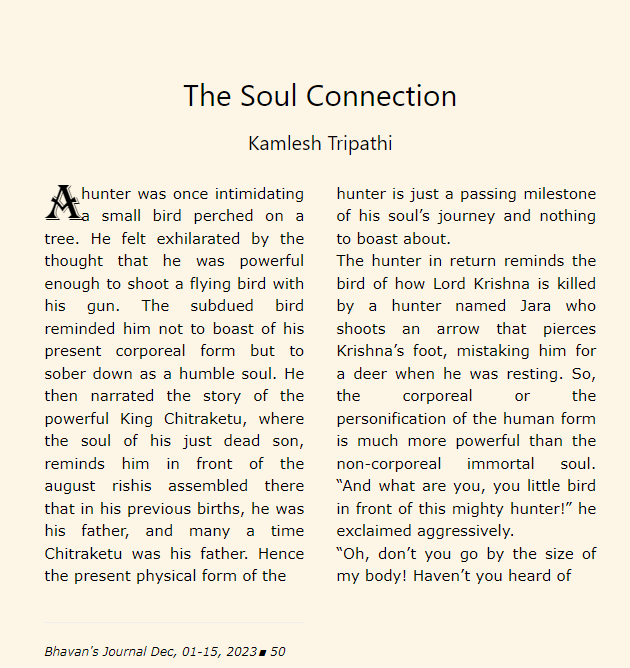


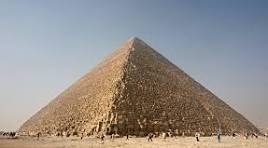


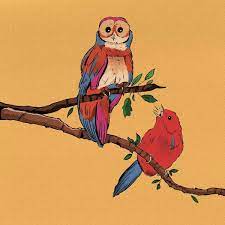

 Shravan charity mission