Tag Archives: shravan charity mission

BOOK REVIEW: ‘SHIKHANDI … And Other Tales they don’t tell you’ by Devdutt Pattanaik

Copyright@shravancharitymission

Copyright@shravancharitymission

‘SHIKHANDI … and other tales they don’t tell you,’ by Devdutt Pattanaik.

The subject title was published in the year 2014 by Zubaan in collaboration with Penguin Books. The price of the book is Rs 299. Although, I had heard about this book some time ago I had not read it. I took the book to hand only recently. It comprises of some 176 pages.

    The book deals with the discovery or Invention of Queerness. There are different types of people in the world with different types of physiology. There are races, religions, communities who define queerness in their own peculiar manner. Before planning to write this book I’m sure the author must have done a great deal of homework. He must have studied various communities, races and religions to spin out the content of this particular book. I find a growing trend in some publishers these days where they place the name of the author more prominently on the cover page, and in bigger fonts, than the title of the book which only goes to show that the publisher has more confidence on the brand of the author on account of his or her accumulated titles than the subject book’s content. But this obviously comes after the author has made a mark for himself. Is this one such case I wonder?

    The subject title was published in the year 2014 by Zubaan in collaboration with Penguin Books. The price of the book is Rs 299. Although, I had heard about this book some time ago I had not read it. I took the book to hand only recently. It comprises of some 176 pages.

    The author has made a few daring attempts in the book to put Hindu Gods and Godesses in utter starkness that makes them look frivolous which the author could have avoided. And that also gives one a feeling that the intention behind that act of God is not comprehensively understood or narrowly missed by the author well enough, even when, he has gone through Hindu texts, and some fifty-four select bibliographies that he mentions in the book. The author runs all over. From queerness to hijras, cross-dressers, Gods, mythology and the short stories therein, and then finally it appears as if the author has lost direction. Where, one starts missing the central theme of the book, but was it even there one wonders. In some pages, one wonders, if it is just a collection and free-fall of short stories which is not what the book was intended to be.  Even the emotions of characters are not elaborately emoted. The author goes on to say that India is an agricultural community and so it was common to see women as mere fields with men as the farmers who sow seeds.

    The author has captured the content of this book in thirty chapters mostly out of Hindu mythology—Mahabharat, Ramayan including South Indian and other religious texts such as Purans, Bible and Greek mythology. The author builds the content of queerness on the premise that—Patriarchy asserts men are superior to women. Feminism clarifies women and men are equal. Queerness questions what constitutes male and female.    Queerness isn’t just modern, Western or sexual, says mythologist Devdutt Pattanaik. Take a close look at the vast written and oral traditions in Hinduism, some over two thousand years old, and you will find many overlooked tales, such as those of Shikhandi, who became a man to satisfy her wife being put under a cover. Playful and touching—and sometimes even disturbing—these stories, when compared with their Mesopotamian, Greek, Chinese and Biblical counterparts, reveal the unique Indian way of making sense of queerness. Net-net the book is about the queer retelling of, Indian myths, by the author. But I also have a different take on this book.

    The book would have been more powerful had ‘Queerness’ not been the title or the central theme of the book. For it is dominated more by short stories where queerness spins out as a by-product. And the stories needed to be presented with more of a foreground and background. Author ne dil khol ke nahin likha hai yeh kitab. He has tried to stuff in a lot of content in very few pages and therefore the book doesn’t impact you.

  I would give the book six out of ten.

By Kamlesh Tripathi

*

https://kamleshsujata.wordpress.com

*

Share it if you like it

*

Shravan Charity Mission is an NGO that works for poor children suffering from life threatening diseases especially cancer. Our posts are meant for our readers that includes both children and adults and it has a huge variety in terms of content. We also accept donations for our mission. Should you wish to donate for the cause. The bank details are given below:

NAME OF ACCOUNT: SHRAVAN CHARITY MISSION

Account no: 680510110004635 (BANK OF INDIA)

IFSC code: BKID0006805

*

Our publications

GLOOM BEHIND THE SMILE

(The book is about a young cancer patient. Now archived in 7 prestigious libraries of the US, including, Harvard University and Library of Congress. It can also be accessed in MIT through Worldcat.org. Besides, it is also available for reading in Libraries and archives of Canada and Cancer Aid and Research Foundation Mumbai)  

ONE TO TANGO … RIA’S ODYSSEY

(Is a book on ‘singlehood’ about a Delhi girl now archived in Connemara Library, Chennai and Delhi Public Library, GOI, Ministry of Culture, Delhi)

AADAB LUCKNOW … FOND MEMORIES

(Is a fiction written around the great city of Nawabs—Lucknow. It describes Lucknow in great detail and also talks about its Hindu-Muslim amity. That happens to be its undying characteristic. The book was launched in Lucknow International Literary Festival of 2014)

REFRACTIONS … FROM THE PRISM OF GOD

(Co-published by Cankids–Kidscan, a pan India NGO and Shravan Charity Mission, that works for Child cancer in India. The book is endorsed by Ms Preetha Reddy, MD Apollo Hospitals Group. It was launched in Lucknow International Literary Festival 2016)

TYPICAL TALE OF AN INDIAN SALESMAN

(Is a story of an Indian salesman who is, humbly qualified. Yet he fights his ways through unceasing uncertainties to reach the top. A good read not only for salesmen. The book was launched on 10th February, 2018 in Gorakhpur Lit-Fest. Now available in Amazon, Flipkart and Onlinegatha)

RHYTHM … in poems

(Published in January 2019. The book contains 50 poems. The poems describe our day to day life. The book is available in Amazon, Flipkart and Onlinegatha)

MIRAGE

(Published in February 2020. The book is a collection of eight short stories. It is available in Amazon, Flipkart and Notion Press)

(ALL THE ABOVE TITLES ARE AVAILABLE FOR SALE IN AMAZON, FLIPKART AND OTHER ONLINE STORES OR YOU COULD EVEN WRITE TO US FOR A COPY)

*****

SHORT STORY: CORONA A VIEWPOINT

Copyright@shravancharitymission

   Once a tiger sneaked into a town during the day. The town was quiet with not a soul around. The doors of all the houses were closed and so were the shops and the market. There were no children playing outside. The tiger felt quite elated at the scenario thinking how much people were scared of him, that upon his arrival, the whole town has shut down.

    While he was observing the sombre ambience very keenly, he came across a wandering cow. He asked, ‘Hey you what’s going on here. Kya chal raha hai? Where is everyone, and why is this city under a lockdown?’

    The cow replied, ‘There is a new beast in town so everyone has gone into a hiding.’

    ‘Hiding … beast!! O yes—yes. I’m the deadliest of all the beasts, so they have all gone into a hiding because of me.’ Cheered the tiger.

    ‘No I’m sorry tiger bhai. Your days are over. Now no one is scared of you, because there is a new beast in town.’

    ‘My days are over … New beast in town? But where is this new beast? What is his name and where has he come from?’ Asked the tiger.

    ‘Well he has come all the way from China. His name is Corona and he comes from a killer family called Virus.’ Replied the cow.

    ‘And what does he look like?’ Asked the tiger.

    ‘Well … He is as big as the tip of your whisker or may be even smaller. You actually can’t see him with naked eyes. There are some posters of his that human beings have erected in the town so that one can at least imagine how he looks like. He resembles a tiny ball with thorns on it. If I understand correctly he has already killed about half a million people across the world. And tiger ji, you now, pale in front of him.’ Replied the cow.

    ‘But yaar, who produced this little deadly beast?’ Asked the tiger.

    ‘The other day Tommy my neighbourhood dog was telling me, that he had heard from someone, that this micro beast called Corona-Virus, was actually, produced by the Chinese in their own lab without the permission of God, and it has gone on to kill so many human beings already.’

    ‘But yaar cow, can something, as tragic as this, happen without the aegis of God.’ Asked the tiger.

    ‘Well if you believe in God the answer is no, as nothing can happen without God’s permission. And if you don’t believe in God the answer is yes, as things can happen without the permission of God. So where do you stand in all of this?’ Asked the cow.

    ‘Well … well.’ The tiger took his own time thinking and then he said.

    ‘I would like to be an atheist and not believe in God just as the dragon.’

    By becoming an atheist and not believing in God almighty, the tiger had actually absolved God from the responsibility of the pandemic of Corona, for he couldn’t have imagined God perpetrating such a calamity on mankind.

    Where do you stand on this pandemic? Do you think God is responsible for the pandemic, or you too, are an atheist like the tiger. I am holding God responsible for this pandemic.

Written by Kamlesh Tripathi

*

https://kamleshsujata.wordpress.com

*

Share it if you like it

*

Shravan Charity Mission is an NGO that works for poor children suffering from life threatening diseases especially cancer. Our posts are meant for our readers that includes both children and adults and it has a huge variety in terms of content. We also accept donations for our mission. Should you wish to donate for the cause. The bank details are given below:

NAME OF ACCOUNT: SHRAVAN CHARITY MISSION

Account no: 680510110004635 (BANK OF INDIA)

IFSC code: BKID0006805

*

Our publications

GLOOM BEHIND THE SMILE

(The book is about a young cancer patient. Now archived in 7 prestigious libraries of the US, including, Harvard University and Library of Congress. It can also be accessed in MIT through Worldcat.org. Besides, it is also available for reading in Libraries and archives of Canada and Cancer Aid and Research Foundation Mumbai)  

ONE TO TANGO … RIA’S ODYSSEY

(Is a book on ‘singlehood’ about a Delhi girl now archived in Connemara Library, Chennai and Delhi Public Library, GOI, Ministry of Culture, Delhi)

AADAB LUCKNOW … FOND MEMORIES

(Is a fiction written around the great city of Nawabs—Lucknow. It describes Lucknow in great detail and also talks about its Hindu-Muslim amity. That happens to be its undying characteristic. The book was launched in Lucknow International Literary Festival of 2014)

REFRACTIONS … FROM THE PRISM OF GOD

(Co-published by Cankids–Kidscan, a pan India NGO and Shravan Charity Mission, that works for Child cancer in India. The book is endorsed by Ms Preetha Reddy, MD Apollo Hospitals Group. It was launched in Lucknow International Literary Festival 2016)

TYPICAL TALE OF AN INDIAN SALESMAN

(Is a story of an Indian salesman who is, humbly qualified. Yet he fights his ways through unceasing uncertainties to reach the top. A good read not only for salesmen. The book was launched on 10th February, 2018 in Gorakhpur Lit-Fest. Now available in Amazon, Flipkart and Onlinegatha)

RHYTHM … in poems

(Published in January 2019. The book contains 50 poems. The poems describe our day to day life. The book is available in Amazon, Flipkart and Onlinegatha)

MIRAGE

(Published in February 2020. The book is a collection of eight short stories. It is available in Amazon, Flipkart and Notion Press)

(ALL THE ABOVE TITLES ARE AVAILABLE FOR SALE IN AMAZON, FLIPKART AND OTHER ONLINE STORES OR YOU COULD EVEN WRITE TO US FOR A COPY)

*****

SHORT STORY: LESSON FROM BHASMASURA

Copyright@shravancharitymission

    Once an asura with his marathon tapasya and devotion was able to please Lord Shiva and in return obtain from him the powerful ‘vardan’ to burn anyone to ashes the moment he placed his hand on his head. He therefore came to be known as Bhasmasur that is Bhasma-asura, for he could reduce anyone to ashes by his touch.

    Bhasmasur was indeed delighted by this vardan of Shiva. So he decided to try out, his newly acquired power, on Shiva himself. When Shiva learnt of this intention of Bhasmasur he fled in terror and sought the help of Lord Vishnu, who transformed himself into Mohini the apsara to distract Bhasmasur. Overwhelmed by lust, Bhasmasur begged Mohini to marry him. Mohini agreed but laid down a condition that only if Bhasmasur could dance like her. Bhasmasur agreed to her condition. During the course of the dance, Mohini touched her head. The deluded Bhasmasur, blinded by desire, copied her, and he put his hand on his head too, and was burnt to ashes, much to the delight of Shiva.

Moral of the Story: Think before you empower a person with something, whether the person will be able to handle the power or not. Use your brains if you need to copy something and often the wrong man teaches you the right lesson.

Posted by Kamlesh Tripathi

*

https://kamleshsujata.wordpress.com

*

Share it if you like it

*

Shravan Charity Mission is an NGO that works for poor children suffering from life threatening diseases especially cancer. Our posts are meant for our readers that includes both children and adults and it has a huge variety in terms of content. We also accept donations for our mission. Should you wish to donate for the cause. The bank details are given below:

NAME OF ACCOUNT: SHRAVAN CHARITY MISSION

Account no: 680510110004635 (BANK OF INDIA)

IFSC code: BKID0006805

*

Our publications

GLOOM BEHIND THE SMILE

(The book is about a young cancer patient. Now archived in 7 prestigious libraries of the US, including, Harvard University and Library of Congress. It can also be accessed in MIT through Worldcat.org. Besides, it is also available for reading in Libraries and archives of Canada and Cancer Aid and Research Foundation Mumbai)  

ONE TO TANGO … RIA’S ODYSSEY

(Is a book on ‘singlehood’ about a Delhi girl now archived in Connemara Library, Chennai and Delhi Public Library, GOI, Ministry of Culture, Delhi)

AADAB LUCKNOW … FOND MEMORIES

(Is a fiction written around the great city of Nawabs—Lucknow. It describes Lucknow in great detail and also talks about its Hindu-Muslim amity. That happens to be its undying characteristic. The book was launched in Lucknow International Literary Festival of 2014)

REFRACTIONS … FROM THE PRISM OF GOD

(Co-published by Cankids–Kidscan, a pan India NGO and Shravan Charity Mission, that works for Child cancer in India. The book is endorsed by Ms Preetha Reddy, MD Apollo Hospitals Group. It was launched in Lucknow International Literary Festival 2016)

TYPICAL TALE OF AN INDIAN SALESMAN

(Is a story of an Indian salesman who is, humbly qualified. Yet he fights his ways through unceasing uncertainties to reach the top. A good read not only for salesmen. The book was launched on 10th February, 2018 in Gorakhpur Lit-Fest. Now available in Amazon, Flipkart and Onlinegatha)

RHYTHM … in poems

(Published in January 2019. The book contains 50 poems. The poems describe our day to day life. The book is available in Amazon, Flipkart and Onlinegatha)

MIRAGE

(Published in February 2020. The book is a collection of eight short stories. It is available in Amazon, Flipkart and Notion Press)

(ALL THE ABOVE TITLES ARE AVAILABLE FOR SALE IN AMAZON, FLIPKART AND OTHER ONLINE STORES OR YOU COULD EVEN WRITE TO US FOR A COPY)

*****


BOOK REVIEW: JULIUS CAESAR … William Shakespeare

Copyright@shravancharitymission

    The Tragedy of Julius Caesar is a historic tragic play by William Shakespeare first performed in 1599. It is one of several plays written by Shakespeare based on true events from the Roman history.

    Julius Caesar, was a Roman general and statesman who played a critical role in the events that led to the demise of the Roman Republic and the rise of the Roman Empire.

    Set in Rome in 44 BC, the play depicts the moral dilemma of Brutus as he joins the conspiracy led by Cassius to murder Julius Caesar to prevent him from becoming the dictator of Rome. Following Caesar’s death, Rome is thrust into a period of civil war, and the republic, which the conspirators sought to preserve is lost forever.

    Let me first describe the main characters of the play to you:

    Gaius Julius Caesar: Known simply as Julius Caesar, was a Roman general and statesman who played a critical role in the events that led to the demise of the Roman Republic and the rise of the Roman Empire. He was also a historian and author of Latin prose.

    Marcus Junius Brutus: Often referred to as Brutus, was a Roman senator and the most famous of the assassins of Julius Caesar. After being adopted by an uncle of his, he used the name Quintus Servilius Caepio Brutus, but subsequently returned to his birth name. Brutus was close to General Julius Caesar, the leader of the Populares faction, a political group.

    Gaius Cassius Longinus: Often referred to as Cassius, was a Roman senator and a general best known as a leading instigator of the plot to assassinate Julius Caesar. He was the brother-in-law of Brutus, another leader of the conspiracy. He commanded troops with Brutus during the Battle of Philippi against the combined forces of Mark Antony and Octavian, all Caesar’s former supporters, and committed suicide after being defeated by Mark Antony.

    Marcus Antonius: Commonly known in English as Mark Antony or Anthony, was a Roman politician and general who played a critical role in the transformation of the Roman Republic from an oligarchy a power structure in which the power rests in a small set of people into the autocratic Roman Empire. Antony was a supporter of Julius Caesar, and served as one of his generals during the conquest of Gaul (war against Gallic tribes) and the Civil War. Antony was appointed administrator of Italy while Caesar eliminated political opponents in Greece, North Africa, and Spain.

    Calpurnia: Either the third or the fourth wife of Julius Caesar, and the one to whom he was married at the time of his assassination.

    Octavian: Caesar’s great-nephew and adopted son.

    Pompey: A leading general.

    Metellus Cimber: A Roman senator and also an assassin of Julius Caesar.

    Lepidus: A Roman general.

    Titinius: A noble man of Rome.

    Casca: A public figure and an assassin of Julius Caesar.

    The play opens with two tribunes (title of various elected officials in Rome) discovering the commoners of Rome celebrating Julius Caesar’s triumphant return from defeating the sons of his military rival, Pompey (a leading general). These tribunes, then insult the crowd for their change in loyalty from Pompey to Caesar. The officials then attempt to end the celebrations and break up with the commoners, who also return the insults. Later during the feast of Lupercal, (a pre-Roman pastoral annual festival) Caesar holds a victory parade when a soothsayer warns him to “Beware of the ides of March”, (the 74th day in the Roman calendar that corresponds to 15 March which means be careful as your life is in danger around that time) which Caesar ignores. Meanwhile, Cassius attempts to convince Brutus to join his conspiracy to kill Caesar. Brutus is friendly with Caesar, therefore hesitant to kill him. But he agrees that Caesar might be abusing his power so he needs to be killed. They then hear from Cacsa that Mark Antony has offered Caesar the crown of Rome three times and that each time Caesar refused it with increasing reluctance, in a hope that the crowd watching would beg him to accept the crown, yet the crowd applauded Caesar for denying the crown, upsetting Caesar, who actually wanted to accept the crown. On the eve of the ides of March, the conspirators meet and reveal that they have forged letters of support from the Roman people to tempt Brutus into joining. Brutus reads the letters and, after a lot of moral debate, decides to join the conspiracy, thinking that Caesar should be killed to prevent him from doing anything against the people of Rome if he were, ever to be crowned.

    Caesar ignores the soothsayer, as well as his wife Calpurnia’s own premonitions. Calpurnia was either the third or the fourth wife of Julius Caesar, and the one to whom he was married at the time of his assassination. According to contemporary sources, she was a good and faithful wife, in spite of her husband’s infidelity. She had forewarned Caesar of the attempt on his life, but her endeavour remained in vain and did not prevent his murder.

    Caesar goes to the Senate. The conspirators approach him with a fake petition pleading on behalf of Metellus Cimber’s banished brother. (Metellus Cimber is a Roman senator and also an assassin of Julius Caesar). As Caesar predictably rejects the petition, Casca and the others suddenly stab him. Brutus is last to do so. At this point, Caesar utters the famous line, “Et tu, Brute?” (“And you, Brutus?” … “You too, Brutus?”). The scene concludes with the quote, “Then fall, Caesar!” which means that Caesar will fall both as a man and also as the ruler of Rome.

    The conspirators make it clear, that they committed the murder for the good of Rome, not for their own purposes, and do not attempt to flee the scene. Brutus delivers an oration defending his own actions, and for that moment, the crowd is on his side. However, Mark Antony makes a subtle and eloquent speech over Caesar’s corpse, beginning with the much-quoted, “Friends, Romans, countrymen, lend me your ears!” With this, he deftly turns the public opinion against the assassins by manipulating the emotions of the common people, in contrast to the rational tone of Brutus’ speech. He reminds them of the good that Caesar had done for Rome, his sympathy for the poor, and his refusal of the crown at the Lupercal festival, thus questioning Brutus’ claim of Caesar’s ambition. He shows Caesar’s bloodied, lifeless body to the crowd to have them shed tears and thus gain sympathy for their fallen hero. He reads Caesar’s will, in which every Roman citizen would receive 75 drachmas (the Greek currency). Antony, finally manages to rouse the mob to drive the conspirators away from Rome.

    Brutus next … attacks Cassius for supposedly soiling the noble act of regicide (the deliberate killing of a monarch) by having accepted bribes. The two later reconcile, especially, after Brutus reveals that his beloved wife has committed suicide under the stress of his absence from Rome. They prepare for a civil war against Mark Antony and Caesar’s adopted son Octavius, who have formed a triumvirate (a group) in Rome with Lepidus a Roman general. That night, Caesar’s ghost appears in front of Brutus with a warning of defeat. (He informs Brutus, “Thou shalt see me at Philippi.” a Greek city).

    At the battle of Philippi, Cassius and Brutus, knowing well, that they will probably, both die, smile their last smiles, at each other and hold hands. During the battle, Cassius has his servant, kill him, after hearing of, the capture of his best friend, Titinius—a noble man of Rome, and a friend of Cassius and a conspirator in Caesar’s death. After Titinius, who was not really captured, sees Cassius’ corpse, he commits suicide. However, Brutus wins, that stage of the battle, but his victory is not conclusive. With a heavy heart, Brutus battles again the next day. He loses and commits suicide by running on his own sword, held for him by a loyal soldier.

    The play ends with a tribute to Brutus by Antony, who proclaims that Brutus has remained “the noblest Roman of them all” because he was the only conspirator who acted, in his mind, for the good of Rome and was never jealous of Caesar

    Though Brutus acted in the interest of Rome as per Antony, but in the process, he did kill his friend Caesar, after which his name Brutus became the best metaphor for stabbing at the back.

By Kamlesh Tripathi

*

https://kamleshsujata.wordpress.com

*

Share it if you like it

*

Shravan Charity Mission is an NGO that works for poor children suffering from life threatening diseases especially cancer. Our posts are meant for our readers that includes both children and adults and it has a huge variety in terms of content. We also accept donations for our mission. Should you wish to donate for the cause. The bank details are given below:

NAME OF ACCOUNT: SHRAVAN CHARITY MISSION

Account no: 680510110004635 (BANK OF INDIA)

IFSC code: BKID0006805

*

Our publications

GLOOM BEHIND THE SMILE

(The book is about a young cancer patient. Now archived in 7 prestigious libraries of the US, including, Harvard University and Library of Congress. It can also be accessed in MIT through Worldcat.org. Besides, it is also available for reading in Libraries and archives of Canada and Cancer Aid and Research Foundation Mumbai)  

ONE TO TANGO … RIA’S ODYSSEY

(Is a book on ‘singlehood’ about a Delhi girl now archived in Connemara Library, Chennai and Delhi Public Library, GOI, Ministry of Culture, Delhi)

AADAB LUCKNOW … FOND MEMORIES

(Is a fiction written around the great city of Nawabs—Lucknow. It describes Lucknow in great detail and also talks about its Hindu-Muslim amity. That happens to be its undying characteristic. The book was launched in Lucknow International Literary Festival of 2014)

REFRACTIONS … FROM THE PRISM OF GOD

(Co-published by Cankids–Kidscan, a pan India NGO and Shravan Charity Mission, that works for Child cancer in India. The book is endorsed by Ms Preetha Reddy, MD Apollo Hospitals Group. It was launched in Lucknow International Literary Festival 2016)

TYPICAL TALE OF AN INDIAN SALESMAN

(Is a story of an Indian salesman who is, humbly qualified. Yet he fights his ways through unceasing uncertainties to reach the top. A good read not only for salesmen. The book was launched on 10th February, 2018 in Gorakhpur Lit-Fest. Now available in Amazon, Flipkart and Onlinegatha)

RHYTHM … in poems

(Published in January 2019. The book contains 50 poems. The poems describe our day to day life. The book is available in Amazon, Flipkart and Onlinegatha)

MIRAGE

(Published in February 2020. The book is a collection of eight short stories. It is available in Amazon, Flipkart and Notion Press)

(ALL THE ABOVE TITLES ARE AVAILABLE FOR SALE IN AMAZON, FLIPKART AND OTHER ONLINE STORES OR YOU COULD EVEN WRITE TO US FOR A COPY)

*****


POEM: THE CORONA STORY

Copyright@shravancharitymission

POEM: THE CORONA STORY

It all started in Wuhan,

Where Corona lived … behind a deadly micron,

They say he lived in a bat,

From where he was brought to a lab,

And from where he escaped,

Causing a worldwide … outrage.

*

The world couldn’t see … the contagion coming,

Dr Li too, was silenced … when he tried to whistle,

China created a smokescreen in Wuhan,

Where seemingly,

Even … WHO was put in a trance.

*

Countries and continents thought it’ll settle,

But Corona was now at a deadly level,

Italy battled … Spain fought,

UK … Germany overcame the hot-spot,

Yet Europe,

Went into a fraught.

*

New York trembled … America fumed,

Challenge indeed … was too huge,

Where,

 Nothing seemed to work in the land of rules,

Yet US fought … with a determined sinew,

And where China remained in a beguile subterfuge.

*

Korea fretted,

Middle East fumbled,

Latin America fought … like a brute,

Russia battled.

India grappled,

Australia brawled,

New Zealand braved,

Africa endured,

While the Chinese virus,

Had a roaring field day.

*

The world kneeled,

As Covid rose,

From China’s core,

To mangle the world.

*

 The fight was now on,

As mankind was stormed,

Civilizations had suffered,

But the world had no buffer.

*

While everyone thought of,

Black Death and Spanish Flu,

It was Donald Trump,

Versus the Chinese Flu.

*

The scenario was horrific,

With suffering galore,

And a flood of dead bodies,

That made the world look sore.

*

And to save humanity,

Scientists had framed new rules,

Where mixing was banned,

And seclusion was in vogue,

*

Things had changed,

Protocols had altered,

Social distancing was in place,

Handshakes and hugs had effaced,

And where, namaste was the order of the day.

*

Touch and hugs had vanished,

Spice of life had tarnished

Tears were on,

Lockdown was prolonged,

Where migrants had an infinite marathon,

*

Citizens had lost,

In the quagmire of pandemic,

Where a cure,

 Appeared invisible.

*

But hope said,

Hold on,

As life will go on,

For it is not the end of the world.

And songs will return,

But to the tunes of upstairs,

*

For once in century,

Through a pandemic,

God reminds,

Human beings of their atrocities,

So don’t feel disheartened,

For good days shall return.

****

Written by Kamlesh Tripathi

*

https://kamleshsujata.wordpress.com

*

Share it if you like it

*

Shravan Charity Mission is an NGO that works for poor children suffering from life threatening diseases especially cancer. Our posts are meant for our readers that includes both children and adults and it has a huge variety in terms of content. We also accept donations for our mission. Should you wish to donate for the cause. The bank details are given below:

NAME OF ACCOUNT: SHRAVAN CHARITY MISSION

Account no: 680510110004635 (BANK OF INDIA)

IFSC code: BKID0006805

*

Our publications

GLOOM BEHIND THE SMILE

(The book is about a young cancer patient. Now archived in 7 prestigious libraries of the US, including, Harvard University and Library of Congress. It can also be accessed in MIT through Worldcat.org. Besides, it is also available for reading in Libraries and archives of Canada and Cancer Aid and Research Foundation Mumbai)  

ONE TO TANGO … RIA’S ODYSSEY

(Is a book on ‘singlehood’ about a Delhi girl now archived in Connemara Library, Chennai and Delhi Public Library, GOI, Ministry of Culture, Delhi)

AADAB LUCKNOW … FOND MEMORIES

(Is a fiction written around the great city of Nawabs—Lucknow. It describes Lucknow in great detail and also talks about its Hindu-Muslim amity. That happens to be its undying characteristic. The book was launched in Lucknow International Literary Festival of 2014)

REFRACTIONS … FROM THE PRISM OF GOD

(Co-published by Cankids–Kidscan, a pan India NGO and Shravan Charity Mission, that works for Child cancer in India. The book is endorsed by Ms Preetha Reddy, MD Apollo Hospitals Group. It was launched in Lucknow International Literary Festival 2016)

TYPICAL TALE OF AN INDIAN SALESMAN

(Is a story of an Indian salesman who is, humbly qualified. Yet he fights his ways through unceasing uncertainties to reach the top. A good read not only for salesmen. The book was launched on 10th February, 2018 in Gorakhpur Lit-Fest. Now available in Amazon, Flipkart and Onlinegatha)

RHYTHM … in poems

(Published in January 2019. The book contains 50 poems. The poems describe our day to day life. The book is available in Amazon, Flipkart and Onlinegatha)

MIRAGE

(Published in February 2020. The book is a collection of eight short stories. It is available in Amazon, Flipkart and Notion Press)

(ALL THE ABOVE TITLES ARE AVAILABLE FOR SALE IN AMAZON, FLIPKART AND OTHER ONLINE STORES OR YOU COULD EVEN WRITE TO US FOR A COPY)

*****


BOOK REVIEW: JINNAH – Often Came To Our House– Kiran Doshi

Copyright@shravancharitymission

Khidki (Window)

–Read India Initiative—

This is only an attempt to create interest in reading. We may not get the time to read all the books in our lifetime. But such reviews, talk and synopsis will at least convey what the book is all about

    Let me first begin by introducing the author Kiran Doshi. Kiran Doshi studied history, politics and law in Bombay before he joined the Indian Foreign Service in the year 1962, where, he had a 35-year-long career that frequently saw him tackling, India’s relations with Pakistan, always an important, exciting, but eventually a frustrating task.

    The book falls in the genre of historical fiction, published by Tranquebar Westlandbooks in 2015. It is available in both print and e-book format, and is a thick spine—some 490 pages. It is divided into 35 rhapsodic chapters and spans between the eventful years of the making of India. That is from 1904 to 1948 which includes the struggle for freedom, Partition of India and the formation of Pakistan out of India.

    Kiran has two more books in his oeuvre titled, ‘Birds of Passage’ which I believe is an engrossing and hilarious novel set in the diplomatic space of India-Pakistan-USA diplomacy, and the other book is titled, ‘Diplomatic Tales’ which is a collection of short stories in comic verse. Kiran lives in Delhi with his wife Razia.

    I’m not aware of the spark that prompted the author to write this book. But since the author has dedicated the book, to his mother-in-law Umrao Baig, (1915-1981), it does suggest, a character in the book could be resembling her. But this is only my hunch. Umrao Baig was expelled from her convent school for wearing khadi and singing Bande Mataram. She went on to study medicine at Grant Medical College and set up a hospital named after, Lokmanya Tilak in a part of Bombay, then inhabited, by mill workers.

    The book although titled Jinnah is a work of historical fiction cautions the author—all the incidents and characters in it (except those known to history) are fictitious—even if touched, here and there, by the brush of family lore.

    Coming to the brief plot. The young and dashing Sultan Kowaishi has just returned from London to Bombay after acquiring a barrister’s degree. Among the first persons he meets in Bombay is Mohammed Ali Jinnah, already a quintessential advocate, and is quickly drawn to him. It is around this time Jinnah decides to join the Indian National Congress, soon to become its brightest star in the fight for freedom. But the stir for freedom holds no interest for Sultan, but yes, it attracts his wife Rehana, and, inexorably weaves its way, into their lives. Another strong character happens to be Barri Phuphi. The main story is about Rehana opening a school, Sultan succeeding as a lawyer, them separating, and years later Sultan going in search of his children and finally his grandchild.

    The book has a large canvass of characters and events. It makes, its presence, felt in, more than one ways. It starts with the showcasing of, the lifestyle of, upper class Muslims, in Bombay, largely with, familial, connect, in Gujarat and Hyderabad around the beginning of the twentieth century.

    Kiran has focused on the core topic of freedom struggle leading to independence quite well. He brings alive the court cases along with decades of India’s struggle for freedom that is interrupted by the British in various ways, especially, when they change the laws for partition of Bengal, revocation of partition of Bengal. Tilak’s exile, Morley Minto Reforms, formation of Muslim League, the Rowlatt Act, the Montagu-Chelmsford Reforms, Simon Commission and its opposition, the two World Words, provincial elections and Constituent Assembly and the Khilafat movement—linked to the Ottoman Empire and of course the partition of India.

    The book revolves around Rehana, Sultan and Jinnah mostly in Bombay, London, Delhi, Lucknow, Hyderabad, Ahmedabad, Afghanistan and Pakistan. It has many other characters such as Dhondav—Rehana’s thread brother and the tall politicians of those times. But Rehana happens to be the longest and the toughest string that connects the book from the beginning to the end.

    The book eventually serves India with independence but not before breaking and destroying the complete family of Sultan Kowaishi who on a mere doubt of infidelity, disowns his wife and children without realising how devious, can an Englishman of, the British Raj, could be. Shak destroys Sultan completely.  Jiska ilaj hakeem Luqman ke pas bhi nahi tha.

    The story thereon moves like a tragedy and finally ends like a family tragedy. The hatred between Hindus and Muslims has been captured quite comprehensively. The book picks up somewhere between page 23 and page 45. There are too many a characters in the story and it takes a while before one can actually imbibe and familiarise oneself with the characters.

    There are certain pages in the book that I quite liked, such as, description of a voyage from Bombay to London which is now a rarity. The relation between Jinnah and Rehana is well written. The presentation of Gokhale, Tilak and Gandhi from time to time and some other leaders is interesting. The conversation about Rasool and Koran is quite informative. Overall, it’s a very happening book. But towards the last hundred pages it becomes quite depressing. Perhaps, had the author squeezed the book around 400 pages the action points of the novel could have been more intense.

The author pays homage to Shakespeare by using his quotes quite generously and aptly. His lines make for an engaging conversation-long repartee between Rehana and Jinnah.

The tone of the writer is quite flowing and inviting with the prowess to alter the reader’s emotion without provoking him. The author has used easy English with a mix of Urdu, Hindi and the colloquials.  

    The novel has a host of characters, some are well-known in history such as Gandhi, Tilak, Nehru, Subhash Chandra Bose and many are fictional characters such as, Dhondav, Griffiths, Pandey, Tehmina, Firoz, Hina and others whose lives change with the turn of pages. The rigour of writing is evident in how the writer ties up every thread and no character is left hanging. A resounding line that Kiran picks is attributed to Sir Syed Ahmed Khan, “Hindus and Muslims are the two eyes of India, they can never be separated. But sadly, the novel ends with the independence and partition of India,

    Through Jinnah and the Congress, the author shows how random laws define the fate of societies, through Dhondav he shows how bans on the freedom of press or media influence public opinion, through the main character Rehana and her travails at school, he shows how language and text books can become a conflict point.

For older readers, this novel would be a delight, but for the younger generation, twice removed from Independence and partition, the novel would serve as a space to reflect over the ironies of our times. For the sweeping story Jinnah… I would give the book four stars. A must read.

By Kamlesh Tripathi

*

https://kamleshsujata.wordpress.com

*

Share it if you like it

*

Shravan Charity Mission is an NGO that works for poor children suffering from life threatening diseases especially cancer. Our posts are meant for our readers that includes both children and adults and it has a huge variety in terms of content. We also accept donations for our mission. Should you wish to donate for the cause. The bank details are given below:

NAME OF ACCOUNT: SHRAVAN CHARITY MISSION

Account no: 680510110004635 (BANK OF INDIA)

IFSC code: BKID0006805

*

Our publications

GLOOM BEHIND THE SMILE

(The book is about a young cancer patient. Now archived in 7 prestigious libraries of the US, including, Harvard University and Library of Congress. It can also be accessed in MIT through Worldcat.org. Besides, it is also available for reading in Libraries and archives of Canada and Cancer Aid and Research Foundation Mumbai)  

ONE TO TANGO … RIA’S ODYSSEY

(Is a book on ‘singlehood’ about a Delhi girl now archived in Connemara Library, Chennai and Delhi Public Library, GOI, Ministry of Culture, Delhi)

AADAB LUCKNOW … FOND MEMORIES

(Is a fiction written around the great city of Nawabs—Lucknow. It describes Lucknow in great detail and also talks about its Hindu-Muslim amity. That happens to be its undying characteristic. The book was launched in Lucknow International Literary Festival of 2014)

REFRACTIONS … FROM THE PRISM OF GOD

(Co-published by Cankids–Kidscan, a pan India NGO and Shravan Charity Mission, that works for Child cancer in India. The book is endorsed by Ms Preetha Reddy, MD Apollo Hospitals Group. It was launched in Lucknow International Literary Festival 2016)

TYPICAL TALE OF AN INDIAN SALESMAN

(Is a story of an Indian salesman who is, humbly qualified. Yet he fights his ways through unceasing uncertainties to reach the top. A good read not only for salesmen. The book was launched on 10th February, 2018 in Gorakhpur Lit-Fest. Now available in Amazon, Flipkart and Onlinegatha)

RHYTHM … in poems

(Published in January 2019. The book contains 50 poems. The poems describe our day to day life. The book is available in Amazon, Flipkart and Onlinegatha)

MIRAGE

(Published in February 2020. The book is a collection of eight short stories. It is available in Amazon, Flipkart and Notion Press)

(ALL THE ABOVE TITLES ARE AVAILABLE FOR SALE IN AMAZON, FLIPKART AND OTHER ONLINE STORES OR YOU COULD EVEN WRITE TO US FOR A COPY)

*****


SHORT STORY: ARROGANT KING

Copyright@shravancharitymission

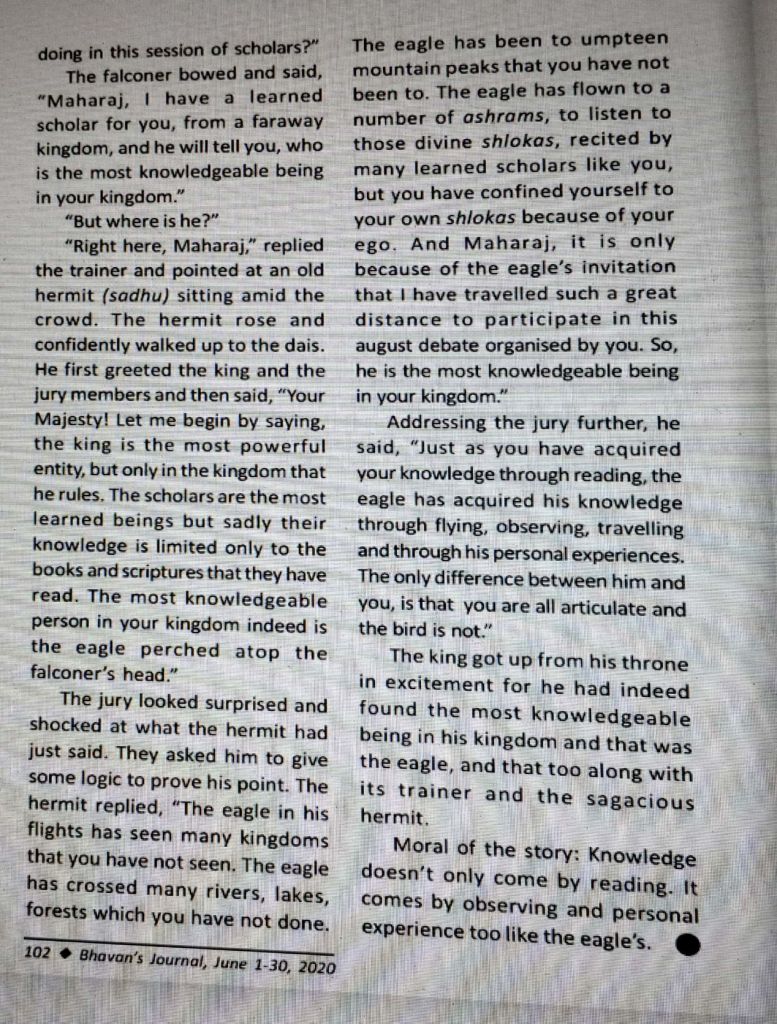
    Many years ago there lived a deceitful king who always blamed God for anything wrong that happened in his kingdom by saying, “It’s all God’s doing.” But at the same time, for anything good that happened in his kingdom he always said, “It’s the king’s doing.”

    When there were floods in his kingdom he blamed God. When there was an epidemic he blamed God. When there was a war he blamed God. When there was a drought then too he blamed God. In utter disgust he often used to blurt, ‘it’s all God’s doing,’ and slowly that became his catchphrase. In a vast kingdom such as his, something was always going wrong and that gave him umpteen opportunities to curse God.

    Fed up, one day, God approached the king and said,

    ‘Rajan … While ruling over such a vast kingdom, many things will go wrong and many things will go right and it is but the king’s duty, to take the sum total of it, in his stride. But what I find here is something very strange. For all the things that go wrong in your kingdom, you pass it off as God’s doing, and for all the things that go right, you pat your shoulder, to pass it off as the king’s achievement. Now is that fair?”

    The king replied, ‘Prabhu … Of course it is fair.’

    ‘Then explain how.’ God reasoned.

    ‘Prabhu … blaming you is like blaming destiny which is ultimately God’s will. Now, who can question destiny that happens to be God in disguise. And yes, I definitely pat myself for things that go right in my kingdom because it only increases my halo, aura and my command over my subjects.’

    ‘God smiled at the king and said.’

    ‘Rajan … I suggest for some time now, reverse the trend and witness the change.’

    ‘Prabhu … I didn’t get you.’

    ‘Rajan, it’s very simple. For all the things going wrong in your kingdom take the blame upon yourself. Say, it’s the king’s doing and, for all the things going right in your kingdom say, it’s the God’s doing. And, I’ll meet you after a year when we’ll see how the change has affected you and your kingdom.’

    King folded his hands, closed his eyes and said, ‘As you wish Prabhu. After which God left for his heavenly abode.

    Soon, the king instructed his ministers, to badge him for everything, that was going wrong in his kingdom and praise God Almighty for whatever was going right in the kingdom. The ministers were surprised at this gesture of the king, but then they remained silent since they were subordinates.

    Gradually, the work pressure on the king, started increasing, when ‘destiny’ started turning into, shabby governance. The king was now feeling more responsible as he didn’t want his name to get spoilt—earlier it didn’t matter, as it was God’s name that was getting spoilt.  So, he immediately took some proactive measures and started participating much more effectively in the day-to-day running of the kingdom. He built suitable embankments before the floods arrived. He got wells dug up before the crop was sown, for irrigation. He built night shelters for the poor before arrival of winters. And when, the kingdom was attacked by enemies he led by example and fought the battle himself from the frontline. He was able to unearth the frauds that were being committed under the banner of destiny by his ministers. The king was now a changed personality.

    When the rising waters of the river could not enter the kingdom because of the embankment the king praised the God. Upon the bumper harvest because of the new wells that were dug up before the sowing, he praised God. On the day of inauguration of night shelter he again praised God. And thereafter whenever there was something good happening in the kingdom he only praised God Almighty and said it was all because of his grace.

    In a year’s time the reputation of the king took an about-turn. The citizens of his kingdom were now convinced that they couldn’t have had a better king than him. For he took direct responsibility in terms of tackling every challenge that erupted in his kingdom. And at the same time for any success he showed humility and praised God Almighty. This gave an impression to people that the king has become very humble. And with that his overall aura went up.

    After exactly a year God came to meet the king. The king was very busy sorting out urgent issues of his kingdom. He requested God to give him some moments so that he could close certain pressing matters and then sit with him with a free mind. God agreed to wait. But in the rush of work the king forgot that God was waiting for him. The king did return to his castle but only after finishing his work which was after a couple of days and found God still waiting for him. The king fell on God’s feet for the delay in attending to him and pleaded forgiveness, profusely.

    God helped the king to stand on his feet and then said.

    ‘Rajan I’m happy to see the change in you, and for worthy King’s like you God doesn’t mind waiting.’

    Moral of the story: Work is worship.

Written by Kamlesh Tripathi

*

https://kamleshsujata.wordpress.com

*

Share it if you like it

*

Shravan Charity Mission is an NGO that works for poor children suffering from life threatening diseases especially cancer. Our posts are meant for our readers that includes both children and adults and it has a huge variety in terms of content. We also accept donations for our mission. Should you wish to donate for the cause. The bank details are given below:

NAME OF ACCOUNT: SHRAVAN CHARITY MISSION

Account no: 680510110004635 (BANK OF INDIA)

IFSC code: BKID0006805

*

Our publications

GLOOM BEHIND THE SMILE

(The book is about a young cancer patient. Now archived in 7 prestigious libraries of the US, including, Harvard University and Library of Congress. It can also be accessed in MIT through Worldcat.org. Besides, it is also available for reading in Libraries and archives of Canada and Cancer Aid and Research Foundation Mumbai)  

ONE TO TANGO … RIA’S ODYSSEY

(Is a book on ‘singlehood’ about a Delhi girl now archived in Connemara Library, Chennai and Delhi Public Library, GOI, Ministry of Culture, Delhi)

AADAB LUCKNOW … FOND MEMORIES

(Is a fiction written around the great city of Nawabs—Lucknow. It describes Lucknow in great detail and also talks about its Hindu-Muslim amity. That happens to be its undying characteristic. The book was launched in Lucknow International Literary Festival of 2014)

REFRACTIONS … FROM THE PRISM OF GOD

(Co-published by Cankids–Kidscan, a pan India NGO and Shravan Charity Mission, that works for Child cancer in India. The book is endorsed by Ms Preetha Reddy, MD Apollo Hospitals Group. It was launched in Lucknow International Literary Festival 2016)

TYPICAL TALE OF AN INDIAN SALESMAN

(Is a story of an Indian salesman who is, humbly qualified. Yet he fights his ways through unceasing uncertainties to reach the top. A good read not only for salesmen. The book was launched on 10th February, 2018 in Gorakhpur Lit-Fest. Now available in Amazon, Flipkart and Onlinegatha)

RHYTHM … in poems

(Published in January 2019. The book contains 50 poems. The poems describe our day to day life. The book is available in Amazon, Flipkart and Onlinegatha)

MIRAGE

(Published in February 2020. The book is a collection of eight short stories. It is available in Amazon, Flipkart and Notion Press)

(ALL THE ABOVE TITLES ARE AVAILABLE FOR SALE IN AMAZON, FLIPKART AND OTHER ONLINE STORES OR YOU COULD EVEN WRITE TO US FOR A COPY)

*****


Facts & Figures: KHYMER ROUGE, The Story of Marxist Dictator Pol Pot, Cambodia

Copyright@shravancharitymission

(Pol Pot)

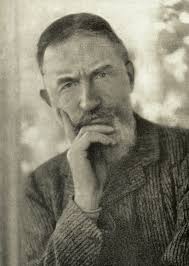
    The Khmer Rouge was a brutal regime that ruled Cambodia, under the horrendous leadership of Marxist dictator Pol Pot, from 1975 to 1979. Pol Pot’s attempts to create a Cambodian “master race” through social engineering ultimately led to the deaths of more than 2 million people in this Southeast Asian nation. Those killed were either executed as enemies of the regime, or they died from starvation, disease or overwork. Historically, this period—is depicted in a film titled, ‘The Killing Fields.’ Referred as Cambodian Genocide.  Cambodia as we all know is surrounded by Thailand, Laos, Vietnam and the Gulf of Thailand.

    Although, Pol Pot and the Khmer Rouge didn’t come to power until the mid-1970s, the roots of their takeover can be traced back to the 1960s, when a communist insurgency first became active in Cambodia, which was then ruled by a monarch.

    Throughout the 1960s, the Khmer Rouge, operated as, the armed wing of the Communist Party of Kampuchea, the name the party used for Cambodia. Operating primarily out of remote jungles and mountain areas in the northeast of the country, near its border with Vietnam, which at that time was involved in its own civil war. Khmer Rouge did not have popular support across Cambodia, particularly in the cities, including its capital Phnom Penh.

    After a 1970 military coup that led to the ouster of Cambodia’s ruling monarch, Prince Norodom Sihanouk, the Khmer Rouge decided to join forces with the deposed leader and form a political coalition. This was because the monarch had been popular among city-dwelling Cambodians, and through this coalition the Khmer Rouge began to garner more and more support of the city-dwelling Cambodians.

    For the next five years, a civil war unleashed between the right-leaning military that had led the coup, and those supporting the alliance of Prince Norodom and the Khmer Rouge in Cambodia. Eventually, the Khmer Rouge side, seized the advantage of the conflict, after gaining control of, increasing amounts of territory in the Cambodian countryside.

    In 1975, Khmer Rouge fighters invaded Phnom Penh and took over the city. And with the capital in its grasp, the Khmer Rouge had won the civil war and, thus, started ruling over the country.

    But notably, the Khmer Rouge opted, not to restore power to Prince Norodom, and instead, handed it over to Pol Pot, leader of the Khmer Rouge. And Prince Norodom was forced to live in exile.

    As a leader of the Khmer Rouge during the days of insurgent movement, Pol Pot had come to admire the tribes in Cambodia’s rural northeast. These tribes were self-sufficient and lived on the goods that they produced through subsistence farming.

   The tribes, he felt, were like communes that worked together, shared the spoils of their labour, and were untainted by the evils of money, wealth and religion, the latter being the Buddhism, quite common in urban Cambodia.

    Once installed as the country’s leader by the Khmer Rouge, Pol Pot and the forces loyal to him quickly set about, remaking Cambodia, which they had renamed Kampuchea, in the model of these rural tribes, with the hopes of creating a communist-style, agricultural utopia.

    They declared 1975 as the “Year Zero” in the country. Pol Pot isolated Kampuchea from the global community. He resettled hundreds of thousands of the country’s city-dwellers into rural farming communes and abolished the country’s currency. He also outlawed the ownership of private property and the practice of religion in the new nation.

    Workers on the collective farms established by Pol Pot soon began suffering from the effects of overwork and lack of food. Hundreds of thousands died from disease, starvation and even damage to their bodies sustained during back-breaking work or abuse from the ruthless Khmer Rouge guards overseeing the camps.

    Pol Pot’s regime also executed thousands of people that it deemed as enemies of the state. Those seen as intellectuals, or potential leaders of a revolutionary movement, were also executed. Legend has it that, some were executed for merely appearing to be intellectuals, because they wore glasses and were able to speak a foreign language.

    As part of this effort, hundreds of thousands of the educated, middle-class Cambodians were tortured and executed in special centres established in the cities. Most infamous of which was Tuol Sleng jail in Phnom Penh, where nearly 17,000 men, women and children were imprisoned during the regime’s four years in power. In what became to be known as the Cambodian Genocide, an estimated 1.7 to 2.2 million Cambodians died during Pol Pot’s regime.

    Finally, the Vietnamese Army invaded Cambodia in 1979 and dislodged Pol Pot and the Khmer Rouge from power, after a series of violent battles on the border between the two countries. Pol Pot had sought to extend his influence into the newly unified Vietnam, but his forces were suitably rebuffed.

    After the invasion, Pol Pot and his Khmer Rouge fighters quickly retreated to remote areas of the country. Where, they remained active as an insurgent group, albeit with declining influence. Vietnam retained control of the country, with a military presence, for much of the 1980s, even over the objections of the United States.

    After the fall of the Khmer Rouge that happened decades back. Cambodia has gradually re-established ties with the world community, although the country still faces problems, including widespread poverty and illiteracy. Prince Norodom returned to govern Cambodia in 1993, but he now rules under a constitutional monarchy.

    Pol Pot himself lived in the rural northeast of the country until 1997, when he was tried by the Khmer Rouge for his crimes against the state. The trial of course was an eyewash, and the former dictator died while under house arrest in his jungle home. Since he had died in his jungle house his body parts were sent for a DNA test.

    The stories of the suffering of the Cambodian people at the hands of Pol Pot and the Khmer Rouge have garnered worldwide attention in the years since their rise and fall, including through a fictional account of the atrocities in the popular 1984 movie The Killing Fields.

    Corona Virus reminds me of the filthy communist dictator Pol Pot.

    Stay home. Stay safe.

***

By Kamlesh Tripathi

*

https://kamleshsujata.wordpress.com

*

Share it if you like it

*

Shravan Charity Mission is an NGO that works for poor children suffering from life threatening diseases especially cancer. Our posts are meant for our readers that includes both children and adults and it has a huge variety in terms of content. We also accept donations for our mission. Should you wish to donate for the cause. The bank details are given below:

NAME OF ACCOUNT: SHRAVAN CHARITY MISSION

Account no: 680510110004635 (BANK OF INDIA)

IFSC code: BKID0006805

*

Our publications

GLOOM BEHIND THE SMILE

(The book is about a young cancer patient. Now archived in 7 prestigious libraries of the US, including, Harvard University and Library of Congress. It can also be accessed in MIT through Worldcat.org. Besides, it is also available for reading in Libraries and archives of Canada and Cancer Aid and Research Foundation Mumbai)  

ONE TO TANGO … RIA’S ODYSSEY

(Is a book on ‘singlehood’ about a Delhi girl now archived in Connemara Library, Chennai and Delhi Public Library, GOI, Ministry of Culture, Delhi)

AADAB LUCKNOW … FOND MEMORIES

(Is a fiction written around the great city of Nawabs—Lucknow. It describes Lucknow in great detail and also talks about its Hindu-Muslim amity. That happens to be its undying characteristic. The book was launched in Lucknow International Literary Festival of 2014)

REFRACTIONS … FROM THE PRISM OF GOD

(Co-published by Cankids–Kidscan, a pan India NGO and Shravan Charity Mission, that works for Child cancer in India. The book is endorsed by Ms Preetha Reddy, MD Apollo Hospitals Group. It was launched in Lucknow International Literary Festival 2016)

TYPICAL TALE OF AN INDIAN SALESMAN

(Is a story of an Indian salesman who is, humbly qualified. Yet he fights his ways through unceasing uncertainties to reach the top. A good read not only for salesmen. The book was launched on 10th February, 2018 in Gorakhpur Lit-Fest. Now available in Amazon, Flipkart and Onlinegatha)

RHYTHM … in poems

(Published in January 2019. The book contains 50 poems. The poems describe our day to day life. The book is available in Amazon, Flipkart and Onlinegatha)

MIRAGE

(Published in February 2020. The book is a collection of eight short stories. It is available in Amazon, Flipkart and Notion Press)

(ALL THE ABOVE TITLES ARE AVAILABLE FOR SALE IN AMAZON, FLIPKART AND OTHER ONLINE STORES OR YOU COULD EVEN WRITE TO US FOR A COPY)

*****


SHORT STORY: BIG JOB WRONG MESSAGE

Copyright@shravancharitymission

    There was once a king who had this strange habit of meeting all the wrong kind of people in his kingdom. He met prisoners charged with murder, theft, so on and so forth. He had directed his prison chief to send him five prisoners every night for a one-on-one. He used to meet them alone but no one knew why.

    He had also left instructions that post his meeting no one should cross check with the prisoner about the conversation the king had had with him. And, if ever, it came to his notice that someone in the prison has tried to coax the prisoner to reveal the conversation the prisoner had had with the king that person’s head would be guillotined … he would be beheaded.

    The learned class in the kingdom could not comprehend this uncommon trait of the king. Failing which, they became extremely weary of this habit of his.

    Unable to hold the suspense one day the queen asked the king.

    ‘I understand from the wives of the courtiers that the courtiers are extremely unhappy and suspicious of your habit of meeting prisoners every night. What is it that you want to know from them?’

    The king said, ‘I get a lot of ground level wisdom from them.’

    ‘Maharaj … wisdom and ground level don’t go hand in hand. Moreover, you have your guru, teachers, scriptures and your courtiers for the wisdom required to govern the kingdom. Why don’t you keep consulting them on a regular basis instead of meeting these prisoners?’

    ‘Maharani, I keep doing that from time to time. But for governing a kingdom that alone is not sufficient.’

    ‘But why Maharaj? Who could be more intelligent than you and your courtiers? They are the cream and elixir of your kingdom.’ The king remained quiet.

    One day when the king was passing through his office he saw without being noticed that his courtiers were having a serious discussion. The topic, of course was, the king’s meetings with the prisoners. But the king chose not to disturb them. Rather, he remained unfazed and continued with his normal duties.

    One day the chief-Priest approached the king. It appeared he wanted to say something. The king got up from his chair with folded hands and said, ‘pranam acharya.’

    ‘Aayushman vatsya.’ replied the chief priest. But he did not stop there and continued.

    ‘Maharaj! You are such a wise and vivacious personality. In addition, you have, intelligent and renowned courtiers too, and that includes me, yet you keep meeting these immoral prisoners. What wisdom do you derive out of them? Our scriptures alone are so very rich that you could efficiently rule your kingdom with the help of them.’

    The king looked at the Chief-Priest and politely said,

    ‘Be that as it may. There is no denying the fact that I have the best of courtiers, and I too, am intelligent enough, to rule the kingdom in the most quintessential manner. But then there are certain limitations.’

    ‘What limitations Maharaj?’

    ‘Limitation of … grassroots wisdom.’

    ‘Can you please explain Maharaj?’ said the Chief-Priest.

    Hey Acharya, ‘Crime is a symptom and not the disease. I meet different kinds of criminals only to find out where I’m faltering in ruling my kingdom. For example when I meet a thief, he gives me, grassroots reality, of why he stole, which my official, may not give me. The information that I get from the prisoner, gives me a sense of, what is in short supply, and where and when. Theft, also conveys to me, that the wealth of the country is disproportionately distributed and that indeed is the reason why some are stealing and some are amassing. A murderer tells me why he murdered a person. He narrates the softer issues, whether it was for money, love or revenge and that conveys to me the unease in the society.

    After the crop is harvested, the incidents of food thefts come down because, food is abundantly available, but after a few months it starts all over again when the stocks start depleting. When the crop is sown, theft of water goes up because more water is required to irrigate the crops. This teaches me the equation of demand-supply. So, by meeting prisoners I get these titbits. That gives me the ground sense of the happenings in my kingdom.’

    The Chief Priest after a while, thought, it was pointless attempting to convince the king so he left for the day. Nonetheless, the king continued meeting prisoners every day as his routine. While the courtiers did not appreciate the king’s gesture of meeting prisoners, the citizenry of his kingdom on the contrary admired and appreciated the gesture.

    Time flew. One day the king was interfaced with a young thief. The king asked why he committed the theft.

    The young thief replied, ‘Maharaj I committed the theft only to meet you. I had heard, every night you meet five criminals … five criminals, so I took a chance and here I am in front of you. Please bless me.’

    The king froze as if he was struck by a thunderbolt.

    Moral of the story: Although, the king was doing a great job, he was passing the wrong message. The young thief took the easiest route to meet the king by becoming a criminal.

    The story goes out as a caution for our rulers and the media.


Written by Kamlesh Tripathi

*

https://kamleshsujata.wordpress.com

*

Share it if you like it

*

Shravan Charity Mission is an NGO that works for poor children suffering from life threatening diseases especially cancer. Our posts are meant for our readers that includes both children and adults and it has a huge variety in terms of content. We also accept donations for our mission. Should you wish to donate for the cause. The bank details are given below:

NAME OF ACCOUNT: SHRAVAN CHARITY MISSION

Account no: 680510110004635 (BANK OF INDIA)

IFSC code: BKID0006805

*

Our publications

GLOOM BEHIND THE SMILE

(The book is about a young cancer patient. Now archived in 7 prestigious libraries of the US, including, Harvard University and Library of Congress. It can also be accessed in MIT through Worldcat.org. Besides, it is also available for reading in Libraries and archives of Canada and Cancer Aid and Research Foundation Mumbai)  

ONE TO TANGO … RIA’S ODYSSEY

(Is a book on ‘singlehood’ about a Delhi girl now archived in Connemara Library, Chennai and Delhi Public Library, GOI, Ministry of Culture, Delhi)

AADAB LUCKNOW … FOND MEMORIES

(Is a fiction written around the great city of Nawabs—Lucknow. It describes Lucknow in great detail and also talks about its Hindu-Muslim amity. That happens to be its undying characteristic. The book was launched in Lucknow International Literary Festival of 2014)

REFRACTIONS … FROM THE PRISM OF GOD

(Co-published by Cankids–Kidscan, a pan India NGO and Shravan Charity Mission, that works for Child cancer in India. The book is endorsed by Ms Preetha Reddy, MD Apollo Hospitals Group. It was launched in Lucknow International Literary Festival 2016)

TYPICAL TALE OF AN INDIAN SALESMAN

(Is a story of an Indian salesman who is, humbly qualified. Yet he fights his ways through unceasing uncertainties to reach the top. A good read not only for salesmen. The book was launched on 10th February, 2018 in Gorakhpur Lit-Fest. Now available in Amazon, Flipkart and Onlinegatha)

RHYTHM … in poems

(Published in January 2019. The book contains 50 poems. The poems describe our day to day life. The book is available in Amazon, Flipkart and Onlinegatha)

MIRAGE

(Published in February 2020. The book is a collection of eight short stories. It is available in Amazon, Flipkart and Notion Press)

(ALL THE ABOVE TITLES ARE AVAILABLE FOR SALE IN AMAZON, FLIPKART AND OTHER ONLINE STORES OR YOU COULD EVEN WRITE TO US FOR A COPY)

*****


SHORT STORY: The Wise Blind Man

Copyright@shravancharitymission

    There was once an old blind man who was walking past his farm located near a jungle in the night. He was carrying a lantern … so that he could see his way through.

    On the way he met a fellow villager who recognised the blind man. The villager asked.

    ‘Bhaiya if you can’t see where is the need to carry a lantern?’

    The old blind man halted where he was and said.

    ‘So that fools don’t stumble against me and thieves should know that I can see.’

    The fellow villager was stunned at the blind man’s clever logic.

Moral of the story: You don’t always get hit by your own mistake always. You could be hit by other’s foolishness too. And don’t always put your shortcomings in front of the public.

By Kamlesh Tripathi

*

https://kamleshsujata.wordpress.com

*

Share it if you like it

*

Shravan Charity Mission is an NGO that works for poor children suffering from life threatening diseases especially cancer. Our posts are meant for our readers that includes both children and adults and it has a huge variety in terms of content. We also accept donations for our mission. Should you wish to donate for the cause. The bank details are given below:

NAME OF ACCOUNT: SHRAVAN CHARITY MISSION

Account no: 680510110004635 (BANK OF INDIA)

IFSC code: BKID0006805

*

Our publications

GLOOM BEHIND THE SMILE

(The book is about a young cancer patient. Now archived in 7 prestigious libraries of the US, including, Harvard University and Library of Congress. It can also be accessed in MIT through Worldcat.org. Besides, it is also available for reading in Libraries and archives of Canada and Cancer Aid and Research Foundation Mumbai)  

ONE TO TANGO … RIA’S ODYSSEY

(Is a book on ‘singlehood’ about a Delhi girl now archived in Connemara Library, Chennai and Delhi Public Library, GOI, Ministry of Culture, Delhi)

AADAB LUCKNOW … FOND MEMORIES

(Is a fiction written around the great city of Nawabs—Lucknow. It describes Lucknow in great detail and also talks about its Hindu-Muslim amity. That happens to be its undying characteristic. The book was launched in Lucknow International Literary Festival of 2014)

REFRACTIONS … FROM THE PRISM OF GOD

(Co-published by Cankids–Kidscan, a pan India NGO and Shravan Charity Mission, that works for Child cancer in India. The book is endorsed by Ms Preetha Reddy, MD Apollo Hospitals Group. It was launched in Lucknow International Literary Festival 2016)

TYPICAL TALE OF AN INDIAN SALESMAN

(Is a story of an Indian salesman who is, humbly qualified. Yet he fights his ways through unceasing uncertainties to reach the top. A good read not only for salesmen. The book was launched on 10th February, 2018 in Gorakhpur Lit-Fest. Now available in Amazon, Flipkart and Onlinegatha)

RHYTHM … in poems

(Published in January 2019. The book contains 50 poems. The poems describe our day to day life. The book is available in Amazon, Flipkart and Onlinegatha)

(ALL THE ABOVE TITLES ARE AVAILABLE FOR SALE IN AMAZON, FLIPKART AND OTHER ONLINE STORES OR YOU COULD EVEN WRITE TO US FOR A COPY)

*****