Copyright@shravancharitymission
Khidki (Window)
–Read India Initiative—
This is only an attempt to create interest in reading. We may not get the time to read all the books in our lifetime. But such reviews, talk and synopsis will at least convey what the book is all about.
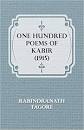
This book was published in India by Macmillan. An imprint of Pan Macmillan Publishing India Private Ltd in the year 1915. The price of this book is Rs 125. It is a slim book of around 160 pages in all.
Kabir says, “I have attained the unattainable, and my heart is coloured with the colour of love.”
Who doesn’t know Kabir? A selection of his songs is here for the first time offered to English readers. Kabir is one of the most interesting personalities in the history of Indian mysticism.
But before that let me give you a brief on poet Kabir. Born in or near Benares, of Mohammedan parents, probably about the year 1440, he became in early life, a disciple of the celebrated Hindu ascetic Ramananda. Ramananda had brought to Northern India the religious revival which Ramanuja, the great twelfth-century reformer of Brahmanism, had initiated in the South.
Ramananda, was the person through whom the spirit of Ramanuja is said to have reached Kabir. Kabir was a man of wide religious culture and tolerance, and full of missionary enthusiasm. He passed through the earth in times when impassioned poetry and deep philosophy of the great Persian mystics such as, Attar, Sadi, Jalalu’din Rumi, and Hafiz ruled the roost. They exercised a powerful influence on the religious paradigm of India. Kabir always dreamt of reconciling his intense and personal Mohammedan mysticism with the traditional theology of Brahminism.
Kabir’s story is surrounded by contradictory legends, but none of which can be relied upon hundred percent. Some of these emanate from Hindu sources, and some from Mohammedan. They both claimed him by turns, as a Sufi and a Brahman ascetic. His name, in umpteen ways, is practically a conclusive proof of, he being a liberal Muslim. In today’s reference one can even relate him as the biggest emissary of Hindu-Muslim Amity.
In the collection of songs translated here in this book one will find examples that illustrate nearly every aspect of Kabir’s thought panorama, and all his fluctuations of the mystic emotions. It runs through: the ecstasy of despair, the still beatitude, the eager self-devotion, the flashes of wide illumination and the moments of intimate love.
The book starts with a long introduction of Kabir by Evelyn Underhill. The boy Kabir, in whom the religious passion was innate, saw in Ramananda his destined teacher. But he wasn’t sure if a Hindu guru would accept a Mohammedan as a disciple. He therefore lay hidden on the steps of the river Ganga, where Ramananda was accustomed to bathe, with the result that the master, while walking down to the water, stepped on his body unknowingly and exclaimed in his astonishment, “Ram! Ram!” –the very name of the deity that he worshipped. Kabir declared that he had received the mantra of initiation from Ramananda’s lips, and by virtue of which he was admitted to his discipleship. And, in spite of the protests of orthodox Brahmans and Mohammendans, both equally annoyed by this contempt of theological landmarks he persisted with his claim.
Ramananda appears to have accepted him. Though Mohammedan legends speak of the famous Sufi Pir, Takki of Jhansi, as Kabir’s master in later life, but the Hindu saint is the only human teacher to whom, in his songs, he acknowledges the indebtedness.
The comprehensive introduction written by Evelyn Underhill, includes Kabir, in the elite group of some supreme mystics—among whom are, St. Augustine, Ruysbroeck and the Sufi poet Jalau’ddin Rumi, who are perhaps the chief—and have achieved what we may call the syncretic vision of God.
After the 26 page introduction that describes the credentials of Kabir by Evelyn Underhill the book captures some top of the chart dohas—verses-quatrains (poems) of Kabir. I would take you through a few of them. These verses in the book are written in Roman Hindi words and then translated into English. Let me recite a few dohas to you and then translate them to English:
Mo ko kahan dhunro bande,
Main toh tere paas mein,
Naa main deval naa main masjid,
Naa kaabe kailaas mein,
Naa main koune kriya karam mein,
Nahi yog vairaag mein,
Khoji ho to turate mila-ihe pal bhar ki talaas mein,
Kahyeen kabir suno bhai saadho sab swason ki swans mein.
This translates into a beautiful life-lesson:
O servant where dost thou seek Me? I am neither in a temple nor in a mosque: I am neither in Kaaba nor in Kailash: Neither am I in any rites nor in ceremonies, nor in Yoga nor renunciation. If thou art a true seeker, thou shalt at once see Me: thou shalt meet me in a moment of time. Kabir says, “O Sadhu! God is the breath of all breath.”
And another one:
Na jaane sahib kaisa hai.
Na jaane teraa sahib kaisaa hai,
Mulla hokar bang jo dyeve,
Kya tera sahab bahraa hai,
Keedee ke pag nahi baaje, toh-bhee sahab suntaa hai,
Maalaa pheree tilak lagaayaa, lambee jataa badhaataa hai,
Antar tere Kuphar—kataaree, yon nahin sahab milta hai.
This translates into …
I DO NOT know what kind of God you have: The Mullah cries aloud to Him, but why? Is your Lord deaf? When even the subtle anklets that ring on the feet of an insect when it moves are heard by him.
You count the beads, paint your forehead with the mark of your God, and you wear matted locks long and showy, but a deadly weapon is in your heart, so why will you have God?
There is another one for you:
Jo khuda masjid vasat hai aur muluk keh kara,
Teerath-moorat Raam-niwaasee bahar kare ko heraa,
Poorab disaa Haree ka vaas pachchhim Alah ka mukaam,
Dil mein khoj dilhee mein khojou, yahin Kareem-yahin Raam,
Jete aurat-marad upaan-ee so sab roop tumhaaraa,
Kabir –hai Alah-Ram ka so guru peer hamaaraa
If God is within the mosque, then whom does this world belong to? If Ram is within the image that you find in your pilgrimage, then who is there to know what happens without him? Hari is in the East. Allah is in the West. Look within your heart, for there you will find both Karim and Ram. All the men and women of the world are, His living forms. Kabir is the child of Allah and of Ram. He is my Guru, He is my Ram.
Over all it’s a niche book for people who have a poetic bent of mind. The Hindi to English translation of the book is not very good. But yes, since, it’s a translation, it is good for people who cannot read Hindi as it’s, written in Roman Hindi along with a translation. I would give the book six out of ten.
By Kamlesh Tripathi
*
https://kamleshsujata.wordpress.com
*
Share it if you like it
*
Shravan Charity Mission is an NGO that works for poor children suffering from life threatening diseases especially cancer. Our posts are meant for our readers that includes both children and adults and it has a huge variety in terms of content. We also accept donations for our mission. Should you wish to donate for the cause. The bank details are given below:
NAME OF ACCOUNT: SHRAVAN CHARITY MISSION
Account no: 680510110004635 (BANK OF INDIA)
IFSC code: BKID0006805
*
Our publications
GLOOM BEHIND THE SMILE
(The book is about a young cancer patient. Now archived in 7 prestigious libraries of the US, including, Harvard University and Library of Congress. It can also be accessed in MIT through Worldcat.org. Besides, it is also available for reading in Libraries and archives of Canada and Cancer Aid and Research Foundation Mumbai)
ONE TO TANGO … RIA’S ODYSSEY
(Is a book on ‘singlehood’ about a Delhi girl now archived in Connemara Library, Chennai and Delhi Public Library, GOI, Ministry of Culture, Delhi)
AADAB LUCKNOW … FOND MEMORIES
(Is a fiction written around the great city of Nawabs—Lucknow. It describes Lucknow in great detail and also talks about its Hindu-Muslim amity. That happens to be its undying characteristic. The book was launched in Lucknow International Literary Festival of 2014)
REFRACTIONS … FROM THE PRISM OF GOD
(Co-published by Cankids–Kidscan, a pan India NGO and Shravan Charity Mission, that works for Child cancer in India. The book is endorsed by Ms Preetha Reddy, MD Apollo Hospitals Group. It was launched in Lucknow International Literary Festival 2016)
TYPICAL TALE OF AN INDIAN SALESMAN
(Is a story of an Indian salesman who is, humbly qualified. Yet he fights his ways through unceasing uncertainties to reach the top. A good read not only for salesmen. The book was launched on 10th February, 2018 in Gorakhpur Lit-Fest. Now available in Amazon, Flipkart and Onlinegatha)
RHYTHM … in poems
(Published in January 2019. The book contains 50 poems. The poems describe our day to day life. The book is available in Amazon, Flipkart and Onlinegatha)
MIRAGE
(Published in February 2020. The book is a collection of eight short stories. It is available in Amazon, Flipkart and Notion Press)
(ALL THE ABOVE TITLES ARE AVAILABLE FOR SALE IN AMAZON, FLIPKART AND OTHER ONLINE STORES OR YOU COULD EVEN WRITE TO US FOR A COPY)
*****






 Shravan charity mission