“I wasted time, and now doth time waste me.” says the Bard.
*
There was a time when days would swiftly fly, Like swallows racing through a summer sky, Now every hour lingers, deep and long, As though the clock has lost its perky song.
*
There was a time when work would crowd the day, And fleeting minutes hurried far away, Now time itself sits silent at my door, With little left for it to labour for.
*
Yet still the hours keep circling as before, Within the steadfast span of twenty-four, The sun arrives each morning, bright and sure, Which the turning world continues to endure.
*
Then why does time now falter in its pace? Why does each moment stretch in silent space? Perhaps the mind has changed its subtle art, The clock still ticks, but differently, the heart.
*
There was a time I longed for moments more, And gathered seconds like a hidden store. But now the day lies wide and strangely still, And time moves slowly, bending to my will.
*
The earth, the sky, the constellated dome, Remain the same, eternal as their home, Yet something deep within the soul must rhyme, For life has changed the gentle measure of time.
*
Nothing has changed other than your mind,
For time remains the same, but you stand rearranged,
Earlier, the mind was supersonic,
And time was subsonic.
*
Today, the mind is at a cul-de-sac,
So the time takes you for a ride,
So rise again and wake up to the volatile world,
And you’ll find the time to be the same.
**
“It is not the time but you who changes over time.”
Shravan Charity Mission is an NGO that works for poor children suffering from life-threatening diseases, especially cancer. Our posts are meant for our readers, including children and adults, and have a huge variety of content. We also accept donations for our mission. Should you wish to donate to the cause of cancer? The bank details are given below:
Between heaven and humankind, There stands a quiet respite, The boundless world of books, Where dreams get aligned.
*
A place of fascinating legends, Of stories yet untold, Where ink turns into magic, And pages to gold.
*
Between God and mankind,
There exists the world of books,
A world of fairy tales,
That takes you to the realm of space.
*
Books whisper stories,
Books narrate episodes,
A treasure trove is hidden,
Between those tacit pages.
*
They speak in silent voices, Yet thunder upon your soul, They carry hidden treasures, That brightens the life’s goal.
*
Within their illustrious pages, Lie secrets of the past, The present finds its meaning, And the future is foretold.
*
The one who reads awakens, To live a thousand lives, Through grief and joy and wonder, The searching spirit thrives.
*
But one who shuns their wisdom, And let their pages sleep,
May wander through existence, In slumber dark and deep.
*
Just as, once in Arden’s forest,
In … As You Like It, Lover Orlando carved his plea,
Where trees became his books,
And their bark his thoughts to feel.
*
Words blooming on the branches, Of longing’s living tree.
So too we write our journeys, In the margins of the mind.
*
Books are living forests, Where truth and beauty unite.
It’s like the old man sensing in the sea,
The dawn beyond the night.
* A reader feels the morning, Before the birth of light.
The world of quiet pages, A sanctuary so bright. Between the dust of earth and stars, Books are our lamp of light.
**
Books are your best friends that live with you all your life.
***
Written and posted by Kamlesh Tripathi
Author, Poet & Columnist
*
Like it and Share it
*
Shravan Charity Mission is an NGO that works for poor children suffering from life-threatening diseases, especially cancer. Our posts are meant for our readers, including children and adults, and have a huge variety of content. We also accept donations for our mission. Should you wish to donate to the cause of cancer? The bank details are given below:
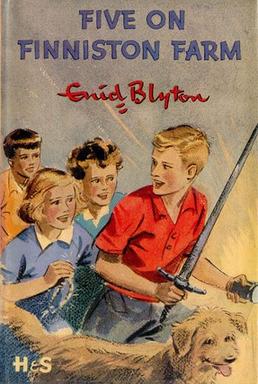
The Famous Five spend their summer holidays at Finniston Farm as paying guests. On arrival, they are greeted by the pleasant Mrs Philpot and her identical twins, Henry and Harriet. The twins seem to take an instant dislike to the Five, who also meet two fellow paying guests: an American, Mr Henning and his son, Junior. Mr Henning plans to buy antique pieces from the farm and sell them in America. Mr and Mrs Philpot agree to sell their farm treasures as they need the money. However, the family’s hot-tempered Great Granddad feels the antiques should remain in England.
Mr Henning and his son Junior prove themselves a nuisance to the household by rudely ordering Mrs Philpot around. Sympathetic to her, the Five offer to help with farm chores. When Junior demands breakfast in bed, George teaches him a lesson, making him agree to be more pleasant. This wins the hearts of the twins, and they make friends with the Five.
Anne and George visit a nearby antique shop, owned by a Mr Finniston, who tells them about a secret passage from Finniston Castle to an old chapel and cellars where royal treasure might be hidden. The girls excitedly reveal the news to the boys and the twins. Together, they plan to hunt for the cellars on the farm. They come across the castle’s kitchen midden and realise they are close to finding the treasure.
Junior spies on them and goes to break the news to his father and his father’s friend, Mr Durleston, who decide to excavate the castle site, find the fortune and sell the antique treasure in America. Mr and Mrs Philpot consent to the excavation, much to the dismay of the children. The children dig around the site, hoping to beat the men in finding the treasure. Initially, they are unsuccessful, but the twins’ dog, Snippet and their jacksaw, Nosey, lead them to a burrow, beneath which the secret passage stretches out.
The children discover the cellars and the treasure, including old daggers, sword and gold, which are worth a fortune; only to become trapped inside the tunnel when the entrance caves in. They take another way and reach a trapdoor under the old chapel, which is now used as a storehouse. The farmhands, Bill and Jamie, hear their shouts and let them out. The children get back to the farm and tell their exciting story to the astonished adults. The next day, Mr Henning and Mr Durleston try to trick the Philpots into believing the site has no treasure and offer them a meagre amount. However, Mr Philpot, backed up by his granddad and Mr (William) Finniston, declines the offer, making it clear they will excavate the site themselves and no longer want the Americans to stay. The adventure ends with Julian, Dick, Anne and George, along with Timmy, planning to stay at the farm to observe the excavation of the treasure.
It is an interesting read, and I would give it eight out of ten.
Shravan Charity Mission is an NGO that works for poor children suffering from life-threatening diseases, especially cancer. Our posts are meant for our readers, including children and adults, and have a huge variety of content. We also accept donations for our mission. Should you wish to donate to the cause of cancer? The bank details are given below:
Observed on the fifth day of the bright fortnight of the lunar month of Magha, usually in late January or early February, Basant Panchami anticipates spring nearly forty days before its official arrival. Traditional belief holds that seasons do not change overnight; rather, they unfold gradually. The festival, therefore, acts as a harbinger to spring, often called the ‘King of Seasons,’ symbolising hope, vitality, and regeneration after winter’s inertia.
In an age dominated by speed and spectacle, the festival of Basant Panchami arrives discreetly, with lasting effects. It is also celebrated as Saraswati Puja. It serves as a benchmark for values that remain essential, for learning and creativity. Celebrated across the length and breadth of India, the festival announces the advent of spring while venerating Goddess Saraswati, the embodiment of knowledge, wisdom, music, and arts.
Basant Panchami marks the turning point of the season. In northern India, the winter still lingers on, while central and western regions begin to experience a softer, spring-like weather. The festival captures this vivid moment of transition. This is when nature moves from dormancy toward growth, mirroring the human journey from inertia to wilful action.
The prominence of yellow during Basant Panchami is deeply symbolic. Associated with Goddess Saraswati, the colour represents knowledge, clarity, and creativity. It also reflects the mustard fields that bloom across much of northern and central India during this time. The custom of wearing yellow and preparing yellow-coloured food expresses collective optimism and intellectual resumption.
Education lies at the heart of Basant Panchami. Families traditionally encourage children to write their first letters on this day, marking the beginning of their learning. Music, learning, and artistic pursuits are considered auspicious during the festival. It reaffirms Goddess Saraswati’s central position in cultural consciousness, underscoring the belief that knowledge is both sacred and transformational.
The fever of kite flying, especially popular in the north and west of India, adds to the festive celebrations of the day. Skies filled with colourful kites speak of the collective joy and shared celebration. It reminds communities of the simple pleasures that accompany the change of season.
Mythology lends further fillip to the occasion. In several traditions, Basant Panchami is associated with Kamadeva, the god of love, and his consort Rati. The well-known episode of Kamadeva awakening Lord Shiva from deep meditation highlights the central philosophical theme, the tug-of-war between desire and discipline. Once, when Shiva’s third eye reduced Kamadeva to ashes at Umananda Islet in the River Brahmaputra at Guwahati, it highlighted the destructive potential of unchecked desire. Kamadeva’s revival later, following Shiva’s marriage to Parvati, represents the restoration of balance between worldly engagement and spiritual life-lessons. The lesson remains strikingly relevant in contemporary life.
The festival is not only celebrated in the sub-continent of India but also in Nepal, Bali, Indonesia, and other continents of the world with a Hindu diaspora, thus transcending geography and religious boundaries. At its core, the festival reminds us that the renewal of seasons, ideas, and values requires patience, balance, and reverence for knowledge. In a rapidly changing world, this message remains as vital as ever.
Basant Panchami also carries a historical significance beyond Hindu traditions, as Maharaja Ranjit Singh encouraged its observance as a day of social gathering within Sikh communities, particularly in gurdwaras. The day additionally commemorates the martyrdom of Haqiqat Rai, who was executed in 1741 for refusing religious conversion. His remembrance adds a solemn note to the festival.
Shravan Charity Mission is an NGO that works for poor children suffering from life-threatening diseases, especially cancer. Our posts are meant for our readers, including children and adults, and have a huge variety of content. We also accept donations for our mission. Should you wish to donate to the cause of cancer? The bank details are given below:
Franz Kafka’s The Metamorphosis is a haunting and deeply symbolic novella that delves into themes of alienation, identity, and the often cruel nature of human relationships. Originally published in 1915, the story continues to resonate today for its psychological depth, bleak humour, and powerful portrayal of the human condition.
The plot is deceptively simple: Gregor Samsa, a travelling salesman, wakes up one morning to discover he has transformed into a giant insect. Kafka famously avoids explaining how or why this transformation occurs, which adds to the surreal, dreamlike tone of the work. From the outset, Gregor’s concern isn’t the loss of his human form, but the fact that he will miss work and disappoint his employer. This absurd reaction sets the tone for a story where logic, emotion, and humanity become increasingly unrecognisable.
One of the most striking aspects of The Metamorphosis is its portrayal of alienation. Gregor is alienated not just from his job and society, but eventually from his own family. At first, his transformation provokes horror but also some sympathy from his parents and sister. However, this compassion quickly fades as the family begins to view him as a burden. His sister, Grete, initially takes care of him, but over time grows resentful and distant. Kafka paints this emotional withdrawal with subtlety and cruelty — illustrating how those closest to us can become indifferent when we no longer serve a functional role in their lives.
Kafka’s writing is stark, deliberate, and unflinching. He doesn’t embellish Gregor’s insect form with fantasy or whimsy; instead, he forces the reader to dwell in the grotesque physicality of it — the twitching legs, the difficulty of movement, the slow loss of speech. The horror is not just that Gregor has changed, but that his family no longer sees him as human. This loss of identity becomes the true tragedy of the story. Gregor remains mentally human throughout, but no one can hear or understand him. In many ways, The Metamorphosis becomes a metaphor for how people who suffer — physically, mentally, or socially — are often dehumanised and discarded.
Another powerful theme is the burden of societal and familial expectations. Before his transformation, Gregor was the sole provider for his family, working a job he despised to pay off his parents’ debts. His sense of worth is entirely tied to his ability to work. Once he becomes unable to perform that role, he is treated as useless. Kafka critiques a society that values individuals only for their productivity. This message is especially relevant in modern capitalist systems, where personal value is often linked to one’s job or economic output.
The story’s ending is as bleak as it is inevitable. Gregor dies alone and unloved, and the family expresses relief. They immediately begin to plan a better future for themselves, free from the burden he represented. It is a chilling conclusion that forces readers to question how empathy and love can so easily be replaced by convenience and self-interest.
While The Metamorphosis is undeniably dark, it is also a masterwork of literary precision and philosophical inquiry. Kafka’s ability to compress such complex emotional and existential questions into a short novella is extraordinary. His vision is as surreal as it is realistic — a mirror held up to the quiet horrors of everyday life and the fragile threads that connect us to one another.
In conclusion, The Metamorphosis is an unforgettable exploration of transformation, not just in the physical sense, but in how people change — or reveal themselves — in the face of discomfort, responsibility, and fear. Kafka’s story is disturbing, moving, and profoundly human, making it a timeless piece of literature that continues to provoke thought and discussion.
Shravan Charity Mission is an NGO that works for poor children suffering from life-threatening diseases, especially cancer. Our posts are meant for our readers, including children and adults, and have a huge variety of content. We also accept donations for our mission. Should you wish to donate to the cause of cancer? The bank details are given below:
STORYTELLER SOOTHSAYER: MARGARET ATWOOD FROM THE NEW YORK TIMES Published in Economic Times 16/11/25 Storyteller Soothsayer The New York Times Margaret Atwood doesn’t like being called a prophet. “Calm down, folks,” was her response when asked why her fiction often seems eerily predictive. “If I could really do this, I would have cornered the stock market a long time ago.” Still, she concedes she’s been right on occasion. When she published The Handmaid’s Tale in 1985, some critics were sceptical of Atwood’s vision of an authoritarian America, where the government controls women’s reproduction and persecutes dissidents. Since then, events in the novel have come to pass. Abortion has been outlawed in parts of America. The rule of law feels increasingly fragile. Censorship is rampant — Atwood, 85, herself is a frequent target. In a career that spans nearly six decades, she’s published more than 50 books, including poetry, short stories, non-fiction, speculative fiction, psychological thrillers, children’s books, graphic novels and historical fiction. Memoir was one of the few literary forms Atwood hadn’t already tried, but that too changed with Book of Lives: A Memoir of Sorts. Her book has been adapted into ballet, opera, film and television, including an award-winning television series based on The Handmaid’s Tale. She’s won the Booker Prize twice and has sold more than 40 million copies of her books worldwide, which have been translated into 50 languages. She’s a perennial contender for the Nobel Prize. TELL-ALL OF SORTS For years, Atwood maintained that she had no interest in writing a memoir; she thought it would be tedious. When asked what changed: “Two words: People died,” she said. “There are things you can say that you wouldn’t say when they were alive.” In the memoir, Atwood lays into childhood bullies who tormented her, blasts male critics and reveals how the Canadian literary scene was, at times, a hotbed of vicious gossip, jealousy and backstabbing, particularly among poets. Atwood admits that, once crossed, she holds onto resentments and that she has occasionally taken revenge in her fiction. “It’s not an admirable trait, but why deny it?” MAKING OF AN AUTHOR Atwood was born in Ottawa, Ontario, in 1939. Nicknamed Peggy, she grew up spending time in the wilderness in northern Quebec, where her father, an entomologist, studied insects that caused forest infestations. Books were one of the few forms of entertainment. In first grade, she started writing poetry and fiction; one early story was about a heroic ant named Annie. An awkward child who had a caterpillar for a pet, Atwood sometimes struggled to fit in. At age nine, she was tormented by a group of girls who left her out in the snow and buried her in a hole. She drew on the experience in her novel Cat’s Eye. Atwood got her start as a poet. She self-published her first book of poems, Double Persephone, in 1961, and sold copies for 50 cents. A few years later, she started to gain recognition when another poetry collection, The Circle Game, won a prestigious award. Her provocative debut novel, The Edible Woman, a satire about a young woman who develops a strange relationship with food and struggles to eat, made waves in 1969. The novel generated debate — female critics saw it as groundbreaking, men generally found it unsettling, she writes — but was far from an overnight success. Her first book signing was held in the sick and underwear section of a department store in Edmonton, Alberta, where she sold two copies. Atwood’s international breakthrough came with the release of The Handmaid’s Tale. In 2019, Atwood published a sequel to it, titled The Testaments, which she’d been mulling over for decades. While she was promoting the book, her long-time partner, novelist Graeme Gibson, died after a cerebral haemorrhage, following a years-long decline into dementia. Atwood went on with her tour, in a daze. Later, she wrote about the disorienting experience of living without him in her story collection, Old Babes in the Woods. She cried while writing the stories, but also found it comforting to imagine Gibson’s amused reaction. Sometimes, she can’t shake the certainty that “Graeme is in the next room”, she said. The Testaments was a risky gambit. But it became a bestseller and won Atwood a second Booker Prize. It’s also being adapted into a TV series. PLAYFUL, GOOFY, OMINOUS Throughout her career, Atwood has resisted categorisation. She’s often bucked being labelled a feminist, noting that “there are 75 different kinds of feminists”. She’s bristled at her futuristic stories being classified as science fiction and prefers the term speculative fiction. Stephen King said he was struck by Atwood’s ability to infuse her futuristic visions with gleefully weird details. “Science fiction has never been so goofy and so ominous at the same time,” he said by email. Atwood’s contrarian streak colours her worldview. She’s fascinated by science and technology — she reads pop science magazines for fun– but she also has a charming affinity for astrology and the occult, having learnt tarot and palm reading. In her memoir, she describes how a home she and Gibson once lived in was haunted by a spectral woman in a blue dress who could wander into her tiny writing room. She attributes her habit of holding grudges to being a Scorpio — specifically a Scorpio with Gemini rising, Jupiter in the 11th house and the Moon in Aquarius. As for her own outlook, Atwood remains surprisingly upbeat — a trait she attributes to the resourcefulness she developed growing up in the wilderness. “I’m an optimistic person,” she said. “‘I’m doomed’ is very far down the line. I wouldn’t say ‘I’m doomed’ unless you’re about to be eaten by a bear.”
Shravan Charity Mission is an NGO that works for poor children suffering from life-threatening diseases, especially cancer. Our posts are meant for our readers, including children and adults, and have a huge variety of content. We also accept donations for our mission. Should you wish to donate to the cause of cancer? The bank details are given below:
Why do things happen? And why do things don’t happen? Is life a silent script already written, Or a page that turns only when we touch it?
* Do events unfold, Because they are destined to unfold, Woven into the fabric of our days, Long before we learn to read the script?
* Or things don’t happen, Because destiny seals some doors, Before we ever reach them?
To maintain the status quo.
*
Is it really the absence of effort, That stops things from becoming real? Or is it the quiet and powerful destiny, That lifts some moments into being, While letting others slip away?
* A strange dialogue exists, Between the strive and the fate? It reveals where human effort ends, And destiny begins?
* And what becomes of our dreams, For which no effort was ever made, Are they the failures of will, Or simply paths never meant to be paraded?
*
When I was young, The road ahead shimmered, With hope and promises,
Waiting to be claimed.
* There was so much to do,
Lovely dreams to pursue, There were so many possibilities, That made me feel success had pulled through.
* But now that age has slowed my steps, I look back and see, Layers upon layers of karma, Some complete, some abandoned, Some forgotten.
*
Life is a crisscross of possibilities,
A web of chances,
That touch, bend, diverge, return and fade,
Before they make the way.
*
It is a crossword puzzle,
Where each choice becomes a clue,
Each action becomes an answer,
That fills our lives with advantages.
*
There is a divine meaning,
In why things happen,
And why things don’t happen,
Which is beyond human comprehension.
*
We all come from the mist,
And vanish into the mist,
And that is the rule of life,
So take life as it comes.
*
“Take life as it comes. Take success and failure in equal measure.”
Shravan Charity Mission is an NGO that works for poor children suffering from life-threatening diseases, especially cancer. Our posts are meant for our readers, including children and adults, and have a huge variety of content. We also accept donations for our mission. Should you wish to donate to the cause of cancer? The bank details are given below:
Five Go to Demon’s Rocks is the nineteenth novel in The Famous Five series by Enid Blyton. It was first published in 1961.
Irascible scientist Quentin Kirrin informs his wife, Fanny, that his colleague, Professor Hayling, will be arriving a week early for a stay at Kirrin Cottage. The professor is accompanied by his son, Tinker, who often has a sudden urge to start imitating vehicular noises and has brought his pet monkey, Mischief. It is also described that Tinker imitates such noises when he is upset or when someone has been ‘horrid’ to him. Also arriving are Quentin and Fanny’s daughter, George, and her cousins, Julian, Dick and Anne, and George’s dog, Timmy. The ensuing crowded and noisy household upsets the two scientists, prompting Tinker to propose that the children spend their holiday at his abandoned lighthouse at Demon’s Rocks, located 10 miles away.
After settling in at the lighthouse, the children meet an elderly retired sailor, Jeremiah Boogle, who tells them of his youthful encounters with three villains who lured ships to Demon’s Rocks and plundered the wrecks. He says the ringleader, One-Ear Bill, hid a treasure trove which has never been found. Two of One-Ear Bill’s descendants, Jacob and Ebenezer, now show tourists through the wreckers’ cave. Jacob burgles some items from the lighthouse and also steals the key. When the children visit the cave, Mischief discovers a gold coin. Later, Ebenezer and Jacob lock the children in the lighthouse to prevent them from returning to the cave to hunt for the treasure, but Julian and Dick enter the cave network via a tunnel and discover the treasure. Unable to reach the mainland because of the rising tide, they return to the lighthouse, light its lamp and ring an old warning bell amid a fierce gale to alert the villagers to their fate. Jacob and Ebenezer flee, and the children are rescued the next morning. Julian and Dick declare they will recover the treasure for the police, and then the children will return to Kirrin Cottage.
Shravan Charity Mission is an NGO that works for poor children suffering from life-threatening diseases, especially cancer. Our posts are meant for our readers, including children and adults, and have a huge variety of content. We also accept donations for our mission. Should you wish to donate to the cause of cancer? The bank details are given below:
(PHANTOM POLICE? TIMES OF INDIA EDITORIAL 11/10/25)
Seoul has a hologram cop. Not everyone thrilled. He doesn’t quite crash land but takes form all of a sudden – a life-size apparition in uniform, if you find yourself in Seoul’s popular Jeo Dong Park. Don’t let him spook you – it’s only a hologram of a cop, appearing every two minutes between 7 pm and 10 pm to, well, spook those up to no good. Police claim the made-in-UK ‘assistant officer’ lowered crime rates in the bustling neighbourhood under Seoul Jungbu police station by as much as 22%, between Oct 2024, when the pilot was launched, and May 2025. The cop was officially posted in the park in Aug. So, if you’re wandering around, under the influence of whatever’s your poison, and itching to pick up a fight, well, chances are the sight of a ghostly cop could nudge you to abandon the idea. No need to break into a cold sweat or run, for he’ll disappear in two minutes. So what does this hologram cop do if it comes across a fight? He can’t chase, let alone handcuff you. Yet, ‘Enhanced features’ are a work in progress. His role now is surveillance, a deterrent to low-key ‘impulsive’ crime. Privacy may be globally dead, but still, the idea hasn’t gone down well with everyone. Visitors find him annoying, while his ghostly presence is fast creating an urban legend of a ‘haunted park’. Clearly, tech-savvy policing is not yet a smooth walk in the park.
Shravan Charity Mission is an NGO that works for poor children suffering from life-threatening diseases, especially cancer. Our posts are meant for our readers, including children and adults, and have a huge variety of content. We also accept donations for our mission. Should you wish to donate to the cause of cancer? The bank details are given below:
14/9/25 MYSTERY OF AGATHA CHRISTIE’S INDIA STORY FINALLY SOLVED
— WHY DIDN’T THEY ASK MATHEW? THERE WAS CONSTANT SPECULATION OVER WHETHER AGATHA CHRISTIE EVER CAME TO INDIA, BUT NEVER ANY PROOF, EVEN THOUGH SHE WAS KNOWN TO BE AN AVID TRAVELLER. NOW, HER GRANDSON TELLS WRITER MANJIRI PRABHU THAT SHE DEFINITELY HAD VISITED – NOT ONCE, BUT TWICE–
Some mysteries need to be actively cracked, but some solve themselves with time.
There has been constant speculation about Agatha Christie’s India connection. One question has recurred over the years, but has never really been accurately answered: Did Agatha Christie ever visit India? The internet and popular belief will state that she did not. I, too, had often puzzled over how Christie, a world traveller, had never actually been to India. In fact, in a video in 2021, I had even concluded that she hadn’t. Until one cool but sunny Easter day in Wales. In March 2024, I met Christie’s grandson, Mathew Prichard, and his lovely wife, Lucy, at their charming home in Wales. Prichard, now in his 80s, had been very close to his grandmother. It was a memorable day, but it turned momentous when Mathew showed me Christie’s personal memorabilia — her passports, her first typed and edited manuscripts, rare photos, her camera, and her last portrait painting, which hung on one of the walls of his house. When Mathew signed and gifted me a copy of his grandmother’s latest biography, I also realised what a mammoth task he had been entrusted with-to preserve her legacy, and how he had upheld that trust: a proud grandson of the Queen of Crime. It was when I mentioned how strange it was that Christie had never visited India that he glanced at me with a twinkle in his blue eyes and said, “Oh, but she did!” I was startled. This was contrary to all that we believed. A few minutes later, as I skimmed through the numerous black-and-white, well-preserved photos, I found some that made my heart race-pictures of Christie with a garland, descending from an Indian Airlines plane. Here, finally, was the missing link to a long-standing puzzle. I was on the threshold of solving a real mystery, but I needed to know more. At my request, the archivist Joseph Keogh dug deeper and came up with some fascinating, unpublicised facts. Christie had indeed visited India-not once, but twice. From her passport stamps, he traced her travel itinerary for the two trips. Her first trip was in Jan 1960, when she visited Ceylon (present-day Sri Lanka), then India and Pakistan. From Jan 11 to Feb 2, she travelled to Bombay (now Mumbai), headed to South India’s Madras (now Chennai), did some sightseeing at the Ajanta Caves, and then on to Delhi. Between Feb 2 and 9, she went to Nepal and returned to Patna and Delhi, finally leaving for Karachi on Feb 17. Some letters were also found that referenced her trips. It appeared that the 1960 trip was for a lecture tour by her second husband, the archaeologist Max Mallowan. The following are extracts from two letters that Christie wrote to Edmund Cork in Cyprus, her literary agent and lifelong friend. Jan 11, 1960 | Future plans are, roughly, leave for Madras today – go via southern India to Bombay arriving 17th or 18th–Then some sightseeing near Bombay Agenta Caves (sic) etc and on to Delhi and then to Nepal on Jan 31st for a week — c/o British Embassy would find us there as I’m not sure what the hotel is. Jan 20, 1960 | Our plans are a bit different at the moment as accommodation at hotels is very hard to get exactly when one wants it but we shall be in and out of the Ashoka Hotel at Delhi between Jan 28th and Feb 2nd– and then Nepal (c/o British Embassy Kathmandu) 2nd to 9th then in and out of Ashoka again finally leaving it on Feb 17th for Karachi. So forward anything you think I ought to see to the Ashoka at Delhi — but nothing that I needn’t!! Another letter was from Christie, then staying at the Ashoka Hotel in New Delhi, to Rosalind, her daughter. Feb 16, 1960 | On our arrival here yesterday evening, several archaeologists were waiting with two porters and loads of archaeological material from their … dig. The examination of the same intrigued the Ashoka guests very much. Christie’s second trip to India, a year later, seemed to be for leisure. The passport has a Palam, New Delhi stamp (month not specified) in 1961. This time she visited Srinagar in Kashmir and stayed at the Oberoi Palace. This is what she wrote to he daughter Rosalind: Oct 30, 1961 | Lake and mountains rather lovely. This is a Hotel rather like at Jaipur — converted Rajah’s Palace — miles and miles of corridors — enormous rooms and we are in a kind of supersuite looking over lake. It’s all terribly dried up by this time of year — one ought really to come in May-June. Now one must be content by rich beds of red salvia and dahlias in the Hotel garden. Temp is about 50 at night. Delicious hot sun to sit in and about 60 in a day. Suits me very well. We made some excursions — to the various Mogul gardens — and to a lake … Which is very beautiful and ringed with snowclad mountains. You can see the mountains now after the rain. We have to leave here and go to the Hotel in the town– but expect that our booking for Nov 2nd to Delhi will be all right. From Delhi, she wrote again to Rosalind. Here we are in the Ashoka. I’m glad we had a good ten days and in a perfect Hotel for old ladies (very few of them nowadays) where I could sit, in the sun — and look at a view like a Japanese print. Lovely! The letters revealed Christie’s bright, chirpy personality and tongue-in-cheek humour, her eagerness to explore India and her appreciation of scenic beauty. She seemed happy to be in India. But I pondered why her trips were not well-known. Was it because photographs were a rarity then or because she checked into the hotels in her husband’s name — or perhaps simply because Agatha Christie was a private person? Whatever the reason, I was thrilled with my discovery. That sunny day with Mathew, Lucy and Gwynnie, the dog carried an extra fulfilling zing because of this exciting revelation. I had always sensed a deep connection to Agatha Christie. But being the chosen one to unravel the mystery of her India trips felt truly special. PICTURES IN THE ARTICLE
Agatha Christie descended from an Indian Airlines plane during one or two visits to India.
Agatha Christie autographs copies of her books.
Mathew Prichard (also in the photo right), who has settled the India question once and for all, with his grandmother Agatha Christie.
Pages from Christie’s passport, showing (top) arrival at Palam, and (above) a Patna Police stamp that says ‘To Kathmandu’
TOMORROW IS THE 135TH BIRTH ANNIVERSARY OF ‘QUEEN OF CRIME’ BORN | SEPTEMBER 15, 1890 DIED | JANUARY 12, 1976 – SHE WROTE THE WORLD’S LONGEST-RUNNING PLAY. THE MOUSETRAP, PERFORMED CONTINUOUSLY IN LONDON’S WEST END SINCE 1952, EXCEPT FOR A BREAK DURING COVID (2020-2021) – MARRIED TWICE, DIVORCED HER FIRST HUSBAND, ARCHIBALD CHRISTIE, IN 1928, AND MARRIED ARCHAEOLOGIST MAX MALLOWAN IN 1930 – FOLLOWING THE BREAKDOWN OF HER FIRST MARRIAGE IN 1926, SHE MADE HEADLINES BY GOING MISSING FOR 11 DAYS. SHE WAS LOCATED AT A HOTEL 296 KM FROM HER HOME, REGISTERED AS MRS TRESSA NEELE, HER HUSBAND’S LOVER’S SURNAME. BOOKS: 66 DETECTIVE NOVELS, 14 SHORT STORIES FAMOUS CHARACTERS: HERCULE POIROT, MISS MARPLE The author is an award-winning writer of mystery novels [Extracts and photographs used with permission from Mathew Prichard and the Christie Archive Trust. Special thanks to Lucy Prichard and Joseph Keogh of the Christie Archive Trust]
Shravan Charity Mission is an NGO that works for poor children suffering from life-threatening diseases, especially cancer. Our posts are meant for our readers, including children and adults, and have a huge variety of content. We also accept donations for our mission. Should you wish to donate to the cause of cancer? The bank details are given below:


 Shravan charity mission