SHORT STORY: CORONA A VIEWPOINT

Copyright@shravancharitymission

   Once a tiger sneaked into a town during the day. The town was quiet with not a soul around. The doors of all the houses were closed and so were the shops and the market. There were no children playing outside. The tiger felt quite elated at the scenario thinking how much people were scared of him, that upon his arrival, the whole town has shut down.

    While he was observing the sombre ambience very keenly, he came across a wandering cow. He asked, ‘Hey you what’s going on here. Kya chal raha hai? Where is everyone, and why is this city under a lockdown?’

    The cow replied, ‘There is a new beast in town so everyone has gone into a hiding.’

    ‘Hiding … beast!! O yes—yes. I’m the deadliest of all the beasts, so they have all gone into a hiding because of me.’ Cheered the tiger.

    ‘No I’m sorry tiger bhai. Your days are over. Now no one is scared of you, because there is a new beast in town.’

    ‘My days are over … New beast in town? But where is this new beast? What is his name and where has he come from?’ Asked the tiger.

    ‘Well he has come all the way from China. His name is Corona and he comes from a killer family called Virus.’ Replied the cow.

    ‘And what does he look like?’ Asked the tiger.

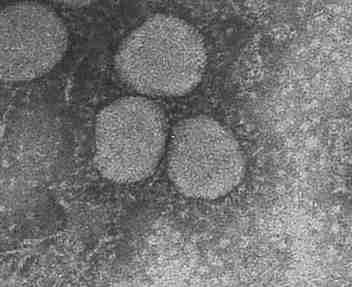
    ‘Well … He is as big as the tip of your whisker or may be even smaller. You actually can’t see him with naked eyes. There are some posters of his that human beings have erected in the town so that one can at least imagine how he looks like. He resembles a tiny ball with thorns on it. If I understand correctly he has already killed about half a million people across the world. And tiger ji, you now, pale in front of him.’ Replied the cow.

    ‘But yaar, who produced this little deadly beast?’ Asked the tiger.

    ‘The other day Tommy my neighbourhood dog was telling me, that he had heard from someone, that this micro beast called Corona-Virus, was actually, produced by the Chinese in their own lab without the permission of God, and it has gone on to kill so many human beings already.’

    ‘But yaar cow, can something, as tragic as this, happen without the aegis of God.’ Asked the tiger.

    ‘Well if you believe in God the answer is no, as nothing can happen without God’s permission. And if you don’t believe in God the answer is yes, as things can happen without the permission of God. So where do you stand in all of this?’ Asked the cow.

    ‘Well … well.’ The tiger took his own time thinking and then he said.

    ‘I would like to be an atheist and not believe in God just as the dragon.’

    By becoming an atheist and not believing in God almighty, the tiger had actually absolved God from the responsibility of the pandemic of Corona, for he couldn’t have imagined God perpetrating such a calamity on mankind.

    Where do you stand on this pandemic? Do you think God is responsible for the pandemic, or you too, are an atheist like the tiger. I am holding God responsible for this pandemic.

Written by Kamlesh Tripathi

*

https://kamleshsujata.wordpress.com

*

Share it if you like it

*

Shravan Charity Mission is an NGO that works for poor children suffering from life threatening diseases especially cancer. Our posts are meant for our readers that includes both children and adults and it has a huge variety in terms of content. We also accept donations for our mission. Should you wish to donate for the cause. The bank details are given below:

NAME OF ACCOUNT: SHRAVAN CHARITY MISSION

Account no: 680510110004635 (BANK OF INDIA)

IFSC code: BKID0006805

*

Our publications

GLOOM BEHIND THE SMILE

(The book is about a young cancer patient. Now archived in 7 prestigious libraries of the US, including, Harvard University and Library of Congress. It can also be accessed in MIT through Worldcat.org. Besides, it is also available for reading in Libraries and archives of Canada and Cancer Aid and Research Foundation Mumbai)  

ONE TO TANGO … RIA’S ODYSSEY

(Is a book on ‘singlehood’ about a Delhi girl now archived in Connemara Library, Chennai and Delhi Public Library, GOI, Ministry of Culture, Delhi)

AADAB LUCKNOW … FOND MEMORIES

(Is a fiction written around the great city of Nawabs—Lucknow. It describes Lucknow in great detail and also talks about its Hindu-Muslim amity. That happens to be its undying characteristic. The book was launched in Lucknow International Literary Festival of 2014)

REFRACTIONS … FROM THE PRISM OF GOD

(Co-published by Cankids–Kidscan, a pan India NGO and Shravan Charity Mission, that works for Child cancer in India. The book is endorsed by Ms Preetha Reddy, MD Apollo Hospitals Group. It was launched in Lucknow International Literary Festival 2016)

TYPICAL TALE OF AN INDIAN SALESMAN

(Is a story of an Indian salesman who is, humbly qualified. Yet he fights his ways through unceasing uncertainties to reach the top. A good read not only for salesmen. The book was launched on 10th February, 2018 in Gorakhpur Lit-Fest. Now available in Amazon, Flipkart and Onlinegatha)

RHYTHM … in poems

(Published in January 2019. The book contains 50 poems. The poems describe our day to day life. The book is available in Amazon, Flipkart and Onlinegatha)

MIRAGE

(Published in February 2020. The book is a collection of eight short stories. It is available in Amazon, Flipkart and Notion Press)

(ALL THE ABOVE TITLES ARE AVAILABLE FOR SALE IN AMAZON, FLIPKART AND OTHER ONLINE STORES OR YOU COULD EVEN WRITE TO US FOR A COPY)

*****
SHORT STORY: SENDING THE WRONG MESSAGE

Copyright@shravancharitymission

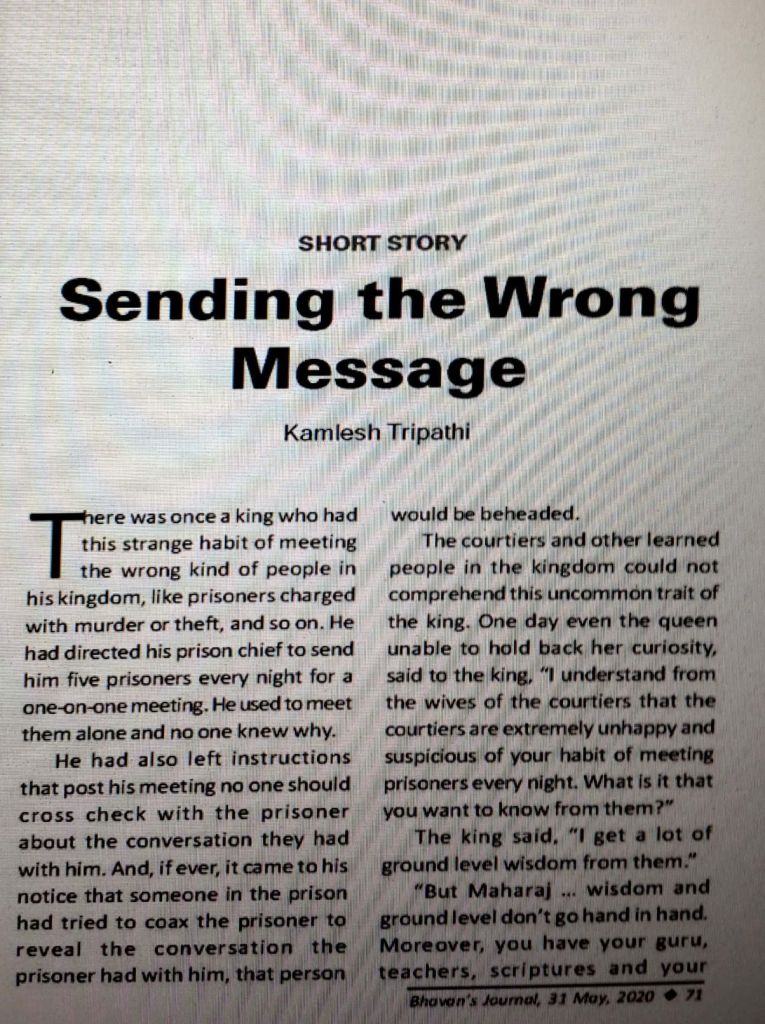
STORY PUBLISHED IN BHAVAN’S JOURNAL

By Kamlesh Tripathi

*

https://kamleshsujata.wordpress.com

*

Share it if you like it

*

Shravan Charity Mission is an NGO that works for poor children suffering from life threatening diseases especially cancer. Our posts are meant for our readers that includes both children and adults and it has a huge variety in terms of content. We also accept donations for our mission. Should you wish to donate for the cause. The bank details are given below:

NAME OF ACCOUNT: SHRAVAN CHARITY MISSION

Account no: 680510110004635 (BANK OF INDIA)

IFSC code: BKID0006805

*

Our publications

GLOOM BEHIND THE SMILE

(The book is about a young cancer patient. Now archived in 7 prestigious libraries of the US, including, Harvard University and Library of Congress. It can also be accessed in MIT through Worldcat.org. Besides, it is also available for reading in Libraries and archives of Canada and Cancer Aid and Research Foundation Mumbai)  

ONE TO TANGO … RIA’S ODYSSEY

(Is a book on ‘singlehood’ about a Delhi girl now archived in Connemara Library, Chennai and Delhi Public Library, GOI, Ministry of Culture, Delhi)

AADAB LUCKNOW … FOND MEMORIES

(Is a fiction written around the great city of Nawabs—Lucknow. It describes Lucknow in great detail and also talks about its Hindu-Muslim amity. That happens to be its undying characteristic. The book was launched in Lucknow International Literary Festival of 2014)

REFRACTIONS … FROM THE PRISM OF GOD

(Co-published by Cankids–Kidscan, a pan India NGO and Shravan Charity Mission, that works for Child cancer in India. The book is endorsed by Ms Preetha Reddy, MD Apollo Hospitals Group. It was launched in Lucknow International Literary Festival 2016)

TYPICAL TALE OF AN INDIAN SALESMAN

(Is a story of an Indian salesman who is, humbly qualified. Yet he fights his ways through unceasing uncertainties to reach the top. A good read not only for salesmen. The book was launched on 10th February, 2018 in Gorakhpur Lit-Fest. Now available in Amazon, Flipkart and Onlinegatha)

RHYTHM … in poems

(Published in January 2019. The book contains 50 poems. The poems describe our day to day life. The book is available in Amazon, Flipkart and Onlinegatha)

MIRAGE

(Published in February 2020. The book is a collection of eight short stories. It is available in Amazon, Flipkart and Notion Press)

(ALL THE ABOVE TITLES ARE AVAILABLE FOR SALE IN AMAZON, FLIPKART AND OTHER ONLINE STORES OR YOU COULD EVEN WRITE TO US FOR A COPY)

*****
INTERESTING FACTS: CROSS-STRAIT RELATIONS BETWEEN CHINA AND TAIWAN

Copyright@shravancharitymission

    After the spread of Covid 19 China is in regular news but for the wrong reasons. In this context let me take you through the hostile relationship between China and Taiwan. This relationship is also known as the Cross-Strait relations between China and Taiwan.

    Cross-Strait relations (is sometimes called Mainland–Taiwan relations or Taiwan–China relations). It refers to the relationship between the following two political entities, which are separated by the Taiwan Strait in the west Pacific Ocean. These political entities are:

  • The People’s Republic of China(PRC), commonly known as “China.”
  • The Republic of China(ROC), commonly known as “Taiwan”. Be very clear—PRC is China and ROC is Taiwan.

    Their relationship is complex and controversial due to the dispute on the political status of Taiwan after the administration of Taiwan was transferred from Japan at the end of World War II in 1945 and the subsequent split of China into the above two in 1949 as a result of a civil war. The matter hinges on two key questions: Whether the two entities are two separate countries (either as “Taiwan” and “China” or two Chinas: that is “Republic of China” and “People’s Republic of China”) or they are two “regions” or parts of the same country (i.e. “One China”) with rival governments. The English expression of, “Cross-Strait relations” is considered to be a neutral term that avoids any reference to the political status on either side.

    At the end of World War II in 1945, the administration of Taiwan was transferred to the Republic of China (ROC) from Japan, though, legal questions remained regarding the language of the ‘Treaty of San Francisco.’ In 1949, with the Chinese Civil War turning decisively in favour of the Communist Party of China (CPC), the Republic of China government led by the Kuomintang (ie KMT a major political party in Taiwan) retreated to Taiwan and established the provisional capital in Taipei, while the CPC proclaimed the People’s Republic of China (PRC) and formed their government in Beijing. No armistice or peace treaty was ever signed so the debate continues even today, as to whether, the civil war had legally ended.

    Since then, the relations between the governments in Beijing and Taipei have been characterized by limited contact, tensions, and instability. In the early years, military conflicts continued, while diplomatically both governments competed to be the “legitimate government of China”. Since the democratization of Taiwan, the question regarding the political and legal status of Taiwan has shifted focus to the choice between political unification with mainland China or de jure Taiwanese independence. The PRC—People’s Republic of China nevertheless remains hostile to any formal declaration of independence and maintains its claim over Taiwan.

    In the meanwhile, non-governmental and semi-governmental exchanges between the two sides have increased. From 2008 onwards, negotiations began to resuscitate the three vital links of postal, transportation and trade between the two sides that was cut off since 1949. Diplomatic contact between the two sides has generally been limited to Kuomintang (KMT) administrations in Taiwan.

    Let us now dig a little deeper into the history of Taiwan. The early history of Cross-Strait relations involved the exchange of cultures, people, and technology. However, no Chinese dynasty formally incorporated Taiwan into the mainland China in ancient times. In the 16th and 17th centuries, Taiwan first caught the attention of Portuguese, then Dutch and Spanish explorers. In 1624, the Dutch established their first settlement in Taiwan. In 1662, Koxinga (Zheng Chenggong), a Ming dynasty loyalist, defeated the Dutch rulers of Taiwan, and took over the island, establishing the first formally Han Chinese regime in Taiwan. Koxinga’s heirs used Taiwan as a base for launching raids into mainland China against the Manchu Qing dynasty. However, they were defeated in 1683 by Qing forces. The following year, Taiwan was incorporated into the Fujian province in the south eastern coast of mainland China. However, over the next two centuries, the Imperial government of Qing dynasty paid little attention to Taiwan.

    But the situation changed in the 19th century, with other powers increasingly eyeing Taiwan for its strategic location and resources. In response, the administration began to implement a modernization drive. In 1887, a Fujian-Taiwan Province was announced by an Imperial decree. Within 10 years, Taiwan had become one of the most modern provinces in the Empire. However, the fall of the Qing dynasty outpaced the development of Taiwan, and in 1895, following its defeat in the First Sino-Japanese War, the Imperial Government ceded Taiwan to Japan in perpetuity—forever. Qing loyalists briefly resisted the Japanese rule under the banner of the “Republic of Taiwan”, but were quickly put down by Japanese authorities.

    Japan ruled Taiwan until 1945. During this time, Taiwan, as part of the Japanese Empire, was a foreign jurisdiction in relation to the first Qing Empire, and after 1912, the Republic of China. In 1945, Japan was defeated in World War II and surrendered its forces in Taiwan to the Allies, with the ROC, Republic of China being then ruled by the Kuomintang (KMT), taking custody of the island. The period of post-war Kuomintang rule over China (1945–1949) was marked in Taiwan by conflict between local residents and the new KMT authority. The Taiwanese rebelled against KMT on 28 February 1948 in the February 28 incident, which was put down violently by the KMT. But in the process the seeds for the Taiwan independence movement, were thus sown.

    China was soon engulfed in a full-scale civil war. In 1949, the war turned decisively against the KMT and in favour of the CPC—Communist Party of China. On 1 October 1949, the CPC under Chairman Mao Zedong proclaimed the founding of the People’s Republic of China in Beijing. The capitalist ROC—Republic of China government retreated to Taiwan, eventually declaring Taipei its temporary capital in December 1949.

    The island of Taiwan has an area of 35,808 square kilometres (13,826 square miles), with mountain ranges dominating the eastern two-thirds and plains in the western one-third, where its highly urbanised population is concentrated. Taipei is the capital and largest metropolitan area. Other major cities include Kaohsiung, Taichung, Tainan and Taoyuan. With 23.7 million inhabitants, Taiwan is among the most densely populated countries in the world, with a big population and a large economy. The political status of Taiwan remains uncertain.  It is no longer a member of the UN, having been replaced by the PRC-People’s Republic of China in 1971. Taiwanese indigenous people settled in the island of Taiwan around 6,000 years ago.

    Although ROC-Republic of China government, continue to claim, to be the legitimate representative of China, since 1950 its effective jurisdiction has been limited to Taiwan and numerous smaller islands.

    Taiwan is claimed by the PRC—People’s Republic of China, which refuses diplomatic relations with countries that recognise the ROC—Republic of China. Taiwan maintains official ties with only 14 out of 193 UN member states and the Holy See (jurisdiction of Bishop of Rome). International organisations in which the PRC—People’s Republic of China participates either refuse to grant membership to Taiwan or allow it to participate only on a non-state basis. Taiwan is a member of the World Trade Organisation, Asia-Pacific Economic Cooperation and Asian Development Bank under various names. Nearby countries and countries with large economies maintain unofficial ties with Taiwan through representative offices and institutions that function as de facto embassies and consulates. Domestically, the major political division is between parties favouring eventual Chinese unification and promoting a Chinese identity contrasted with those aspiring for independence and promoting Taiwanese identity, although both sides have moderated their positions to broaden their appeal.

         What will you call People’s Republic of China (PRC)? I would certainly call it a big bully.

By Kamlesh Tripathi

*

https://kamleshsujata.wordpress.com

*

Share it if you like it

*

Shravan Charity Mission is an NGO that works for poor children suffering from life threatening diseases especially cancer. Our posts are meant for our readers that includes both children and adults and it has a huge variety in terms of content. We also accept donations for our mission. Should you wish to donate for the cause. The bank details are given below:

NAME OF ACCOUNT: SHRAVAN CHARITY MISSION

Account no: 680510110004635 (BANK OF INDIA)

IFSC code: BKID0006805

*

Our publications

GLOOM BEHIND THE SMILE

(The book is about a young cancer patient. Now archived in 7 prestigious libraries of the US, including, Harvard University and Library of Congress. It can also be accessed in MIT through Worldcat.org. Besides, it is also available for reading in Libraries and archives of Canada and Cancer Aid and Research Foundation Mumbai)  

ONE TO TANGO … RIA’S ODYSSEY

(Is a book on ‘singlehood’ about a Delhi girl now archived in Connemara Library, Chennai and Delhi Public Library, GOI, Ministry of Culture, Delhi)

AADAB LUCKNOW … FOND MEMORIES

(Is a fiction written around the great city of Nawabs—Lucknow. It describes Lucknow in great detail and also talks about its Hindu-Muslim amity. That happens to be its undying characteristic. The book was launched in Lucknow International Literary Festival of 2014)

REFRACTIONS … FROM THE PRISM OF GOD

(Co-published by Cankids–Kidscan, a pan India NGO and Shravan Charity Mission, that works for Child cancer in India. The book is endorsed by Ms Preetha Reddy, MD Apollo Hospitals Group. It was launched in Lucknow International Literary Festival 2016)

TYPICAL TALE OF AN INDIAN SALESMAN

(Is a story of an Indian salesman who is, humbly qualified. Yet he fights his ways through unceasing uncertainties to reach the top. A good read not only for salesmen. The book was launched on 10th February, 2018 in Gorakhpur Lit-Fest. Now available in Amazon, Flipkart and Onlinegatha)

RHYTHM … in poems

(Published in January 2019. The book contains 50 poems. The poems describe our day to day life. The book is available in Amazon, Flipkart and Onlinegatha)

MIRAGE

(Published in February 2020. The book is a collection of eight short stories. It is available in Amazon, Flipkart and Notion Press)

(ALL THE ABOVE TITLES ARE AVAILABLE FOR SALE IN AMAZON, FLIPKART AND OTHER ONLINE STORES OR YOU COULD EVEN WRITE TO US FOR A COPY)

*****


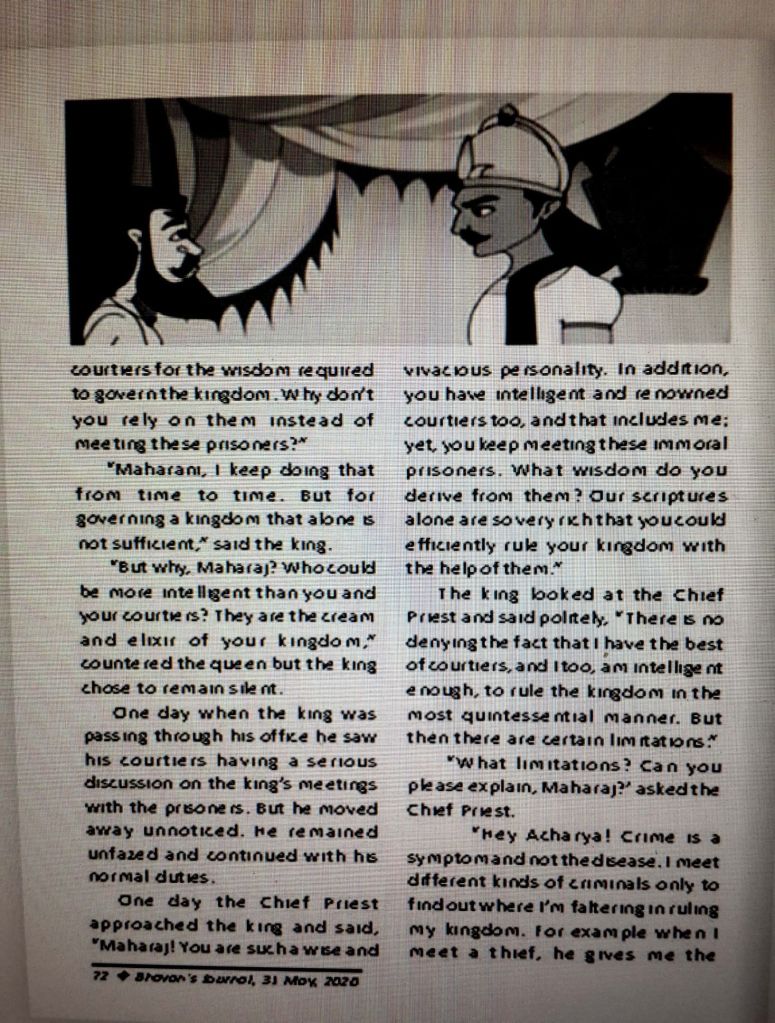
SHORT STORY: LESSON FROM BHASMASURA

Copyright@shravancharitymission

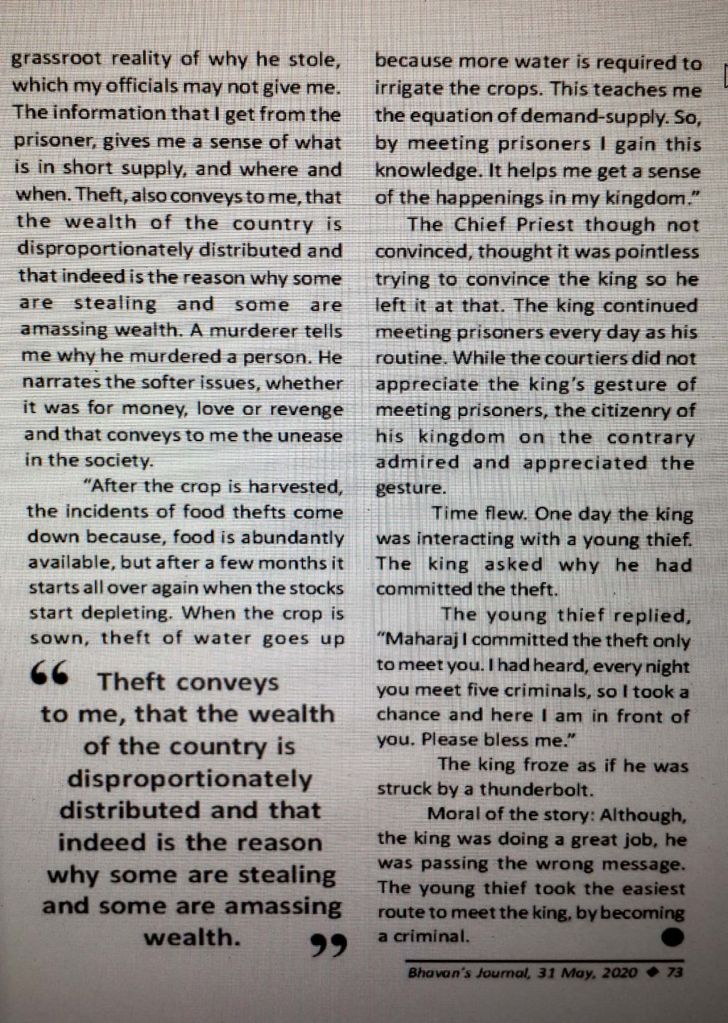
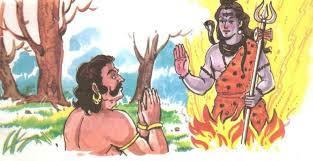
    Once an asura with his marathon tapasya and devotion was able to please Lord Shiva and in return obtain from him the powerful ‘vardan’ to burn anyone to ashes the moment he placed his hand on his head. He therefore came to be known as Bhasmasur that is Bhasma-asura, for he could reduce anyone to ashes by his touch.

    Bhasmasur was indeed delighted by this vardan of Shiva. So he decided to try out, his newly acquired power, on Shiva himself. When Shiva learnt of this intention of Bhasmasur he fled in terror and sought the help of Lord Vishnu, who transformed himself into Mohini the apsara to distract Bhasmasur. Overwhelmed by lust, Bhasmasur begged Mohini to marry him. Mohini agreed but laid down a condition that only if Bhasmasur could dance like her. Bhasmasur agreed to her condition. During the course of the dance, Mohini touched her head. The deluded Bhasmasur, blinded by desire, copied her, and he put his hand on his head too, and was burnt to ashes, much to the delight of Shiva.

Moral of the Story: Think before you empower a person with something, whether the person will be able to handle the power or not. Use your brains if you need to copy something and often the wrong man teaches you the right lesson.

Posted by Kamlesh Tripathi

*

https://kamleshsujata.wordpress.com

*

Share it if you like it

*

Shravan Charity Mission is an NGO that works for poor children suffering from life threatening diseases especially cancer. Our posts are meant for our readers that includes both children and adults and it has a huge variety in terms of content. We also accept donations for our mission. Should you wish to donate for the cause. The bank details are given below:

NAME OF ACCOUNT: SHRAVAN CHARITY MISSION

Account no: 680510110004635 (BANK OF INDIA)

IFSC code: BKID0006805

*

Our publications

GLOOM BEHIND THE SMILE

(The book is about a young cancer patient. Now archived in 7 prestigious libraries of the US, including, Harvard University and Library of Congress. It can also be accessed in MIT through Worldcat.org. Besides, it is also available for reading in Libraries and archives of Canada and Cancer Aid and Research Foundation Mumbai)  

ONE TO TANGO … RIA’S ODYSSEY

(Is a book on ‘singlehood’ about a Delhi girl now archived in Connemara Library, Chennai and Delhi Public Library, GOI, Ministry of Culture, Delhi)

AADAB LUCKNOW … FOND MEMORIES

(Is a fiction written around the great city of Nawabs—Lucknow. It describes Lucknow in great detail and also talks about its Hindu-Muslim amity. That happens to be its undying characteristic. The book was launched in Lucknow International Literary Festival of 2014)

REFRACTIONS … FROM THE PRISM OF GOD

(Co-published by Cankids–Kidscan, a pan India NGO and Shravan Charity Mission, that works for Child cancer in India. The book is endorsed by Ms Preetha Reddy, MD Apollo Hospitals Group. It was launched in Lucknow International Literary Festival 2016)

TYPICAL TALE OF AN INDIAN SALESMAN

(Is a story of an Indian salesman who is, humbly qualified. Yet he fights his ways through unceasing uncertainties to reach the top. A good read not only for salesmen. The book was launched on 10th February, 2018 in Gorakhpur Lit-Fest. Now available in Amazon, Flipkart and Onlinegatha)

RHYTHM … in poems

(Published in January 2019. The book contains 50 poems. The poems describe our day to day life. The book is available in Amazon, Flipkart and Onlinegatha)

MIRAGE

(Published in February 2020. The book is a collection of eight short stories. It is available in Amazon, Flipkart and Notion Press)

(ALL THE ABOVE TITLES ARE AVAILABLE FOR SALE IN AMAZON, FLIPKART AND OTHER ONLINE STORES OR YOU COULD EVEN WRITE TO US FOR A COPY)

*****


BOOK REVIEW: JULIUS CAESAR … William Shakespeare

Copyright@shravancharitymission

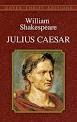
    The Tragedy of Julius Caesar is a historic tragic play by William Shakespeare first performed in 1599. It is one of several plays written by Shakespeare based on true events from the Roman history.

    Julius Caesar, was a Roman general and statesman who played a critical role in the events that led to the demise of the Roman Republic and the rise of the Roman Empire.

    Set in Rome in 44 BC, the play depicts the moral dilemma of Brutus as he joins the conspiracy led by Cassius to murder Julius Caesar to prevent him from becoming the dictator of Rome. Following Caesar’s death, Rome is thrust into a period of civil war, and the republic, which the conspirators sought to preserve is lost forever.

    Let me first describe the main characters of the play to you:

    Gaius Julius Caesar: Known simply as Julius Caesar, was a Roman general and statesman who played a critical role in the events that led to the demise of the Roman Republic and the rise of the Roman Empire. He was also a historian and author of Latin prose.

    Marcus Junius Brutus: Often referred to as Brutus, was a Roman senator and the most famous of the assassins of Julius Caesar. After being adopted by an uncle of his, he used the name Quintus Servilius Caepio Brutus, but subsequently returned to his birth name. Brutus was close to General Julius Caesar, the leader of the Populares faction, a political group.

    Gaius Cassius Longinus: Often referred to as Cassius, was a Roman senator and a general best known as a leading instigator of the plot to assassinate Julius Caesar. He was the brother-in-law of Brutus, another leader of the conspiracy. He commanded troops with Brutus during the Battle of Philippi against the combined forces of Mark Antony and Octavian, all Caesar’s former supporters, and committed suicide after being defeated by Mark Antony.

    Marcus Antonius: Commonly known in English as Mark Antony or Anthony, was a Roman politician and general who played a critical role in the transformation of the Roman Republic from an oligarchy a power structure in which the power rests in a small set of people into the autocratic Roman Empire. Antony was a supporter of Julius Caesar, and served as one of his generals during the conquest of Gaul (war against Gallic tribes) and the Civil War. Antony was appointed administrator of Italy while Caesar eliminated political opponents in Greece, North Africa, and Spain.

    Calpurnia: Either the third or the fourth wife of Julius Caesar, and the one to whom he was married at the time of his assassination.

    Octavian: Caesar’s great-nephew and adopted son.

    Pompey: A leading general.

    Metellus Cimber: A Roman senator and also an assassin of Julius Caesar.

    Lepidus: A Roman general.

    Titinius: A noble man of Rome.

    Casca: A public figure and an assassin of Julius Caesar.

    The play opens with two tribunes (title of various elected officials in Rome) discovering the commoners of Rome celebrating Julius Caesar’s triumphant return from defeating the sons of his military rival, Pompey (a leading general). These tribunes, then insult the crowd for their change in loyalty from Pompey to Caesar. The officials then attempt to end the celebrations and break up with the commoners, who also return the insults. Later during the feast of Lupercal, (a pre-Roman pastoral annual festival) Caesar holds a victory parade when a soothsayer warns him to “Beware of the ides of March”, (the 74th day in the Roman calendar that corresponds to 15 March which means be careful as your life is in danger around that time) which Caesar ignores. Meanwhile, Cassius attempts to convince Brutus to join his conspiracy to kill Caesar. Brutus is friendly with Caesar, therefore hesitant to kill him. But he agrees that Caesar might be abusing his power so he needs to be killed. They then hear from Cacsa that Mark Antony has offered Caesar the crown of Rome three times and that each time Caesar refused it with increasing reluctance, in a hope that the crowd watching would beg him to accept the crown, yet the crowd applauded Caesar for denying the crown, upsetting Caesar, who actually wanted to accept the crown. On the eve of the ides of March, the conspirators meet and reveal that they have forged letters of support from the Roman people to tempt Brutus into joining. Brutus reads the letters and, after a lot of moral debate, decides to join the conspiracy, thinking that Caesar should be killed to prevent him from doing anything against the people of Rome if he were, ever to be crowned.

    Caesar ignores the soothsayer, as well as his wife Calpurnia’s own premonitions. Calpurnia was either the third or the fourth wife of Julius Caesar, and the one to whom he was married at the time of his assassination. According to contemporary sources, she was a good and faithful wife, in spite of her husband’s infidelity. She had forewarned Caesar of the attempt on his life, but her endeavour remained in vain and did not prevent his murder.

    Caesar goes to the Senate. The conspirators approach him with a fake petition pleading on behalf of Metellus Cimber’s banished brother. (Metellus Cimber is a Roman senator and also an assassin of Julius Caesar). As Caesar predictably rejects the petition, Casca and the others suddenly stab him. Brutus is last to do so. At this point, Caesar utters the famous line, “Et tu, Brute?” (“And you, Brutus?” … “You too, Brutus?”). The scene concludes with the quote, “Then fall, Caesar!” which means that Caesar will fall both as a man and also as the ruler of Rome.

    The conspirators make it clear, that they committed the murder for the good of Rome, not for their own purposes, and do not attempt to flee the scene. Brutus delivers an oration defending his own actions, and for that moment, the crowd is on his side. However, Mark Antony makes a subtle and eloquent speech over Caesar’s corpse, beginning with the much-quoted, “Friends, Romans, countrymen, lend me your ears!” With this, he deftly turns the public opinion against the assassins by manipulating the emotions of the common people, in contrast to the rational tone of Brutus’ speech. He reminds them of the good that Caesar had done for Rome, his sympathy for the poor, and his refusal of the crown at the Lupercal festival, thus questioning Brutus’ claim of Caesar’s ambition. He shows Caesar’s bloodied, lifeless body to the crowd to have them shed tears and thus gain sympathy for their fallen hero. He reads Caesar’s will, in which every Roman citizen would receive 75 drachmas (the Greek currency). Antony, finally manages to rouse the mob to drive the conspirators away from Rome.

    Brutus next … attacks Cassius for supposedly soiling the noble act of regicide (the deliberate killing of a monarch) by having accepted bribes. The two later reconcile, especially, after Brutus reveals that his beloved wife has committed suicide under the stress of his absence from Rome. They prepare for a civil war against Mark Antony and Caesar’s adopted son Octavius, who have formed a triumvirate (a group) in Rome with Lepidus a Roman general. That night, Caesar’s ghost appears in front of Brutus with a warning of defeat. (He informs Brutus, “Thou shalt see me at Philippi.” a Greek city).

    At the battle of Philippi, Cassius and Brutus, knowing well, that they will probably, both die, smile their last smiles, at each other and hold hands. During the battle, Cassius has his servant, kill him, after hearing of, the capture of his best friend, Titinius—a noble man of Rome, and a friend of Cassius and a conspirator in Caesar’s death. After Titinius, who was not really captured, sees Cassius’ corpse, he commits suicide. However, Brutus wins, that stage of the battle, but his victory is not conclusive. With a heavy heart, Brutus battles again the next day. He loses and commits suicide by running on his own sword, held for him by a loyal soldier.

    The play ends with a tribute to Brutus by Antony, who proclaims that Brutus has remained “the noblest Roman of them all” because he was the only conspirator who acted, in his mind, for the good of Rome and was never jealous of Caesar

    Though Brutus acted in the interest of Rome as per Antony, but in the process, he did kill his friend Caesar, after which his name Brutus became the best metaphor for stabbing at the back.

By Kamlesh Tripathi

*

https://kamleshsujata.wordpress.com

*

Share it if you like it

*

Shravan Charity Mission is an NGO that works for poor children suffering from life threatening diseases especially cancer. Our posts are meant for our readers that includes both children and adults and it has a huge variety in terms of content. We also accept donations for our mission. Should you wish to donate for the cause. The bank details are given below:

NAME OF ACCOUNT: SHRAVAN CHARITY MISSION

Account no: 680510110004635 (BANK OF INDIA)

IFSC code: BKID0006805

*

Our publications

GLOOM BEHIND THE SMILE

(The book is about a young cancer patient. Now archived in 7 prestigious libraries of the US, including, Harvard University and Library of Congress. It can also be accessed in MIT through Worldcat.org. Besides, it is also available for reading in Libraries and archives of Canada and Cancer Aid and Research Foundation Mumbai)  

ONE TO TANGO … RIA’S ODYSSEY

(Is a book on ‘singlehood’ about a Delhi girl now archived in Connemara Library, Chennai and Delhi Public Library, GOI, Ministry of Culture, Delhi)

AADAB LUCKNOW … FOND MEMORIES

(Is a fiction written around the great city of Nawabs—Lucknow. It describes Lucknow in great detail and also talks about its Hindu-Muslim amity. That happens to be its undying characteristic. The book was launched in Lucknow International Literary Festival of 2014)

REFRACTIONS … FROM THE PRISM OF GOD

(Co-published by Cankids–Kidscan, a pan India NGO and Shravan Charity Mission, that works for Child cancer in India. The book is endorsed by Ms Preetha Reddy, MD Apollo Hospitals Group. It was launched in Lucknow International Literary Festival 2016)

TYPICAL TALE OF AN INDIAN SALESMAN

(Is a story of an Indian salesman who is, humbly qualified. Yet he fights his ways through unceasing uncertainties to reach the top. A good read not only for salesmen. The book was launched on 10th February, 2018 in Gorakhpur Lit-Fest. Now available in Amazon, Flipkart and Onlinegatha)

RHYTHM … in poems

(Published in January 2019. The book contains 50 poems. The poems describe our day to day life. The book is available in Amazon, Flipkart and Onlinegatha)

MIRAGE

(Published in February 2020. The book is a collection of eight short stories. It is available in Amazon, Flipkart and Notion Press)

(ALL THE ABOVE TITLES ARE AVAILABLE FOR SALE IN AMAZON, FLIPKART AND OTHER ONLINE STORES OR YOU COULD EVEN WRITE TO US FOR A COPY)

*****


POEM: THE CORONA STORY

Copyright@shravancharitymission

POEM: THE CORONA STORY

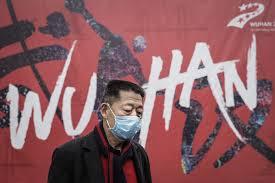
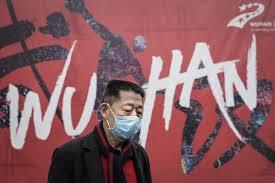
It all started in Wuhan,

Where Corona lived … behind a deadly micron,

They say he lived in a bat,

From where he was brought to a lab,

And from where he escaped,

Causing a worldwide … outrage.

*

The world couldn’t see … the contagion coming,

Dr Li too, was silenced … when he tried to whistle,

China created a smokescreen in Wuhan,

Where seemingly,

Even … WHO was put in a trance.

*

Countries and continents thought it’ll settle,

But Corona was now at a deadly level,

Italy battled … Spain fought,

UK … Germany overcame the hot-spot,

Yet Europe,

Went into a fraught.

*

New York trembled … America fumed,

Challenge indeed … was too huge,

Where,

 Nothing seemed to work in the land of rules,

Yet US fought … with a determined sinew,

And where China remained in a beguile subterfuge.

*

Korea fretted,

Middle East fumbled,

Latin America fought … like a brute,

Russia battled.

India grappled,

Australia brawled,

New Zealand braved,

Africa endured,

While the Chinese virus,

Had a roaring field day.

*

The world kneeled,

As Covid rose,

From China’s core,

To mangle the world.

*

 The fight was now on,

As mankind was stormed,

Civilizations had suffered,

But the world had no buffer.

*

While everyone thought of,

Black Death and Spanish Flu,

It was Donald Trump,

Versus the Chinese Flu.

*

The scenario was horrific,

With suffering galore,

And a flood of dead bodies,

That made the world look sore.

*

And to save humanity,

Scientists had framed new rules,

Where mixing was banned,

And seclusion was in vogue,

*

Things had changed,

Protocols had altered,

Social distancing was in place,

Handshakes and hugs had effaced,

And where, namaste was the order of the day.

*

Touch and hugs had vanished,

Spice of life had tarnished

Tears were on,

Lockdown was prolonged,

Where migrants had an infinite marathon,

*

Citizens had lost,

In the quagmire of pandemic,

Where a cure,

 Appeared invisible.

*

But hope said,

Hold on,

As life will go on,

For it is not the end of the world.

And songs will return,

But to the tunes of upstairs,

*

For once in century,

Through a pandemic,

God reminds,

Human beings of their atrocities,

So don’t feel disheartened,

For good days shall return.

****

Written by Kamlesh Tripathi

*

https://kamleshsujata.wordpress.com

*

Share it if you like it

*

Shravan Charity Mission is an NGO that works for poor children suffering from life threatening diseases especially cancer. Our posts are meant for our readers that includes both children and adults and it has a huge variety in terms of content. We also accept donations for our mission. Should you wish to donate for the cause. The bank details are given below:

NAME OF ACCOUNT: SHRAVAN CHARITY MISSION

Account no: 680510110004635 (BANK OF INDIA)

IFSC code: BKID0006805

*

Our publications

GLOOM BEHIND THE SMILE

(The book is about a young cancer patient. Now archived in 7 prestigious libraries of the US, including, Harvard University and Library of Congress. It can also be accessed in MIT through Worldcat.org. Besides, it is also available for reading in Libraries and archives of Canada and Cancer Aid and Research Foundation Mumbai)  

ONE TO TANGO … RIA’S ODYSSEY

(Is a book on ‘singlehood’ about a Delhi girl now archived in Connemara Library, Chennai and Delhi Public Library, GOI, Ministry of Culture, Delhi)

AADAB LUCKNOW … FOND MEMORIES

(Is a fiction written around the great city of Nawabs—Lucknow. It describes Lucknow in great detail and also talks about its Hindu-Muslim amity. That happens to be its undying characteristic. The book was launched in Lucknow International Literary Festival of 2014)

REFRACTIONS … FROM THE PRISM OF GOD

(Co-published by Cankids–Kidscan, a pan India NGO and Shravan Charity Mission, that works for Child cancer in India. The book is endorsed by Ms Preetha Reddy, MD Apollo Hospitals Group. It was launched in Lucknow International Literary Festival 2016)

TYPICAL TALE OF AN INDIAN SALESMAN

(Is a story of an Indian salesman who is, humbly qualified. Yet he fights his ways through unceasing uncertainties to reach the top. A good read not only for salesmen. The book was launched on 10th February, 2018 in Gorakhpur Lit-Fest. Now available in Amazon, Flipkart and Onlinegatha)

RHYTHM … in poems

(Published in January 2019. The book contains 50 poems. The poems describe our day to day life. The book is available in Amazon, Flipkart and Onlinegatha)

MIRAGE

(Published in February 2020. The book is a collection of eight short stories. It is available in Amazon, Flipkart and Notion Press)

(ALL THE ABOVE TITLES ARE AVAILABLE FOR SALE IN AMAZON, FLIPKART AND OTHER ONLINE STORES OR YOU COULD EVEN WRITE TO US FOR A COPY)

*****


Interesting Facts: The Grand Trunk Road (GT Road)

Copyright@shravancharitymission

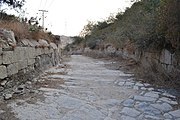
The old face of GT Road

    The Grand Trunk Road was formerly also known as UttarapathSadak-e-AzamBadshahi Sadak, is one of Asia’s oldest and longest major roads. For at least 2,500 years, it has linked the Indian subcontinent with Central Asia. It runs roughly 2,400 kilometers from Chittagong, Bangladesh to Kabul, Afghanistan, passing through Allahabad (now Prayagraj) Howrah, Delhi, and Amritsar in India and Lahore and Peshawar in Pakistan.

    Chandragupta Maurya the cynosure of Mauryan Empire in ancient India, built this highway along the ancient route called Uttarapatha or Uttarpath in the 3rd century BC, extending it from the mouth of the Ganges in Bangladesh (also called the delta) to the north-west frontier of the Empire. Further improvements to this road were made under Ashoka. It was rebuilt many times under Sher Shah Suri, the Mughals and even the British along the similar route. The old route was re-aligned by Sher Shah Suri to Sonargaon (central Bangladesh) and Rohtas (Bihar). The Afghan end of the road was once rebuilt under Mahmud Shah Durrani. The road was again considerably rebuilt in the British period between 1833 and 1860.

    Now I’ll take you through the highways the numbers of which mostly start with N. The road coincides with current National Highway1 (Chittagong to Dhaka), and then N4 & N405 (Dhaka to Sirajganj in Bangladesh), N507 (Sirajganj to Natore again in Bangladesh) and N6 (Natore to Rajshai in Bangladesh and towards Purnea in India). The road further moves on NH 12 (Purnea—Bihar to Bakkhali—West Bengal),  then NH 27 (Purnea to Patna), NH 19 (Kolkata to Agra), NH 44 (Agra to Jalandhar via New Delhi, Sonipat, Panipat, Ambala and Ludhiana) and NH 3 (Jalandhar to Attari, Amritsar in India and towards Lahore in Pakistan) via Wagah. Then you have N-5 Lahore, Gujranwala, Gujrat (this Gujrat is a city in Punjab province in Pakistan), Jhelum, Rawalpindi, Peshawar and Khyber Pass (towards Jalalabad in Afghanistan) in Pakistan and highway AH1 (that is Torkham-Jalalabad to Kabul) in Afghanistan.

   Over the centuries, the road acted as one of the major trade routes in the region and facilitated both travel and postal communication. The Grand Trunk Road is still used for transportation in present-day Indian subcontinent, where parts of the road have been widened and included in the national highway system.

    The Buddhist literature and Indian epics such as Mahabharatha provide the evidence of the Grand Trunk Road even before the Mauryan Empire. It was called Uttarpath or Uttarpatha or the “Northern road”. The road connected, the eastern region of India with Bactria in central Asia north of Hindu Kush.

    The road before the modern Grand Trunk road was built by emperor Chandragupta Maurya and was based on the highway running from Susa (a city in Iran) to Sardis in Turkey. During the time of the Mauryan Empire in the 3rd century BCE, overland trade between India and several parts of Western Asia and the markets of Bactria went through, the cities of the north-west, primarily Takshashila (Pakistan) and Purushapura (modern-day Peshawar in present day Pakistan). Takshashila was well connected by roads with other parts of the Mauryan Empire. The Mauryas had maintained this very ancient highway from Takshashila to Patliputra (present-day Patna in India). Chandragupta Maurya had a whole army of officials overseeing the maintenance of this road as told by Greek  diplomat Megasthenes who spent fifteen years at the Mauryan Court. Constructed in eight stages, this road is said to have connected the cities of Purushapura, Takshila, Hastinapura, Kanyakubja, Prayag, Patliputra and Tam-ralipta also known as Tamluk in West Bengal, a distance of around 2,600 kilometres (1,600 miles).

     The route by Chandragupta was built over the ancient “Uttarapatha” or the Northern Road, which was mentioned by Panini, an ancient Sanskrit philo-logist, grammarian, and a revered scholar in ancient India. Emperor Ashoka has recorded in his edict about having trees planted, wells built at every half kos and many “nimisdhayas”, which is often translated as rest-houses along the route. Emperor Kanishka is also known to have controlled the Uttarapatha.

     Sher Shah Suri, the medieval ruler of the Sur Empire (Sur Empire was an empire established by a Muslim dynasty of Afghan origin), is known to have rebuilt Chandragupta’s Royal Road in the 16th century. The old route was further re-routed at Sonargaon and Rohtas and its breadth was increased. 

    Fruit trees and shade trees were planted. At every 2 kos, a sarai was built. The number of kos minars (the medieval Indian milestones along the Grand Trunk Road in north India) and even the baolis were increased. Gardens were also built alongside some sections of the highway. Those who stopped at the sarai were provided free food. Sher Shah Suri’s son Islam Shah Suri also constructed an additional sarai in-between every sarai originally built by Sher Shah Suri on the road towards Bengal. More sarais were further built by the Mughals also. Jahangir under his reign issued a decree that all sarais be built of burnt brick (toughened bricks) and stone. Broad-leaved trees were planted in the stretch between Lahore and Agra. Jahangir also built bridges, over all water bodies that were situated on the path of the highways. The route was referred to as “Sadak-e-Azam” by Suri, and “Badshahi Sadak” by the Mughals.

    In the 1830s the East India Company started a program of metalled road construction, for both commercial and administrative purposes. The road, now named Grand trunk Road, from Calcutta, through Delhi, to Peshawar (present-day Pakistan) was rebuilt at a cost of £1000/ mile. A Public Works Department along with a training institute (the erstwhile Thomason College of Civil Engineering which is now known as the Indian Institute of Technology Roorkee) was founded, to train and employ local surveyors, engineers, and overseers, to perform the work, and in future maintain it along with other roads.

    The road is mentioned in a number of literary works including those of Foster and Rudyard Kipling. Kipling described the road as: “Look! Look again! and chumars, bankers and tinkers, barbers and bunnias, pilgrims – and potters – all the world going and coming. It is to me as a river from which I am withdrawn like a log after a flood. And truly the Grand Trunk Road is a wonderful spectacle. It runs straight, bearing without crowding India’s traffic for fifteen hundred miles – such a river of life as nowhere else exists in the world.”

     The ensemble of historic sites along the road in India was submitted to the tentative list of UNESCO World Heritage Sites in 2015, under the title “Sites along the Uttarapath, Badshahi Sadak, Sadak-e-Azam, Grand Trunk Road”.

    Psephologists sometimes refer to the area around the GT Road as,“GT Road Ambala to Sonepat sector, which has 28  legislative assembly seats within the context of elections. During the elections in Haryana the area on either side of the GT Road form constituencies where there is no dominance of one caste or community. So, it is referred to as the “GT road belt of Haryana.”

    Roads are like living beings. They keep transporting men and material centuries after century.

By Kamlesh Tripathi

*

https://kamleshsujata.wordpress.com

*

Share it if you like it

*

Shravan Charity Mission is an NGO that works for poor children suffering from life threatening diseases especially cancer. Our posts are meant for our readers that includes both children and adults and it has a huge variety in terms of content. We also accept donations for our mission. Should you wish to donate for the cause. The bank details are given below:

NAME OF ACCOUNT: SHRAVAN CHARITY MISSION

Account no: 680510110004635 (BANK OF INDIA)

IFSC code: BKID0006805

*

Our publications

GLOOM BEHIND THE SMILE

(The book is about a young cancer patient. Now archived in 7 prestigious libraries of the US, including, Harvard University and Library of Congress. It can also be accessed in MIT through Worldcat.org. Besides, it is also available for reading in Libraries and archives of Canada and Cancer Aid and Research Foundation Mumbai)  

ONE TO TANGO … RIA’S ODYSSEY

(Is a book on ‘singlehood’ about a Delhi girl now archived in Connemara Library, Chennai and Delhi Public Library, GOI, Ministry of Culture, Delhi)

AADAB LUCKNOW … FOND MEMORIES

(Is a fiction written around the great city of Nawabs—Lucknow. It describes Lucknow in great detail and also talks about its Hindu-Muslim amity. That happens to be its undying characteristic. The book was launched in Lucknow International Literary Festival of 2014)

REFRACTIONS … FROM THE PRISM OF GOD

(Co-published by Cankids–Kidscan, a pan India NGO and Shravan Charity Mission, that works for Child cancer in India. The book is endorsed by Ms Preetha Reddy, MD Apollo Hospitals Group. It was launched in Lucknow International Literary Festival 2016)

TYPICAL TALE OF AN INDIAN SALESMAN

(Is a story of an Indian salesman who is, humbly qualified. Yet he fights his ways through unceasing uncertainties to reach the top. A good read not only for salesmen. The book was launched on 10th February, 2018 in Gorakhpur Lit-Fest. Now available in Amazon, Flipkart and Onlinegatha)

RHYTHM … in poems

(Published in January 2019. The book contains 50 poems. The poems describe our day to day life. The book is available in Amazon, Flipkart and Onlinegatha)

MIRAGE

(Published in February 2020. The book is a collection of eight short stories. It is available in Amazon, Flipkart and Notion Press)

(ALL THE ABOVE TITLES ARE AVAILABLE FOR SALE IN AMAZON, FLIPKART AND OTHER ONLINE STORES OR YOU COULD EVEN WRITE TO US FOR A COPY)

*****


GOD SAYS …

Copyright@shravancharitymission

Aap  Sabhi  Mahanbhavon , Kadardano  Aur  Khawateeno   Ko
‘ EID  MUBARAK ‘
       ‘Aadaab ‘
Wish  you  A  Very  Happy  Morning!!!
Put  On  Your …
  ‘BINACA  SMILE’
And  Listen  to  this
Interesting  Conversation  Between….. 
‘Man   And   God !
A  man  in..,
      ‘GOD’s  SHOP’
Man ….
        ” What   Do  
       Do   You   Sell ?
GOD…..
        ” Whatever  
      Your   Heart
         Desires …”
MAN …..
         “I   Want 
          Success   And
          Happiness..”
GOD……SMILES ,
           And    Says …
           ” I   SELL  
        ONLY   SEEDS
                     And
        NOT   FRUITS “

By Uma Misra


*

https://kamleshsujata.wordpress.com

*

Share it if you like it

*

Shravan Charity Mission is an NGO that works for poor children suffering from life threatening diseases especially cancer. Our posts are meant for our readers that includes both children and adults and it has a huge variety in terms of content. We also accept donations for our mission. Should you wish to donate for the cause. The bank details are given below:

NAME OF ACCOUNT: SHRAVAN CHARITY MISSION

Account no: 680510110004635 (BANK OF INDIA)

IFSC code: BKID0006805

*

Our publications

GLOOM BEHIND THE SMILE

(The book is about a young cancer patient. Now archived in 7 prestigious libraries of the US, including, Harvard University and Library of Congress. It can also be accessed in MIT through Worldcat.org. Besides, it is also available for reading in Libraries and archives of Canada and Cancer Aid and Research Foundation Mumbai)  

ONE TO TANGO … RIA’S ODYSSEY

(Is a book on ‘singlehood’ about a Delhi girl now archived in Connemara Library, Chennai and Delhi Public Library, GOI, Ministry of Culture, Delhi)

AADAB LUCKNOW … FOND MEMORIES

(Is a fiction written around the great city of Nawabs—Lucknow. It describes Lucknow in great detail and also talks about its Hindu-Muslim amity. That happens to be its undying characteristic. The book was launched in Lucknow International Literary Festival of 2014)

REFRACTIONS … FROM THE PRISM OF GOD

(Co-published by Cankids–Kidscan, a pan India NGO and Shravan Charity Mission, that works for Child cancer in India. The book is endorsed by Ms Preetha Reddy, MD Apollo Hospitals Group. It was launched in Lucknow International Literary Festival 2016)

TYPICAL TALE OF AN INDIAN SALESMAN

(Is a story of an Indian salesman who is, humbly qualified. Yet he fights his ways through unceasing uncertainties to reach the top. A good read not only for salesmen. The book was launched on 10th February, 2018 in Gorakhpur Lit-Fest. Now available in Amazon, Flipkart and Onlinegatha)

RHYTHM … in poems

(Published in January 2019. The book contains 50 poems. The poems describe our day to day life. The book is available in Amazon, Flipkart and Onlinegatha)

MIRAGE

(Published in February 2020. The book is a collection of eight short stories. It is available in Amazon, Flipkart and Notion Press)

(ALL THE ABOVE TITLES ARE AVAILABLE FOR SALE IN AMAZON, FLIPKART AND OTHER ONLINE STORES OR YOU COULD EVEN WRITE TO US FOR A COPY)

*****


BOOK REVIEW: THE RSS–ICONS OF THE INDIAN RIGHT by Nilanjan Mukhopadhyay

Copyright@shravancharitymission

    It is a well-researched book published in the year 2019. The publishers are Westland Publications, Chennai. The main book comprises of some 405 pages and then you have the end notes and the index. The price of this book is Rs 799. Before I touch the book, let me brief you, about the author.

    Nilanjan Mukhopadhyay began his career in journalism in the early 1980s and is best known for his reportage on the rise of Hindu organisations and their politics. He writes columns for several newspapers and web portals, and is also, a well-known face, on the Indian television news channel, as a political commentator.

    His other books include the best-selling Narendra Modi: The Man, The Times; and Sikhs: The Untold Agony of 1984. Nilanjan is an unabashed college drop-out. He lives with his family in Delhi-NCR.

    The subject book comprehensively explains the genesis of RSS. In present times RSS is almost close to an untouchable organisation for some in India and even abroad. But why, is the moot question. On the face of it, RSS has been, an apolitical organisation in many ways, so to say. But why and how did this right wing organisation become pan India. Was it to save the Hindus and unite them against the onslaught of Muslims primarily, and why forget the British tyranny against Hindu culture—primarily the caste system. The book explains it all through the individual accounts of eleven RSS icons that the author goes on to detail. In a nutshell can one say RSS was a befitting counterweight to the Muslim League? Figure it out for yourself by reading the book. Taking the cue from the book further.

        In the history of the Rashtriya Swayamsevak Sangh (RSS), which is known for the domineering presence of Konkanastha or Chitpavan Brahmins, it is probably one of the biggest rarities of fate that its founder was born into a family of migrants from a village in Telangana.

    In the early decades of the 19th century, several landless Brahmin families who made their living as priests in Nizamabad district, were forced to flee their homes under the Mughal rule. Many chose to settle in Nagpur, a city that was ruled by Maratha Bhonsle kings, mainly because, the dispensation, supported Vedic learning. Keshav Baliram Hedgewar’s great-great-grandfather was among those who had made the city his home. Gradually, these immigrant families from Andhra Pradesh began to assimilate, and not only did they adapt to Maharashtrian customs, but also began looking up to local historical icons as their very own.

    The book gives a good account of partition and the initial Bengal links of some of the RSS leaders such as Keshav Baliram Hedgewar, Syama Prasad Mookerjee and Golwalkar aka Guruji that goes to show how Bengal was indeed the think-tank of that India. The book unearths certain facts that we’ll never venture to find out in our day-to-day life. One of the peculiarities of national politics at that time was the practice of simultaneous membership in multiple organisations. For instance both the Indian National Congress and Hindu Mahasabha boasted of common members.

    RSS was formed for the promotion and safeguard of Hindus. And at the time of partition when refugees entered India from Pakistan RSS did stellar work in looking after them in terms of food, shelter and security. These refugees soon started off with small trade but they didn’t snap their relationship with the RSS, rather they became members of RSS. And did you know that Veer Savarkar was not a member of BJP’s erstwhile political avatar the Jana Sangh, nor the Rashtriya Swayamsevak Sangh (RSS), but leaders of the Sangh Parivar, including Prime Minister Narendra Modi, always held him in great esteem.

    Yes a fog of mystery does surround the Rashtriya Swayamsevak Sangh—or RSS even today—the largest cadre-based organisation in the world. The political tow-chain that goes on between the RSS and its political offshoot earlier Jan Sangh and now BJP is covered in the individual accounts quite comprehensively which is otherwise a mystery for the common man of India.

    The author chronicles the personal and political journeys of the most important men (and a woman) of the Hindu Right-wing, digging up, little-known, but revealing facts about them. Let me narrate a few of them only to build your interest in this book.

    KESHAV BALIRAM HEDGEWAR: The founder of the RSS, and its first sarsanghchalak, was called ‘Cocaine’ as a young revolutionary, who transported subversive literature for a group back home in Nagpur. Although, Keshav was originally a Brahmin from Telangana, he had little trouble in securing entry into the subversive world of Bengali radicals.

    VINAYAK DAMODAR SAVARKAR: This leading light of the Hindu Right had once invited the vegetarian Mahatma Gandhi to dinner and had told him that unless one consumed animal protein, one would, not be able to challenge the might of the British. Well … few had faced the tyrannical wrath of the British Raj than Veer Savarkar having spent an aeon in Kalapani—so was it a reaction to the deep agonies that he suffered in the jail?

    MADHAV SADASHIV GOLWALKAR aka ‘GURUJI’: The iconic ‘hermit-ideologue’, whose appointment as sarsangchalak was challenged by many in the RSS itself, had maintained, the only work that needs to be done is to unite and organise fragmented Hindu society into a large corporate entity through the daily work of RSS.

    SYAMA PRASAD MOOKERJEE: A brilliant academic-statesman who became part of Nehru’s Cabinet. Mookerjee had several differences with the prime minister. He once asked Nehru: ‘Are Kashmiris Indians first and Kashmiris next, or are they Kashmiris first, second and third, and not Indians at all?’

    BALASAHEB DEORAS: This towering pracharak had a strong dislike for religious rituals, and referred to himself as a ‘Communist’ within the RSS—‘it is highly debatable if he believed in God, or if, in any way he needed Him.’

    DEENDAYAL UPADHYAY: The man who propounded the ‘philosophy’ of integral Humanism was opposed to the partition of India and recommended that, ‘if we want unity, we must adopt the yardstick of Indian nationalism, which is Hindu nationalism, and Indian culture, which is Hindu culture.’

    These and other leaders, including Vijaya Raje Scindia, Atal Bihari Vajpayee, Lal Krishna Advani, Askok Singhal and Bal Thackeray, are all covered in the book. Through the individual stories of the organisation’s tallest leaders, a larger picture emerges. In spite of a three-time ban on RSS in a multicultural and secular India—and despite the RSS’ insistence that it has no truck with electoral politics—the group is, and will be, the hand that’ll always rock the BJP’s cradle. The author by and large maintains a fair balance between criticism and appreciation of the RSS which I liked. He has done a good amount of homework and has got inscriptions from various sources which only adds to the flavour of the book. Yes narration is in long and at times bulky.

    Last but not the least, even if you fear reading a thick book, you could still read it as, one icon at a time, which will not make it monotonous. The chapters are self-sufficient. Language is plain quite easy to understand with occasional verbose. I would give the book seven out of ten. It makes an informative read.

By Kamlesh Tripathi

*

https://kamleshsujata.wordpress.com

*

Share it if you like it

*

Shravan Charity Mission is an NGO that works for poor children suffering from life threatening diseases especially cancer. Our posts are meant for our readers that includes both children and adults and it has a huge variety in terms of content. We also accept donations for our mission. Should you wish to donate for the cause. The bank details are given below:

NAME OF ACCOUNT: SHRAVAN CHARITY MISSION

Account no: 680510110004635 (BANK OF INDIA)

IFSC code: BKID0006805

*

Our publications

GLOOM BEHIND THE SMILE

(The book is about a young cancer patient. Now archived in 7 prestigious libraries of the US, including, Harvard University and Library of Congress. It can also be accessed in MIT through Worldcat.org. Besides, it is also available for reading in Libraries and archives of Canada and Cancer Aid and Research Foundation Mumbai)  

ONE TO TANGO … RIA’S ODYSSEY

(Is a book on ‘singlehood’ about a Delhi girl now archived in Connemara Library, Chennai and Delhi Public Library, GOI, Ministry of Culture, Delhi)

AADAB LUCKNOW … FOND MEMORIES

(Is a fiction written around the great city of Nawabs—Lucknow. It describes Lucknow in great detail and also talks about its Hindu-Muslim amity. That happens to be its undying characteristic. The book was launched in Lucknow International Literary Festival of 2014)

REFRACTIONS … FROM THE PRISM OF GOD

(Co-published by Cankids–Kidscan, a pan India NGO and Shravan Charity Mission, that works for Child cancer in India. The book is endorsed by Ms Preetha Reddy, MD Apollo Hospitals Group. It was launched in Lucknow International Literary Festival 2016)

TYPICAL TALE OF AN INDIAN SALESMAN

(Is a story of an Indian salesman who is, humbly qualified. Yet he fights his ways through unceasing uncertainties to reach the top. A good read not only for salesmen. The book was launched on 10th February, 2018 in Gorakhpur Lit-Fest. Now available in Amazon, Flipkart and Onlinegatha)

RHYTHM … in poems

(Published in January 2019. The book contains 50 poems. The poems describe our day to day life. The book is available in Amazon, Flipkart and Onlinegatha)

MIRAGE

(Published in February 2020. The book is a collection of eight short stories. It is available in Amazon, Flipkart and Notion Press)

(ALL THE ABOVE TITLES ARE AVAILABLE FOR SALE IN AMAZON, FLIPKART AND OTHER ONLINE STORES OR YOU COULD EVEN WRITE TO US FOR A COPY)

*****


INTERESTING FACTS: KINGDOM OF PRAGJYOTISHA

Copyright@shravancharitymission

    Pragjyotisha was an old mythological kingdom linked to the historical Kamarupa that falls under present day state of Assam and North east.

    The first mentions of this kingdom are found in the Ramayana and Mahabharata, in the sections not written much earlier than the first century. There is a mention of this kingdom in the Kishkindha Kanda of the Ramayana, where the kingdom is placed in the west near Mount Varaha and on the sea. In Aswamedha-parva (or the book of Horse Sacrifice) of the Mahabharata, Arjuna faced Vajradatta of Pragjyotisha. Vajradatta was the son and successor of the king Bhagadatta, third in line to the throne of the Naraka dynasty of the Pragjyotisha Kingdom.

    The ancient kingdom Pragjyotisha was preceded by Danava dynasty and was a contemporary of Bana dynasty of Sonitpur (central Assam). This is indiscriminately mentioned in the Hindu Epics and ancient Hindu literature.

    According to the epics, King Bhagadatta ruled the kingdom during the time of the Kurukshetra War, where he met his death. Much details of the kingdom were picked from the Ramayana, Mahabharata, Kalika Purana and the later Yogini Tantra among others. The Yogini Tantra is a 16th- or 17th-century tantric text by an unknown author of Assam and it was dedicated to the worship of Hindu goddesses Kali and Kamakhya.

    There are various references of Pragjyotisha kingdom in the Mahabharata such as:

  • Arjuna defeats Bhagadatta, the king of Pragjyotisha, during his military campaign to collect tribute for Pandava king Yudhishthira’s Rajasuya yagya, or one could say the sacrifice.
  • An encounter took place between Bhagadatta and Arjuna for days together, each desirous of a victory over the other. Bhagadatta, regarded Indra as his friend, and therefore, sooner than later he befriended Arjuna.
  • King Bhagadatta of Pragjyotisha kingdom accompanied by all Mlechchha tribes inhabiting the marshy regions on the sea-shore; and many mountain kings came to attend Yudhishthira’s Rajasuya sacrifice. Mlechchhas, were people of foreign extraction in ancient India. The Sanskrit term, mlechchhawas used by the Vedic people.
  • The great warrior king Bhagadatta, the brave ruler of Pragjyotisha and the mighty sovereign of the mlechchhas, at the head of a large number of Yavanas came to the Rajasuya Yagya sacrifice.
  • Bhagadatta was one of the distinguished Chariot warrior (Maharathi) in the Kaurava army that fought the Kurukshetra War.
  • The ruler of Pragjyotisha, the brave king Bhagadatta was the foremost of those maharathis, who could control an elephant with an elephant hook. He was skilled in fighting from the neck of a war-elephant and was also skilled in fighting from a chariot car.
  • Bhagadatta, the king of Pragjyotisha, fought in Kurukshetra War as a general under the Kaurava generallisimo Bhishma. He also fought under Dronacharya another Kaurava generalissimo. He was killed by Arjun.
  • After the Kurukshetra War, Arjuna fought a war with Bhagadatta’s son Vajradatta, at Pragjyotisha, to collect the tribute for Yudhishthira’s Ashwamedha yagya.
  • By destroying the demons such as Mauravas and the Pashas, and after slaying Nisunda and Naraka, Vasudeva Krishna had again rendered safe the road to Pragjyotisha.
  • The Asuras had a city named Pragjyotisha, which was formidable, inaccessible and impregnable. It was there that the mighty Naraka, the son of the Earth (Bhumi), kept the jewelled ear-rings of Aditi, (mother of many Gods) having brought them by force. Aditi’s sons (the Devas) were unable to recover them. Beholding Krishna’s prowess and might, and the weapon that was irresistible they requested him for the destruction of those Asuras. Krishna agreed to undertake the exceedingly difficult task. In the city of Nirmochana Krishna slew six thousand Asuras, and cut them into innumerable pieces with his weapon. He killed Mura and hosts of other Rakshasas, and then entered that city called Pragjyotisha. It was here, that an encounter took place between the mighty’ Narakasur and Krishna. Slain by Krishna, Naraka finally lay lifeless there. Having slain the Earth’s son (Bhumi-putra or Bhauma), Naraka and also the demon Mura, and having recovered those jewelled ear-rings, Krishna returned with undying fame. Krishna obtained the title of Murari because he killed the demon Mura.
  • When Krishna went to Pragjyotisha, Naraka with all the Danavas did not succeed in capturing him there.
  • Vasudeva Krishna mentions that when he and his army was at Pragjyotisha, fighting there, Chedi king Shishupala, Krishna’s cousin and enemy, came and burnt Dwaraka, the capital of Yadavas. Vasudeva Krishna belonged to Dwarka.

By Kamlesh Tripathi

*

https://kamleshsujata.wordpress.com

*

Share it if you like it

*

Shravan Charity Mission is an NGO that works for poor children suffering from life threatening diseases especially cancer. Our posts are meant for our readers that includes both children and adults and it has a huge variety in terms of content. We also accept donations for our mission. Should you wish to donate for the cause. The bank details are given below:

NAME OF ACCOUNT: SHRAVAN CHARITY MISSION

Account no: 680510110004635 (BANK OF INDIA)

IFSC code: BKID0006805

*

Our publications

GLOOM BEHIND THE SMILE

(The book is about a young cancer patient. Now archived in 7 prestigious libraries of the US, including, Harvard University and Library of Congress. It can also be accessed in MIT through Worldcat.org. Besides, it is also available for reading in Libraries and archives of Canada and Cancer Aid and Research Foundation Mumbai)  

ONE TO TANGO … RIA’S ODYSSEY

(Is a book on ‘singlehood’ about a Delhi girl now archived in Connemara Library, Chennai and Delhi Public Library, GOI, Ministry of Culture, Delhi)

AADAB LUCKNOW … FOND MEMORIES

(Is a fiction written around the great city of Nawabs—Lucknow. It describes Lucknow in great detail and also talks about its Hindu-Muslim amity. That happens to be its undying characteristic. The book was launched in Lucknow International Literary Festival of 2014)

REFRACTIONS … FROM THE PRISM OF GOD

(Co-published by Cankids–Kidscan, a pan India NGO and Shravan Charity Mission, that works for Child cancer in India. The book is endorsed by Ms Preetha Reddy, MD Apollo Hospitals Group. It was launched in Lucknow International Literary Festival 2016)

TYPICAL TALE OF AN INDIAN SALESMAN

(Is a story of an Indian salesman who is, humbly qualified. Yet he fights his ways through unceasing uncertainties to reach the top. A good read not only for salesmen. The book was launched on 10th February, 2018 in Gorakhpur Lit-Fest. Now available in Amazon, Flipkart and Onlinegatha)

RHYTHM … in poems

(Published in January 2019. The book contains 50 poems. The poems describe our day to day life. The book is available in Amazon, Flipkart and Onlinegatha)

MIRAGE

(Published in February 2020. The book is a collection of eight short stories. It is available in Amazon, Flipkart and Notion Press)

(ALL THE ABOVE TITLES ARE AVAILABLE FOR SALE IN AMAZON, FLIPKART AND OTHER ONLINE STORES OR YOU COULD EVEN WRITE TO US FOR A COPY)

*****