Shravan Charity Mission is an NGO that works for poor children suffering from life-threatening diseases, especially cancer. Our posts are meant for our readers, including children and adults, and have a huge variety of content. We also accept donations for our mission. Should you wish to donate to the cause of cancer? The bank details are given below:
Shravan Charity Mission is an NGO that works for poor children suffering from life-threatening diseases, especially cancer. Our posts are meant for our readers, including children and adults, and have a huge variety of content. We also accept donations for our mission. Should you wish to donate to the cause of cancer? The bank details are given below:
Shravan Charity Mission is an NGO that works for poor children suffering from life-threatening diseases, especially cancer. Our posts are meant for our readers, including children and adults, and have a huge variety of content. We also accept donations for our mission. Should you wish to donate to the cause of cancer? The bank details are given below:
Shravan Charity Mission is an NGO that works for poor children suffering from life-threatening diseases, especially cancer. Our posts are meant for our readers, including children and adults, and have a huge variety of content. We also accept donations for our mission. Should you wish to donate to the cause of cancer? The bank details are given below:
Shravan Charity Mission is an NGO that works for poor children suffering from life-threatening diseases, especially cancer. Our posts are meant for our readers, including children and adults, and have a huge variety of content. We also accept donations for our mission. Should you wish to donate to the cause of cancer? The bank details are given below:
(THE TIMES OF INDIA 21/7/24 SWEET MANGO FACES A BITTER HEAT CHALLENGE
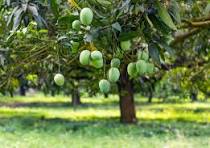
Be it the sweet and succulent Dussehri of Maal-Malihabad, Langda of Varanasi, Saharanpur’s Chausa, or Rataul variety of Baghpat – mango, the king of fruits, continues to reign supreme. Another significant constituent of UP’s diverse mango wealth is Gaurjeet of Gorakhpur, for which the UP government is trying to get a GI tag. If this happens, UP will become the state with the maximum GI-tagged mango varieties. What, however, has emerged as a challenge for mangoes in UP in the last few years is the unpredictable weather. Lucknow-based ICAR lab, Central Institute for Subtropical Horticulture (CISH), is working to make mangoes climate-resilient by introducing new technologies and, also, new varieties. “Last year, it was the untimely rain, and this time, it was the extreme temperature and heat which affected the crops.” Said director, CISH, T Damodaran. CISH Lab conducts research on mandated subtropical fruits, mangoes being the one, to come with improved varieties. In the case of mangoes, Dussehri, being an early ripening variety, is 80% more susceptible to heat and high temperatures. “In many fruits, we saw premature ripening this time, ” the director said. To deal with the impact of weather on mangoes, CISH is working at two levels – developing climate-resilient technologies and making efforts to come up with genetically improved hybrids. Many orchards in Malihabad had mangoes covered with paper bags this year, to control the impact of the heat. “This was only one of the ways devised to tackle the impact of heat. We have also come up with technologies to control the attack of pests on mangoes, as unpredictable weather may also trigger that,” he said. The institute has already released two hybrid mangoes – Ambika and Arunika. The varieties are genetically improved and were tested over a period before they were released for commercial production. Each is a cross of two types of mangoes. Ambika is a cross of Amrapali and Janardan Pasand, and Arunika is a cross of Amrapali and Vanraj, a mango from Gujarat. Two more varieties developed by CISH, Samriddhi and Madhurika, are ready for release shortly. Besides, at least 11 other hybrid mangoes may be up for screening by the institute to be released for commercial production. The hybrids are genetically improved, have high productivity and yield a better-quality fruit. They are also tolerant to heat waves and biotic stress due to the attack of pests and insects. The varieties developed scientifically are also nutraceutically improved. Along with this, CISH has also come up with improved varieties of Dussehri. It is by mid-March that a Dussehri tree usually completes its flowering stage, and within a week, the fruit may set in. In Dussehri’s cycle of growth, rain in March may be damaging because that is when the flowers just open and pollination takes place. “Rain may make flowers either drop or turn black, something that happened last year,” said Naseeb Khan, a mango entrepreneur in Malihabad. In that case, some fruits that develop may be false fruits as they would lack seeds. Mangoes need a temperature between 27 degrees Celsius and 35 degrees Celsius to grow ideally in March and April. The varying temperature damages the fruit. Cloudy weather, high humidity and high velocity winds may further hit the crop. “In many fruits, this year, the seed may become soggy, affecting the taste. It was because of the extreme heat,” said Khan. UP accounts for over 23% of the total mango production in the country. Lucknow, Saharanpur and Meerut are the main mango-producing regions. In the last few years, mango varieties from the state have been exported to Singapore, Malaysia, the US, England and Dubai. (PICTURES OF MANGO VARIETIES ON A PLATTER) (‘OG’ (ORIGINAL) MANGOES OF UP) – Dussehri from Maal-Malihabad in Lucknow, Langda from Varanasi, Rataul from Baghpat, Gaurpreet from Gorakhpur and Chausa from Saharanpur grow naturally in UP. – Dussehri, Rataul and Langda are GI tagged. The UP government has sought a GI tag for Chausa and Gaurpreet. – Dussehri, Langda and Chausa are exported outside UP and India and are commercially successful and popular. FIRST HYBRID MANGO VARIETIES – Work to develop hybrid varieties of mangoes started in the 1960s at the Indian Agricultural Research Institute, New Delhi – The purpose was to develop varieties that would bear every year and have high productivity, besides yielding good quality fruits. – Amrapali (cross of Dussehri and Neelam) and Mallika (cross of Neelam and Dussehri) were the first hybrids. – Dussehri is from North India, and Neelam is from South India. While North Indian varieties are biennial, those from South India bear annually. – CISH CONSERVES AND PROPAGATES 775 MANGO VARIETIES – CISH has the biggest collection of mango germplasm in the world. – Many varieties are now extinct at their places of origin – Collection started in 1975 when the institute started as the Central Mango Research Station. – Kensington Pride from Australia was the first exotic variety brought to the institute. – Today, it has 17 others, including Tommy Atkins, Sensation, Edward, Eldon, Keitt, Kent, Osteen, Palmer, Kitchner, Starch, Filipino, Lilly, Maya, Carabao, Kowasaji Patel, St Alexander & Prior-de-Amroesia. – Mangoes have been sourced from nurseries and orchard owners over a period of time, and are used to develop new varieties.
Shravan Charity Mission is an NGO that works for poor children suffering from life-threatening diseases, especially cancer. Our posts are meant for our readers, including children and adults, and have a huge variety of content. We also accept donations for our mission. Should you wish to donate to the cause of cancer? The bank details are given below:
Shravan Charity Mission is an NGO that works for poor children suffering from life-threatening diseases, especially cancer. Our posts are meant for our readers, including children and adults, and have a huge variety of content. We also accept donations for our mission. Should you wish to donate to the cause of cancer? The bank details are given below:
Shravan Charity Mission is an NGO that works for poor children suffering from life-threatening diseases, especially cancer. Our posts are meant for our readers, including children and adults, and have a huge variety of content. We also accept donations for our mission. Should you wish to donate to the cause of cancer? The bank details are given below:
Shravan Charity Mission is an NGO that works for poor children suffering from life-threatening diseases, especially cancer. Our posts are meant for our readers, including children and adults, and have a huge variety of content. We also accept donations for our mission. Should you wish to donate to the cause of cancer? The bank details are given below:
REMEMBER THE ISLAND, THE TRIBE & NATURE (14/10/24 THE TIMES OF INDIA REPORT) GREAT NICOBAR PROJECT BOTH IMPEDE SHOMPEN’S STATUTORY RIGHTS AND END ISLAND BIODIVERSITY BY BKP SINHA & ARVIND JUMAR JHA
Deep within the Great Nicobar Island forests live the Shompen tribe, classified as a Particularly Vulnerable Tribal Group (PVTG). Traditionally hunter-gatherers, their lives revolve around forests, rivers and wildlife, their diet a range of forest foods, wild animals and crops such as pandanus lemon, and colocasia. Recognising the significance of preserving their right to life and livelihood, the 1991 amendment to the Indian Wildlife Protection Act, 1972, despite enforcing a nationwide ban on hunting, safeguarded Shompen’s traditional hunting rights, specified in the A&N administration’s notification of April 28, 1967.
TRADITIONAL KNOWLEDGE: Surveys on Shompen show their lifestyle, rites, rituals and practices are linked intricately to the natural world, forming a unique repository of traditional knowledge systems. In their social structure, the community is supreme and family, the smallest unit, their economy subsistence-based. Indian Journal of Medical Research, in its March 2024 publication, documented that the Shompen tribe have a robust ethnomedicine system that uses resources from the wild. This indicates the richness of biodiversity as well as the uniqueness of their indigenous knowledge.
LANDS LOST, HEALTH RUINED– An area of 1044.5 sq km was declared a reserve for these indigenous people in 1957. This gradually shrank to 853.2 sq km with encroachment by outsiders, despite protective measures under the A&N (Protection of Aboriginal Tribes) Regulation, 1956. Significant influx since 1969 was exacerbated by the construction of a 43 km East-West Road through Shompen territory, also impacting their cultural fabric. While the population of outsiders grew steadily, the number of Shompen fluctuated: 131 in 1991, 398 in 2001, and 229 in 2011. Their nomadic and hunter-gatherer lifestyle, combined with an aversion to external interference, is cited as a major reason for these fluctuations. Destruction of habitat is undermining Shompen’s local health tradition. The nutritional mix provided by wild foods (fruits, tubers, honey, fish, and game) has deteriorated. Shompen’s health and nutrition survey 2024 showed chronic undernutrition. High stunting rates were observed in 63% of children; 33% of children were underweight.
LEGALLY PROTECTED– The Scheduled Tribes and Other Forest Dwellers (Recognition of Forest Rights) Act, 2006, familiarly known as FRA, defines the community tenures of habitat and habitation as a ‘forest right’. It favours primitive tribal groups and pre-agricultural communities. For Shompen, their habitat is the space where their bioculturally evolved life and traditional institutions coexist. Shaped over centuries, their habitat has nurtured a unique lifestyle, livelihood system, culture, economy, and worldview. Sections 3(1)(e) and 4(1) of FRA, in particular, provide for the recognition of habitat rights of forest-dwelling STs like the Shompen. FRA also facilitates their recognition by defining hamlets as a ‘village’. Further, a gram sabha that initiates the recognition process can consist of a village’s all adult members, rather than voters. Accordingly, processing of ‘habitat rights’ cases as well as those of access to biodiversity, intellectual property and traditional knowledge, was easily possible.
SAFEGUARDS DILUTED– Per the tribal affairs ministry website, FRA implementation in A&N Islands has been limited to setting up committees and organising awareness programmes. Instituting a state-level monitoring committee and training of officials hasn’t been done. While it says Shompen have rights under the A&N (Protection of Aboriginal Tribes) Regulation, 1956, in the tribal reserve notified as reserve forests & protected forest reserve, a Jan 2022 report, for the first time, enters a ‘Nil’ figure under progress to date. Thus, their forest rights and Shompen’s opportunity at empowerment under FRA Section 5 are disregarded. The ‘Nil’ figure also makes their gram sabhas virtually inconsequential in future diversions of their habitat.
THEN THE CONSTRUCTION — Compounding these issues is the looming threat posed by the Great Nicobar Island (GNI) Project. Valued at Rs 72k cr, the project includes a port, a greenfield airport, and other infrastructure constructions. The project deserved stricter scrutiny of environmental and FRA compliance, poised as it is to severely impact Shompen’s already fragile habitat. The project area overlaps with a UNESCO biosphere reserve, nesting grounds for leatherback turtles, habitat of the vulnerable Nicobar megapode, and CRZ 1A areas (ecologically sensitive areas part of the Coastal Regulation Zone, which regulates industrial activity near coastlines). The proposed felling of an estimated 1mn trees puts at risk both the Shompen and the island’s biodiversity.
RECOGNISE THEIR RIGHTS — Unless Shompen’s statutory rights are recognised and adequately protected, any action with such adverse impact on their habitat amounts to a gross injustice. Consequences could be catastrophic, potentially rendering the Shompen as ‘ecological refugees’, just like the Pardhi tribe after the total ban on hunting in 1991. Historical precedents should serve as stark reminders of the perils of disregarding indigenous peoples’ rights and conservation practices. Shompen’s survival and prosperity require an inclusive approach that respects their rights and protects their habitat while acknowledging the importance of the island’s ecological uniqueness. Destruction of their habitat and pressures of large-scale development demand urgent action to recognise Shompen’s statutory rights and preserve pristine natural resources.
(Sinha is a former principal chief conservator of forests (PCCF), UP. Jha is a former PCCF & commissioner (tribal department), Maharashtra.
Shravan Charity Mission is an NGO that works for poor children suffering from life-threatening diseases, especially cancer. Our posts are meant for our readers, including children and adults, and have a huge variety of content. We also accept donations for our mission. Should you wish to donate to the cause of cancer? The bank details are given below:










 Shravan charity mission