Category Archives: short article- politics

THE MENACE OF #LAL-BATTI #CULTURE … THE WAY OUT

Copyright@shravancharitymission

l2l1l3

A lot is being discussed about the menace of Lal-Batti (Red-Beacon) culture in India. I hear and see many suggestions on TV and newspapers. But largely those suggestions are of routine nature and may not be helpful. For now, only a paradigm shift will make the difference.  Therefore, to get rid of this menace we require some out-of-the-box thinking, and to that effect my suggestions are as follows:

  1. Stop manufacture of Lal-Battis for general market forthwith. These red-beacons should be manufactured only against specific orders, emanating from the Government of India, for constitutional posts, and as approved by GOI or the honourable Supreme Court of India. Treat it, as a dangerous commodity, such as sale of acid or even live cartridges.
  2. Honourable Supreme Court has approved of certain constitutional posts, where Lal-Batti can be used. Barring these no one else should be allowed to use Lal-Battis, and if anyone is found breaking the law he or she should be fined for a minimum of Re 1 lac, plus additional amounts for misdemeanor and dishonour of the honourable Supreme Court orders.
  3. Dismantle the entire fleet of government vehicles with red-beacons, which are only misused by Netas and Bureaucrats, barring few pool vehicles and vehicles for top dignitaries. For the rest, provide them with car loans, basis their salaries and entitlements. Also, provide them with fuel and maintenance allowance and even driver allowance like in private sector. This will save crores of hard earned tax payers money as Capex. It will help in eradicating corruption and will also root out the unnecessary evil of lal-Battis.

*****

“#Arrey … PUBLIC BEWAKOOF HAI” – THE MENTALITY OF MANY #PARTY ‘SPOKES PERSONS’ WHO COME ON #PRIME TIME #TV #DEBATES

Copyright@shravancharitymission


123

A majority of party spokes persons, still don’t believe in this age old but popular Hindi song– “Yeh jo public hai, woh sab janti hai.”

    Most party spokes persons who appear in prime time TV debates of various reputed channels need to realise that the Indian viewer has matured far beyond their imagination. And heart to heart they hate this growing wisdom of the Indian public. As it makes their job even more difficult. Which is quite apparent if you attentively watch these programmes.

    Today’s mature TV viewer can clearly make out when the party spokesperson is lying or trying to defend the indefensible, by blindly following the party whip. And that, he or she has walked in, with the solemn pledge to defend the party at all costs. Where, one can glaringly make out from the screen. Whenever, they try to abide by those intermittent instructions that keep trickling into their mobiles in staccato rhythms. Basis, the intensity of the debate resulting in who is losing and who is winning through these frequent text messages or Whats-App. When, each time their eyes dip below, to read those crisp instructions.

46

    The debates on TV have become more issue based than mere political pragmatism. Generally, trying to open each other’s ‘dhoti’ to score a brownie point. Just to stay ahead. This is what competition teaches you. Where, politics is no different, even when it has strange bedfellows. One can possibly consider the stale political rhetoric emanating out of TV screens coming all the way from the studios as mere gap fillers something like a comma or even a full stop. Often the panel comprises of spokes persons from BJP, Congress, AAP, SP, BSP, Akali- Dal, Janata Dal, Janata Dal United, TMC, NC, PDP, NCP, CPI, CPM, AIDMK and the DMK, to name a few. They all jostle to capture sound bites. The competition is mostly between political parties on one end, and journalists, lawyers, individuals- in-question or any other luminary from any other field, on the other end. All, trying to score a point over the other.

    Most spokes persons are, boastfully well-to-do. Apparently affluent, refreshingly articulate, and from the front ranks of political India. Who, while performing in these vibrant debates, quite often amalgamate a concoction of lies just to defend their party, come what may. But they cannot hide the disconnect between their pumping hearts, agitating minds, guilty eyes and tethering tongues and at times even their wavering hands and fingers, while confronting the camera. For, in a heated and not ready to give-in debate when the tongue tells a lie your eyes naturally look down, is when the heart sags, the throat chokes, the mind beeps and the hands and fingers balance between the heart and the mind. In all of this I guess the conscience is left behind, quite intentionally at a place where you can’t readily find. This irritates the viewers which the party should realise. In fact the party would gain more by accepting its mistakes if any. Than by stupidly arguing about it, as it is only human to err. One must not forget you have a new generation viewership now, that likes transparency.

    So, then why is it that no spokesperson can ever accept his party’s mistake openly on a TV debate? Perhaps, because, you require guts to do that. But then one must realise, by accepting mistakes you raise the bar of integrity. Recently, a new phenomenon has come alive. That is, to block co-panelists in debates from talking, by talking over them. I have seen this happening quite often in recent times. The latest was, what I saw the other day in Timesnow. When Arnab Goswami was debating the AAP debacle. The official party spokesperson of AAP, Preeti Menon was not allowing her own party M.P. to speak. Preeti Menon must have thought. She is doing a great job for her party, by not letting her own colleague to speak, just because he was critical about the establishment. But in such a case. The viewpoint of the viewers is quite different, where, she looked and sounded quite shallow and frivolous. As truth crosses all human boundaries. For make no mistake you can’t scuttle the truth by merely talking over it or by blocking it on a TV debate. Because, truth is  much closer to the viewer’s heart than one can even imagine.

*

Posted by Kamlesh Tripathi

*

https://kamleshsujata.wordpress.com

*

Share if you like it

*

Shravan Charity Mission is an NGO that works for poor children suffering from life threatening diseases. Should you wish to donate for the cause the bank details are given below:

NAME OF ACCOUNT: SHRAVAN CHARITY MISSION

Account no: 680510110004635 (BANK OF INDIA)

IFSC code: BKID0006805

*

Our publications

GLOOM BEHIND THE SMILE

(Archived in 7 prestigious libraries of the US, including, Harvard University and Library of Congress. It can also be accessed in MIT through Worldcat.org. Besides, it is also available for reading in Libraries and archives of Canada and Cancer Aid and Research Foundation Mumbai)  

ONE TO TANGO … RIA’S ODYSSEY

(Archived in Connemara Library, Chennai and Delhi Public Library, GOI, Ministry of Culture)

AADAB LUCKNOW … FOND MEMORIES

(Launched in Lucknow International Literary Festival 2014)

REFRACTIONS … FROM THE PRISM OF GOD

(Co-published by Cankids–Kidscan, a pan India NGO and Shravan Charity Mission, that works for Child cancer in India. The book is endorsed by Ms Preetha Reddy, MD Apollo Hospitals Group. Book was launched in Lucknow International Literary Festival 2016)

(CAN BE BOUGHT FROM ON LINE BOOK STORES OR WRITE TO US FOR COPIES)

*****


IS LITERACY RATE OF INDIA BEGINNING TO DRIVE INDIAN POLITICS?

Copyright@shravancharitymission

123

    The working definition of literacy in the Indian census since 1991 is as follows: Literacy rate: The total percentage of the population of an area at a particular time aged seven years or above who can read and write with understanding. Here the denominator is the population aged seven years or more.

    At the time of independence in 1947. India had a population of approximately 390 million. This got divided as follows after partition: 330 million people remained in India, 30 million in remained in West Pakistan and another 30 million in East Pakistan.

    The literacy rate of independent India in 1947 was 12%. By around 1950-1951 it had increased to around 18.33% with a population of 35 crore as you can see in the (literacy and population) table below. As compared to 1947 the current average literacy rate of India as per 2011 census, is 74% when the world average is 84%. Of the big states of India some laggard states are below 8% and some above by 20% as compared to the national average of 74%.

LITERACY RATE OF INDIA POPULATION
YEAR PERSON MALE FEMALE YEAR CRORE
1951 18.33 27.16 8.86 1950 35
1961 20.3 40.4 15.35 1960 43
1971 34.45 45.96 21.97 1970 54
1981 43.57 56.38 29.76 1980 69
1991 52.21 64.13 39.29 1990 83
2001 64.83 75.26 63.67 2000 101
2011 74.04 82.14 65.46 2000 117
        2015 124

 564

    In the early stages of independent India. Nothing else mattered than the sweet hangover of the freedom struggle and the newly formed Bharat Mata. That wheeled Pandit Nehru to rule for almost 17 years, as the longest serving Prime Minister (15.8.47 to May 1964). During his tenure the literacy rate rose from 12% to around 25%. The major event that shook India then was the Chinese aggression in the year 1962.

    India was an unquestioning country then. Just rising from the dust of the long colonial rule. And during that period, there was little or no political resistance to the Indian National Congress. That had spearheaded the freedom movement, and most iconic political leaders that mattered then were from this party.

    After Pandit Nehru expired post India-China aggression in 1964 the vacancy was filled in by another firebrand Congress leader Lal Bahadur Shastri. Who, served the country only for around 19 months and expired in Tashkent, part of the erstwhile USSR and today’s Uzbekistan.

    After Shastri’s sad demise. The mantel was adorned by Nehru’s daughter Indira Gandhi. Who, ruled for eleven years from 1966-1977. The three major events during her tenure, happened to be the liberation of East Pakistan and creation of Bangla Desh in 1971 followed by a full blown battle with Pakistan in the same year and declaration of emergency for the third time in India, and this time for internal reasons. Indira Gandhi started at an average literacy rate of around 32% in 1966 but in 1977 when Congress lost, the literacy rate had crept up to around 40%. It was for the first time Congress had gone out of power since independence. And in a manner it took literacy rate to jump by 28% (12% to 40%) to throw out a long standing ruling party at the centre. This goes to prove that literacy rate one way or the other increases the political appetite of the citizenry.

    In the Indian scenario increase in literacy rate has made voters change their minds. That has demanded for a dispensation of a different nature to govern the country. Indira Gandhi had imposed ‘emergency’ in the year 1975 when the average literacy rate was around 40%. This made her lose the general elections and gave entry to the first non-Congress government headed by Morarji Desai in 1977.

    When the average literacy rate of India was around 30%. India could see. In some states, certain state and regional parties gaining ground such as the Dravidian parties that have dominated since 1967. DMK routed Congress in 1967 and in 1972 MGR split DMK into AIDMK. Such incidents clearly dawned an era of new politics.

    Some states of India, such as Kerala and Tamil Nadu have always been ahead of the average Indian literacy rate. In the 2011 census as against the average literacy rate of 74%, Kerala was at 94, Tamilnadu at 80%, Maharastra at 82% and the big laggard states were Bihar at 62%, Jharkhand 66%, AP 67% Rajasthan 66% and UP 68%

    Bihar witnessed JP movement when the literary rate was between 35-40% and Lalu became the Chief Minister of Bihar in 1984 when the literary rate of Bihar was > 45%. In U.P. Mulayam Singh became the chief minister in 1991 and Mayawati in 1995 when the state literacy rate had crossed 45%. Signalling, the thinking minds wanted a change from two national parties, Congress and the BJP. In West Bengal too Congress ruled till 1977 but when the Bengal literacy rate rose to around 40% it was taken over by the Communist rule. And when literacy rate went passed 52% the voters even rejected Communist Party that was getting irrelevant and pulled out Trinamul Congress from the stable of Congress.

7986

    The literacy rate map below shows how certain states maintain their lead in literacy rates. Where, one would find a distinct differentiation within the political set ups of states such as Kerala and Maharastra with that of Bihar and Jharkhand.

2011_Census_India_literacy_distribution_map_by_states_and_union_territories.svg

INDIA WHEN ABOVE 64% AVERAGE LITERACY RATE

    India decided to open up when the literacy rate had gone past 52% in the year 1991 when wide spread reforms were announced. And, as the literacy rate went up, ethics in politics came down. Perhaps, thinking minds made politics much more competitive- resting on the theory of ‘survival of the fittest.’

    Beyond 2001 when the average literacy rate had just crossed 64%. India saw a sea change in terms of, all the four estates. To begin with the first estate (clergy) now tampers with politics without fear. Second estate (Bureaucracy) has become irresponsible, subservient, corrupt and even callous towards the general public. Third estate (Commoners) is perennially pained but have become more knowledgeable and demanding. And the fourth estate (Press and Media) have become all powerful. Yet they remain the saving grace of modern India

INDIAN POLITICS AT 74% LITERACY RATE

    At 74%, politics of India doesn’t remain the same and is deluged by the heft of thinking minds. For in the recent past it attracted grandstanding of agitations, like ‘India against Corruption’ where revered activist like Anna Hazare had to take the centre stage.

    Besides, even the mind space of an Indian voter has got more and more complex. Because of which we could see for the first time. A political leader of the stature of Narendra Modi, to create space in voters mind traveled 3 lac km across 25 states, addressed 473 big public rallies with 5827 public interfaces, including Chai pe charcha and 3D broadcasts. More so. BJP fought more under the banner of Narendra Modi than BJP, like presidential election. In Delhi elections we saw AAP party following the new ‘volunteer’ cult to create tailor made space in voter’s mind that wiped out BJP and Congress. In J&K also it was a star struck and out-of-the-box variety of a political campaign. It was an expensive opportunity that forced BJP to abandon relevant political-IZMS just to form the government.

    As we move towards 100% literacy. The route to State Assembly and Parliament will become more and more arduous. Political Parties will have to change their tone and tenor to address 100% literacy in all their political communication and behaviour. Where, corruption, scams and VVIPSM will have no place. What will simply matter is performance. This indeed will effect hoodwinkers under the garb of individual politicians.

*

By Kamlesh Tripathi

*

https://kamleshsujata.wordpress.com

*

Share if you like it

*

Shravan Charity Mission is an NGO that works for poor children suffering from life threatening diseases. Should you wish to donate for the cause the bank details are given below:

NAME OF ACCOUNT: SHRAVAN CHARITY MISSION

Account no: 680510110004635 (BANK OF INDIA)

IFSC code: BKID0006805

*

Our publications

GLOOM BEHIND THE SMILE

(The book is about a young cancer patient. Now archived in 7 prestigious libraries of the US, including, Harvard University and Library of Congress. It can also be accessed in MIT through Worldcat.org. Besides, it is also available for reading in Libraries and archives of Canada and Cancer Aid and Research Foundation Mumbai)  

ONE TO TANGO … RIA’S ODYSSEY

(Is a book on ‘singlehood’ about a Delhi girl now archived in Connemara Library, Chennai and Delhi Public Library, GOI, Ministry of Culture, Delhi)

AADAB LUCKNOW … FOND MEMORIES

(Is a fiction written around the great city of Nawabs—Lucknow. It describes Lucknow in great detail and also talks about its Hindu-Muslim amity. That happens to be its undying characteristic. The book was launched in Lucknow International Literary Festival of 2014)

REFRACTIONS … FROM THE PRISM OF GOD

(Co-published by Cankids–Kidscan, a pan India NGO and Shravan Charity Mission, that works for Child cancer in India. The book is endorsed by Ms Preetha Reddy, MD Apollo Hospitals Group. It was launched in Lucknow International Literary Festival 2016)

TYPICAL TALE OF AN INDIAN SALESMAN

(Is a story of an Indian salesman who is, humbly qualified. Yet he fights his ways through unceasing uncertainties to reach the top. A good read not only for salesmen. The book was launched on 10th February, 2018 in Gorakhpur Lit-Fest. Now available in Amazon, Flipkart and Onlinegatha

(ALL THE ABOVE TITLES ARE AVAILABLE FOR SALE IN AMAZON, FLIPKART AND OTHER ONLINE STORES OR YOU COULD EVEN WRITE TO US FOR A COPY)

*****


NO PLACE FOR FAILURE, IN CHANGING INDIA: INDIAN MEDIA & SOCIAL NETWORKING SITES JOKE AND RIDICULE 44 YEAR OLD SON OF THE SOIL RAHUL GANDHI WHO COULDN’T MEET UP WITH SUCCESS

Copyright@shravancharitymission

By Kamlesh Tripathi

12

Ever since the stormy news of Rahul Gandhi’s sabbatical for ‘personal introspection’ during the ensuing budget session came in. Both the media and the social networking sites in India have hounded him to cruel smithereens. A parallel of which one cannot remember, at least in the recent past.

When, other, light and more decent ‘critical’ phrases could have been used to put him down. Double-meaning expressions like ‘missing in action’ (MIA) were continuously aired by certain TV channels, knowingly or unknowingly.

‘MIA is a casualty classification assigned to armed services personnel and other combatants who are reported missing during wartime. They may have been killed, wounded, become a prisoner of war, or even deserted. If deceased, neither their remains nor grave has been positively identified.’ And, so the usage of MIA was in bad taste and a clear case of media going overboard.

34

And that brings us to the moot point. Is the youth of this country (as reflected in social networking sites) which is sixty five percent of the Indian population, getting intolerant to failures. That they won’t even spare a person around, their own age group. While this is a welcome sign and also an insignia of progress. It is also a double edge sword. For, in times to come Indian youth with lack of opportunities and explosion of population will surely witness failures in every family, and will every family then treat their loved ones in the manner they have treated Rahul Gandhi, over the last couple of days. For let us not forget he is still part of the great Indian family.

56

Most blame Rahul Gandhi for ditching the Congress party at the crucial Budget session. There are other reports that say he is set to bid adieu to politics. Some say he is unable to have his way with the old guard and therefore beating a tactical retreat.

And we all know, with all the effort put in by him he could not win a single election for his party, in the near past. Many of his own party men are blaming him for the state in which Congress is today. When most of them are either, arm chair politicians, lawyers or inconsequential statesmen. But there are certain other points also to be considered before we rip this man completely.

Rahul Gandhi signals a new kind of India. Where, a politician may leave the turf and decide to do something else. Which may be worth his while and worth his salt, during his lifetime. And that should be taken in the stride; and not be indecently reported by the media. For one will see more politicians behaving in this fashion in times to come. So, give the loser his due.

Prime Minister Narendra Modi says ‘I don’t dream for success in what I do. I only dream to do something worthwhile.’ This is a very powerful statement in today’s context and more so in Rahul Gandhi’s context. So whether you lose or win keep moving. As there is no intrinsic insult in moving away from politics. For politics is only heart burning and time consuming mistress for some. Perhaps, Narendra Modi could have nudged the media to be a little more relenting towards Rahul Gandhi this time, more so when the youth of India looks up to him.

Let us not forget in the emerging India there won’t be any fixed route to politics. For it won’t be necessary to remain a politician all your life. For one could also be a politician like Kiran Bedi who excels in one field and takes away Satish Upadhyay’s due. Or be a tornado like Arvind Kejriwal to take Delhi by storm.

But coming back to Rahul. At least he goes on leave all by himself. Whereas, some like LK Advani and MM Joshi are sent on leave. So which is better? And, India shouldn’t forget its great culture of being humane to all. Irrespective of a winner or a loser.

*****

Title: DALBADLUS, TURNCOATS, POACHED AND WILD CARD ENTRIES- HAVING A FIELD DAY IN INDIAN POLITICS

    Probity has always been the hallmark of public life. As a result of which it has always been bracketed as a ‘domain ideology’ suiting a certain section of the society. Therefore, it always required the platform of an ‘ideology’ from where it could operate with probity being, it’s chastity belt.

    This gave the world many ideological terminologies such as Communist, Marxist, Socialist, Capitalist, Secular, Rightist, Leftist to name a few. Almost, like poster signs for various sections of society to choose and follow. And, individual add-ups of these manifested as political parties flagging their brand of ideology. It was therefore difficult to swim through politics without ideological waters until sometime back. But the scenario is now fast changing.

IS TRADITIONAL POLITICKING IRKING THE PRESENT DAY POLITICAN?

Yes, and if I were to say the genesis of traditional ‘ideology’ in politics has become the nemesis of Indian Politics today. I won’t be wrong. Because the heart-throb, of Traditional Indian Politics, the so called the ‘isms’ that behaved as attractive flag-posts such as Communism, Socialism, Capitalism, Secularism to name a few have slowly vaporized into thin air. The pledge to ‘serve’ has transformed into ‘somehow rule.’ The competencies and prowess required earlier to stay afloat in politics too have changed to winnability, glamour, backstabbing, chamchagiri and of course criminality.

BUT WHO GAINS IN ALL OF THIS?

Traditional politicians, who still delve deep in rooted ‘isms’ may lose out to the new wild card entries. As, in the present, a courtship with politics is deemed fashionable only if it is flirting with those political parties, that are high on political libido.

Glaringly in the case of Delhi elections, and that too specifically in BJP. Where, Kiran Bedi was made to paratroop as a CM candidate. Leaving the entire cadre of BJP high and dry. Turncoats like Krishna Tirath, a dalit leader and former union minister who when out of power walked into BJP shamelessly, as if poached like a sitting duck.

But the craziest of all was the induction of dalbadlus like Shazia Ilmi into BJP. Who until a year back was a staunch supporter of AAP. But when it did not suit her, on some flimsy grounds, she left the party. Ostentatiously, exhibiting that she didn’t believe in any moral ‘isms.’ And what was more surprising was her entry into the number one, national ruling party BJP. Just because she happened to be a local glamorous Muslim face. BJP not only didn’t shirk in inducting her but also made her a front line canvasser. Thereby, in many ways announcing ‘isms’ don’t matter anymore. What shockingly matters is the ‘wining of elections’ says a desperate Amit Shah- BJP Head.

TALENT POACHING IN POLITICS

The complexity of present day politics, demands talent of poaching which is more of a lift-off from the ever old corporate inc. Where domain experts are hired laterally to serve certain specialized skill-sets. But there also, in spite of intense competition, corporate professionals don’t forget the salt of the previous company. Unlike poached politicians who spew venom at their previous mentors, and that reminds me of Shazia Ilmi and her tirade against Arvind Kejriwal. That was bereft of any moral standards, and also Kiran Bedi’s out of turn and unwarranted comments about Kejriwal. So does this exhibit the final nailing of ‘isms’in the coffin?

MUFFLER TAKES ON THE TEN LAKH NAME EMBLAZONED SUIT

Some political parties are moving at a pace at which the Indian voter is not moving, and that may take them, to a disconnect with the voters; and there lies the caution.

For make no mistake, at the fall of many ‘isms’ rises the ‘ist’ the ‘anarchist.’ Whose muffler takes on the ten lakh name emblazoned suit. So are ‘isms’ converting into ‘ists’ is what we have to wait and watch?

*****


ARTICLE: KILLING FOR FALSE HONOUR, BUT DYING FOR REAL LOVE

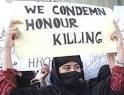
Islamabad and Delhi are located around seven hundred km apart and are divided by an explosive and turbulent international border, with ever increasing aggressive efforts to keep each side sanitized from the overall influence of the other. Yet there appears to be a commonality of sorts that refuses to die. The madness of honour killing. The ethnicity of large parts of Pakistan and that of north India was never too different before independence and even now per se. But post independence India opened up, and moved on- though not whole hog. But Pakistan preferred to remain where it was, rather took some steps backwards.
index rr jjj ppp

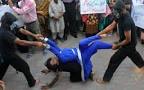
Yalda Hakim, Afghanistan born correspondent and presenter of BBC World News, highlights. How in Pakistan women who dare to pursue relationships of their own choice are in danger of losing their lives. She says in her recently published article in TOI- “Dying for Love”

‘In a country fighting to preserve patriarchal and tribal traditions, Pakistan’s women can face brutality- and even death- if they fall in love with the wrong person.

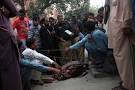
Arifa 25, dared to stand up to her family, running away with the man she fell in love with and secretly marrying him. The following day in a busy street in Karachi, Pakistan’s most populous city, her male family members surrounded the newlyweds and, at gunpoint, dragged Arifa away. After great difficulty her husband, Abdul Malik, managed to establish that she was alive and had been hidden somewhere. Fearing for his life, he has lived in hiding for three months. He says,

“In Pakistan, love is a big sin. Centuries have passed, the world has made so much progress- men have reached the heavens. But our men are still following age-old customs –which focus on denying women freedom.”

In May 2014, the case of the young pregnant woman Farzana Parveen shocked the world. She was stoned to death by her family for marrying the man she was in love with, rather than the man they had chosen for her. This happened outside Lahore high court, in front of the policemen and passersby.

In November, following worldwide media attention, Parveen’s father, brother, cousin and former fiancé were all found guilty of murder and given death sentence. But more often than not, those who commit these brutal acts against women are never charged, protected by tribal laws.

Last year alone, more than 1,000 women were murdered for so-called honour crimes. Some hard-line religious scholars believe that only through the killing of an offending family member-usually a woman-can honour be restored to the rest of the family and tribe. Few people in Pakistan nowadays are willing to challenge these tribal traditions and customs. In fact, according to a recent survey, an overwhelming majority of Pakistanis support the full implementation of Sharia law- Islam’s legal system.’

In 1979, General Zia-ul-Haq, Pakistan’s military dictator, introduced the so called Hudood Ordinance- a controversial set of laws that attempted to Islamise Pakistan. Among other things, it made adultery punishable by stoning and lashing. In 2006, the then President Pervez Musharraf tried to protect women, but the enforcement of his reforms has been limited and adultery remains a crime. Karachi’s central prison for women is where many of those accused of adultery end up.’

BUT IS NORTH INDIA ANY DIFFERENT THAN PAKISTAN IN TERMS OF HONOUR KILLINGS?

Yes only in terms of the scale which is less. While we can say what happens in Pakistan is barbaric, but then honour killings are often reported in the northern regions of India also, and mainly from the states of Punjab, Haryana, Rajasthan and Uttar Pradesh as a result of marrying without their family’s acceptance and sometimes also for marrying outside their caste.

And in contrast honour killings are a rarity in South India and the western states of Maharastra and Gujarat. In some other parts of India, notably West Bengal, honour killings completely ceased about a century ago, largely due to activism and influence of reformists such as Vivekananda, Ramakrishna, Vidyasagar and Raja Ram Mohan Roy. Wish they had also spread their activism in North India.

REPORTS OF SOME SPECIFIC HONOUR KILLINGS IN NORTH INDIA

The Indian state of Punjab has a large number of honour killings. According to the data compiled by the Punjab Police, 34 honour killings were reported in the state between 2008 and 2010: 10 in 2008, 20 in 2009 and four in 2010’

Haryana is also notorious for incidents of honour killing, mainly in the upper caste of the society, among Rajputs and Jaats; considered literate. And, so can we say it has nothing to do with literacy levels?

Bhagalpur in the eastern state of Bihar has also been notorious for honour killings. Recent cases include a 16-year-old girl, Imrana, from Bhojpur who was set on fire inside her house in a case of what the police called ‘moral vigilantism.’ The victim had screamed for help for about 20 minutes before neighbours arrived, only to find her smouldering body. She was admitted to a local hospital, where she later died from her injuries. In May 2008, Jayvirsingh Bhadodiya shot his daughter Vandana Bhadodiya and struck her on the head with an axe. In June some incidents were reported from Delhi.

In June 2012, a man chopped off his 20-year-old daughter’s head with a sword in Rajasthan after learning that she was dating men. According to police officer Omkar Singh, the accused told the court that his daughter Manju had relations with several men. He had asked her to mend her ways several times in the past. However, she did not pay heed. Out of pure rage, he chopped off her head with the sword.

A young couple who were planning to marry were brutally murdered in Garnauthi village, state of Haryana on 18 September 2013 because they were having a love affair. The woman, Nidhi, was beaten to death and the man, Dharmender, was dismembered alive. People in the village and neighbouring villages approved of the killings.

MEASURES AGAINST HONOUR KILLINGS

In 1990 the National Commission for Women set up a statutory body in order to address the issues of honor killings among some ethnic groups in North India. This body reviewed constitutional, legal, and other provisions as well as challenges women faced. The NCW’s activism has contributed significantly towards the reduction of honor killings in rural areas of North India. According to Pakistani activists Hina Jilani and Eman M. Ahmed, Indian women are considerably better protected against honor killings by Indian law and government than Pakistani women, and they have suggested that governments of countries affected by honor killings use Indian law as a model in order to prevent honor killings in their respective societies.

In a landmark judgement in March 2010, Karnal district court ordered the execution of five perpetrators of an honour killing in Kaithal, and imprisoning for life the khap (local caste-based council) chief who ordered the killings of Manoj Banwala (23) and Babli (19) a man and woman of the same clan who eloped and married in June 2007. Despite having been given police protection on court orders, they were kidnapped; their mutilated bodies were found a week later in an irrigation canal.

In June 2010, scrutinizing the increasing number of honor killings, the Supreme Court of India issued notices to the Central Government and six states including Uttar Pradesh, Punjab, Haryana and Rajasthan, to take preventive measures against honor killings.

Alarmed by the rise of honor killings, the Government planned to bring a bill in the Monsoon Session of Parliament July 2010 to provide for deterrent punishment for ‘honor’ killings.

In recent times, the Khap system has attracted criticism from groups, citing the stark prejudice that such groups allegedly hold against others. Women’s Organisation AIDWA has made allegations, in some cases where the Khaps are alleged to have initiated threats of murder and violence to couples who marry outside of the circle.

Supreme Court has declared these ‘Khap panchayats’ as illegal, which often decree or encourage honour killings or other institutionalised atrocities against boys and girls of different castes and religions who wish to get married or have married.

So honour killing is utterly illegal and has to be ruthlessly stamped out. There is no honour in these killings and atrocities. In fact, it is nothing else but barbaric and shameful. Brutal atrocities committed by feudal-minded persons deserve very harsh punishments. And only by acting against it can we stamp out this atrocious feudal mentality. The other thing that needs to be crushed along with it are the Kangaroo courts that are mushrooming all over.

But in all of this the most scathing has been the behavior of some political parties both in Pakistan and India who in the interest of votes have never taken a bulldozing approach either jointly or severally towards all such individuals and self styled institutions who promote honour killings.

*****