Category Archives: book synopsis

Literature: Three love stories published today in Cityessence.

Book Review: Voice For The Voiceless … Review in The Shillong Times by Kamlesh Tripathi

Book review: Political History of Assam 1947 -1971 Vol-1

Oplus_131072

THE ‘OVERCOATS’ OF NIKOLAI GOGOL AND RUSKIN BOND

CAPTAIN POPANILLA THE MODERN GULLIVER’S TRAVELS

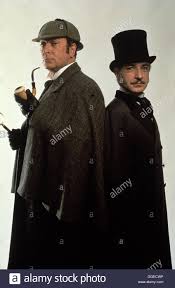
BOOK REVIEW: A CASE OF IDENTITY–Sherlock Holmes: Sir Arthur Conan Doyle

Copyright@shravancharitymission
Khidki (Window)

–Read Initiative—

This is only an attempt to create interest in reading. We may not get the time to read all the books in our lifetime. But such reviews, talk and synopsis will at least convey what the book is all about.

The ‘Case of identity’ by Sir Arthur Conan Doyle first appeared in the Strand Magazine in 1891. It is considered to be, despite its, evasive and dry title, a corner stone in the detective novel history. It is appreciated not only by the admirers of this unappreciated genre and Sherlock Holmes’ devotees, but also by the specialists of crime detection and forensic science. The latter pay tribute to the inductive way of thinking, and to the use of traces and imprints, left by a criminal action initiated in this story. One can find references of it in Criminology and Police Science papers even nowadays. The reader is amazed by the multiplicity of meaning and interpretations of ‘identities’ revealed (or concealed) in a masterly manner in this story.

    Sir Arthur Conan Doyle’s detective Sherlock Holmes appeared in fifty-six short stories and four full length novels. “A Case of Identity” is one of the lesser known stories in the series, possibly because the case does not focus on a major crime in the same way as the majority of the other tales do. “A Case of Identity” was first published in 1891 in Strand Magazine, a month after the publication of Conan Doyle’s better known story, “The Red Headed League”. The following year ‘A Case of Identity’ was included in the collection, The Adventures of Sherlock Holmes. In ‘A Case of Identity,’ Holmes does not deal with a robbery or a murder, as in earlier cases, but with the disappearance of his client, Mary Sutherland’s fiancé. Holmes’ ever-present colleague, Dr. Watson, does not know what to make of the case, but Holmes on the other hand, doesn’t even need to leave the confines of his flat at 221B Baker Street to solve the case.

When Mary explains her situation to Holmes and Watson, they learn that she lives with her mother and her mother’s new husband, Windibank. Mary has an income of one hundred pound per year, as a result of an inheritance from her Uncle Ned. This money she gives to her mother and stepfather so as not to be a burden on them. In spite of having poor eyesight, Mary is able to do typing work to earn a bit of extra money. Mary is unhappy that her mother has remarried, a much younger Windibank. Windibank has amassed a considerable amount of money for Mary’s mother, by selling her late husband’s business for her. He doesn’t like to socialize and is upset when his wife goes to the gasfitters’ ball with Mary. At the time of the ball, Windibank goes on a business trip to France. At the ball, Mary one day meets one Mr. Hosmer Angel and within a short time they get engaged. Mary and her mother do not tell Mr. Windibank about the engagement.

When Windibank returns from France, Mary and Hosmer decide that they will communicate with each other via letter alone, rather than in person. While Hosmer, types his letters, he requests, that Mary make hers, more romantic, by writing them by hand. Mary knows little about Hosmer. She does not know where he works or lives. The letters she sends him are addressed to the Leadenball Street Post Office, where he picks them up. Being a shy man, Hosmer likes to walk with Mary only by night, rather than, by day. His voice is also weak as a result of some childhood illness. He wears tinted glasses because his eyes are sensitive to light. When Windibank returns to France on business, Hosmer convinces Mary to marry him before her stepfather returns. He makes her promise that she will always be true to him, regardless of anything that might happen. Mary’s mother makes Mary agree to this and accordingly makes a promise to Hosmer.

Mary does not believe she needs her stepfather’s permission to get married, yet she feels uncomfortable doing so without his knowledge. Hosmer, tells Mary and her mother not to worry about Windibank, but he does write to him. But the letter is returned by the post office. Mary sees this as an indication that Windibank must have left before the letter reached him, and so, he is on his way back to England. Meanwhile a small wedding is planned. Hosmer arrives in a Hansom cab to bring Mary and her mother to the church. Once again, he insists that Mary vow to remain true to him no matter what. Hosmer takes a separate cab to the church because there is not enough room in the Hansom cab. But later, when Hosmer’s cab, arrives at the church, it is found empty, and the driver can offer an explanation, though he had seen Hosmer get on board.

Mary defends Hosmer while talking to Holmes, even when, Holmes points out, how shabbily he has treated Mary. She fears that he has been in some sort of accident and is sure he will be in touch as soon as he is able to. She thinks he must have felt that something is to happen, which is why he made her promise to remain true to him. In response to Holmes’ questions about other people’s reactions to Hosmer’s disappearance, Mary says that her mother is too angry to discuss the situation, while her stepfather agrees that something unfortunate must have happened to Hosmer and that Mary will hear from him in time. Holmes, advices Mary that she should forget Hosmer, as she will never see him again. But when she presses him for more information, Holmes asks Mary for the typed letters, Hosmer had sent her and also for a description of him. He also takes note of Mary’s address, which is the same as Windibank’s, and the name of the company Windibank works for. As Mary takes her leave, Holmes reminds her once again to forget about Hosmer, but she continues to pledge her allegiance to him.

Holmes, writes a letter to Windibank and receives a response, typed on the same machine, as Hosmer’s letters. This confirms, what Holmes, already knows, that Windibank and Hosmer are the same person, and which also explains why they are never in the same room at the same time. At the end, it comes out that the missing fiancé is the ‘double’ of her stepfather, Mr. Windibank. Windibank, in disguise had been taking advantage of Mary’s poor eyesight. He pretended to be Hosmer, to engage Mary in a love affair which would have never fructified in marriage. All of this was designed to help Windibank and Mary’s mother retain the one hundred pounds per year they received from Mary’s inheritance. Holmes chooses not to tell Mary the outcome of the situation—that Windibank and Hosmer are the same person, believing Windibank someday will follow a path that will ultimately lead him to the gallows.

    After solving the mystery, Holmes chooses not to tell his client the solution. He feels, “If I tell her she will not believe me. Remember, the old Persian saying, ‘There is danger for him who taketh the tiger cub, and danger also for whoso snatches a delusion from a woman.’ There is as much sense in Hafiz as in Horace, and as much knowledge of the world.” Holmes had earlier advised his client to forget “Mr. Angel Hosmer,” but Miss Sutherland refused to take Holmes’ advice and vowed to remain faithful to “Angel” until he reappears, for at least ten years.

Holmes predicts Windibank will continue a career in crime and end up on the gallows.

By Kamlesh Tripathi

*

https://kamleshsujata.wordpress.com

*

Share it if you like it

*

Shravan Charity Mission is an NGO that works for poor children suffering from life threatening diseases especially cancer. Our posts are meant for our readers that includes both children and adults and it has a huge variety in terms of content. We also accept donations for our mission. Should you wish to donate for the cause. The bank details are given below:

NAME OF ACCOUNT: SHRAVAN CHARITY MISSION

Account no: 680510110004635 (BANK OF INDIA)

IFSC code: BKID0006805

*

Our publications

GLOOM BEHIND THE SMILE

(The book is about a young cancer patient. Now archived in 8 prestigious libraries of the US that includes Harvard College Library; Harvard University Library; Library of Congress; University of Washington, Seattle; University of Minnesota, Minneapolis; Yale University, New Haven; University of Chicago; University of North Carolina, at Chapel Hill University Libraries. It can also be accessed in MIT through Worldcat.org. Besides, it is also available for reading in libraries and archives of Canada, Cancer Aid and Research Foundation Mumbai and Jaipuria Institute of Management, Noida, India)  

ONE TO TANGO … RIA’S ODYSSEY

(Is a book on ‘singlehood’ about a Delhi girl now archived in Connemara Library, Chennai and Delhi Public Library, GOI, Ministry of Culture, Delhi; Available for reading in Indian National Bibliography, March 2016, in the literature section, in Central Reference Library, Ministry of Culture, India, Belvedere, Kolkata-700022)

AADAB LUCKNOW … FOND MEMORIES

(Is a fiction written around the great city of Nawabs—Lucknow. It describes Lucknow in great detail and also talks about its Hindu-Muslim amity. That happens to be the undying characteristics of Lucknow. The book was launched in Lucknow International Literary Festival of 2014. It is included for reading in Askews and Holts Library Services, Lancashire, U.K.)

REFRACTIONS … FROM THE PRISM OF GOD

(Co-published by Cankids–Kidscan, a pan India NGO and Shravan Charity Mission, that works for Child cancer in India. The book is endorsed by Ms Preetha Reddy, MD Apollo Hospitals Group. It was launched in Lucknow International Literary Festival 2016)

TYPICAL TALE OF AN INDIAN SALESMAN

(Is a story of an Indian salesman who is, humbly qualified. Yet he fights his ways through unceasing uncertainties to reach the top. A good read not only for salesmen. The book was launched on 10th February, 2018 in Gorakhpur Lit-Fest. Now available in Amazon, Flipkart and Onlinegatha)

RHYTHM … in poems

(Published in January 2019. The book contains 50 poems. The poems describe our day to day life. The book is available in Amazon, Flipkart and Onlinegatha)

MIRAGE

(Published in February 2020. The book is a collection of eight short stories. It is available in Amazon, Flipkart and Notion Press)

Short stories and Articles published in Bhavan’s Journal: Reality and Perception, 15.10.19; Sending the Wrong Message, 31.5.20; Eagle versus Scholars June, 15 & 20 2020; Indica, 15.8.20; The Story of King Chitraketu, August 31 2020; Breaking Through the Chakravyuh, September 30 2020. The Questioning Spouse, October 31, 2020; Happy Days, November 15, 2020,

(ALL THE ABOVE TITLES ARE AVAILABLE FOR SALE IN AMAZON, FLIPKART AND OTHER ONLINE STORES OR YOU COULD EVEN WRITE TO US FOR A COPY)

*****

BOOK REVIEW: THE RED HEADED LEAGUE: Sir Arthur Conan Doyle

Copyright@shravancharitymission

Khidki (Window)

–Read Initiative—

This is only an attempt to create interest in reading. We may not get the time to read all the books in our lifetime. But such reviews, talk and synopsis will at least convey what the book is all about.

    The Red-Headed League is one of the 56 Sherlock Holmes, short stories written by Sir Arthur Conan Doyle. It first appeared in The Strand Magazine in August 1891, with illustrations by Sidney Paget, a British illustrator of the Victorian era, best known for his illustrations that accompanied Arthur Conan Doyle’s Sherlock Holmes stories. Conan Doyle ranked, “The Red-Headed League” second in the list of his twelve favourite Holmes stories. It is also the second of the twelve stories in The Adventures of Sherlock Holmes, which was published in 1892.

    Plot:

    Wilson, a London pawnbroker, comes to consult Sherlock Holmes and Doctor Watson. While studying the prospective client Wilson, both Holmes and Watson notice his prominent red hair, which has a distinct flame-like hue. Wilson tells them that some weeks ago, his young assistant, one Vincent Spaulding, urged him to respond to a newspaper recruitment-ad, offering highly-paid work to only, red-headed male applicants.

    The very next morning, Wilson waited in a long line of fellow red-headed men. He was interviewed, and was the only applicant hired. None of the other applicants qualified, because their red hair, was either too dark or too bright, and did not match Wilson’s unique flame colour.

    Wilson tells Holmes, that his business has been struggling.

    Since his own pawn shop did most of its business in the evenings, he was able to leave his shop for short periods in the afternoon, receiving £4 a week for several weeks, when his assistant Vincent Spaulding used to manage the shop. The work in his new office was of a useless clerical nature in a bare office, that only performed, a nominal work, whereupon, he was made to copy the Britannica Encyclopaedia.

    Wilson learned much about the subject starting with the “A” section and looked forward to getting into the “B” section of the Encyclopaedia. But, surprisingly, one morning, a sign on the locked office door, inexplicably announced, that “THE RED-HEADED LEAGUE IS DISSOLVED”—Oct. 9, 1890.” Wilson went to the landlord, who said that he had never heard of Duncan Ross, the person who managed the league office.

    The landlord, however, did remember the tenant with scarlet (red) hair and gives him a card which directs Wilson to an artificial knee company. Wilson concludes the conversation, by expressing his frustration at losing the precious £4 a week job. Watson and Holmes, laugh at Wilson, because of the ridiculous situation, but Holmes assures Wilson that by Monday they will solve the case for him.

    Wilson leaves after having given the detective a description of his young assistant Spaulding.

    Holmes decides to go and see Spaulding, whom, Holmes notices, has dirty trouser knees. Holmes, then taps on the pavement in front of Wilson’s shop. With that     Holmes is sure the case is solved. He therefore, calls Police Inspector Jones, along with Mr. Merryweather, a director in the bank located next door.

    The four then hide themselves in the bank vault, waiting in the dark for over an hour until the two men emerge from a tunnel cut into the vault’s floor and are arrested. They are John Clay, who has a long history in criminal activity already, and his helper Archie. Under the aliases of Spaulding and Ross.

    They had contrived the ‘Red-Headed League’ rigmarole to keep Wilson out of his shop while they dug a tunnel in the basement to reach the vault.

    Although, paying Wilson £4 a week was expensive, it was a pittance compared to the shipment of gold coins they were planning to steal.

    Back at the Baker Street, Holmes, explains to Watson, how he solved the case, applauding Clay’s creativity and regretting that such a mind has been wasted on crime.

By Kamlesh Tripathi

*

https://kamleshsujata.wordpress.com

*

Share it if you like it

*

Shravan Charity Mission is an NGO that works for poor children suffering from life threatening diseases especially cancer. Our posts are meant for our readers that includes both children and adults and it has a huge variety in terms of content. We also accept donations for our mission. Should you wish to donate for the cause. The bank details are given below:

NAME OF ACCOUNT: SHRAVAN CHARITY MISSION

Account no: 680510110004635 (BANK OF INDIA)

IFSC code: BKID0006805

*

Our publications

GLOOM BEHIND THE SMILE

(The book is about a young cancer patient. Now archived in 8 prestigious libraries of the US that includes Harvard College Library; Harvard University Library; Library of Congress; University of Washington, Seattle; University of Minnesota, Minneapolis; Yale University, New Haven; University of Chicago; University of North Carolina, at Chapel Hill University Libraries. It can also be accessed in MIT through Worldcat.org. Besides, it is also available for reading in libraries and archives of Canada, Cancer Aid and Research Foundation Mumbai and Jaipuria Institute of Management, Noida, India)  

ONE TO TANGO … RIA’S ODYSSEY

(Is a book on ‘singlehood’ about a Delhi girl now archived in Connemara Library, Chennai and Delhi Public Library, GOI, Ministry of Culture, Delhi; Available for reading in Indian National Bibliography, March 2016, in the literature section, in Central Reference Library, Ministry of Culture, India, Belvedere, Kolkata-700022)

AADAB LUCKNOW … FOND MEMORIES

(Is a fiction written around the great city of Nawabs—Lucknow. It describes Lucknow in great detail and also talks about its Hindu-Muslim amity. That happens to be the undying characteristics of Lucknow. The book was launched in Lucknow International Literary Festival of 2014. It is included for reading in Askews and Holts Library Services, Lancashire, U.K.)

REFRACTIONS … FROM THE PRISM OF GOD

(Co-published by Cankids–Kidscan, a pan India NGO and Shravan Charity Mission, that works for Child cancer in India. The book is endorsed by Ms Preetha Reddy, MD Apollo Hospitals Group. It was launched in Lucknow International Literary Festival 2016)

TYPICAL TALE OF AN INDIAN SALESMAN

(Is a story of an Indian salesman who is, humbly qualified. Yet he fights his ways through unceasing uncertainties to reach the top. A good read not only for salesmen. The book was launched on 10th February, 2018 in Gorakhpur Lit-Fest. Now available in Amazon, Flipkart and Onlinegatha)

RHYTHM … in poems

(Published in January 2019. The book contains 50 poems. The poems describe our day to day life. The book is available in Amazon, Flipkart and Onlinegatha)

MIRAGE

(Published in February 2020. The book is a collection of eight short stories. It is available in Amazon, Flipkart and Notion Press)

Short stories and Articles published in Bhavan’s Journal: Reality and Perception, 15.10.19; Sending the Wrong Message, 31.5.20; Eagle versus Scholars June, 15 & 20 2020; Indica, 15.8.20; The Story of King Chitraketu, August 31 2020; Breaking Through the Chakravyuh, September 30 2020. The Questioning Spouse, October 31, 2020; Happy Days, November 15, 2020,

(ALL THE ABOVE TITLES ARE AVAILABLE FOR SALE IN AMAZON, FLIPKART AND OTHER ONLINE STORES OR YOU COULD EVEN WRITE TO US FOR A COPY)

*****

BOOK REVIEW: ‘SHIKHANDI … And Other Tales they don’t tell you’ by Devdutt Pattanaik

Copyright@shravancharitymission

Copyright@shravancharitymission

‘SHIKHANDI … and other tales they don’t tell you,’ by Devdutt Pattanaik.

The subject title was published in the year 2014 by Zubaan in collaboration with Penguin Books. The price of the book is Rs 299. Although, I had heard about this book some time ago I had not read it. I took the book to hand only recently. It comprises of some 176 pages.

    The book deals with the discovery or Invention of Queerness. There are different types of people in the world with different types of physiology. There are races, religions, communities who define queerness in their own peculiar manner. Before planning to write this book I’m sure the author must have done a great deal of homework. He must have studied various communities, races and religions to spin out the content of this particular book. I find a growing trend in some publishers these days where they place the name of the author more prominently on the cover page, and in bigger fonts, than the title of the book which only goes to show that the publisher has more confidence on the brand of the author on account of his or her accumulated titles than the subject book’s content. But this obviously comes after the author has made a mark for himself. Is this one such case I wonder?

    The subject title was published in the year 2014 by Zubaan in collaboration with Penguin Books. The price of the book is Rs 299. Although, I had heard about this book some time ago I had not read it. I took the book to hand only recently. It comprises of some 176 pages.

    The author has made a few daring attempts in the book to put Hindu Gods and Godesses in utter starkness that makes them look frivolous which the author could have avoided. And that also gives one a feeling that the intention behind that act of God is not comprehensively understood or narrowly missed by the author well enough, even when, he has gone through Hindu texts, and some fifty-four select bibliographies that he mentions in the book. The author runs all over. From queerness to hijras, cross-dressers, Gods, mythology and the short stories therein, and then finally it appears as if the author has lost direction. Where, one starts missing the central theme of the book, but was it even there one wonders. In some pages, one wonders, if it is just a collection and free-fall of short stories which is not what the book was intended to be.  Even the emotions of characters are not elaborately emoted. The author goes on to say that India is an agricultural community and so it was common to see women as mere fields with men as the farmers who sow seeds.

    The author has captured the content of this book in thirty chapters mostly out of Hindu mythology—Mahabharat, Ramayan including South Indian and other religious texts such as Purans, Bible and Greek mythology. The author builds the content of queerness on the premise that—Patriarchy asserts men are superior to women. Feminism clarifies women and men are equal. Queerness questions what constitutes male and female.    Queerness isn’t just modern, Western or sexual, says mythologist Devdutt Pattanaik. Take a close look at the vast written and oral traditions in Hinduism, some over two thousand years old, and you will find many overlooked tales, such as those of Shikhandi, who became a man to satisfy her wife being put under a cover. Playful and touching—and sometimes even disturbing—these stories, when compared with their Mesopotamian, Greek, Chinese and Biblical counterparts, reveal the unique Indian way of making sense of queerness. Net-net the book is about the queer retelling of, Indian myths, by the author. But I also have a different take on this book.

    The book would have been more powerful had ‘Queerness’ not been the title or the central theme of the book. For it is dominated more by short stories where queerness spins out as a by-product. And the stories needed to be presented with more of a foreground and background. Author ne dil khol ke nahin likha hai yeh kitab. He has tried to stuff in a lot of content in very few pages and therefore the book doesn’t impact you.

  I would give the book six out of ten.

By Kamlesh Tripathi

*

https://kamleshsujata.wordpress.com

*

Share it if you like it

*

Shravan Charity Mission is an NGO that works for poor children suffering from life threatening diseases especially cancer. Our posts are meant for our readers that includes both children and adults and it has a huge variety in terms of content. We also accept donations for our mission. Should you wish to donate for the cause. The bank details are given below:

NAME OF ACCOUNT: SHRAVAN CHARITY MISSION

Account no: 680510110004635 (BANK OF INDIA)

IFSC code: BKID0006805

*

Our publications

GLOOM BEHIND THE SMILE

(The book is about a young cancer patient. Now archived in 7 prestigious libraries of the US, including, Harvard University and Library of Congress. It can also be accessed in MIT through Worldcat.org. Besides, it is also available for reading in Libraries and archives of Canada and Cancer Aid and Research Foundation Mumbai)  

ONE TO TANGO … RIA’S ODYSSEY

(Is a book on ‘singlehood’ about a Delhi girl now archived in Connemara Library, Chennai and Delhi Public Library, GOI, Ministry of Culture, Delhi)

AADAB LUCKNOW … FOND MEMORIES

(Is a fiction written around the great city of Nawabs—Lucknow. It describes Lucknow in great detail and also talks about its Hindu-Muslim amity. That happens to be its undying characteristic. The book was launched in Lucknow International Literary Festival of 2014)

REFRACTIONS … FROM THE PRISM OF GOD

(Co-published by Cankids–Kidscan, a pan India NGO and Shravan Charity Mission, that works for Child cancer in India. The book is endorsed by Ms Preetha Reddy, MD Apollo Hospitals Group. It was launched in Lucknow International Literary Festival 2016)

TYPICAL TALE OF AN INDIAN SALESMAN

(Is a story of an Indian salesman who is, humbly qualified. Yet he fights his ways through unceasing uncertainties to reach the top. A good read not only for salesmen. The book was launched on 10th February, 2018 in Gorakhpur Lit-Fest. Now available in Amazon, Flipkart and Onlinegatha)

RHYTHM … in poems

(Published in January 2019. The book contains 50 poems. The poems describe our day to day life. The book is available in Amazon, Flipkart and Onlinegatha)

MIRAGE

(Published in February 2020. The book is a collection of eight short stories. It is available in Amazon, Flipkart and Notion Press)

(ALL THE ABOVE TITLES ARE AVAILABLE FOR SALE IN AMAZON, FLIPKART AND OTHER ONLINE STORES OR YOU COULD EVEN WRITE TO US FOR A COPY)

*****

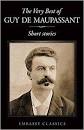
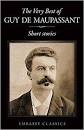
Book Review: ‘A Sale’ by Guy De Maupassant

Copyright@shravancharitymission

Khidki (Window)

–Read India Initiative—

This is only an attempt to create interest in reading. We may not get the time to read all the books in our lifetime. But such reviews, talk and synopsis will at least convey what the book is all about.

    This is a unique and interesting story with a lot of tongue twisting French names. The story picks up only after the first half. It opens in the courtroom.

    There are two defendants, Cesaire-Isidore Brument and Prosper-Napoleon Cornu. They appear before the Court of Assizes of the Seine-Inferieure, on a charge of attempted murder, by drowning, of Mme (Madam)Brument, the lawful wife of Brument mentioned earlier.

    The two prisoners are seated side by side on a traditional bench. They are two peasants. The first one Brument is small and stout, with short arms, short legs, and a round head with a red pimply face, planted directly on his trunk, which is also round and short, and with apparently no neck. He is a raiser of pigs and lives somewhere in France at Cacheville-la-Goupil, in the district of Criquetot.

    On the other hand Cornu is thin, of medium height, with enormously long arms. His head was on crooked, his jaw awry, and he squinted. He wore a blue blouse, as long as a shirt that hung down to his knees, and his yellow hair, which was scanty and plastered down on his head, gave his face a worn-out, dirty look, a dilapidated look that is was frightful. He was nicknamed “the cure” because he could imitate to perfection the chanting in church, and even the sound of the serpent. This talent attracted people to his cafe — for he was a saloon keeper at Criquetot — a great many customers who preferred the “mass at Cornu” to the mass in church.

    The court scene begins with Mme. Brument. She is seated on the witness bench. She is a thin peasant woman who seems to be always asleep. She has been sitting there motionless, her hands crossed on her knees, gazing fixedly before her with a stupid expression.

    The judge continues with his interrogation.

    “Well, then, Mme. Brument, they came into your house and threw you into a barrel full of water. Tell us the details. Stand up.”

    She rose. She looked as tall as a flag pole with her cap that looked like a white skull cap. She said in a drawling tone:

    “I was shelling beans. Just then they came in. I said to myself, ‘What is the matter with them? They do not seem natural, they seem, up to some mischief.’ They watched me sideways, like this, especially Cornu, because he squints. I do not like to see them together, for the two collectively are good-for-nothing when they are in the company of each other. I said: ‘What do you want from me?’ They did not answer. And with that I had a sort of mistrust ——”

    The defendant Brument interrupted the witness hastily, saying:

    “I was full.” (Full means drunk here).

    Then Cornu, turned towards his accomplice and said in a deep tone … like the deep tone of an organ:

    “Say that we were both full, and you will be telling no lie.”

    The judge, intervened:

    “You mean by that that you were both drunk?”

    “There can be no question about it.” replied Brument.

    “That might happen to anyone.” said Cornu.

    The judge said to the victim: “Continue with your testimony, lady Brument.”

  Lady Brument continued, “Well, Mr Brument said to me, ‘Do you wish to earn a hundred sous?’ (French coins) ‘Yes,’ I replied. Then he said: ‘Open your eyes and do as I do,’ and he went to fetch the large empty barrel which was lying under the rain pipe in the corner, and he turned it over and brought it into my kitchen, and kept it in the middle of the floor, and then he said to me: ‘Go and fetch water until it is full.’

    “So I went to the pond with two pails and carried water, and still more water for an hour, seeing that the barrel was as large as a huge tank.

    “All this time Brument and Cornu were drinking, drinking and drinking—a glass, and then another glass, and then another. When they were finishing their drinks I said to them: ‘You are full, fuller than this barrel.’ Brument answered. ‘Do not worry, go on with your work, your turn will come, each one has his share.’ I paid no attention to what he said as he was full.

    “When the barrel was full to the brim, I said: ‘There, that’s done.’

    “And then Cornu gave me a hundred sous, and not Brument.

    Brument said: ‘Do you wish to earn a hundred sous more?’ ‘Yes,’ I said, for I am not accustomed to presents like that. Then he said: ‘Take off your clothes!

    ‘Take off my clothes?’ I reacted.

    ‘Yes,’ he said.

    ‘How many shall I take off?’

    ‘If it worries you at all, keep on your chemise on, that won’t bother us.’

    “A hundred sous is a hundred sous, even if I have to undress myself. But I did not fancy undressing before those two, good-for-nothings. I took off my cap, and then my jacket, and then my skirt, and then my sabots. Brument said, ‘Keep your stockings on, as we are good fellows.’

    “And Cornu added, ‘We are good fellows.’

    “So there I was, almost like mother Eve. And they got up from their chairs, but could not stand straight, they were so full, your honour.”

    “I said to myself: ‘What are they up to?’

    “Brument asked: ‘Are you ready?’

    “Cornu replied: ‘I’m ready!’

    “And then they lifted me, Brument by the head, and Cornu by the feet, as one might take, for instance, a sheet that has been washed. Then I began to bawl.

    “And Brument said: ‘Keep still, wretched creature!’

    “And they lifted me up in the air and put me into the barrel, which was full of water. I had a check of the circulation, a chill went to my very insides.

    “Brument said: ‘Is that all?’

    “Cornu said: ‘That is all.’

    “Brument said: ‘The head is not in, that will make a difference in the measure.’

    “Cornu said: ‘Put in her head.’

    “And then Brument pushed down my head down as if to drown me, so that the water ran into my nose. He pushed me down further and I disappeared.

    “And then he must have been frightened. He pulled me out and said: ‘Go and get dry, carcass.’

    “I took to my heels and ran to my father as far as M. le cure’s. He lent me a skirt belonging to his servant, for I was almost in a state of nature, and he went to fetch Maitre Chicot, the country watchman who in turn went to Criquetot to fetch the police who came to my house with me.

    “Then we found Brument and Cornu fighting each other like two rams.

    “Brument was bawling: ‘It isn’t true, I tell you that there is at least a cubic metre in it. It is the method that was no good.’

    “Cornu bawled: ‘Four pails that is almost half a cubic metre. You need not reply, that’s what it is.’

    “The police captain put them both under arrest. I have nothing more to tell.”

    She sat down. The audience in the court room laughed. The jurors looked at one another in astonishment. The judge said:

    “Defendant Cornu, you seem to have been the instigator of this infamous plot. What have you to say?” Cornu rose in his turn.

    “Your honour Judge,” he replied, “I was full.”

    The Judge answered gravely:

    “I know it. Proceed.”

    “I will. Well, Brument came to my place about nine o’clock, and ordered two drinks, and said: ‘There’s one for you, Cornu.’ I sat down opposite him and drank, and out of politeness, I offered him a glass. Then he returned the compliment and so did I, and so it went on from glass to glass until noon, when we were full.

    “Then Brument began to cry. That touched me. I asked him what was the matter. He said: ‘I must have a thousand francs by Thursday.’ That cooled me off a little, you understand. Then he said to me all at once:

    ‘I will sell you my wife.’

    “I was full, and I was a widower. That stirred me up. I did not know his wife, but she was a woman, wasn’t she? I asked him: ‘How much would you sell her for?’

    “He reflected, or pretended to reflect. When, one is full one is not very clear-headed, and he replied: ‘I will sell her by the cubic metre.’

    “That did not surprise me, for I was as drunk as he was, and I knew what a cubic metre is in my business. It is a thousand litres, and that suited me.

    “But the price remained to be settled. All depends on the quality. I said: ‘How much do you want for a cubic metre?’

    “He answered: ‘Two thousand francs.’

    “I jumped like a rabbit, and then reflected that a woman ought, not to measure more than three hundred litres. So I said: ‘That’s too dear.’

    “He answered: ‘I cannot do it for less, as I would lose.’

    “You understand, one is not a dealer in hogs for nothing. One understands one’s business. But, if he is smart, the seller of bacon, I am smarter, seeing that I sell them also. Ha, Ha, Ha! So I said to him: ‘If she were new, I would not say anything, but she has been married to you for some time, so she is not as fresh as she was. I will give you fifteen hundred francs a cubic metre, not a sou more. Will that suit you?’ said Cornu.

    “He answered: ‘That will do. That’s a bargain!’

    “I agreed, and we started out, arm in arm. We must help each other in times of need.”

    “But a thought came to me: ‘How can you measure her, unless you dip her in liquid?’

    “Then he explained his idea, not without difficulty for he was full. He said to me: ‘I’ll take a barrel, and fill it with water up to the brim. I’ll put her in it. All the water that comes out we will measure, that is the way to fix it.’

    “I said: ‘I see, I understand. But the water that overflows will run away; so how will you measure it? How will you gather it back?’

    “Then he began stuffing me and explained to me that all we will have to do would be to refill the barrel with the water his wife had displaced as soon as she comes out of it. All the water we pour in would be the measure. I supposed about ten pails; that would be a cubic metre.

    “We finally reached his house and I took a look at his wife. She was certainly not a beautiful woman. And anyone could see that, for there she is. I said to myself, ‘I am disappointed, but never mind, she will be off value handsome or ugly, it is all the same, is it not monsieur le president (your honour)?’ And then I saw that she was as thin as a rail. I said to myself: ‘She will not measure four hundred litres.’ I understand the matter better, being in liquor trade.

    “She has already told you about the proceeding your honour. I even let her keep on her chemise and stockings, to my own disadvantage.

    “When that was done she ran away. I said: ‘Look out, Brument! She is escaping.’

    “He replied: ‘Do not be afraid. I will catch her all right. She will have to come back to sleep, I will measure the deficit.’

    “We measured. It was not four bucket fulls. Ha, Ha, Ha!”

    At this Brument began to laugh so hysterically that a cop was obliged to punch him in the back. Having quieted down, he resumed:

    “In short, Brument exclaimed: ‘Nothing doing that is not enough.’ I shouted, and shouted and shouted again, he punched me, I hit back.

    That would have kept on till the Day of judgment, seeing we were both drunk.

    “Then came the gendarmes (policemen)! They stared at us, and took us off to prison.”

    Cornu finally He sat down after his long statement.

    Brument corroborated the statements of his accomplice. The jury, in consternation, retired to deliberate.

    At the end of an hour they returned a verdict of acquittal for the defendants, with some severe strictures on the dignity of marriage, and establishing the precise limitations of business transactions.

    Brument went home accompanied by his wife.

    Cornu went back to his business.

    I would give the story seven out of ten. As always if reflects how some perverted men get away with ghastly crime on women. And it happens even today.

By Kamlesh Tripathi

*

https://kamleshsujata.wordpress.com

*

Share it if you like it

*

Shravan Charity Mission is an NGO that works for poor children suffering from life threatening diseases especially cancer. Our posts are meant for our readers that includes both children and adults and it has a huge variety in terms of content. We also accept donations for our mission. Should you wish to donate for the cause. The bank details are given below:

NAME OF ACCOUNT: SHRAVAN CHARITY MISSION

Account no: 680510110004635 (BANK OF INDIA)

IFSC code: BKID0006805

*

Our publications

GLOOM BEHIND THE SMILE

(The book is about a young cancer patient. Now archived in 7 prestigious libraries of the US, including, Harvard University and Library of Congress. It can also be accessed in MIT through Worldcat.org. Besides, it is also available for reading in Libraries and archives of Canada and Cancer Aid and Research Foundation Mumbai)  

ONE TO TANGO … RIA’S ODYSSEY

(Is a book on ‘singlehood’ about a Delhi girl now archived in Connemara Library, Chennai and Delhi Public Library, GOI, Ministry of Culture, Delhi)

AADAB LUCKNOW … FOND MEMORIES

(Is a fiction written around the great city of Nawabs—Lucknow. It describes Lucknow in great detail and also talks about its Hindu-Muslim amity. That happens to be its undying characteristic. The book was launched in Lucknow International Literary Festival of 2014)

REFRACTIONS … FROM THE PRISM OF GOD

(Co-published by Cankids–Kidscan, a pan India NGO and Shravan Charity Mission, that works for Child cancer in India. The book is endorsed by Ms Preetha Reddy, MD Apollo Hospitals Group. It was launched in Lucknow International Literary Festival 2016)

TYPICAL TALE OF AN INDIAN SALESMAN

(Is a story of an Indian salesman who is, humbly qualified. Yet he fights his ways through unceasing uncertainties to reach the top. A good read not only for salesmen. The book was launched on 10th February, 2018 in Gorakhpur Lit-Fest. Now available in Amazon, Flipkart and Onlinegatha)

RHYTHM … in poems

(Published in January 2019. The book contains 50 poems. The poems describe our day to day life. The book is available in Amazon, Flipkart and Onlinegatha)

(ALL THE ABOVE TITLES ARE AVAILABLE FOR SALE IN AMAZON, FLIPKART AND OTHER ONLINE STORES OR YOU COULD EVEN WRITE TO US FOR A COPY)

*****


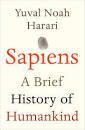
BOOK REVIEW: SAPIENS–A Brief History of Humankind by Yuval Noah Harari

Copyright@shravancharitymission

Khidki (Window)

–Read India Initiative—

This is only an attempt to create interest in reading. We may not get the time to read all the books in our lifetime. But such reviews, talk and synopsis will at least convey what the book is all about.

A NEW YORK TIMES BESTSELLER

    Yuval Noah Harari is an Israeli historian and a professor in the Department of History at the Hebrew University of Jerusalem.

    100,000 years ago, at least six human species inhabited the earth. Today, there is one. That is us. Homo-sapiens. How did our species succeed in this battle for dominance? Why did our foraging ancestors come together to create cities and kingdoms? How did we come to believe in gods, nations and human rights? Was it to trust money, books and laws, and to be enslaved by bureaucracy, timetables, and consumerism? And what will our model be like in the millennia to come?

    In the book “Sapiens—A Brief history of Humankind”—Dr Yuval Noah Harari, spans the gamut of human history, from the very first humans who walked the earth to the radical—and sometimes devastating—breakthroughs of the Cognitive, Agricultural and Scientific Revolutions. Drawing, on insights from biology, anthropology, and economics, he explores how the currents of history have shaped our human societies, the animals and plants around us, and even our personalities.

    But have we become happier, with the history unfolding? Can we ever, set ourselves free from the heritage of our ancestors? And can we do something to influence the course of the centuries to come?

    Bold, out-of-the-box and provocative, the book challenges everything we thought we knew about being human beings.

    What is the meaning of Species? Animals belong to the same species, if they tend to mate and give birth to fertile off-springs. What is the meaning of Genus? Species that have evolved from the common ancestor. They usually won’t mate but can be induced to do so. Eg. Mule a cross between (Horse and donkey), and the Liger a cross between (Lion and Tiger).

    Now that we know the terms Species and Genus, we can understand the meaning of Homo-Sapiens—‘Homo’ is the genus and ‘Sapiens’ (intelligent) the species. Some other members of our genus are, now extinct, Homo Erectus and Homo Neanderthalensis. Homo Sapiens closest living species is Chimpanzees.

THE COGNITIVE REVOLUTION—THE RISE OF HOMO-SAPIENS

    Homo genus has, unusually big brains that drains a lot of energy. A Homo Sapien brain consumes 25% of energy at rest, 8% is the norm for other apes. The big brain, is an even bigger cause of human infants which are born relatively premature (in terms of physical strength) compared to other species. The long gestation period and the raising of the child implied that the evolution favoured strong social ties in humans. Regular use of fire started about 300,000 years ago.

    The carefully managed fire was not only used to clear forests but was also used for cooking food as it was faster to digest. Long intestines and large brains both use a lot of energy, it is hard to have both. Since cooked food led to shortening of intestines it resulted in our brains to grow bigger. As Homo-Sapiens, spread from East Africa to Arabian Peninsula, Europe, and Asia, they drove other Homo species like the Neanderthals to extinction. Some interbreeding did happen but it was mostly the Sapien’s superior social skills that allowed them to make communities and drove other Homo species into extinction.

THE TREE OF KNOWLEDGE

    About 100,000 years ago, Homo-Sapiens migrated out of Africa, but returned, after losing to Neanderthals. About, 70,000 years ago, they tried again, and this time they succeeded, due to, the invention of language which allowed them to invent, tons of things like boats, lamps, needles. This cognitive revolution allowed Homo-Sapiens to dominate earth. Anthropologists (people who study human societies and cultures and their development) believe that our complex language was used more for gossip than to discuss where to hunt. And from there evolved the ability to create and believe in myths. The myths allowed us to collaborate and cooperate in large numbers in the form of tribes and now, in the form of the nation.

    The author goes on to say that nations are a myth and so are religions, and all are creations of our imagination. Unlike animals, trees, fish, rivers, the above myths have no association with the real physical entity. These myths, surprisingly, allow believers to work together and collectively. Homo-Sapiens ability to believe in myths allow us to form big groups of millions of individuals who have never met each other. Thus the author takes you through a high illusionary trajectory.

    In animals these groups are limited to the size of 25-30, who know each other. These animals cannot form large groups. The other big advantage of passing myths via language, is that, that it doesn’t require any DNA mutations. Buddhist monks pass on the celibacy, not via genes but by imparting their religion (again a myth) to the followers, some of who, convert. And that’s probably how Homo-Sapiens defeated Neanderthals. While Sapiens would have lost one-on-one combat, they had the wisdom to form large groups which Neanderthals couldn’t.

THE HUNTER GATHERER SOCIETY

    Barring the past 10,000 years, Sapiens have evolved in pre-agricultural hunter societies. They shaped our psychological and social characteristics. These ancient hunters knew a lot more about their own surroundings than us. While we, collectively, as a human society knew a lot more, the individuals of today knew a lot less. Hunters societies tended to eat wide and varied diet and hence, had a lower chance of malnutrition than the farmers who ate just a few staple crops. Hunter’s working hours were much less (30-35 hours per week) and since they neither engaged in the domestication of animals nor stayed in dense settlements, the epidemics were rare.

AGRICULTURAL REVOLUTION—HISTORY’S BIGGEST FRAUD

    Agriculture started in about 9000 BC and domestication of crops was over by about 3500 BC. Today, we eat the same crops—Wheat, Maize, Rice, Potato, Millet, and Barley. Where, only a few species could be domesticated, they were in the Middle East, China, and Central America but not in Australia or Africa. And that’s where, independent domestication of crops started.

    Wheat went from an unknown crop, to a crop that has spread across the planet. Human bodies were not designed for agriculture and farming. Wheat demands protection from pests, animals and even other human beings. The only advantage farming has is, that it leads to more food per unit area and allowed humans to multiply exponentially. Overall, the agriculture revolution in the short run made the life of human beings miserable, so then, why did it happen?

    Agricultural revolution led to permanent settlements that encouraged women to have more kids. Over time, as farmers multiplied, they cleared even more lands reducing the scope for hunters even further. Just like the modern day luxury treadmill, agriculture soon became a necessity to support the ever-increasing population. And there was no going back then. Similarly, domestication of animals proceeded with slaughtering the most aggressive, weak, and economically unworthy animals first.

    Over a period of time, domesticated animals, evolved, to become economically more worthy and even more submissive. Just like wheat, animals such as chicken, sheep, pig, and cow spread all over the world, but then they were treated brutally. From repeated impregnation (i.e. making female animals pregnant) to castration (i.e. removal of testicles of a male animals), their life became miserable compared to the life in the wild. Who else, but Homo-Sapiens were the culprits.

BUILDING PYRAMIDS

    The food surplus exploded the population from 8 million in 10,000 BC to 250 million in about 100 AD. The food surplus eventually led to the emergence of bigger political and social orders like cities and nations. Rather than being based on some ingrained human characteristics, these were imagined human orders based on shared beliefs and myths. “All humans beings are created equal” is completely incorrect from a biological standpoint. Human beings are all different from each other. Animistic beliefs (meaning a belief that objects, places, and creatures all possess a distinct spiritual essence) are a myth, so are human rights. There is nothing biological about them. They only exist in our shared imaginations.

    Natural order is indeed the stable order. Even if people don’t believe in gravity, apples would still continue to fall. But if people don’t believe in human rights, society will collapse. While some aggression is a must in terms of police and army to enforce an order, but then the elites or the rulers themselves have to believe is such orders. Christianity, capitalism, democracy, all are imagined orders with a large number of believers.

    The two of the biggest imagined orders of the modern world are romanticism and consumerism. Romanticism teaches us that we must have as many experiences as possible to fulfil our expectations. Consumerism teaches us that we must consume as many goods as possible. The imagined order is inter-subjective. Radioactivity is objective, it happens whether you believe in it or not. An imaginary friend is subjective since it exists only as long as you believe in it. The preciousness of gold is inter-subjective since it exists not only in your imagination (belief system) but also in the belief system of millions of others.

    For changing an inter-subjective belief system, one has to convince everyone else, and to convince everyone else, they have to believe in an even bigger imaginary order.    Trust has replaced priceless things like honour, loyalty, morality, and love.

THE EVOLUTION OF MONEY

    A barter system does not measure accurately. If there are 100 types of goods then the two parties who are exchanging the goods have to know 4950 combinations of exchange rates every day. Money ends up being a central mechanism to linearize the problem since every seller has to know the price of their good in a single currency. Of course, just like religion, money is an inter-subjective reality which only exists in our imaginations. And it does not have to be coins or notes. In Nazi concentration camps, cigarettes were a currency.

    The only requirement is that it should be easy to transport, store, and has a wide enough acceptance. Money is the most useful and efficient system of mutual trust ever devised.

    The original form of money like Barley had an intrinsic biological value as compared to marked gold and silver coins, where, no weighing was required to find the value. Then came sanctioned currency which had no intrinsic value, and then to electronic currency which had no physical existence. When we use money as a medium of exchange, we don’t trust each other; we trust money. When someone runs out of money, we run out of trust in them. Money as a source of universal convertibility and trust has replaced priceless things like honour, loyalty, morality, and love.

IMPERIAL VISIONS

    An empire is characterised by cultural diversity and territorial flexibility. All empires have engaged in the brutal slaughter and assimilation of people outside its borders to extend its territory. Slowly, the newly acquired population forgets what they stood for. For example, in 7th century AD, Arab empire crushed Egyptians with an iron fist, today Egyptians think of themselves as Arabs.

    One major change that happened over a period of time in the imperial vision was that empires changed their imagined reality from ‘we are conquering you for our benefit’ to more of humanistic stance. Persian king changed his philosophy from ‘Persian King’ to ‘everyone’s king.’ This was the first time in history, Sapiens were (pretending) to get rid of “us” vs “them” feeling.

    However, this macho approach of the conqueror continued to assume the inferiority of those who were conquered. That’s why M.K. Gandhi, a London-educated, qualified barrister was thrown out of a train meant only for whites.

    Almost, all imperial empires follow a similar paradigm. First, they conquer territories, then those territories adopt the new culture. This is when the people of these territories demand equal stature. This leads to friction.

    The next stage of human history will not involve biological and technological changes alone, but also changes in human consciousness and identity.    Many people think the question we should ask to guide our scientific pursuit is, ‘What do we want to become?’ As we seem to be on the path of genetic engineering and programming,

    In the past 1000 years, human beings have evolved to take over the world and are acting and behaving like gods. Yet, we still seem to be unhappy in many ways and we are unsure of what we want. How many young college graduates have taken demanding jobs in high-powered firms, vowing that they will work hard to earn money that will enable them to retire and pursue their real interests when they are thirty-five? But by the time they reach that age, they have large mortgages, children to school, houses in the suburbs that necessitate at least two cars per family, and a sense that life is not worth living without some good wine and expensive holidays abroad. What are they supposed to do, go back to digging up roots? No, they double their efforts and keep slaving for it.

    You can never convince a monkey to give you a banana by promising him limitless bananas after death in heaven. One of history’s few iron laws is that luxuries tend to become necessities and spawns new obligations.

    Anthropologist Christopher Robert Hallpike reviewed the book but did not find any “serious contribution to knowledge.”

    First published in Hebrew in 2011 and then in English in 2014, the book was translated into 45 languages (as of June 2017). It also made it to The New York Times best-seller list, and won the National Library of China’s Wenjin Book Award for the best book published in 2014. The Guardian listed the book as among the ten “best brainy books of the decade”. Bill Gates ranked Sapiens among his ten favorite books. I would give it eight out of ten, but it’s for a class of readers.

Posted by Kamlesh Tripathi

*

https://kamleshsujata.wordpress.com

*

Share it if you like it

*

Shravan Charity Mission is an NGO that works for poor children suffering from life threatening diseases especially cancer. Our posts are meant for our readers that includes both children and adults and it has a huge variety in terms of content. We also accept donations for our mission. Should you wish to donate for the cause. The bank details are given below:

NAME OF ACCOUNT: SHRAVAN CHARITY MISSION

Account no: 680510110004635 (BANK OF INDIA)

IFSC code: BKID0006805

*

Our publications

GLOOM BEHIND THE SMILE

(The book is about a young cancer patient. Now archived in 7 prestigious libraries of the US, including, Harvard University and Library of Congress. It can also be accessed in MIT through Worldcat.org. Besides, it is also available for reading in Libraries and archives of Canada and Cancer Aid and Research Foundation Mumbai)  

ONE TO TANGO … RIA’S ODYSSEY

(Is a book on ‘singlehood’ about a Delhi girl now archived in Connemara Library, Chennai and Delhi Public Library, GOI, Ministry of Culture, Delhi)

AADAB LUCKNOW … FOND MEMORIES

(Is a fiction written around the great city of Nawabs—Lucknow. It describes Lucknow in great detail and also talks about its Hindu-Muslim amity. That happens to be its undying characteristic. The book was launched in Lucknow International Literary Festival of 2014)

REFRACTIONS … FROM THE PRISM OF GOD

(Co-published by Cankids–Kidscan, a pan India NGO and Shravan Charity Mission, that works for Child cancer in India. The book is endorsed by Ms Preetha Reddy, MD Apollo Hospitals Group. It was launched in Lucknow International Literary Festival 2016)

TYPICAL TALE OF AN INDIAN SALESMAN

(Is a story of an Indian salesman who is, humbly qualified. Yet he fights his ways through unceasing uncertainties to reach the top. A good read not only for salesmen. The book was launched on 10th February, 2018 in Gorakhpur Lit-Fest. Now available in Amazon, Flipkart and Onlinegatha)

RHYTHM … in poems

(Published in January 2019. The book contains 50 poems. The poems describe our day to day life. The book is available in Amazon, Flipkart and Onlinegatha)

(ALL THE ABOVE TITLES ARE AVAILABLE FOR SALE IN AMAZON, FLIPKART AND OTHER ONLINE STORES OR YOU COULD EVEN WRITE TO US FOR A COPY)

*****