
All posts by shravancharitymission

Unknown's avatar

About shravancharitymission

Ex- Senior corporate- writer, author and social activist currently working for poor children suffering from life threatening diseases.

INTERESTING FACTS ABOUT INDIA AND THE WORLD- DO YOU KNOW SERIES-1

123

Copyright@shravancharitymission

  • Hooch the crudest form of liquor, is prepared in the most unhygienic of conditions and consumed by the underclass—people who can’t afford even country liquor. ET 24.6.15 chat room
  • The number of private ITIs in India did grow from under 2000 in 2007 to 10,000 in 2014.
  • According to World Bank data, barely 16% of Indian companies were providing enterprise based training in 2007. The shortage of skilled personnel has raised input costs for them, so that more of them now provide in-firm training (36% in 2014)
  • Sensex has delivered nearly 9% excess returns over inflation over long periods. Equities are real gold over a period of time.
  • Equities: At 17.1% CAGR, Rs 10,000 has become-290 times in 36 years. Equities are real gold over a period of time.
  • Liquid biopsy being tested in the US may soon become a boon for cancer treatment.
  • India slipped six places in one year in the global happiness index to be ranked 117th out of 158 nations in 2015. Switzerland tops the chart.
  • In Delhi transport contributes to majorly to emissions (PM2.5) 38%.
  • India has again topped the global remittance chart for 2014, pulling in $70.38 billion which is 3.7% of the country’s $2 trillion GDP from its migrant work force. China follows with $64.14 billion.
  • The average age of AAP cabinet is 42 years.
  • China company erects 57 storey skyscraper in just 19 days.
  • Mission Indra-dhanush would be carried out in two phases-1st 201 high focus districts where nearly 50% of all unvaccinated or partially vaccinated children reside. While 201 districts are being covered in the 1st phase, 297 will be targeted in the second phase in 2015-16. This mission aims to cover 89 lakh children.
  • Only 65% of our children are presently covered-under Universal Immunization Programme (UIP) Mission Indra-dhanush’s configuration will cover 90% full immunization coverage by 2020.
  • India’s information technology revolution happened on its own.
  • It has been found that in 63% of cases people are ignorant about the benefits of immunization in India.
  • It takes a contingent of 30,000 strong international media to cover Olympic games function with events spread far and wide.
  • India has one individual gold medal to show for 92 years of Olympic participation.
  • Aadhar has emerged as one of the largest bio-metric identification programmes in the world with unique identification authority of India issuing nearly 82 crore cards covering nearly 67% of the Indian population.
  • A house insurance costs just Rs 6-12/day however only less than 1% people who can afford it have house insurance.
  • MSME sector which produces 45% of manufacturing output and 40% of total exports- receives only cursory treatment without any tangible steps to make it part of global value chains or improving access to needed technologies & markets.
  • Search engine giant Google is facing anti-trust charges in Europe- abusing its dominant position & manipulating on line traffic.
  • In India we know that 1 in 2 girls are married before the age of 18. If a girl has a baby between 15 and 19 she’s twice as likely to die.
  • India is one of the countries with the highest maternal mortality.
  • Delhi has more than 500,000 manual rickshaws on its streets: Of these, less than a fifth are licensed. And 80% of rickshaw pullers continue their back breaking labour by paying ‘hafta’ to the police that amounts to Rs 10 crore per month.
  • India has 58 million private enterprises, the great majority of which are MSME category. These enterprises provide employment for more than 85% of the working population of India.
  • Unorganised sector have to borrow credit at 2-2.5% per month in India.
  • At present a mere 35 million households of a total of 250 million are in the direct tax net in India.
  • Indian goods travel via Singapore to reach Bangladesh in three weeks; now they will go directly to Bangladeshi ports in a week.
  • Europeans began to wear underwear only in the 17th century when they discovered soft and affordable Indian cloth brought by the East India Company.
  • With 5,000-mile coastline, India has historically been a great trading nation and in some periods, commanded as much as 20% share of world trade compared to 2% today. It always had a positive balance of trade with the world until the industrial revolution in 19th-century England when the mills of Lancashire made our handloom textiles technologically obsolete.
  • Sweden ranks as world’s most gender-egalitarian countries based on a firm belief that men and women should share power equally. Sweden also has a feminist party
  • MAM Ramaswamy-Chennai industrailist holds the record for the most wins in Indian Turf history
  • Indian economy is a startling 82% of entire SAARC region.
  • It takes a contingent of 30,000 strong international media to cover Olympic games function with events spread far and wide-
  • Nepal’s rebuilding to cost 10 billion dollars- Finance Minister of Nepal.
  • Barely 4% of all households in India are headed by women. Over 70% of currently married men are household heads compared to 3% of married women.
  • 41% of all girls aged 19 in India have married and in this context in rural India 47.3% of 19 year old girls had been married, in the urban areas the corresponding figure was 29.2%.
  • A study carried out by Comptroller and Auditor General of India last year on land acquired by the centre between 2006 and 2013–the period between which UPA was in power–reveals that a land mass as thrice the size of Noida was acquired under special economic zone but more than half of it had not been put to use.
  • 80 richest people own more wealth than what is owned by one-half of the human race and very soon just 1% people will own wealth which equals what the rest 99% of would have.
  • In 2001, world’s three richest people owned personal wealth greater than the GDP of 34 poorest nations.
  • In 2001, 51 of 100 top revenue-generating institutions were business operations and not nation states.
  • The average protein intake of a person in India through normal diet has dipped 6-10% in the past two decades with almost 86% of rural and 70% of urban population not getting the government designated 2400 kcal/day. While the richest get over 2518 kcal each day the poorest get less than 1679 kcal—a difference of almost 50%.
  • Food amounts for almost half of the consumer price index (CPI) basket of India.
  • 6 crore small entrepreneurs employ 12 crore people in India.
  • 10 million new workers enter the job market every year in India.
  • The daily intake of oil and fat consumption per person has increased from 31 gram to 42 gram in rural areas and from 42 gram to 52.5 gram in urban areas between 1993-94
  • Today 77% women in India get sterilized
  • Ayurveda is a 6000 year old science.
  • 80 Mumbaikars died everyday due to heart attacks between March 2014 and March 2015 up from 67 deaths daily during the same period the previous year.
  • 41% of all girls aged 19 in India have married, and in that context: In rural India 47.3% of 19 year old girls have been married, and in urban areas the correspondence figure is 29.2%
  • India slipped six places in one year in the global happiness index to be ranked 117th out of 158 nations in 2015. Switzerland tops the chart.
  • India has around 3500 engineering colleges and churns out 14 lakh engineers a year.
  • It has been found that in 63% of cases people are ignorant about the benefits of immunization in India.
  • India has one individual gold medal to show for 92 years of Olympic participation.
  • Aadhar has emerged as one of the largest biometric identification programmes in the world with unique identification authority of India issuing nearly 82 crore cards covering nearly 67% of the Indian population.
  • Bottom 50% of households consume only 25% of subsidised LPG; 41% of PDS kerosene is lost as leakage , only 46% of remainder (or 27% of the total) is consumed by poor households.
  • Hindu India has been the sole nation on earth where Jewish community has never been persecuted even though they have been living here for more than two thousand years.
  • India has never invaded any country in the last ten thousand years of its history.
  • Delhi Metro aims at carrying 25 lakh commuters daily.
  • There are in India 5.7 crore own account enterprises.
  • Childhood deaths used to be 12/100 in India in 1990s. That’s down to 5/100. But 56% die in the first month.
  • At least 60% Indians are still stuck in farming, which produces only 13.9% of the nation’s GDP.
  • Pradhan Mantri Jan Dhan Yojana, saw opening of 12.5 crore accounts in 8 months.
  • SUVs have grown to more than 30% of the total luxury vehicles sold in India.
  • Delhi is fast becoming the world’s pollution capital, and around a fifth of Delhi’s population is caused by traffic.
  • 20th century saw the worst of violent wars in human history.
  • Tata Consultancy Services (TCS) is India’s biggest private sector employer  with 2.5 lakh employees and top recruiter of women, will dole out a special reward amounting to Rs 2,628 crore ($423 million), probably the biggest-ever bonus payout by an Indian company.
  • Our nuclear reactors which were operating at around 50% of capacity a few years ago are now operating at about 83% capacity, thanks to uranium procured from other countries.
  • Let’s put it this way. If you send a silly person on an important job and he acts true to his nature, who is real silly? The man who acted silly or the one who sent him?
  • Only 3% are vegetarian in America, 9% in the U.K., a noteworthy 10% in Italy and Taiwan and surprisingly 8.5% in Israel. And in this particular area, we Indians are the kings, 40% of our huge population is vegetarian.
  • With its meagre 7.5 million foreign tourist arrivals per year, India is losing out on a major employment expansion opportunity.
  • India has around 1,000 diplomats which is far fewer than Britain that has  over 6,000 and China that has around 7,500 diplomats.
  • The  current estimate for India’s landless is around 100 million households, which would constitute at least 300 million families of our population. Another 200 million rural families subsist on less than bighas and must supplement their meagre incomes with some form of labour.
  • India’s future prosperity depends on its urban centers which already contribute a little over two-third of the GDP.
  • The contribution of nuclear energy in electricity generation in India is not more than 3.5%.
  • World’s military expenditure is estimated to have been $1.74 trillion in 2013 or 2.4% of global GDP.
  • In the next five years 22% of China’s GDP growth is estimated to come from the digital sector.
  • The world’s last typewriter clattered off the Godrej line in 2011.
  • Finland has the highest borrowing of library books in the world.
  • Indian Railways is the second biggest procurement agency after defence, spending almost Rs 1 lakh crore a year. It is also the largest buyer of diesel in India.
  • More than 45,000 trucks from North Indian states enter Delhi everyday, plying on Euro III diesel which has 350 ppm sulphur and is greatly more polluting than the 50 ppm sulphur Euro-IV fuel
  • India needs to reverse groundwater usage. Already, the figures suggest that well over half the irrigation requirements are now met by mining groundwater and 15% of all aquifers are in a critical condition.
  • Restaurants abroad that pass of as Indian are often run by Bangladeshis and Pakistanis, rather than persons of Indian origin.
  • At present Rs 3,77,616 crore or 4.2% of Indian GDP is spent across sectors in subsidies.
  • National Optic Fibre Network (NOFN) aims to link India’s 2.5 lakh gram panchayat through 70,000 km of high speed optic fibre in the next three years- thereby enabling 600 million Indians to harness the benefits of modern communication.
  • Our urban population is 377 million or 31% of the total. By 2031 it is projected to rise to 600 million.
  • The first modern Caesarean section was performed by German Gynecologist Ferdinand Adolf Kehrer in 1881.
  • Of 250 million mobile users in India 180 million access internet on mobile, this will shoot up to 500-600 million in a few years
  • Studies show maximum viewing is of two-minute videos and in terms of text 400 words.
  • Mark Twain, is the pen name for Samuel Langhorne Clemens.
  • India is one of the biggest arms importer of the world.
  • Indian gambling market is estimated around $60 billion annually
  • A woman is raped in India every 20 minutes.
  • India’s luxury car market has grown eight times in the last seven years from 4000 units in 2007 to 33,000 units in 2014. And as per car experts the number is expected to hit 100,000 units by 2020.
  • Prime residential prices in Re/sq ft. Monaco-339723, Hongkong-293944, London-283215, New
  • York-174362, Singapore-151419, Shanghai-121608, Paris-116851, Miami-99210, Beijing-97087, Mumbai-61300, Dubai-40455, Delhi-33400, Bengaluru-18600.
  • All India Brewers Association- Beer sales account for only 50% of liquor sales in India- Much lower than in China, Brazil, US & UK. Wine accounts for only 1% of liquor sales.
  • Mumbai has 30 of India’s 68 billionaires.
  • On top of the billionaire list is New York with 114, followed by Moscow 91, Hongkong 53, London 49, Beijing 37 and Mumbai 30
  • Ricky Ponting holds the world record of 24 straight wins in ODI cricket captaincy.
  • Year 2015 is designated by the UN as the ‘Year of Light and technologies.’
  • 22% of households in cities and 31% in villages are in debt.
  • Sri Lankan cricketer Sangakara is a great collector of books
  • Lakshadeep has in all 36 islands.
  • India is pushing its shipyards to build more ships and other vessels for small Indian Ocean island countries in this region.
  • India was a maritime power before China had even heard of the term.
  • A Chinese naval strategist declared China needed 6 aircraft carriers to ‘secure’ the Indian Ocean.
  • According to the Census 2011, 41% of India’s population is under 18. Yet only 4.5% of the total budget is earmarked for children.
  • Today, the number of child labourers in India varies from 50 lakhs to 5 crores in different estimates.
  • Have you seen or heard of a bigger glutton and despot than Zimbabwean President Robert Mugabe who celebrated his 91st birthday with elephant on menu for guests at the lavish 1-million pound bash. According to the mirror, two young elephants were shot and feasted on by the president’s 20,000 guests while the country’s poor struggle to scrape a living. A farmer had donated the elephants to Mugabe along with a lion and a crocodile to be stuffed. Members of the Zimbabwean government offered 40 cows that are due to be held at Victoris falls.
  • Only 43 people since Independence have been conferred the Bharat Ratna.
  • Between census 2001 and 2011, India witnessed a spurt of urban clusters, with the number of towns increasing from 5161 to 7935 in a decade India’s urban population likely to grow to 40% by 2030 from current 31%
  • India posed to be world’s 3rd largest construction market by 2025.
  • India has 7500 km of coastline with opportunities for port and harbour development.
  • India is world’s 2nd largest road network handling more than 60% of freight and 90% of passenger traffic in the country- 64,000 kms of new highways to be developed.
  • India is world’s 3rd largest network of railways spanning 64,600 kms and 25,000 kms of new lines to be added by 2020.
  • Indian airline traffic expected to treble to 450 million by 2023 from 169 million in F-14 and make India world’s 3rd largest aviation market by 2020.
  • Increase in infrastructure investment of 1% of GDP results in additional 34 lakh jobs in India (Compared to 15 lakh in USA and 13 lakh in Brazil)
  • India requires Rs 70 Lakh crore investment required till 2030 for development of urban roads, affordable housing and transportation systems- Rs 39 lakh crore to be invested over the next 20 years to build urban infrastructure for smart cities alone.
  • Contribution of railways to Indian GDP to increase to 3% in 2020 from 1% in 2012.
  • Rs 2 lakh crore to be invested in solar and wind power projects in wastelands and uninhabited regions in India- 50,000 villages to receive electricity through off grid solar by 2030.
  • Indian wedding industry is now valued at 25.5 billion dollars a year
  • Narendra Modi was the first Prime Minister to visit Parliament canteen where he had an ordinary thali costing Rs 29.
  • Indian Census Data: There are about 66 lakh more women who are “currently married” than men.
  • Indian Census Data: More than 18 lakh girls under the age of 15 are married.
  • Indian Census Data: Out of total 120 crore population about 58 crore were married at the time of census 2011.
  • Indian Census Data: among 58 crore married persons 29.3 crore were women while 28.7 crore are men.
  • Indian Census Data: Kerala has the highest skew with 1.13 married women for every married man.
  • Indian Census Data: In the 20-25 age group about 69% of women were married while just over 30% of men were married.
  • Indian Census Data: India’s population in 2011 was 121 crore and, of this , 4.6% or 5.6 crore are widowed, with women out numbering men by a long way; when in 2001 only 18.5 lakh or 0.7% of the then population of 102 was widowed.
  • There are in India 5.7 crore own account enterprises.
  • Delhi Metro aims at 25 lakh commuters daily.
  • India has never invaded any country in the last ten thousand years of its history.
  • Hindu India has been the sole nation on earth where the Jewish community has never been persecuted even though they have been living here for more than two thousand years.
  • Bottom 50% of households consume only 25% of subsidised LPG; 41% of PDS kerosene is lost as leakage, only 46% of the remainder (or 27% of the total) is consumed by poor households in India.
  • The slum population of India has increased from 5.23 crores in 2001 to 6.55 crores in 2011
  • The value of goods that lay unused in urban India was pegged at over Rs 56,000 crore
  • Indian Railways has 66,000 km of rail tracks of which only 13,000 km has been added in the last ten years
  • GOI spent Rs 320 crores on republic day in 2014 an increase from Rs 145 crores in 2001
  • It takes Rs 2.5 lacs per minute to run the Indian Parliament
  • Central Board for film certification certifies 13,500 films every year.
  • Garment factories are India’s second largest employer of the women with 1.2 crore women
  • Last year more than 1000 women were murdered for so called honour crimes in Pakistan
  • 1% owns 48% of global wealth since 2009. 1 in 9 people don’t have enough to eat.
  • More than 1 billion people live on less than $1.25 a day.
  • People younger than 45 years of age account for 40% of all heart  related deaths in India as compared to 10% in the US. So are you exercising enough.
  • Gita is one of the all time best sellers. It is 5153 yeras old says RSS.
  • The Fiscal Responsibility and Budget Management (FRBM) act prescribes that the central government deficit should not exceed 3% of GDP.
  • It is generally believed in the Indian context, the acceptable level of inflation in 4%, and the comfort zone is +/- 2%. In developed economies, the acceptable level of inflation is only 2%


Open letter to #Sebi, #TRAI, #PF-commissioner about #Tulip #Telecom Limited- a listed company run by ex-serviceman Lt Col H S Bedi

Copyright@shravancharitymission

91012

Dear SEBI, TRAI & PF COMMISSIONER

We all want ‘acchey din’ for every Indian as committed by our dynamic Prime Minister Sri Narendra Modi.

Last year acting on your complaint, the ever helpful honorable #Supreme Court of India ordered the arrest of Subrata Roy, founder and Chairman of Sahara Group for not depositing amounts collected from small investors with you. This heralded a vigilant SEBI trying to protect the interest of “small investors” a welcome gesture, seldom heard; nevertheless a new beginning.

2

And, while it is gratifying to learn that SEBI cares for the ‘small’ in India. I would like to cite an example of another listed company in the name and style of “TULIP TELECOM LIMITED” run by an unethical and shameless Lt Col H S Bedi, about whom, I understand, has not paid the dues, including statutory, to its employees and has also been jailed for evasion of service tax.

While SEBI willfully nurses the wounds of ‘small investors’ what about wounds of hapless ‘employees’ of such listed companies; and where is TRAI? (Telecom Regulatory Authority of India) that is required to brazenly monitor such rogue companies and their unethical board of directors. In fact Indian Inc. has a cherished reputation and it is only because of companies like Tulip Telecom and MDs like Lt Col H S Bedi, the revered Corporate Behemoth appears sullied at times; and sadly so.

13

There is a possibility, that both SEBI and TRAI are unaware of this company and its rueful deeds; and just to substantiate the magnitude of the issue I am scripting the story I have received from one of the employees with his name veiled with a request to both SEBI, TRAI and the PF Commissioner to provide relief to the concerned employee.

SEBI must be doing an intense due-diligence before allowing companies to raise public funds, as it is a matter of serious concern if some companies do not even pay statutory PF dues and other full and final sundry amounts to their hapless employees and ask them to just leave, high and dry. And if not, SEBI must build a mechanism to circumvent such frauds committed by such rogue companies by attaching the movable and immovable assets of such companies including their directors, as mere jail term wouldn’t be sufficient. On the other hand TRAI should revoke licenses of such companies and utilise their deposits if any with them to pay off genuine employee dues. A proper trail of funds should be launched and such failing directors should be debarred from registering any other company in future; basis their unscrupulous and criminal intent. The Provident fund commissioner, if asleep in this matter, is requested to wake up and help employees.

CII (Confederation of Indian Industry) and ASSOCHAM (Associated Chambers of Commerce and Industry of India) should debar such companies and their Board of Directors from their membership. For make no mistake if Surata Roy can languish in the jail why can’t Lt Col H S Bedi, and if Sahara’s properties can be attached why not Tulip Telecom’s property?

#MNCs wanting to collaborate with Indian companies should desist from taking on board such companies and directors with dubious distinctions; and even iconic personalities such as film-personalities and cricketers should not endorse products off such companies where directors have the propensity and nudge for hapless employee dues.

I am giving below a gist of the sad story of the employee in the form of his 27th reminder addressed to the Management team of Tulip, which they again chose not to reply. The team comprises Sukhmani Bedi DS Bedi and Col Bedi. The excerpts of his e-mail are as below (Complete correspondence is available)

Subject: Request for release of Full and Final and other statutory payments on humanitarian grounds.
Dear Ms Sukhmani, Mr Deepender & Col Bedi

Warm – New Year Greetings,

  • Last year, I had tried many possible methods to connect with all of you on a daily basis, be it may, via phone calls, text msgs, wts-app and even emails. But for some strange reasons, none of you, neither took my calls nor returned my calls, nor did you reply to my messages, nor my emails. In fact I have been writing mails profusely regarding clearance of my dues for last 10 months but till date I haven’t got a firm reply from you.
  • The employee further underscored about his urgent financial need in terms of his brother undergoing treatment in one of the hospitals but then also the unethical-trio never responded.
  • Sukhmani once called on 13th Aug 2013 and basis discussions committed to call back with updates with respect to the long pending full and final payment of Rs 4.16; but after that, days have gone by and the employee is yet to hear from her and as a matter of fact he has tried to connect through phone, sms and even wtsapp- but all in vain.
  • As a last resort the employee once again begs as he has nowhere to go and mentions. “I am  forced to write to you again as I have been traumatized and “cornered due to “Zero Communication methodology” adopted by “Tulip Management” with regard to release of my FNF (full and final) amount and other statutory payments and compliance’s like PF payment and Form 16.” And there are many trailing mails to establish the concerns. Employee further writes.
  • I have tried my level best to connect with Mr. Ashu and both of you via all modes of communication for last 5 months but all in vain again and this pains me deep. (Please refer trailing mails) I have very categorically and emphatically mentioned my personal and financial problems but it seems my miseries have no effect on Tulip’s management.
  • However, basis several discussions with Ashu & Sukhmani regarding subject matter, I am constantly writing for clearance of my dues. The last communication on the subject was from Ashu on 29th April 2013 stating me to “call him to work out a payment plan” (trail mails). Post, that I have made innumerable calls and written constantly but I am yet to receive a firm positive revert from you. I must add with a heavy heart that I am a shattered man and I feel betrayed by the Management.
  • And ss you are aware, I had served the company to the best of my ability and was instrumental in establishing video business. I stuck with the company in worst of time and was the last person in video team to quit as my struggle to maintain myself and family reached a boiling point and sustainability and survival became the “core issue.”
  • Sukhmani , although you are quite aware of current financial and family circumstances yet allow me to throw some light and refresh you. My financial & family life is currently quite deplorable as I am the sole bread winner of my family with a widowed mother and a sick brother diagnosed of a cerebral medical condition in December 2012 and currently under treatment.
  • I request you with folded hands to consider my case on humanitarian grounds and release my funds as below
  1. Full and Final payment of rupees 4.16 lacs
    2. Provident fund Statutory per Law of GOI
    3. Form-16: Statutory compliance to be adhered by organization as per GOI.

The employee once again requests the Management of Tulip Telecom to settle his dues.

When Even your critics CoME TO SEE you off- Lucknow boy

Copyright@shravancharitymission

1

From Rawalpindi to Lucknow to Mumbai to Delhi; Vinod Mehta travelled on and on, only to tell the truth, nothing else but the truth. And in the process he created many critics who actually loved him for pointing their wrong at the right time and the test of it was seen in the Lodhi Crematorium on Sunday where even Netas singed by him were there to see him off, and the newspapers, abuzz with tributes.

May you rest in peace- Lucknow Boy.

WORD POWER-IDIOMS-PHRASES

Copyright@shravancharitymission

By Kamlesh Tripathi

A learned society values a person with a sound vocabulary.

123

  • Di-rigueur: Fashionable, up-to-date.
  • Quirky: peculiar or with unexpected traits, eccentric.
  • Avuncular: Kind of friendly towards a younger or a less experienced person.
  • Opprobrium: harsh criticism.
  • Grunt: of animal make a low, short guttural sound.
  • Liverish: slightly ill
  • tawny : of an orange-brown or yellowish-brown colour.
  • Tramp: walk heavily or noisily.
  • Honorofic: a title or word implying or expressing respect.
  • Shikoed: prostrating themselves upon the ground, the hands
  • Waddled: walk with short steps and a clumsy swaying motion.
  • Lithograph: The art or process of producing a picture
  • Sidelongness: a sidelong glance
  • Sallow: (of a person’s face or complexion) of an unhealthy yellow or pale brown colour.
  • Ochreous: a pale brownish yellow colour.
  • Priori: is a philosophical term that is used in several different ways. The term is suppose to mean knowledge that is gained through deduction, and not through empirical evidence. For instance, if I have two apples now, and I plan to add three apples, I will have five apples. This is knowledge gained deductively.
  • Ectoplasm: the more viscous, clear outer layer of the cytoplasm in amoeboid cells; a supernatural viscous substance that supposedly exudes from the body of a medium during a spiritualistic trance and forms the material for the manifestation of spirits.
  • Ensconced : establish or settle (someone) in a comfortable, safe place.
  • Equipoise: balance of forces or interests.
  • Discountenance: Refuse to approve of; disturb the composure of.
  • Wanton: Deliberate and unprovoked, sexually modest or promiscuous.
  • Solstice: either of the two times in the year, the summer solstice and the winter solstice, when the sun reaches its highest or lowest point in the sky at noon, marked by the longest and shortest days.
  • Spigot: a small peg or plug, especially for insertion into the vent of a cask; a tap.
  • Confucian: relating to Confucius or Confucianism.
  • Kowtow: act in an excessively subservient manner.
  • Pedagogy: the method and practice of teaching, especially as an academic subject or theoretical concept.”the relationship between applied linguistics and language pedagogy”
  • Plenipotentiary: a person, especially a diplomat, invested with the full power of independent action on behalf of their government, typically in a foreign country.
  • Boorish: Rough and bad mannered, coarse.
  • Quintessential: Representing the most perfect or typical example of a quality or class.
  • Jingoism: Extreme patriotism, especially in the form of aggressive or war like foreign policy.
  • Discomfiture: A feeling of unease or embarrassment; awkwardness.
  • Bete Noire: A person or a thing that someone dislikes very much.
  • Neologisms: 1. A new word or expression 2. The coining of use of new words
  • Intransigence: Uncompromising, stubborn.
  • Atavistic: 1. Resemblance to remote ancestors rather than to parents or animals 2. Reversion to an earlier type
  • Tall poppy syndrome: A social phenomenon where those with more merit or success are disparaged and pulled down.
  • Purported: Appear to be or do something, especially falsely.
  • Rime: Frost formed on cold objects by the rapid freezing water vapour in cloud or fog
  • Hegemonic: Ruling or dominant in a political or social context.
  • Impinge: To have an effect, especially a negative one.
  • Prosaic: Having or using the style or diction of prose as opposed to poetry; lacking imaginativeness or originality.
  • Fulsome: Complimentary or flattering to an excessive degree.
  • Raconteur: A person who tells anecdotes in a skillful and amusing manner.
  • Hurtle: Move or cause to move at high speed.
  • Callow: Inexperienced and immature.
  • Guffaw: Loud and hearty laugh.
  • Russet: Reddish brown in colour, rustic, lonely.
  • Delirium: Restlessness, illusions, incoherence.
  • Speckled: Covered or marked with a large number of small spots or patches of colour.
  • Ubiquitous: Present, appearing or found everywhere.
  • Balk: Hesitate or be unwilling to accept an idea or undertaking.
  • effrontery: Insolent or impertinent behaviour.
  • Inchoate: Just begun and not so fully formed or developed; rudimentary
  • Mallet: A hammer with a large, usually a wooden handle.
  • Accompaniment: A musical part which supports or partners an instrument.
  • Clammy: Unpleasantly damp and sweaty
  • Forswear: Agree to give up or do without.
  • Insouciance: Indifference; casual lack of concern
  • Mendicant: Given to begging; a beggar
  • Cannabis: A tall plant with a stiff upright stem, divided serrated leaves, and granular hair. It is used to produce hemp fire & as a psychotropic drug.
  • South Paw:Is the normal stance for a left handed boxer.
  • Ambled: to walk at a slow and relaxed speed.
  • Corpulent: Fat
  • Abound: exist in large numbers or amounts.
  • Deckle edge: is a type of rough cut edged paper used in the book trade.
  • Wading: walk with effort through water or another liquid or viscous substance.
  • Wrought: (of metals) beaten out or shaped by hammering; made or fashioned in the specified way.

Continue reading WORD POWER-IDIOMS-PHRASES

IS LITERACY RATE OF INDIA BEGINNING TO DRIVE INDIAN POLITICS?

Copyright@shravancharitymission

123

    The working definition of literacy in the Indian census since 1991 is as follows: Literacy rate: The total percentage of the population of an area at a particular time aged seven years or above who can read and write with understanding. Here the denominator is the population aged seven years or more.

    At the time of independence in 1947. India had a population of approximately 390 million. This got divided as follows after partition: 330 million people remained in India, 30 million in remained in West Pakistan and another 30 million in East Pakistan.

    The literacy rate of independent India in 1947 was 12%. By around 1950-1951 it had increased to around 18.33% with a population of 35 crore as you can see in the (literacy and population) table below. As compared to 1947 the current average literacy rate of India as per 2011 census, is 74% when the world average is 84%. Of the big states of India some laggard states are below 8% and some above by 20% as compared to the national average of 74%.

LITERACY RATE OF INDIA POPULATION
YEAR PERSON MALE FEMALE YEAR CRORE
1951 18.33 27.16 8.86 1950 35
1961 20.3 40.4 15.35 1960 43
1971 34.45 45.96 21.97 1970 54
1981 43.57 56.38 29.76 1980 69
1991 52.21 64.13 39.29 1990 83
2001 64.83 75.26 63.67 2000 101
2011 74.04 82.14 65.46 2000 117
        2015 124

 564

    In the early stages of independent India. Nothing else mattered than the sweet hangover of the freedom struggle and the newly formed Bharat Mata. That wheeled Pandit Nehru to rule for almost 17 years, as the longest serving Prime Minister (15.8.47 to May 1964). During his tenure the literacy rate rose from 12% to around 25%. The major event that shook India then was the Chinese aggression in the year 1962.

    India was an unquestioning country then. Just rising from the dust of the long colonial rule. And during that period, there was little or no political resistance to the Indian National Congress. That had spearheaded the freedom movement, and most iconic political leaders that mattered then were from this party.

    After Pandit Nehru expired post India-China aggression in 1964 the vacancy was filled in by another firebrand Congress leader Lal Bahadur Shastri. Who, served the country only for around 19 months and expired in Tashkent, part of the erstwhile USSR and today’s Uzbekistan.

    After Shastri’s sad demise. The mantel was adorned by Nehru’s daughter Indira Gandhi. Who, ruled for eleven years from 1966-1977. The three major events during her tenure, happened to be the liberation of East Pakistan and creation of Bangla Desh in 1971 followed by a full blown battle with Pakistan in the same year and declaration of emergency for the third time in India, and this time for internal reasons. Indira Gandhi started at an average literacy rate of around 32% in 1966 but in 1977 when Congress lost, the literacy rate had crept up to around 40%. It was for the first time Congress had gone out of power since independence. And in a manner it took literacy rate to jump by 28% (12% to 40%) to throw out a long standing ruling party at the centre. This goes to prove that literacy rate one way or the other increases the political appetite of the citizenry.

    In the Indian scenario increase in literacy rate has made voters change their minds. That has demanded for a dispensation of a different nature to govern the country. Indira Gandhi had imposed ‘emergency’ in the year 1975 when the average literacy rate was around 40%. This made her lose the general elections and gave entry to the first non-Congress government headed by Morarji Desai in 1977.

    When the average literacy rate of India was around 30%. India could see. In some states, certain state and regional parties gaining ground such as the Dravidian parties that have dominated since 1967. DMK routed Congress in 1967 and in 1972 MGR split DMK into AIDMK. Such incidents clearly dawned an era of new politics.

    Some states of India, such as Kerala and Tamil Nadu have always been ahead of the average Indian literacy rate. In the 2011 census as against the average literacy rate of 74%, Kerala was at 94, Tamilnadu at 80%, Maharastra at 82% and the big laggard states were Bihar at 62%, Jharkhand 66%, AP 67% Rajasthan 66% and UP 68%

    Bihar witnessed JP movement when the literary rate was between 35-40% and Lalu became the Chief Minister of Bihar in 1984 when the literary rate of Bihar was > 45%. In U.P. Mulayam Singh became the chief minister in 1991 and Mayawati in 1995 when the state literacy rate had crossed 45%. Signalling, the thinking minds wanted a change from two national parties, Congress and the BJP. In West Bengal too Congress ruled till 1977 but when the Bengal literacy rate rose to around 40% it was taken over by the Communist rule. And when literacy rate went passed 52% the voters even rejected Communist Party that was getting irrelevant and pulled out Trinamul Congress from the stable of Congress.

7986

    The literacy rate map below shows how certain states maintain their lead in literacy rates. Where, one would find a distinct differentiation within the political set ups of states such as Kerala and Maharastra with that of Bihar and Jharkhand.

2011_Census_India_literacy_distribution_map_by_states_and_union_territories.svg

INDIA WHEN ABOVE 64% AVERAGE LITERACY RATE

    India decided to open up when the literacy rate had gone past 52% in the year 1991 when wide spread reforms were announced. And, as the literacy rate went up, ethics in politics came down. Perhaps, thinking minds made politics much more competitive- resting on the theory of ‘survival of the fittest.’

    Beyond 2001 when the average literacy rate had just crossed 64%. India saw a sea change in terms of, all the four estates. To begin with the first estate (clergy) now tampers with politics without fear. Second estate (Bureaucracy) has become irresponsible, subservient, corrupt and even callous towards the general public. Third estate (Commoners) is perennially pained but have become more knowledgeable and demanding. And the fourth estate (Press and Media) have become all powerful. Yet they remain the saving grace of modern India

INDIAN POLITICS AT 74% LITERACY RATE

    At 74%, politics of India doesn’t remain the same and is deluged by the heft of thinking minds. For in the recent past it attracted grandstanding of agitations, like ‘India against Corruption’ where revered activist like Anna Hazare had to take the centre stage.

    Besides, even the mind space of an Indian voter has got more and more complex. Because of which we could see for the first time. A political leader of the stature of Narendra Modi, to create space in voters mind traveled 3 lac km across 25 states, addressed 473 big public rallies with 5827 public interfaces, including Chai pe charcha and 3D broadcasts. More so. BJP fought more under the banner of Narendra Modi than BJP, like presidential election. In Delhi elections we saw AAP party following the new ‘volunteer’ cult to create tailor made space in voter’s mind that wiped out BJP and Congress. In J&K also it was a star struck and out-of-the-box variety of a political campaign. It was an expensive opportunity that forced BJP to abandon relevant political-IZMS just to form the government.

    As we move towards 100% literacy. The route to State Assembly and Parliament will become more and more arduous. Political Parties will have to change their tone and tenor to address 100% literacy in all their political communication and behaviour. Where, corruption, scams and VVIPSM will have no place. What will simply matter is performance. This indeed will effect hoodwinkers under the garb of individual politicians.

*

By Kamlesh Tripathi

*

https://kamleshsujata.wordpress.com

*

Share if you like it

*

Shravan Charity Mission is an NGO that works for poor children suffering from life threatening diseases. Should you wish to donate for the cause the bank details are given below:

NAME OF ACCOUNT: SHRAVAN CHARITY MISSION

Account no: 680510110004635 (BANK OF INDIA)

IFSC code: BKID0006805

*

Our publications

GLOOM BEHIND THE SMILE

(The book is about a young cancer patient. Now archived in 7 prestigious libraries of the US, including, Harvard University and Library of Congress. It can also be accessed in MIT through Worldcat.org. Besides, it is also available for reading in Libraries and archives of Canada and Cancer Aid and Research Foundation Mumbai)  

ONE TO TANGO … RIA’S ODYSSEY

(Is a book on ‘singlehood’ about a Delhi girl now archived in Connemara Library, Chennai and Delhi Public Library, GOI, Ministry of Culture, Delhi)

AADAB LUCKNOW … FOND MEMORIES

(Is a fiction written around the great city of Nawabs—Lucknow. It describes Lucknow in great detail and also talks about its Hindu-Muslim amity. That happens to be its undying characteristic. The book was launched in Lucknow International Literary Festival of 2014)

REFRACTIONS … FROM THE PRISM OF GOD

(Co-published by Cankids–Kidscan, a pan India NGO and Shravan Charity Mission, that works for Child cancer in India. The book is endorsed by Ms Preetha Reddy, MD Apollo Hospitals Group. It was launched in Lucknow International Literary Festival 2016)

TYPICAL TALE OF AN INDIAN SALESMAN

(Is a story of an Indian salesman who is, humbly qualified. Yet he fights his ways through unceasing uncertainties to reach the top. A good read not only for salesmen. The book was launched on 10th February, 2018 in Gorakhpur Lit-Fest. Now available in Amazon, Flipkart and Onlinegatha

(ALL THE ABOVE TITLES ARE AVAILABLE FOR SALE IN AMAZON, FLIPKART AND OTHER ONLINE STORES OR YOU COULD EVEN WRITE TO US FOR A COPY)

*****


CASUAL CAUSERIE- MY HOME ALONG THE COUNTRYSIDE

Copyright@shravancharitymission

123

By Aolla Tripathi

The cock would crow in the nearby village almost at the stroke of dawn. The chatter and chirping of the birds wafted in the air, as I would linger on my bed a little longer, listening to it for some time. There is almost a languid laziness about the whole morning scene. I would get up yawning, bleary eyed. The footfalls of the cowherd, approaching, can be clearly heard. It is mingled with the jingle of the tiny bells around the neck of the cattle. The herd is almost always accompanied by a village urchin, the nominal ‘cowboy, just the antithesis of the gun slinging gunfighter of ‘ O.K. CORRAL ‘. All he has on his body is a nicker, a nondescript stick and a flute in his hand. Swarthy, he looks unruffled and happy.
The boy would ride a buffalo or rather recline on its massive back as the herd made its way to the green countryside a little beyond our house. The cattle spread out and settle down on the verdant pasture. The whole scene affords a blissful quiet occasionally broken by the lowing of a cow or the laboured chug of a passing train clambering up a gradient. The tracks are bare and empty with no nocturnal traffic. Where do they vanish at night has always been a mystery to me much as what the ‘cowboy’ eats during his long sojourns with his cattle.
It has rained last night. The trees are still dripping and the sun is trying to break out of a leaden haze. Our good friend ‘Gungadin’ appears once more with his merry band and heads straight to the Watch Tower which has always remained unmanned, why, a riddle as tortuous as the ‘Riddle of the Sphinx”. Though intended for Security it is only poetic justice that the young ‘cowboys’ use it to keep watch over their cattle. Well, this tower serves them during the rains. On a clear sunny day they would be rather on the sleepy meadows without a care in the world. It is not long before the strains of a folk song are audible. The little group is singing. The difficult rhythm of the folk song is soon abandoned; the easier ‘Filmi’ songs are tried out. Mom is up in arms against my slow motion cameo to the morning chores. I remind her it is a holiday. I hurry with my rituals and chores while sneaking a peek at them. This entire rustic scene is soothing and gives a restful continuity to my life. Years back life was not so humdrum. There was so much variety, so much innocent pleasure: Opening the coop and feeding the chickens, fetching water from a nearby spring, stealthily eating berries and oranges from the fenced orchard. Then there would be all the time in the world to laze around near the spring watching the seasonal brook going down in all its eddies and whirls. The water used to be surprisingly warm in the mornings. We wended our way over the ridges and ledges and ere long we were at the water point.  The noisy torrent of the stream would add to the din of our impromptu singing. The ‘soprano’ would take up a new piece as suddenly he would discard a new one. Alto, tenor, bass and all would join in the fun. While all this went on someone was sure to filch our meager repast. Oh! It was great fun. All the magic of youth and joy of life was there. I wonder if you have tried filling water in a bamboo stump. It is tricky- especially if you are collecting from a stream. Having apparently filled the thing and congratulated yourself for doing a good days work, you were more likely to find the ‘container’ less than half full on return home.
But it was the small fishing trips with my dad I enjoyed most. We would, for hours by the swimming pool, be waiting for ‘Godot’, as it were. Noise was forbidden. A tongue-lashing was in store if I made the slightest sound. There would be sudden ripple, a gentle tug on the fishing line amidst a flurry of movements up would emerge the silvery. The anglers are a queer lot. I have known some who would spend a whole day waiting for a catch. Catching fresh water prawns is another thrilling corollary, meant for the experts, I believe.
My mother, one of those traditional stay-at-homes would discourage these outings and would rather that I helped her out at home. I used to sneak out on some pretext or the other. Over the hills and dales and down the vale –that is how I used to love it-a far cry from the concrete jungles where I live now.

*****

THE ROSE PLANT

Copyright@shravancharitymission

123

By Aolla Tripathi

The rose plant

You are my darling.
The other day I bought a stem from my neighbour’s garden,
I planted with care and called him ‘ my darling.

A black goat with a little lamb
Merry as only as they can
Entered our garden dear from the rear
Ate all the leaves sprouting
With buds and blossoms in the spring.

You are moody and schmaltzy
And would not grow, especially if
Ravished by a goat.
Unwillingly, I trimmed and slimmed you further,
Watered you profusely and turned your soil.
My endeavour
Watched by my neighbours,
Bore fruits:
You revived.

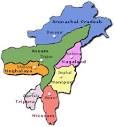
UNEXPLORED … NORTH EAST OF INDIA

Copyright@shravancharitymission                                                                        

By Aolla Tripathi & A.K. Tripathi – #Guwahati

192

An imaginary account of conversation between two alumnae of an elite college

(Int is merely short for interlocutor and is meant as notional identity)    

Int-1. Hi there! Sassily attired!  Where did you steal that diamante from? Quite chichi, I say.

Int-2   Have you nothing better to say to the girls from the north east? Well, as matter of fact it’s a gift from mom. You know what-you are so opinionated and so ill informed that it amazes me you seek college education at all.

Int-1. Strong words! Don’t get personal. I was sincerely complimenting you. Why that north east fixation? Why do you react so predictably?

Int-2.  I don’t know what to say. There was more of an undercurrent of sarcasm than true appreciation of the attire. And that’s North east fixation? – somewhat revolting. You seem to have a term or phrase ready for every human situation.   Contemporary text books teach you nothing about the history of the north east. With high cheek bones and an epicanthic fold we can be easily spotted, especially the girls- that word epicanthic -I got it from my uncle, an anthropologist.  Chinky is much simpler. There is also the question of an image of ‘an Indian.’ We don’t seem to fit that image. Even the epics have been unkind to us. The land of the ‘asuras’- that’s what the region has been dubbed as. Bhima ( Pandava ) married Hindimba after whom Dimapur has been named. Well,  Hidimba and her son Ghatotkatch were from the asura clan. The word asura rankles.

637

Int-1.  There is much in what you say. Yours is an open society. I mean no inhibitions-much like the West. Why don’t you join the cultural mainstream and get rid of the tag. Why don’t you climb on to the bandwagon and discard the persecution complex.

Int-2.  Is that supposed to be a compliment? You think girls from the north east are good fun.  An intimate date perhaps! Or a quick roll in the hay. Open society-forsooth! Ours is a cultured society where communication in the family is very strong unlike most of the states elsewhere. And by the way, incest is something we don’t have to worry about. Our boys and girls know the facts of life and learn to respect social mores much early in life. The problem with you people is that you associate drinking and sex with the morality of a person. Not a very logical corollary.  There is this misplaced notion that girls from the NE eat, drink and make merry at the slightest pretext. You accuse us of being promiscuous. Imagine societies up north assuming this stance where polygamy and polyandry were once considered normal. The Pandavas are a good example. Marital infidelity is very high in your society.

4

Int-1.  Are you trying to say that you are better off than the northerners or the rest of India? We shall have to see what the ethnographers feel. In fact we are streets ahead in terms of human development index.

Int-2.   Perhaps you’re right. We are small in numbers and that gives a misleading data as the denominator is small.  Having achieved so much you’re tolerance is abysmally low when it comes to accommodating smaller disparate cultures. A laden fruit tree bows down. The problem is you can’t see wood from the trees. We are smarter, faster and have an irresistible outlandish face. Above all we are less inhibited and therefore make friends easily. You can’t understand this. The mistake these so called social scientists make is to study the community from outside. To understand the real issues one must work from inside. You must live with them, sleep with them and eat their food as well to understand their guiding beliefs and ideals. I think I’ve spoken enough. Sorry, to be monopolizing the conversation.

Int-1. That’s not true. You have a herd mentality. You are not trail blazers. You live in clusters, afraid of the unknown and totally at sea in a new environment. You don’t assimilate easily. You have got to admit that one cannot live in isolation. To be accepted one must culture love for the local people, develop a liking for its ethos and its values. I’m merely rephrasing the arguments you were giving a while ago.

Int-2.  I don’t know where we have gone wrong. I think it’s something to do with your toffee-nosed attitude. In fact the girls from NE, particularly from Assam, Mizoram and Tripura are more resourceful, independent and have the capacity to look the devil in the eye. That can’t be said for the homesick and weak minded females that dot the Delhi firmament. The Mahatma had some lovely things to say about our ladies: “The women of Assam weave dreams of fairyland into textures of their clothes. Every woman in Assam is by nature an artist”.

Int-1. Don’t generalize. You are yet to make the mainstream. You are only a handful- how can you call the shots. If I remember my basics, the eight north eastern states constitute less the than four percent of the population of India. And how many of are you in the Parliament? Not even enough to make a whimper!

Int-2.   That is exactly my point- therein lies the rub my friend. We are a minority and the voice of minority is seldom heard without unsavory means. Democracy is a game of numbers and we realize that. All we are asking is think of us as ‘one of us ‘ and not ‘the other’. You no doubt have quantity but I’m not sure of the quality. We have about 25 MPs representing the entire North East. Yet, the only IIT and IIM educated MP is from Sikkim. Our people are acquiring property and flats in Delhi and other metropolis, sending their children out for higher studies and even agreeing to and arranging cross community alliances. Things are looking up. A niche bulletin like Cafe Chronicle carries an ad showing Mary Kom, Saina and Virat Kohli together. You get the drift my friend Watson.

Int-1.  I do and quit snowing or you will catch cold. But all said and done you don’t have much in the kitty. Look at the pantheon of Indian women!-Jhansi ki Rani.  Indira Gandhi, VIjay Laxmi Pandit, our last Prez, the list is endless.

Int-2.  No doubt, an illustrious cluster. We too have our galaxy of heroines. Assam was one of the earliest states to rise in revolt against the shackles of foreign rule and join the mainstream freedom struggle. But, even long, before that, the Assamese women were accustomed to value their freedom. We have had our fair share in the illustrious Gabhurus,  Joymati, and in the sacrifices of the young Rangili  and Padumi. The sad part is our heroics and exploits have not been well packaged or to put it in business parlance we don’t have a brand value.

Int-1. Well don’t be thankless. The Government has been pumping in a lot of money. The DONER has been doing a good job. It seems you feel yourself to be a victim of inferiority complex. Be in the race, don’t drop out or else you will find yourself doing the laps alone.

Int-2.   Donations, philanthropy and tranches of money are not the remedy. What you need is to make the people down here feel that they are a part of the nation building process. Regarding complexes, you may be right- if we have inferiority complex then you should be wearing superiority on your heart, loud and clear. What with your Khap panchayats, dowry deaths, female feticide and the traditional perception of girl being a burden, we are better off as we are. Girls, here are better educated and free to pursue their dreams. Alas! This cannot be said in your case where a woman becomes a child bearing machine; if male all the more better. All these negatives have put our country to shame.

Int-1.   Yes, there is some truth in what you say and feel. Why, you too have your quaint tribal and local customs far removed from the concept of civilized living.

Int-2. Thank God you have stooped to equate with our culture. Well, you are way off the mark. Historically, our region enjoys the reputation of being free from social evils like sati, dowry and female infanticide or feticide if one wants to be particular. There is a strong undercurrent of female hegemony in our social values. Look at our deities- Ma Kamakhya, Ma Kali and a host of revered Godesses. Women are widely respected here and are not the butt end of silly and moron jokes circulating in your community. In Meghalaya, the matriarchal system is being followed which underscores the fact that women are held in high esteem even in conservative tribal societies.

Int-1.  Don’t you think we started this conversation on rather not so serious a note? How does it all add up to the campus hum?

Int-2.  Here again you quickly resort to ethnic profiling for all the ills of the campus. The conventional didactics only emphasizes stereotypes and blunts the spirit of inquiry. The recent hullaballoo in one of the southern universities is a case in point. The VC had to recant. This is not an isolated case. The problem is that you tend to mix up morality with our lifestyles and social mores. The self- appointed Grand Panjandrum of moral values trying to wipe out Valentine’s Day and Pop music from our lives.

Int-1.   You sound so funny and pompous when you say all that. Well, whatever you have said gives me food for thought. I never knew things were like that.

Int-2. Never mind how I sound. As long as I can make you see my side of the story. It’s okay. In many of the movements the Manipuri women have been in the forefront. Look at Irom Sharmila. The Manipuri women had also launched a battle against alcoholism and drug addiction. No state has dominated women’s football like Manipur. Mary Kom of Manipur (boxing) is world’s number 1 in 46 kg category. Women back home are sharp, sturdy and strong and bring the same traits in their daily lives. Give the respect we deserve.

Don’t follow the ‘live and let die creed’ of James Bond. He is fiction. Start believing in live and let live and shed that smug holier than thou attitude.

Int-2.  Thanks for this rather rambling but delightful ‘Ru Barooh’ or tête á tête. Be our ambassador and our good luck charm. Our true identity stems from the goodness and gentleness of our heart and not from la-di- da homilies. Next time Hitchcock makes a movie I’ll tell him to call it ‘North by North East’ and not ‘North by North West.’ Well, friend I’m really touched and intend to join you on your next home trip –northeast ho- here we come.


SYMBOLIC LEGEND WHY HOLI IS CELEBRATED

Copyright@shravancharitymission

213

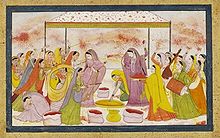
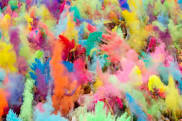
We all through our Dada, Dadi, Nana, Nani, Ma or Pa must have heard why Holi is celebrated as a colour festival. But in the hustle and bustle of life, at times, these mythological stories become hazy in our minds. So, let me remove the haze for you.

A symbolic legend is there to explain why holi is celebrated as a colour festival. The very word “Holi” originates from “Holika,” the evil sister of the iconic demon and king Hiranyakashipu. King Hiranyakashipu had earned a boon that made him virtually indestructible. The special powers of his had blinded him and he had grown very arrogant and thought he was God and demanded that everyone worship, only him.

Hiranyakashipu’s own son Prahlada however disagreed to this as he was a staunch devotee of Vishnu and this infuriated Hiranyakashipu. He subjected Prahalada to various kinds of cruel punishments, none of which affected the boy or his resolve, to do what he thought was right.

Finally, Holika – Prahalada’s evil aunt tricked him into sitting on a pyre with her. Holika was wearing a cloak (shawl) that made her immune to injury from fire, while Prahlada was not. But as the flames went up the cloak flew away from Holika and encased Prahlada; and so Holika burned while Prahlada survived. Vishnu then appeared and killed Hiranyakashipu.

The bonfire is therefore a reminder of the symbolic victory of good over the evel, or Prahlada over Hiranyakashipu. The day after Holika bonfire is celebrated as Holi

Holi is an important festival of Hindus. It is celebrated at the end of the winter season on the last full moon day of the lunar month Phalgun (February/March), (Phalgun Purnima) which usually falls in March and sometimes in late February

THE DWINDLING OF GREAT EXPECTATIONS -THE SAD SAGA OF A SAMSUNG FRIDGE

Copyright@shravancharitymission

12

Fridge- go for a MNC brand; go for that attractive beast- the Samsung fridge was the coherent advice, from one all, and soon I was a proud owner of a product from the Samsung stable. But at times all that glitters is not gold, and all that is cheered, could bring you tears.

I had bought my fridge in the year 2004, a double door 300 litres. But soon after, and within 3 years the handle of the refrigerator broke. On calling the service engineer I was told the handle is not in stock, but somehow that helpful soul cannibalized one from another fridge and replaced the broken handle. But this gave me a somewhat eerie feeling about the product and more so about the company that had no parts even after three years of purchase, and I felt, from a proud owner I was reduced to an aggrieved owner.

Then again once in the recent past we found the refrigerator was not cooling when we reported the matter to their customer care department. This time the visiting technician gave us a rather crude advice, quite unbecoming of an MNC product: Switch off the refrigerator for about 24 hours, after which, tilt it in one direction for all the frozen water to drain out. We did exactly that and the cooling improved. However, the trust in both the product and the company reduced drastically; as the mental trauma continued.

And, recently just about a month back, the cooling of the fridge reduced is when we reported the matter to the customer care again. They sent their technician on a chargeable basis and after examining the fridge he told us the cooling has reduced because the gas has leaked from the compressor. Anyways he repaired the fridge by injecting gas into the compressor that took three hours, when my wife had to take leave. But the problem was still not over, I presumed.

And my hunch was not wrong when the fridge stopped cooling once again after a couple of days and this time the technician said, ‘Nothing is wrong with the fridge. It is just not cooling because the thermostat has been set at zero.’ I said, ‘It was set by your technician only who came last time.’ Anyhow, after setting the thermostat he left and the fridge started working again.

But as luck would have it just after a couple of days it stopped cooling again. And this time it was around 8 pm in the evening, and we were desperate and with little choice, so we called the local mechanic from the neighbourhood, who changed the timer and the sensor and soon after that it started working. But I am now keeping my fingers crossed.

But this brings us to a moot point about Samsung refrigerators:

  • What is the product life cycle of a Samsung refrigerator? They keep launching new products and variants but do not specify the life of an old refrigerator. In today’s time even Automobiles which are moving mechanical units and undergo a lot more stress and strain, specify engine and product life as compared to a Samsung refrigerator that is positioned at one place, and yet has so many product issues.
  • The skill levels of Samsung engineers who visited my place to check the refrigerators was found grossly casual and wanting for they could not even diagnose that the sensor and timer was not working- this is too easy to determine as separate units, that can be tested and just replaced and this goes to show how much emphasis Samsung is putting in training their team of engineers in the after-sales-and -service department.
  • The Samsung service technician says company keeps service parts only for a period of five years, but this is to less as many Indian families don’t change their fridge before ten years and some not before fifteen years. So is this some kind of a forced consumerism? And shouldn’t the company at the time of sale inform the customer as a sales policy they don’t supply spare parts after 5 years. As just to site and example, while shifting or even otherwise if the door of your refrigerator gets damaged and your unit is more than five years old, you cannot get a replacement even if the insurance company is ready to pay.
  • The company should know that many households in India are transferable where households are shifted every three to five years on account of transfers and so, can you afford to have this kind of after-sales-service-policy where you won’t supply parts after five years.
  • And while Samsung with the help of its industrious R&D, production and marketing aggression is launching attractive looking refrigerators and variants it should clearly specify its policy on nurturing the existing population of its refrigerators which looks to be a dark and unattended zone, and a callous approach towards its customer base.