Operation Sindoor was launched on 7 May 2025, in retaliation for the brutal terror attack in Pahalgam, Jammu and Kashmir, on 22 April, in which 26 civilian tourists lost their lives.
Pakistan is an atrocious copy-paste master. After having lost the plot, Prime Minister Shehbaz Sharif implemented several measures to create a false image among the Pakistani public that they had emerged victorious. This, despite their Director General of Military Operations (DGMO) having called his Indian counterpart to request a cessation of hostilities.
After the temporary suspension of armed hostilities, Prime Minister Narendra Modi visited the Adampur air base in Punjab on Tuesday, May 13, 2025, to boost the morale of the armed forces. Modi’s visit came just days after Indian armed forces executed Operation Sindoor with clinical precision. Air Force Station, Adampur, was one of the active bases during the mission. PM Modi was welcomed with chants of “Bharat Mata ki Jai” and “Vande Mataram,” as air warriors and soldiers celebrated the operation’s success. Copying the Indian Prime Minister Narendra Modi’s move, Shehbaz Sharif also decided to visit the forces. However, lacking the courage to do so effectively, he merely stood on a tank to address them. He was widely ridiculed and trolled for this: Khet mein tank, jeet ka prank.
The Government of India formed seven all-party parliamentary delegations to visit various countries as part of a strategic diplomatic outreach, aiming to garner international support and convey India’s stance: that India is a peace-loving nation suffering from terrorism originating in Pakistan. As expected, Pakistan mimicked this move too, sending a delegation under Bilawal Bhutto abroad to falsely portray Pakistan as a victim rather than a perpetrator of terrorism.
But this act of imitating India isn’t new for Pakistan. It began with Mohammad Ali Jinnah himself. In his piece ‘Ranade, Gandhi and Jinnah’, Dr B. R. Ambedkar describes Gandhi and Jinnah, noting that Jinnah and the Muslim League copied Gandhi and the Congress even before India’s independence. The Qaid-i-Azam of Pakistan simply followed Gandhi’s lead. The politics between these two iconic figures became a contest of one-upmanship from Jinnah’s end. If Gandhi was the Mahatma, Jinnah had to be Qaid-i-Azam. Pakistan has always believed in copying India, a pattern visible even during Jinnah’s lifetime. Jinnah didn’t innovate; he imitated Gandhi.
Politics in the hands of these two great leaders turned into a competition of extravagance. If Gandhi was known as the Mahatma, Jinnah insisted on being known as Qaid-i-Azam. If Gandhi had the Congress Party, Jinnah ensured the existence of the Muslim League. If the Congress had a Working Committee and an All India Congress Committee, the Muslim League had to have its own Working Committee and Council. A session of the Congress was inevitably followed by one of the Muslim League.
If the Congress issued a political statement, the Muslim League had to issue one too. If the Congress passed a resolution of 17,000 words, the Muslim League’s resolution had to be at least 1,000 words longer. If the Congress President held a press conference, the Muslim League President followed suit. If the Congress addressed the United Nations, the Muslim League made sure not to be outdone.
Gandhi insisted Jinnah admit he was one of the Muslim leaders; Jinnah insisted Gandhi admit he was a Hindu. This dynamic is clearly depicted in Ambedkar’s piece, ‘Ranade, Gandhi and Jinnah’.
During the partition, Jinnah and the Muslim League imitated Gandhi and the Congress Party. This could have been a great moment for the Congress to reflect, mock, and point out Pakistan’s persistent habit of mimicry, showing that the mindset of Jinnah and the Muslim League carried on into the Pakistani state post-partition and portraying Congress as the lynchpin of India.
Instead, the Congress began mimicking Pakistan—and in doing so, fell from grace. Big opportunity lost.
Shravan Charity Mission is an NGO that works for poor children suffering from life-threatening diseases, especially cancer. Our posts are meant for our readers, including children and adults, and have a huge variety of content. We also accept donations for our mission. Should you wish to donate to the cause of cancer? The bank details are given below:
Why were so many dharnas, agitations and public movements required to build Assam and the North East? Find it out for yourself by reading the book. The voluminous text under the guise of Assam covers the political history of undivided Assam, more precisely the northeast. It covers the period between 1947 and 1971. I would fancy calling this treatise the Political History of the North East as it was only after the independence that Assam was divided into various smaller states in the decades to follow.
But let’s stop here for a moment to ponder if such narrations (Political History) are conducive and should be written. Well, they are useful, provided, they capture the untold story of the state from reliable sources. Dr. Himanta Biswa Sarma, Chief Minister of Assam, deserves praise for approving this.
The uniqueness of the title is that it stems from the archives of the state and the central government, the public sector, libraries, newspapers, columns, books by citizens, and recorded statements of political and social heads who squarely construct the narrative. It is not a politically driven narrative but a neutral one based on facts. The archive records put the ruling dispensation of those times, especially the government of India, in poor light.
The title enumerates the linguistic and ethnic fissures of the North East after independence. It tells the gory story of the partition of India on the eastern border and the scheming role of the Muslim League in dividing her. The leaders of the Muslim League allowed Muslims from East Pakistan to enter India and live here only to build a sizeable Muslim population and dwarf the local population of Hindus, the effects of which are still visible. It also reveals the names of certain Indian Muslim leaders of that era who were close to Mohammed Ali Jinnah.
The editor appears dispassionate in his job because of which the narration enjoys that flush of impartiality. Eminent people from all walks of life have contributed munificently in bringing this spine to light. The book is divided into eight chapters, which are further divided into sub-chapters. This does not include the customary chapters. The catchy foreword is by the honourable Chief Minister of Assam.
A striking point that repeatedly comes up chapter after chapter is how the Congress government of Assam had to entreat the government of India for projects and issues relevant to the North East. To succinctly put it, Assam and the North East required many agitations, protests, and strikes to progress. No state, region or country is complete without the panorama of its history and mythology. The book does well to cover that. As a border region, the northeast had to face many invasions and wars described well in the pages one after another. The Tea industry has been the mainstay of Assam. The chapter is a real eye-opener when it comes to tea. The book is a comprehensive assortment of institutions, movements, local heroes and the all-time great personalities of India. It has some explosive chapters too. For example, did Nehru for the sake of the vote bank tamper with the ethnic and demographic tapestry of Assam and the northeast? The answer lies embedded in the pages of the title.
Why were things not as easy for the North East as they were for the western borders of India? So many dharnas and agitation were required to build Assam. Assam unlike Punjab (both border states) which was close to the capital had tough logistics and credibility issues while tackling the government of India. The central leadership was perhaps not aware of the complexities of the region. For every small project, Assam had to confront the government of India.
The book does well in capturing the ancient history of the land. The sources of data collection are extensive. Northeast is a complete potpourri of cultures. There was bitterness and mistrust between the plains (Assam), the hills and the government. Language was always a sensitive issue. The people of the northeast had to continuously fight for their identity. This spoke of the complexity of the land where they belonged to. The curse of partition and its shady manoeuvres haunts Assam and the northeast even today. Northeast was subject to linguistic dissensions. Assam is a politically sensitive border state. There was a time when people called it a Cinderella State.
The narrative is a brilliant effort by the Government of Assam. Congratulations to the education minister and the editor too. The idea should be embraced by all Indian states to understand their current position and trace their origins.
Shravan Charity Mission is an NGO that works for poor children suffering from life-threatening diseases, especially cancer. Our posts are meant for our readers, including children and adults, and have a huge variety in content. We also accept donations for our mission. Should you wish to donate to the cause? The bank details are given below:
NAME OF ACCOUNT: SHRAVAN CHARITY MISSION
Account no: 680510110004635 (BANK OF INDIA)
IFSC code: BKID0006805
*
Kamlesh Tripathi’s Publications
GLOOM BEHIND THE SMILE
(The book is about a young cancer patient. Now archived in 8 prestigious libraries of the US which include Harvard College Library; Harvard University Library; Library of Congress; University of Washington, Seattle; University of Minnesota, Minneapolis; Yale University, New Haven; University of Chicago; University of North Carolina, at Chapel Hill University Libraries. It can also be accessed at MIT through Worldcat.org. Besides, it is also available for reading in libraries and archives of Canada; Cancer Aid and Research Foundation Mumbai; Jaipuria Institute of Management, Noida, India; Shoolini University, Yogananda Knowledge Center, Himachal Pradesh and Azim Premzi University, Bangalore).
ONE TO TANGO … RIA’S ODYSSEY
(Is a book on ‘singlehood’ about a Delhi girl now archived in Connemara Library, Chennai and Delhi Public Library, GOI, Ministry of Culture, Delhi; It is also available for reading in the Indian National Bibliography, March 2016, in the literature section, in Central Reference Library, Ministry of Culture, India, Belvedere, Kolkata-700022)
AADAB LUCKNOW … FOND MEMORIES
(Is a fiction written around the great city of Nawabs—Lucknow. It describes Lucknow in great detail and also talks about its Hindu-Muslim amity, which is the undying characteristic of Lucknow. The book was launched at the Lucknow International Literary Festival in 2014. It is included for reading in Askews and Holts Library Services, Lancashire, U.K; Herrick District Library, Holland and Charlotte-Mecklenburg Library, Mecklenburg County in North Carolina, USA; Black Gold Cooperative Library Administration, Arroyo Grande, California; Berkeley Library, University of California).
REFRACTIONS … FROM THE PRISM OF GOD
(Co-published by Cankids–Kidscan, a pan India NGO and Shravan Charity Mission, that works for child cancer in India. The book is endorsed by Ms Preetha Reddy, MD Apollo Hospitals Group. It was launched at the Lucknow International Literary Festival in 2016).
TYPICAL TALE OF AN INDIAN SALESMAN
(Is a story of an Indian salesman who is, humbly qualified. Yet he fights his way through unceasing uncertainties to reach the top. A good read not only for salesmen. The book was launched on 10th February 2018 at Gorakhpur Lit-Fest. Now available on Amazon, Flipkart and Onlinegatha)
RHYTHM … in poems
(Published in January 2019. The book contains 50 poems. The poems describe our day-to-day life. A few poems from the book have been published in Shillong Times, Bandra Times and Bhavan’s Journal. The book is available on Amazon, Flipkart and Onlinegatha)
MIRAGE
(Published in February 2020. The book is a collection of eight short stories available on Amazon, Flipkart and Notion Press)
AWADH ASSAM AND DALAI LAMA … The Kalachakra
(The story of the man who received His Holiness The Dalai Lama and his retinue in 1959 as a GOI representative when he fled Tibet in 1959. The book was launched on 21st November 2022 by His Holiness The Dalai Lama at Dharmshala. The title is archived in the library of the Department of Information and International Relations (DIIR) Government of Tibet, Tibet Policy Institute (TPI) and the personal library of His Holiness The Dalai Lama. The title is also archived in The Ohio Digital Library, USA. It was recently included in the digital library of the world-renowned company APPLE).
BHAVANS JOURNAL
Short stories, Book reviews and Articles published in Bhavan’s Journal: 1. Reality and Perception, 15.10.19; 2. Sending the Wrong Message, 31.5.20; 3. Eagle versus Scholars June, 15 & 20, 2020; 4. Indica, 15.8.20; 5. The Story of King Chitraketu, August 31 2020; 6. Breaking Through the Chakravyuh, September 30 2020. 7. The Questioning Spouse, October 31, 2020; 8. Happy Days, November 15, 2020; 9. The Karma Cycle of Paddy and Wheat, December 15, 2020; 10. Power Vs Influence, January 31, 2021; 11. Three Refugees, March 15, 2021; 12. Rise and Fall of Ajatashatru, March 31, 2021; 13. Reformed Ruler, May 15, 2021; 14. A Lasting Name, May 31, 2021; 15. Are Animals Better Teachers? June 16, 2021; 16. Book Review: The Gram Swaraj, 1.7.21; 17. Right Age for Achievements, 15.7.21; 18. Big Things Have Small Beginnings, 15.8.21; 19. Where is Gangaridai?, 15.9.21; 20. Confront the Donkey Within You 30.9.21; 21. Know Your Strengths 15.10.21; 22. Poverty 15.11.21; 23. Top View 30.11.21; 24. The Bansuriwala 15.1.22; 25. Sale of Alaska 15.2.22; 26. The Dimasa Kingdom 28.2.22;27. Buried Treasure 15.4.22; 28. The Kingdom of Pragjyotisha 30.4.22; 29. Who is more useful? 15.5.22; 30. The White Swan from Lake Mansarovar 30.6.22; 31. Bhool Bhulayya 15.9.22; 32. Good Karma 30.9.22; 33. Good Name vs Bad Name 15.10.22; 34. Uttarapath—The Grand Trunk Road 1.12.22; 35. When Gods Get Angry 1.1.23; 36. Holinshed’s Chronicles 15.1.23; 37. Theogony 15.2.23; 38. Poem: Mother 14.5.23; 39. The Nag Mandir 30.6.23; 40. The Story of Garuda 30.7.23; 41. Janmabhoomi vs Karmabhoomi 31.8.23; 42. The Ghost Town of Kuldhara 15.9.23; 43. The Tale of Genji 15.10.23; 44. The Soul Connection 1.12.23; 45.Book review: Jungle Nama … a story of the Sundarban 16.3.24; 46. Book review: A Forgotten Chapter 16.5.24;
THE SHILLONG TIMES
ARTICLES & POEMS: 1. POEM: HAPPY NEW YEAR 8.1.23; 2. POEM: SPRING 12.3.23; 3. POEM: RIGHT AND WRONG 20.3.23; 4.THE GUSH OF EMOTION—WRITING, 26.3.23; 5. THE NAG MANDIR, 7.5.23; 6. POEM:MOTHER 7.5.23; 7. POEM: RAIN RAIN 9.7.23; 8. POEM:YOU COME ALONE YOUGO ALONE 6.8.23; 9. RAIN RAIN (SECOND TIME) 10.8.23; 10. POEM: GURU TEACHER 1.10.23; 11. POEM: AUTUMN … THE INTERIM HEAVEN 15.10.23; 12. POEM: HAPPY DIWALI 12.11.23; 13. OVERCOMING BLINDNESS: LEARN IT THE JOHN MILTON WAY 10.12.23; 14. THE HAPPY PRINCE AND THE HAPPY MAN’S SHIRT 31.12.23; 15. ANNUS MIRABILIS 2024 7.1.24; 16. GANDHI TO MAHATMA GANDHI- Incidents that Shaped Gandhi in South Africa 28.1.24; 17. POEM: TOGETHER BUT NOT MADE FOR EACH OTHER, 11.2.24; 18. THE BIRDS BEES AND THE SPIDERS OF NICHOLAS GUILDFORD AND JONATHAN SWIFT 25.2.24; 19. THE OVERCOATS OF NIKOLAI GOGOL AND RUSKIN BOND 10.3.24; 20. THE ETHNIC COLOURS OF HOLI 24.3.24; 21. A LESSON FROM DALAI LAMA, 21.4.24; 22. POEM: MORNING WALK 28.4.24; 23. TRIP TO RHINE FALLS, SWITZERLAND, 19.5.24; 24. POEM: HURT 2.6.24; 25. POEM: YOUR CONSCIENCE WAS MY SIGN ON 16.6.24; 26. THE EERIE WAYS OF TIME 7.7.24;
THE ASSAM TRIBUNE
ARTICLE: 1. THE MAGIC OF READING 11.12.23; 2. GANDHI TO MAHATMA 29.1.24; 3. GEOGRAPHY OF SOLITUDE 8.4.24; 4. A LESSON FROM DALAI LAMA, 22.4.24; 5. A SOURCE OF INSPIRATION, 29.4.24; 6. THE FOUR-LEGGED LIBRARY, 12.5.24; 7. AGE AND ACHIEVEMENT, 10.6.24; 8. READ … TO RISE ABOVE MEDIOCRITY, 1.7.24;
THE ARUNACHAL TIMES
POEM: 1. HOPE—IN THE ARC OF TWIGHT 2. SPRING 3.3.24; 3. POEM: THE MORNING WALK 10.3.24;
BANDRA TIMES, MUMBAI
ARTICLES & POEMS: 1. POEM: SPRING, 1.4.23; 2. POEM: MOTHER, 1.6.23; 3. POEM: RAIN RAIN, 1.8.23; 4. A LESSON FROM DALAI LAMA 1.6.24;
ARTICLES IN THE DIGITAL MAGAZINE ESAMSKRITI
29.12.2020: INDICA BY MEGASTHENES; 14.3.22: ABOUT THE DIMASA KINGDOM ASSAM; 10.12.22: GRAND TRUNK ROAD-UTTARAPATH; 5.10.23: THE GHOST TOWN OF KULDHARA NEAR JAISALMER;
(ALL THE ABOVE BOOK TITLES ARE AVAILABLE FOR SALE ON AMAZON, FLIPKART AND OTHER ONLINE STORES OR YOU COULD EVEN WRITE TO US FOR A COPY)
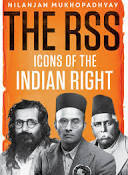
It is a well-researched book published in the year 2019. The publishers are Westland Publications, Chennai. The main book comprises of some 405 pages and then you have the end notes and the index. The price of this book is Rs 799. Before I touch the book, let me brief you, about the author.
Nilanjan Mukhopadhyay began his career in journalism in the early 1980s and is best known for his reportage on the rise of Hindu organisations and their politics. He writes columns for several newspapers and web portals, and is also, a well-known face, on the Indian television news channel, as a political commentator.
His other books include the best-selling Narendra Modi: The Man, The Times; and Sikhs: The Untold Agony of 1984. Nilanjan is an unabashed college drop-out. He lives with his family in Delhi-NCR.
The subject book comprehensively explains the genesis of RSS. In present times RSS is almost close to an untouchable organisation for some in India and even abroad. But why, is the moot question. On the face of it, RSS has been, an apolitical organisation in many ways, so to say. But why and how did this right wing organisation become pan India. Was it to save the Hindus and unite them against the onslaught of Muslims primarily, and why forget the British tyranny against Hindu culture—primarily the caste system. The book explains it all through the individual accounts of eleven RSS icons that the author goes on to detail. In a nutshell can one say RSS was a befitting counterweight to the Muslim League? Figure it out for yourself by reading the book. Taking the cue from the book further.
In the history of the Rashtriya Swayamsevak Sangh (RSS), which is known for the domineering presence of Konkanastha or Chitpavan Brahmins, it is probably one of the biggest rarities of fate that its founder was born into a family of migrants from a village in Telangana.
In the early decades of the 19th century, several landless Brahmin families who made their living as priests in Nizamabad district, were forced to flee their homes under the Mughal rule. Many chose to settle in Nagpur, a city that was ruled by Maratha Bhonsle kings, mainly because, the dispensation, supported Vedic learning. Keshav Baliram Hedgewar’s great-great-grandfather was among those who had made the city his home. Gradually, these immigrant families from Andhra Pradesh began to assimilate, and not only did they adapt to Maharashtrian customs, but also began looking up to local historical icons as their very own.
The book gives a good account of partition and the initial Bengal links of some of the RSS leaders such as Keshav Baliram Hedgewar, Syama Prasad Mookerjee and Golwalkar aka Guruji that goes to show how Bengal was indeed the think-tank of that India. The book unearths certain facts that we’ll never venture to find out in our day-to-day life. One of the peculiarities of national politics at that time was the practice of simultaneous membership in multiple organisations. For instance both the Indian National Congress and Hindu Mahasabha boasted of common members.
RSS was formed for the promotion and safeguard of Hindus. And at the time of partition when refugees entered India from Pakistan RSS did stellar work in looking after them in terms of food, shelter and security. These refugees soon started off with small trade but they didn’t snap their relationship with the RSS, rather they became members of RSS. And did you know that Veer Savarkar was not a member of BJP’s erstwhile political avatar the Jana Sangh, nor the Rashtriya Swayamsevak Sangh (RSS), but leaders of the Sangh Parivar, including Prime Minister Narendra Modi, always held him in great esteem.
Yes a fog of mystery does surround the Rashtriya Swayamsevak Sangh—or RSS even today—the largest cadre-based organisation in the world. The political tow-chain that goes on between the RSS and its political offshoot earlier Jan Sangh and now BJP is covered in the individual accounts quite comprehensively which is otherwise a mystery for the common man of India.
The author chronicles the personal and political journeys of the most important men (and a woman) of the Hindu Right-wing, digging up, little-known, but revealing facts about them. Let me narrate a few of them only to build your interest in this book.
KESHAV BALIRAM HEDGEWAR: The founder of the RSS, and its first sarsanghchalak, was called ‘Cocaine’ as a young revolutionary, who transported subversive literature for a group back home in Nagpur. Although, Keshav was originally a Brahmin from Telangana, he had little trouble in securing entry into the subversive world of Bengali radicals.
VINAYAK DAMODAR SAVARKAR: This leading light of the Hindu Right had once invited the vegetarian Mahatma Gandhi to dinner and had told him that unless one consumed animal protein, one would, not be able to challenge the might of the British. Well … few had faced the tyrannical wrath of the British Raj than Veer Savarkar having spent an aeon in Kalapani—so was it a reaction to the deep agonies that he suffered in the jail?
MADHAV SADASHIV GOLWALKAR aka ‘GURUJI’: The iconic ‘hermit-ideologue’, whose appointment as sarsangchalak was challenged by many in the RSS itself, had maintained, the only work that needs to be done is to unite and organise fragmented Hindu society into a large corporate entity through the daily work of RSS.
SYAMA PRASAD MOOKERJEE: A brilliant academic-statesman who became part of Nehru’s Cabinet. Mookerjee had several differences with the prime minister. He once asked Nehru: ‘Are Kashmiris Indians first and Kashmiris next, or are they Kashmiris first, second and third, and not Indians at all?’
BALASAHEB DEORAS: This towering pracharak had a strong dislike for religious rituals, and referred to himself as a ‘Communist’ within the RSS—‘it is highly debatable if he believed in God, or if, in any way he needed Him.’
DEENDAYAL UPADHYAY: The man who propounded the ‘philosophy’ of integral Humanism was opposed to the partition of India and recommended that, ‘if we want unity, we must adopt the yardstick of Indian nationalism, which is Hindu nationalism, and Indian culture, which is Hindu culture.’
These and other leaders, including Vijaya Raje Scindia, Atal Bihari Vajpayee, Lal Krishna Advani, Askok Singhal and Bal Thackeray, are all covered in the book. Through the individual stories of the organisation’s tallest leaders, a larger picture emerges. In spite of a three-time ban on RSS in a multicultural and secular India—and despite the RSS’ insistence that it has no truck with electoral politics—the group is, and will be, the hand that’ll always rock the BJP’s cradle. The author by and large maintains a fair balance between criticism and appreciation of the RSS which I liked. He has done a good amount of homework and has got inscriptions from various sources which only adds to the flavour of the book. Yes narration is in long and at times bulky.
Last but not the least, even if you fear reading a thick book, you could still read it as, one icon at a time, which will not make it monotonous. The chapters are self-sufficient. Language is plain quite easy to understand with occasional verbose. I would give the book seven out of ten. It makes an informative read.
Shravan Charity Mission is an NGO that works for poor children suffering from life threatening diseases especially cancer. Our posts are meant for our readers that includes both children and adults and it has a huge variety in terms of content. We also accept donations for our mission. Should you wish to donate for the cause. The bank details are given below:
NAME OF ACCOUNT: SHRAVAN CHARITY MISSION
Account no: 680510110004635 (BANK OF INDIA)
IFSC code: BKID0006805
*
Our publications
GLOOM BEHIND THE SMILE
(The book is about a young cancer patient. Now archived in 7 prestigious libraries of the US, including, Harvard University and Library of Congress. It can also be accessed in MIT through Worldcat.org. Besides, it is also available for reading in Libraries and archives of Canada and Cancer Aid and Research Foundation Mumbai)
ONE TO TANGO … RIA’S ODYSSEY
(Is a book on ‘singlehood’ about a Delhi girl now archived in Connemara Library, Chennai and Delhi Public Library, GOI, Ministry of Culture, Delhi)
AADAB LUCKNOW … FOND MEMORIES
(Is a fiction written around the great city of Nawabs—Lucknow. It describes Lucknow in great detail and also talks about its Hindu-Muslim amity. That happens to be its undying characteristic. The book was launched in Lucknow International Literary Festival of 2014)
REFRACTIONS … FROM THE PRISM OF GOD
(Co-published by Cankids–Kidscan, a pan India NGO and Shravan Charity Mission, that works for Child cancer in India. The book is endorsed by Ms Preetha Reddy, MD Apollo Hospitals Group. It was launched in Lucknow International Literary Festival 2016)
TYPICAL TALE OF AN INDIAN SALESMAN
(Is a story of an Indian salesman who is, humbly qualified. Yet he fights his ways through unceasing uncertainties to reach the top. A good read not only for salesmen. The book was launched on 10th February, 2018 in Gorakhpur Lit-Fest. Now available in Amazon, Flipkart and Onlinegatha)
RHYTHM … in poems
(Published in January 2019. The book contains 50 poems. The poems describe our day to day life. The book is available in Amazon, Flipkart and Onlinegatha)
MIRAGE
(Published in February 2020. The book is a collection of eight short stories. It is available in Amazon, Flipkart and Notion Press)
(ALL THE ABOVE TITLES ARE AVAILABLE FOR SALE IN AMAZON, FLIPKART AND OTHER ONLINE STORES OR YOU COULD EVEN WRITE TO US FOR A COPY)
The difference between an enemy and an adversary. An adversary is someone you want to defeat, an enemy is someone you have to destroy. Our political leaders have started treating their adversaries as enemies which is sad.
What does the expression mutually exclusive mean: If two events are mutually exclusive, it means, that they cannot occur at the same time. For example, the two possible outcomes of a coin flip are mutually exclusive; when you flip a coin. It cannot land both on heads and tails simultaneously.
A rat’s ass: I don’t give a rat’s ass means a minimum degree of interest. The phrase is considered vulgar. Generally meaning minimum amount or degree of care or interest—usually used in the phrase don’t give a rat’s ass.
The boom barrier (also known as the boom gate) fell on gate no. 28C, of the Chunar-Chopan, railway crossing near Khairahi railway station, 180km from Allahabad, in the recent past. With this the last unmanned level crossing on Indian Railway’s 67,300-km track comes to an end.
The founder of the Brahma-Kumaris taught seekers not to renounce hearth and home, nor worldly responsibilities to get spiritual salvation but to attain it by balancing material life with the spiritual, through regular practice of soul-consciousness.
To be fair the British Raj did impoverish India. In this regard there are credible estimates available, from the leading British economist Angus Maddison that shows India’s share of world GDP shrunk from 24.6% to 3.8% between 1700 and 1952. However, Maddison also notes that in terms of per-capita GDP, India has consistently lagged behind several European nations even 2,000 years ago. By 1700, per-capita income of countries like the Netherlands and Britain was double or thereabouts that of India.
Ancient India had its time under the sun, but that is over. The modern world, led by China, is now playing a completely different ballgame. Today, China is known as the world’s factory.
The UAE launched in 2009 an ambitious 10-year plan to teach English to locals to prepare them for a future without oil, attracting English teachers from all around the world to come and teach local children. Meanwhile, the English-speaking population of the Philippines, Indonesia and Sri Lanka has already taken over India’s burgeoning BPO industry. So, India needs to wake up fast.
A huge tusker was crossing a wooden bridge. A fly was perched on his left earlobe. After they got across, the fly said, ‘Hey didn’t we really shake up that bridge?’ That sums up the human attitude today. Though we are a microscopic speck in the cosmic scale, we delude ourselves that we are the centre of creation. We think the planet is in peril when only human existence and their well-being are truly imperilled.
Though John Maynard Keynes was one of the most influential economic policy makers of the 20th century. Keynes did not actually have a degree in economics. In fact, his total professional training came to little more than eight weeks. All the rest was learnt on the job.
Despite the Rs 1.6 lakh crore annual PDS (public distribution system) subsidy. India ranks at 103 out of 119 countries in the world Hunger Index, and 21% of Indian children between 0-5 years are malnourished. India’s touted demographic dividend could partly turn out to be a demographic time bomb.
India with the world’s youngest workforce, comprising, nearly a fifth of the world’s millennial is struggling to keep pace with changing times. Millennial or Generation Y, comprising 34% of India’s population are already 45% of the Indian workforce and by 2025 this number is expected to reach 75%.
According to a 2016, millennial survey by Deloitte, 16.8% of millennial evaluate career opportunities by good work-life balance, followed by 13.4% who look for opportunities to progress, and 11% who seek flexibility. Companies where millennial talent is a significant part of the workforce are implementing initiatives like relaxed dress codes and flexi-timing to attract and retain talent. Living in the gig economy, key skill for millennial is preparedness to move across industries and roles.
There are 1.3 million Anganwadi centres across India. Anganwadi is a type of rural child care centre. They were started by the Indian Government in 1975 as part of the Integrated Child Development Services Program to combat child hunger and malnutrition. Anganwadi means “courtyard shelter” in Indian languages.
The Greeks probably invented the idea of organised competitive sports. Where, organised team as well as individual sports came mostly from the British.
Lights are very tricky. See how they behave. When blue green and red lights combine, they produce a white light. On the other hand, intersection of magenta, (purplish red) yellow and cyan, (greenish blue) leads to black that absorbs all colours. So be careful with lights.
Two-third of the paddy procurement in India is just from 5 states led by Punjab.
US confirms 90% of addicts experience a relapse shortly after undergoing de-addiction treatment. Around 22.5% of the world’s population is tobacco-dependent and 4.9% people have alcohol use disorder.
Over 80% of India’s workforce is employed in the unorganised and informal sector.
When over 18.6 million adults remain unemployed in India, what is the reason India still employs over 10 million children.
Fascism arose in Europe as a reaction to communism.
No Hindu worships the primary God of the Vedas today. Have you seen a temple of Indra today?
In 1934, the AICC passed a resolution prohibiting Congress members from also being members of the RSS, Hindu Mahasabha or the Muslim League.
14 of the world’s 15 most polluted cities are in India.
India Pakistan partition of 1947 was an event that displaced around 15 million and killed a million.
Interesting lines & quotes:
I think Mark Twain sums it up pretty nicely: “Twenty years from now you will be more disappointed by the things that you didn’t do then by the ones you did do. So throw off the bowlines. Sail away from the safe harbour. Catch the trade winds in your sails. Explore. Dream. Discover.”
Whoever, fights monsters should see to it that in the process he does not become a monster—FRIEDRICH NIETZSCHE, German philosopher, poet and cultural critic.
Words on the street is that elections are already over, only the polling is left.
Mahatma Gandhi once said—’there is no way to peace, peace is the way.’
Misery is the by-product of a lazy mind. Happiness is the by-product of an alert mind. Stop kicking yourself with regrets and guilt feelings. Give up feelings of being guilty. You will find yourself happy—SWAMI SUKHABODHANANDA
Shravan Charity Mission is an NGO that works for poor children suffering from life threatening diseases especially cancer. Our posts are meant for our readers that includes both children and adults and it has a huge variety in terms of content. We also accept donations for our mission. Should you wish to donate for the cause. The bank details are given below:
NAME OF ACCOUNT: SHRAVAN CHARITY MISSION
Account no: 680510110004635 (BANK OF INDIA)
IFSC code: BKID0006805
*
Our publications
GLOOM BEHIND THE SMILE
(The book is about a young cancer patient. Now archived in 7 prestigious libraries of the US, including, Harvard University and Library of Congress. It can also be accessed in MIT through Worldcat.org. Besides, it is also available for reading in Libraries and archives of Canada and Cancer Aid and Research Foundation Mumbai)
ONE TO TANGO … RIA’S ODYSSEY
(Is a book on ‘singlehood’ about a Delhi girl now archived in Connemara Library, Chennai and Delhi Public Library, GOI, Ministry of Culture, Delhi)
AADAB LUCKNOW … FOND MEMORIES
(Is a fiction written around the great city of Nawabs—Lucknow. It describes Lucknow in great detail and also talks about its Hindu-Muslim amity. That happens to be its undying characteristic. The book was launched in Lucknow International Literary Festival of 2014)
REFRACTIONS … FROM THE PRISM OF GOD
(Co-published by Cankids–Kidscan, a pan India NGO and Shravan Charity Mission, that works for Child cancer in India. The book is endorsed by Ms Preetha Reddy, MD Apollo Hospitals Group. It was launched in Lucknow International Literary Festival 2016)
TYPICAL TALE OF AN INDIAN SALESMAN
(Is a story of an Indian salesman who is, humbly qualified. Yet he fights his ways through unceasing uncertainties to reach the top. A good read not only for salesmen. The book was launched on 10th February, 2018 in Gorakhpur Lit-Fest. Now available in Amazon, Flipkart and Onlinegatha)
RHYTHM … in poems
(Published in January 2019. The book contains 50 poems. The poems describe our day to day life. The book is available in Amazon, Flipkart and Onlinegatha)
(ALL THE ABOVE TITLES ARE AVAILABLE FOR SALE IN AMAZON, FLIPKART AND OTHER ONLINE STORES OR YOU COULD EVEN WRITE TO US FOR A COPY)



 Shravan charity mission