Tag Archives: leopard

INTERESTING FACTS FIGURES & QUOTES EPISODE 25

Copyright@shravancharitymission

Burkina Faso is the least educated country of the world with a literacy rate of 21.8%. It is a landlocked country in West Africa.

William Shakespeare termed old age as the second childhood.

Maize Corn is the most produced grain in the world. Whereas, wheat covers most of the earth than any other crop.

Angkor Wat is a temple complex in Cambodia and one of the largest religious monuments of the world, on a site measuring 162.6 hectares. Originally constructed as a Hindu temple dedicated to God Vishnu for the Khmer Empire. It was gradually transformed into a Buddhist temple towards the end of the 12th century.

Are pigs the neatest of animals in the world: Contrary to popular belief, pigs are unable to sweat; instead, they wallow in mud to cool down. Their mucky appearance gives pigs an undeserved reputation for slovenliness. In fact, pigs are some of the cleanest animals around, refusing to excrete, anywhere near their living or eating areas when given a choice.

Staple diet of America: Whether it’s roasted, baked, fried, transformed into a patty, or used in a salad, sandwich or casserole, chicken remains a major dietary staple in the United States. Americans get almost as many calories from chicken as they do from bread, according to the USDA.

There is one major difference between a ROM (that is read-only memory) and a RAM (that is random-access memory) chip: ROM can hold data without power and RAM cannot. Essentially, ROM is meant for permanent storage, and RAM is for temporary storage.

Basketball is probably the most popular indoor sports in the world.

In a disturbing trend, tigers in the country are increasingly being killed by snares, even in the core areas of the sanctuaries. In the last nine years, 24 tigers and 114 leopards have suffered slow, agonizing deaths due to these traps. Worryingly, apart from poachers, local communities are also using these wire noose snares to kill the big cats preying on their livestock.

There has been a steady increase in tiger population in the last few years. India had 2,226 tigers as per the 2014 All India Tiger Estimation. This accounts for a 60% jump in tiger population compared to 2006.

Tigers need large habitats as they have high juvenile dispersal rates. Tigers have lost more than 95% of their historical range.

“Everything is ready except the east wind,” is an ancient Chinese proverb that translates to how can everything be ready without the thing which is most crucial.

Recently, the catastrophic disappearance of emperor penguins from Antarctica made global headlines. The colony of adults and nursing chicks was among the largest in the world. It sank without a trace due to global warming, because of weakened ice collapsing on unchilling waters. The tragedy is similar to the proverbial collapse of a star caused by the death of a sparrow.

In less than sixty years Singapore has transformed from a poor developed country into one of the richest—its per capita income is now double that of Australia. Singapore will be in a class entirely of its own by 2050.

Men argue. Nature acts–VOLTAIRE, French historian and philosopher.

If you destroy a free market you create a black market—WINSTON CHURCHILL, Prime Minister of U.K.

The poetry of earth is never dead—JOHN KEATS, English romantic poet.

Tell me and I’ll forget; show me and I may remember; involve me and I’ll understand—A Chinese proverb.

I want a brighter word than bright—JOHN KEATS, English romantic poet.

Nothing ever becomes real till it is experienced—JOHN KEATS, English romantic poet.

By Kamlesh Tripathi

*

https://kamleshsujata.wordpress.com

*

Share it if you like it

*

Shravan Charity Mission is an NGO that works for poor children suffering from life threatening diseases especially cancer. Our posts are meant for our readers that includes both children and adults and it has a huge variety in terms of content. We also accept donations for our mission. Should you wish to donate for the cause. The bank details are given below:

NAME OF ACCOUNT: SHRAVAN CHARITY MISSION

Account no: 680510110004635 (BANK OF INDIA)

IFSC code: BKID0006805

*

Our publications

GLOOM BEHIND THE SMILE

(The book is about a young cancer patient. Now archived in 7 prestigious libraries of the US, including, Harvard University and Library of Congress. It can also be accessed in MIT through Worldcat.org. Besides, it is also available for reading in Libraries and archives of Canada and Cancer Aid and Research Foundation Mumbai)  

ONE TO TANGO … RIA’S ODYSSEY

(Is a book on ‘singlehood’ about a Delhi girl now archived in Connemara Library, Chennai and Delhi Public Library, GOI, Ministry of Culture, Delhi)

AADAB LUCKNOW … FOND MEMORIES

(Is a fiction written around the great city of Nawabs—Lucknow. It describes Lucknow in great detail and also talks about its Hindu-Muslim amity. That happens to be its undying characteristic. The book was launched in Lucknow International Literary Festival of 2014)

REFRACTIONS … FROM THE PRISM OF GOD

(Co-published by Cankids–Kidscan, a pan India NGO and Shravan Charity Mission, that works for Child cancer in India. The book is endorsed by Ms Preetha Reddy, MD Apollo Hospitals Group. It was launched in Lucknow International Literary Festival 2016)

TYPICAL TALE OF AN INDIAN SALESMAN

(Is a story of an Indian salesman who is, humbly qualified. Yet he fights his ways through unceasing uncertainties to reach the top. A good read not only for salesmen. The book was launched on 10th February, 2018 in Gorakhpur Lit-Fest. Now available in Amazon, Flipkart and Onlinegatha)

RHYTHM … in poems

(Published in January 2019. The book contains 50 poems. The poems describe our day to day life. The book is available in Amazon, Flipkart and Onlinegatha)

(ALL THE ABOVE TITLES ARE AVAILABLE FOR SALE IN AMAZON, FLIPKART AND OTHER ONLINE STORES OR YOU COULD EVEN WRITE TO US FOR A COPY)

*****


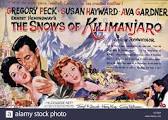
BOOK CORNER: THE SNOWS OF KILIMANJARO by Ernest Hemingway

Copyright@shravancharitymission

Khidki (Window)

–Read India Initiative—

This is only an attempt to create interest in reading. We may not get the time to read all the books in our lifetime. But such reviews, talk and synopsis will at least convey what the book is all about.


The Snows of Kilimanjaro

Ernest Hemingway

(1899-1961)

    ‘The Snows of Kilimanjaro’ is regarded as one of Hemingway’s greatest works, alongside, ‘The Sun Also Rises’ and ‘A Farewell to Arms.’ The short story was published in August 1936 in Esquire magazine. Ernest Hemingway is an American Novelist. In the ‘Snows of Kilimanjaro’ the theme is of regret, conflict, redemption, acceptance, introspection and finally death.

    This story opens with a few lines about Mount Kilimanjaro. That happens to be the highest mountain of Africa … around 4900 meters. It is also referred as the ‘House of God.’ There also lies a frozen carcass of a leopard near the summit. But no one knows why it is there at such an altitude.   

    There we come across Helen and Harry. Harry is a writer dying of gangrene. Helen is accompanying him in this safari in Africa. They both are stranded in the camp, because a bearing of their truck’s engine has seized. Harry’s condition makes him extremely irritable. He starts mumbling about his impending death in an unemotional manner but in a sarcastic tone that upsets Helen. He quarrels with her over trivial things like. Whether he should have a whiskey with soda, to whether she should read to him. Helen of course is concerned about his welfare. But the growing frustration of Harry makes him talk to her in an irksome manner.

    Harry starts to ruminate about his vast and varied, life’s experiences. He in fact feels he was unable to climax his potential as a writer because he chose to make a living by marrying a wealthy woman. In the story there are certain italicized portions in the form of text that are scattered all throughout the story. Where, Hemmingway narrates certain experiences of Harry in a stream-of-conscious style. Harry’s initial memories consist of travelling around Europe following a battle, hiding a deserter in a cottage, hunting and skiing in the mountains, playing cards during a blizzard, and even hearing about a bombing-run on a train packed with Austrian officers.

    In spite of deep agony, Harry falls asleep and wakes up in the evening when he finds Helen returning from a shooting expedition. He ponders, on how she is considerate and good to him. And that she should not be blamed for the degradation of his talent as a writer. Helen, he recollects is a rich widow who lost her husband and a child. Thereafter, she was bored by a series of lovers. So, she finally acquired Harry because she wanted someone whom she could respect along with her own self. She loves Harry quite dearly as a writer, as a man, as a companion and as a proud possession. On the contrary Harry makes it clear that he does not love her. He then recalls how he contracted gangrene two weeks ago. They had been trying to take a picture of a waterbuck when Harry scratched his right knee on a thorn. He did not apply iodine right away so the wound got infected. And because all other antiseptics ran out. He used a weak carbolic solution that paralysed the minute blood vessels, because of which the leg developed gangrene.

    Helen returns to drink cocktails with Harry. They make up their quarrel. Thereafter Harry’s second memory sequence begins. He recollects how he once patronized prostitutes in Constantinople … to kill his loneliness. Pining for the very first woman he fell in love with. With whom he quarrelled in Paris and broke up. Harry also had a fight with a British soldier over an Armenian prostitute and he left Constantinople for Anatolia. Where, after escaping from a group of Turkish soldiers he had seen things that he could never have dreamt of and later he saw much worse. Then Harry recalls upon his return to Paris. Where, his then-wife enquires about a letter that was actually from Harry’s first love. A reply to the letter he had written to the woman sometime back that was mailed to New York, asking to write to his office in Paris while he was in Constantinople.

    Helen and Harry eat dinner and then Harry has another reminiscence. This time how his grandfather’s log house burned down one day. He then relates how he fished in the Black Forest. And how he lived in a menial quarter in Paris and felt a kind of kinship with his poor neighbours. Thereafter, he goes on to remember a ranch boy whom he turned into sheriff after the boy protected Harry’s horse feed by shooting and killing a thief.

    Harry ponders: ‘That was one story he could have written. He knew some twenty good stories from there. But he had never written one. But then, ‘why?’ He questioned himself. Then he once again felt he’d prefer to be in a different company rather than with Helen … as rich were dull. Next his thought drifted to beating the fear of death and the limits of being able to bear the pain. He recollects an officer named Williamson who was hit by a bomb and to whom Harry subsequently fed his morphine tablets. Harry considers he needn’t worry about his pain in his current condition.

    As Harry lies in his cot thinking about the happenings. He feels an overwhelming presence of death. And he associates it with the hyena that has been spotted running around the periphery of the campsite. He is unable to speak. Helen, thinking that Harry has fallen asleep has him placed inside the tent for the night. Harry dreams that it is morning and that a man called Compton has come with a plane to rescue him. He is put in the plane that has space only for him and the pilot. He watched the landscape go by, beneath him. Suddenly, he sees the snow covered top of Mount Kilimanjaro. He gets a feeling that is where he is bound for. Helen wakes up in the middle of the night to a strange cry of a hyena and finds Harry unresponsive on his cot. He had actually died.

    COMMENTS

    What is interesting about the story is its tone. Initially it starts with a regretful timbre, but in the final passage when he is flying over Kilimanjaro, Harry appears somewhat hopeful and calm.

    Hemmingway uses animals in the story as foreshadowing devices to highlight to the reader about Harry’s impending death. You can find this in the frozen carcass of the leopard, the vultures flying over the campsite sensing death and finally the sighting of the hyena.

    It is while Harry is waiting to die. Hemmingway, through flashbacks, gives readers some insight into Harry’s life. The flashback also highlights how Harry wasted his life by not writing about incidents that occurred in his own life.

    Each flashback has a theme such as … loss, loneliness and escapism, destruction and happiness, misguided loyalty and finally—there is as assumption that he is flying to heaven when the plane comes to pick him up.

   I would give the story nine out of ten.

      ***

Synopsis by Kamlesh Tripathi

*

https://kamleshsujata.wordpress.com

*

Share it if you like it

*

Shravan Charity Mission is an NGO that works for poor children suffering from life threatening diseases especially cancer. Should you wish to donate for the cause. The bank details are given below:

NAME OF ACCOUNT: SHRAVAN CHARITY MISSION

Account no: 680510110004635 (BANK OF INDIA)

IFSC code: BKID0006805

*

Our publications

GLOOM BEHIND THE SMILE

(The book is about a young cancer patient. Now archived in 7 prestigious libraries of the US, including, Harvard University and Library of Congress. It can also be accessed in MIT through Worldcat.org. Besides, it is also available for reading in Libraries and archives of Canada and Cancer Aid and Research Foundation Mumbai)  

ONE TO TANGO … RIA’S ODYSSEY

(Is a book on ‘singlehood’ about a Delhi girl now archived in Connemara Library, Chennai and Delhi Public Library, GOI, Ministry of Culture, Delhi)

AADAB LUCKNOW … FOND MEMORIES

(Is a fiction written around the great city of Nawabs—Lucknow. It describes Lucknow in great detail and also talks about its Hindu-Muslim amity. That happens to be its undying characteristic. The book was launched in Lucknow International Literary Festival of 2014)

REFRACTIONS … FROM THE PRISM OF GOD

(Co-published by Cankids–Kidscan, a pan India NGO and Shravan Charity Mission, that works for Child cancer in India. The book is endorsed by Ms Preetha Reddy, MD Apollo Hospitals Group. It was launched in Lucknow International Literary Festival 2016)

TYPICAL TALE OF AN INDIAN SALESMAN

(Is a story of an Indian salesman who is, humbly qualified. Yet he fights his ways through unceasing uncertainties to reach the top. A good read not only for salesmen. The book was launched on 10th February, 2018 in Gorakhpur Lit-Fest. Now available in Amazon, Flipkart and Onlinegatha

(ALL THE ABOVE TITLES ARE AVAILABLE FOR SALE IN AMAZON, FLIPKART AND OTHER ONLINE STORES OR YOU COULD EVEN WRITE TO US FOR A COPY)

*****



WHO SHOT THE #WILD BOAR? A #short #story written to aid poor children suffering from #Cancer

Help poor children suffering from Cancer.

Copyright@shravancharitymission

scm image

A short story published by Shravan Charity Mission

Price Rs 50/-

l1l3l2

Flavour – few lines from the story

  • In the last three days they had driven around four hundred km on jungle roads to track the leopard, both, early in the mornings and in the evenings. They were even baiting the leopard with a goat near the forest lodge, by keeping night vigil. But, all that humongous effort appeared in vain. For it is widely believed, shikaars don’t fructify, without luck. But luck like the cunning leopard was only evading them.
  • Time now was around 6.30 in the morning and both the vehicles were moving at a very slow pace almost one behind the other at a gap of around eight to ten feet to have a deep penetrating look on both the sides of the road as leopard otherwise, is an intelligent and swift animal.
  • Witnessing this, both Chidda and Gurung, the obedient and loyal servants got of their vehicles and started pacing towards the wild boar to examine if it was dead or still breathing.

    Shravan Charity Mission is an NGO that works for poor children suffering from life threatening diseases. Purchase the story to help poor child cancer patients.

You can receive a PDF copy in just thirty minutes after remitting Rs 100 in the following account (After remitting write to us on shravancharitymission@gmail.com)

Name of account: Kamlesh Tripathi

ICICI account no (008301504072)

IFSC CODE: ICIC0000018