Tag Archives: kamlesh tripathi

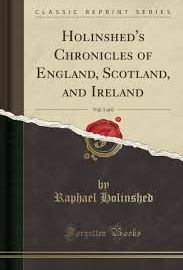
Facts & Figures: Holinshed’s Chronicles

Copyright@shravancharitymission
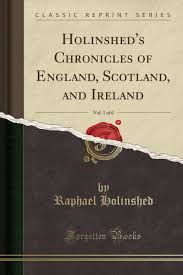
    You might have heard of Holinshed’s Chronicles in case you studied English Literature. But for those of you who haven’t, let me give you a glimpse of it. Holinshed’s Chronicles otherwise is a detailed subject that has influenced many iconic writers and playwrights.  

    Holinshed’s Chronicles, also known as Holinshed’s Chronicles of England, Scotland, and Ireland, is a collaborative work published in several volumes and two editions. The first edition was in 1577, and the second in 1587. It was a large, comprehensive description of British History published in three volumes (England, Scotland and Ireland).

    The Chronicles have traditionally been a source of interest and writing influence on many big time writers, because of its extensive links to Shakespeare’s history plays, as well as King Lear, Macbeth, and the lesser known Cymbeline (Cymbeline, is also known as The Tragedy of Cymbeline or Cymbeline, King of Britain) is a play by William Shakespeare set in Ancient Britain and based on the legends that formed part of the Matter of Britain concerning the early Celtic British King Cunobeline) of pre-Roman Britain.

    The Chronicles could have also been a primary source for many other literary writers of the Renaissance period such as Christopher Marlowe, Edmund Spenser and George Daniel. Now let me tell you how these Chronicles came into existence.

    In 1548, Reginald Wolfe, a London printer, conceived the idea of creating a “Universal Cosmography of the whole world (Cosmography is a branch of science that deals with the general features of the universe, including mother earth), and among them certain histories, of every known nation.” He wanted the work to be printed in English and he also wanted maps and illustrations in the book. Wolfe acquired many of John Leland’s works (John Leland was an English poet and antiquary—dealing in rare books), and with these he constructed chronologies and drew maps that were up-to-date. When Wolfe realised he would not be able to complete this project on his own, he hired Raphael Holinshed and William Harrison to assist him.

    Wolfe died with the work still unfinished in 1573, and the project—changed to a work specifically about the British Isles—and was run by a consortium of three members of the London stationers. They retained Holinshed, who employed Harrison, Richard Stanyhurst, Edmund Campion and John Hooker. In 1577, the work was published in two volumes after some censorship by the Privy Council of some of Stanyhurst’s contribution on Ireland.

    The Chronicles narrative is characterised by a set of rhetorical figures and thematic paradigms that establish the national, royal, chivalrous and heroic ideals that define a state, its monarch, its leaders, and the political role of the common people.

Influence on Shakespeare:

    Shakespeare is widely believed to have used the revised second edition of the Chronicles (published in 1587) as the source for most of his history plays, including the plot of Macbeth first performed in 1606, and for portions of King Lear and Cymbeline.

    Several other playwrights, such as Christopher Marlowe, also used the Chronicles as a source.

The Chronicles and Macbeth:

    Shakespeare used Holinshed’s work extensively in Macbeth, but in modified form. An instance is the Three Witches, whom Holinshed describes as “creatures of the elderwood … nymphs or fairies”. Nymphs and fairies are generally viewed as beautiful and youthful, but Shakespeare’s three witches in Macbeth are ugly, dark, and bizarre. It is believed that he made the change to heighten the suspense and darkness of the play. However, the Chronicles lacked any descriptions of Macbeth’s character, and therefore Shakespeare improvised on several points. The characters Banquo and Fleance in Macbeth were also taken from Holinshed’s works, but they are now considered to be inventions of the 16th century.

    The primary difference between the Chronicles and Shakespeare is characterisation. The character of Macbeth is primarily depicted as a good ruler, a king who was fair and just for 17 years. The Shakespeare’s plot displays King Duncan as a minor character and a weak king. It is possible that the reading of Shakespeare’s King Duncan was inspired by the tale of King Duffe contained within the Chronicle. The story follows a similar narrative, where, King Duffe and his murderer Donwald, closely mirror the narrative of King Duncan and Macbeth. The bad omens following the murder of Duffe are similarly mirrored in Shakespeare’s narrative.

Synopsis:

The Chronicles tale of Macbeth differs from Shakespeare’s version in numerous ways. The play features a scene in which Banquo and Macbeth encounter three women and each speak of a prophecy that would contribute to the characterisation of these women as, ‘other worldly’. 

    In the Chronicles version, Macbeth is a much more sympathetic character. King Duncan is depicted as a weak ruler who had violated the Scottish laws of succession by failing to consult with the “Thanes”, or Lords, before naming his son.

    In Holinshed’s Chronicles, Banquo is shown as a scheming character—he is an accomplice in Macbeth’s murder of Duncan. In comparison to Shakespeare’s version, which has Duncan murdered in his sleep, Duncan is slain in battle and his death is not highly detailed.

    In the Chronicles, Macbeth ruled Scotland not briefly, but for 10 years. He was apparently a capable and wise monarch who implemented commendable laws. Fearing that Banquo will seize the kingdom, Macbeth invites him for a supper where he intends to kill Banquo and his son. He succeeds in killing Banquo but his son, Fleance, flees to Wales. Macbeth, convinced by the witches of his invincibility, commits outrageous acts against his subjects becoming a cruel and paranoid ruler.

   The tale ends when Macbeth is slain by Macduff who then brings his head to the son of the original King, Malcolm.

   The Chronicles and King Lear:

    It is believed that Shakespeare would have used the revised second edition of the Chronicles which was published in 1587. Shakespeare’s King Lear loosely follows the story detailed in the Chronicles but it is unlikely that the Chronicles acted as a primary source.

    Holinshed’s chronicles proves a point that even for a world acclaimed writer ideas can come from anywhere including history and mythology.

By Kamlesh Tripathi

*

https://kamleshsujata.wordpress.com

*

Share it if you like it

*

Shravan Charity Mission is an NGO that works for poor children suffering from life threatening diseases especially cancer. Our posts are meant for our readers that includes both children and adults and it has a huge variety in terms of content. We also accept donations for our mission. Should you wish to donate for the cause. The bank details are given below:

NAME OF ACCOUNT: SHRAVAN CHARITY MISSION

Account no: 680510110004635 (BANK OF INDIA)

IFSC code: BKID0006805

*

Our publications

GLOOM BEHIND THE SMILE

(The book is about a young cancer patient. Now archived in 7 prestigious libraries of the US, including, Harvard University and Library of Congress. It can also be accessed in MIT through Worldcat.org. Besides, it is also available for reading in Libraries and archives of Canada and Cancer Aid and Research Foundation Mumbai)  

ONE TO TANGO … RIA’S ODYSSEY

(Is a book on ‘singlehood’ about a Delhi girl now archived in Connemara Library, Chennai and Delhi Public Library, GOI, Ministry of Culture, Delhi)

AADAB LUCKNOW … FOND MEMORIES

(Is a fiction written around the great city of Nawabs—Lucknow. It describes Lucknow in great detail and also talks about its Hindu-Muslim amity. That happens to be its undying characteristic. The book was launched in Lucknow International Literary Festival of 2014)

REFRACTIONS … FROM THE PRISM OF GOD

(Co-published by Cankids–Kidscan, a pan India NGO and Shravan Charity Mission, that works for Child cancer in India. The book is endorsed by Ms Preetha Reddy, MD Apollo Hospitals Group. It was launched in Lucknow International Literary Festival 2016)

TYPICAL TALE OF AN INDIAN SALESMAN

(Is a story of an Indian salesman who is, humbly qualified. Yet he fights his ways through unceasing uncertainties to reach the top. A good read not only for salesmen. The book was launched on 10th February, 2018 in Gorakhpur Lit-Fest. Now available in Amazon, Flipkart and Onlinegatha)

RHYTHM … in poems

(Published in January 2019. The book contains 50 poems. The poems describe our day to day life. The book is available in Amazon, Flipkart and Onlinegatha)

MIRAGE

(Published in February 2020. The book is a collection of eight short stories. It is available in Amazon, Flipkart and Notion Press)

(ALL THE ABOVE TITLES ARE AVAILABLE FOR SALE IN AMAZON, FLIPKART AND OTHER ONLINE STORES OR YOU COULD EVEN WRITE TO US FOR A COPY)

*****



English: Connecting the world

Copyright@shravancharity mission

ENGLISH: Connecting The World

De-colonisation of English Literature in India

    There was a time when the sun did not set on the British Empire. The saying implied the vastness of the British Empire. Historians inferred that roughly 25% of the earth landmass was in control of the British. The Empire was so extensive that, at any point of time there was daylight in one of its colonies. This resulted in English language, travelling to several continents and many countries. India was no exception. English gradually became the lingua-franca in many countries.

    There was also a deluge of Europeans who started migrating to America from the Continent and British Isles. Historically, they were the most aggressive and ambitious race. So English language too, travelled to the America. Europeans are accomplished people. They managed to change the name of New Amsterdam to New York (in the honour the Duke of York). They bought New Amsterdam from the local tribe (the Lenapes). And with all this the spread of English language continued hammer and tongs. Gradually, it even travelled, to down and under (Australia and New Zealand) and even Africa. Europe has given to the world great seafarers and explorers. English language concomitantly travelled to wherever they went. The language of English was also skilfully taught and used in administration and day-to-day living, and today it connects the world.

    British rule in India began around 1757. English language in India is therefore, over 250 years old. The British left India around 70 years ago, after which English language in India has stood on its own spine. Since then the language has Indianised and even undergone a change in tone and tenor. With the advent of social media English Language has made deep penetrations even into rural areas.

    A number of high-flying authors have emerged in India and they have been able to de-colonise the traditional English oeuvre. The assortment of Indian authors is wide. But there is a threat to English language in India and that is Hinglish.   

By Kamlesh Tripathi

*

https://kamleshsujata.wordpress.com

*

Share it if you like it

*

Shravan Charity Mission is an NGO that works for poor children suffering from life threatening diseases especially cancer. Our posts are meant for our readers that includes both children and adults and it has a huge variety in terms of content. We also accept donations for our mission. Should you wish to donate for the cause. The bank details are given below:

NAME OF ACCOUNT: SHRAVAN CHARITY MISSION

Account no: 680510110004635 (BANK OF INDIA)

IFSC code: BKID0006805

*

Our publications

GLOOM BEHIND THE SMILE

(The book is about a young cancer patient. Now archived in 7 prestigious libraries of the US, including, Harvard University and Library of Congress. It can also be accessed in MIT through Worldcat.org. Besides, it is also available for reading in Libraries and archives of Canada and Cancer Aid and Research Foundation Mumbai)  

ONE TO TANGO … RIA’S ODYSSEY

(Is a book on ‘singlehood’ about a Delhi girl now archived in Connemara Library, Chennai and Delhi Public Library, GOI, Ministry of Culture, Delhi)

AADAB LUCKNOW … FOND MEMORIES

(Is a fiction written around the great city of Nawabs—Lucknow. It describes Lucknow in great detail and also talks about its Hindu-Muslim amity. That happens to be its undying characteristic. The book was launched in Lucknow International Literary Festival of 2014)

REFRACTIONS … FROM THE PRISM OF GOD

(Co-published by Cankids–Kidscan, a pan India NGO and Shravan Charity Mission, that works for Child cancer in India. The book is endorsed by Ms Preetha Reddy, MD Apollo Hospitals Group. It was launched in Lucknow International Literary Festival 2016)

TYPICAL TALE OF AN INDIAN SALESMAN

(Is a story of an Indian salesman who is, humbly qualified. Yet he fights his ways through unceasing uncertainties to reach the top. A good read not only for salesmen. The book was launched on 10th February, 2018 in Gorakhpur Lit-Fest. Now available in Amazon, Flipkart and Onlinegatha)

RHYTHM … in poems

(Published in January 2019. The book contains 50 poems. The poems describe our day to day life. The book is available in Amazon, Flipkart and Onlinegatha)

MIRAGE

(Published in February 2020. The book is a collection of eight short stories. It is available in Amazon, Flipkart and Notion Press)

(ALL THE ABOVE TITLES ARE AVAILABLE FOR SALE IN AMAZON, FLIPKART AND OTHER ONLINE STORES OR YOU COULD EVEN WRITE TO US FOR A COPY)

*****



BOOK REVIEW: ‘OWN IT … Oprah Winfrey In Her Own Words.’ Edited by Anjali Becker and Jeanne Engelmann.

Copyright@shravancharitymission

Khidki (Window)

–Read India Initiative—

This is only an attempt to create interest in reading. We may not get the time to read all the books in our lifetime. But such reviews, talk and synopsis will at least convey what the book is all about.

    In these tough times of Corona Virus when there is a complete lockdown, it is indeed the best time to go through all the book reviews that I’ve done. You’ll find them all in my blog. 

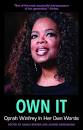
    I’m sure you must have heard the name of Oprah Winfrey.  Well!! I’ve been able to lay my hands on a book titled ‘OWN IT … Oprah Winfrey In Her Own Words.’ It is edited by Anjali Becker and Jeanne Engelmann.

    There is something about her name that I must tell you upfront. Orpah Gail Winfrey (the Biblical “Orpah” mentioned in the Book of Ruth in the Hebrew Bible was mispronounced as “Oprah” and the name stuck on to her).   

    Before I head out to tell you about the book let me first give you a brief introduction of Oprah Gail Winfrey. ‘One of the most successful entrepreneurs of her generation.’ says Forbes. Oprah was born on January 29, 1954. She happens to be an American media executive, actress, talk show host, television producer and a philanthropist. She is best known for her talk show ‘The Oprah Winfrey Show’ broadcasted from Chicago. It was the highest-rated television program of its kind in the history and ran in national syndication for 25 years from 1986 to 2011. Dubbed the “Queen of All Media” she was the richest African-American of the 20th century and North America’s first black multi-billionaire. She is also ranked as the greatest black philanthropist in American history. By the year 2007, she was often ranked as the most influential woman in the world.

    Winfrey was born in poverty in rural Mississippi to a single teenage mother and later raised in inner-city Milwaukee, Wisconsin. She has confessed that she was molested during her childhood and in her early teens and became pregnant at the age of 14. Her son was born premature and died in infancy. Winfrey was then sent to live with the man she calls her father, Vernon Winfrey, a barber in Tennessee, and landed with a job in radio while still in high school. By 19, she was a co-anchor for the local evening news. Winfrey’s, often emotional, extemporaneous delivery, eventually led, to her transfer, to the daytime talk show arena, and after having boosted a third-rated, local, Chicago talk show, to first place, she launched her own production company and became internationally syndicated.

    Credited with creating a more intimate, confessional form of media communication, Winfrey popularized and revolutionized, the tabloid talk show genre, pioneered by Phil Donahue. Through this medium, Winfrey broke 20th-century taboos and allowed LGBT (Lesbian, Gay, Bi-sexual & Transgender) people to enter the mainstream through television appearances. In 1994, she was inducted into the National Women’s Hall of Fame.

    By the mid-1990s, Winfrey had reinvented her show with a focus on literature, self-improvement, mindfulness, and spirituality. Though she was criticized for unleashing a confession culture, promoting controversial self-help ideas, and having an emotion-centered approach, she was also praised for overcoming adversity to become a benefactor to others. Winfrey had also emerged as a political force in the 2008 presidential race, delivering about one million votes to Barack Obama in the razor close 2008 Democratic primary. In 2013, Winfrey was awarded the Presidential Medal of Freedom by President Obama and an honorary doctorate degree from Duke and Harvard. In 2008, she formed her own network, Oprah Winfrey Network (OWN).

    The title book ‘Own it’ is quite a disappointment. It hardly has any, so called editors’ contribution barring a short flat introduction. The total number of pages, in the book are 144, plus the table of contents. It is just a series of bland, quote after quote, presumably uttered by Oprah herself, during her long prolific career. The book doesn’t even have a proper introduction or a foreword by Oprah. The publisher is, An Agate Imprint.

    The editors have divided the quotes into eight chapters namely Preperation/Risk Taking/Decision Making/Challenges/Work-life balance/Leadership/Mission-Vision and Philanthropy/Oprah’s achievements. In addition there is a chapter each on milestones and citations.

    The editors have not made any introductory sentences to link the quotes. The title of the book states, ‘in her own words’ which in fact is somewhat deceiving. The book is all about words that Oprah might have spoken, but it is not written by Oprah.

    The book doesn’t have much to offer. In fact I liked the ‘milestone’ a chapter at the rear of the book better than the main book. It describes her life in pointers from 1954 to 2016.

    Let me spell out a few quotes that I liked out of the book:

    Here is one on Ratings

    ‘I don’t do anything just for ratings, but as I’ve said, we’re in the television business. If you all are not watching this, if this does not attract your attention, then that means we have not succeeded in doing what we’re supposed to do as a business. So am I looking for people I am interested in and also that I believe the public is interested in, our viewers? Of course. And does that equal ratings? I hope so.

   On Being Grateful there is a quote that I liked.

Opportunities, relationships, even money flowed my way when I learned to be grateful no matter what happened in my life.

On Leading by Example

    It appears Oprah believed in Mahatma Gandhi. I can figure that out when she talks about leading by Example … Become the change you want to see—those are words I live by (a quote of Mahatma Gandhi). She goes on to say: Instead of belittling, uplift. Instead of demolishing, rebuild. Instead of misleading, light the way so that all of us can stand on higher ground.

    My rating five out of ten.    

By Kamlesh Tripathi

*

https://kamleshsujata.wordpress.com

*

Share it if you like it

*

Shravan Charity Mission is an NGO that works for poor children suffering from life threatening diseases especially cancer. Our posts are meant for our readers that includes both children and adults and it has a huge variety in terms of content. We also accept donations for our mission. Should you wish to donate for the cause. The bank details are given below:

NAME OF ACCOUNT: SHRAVAN CHARITY MISSION

Account no: 680510110004635 (BANK OF INDIA)

IFSC code: BKID0006805

*

Our publications

GLOOM BEHIND THE SMILE

(The book is about a young cancer patient. Now archived in 7 prestigious libraries of the US, including, Harvard University and Library of Congress. It can also be accessed in MIT through Worldcat.org. Besides, it is also available for reading in Libraries and archives of Canada and Cancer Aid and Research Foundation Mumbai)  

ONE TO TANGO … RIA’S ODYSSEY

(Is a book on ‘singlehood’ about a Delhi girl now archived in Connemara Library, Chennai and Delhi Public Library, GOI, Ministry of Culture, Delhi)

AADAB LUCKNOW … FOND MEMORIES

(Is a fiction written around the great city of Nawabs—Lucknow. It describes Lucknow in great detail and also talks about its Hindu-Muslim amity. That happens to be its undying characteristic. The book was launched in Lucknow International Literary Festival of 2014)

REFRACTIONS … FROM THE PRISM OF GOD

(Co-published by Cankids–Kidscan, a pan India NGO and Shravan Charity Mission, that works for Child cancer in India. The book is endorsed by Ms Preetha Reddy, MD Apollo Hospitals Group. It was launched in Lucknow International Literary Festival 2016)

TYPICAL TALE OF AN INDIAN SALESMAN

(Is a story of an Indian salesman who is, humbly qualified. Yet he fights his ways through unceasing uncertainties to reach the top. A good read not only for salesmen. The book was launched on 10th February, 2018 in Gorakhpur Lit-Fest. Now available in Amazon, Flipkart and Onlinegatha)

RHYTHM … in poems

(Published in January 2019. The book contains 50 poems. The poems describe our day to day life. The book is available in Amazon, Flipkart and Onlinegatha)

MIRAGE

(Published in February 2020. The book is a collection of eight short stories. It is available in Amazon, Flipkart and Notion Press)

(ALL THE ABOVE TITLES ARE AVAILABLE FOR SALE IN AMAZON, FLIPKART AND OTHER ONLINE STORES OR YOU COULD EVEN WRITE TO US FOR A COPY)

*****


U.S. PRESIDENTIAL ELECTION … How is the President elected

Copyright@shravancharitymission

Nomination and election process.

    The American elections for the President will happen in November. The campaigns have already started where one might be hearing names such as Joe Biden, Bernie Sanders, Democrats, Republican and of course Donald Trump quite often on the television. There is long drill that goes around before the President of United States is finally elected. Let me briefly take you through the process.

    The modern nomination process of the U.S. presidential elections consists of two major parts: first is the series of presidential primary elections and caucuses. Caucuses are meetings in which local members of a political party register their preference of candidates, running for the office, or select delegates to attend a convention. It is held in each state. Second is the presidential nominating conventions, held by each political party. This process was never included in the Constitution, and has thus evolved over a period of time by the political parties to clear the field for candidates.

    The primary elections are run by state and local governments, while the caucuses are organized directly by the political parties. Some states hold only primary elections, some hold only caucuses, and others use a combination of both. These primaries and caucuses are staggered generally between January and June before the federal election, with I-owa and New Hampshire traditionally holding the first presidential state caucus and primary, respectively.

    Like the general election, presidential caucuses or primaries are indirect elections. The major political parties, officially vote for their presidential candidates, at their respective nominating conventions, all of which are usually held in the summer before the federal election. Depending on each state’s law and that state’s, political party’s rules, when voters cast ballots for a candidate in a presidential caucus or primary, they may be voting to award delegates “bound” to vote for the presidential candidate at the presidential nominating conventions, or they may simply be expressing a negative opinion that the state party is not bound to follow in selecting delegates to their respective national convention.

    Unlike the general election, voters in the U.S. territories can also elect delegates to the national conventions (US has a total of 14 US territories, five of which are permanently inhabited and nine of which are uninhabited or barely inhabited). Furthermore, each political party can determine how many delegates or elected members to allocate to each state and territory. In 2012 for example, the Democratic and Republican Party conventions each used two different formulas to allocate delegates. The Democrats-based theirs on two main factors: the proportion of votes each state gave to the Democratic candidate in the previous three presidential elections, and the number of electoral votes each state had in the Electoral College. In contrast, the Republicans assigned to each state 10 delegates, plus three delegates per congressional district. Both parties then gave a fixed number of delegates to each territory, and finally bonus delegates to states and territories that passed certain criteria.

    Along with the delegates chosen during primaries and caucuses, the state and U.S. territory delegations pertaining to both the Democratic and Republican Party conventions, also include “unpledged” delegates, who have a vote. For Republicans, they consist of the three top party officials from each state and territory. Where, Democrats have a more expansive group of unpledged delegates called “super-delegates”, who are party leaders and elected officials.

    Each party’s presidential candidate also chooses a vice presidential nominee to run with him or her on the same ticket, and this choice is rubber-stamped by the convention. In this context I would recommend an interesting novel titled ‘Going Rogue’ by Sarah Palin that describes America’s Election campaign in great vividity.

    If no single candidate has secured a majority of delegates (including both pledged and unpledged), then a “brokered convention” results. All pledged delegates are then “released” and are able to switch their allegiance to a different candidate. Thereafter, the nomination is decided through a process of alternating political horse trading, and additional rounds of re-votes.

    The election conventions have historically been held inside convention centres, but since the late 20th century both the Democratic and Republican parties have favoured sports arenas and domed stadiums to accommodate the increasing attendance.

    To sum up. The election of the president and the vice president of the United States is an indirect election (An indirect election is an election in which voters do not choose between candidates for an office, but elect people who then choose. It is one of the oldest forms of elections, and is still used today for many presidents, cabinets, upper houses, and supranational legislatures) in which citizens of the United States who are registered to vote in one of the fifty U.S. states or in Washington, D.C., cast ballots not directly for those offices, but instead for members of the Electoral College. (An Electoral College is a body of electors established by the United States Constitution, which forms every four years for the sole purpose of electing the president and the vice president of the United States.

 These electors (by electors I mean a person who has the right to vote in an election, especially one for members of a national parliament) then, in turn, cast direct votes, known as electoral votes, for the president, and for the vice president. The candidate who receives an absolute majority of electoral votes (at least 270 out of a total of 538, since the Twenty-Third Amendment granted voting rights to citizens of D.C.) is then elected to that office. If no candidate receives an absolute majority of the votes for president, the House of Representatives chooses the winner; if no one receives an absolute majority of the votes for vice president, then the Senate chooses the winner.

    In nutshell. The election of the President and Vice President of the United States is an indirect vote in which citizens cast ballots for a set of members of the U.S. Electoral College. These electors then cast direct votes for the President and Vice President. If both votes result in an absolute majority, the election is over.

By Kamlesh Tripathi

*

https://kamleshsujata.wordpress.com

*

Share it if you like it

*

Shravan Charity Mission is an NGO that works for poor children suffering from life threatening diseases especially cancer. Our posts are meant for our readers that includes both children and adults and it has a huge variety in terms of content. We also accept donations for our mission. Should you wish to donate for the cause. The bank details are given below:

NAME OF ACCOUNT: SHRAVAN CHARITY MISSION

Account no: 680510110004635 (BANK OF INDIA)

IFSC code: BKID0006805

*

Our publications

GLOOM BEHIND THE SMILE

(The book is about a young cancer patient. Now archived in 7 prestigious libraries of the US, including, Harvard University and Library of Congress. It can also be accessed in MIT through Worldcat.org. Besides, it is also available for reading in Libraries and archives of Canada and Cancer Aid and Research Foundation Mumbai)  

ONE TO TANGO … RIA’S ODYSSEY

(Is a book on ‘singlehood’ about a Delhi girl now archived in Connemara Library, Chennai and Delhi Public Library, GOI, Ministry of Culture, Delhi)

AADAB LUCKNOW … FOND MEMORIES

(Is a fiction written around the great city of Nawabs—Lucknow. It describes Lucknow in great detail and also talks about its Hindu-Muslim amity. That happens to be its undying characteristic. The book was launched in Lucknow International Literary Festival of 2014)

REFRACTIONS … FROM THE PRISM OF GOD

(Co-published by Cankids–Kidscan, a pan India NGO and Shravan Charity Mission, that works for Child cancer in India. The book is endorsed by Ms Preetha Reddy, MD Apollo Hospitals Group. It was launched in Lucknow International Literary Festival 2016)

TYPICAL TALE OF AN INDIAN SALESMAN

(Is a story of an Indian salesman who is, humbly qualified. Yet he fights his ways through unceasing uncertainties to reach the top. A good read not only for salesmen. The book was launched on 10th February, 2018 in Gorakhpur Lit-Fest. Now available in Amazon, Flipkart and Onlinegatha)

RHYTHM … in poems

(Published in January 2019. The book contains 50 poems. The poems describe our day to day life. The book is available in Amazon, Flipkart and Onlinegatha)

MIRAGE

(Published in February 2020. The book is a collection of eight short stories. It is available in Amazon, Flipkart and Notion Press)

(ALL THE ABOVE TITLES ARE AVAILABLE FOR SALE IN AMAZON, FLIPKART AND OTHER ONLINE STORES OR YOU COULD EVEN WRITE TO US FOR A COPY)

*****


SHORT STORY: MAHAMANTRI VIDUR

Copyright@shravancharitymission

    We all know Vidur the intelligent Mahamantri of Kuru king Dhritrashtra. This short story is about him.

    After the bloodshed at Kurukshetra post the holy war of Mahabharat a grieving King Dhritrashtra wonders, what the purpose of life is all about. Vidur, his prime minister, then tells him the story of a man in the jungle running away from wild beasts, who falls into a steep ditch. But by stroke of luck he falls on creepers growing there and that breaks his fall to the deep bottom of the ditch. So, he dangles there, when he sees a large serpent waiting for him at the bottom of the ditch, to bite him.

    And, that is not all. On the ground the beasts are still on the prowl waiting for him to come out of the ditch. Further, the man notices black and white mice, nibbling the roots of the creepers that holds and supports the man. This is when some bees from the top, fly towards the ditch, obviously to sting him, and from their hive, drops of honey, fall on the leaves of the creepers, and almost without thinking, the man’s fingers reach out to taste the honey. The honey is incredibly sweet and tempting and, despite facing certain death in all directions, the man can only think of how the honey tastes and wants more.

    Vidur’s interpretation of the story that he narrates to Dhritrashtra is very offbeat here. He says, the jungle is our danger-filled world, the serpent the time that patiently waits for us, and the white and black mice are the days and nights that eat into the creepers of our life’s journey. The honey is the pleasure that we get from this world, along with the intense desire to live on an on, that keeps us, dangling, despite the definite death that we all see and face ahead.

    Indeed there is a lesson to learn in everything that we do in life, and every circumstance that we face in life. The story only tells us that.   

By Kamlesh Tripathi

*

https://kamleshsujata.wordpress.com

*

Share it if you like it

*

Shravan Charity Mission is an NGO that works for poor children suffering from life threatening diseases especially cancer. Our posts are meant for our readers that includes both children and adults and it has a huge variety in terms of content. We also accept donations for our mission. Should you wish to donate for the cause. The bank details are given below:

NAME OF ACCOUNT: SHRAVAN CHARITY MISSION

Account no: 680510110004635 (BANK OF INDIA)

IFSC code: BKID0006805

*

Our publications

GLOOM BEHIND THE SMILE

(The book is about a young cancer patient. Now archived in 7 prestigious libraries of the US, including, Harvard University and Library of Congress. It can also be accessed in MIT through Worldcat.org. Besides, it is also available for reading in Libraries and archives of Canada and Cancer Aid and Research Foundation Mumbai)  

ONE TO TANGO … RIA’S ODYSSEY

(Is a book on ‘singlehood’ about a Delhi girl now archived in Connemara Library, Chennai and Delhi Public Library, GOI, Ministry of Culture, Delhi)

AADAB LUCKNOW … FOND MEMORIES

(Is a fiction written around the great city of Nawabs—Lucknow. It describes Lucknow in great detail and also talks about its Hindu-Muslim amity. That happens to be its undying characteristic. The book was launched in Lucknow International Literary Festival of 2014)

REFRACTIONS … FROM THE PRISM OF GOD

(Co-published by Cankids–Kidscan, a pan India NGO and Shravan Charity Mission, that works for Child cancer in India. The book is endorsed by Ms Preetha Reddy, MD Apollo Hospitals Group. It was launched in Lucknow International Literary Festival 2016)

TYPICAL TALE OF AN INDIAN SALESMAN

(Is a story of an Indian salesman who is, humbly qualified. Yet he fights his ways through unceasing uncertainties to reach the top. A good read not only for salesmen. The book was launched on 10th February, 2018 in Gorakhpur Lit-Fest. Now available in Amazon, Flipkart and Onlinegatha)

RHYTHM … in poems

(Published in January 2019. The book contains 50 poems. The poems describe our day to day life. The book is available in Amazon, Flipkart and Onlinegatha)

MIRAGE

(Published in February 2020. The book is a collection of eight short stories. It is available in Amazon, Flipkart and Notion Press)

(ALL THE ABOVE TITLES ARE AVAILABLE FOR SALE IN AMAZON, FLIPKART AND OTHER ONLINE STORES OR YOU COULD EVEN WRITE TO US FOR A COPY)

*****


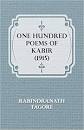
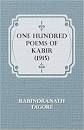
BOOK REVIEW: ONE HUNDRED POEMS OF KABIR … translated by Rabindranath Tagore and assisted by Evelyn Underhill

Copyright@shravancharitymission

Khidki (Window)

–Read India Initiative—

This is only an attempt to create interest in reading. We may not get the time to read all the books in our lifetime. But such reviews, talk and synopsis will at least convey what the book is all about.

    This book was published in India by Macmillan. An imprint of Pan Macmillan Publishing India Private Ltd in the year 1915. The price of this book is Rs 125. It is a slim book of around 160 pages in all.

    Kabir says, “I have attained the unattainable, and my heart is coloured with the colour of love.”

    Who doesn’t know Kabir? A selection of his songs is here for the first time offered to English readers. Kabir is one of the most interesting personalities in the history of Indian mysticism.

    But before that let me give you a brief on poet Kabir. Born in or near Benares, of Mohammedan parents, probably about the year 1440, he became in early life, a disciple of the celebrated Hindu ascetic Ramananda. Ramananda had brought to Northern India the religious revival which Ramanuja, the great twelfth-century reformer of Brahmanism, had initiated in the South.

    Ramananda, was the person through whom the spirit of Ramanuja is said to have reached Kabir. Kabir was a man of wide religious culture and tolerance, and full of missionary enthusiasm. He passed through the earth in times when impassioned poetry and deep philosophy of the great Persian mystics such as, Attar, Sadi, Jalalu’din Rumi, and Hafiz ruled the roost. They exercised a powerful influence on the religious paradigm of India. Kabir always dreamt of reconciling his intense and personal Mohammedan mysticism with the traditional theology of Brahminism.

    Kabir’s story is surrounded by contradictory legends, but none of which can be relied upon hundred percent. Some of these emanate from Hindu sources, and some from Mohammedan. They both claimed him by turns, as a Sufi and a Brahman ascetic. His name, in umpteen ways, is practically a conclusive proof of, he being a liberal Muslim. In today’s reference one can even relate him as the biggest emissary of Hindu-Muslim Amity.

    In the collection of songs translated here in this book one will find examples that illustrate nearly every aspect of Kabir’s thought panorama, and all his fluctuations of the mystic emotions. It runs through: the ecstasy of despair, the still beatitude, the eager self-devotion, the flashes of wide illumination and the moments of intimate love.

    The book starts with a long introduction of Kabir by Evelyn Underhill. The boy Kabir, in whom the religious passion was innate, saw in Ramananda his destined teacher. But he wasn’t sure if a Hindu guru would accept a Mohammedan as a disciple. He therefore lay hidden on the steps of the river Ganga, where Ramananda was accustomed to bathe, with the result that the master, while walking down to the water, stepped on his body unknowingly and exclaimed in his astonishment, “Ram! Ram!” –the very name of the deity that he worshipped. Kabir declared that he had received the mantra of initiation from Ramananda’s lips, and by virtue of which he was admitted to his discipleship. And, in spite of the protests of orthodox Brahmans and Mohammendans, both equally annoyed by this contempt of theological landmarks he persisted with his claim.

    Ramananda appears to have accepted him. Though Mohammedan legends speak of the famous Sufi Pir, Takki of Jhansi, as Kabir’s master in later life, but the Hindu saint is the only human teacher to whom, in his songs, he acknowledges the indebtedness.

    The comprehensive introduction written by Evelyn Underhill, includes Kabir, in the elite group of some supreme mystics—among whom are, St. Augustine, Ruysbroeck and the Sufi poet Jalau’ddin Rumi, who are perhaps the chief—and have achieved what we may call the syncretic vision of God.

    After the 26 page introduction that describes the credentials of Kabir by Evelyn Underhill the book captures some top of the chart dohas—verses-quatrains (poems) of Kabir. I would take you through a few of them. These verses in the book are written in Roman Hindi words and then translated into English. Let me recite a few dohas to you and then translate them to English:

Mo ko kahan dhunro bande,

Main toh tere paas mein,

Naa main deval naa main masjid,

Naa kaabe kailaas mein,

Naa main koune kriya karam mein,

Nahi yog vairaag mein,

Khoji ho to turate mila-ihe pal bhar ki talaas mein,

Kahyeen kabir suno bhai saadho sab swason ki swans mein.

    This translates into a beautiful life-lesson:

    O servant where dost thou seek Me? I am neither in a temple nor in a mosque: I am neither in Kaaba nor in Kailash: Neither am I in any rites nor in ceremonies, nor in Yoga nor renunciation. If thou art a true seeker, thou shalt at once see Me: thou shalt meet me in a moment of time. Kabir says, “O Sadhu! God is the breath of all breath.”

And another one:

Na jaane sahib kaisa hai.

Na jaane teraa sahib kaisaa hai,

Mulla hokar bang jo dyeve,

Kya tera sahab bahraa hai,

Keedee ke pag nahi baaje, toh-bhee sahab suntaa hai,

Maalaa pheree tilak lagaayaa, lambee jataa badhaataa hai,

Antar tere Kuphar—kataaree, yon nahin sahab milta hai.

    This translates into …

    I DO NOT know what kind of God you have: The Mullah cries aloud to Him, but why? Is your Lord deaf? When even the subtle anklets that ring on the feet of an insect when it moves are heard by him.

    You count the beads, paint your forehead with the mark of your God, and you wear matted locks long and showy, but a deadly weapon is in your heart, so why will you have God?

    There is another one for you:

Jo khuda masjid vasat hai aur muluk keh kara,

Teerath-moorat Raam-niwaasee bahar kare ko heraa,

Poorab disaa Haree ka vaas pachchhim Alah ka mukaam,

Dil mein khoj dilhee mein khojou, yahin Kareem-yahin Raam,

Jete aurat-marad upaan-ee so sab roop tumhaaraa,

Kabir –hai Alah-Ram ka so guru peer hamaaraa

    If God is within the mosque, then whom does this world belong to? If Ram is within the image that you find in your pilgrimage, then who is there to know what happens without him? Hari is in the East. Allah is in the West. Look within your heart, for there you will find both Karim and Ram. All the men and women of the world are, His living forms. Kabir is the child of Allah and of Ram. He is my Guru, He is my Ram.

    Over all it’s a niche book for people who have a poetic bent of mind. The Hindi to English translation of the book is not very good. But yes, since, it’s a translation, it is good for people who cannot read Hindi as it’s, written in Roman Hindi along with a translation. I would give the book six out of ten.

By Kamlesh Tripathi

*

https://kamleshsujata.wordpress.com

*

Share it if you like it

*

Shravan Charity Mission is an NGO that works for poor children suffering from life threatening diseases especially cancer. Our posts are meant for our readers that includes both children and adults and it has a huge variety in terms of content. We also accept donations for our mission. Should you wish to donate for the cause. The bank details are given below:

NAME OF ACCOUNT: SHRAVAN CHARITY MISSION

Account no: 680510110004635 (BANK OF INDIA)

IFSC code: BKID0006805

*

Our publications

GLOOM BEHIND THE SMILE

(The book is about a young cancer patient. Now archived in 7 prestigious libraries of the US, including, Harvard University and Library of Congress. It can also be accessed in MIT through Worldcat.org. Besides, it is also available for reading in Libraries and archives of Canada and Cancer Aid and Research Foundation Mumbai)  

ONE TO TANGO … RIA’S ODYSSEY

(Is a book on ‘singlehood’ about a Delhi girl now archived in Connemara Library, Chennai and Delhi Public Library, GOI, Ministry of Culture, Delhi)

AADAB LUCKNOW … FOND MEMORIES

(Is a fiction written around the great city of Nawabs—Lucknow. It describes Lucknow in great detail and also talks about its Hindu-Muslim amity. That happens to be its undying characteristic. The book was launched in Lucknow International Literary Festival of 2014)

REFRACTIONS … FROM THE PRISM OF GOD

(Co-published by Cankids–Kidscan, a pan India NGO and Shravan Charity Mission, that works for Child cancer in India. The book is endorsed by Ms Preetha Reddy, MD Apollo Hospitals Group. It was launched in Lucknow International Literary Festival 2016)

TYPICAL TALE OF AN INDIAN SALESMAN

(Is a story of an Indian salesman who is, humbly qualified. Yet he fights his ways through unceasing uncertainties to reach the top. A good read not only for salesmen. The book was launched on 10th February, 2018 in Gorakhpur Lit-Fest. Now available in Amazon, Flipkart and Onlinegatha)

RHYTHM … in poems

(Published in January 2019. The book contains 50 poems. The poems describe our day to day life. The book is available in Amazon, Flipkart and Onlinegatha)

MIRAGE

(Published in February 2020. The book is a collection of eight short stories. It is available in Amazon, Flipkart and Notion Press)

(ALL THE ABOVE TITLES ARE AVAILABLE FOR SALE IN AMAZON, FLIPKART AND OTHER ONLINE STORES OR YOU COULD EVEN WRITE TO US FOR A COPY)

*****


FACTS FIGURES & QUOTES: SALE OF ALASKA: A LESSON FOR THE WORLD

Copyright@shravancharitymission

    Flora and fauna are generally visible in the treasures of mother earth whereas, mines and minerals need to be dug out, in other words they need to be discovered. To simplify, what is overt is known to all. But what is covert needs to be discovered. “No great discovery was ever made without a bold guess.” said Isaac Newton. That brings me to the story of Alaska. The purchase of Alaska or the sale of Alaska was, United States’ acquisition of Alaska from the Russian Empire. Alaska was formally transferred to the United States on October 18, 1867, through a treaty ratified by the United States Senate and signed by President Andrew Johnson.

    History corroborates that Russia had established a considerable presence in North America during the first half of the seventeenth century, but few Russians ever settled in Alaska. In the aftermath of the Crimean War, Emperor Alexander II of Russia began exploring the possibility of selling Alaska, as it would have been difficult to defend it from Britain and other countries in the event of any future war. After the end of the American Civil War, U.S. Secretary of State William Seward entered into negotiations with Russian minister Eduard de Stoeckl for the purchase of Alaska. Seward and Stoeckl both agreed to a treaty on March 30, 1867. The treaty was approved by the United States Senate by a wide margin despite clashes between President Johnson and Congress over the sanity of its purchase.

    The purchase of Alaska added 586,412 square miles (1,518,800 km2) of new territory to the United States for the cost of $7.2 million. Say 2 cents per acre. Reactions to the purchase in the United States were mostly positive, as many believed possession of Alaska would serve as a base to expand and facilitate American trade into Asia. However, some opponents labelled the purchase as “Seward’s Folly“, or “Seward’s Icebox,” as they contended that the United States had acquired useless land mass that’ll not be of much use to the US in times to come.

    But Seward could prophesy. Or he could measure the future potential of Alaska and its future usefulness in the opportunities arising in the US. He knew Alaska’s potential and could visualise how USA will benefit with Alaska’s resources and strategic position in the globe. Over the decades, exploration led to the discovery of gold, oil and rich minerals, along with the world’s most abundant fisheries. And so decades later, Seward was posthumously vindicated.

    In the summer of 1899, gold was finally struck around Nome in west Alaska. That brings me to the point: Check what lies underground. For what lies underground could just be another gold mine just as Alaska. And on hindsight when we look back we find both, the Secretary of the State, William Seward and the United States of America, look like outright heroes, as compared to the Russian minister Eduard de Stoeckl  and Russia itself who look pale in front of them.

    In world history there have been many instances even after 1867 (when America purchased Alaska), where countries have divested their territories in settlement of disputes, and rogue countries have grabbed territories of civilised countries, names of which are pretty obvious and are available in history texts.  And why go anywhere else. Even India, was partitioned on the ground of religion, which the citizenry of India has not been able to reconcile to even after seventy years. But the case of Alaska was truly different where an Emperor on the possibility of a future war divested Alaska-then part of the North American Continent for a pittance without studying what lies underground.  

    This conveys an important lesson to our posterity and that is, underground is as important as over ground. Metaphorically also, what lies in our innate conscience is equally important to your external personality.

By Kamlesh Tripathi

*

https://kamleshsujata.wordpress.com

*

Share it if you like it

*

Shravan Charity Mission is an NGO that works for poor children suffering from life threatening diseases especially cancer. Our posts are meant for our readers that includes both children and adults and it has a huge variety in terms of content. We also accept donations for our mission. Should you wish to donate for the cause. The bank details are given below:

NAME OF ACCOUNT: SHRAVAN CHARITY MISSION

Account no: 680510110004635 (BANK OF INDIA)

IFSC code: BKID0006805

*

Our publications

GLOOM BEHIND THE SMILE

(The book is about a young cancer patient. Now archived in 7 prestigious libraries of the US, including, Harvard University and Library of Congress. It can also be accessed in MIT through Worldcat.org. Besides, it is also available for reading in Libraries and archives of Canada and Cancer Aid and Research Foundation Mumbai)  

ONE TO TANGO … RIA’S ODYSSEY

(Is a book on ‘singlehood’ about a Delhi girl now archived in Connemara Library, Chennai and Delhi Public Library, GOI, Ministry of Culture, Delhi)

AADAB LUCKNOW … FOND MEMORIES

(Is a fiction written around the great city of Nawabs—Lucknow. It describes Lucknow in great detail and also talks about its Hindu-Muslim amity. That happens to be its undying characteristic. The book was launched in Lucknow International Literary Festival of 2014)

REFRACTIONS … FROM THE PRISM OF GOD

(Co-published by Cankids–Kidscan, a pan India NGO and Shravan Charity Mission, that works for Child cancer in India. The book is endorsed by Ms Preetha Reddy, MD Apollo Hospitals Group. It was launched in Lucknow International Literary Festival 2016)

TYPICAL TALE OF AN INDIAN SALESMAN

(Is a story of an Indian salesman who is, humbly qualified. Yet he fights his ways through unceasing uncertainties to reach the top. A good read not only for salesmen. The book was launched on 10th February, 2018 in Gorakhpur Lit-Fest. Now available in Amazon, Flipkart and Onlinegatha)

RHYTHM … in poems

(Published in January 2019. The book contains 50 poems. The poems describe our day to day life. The book is available in Amazon, Flipkart and Onlinegatha)

MIRAGE

(Published in February 2020. The book is a collection of eight short stories. It is available in Amazon, Flipkart and Notion Press)

(ALL THE ABOVE TITLES ARE AVAILABLE FOR SALE IN AMAZON, FLIPKART AND OTHER ONLINE STORES OR YOU COULD EVEN WRITE TO US FOR A COPY)

*****


COMMUNICATION SKILL AT WORKPLACE

Copyright@shravancharitymission

    Just think of the modes in which our distant forebearers communicated long ago-the evolution of the written word, speech, smoke signals, semaphores and the Morse code-one can go on and on. Here, of course, we need to concern ourselves with communication skills and the time management in work place and home in the present times. Popular work culture does not perceive separate rules for men and women. We are all global managers in the local set up. Consider home, for a moment, as an extension of work place, particularly in the context of Indian women. While life at home may be laid back, care free but is not without responsibility. And there the difference ends. The modern employee needs oral, written and technological skills to excel. Even the most naïve housewife is expected to operate the washing machine, handle the microwave oven, run the mixie, to draw money from ATM and even to drive a car—that is if she wants to contribute meaningfully to the chores of routine but modern domestic life.

    Nearly all work involves interaction and communication with others. Clear and effective communication between individuals between teams and among departments is a vital part of any successful organization. Without effective communication in workplace, business results and team relationships suffer. Poor performers continue to perform poorly and productivity drops. Good people are overburdened with more responsibility. In our personal lives we blame each other for lack of communication and agree to live in companionable silence.

    We can see that employees still need written communication skills. Yet interpersonal oral skills are the ones most prized by employers in the new informal workplace atmosphere. At home the oral word has to be more precise as well as concise to avoid attrition. The ability to follow oral instructions is an important parameter in the overall persona of an employee. Considering the important nature of the faculty even CBSE has incorporated it in the form of “Listening and Writing Skills.” In their curricula employees who work with the public or closely with teams need skills in empathy and feedback techniques, especially in fields such as customer service, medical, and legal. Critical thinking and the ability to function as part of a problem—solving group are also skills that employees look for. Today’s worker must remain cool under pressure, adaptable to new technology and to fast pace with benefit of hindsight. I’ve shortlisted a few points which may be of some help to you while interacting with people.

  1. Clarity: Ensure the information you need to convey is, firstly, intelligible to you. Communicate it clearly and directly. Use language that is specific and unambigious. Check that the receiver understands the message as you intended. Avoid acronyms lest they be confused.
  2. Be Attentive: Without becoming an active listener means you cannot make a conscious effort to truly hear what the other person is saying—‘don’t interrupt or respond until the other person has quite finished. It should come as no surprise that the best communicators are also the best listeners.
  3. Deportment: This means using the other person’s name, looking them in the eye, and nodding to aid in demonstrating you understand what they are saying. If you are communicating in writing, reread before sending your message to ensure that it could not be misinterpreted or taken as disrespectful.
  4. Message & Medium: Some of us are better communicating in writing and some are better at speaking. Consider the preference of your receiver.
  5. Who is the end—user: You may have to style your communication with your boss, co-worker, customer or supplier.
  6. Mode: More and more of our workplace communication is done via e-mail, voice mail and text messaging. There are advantages and disadvantages to each of these, depending on the message and the audience. Texting can be especially effective when a quick question or answer is required without further explanation or repeated follow up e.g. “What time is the school council meeting.”

    The important thing is to stay focussed on behaviour or performance and not character. You are not a judge of character. Avoid being biased or opinionated. When you are on the receiving end, avoid getting triggered by difficult messages. Keep in mind the bigger picture and the long term implications.

    Don’t be yourself all the time. Be someone a little nicer and never confuse motion with action. After all “A man diligent at his work shall stand before kings.”

By Ajit K Tripathi

*

https://kamleshsujata.wordpress.com

*

Share it if you like it

*

Shravan Charity Mission is an NGO that works for poor children suffering from life threatening diseases especially cancer. Our posts are meant for our readers that includes both children and adults and it has a huge variety in terms of content. We also accept donations for our mission. Should you wish to donate for the cause. The bank details are given below:

NAME OF ACCOUNT: SHRAVAN CHARITY MISSION

Account no: 680510110004635 (BANK OF INDIA)

IFSC code: BKID0006805

*

Our publications

GLOOM BEHIND THE SMILE

(The book is about a young cancer patient. Now archived in 7 prestigious libraries of the US, including, Harvard University and Library of Congress. It can also be accessed in MIT through Worldcat.org. Besides, it is also available for reading in Libraries and archives of Canada and Cancer Aid and Research Foundation Mumbai)  

ONE TO TANGO … RIA’S ODYSSEY

(Is a book on ‘singlehood’ about a Delhi girl now archived in Connemara Library, Chennai and Delhi Public Library, GOI, Ministry of Culture, Delhi)

AADAB LUCKNOW … FOND MEMORIES

(Is a fiction written around the great city of Nawabs—Lucknow. It describes Lucknow in great detail and also talks about its Hindu-Muslim amity. That happens to be its undying characteristic. The book was launched in Lucknow International Literary Festival of 2014)

REFRACTIONS … FROM THE PRISM OF GOD

(Co-published by Cankids–Kidscan, a pan India NGO and Shravan Charity Mission, that works for Child cancer in India. The book is endorsed by Ms Preetha Reddy, MD Apollo Hospitals Group. It was launched in Lucknow International Literary Festival 2016)

TYPICAL TALE OF AN INDIAN SALESMAN

(Is a story of an Indian salesman who is, humbly qualified. Yet he fights his ways through unceasing uncertainties to reach the top. A good read not only for salesmen. The book was launched on 10th February, 2018 in Gorakhpur Lit-Fest. Now available in Amazon, Flipkart and Onlinegatha)

RHYTHM … in poems

(Published in January 2019. The book contains 50 poems. The poems describe our day to day life. The book is available in Amazon, Flipkart and Onlinegatha)

MIRAGE

(Published in February 2020. The book is a collection of eight short stories. It is available in Amazon, Flipkart and Notion Press)

(ALL THE ABOVE TITLES ARE AVAILABLE FOR SALE IN AMAZON, FLIPKART AND OTHER ONLINE STORES OR YOU COULD EVEN WRITE TO US FOR A COPY)

*****


SHORT STORY: BIRD AND THE VILLAGER

Copyright@shravancharitymission

    In today’s challenging times it is extremely important to be both talented and resourceful. No matter in which situation you are, you continuously need to be upgrading your skills and training, so as to be able to get out of it, to your advantage.

    Let me draw out an analogy to explain what I’m intending to say. There was once a villager who didn’t know swimming. In the peak of monsoon when his village got flooded and he was very close to drowning. He somehow managed to climb a tree and sit on one of its branches. And, as he was taking a sigh of relief, a bird came and sat on the neighbouring branch. Now both, the villager and the bird were sitting on the same tree.

    But imagine the unfortunate situation, where, if the branch of the tree snaps or breaks for some reason. What will happen then? The answer is very obvious. The villager will fall into the flooding, and will die because he cannot swim whereas, the bird will take to its wings and fly-off.

    The bird can save itself because it knows the skill of flying. The villager on the contrary hasn’t learned the skill of swimming so he runs the risk of losing his life. Life is very tricky and full of surprises. There is no end to skill and talent building. The villager and the bird only tell us that.

By Kamlesh Tripathi

*

https://kamleshsujata.wordpress.com

*

Share it if you like it

*

Shravan Charity Mission is an NGO that works for poor children suffering from life threatening diseases especially cancer. Our posts are meant for our readers that includes both children and adults and it has a huge variety in terms of content. We also accept donations for our mission. Should you wish to donate for the cause. The bank details are given below:

NAME OF ACCOUNT: SHRAVAN CHARITY MISSION

Account no: 680510110004635 (BANK OF INDIA)

IFSC code: BKID0006805

*

Our publications

GLOOM BEHIND THE SMILE

(The book is about a young cancer patient. Now archived in 7 prestigious libraries of the US, including, Harvard University and Library of Congress. It can also be accessed in MIT through Worldcat.org. Besides, it is also available for reading in Libraries and archives of Canada and Cancer Aid and Research Foundation Mumbai)  

ONE TO TANGO … RIA’S ODYSSEY

(Is a book on ‘singlehood’ about a Delhi girl now archived in Connemara Library, Chennai and Delhi Public Library, GOI, Ministry of Culture, Delhi)

AADAB LUCKNOW … FOND MEMORIES

(Is a fiction written around the great city of Nawabs—Lucknow. It describes Lucknow in great detail and also talks about its Hindu-Muslim amity. That happens to be its undying characteristic. The book was launched in Lucknow International Literary Festival of 2014)

REFRACTIONS … FROM THE PRISM OF GOD

(Co-published by Cankids–Kidscan, a pan India NGO and Shravan Charity Mission, that works for Child cancer in India. The book is endorsed by Ms Preetha Reddy, MD Apollo Hospitals Group. It was launched in Lucknow International Literary Festival 2016)

TYPICAL TALE OF AN INDIAN SALESMAN

(Is a story of an Indian salesman who is, humbly qualified. Yet he fights his ways through unceasing uncertainties to reach the top. A good read not only for salesmen. The book was launched on 10th February, 2018 in Gorakhpur Lit-Fest. Now available in Amazon, Flipkart and Onlinegatha)

RHYTHM … in poems

(Published in January 2019. The book contains 50 poems. The poems describe our day to day life. The book is available in Amazon, Flipkart and Onlinegatha)

MIRAGE

(Published in February 2020. The book is a collection of eight short stories. It is available in Amazon, Flipkart and Notion Press)

(ALL THE ABOVE TITLES ARE AVAILABLE FOR SALE IN AMAZON, FLIPKART AND OTHER ONLINE STORES OR YOU COULD EVEN WRITE TO US FOR A COPY)

*****


BOOK REVIEW: SIDDHARTHA–An Indian Tale by Hermann Hesse

Copyright@shravancharitymission

Khidki (Window)

–Read India Initiative—

This is only an attempt to create interest in reading. We may not get the time to read all the books in our lifetime. But such reviews, talk and synopsis will at least convey what the book is all about.

    Hermann Hesse is a Nobel Laureate. The copy of the book that I read, is published, by Amazing Reads—an Imprint of India Book Distributors Ltd. The discounted price of this book in Amazon is Rs 79. The subject book is a novella of 127pages.

     I have always believed, and I still believe, that whatever good or bad fortune may come our way, we can always give it meaning and transform it into something of value. It is always possible—says the author in the book.

    Before I move forward let me give you brief about the author. Herman Hesse was born in Calw, Germany on July 2, 1877 to Johannes and Marie Hesse. They came from different European cultures and were involved in missionary work in India. On account of the parental influence Hesse too, was encouraged to follow the same path, but his love for poetry drove him to spend his early years publishing poems and writing prose.

    In 1904, Hesse published his first novel Peter Camenzind, which was well received and gave him his first breakthrough. He followed this book by another one titled, ‘Beneath the Wheel. In 1904, along with the release of his first novel, Hermann also found marital bliss with Maria Bernoulli and they went on to have three children. He continued to write novellas and short stories and, in 1910, he published Gertrude, (meaning a female, derived from Germanic roots that meant “spear” and strength). Hermann Hesse, while facing a personal crisis at home, protested German fighting in the First World War that brought him a lot of criticism.

    Mirroring his own travels and experiences, Hesse wrote Siddhartha in 1922 and many more books like Steppenwolf in 1927 and Narcissus and Goldmund in 1930. His last novel, The Glass Bead Game, which was published in 1943 took the longest time to complete, following which he was awarded the Nobel Prize in literature in 1946—a laurel he could not receive personally owing to his deteriorating health condition, which led to his demise on August 9, 1962.

    Hermann Hesse was deeply influenced by the boundless nature of Indian philosophy—and that inspired him to write Siddhartha one of the most widely read novels of the twentieth century.

    Siddhartha, was born into an affluent and privileged Brahmin family, and was loved by one and all. Finding himself dissatisfied with the life he is expected to lead, he forsakes his place among the Brahmins and sets out on a spiritual journey to discover nirvana—a higher state of being. This pursuit leads him through a journey of suffering, self-denial, allurement of wealth and temptations of sensuality; eventually giving up the material world at the bank of a river, where he meets a ferryman who guides him towards his ultimate destiny and shows him how achieving nirvana cannot be taught but persevered by one’s own will. Here, at the river, he stops searching and submits to the oneness of all.

    The story is set up in the ancient Indian kingdom of Kapilavastu. Siddhartha decides to leave behind his home in the hope of gaining spiritual illumination by becoming an ascetic wandering beggar of the Samanas. Joined by his best friend, Govinda, Siddhartha fasts, becomes homeless, renounces all personal possessions, and intensely meditates, eventually seeking, enlightenment.

    Later, both Siddhartha and Govinda acknowledge the elegance of the Buddha’s teachings. Govinda, hastily joins the Buddha’s order, but Siddhartha does not follow suit, claiming that the Buddha’s philosophy, though supremely wise, does not account for the necessarily distinct experiences of each person. He argues that every individual seeks an absolutely unique, personal meaning of life that cannot be presented to him by a teacher. He thus resolves to carry on his quest alone.

    Siddhartha crosses a river where a generous ferryman, whom Siddhartha is unable to pay, merrily predicts that Siddhartha will return to the river someday to compensate him in some way. Venturing onward toward city life, Siddhartha discovers Kamala, the most beautiful woman he has ever seen. Kamala, a courtesan, notes Siddhartha’s handsome appearance and fast wit, telling him that he must become wealthy to win her affections so that she may teach him the art of love. Although Siddhartha despises materialistic pursuits as a Samana, he agrees now to Kamala’s suggestions. She directs him to the employment of one Kamaswami, a local businessman, and insists that he have Kamaswami treat him as an equal rather than an underling. Siddhartha, easily succeeds in that, providing a voice of patience and tranquility, which he had learned from his days as an ascetic, against Kamaswami’s fits of passion. Siddhartha gradually becomes a rich man and Kamala’s lover, though in his middle years he realizes that the luxurious lifestyle he has chosen is merely an illusion that lacks spiritual fulfillment. Leaving the fast-paced bustle of the city, Siddhartha returns to the river fed up with life and disillusioned, contemplating suicide before falling into a meditative sleep, and is saved only by an internal experience of the holy word, Om. The very next morning, by sheer coincidence, Siddhartha briefly reconnects with Govinda, who is passing through the area as a wandering Buddhist.

    Siddhartha decides to live the rest of his life in the presence of the spiritually inspirational river. He thus reunites with the ferryman, named Vasudeva, with whom he begins a humbler way of life. Although, Vasudeva is a simple man, he understands and relates that the river has many voices and significant messages to convey provided someone wants to listen to it.

    Some years later, Kamala, now a Buddhist convert, is traveling to see the Buddha at his deathbed. She is accompanied by her reluctant young son, and is bitten by a venomous snake, near Siddhartha’s river. Siddhartha recognizes her even after years and realizes that the boy is his own child. After Kamala’s death, Siddhartha attempts to console and raise the furiously resistant boy, until one day the child flees altogether. Although Siddhartha is desperate to find his runaway son, Vasudeva urges him to let the boy find his own path, much like Siddhartha did himself in his youth. Listening to the river with Vasudeva, Siddhartha realizes that time is an illusion and that all his feelings and experiences, even those that of suffering, are part of a great and ultimately jubilant fellowship of all things connected in the cyclical unity of nature. After Siddhartha’s moment of illumination, Vasudeva claims that his work is done and he must depart into the woods, leaving Siddhartha peacefully fulfilled and alone once more.

    Towards the end of his life, Govinda hears about an enlightened ferryman and travels to Siddhartha, not initially recognizing him as his old childhood friend. Govinda asks the now-elderly Siddhartha to relate his wisdom and Siddhartha replies that for every true statement there is an opposite one that is also true; that language and the confines of time lead people to adhere to one fixed belief that does not account for the fullness of the truth. Because nature works in a self-sustaining cycle, every entity carries in it the potential for its opposite and so the world must always be considered complete. Siddhartha simply urges people to identify and love the world in its completeness. He then requests Govinda to kiss his forehead, and when he does, Govinda experiences the visions of timelessness that Siddhartha himself saw with Vasudeva by the river. Govinda bows to his wise friend and Siddhartha smiles radiantly, having found enlightenment. The book ends there.

    This indeed is the true picture of life. We run after innumerous things yet we don’t find peace and enlightenment.

    It’s a very fast paced book. I did not like the construct of its sentences nor the punctuation yet the book carries a great message and a great story worth going through for which I would give it seven out of ten.   

By Kamlesh Tripathi

*

https://kamleshsujata.wordpress.com

*

Share it if you like it

*

Shravan Charity Mission is an NGO that works for poor children suffering from life threatening diseases especially cancer. Our posts are meant for our readers that includes both children and adults and it has a huge variety in terms of content. We also accept donations for our mission. Should you wish to donate for the cause. The bank details are given below:

NAME OF ACCOUNT: SHRAVAN CHARITY MISSION

Account no: 680510110004635 (BANK OF INDIA)

IFSC code: BKID0006805

*

Our publications

GLOOM BEHIND THE SMILE

(The book is about a young cancer patient. Now archived in 7 prestigious libraries of the US, including, Harvard University and Library of Congress. It can also be accessed in MIT through Worldcat.org. Besides, it is also available for reading in Libraries and archives of Canada and Cancer Aid and Research Foundation Mumbai)  

ONE TO TANGO … RIA’S ODYSSEY

(Is a book on ‘singlehood’ about a Delhi girl now archived in Connemara Library, Chennai and Delhi Public Library, GOI, Ministry of Culture, Delhi)

AADAB LUCKNOW … FOND MEMORIES

(Is a fiction written around the great city of Nawabs—Lucknow. It describes Lucknow in great detail and also talks about its Hindu-Muslim amity. That happens to be its undying characteristic. The book was launched in Lucknow International Literary Festival of 2014)

REFRACTIONS … FROM THE PRISM OF GOD

(Co-published by Cankids–Kidscan, a pan India NGO and Shravan Charity Mission, that works for Child cancer in India. The book is endorsed by Ms Preetha Reddy, MD Apollo Hospitals Group. It was launched in Lucknow International Literary Festival 2016)

TYPICAL TALE OF AN INDIAN SALESMAN

(Is a story of an Indian salesman who is, humbly qualified. Yet he fights his ways through unceasing uncertainties to reach the top. A good read not only for salesmen. The book was launched on 10th February, 2018 in Gorakhpur Lit-Fest. Now available in Amazon, Flipkart and Onlinegatha)

RHYTHM … in poems

(Published in January 2019. The book contains 50 poems. The poems describe our day to day life. The book is available in Amazon, Flipkart and Onlinegatha)

MIRAGE

(Published in February 2020. The book is a collection of eight short stories. It is available in Amazon, Flipkart and Notion Press)

(ALL THE ABOVE TITLES ARE AVAILABLE FOR SALE IN AMAZON, FLIPKART AND OTHER ONLINE STORES OR YOU COULD EVEN WRITE TO US FOR A COPY)

*****