Tag Archives: british empire

THE STORY OF CAPTAIN JAMES COOK

Copyright@shravancharitymission
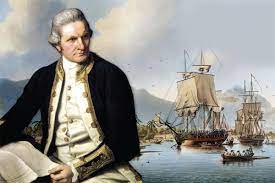
    There is an old saying, ‘The sun never sets on the British Empire’ because it spanned its tentacles across the globe. But how did all this happen is indeed surprising? While going through world history one will find that the Europeans dared many sea voyages and overland journeys in the earlier centuries which resulted in their cross-globe explorations and discoveries. The first British explorer to make an overland journey to India was John Mildenhall in Circa 1560-1614 and the one who sailed to Australia all the way from England was ‘Captain James Cook’. Cook an eminent cartographer is one of the most popular names in Australian History. He circumnavigated the globe at the extreme southern latitude. He was described in the House of Lords as the first navigator of Europe. But the public opinion about Cook is competing and is divided because he spent only about forty days on the Australian shores. His two brief visits to Australia out of his voyages were in the years 1770 and 1773 to discover the South Pacific for signs of the postulated rich southern continent of Terra Australis were beginning to surface by then. During these visits, Cook and his crew carefully examined the coast and the waters of Australia. They collected in-depth information for the British Empire about the economic potential of the land and how the British ships could navigate the Australian coast. The Britishers did a similar thing when they landed in India in 1600 only to colonize her later. Cook and his crew members were the harbingers of the British Colonization of Australia. They were also the centuries of British influence in the Pacific more broadly.

    COOK’S PACIFIC VOYAGES:

    Cook’s three voyages of discovery in the Pacific in the 1770s marked a significant turning point in the history of Britain and the Pacific. Other Europeans, particularly the Spanish, had been crossing the Pacific Ocean since the 1500s, but largely for trade. However, it was Cook’s journey that signalled the advent of the British influence in the region, and the beginning of significant, ongoing disruption to the First Nations peoples (Indigenous people) and their lands.

    1768-1771 VOYAGE IN SHIP ENDEAVOUR

    The first Pacific voyage captained by James Cook had scientific and military goals. He was to observe and record the movement of the planet Venus across the sun from a location in the South Pacific so that the scientists could calculate the distance from the Earth to the sun. He was also instructed to fathom the sea depth and coastlines as a guide for future voyages. Cook was also supposed to look out for opportunities to expand the empire with the east coast of Australia in mind. The Endeavour observed the transit of Venus (also known as Earth’s “sister” or “twin”) from the islands of Tahiti located in the South Pacific in July 1769. Cook also mapped the north and south islands of Aotearoa New Zealand and the east coast of Australia. On his return home, Cook’s charts and journals were used to assert a claim against other colonial powers that Britain had lawfully taken possession of vast areas of Australia’s east.

1772-1775 VOYAGE IN SHIP NAMED RESOLUTION AND ADVENTURE:

    On his second voyage, Cook captained the HMS Resolution. He was accompanied by a companion-ship HMS Adventure, commanded by Tobias Furneaux. This time Cook aimed to further explore the far south of the Pacific to determine whether or not there is a major southern continent in the Antarctic region. Between them, the two ships made several forays into the south of the Antarctic Circle. The voyages included Tasmania, Aotearoa—New Zealand, Tahiti, Tonga, Rapa Nui (Easter Island), Vanuatu (New Hebrides), New Caledonia and Norfolk Island.

1776-1780 VOYAGE IN SHIP NAMED RESOLUTION AND DISCOVERY:

    The focus of Cook’s third voyage which was his last was towards the North Pacific with the hope of finding a shipping route from the Atlantic to the Pacific – a ‘North-West Passage’. The journey went through the Kergueen/Kerguelen group of islands, Tasmania, Aotearoa—New Zealand, Tonga, Tahiti, Hawaii, Vancouver Island, Alaska and the Arctic Circle. From there the voyage headed back to Hawaii, where a dispute ended in Cook being killed along with 4 of his crew members and 16 Kanaka Maoli the native Hawaiians. A replacement captain then helmed the ship.

    The voyages gave the British government an overview of the layout of the entire Oceania region (Central and South Pacific Ocean) and a good understanding of their prospects for exploiting its lands and resources. This process of exploitation began soon after Cook’s third voyage, with various vessels soon setting sail to Australia, Tahiti, the southern oceans, the north coast of America and Aotearoa New Zealand to seek produce, hunt whales and establish settler colonies. Given the importance of Cook’s role on the voyages, he is considered a highly symbolic figure for First Nations communities of the Pacific.

ABORIGINAL AND TORRES STRAIT ISLANDER PEOPLES’ OBSERVATION OF COOK

    Aboriginal Australians first encountered Cook on 14 April 1770 when he sailed within the view of ‘Point Hicks’ in the East Gippsland region of Victoria, Australia. They immediately sent smoke signals of warning up the coast in the direction of the Endeavour’s travel.

CROSS-CULTURAL ENCOUNTERS

    Each of Cook’s voyages lasted three to four years. There were hundreds of meetings, understandings and conflicts between Cook and his crew and First Nations peoples and communities during these years.

    Captain Cook followed the coastlines closely to record shipping information and create charts. He made many stops at many Pacific Islands to refuel and restock food supplies. At times, he negotiated with First Nations peoples, exchanging European items such as metal tools in return for the use of local resources. If he met resistance to his visits or his requests for supplies, Cook and his crew forced their way through with a variety of weapons. He wrote in his diary:

    ‘We attempt to land in a peaceable manner, if this succeeds its well, if not we land nevertheless and maintain the footing we thus got by the superiority of our firearms, in what other light can they then at first look upon us but as invaders of the Country …’

    While Cook went on to say he wanted to be seen as a friendly visitor, in reality, he laid the groundwork for armed colonizers. However, many non-indigenous Australians resist the label of ‘invasion’ even today.

    Cook took heavy weaponry on his journeys.  If First Nations people impeded him during his journeys or his refuelling and at the stops to rest, Cook used small shots as a first warning, followed by a musket ball, or firing the great guns overhead to demonstrate the ship’s firepower. Only in the last resort would he allow his men to shoot to kill.’

SECRET INSTRUCTIONS

Before Cook set out on his first journey, the British Admiralty gave him secret instructions. They were both written and verbal. He was not allowed to read the written instructions until he had reached Tahiti and finished observing an important planetary event, the transit of Venus. Cook’s instructions were to head towards Australia and assess the east coast of the continent and its resources in all aspects: the beasts, fowls, fishes; the strata of the soil; for mines, minerals or valuable stones; trees, fruits and grains; and the number of natives and their genius, temper and disposition.

    The instructions also said, ‘With the Consent of the Natives take possession of convenient situations in the Country in the name of the King of Great Britain: Or: if you find the Country uninhabited take possession for his Majesty by setting up proper marks and inscriptions, as first discoverers and possessors.’

    Cook’s diaries of 1770 and 1773 show that he was a bit confused about his rejection by Aboriginals on the east coast and later Lutruwita (Tasmania). Cook failed to get the consent of the natives to enter the law and ceremony of the land. However, Cook went on to claim to the rest of the world that he had established ‘possession’ of the continent for the purposes of international law. He had broken Aboriginal laws and disregarded many of the existing rules of colonization. Millions of non-Indigenous people followed Cook’s footsteps, resulting in illegal land grabs and genocide. This is why Cook is remembered as ‘the original invader’ and a harbinger of the death of Aboriginal people and culture. In fact, to many First Nations people all over the Pacific, Cook remains a ‘Great White Evil.’

NAVIGATING EACH OTHER’S WORLDS

    During the first journey, Cook had some excellent luck. A remarkable Raiatean (an archipelago located in the South Pacific) man called Tupaia came aboard the Endeavour in Tahiti. He seemed very interested to join the journey. It turned out that Tupaia was a highly skilled navigator and was willing to share his extensive knowledge with Cook and Joseph Banks an English naturalist to translate his knowledge into at least two charts: ‘Tupaia’s Chart’, which showed the locations of 74 islands from the reference point of Tahiti, and ‘A chart of the Society Isles in the South Sea’.

    Tupaia was able to list all these islands despite not having visited all of them- his map was recorded as oral memory, the accumulated wisdom of generations of Pacific navigators. It is possible that Tupaia was interested in joining Cook’s journey as an opportunity to exercise his own knowledge.

    As Cook recorded in his diary: ‘I have before hinted that these people have an extensive knowledge of the islands situated in these seas.’ First Nations peoples of the Pacific were also able to predict the weather more accurately than Europeans at that time.

THE TURTLE STORY

    Each time Cook stopped to refuel and restock he relied on the generosity of the local people. He would typically stop at each place for at least a few weeks. At times his requests for wood, freshwater and vegetables pushed the limits of what local people had to spare. When it came to fishing, Cook and his crew generally helped themselves and they were keen to catch as much as possible. Towards the end of their stay in Guugu Yimithirr country, the Endeavour crew broke the law by catching too many turtles in the unseasoned period. Guugu Yimithirr community members tried to get the crew to hand some turtles back, but the crew resisted. The Guugu Yimithirr resisted by letting them know this was not okay by setting fire to parts of Cook’s onshore camp. Cook and Banks tried to save their equipment, and both of them fired their guns at the Guugu Yimithirr.

DEATH OF COOK

    Something similar happened in Hawaii too, leading to Cook’s death – an event that has been interpreted and re-interpreted many times by European historians and anthropologists. But why did this experienced traveller get stabbed to death late in his third journey is the question?

    Was it due to a misunderstanding by the Kanaka Maolis (The Native Hawaiians)? It’s possible that when Cook first arrived he might have been accommodated as a kind of religious figure because he accidentally turned up in the middle of an important religious festival (the Makahiki). However, Cook and his crew definitely overstayed their welcome and after enjoying lavish hospitality they returned too soon, needing to repair a broken mast and that created all the trouble.

IS COOK ALIVE OR DEAD

    Even though Cook definitely died in 1779, the strange thing is that the non-Aboriginal people in Australia seem to want to pretend that he lives on. Mudburra man Hobbles Danayarri an aboriginal lawman and community leader has noticed this, He says: ‘Aboriginal people all know that Captain Cook is dead. It’s the white people, European people, who don’t know that he’s dead, or who don’t accept that he’s dead, or who refuse to allow him to die because they still “follow his law”’.

    Maybe Cook’s Cottage is evidence of white Australia’s refusal to deal with these issues and to finally say goodbye to Cook – after all, the Cottage does have a life-sized statue of Cook standing in the back garden.

***
By Kamlesh Tripathi

*

https://kamleshsujata.wordpress.com

*

Share it please

*

Shravan Charity Mission is an NGO that works for poor children suffering from life threatening diseases especially cancer. Our posts are meant for our readers that includes both children and adults and it has a huge variety in terms of content. We also accept donations for our mission. Should you wish to donate for the cause. The bank details are given below:

NAME OF ACCOUNT: SHRAVAN CHARITY MISSION

Account no: 680510110004635 (BANK OF INDIA)

IFSC code: BKID0006805

*

Our Publications

GLOOM BEHIND THE SMILE

(The book is about a young cancer patient. Now archived in 8 prestigious libraries of the US that includes Harvard College Library; Harvard University Library; Library of Congress; University of Washington, Seattle; University of Minnesota, Minneapolis; Yale University, New Haven; University of Chicago; University of North Carolina, at Chapel Hill University Libraries. It can also be accessed in MIT through Worldcat.org. Besides, it is also available for reading in libraries and archives of Canada, Cancer Aid and Research Foundation Mumbai; Jaipuria Institute of Management, Noida; India. Shoolini University, Yogananda Knowledge Center, Himachal Pradesh and Azim Premzi University, Bangalore).  

ONE TO TANGO … RIA’S ODYSSEY

(Is a book on ‘singlehood’ about a Delhi girl now archived in Connemara Library, Chennai and Delhi Public Library, GOI, Ministry of Culture, Delhi; Available for reading in Indian National Bibliography, March 2016, in the literature section, in Central Reference Library, Ministry of Culture, India, Belvedere, Kolkata-700022)

AADAB LUCKNOW … FOND MEMORIES

(Is a fiction written around the great city of Nawabs—Lucknow. It describes Lucknow in great detail and also talks about its Hindu-Muslim amity. That happens to be the undying characteristics of Lucknow. The book was launched in Lucknow International Literary Festival of 2014. It is included for reading in Askews and Holts Library Services, Lancashire, U.K; Herrick District Library, Holland and Charlotte-Mecklenburg Library, Mecklenburg County in North Carolina, USA; Black Gold Cooperative Library Administration, Arroyo Grande, California).

REFRACTIONS … FROM THE PRISM OF GOD

(Co-published by Cankids–Kidscan, a pan India NGO and Shravan Charity Mission, that works for Child cancer in India. The book is endorsed by Ms Preetha Reddy, MD Apollo Hospitals Group. It was launched in Lucknow International Literary Festival 2016)

TYPICAL TALE OF AN INDIAN SALESMAN

(Is a story of an Indian salesman who is, humbly qualified. Yet he fights his way through unceasing uncertainties to reach the top. A good read not only for salesmen. The book was launched on 10th February 2018 in Gorakhpur Lit-Fest. Now available on Amazon, Flipkart and Onlinegatha)

RHYTHM … in poems

(Published in January 2019. The book contains 50 poems. The poems describe our day-to-day life. The book is available on Amazon, Flipkart and Onlinegatha)

MIRAGE

(Published in February 2020. The book is a collection of eight short stories available in Amazon, Flipkart and Notion Press)

AWADH ASSAM AND DALAI LAMA … The Kalachakra

(The story of the man who received His Holiness The Dalai Lama and his retinue in 1959 as a GOI representative when he fled Tibet in 1959. The book was launched on 21st November 2022 by His Holiness The Dalai Lama at Dharmshala. The titled is archived in the library of the Department of Information and International Relations (DIIR) Government of Tibet, Tibet Policy Institute (TPI) and the personal library of His Holiness. The title is also archived in The Ohio Digital Library, USA).

BHAVANS JOURNAL

Short stories, Book reviews and Articles published in Bhavan’s Journal: 1. Reality and Perception, 15.10.19; 2. Sending the Wrong Message, 31.5.20; 3. Eagle versus Scholars June, 15 & 20 2020; 4. Indica, 15.8.20; 5. The Story of King Chitraketu, August 31 2020; 6. Breaking Through the Chakravyuh, September 30 2020. 7. The Questioning Spouse, October 31, 2020; 8. Happy Days, November 15, 2020; 9. The Karma Cycle of Paddy and Wheat, December 15, 2020; 10. Power Vs Influence, January 31, 2021; 11. Three Refugees, March 15, 2021; 12. Rise and Fall of Ajatashatru, March 31, 2021; 13. Reformed Ruler, May 15, 2021; 14. A Lasting Name, May 31, 2021; 15. Are Animals Better Teachers?, June 16, 2021; 16. Book Review: The Gram Swaraj, 1.7.21; 17. Right Age for Achievements, 15.7.21; 18. Big Things Have Small Beginnings, 15.8.21; 19. Where is Gangaridai?, 15.9.21; 20. Confront the Donkey Within You 30.9.21; 21. Know Your Strengths 15.10.21; 22. Poverty 15.11.21; 23. Top View 30.11.21; 24. The Bansuriwala 15.1.22; 25. Sale of Alaska 15.2.22; 26. The Dimasa Kingdom 28.2.22; 27. Buried Treasure 15.4.22; 28. The Kingdom of Pragjyotisha 30.4.22; 29. Who is more useful? 15.5.22; 30. The White Swan from Lake Mansarovar 30.6.22; 31. Bhool Bhulayya 15.9.22; 32. Good Karma 30.9.22; 33. Good name vs Bad Name 15.10.22; 34. Uttarapath—The Grand Trunk Road 1.12.22; 35. When Gods Get Angry 1.1.23; 36. Holinshed’s Chronicles 15.1.23; 37. Theogony 15.2.23

SUNDAY SHILLONG TIMES

ARTICLES & POEMS: 1. POEM: HAPPY NEW YEAR 8.1.23; 2. POEM: SPRING 12.3.23; 3. POEM: RIGHT AND WRONG 20.3.23, 4. THE GUSH OF EMOTION—WRITING, 26.3.23;

(ALL THE ABOVE BOOK TITLES ARE AVAILABLE FOR SALE ON AMAZON, FLIPKART AND OTHER ONLINE STORES OR YOU COULD EVEN WRITE TO US FOR A COPY)

*****
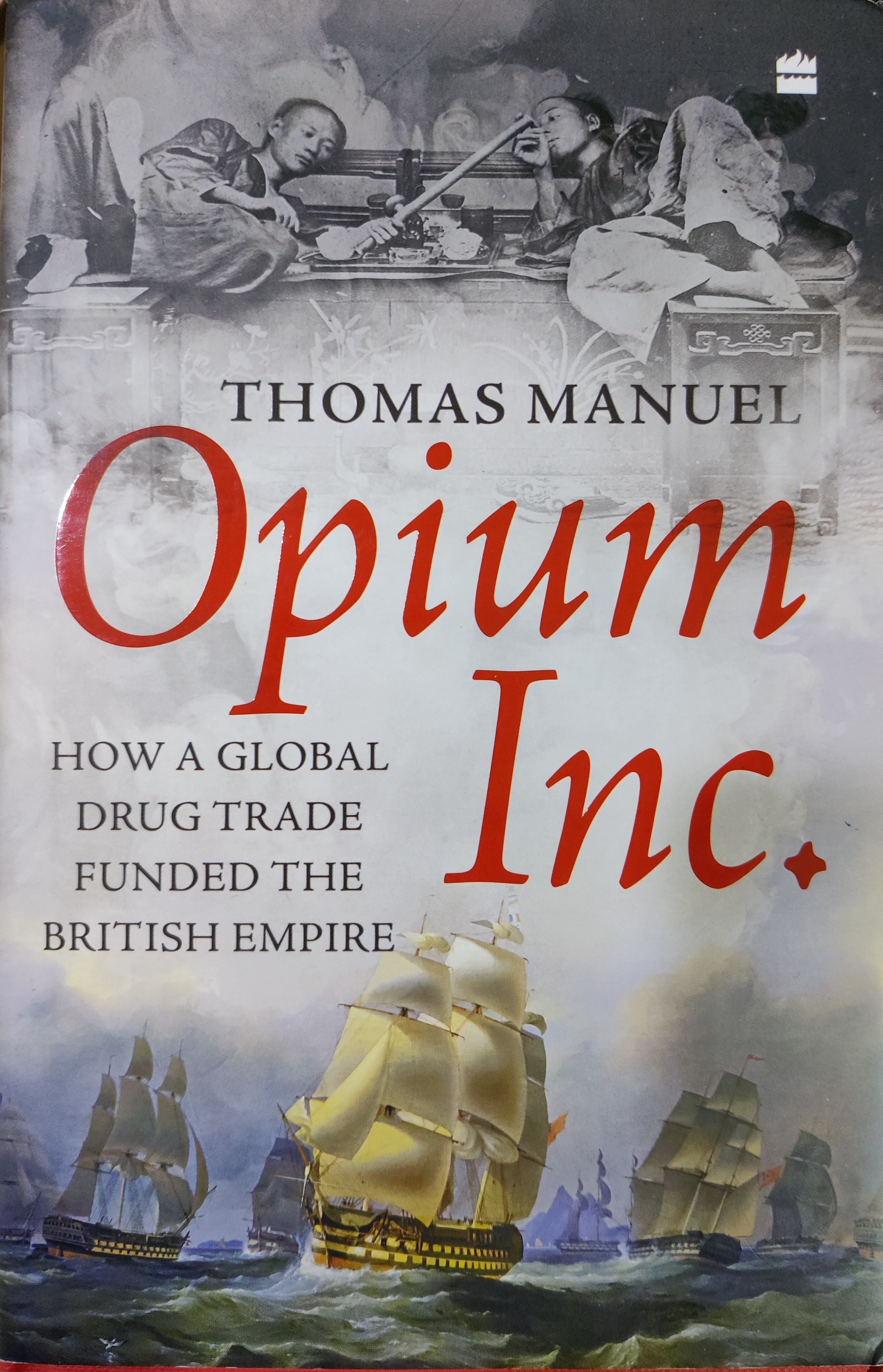
BOOK CORNER: ‘OPIUM INC. … How a Global Drug Trade Funded the British Empire by Thomas Manuel

Copyright@shravancharitymission

    Book Review: ‘OPIUM INC. … How a Global Drug Trade Funded the British Empire’ by Thomas Manuel.

     The subject book brings to us the story of the world’s biggest drug deal ever, first published in India in 2021 by Harper Collins. It wouldn’t be out of context to mention at the very outset that the author must have researched to the hilt, digging deep into various historical texts, available, on the global opium supply chain and opium trade, before he penned the book.

     Author Thomas Manuel is a journalist. He is also an award-winning playwright whose work revolves around history, science, education, or the intersection of all three. His words can be found in Lapham’s Quarterly, Nib, Wire and The Hindu, among other publications. In 2016, he won The Hindu Playwright Award for his play Hamlet and Angad. He currently works at India Ink, a public history project where he makes videos about how the past continues to affect the world today.

    Contents: It starts with the Prologue: The Great Opium Triangle. The book is divided into eleven chapters. I would briefly take you through all of them without being a spoiler. It starts with the ‘Poppy Pioneers’ and then talks of how the opium trade flourished and travelled ‘From Calcutta to Canton’ in China. Canton is also known as Guanzhou. It was captured by the British during the first Opium War. This is followed by the ‘Smugglers of Malwa.’ Then there is also ‘The Bombay Boom’ that comes with the opium money. One of the book’s most interesting sections is ‘The Opium Wars’ which gave rise to ‘Anti-Opium Crusaders.’ The narration also takes you through ‘Opium and Independence’, its ‘Endings and Legacies’. One of the prominent chapters of the book is about the spread of ‘Opium, Cotton, Sugar and slavery’, followed by ‘Opium Smoke and Mirrors’ and it ends with ‘Opium Today’. This is followed by the Index and then a half-page on the author. The language of the author is plain English which is easy to comprehend but is garnished with a plethora of quotes from various texts that make up for a large part of the plot.

    What the book offers: This is the story of the world’s biggest drug dealers. In the 19th century, the British East India Company operated a triangle of trade that straddled the globe, running from India to China to Britain. From India to China they took opium. From China to Britain they took tea. From Britain to India, they brought the British Empire. To paraphrase the historian Tan Chung: The Chinese got opium, the British got tea, and the Indians got colonialism. It was a machination that belied what was really going on: The British were enabling the longest-running drug deal ever in the history of the world. It was a devious plan that worked with cheap Indian land and labour and spun money for them. This is the story about the banality of evil, the birth of mega-corporations and the world’s first narco-state. The British had two problems, though. They were importing enormous amounts of tea from China, but the Celestial Empire (China) looked down on British goods and only wanted silver in return. Simultaneously, the expanding colony in India was proving far too expensive to maintain. The British solved both problems with opium, which became the source of income on which they built their empire.  For more than a century, the British knew that the drug was dangerous but continued to trade in it anyway and today they talk of morality. They put their colony to work to produce something that the Chinese would buy even if they didn’t want it and that was opium. Over the 18th and 19th centuries, the British transformed the entire farming economies in Bengal and Bihar into opium-producing zones. And their agents smuggled the drug illegally into China, exchanging it for tea. Suddenly, the balance of trade leaned the other way. Silver started flowing back, out of China and into the British hands. Slowly this new equation solidified into a stable mechanism: The Great Opium Triangle. The story of the opium trade is not just about the narcotics that were stored in chests and packed in ships. It was also about how that trade shaped the world we live in today. It left an undying legacy in India, whether it was Bihar’s poverty or the affluence of Bombay, the story of opium is one of immense pain for many and huge privileges for a few.

My take on the book: If you haven’t read about opium you wouldn’t know what havoc it created and continues to create in the world. Opium Inc. sensitises you towards that. While reading the book one gets a feeling as if the author has collated the data from various texts and churned it into a book. In a span of 252 pages, he has plugged around 350 notations from various documents of various authors that go to show the extent of his extensive fact-finding. Every chapter is summarised in the preface itself in a few sentences which creates that initial enamour to run through the book. It has plenty of inside stories and anecdotes some hitherto unheard of. The detailing of how opium was processed in those times is enumerated quite well. From the opium seed to the market, the narration is comprehensive. How the opium markets in China operated is explained substantially well that many would not know. The description of Hong Merchant Pan Zhencheng in the chapter from Calcutta to Canton is engrossing. The book gets interestingly descriptive in the middle. The chapter ‘Smugglers from Malwa’ is elaborate on opium farming, its production and its trading. This is a book with a lot of yarn which otherwise for an average reader would be difficult to ferret out.

    The author must have spent an aeon reading and collecting relevant data for the title. Information such as the first clipper in India was built in the 19th century in Howrah was a treat to read, even when, it was an opium clipper. The history of Bombay (Mumbai) is well carved out with its opium past and so are the daring stories of Jamsetjee Jejeebhoy and Sasson who flourished there.

    We all talk of contract farming today. The cultivation of opium under ‘contract farming’ started way before it came to other crops in the opium-growing areas. The author has also covered the story of Lin Zexu a high Chinese official best known for his role in the ‘First Opium War’ in whose honour a statue has been erected in Chatham Square in China Town, New York. The book proclaims that the opium wars were akin to the lethal world wars. After page 136 the pace of narration slows down a bit as it is loaded with minute details and names which are difficult to remember. There is one story after another and episode after episode. The narration covers the long history of sugar, opium, tea and cotton in a triangular context—India, China and Great Britain in elaborate detail. It gives a scheming view of the cross-ocean business mercantile.

    What the book delivers: The real success of any book is how it impacts you after you’ve read it, and more so, do you feel knowledge-rich after reading it? Well, on those accounts the book is sterling. It tells you how the British demolished Asia. The narration transcends from opium to sugar to cotton under the umbrella of The East India Company. It touches upon most writers who consumed opium or have written on opium and it also includes all those languishing documents on opium. There are some rare pictures too in the book on the manufacturing of opium such as—The Mixing Room, The stacking room, The Examining Hall at the Opium Factory, Patna, 1850; and the Opium Fleet on the Ganges, 1850.

    It breezes past romantic poets who were opium users and quotes the lines of a few. The book spans from the historical past of opium to the present. A line from the poem ‘Kubla Khan’ by the English Romantic poet Samuel Taylor Coleridge sums up all too well. It goes as follows:

Beware! Beware!

His flashing eyes, his floating hair!

Weave a circle round him thrice,

And close your eyes with holy dread,

For he on honey-dew hath fed,

And drunk the milk of Paradise.

    But whether the ‘milk of Paradise’ that climaxes the lines of Coleridge is opium isn’t clear. But it’s true that Coleridge consumed opium regularly. I would give the book a high rating. It definitely enhances your knowledge base when it comes to opium, tea, cotton and the triangle connecting India, China and the British Crown through The East India Company.

***

By Kamlesh Tripathi

*

https://kamleshsujata.wordpress.com

*

Share it if you like it

*

Shravan Charity Mission is an NGO that works for poor children suffering from life threatening diseases especially cancer. Our posts are meant for our readers that includes both children and adults and it has a huge variety in terms of content. We also accept donations for our mission. Should you wish to donate for the cause. The bank details are given below:

NAME OF ACCOUNT: SHRAVAN CHARITY MISSION

Account no: 680510110004635 (BANK OF INDIA)

IFSC code: BKID0006805

*

Our Publications

GLOOM BEHIND THE SMILE

(The book is about a young cancer patient. Now archived in 8 prestigious libraries of the US that includes Harvard College Library; Harvard University Library; Library of Congress; University of Washington, Seattle; University of Minnesota, Minneapolis; Yale University, New Haven; University of Chicago; University of North Carolina, at Chapel Hill University Libraries. It can also be accessed in MIT through Worldcat.org. Besides, it is also available for reading in libraries and archives of Canada, Cancer Aid and Research Foundation Mumbai; Jaipuria Institute of Management, Noida; India. Shoolini University, Yogananda Knowledge Center, Himachal Pradesh and Azim Premzi University, Bangalore).  

ONE TO TANGO … RIA’S ODYSSEY

(Is a book on ‘singlehood’ about a Delhi girl now archived in Connemara Library, Chennai and Delhi Public Library, GOI, Ministry of Culture, Delhi; Available for reading in Indian National Bibliography, March 2016, in the literature section, in Central Reference Library, Ministry of Culture, India, Belvedere, Kolkata-700022)

AADAB LUCKNOW … FOND MEMORIES

(Is a fiction written around the great city of Nawabs—Lucknow. It describes Lucknow in great detail and also talks about its Hindu-Muslim amity. That happens to be the undying characteristics of Lucknow. The book was launched in Lucknow International Literary Festival of 2014. It is included for reading in Askews and Holts Library Services, Lancashire, U.K; Herrick District Library, Holland and Charlotte-Mecklenburg Library, Mecklenburg County in North Carolina, USA; Black Gold Cooperative Library Administration, Arroyo Grande, California).

REFRACTIONS … FROM THE PRISM OF GOD

(Co-published by Cankids–Kidscan, a pan India NGO and Shravan Charity Mission, that works for Child cancer in India. The book is endorsed by Ms Preetha Reddy, MD Apollo Hospitals Group. It was launched in Lucknow International Literary Festival 2016)

TYPICAL TALE OF AN INDIAN SALESMAN

(Is a story of an Indian salesman who is, humbly qualified. Yet he fights his way through unceasing uncertainties to reach the top. A good read not only for salesmen. The book was launched on 10th February 2018 in Gorakhpur Lit-Fest. Now available on Amazon, Flipkart and Onlinegatha)

RHYTHM … in poems

(Published in January 2019. The book contains 50 poems. The poems describe our day-to-day life. The book is available on Amazon, Flipkart and Onlinegatha)

MIRAGE

(Published in February 2020. The book is a collection of eight short stories available in Amazon, Flipkart and Notion Press)

AWADH ASSAM AND DALAI LAMA … The Kalachakra

(The story of the man who received His Holiness The Dalai Lama and his retinue in 1959 as a GOI representative when he fled Tibet in 1959. The book was recently launched on 21st November 2022 by His Holiness The Dalai Lama and is archived in his library).

BHAVANS JOURNAL

Short stories, Book reviews and Articles published in Bhavan’s Journal: 1. Reality and Perception, 15.10.19; 2. Sending the Wrong Message, 31.5.20; 3. Eagle versus Scholars June, 15 & 20 2020; 4. Indica, 15.8.20; 5. The Story of King Chitraketu, August 31 2020; 6. Breaking Through the Chakravyuh, September 30 2020. 7. The Questioning Spouse, October 31, 2020; 8. Happy Days, November 15, 2020; 9. The Karma Cycle of Paddy and Wheat, December 15, 2020; 10. Power Vs Influence, January 31, 2021; 11. Three Refugees, March 15, 2021; 12. Rise and Fall of Ajatashatru, March 31, 2021; 13. Reformed Ruler, May 15, 2021; 14. A Lasting Name, May 31, 2021; 15. Are Animals Better Teachers?, June 16, 2021; 16. Book Review: The Gram Swaraj, 1.7.21; 17. Right Age for Achievements, 15.7.21; 18. Big Things Have Small Beginnings, 15.8.21; 19. Where is Gangaridai?, 15.9.21; 20. Confront the Donkey Within You 30.9.21; 21. Know Your Strengths 15.10.21; 22. Poverty 15.11.21; 23. Top View 30.11.21; 24. The Bansuriwala 15.1.22; 25. Sale of Alaska 15.2.22; 26. The Dimasa Kingdom 28.2.22; 27. Buried Treasure 15.4.22; 28. The Kingdom of Pragjyotisha 30.4.22; 29. Who is more useful? 15.5.22; 30. The White Swan from Lake Mansarovar 30.6.22; 31. Bhool Bhulayya 15.9.22; 32. Good Karma 30.9.22; 33. Good name vs Bad Name 15.10.22; 34. Uttarapath—The Grand Trunk Road 1.12.22; 35. When Gods Get Angry 1.1.23; 36. Holinshed’s Chronicles 15.1.23

SUNDAY SHILLONG TIMES

POEM HAPPY NEW YEAR 8.1.23;

(ALL THE ABOVE BOOK TITLES ARE AVAILABLE FOR SALE ON AMAZON, FLIPKART AND OTHER ONLINE STORES OR YOU COULD EVEN WRITE TO US FOR A COPY)

*****

INTERESTING FACTS FIGURES & QUOTES 48: The Correlation between British Empire and English Language

Copyright@shravancharitymission

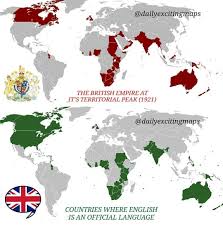
    There was a time when the sun did not set on the British Empire. The saying implied the vastness of the British Empire. Historians inferred that roughly 25% of the earth’s landmass was in control of the British. The Empire was so extensive, that at any point of time, there was daylight in one of its colonies. This resulted in English language, travelling to several continents and many countries across the globe. India was no exception. English gradually became the lingua-franca in many countries.

    There was also a deluge of Europeans who started migrating to America from the Continent and British Isles. So English language too, travelled with them to Amercia. Historically speaking, Europeans were one of the most aggressive and ambitious race on planet earth. They managed to change the name of New Amsterdam to New York (in the honour the Duke of York). They bought New Amsterdam from the local tribe (the Lenapes). And with all this the spread of English language continued hammer and tongs. Gradually, it even travelled, to down and under (Australia and New Zealand) and even Africa. In other words, wherever, British established colonies English language gained roots. Europe has given to the world great seafarers and explorers. English language concomitantly travelled to wherever they went. The language of English was also skilfully taught and used in administration and day-to-day living, and today it connects the world.

    British rule in India began around 1757. English language in India is therefore, over 250 years old. The British left India around 70 years ago, after which English language in India has stood on its own spine. Since then the language has Indianised and even undergone a change in tone and tenor. With the advent of social media English Language has even made deep inroads into rural areas.

    A number of high-flying authors have emerged in India and they have been able to decolonise the traditional English oeuvre. The assortment of Indian authors is wide. But there is a threat to English language in India and that is from Hinglish (a blend of Hindi and English) and conversely there is also a threat to Hindi from English.  

    There is nothing definitive about which way the camel is going to sit, but yes, one can only leave it to the long term opportunities that the languages wish to partner with.

By Kamlesh Tripathi

*

https://kamleshsujata.wordpress.com

*

Share it if you like it

*

Shravan Charity Mission is an NGO that works for poor children suffering from life threatening diseases especially cancer. Our posts are meant for our readers that includes both children and adults and it has a huge variety in terms of content. We also accept donations for our mission. Should you wish to donate for the cause. The bank details are given below:

NAME OF ACCOUNT: SHRAVAN CHARITY MISSION

Account no: 680510110004635 (BANK OF INDIA)

IFSC code: BKID0006805

*

Our publications

GLOOM BEHIND THE SMILE

(The book is about a young cancer patient. Now archived in 7 prestigious libraries of the US, including, Harvard University and Library of Congress. It can also be accessed in MIT through Worldcat.org. Besides, it is also available for reading in Libraries and archives of Canada and Cancer Aid and Research Foundation Mumbai)  

ONE TO TANGO … RIA’S ODYSSEY

(Is a book on ‘singlehood’ about a Delhi girl now archived in Connemara Library, Chennai and Delhi Public Library, GOI, Ministry of Culture, Delhi)

AADAB LUCKNOW … FOND MEMORIES

(Is a fiction written around the great city of Nawabs—Lucknow. It describes Lucknow in great detail and also talks about its Hindu-Muslim amity. That happens to be its undying characteristic. The book was launched in Lucknow International Literary Festival of 2014)

REFRACTIONS … FROM THE PRISM OF GOD

(Co-published by Cankids–Kidscan, a pan India NGO and Shravan Charity Mission, that works for Child cancer in India. The book is endorsed by Ms Preetha Reddy, MD Apollo Hospitals Group. It was launched in Lucknow International Literary Festival 2016)

TYPICAL TALE OF AN INDIAN SALESMAN

(Is a story of an Indian salesman who is, humbly qualified. Yet he fights his ways through unceasing uncertainties to reach the top. A good read not only for salesmen. The book was launched on 10th February, 2018 in Gorakhpur Lit-Fest. Now available in Amazon, Flipkart and Onlinegatha)

RHYTHM … in poems

(Published in January 2019. The book contains 50 poems. The poems describe our day to day life. The book is available in Amazon, Flipkart and Onlinegatha)

(ALL THE ABOVE TITLES ARE AVAILABLE FOR SALE IN AMAZON, FLIPKART AND OTHER ONLINE STORES OR YOU COULD EVEN WRITE TO US FOR A COPY)

*****


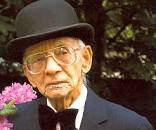
ABOUT AUTHOR: NIRAD C CHAUDHURI

Copyright@shravancharitymission

    Nirad Chandra Chaudhuri – lifespan (23 November 1897 – 2001) was an English-language writer of Indian origin. He authored numerous works in English and Bengali. His oeuvre provides a magisterial appraisal of the histories and cultures of India, especially in the context of British colonialism of the 19th and 20th centuries. Chaudhuri is best known for ‘The Autobiography of an Unknown Indian’ published in 1951. Over the course of his literary career, he received numerous accolades for his writing. In 1966, his work ‘The Continent of Circe’ was awarded, the Duff Cooper Memorial Award, making Chaudhuri the first and the only Indian till date, to be given the prize. The Sahitya Akedemi, India’s national Academy of Letters, awarded Chaudhuri the Sahitya Akademi Award for his biography on Max Muller, Scholar Extraordinary.

    In 1990, Oxford University awarded Chaudhuri, who by then had become a long-time resident of the city of Oxford, an Honorary Degree in Letters. In 1992, he was made an honorary Commander of the Order of the British Empire (CBE). Although, he was highly critical of the post-independence Congress party establishment, Chaudhuri was more sympathetic to the right-wing Hindu nationalist movement in India. He refused to criticise the destruction of mosques. He wrote “Muslims do not have the slightest right to complain about the desecration of one mosque in Ayodhya. From 1000 AD every temple from Kathiawar to Bihar, from the Himalayas to the Vindhyas has been sacked and ruined. Not one temple was left standing all over northern India. They escaped destruction only where Muslim power did not gain access to them for reasons such as dense forests. Otherwise, it was a continuous spell of vandalism. No nation with any self-respect will forgive this. What happened in Ayodhya would not have happened had the Muslims acknowledged this historical argument even once.”

    Chaudhuri was born in Kishoregunj, Mymensingh, East Bengal, British India (now Bangladesh), the second of eight children of Upendra Narayan Chaudhuri, a lawyer, and of Sushila Sundarani Chaudhurani. His parents were liberal middle-class Hindus who belonged to the Brahmo Samaj movement.

    Chaudhuri was educated in Kishorganj and Kolkata (then, Calcutta). For his FA (school-leaving) course he attended Ripon College in Calcutta along with the famous Bengali writer Bibhutibhushan Bandopadhyay. Following this, he attended Scottish Church College, Calcutta, where he studied history as his undergraduate major. He graduated with honors in history and topped the University of Calcutta merit list. At Scottish Church College, Calcutta, he attended the seminars of the noted historian, Professor Kalidas Nag. After graduation, he enrolled for M.A. at the University of Calcutta. However, he did not attend all of his final exams, and consequently was not able to complete his M.A. degree. From 1937 to 1941 he worked as a secretary to Sharatchandra Bose (Subhas Chandra Bose’s brother).

    After studies, he took a position as a clerk in the Accounting Department of the Indian Army. At the same time, he started contributing articles to popular magazines. His first article on Bharat Chandra (a famous Bengali poet of the 18th century) appeared in the most prestigious English magazine of the time, Modern Review.

    Chaudhuri left his position in the Accounting Department shortly after, and started a new career as a journalist and editor. During this period he was a boarder in Mirzapur Street near College Square, Kolkata, living together with the writers Bibhuti Bhushan Banerjee and Dakshinaranjan Mitra Majumder. He was involved in the editing of the then well-known English and Bengali magazines Modern Review, Prabasi and Sonibarer Chithi. In addition, he also founded two short-lived but highly esteemed Bengali magazines, Sama-samayik and Notun Patrika. Fed up with Bengali insularity, he later left Calcutta to settle down in Delhi, and took up a government job there. He worked for All India Radio from 1941 to 1952. But sadly he found Delhi, too, was full of Philistines.

    In 1932, he married Amiya Dhar, a well-known writer herself. The couple had three sons.     In 1938, when Chaudhuri obtained a job, as a secretary, to Sarat Chandra Bose, a political leader in the freedom movement of India. He was able to interact with political leaders such as Mahatma Gandhi, Jawaharlal Nehru, and the brother of Sarat Chandra Bose, Subhas Chandra Bose (also known as Netaji).

    Apart from his career as secretary, Chaudhuri continued to contribute articles in Bengali and English, to newspapers and magazines. He was also appointed as a political commentator on the Kolkata branch of the All India Radio. In 1941, he started working for the Delhi Branch of the All India Radio.

    He was a prolific writer even in the very last years of his life, publishing his last work at the age of 99. His wife Amiya Chaudhuri died in 1994 in Oxford, England. He too died in Oxford, three months short of his 102nd birthday, in 1999.         He lived at 20 Lathbury Road from 1982 until his death, where, a blue plaque is installed by the Oxfordshire Blue Placks Plaques Board in 2008.

    Student historian Dipayan Pal wrote some interesting things about Nirad C. Chaudhuri in The Statesman in 2016. Why was he always in love with England, though he had never visited the land before the age of 57? These questions perplexed me and the only answer I could decipher is that perhaps Nirad Chaudhuri was in search of a home that he could call his own. And perhaps this street in Oxfordshire of 1980s took him closer to the novels of Hardy and Austen. Lovers of literature not only see texts through their lives but also sculpt life through the texts they read. His textual affinity was coupled with the colonial aura he grew up with. We must remember that he spent his first 50 years in an empire where the sun never set.

    His England was a realisation of certain dominant sensibilities and visions he idealized but they were far from reality. Places like 20, Lathbury Road makes me wonder why people choose to migrate and why certain places receive more sanctity than others. For Nirad Chaudhuri, England was sacred as for some America is. The solution to this onerous puzzle cannot be found in better living standard or socio-economic conditions of higher wages.

    Furthermore, certain places celebrate certain people. Nirad Chaudhuri would have been immensely happy if he knew about the blue plaque as it would fit his sensibilities perfectly. Even Oxford County Council was happy enough to remember this person who was, “an original thinker, forthright in his opinions and an internationalist, in the sense of one who embraces the best of all cultures but never loses his own.”

    His masterpiece, The Autobiography of an Unknown Indian, published in 1951, put him on the long list of great Indian writers. Chaudhari had said that The Autobiography of an Unknown Indian is ‘more of an exercise in descriptive ethology than autobiography.’

    The book describes Kishanganj, the country town in which he lived till he was twelve. Bangram, his ancestral village, and Kalikutch, his mother’s village. A fourth chapter is devoted to England, which occupied a large place in his imagination. Later in the book he talks about Kolkatta, the Indian Renaissance, the beginnings of the Nationalist Movement, and his experience of Englishmen in India, as opposed to the idyllic pictures of a civilization he considered perhaps the greatest in the world. These themes remain his preoccupations in most of his works, as does his deterministic view of culture and politics. He courted controversy in the newly independent India due to the dedication of this book to the British Empire that said, ‘To the memory of the British Empire in India,
Which conferred subject hood upon us, but withheld citizenship. To which yet every one of us threw out the challenge: “Civis Britannicus sum.” Because all that was good and living within us was made, shaped and quickened by the same British rule.

    The dedication infuriated many Indians, particularly the political and bureaucratic establishment. “The wogs took the bait and having read only dedication sent up howls of protest,” commented Chaudhuri’s friend, editor, historian and novelist, Khushwant Singh. Chaudhuri was hounded out of government service, deprived of his pension, blacklisted as a writer in India and forced to live a life of penury. Furthermore, he had to give up his job as a political commentator in All India Radio as the Government of India promulgated a law that prohibited employees from publishing memoirs. Chaudhuri argued that his critics were not careful-enough readers; “the dedication was really a condemnation of the British rulers for not treating us as equals”, he wrote in a 1997 special edition of Granta a magazine. Typically, to demonstrate what exactly he had been trying to say, he drew on a parallel with Ancient Rome. The book’s dedication, Chaudhuri observed, “was an imitation of what Cicero said about the conduct of Verres, a Roman proconsul of Sicily who oppressed Sicilian Roman citizens, who in their desperation cried out: “Civis Romanus Sum.”

    In 1955, the British Council and the BBC jointly made arrangements to take Chaudhuri to England for eight weeks. He was asked to contribute lectures to the BBC, and wrote eight of these. His impressions of England and Europe were later collected in his book ‘A Passage to England.’ on the other hand ‘The Continent of Circe,’ published in 1965, traces Chaudhuri’s doggedly independent-minded ideas on the social, geopolitical, and historical aspects of sub-continental India across millennia. An extended sequel to his famous autobiography, titled, ‘Thy Hand, Great Anarch’ was published in 1988. His last book Three Horsemen of the New Apocalypse, was published in 1997, coincided with his hundredth year.

    At the age of 57, in 1955 for the first time Chaudhari went abroad. After coming back he wrote a novel Passage to England (1959). In this novel he talked about his visits, and an account of five weeks in England, two weeks in Paris and one week in Rome.

    Chaudhuri was deeply distressed by what he saw as the deep hypocrisy in Bengali social life and in particular those that resulted from class and caste distinctions. His historical research revealed to him that the rigid Victorianesque morality of middle class Bengali women was a socially enforced construct, that had less to do with religion, choice and judgment, but more to do with upbringing, social acceptance and intergenerational transference of values.

    His prose was highly influenced by Sanskrit and the older version of the Bengali language, the Shadhu-bhasha. He had little respect for the proletarian language, Choltibhasha, which he regarded as being common in taste and scope. He avoided the use of words and very common expressions originating from Arabic, Urdu and Persian in modern Bengali.

Controversies

Nirad C Chaudhuri is accused of being in secret connivance with the British and leaked information about the whereabouts of Sarat Chandra Bose. This may have led to arrest of Sarat Bose in 1941. He was awarded DLitt from Oxford University in 1990. Sahitya Akademi Award in 1975.

By Kamlesh Tripathi

*

https://kamleshsujata.wordpress.com

*

Share it if you like it

*

Shravan Charity Mission is an NGO that works for poor children suffering from life threatening diseases especially cancer. Our posts are meant for our readers that includes both children and adults and it has a huge variety in terms of content. We also accept donations for our mission. Should you wish to donate for the cause. The bank details are given below:

NAME OF ACCOUNT: SHRAVAN CHARITY MISSION

Account no: 680510110004635 (BANK OF INDIA)

IFSC code: BKID0006805

*

Our publications

GLOOM BEHIND THE SMILE

(The book is about a young cancer patient. Now archived in 7 prestigious libraries of the US, including, Harvard University and Library of Congress. It can also be accessed in MIT through Worldcat.org. Besides, it is also available for reading in Libraries and archives of Canada and Cancer Aid and Research Foundation Mumbai)  

ONE TO TANGO … RIA’S ODYSSEY

(Is a book on ‘singlehood’ about a Delhi girl now archived in Connemara Library, Chennai and Delhi Public Library, GOI, Ministry of Culture, Delhi)

AADAB LUCKNOW … FOND MEMORIES

(Is a fiction written around the great city of Nawabs—Lucknow. It describes Lucknow in great detail and also talks about its Hindu-Muslim amity. That happens to be its undying characteristic. The book was launched in Lucknow International Literary Festival of 2014)

REFRACTIONS … FROM THE PRISM OF GOD

(Co-published by Cankids–Kidscan, a pan India NGO and Shravan Charity Mission, that works for Child cancer in India. The book is endorsed by Ms Preetha Reddy, MD Apollo Hospitals Group. It was launched in Lucknow International Literary Festival 2016)

TYPICAL TALE OF AN INDIAN SALESMAN

(Is a story of an Indian salesman who is, humbly qualified. Yet he fights his ways through unceasing uncertainties to reach the top. A good read not only for salesmen. The book was launched on 10th February, 2018 in Gorakhpur Lit-Fest. Now available in Amazon, Flipkart and Onlinegatha)

RHYTHM … in poems

(Published in January 2019. The book contains 50 poems. The poems describe our day to day life. The book is available in Amazon, Flipkart and Onlinegatha)

(ALL THE ABOVE TITLES ARE AVAILABLE FOR SALE IN AMAZON, FLIPKART AND OTHER ONLINE STORES OR YOU COULD EVEN WRITE TO US FOR A COPY)

*****