BOOK REVIEW: THE RSS–ICONS OF THE INDIAN RIGHT by Nilanjan Mukhopadhyay

Copyright@shravancharitymission

    It is a well-researched book published in the year 2019. The publishers are Westland Publications, Chennai. The main book comprises of some 405 pages and then you have the end notes and the index. The price of this book is Rs 799. Before I touch the book, let me brief you, about the author.

    Nilanjan Mukhopadhyay began his career in journalism in the early 1980s and is best known for his reportage on the rise of Hindu organisations and their politics. He writes columns for several newspapers and web portals, and is also, a well-known face, on the Indian television news channel, as a political commentator.

    His other books include the best-selling Narendra Modi: The Man, The Times; and Sikhs: The Untold Agony of 1984. Nilanjan is an unabashed college drop-out. He lives with his family in Delhi-NCR.

    The subject book comprehensively explains the genesis of RSS. In present times RSS is almost close to an untouchable organisation for some in India and even abroad. But why, is the moot question. On the face of it, RSS has been, an apolitical organisation in many ways, so to say. But why and how did this right wing organisation become pan India. Was it to save the Hindus and unite them against the onslaught of Muslims primarily, and why forget the British tyranny against Hindu culture—primarily the caste system. The book explains it all through the individual accounts of eleven RSS icons that the author goes on to detail. In a nutshell can one say RSS was a befitting counterweight to the Muslim League? Figure it out for yourself by reading the book. Taking the cue from the book further.

        In the history of the Rashtriya Swayamsevak Sangh (RSS), which is known for the domineering presence of Konkanastha or Chitpavan Brahmins, it is probably one of the biggest rarities of fate that its founder was born into a family of migrants from a village in Telangana.

    In the early decades of the 19th century, several landless Brahmin families who made their living as priests in Nizamabad district, were forced to flee their homes under the Mughal rule. Many chose to settle in Nagpur, a city that was ruled by Maratha Bhonsle kings, mainly because, the dispensation, supported Vedic learning. Keshav Baliram Hedgewar’s great-great-grandfather was among those who had made the city his home. Gradually, these immigrant families from Andhra Pradesh began to assimilate, and not only did they adapt to Maharashtrian customs, but also began looking up to local historical icons as their very own.

    The book gives a good account of partition and the initial Bengal links of some of the RSS leaders such as Keshav Baliram Hedgewar, Syama Prasad Mookerjee and Golwalkar aka Guruji that goes to show how Bengal was indeed the think-tank of that India. The book unearths certain facts that we’ll never venture to find out in our day-to-day life. One of the peculiarities of national politics at that time was the practice of simultaneous membership in multiple organisations. For instance both the Indian National Congress and Hindu Mahasabha boasted of common members.

    RSS was formed for the promotion and safeguard of Hindus. And at the time of partition when refugees entered India from Pakistan RSS did stellar work in looking after them in terms of food, shelter and security. These refugees soon started off with small trade but they didn’t snap their relationship with the RSS, rather they became members of RSS. And did you know that Veer Savarkar was not a member of BJP’s erstwhile political avatar the Jana Sangh, nor the Rashtriya Swayamsevak Sangh (RSS), but leaders of the Sangh Parivar, including Prime Minister Narendra Modi, always held him in great esteem.

    Yes a fog of mystery does surround the Rashtriya Swayamsevak Sangh—or RSS even today—the largest cadre-based organisation in the world. The political tow-chain that goes on between the RSS and its political offshoot earlier Jan Sangh and now BJP is covered in the individual accounts quite comprehensively which is otherwise a mystery for the common man of India.

    The author chronicles the personal and political journeys of the most important men (and a woman) of the Hindu Right-wing, digging up, little-known, but revealing facts about them. Let me narrate a few of them only to build your interest in this book.

    KESHAV BALIRAM HEDGEWAR: The founder of the RSS, and its first sarsanghchalak, was called ‘Cocaine’ as a young revolutionary, who transported subversive literature for a group back home in Nagpur. Although, Keshav was originally a Brahmin from Telangana, he had little trouble in securing entry into the subversive world of Bengali radicals.

    VINAYAK DAMODAR SAVARKAR: This leading light of the Hindu Right had once invited the vegetarian Mahatma Gandhi to dinner and had told him that unless one consumed animal protein, one would, not be able to challenge the might of the British. Well … few had faced the tyrannical wrath of the British Raj than Veer Savarkar having spent an aeon in Kalapani—so was it a reaction to the deep agonies that he suffered in the jail?

    MADHAV SADASHIV GOLWALKAR aka ‘GURUJI’: The iconic ‘hermit-ideologue’, whose appointment as sarsangchalak was challenged by many in the RSS itself, had maintained, the only work that needs to be done is to unite and organise fragmented Hindu society into a large corporate entity through the daily work of RSS.

    SYAMA PRASAD MOOKERJEE: A brilliant academic-statesman who became part of Nehru’s Cabinet. Mookerjee had several differences with the prime minister. He once asked Nehru: ‘Are Kashmiris Indians first and Kashmiris next, or are they Kashmiris first, second and third, and not Indians at all?’

    BALASAHEB DEORAS: This towering pracharak had a strong dislike for religious rituals, and referred to himself as a ‘Communist’ within the RSS—‘it is highly debatable if he believed in God, or if, in any way he needed Him.’

    DEENDAYAL UPADHYAY: The man who propounded the ‘philosophy’ of integral Humanism was opposed to the partition of India and recommended that, ‘if we want unity, we must adopt the yardstick of Indian nationalism, which is Hindu nationalism, and Indian culture, which is Hindu culture.’

    These and other leaders, including Vijaya Raje Scindia, Atal Bihari Vajpayee, Lal Krishna Advani, Askok Singhal and Bal Thackeray, are all covered in the book. Through the individual stories of the organisation’s tallest leaders, a larger picture emerges. In spite of a three-time ban on RSS in a multicultural and secular India—and despite the RSS’ insistence that it has no truck with electoral politics—the group is, and will be, the hand that’ll always rock the BJP’s cradle. The author by and large maintains a fair balance between criticism and appreciation of the RSS which I liked. He has done a good amount of homework and has got inscriptions from various sources which only adds to the flavour of the book. Yes narration is in long and at times bulky.

    Last but not the least, even if you fear reading a thick book, you could still read it as, one icon at a time, which will not make it monotonous. The chapters are self-sufficient. Language is plain quite easy to understand with occasional verbose. I would give the book seven out of ten. It makes an informative read.

By Kamlesh Tripathi

*

https://kamleshsujata.wordpress.com

*

Share it if you like it

*

Shravan Charity Mission is an NGO that works for poor children suffering from life threatening diseases especially cancer. Our posts are meant for our readers that includes both children and adults and it has a huge variety in terms of content. We also accept donations for our mission. Should you wish to donate for the cause. The bank details are given below:

NAME OF ACCOUNT: SHRAVAN CHARITY MISSION

Account no: 680510110004635 (BANK OF INDIA)

IFSC code: BKID0006805

*

Our publications

GLOOM BEHIND THE SMILE

(The book is about a young cancer patient. Now archived in 7 prestigious libraries of the US, including, Harvard University and Library of Congress. It can also be accessed in MIT through Worldcat.org. Besides, it is also available for reading in Libraries and archives of Canada and Cancer Aid and Research Foundation Mumbai)  

ONE TO TANGO … RIA’S ODYSSEY

(Is a book on ‘singlehood’ about a Delhi girl now archived in Connemara Library, Chennai and Delhi Public Library, GOI, Ministry of Culture, Delhi)

AADAB LUCKNOW … FOND MEMORIES

(Is a fiction written around the great city of Nawabs—Lucknow. It describes Lucknow in great detail and also talks about its Hindu-Muslim amity. That happens to be its undying characteristic. The book was launched in Lucknow International Literary Festival of 2014)

REFRACTIONS … FROM THE PRISM OF GOD

(Co-published by Cankids–Kidscan, a pan India NGO and Shravan Charity Mission, that works for Child cancer in India. The book is endorsed by Ms Preetha Reddy, MD Apollo Hospitals Group. It was launched in Lucknow International Literary Festival 2016)

TYPICAL TALE OF AN INDIAN SALESMAN

(Is a story of an Indian salesman who is, humbly qualified. Yet he fights his ways through unceasing uncertainties to reach the top. A good read not only for salesmen. The book was launched on 10th February, 2018 in Gorakhpur Lit-Fest. Now available in Amazon, Flipkart and Onlinegatha)

RHYTHM … in poems

(Published in January 2019. The book contains 50 poems. The poems describe our day to day life. The book is available in Amazon, Flipkart and Onlinegatha)

MIRAGE

(Published in February 2020. The book is a collection of eight short stories. It is available in Amazon, Flipkart and Notion Press)

(ALL THE ABOVE TITLES ARE AVAILABLE FOR SALE IN AMAZON, FLIPKART AND OTHER ONLINE STORES OR YOU COULD EVEN WRITE TO US FOR A COPY)

*****


INTERESTING FACTS: KINGDOM OF PRAGJYOTISHA

Copyright@shravancharitymission

    Pragjyotisha was an old mythological kingdom linked to the historical Kamarupa that falls under present day state of Assam and North east.

    The first mentions of this kingdom are found in the Ramayana and Mahabharata, in the sections not written much earlier than the first century. There is a mention of this kingdom in the Kishkindha Kanda of the Ramayana, where the kingdom is placed in the west near Mount Varaha and on the sea. In Aswamedha-parva (or the book of Horse Sacrifice) of the Mahabharata, Arjuna faced Vajradatta of Pragjyotisha. Vajradatta was the son and successor of the king Bhagadatta, third in line to the throne of the Naraka dynasty of the Pragjyotisha Kingdom.

    The ancient kingdom Pragjyotisha was preceded by Danava dynasty and was a contemporary of Bana dynasty of Sonitpur (central Assam). This is indiscriminately mentioned in the Hindu Epics and ancient Hindu literature.

    According to the epics, King Bhagadatta ruled the kingdom during the time of the Kurukshetra War, where he met his death. Much details of the kingdom were picked from the Ramayana, Mahabharata, Kalika Purana and the later Yogini Tantra among others. The Yogini Tantra is a 16th- or 17th-century tantric text by an unknown author of Assam and it was dedicated to the worship of Hindu goddesses Kali and Kamakhya.

    There are various references of Pragjyotisha kingdom in the Mahabharata such as:

  • Arjuna defeats Bhagadatta, the king of Pragjyotisha, during his military campaign to collect tribute for Pandava king Yudhishthira’s Rajasuya yagya, or one could say the sacrifice.
  • An encounter took place between Bhagadatta and Arjuna for days together, each desirous of a victory over the other. Bhagadatta, regarded Indra as his friend, and therefore, sooner than later he befriended Arjuna.
  • King Bhagadatta of Pragjyotisha kingdom accompanied by all Mlechchha tribes inhabiting the marshy regions on the sea-shore; and many mountain kings came to attend Yudhishthira’s Rajasuya sacrifice. Mlechchhas, were people of foreign extraction in ancient India. The Sanskrit term, mlechchhawas used by the Vedic people.
  • The great warrior king Bhagadatta, the brave ruler of Pragjyotisha and the mighty sovereign of the mlechchhas, at the head of a large number of Yavanas came to the Rajasuya Yagya sacrifice.
  • Bhagadatta was one of the distinguished Chariot warrior (Maharathi) in the Kaurava army that fought the Kurukshetra War.
  • The ruler of Pragjyotisha, the brave king Bhagadatta was the foremost of those maharathis, who could control an elephant with an elephant hook. He was skilled in fighting from the neck of a war-elephant and was also skilled in fighting from a chariot car.
  • Bhagadatta, the king of Pragjyotisha, fought in Kurukshetra War as a general under the Kaurava generallisimo Bhishma. He also fought under Dronacharya another Kaurava generalissimo. He was killed by Arjun.
  • After the Kurukshetra War, Arjuna fought a war with Bhagadatta’s son Vajradatta, at Pragjyotisha, to collect the tribute for Yudhishthira’s Ashwamedha yagya.
  • By destroying the demons such as Mauravas and the Pashas, and after slaying Nisunda and Naraka, Vasudeva Krishna had again rendered safe the road to Pragjyotisha.
  • The Asuras had a city named Pragjyotisha, which was formidable, inaccessible and impregnable. It was there that the mighty Naraka, the son of the Earth (Bhumi), kept the jewelled ear-rings of Aditi, (mother of many Gods) having brought them by force. Aditi’s sons (the Devas) were unable to recover them. Beholding Krishna’s prowess and might, and the weapon that was irresistible they requested him for the destruction of those Asuras. Krishna agreed to undertake the exceedingly difficult task. In the city of Nirmochana Krishna slew six thousand Asuras, and cut them into innumerable pieces with his weapon. He killed Mura and hosts of other Rakshasas, and then entered that city called Pragjyotisha. It was here, that an encounter took place between the mighty’ Narakasur and Krishna. Slain by Krishna, Naraka finally lay lifeless there. Having slain the Earth’s son (Bhumi-putra or Bhauma), Naraka and also the demon Mura, and having recovered those jewelled ear-rings, Krishna returned with undying fame. Krishna obtained the title of Murari because he killed the demon Mura.
  • When Krishna went to Pragjyotisha, Naraka with all the Danavas did not succeed in capturing him there.
  • Vasudeva Krishna mentions that when he and his army was at Pragjyotisha, fighting there, Chedi king Shishupala, Krishna’s cousin and enemy, came and burnt Dwaraka, the capital of Yadavas. Vasudeva Krishna belonged to Dwarka.

By Kamlesh Tripathi

*

https://kamleshsujata.wordpress.com

*

Share it if you like it

*

Shravan Charity Mission is an NGO that works for poor children suffering from life threatening diseases especially cancer. Our posts are meant for our readers that includes both children and adults and it has a huge variety in terms of content. We also accept donations for our mission. Should you wish to donate for the cause. The bank details are given below:

NAME OF ACCOUNT: SHRAVAN CHARITY MISSION

Account no: 680510110004635 (BANK OF INDIA)

IFSC code: BKID0006805

*

Our publications

GLOOM BEHIND THE SMILE

(The book is about a young cancer patient. Now archived in 7 prestigious libraries of the US, including, Harvard University and Library of Congress. It can also be accessed in MIT through Worldcat.org. Besides, it is also available for reading in Libraries and archives of Canada and Cancer Aid and Research Foundation Mumbai)  

ONE TO TANGO … RIA’S ODYSSEY

(Is a book on ‘singlehood’ about a Delhi girl now archived in Connemara Library, Chennai and Delhi Public Library, GOI, Ministry of Culture, Delhi)

AADAB LUCKNOW … FOND MEMORIES

(Is a fiction written around the great city of Nawabs—Lucknow. It describes Lucknow in great detail and also talks about its Hindu-Muslim amity. That happens to be its undying characteristic. The book was launched in Lucknow International Literary Festival of 2014)

REFRACTIONS … FROM THE PRISM OF GOD

(Co-published by Cankids–Kidscan, a pan India NGO and Shravan Charity Mission, that works for Child cancer in India. The book is endorsed by Ms Preetha Reddy, MD Apollo Hospitals Group. It was launched in Lucknow International Literary Festival 2016)

TYPICAL TALE OF AN INDIAN SALESMAN

(Is a story of an Indian salesman who is, humbly qualified. Yet he fights his ways through unceasing uncertainties to reach the top. A good read not only for salesmen. The book was launched on 10th February, 2018 in Gorakhpur Lit-Fest. Now available in Amazon, Flipkart and Onlinegatha)

RHYTHM … in poems

(Published in January 2019. The book contains 50 poems. The poems describe our day to day life. The book is available in Amazon, Flipkart and Onlinegatha)

MIRAGE

(Published in February 2020. The book is a collection of eight short stories. It is available in Amazon, Flipkart and Notion Press)

(ALL THE ABOVE TITLES ARE AVAILABLE FOR SALE IN AMAZON, FLIPKART AND OTHER ONLINE STORES OR YOU COULD EVEN WRITE TO US FOR A COPY)

*****
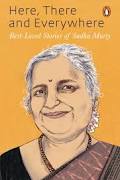


BOOK REVIEW: PRIDE AND PREJUDICE … JANE AUSTEN

Copyright@shravancharitymission

Khidki (Window)

–Read India Initiative—

This is only an attempt to create interest in reading. We may not get the time to read all the books in our lifetime. But such reviews, talk and synopsis will at least convey what the book is all about.

    The novel revolves around the Bennet family. It has more than ten characters. The five marriageable daughters and mother will be without a home and income once Mr. Bennet dies: The terms on which Mr. Bennet inherited Longbourn estate (It was called “fee tail male” now abolished by a law in England). The estate passes on to the nearest male relative, which makes it impossible for the women to inherit the property. So, if Mr Bennet dies the estate will pass on to his male relative.

    The mother Mrs Bennet worries about this predicament, and wishes to find husbands for her daughters quickly. The father doesn’t seem to be worried at all. Elizabeth, the heroine of the novel, has decided to marry only if she falls in love, and she has no real vision about how she will survive financially. On the contrary, she is of the opinion that her sister Jane, who is very kind and beautiful, will find a wealthy husband, and that she would then live with her.

    As the novel opens, Mr Bingley, a wealthy young gentleman, rents a country estate near Bennets called Netherfield. He arrives in town accompanied by his fashionable sisters and his good friend, Mr Darcy. While Bingley is well-received in the community, Darcy begins his acquaintance with smug condescension and shrewd disdain for all the ‘country’ people. Bingley and Elizabeth Bennet’s older sister Jane begin to grow close. Elizabeth’s best friend Charlotte advises, that Jane should be more bold and affectionate with Bingley, as they are both shy, and he may not know that she indeed is interested in him. Elizabeth disregards her friend’s opinion, saying that Jane is shy and modest, and that if Bingley can’t see how she feels, he is a fool. Elizabeth therefore, doesn’t tell Jane about Charlotte’s advice. Meanwhile, Elizabeth is stung by Darcy’s haughty rejection of her at a local dance and decides to match his coldness with her own wit.

    At the same time Elizabeth begins a friendship with one Mr Wickham, a militia officer who relates a prior acquaintance with Darcy. Wickham tells her that he has been seriously mistreated by Darcy. Elizabeth immediately seizes upon this information as another reason to hate Darcy. But ironically, and even unbeknownst to Elizabeth, Darcy finds himself gradually drawn to her.

    Just as Bingley appears to be on the point of proposing marriage to Jane Bennet, he for some reason quits Netherfield, leaving Jane confused and upset. Elizabeth is convinced that Bingley’s sister has conspired with Darcy to separate Jane and Bingley.

    Before Bingley leaves, Mr Collins, the male relative who is to inherit Longbourn, makes a sudden appearance and stays with the Bennets. He is a recently ordained clergyman employed by a wealthy and patronising Lady Catherine de Bourgh. Though he is requested to visit by his patroness, Collins has another reason for visiting: he wishes to find a wife out of the Bennet sisters. Mr Bennet and Elizabeth are amused by his self-important and pedantic behaviour. He immediately takes a liking for Jane. But when, Mrs Bennet mentions about Jane’s liking for Mr Bingley, he swiftly turns to Elizabeth. He soon proposes to Elizabeth, who refuses, much to her mother’s distress. Collins quickly recovers and then proposes to Elizabeth’s close friend, Charlotte Lucas, who immediately accepts him. Once the marriage is arranged, Charlotte asks Elizabeth to come for an extended visit.

    In the spring, Elizabeth joins Charlotte and her cousin at his parish in Kent. The parish is adjacent to Rosings Park, the grand manor or grand senior of Mr Darcy’s aunt, Lady Catherine De Bourgh, where Elizabeth is frequently invited. While calling on Lady Catherine, Mr Darcy encounters Elizabeth. Elizabeth discovers from a cousin of Darcy that it was Darcy who separated Bingley and Jane. Soon after, Darcy admits his love for Elizabeth and proposes to her. Insulted by his high-handed and insulting manner off proposing, Elizabeth refuses him. When he asks, as to why, she should refuse him, she confronts him with his sabotage of Bingley’s relationship with Jane, and Wickham’s account of their dealings.

    Deeply shaken by Elizabeth’s accusations, Darcy writes her a letter justifying his actions while explaining that George Wickham, the son of his late father’s steward, had refused the living his father had arranged for him, and was instead given money for it. But George Wickham quickly squandered all the money and when impoverished, asked for a living again. After being refused, he tried to elope with Darcy’s 15-year-old sister, Georgiana, for her considerable dowry but was stopped and that is why he is against him. Mr Darcy also writes that he separated Jane and Bingley because Jane had no reciprocal feelings for Bingley.

        Darcy admits he was concerned about the disadvantageous connection with Elizabeth’s family, especially her embarrassing mother and wild younger sisters. After reading the letter, Elizabeth begins to question both her family’s behaviour and Wickham’s credibility. She concludes that Wickham is not as trustworthy as his manners would indicate, and that he had lied to her previously, and that her early impressions of Darcy might have been inaccurate. Soon after receiving the letter, Elizabeth returns home.

    Some months later, during a tour of Derbyshire with her aunt and uncle, Elizabeth visits Pemberley, Darcy’s estate. Darcy’s housekeeper, an older woman who has known Darcy since childhood, presents Elizabeth and her relatives with a flattering and benevolent impression of his character. Unexpectedly, Darcy arrives at Pemberley as they tour its grounds. He makes an effort to be gracious and welcoming to them, thus strengthening Elizabeth’s newly favourable impression of him. Darcy then introduces Elizabeth to his sister Georgiana. He treats her uncle and aunt very well, and finds them of a more sound character than other relatives, whom he had previously dismissed as socially inferior.

    Elizabeth and Darcy’s renewed acquaintance is cut short when news arrives that Elizabeth’s younger sister Lydia has run away with Wickham. Initially, the Bennets believe that Wickham and Lydia have eloped, but soon it is surmised that Wickham has no plans to marry Lydia. Lydia’s antics threaten the family’s reputation and the Bennet sisters with social ruin. Elizabeth and her aunt and uncle hurriedly leave Derbyshire, and Elizabeth is convinced that Darcy will avoid her from now on.

    Soon, thanks to the intervention of Elizabeth’s uncle, Lydia and Wickham are found and married. After the marriage, Wickham and Lydia pay a visit to Longbourn. While bragging to Elizabeth, Lydia comments that Darcy was present at the wedding. Surprised, Elizabeth sends an enquiry to her aunt, from whom she discovers that Darcy was responsible for both, finding the couple and arranging their marriage at great expense to himself.

    Soon after, Bingley and Darcy return to the area. Bingley proposes marriage to Jane, and this news starts rumours that Darcy will now propose to Elizabeth. Lady Catherine travels to Longbourn with the sole aim of confronting Elizabeth and demanding that she never accept such a proposal. Elizabeth refuses to bow to Lady Catherine’s demands. When news of this obstinacy reaches Darcy, it convinces him that Elizabeth’s opinion about him has now changed. When he visits, he once again proposes marriage. Elizabeth this time accepts, and the two get engaged.

    The final chapters of the book establish the future of the characters. Elizabeth and Darcy settle at Pemberley where Mr Bennet visits often. Mrs Bennet remains frivolous and silly; she often visits the new Mrs Bingley and talks of the new Mrs Darcy. Later, Jane and Bingley move from Netherfield to avoid Jane’s mother and the Meryton relations (Meryton is an imaginary town in the book) and to locate near the Darcy’s in Derbyshire. Elizabeth and Jane manage to teach Kitty greater social grace, and Mary learns to accept the difference between herself and her sisters’ beauty and mixes more with the outside world. Lydia and Wikham continue to move often, leaving their debts for Jane and Elizabeth to pay off. At Pemberley, Elizabeth and Georgiana grow close, though Georgiana is surprised by Elizabeth’s playful treatment of Darcy. Lady Catherine stays very angry with her nephew’s marriage but over time the relationship between the two is repaired and she eventually decides to visit them. Elizabeth and Darcy also remain close with her uncle and aunt.

    The novel was originally titled ‘First Impression’ by Jayne Austen, and was written between October 1796 and August 1797.

It’s a masterpiece.

By Kamlesh Tripathi

*

https://kamleshsujata.wordpress.com

*

Share it if you like it

*

Shravan Charity Mission is an NGO that works for poor children suffering from life threatening diseases especially cancer. Our posts are meant for our readers that includes both children and adults and it has a huge variety in terms of content. We also accept donations for our mission. Should you wish to donate for the cause. The bank details are given below:

NAME OF ACCOUNT: SHRAVAN CHARITY MISSION

Account no: 680510110004635 (BANK OF INDIA)

IFSC code: BKID0006805

*

Our publications

GLOOM BEHIND THE SMILE

(The book is about a young cancer patient. Now archived in 7 prestigious libraries of the US, including, Harvard University and Library of Congress. It can also be accessed in MIT through Worldcat.org. Besides, it is also available for reading in Libraries and archives of Canada and Cancer Aid and Research Foundation Mumbai)  

ONE TO TANGO … RIA’S ODYSSEY

(Is a book on ‘singlehood’ about a Delhi girl now archived in Connemara Library, Chennai and Delhi Public Library, GOI, Ministry of Culture, Delhi)

AADAB LUCKNOW … FOND MEMORIES

(Is a fiction written around the great city of Nawabs—Lucknow. It describes Lucknow in great detail and also talks about its Hindu-Muslim amity. That happens to be its undying characteristic. The book was launched in Lucknow International Literary Festival of 2014)

REFRACTIONS … FROM THE PRISM OF GOD

(Co-published by Cankids–Kidscan, a pan India NGO and Shravan Charity Mission, that works for Child cancer in India. The book is endorsed by Ms Preetha Reddy, MD Apollo Hospitals Group. It was launched in Lucknow International Literary Festival 2016)

TYPICAL TALE OF AN INDIAN SALESMAN

(Is a story of an Indian salesman who is, humbly qualified. Yet he fights his ways through unceasing uncertainties to reach the top. A good read not only for salesmen. The book was launched on 10th February, 2018 in Gorakhpur Lit-Fest. Now available in Amazon, Flipkart and Onlinegatha)

RHYTHM … in poems

(Published in January 2019. The book contains 50 poems. The poems describe our day to day life. The book is available in Amazon, Flipkart and Onlinegatha)

MIRAGE

(Published in February 2020. The book is a collection of eight short stories. It is available in Amazon, Flipkart and Notion Press)

(ALL THE ABOVE TITLES ARE AVAILABLE FOR SALE IN AMAZON, FLIPKART AND OTHER ONLINE STORES OR YOU COULD EVEN WRITE TO US FOR A COPY)

*****


SHORT STORY: EAGLE VERSUS SCHOLARS

Copyright@shravancharitymission

    Once an intelligent king called for a debate to select the most knowledgeable living being in his kingdom. On the appointed date many scholars arrived at the king’s court to test their knowledge. To attract participants the king had also announced an award of ten thousand gold coins for the winner. There was also an eminent jury to decide on the winner with the king having the final veto power.

    The debate started with a bang. One by one scholars started unleashing their knowledge to win the prize of ten thousand gold coins. Some scholars made a reference to the king himself and argued that he indeed is the most intelligent being in the kingdom but the king knew, that was sheer flattery. Gradually, the tempo of the debate picked up when, scholars, took their turns, walked up to the dais and munificently spoke, about the various scriptures they had read, thus, justifying themselves, to be the most knowledgeable being, in the entire kingdom.

    But all this was not making an impression on the king rather he was feeling dejected when a falconer (a bird trainer) entered the court of the king with an eagle perched on his head.

    The king was amused to see the falconer, so he asked.

    ‘What are you doing in this session of scholars?’

    The falconer bowed and said,

    ‘Maharaj, I have a learned scholar for you, from a faraway kingdom, and he will tell you, who is the most knowledgeable being in your kingdom.’

    ‘But where is he?’

    ‘Right here Maharaj.’  The trainer pointed at the old hermit (sadhu) sitting amid the crowd. The hermit rose and confidently walked up to the dais. He first greeted the king and the jury members and then said.

    ‘Your Majesty! Let me begin by saying, the king is the most powerful entity, but only in the kingdom that he rules. The scholars are the most learned beings but sadly their knowledge is limited only to the books and scriptures that they have read. The most knowledgeable person in your kingdom indeed is the eagle perched atop the falconer’s head.’

     The jury looked surprised and shocked at what the hermit had just said. They asked how. Give some logic to prove your point. The hermit replied.

    ‘The eagle in his flights has seen many kingdoms that you have not seen. The eagle has crossed many rivers, lakes, forests which you have not done. The eagle has been to umpteen mountain peaks that you have not been to. The eagle has flown to a number of ashrams, to listen to those divine shlokas, recited by many learned scholars like you, but you have confined yourself to your own shlokas because of your ego. And Maharaj, it is only because of the eagle’s invitation that I have travelled such a great distance to participate in this august debate organised by you. So, he is the most knowledgeable being in your kingdom.’ Addressing the Jury further he said, ‘just as you have acquired your knowledge through reading the eagle has acquired his knowledge by flying, observing, travel and personal experience. The only difference being you’re articulate and the bird is not.’

   The king got up from his throne in excitement for he had indeed found the most knowledgeable being in his kingdom and that was the eagle, and that too along with his trainer and the sagacious hermit.

    Moral of the story: Knowledge doesn’t only come by reading. It comes by observing and personal experience too like the eagle.

By Kamlesh Tripathi

*

https://kamleshsujata.wordpress.com

*

Share it if you like it

*

Shravan Charity Mission is an NGO that works for poor children suffering from life threatening diseases especially cancer. Our posts are meant for our readers that includes both children and adults and it has a huge variety in terms of content. We also accept donations for our mission. Should you wish to donate for the cause. The bank details are given below:

NAME OF ACCOUNT: SHRAVAN CHARITY MISSION

Account no: 680510110004635 (BANK OF INDIA)

IFSC code: BKID0006805

*

Our publications

GLOOM BEHIND THE SMILE

(The book is about a young cancer patient. Now archived in 7 prestigious libraries of the US, including, Harvard University and Library of Congress. It can also be accessed in MIT through Worldcat.org. Besides, it is also available for reading in Libraries and archives of Canada and Cancer Aid and Research Foundation Mumbai)  

ONE TO TANGO … RIA’S ODYSSEY

(Is a book on ‘singlehood’ about a Delhi girl now archived in Connemara Library, Chennai and Delhi Public Library, GOI, Ministry of Culture, Delhi)

AADAB LUCKNOW … FOND MEMORIES

(Is a fiction written around the great city of Nawabs—Lucknow. It describes Lucknow in great detail and also talks about its Hindu-Muslim amity. That happens to be its undying characteristic. The book was launched in Lucknow International Literary Festival of 2014)

REFRACTIONS … FROM THE PRISM OF GOD

(Co-published by Cankids–Kidscan, a pan India NGO and Shravan Charity Mission, that works for Child cancer in India. The book is endorsed by Ms Preetha Reddy, MD Apollo Hospitals Group. It was launched in Lucknow International Literary Festival 2016)

TYPICAL TALE OF AN INDIAN SALESMAN

(Is a story of an Indian salesman who is, humbly qualified. Yet he fights his ways through unceasing uncertainties to reach the top. A good read not only for salesmen. The book was launched on 10th February, 2018 in Gorakhpur Lit-Fest. Now available in Amazon, Flipkart and Onlinegatha)

RHYTHM … in poems

(Published in January 2019. The book contains 50 poems. The poems describe our day to day life. The book is available in Amazon, Flipkart and Onlinegatha)

MIRAGE

(Published in February 2020. The book is a collection of eight short stories. It is available in Amazon, Flipkart and Notion Press)

(ALL THE ABOVE TITLES ARE AVAILABLE FOR SALE IN AMAZON, FLIPKART AND OTHER ONLINE STORES OR YOU COULD EVEN WRITE TO US FOR A COPY)

*****


FACTS & FIGURES: A SIGNIFICANT VOYAGE

Copyright@shravancharitymission

    So much has been written about the voyages that the Europeans undertook, in the sixteenth century especially towards Asia with India and China in mind. In this context let me describe one such voyage to you. European affinity for India had grown from the medieval times and for compelling reasons—trade links. But it was only around 1600, when the East India Company was formed in London that concept of organised trade voyages to the Indian Ocean started gaining grounds.

       In 1583, a group of Englishmen sailed from Falmouth a town and port on the River Fal on the south coast of Cornwall, England, United Kingdom, on a ship named ‘Tyger’ that was bound for West Asia. This group included local businessmen John Newberry, John Eldred and Ralph Fitch. It also carried a jeweller by the name of William Leedes, and a painter James Story—whose job was to draw sketches of, merchandise and sites, as cameras were not invented then.

    Newberry was a merchant-explorer who had two years of experience before undertaking a daring overland trip to Hormuz in the Persian Gulf and back, picking up Arabic on the way. Fitch was a leather merchant, and perhaps the most senior member in terms of age in the group. Eldred was a thirty-one-year old trader in Levantine silks which was from East Mediterranean. The trio Newberry, Fitch and Eldred had been close to two shareholders of the English Levant Company. These shareholders partly sponsored the expedition. The Company had been doing business in Constantinople also known as Istambul, for some years now, and even brought back samples of cotton cloth from India, silks from China, and spices of the Indonesian archipelago. The goal of the expedition was to explore a way to reach the original source of these goods.

    The party reached Tripoli in Syria, crossed the Lebanese mountains to reach Aleppo, (in present day Syria) and from there they sailed along the Euphrates, a river in South-West Asia, rising in Eastern Turkey and flowing south across Syria and Iraq to join the Greek river Tigris, and then to Al-Fallujah—Al Fallujah is a city in the Iraqi province of Al Anbar, located roughly 69 kilometer west of Baghdad on the Euphrates. At this point Eldred stayed on to trade in spices, and the rest of the group journeyed on to reach Hormuz. Hormuz belonged to the Persian Empire, but in practice, the Portuguese ruled this port, so vital, to their policy of blocking the Indian Ocean routes to all but friendly ships. Their friends, the Venetian merchants, did not want English merchants in West Asia.

    So, it was not surprising, they were promptly arrested at Hormuz. The Portuguese chief justice gave a judgement that they were spies, ignoring the letters of introduction that they were carrying from Queen Elizabeth-1, addressed to the emperors of India and China.

    The party was sent on a Portuguese galleon—a sailing ship in use especially by Spain from the 15th to the 18th centuries, originally as a warship, later for trade, to Goa to be interrogated by the viceroy Don Francisco de Mascarenhas. There they were sent to captivity and were released after thirteen days. Once freed, the party lost no time setting up business in Goa. However, the Jesuits kept the pressure on them to convert to Catholicism, and allegedly hatched a plot to get them rearrested. Fearing further trouble the party escaped Goa late in 1584.

     The group then travelled to Belgaum overland. From there they went to Bijapur, Burhanpur, Mandu and Ujjain. A few miles before Ujjain, the group came across a colourful procession of Emperor Akbar. Early the following year, the group reached Agra. Although, the party appeared to have been well received at Akbar’s court, it is not known if any of these men actually met the emperor to deliver the letter of the Queen to him. The group now divided itself. Fitch was to travel to Bengal. Newberry was to go to England by the land route, and return with a ship to Bengal and meet Flitch there. Newberry did set out on the journey, but was not heard of again. Leedes took up service with the Mughal court and never ever returned to England. The others moved on to ‘Bengala’, the legendary land that supplied so many finely woven cloths to the markets of East and West Asia.

    From Agra Fitch went to Benares, the Bengal port of Saptagram (colloquially called Satgaon), and navigated through the treacherous waters of the Sunderbans to reach Bakla. Since he does not mention about a land journey or about changing a ship, it’ll be safe to assume that the town and kingdom of Bakla were located somewhere on the lower Meghna River or one of its tributaries, possibly the Tentulia, which is not very clear. The Ain-i-Akbari of Abul Fazl, the Mughal court officer and chronicler, mentioned some years after Fitch visited the place, that the town was destroyed by a giant tidal wave from the sea, taking two hundred thousand lives with it. Bakla reappeared as a Mughal zamindari—an estate run by a tax-collecting landlord or zamindar, but on a different and safer location. From old Bakla, Fitch travelled to Sripur and Sonargaon, two midsize kingdoms of the lower Bengal delta. He carefully noted all tradable goods to be found in India, from the pepper of Cochin, cloves of the Moluccas, (a group of islands in eastern Indonesia between Celebes and New Guinea; settled by the Portuguese but taken over by the Dutch who made them the center for spice monopoly, and at that time they were known as Spice Islands). Fitch also discovered the diamonds of Golconda, rubies of Pegu (Myanmar), to the ‘great store of Cotton cloth (from Bengal), and Rice, from where they served all India, Ceylon, Pegu, Malacca, Sumatra, and many other places.’ From Pegu, Fitch sailed for England, where he reached in April 1591.

    Master Ralph Fitch, one of the minor members of the party, became the most famous among them when the records of the travel appeared in print. This was the first travelogue of India by an Englishman. Fitch became a hero. The expedition had not achieved anything to serve the trade directly. But it sowed the seeds for the concept that a trade treaty between two kingdoms, Mughal India and Tudor England, is possible. This objective was better served some decades later by means of an organised body of merchants, and a united Company.

By Kamlesh Tripathi

*

https://kamleshsujata.wordpress.com

*

Share it if you like it

*

Shravan Charity Mission is an NGO that works for poor children suffering from life threatening diseases especially cancer. Our posts are meant for our readers that includes both children and adults and it has a huge variety in terms of content. We also accept donations for our mission. Should you wish to donate for the cause. The bank details are given below:

NAME OF ACCOUNT: SHRAVAN CHARITY MISSION

Account no: 680510110004635 (BANK OF INDIA)

IFSC code: BKID0006805

*

Our publications

GLOOM BEHIND THE SMILE

(The book is about a young cancer patient. Now archived in 7 prestigious libraries of the US, including, Harvard University and Library of Congress. It can also be accessed in MIT through Worldcat.org. Besides, it is also available for reading in Libraries and archives of Canada and Cancer Aid and Research Foundation Mumbai)  

ONE TO TANGO … RIA’S ODYSSEY

(Is a book on ‘singlehood’ about a Delhi girl now archived in Connemara Library, Chennai and Delhi Public Library, GOI, Ministry of Culture, Delhi)

AADAB LUCKNOW … FOND MEMORIES

(Is a fiction written around the great city of Nawabs—Lucknow. It describes Lucknow in great detail and also talks about its Hindu-Muslim amity. That happens to be its undying characteristic. The book was launched in Lucknow International Literary Festival of 2014)

REFRACTIONS … FROM THE PRISM OF GOD

(Co-published by Cankids–Kidscan, a pan India NGO and Shravan Charity Mission, that works for Child cancer in India. The book is endorsed by Ms Preetha Reddy, MD Apollo Hospitals Group. It was launched in Lucknow International Literary Festival 2016)

TYPICAL TALE OF AN INDIAN SALESMAN

(Is a story of an Indian salesman who is, humbly qualified. Yet he fights his ways through unceasing uncertainties to reach the top. A good read not only for salesmen. The book was launched on 10th February, 2018 in Gorakhpur Lit-Fest. Now available in Amazon, Flipkart and Onlinegatha)

RHYTHM … in poems

(Published in January 2019. The book contains 50 poems. The poems describe our day to day life. The book is available in Amazon, Flipkart and Onlinegatha)

MIRAGE

(Published in February 2020. The book is a collection of eight short stories. It is available in Amazon, Flipkart and Notion Press)

(ALL THE ABOVE TITLES ARE AVAILABLE FOR SALE IN AMAZON, FLIPKART AND OTHER ONLINE STORES OR YOU COULD EVEN WRITE TO US FOR A COPY)

*****


BOOK REVIEW: JINNAH – Often Came To Our House– Kiran Doshi

Copyright@shravancharitymission

Khidki (Window)

–Read India Initiative—

This is only an attempt to create interest in reading. We may not get the time to read all the books in our lifetime. But such reviews, talk and synopsis will at least convey what the book is all about

    Let me first begin by introducing the author Kiran Doshi. Kiran Doshi studied history, politics and law in Bombay before he joined the Indian Foreign Service in the year 1962, where, he had a 35-year-long career that frequently saw him tackling, India’s relations with Pakistan, always an important, exciting, but eventually a frustrating task.

    The book falls in the genre of historical fiction, published by Tranquebar Westlandbooks in 2015. It is available in both print and e-book format, and is a thick spine—some 490 pages. It is divided into 35 rhapsodic chapters and spans between the eventful years of the making of India. That is from 1904 to 1948 which includes the struggle for freedom, Partition of India and the formation of Pakistan out of India.

    Kiran has two more books in his oeuvre titled, ‘Birds of Passage’ which I believe is an engrossing and hilarious novel set in the diplomatic space of India-Pakistan-USA diplomacy, and the other book is titled, ‘Diplomatic Tales’ which is a collection of short stories in comic verse. Kiran lives in Delhi with his wife Razia.

    I’m not aware of the spark that prompted the author to write this book. But since the author has dedicated the book, to his mother-in-law Umrao Baig, (1915-1981), it does suggest, a character in the book could be resembling her. But this is only my hunch. Umrao Baig was expelled from her convent school for wearing khadi and singing Bande Mataram. She went on to study medicine at Grant Medical College and set up a hospital named after, Lokmanya Tilak in a part of Bombay, then inhabited, by mill workers.

    The book although titled Jinnah is a work of historical fiction cautions the author—all the incidents and characters in it (except those known to history) are fictitious—even if touched, here and there, by the brush of family lore.

    Coming to the brief plot. The young and dashing Sultan Kowaishi has just returned from London to Bombay after acquiring a barrister’s degree. Among the first persons he meets in Bombay is Mohammed Ali Jinnah, already a quintessential advocate, and is quickly drawn to him. It is around this time Jinnah decides to join the Indian National Congress, soon to become its brightest star in the fight for freedom. But the stir for freedom holds no interest for Sultan, but yes, it attracts his wife Rehana, and, inexorably weaves its way, into their lives. Another strong character happens to be Barri Phuphi. The main story is about Rehana opening a school, Sultan succeeding as a lawyer, them separating, and years later Sultan going in search of his children and finally his grandchild.

    The book has a large canvass of characters and events. It makes, its presence, felt in, more than one ways. It starts with the showcasing of, the lifestyle of, upper class Muslims, in Bombay, largely with, familial, connect, in Gujarat and Hyderabad around the beginning of the twentieth century.

    Kiran has focused on the core topic of freedom struggle leading to independence quite well. He brings alive the court cases along with decades of India’s struggle for freedom that is interrupted by the British in various ways, especially, when they change the laws for partition of Bengal, revocation of partition of Bengal. Tilak’s exile, Morley Minto Reforms, formation of Muslim League, the Rowlatt Act, the Montagu-Chelmsford Reforms, Simon Commission and its opposition, the two World Words, provincial elections and Constituent Assembly and the Khilafat movement—linked to the Ottoman Empire and of course the partition of India.

    The book revolves around Rehana, Sultan and Jinnah mostly in Bombay, London, Delhi, Lucknow, Hyderabad, Ahmedabad, Afghanistan and Pakistan. It has many other characters such as Dhondav—Rehana’s thread brother and the tall politicians of those times. But Rehana happens to be the longest and the toughest string that connects the book from the beginning to the end.

    The book eventually serves India with independence but not before breaking and destroying the complete family of Sultan Kowaishi who on a mere doubt of infidelity, disowns his wife and children without realising how devious, can an Englishman of, the British Raj, could be. Shak destroys Sultan completely.  Jiska ilaj hakeem Luqman ke pas bhi nahi tha.

    The story thereon moves like a tragedy and finally ends like a family tragedy. The hatred between Hindus and Muslims has been captured quite comprehensively. The book picks up somewhere between page 23 and page 45. There are too many a characters in the story and it takes a while before one can actually imbibe and familiarise oneself with the characters.

    There are certain pages in the book that I quite liked, such as, description of a voyage from Bombay to London which is now a rarity. The relation between Jinnah and Rehana is well written. The presentation of Gokhale, Tilak and Gandhi from time to time and some other leaders is interesting. The conversation about Rasool and Koran is quite informative. Overall, it’s a very happening book. But towards the last hundred pages it becomes quite depressing. Perhaps, had the author squeezed the book around 400 pages the action points of the novel could have been more intense.

The author pays homage to Shakespeare by using his quotes quite generously and aptly. His lines make for an engaging conversation-long repartee between Rehana and Jinnah.

The tone of the writer is quite flowing and inviting with the prowess to alter the reader’s emotion without provoking him. The author has used easy English with a mix of Urdu, Hindi and the colloquials.  

    The novel has a host of characters, some are well-known in history such as Gandhi, Tilak, Nehru, Subhash Chandra Bose and many are fictional characters such as, Dhondav, Griffiths, Pandey, Tehmina, Firoz, Hina and others whose lives change with the turn of pages. The rigour of writing is evident in how the writer ties up every thread and no character is left hanging. A resounding line that Kiran picks is attributed to Sir Syed Ahmed Khan, “Hindus and Muslims are the two eyes of India, they can never be separated. But sadly, the novel ends with the independence and partition of India,

    Through Jinnah and the Congress, the author shows how random laws define the fate of societies, through Dhondav he shows how bans on the freedom of press or media influence public opinion, through the main character Rehana and her travails at school, he shows how language and text books can become a conflict point.

For older readers, this novel would be a delight, but for the younger generation, twice removed from Independence and partition, the novel would serve as a space to reflect over the ironies of our times. For the sweeping story Jinnah… I would give the book four stars. A must read.

By Kamlesh Tripathi

*

https://kamleshsujata.wordpress.com

*

Share it if you like it

*

Shravan Charity Mission is an NGO that works for poor children suffering from life threatening diseases especially cancer. Our posts are meant for our readers that includes both children and adults and it has a huge variety in terms of content. We also accept donations for our mission. Should you wish to donate for the cause. The bank details are given below:

NAME OF ACCOUNT: SHRAVAN CHARITY MISSION

Account no: 680510110004635 (BANK OF INDIA)

IFSC code: BKID0006805

*

Our publications

GLOOM BEHIND THE SMILE

(The book is about a young cancer patient. Now archived in 7 prestigious libraries of the US, including, Harvard University and Library of Congress. It can also be accessed in MIT through Worldcat.org. Besides, it is also available for reading in Libraries and archives of Canada and Cancer Aid and Research Foundation Mumbai)  

ONE TO TANGO … RIA’S ODYSSEY

(Is a book on ‘singlehood’ about a Delhi girl now archived in Connemara Library, Chennai and Delhi Public Library, GOI, Ministry of Culture, Delhi)

AADAB LUCKNOW … FOND MEMORIES

(Is a fiction written around the great city of Nawabs—Lucknow. It describes Lucknow in great detail and also talks about its Hindu-Muslim amity. That happens to be its undying characteristic. The book was launched in Lucknow International Literary Festival of 2014)

REFRACTIONS … FROM THE PRISM OF GOD

(Co-published by Cankids–Kidscan, a pan India NGO and Shravan Charity Mission, that works for Child cancer in India. The book is endorsed by Ms Preetha Reddy, MD Apollo Hospitals Group. It was launched in Lucknow International Literary Festival 2016)

TYPICAL TALE OF AN INDIAN SALESMAN

(Is a story of an Indian salesman who is, humbly qualified. Yet he fights his ways through unceasing uncertainties to reach the top. A good read not only for salesmen. The book was launched on 10th February, 2018 in Gorakhpur Lit-Fest. Now available in Amazon, Flipkart and Onlinegatha)

RHYTHM … in poems

(Published in January 2019. The book contains 50 poems. The poems describe our day to day life. The book is available in Amazon, Flipkart and Onlinegatha)

MIRAGE

(Published in February 2020. The book is a collection of eight short stories. It is available in Amazon, Flipkart and Notion Press)

(ALL THE ABOVE TITLES ARE AVAILABLE FOR SALE IN AMAZON, FLIPKART AND OTHER ONLINE STORES OR YOU COULD EVEN WRITE TO US FOR A COPY)

*****
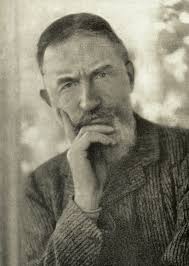


FACTS & FIGURES: My Lai massacre … Vietnam War

Copyright@shravancharitymission

     My Lai Massacre was ​an incident, that occurred during the Vietnam War on 16 March 1968, when a group of US soldiers killed 347 ordinary people, including women and children, in the Vietnamese village of My Lai. Later in 1971, the officer who ordered the attack, Lieutenant William Calley, was sent to prison for life, but this was later reduced to 10 years and he was in fact released in 1974 in just three years. Many Americans were shocked by the incident, and as a result protests against the war increased.

    To put it in perspective it was a mass murder of unarmed South Vietnamese civilians by the U.S. troops in Son Tinh district in South Vietnam. In this horrific crime somewhere around 500 unarmed people were killed by the U.S. Army soldiers.

    Victims included men, women, children and even infants. Some of the women were even gang-raped and their bodies were mutilated and that included children as young as twelve. Twenty-six soldiers were charged with criminal offences.

    This war crime was later called ‘the most shocking episode of the Vietnam War. It took place in two hamlets of Son My village in Quang Ngai province. These hamlets were marked on the U.S. Army topographic maps as My Lai and My Khe.

    The U.S. Army slang names, for the hamlets and sub-hamlets in that area were Pinkville, and the carnage was initially referred to as the Pinkville Massacre. Later, when the U.S. Army started its investigation, the media changed it to the Massacre at Songmy. Currently, this horrific event is referred to as the My Lai Massacre in the United States and called the Sơn M massacre in Vietnam.

    The incident prompted global outrage when it became public knowledge in November 1969. The incident increased to some extent domestic opposition to the U.S. involvement in the Vietnam War when the scope of killing and cover-up attempts were exposed. Initially, three U.S. servicemen who had tried to halt the massacre and had rescued the hiding civilians were shunned, and even denounced as traitors by several U.S. Congressmen. And it was only after 30 years that they were recognized and decorated, one posthumously, by the U.S. Army for shielding non-combatants from harm in a war zone. My Lai was one of the largest publicized massacres of civilians by U.S. forces in the 20th century.

    On the morning of 16 March at 7:30 a.m., around 100 soldiers from Charlie Company led by Medina, following a short artillery and helicopter gunship barrage, landed in helicopters at  Son My, a patchwork of settlements, rice paddies, irrigation ditches, dikes, and dirt roads, connecting an assortment of hamlets and sub-hamlets. The largest among them were the hamlets of My Lai, Co Luy, My Khe, and Tu Cung.

    Although no ammunitions were fired on American soldiers after landing, the American troops, still suspected there were VC guerrillas (i.e. Viet Cong guerrillas, officially known as the National Liberation Front of South Vietnam) hiding underground or in the huts.

    According to the operational plan, 1st Platoon, led by Second Lieutenant William Calley, and 2nd Platoon, led by 2LT Stephen Brooks, entered the hamlet of Tu Cung in a line formation at 08:00, while the 3rd Platoon, commanded by 2LT Jeffrey U. Lacross, and Captain Medina’s command post remained outside. On approach, both platoons fired at people they saw in the rice fields and in the bushes.

    The villagers, who were getting ready for a market day, at first did not panic or run away, as they were herded into the hamlet’s commons. Harry Stanley, a machine gunner from Charlie Company, said during the U.S. Army Criminal Investigation Division inquiry that the killings started without warning. He first observed a member of 1st Platoon strike a Vietnamese man with a bayonet. Then the same trooper pushed another villager into a well and threw a grenade in it. Next, he saw some fifteen or twenty people, mainly women and children, kneeling around a temple with smouldering incense. They were actually praying and crying. Sadly, they were all killed by shots to their head.

    Most of the killings occurred in the southern part of Tu Cung, a sub-hamlet of Xom Lang, which was a home to 700 residents. Xom Lang was erroneously marked on the U.S. military operational maps of Quang Ngai province as My Lai.

    A large group of approximately 70–80 villagers were rounded up by 1st Platoon in Xom Lang and led to an irrigation ditch east of the settlement. They were then pushed into the ditch and shot dead by soldiers after repeated orders issued by Calley, who was also shooting himself. PFC (Private First Class a junior military rank) Paul Meadlo testified that he expended several M16 rifle magazines. He recollected that women were allegedly saying “No VC” (That they are not from Viet Cong) and were trying to shield their children. He remembered that he was shooting into women with babies in their hands, since he was convinced at that time that they were all booby-trapped with grenades and were poised to attack. On another occasion during the security sweep in My Lai, Meadlo again fired at civilians side-by-side with Lieutenant Calley.

    PFC Dennis Konti, a witness for the prosecution, especially spoke about, one gruesome episode during the shooting, “A lot of women had thrown themselves on top of the children to protect them, and the children were alive at first. Then, the children who were old enough to walk got up and Calley began to shoot the children also”. Other 1st Platoon members testified that many of the deaths of individual Vietnamese men, women and children occurred inside My Lai during the security sweep. Livestock was shot as well. Over the next few days American army was involved in burning and destruction of dwellings, as well as mistreatment of Vietnamese detainees.

    Warrant Officer Hugh Thompson, Jr., a helicopter pilot from Company B (Aero-Scouts), 123rd Aviation Battalion, Americal Division, saw dead and wounded civilians as he was flying over the village of Son My, providing close-air support for ground forces. 

    Thompson and his crew witnessed an unarmed woman being kicked and shot at point-blank range by a soldier Medina, who later claimed that he thought she had a hand grenade. Thompson then saw a group of civilians again consisting of children, women, and old men at a bunker being approached by ground personnel. Thompson landed, and told his crew that if the soldiers shot at the villagers while he was trying to get them out of the bunker, then they were to open fire on their comrades.

    Thompson later testified that he spoke with a lieutenant (identified as Stephen Brooks of 2nd Platoon) and told him there were women and children in the bunker, and asked if the lieutenant would help get them out. Thompson found 12–16 people in the bunker, he coaxed them out and led them to the helicopter, standing with them while they were flown out in two groups.

    Further in My Lai, Thompson and other air crew members noticed several large groups of bodies. They spotted some survivors in the ditch. Thompson landed again. A crew member, Specialist 4 Glenn Andreotta, entered the ditch and returned with a bloodied but apparently unharmed four-year old girl, who was then flown to safety. Thompson then reported what he had seen to his company commander, Major Frederic W. Watke, using terms such as “murder” and “needless and unnecessary killings.” Thompson’s statements were confirmed by other helicopter pilots too and air crew members.

    For his actions at Me My Lai, Thompson was later awarded the Distinguished Flying Cross.

     It gives shivers when you think of such horrific crimes.

By Kamlesh Tripathi

*

https://kamleshsujata.wordpress.com

*

Share it if you like it

*

Shravan Charity Mission is an NGO that works for poor children suffering from life threatening diseases especially cancer. Our posts are meant for our readers that includes both children and adults and it has a huge variety in terms of content. We also accept donations for our mission. Should you wish to donate for the cause. The bank details are given below:

NAME OF ACCOUNT: SHRAVAN CHARITY MISSION

Account no: 680510110004635 (BANK OF INDIA)

IFSC code: BKID0006805

*

Our publications

GLOOM BEHIND THE SMILE

(The book is about a young cancer patient. Now archived in 7 prestigious libraries of the US, including, Harvard University and Library of Congress. It can also be accessed in MIT through Worldcat.org. Besides, it is also available for reading in Libraries and archives of Canada and Cancer Aid and Research Foundation Mumbai)  

ONE TO TANGO … RIA’S ODYSSEY

(Is a book on ‘singlehood’ about a Delhi girl now archived in Connemara Library, Chennai and Delhi Public Library, GOI, Ministry of Culture, Delhi)

AADAB LUCKNOW … FOND MEMORIES

(Is a fiction written around the great city of Nawabs—Lucknow. It describes Lucknow in great detail and also talks about its Hindu-Muslim amity. That happens to be its undying characteristic. The book was launched in Lucknow International Literary Festival of 2014)

REFRACTIONS … FROM THE PRISM OF GOD

(Co-published by Cankids–Kidscan, a pan India NGO and Shravan Charity Mission, that works for Child cancer in India. The book is endorsed by Ms Preetha Reddy, MD Apollo Hospitals Group. It was launched in Lucknow International Literary Festival 2016)

TYPICAL TALE OF AN INDIAN SALESMAN

(Is a story of an Indian salesman who is, humbly qualified. Yet he fights his ways through unceasing uncertainties to reach the top. A good read not only for salesmen. The book was launched on 10th February, 2018 in Gorakhpur Lit-Fest. Now available in Amazon, Flipkart and Onlinegatha)

RHYTHM … in poems

(Published in January 2019. The book contains 50 poems. The poems describe our day to day life. The book is available in Amazon, Flipkart and Onlinegatha)

MIRAGE

(Published in February 2020. The book is a collection of eight short stories. It is available in Amazon, Flipkart and Notion Press)

(ALL THE ABOVE TITLES ARE AVAILABLE FOR SALE IN AMAZON, FLIPKART AND OTHER ONLINE STORES OR YOU COULD EVEN WRITE TO US FOR A COPY)

*****


SHORT STORY: ARROGANT KING

Copyright@shravancharitymission

    Many years ago there lived a deceitful king who always blamed God for anything wrong that happened in his kingdom by saying, “It’s all God’s doing.” But at the same time, for anything good that happened in his kingdom he always said, “It’s the king’s doing.”

    When there were floods in his kingdom he blamed God. When there was an epidemic he blamed God. When there was a war he blamed God. When there was a drought then too he blamed God. In utter disgust he often used to blurt, ‘it’s all God’s doing,’ and slowly that became his catchphrase. In a vast kingdom such as his, something was always going wrong and that gave him umpteen opportunities to curse God.

    Fed up, one day, God approached the king and said,

    ‘Rajan … While ruling over such a vast kingdom, many things will go wrong and many things will go right and it is but the king’s duty, to take the sum total of it, in his stride. But what I find here is something very strange. For all the things that go wrong in your kingdom, you pass it off as God’s doing, and for all the things that go right, you pat your shoulder, to pass it off as the king’s achievement. Now is that fair?”

    The king replied, ‘Prabhu … Of course it is fair.’

    ‘Then explain how.’ God reasoned.

    ‘Prabhu … blaming you is like blaming destiny which is ultimately God’s will. Now, who can question destiny that happens to be God in disguise. And yes, I definitely pat myself for things that go right in my kingdom because it only increases my halo, aura and my command over my subjects.’

    ‘God smiled at the king and said.’

    ‘Rajan … I suggest for some time now, reverse the trend and witness the change.’

    ‘Prabhu … I didn’t get you.’

    ‘Rajan, it’s very simple. For all the things going wrong in your kingdom take the blame upon yourself. Say, it’s the king’s doing and, for all the things going right in your kingdom say, it’s the God’s doing. And, I’ll meet you after a year when we’ll see how the change has affected you and your kingdom.’

    King folded his hands, closed his eyes and said, ‘As you wish Prabhu. After which God left for his heavenly abode.

    Soon, the king instructed his ministers, to badge him for everything, that was going wrong in his kingdom and praise God Almighty for whatever was going right in the kingdom. The ministers were surprised at this gesture of the king, but then they remained silent since they were subordinates.

    Gradually, the work pressure on the king, started increasing, when ‘destiny’ started turning into, shabby governance. The king was now feeling more responsible as he didn’t want his name to get spoilt—earlier it didn’t matter, as it was God’s name that was getting spoilt.  So, he immediately took some proactive measures and started participating much more effectively in the day-to-day running of the kingdom. He built suitable embankments before the floods arrived. He got wells dug up before the crop was sown, for irrigation. He built night shelters for the poor before arrival of winters. And when, the kingdom was attacked by enemies he led by example and fought the battle himself from the frontline. He was able to unearth the frauds that were being committed under the banner of destiny by his ministers. The king was now a changed personality.

    When the rising waters of the river could not enter the kingdom because of the embankment the king praised the God. Upon the bumper harvest because of the new wells that were dug up before the sowing, he praised God. On the day of inauguration of night shelter he again praised God. And thereafter whenever there was something good happening in the kingdom he only praised God Almighty and said it was all because of his grace.

    In a year’s time the reputation of the king took an about-turn. The citizens of his kingdom were now convinced that they couldn’t have had a better king than him. For he took direct responsibility in terms of tackling every challenge that erupted in his kingdom. And at the same time for any success he showed humility and praised God Almighty. This gave an impression to people that the king has become very humble. And with that his overall aura went up.

    After exactly a year God came to meet the king. The king was very busy sorting out urgent issues of his kingdom. He requested God to give him some moments so that he could close certain pressing matters and then sit with him with a free mind. God agreed to wait. But in the rush of work the king forgot that God was waiting for him. The king did return to his castle but only after finishing his work which was after a couple of days and found God still waiting for him. The king fell on God’s feet for the delay in attending to him and pleaded forgiveness, profusely.

    God helped the king to stand on his feet and then said.

    ‘Rajan I’m happy to see the change in you, and for worthy King’s like you God doesn’t mind waiting.’

    Moral of the story: Work is worship.

Written by Kamlesh Tripathi

*

https://kamleshsujata.wordpress.com

*

Share it if you like it

*

Shravan Charity Mission is an NGO that works for poor children suffering from life threatening diseases especially cancer. Our posts are meant for our readers that includes both children and adults and it has a huge variety in terms of content. We also accept donations for our mission. Should you wish to donate for the cause. The bank details are given below:

NAME OF ACCOUNT: SHRAVAN CHARITY MISSION

Account no: 680510110004635 (BANK OF INDIA)

IFSC code: BKID0006805

*

Our publications

GLOOM BEHIND THE SMILE

(The book is about a young cancer patient. Now archived in 7 prestigious libraries of the US, including, Harvard University and Library of Congress. It can also be accessed in MIT through Worldcat.org. Besides, it is also available for reading in Libraries and archives of Canada and Cancer Aid and Research Foundation Mumbai)  

ONE TO TANGO … RIA’S ODYSSEY

(Is a book on ‘singlehood’ about a Delhi girl now archived in Connemara Library, Chennai and Delhi Public Library, GOI, Ministry of Culture, Delhi)

AADAB LUCKNOW … FOND MEMORIES

(Is a fiction written around the great city of Nawabs—Lucknow. It describes Lucknow in great detail and also talks about its Hindu-Muslim amity. That happens to be its undying characteristic. The book was launched in Lucknow International Literary Festival of 2014)

REFRACTIONS … FROM THE PRISM OF GOD

(Co-published by Cankids–Kidscan, a pan India NGO and Shravan Charity Mission, that works for Child cancer in India. The book is endorsed by Ms Preetha Reddy, MD Apollo Hospitals Group. It was launched in Lucknow International Literary Festival 2016)

TYPICAL TALE OF AN INDIAN SALESMAN

(Is a story of an Indian salesman who is, humbly qualified. Yet he fights his ways through unceasing uncertainties to reach the top. A good read not only for salesmen. The book was launched on 10th February, 2018 in Gorakhpur Lit-Fest. Now available in Amazon, Flipkart and Onlinegatha)

RHYTHM … in poems

(Published in January 2019. The book contains 50 poems. The poems describe our day to day life. The book is available in Amazon, Flipkart and Onlinegatha)

MIRAGE

(Published in February 2020. The book is a collection of eight short stories. It is available in Amazon, Flipkart and Notion Press)

(ALL THE ABOVE TITLES ARE AVAILABLE FOR SALE IN AMAZON, FLIPKART AND OTHER ONLINE STORES OR YOU COULD EVEN WRITE TO US FOR A COPY)

*****


Facts & Figures: KHYMER ROUGE, The Story of Marxist Dictator Pol Pot, Cambodia

Copyright@shravancharitymission

(Pol Pot)

    The Khmer Rouge was a brutal regime that ruled Cambodia, under the horrendous leadership of Marxist dictator Pol Pot, from 1975 to 1979. Pol Pot’s attempts to create a Cambodian “master race” through social engineering ultimately led to the deaths of more than 2 million people in this Southeast Asian nation. Those killed were either executed as enemies of the regime, or they died from starvation, disease or overwork. Historically, this period—is depicted in a film titled, ‘The Killing Fields.’ Referred as Cambodian Genocide.  Cambodia as we all know is surrounded by Thailand, Laos, Vietnam and the Gulf of Thailand.

    Although, Pol Pot and the Khmer Rouge didn’t come to power until the mid-1970s, the roots of their takeover can be traced back to the 1960s, when a communist insurgency first became active in Cambodia, which was then ruled by a monarch.

    Throughout the 1960s, the Khmer Rouge, operated as, the armed wing of the Communist Party of Kampuchea, the name the party used for Cambodia. Operating primarily out of remote jungles and mountain areas in the northeast of the country, near its border with Vietnam, which at that time was involved in its own civil war. Khmer Rouge did not have popular support across Cambodia, particularly in the cities, including its capital Phnom Penh.

    After a 1970 military coup that led to the ouster of Cambodia’s ruling monarch, Prince Norodom Sihanouk, the Khmer Rouge decided to join forces with the deposed leader and form a political coalition. This was because the monarch had been popular among city-dwelling Cambodians, and through this coalition the Khmer Rouge began to garner more and more support of the city-dwelling Cambodians.

    For the next five years, a civil war unleashed between the right-leaning military that had led the coup, and those supporting the alliance of Prince Norodom and the Khmer Rouge in Cambodia. Eventually, the Khmer Rouge side, seized the advantage of the conflict, after gaining control of, increasing amounts of territory in the Cambodian countryside.

    In 1975, Khmer Rouge fighters invaded Phnom Penh and took over the city. And with the capital in its grasp, the Khmer Rouge had won the civil war and, thus, started ruling over the country.

    But notably, the Khmer Rouge opted, not to restore power to Prince Norodom, and instead, handed it over to Pol Pot, leader of the Khmer Rouge. And Prince Norodom was forced to live in exile.

    As a leader of the Khmer Rouge during the days of insurgent movement, Pol Pot had come to admire the tribes in Cambodia’s rural northeast. These tribes were self-sufficient and lived on the goods that they produced through subsistence farming.

   The tribes, he felt, were like communes that worked together, shared the spoils of their labour, and were untainted by the evils of money, wealth and religion, the latter being the Buddhism, quite common in urban Cambodia.

    Once installed as the country’s leader by the Khmer Rouge, Pol Pot and the forces loyal to him quickly set about, remaking Cambodia, which they had renamed Kampuchea, in the model of these rural tribes, with the hopes of creating a communist-style, agricultural utopia.

    They declared 1975 as the “Year Zero” in the country. Pol Pot isolated Kampuchea from the global community. He resettled hundreds of thousands of the country’s city-dwellers into rural farming communes and abolished the country’s currency. He also outlawed the ownership of private property and the practice of religion in the new nation.

    Workers on the collective farms established by Pol Pot soon began suffering from the effects of overwork and lack of food. Hundreds of thousands died from disease, starvation and even damage to their bodies sustained during back-breaking work or abuse from the ruthless Khmer Rouge guards overseeing the camps.

    Pol Pot’s regime also executed thousands of people that it deemed as enemies of the state. Those seen as intellectuals, or potential leaders of a revolutionary movement, were also executed. Legend has it that, some were executed for merely appearing to be intellectuals, because they wore glasses and were able to speak a foreign language.

    As part of this effort, hundreds of thousands of the educated, middle-class Cambodians were tortured and executed in special centres established in the cities. Most infamous of which was Tuol Sleng jail in Phnom Penh, where nearly 17,000 men, women and children were imprisoned during the regime’s four years in power. In what became to be known as the Cambodian Genocide, an estimated 1.7 to 2.2 million Cambodians died during Pol Pot’s regime.

    Finally, the Vietnamese Army invaded Cambodia in 1979 and dislodged Pol Pot and the Khmer Rouge from power, after a series of violent battles on the border between the two countries. Pol Pot had sought to extend his influence into the newly unified Vietnam, but his forces were suitably rebuffed.

    After the invasion, Pol Pot and his Khmer Rouge fighters quickly retreated to remote areas of the country. Where, they remained active as an insurgent group, albeit with declining influence. Vietnam retained control of the country, with a military presence, for much of the 1980s, even over the objections of the United States.

    After the fall of the Khmer Rouge that happened decades back. Cambodia has gradually re-established ties with the world community, although the country still faces problems, including widespread poverty and illiteracy. Prince Norodom returned to govern Cambodia in 1993, but he now rules under a constitutional monarchy.

    Pol Pot himself lived in the rural northeast of the country until 1997, when he was tried by the Khmer Rouge for his crimes against the state. The trial of course was an eyewash, and the former dictator died while under house arrest in his jungle home. Since he had died in his jungle house his body parts were sent for a DNA test.

    The stories of the suffering of the Cambodian people at the hands of Pol Pot and the Khmer Rouge have garnered worldwide attention in the years since their rise and fall, including through a fictional account of the atrocities in the popular 1984 movie The Killing Fields.

    Corona Virus reminds me of the filthy communist dictator Pol Pot.

    Stay home. Stay safe.

***

By Kamlesh Tripathi

*

https://kamleshsujata.wordpress.com

*

Share it if you like it

*

Shravan Charity Mission is an NGO that works for poor children suffering from life threatening diseases especially cancer. Our posts are meant for our readers that includes both children and adults and it has a huge variety in terms of content. We also accept donations for our mission. Should you wish to donate for the cause. The bank details are given below:

NAME OF ACCOUNT: SHRAVAN CHARITY MISSION

Account no: 680510110004635 (BANK OF INDIA)

IFSC code: BKID0006805

*

Our publications

GLOOM BEHIND THE SMILE

(The book is about a young cancer patient. Now archived in 7 prestigious libraries of the US, including, Harvard University and Library of Congress. It can also be accessed in MIT through Worldcat.org. Besides, it is also available for reading in Libraries and archives of Canada and Cancer Aid and Research Foundation Mumbai)  

ONE TO TANGO … RIA’S ODYSSEY

(Is a book on ‘singlehood’ about a Delhi girl now archived in Connemara Library, Chennai and Delhi Public Library, GOI, Ministry of Culture, Delhi)

AADAB LUCKNOW … FOND MEMORIES

(Is a fiction written around the great city of Nawabs—Lucknow. It describes Lucknow in great detail and also talks about its Hindu-Muslim amity. That happens to be its undying characteristic. The book was launched in Lucknow International Literary Festival of 2014)

REFRACTIONS … FROM THE PRISM OF GOD

(Co-published by Cankids–Kidscan, a pan India NGO and Shravan Charity Mission, that works for Child cancer in India. The book is endorsed by Ms Preetha Reddy, MD Apollo Hospitals Group. It was launched in Lucknow International Literary Festival 2016)

TYPICAL TALE OF AN INDIAN SALESMAN

(Is a story of an Indian salesman who is, humbly qualified. Yet he fights his ways through unceasing uncertainties to reach the top. A good read not only for salesmen. The book was launched on 10th February, 2018 in Gorakhpur Lit-Fest. Now available in Amazon, Flipkart and Onlinegatha)

RHYTHM … in poems

(Published in January 2019. The book contains 50 poems. The poems describe our day to day life. The book is available in Amazon, Flipkart and Onlinegatha)

MIRAGE

(Published in February 2020. The book is a collection of eight short stories. It is available in Amazon, Flipkart and Notion Press)

(ALL THE ABOVE TITLES ARE AVAILABLE FOR SALE IN AMAZON, FLIPKART AND OTHER ONLINE STORES OR YOU COULD EVEN WRITE TO US FOR A COPY)

*****


SHORT STORY: BIG JOB WRONG MESSAGE

Copyright@shravancharitymission

    There was once a king who had this strange habit of meeting all the wrong kind of people in his kingdom. He met prisoners charged with murder, theft, so on and so forth. He had directed his prison chief to send him five prisoners every night for a one-on-one. He used to meet them alone but no one knew why.

    He had also left instructions that post his meeting no one should cross check with the prisoner about the conversation the king had had with him. And, if ever, it came to his notice that someone in the prison has tried to coax the prisoner to reveal the conversation the prisoner had had with the king that person’s head would be guillotined … he would be beheaded.

    The learned class in the kingdom could not comprehend this uncommon trait of the king. Failing which, they became extremely weary of this habit of his.

    Unable to hold the suspense one day the queen asked the king.

    ‘I understand from the wives of the courtiers that the courtiers are extremely unhappy and suspicious of your habit of meeting prisoners every night. What is it that you want to know from them?’

    The king said, ‘I get a lot of ground level wisdom from them.’

    ‘Maharaj … wisdom and ground level don’t go hand in hand. Moreover, you have your guru, teachers, scriptures and your courtiers for the wisdom required to govern the kingdom. Why don’t you keep consulting them on a regular basis instead of meeting these prisoners?’

    ‘Maharani, I keep doing that from time to time. But for governing a kingdom that alone is not sufficient.’

    ‘But why Maharaj? Who could be more intelligent than you and your courtiers? They are the cream and elixir of your kingdom.’ The king remained quiet.

    One day when the king was passing through his office he saw without being noticed that his courtiers were having a serious discussion. The topic, of course was, the king’s meetings with the prisoners. But the king chose not to disturb them. Rather, he remained unfazed and continued with his normal duties.

    One day the chief-Priest approached the king. It appeared he wanted to say something. The king got up from his chair with folded hands and said, ‘pranam acharya.’

    ‘Aayushman vatsya.’ replied the chief priest. But he did not stop there and continued.

    ‘Maharaj! You are such a wise and vivacious personality. In addition, you have, intelligent and renowned courtiers too, and that includes me, yet you keep meeting these immoral prisoners. What wisdom do you derive out of them? Our scriptures alone are so very rich that you could efficiently rule your kingdom with the help of them.’

    The king looked at the Chief-Priest and politely said,

    ‘Be that as it may. There is no denying the fact that I have the best of courtiers, and I too, am intelligent enough, to rule the kingdom in the most quintessential manner. But then there are certain limitations.’

    ‘What limitations Maharaj?’

    ‘Limitation of … grassroots wisdom.’

    ‘Can you please explain Maharaj?’ said the Chief-Priest.

    Hey Acharya, ‘Crime is a symptom and not the disease. I meet different kinds of criminals only to find out where I’m faltering in ruling my kingdom. For example when I meet a thief, he gives me, grassroots reality, of why he stole, which my official, may not give me. The information that I get from the prisoner, gives me a sense of, what is in short supply, and where and when. Theft, also conveys to me, that the wealth of the country is disproportionately distributed and that indeed is the reason why some are stealing and some are amassing. A murderer tells me why he murdered a person. He narrates the softer issues, whether it was for money, love or revenge and that conveys to me the unease in the society.

    After the crop is harvested, the incidents of food thefts come down because, food is abundantly available, but after a few months it starts all over again when the stocks start depleting. When the crop is sown, theft of water goes up because more water is required to irrigate the crops. This teaches me the equation of demand-supply. So, by meeting prisoners I get these titbits. That gives me the ground sense of the happenings in my kingdom.’

    The Chief Priest after a while, thought, it was pointless attempting to convince the king so he left for the day. Nonetheless, the king continued meeting prisoners every day as his routine. While the courtiers did not appreciate the king’s gesture of meeting prisoners, the citizenry of his kingdom on the contrary admired and appreciated the gesture.

    Time flew. One day the king was interfaced with a young thief. The king asked why he committed the theft.

    The young thief replied, ‘Maharaj I committed the theft only to meet you. I had heard, every night you meet five criminals … five criminals, so I took a chance and here I am in front of you. Please bless me.’

    The king froze as if he was struck by a thunderbolt.

    Moral of the story: Although, the king was doing a great job, he was passing the wrong message. The young thief took the easiest route to meet the king by becoming a criminal.

    The story goes out as a caution for our rulers and the media.


Written by Kamlesh Tripathi

*

https://kamleshsujata.wordpress.com

*

Share it if you like it

*

Shravan Charity Mission is an NGO that works for poor children suffering from life threatening diseases especially cancer. Our posts are meant for our readers that includes both children and adults and it has a huge variety in terms of content. We also accept donations for our mission. Should you wish to donate for the cause. The bank details are given below:

NAME OF ACCOUNT: SHRAVAN CHARITY MISSION

Account no: 680510110004635 (BANK OF INDIA)

IFSC code: BKID0006805

*

Our publications

GLOOM BEHIND THE SMILE

(The book is about a young cancer patient. Now archived in 7 prestigious libraries of the US, including, Harvard University and Library of Congress. It can also be accessed in MIT through Worldcat.org. Besides, it is also available for reading in Libraries and archives of Canada and Cancer Aid and Research Foundation Mumbai)  

ONE TO TANGO … RIA’S ODYSSEY

(Is a book on ‘singlehood’ about a Delhi girl now archived in Connemara Library, Chennai and Delhi Public Library, GOI, Ministry of Culture, Delhi)

AADAB LUCKNOW … FOND MEMORIES

(Is a fiction written around the great city of Nawabs—Lucknow. It describes Lucknow in great detail and also talks about its Hindu-Muslim amity. That happens to be its undying characteristic. The book was launched in Lucknow International Literary Festival of 2014)

REFRACTIONS … FROM THE PRISM OF GOD

(Co-published by Cankids–Kidscan, a pan India NGO and Shravan Charity Mission, that works for Child cancer in India. The book is endorsed by Ms Preetha Reddy, MD Apollo Hospitals Group. It was launched in Lucknow International Literary Festival 2016)

TYPICAL TALE OF AN INDIAN SALESMAN

(Is a story of an Indian salesman who is, humbly qualified. Yet he fights his ways through unceasing uncertainties to reach the top. A good read not only for salesmen. The book was launched on 10th February, 2018 in Gorakhpur Lit-Fest. Now available in Amazon, Flipkart and Onlinegatha)

RHYTHM … in poems

(Published in January 2019. The book contains 50 poems. The poems describe our day to day life. The book is available in Amazon, Flipkart and Onlinegatha)

MIRAGE

(Published in February 2020. The book is a collection of eight short stories. It is available in Amazon, Flipkart and Notion Press)

(ALL THE ABOVE TITLES ARE AVAILABLE FOR SALE IN AMAZON, FLIPKART AND OTHER ONLINE STORES OR YOU COULD EVEN WRITE TO US FOR A COPY)

*****