Yearly Archives: 2015

Title: DALBADLUS, TURNCOATS, POACHED AND WILD CARD ENTRIES- HAVING A FIELD DAY IN INDIAN POLITICS

    Probity has always been the hallmark of public life. As a result of which it has always been bracketed as a ‘domain ideology’ suiting a certain section of the society. Therefore, it always required the platform of an ‘ideology’ from where it could operate with probity being, it’s chastity belt.

    This gave the world many ideological terminologies such as Communist, Marxist, Socialist, Capitalist, Secular, Rightist, Leftist to name a few. Almost, like poster signs for various sections of society to choose and follow. And, individual add-ups of these manifested as political parties flagging their brand of ideology. It was therefore difficult to swim through politics without ideological waters until sometime back. But the scenario is now fast changing.

IS TRADITIONAL POLITICKING IRKING THE PRESENT DAY POLITICAN?

Yes, and if I were to say the genesis of traditional ‘ideology’ in politics has become the nemesis of Indian Politics today. I won’t be wrong. Because the heart-throb, of Traditional Indian Politics, the so called the ‘isms’ that behaved as attractive flag-posts such as Communism, Socialism, Capitalism, Secularism to name a few have slowly vaporized into thin air. The pledge to ‘serve’ has transformed into ‘somehow rule.’ The competencies and prowess required earlier to stay afloat in politics too have changed to winnability, glamour, backstabbing, chamchagiri and of course criminality.

BUT WHO GAINS IN ALL OF THIS?

Traditional politicians, who still delve deep in rooted ‘isms’ may lose out to the new wild card entries. As, in the present, a courtship with politics is deemed fashionable only if it is flirting with those political parties, that are high on political libido.

Glaringly in the case of Delhi elections, and that too specifically in BJP. Where, Kiran Bedi was made to paratroop as a CM candidate. Leaving the entire cadre of BJP high and dry. Turncoats like Krishna Tirath, a dalit leader and former union minister who when out of power walked into BJP shamelessly, as if poached like a sitting duck.

But the craziest of all was the induction of dalbadlus like Shazia Ilmi into BJP. Who until a year back was a staunch supporter of AAP. But when it did not suit her, on some flimsy grounds, she left the party. Ostentatiously, exhibiting that she didn’t believe in any moral ‘isms.’ And what was more surprising was her entry into the number one, national ruling party BJP. Just because she happened to be a local glamorous Muslim face. BJP not only didn’t shirk in inducting her but also made her a front line canvasser. Thereby, in many ways announcing ‘isms’ don’t matter anymore. What shockingly matters is the ‘wining of elections’ says a desperate Amit Shah- BJP Head.

TALENT POACHING IN POLITICS

The complexity of present day politics, demands talent of poaching which is more of a lift-off from the ever old corporate inc. Where domain experts are hired laterally to serve certain specialized skill-sets. But there also, in spite of intense competition, corporate professionals don’t forget the salt of the previous company. Unlike poached politicians who spew venom at their previous mentors, and that reminds me of Shazia Ilmi and her tirade against Arvind Kejriwal. That was bereft of any moral standards, and also Kiran Bedi’s out of turn and unwarranted comments about Kejriwal. So does this exhibit the final nailing of ‘isms’in the coffin?

MUFFLER TAKES ON THE TEN LAKH NAME EMBLAZONED SUIT

Some political parties are moving at a pace at which the Indian voter is not moving, and that may take them, to a disconnect with the voters; and there lies the caution.

For make no mistake, at the fall of many ‘isms’ rises the ‘ist’ the ‘anarchist.’ Whose muffler takes on the ten lakh name emblazoned suit. So are ‘isms’ converting into ‘ists’ is what we have to wait and watch?

*****


NGO ACTIVITY: CARING FOR POOR CHILD CANCER PATIENTS

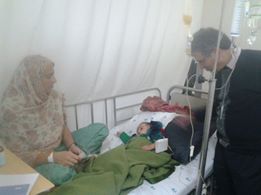
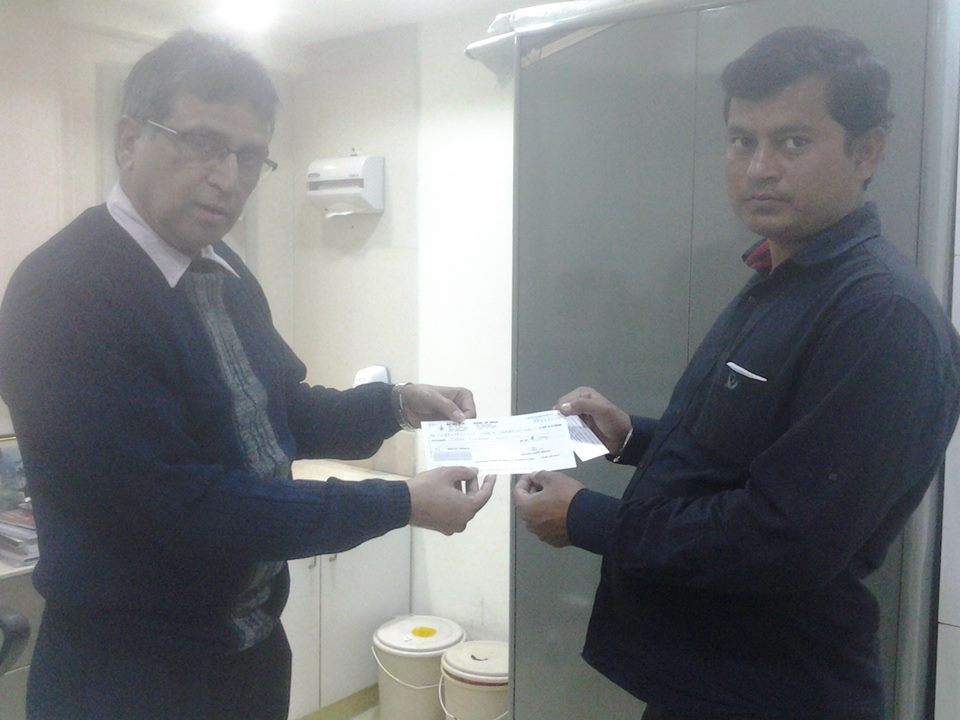
Few days back I visited this hospital to handover some cheques, to these gutsy Parents of unfortunate children, suffering from Cancer, as a small reprieve from our ‪#‎NGO ‪#‎SHRAVANCHARITYMISSION.

In the picture below you see an infant, about 3-4 months old having come all the way with her mother from a border district of Rajasthan for treatment of ‪#‎bloodcancer; how painful.

551456_732929150126824_5042714517670501672_nkkk

And each time when I go for this duty of mine, and as i enter the hospital i get a sense of hope; and each time when i come out i hear as if these kids are saying continue with your human efforts; as the world is nothing else but a unbroken human chain – many holding hands and some standing away; nevertheless humans.

ARTICLE: KILLING FOR FALSE HONOUR, BUT DYING FOR REAL LOVE

Islamabad and Delhi are located around seven hundred km apart and are divided by an explosive and turbulent international border, with ever increasing aggressive efforts to keep each side sanitized from the overall influence of the other. Yet there appears to be a commonality of sorts that refuses to die. The madness of honour killing. The ethnicity of large parts of Pakistan and that of north India was never too different before independence and even now per se. But post independence India opened up, and moved on- though not whole hog. But Pakistan preferred to remain where it was, rather took some steps backwards.

index rr jjj ppp

Yalda Hakim, Afghanistan born correspondent and presenter of BBC World News, highlights. How in Pakistan women who dare to pursue relationships of their own choice are in danger of losing their lives. She says in her recently published article in TOI- “Dying for Love”

‘In a country fighting to preserve patriarchal and tribal traditions, Pakistan’s women can face brutality- and even death- if they fall in love with the wrong person.

Arifa 25, dared to stand up to her family, running away with the man she fell in love with and secretly marrying him. The following day in a busy street in Karachi, Pakistan’s most populous city, her male family members surrounded the newlyweds and, at gunpoint, dragged Arifa away. After great difficulty her husband, Abdul Malik, managed to establish that she was alive and had been hidden somewhere. Fearing for his life, he has lived in hiding for three months. He says,

“In Pakistan, love is a big sin. Centuries have passed, the world has made so much progress- men have reached the heavens. But our men are still following age-old customs –which focus on denying women freedom.”

In May 2014, the case of the young pregnant woman Farzana Parveen shocked the world. She was stoned to death by her family for marrying the man she was in love with, rather than the man they had chosen for her. This happened outside Lahore high court, in front of the policemen and passersby.

In November, following worldwide media attention, Parveen’s father, brother, cousin and former fiancé were all found guilty of murder and given death sentence. But more often than not, those who commit these brutal acts against women are never charged, protected by tribal laws.

Last year alone, more than 1,000 women were murdered for so-called honour crimes. Some hard-line religious scholars believe that only through the killing of an offending family member-usually a woman-can honour be restored to the rest of the family and tribe. Few people in Pakistan nowadays are willing to challenge these tribal traditions and customs. In fact, according to a recent survey, an overwhelming majority of Pakistanis support the full implementation of Sharia law- Islam’s legal system.’

In 1979, General Zia-ul-Haq, Pakistan’s military dictator, introduced the so called Hudood Ordinance- a controversial set of laws that attempted to Islamise Pakistan. Among other things, it made adultery punishable by stoning and lashing. In 2006, the then President Pervez Musharraf tried to protect women, but the enforcement of his reforms has been limited and adultery remains a crime. Karachi’s central prison for women is where many of those accused of adultery end up.’

BUT IS NORTH INDIA ANY DIFFERENT THAN PAKISTAN IN TERMS OF HONOUR KILLINGS?

Yes only in terms of the scale which is less. While we can say what happens in Pakistan is barbaric, but then honour killings are often reported in the northern regions of India also, and mainly from the states of Punjab, Haryana, Rajasthan and Uttar Pradesh as a result of marrying without their family’s acceptance and sometimes also for marrying outside their caste.

And in contrast honour killings are a rarity in South India and the western states of Maharastra and Gujarat. In some other parts of India, notably West Bengal, honour killings completely ceased about a century ago, largely due to activism and influence of reformists such as Vivekananda, Ramakrishna, Vidyasagar and Raja Ram Mohan Roy. Wish they had also spread their activism in North India.

REPORTS OF SOME SPECIFIC HONOUR KILLINGS IN NORTH INDIA

The Indian state of Punjab has a large number of honour killings. According to the data compiled by the Punjab Police, 34 honour killings were reported in the state between 2008 and 2010: 10 in 2008, 20 in 2009 and four in 2010’

Haryana is also notorious for incidents of honour killing, mainly in the upper caste of the society, among Rajputs and Jaats; considered literate. And, so can we say it has nothing to do with literacy levels?

Bhagalpur in the eastern state of Bihar has also been notorious for honour killings. Recent cases include a 16-year-old girl, Imrana, from Bhojpur who was set on fire inside her house in a case of what the police called ‘moral vigilantism.’ The victim had screamed for help for about 20 minutes before neighbours arrived, only to find her smouldering body. She was admitted to a local hospital, where she later died from her injuries. In May 2008, Jayvirsingh Bhadodiya shot his daughter Vandana Bhadodiya and struck her on the head with an axe. In June some incidents were reported from Delhi.

In June 2012, a man chopped off his 20-year-old daughter’s head with a sword in Rajasthan after learning that she was dating men. According to police officer Omkar Singh, the accused told the court that his daughter Manju had relations with several men. He had asked her to mend her ways several times in the past. However, she did not pay heed. Out of pure rage, he chopped off her head with the sword.

A young couple who were planning to marry were brutally murdered in Garnauthi village, state of Haryana on 18 September 2013 because they were having a love affair. The woman, Nidhi, was beaten to death and the man, Dharmender, was dismembered alive. People in the village and neighbouring villages approved of the killings.

MEASURES AGAINST HONOUR KILLINGS

In 1990 the National Commission for Women set up a statutory body in order to address the issues of honor killings among some ethnic groups in North India. This body reviewed constitutional, legal, and other provisions as well as challenges women faced. The NCW’s activism has contributed significantly towards the reduction of honor killings in rural areas of North India. According to Pakistani activists Hina Jilani and Eman M. Ahmed, Indian women are considerably better protected against honor killings by Indian law and government than Pakistani women, and they have suggested that governments of countries affected by honor killings use Indian law as a model in order to prevent honor killings in their respective societies.

In a landmark judgement in March 2010, Karnal district court ordered the execution of five perpetrators of an honour killing in Kaithal, and imprisoning for life the khap (local caste-based council) chief who ordered the killings of Manoj Banwala (23) and Babli (19) a man and woman of the same clan who eloped and married in June 2007. Despite having been given police protection on court orders, they were kidnapped; their mutilated bodies were found a week later in an irrigation canal.

In June 2010, scrutinizing the increasing number of honor killings, the Supreme Court of India issued notices to the Central Government and six states including Uttar Pradesh, Punjab, Haryana and Rajasthan, to take preventive measures against honor killings.

Alarmed by the rise of honor killings, the Government planned to bring a bill in the Monsoon Session of Parliament July 2010 to provide for deterrent punishment for ‘honor’ killings.

In recent times, the Khap system has attracted criticism from groups, citing the stark prejudice that such groups allegedly hold against others. Women’s Organisation AIDWA has made allegations, in some cases where the Khaps are alleged to have initiated threats of murder and violence to couples who marry outside of the circle.

Supreme Court has declared these ‘Khap panchayats’ as illegal, which often decree or encourage honour killings or other institutionalised atrocities against boys and girls of different castes and religions who wish to get married or have married.

So honour killing is utterly illegal and has to be ruthlessly stamped out. There is no honour in these killings and atrocities. In fact, it is nothing else but barbaric and shameful. Brutal atrocities committed by feudal-minded persons deserve very harsh punishments. And only by acting against it can we stamp out this atrocious feudal mentality. The other thing that needs to be crushed along with it are the Kangaroo courts that are mushrooming all over.

But in all of this the most scathing has been the behavior of some political parties both in Pakistan and India who in the interest of votes have never taken a bulldozing approach either jointly or severally towards all such individuals and self styled institutions who promote honour killings.

*****

ARTICLE: #MUFFLERMAN- BEWARE #MUFFLER IS ONLY FOR THE WINTER SEASON

Arvind Kejriwal had quit as Chief Minister of Delhi, just after 49 turbulent days of taking charge. Putting the blame of his Government’s demise on Congress and BJP, whom he accused of colluding to thwart Aam Aadmi Party’s efforts to get Jan Lokpal Bill approved. Even if the intention was noble, it backfired on him. As, now many call him an escapist or even a Bhagora.

He announced his resignation, screaming victimization, without realizing Delhi is a city of doers and achievers. Who don’t give up so easily even if it happens to be corruption. Therefore, he was found wanting in the skill of ‘power-struggle’ and a complete non-starter in managing a coalition- considered so vital in politics. So one can say, the speed with which he rose was fast, but the direction was wrong, and as they say direction is more important than speed, so he came crashing down. This brings us to an important analysis about Kejriwal himself.

Whether Kejriwal is a man for all seasons or only for the ideal season? Popularly referred as ‘Mufflerman’ juxtaposed to a common man. But mufflers are only seasonal, perhaps he did not realize this; else, he would have preferred himself to be called as a ‘Kurtaman’ implying –man for all seasons, even before the typecast kurtas of Narendra Modi made waves nationally.

That apart, his ostentatious resignation now becomes his own nemesis. Owing to his lack of political acumen, for which the public of Delhi should forgive him as he is not an outright politician. He came and he conquered but couldn’t hold on to his success- perhaps ill at ease. Today, he crowds the streets of Delhi to seek pardon for his self forced resignation from the public. But, whom all, will he try and convince about his noble intentions and who all will even believe in him.

For he blundered even further, by jumping into the general elections. Thereby opening another front before closing the important one at hand-Delhi. Perhaps, he didn’t believe in, one in hand. And this gave him a very untidy look in the shelf of politicians. Or, was it the case of him not being able to handle success. Which could be termed as an operational deficiency, or a case of simple greed. Trying to amass Pan-India political power in an abrupt fashion, even when he was both on the right side of age and providence. And defying his party colleagues at all stages exhibits the dictatorial streak in him.

Voters may have a short memory, but a voter doesn’t. So Kejriwal now needs to repackage his old distillery with some new wine. And the muffler-man needs to quell certain anxieties of his voters, and not remain in the muffler forever. Rather come out of it. In the next ten days he should assure the people of Delhi on the following points:

Because, unless he clarifies  he may not win the election.

  1. Will he form a coalition government? And if he forms, and becomes the Chief Minister, will he be tempted to resign again if his Party’s agenda is not supported by the coalition?
  2. Will he form a coalition government only if he becomes the CM or will he support a party in forming the government; and whether it will be blanket support or issue based.
  3. If he doesn’t get a majority what will his role be as an opposition party- Staging dharnas or pursuing issues of public interest, and which are those issues?
  4. If he sits in the opposition what are the key deliverables he would like to extract from the ruling party.

*****

Article: ARE RURAL SCHOOLS PLAYING WITH THE FUTURE OF OUR CHILDREN AND INDIA?

Copyright@shravancharitymission
r2rr3

NGO Pratham has done well in bringing out an outstanding report called the Annual Status of Education Report (ASER 2014). ASER is an annual household survey to assess children’s schooling status and basic learning levels in Reading and Arithmetic. It is the tenth such survey facilitated by Pratham. This is the largest and most comprehensive annual household survey of children in rural India. It surveyed 16,497 villages located in 577 districts across India covering 341,070 households and 569,229 children.

POSITIVES AT SCHOOL LEVEL:

India, would love to hear, that enrolments in schools, are at a level of 96% and that too for the 6th year in a row. So, most of our kids are now at least, sauntering down the school classrooms. And, to toast the occasion there are regular mid-day meals, to take care of their nourishment and over 80% of our schools have improved infrastructure. And the buck doesn’t stop here, as 75% of rural schools now have provision for drinking water, while 65% even have toilets, which is significantly higher than about half a decade ago.

NON-ACHIEVEMENTS AT SCHOOL LEVEL:

So, while we have made steady progress on the infrastructure side of our schools, what still remains deficient is on the teaching side – how well are these schools teaching their pupils? In depth details are available online. But here are some disturbing points:

  • Almost 50% of the kids in class 5 cannot read simple sentences that are taught in class 2.
  • 50% of the kids in class 5 cannot do basic two digit subtraction which is taught in class 2.
  • And half the kids in class 8 cannot do even simple division that is taught in class 4

So then what is going on in these schools? As half of our school children after having spent more than half a decade in school cannot read basic sentences and do even simple arithmetic; when they could have learnt this in 2-3 years of urban education or in any private school. So do these teachers employed with these schools have any accountability?

ruralrr4

SO THEN, WHERE ARE HEADING TO?

Are these schools responsible for creating a talent pool in our country or are we just to rejoice over enrollment numbers and mid-day meals and forget the core issue of educating our children. In the literacy chain of India this could be the weakest link. For what is literacy anyway? Is it just being able to write your name or learn the bare minimum skill of being able to read and solve those basic arithmetical problems. A skill that you will require lifelong. Or is it something much more than that.

Basic skill of reading and arithmetic is vital for survival in today’s world; as life in any form will require these skills. And if the basics are not strong. No matter how much of education you add in later years will only go for a waste. As the data explains adding number of years of education to such laggards will be of no use. And, also, such laggards though counted in enrollment will never get educated.

And, mind you the percentage of such students is very high, and at a staggering fifty percent. India could have lived with a miniscule percentage of such students but because it is half our students, it depicts an applecart failure in our education system.

Article: SHAMMING IN DELHI METRO- JUST FOR A SEAT

Copyright@shravancharitymission

123

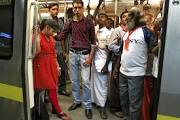
Some men are crooks, but most women are holy angels. But nothing is sacrosanct as trends could be changing, especially in Delhi Metro, and that too just for a seat. For on a day when I was travelling from Rajiv-Chowk to Huda-City-Centre, Gurgaon in a crowded metro, I witnessed something quite demeaning.

I had just boarded the over-crowded metro from Rajiv Chowk when a lady appearing in her mid-thirties, more from the rural background came and stood next to the vestibule. Not very far from where I was standing, but very close to the two-seater generally reserved for senior citizens or the differently-abled, near the vestibule. She suddenly squatted on the floor, when people thought she was perhaps unwell. Mind you,Delhi metro otherwise doesn’t allow you to squat on the floor. And after a short while she started nudging the old man on the senior citizens seat, to vacate the seat for her, as she was not feeling well.

The frail looking senior citizen looked at her, somewhat dismayed. And in all sincerity and to help the young lady; he offered his seat by getting up. The lady without losing any time and even without a word of thanks or a grin or even a twitch on her face slipped into the seat by just sliding up like a snake from a squatting position as if she was not able to walk. I surely found this weird. All this happened just around Central Secretariat station. She then just closed her eyes to dose off. And this gave me a feeling as if I was watching some kind of a skit. The old man then moved to where she was squatting and rested himself against the side of the metro while standing.

In the jam-packed morning metro no one had the eagerness to notice anything like this as everyone was too busy thinking about the day ahead: thus planning for it; barring the old man who perhaps was troubled, and me who just by chance happened to witness the proceedings happening in very close proximity.

By now the metro had come out of the underground, and had moved ahead, towards Qutub Minar station, as if to welcome the morning sun in the freezing winters of Delhi. Just then I churned myself a bit, more to comfort myself, as I was brutally sandwiched between passengers, is when I had an eye contact with the old man who seemed quite uncomfortable. But then I thought, being uncomfortable is definitely a lower priority than being unwell. And the woman was still resting, with her eyes closed.

On seeing her, I too decided to shut my eyes for a couple of minutes while standing. Thinking it will give some comfort and will make me feel fresh. Just then the metro announced ‘Chattarpur station’ and started slowing down. With the announcement the lady opened her eyes, she was now wiping her face with her hanky trying to look fresh and even applied some perfume out of a miniature. She then gathered her shawl and coolly started inching towards the exit door by nudging men to make way for her. And by then the metro had stopped at Chhatarpur station. Where, she got off and started running ahead of men, to catch the lift. No one could have said she was unwell. I glanced at the old man, only to realise he was where he was. I then looked at the seat vacated by the lady. It was occupied, but this time, it was an old lady–thankfully a senior citizen.

And, all is not fair in love and war. For, once when I was returning from Huda City centre, Gurgaon to Rajiv Chowk. I was again standing near the vestibule, where, the two senior citizens seat were occupied by two girls, perhaps college going. One out of them appeared to be all by herself and apparently from North-East. The other appeared to be a local with her boy friend; and while she was seated, her boy friend was standing right in front of her, in quite a lovey-dovey mood early in the evening; surely not gelling well with the ambience around.

At MG Road, an elderly looking senior citizen couple got in and walked towards these girls–rightfully for the seat. While the girl from North-East coolly got up and gave the seat to the elderly lady; the boy friend of the other girl told the elderly gentleman ‘she is not well so she won’t get up.’ The poor old man had little choice but to keep standing.

But the boy friend’s lie was more than evident when every now and then, and under some pretext or the other he was groping his girlfriend. Trying to hold her around the shoulders, fondling her lips or even caressing her hair, and the two were making the ambience look sick.

After about twenty minutes they both got off at INA market and disappeared holding hand in hand. That clearly showed she wasn’t sick. The empty seat this time was immediately occupied by another young lady but without a boyfriend; even before the senior lady who was already occupying the seat could pull her senior partner to occupy the vacated seat. So he remained standing again.

And this is what came to my mind. Some men are crooks, but are most ladies angels? Or is it that some men make some ladies crook? Or ladies now want to compete with men in crookedness? That apart, but what is more saddening is, just to grab a seat and that too for a while one can fraudulently declare herself sick and go the extent of snatching the right of a senior citizen. So are most women Angels? Can I say no?

Article: ‘MODI’S WIN IS THE VICTORY OF INDIANESS’- JANARDHAN DWIVEDI

Economic times, reports ’10 Janpath Insider Janardhan Dwivedi Scripts His Own Political Epitaph.’

But while doing so, at his own career risk. He has reminded Congress Party of their follies in an indirect manner. For if the party withers, what will office bearers do anyway?

A devout Congress worker with a mind of his own mind; nerves to convey what is right for the Party, to the otherwise deaf High Command. This is what Janardhan Dwivedi is all about. Even on earlier instances he has tried to communicate issues to the Congress President. But that was not music to her ears. And such is his love for the party.

Congress Party is largely seen as a pro Muslim party. Not so much for the love of Muslims but for their votes. But Muslims have now realized this fact. And, I say this with a lot of conviction because not much has changed in the lives of Muslims even when Congress was in power for the last 60 years or so. Implying either their intentions were not genuine or they were incompetent, because of which they could not bring about the Muslim renaissance.

Politics is all about perception and the image that you create around you. For, I, as a majority community voter saw Congress President Sonia Gandhi with Ahmed Patel as her political secretary, Dr Manmohan Singh as the Prime Minister and Anthony as the unofficial number two in the cabinet. All from minority communities. Thus, she vented a perception as if she was uncomfortable with the majority community; even when I could be wrong in this assessment of mine.

And Congress could never counter vehemently the disparaging lilt and tilt towards the word ‘Hindutva.’ In fact any chorus on ‘Hindutva’ was demeaning in UPA regime, and anything about minority was an esoteric wisdom under secularism. Many Congress leaders, to please the high command openly spoke in pro-minority and anti Hindu tones. Some even went to the extent of referring the world’s biggest terrorist ‘Osama’ as ‘Osamaji’ without any heartfelt reprimand by the Party supremos, and I guess such gestures alienated the Indian majority from Congress Party.

What Narendra Modi did was to get the alien majority of India, back into the mainstream. And now Congress is  left with only a few. Janardhan Dwivedi has only deconstructed this point for better understanding of the Congress Party.

SNIPPET: EVEN SIMPLE GARDEN TOOLS FOR WOMEN ARE NOT THAT SIMPLE TO DESIGN: REQUIRES INTENSIVE RESEARCH

I never thought simple garden tools require intricate research for gender specificity, till one day I went through the website of Green Heron Tools in the US wherein Adams and Brensinger promoters of this company feel. Systematic research to design garden tools for women is a must. ‘And, it’s about time farm and garden tools broke out of ‘one size fits all’ model where these two women farmers of the US are bridging the gender gap by designing tools specifically for women.

For, even if we all are equal, we are not equally sized or proportioned, because of the striking differences between women and men’s bodies. The tools that work efficiently in a man’s hands may not be that efficient in a women’s hand and so it could even be a health hazard. For example,

According to Green Heron Tools. A women’s body tends to have a lot less upper body strength, less of lower body strength, a lower center of gravity, proportionally shorter limbs, smaller hands and less grip strength than men’s bodies, which means that a ‘one size fits all’ shovel isn’t nearly as efficient or easy to use for a woman.

DESIGN AND MANUFACTURE OF HERSHOVEL

But thanks to the work of these two women farmers behind Green Heron Tools. Women now have another choice when it comes to farm and garden tools, in the form of the HERShovel, which was scientifically and specifically designed for women’s bodies. The company’s tools and other equipment are not just ergonomic, but are hergonomic, and designed to be “easiest, safest, most comfortable and most effective for women.”

After years of farming and talking with other women farmers, and sharing their frustrations about the tools they used. Ann Adams and Liz Brensinger saw an opportunity to bridge the gender tool gap by developing a line of tools and equipment that would work better for women, because they were designed with women’s bodies in mind. The two applied for, and received, a series of grants (Small Business Innovation Research grants) through the U.S. Department of Agriculture to develop their ideas, and as part of the process, they arranged to videotape women farmers as they shoveled, which revealed that women tended to use tools very differently than men did. Everything, from the angle that women put the shovel into the ground to the amount of energy expended while shoveling was analyzed, and the result of the research was the development of the HERShovel, which weighed less, was angled differently, had a large D-shaped handle, and required less energy to use. According to an interview at Modern Farmer, this new tool was the first ever shovel to be ergonomically designed for women.

For two years, the partners and their researchers pulled shovels off the shelf at places like Lowe’s and an online survey and a female focus group told Adams and Brensinger what they didn’t like about the tools they used as it was too heavy, too long and awkward. Thereafter working with Agricultural Engineers and a specialist in ergonomics at Pennsylvania State University, they designed and tested various prototypes. The HERS shovel/spade hybrid that resulted features an angled blade because “women don’t use a shovel the way men do,” says Adams. “Men power down straight. Most women can’t so that. Women put the shovel blade into the soil at an angle and take small bites.”

Once they had a prototype, it was time to test the theory that a properly designed shovel is less tiring to use. Subjects donned oxygen sensors to measure the energy expended using the HERS shovel prototype versus others, and started digging. The proof was in: HERS required less effort.

HERS weighs less than 4 ½ pounds and comes in three shaft lengths. Its foot is larger than the normal. The hollow, D shaped handle is tilted for leverage and textured to reduce slippage. Every part of the shovel is sourced and made in the US. If HERS is a success, the pair will develop more long-handled tools.

Adams and Brensinger didn’t start Green Heron Tools to get rich, but to fulfill a vocation: to make women’s lives easier and better, and to bring more women back to the land. “It’s a public health issue.’ Adam says. “If women can garden without pain or risk of injury, they can garden longer. I want to be able to garden for the rest of my life,’ she says. Millions of women hope they will be able to, as well.

One hopes in India we too will develop such implements for better women’s productivity.

*****


ARTICLE: WHETHER #KIRAN OR #KEJRI- BOTH ARE ‘PERSONS OF SUBSTANCE’

45963325

This prestigious contest, for the coveted seat of Delhi sounds the bugle of a changing India. For Indian politics in the last 24 hours has moved an eon after Kiran was declared as the Chief Ministerial candidate for BJP. What India is now witnessing is a political contest of an ideal nature and that too between the two of India’s most upright and daring bureaucrats, and Ramon Magsaysay Awardees. And, it will not surprise me if both behind the scene would sigh a relief for having succeeded in bringing in, persons of substance in their own form into Indian Politics, albeit from different political parties. It doesn’t matter who wins or who loses as they both win in ideology and with them Anna Hazare, along with the people of India. As the citizens of India always longed for persons of substance in the Indian polity. For politicians like Kiran and Kejri alone in the long run can die-cast the party’s mindset for a triumphant India.

Let us for a moment forget Kiran and Kejri belong to rival parties. But their earlier journeys have been through the same UPSC campus, followed by the same corrupt corridors of power that they detested and found solace in the platform of India Against Corruption. Where, they were mentored by social activist #Anna Hazare; and so their commonality of cause and conscience may not diverge or dilute that soon. That apart, it should even be a proud moment for Anna Hazare. As two of his most ardent supporters and persons of substance and tall Indians are locked in a Herculean battle to set right the capital of India.

While Kiran a 1972 IPS officer and a Ramon Magsaysay awardee, always had that rare streak of dare for the right cause. Valiantly exhibited during her active service and post service life. Kejriwal, on the other hand is a former IRS officer and an IITian, again a Ramon Magsaysay awadee, for Emergent Leadership recognizing his involvement in a grassroots movement (Parivartan) using Right-to-Information legislation, against corruption. Truly a man of conviction.

Indian voters always cribbed about decent gentry not entering the political fray and cursed the Goonda Raj plaguing the power corridors of India. But with the entry of Kiran and Kejri in the political mainstream the bench strength of ethical politics will only move north and might just save India from ethical holocaust. As under any circumstances these two will only up the ante for good governance and anti-corruption. However their competence at the CM chair is something we will have to wait and watch.

And out of the ‘Acchey Din’ that PrimeMinister Narendra Modi promised India. This is one of the most significant ones that goes unnoticed. For, he has brought in Kiran to challenge Kejri. To only raise the standard of governance.

Between Kiran or Kejri who will win I don’t know, but Prime Minister Narendra Modi with his out-of-the-box thinking has made India win. And for the traditional politicians: start becoming a ‘person of substance’ if you don’t want to be overtaken.

ARTICLE: THE FOOD-TASTE DIVIDE OF INDIA- SOMEONE’S DELICACY IS SOMEONE’S NIGHTMARE

Copyright@shravancharitymission

12

    Like language and religion, taste of food also divides India. It may not sound absurd, if I chime in on a lighter note that meals divide, desserts synergize and only spirits unite. Because, from Kashmir to Kanyakumari, North-East to Rajasthan it is the same old story, as Indian taste buds nicely know, how to differ since yore. In fact, the division starts from the time of cooking. Indian meals are cooked in various types of aromatic cooking oils and treated to some of the most pungent and tangy herbs and masalas, the combination of which may change by the number of colonies you may have in your city. So while there may be some affinity for the food-basket by locality, area, region or even a race, in the Indian kitchen. There is nothing too patriotic about the great Indian cuisine on a PAN India basis, as it is too vast to stand as one and united- and this does create a kind of dissonance in the Indian society. Yet, some local Indian dishes, processed food and street food have gone worldwide, and in return some foreign cuisine, fast-food and fusion food have adopted India.

HISTORICAL PERSPECTIVE

3

4Historically speaking. Indian cuisine has a 5,000-year old history, of various groups and cultures in the subcontinent. Leading to diversity of flavours and regional cuisines found in modern day India. Also, given the range of diversity in soil type, climate and occupations, these cuisines vary significantly from each other and use locally available spices, herbs, vegetables and fruits. Indian food-taste is also heavily influenced by seasonality, religious and cultural choices and traditions.

INDIAN FOOD PYRAMID: LOCAL, REGIONAL AND THE NATIONAL PLATTER

    Cuisines seldom have precise geographical divides. Instead they mostly have local and regional lovers for life that provides taste security within the customary food security. For, when a north Indian lands in the heart of South India he might get food blues, as he is insured by the latter but not by the former—taste security. For a delicacy of one, might be the nightmare of another.

    Indian food pyramid largely rests on water, cereals, vegetables, fruits, sea-food, milk, curd, meat and poultry. Mother earth offers raw ingredients, after which ethnicity takes over to process to individual tastes and delights.


567

SOMEONE’S DELICACY COULD BE SOMEONE’S NIGHTMARE

The popular southern delicacy combos of Idli-Vada-Dosa-Uttahapam dipped in tangy Rasam or Sambhar served in Banana leaf with delicious coconut chutney might not gel well with a person from J&K, as all are not, the likes of foodies. The much hyped Butter-ChickenNaan, Chawal-Chole and Rajma-Chawal combo of north might leave a Tamilian half stuffed, and the sweet Gujarati Thali might find a Bihari running for his salt. Or a Kerala mutton curry cooked in coconut oil might even prompt a Muslim from U.P to give up non-veg altogether. And, last but not the least the taste of a raw fish from Andamans, a delicacy, might leave a fish-veteran from Bengal starved.

    Given that, there exists a difference between eating to ones delight than gobble and swallow just to survive. But the art of survival does teach you to create your own short-menu out of the spread.

HOW INDIA UNITES WITH A DIVERSE KITCHEN

    Mobility teaches the art of survival, when, one is forced to pick and choose a dish closest to the palate out of the unknown assortment in an alien kitchen. This has led to broad banding of taste through certain likeable dishes. While the base of Indian palate has remained within the confines of Dal-Chawal-Roti-Paratha-Sabzi-Saag-Kadi-Rajma-Chole-Meat-Chicken-Milk-Curd-Yogurt-Street food and Snacks. The variants of these have only created the diversity in the Indian kitchens.

    But in this regard a lot of hand holding has been done to broad base the food-taste pyramid of India. Mainly to homogenise the taste buds and to that extent some generic nomenclatures have become almost national food icons. Just to name a few: Tandoori chicken, Butter-chicken, Biryani, Keema, Kebab, Rogan-Josh, Korma, Chole-bature, Matar-Paneer, Poori, Papad, Dhokla, Bisi-bele-bath, Kachori, Samosa,Vada-paav, Batata-vada, the famous Indian Chaat, Pakora, Pooha, Daal-Baati, Gol Gappe and Pani-Puri, and from the Punjabi cuisine Paratha, stuffed Paratha especially in breakfast, Roti-made out of corn flour and Sarson-Da-Saag and Dal-Makhani and from the North-East Fried Rice, Noodles, Chilly chicken, Manchurian, Thupka-noodle soup and momos that have travelled places and become the hallmark and symbol of Indianness. And, not to forget the vast spread of Indian sweets that has always been a great leveler in terms Indian synergy. The South can of course boast of Dosa, Idli, Vada, Sambhar, Rasam and Uthapam.

BUT WHAT UNITES THE FOOD-TASTE BUDS OF CHILDREN AND THE YOUTH OF INDIA?

    Beyond the dividing spread of the Indian cuisine lies the unifying umbrella of some of the big food banners of India and abroad that have served the Indian populace for a long period of time now. To be more upright some are even serving the third generation now. Perhaps, they stole the Indian taste buds when they were young- ‘catch them- young’ as they phrased.

    Today, Domino’s Pizza India makes and sells four lakh pizzas a day or more than 12 crore pizzas a year and that speaks of the new food craze. Foreign beverages in India are serving the third generation with unified formulation. Indian Chinese largely a fusion cuisine is available across India. Burgers are available at any nook and corner and so are Maggi noodles. Tailor made Momos are even retailed out of handcarts in Delhi. Halidram’s Bhujia Peanuts and Namkeen are available in any market as an evening snack. Potato chips and wafers of MCcain or any other, could be any child’s preference. And why forget the tasty chocolates, yoghurt and morning oats and cornflakes that children prefer over any other Indian breakfast. Not to forget the all-tasty basket of biscuits from Britannia or any other brand with hot tea. Of course one can’t forget Amul and Mother dairy for their Yogurt and milk as an add-on to any Indian breakfast; for there is no North, South, East and West divide about these branded food products as they come with one taste or max a tweaked variant.

    And how quietly and neatly they have sneaked into the Indian kitchen space. Easy to make, easy to serve and easy to preserve.

*****

By Kamlesh Tripathi

*

https://kamleshsujata.wordpress.com

*

Share it if you like it

*

Shravan Charity Mission is an NGO that works for poor children suffering from life threatening diseases especially cancer. Our posts are meant for our readers that includes both children and adults and it has a huge variety in terms of content. We also accept donations for our mission. Should you wish to donate for the cause. The bank details are given below:

NAME OF ACCOUNT: SHRAVAN CHARITY MISSION

Account no: 680510110004635 (BANK OF INDIA)

IFSC code: BKID0006805

*

Our publications

GLOOM BEHIND THE SMILE

(The book is about a young cancer patient. Now archived in 7 prestigious libraries of the US, including, Harvard University and Library of Congress. It can also be accessed in MIT through Worldcat.org. Besides, it is also available for reading in Libraries and archives of Canada and Cancer Aid and Research Foundation Mumbai)  

ONE TO TANGO … RIA’S ODYSSEY

(Is a book on ‘singlehood’ about a Delhi girl now archived in Connemara Library, Chennai and Delhi Public Library, GOI, Ministry of Culture, Delhi)

AADAB LUCKNOW … FOND MEMORIES

(Is a fiction written around the great city of Nawabs—Lucknow. It describes Lucknow in great detail and also talks about its Hindu-Muslim amity. That happens to be its undying characteristic. The book was launched in Lucknow International Literary Festival of 2014)

REFRACTIONS … FROM THE PRISM OF GOD

(Co-published by Cankids–Kidscan, a pan India NGO and Shravan Charity Mission, that works for Child cancer in India. The book is endorsed by Ms Preetha Reddy, MD Apollo Hospitals Group. It was launched in Lucknow International Literary Festival 2016)

TYPICAL TALE OF AN INDIAN SALESMAN

(Is a story of an Indian salesman who is, humbly qualified. Yet he fights his ways through unceasing uncertainties to reach the top. A good read not only for salesmen. The book was launched on 10th February, 2018 in Gorakhpur Lit-Fest. Now available in Amazon, Flipkart and Onlinegatha

(ALL THE ABOVE TITLES ARE AVAILABLE FOR SALE IN AMAZON, FLIPKART AND OTHER ONLINE STORES OR YOU COULD EVEN WRITE TO US FOR A COPY)

*****