Tag Archives: russia

POEM: THE FAILING WORLD ORDER

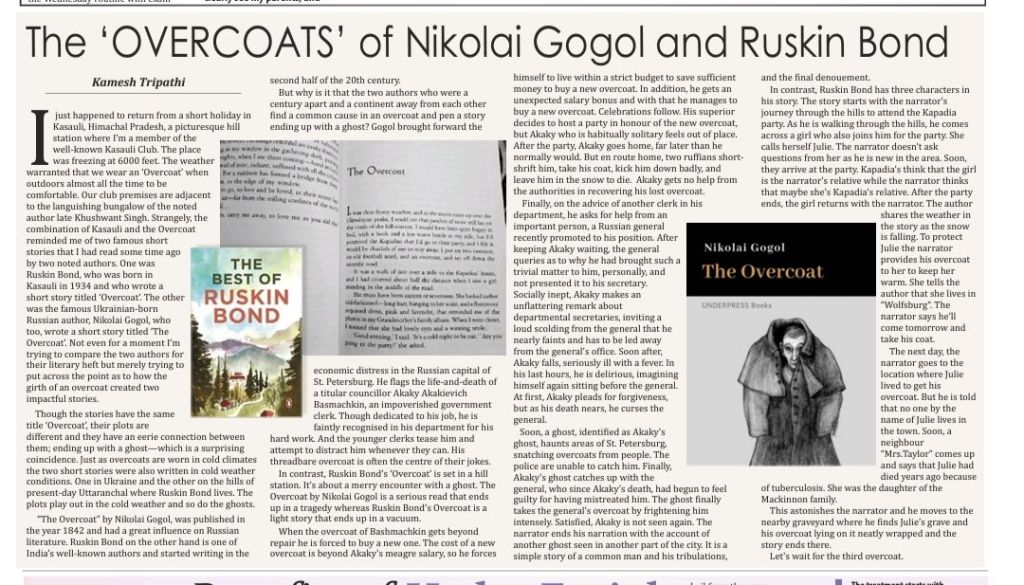
The ‘OVERCOATS’ of Nikolai Gogol and Ruskin Bond in print form

Shillong Times 10.3.24

THE ‘OVERCOATS’ OF NIKOLAI GOGOL AND RUSKIN BOND

ANNUS MIRABILUS-2024

BOOK REVIEW: THE EDGE OF THE PLAIN: HOW BORDERS MAKE AND BREAK OUR WORLD … by James Crawford

Copyright@shravancharitymission
    In today’s world, there are innumerable borders than ever before in the history of mankind. To be true in life it’s all about the borders we make and how they make us. Those human demarcations those human barriers on the ground are a source of extreme misery.

    China hustles India with infrastructure build-ups, salami slicing and recurrent confrontations on the line of actual control. So it becomes a tense and ghastly activity. Another example is that of Ukraine which is being bombarded at its borders by Russia. These arbitrary lines that cleave the world have enormous power over our lives. The book combines history and reportage to explore this intricate global network of lines and their crossings.

    Borders come up in areas where human beings live and move around. This barrier then limits and directs our activities. The landscape may be the same, from one blade of grass to the next, but the lines, fences, and checkpoints make it different. And that makes all the difference to human destinies. The book traces back the idea that Amitav Ghosh called the “enchantment of the lines” while writing about the Indian Partition.

    Borders are the volatile flashpoints for political conflagration – but are they also the symptom or the cause of trouble one needs to examine?

    Nowhere are these questions about boundaries as knotty as in Israel/Palestine. The book tracks the West Bank border where a wall has come up as a fortified line of separation. The Israeli state draws a line to cleave the territory, leaving people in an illegal limbo, and then follows up with detentions, land seizures and house demolitions.

    The border wall has been disputed, segment by segment in the courts, but it keeps morphing and surviving. Israel’s obsession and surfeit of borders have made a mockery of them, bringing home the point that the only real borders are the ones we come to expect, orates the book.

    The US was born out of restless borders, declaring its independence from British colonisers by refusing to be contained within its boundaries, as pointed out by the Mason-Dixon Line. The settlers’ “manifest destiny” was to claim all of North America, violently displacing Native Americans and warring with Mexico. Pushing the frontier remains essential to America’s idea of itself. And yet, it is also taken over by the ‘hypnosis of the map’. The book traces the dangerous border between the US and Mexico, where thousands of migrants have died to date trying to cross it.

    The book also takes you to sites such as Melilla in Spain and Lampedusa an island near Italy, from where desperate migrants and refugees try to make it to Europe. Masses of people scale fences and razor wire and brave military police, knowing some of them will be picked up, yet gambling and getting through. The darkness and uncertainty of these places make them a fertile ground for far-right parties and movements. Throughout history, wherever physical barriers are erected, they provide clashes between people trying to cross over. In this book, James Crawford argues that our enduring obsession with borders has brought us to a crisis point: We are now entering the endgame of a process that began thousands of years ago when we first started dividing the earth.

    The book explores the notion of borders not just as physical walls, but also as other kinds of fortification and defence. The Great Firewall of China is a national barrier in cyberspace. It filters content unwanted by the authorities and nurtures China’s own internet companies. It also explores the ‘cordon sanitaire’ that arose to defend against pandemics.

    Meanwhile, climate change is shifting landscapes and changing borders too. The Alpine watershed between Italy and Austria is literally melting. In the Sahara, the Great Green Wall is an experiment in tree planting, an attempt to stave off the desertification off the coast. It’s a wall that doesn’t divide people but unites them under a common goal.

    The book is wide-ranging. Its basic message is about how humans define borders, and then they define us.

    Beginning with the earliest known marker which denoted the end of one land and the beginning of the next, the author follows the story of borders into our fragile and uncertain future – towards the virtual frontiers of the internet, and the shifting geography of a world beset by climate change.

     In the process, the author travels to many borders old and new. From a melting border high in the glacial landscapes of the Austrian-Italian Alps to the only place on land where Europe and Africa meet; from the artist Banksy’s ‘Walled Off Hotel’ in the conflict-torn West Bank to the Sonoran Desert and the fault lines of the US/Mexico border. Combining history, travel and reportage, The Edge of the Plain explores how borders have grown and evolved to control our landscapes, memories, identities and destinies. As nationalism, climate change, globalisation, technology and mass migration all collide with ever-hardening borders, something has to break. Can we let go of the lines that separate us? Or are we fated to repeat the mistakes of the past, as our angry, warming and segregated planet lurches towards catastrophe?

***

By Kamlesh Tripathi

*

https://kamleshsujata.wordpress.com

*

Share it please

*

Shravan Charity Mission is an NGO that works for poor children suffering from life threatening diseases especially cancer. Our posts are meant for our readers that includes both children and adults and it has a huge variety in terms of content. We also accept donations for our mission. Should you wish to donate for the cause. The bank details are given below:

NAME OF ACCOUNT: SHRAVAN CHARITY MISSION

Account no: 680510110004635 (BANK OF INDIA)

IFSC code: BKID0006805

*

Our Publications

GLOOM BEHIND THE SMILE

(The book is about a young cancer patient. Now archived in 8 prestigious libraries of the US that includes Harvard College Library; Harvard University Library; Library of Congress; University of Washington, Seattle; University of Minnesota, Minneapolis; Yale University, New Haven; University of Chicago; University of North Carolina, at Chapel Hill University Libraries. It can also be accessed in MIT through Worldcat.org. Besides, it is also available for reading in libraries and archives of Canada, Cancer Aid and Research Foundation Mumbai; Jaipuria Institute of Management, Noida; India. Shoolini University, Yogananda Knowledge Center, Himachal Pradesh and Azim Premzi University, Bangalore).  

ONE TO TANGO … RIA’S ODYSSEY

(Is a book on ‘singlehood’ about a Delhi girl now archived in Connemara Library, Chennai and Delhi Public Library, GOI, Ministry of Culture, Delhi; Available for reading in Indian National Bibliography, March 2016, in the literature section, in Central Reference Library, Ministry of Culture, India, Belvedere, Kolkata-700022)

AADAB LUCKNOW … FOND MEMORIES

(Is a fiction written around the great city of Nawabs—Lucknow. It describes Lucknow in great detail and also talks about its Hindu-Muslim amity. That happens to be the undying characteristics of Lucknow. The book was launched in Lucknow International Literary Festival of 2014. It is included for reading in Askews and Holts Library Services, Lancashire, U.K; Herrick District Library, Holland and Charlotte-Mecklenburg Library, Mecklenburg County in North Carolina, USA; Black Gold Cooperative Library Administration, Arroyo Grande, California).

REFRACTIONS … FROM THE PRISM OF GOD

(Co-published by Cankids–Kidscan, a pan India NGO and Shravan Charity Mission, that works for Child cancer in India. The book is endorsed by Ms Preetha Reddy, MD Apollo Hospitals Group. It was launched in Lucknow International Literary Festival 2016)

TYPICAL TALE OF AN INDIAN SALESMAN

(Is a story of an Indian salesman who is, humbly qualified. Yet he fights his way through unceasing uncertainties to reach the top. A good read not only for salesmen. The book was launched on 10th February 2018 in Gorakhpur Lit-Fest. Now available on Amazon, Flipkart and Onlinegatha)

RHYTHM … in poems

(Published in January 2019. The book contains 50 poems. The poems describe our day-to-day life. The book is available on Amazon, Flipkart and Onlinegatha)

MIRAGE

(Published in February 2020. The book is a collection of eight short stories available in Amazon, Flipkart and Notion Press)

AWADH ASSAM AND DALAI LAMA … The Kalachakra

(The story of the man who received His Holiness The Dalai Lama and his retinue in 1959 as a GOI representative when he fled Tibet in 1959. The book was launched on 21st November 2022 by His Holiness The Dalai Lama at Dharmshala. The titled is archived in the library of the Department of Information and International Relations (DIIR) Government of Tibet, Tibet Policy Institute (TPI) and the personal library of His Holiness. The title is also archived in The Ohio Digital Library, USA).

BHAVANS JOURNAL

Short stories, Book reviews and Articles published in Bhavan’s Journal: 1. Reality and Perception, 15.10.19; 2. Sending the Wrong Message, 31.5.20; 3. Eagle versus Scholars June, 15 & 20 2020; 4. Indica, 15.8.20; 5. The Story of King Chitraketu, August 31 2020; 6. Breaking Through the Chakravyuh, September 30 2020. 7. The Questioning Spouse, October 31, 2020; 8. Happy Days, November 15, 2020; 9. The Karma Cycle of Paddy and Wheat, December 15, 2020; 10. Power Vs Influence, January 31, 2021; 11. Three Refugees, March 15, 2021; 12. Rise and Fall of Ajatashatru, March 31, 2021; 13. Reformed Ruler, May 15, 2021; 14. A Lasting Name, May 31, 2021; 15. Are Animals Better Teachers?, June 16, 2021; 16. Book Review: The Gram Swaraj, 1.7.21; 17. Right Age for Achievements, 15.7.21; 18. Big Things Have Small Beginnings, 15.8.21; 19. Where is Gangaridai?, 15.9.21; 20. Confront the Donkey Within You 30.9.21; 21. Know Your Strengths 15.10.21; 22. Poverty 15.11.21; 23. Top View 30.11.21; 24. The Bansuriwala 15.1.22; 25. Sale of Alaska 15.2.22; 26. The Dimasa Kingdom 28.2.22; 27. Buried Treasure 15.4.22; 28. The Kingdom of Pragjyotisha 30.4.22; 29. Who is more useful? 15.5.22; 30. The White Swan from Lake Mansarovar 30.6.22; 31. Bhool Bhulayya 15.9.22; 32. Good Karma 30.9.22; 33. Good name vs Bad Name 15.10.22; 34. Uttarapath—The Grand Trunk Road 1.12.22; 35. When Gods Get Angry 1.1.23; 36. Holinshed’s Chronicles 15.1.23; 37. Theogony 15.2.23

SUNDAY SHILLONG TIMES

ARTICLES & POEMS: 1. POEM: HAPPY NEW YEAR 8.1.23; 2. POEM: SPRING 12.3.23; 3. POEM: RIGHT AND WRONG 20.3.23, 4. THE GUSH OF EMOTION—WRITING, 26.3.23;

BANDRA TIMES, MUMBAI

ARTICLES & POEMS: 1. POEM SPRING, 1.4.23;

(ALL THE ABOVE BOOK TITLES ARE AVAILABLE FOR SALE ON AMAZON, FLIPKART AND OTHER ONLINE STORES OR YOU COULD EVEN WRITE TO US FOR A COPY)

*****
BOOK CORNER: “CHIP WAR: The fight for the World’s Most Critical Technology” by Chris Miller.

Copyright@shravancharitymission

    Today’s title for review is “CHIP WAR: The fight for the World’s Most Critical Technology” by Chris Miller. The book is vivaciously convincing. It’s about semiconductors and the coming US-China confrontation. Just like the semiconductor chips, Miller has packed a million history and information in this extraordinary book. The title is a remarkable, eye-popping work, a unique combination of economic and technological and strategic analysis … says PAUL KENNEDY, the bestselling author of “The Rise and Fall of the Great Powers.”

    As India takes baby steps into chip manufacturing, the history of this technology turns out to be a useful guide. A chip which is also called a semiconductor or an integrated circuit is a piece of silicon with tiny transistors carved into it that switch the 1s and the 0s. It is the material on which the entire digital world rests. It is what gives Silicon Valley its fancy name, and it is fuelling the biggest US-China confrontation.

    The book is about the evolution of the semiconductor business, and its role in the global economy and international politics. In the 1960s, Fairchild Semiconductor (and later Intel) co-founder Gordon Moore famously predicted that computing power on chips would grow exponentially, doubling every two years. Moore’s law has exceeded all expectations. Sixty years ago, a cutting-edge chip had four transistors. It has about 11.8 billion now. Each 3D transistor is smaller than a coronavirus.

    Chips are the core of digital computing, which also makes them essential to the modern world, undergirding aeroplanes, weapons, appliances, drones and toys. The next generation of networking technology and AI (Artificial Intelligence) applications make them only more necessary. And so, the clutch of firms that design and produce chips are of immense strategic importance.

    All personal computing relies on DRAM (Dynamic Random Access Memory) chips, which are made by two companies in Korea and one in the US. Further five firms—(American, Dutch and Japanese)—control the lighting process by which patterns are carved into silicon wafers. Fabricating and miniaturising chips are the greatest engineering challenge of our time, claims the book, for which Taiwan’s TSMC (Taiwan Semiconductor Manufacturing Company) is indispensable at the moment.

    As their uses proliferated, chips have become central to strategic interests. This evolution was not shaped just by corporations and consumers, but also by governments and militaries. While the Soviets had tried to keep up with the US advances in semiconductor technology, they were largely forced to rely on stealing and copying.

    In the 1980s, the Japanese juggernaut of high-quality low-cost DRAM chips posed competition to the US. Chips powered personal electronics, microwaves, camcorders and walkmans. It became clear that this technology was the crude oil of the 1980s—a resource whose control mattered to military supremacy.

    So, other Asian nations became contenders. As the US-Japan rivalry grew—South Korea and Taiwan too got into it, and so did China later. There have been missteps along the way. In the 90s, Japan failed to see the PC revolution coming, just as Intel later failed to spot the smartphone boom when it passed up on making chips for iPhones.

    Today, despite the fact that the US dissipated its lead in semiconductor fabrication and lithography, it still remains the design hub and maintains its chokehold on the technology, even as China puts billions of dollars and its best engineers into it. America’s unipolar moment and globalisation rhetoric have receded, and the tech wars have heated up as Xi Jinping crafts a new digital authoritarianism. Donald Trump called Huawei, ‘Spyway’, and slapped an export ban on China, grinding to a halt, its most advanced DRAM firm, SMIC (Semiconductor Manufacturing International Corporation).

    The disruptions during the pandemic revealed just how critical, this chip supply chain is—if any of the steps in the interconnected production process is endangered, so is the world’s supply of computing power.

By Kamlesh Tripathi

*

https://kamleshsujata.wordpress.com

*

Share it if you like it

*

Shravan Charity Mission is an NGO that works for poor children suffering from life threatening diseases especially cancer. Our posts are meant for our readers that includes both children and adults and it has a huge variety in terms of content. We also accept donations for our mission. Should you wish to donate for the cause. The bank details are given below:

NAME OF ACCOUNT: SHRAVAN CHARITY MISSION

Account no: 680510110004635 (BANK OF INDIA)

IFSC code: BKID0006805

*

Our Publications

GLOOM BEHIND THE SMILE

(The book is about a young cancer patient. Now archived in 8 prestigious libraries of the US that includes Harvard College Library; Harvard University Library; Library of Congress; University of Washington, Seattle; University of Minnesota, Minneapolis; Yale University, New Haven; University of Chicago; University of North Carolina, at Chapel Hill University Libraries. It can also be accessed in MIT through Worldcat.org. Besides, it is also available for reading in libraries and archives of Canada, Cancer Aid and Research Foundation Mumbai; Jaipuria Institute of Management, Noida; India. Shoolini University, Yogananda Knowledge Center, Himachal Pradesh and Azim Premzi University, Bangalore).  

ONE TO TANGO … RIA’S ODYSSEY

(Is a book on ‘singlehood’ about a Delhi girl now archived in Connemara Library, Chennai and Delhi Public Library, GOI, Ministry of Culture, Delhi; Available for reading in Indian National Bibliography, March 2016, in the literature section, in Central Reference Library, Ministry of Culture, India, Belvedere, Kolkata-700022)

AADAB LUCKNOW … FOND MEMORIES

(Is a fiction written around the great city of Nawabs—Lucknow. It describes Lucknow in great detail and also talks about its Hindu-Muslim amity. That happens to be the undying characteristics of Lucknow. The book was launched in Lucknow International Literary Festival of 2014. It is included for reading in Askews and Holts Library Services, Lancashire, U.K; Herrick District Library, Holland and Charlotte-Mecklenburg Library, Mecklenburg County in North Carolina, USA; Black Gold Cooperative Library Administration, Arroyo Grande, California).

REFRACTIONS … FROM THE PRISM OF GOD

(Co-published by Cankids–Kidscan, a pan India NGO and Shravan Charity Mission, that works for Child cancer in India. The book is endorsed by Ms Preetha Reddy, MD Apollo Hospitals Group. It was launched in Lucknow International Literary Festival 2016)

TYPICAL TALE OF AN INDIAN SALESMAN

(Is a story of an Indian salesman who is, humbly qualified. Yet he fights his way through unceasing uncertainties to reach the top. A good read not only for salesmen. The book was launched on 10th February 2018 in Gorakhpur Lit-Fest. Now available on Amazon, Flipkart and Onlinegatha)

RHYTHM … in poems

(Published in January 2019. The book contains 50 poems. The poems describe our day-to-day life. The book is available on Amazon, Flipkart and Onlinegatha)

MIRAGE

(Published in February 2020. The book is a collection of eight short stories available in Amazon, Flipkart and Notion Press)

AWADH ASSAM AND DALAI LAMA … The Kalachakra

(The story of the man who received His Holiness The Dalai Lama and his retinue in 1959 as a GOI representative when he fled Tibet in 1959. The book was recently launched on 21st November 2022 by His Holiness The Dalai Lama).

Short stories, Book reviews and Articles published in Bhavan’s Journal: 1. Reality and Perception, 15.10.19; 2. Sending the Wrong Message, 31.5.20; 3. Eagle versus Scholars June, 15 & 20 2020; 4. Indica, 15.8.20; 5. The Story of King Chitraketu, August 31 2020; 6. Breaking Through the Chakravyuh, September 30 2020. 7. The Questioning Spouse, October 31, 2020; 8. Happy Days, November 15, 2020; 9. The Karma Cycle of Paddy and Wheat, December 15, 2020; 10. Power Vs Influence, January 31, 2021; 11. Three Refugees, March 15, 2021; 12. Rise and Fall of Ajatashatru, March 31, 2021; 13. Reformed Ruler, May 15, 2021; 14. A Lasting Name, May 31, 2021; 15. Are Animals Better Teachers?, June 16, 2021; 16. Book Review: The Gram Swaraj, 1.7.21; 17. Right Age for Achievements, 15.7.21; 18. Big Things Have Small Beginnings, 15.8.21; 19. Where is Gangaridai?, 15.9.21; 20. Confront the Donkey Within You 30.9.21; 21. Know Your Strengths 15.10.21; 22. Poverty 15.11.21; 23. Top View 30.11.21; 24. The Bansuriwala 15.1.22; 25. Sale of Alaska 15.2.22; 26. The Dimasa Kingdom 28.2.22; 27. Buried Treasure 15.4.22; 28. The Kingdom of Pragjyotisha 30.4.22; 29. Who is more useful? 15.5.22; 30. The White Swan from Lake Mansarovar 30.6.22; 31. Bhool Bhulayya 15.9.22; 32. Good Karma 30.9.22; 33. Good name vs Bad Name 15.10.22

(ALL THE ABOVE BOOK TITLES ARE AVAILABLE FOR SALE IN AMAZON, FLIPKART AND OTHER ONLINE STORES OR YOU COULD EVEN WRITE TO US FOR A COPY)

*****
BOOK CORNER: DANGER ZONE: The Coming Conflict with China … by Hal Brands and Michael Beckley

Copyright@shravancharitymission


    The book enumerates the possibility of why the US-China conflict can happen soon. It is because Beijing is worried that its power is peaking soon. The subject book claims that a decisive showdown between the US and China could come sooner than anyone thinks. Sino-US rivalry is not a marathon, but a sprint that will play out in this very decade only, says the book.

    The book starts with a highly plausible doomsday scenario in January 2025, in a situation where China has invaded Taiwan, putting the US in a bind, and the world on the brink of World War III. It could have been avoided, by reading the signs right, the book claims.

    The authors counter the Thucydides trap theory about a great power replacing another—the threat is not because of China’s inexorable rise but because it knows it has peaked and is desperate. It is strong enough to disrupt the existing order but is losing confidence that time is on its side. This gives it incentives to use force against Japan, and India or teach the Philippines a lesson, or even bring Taiwan to heel.

    The Chinese Communist Party wants to maintain its iron grip on power, regain territories like Taiwan, and force settlements on border disputes with countries from India to Japan. It aims to marginalise the US in Asia.

    This means nothing less than an epochal change in regional and global rules. China’s relentless military build-up, its trade, infrastructure and investment gambits across Eurasia (ie. land consisting of Europe and Asia), its overland supply routes and access to the Indian Ocean, its power play in international institutions and its ideological offensive against liberal democracy—in all of this China knows the US is in its way, invested as it is in preventing a rival in Eurasia.

    The US-China relationship, the book says, unravelled gradually, then suddenly in recent years, with Donald Trump’s presidency, Covid and Xi Jinping’s own sense of urgency. China has been concealing a sharp slowdown, resource shortfalls, and a demographic catastrophe brought on by its one-child policy. They see the red alerts about their country’s rise and the CCP’s (Chinese Communist Party’s) fate.

    The confrontation is forcing others to take sides, creating a ring of rivals. The Galwan clash of 2020 with India might be a victory for China, but it lost more than it gained, as New Delhi accelerated its swing towards America. Chinese aggression is beginning to backfire, as it creates fear and resistance from countries near and far that have benefitted from the American world order.

    Australia has leaned towards the US, the EU calls China a ‘systematic rival’. As China seeks greater arks of influence, it is confronting greater arcs of hostility. Even the Sino-Russian autocratic axis has its costs, as Vladimir Putin’s aggression in Ukraine raises the costs of teaming up with him. CCP officials are haunted by the twin spectres of economic decay and geopolitical encirclement, claims the book—and this peaking-power dynamic is precisely where the danger lies. A revisionist power that feels its moment is slipping away will act more impulsively than the one that thinks tomorrow will be better than today.

    The book advises the US to take calculated risks, and avoid reckless ones. It must take on China’s high-tech economic imperialism, digital authoritarianism and its intent to take Taiwan. It must be willing to anger China and bait it into strategic blunders, rather than push it into a corner where violence becomes the only option.

By Kamlesh Tripathi

*

https://kamleshsujata.wordpress.com

*

Share it if you like it

*

Shravan Charity Mission is an NGO that works for poor children suffering from life threatening diseases especially cancer. Our posts are meant for our readers that includes both children and adults and it has a huge variety in terms of content. We also accept donations for our mission. Should you wish to donate for the cause. The bank details are given below:

NAME OF ACCOUNT: SHRAVAN CHARITY MISSION

Account no: 680510110004635 (BANK OF INDIA)

IFSC code: BKID0006805

*

Our Publications

GLOOM BEHIND THE SMILE

(The book is about a young cancer patient. Now archived in 8 prestigious libraries of the US that includes Harvard College Library; Harvard University Library; Library of Congress; University of Washington, Seattle; University of Minnesota, Minneapolis; Yale University, New Haven; University of Chicago; University of North Carolina, at Chapel Hill University Libraries. It can also be accessed in MIT through Worldcat.org. Besides, it is also available for reading in libraries and archives of Canada, Cancer Aid and Research Foundation Mumbai; Jaipuria Institute of Management, Noida; India. Shoolini University, Yogananda Knowledge Center, Himachal Pradesh and Azim Premzi University, Bangalore).  

ONE TO TANGO … RIA’S ODYSSEY

(Is a book on ‘singlehood’ about a Delhi girl now archived in Connemara Library, Chennai and Delhi Public Library, GOI, Ministry of Culture, Delhi; Available for reading in Indian National Bibliography, March 2016, in the literature section, in Central Reference Library, Ministry of Culture, India, Belvedere, Kolkata-700022)

AADAB LUCKNOW … FOND MEMORIES

(Is a fiction written around the great city of Nawabs—Lucknow. It describes Lucknow in great detail and also talks about its Hindu-Muslim amity. That happens to be the undying characteristics of Lucknow. The book was launched in Lucknow International Literary Festival of 2014. It is included for reading in Askews and Holts Library Services, Lancashire, U.K; Herrick District Library, Holland and Charlotte-Mecklenburg Library, Mecklenburg County in North Carolina, USA; Black Gold Cooperative Library Administration, Arroyo Grande, California).

REFRACTIONS … FROM THE PRISM OF GOD

(Co-published by Cankids–Kidscan, a pan India NGO and Shravan Charity Mission, that works for Child cancer in India. The book is endorsed by Ms Preetha Reddy, MD Apollo Hospitals Group. It was launched in Lucknow International Literary Festival 2016)

TYPICAL TALE OF AN INDIAN SALESMAN

(Is a story of an Indian salesman who is, humbly qualified. Yet he fights his ways through unceasing uncertainties to reach the top. A good read not only for salesmen. The book was launched on 10th February, 2018 in Gorakhpur Lit-Fest. Now available in Amazon, Flipkart and Onlinegatha)

RHYTHM … in poems

(Published in January 2019. The book contains 50 poems. The poems describe our day to day life. The book is available in Amazon, Flipkart and Onlinegatha)

MIRAGE

(Published in February 2020. The book is a collection of eight short stories available in Amazon, Flipkart and Notion Press)

Short stories, Book reviews and Articles published in Bhavan’s Journal: 1.Reality and Perception, 15.10.19; 2.Sending the Wrong Message, 31.5.20; 3. Eagle versus Scholars June, 15 & 20 2020; 4. Indica, 15.8.20; 5. The Story of King Chitraketu, August 31 2020; 6. Breaking Through the Chakravyuh, September 30 2020. 7. The Questioning Spouse, October 31, 2020; 8. Happy Days, November 15, 2020; 9. The Karma Cycle of Paddy and Wheat, December 15, 2020; 10. Power Vs Influence, January 31, 2021; 11. Three Refugees, March 15, 2021; 12. Rise and Fall of Ajatashatru, March 31, 2021; 13. Reformed Ruler, May 15, 2021; 14. A Lasting Name, May 31, 2021; 15. Are Animals Better Teachers?, June 16, 2021; 16. Book Review: The Gram Swaraj, 1.7.21; 17. Right Age for Achievements, 15.7.21; 18. Big Things Have Small Beginnings, 15.8.21; 19. Where is Gangaridai?, 15.9.21; 20. Confront the Donkey Within You 30.9.21; 21. Know Your Strengths 15.10.21; 22. Poverty 15.11.21; 23. Top View 30.11.21; 24. The Bansuriwala 15.1.22; 25. Sale of Alaska 15.2.22; 26. The Dimasa Kingdom 28.2.22; 27. Buried Treasure 15.4.22; 28. The Kingdom of Pragjyotisha 30.4.22; 29. Who is more useful? 15.5.22; 30. The White Swan from Lake Mansarovar 30.6.22; 31. Bhool Bhulayya 15.9.22; 32. Good Karma 30.9.22; 33. Good name vs Bad Name 15.10.22

(ALL THE ABOVE BOOK TITLES ARE AVAILABLE FOR SALE IN AMAZON, FLIPKART AND OTHER ONLINE STORES OR YOU COULD EVEN WRITE TO US FOR A COPY)

*****

Dostoevsky’s works and characters give a detailed image of 19th C Russia

Copyright@shravancharitymission

DOSTOEVSKY

Fyodor Dostoevsky, one of Russia’s most influential writers, Culture Trip says, was influenced by the many hardships he experienced in his life. In an oppressive Tsarist Russia, he was arrested in 1849 for belonging to a literary group that discussed banned books critical of Tsarist Russia and was sentenced to death. But the sentence was commuted at the last minute. He spent 4 years in a Siberian prison camp and 6 years of compulsory military service in exile.

His barracks in Omsk, Siberia, as he describes it, in summer was intolerable closeness, in winter unendurable cold. All the floors were rotten. Filth on the floor an inch thick; one could slip and fall, “We were packed like herrings in a barrel. There was no room to turn around. From dusk to dawn it was impossible not to behave like pigs”. Classified as one of the most dangerous convicts, Dostoevsky had his hands and feet shackled until his release. In prison he suffered a lot of seizures, burned by fever, trembling and feeling too hot or cold, every night. Dostoevsky suffered a great deal and his suffering is reflected in his works.

His experiences helped him to create memorable characters that together formed a detailed image of 19th C Russia. Culture Trip says that Dostoevsky’s works bring forward the ‘little man’, a person you would pass on the street without giving a second thought, but in fact represents the life of the majority of people. They are the backbone of a country and only through understanding the life of a voiceless human can the psychological portrait of a country begin to be painted.

Thus, Crime and Punishment (1866) is the story of a poor man that commits a crime in order to survive, but then deals with a greater struggle than poverty- extreme guilt. Along the way, the reader encounters some of the lowest and pitiful creatures that inhabited the streets of St. Petersburg.

The Idiot (1869) has Myshkin as the main character, who is one of the most gentle and kind characters in literature, stuck in an imperfect world of judgmental and cunning people. Returning after undergoing treatment in a mental hospital, his involvement in a scandalous love affair leads him to be mistreated by people around him. That brings him back to where he started- a mental institution.

Dostoevsky’s first novel, Poor Folk (1846) is based on an exchange of letters between two people in St. Petersburg- the elderly Makar Devushkin and his beloved Varvara Dobroselova, a social novel that gives voice to the disadvantaged people in society. Devushkin’s love for his distant cousin Varvara leads him to continuously search for money to help support her, hoping one day he will eventually marry her. In the end she loses interest in him, after a rich widower, Mr. Bykov, proposes to her.

The other acclaimed novel, Demons I 1871-72) is a social and political satire, a psychological drama and a large scale tragedy. Demons is an allegory of the potentially catastrophic consequence of the political and moral nihilism that were becoming prevalent in Russia in the 1860’s .A fictional town descends into chaos as it becomes the focal point of an attempted revolution orchestrated by master conspirator, Pyotr Verkhovensky . The mysterious aristocratic figure of Nikolai Stavrogin, Verkhovensky’s counterpart in the moral sphere dominates the book.

Dostoevsky’s last novel, The Brothers Karamazov, (1880) is a passionate, philosophical novel that enters deeply into questions of God, free will and morality. It is a theological drama dealing with problems of faith, doubt and reason, in the context of a modernizing Russia with a plot that revolves around the subject of patricide.    

He also wrote what is called a Writer’s Diary, a collection of his writings. Despite a gambling addiction he acquired and times when he had to beg for money, he became one of the most widely read and highly respected Russian writers. Just as he was influenced by a wide variety of philosophers and authors including Pushkin Gogoi, Augustine, Shakespeare, Scott, Dickens and others, in turn he influenced a great number of later writers , including Russians such as Solzhenitsyn, Anton Chekov, philosophers like Friedrich Nietzsche and Jean Paul Sartre. His books have been translated into 170 languages.

Dostoevsky’s body of work consists of 12 novels, 4 novellas, 16 short stories and numerous other works. His most acclaimed novels include Crime and Punishment (1866), the Idiot ( (1869) , Demons  (1872) and the Brothers Karamazov (1880).His 1864 novella, Notes from Underground is considered to be one of the first works of existentialist literature.   

 Compiled by Janina Gomes 

https://kamleshsujata.wordpress.com

*

Share it if you like it

*

Shravan Charity Mission is an NGO that works for poor children suffering from life threatening diseases especially cancer. Our posts are meant for our readers that includes both children and adults and it has a huge variety in terms of content. We also accept donations for our mission. Should you wish to donate for the cause. The bank details are given below:

NAME OF ACCOUNT: SHRAVAN CHARITY MISSION

Account no: 680510110004635 (BANK OF INDIA)

IFSC code: BKID0006805

*

Our Publications

GLOOM BEHIND THE SMILE

(The book is about a young cancer patient. Now archived in 8 prestigious libraries of the US that includes Harvard College Library; Harvard University Library; Library of Congress; University of Washington, Seattle; University of Minnesota, Minneapolis; Yale University, New Haven; University of Chicago; University of North Carolina, at Chapel Hill University Libraries. It can also be accessed in MIT through Worldcat.org. Besides, it is also available for reading in libraries and archives of Canada, Cancer Aid and Research Foundation Mumbai; Jaipuria Institute of Management, Noida; India. Shoolini University, Yogananda Knowledge Center, Himachal Pradesh and Azim Premzi University, Bangalore).  

ONE TO TANGO … RIA’S ODYSSEY

(Is a book on ‘singlehood’ about a Delhi girl now archived in Connemara Library, Chennai and Delhi Public Library, GOI, Ministry of Culture, Delhi; Available for reading in Indian National Bibliography, March 2016, in the literature section, in Central Reference Library, Ministry of Culture, India, Belvedere, Kolkata-700022)

AADAB LUCKNOW … FOND MEMORIES

(Is a fiction written around the great city of Nawabs—Lucknow. It describes Lucknow in great detail and also talks about its Hindu-Muslim amity. That happens to be the undying characteristics of Lucknow. The book was launched in Lucknow International Literary Festival of 2014. It is included for reading in Askews and Holts Library Services, Lancashire, U.K; Herrick District Library, Holland and Charlotte-Mecklenburg Library, Mecklenburg County in North Carolina, USA).

REFRACTIONS … FROM THE PRISM OF GOD

(Co-published by Cankids–Kidscan, a pan India NGO and Shravan Charity Mission, that works for Child cancer in India. The book is endorsed by Ms Preetha Reddy, MD Apollo Hospitals Group. It was launched in Lucknow International Literary Festival 2016)

TYPICAL TALE OF AN INDIAN SALESMAN

(Is a story of an Indian salesman who is, humbly qualified. Yet he fights his ways through unceasing uncertainties to reach the top. A good read not only for salesmen. The book was launched on 10th February, 2018 in Gorakhpur Lit-Fest. Now available in Amazon, Flipkart and Onlinegatha)

RHYTHM … in poems

(Published in January 2019. The book contains 50 poems. The poems describe our day to day life. The book is available in Amazon, Flipkart and Onlinegatha)

MIRAGE

(Published in February 2020. The book is a collection of eight short stories available in Amazon, Flipkart and Notion Press)

***

INTERESTING FACTS: IS THE AGE OF 40 TOO LESS FOR HERCULEAN ACHIEVEMENTS–FIVE REAL LIVE CASES OF LIT-LUMANRIES

Copyright@shravancharitymission

    What is the right age to achieve something in life? Is 40 years, too less a time, or sufficient time to achieve something in life? In this context let me give you an example of 5 lit-luminaries of the 19th century who are more or less contemporaries and who became world renowned figures in their short lifespan. Let me start with Swami Vivekananda an Indian monk, a spiritual guru and also a lit-luminary, lifespan 12th January 1863 – 4th July 1902, a total of 39 years. Let me follow it up with American writer Edgar Allan Poe, born on 19th January 1809, died on 17th October 1849, a life span of 40 years. Then you have the French writer Guy De Maupassant, born on 5th August 1850 and died on 6th July 1893, a life span of 42 years. In the rostrum there is also, Nikolai Vasilie Gogol, a Russian writer of Ukraine origin, who was born on 20th March 1809 and died on 21st February 1852, a life span of 43 years. And last but not the least we have Anton Pavlovich Chekhov, a Russian playwright and short-story writer born on 29th January 1860, he died on 15th July 1904, at the age of forty-four. They all left behind a phenomenal legacy of success and heaps of lessons for the future generations within the ebbs and flows of their limited lifespan.

    The mean life expectancy in the 19th century was around 40-45 years. Life expectancy today is around 72 years. There are two off-shoots to this. One, they lived around hundred to ninety percent of the average life expectancy of those times. Two, they only lived for around forty years—a time period, much too less, for any significant milestone achievement barring sports and some other similar careers. When we compare 40 years with today’s life expectancy, it is only around 55%. So then, does life-expectancy, has anything to do with your achievements. The case-study of the quintet says no. There are some more authors, poets and lit-figures from various other countries who created a name for themselves and died very young, say between the age of 17 and 35 years, but I’m not discussing them in this short hypothesis. So, isn’t it, the irony of nature that some in a short lifespan of 40 years make gigantic strides, while others don’t even do that in a century?

    Second half of 19th century, when these five were alive and kicking saw some paradigm changes in their countries. Some major events were as follows. India had the First War of Independence in 1857. British East India Company was replaced by the British Crown in 1858. In Russia there was the Crimean War in 1856, Caucasian War in 1864 and the capture of Tashkent by the Russian Army in 1865, Sale of Alaska in 1867, Russian Turkish War in 1877, the severe famine in 1891, Death of Alexander-III in 1894, and the first party congress of Marxist Russian Social Democratic Labour Party (RSDLP). In America and Europe Slavery was abolished, first and Second Industrial Revolutions which overlapped with the 18th and 20th centuries respectively led to massive urbanization. Construction of Suez Canal began in 1859, connecting Mediterranean Sea to the Indian Ocean via the Red Sea that enabled a more direct route for shipping between Europe and Asia. The Islamic gunpowder empires (Ottoman, Safavid and Mughal) were formally dissolved and European imperialism, brought much of South Asia, Southeast Asia and almost all of Africa under colonial rule. It was also marked by the collapse of the Spanish rulers, Zulu Kingdom, First French Empire, Holy Roman and the Mughal Empire.

    Even with all the hullabaloo in their country and continent there was still calm in these five luminaries. They had single focus, just like Arjun’s concentration—machli ki aankh (eye of the fish) and that was … write, write and write till their last moments. Though, born into an aristocratic Bengali Kayastha family of Calcutta, yet Swami Vivekananda was inclined towards spirituality. He was influenced by his guru, Ramakrishna, from whom he learnt, that all living beings, were an embodiment of the divine self. Therefore, service to God, could only be rendered by service to mankind and a lot of that came through texts. In particular I must also mention that Anton Chekhov fell sick in 1885 yet he kept writing till he died of tuberculosis in 1904. Some of them even had financial problems leading to trying times to obtain education and some even had to support their education by writing scripts for magazines and even by selling fish. Edgar Allan Poe was born in Boston, the second child of actors David and Elizabeth Poe. His father abandoned the family in 1810, and his mother died the following year. He became an orphan yet he fought back to become one of the most formidable writers of short stories. When Maupassant was 11, his mother, an independent minded woman took a divorce from her husband and Maupassant thereafter lived with his mother who was the single biggest influence on him but that entailed hardships. Gogol lost his father at the age of fifteen yet he aspired to become a writer.

    So then, what is the central idea of life? Well that is to have a mission within all the diversions. Nothing is possible without a mission. And if you can’t fix a mission for yourself follow your heart just as these luminaries did and that itself will take you to your mission.

By Kamlesh Tripathi

*

https://kamleshsujata.wordpress.com

*

Share it if you like it

*

Shravan Charity Mission is an NGO that works for poor children suffering from life threatening diseases especially cancer. Our posts are meant for our readers that includes both children and adults and it has a huge variety in terms of content. We also accept donations for our mission. Should you wish to donate for the cause. The bank details are given below:

NAME OF ACCOUNT: SHRAVAN CHARITY MISSION

Account no: 680510110004635 (BANK OF INDIA)

IFSC code: BKID0006805

*

Our publications

GLOOM BEHIND THE SMILE

(The book is about a young cancer patient. Now archived in 8 prestigious libraries of the US that includes Harvard College Library; Harvard University Library; Library of Congress; University of Washington, Seattle; University of Minnesota, Minneapolis; Yale University, New Haven; University of Chicago; University of North Carolina, at Chapel Hill University Libraries. It can also be accessed in MIT through Worldcat.org. Besides, it is also available for reading in libraries and archives of Canada, Cancer Aid and Research Foundation Mumbai and Jaipuria Institute of Management, Noida, India)  

ONE TO TANGO … RIA’S ODYSSEY

(Is a book on ‘singlehood’ about a Delhi girl now archived in Connemara Library, Chennai and Delhi Public Library, GOI, Ministry of Culture, Delhi)

AADAB LUCKNOW … FOND MEMORIES

(Is a fiction written around the great city of Nawabs—Lucknow. It describes Lucknow in great detail and also talks about its Hindu-Muslim amity. That happens to be the undying characteristics of Lucknow. The book was launched in Lucknow International Literary Festival of 2014. It is included for reading in Askews and Holts Library Services, Lancashire, U.K.)

REFRACTIONS … FROM THE PRISM OF GOD

(Co-published by Cankids–Kidscan, a pan India NGO and Shravan Charity Mission, that works for Child cancer in India. The book is endorsed by Ms Preetha Reddy, MD Apollo Hospitals Group. It was launched in Lucknow International Literary Festival 2016)

TYPICAL TALE OF AN INDIAN SALESMAN

(Is a story of an Indian salesman who is, humbly qualified. Yet he fights his ways through unceasing uncertainties to reach the top. A good read not only for salesmen. The book was launched on 10th February, 2018 in Gorakhpur Lit-Fest. Now available in Amazon, Flipkart and Onlinegatha)

RHYTHM … in poems

(Published in January 2019. The book contains 50 poems. The poems describe our day to day life. The book is available in Amazon, Flipkart and Onlinegatha)

MIRAGE

(Published in February 2020. The book is a collection of eight short stories. It is available in Amazon, Flipkart and Notion Press)

Short stories and Articles published in Bhavan’s Journal: Reality and Perception 15.10.19; Sending the Wrong Message 31.5.20; Eagle versus Scholars June 15 & 20 2020; Indica 15.8.20; The Story of King Chitraketu August 31 2020; Breaking Through the Chakravyuh September 30 2020.

(ALL THE ABOVE TITLES ARE AVAILABLE FOR SALE IN AMAZON, FLIPKART AND OTHER ONLINE STORES OR YOU COULD EVEN WRITE TO US FOR A COPY)

*****

BOOK REVIEW: ‘THE OVERCOAT’ – Nikolai Gogol

Copyright@shravancharitymission

Khidki (Window)

–Read Initiative—

This is only an attempt to create interest in reading. We may not get the time to read all the books in our lifetime. But such reviews, talk and synopsis will at least convey what the book is all about.

“The Overcoat” sometimes also translated as ‘The Cloak’ was written by Ukrainian-born Russian author Nikolai Gogol. It is a short story that was published in the year 1842. Both the story and the author have had a great influence on Russian literature, as expressed in a quote about Russian realist writers, by French lit-critic Eugene-Melchoir de Vogue, often misattributed to Russian Novelist Fyodor Dostoyevsky that says, “We all come out from Gogol’s ‘Overcoat’.” While writing in 1941, American-Russian novelist Vladmir Nabakov called it ‘The greatest Russian short story ever written.’ The story has been adapted into a variety of stage and film interpretations.

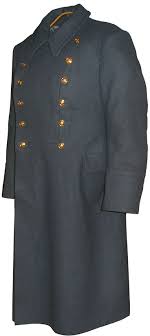
    The story narrates very sharply the life and death of a titular councillor Akaky Akakievich Bashmachkin, an impoverished government clerk and copyist in the Russian capital of St. Petersburg. Although Akaky is dedicated to his job, he is faintly recognized in his department for his hard work. Instead, the younger clerks tease him and attempt to distract him whenever they can. His threadbare overcoat is often the centre of their jokes. One day Akaky decides it is now necessary to have the coat repaired. He takes it to his tailor Petrovich, who declares, the coat is now irreparable, and tells him that he must now buy a new overcoat.

    The cost of a new overcoat is beyond Akaky’s meager salary, so he forces himself to live within a strict budget to save sufficient money to buy the new overcoat. Meanwhile, he and Petrovich frequently meet to discuss the style of the new coat. During that time, Akaky’s zeal for his work of copying is replaced with excitement about his new overcoat, to the point that he stops thinking about anything else. Finally, with the addition of an unexpected large holiday salary bonus, Akaky has saved enough money to buy a new overcoat.

    Akaky and Petrovich go to various shops in St. Petersburg and pick the finest materials that they can afford. Marten fur is too expensive, so they use cat fur for the collar. The new coat finally emerges impressive and of good quality and appearance and becomes the talk of Akaky’s office on the day he arrives wearing it. His superior decides to host a party in the honour of the new overcoat, but Akaky who is habitually solitary feels out of place. After the party, Akaky goes home, far later than he normally would. But en route home, two ruffians short shrift him, take his coat, kick him down badly, and leave him in the snow to die.

    Akaky gets no help from the authorities in recovering his lost overcoat. Finally, on the advice of another clerk in his department, he asks for help from an important person, a Russian general recently promoted to his position who belittles and shouts at his subordinates to solidify his self-importance. After keeping Akaky waiting, the general demands of him exactly why he has brought such a trivial matter to him, personally, and not presented it to his secretary. Socially inept, Akaky makes an unflattering remark about departmental secretaries, provoking, so powerful a scolding from the general that he nearly faints and has to be led away from the general’s office. Soon thereafter, Akaky falls seriously ill with fever. In his last hours, he is delirious, imagining himself again sitting before the general. At first, Akaky pleads forgiveness, but as his death nears, he curses the general.

    Soon, a corpse, identified as Akaky’s ghost, haunts areas of St. Petersburg, taking overcoats from people. The police find it difficult to capture him. Finally, Akaky’s ghost catches up with the general—who, since Akaky’s death, had begun to feel guilty over having mistreated him—and takes his overcoat by frightening him intensely. Satisfied, Akaky is not seen again. The narrator ends his narration with the account of another ghost seen in another part of the city.

    Apparently it is a simple story of a common man and his tribulations, and the final denouement. But when you dig in deeper, you see the condition of Russia in the early 1800s, and a parable of the yoke of feudalism and how it crushes individuality. Akaky-Bashmachkin is the representation of the common man that is victimized under the feudal regime and its social and economic structure. He is a man who has no grasp at all of the true meaning of freedom. Gogol expresses it very well through the fabric of a simple, everyday story of that subaltern copying clerk.

    Gogol is considered the father of realism in Russian literature, and he, along with Pushkin brought about the emergence of Russian literature as we know it. He wrote about people on the ground and his protagonists and their troubles are troubles of your and mines. The Overcoat is a good read.

By Kamlesh Tripathi

*

https://kamleshsujata.wordpress.com

*

Share it if you like it

*

Shravan Charity Mission is an NGO that works for poor children suffering from life threatening diseases especially cancer. Our posts are meant for our readers that includes both children and adults and it has a huge variety in terms of content. We also accept donations for our mission. Should you wish to donate for the cause. The bank details are given below:

NAME OF ACCOUNT: SHRAVAN CHARITY MISSION

Account no: 680510110004635 (BANK OF INDIA)

IFSC code: BKID0006805

*

Our publications

GLOOM BEHIND THE SMILE

(The book is about a young cancer patient. Now archived in 8 prestigious libraries of the US that includes Harvard College Library; Harvard University Library; Library of Congress; University of Washington, Seattle; University of Minnesota, Minneapolis; Yale University, New Haven; University of Chicago; University of North Carolina, at Chapel Hill University Libraries. It can also be accessed in MIT through Worldcat.org. Besides, it is also available for reading in libraries and archives of Canada, Cancer Aid and Research Foundation Mumbai and Jaipuria Institute of Management, Noida, India)  

ONE TO TANGO … RIA’S ODYSSEY

(Is a book on ‘singlehood’ about a Delhi girl now archived in Connemara Library, Chennai and Delhi Public Library, GOI, Ministry of Culture, Delhi)

AADAB LUCKNOW … FOND MEMORIES

(Is a fiction written around the great city of Nawabs—Lucknow. It describes Lucknow in great detail and also talks about its Hindu-Muslim amity. That happens to be the undying characteristics of Lucknow. The book was launched in Lucknow International Literary Festival of 2014. It is included for reading in Askews and Holts Library Services, Lancashire, U.K.)

REFRACTIONS … FROM THE PRISM OF GOD

(Co-published by Cankids–Kidscan, a pan India NGO and Shravan Charity Mission, that works for Child cancer in India. The book is endorsed by Ms Preetha Reddy, MD Apollo Hospitals Group. It was launched in Lucknow International Literary Festival 2016)

TYPICAL TALE OF AN INDIAN SALESMAN

(Is a story of an Indian salesman who is, humbly qualified. Yet he fights his ways through unceasing uncertainties to reach the top. A good read not only for salesmen. The book was launched on 10th February, 2018 in Gorakhpur Lit-Fest. Now available in Amazon, Flipkart and Onlinegatha)

RHYTHM … in poems

(Published in January 2019. The book contains 50 poems. The poems describe our day to day life. The book is available in Amazon, Flipkart and Onlinegatha)

MIRAGE

(Published in February 2020. The book is a collection of eight short stories. It is available in Amazon, Flipkart and Notion Press)

Short stories and Articles published in Bhavan’s Journal: Reality and Perception 15.10.19; Sending the Wrong Message 31.5.20; Eagle versus Scholars June 15 & 20 2020; Indica 15.8.20; The Story of King Chitraketu August 31 2020; Breaking Through the Chakravyuh September 30 2020.

(ALL THE ABOVE TITLES ARE AVAILABLE FOR SALE IN AMAZON, FLIPKART AND OTHER ONLINE STORES OR YOU COULD EVEN WRITE TO US FOR A COPY)

*****