Tag Archives: japan

ARTICLE: WAS NON-VIOLENCE SOLELY RESPONSIBLE FOR INDIA’S INDEPENDENCE OR WAS THERE SOMETHING MORE TO IT?

Copyright@shravancharitymission
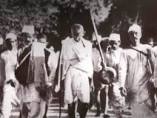
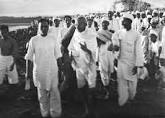
 

    Hello friends welcome to this edition of editorial compass. A lot has been spoken about India achieving independence through the “Brahmastra” of non-violence. But then, there also, happens to be another view-point that calls non-violence a myth.

    The line between historical facts and fiction is more porous than students of history might think. It is not uncommon for countries to create self-suiting or sanitised historical narratives. As George Orwell once said, “Who controls the past controls the future. Who controls the present controls the past.”

    India’s Republic Day Parade this year featured for the first time veterans of the Indian National Army (INA) that waged an armed struggle against the British colonial rule. Four INA veterans in their 90s rode a jeep in the parade that, paradoxically, showcased the life experiences of the apostle of non-violence, Mahatma Gandhi, through 22 tableaux.

    India has long embellished or distorted how it won independence. The incongruous juxtaposition of the INA along with Gandhi at the parade inadvertently highlighted that. The INA veterans participation, in fact, helped underscore the Indian republic’s founding myth—that it won independence only through non-violence. This myth has been deeply instilled in the minds of almost all Indians since their school days.

    Surely, the Gandhi-led, non-violent independence movement played a critical role. Both in galvanising grassroots resistance to British rule and also in helping to gain independence. But the decisive factor was the protracted World War-II, which reduced to ruins large swaths of Europe and Asia, especially the imperial powers. The war between the Allied and Axis powers killed 80 million, or 4% of the global population of that time.

    Despite the Allied victory, a devastated Britian was in no position to hold on to its colonies, including “crown jewel” India. Even colonies, where, there were no grassroots resistance to colonial rule, won independence in the post-World War-II period.

    The British had dominated India through a Machiavellian divide-and-rule strategy. Their exit came only after they had reduced one of the world’s wealthiest economies to one of its poorest. Indeed, they left after they had looted to their heart’s content, siphoning out, at least 9.2 trillion (or 44.6 trillion$) pounds, according to economist Utsa Patnaik’s recent estimate.

    Had the post-1947 India been proactive and forward-looking in securing its frontiers. It could have averted both the Kashmir and Himalayan border problems. China was in deep turmoil until October 1949, and India had ample time and space to assert control over the Himalayan borders. But India’s pernicious founding myth of non-violence gave rise to a pacifist country that believed it could get peace merely by seeking peace, instead of building the capability to defend peace.

    Here’s the paradox: countless numbers of Indians died to the excesses of British colonial regime. Just in the man made Bengal famine of 1942-45, six to seven million starved to death (a toll far greater than the “Holocaust”) due to the British war policy of diverting resources away from India. Britian sent Indian soldiers in large numbers to fight its dirty wars elsewhere, including the two world wars, and many died while serving as cannon fodder. Indeed, the present Indian republic was born in blood in blood: As many as a million civilians died in a senseless violence and millions more were uprooted in the British-contrived partition.

    Yet the myth of India uniquely charting and securing its independence through non-violence was propagated by the interiors of the Raj, the British trained “brown sahibs.” No objective discourse was encouraged post-1947 on the multiple factors—internal and external—that aided India’s independence.

    The hope of Indian independence was first kindled by Japan’s victory in the 1904-05 war with Russia—the first time an Asian nation comprehensively defeated a European rival. However, it was the world war that Adolf Hitler unleashed—with imperial Japan undertaking military expeditions in the name of freeing Asia from white colonial rule—that acted as the catalyst. An emboldened Gandhi serve a “Quit India” notice on the British in 1942.

    While the Subhas Chandra Bose-led INA could not mount a formidable threat to a British colonial military, overflowing with Indian recruits. The Bombay mutiny and other sepoy revolts of 1946 triggered by INA prisoners’ trials undermined Britain’s confidence in sustaining the Raj, hastening its exit. Yet, independent India treated INA soldiers shabbily with many abandoned into penury.

    Against this background the rehabilitation of Bose and the INA has long been overdue. Prime Minister Narendra Modi has done well to initiate the process, however low-key, to give Bose and the INA their due, including recently renaming one Andaman island after Bose and two other Andaman islands to honour INA sacrifices. Modi even wore the INA cap to address a public meeting in Andaman on the 75th anniversary of Bose’s hoisting of the tricolour there.

    Recognising unsung heroes is an essential step towards re-balancing the historical narrative. A rule-based international order, premised on non-violence remains a worthy aspirational goal. But Indian romancing of non-violence as an effective political instrument crimped national security policy since independence. The country hewed to pacifism (with Prime Minister Jawaharlal Nehru publicly bewailing in 1962 that China had “returned evil for good”) and frowned on materialism (even after China surpassed India’s GDP in 1984-85).

    The burden of its quixotic national philosophy has imposed enduring costs, including an absence of a strategic culture, as the late American analyst George Tanham famously pointed out. Lack of a culture to pursue a clear strategic vision and policy hobbles India’s ambition to be a great power.

    Synopsis derived out of an article titled “The Non-violence Myth—India’s founding story bestows upon it a quixotic national philosophy and enduring costs by geostrategist, Brahma Chellany in TOI.

Posted by Kamlesh Tripathi

*

https://kamleshsujata.wordpress.com

*

Share it if you like it

*

Shravan Charity Mission is an NGO that works for poor children suffering from life threatening diseases especially cancer. Our posts are meant for our readers that includes both children and adults and it has a huge variety in terms of content. We also accept donations for our mission. Should you wish to donate for the cause. The bank details are given below:

NAME OF ACCOUNT: SHRAVAN CHARITY MISSION

Account no: 680510110004635 (BANK OF INDIA)

IFSC code: BKID0006805

*

Our publications

GLOOM BEHIND THE SMILE

(The book is about a young cancer patient. Now archived in 7 prestigious libraries of the US, including, Harvard University and Library of Congress. It can also be accessed in MIT through Worldcat.org. Besides, it is also available for reading in Libraries and archives of Canada and Cancer Aid and Research Foundation Mumbai)  

ONE TO TANGO … RIA’S ODYSSEY

(Is a book on ‘singlehood’ about a Delhi girl now archived in Connemara Library, Chennai and Delhi Public Library, GOI, Ministry of Culture, Delhi)

AADAB LUCKNOW … FOND MEMORIES

(Is a fiction written around the great city of Nawabs—Lucknow. It describes Lucknow in great detail and also talks about its Hindu-Muslim amity. That happens to be its undying characteristic. The book was launched in Lucknow International Literary Festival of 2014)

REFRACTIONS … FROM THE PRISM OF GOD

(Co-published by Cankids–Kidscan, a pan India NGO and Shravan Charity Mission, that works for Child cancer in India. The book is endorsed by Ms Preetha Reddy, MD Apollo Hospitals Group. It was launched in Lucknow International Literary Festival 2016)

TYPICAL TALE OF AN INDIAN SALESMAN

(Is a story of an Indian salesman who is, humbly qualified. Yet he fights his ways through unceasing uncertainties to reach the top. A good read not only for salesmen. The book was launched on 10th February, 2018 in Gorakhpur Lit-Fest. Now available in Amazon, Flipkart and Onlinegatha)

RHYTHM … in poems

(Published in January 2019. The book contains 50 poems. The poems describe our day to day life. The book is available in Amazon, Flipkart and Onlinegatha)

(ALL THE ABOVE TITLES ARE AVAILABLE FOR SALE IN AMAZON, FLIPKART AND OTHER ONLINE STORES OR YOU COULD EVEN WRITE TO US FOR A COPY)

*****


Article: A PEEP INTO UNAFFILIATED RELIGION

Copyright@shravancharitymission
By Kamlesh Tripathi


    Time has come for epiphany of ‘unaffiliated religion.’ A sizable population of the world today lives without aligning with any religion as you will read in this narration. The question is how? And how do they manage in this simmering world of religious intolerance. We all know religion is good for the essence of life. But what about religious intolerance and where does unaffiliated religion fit in. Well, no one has ready answers to these question, but one can definitely see the changing paradigms.

    Today, intolerance in every religion has increased manifold. There are fringe groups that have formed in almost every religion that shows intolerance towards other religions. But within all of this. There are still some spunky people. Who believe in the charisma of ‘unaffiliated religion.’ The population of ‘unaffiliated religion’ is around 16 % of the world population. The religiously unaffiliated number is 1.1 billion. Accounting for about one-in-six (16%) people worldwide. It includes atheists, agnostics and people who do not identify with any particular religion. However, many of the religiously unaffiliated. Do hold some religious or spiritual beliefs.

    Apart from unaffiliated religion. There is also irreligion. Which is the absence of religion or indifference towards religion or rejection of religion or even hostility towards religion. When termed as the rejection of religious belief. It engulfs explicit atheism, religious dissidence and secular humanism. And when characterized as hostility towards religion. It includes anti-clericalism, anti-religion and anti-theism.

    According to Pew Research Center’s 2012 global study of 230 countries. 16% of the world’s population is not affiliated to any particular religion, while 84% are affiliated. The interesting fact finding in Pew Research Center’s 2012 global study is: Out of the global non-religious population, 76% reside in Asia and the Pacific, while the remainder reside in Europe (12%), North America (5%), Latin America and the Caribbean (4%), Sub-Saharan Africa (2%) and the Middle East and North Africa (less than 1%).

    According to Pew Research Center projections. The population of the non-religious, though temporarily increasing, will ultimately decline significantly by 2050, because of lower reproductive rates and ageing.

    Being non-religious. Is not necessarily equivalent to being an atheist or agnostic. Pew Research Center’s global study from 2012 noted. That many of the non-religious actually have some religious beliefs. For example, they observed that “belief in God or a higher power is shared by 7% of Chinese unaffiliated adults, 30% of French unaffiliated adults and 68% of unaffiliated U.S. adults.”

    If we were to analyse it country and zone wise. The statistics (pertaining to unaffiliated religion) are even more interesting:

  • Out of a total unaffiliated religious population of around 1.1 billion. The ten most populous countries in respective order of population are China 700 million (52% of population), Japan 70 million (57%), USA 50 million (16%), Vietnam 26 million (30%), South Korea 22 million (46%), Germany 20 million (25%), France 18 million (28%), North Korea 17 million (71.3%), Brazil 15 million (7.9%), & U.K. 13 million (21%). This population totals up to 955 million which is 85% of the total population of unaffiliated religion.
  • If we were to take the first ten countries highest by respective order of percentage share of (Unaffiliated religion) population. They would be: Czech Republic 8 million (76%), North Korea 17 million (71%), Estonia (Baltic state) 0.8 million (60%), Japan 70 million (57%), Hongkong 0.4 million (56%), China 700 million (52%), South Korea 22 million (46%), Latvia (Baltic states) 1 million (44%), Netherlands 7 million (42%), Uruguay 1.4 million (41%). They comprise of 834 million which is 74% of their population.
  • There are six countries where the religiously unaffiliated make up a majority of their population: the Czech Republic (76%), North Korea (71%), Estonia (60%), Japan (57%), Hong Kong (56%) and China (52%).
  • The religiously unaffiliated are heavily concentrated in Asia and the Pacific. Where, more than three-quarters (76%) of the world’s unaffiliated population resides. The remainder is in Europe (12%), North America (5%), Latin America and the Caribbean (4%), sub-Saharan Africa (2%) and the Middle East and North Africa (less than 1%).
  • Although a majority of the religiously unaffiliated live in Asia and the Pacific. Only about one-in-five people (21%) in that region are unaffiliated. More than one-in-six people in Europe (18%) and North America (17%) are religiously unaffiliated. The unaffiliated make up smaller shares in the remaining regions. For instance, less than 1% of those who live in the Middle East-North Africa region are unaffiliated.
  • More than six-in-ten (62%) of all religiously unaffiliated people live in one country, China. The largest population of the religiously unaffiliated outside China are in Japan (6% of all unaffiliated), the United States (5%), Vietnam (2%) and Russia (2%).
  • The population of unaffiliated religion in India is only 0.87 million which is 0.07% of the entire population of the country.
  • There is a definite co-relation between the system of governance, ethos of live and religious fundamentalism and unaffiliated religion. For example take communist countries like China & North Korea where you will find the population of this community to be around 717 million which is about 64% of the entire population of unaffiliated religion. This is because of the regimentation of mindset that has forced people to stay non-aligned. If you take Islamic states, you will find the percentage of unaffiliated religion to be low because of religious fundamentalism.

    Median Age

    Globally, the religiously unaffiliated are older (median age of 34) than the overall global population (median age of 28). Among the five regions for which data are available, sub- Saharan Africa has the youngest population of religiously unaffiliated people (median age of 20), followed by Latin America and the Caribbean (26), North America (31) and Asia and the Pacific (35). Europe has the oldest unaffiliated population, with a median age of 37.

*****


Only a skilled nation can create national wealth

Copyright@shravancharitymission


Analysis: 50% of the world’s wealth remains with 4-5 countries

    “National wealth” refers to the total value of wealth possessed by the citizens of a nation at a set point in time. That is, the total value of wealth and goods generated by all economic activity in a particular nation.

    It is also referred as the national (net) wealth, or the national net worth, or even the gross national wealth (GNW); summing up to the total national wealth and is the total sum value of wealth possessed by the citizens of a nation at any given point of time.

    This figure of national wealth is an important indicator of a nation’s ability to take on debt and sustain spending. It is influenced, not only by real estate prices, but also by the stock market, human resources, technological advancements which may create new assets or render other worthless. It is also steered by the national infrastructure and exchange rates. Remember, for value creation optimum skill levels are a must for any nation and therefore skill building is an important ingredient, required to augment national wealth.

    The most significant component by far among most developed nations is commonly reported as household net wealth or worth, and also reflects infrastructure investment. National wealth can fluctuate, as evidenced in the US data (to follow) following the financial crisis of 2008 and subsequent recovery.

    There are 196 countries in the world today. If we compare the national wealth figures of the first 30 major countries we will come across an interesting paradigm as below:

ANALYSIS … HOW CHINA FORGES AHEAD

  • The world’s wealth has grown from 117,225 billion USD in 2000 to 171,577 in 2005, up to 216,374 in 2010 and to 250,145 in 2015. This is a cumulative growth of 113% over the last 15 years and an average annual growth rate of 7.5%.
  • USA remains the richest in terms of national wealth and also a consistent performer since 2000 to 2015. In 2000 it had a national wealth of 42,941 billion USD which has grown to 85,901 billion USD in 2015. This is a cumulative growth of 100% over 15 years and an average annual growth rate of 6.67%.
  • The national wealth of the US in 2000 was 42,941 billion USD, a little more than the national wealth of Japan, UK, Germany, Italy and China, put together.
  • The national wealth of the US in 2005 was 59,664 billion USD, a little more than the national wealth of Japan, UK, France, Italy and Germany, put together.
  • The national wealth of the US in 2010 declined from 59,664 billion USD by 4.27% to 57114 on account of the economic crisis, but it still remained more than the combined national wealth of countries such as Japan, China and France, put together. China by 2010 had become a major skill development country and thereby started generating wealth. It would not be wrong to say that 50% of the wealth of the world is controlled by only four or five countries.
  • By 2015 the national wealth of the US had increased to 85,901 billion USD, a little more than the combined wealth of five economic super powers such as China, Japan, UK, France and Germany.
  • China’s policy of underscoring on skill development under the banner of human resources gave encouraging results when its national wealth from 4664 billion USD in 2000 went up to 8674 in 2005 and to 17505 in 2010 and finally to 22817 in 2015. And from 6th position in 2000 it has jumped to 2nd position in 2015 in terms of national wealth.
  • India on the contrary from 14th position out of 196 countries in 2000 jumped marginally to 12th position in 2005 and to 11th position in 2010, but slumped back to 14th position in 2015. Its national wealth was 1163 billion USD in 2000, 2142 billion USD in 2005, 3788 billion USD in 2010, and 3447 billion USD in 2015. It has cumulatively grown by 196% with an average growth rate of 13%. But it is not enough when we compare it with world standards and our political establishment needs to understand this. India requires wide spread skill development if it wants to grow its national wealth. A lesson we need to learn from China where there is no opposition when it comes to policies affecting national wealth.
  • 50% of the world’s wealth in the year 2000 was with super economic powers such as the USA, Japan and the UK. This changed somewhat in 2010 where 50% of the world’s wealth was held by the USA, Japan, UK and France, and this further changed in 2010 when 50% of the wealth of the world was held by USA, Japan, China (China replaced UK) and France. In 2015 the scenario further changed when China jumped to the second position next to the US leaving behind Japan to a close third.
  • Canada with 35 only million people has maintained a steady 8th position in the world. In 2000 it had a national wealth of 2,469 billion USD. This rose to 4277 in 2005, to 6212 in 2010 and finally to 6872 in 2015. Its cumulative growth in 15 years has been 178% with an average growth rate of 11.88%. But it has failed to take a quantum leap because it doesn’t have great reserve of skill bank which it is largely importing from other countries now. It also has a huge geographical territory and it remains to be seen how in times to come it will manage its huge assets with such a meagre population.
  • South Korea has turned into another industrial giant by lifting its skill levels. It rose from the 16th position where it had a national wealth of 1089 billion USD in 2000, to 2149 billion USD in 2005 at 11th spotBut it slumped back to 14th position in 2010 even when it increased its national wealth to 2791 billion USD. But in 2015 it jumped to 12th spot with a national wealth of 3545 billion USD.
  • Greece with its economic crisis, a typical example has crashed to the 30th spot in 2015 with 743 billion USD from the 23rd spot in 2000 with a national wealth of 493 billion USD.
  • Russia with the roots of once a super power has stagnated from 3150 in 2000 to 1284 USD billion in 2015 but has gone up notches from 30th to 23rd

    The point of essence—mere size of population doesn’t increase national wealth. One has to individually create it for the nation. And you can create, only if you have the skill. The US remains the leader in this field with a population of 310 million people which is less than one third of the population of India. Even Canada with only 35 million people generates more revenue than India. Prime Minister Narendra Modi is by far on track by underscoring on skill development in India.

*

By Kamlesh Tripathi

*

https://kamleshsujata.wordpress.com

*

Share if you like it

*

Shravan Charity Mission is an NGO that works for poor children suffering from life threatening diseases. Should you wish to donate for the cause the bank details are given below:

NAME OF ACCOUNT: SHRAVAN CHARITY MISSION

Account no: 680510110004635 (BANK OF INDIA)

IFSC code: BKID0006805

*

Our publications

GLOOM BEHIND THE SMILE

ONE TO TANGO … RIA’S ODYSSEY

AADAB LUCKNOW … FOND MEMORIES

REFRACTIONS … FROM THE PRISM OF GOD

(CAN BE BOUGHT FROM ON LINE BOOK STORES OR WRITE TO US FOR COPIES)

*****


NEHRU SNOOP ON FAMILY MEMBERS OF SUBHASH CHANDRA BOSE. DID HE SURVIVE THE AIRCRASH?

Copyright@shravancharitymission

11New Doc 11_1

    Mystery deepens today on Subhash Chandra Bose. For who was Gumnami Baba? Read the full column till the end and the two newspaper clippings appended.

    Everything needn’t be proved. The world can as well live, with unproven stuff. For there is no scientific proof that God exists. Yet the majority on planet earth, believes in some form of God. Arising, purely out of faith. And ‘faith moves mountains’ as the saying goes. Post Subhash Chandra Bose’s air crash some believed he was dead, and some felt he was alive. In Lucknow there was a strong buzz, that Subhash Chandra Bose is alive and in solitary confinement near Ayodhya, and this how the story goes.

    ‘When I was young and in a school in Lucknow. There were rumours galore that an old ‘Baba’ stays near Ayodhya in a secluded ‘mutt’ and that he is Subhash Chandra Bose in hiding. And that many senior political leaders and government officials often come to see him but no civilian is allowed to meet him. So, then, who was he, if not Subhash Chandra Bose? This was a common hearsay in Lucknow, Faizabad and even Ayodhya around late sixties and early seventies. The veracity of this story can be traced back to some intelligence archives of the UP Government. But the moot question remained, why was Subhash Chandra Bose in hiding?

    And, to that we were told that Government of India had an unwritten understanding with the British, after independence. That ever in future. If Subhash Chandra Bose was found alive post the air crash on 18th August 1945. He would be handed over to the British Government for his secessionist acts. Where, the only punishment would be ‘capital punishment.’ But Government of India could not have handed over, its worthy son of the soil to the Britishers, even if clandestinely committed. So, when Subhash Chandra Bose was found alive, after the air crash he was kept under house arrest, and in hiding at a secret location in Ayodhya. And, later after some years there were rumours that the baba had died.

    Whether proven or unproven. There is no smoke without fire and such issues where the masses are not at rest keep simmering off and on.

    Read the article by M.J. Akbar on Nehru snooping titled. “Some Fire Smouldering Within Smoke.” Appended above.

    And below is another interesting article titled–“Mystery lives on: Did Netaji Subhas Bose really die in that plane crash.”

New Doc 11_1_resized

By Kamlesh Tripathi

*

https://kamleshsujata.wordpress.com

*

Share it if you like it

*

Shravan Charity Mission is an NGO that works for poor children suffering from life threatening diseases. Should you wish to donate for the cause the bank details are given below:

NAME OF ACCOUNT: SHRAVAN CHARITY MISSION

Account no: 680510110004635 (BANK OF INDIA)

IFSC code: BKID0006805

*

By Kamlesh Tripathi

*

https://kamleshsujata.wordpress.com

*

Share it if you like it

*

Shravan Charity Mission is an NGO that works for poor children suffering from life threatening diseases. Should you wish to donate for the cause the bank details are given below:

NAME OF ACCOUNT: SHRAVAN CHARITY MISSION

Account no: 680510110004635 (BANK OF INDIA)

IFSC code: BKID0006805

*

Our publications

GLOOM BEHIND THE SMILE

(The book is about a young cancer patient. Now archived in 7 prestigious libraries of the US, including, Harvard University and Library of Congress. It can also be accessed in MIT through Worldcat.org. Besides, it is also available for reading in Libraries and archives of Canada and Cancer Aid and Research Foundation Mumbai)  

ONE TO TANGO … RIA’S ODYSSEY

(Is a book on ‘singlehood’ about a Delhi girl now archived in Connemara Library, Chennai and Delhi Public Library, GOI, Ministry of Culture, Delhi)

AADAB LUCKNOW … FOND MEMORIES

(Is a fiction written around the great city of Nawabs—Lucknow. It describes Lucknow in great detail and also talks about its Hindu-Muslim amity. That happens to be its undying characteristic. The book was launched in Lucknow International Literary Festival of 2014)

REFRACTIONS … FROM THE PRISM OF GOD

(Co-published by Cankids–Kidscan, a pan India NGO and Shravan Charity Mission, that works for Child cancer in India. The book is endorsed by Ms Preetha Reddy, MD Apollo Hospitals Group. It was launched in Lucknow International Literary Festival 2016)

TYPICAL TALE OF AN INDIAN SALESMAN

(Is a story of an Indian salesman who is, humbly qualified. Yet he fights his ways through unceasing uncertainties to reach the top. A good read not only for salesmen. The book was launched on 10th February, 2018 in Gorakhpur Lit-Fest. Now available in Amazon, Flipkart and Onlinegatha

(ALL THE ABOVE TITLES ARE AVAILABLE FOR SALE IN AMAZON, FLIPKART AND OTHER ONLINE STORES OR YOU COULD EVEN WRITE TO US FOR A COPY)

*****