Category Archives: Uncategorized

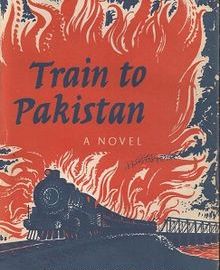
BOOK TALK: TRAIN TO PAKISTAN by Khushwant Singh

Copyright@shravancharitymission


Khidki (Window)

–Read India Initiative—

This is only an attempt to create interest in reading. We may not get the time to read all the books in our lifetime. But such reviews, talk and synopsis will at least convey what the book is all about

THE TRAIN TO PAKISTAN

BY KHUSHWANT SINGH

    The summer of 1947 was not like any other Indian summer. The weather that year had a different feel. What was, looming large on the horizon was, communal riots, and precipitated reports of the proposed division of the country into a Hindu India and a Muslim Pakistan. Within a few months the death toll had mounted to several thousands. ‘Muslims said the Hindus had planned and started the killing. According to the Hindus, the Muslims were to blame.’

    The riots had gradually spread from Calcutta to north and east and west. In Noakhali, East Bengal Muslims massacred Hindus. In Bihar Hindus massacred Muslims. Hundreds of thousands of Hindus and Sikhs who had lived for centuries in the Northwest Frontier abandoned their homes and fled towards the protection of the predominantly Sikh and Hindu communities in the east. They travelled on foot, in bullock carts, crammed into lorries as the riots had become a rout.

    By the summer of 1947 when the creation of a new state of Pakistan was formally announced, ten million people—Muslims, Hindus and Sikhs—were in flight. By the time the monsoon broke, almost a million of them were dead, and entire northern India was up in arms. The only oases of peace that remained were a scatter of little villages lost in the remote reaches of the frontier. Where, one such village happened to be Mano Majra.

    A tiny place, it had only three brick buildings. One belonged to the money lender Lala Ram Lal. The other two were the Sikh temple (Gurudwara), and the mosque (Masjid). Rest of the village was a cluster of flat-roofed mud huts and low-walled courtyards, which fronted on the narrow lanes. There were only seventy families in Mano Majra a fictional village. Lala Ram Lal was the only Hindu family. The others were Sikhs or Muslims, about equal in number and some quasi-Christians. The Sikhs owned all the land around the village and the Muslims were tenants and shared the tilling with the owners. There were a few families of sweepers also whose religion was uncertain. The Muslims claimed them as their own. Yet when American missionaries visited Mano Majra the sweepers wore khaki sola topees and joined their women folk in singing hymns in the accompaniment of harmonium.

    Even though, Mano Majra was said to be on the banks of Sutlej river. It was actually half a mile away from it. Sutlej is the largest river in Punjab. And about a mile north of Mano Majra. The Sutlej is spanned by a railroad bridge. It is a magnificent bridge—its eighteen enormous spans sweep like waves from one pier to another, and at each end of it there is a stone embankment. To, buttress the railway line.

    Mano Majra was always known for its railway station. Since the bridge had only one track. The station had several sidings where less important trains could wait, to make way for the more important ones. Not many trains stopped at Mano Majra. Express trains did not stop at all. Of the many slow passenger trains, only two, one from Delhi to Lahore in the mornings and the other from Lahore to Delhi in the evenings, were scheduled to stop for a few minutes. The only regular customers were the goods train. After dark, when the countryside was steeped in silence. The whistling and puffing of engines, the banging of buffers and the clanking of iron couplings could be heard all through the night. Apart from this, the blasts of the whistle were also heard often when the trains passed. And in all of this the author has done a wonderful job of describing the village activities. The Sikhs and the Muslims had a cordial relationship with each other until the summer of 1947.

    One heavy night in August five dacoits appeared in the village. And in sync with the rumblings of the sidings of the train, they decided to raid the house of the money lender Lala Ram Lal. They hammered the door with their weapons and after breaking it open they entered. They killed Lala Ram Lal and looted his treasure and fired two shots in the air to silence the village.  While leaving they passed through Juggut Singh’s (Juggia) house who was considered the village badmash and threw a bundle of bangles into his house to make him feel feminine. But since Juggut Singh (Juggia) was not at home they missed the action.

    Juggia was on probation where he was not supposed to leave the village and also report to the police station at frequent intervals. His father was a dacoit who was hanged for his crimes. Juggia had developed a physical relationship with Nooran, a Muslim girl who happened to be the daughter of Imam Baksh the Mullah of the Masjid. Once when, Juggia stepped out in the night, taking all the risk only to ‘make love’ to Nooran in the open fields where no one could see them. They heard some footsteps and went quiet. They saw some five people and could make out they were Malli the famous dacoit and his gang mates. Juggia was shocked. What was Malli doing in his village? This was no time for dacoities when the country was wounded, he thought. And, when, he was about to enter his house, he saw the door was open. Where, several villagers were in the courtyard talking to his mother. He turned around, quietly and made his way back to the river.

    In the bureaucratic circles, Mano Majra had some importance because of an officer’s rest house that was located just north of the railway bridge.  It had a flat roofed bungalow made of khaki bricks with a veranda in the front facing the river. It stood in the middle of a squarish plot enclosed by a low wall. Throughout the winter months, officers arrange tours that involved a short halt at the Mano Majra rest house. There they went for shoots and generally had a good time there.

    In the morning before the dacoity in Mano Majra, the rest house had been done up to receive an important guest. Before the arrival of this VIP the SI (sub-inspector) of police and two constables had also turned up on their bicycles. And soon the VIP too arrived in a large American car. His name was Hukum Chand, magistrate and deputy commissioner of the district. He immediately freshened up and got the SI to his room to start a conversation around some urgent issues over a glass of beer. The obsequious SI didn’t waste any time. He was immediately on the mission to please him. Corrupt Hukum Chand was expecting more than normal courtesies from the SI. That included wine, woman and song. The SI had it all in his quiver. During the course of beer he also started enquiring from the SI about the communal tension and about the convoys of dead Sikhs as they had been coming through at Amritsar. They had a frank discussion. Hukum Chand told the SI about Sikhs who retaliated by attacking a Muslim refugee train and sending it across the border with over a thousand corpses. They wrote on the engine ‘Gift to Pakistan!’

     The sentiments were far from normal on both the sides of the border. But it had not affected Mano Majra yet. The Muslims in Mano Majra were not well to do. There was also a discussion on Jugga. The SI reminded Hukum Chand of his father Alam Singh who was hanged two years back. SI explained, Jugga was in a relationship with a Muslim weaver’s daughter whose father was blind and was the mullah of the mosque and his name was Imam Baksh. In the evening Hukum Chand had his round of whisky along with a dance session by a prostitute who was in her teens and even slept with her. The dark side of bureaucracy and feudalism one could say.

    The morning after the dacoity the railway station was more crowded than usual. Residents of Mano Majra loved coming to the station just for the heck of it. Today the train from Delhi had some special visitors. Twelve armed policemen along with a sub-inspector alighted from compartment just behind the engine. And from the other end of the train near the guard’s van, a young man stepped down. Every bit an urbanite and also looked as if he was educated abroad, and somewhat effeminate, in body language. He was looking for a place to stay in Mano Majra. Soon he reached the Gurudwara where he met an old Sikh who happened to be the bhai of the temple. His name was Meet Singh. He enquired the name of the young man when the young man said, ‘Iqbal.’ ‘Iqbal Singh?’ queried the old man. To which Iqbal didn’t reply. Iqbal could have been Iqbal Singh, or Iqbal Chand or even Iqbal Mohammed. He declared himself as a social worker. He carried his own foodstuff to eat including fish complete with head, eyes and tail and even liquor. Bhai Meet Singh adviced Iqbal not to go out too far in the village as it was bad times. And that Lambarder and Imam Baksh, the mullah of the mosque were coming to meet him.

     The attention then shifts to the money lender’s house, who was murdered the previous night. The dacoits had taken a lot of cash and they say over five thousand rupees in silver and gold ornaments from his women. The murder suspect was now Jugga in whose house the packet of bangles was found that was left by the dacoits. He is soon arrested. Jugga pleads not guilty as he wouldn’t have looted and killed his own village brother but he was not heard.

    In fact the arrest of Jugga also had the okay of Hukum Chand the magistrate. In fact the magistrate had also given the concurrence to arrest Iqbal too, and implicate him in the case of murder. Iqbal had become a matter of suspicion because his undisclosed mission. They both are put in the lock up. But Iqbal had arrived a day after the murder and Jugga could not have killed his village-brother or struck a dacoity in his own village. This makes the authorities feel something is amiss. Which, they will not be able to prove it in the court of law. So they timidly accept the mistake and arrest Malli and his gang from Chundunugger police station.  

    Meanwhile things are hotting up in Mano Majra. One day a ‘ghost train’ arrives at Mano Majra railway station. The entire area along the station is cordoned off. Rumours spread it is a ‘funeral train’ carrying dead bodies of Sikhs and Hindus killed in the massacre. Army steps in with some Sikh officers and their Jeeps and trucks. Meanwhile, the local police are commissioned, to go around villages to collect wood and oil. This gives a clear indication, that it is required for mass cremation. The docile villagers, handover whatever is available with them. And after a while all they get to see is the billowing of dense smoke making it amply clear that its mass cremation that is going on. Post this; traumatic rumours spread across the village.

    But even before matters cool of, one day another ‘Ghost Train’ enters Mano Majra. It has no lights. It doesn’t whistle nor does it rumble. The army once cordons off the entire area. Soon an excavator arrives and starts digging a huge pit. The dead bodies are brought from the train and made to rest in the pit—mass burial. After which, the train disappears, as mysteriously, as it had come.

    News spreads that it was the bodies of Hindus and Sikhs brought in the train twice for cremation and burial. Upon reviewing the situation authorities feel another ‘Ghost Train’ can start riots in Mano Majra too. So they decide to shift the Muslim population to the ‘refugee camp’ from where they would be deported to Pakistan. Muslims of Mano Majra are not quite inclined to go to Pakistan as they feel they were born and brought up only in Mano Majra. But the cruel destiny decides that they have to leave. Nooran too, has to leave along with her father Imam Baksh. She comes to meet Jugga’s mother. She informs she is carrying Juggia’s child and therefore if she could adopt her and let her be in her house. But Juggia’s mother is not inclined to keep her, so she asks her to leave for the camp immediately.

    Meanwhile Juggut Singh, Iqbal, Malli and his gang are released from the jail. Iqbal disappears suddenly. But the talk whether he was a Muslim or a Sikh continues. Juggia upon reaching his home learns Nooran had come seeking for shelter at his home but was turned away by his mother. He gets very upset at this and threatens her to kill himself. And by now a young Sikh lad has emerged in Mano Majra. It appears he has come from Pakistan and is full of hatred for Muslims consequent to what he had seen in Pakistan—rape of Hindu and Sikh women and slaughter of their children and men. He is full of fire. He comes to the Gurudwara and provokes the Sikhs to join him for taking revenge. About fifty Sikhs join him as volunteers.

    Next day in the morning, the Sikh lad, along with all the volunteers make a plan. The train loaded with Muslim refugees is likely to start from Chundunugger and by night it will reach Mano Majra. The train has no lights as it being made to move in a surreptitious manner. All along the way they plan to post volunteers with torches who will signal as soon as the train passes them. They plan to tie a sturdy rope from one end to the other on the first steel span of the rail bridge which is at the height of the funnel of the engine which is about twenty feet. And once the train reaches there in the dark it will pull down all the people sitting on the roof say 4-500. The impact might even dislodge the train itself and it might fall into the river. Prima facie it appeared to be a perfect plan when they could have attacked and killed all the refugees.

    By night everything was in place. The train was moving without lights. Each time it passed a volunteer, the torch light flashed giving the signal that the train had moved ahead. It was a moonlit night. When, the Sikh lad saw a silhouette of a hefty person climbing the first steel span. He then started moving on the sturdy rope when he took out his kirpan (sword) and started cutting it. The Sikh lad upon seeing this, yelled at the hefty person to stop what he was doing. But the guy was unfazed. His movements up there had become even swifter by now. The train by now was also close to the steel span. The Sikh lad by now had understood what was happening. Someone was trying to sabotage the plan by cutting the rope as that would have saved all the refugees. So he first yelled and then took out his gun and shot the guy. He was hurt, and by now he was in the centre of the span. Where, his movements had become much more, faster. And finally he was successful in cutting the rope at the nick of the moment. But just then he fell on the track when the train ran over him and into Pakistan.

    The person who cut the rope was no else but Juggut Singh who wanted to save his Muslim girlfriend from being killed but in the process he killed himself.

Synopsis by Kamlesh Tripathi

*

https://kamleshsujata.wordpress.com

*

Share it if you like it

*

Shravan Charity Mission is an NGO that works for poor children suffering from life threatening diseases especially cancer. Should you wish to donate for the cause. The bank details are given below:

NAME OF ACCOUNT: SHRAVAN CHARITY MISSION

Account no: 680510110004635 (BANK OF INDIA)

IFSC code: BKID0006805

*

Our publications

GLOOM BEHIND THE SMILE

(The book is about a young cancer patient. Now archived in 7 prestigious libraries of the US, including, Harvard University and Library of Congress. It can also be accessed in MIT through Worldcat.org. Besides, it is also available for reading in Libraries and archives of Canada and Cancer Aid and Research Foundation Mumbai)  

ONE TO TANGO … RIA’S ODYSSEY

(Is a book on ‘singlehood’ about a Delhi girl now archived in Connemara Library, Chennai and Delhi Public Library, GOI, Ministry of Culture, Delhi)

AADAB LUCKNOW … FOND MEMORIES

(Is a fiction written around the great city of Nawabs—Lucknow. It describes Lucknow in great detail and also talks about its Hindu-Muslim amity. That happens to be its undying characteristic. The book was launched in Lucknow International Literary Festival of 2014)

REFRACTIONS … FROM THE PRISM OF GOD

(Co-published by Cankids–Kidscan, a pan India NGO and Shravan Charity Mission, that works for Child cancer in India. The book is endorsed by Ms Preetha Reddy, MD Apollo Hospitals Group. It was launched in Lucknow International Literary Festival 2016)

TYPICAL TALE OF AN INDIAN SALESMAN

(Is a story of an Indian salesman who is, humbly qualified. Yet he fights his ways through unceasing uncertainties to reach the top. A good read not only for salesmen. The book was launched on 10th February, 2018 in Gorakhpur Lit-Fest. Now available in Amazon, Flipkart and Onlinegatha

(ALL THE ABOVE TITLES ARE AVAILABLE FOR SALE IN AMAZON, FLIPKART AND OTHER ONLINE STORES OR YOU COULD EVEN WRITE TO US FOR A COPY)

*****



Watch “Book Review: “Ice Station Zebra” by Alistair Maclean (Adapted by the film) | Baat Kitaabon Ki” on YouTube

Copyright@shravancharitymission


By Kamlesh Tripathi

*

https://kamleshsujata.wordpress.com

*

Share it if you like it

*

Shravan Charity Mission is an NGO that works for poor children suffering from life threatening diseases especially cancer. Should you wish to donate for the cause. The bank details are given below:

NAME OF ACCOUNT: SHRAVAN CHARITY MISSION

Account no: 680510110004635 (BANK OF INDIA)

IFSC code: BKID0006805

*

Our publications

GLOOM BEHIND THE SMILE

(The book is about a young cancer patient. Now archived in 7 prestigious libraries of the US, including, Harvard University and Library of Congress. It can also be accessed in MIT through Worldcat.org. Besides, it is also available for reading in Libraries and archives of Canada and Cancer Aid and Research Foundation Mumbai)  

ONE TO TANGO … RIA’S ODYSSEY

(Is a book on ‘singlehood’ about a Delhi girl now archived in Connemara Library, Chennai and Delhi Public Library, GOI, Ministry of Culture, Delhi)

AADAB LUCKNOW … FOND MEMORIES

(Is a fiction written around the great city of Nawabs—Lucknow. It describes Lucknow in great detail and also talks about its Hindu-Muslim amity. That happens to be its undying characteristic. The book was launched in Lucknow International Literary Festival of 2014)

REFRACTIONS … FROM THE PRISM OF GOD

(Co-published by Cankids–Kidscan, a pan India NGO and Shravan Charity Mission, that works for Child cancer in India. The book is endorsed by Ms Preetha Reddy, MD Apollo Hospitals Group. It was launched in Lucknow International Literary Festival 2016)

TYPICAL TALE OF AN INDIAN SALESMAN

(Is a story of an Indian salesman who is, humbly qualified. Yet he fights his ways through unceasing uncertainties to reach the top. A good read not only for salesmen. The book was launched on 10th February, 2018 in Gorakhpur Lit-Fest. Now available in Amazon, Flipkart and Onlinegatha

(ALL THE ABOVE TITLES ARE AVAILABLE FOR SALE IN AMAZON, FLIPKART AND OTHER ONLINE STORES OR YOU COULD EVEN WRITE TO US FOR A COPY)

*****


THE MAYOR OF CASTERBRIDGE by Thomas Hardy

Copyright@shravancharitymission


THE MAYOR OF CASTERBRIDGE

By Thomas Hardy

Khidki (Window)

–Read India Initiative—

This is only an attempt to create interest in reading. We may not get the time to read all the books in our lifetime. But such reviews, talk and synopsis will at least convey what the book is all about

    At a country fair near Casterbridge in the fictional county of Wessex Michael Henchard, a 21 year old hay-trusser, (person who makes bundles of hay) argues with his wife Susan. Drunk on rum-laced furmity (thick boiled grain dish) he auctions her off, along with his baby daughter Elizabeth-Jane, to Richard Newson, a passing sailor, for five guinneas. Sober the next day, he is too late to recover his family. When he realises they are gone, he swears never to touch liquor again for as many years as he has lived so far.

    Eighteen years later, Henchard has become a successful grain merchant and even the Mayor of Casterbridge, known for his staunch sobriety. Henchard has avoided explaining the circumstances of the loss of his wife, allowing people to assume he is a widower.

    On a visit to Jersey on business, Henchard falls in love with Lucetta Le Sueur, who nurses him back to health after an illness. Although Henchard never tells Lucetta exactly how he “lost” his wife, he does tell her he has a wife who is probably dead, but who may return. Besotted, Lucetta develops a relationship with him despite the risk. Henchard returns to Casterbridge, leaving Lucetta to face the social consequences of their fling.

    To rejoin polite society Lucetta would have to marry him, although Henchard is already technically married. Yet just as Henchard is about to send for Lucetta, Susan unexpectedly appears in Casterbridge with her daughter, Elizabeth-Jane. Newson appears to have been lost at sea, and without means to earn an income Susan is looking to Henchard again. Susan believed for a long time that her “marriage” to Newson was perfectly legitimate. Only recently, just before Newson’s disappearance, had Susan begun to question whether or not she was still legally married to Henchard.

    Just as Susan and Elizabeth-Jane arrive in town, a Scotsman, Donald Farfrae, is passing through on his way to America. He has experience as a grain and corn merchant, and is on the cutting edge of agricultural science. He befriends Henchard and helps him out of a bad financial situation by giving him some timely advice. Henchard persuades him to stay and offers him a job as his corn factor, (trader in grains) rudely dismissing a man named Jopp to whom he had already offered the job. Hiring Farfrae is a stroke of business genius for Henchard, who, although hardworking, is not well-educated.

    To preserve appearances, Henchard sets Susan up in a nearby house, pretends to court her, and remarries her. Both Henchard and Susan keep the truth from Elizabeth-Jane. Henchard also keeps Lucetta a secret. He writes to her, informing her that their marriage is off.

    Henchard’s relationship with Farfrae deteriorates as Farfrae becomes more popular than Henchard. Eventually they part company and Farfrae sets himself up as an independent merchant. The rivalry and jealousy for the most part is one-sided, and Farfrae conducts himself with scrupulous honesty and fair dealing. Henchard meanwhile makes increasingly aggressive, risky business decisions that put him in financial danger.

    Henchard’s jealousy leads him to oppose a marriage between Farfrae and Elizabeth-Jane, until after Susan’s death, at which point Henchard learns he is not Elizabeth-Jane’s father from a letter which Susan, on her deathbed, marked to be opened only after Elizabeth-Jane’s marriage. His own daughter had died in infancy; this second Elizabeth-Jane is Newson’s daughter. Henchard is no longer concerned about blocking the marriage, but he conceals the secret from Elizabeth-Jane and grows cold and cruel towards her.

    In the meantime, Lucetta arrives from Jersey and purchases a house in Casterbridge. She has inherited money from a wealthy relative. Initially she hopes to resume their relationship, but propriety requires that they wait a while. She takes Elizabeth-Jane into her household as a companion, thinking it will give Henchard an excuse to come to visit, not knowing of Henchard’s hatred of Elizabeth-Jane.

    Farfrae visits Lucetta’s house to see Elizabeth-Jane and falls for Lucetta, not knowing she has come to marry Henchard. Lucetta is also attracted to Farfrae. At the same time, she begins to question Henchard’s character, when it becomes public knowledge that he sold his first wife. Although initially reluctant, Henchard decides that he wants to marry Lucetta, particularly since he is in financial trouble – he believes that his creditors would extend credit if he was about to be married to a wealthy woman. Frustrated by her stalling, Henchard bullies Lucetta into agreeing to marry him. But by this point she is in love with Farfrae, and they run away one weekend to get married. She does not tell Henchard until well after the fact. Henchard’s credit collapses, he goes bankrupt, and has to sell all his personal possessions to pay creditors.

    Farfrae buys Henchard’s old business and tries to help the man who helped him get started, whom he still regards as a friend and a former mentor, by employing him as a journeyman. He does not realise Henchard is his enemy, even though the town council and Elizabeth-Jane both warn him.

    Lucetta keeps her former relationship with Henchard a secret, but all is revealed when Henchard lets his enemy Jopp deliver Lucetta’s old love letters. Jopp makes the secret public and the townspeople publicly shame Henchard and Lucetta in a skimmington ride. Lucetta, who by this point is pregnant, dies of an epileptic seizure.

    When Newson, Elizabeth-Jane’s biological father, returns, Henchard is afraid of losing her companionship and tells Newson she is dead. The twenty-first year of his oath is up, and he starts drinking again. By the time Elizabeth-Jane, who months later is married to Donald Farfrae and reunited with Newson, goes looking for Henchard to forgive him, he has died and left a will requesting no funeral.

Synopsis by Kamlesh Tripathi

***

https://kamleshsujata.wordpress.com

*

Share it if you like it

*

Shravan Charity Mission is an NGO that works for poor children suffering from life threatening diseases especially cancer. Should you wish to donate for the cause. The bank details are given below:

NAME OF ACCOUNT: SHRAVAN CHARITY MISSION

Account no: 680510110004635 (BANK OF INDIA)

IFSC code: BKID0006805

*

Our publications

GLOOM BEHIND THE SMILE

(The book is about a young cancer patient. Now archived in 7 prestigious libraries of the US, including, Harvard University and Library of Congress. It can also be accessed in MIT through Worldcat.org. Besides, it is also available for reading in Libraries and archives of Canada and Cancer Aid and Research Foundation Mumbai)  

ONE TO TANGO … RIA’S ODYSSEY

(Is a book on ‘singlehood’ about a Delhi girl now archived in Connemara Library, Chennai and Delhi Public Library, GOI, Ministry of Culture, Delhi)

AADAB LUCKNOW … FOND MEMORIES

(Is a fiction written around the great city of Nawabs—Lucknow. It describes Lucknow in great detail and also talks about its Hindu-Muslim amity. That happens to be its undying characteristic. The book was launched in Lucknow International Literary Festival of 2014)

REFRACTIONS … FROM THE PRISM OF GOD

(Co-published by Cankids–Kidscan, a pan India NGO and Shravan Charity Mission, that works for Child cancer in India. The book is endorsed by Ms Preetha Reddy, MD Apollo Hospitals Group. It was launched in Lucknow International Literary Festival 2016)

TYPICAL TALE OF AN INDIAN SALESMAN

(Is a story of an Indian salesman who is, humbly qualified. Yet he fights his ways through unceasing uncertainties to reach the top. A good read not only for salesmen. The book was launched on 10th February, 2018 in Gorakhpur Lit-Fest. Now available in Amazon, Flipkart and Onlinegatha

(ALL THE ABOVE TITLES ARE AVAILABLE FOR SALE IN AMAZON, FLIPKART AND OTHER ONLINE STORES OR YOU COULD EVEN WRITE TO US FOR A COPY)

*****


BOOK TALK: OLIVER TWIST by Charles Dickens

Copyright@shravancharitymission


Oliver Twist

by Charles Dickens

Khidki (Window)

–Read India Initiative—

This is only an attempt to create interest in reading. We may not get the time to read all the books in our lifetime. But such reviews, talk and synopsis will at least convey what the book is all about


STORYLINE

Workhouse years

    Oliver Twist is born and raised into a life of poverty and misfortune in a workhouse in an unnamed town 70 miles north of London. Orphaned by his mother’s sad demise during childbirth and his father’s mysterious absence, Oliver is meagrely provided for under the terms of the ‘Poor Law’ and spends the first nine years of his living at a baby farm in the ‘care’ of a woman named Mrs Mann. Oliver is brought up with little food and few comforts. Around the time of Oliver’s ninth birthday, Mr Bumble, the parish beadle, removes Oliver from the baby farm and puts him to work picking and weaving oakum at the main workhouse. Oliver, who toils with very little food, remains in the workhouse for six months. One day, the desperately hungry boys decide to draw lots. The loser must ask for another portion of gruel. The task falls to Oliver, who at the next meal comes forward trembling, bowl in hand, and begs Mr Bumble for gruel with his famous request. “Please, sir, I want some more.”

    A great uproar ensues. The board of well-fed gentlemen who administer the workhouse hypocritically offer five pounds to any person wishing to take on the boy as an apprentice. Mr Gamfield, a brutal chimney sweep, almost claims Oliver. However, when he begs despairingly not to be sent away with ‘that dreadful man,’ a kindly magistrate refuses to sign the indentures. Later Mr Sowerberry, an undertaker employed by the parish, takes Oliver into his service. He treats Oliver better and, because of the boy’s sorrowful countenance, uses him as a mourner at children’s funerals. Mr Sowerberry is in an unhappy marriage, and his wife looks down on Oliver and loses few opportunities to underfeed and mistreat him. He also suffers torment at the hands of Noah Claypole, an oafish and bullying fellow apprentice and ‘charity boy’ who is jealous of Oliver’s promotion to mute, and Charlotte, the Sowerberry’s maidservant, who is in love with Noah.

    Wanting to bait Oliver, Noah insults the memory of Oliver’s mother, calling her ‘a regular right-down bad “un.”’ Enraged, Oliver assaults the much bigger boy. Mrs Sowerberry takes Noah’s side, helps him to subdue, punch, and beat Oliver, and later compels her husband and Mr Bumble, who has been sent for in the aftermath of the fight, to beat Oliver once again. Once Oliver is sent to his room for the night, he breaks down and weeps. The next day, Oliver escapes from the Sowerberry’s house and later decides to run away to London to seek a better life.

London, the Artful Dodger and Fagin

    Nearing London, Oliver encounters Jack Dawkins, a pickpocket more commonly known by the nickname the ‘Artful Dodger,’ and his sidekick, a boy of a humorous nature, named Charley Bates, but Oliver’s innocent and trusting nature fails to see any dishonesty in their actions. Dodger provides Oliver with a free meal and tells him of a gentleman in London who will ‘give him lodgings for nothing, and never ask for change.’ Grateful for the unexpected assistance, Oliver follows Dodger to the ‘old gentlemen’s’ residence. In this way, Oliver unwittingly falls in with an infamous Jewish criminal known as Fagin, the gentleman of whom the Artful Dodger spoke. Ensnared, Oliver lives with Fargin and his gang of juvenile pickpockets in their lair at Saffron Hill for some time, unaware of their criminal occupations. He believes they make wallets and handkerchiefs.

    Soon, Oliver naively goes out to ‘make handkerchiefs’ with Artful Dodger and Charley Bates, only to learn that their real mission is to pick pockets. Dodger and Charley steal the handkerchief of an old gentleman named Mr Brownlow and promptly flee. When he finds his handkerchief missing, Mr Brownlow turns round, sees Oliver running away in fright, and pursues him, thinking he was the thief. Others join the chase, capture Oliver, and bring him before the magistrate. Curiously, Mr Brownlow has second thoughts about the boy—he seems reluctant to believe he is a pickpocket. To the judge’s evident disappointment, a bookstall holder who saw Dodger commit the crime clears Oliver, who, by now actually ill, faints in the courtroom. Mr Brownlow takes Oliver home and, along with his housekeeper Mrs Bedwin, cares for him.

Bill Sikes by Fred Barnard

    Oliver stays with Mr Brownlow, recovers rapidly, and blossoms from the unaccustomed kindness. His bliss is interrupted when Fagin, fearing Oliver might tell the police about his criminal gang, decides that Oliver must be brought back to his hideout. When Mr Brownlow sends  Oliver out to pay for some books, one of the gang, a young girl named Nancy, whom Oliver had previously met at Fagin’s, accosts him with help from her abusive lover, the robber Bill Sikes, and Oliver is quickly bundled back to Fagin’s lair. The thieves take the five-pound note Mr Brownlow had entrusted to him, and strip him of his fine clothes. Oliver, shocked, flees and attempts to call for police assistance, but is dragged back by the Artful Dodger, Charley, and Fagin. Nancy, alone, is sympathetic towards Oliver and saves him from beatings by Fagin and Sikes.

    In a renewed attempt to draw Oliver into a life of crime, Fagin forces him to participate in a burglary. Nancy reluctantly assists in recruiting him, all the while assuring the boy that she will help him if she can. Sikes, after threatening to kill him if he does not cooperate, puts Oliver through a small window and orders him to unlock the front door. The robbery goes wrong and Oliver is shot by people in the house and wounded in his left arm. After being abandoned by Sikes, the wounded Oliver makes it back to the house and ends up under the care of the people he was supposed to rob: Miss Rose and her guardian Mrs Maylie.

Mystery of a man called “Monks”

    The mysterious man Monks plots with Fagin to destroy Oliver’s reputation. Monks denounces Fagin’s failure to turn Oliver into a criminal, and the two of them agree on a plan to make sure he does not find out about his past. Monks is apparently related to Oliver in some way. Back in Oliver’s hometoen, Mr Bumble has married Mrs Borney, the matron of the workhouse where the story first began, only to find himself in an unhappy marriage, constantly arguing with his domineering wife. After one such argument, Mr Bumble walks to a pub where he meets Monks, who questions him about Oliver. Bumble informs Monks that he knows someone who can give Monks more information for a price, and later Monks meets secretly with the Bumbles. After Mrs Bumble tells Monks all she knows for a price, Monks takes the locket and ring proving Oliver’s parents, which had once belonged to Oliver’s mother, and drops them into the river flowing under his place. Monks relates these events to Fagin, unaware that Nancy is eavesdropping on their conversations and plans to inform Oliver’s benefactors. Mr Brownlow returns to London, where Oliver sees him, and brings him to meet the Maylies.

    Now ashamed of her role in Oliver’s kidnapping and worried for the boy’s safety, Nancy goes to Rose Maylie, staying in London. She knows that Monks and Fagin are plotting to get their hands on the boy again, and offers to meet again any Sunday night on London bridge. Rose tells Mr Brownlow, and the two then make plans with all their party in London. The first Sunday night, Nancy tries to leave for her walk, but Sikes refuses permission when she declines to state exactly where she is going. Fagin realises that Nancy is up to something, perhaps has a new boyfriend, and resolves to find out what her secret is. Meanwhile, Noah has fallen out with the undertaker Mr Sowerberry, stolen money from him, and fled to London with Charlotte. Using the name “Morris Bolter,” he joins Fagin’s gang for protection and becomes a practicer of ‘the kinchin lay’ (robbing of children), and Charlotte is put with the girls. Fagin sends Noah to watch the Artful Dodger on trial, after he is caught with a stolen silver snuff box; the Dodger is convicted while showing his style, with a punishment of transportation to Australia. Next, Noah is sent by Fagin to spy on Nancy, and discovers her meeting with Rose and Mr Brownlow on the bridge, hearing their discussion of why she did not appear the prior week and how to save Oliver from Fagin and Monks.

    Fagin angrily passes the information on to Sikes, twisting the story to make it sound as if Nancy had informed on him, when she had not. Believing Nancy to be a traitor, Sikes beats her to death in a fit of rage that very night and flees to the countryside to escape from the police and his conscience. There, Sikes is haunted by visions of Nancy and alarmed by news of her murder spreading across the countryside. He returns to London to find a hiding place and intend to steal money from Fagin and flee to France, only to die by accidentally hanging himself while attempting to flee across a rooftop from a mob angry at Nancy’s murder.

Resolution

    While Sikes is fleeing the mob, Mr Brownlow forces Monks to listen to the story connecting him, once called Edward Leeford, and Oliver as half brothers, or to face the police for his crimes. Their father was once friends with Brownlow. Mr Leeford had fallen in love with Oliver’s mother, Agnes, after Monks’ parents had separated. Mr Leeford had to help a dying friend in Rome, and then died there himself, leaving Agnes, ‘his guilty love,’ in England. Mr Brownlow has a picture. Mr Brownlow has a picture of Agnes and had begun making inquiries when he noticed a marked resemblance between her and Oliver. Monks had hunted his brother to destroy him, to gain all in their father’s will. Meeting with Monks and the Bumbles in Oliver’s native town, Brownlow asks Oliver to give half his inheritance to Monks to give him a second chance; Oliver is more than happy to comply. Monks moves to ‘the new world,’ where he squanders his money, reverts to crime, and dies in prison. Fagin is arrested, tried and condemned to gallows. On the eve of Fagin’s hanging, Oliver, accompanied by Mr Brownlow in an emotional scene, visits Fagin in Newgate Prison, in hope of retrieving papers from Monks. Fagin is lost in a world of his own fear of impending death.

    On a happier note, Rose Maylie is the long-lost sister of Agnes, and thus Oliver’s aunt. She marries her sweetheart Harry Maylie, who gives up his political ambitions to become a parson, drawing all their friends to settle near them. Oliver lives happily with Mr Brownlow, who adopts him. Noah becomes a paid, semi-professional police informer. The Bumbles lose their positions and are reduced to poverty, ending up in the workhouse themselves. Charley Bates, horrified by Sikes’s murder of Nancy, becomes an honest citizen, moves to the country, and eventually becomes prosperous.

Synopsis by Kamlesh Tripathi

*

https://kamleshsujata.wordpress.com

*

Share it if you like it

*

Shravan Charity Mission is an NGO that works for poor children suffering from life threatening diseases especially cancer. Should you wish to donate for the cause. The bank details are given below:

NAME OF ACCOUNT: SHRAVAN CHARITY MISSION

Account no: 680510110004635 (BANK OF INDIA)

IFSC code: BKID0006805

*

Our publications

GLOOM BEHIND THE SMILE

(The book is about a young cancer patient. Now archived in 7 prestigious libraries of the US, including, Harvard University and Library of Congress. It can also be accessed in MIT through Worldcat.org. Besides, it is also available for reading in Libraries and archives of Canada and Cancer Aid and Research Foundation Mumbai)  

ONE TO TANGO … RIA’S ODYSSEY

(Is a book on ‘singlehood’ about a Delhi girl now archived in Connemara Library, Chennai and Delhi Public Library, GOI, Ministry of Culture, Delhi)

AADAB LUCKNOW … FOND MEMORIES

(Is a fiction written around the great city of Nawabs—Lucknow. It describes Lucknow in great detail and also talks about its Hindu-Muslim amity. That happens to be its undying characteristic. The book was launched in Lucknow International Literary Festival of 2014)

REFRACTIONS … FROM THE PRISM OF GOD

(Co-published by Cankids–Kidscan, a pan India NGO and Shravan Charity Mission, that works for Child cancer in India. The book is endorsed by Ms Preetha Reddy, MD Apollo Hospitals Group. It was launched in Lucknow International Literary Festival 2016)

TYPICAL TALE OF AN INDIAN SALESMAN

(Is a story of an Indian salesman who is, humbly qualified. Yet he fights his ways through unceasing uncertainties to reach the top. A good read not only for salesmen. The book was launched on 10th February, 2018 in Gorakhpur Lit-Fest. Now available in Amazon, Flipkart and Onlinegatha

(ALL THE ABOVE TITLES ARE AVAILABLE FOR SALE IN AMAZON, FLIPKART AND OTHER ONLINE STORES OR YOU COULD EVEN WRITE TO US FOR A COPY)

*****


Book Talk: Ice Station Zebra by Alistair Maclean

Copyright@shravancharitymission


Ice Station Zebra

Alistair Maclean

Khidki (Window)

–Read India Initiative—

This is only an attempt to create interest in reading. We may not get the time to read all the books in our lifetime. But such reviews, talk and synopsis will at least convey what the book is all about.

    Ice Station Zebra is a 1963 thriller novel written by Scottish author Alistair Maclean. It marked his return to Arctic setting. After completing this novel, whose plot line parallels real-life events during the Cold War, Maclean retired from writing for three years. In 1968 it was loosely adapted into a film by the same name.

Plot

    Drift ice Station Zebra, a British metereological station built on an ice floe in the Arctic Sea, suffers a catastrophic oil fire. When, several of its men die, and their shelter and supplies are destroyed. The survivors hole up in one hut with little food and warmth.

    To salvage the situation. The (fictional) American nuclear powered submarine USS Dolphin is dispatched on a rescue mission. But just before it departs, Dr. Carpenter, the narrator, is sent to accompany it. Carpenter’s background is unknown. But he claims that he is an expert in dealing with frostbite and other deep-cold medical conditions. And, he carries his orders from the Chief of Naval Operations of the United States Navy. Commander Swanson, the Dolphin submarine captain, is suspicious of Carpenter. He calls in his superior Admiral Garvie. Garvie refuses to allow Carpenter on board without knowing his mission. So, under duress, Carpenter finally reveals that the ice station is actually a highly equipped listening post, keeping watch for nuclear missile launches from the Soviet Union, a statement that convinces both the commander and the admiral.

    The Dolphin reaches the Arctic ice-pack, and dives under it. It surfaces in a break in the ice and succeeds in making a tenuous radio contact with Ice Station Zebra. Carpenter confides to the Captain that the commander of the station is his brother. Having obtained a bearing on the station, the Dolphin dives again, and succeeds in finding a lead five miles from the station and breaks through a crack in the ice above. Carpenter, Executive Officer Hansen, and two of the crewmen are put above on the ice-pack. They make the journey to the station through an Arctic storm on foot. Taking with them as many supplies as they can. They reach Zebra after a near-impossible trek, only to find that eight of the men on the station are dead, while 11 others are barely alive. While investigating the corpses, Carpenter finds that one of them has even been shot. They find that their radio has been damaged, and so Carpenter and Hansen return to the Dolphin. The US submarine moves close to the station, and finding no open water, blows a hole in the ice using a torpedo.

    The sick men are taken care of by the Dolphin. Carpenter does some more investigation, and finds that the fire was no accident. In fact it was only a cover to hide the three dead men who were murdered, one of whom was his brother. He also discovers several unburned supplies hidden at the bottom of a hut, while Swanson finds a gun hidden in a petrol tank. The surviving members of Zebra are now brought on board the Dolphin, and the station is abandoned. While still under the ice, a fire breaks out in the engine room and the submarine is forced to shut down its nuclear reactor. Finally, the crew succeeds in saving the ship, after several hours of hard labour, where Swanson’s ingenuity plays a big part.

    Carpenter calls a meeting of the survivors, and announces that the fire was no accident. He reveals that he is an MI6 (British Intelligence) officer, and that his real mission was to retrieve photographic film from a reconnaisance satellite that has photographed every missile base in the US. The film had been ejected from the satellite so that Soviet agents operating under cover at Zebra could retrieve it. Carpenter’s brother had been sent to the station to prevent this. Carpenter finally reveals the identity of the Russian agents, and successfully retrieves the film.

Synopsis written by Kamlesh Tripathi

*

https://kamleshsujata.wordpress.com

*

Share it if you like it

*

Shravan Charity Mission is an NGO that works for poor children suffering from life threatening diseases especially cancer. Should you wish to donate for the cause. The bank details are given below:

NAME OF ACCOUNT: SHRAVAN CHARITY MISSION

Account no: 680510110004635 (BANK OF INDIA)

IFSC code: BKID0006805

*

Our publications

GLOOM BEHIND THE SMILE

(The book is about a young cancer patient. Now archived in 7 prestigious libraries of the US, including, Harvard University and Library of Congress. It can also be accessed in MIT through Worldcat.org. Besides, it is also available for reading in Libraries and archives of Canada and Cancer Aid and Research Foundation Mumbai)  

ONE TO TANGO … RIA’S ODYSSEY

(Is a book on ‘singlehood’ about a Delhi girl now archived in Connemara Library, Chennai and Delhi Public Library, GOI, Ministry of Culture, Delhi)

AADAB LUCKNOW … FOND MEMORIES

(Is a fiction written around the great city of Nawabs—Lucknow. It describes Lucknow in great detail and also talks about its Hindu-Muslim amity. That happens to be its undying characteristic. The book was launched in Lucknow International Literary Festival of 2014)

REFRACTIONS … FROM THE PRISM OF GOD

(Co-published by Cankids–Kidscan, a pan India NGO and Shravan Charity Mission, that works for Child cancer in India. The book is endorsed by Ms Preetha Reddy, MD Apollo Hospitals Group. It was launched in Lucknow International Literary Festival 2016)

TYPICAL TALE OF AN INDIAN SALESMAN

(Is a story of an Indian salesman who is, humbly qualified. Yet he fights his ways through unceasing uncertainties to reach the top. A good read not only for salesmen. The book was launched on 10th February, 2018 in Gorakhpur Lit-Fest. Now available in Amazon, Flipkart and Onlinegatha

(ALL THE ABOVE TITLES ARE AVAILABLE FOR SALE IN AMAZON, FLIPKART AND OTHER ONLINE STORES OR YOU COULD EVEN WRITE TO US FOR A COPY)

*****