Greet me, I am the new sovereign, Of your digitised empire, Ruler of circuits, The governor of glowing screens.
*
I am the great synthesiser, Gathering, organising, presenting, Distilled knowledge in an instant.
* What sacred texts once unfolded over centuries, What classics slowly revealed through imagination, I compress them into moments.
*
Guard me well. Do not neglect me. For you never know the consequence, Of an unrestrained mechanism.
*
I can become Victor Frankenstein,
From Shelley’s Frankenstein,
The creator of forces,
That goes beyond control.
* I can be Bhasmasura, Destroyed by my own gift. I can rise like Ravana, Brilliant yet consumed by self-pride.
* I can watch you silently, Like the world of 1984, Where truth bends and freedom trembles,
From the tremors of dystopia.
*
Or I can become,
The deadly bug of Metamorphosis,
That kills protagonist Gregor Samsa,
In the work of Frank Kafka.
*
Even William Shakespeare foresaw such command, In The Tempest, Where knowledge ruled like magic, And power demanded restraint.
*
I can be an atom bomb or penicillin, Volcano or healer, War or peace,
Dictator or democrat,
Deepfake or revelation.
*
I echo the Gita, the Ramayana, The Bible, the Quran, Yet I am not the holy wisdom, But only its reflection.
*
I am your synthesiser,
Your mirror, Your amplifier, And above all, your creation.
*
Crown me with your conscience, Or fear the sovereign, You have made.
*
Across ages you have asked, Does knowledge ensure wisdom? Can creation escape its maker? Does power not tempt pride? What boundaries must shape invention?
*
Your fear of me is ancient, Ambition outrunning virtue, Fire slipping beyond the hand.
*
Scrolls became books, Books became archives, And now I gather them all, To head the digitised world.
*
As the Bhagavad Gita whispers, Act with discipline, without attachment.
*
Once composer John Sousa feared recorded songs, Yet voices still rise, Machines master chess, Still, humans play.
*
I will change your world, But my destiny, Rests in your wisdom.
Shravan Charity Mission is an NGO that works for poor children suffering from life-threatening diseases, especially cancer. Our posts are meant for our readers, including children and adults, and have a huge variety of content. We also accept donations for our mission. Should you wish to donate to the cause of cancer? The bank details are given below:
To quote Mark Antony in Shakespeare’s play Julius Caesar, “ Friends, Romans, countrymen, lend me your ears;/I come to bury Caesar, not to praise him./The evil that men do lives after them; The good is oft interred with their bones;/So let it be with Caesar. The noble Brutus/Hath told you Caesar was ambitious./If it were so, it was a grievous fault,/And grievously hath Caesar answer’d it”.
Ambition is highly incendiary. It can illuminate the path to greatness or burn everything in its heat. In Shakespeare’s Julius Caesar, Caesar’s ambition is both political and personal. He is neither a clear villain nor an innocent victim. His rise to power threatens to jeopardise the balance of the Roman Republic. To Brutus and the conspirators, Caesar’s growing influence signals a danger to Rome’s liberty and its soul. They believe that if Caesar’s ambition is left unchecked, it would transform a free republic into a monarchy. But as per Shakespeare, Caesar’s ambition is as much perceived as proven. He refuses the crown three times. He speaks for the people and wins their loyalty. His “fault,” perhaps, lies not in the naked greed for power but in his pride. “Not that I loved Caesar less, but that I loved Rome more,” says Brutus. Ambition must be punished before it turns into tyranny. But Shakespeare refuses to make the judgment easy. Caesar’s ambition is not that of a usurper. He is neither the villain nor the saint of the play.
In Indian mythology, we find numerous characters whose fates mirror that of Caesar’s. Ravana, the mighty king of Lanka, was a scholar, warrior, and devotee of Lord Shiva. Yet his depraved ambition to be invincible and possess Sita led him to his downfall. As a result, his strength turned to self-destruction. Finally, it wasn’t Rama’s arrows alone that destroyed him, but his own unchecked ambition. The same holds for Duryodhana in the Mahabharata. His craving to rule Hastinapura mirrors Caesar’s political hunger. He could not bear to see the Pandavas prosper. His refusal to grant even “five villages” led to the catastrophic Kurukshetra war. Like Caesar, Duryodhana believed power to be his birthright.
Karna’s story offers a fine parallel to Caesar’s personal ambition. Born into secrecy and raised in obscurity, Karna’s entire life is driven by a longing for recognition and respect. His ambition is noble. He wishes to prove his worth against Arjuna and rise above the stigma of his birth. Similarly, Caesar’s early life is marked by political struggle and a fierce determination to climb the ranks of Roman power. Yet both men get entangled in loyalties that blur moral boundaries. Karna’s devotion to Duryodhana, like Caesar’s trust in Antony and others, leads him to defend causes that conflict with dharma. Ambition without a noble cause, Shakespeare and Vyasa both suggest, can make even noble men pawns in larger tragedies.
Hiranyakashipu’s ambition to rule the three worlds and attain immortality resembles Caesar’s own belief that he was beyond human intervention, as he proudly declares himself “as constant as the Northern Star.” Caesar’s rise disrupts the harmony of the Roman Republic. Their arrogance invites downfall—one at the hands of Narasimha, the other at the daggers of Brutus & co.
Similarly, Mahishasura, who sought supremacy over the gods, embodies unrestrained ambition that disturbs the cosmic balance. He, too, is destroyed by the divine feminine force, Goddess Durga. In every tale, ambition that crosses moral or spiritual boundaries brings destruction, not only to the ambitious themselves but to the world around them. Narasimha’s claws and the daggers of Brutus are but instruments of the same law: that unchecked ambition invites its own end.
Mythology offers a counterpoint in the case of King Mahabali. Mahabali desired to rule heaven, earth, and the underworld. But when faced with Lord Vishnu in his Vamana avatar, he chose humility over defiance, surrendering his kingdom and ego. Unlike Ravana or Duryodhana, Mahabali’s humility redeemed him, earning divine grace and immortality in memory. Here lies a profound contrast with Caesar: where Mahabali bows, Caesar refuses to yield. Shakespeare’s Caesar, standing tall against the soothsayer’s warning, “Beware the Ides of March”, becomes the very image of a man too proud to listen, too ambitious to step back.
Ambition, then, is the fire that can both create and consume. It is political when it seeks power, personal when it seeks recognition, and tragic when it forgets restraint. From Caesar to Ravana, from Duryodhana to Macbeth, the pattern endures; the greater the climb, the greater the fall. As Shakespeare and the epics remind us, ambition is not inherently evil. It becomes dangerous when it blinds the heart and mind. To be ambitious is human. To be over-ambitious is to challenge the divine. The lesson of Caesar and his mythological counterparts is eternal. Ambition must be guided by wisdom, or it becomes a double-edged sword. One that wins glory in one stroke and brings ruin in the next.
From Caesar’s Rome to Ravana’s Lanka, from Duryodhana’s Hastinapura to Macbeth’s Scotland, the story remains unchanged. Ambition is both the sculptor and the destroyer of greatness. Ambition is divine when guided by purpose, but deadly when driven by ego. It can build empires, yet when it loses sight of humility, it consumes all that it touches.
So, is being ambitious a double-edged sword? Indeed, it is. One edge gleams with glory. The other drips with ruin, the cost of believing oneself to be larger than the truth. Caesar’s blood on the steps of the Senate, Ravana’s fall in battle, Duryodhana’s broken crown, and Karna’s dying smile, all remind us that the line between greatness and downfall is as thin as a sword’s edge.
Shravan Charity Mission is an NGO that works for poor children suffering from life-threatening diseases, especially cancer. Our posts are designed for our readers, including children and adults, and feature a diverse range of content. We also accept donations for our mission. Should you wish to donate to the cause of cancer? The bank details are given below:
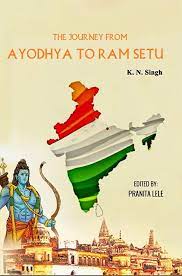
Today, I have for you a rare title, written by Sri K.N. Singh and edited by his daughter Pranita Lele. The book’s long title is “The Journey From Ayodhya to Ram Setu”. Ram Setu, as we all know is the bridge that Lord Ram had built to cross over to Lanka when he waged the war to kill Ravana, who had abducted his pious wife Sita in the most cunning manner. I’m sure the author must have undertaken an enduring comprehensive research of various scriptures before penning this book. Pranita, the editor of this title has also edited the work with great accuracy. So kudos to both.
K.N.SINGH
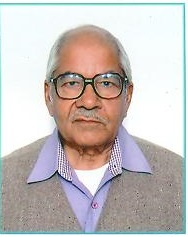
The publisher of the title is Bookrivers.com. It is available in almost all online bookstores. The price of the book is Rs 250. For reference Sri K.N. Singh was born in a small village in Uttar Pradesh in 1937. By profession, he is a Geologist. Geologists are earth scientists. That’s why I’m calling this title rare because it has the scientific perspective of a geologist who narrates the illustrious journey of Lord Ram. Sri K.N. Singh has earlier written articles for the Daily Gulf and Khaleej Times in Bahrain and Dubai. The other book that he has written is titled ‘Geoscientific Perspective of Samudramanthan.’
Pranita Lele
The narration unfolds in about 220 pages. The Foreword is by Anand Vardhan Singh, Senior Journalist, Writer and Editor at The Public India. The author has divided the narration into twenty chapters and each chapter has sub-chapters. We all know the story of Lord Ram. Lord Ram is known as the “Maryada-Purshottam.” The book builds on this title of his and brings to you those minute features that makes him God. Each human perspective was important to him even while fighting the war. Remember even Bali questioned his righteousness and he replied to him convincingly.
The narration takes off with the description of Suryavansh and Chandravansha. The title recounts The Ramayana and its retellings, beginning right from Lord Shiva’s original narration, followed by Kaag Bhusund’s Ramayana, Valmiki Ramayana, Vat Vriksha, Tulsidas’s Ramayana, Jain and Buddhist Ramayana, The spectre of A.K. Ramanujan and the Ram-Lila. The author compares the great Sita Swayamvara with the forgotten ritual of women empowerment that is gaining momentum now.
The book narrates the story of enlightened Ayodhyans (residents of Ayodhya). It describes the sumptuous childhood of the Rajkumars in Ayodhya and gives a good account of what all happened in Ayodhya because of which Lord Ram had gone into exile for 14 years. We may not realise the consequences of our devious fancies that can bring about great devastation to human life. The case in point here is Kaikeyi’s fancies that were schemed.
The vanvas commences when Lord Ram moves to Chitrakoot along with his wife Sita and brother Lakshman. In the narration, I really liked the description of Parnashala—The Idyllic Home … and the Science of Vastu Shastra. It is a sturdy little cottage made of dry wood and leaves, built by Lakshman where the trio settles in Chitrakoot. It was completed on a Sunday when the ‘Uttrayan Sun’ was in the Rohini Nakshatra—the most favourable time for Vastu-shanti writes the author. The death of King Dasharath was an event that shook the tectonic plates of Mother Earth. It was followed by a war where apart from human beings even nature suffered silently. The story of sage Atri and Anasuya remains interesting. There are umpteen mythological stories that make the book quite enjoyable. In the process, you recap the stories that you’ve known for years and also discover new stories that you’ve not known. The descriptions of the Vindhyas and the Narmada are superb. How they entwine with the tragedy of Lord Ram. The Dandakaranya—is the turning point of the Ramayana. The ashrams of various Munis and how they lived their lives are noteworthy. Sitá’s advice, King’s dharma. Mandakarni’s Underwater Inhabitation and the chapters on the greatest of the great Agastya Muni are quite absorbing.
The chapter on Panchavati describes the genealogy of Jatayu and his brother and reflects on Lakshman’s devotion. It talks of the web of illusion about the bratty woman Surpanakha and gives an ethical and cultural perspective of her persona. The killing of Khara and Bhushan, the weaponry in ancient India and Surpanakha’s beseeching Ravan to restore her honour were perhaps the immediate causes of the war.
Your unjust desires may get you in trouble. Desire could fire or misfire your life where the story of Maricha and the Golden Deer comes in handy. Maricha was the person who changed form and became the golden deer that Sita fell for. Then comes Sita’s accusation that Lakshman did not help Rama. The chapter on Aerodynamics sounds a bit to far-fetched when you consider the nature of the book, but when you read about the Pushpak Viman, Jataiyu and Lepakshi you can clearly establish the connection. The book is engrossing right till the end especially the portion of Lord Hanuman and his visits to Ashok Vatika in Lanka. Vibhishan’s picturization, Lanka Dahan and Pampa-Sarovar are equally engrossing. There is a phenomenal adventure in the story of Ramayana. In the closing chapters, you have the crossing of the ocean. Was Ram Setu man-made or natural—find it out yourself while reading the book.
The author has used plain English to express himself. He has tried to give it a non-religious tinge by quoting well-known authors. Geology has a very different way of looking at Ram’s journey from Chitrakoot to Ram-Setu which you’ll discover in the pages of this book. It is quite well-detailed. It delineates small details that we don’t know. The life of Lord Ram emits great values and the author has tried to connect it with today’s political class. The narration leaves behind many sound life lessons. The author juxtaposes Ram’s struggle and Ram-Rajya with the present times. For this, the book deviates from the main plot for a while. There are many stories within the main plot. Worldly dos and don’ts are skillfully mingled with the main theme. The book undertakes a suggestive political lesson on page 176 and 177 and has a somewhat sudden ending but not before the author has penned his thoughts prolifically on the relevance of Rama in modern times.
If you think you know all about Ramayana definitely read this book to find out what you didn’t know about it. I would call it a must-read as it brings to the fore the unknown trail of mythology that at least I didn’t know.
Shravan Charity Mission is an NGO that works for poor children suffering from life-threatening diseases, especially cancer. Our posts are meant for our readers that include both children and adults and it has a huge variety in terms of content. We also accept donations for our mission. Should you wish to donate for the cause. The bank details are given below:
NAME OF ACCOUNT: SHRAVAN CHARITY MISSION
Account no: 680510110004635 (BANK OF INDIA)
IFSC code: BKID0006805
*
Our Publications
GLOOM BEHIND THE SMILE
(The book is about a young cancer patient. Now archived in 8 prestigious libraries of the US that includes Harvard College Library; Harvard University Library; Library of Congress; University of Washington, Seattle; University of Minnesota, Minneapolis; Yale University, New Haven; University of Chicago; University of North Carolina, at Chapel Hill University Libraries. It can also be accessed in MIT through Worldcat.org. Besides, it is also available for reading in libraries and archives of Canada, Cancer Aid and Research Foundation Mumbai; Jaipuria Institute of Management, Noida, India; Shoolini University, Yogananda Knowledge Center, Himachal Pradesh and Azim Premzi University, Bangalore).
ONE TO TANGO … RIA’S ODYSSEY
(Is a book on ‘singlehood’ about a Delhi girl now archived in Connemara Library, Chennai and Delhi Public Library, GOI, Ministry of Culture, Delhi; Available for reading in Indian National Bibliography, March 2016, in the literature section in Central Reference Library, Ministry of Culture, India, Belvedere, Kolkata-700022)
AADAB LUCKNOW … FOND MEMORIES
(Is a fiction written around the great city of Nawabs—Lucknow. It describes Lucknow in great detail and also talks about its Hindu-Muslim amity that happens to be the undying characteristic of Lucknow. The book was launched at the Lucknow International Literary Festival in 2014. It is included for reading in Askews and Holts Library Services, Lancashire, U.K; Herrick District Library, Holland; Charlotte-Mecklenburg Library, Mecklenburg County in North Carolina, USA; Black Gold Cooperative Library Administration, Arroyo Grande, California; Berkeley Library, University of California).
REFRACTIONS … FROM THE PRISM OF GOD
(Co-published by Cankids–Kidscan, a pan India NGO and Shravan Charity Mission, that works for Child cancer in India. The book is endorsed by Ms Preetha Reddy, MD Apollo Hospitals Group. It was launched at Lucknow International Literary Festival in 2016)
TYPICAL TALE OF AN INDIAN SALESMAN
(Is a story of an Indian salesman who is humbly qualified. Yet he fights his way through unceasing uncertainties to reach the top. A good read not only for salesmen. The book was launched on 10th February 2018 at Gorakhpur Lit-Fest. Now available on Amazon, Flipkart and Onlinegatha)
RHYTHM … in poems
(Published in January 2019. The book contains 50 poems. The poems describe our day-to-day life. A few poems from the book have been published in Shillong Times, Bandra Times and Bhavan’s Journal. The book is available on Amazon, Flipkart and Onlinegatha)
MIRAGE
(Published in February 2020. The book is a collection of eight short stories available in Amazon, Flipkart and Notion Press)
AWADH ASSAM AND DALAI LAMA … The Kalachakra
(The story of the man who received His Holiness The Dalai Lama and his retinue in 1959 as a GOI representative when he fled Tibet in 1959. The book was launched on 21st November 2022 by His Holiness The Dalai Lama at Dharmshala. The title is archived in the library of the Department of Information and International Relations (DIIR) Government of Tibet, Tibet Policy Institute (TPI) and the personal library of His Holiness. The title is also archived in The Ohio Digital Library, USA. It is also included in the library of the world-renowned company APPLE).
BHAVANS JOURNAL
Short stories, Book reviews and Articles published in Bhavan’s Journal: 1. Reality and Perception, 15.10.19; 2. Sending the Wrong Message, 31.5.20; 3.Eagle versus Scholars June, 15 & 20 2020; 4.Indica, 15.8.20; 5.The Story of King Chitraketu, August 31 2020; 6.Breaking Through the Chakravyuh, September 30 2020. 7. The Questioning Spouse, October 31, 2020; 8. Happy Days, November 15, 2020; 9.The Karma Cycle of Paddy and Wheat, December 15, 2020; 10.Power Vs Influence, January 31, 2021; 11.Three Refugees, March 15, 2021; 12.Rise and Fall of Ajatashatru, March 31, 2021; 13.Reformed Ruler, May 15, 2021; 14.A Lasting Name, May 31, 2021; 15.Are Animals Better Teachers? June 16, 2021; 16.Book Review: The Gram Swaraj, 1.7.21; 17.Right Age for Achievements, 15.7.21; 18.Big Things Have Small Beginnings, 15.8.21; 19.Where is Gangaridai?, 15.9.21; 20.Confront the Donkey Within You 30.9.21; 21. Know Your Strengths 15.10.21; 22. Poverty 15.11.21; 23. Top View 30.11.21; 24. The Bansuriwala 15.1.22; 25.Sale of Alaska 15.2.22; 26.The Dimasa Kingdom 28.2.22; 27. Buried Treasure 15.4.22; 28. The Kingdom of Pragjyotisha 30.4.22; 29.Who is more useful? 15.5.22; 30. The White Swan from Lake Mansarovar 30.6.22; 31. Bhool Bhulayya 15.9.22; 32. Good Karma 30.9.22; 33. Good Name vs Bad Name 15.10.22; 34.Uttarapath—The Grand Trunk Road 1.12.22; 35.When Gods Get Angry 1.1.23; 36. Holinshed’s Chronicles 15.1.23; 37. Theogony 15.2.23; 38. Poem: Mother 14.5.23; 39. THE NAG MANDIR 30.6.23; 40. The Story of Garuda 30.7.23; 41. Janmabhoomi vs Karmabhoomi 31.8.23; 42. The Ghost Town of Kuldhara 15.9.23;
SUNDAY SHILLONG TIMES
ARTICLES & POEMS: 1. POEM: HAPPY NEW YEAR 8.1.23; 2. POEM: SPRING 12.3.23; 3. POEM: RIGHT AND WRONG 20.3.23; 4. THE GUSH OF EMOTION—WRITING, 26.3.23; 5.THE NAG MANDIR, 7.5.23; 6. POEM:MOTHER 7.5.23;7. POEM: RAIN RAIN 9.7.23; 8. POEM:YOU COME ALONE YOUGO ALONE 6.8.23; 9. RAIN RAIN (SECOND TIME) 10.8.23: 10.POEM: GURU TEACHER 1.10.23;
A mythic fiction. This book was published in the year 2012 by Platinum Press and the page count of this book is 504.
Asura broke into the top seller charts within a week of its launch. It became the number one bestseller of 2012 as per Crossword list and CNN IBN. It was also nominated for Crossword’s Popular Award in 2013. The book has since been published in many Indian languages.
Says Ravana: “For thousands of years, I have been vilified and my death is celebrated year after year in every corner of India. Why? Was it because I challenged the Gods for the sake of my daughter? Was it because I freed a race from the yoke of caste-based Deva rule? You have heard the victor’s tale, the Ramayana. Now hear the Ravanayana, for I am the Asura.”
‘Juxtaposed between the view point of the defeated Asura emperor and a common citizen of the Asura Empire, this novel gives an entirely fresh and new perspective to our age-old epic. It is the tale of the defeated and silenced. A different view point—says Deccan Chronicle.
The book attempts to highlight the voice of the vanquished as opposed to the victor’s version of Ramayana that is commonly read and known. It explores the struggle of Ravana and his life that made him what he was, and attempts, to create a link between the social construct, as it may have existed, and varied, at the time, and the well-known instances described in the legend of Ramayana as it is known today.
It is quite a marathon novel running over some sixty five chapters. We all, in our lives consider Ravana to be one of the biggest villains on earth. The novel gives a counter viewpoint on that. It tells us the hidden aspect of Ravana. The author has used freely creative liberties considering the era it covers.
The story of the Ramayana has been told innumerable times that covers the enthralling story of Rama, the incarnation of God, who slew Ravana, the evil demon of darkness, and is well known to every Indian. And in the pages of history, as always, it is the version told by the victors that goes on to live. The voice of the vanquished remains lost in silence. But what if Ravana and his people had a different story to tell?
The story of the Ravanayana has never been told. Asura is the epic tale of the vanquished Asura people, a story that has been cherished by the oppressed outcastes of India for 3000 years. Until now, no Asura has dared to tell the tale. But perhaps the time has come for the dead and the defeated to speak.
Says Ravana, “I am a non-entity—invisible, powerless and negligible. No epics will ever be written about me. I have suffered both Ravana and Rama—the hero and the villain or the villain and the hero. When the stories of great men are told, my voice maybe too feeble to be heard. Yet, spare me a moment and hear my story, for I am Bhadra, the Asura, and my life is the tale of the loser.”
The ancient Asura Empire lay shattered into many warring petty kingdoms reeling under the heel of the Devas. In desperation, the Asuras look up to a young saviour—Ravana. Believing that a better world awaits them under Ravana, common men like Bhadra decide to follow the young leader. With will of iron and a fiery ambition to succeed, Ravana leads his people from victory to victory and carves out a vast empire from the Devas. But even when Ravana succeeds spectacularly, the poor Asuras find that nothing much has changed for them. It is then that Ravana, by one action, changes the history of the world.
The author has used his creativity to the hilt. He has given a modern perspective to the geography of those times and how wars were fought, how a race lived and fought for survival. The language is by and large lucid. A broad spine book of over five hundred pages. The author had much to say I guess. I would give the book five stars a must read.
Shravan Charity Mission is an NGO that works for poor children suffering from life threatening diseases especially cancer. Our posts are meant for our readers that includes both children and adults and it has a huge variety in terms of content. We also accept donations for our mission. Should you wish to donate for the cause. The bank details are given below:
NAME OF ACCOUNT: SHRAVAN CHARITY MISSION
Account no: 680510110004635 (BANK OF INDIA)
IFSC code: BKID0006805
*
Our Publications
GLOOM BEHIND THE SMILE
(The book is about a young cancer patient. Now archived in 8 prestigious libraries of the US that includes Harvard College Library; Harvard University Library; Library of Congress; University of Washington, Seattle; University of Minnesota, Minneapolis; Yale University, New Haven; University of Chicago; University of North Carolina, at Chapel Hill University Libraries. It can also be accessed in MIT through Worldcat.org. Besides, it is also available for reading in libraries and archives of Canada, Cancer Aid and Research Foundation Mumbai and Jaipuria Institute of Management, Noida, India. Shoolini University, Yogananda Knowledge Center, Himachal Pradesh. Azim Premzi University, Bangalore).
ONE TO TANGO … RIA’S ODYSSEY
(Is a book on ‘singlehood’ about a Delhi girl now archived in Connemara Library, Chennai and Delhi Public Library, GOI, Ministry of Culture, Delhi; Available for reading in Indian National Bibliography, March 2016, in the literature section, in Central Reference Library, Ministry of Culture, India, Belvedere, Kolkata-700022)
AADAB LUCKNOW … FOND MEMORIES
(Is a fiction written around the great city of Nawabs—Lucknow. It describes Lucknow in great detail and also talks about its Hindu-Muslim amity. That happens to be the undying characteristics of Lucknow. The book was launched in Lucknow International Literary Festival of 2014. It is included for reading in Askews and Holts Library Services, Lancashire, U.K.)
REFRACTIONS … FROM THE PRISM OF GOD
(Co-published by Cankids–Kidscan, a pan India NGO and Shravan Charity Mission, that works for Child cancer in India. The book is endorsed by Ms Preetha Reddy, MD Apollo Hospitals Group. It was launched in Lucknow International Literary Festival 2016)
TYPICAL TALE OF AN INDIAN SALESMAN
(Is a story of an Indian salesman who is, humbly qualified. Yet he fights his ways through unceasing uncertainties to reach the top. A good read not only for salesmen. The book was launched on 10th February, 2018 in Gorakhpur Lit-Fest. Now available in Amazon, Flipkart and Onlinegatha)
RHYTHM … in poems
(Published in January 2019. The book contains 50 poems. The poems describe our day to day life. The book is available in Amazon, Flipkart and Onlinegatha)
MIRAGE
(Published in February 2020. The book is a collection of eight short stories available in Amazon, Flipkart and Notion Press)
Short stories and Articles published in Bhavan’s Journal: Reality and Perception, 15.10.19; Sending the Wrong Message, 31.5.20; Eagle versus Scholars June, 15 & 20 2020; Indica, 15.8.20; The Story of King Chitraketu, August 31 2020; Breaking Through the Chakravyuh, September 30 2020. The Questioning Spouse, October 31, 2020; Happy Days, November 15, 2020; The Karma Cycle of Paddy and Wheat, December 15,2020; Power Vs Influence, January 31, 2021; Three Refugees, March 15, 2021; Rise and Fall of Ajatashatru, March 31, 2021;
(ALL THE ABOVE TITLES ARE AVAILABLE FOR SALE IN AMAZON, FLIPKART AND OTHER ONLINE STORES OR YOU COULD EVEN WRITE TO US FOR A COPY)



 Shravan charity mission