Tag Archives: kamlesh tripathi

FACTS & FIGURES: My Lai massacre … Vietnam War

Copyright@shravancharitymission

     My Lai Massacre was ​an incident, that occurred during the Vietnam War on 16 March 1968, when a group of US soldiers killed 347 ordinary people, including women and children, in the Vietnamese village of My Lai. Later in 1971, the officer who ordered the attack, Lieutenant William Calley, was sent to prison for life, but this was later reduced to 10 years and he was in fact released in 1974 in just three years. Many Americans were shocked by the incident, and as a result protests against the war increased.

    To put it in perspective it was a mass murder of unarmed South Vietnamese civilians by the U.S. troops in Son Tinh district in South Vietnam. In this horrific crime somewhere around 500 unarmed people were killed by the U.S. Army soldiers.

    Victims included men, women, children and even infants. Some of the women were even gang-raped and their bodies were mutilated and that included children as young as twelve. Twenty-six soldiers were charged with criminal offences.

    This war crime was later called ‘the most shocking episode of the Vietnam War. It took place in two hamlets of Son My village in Quang Ngai province. These hamlets were marked on the U.S. Army topographic maps as My Lai and My Khe.

    The U.S. Army slang names, for the hamlets and sub-hamlets in that area were Pinkville, and the carnage was initially referred to as the Pinkville Massacre. Later, when the U.S. Army started its investigation, the media changed it to the Massacre at Songmy. Currently, this horrific event is referred to as the My Lai Massacre in the United States and called the Sơn M massacre in Vietnam.

    The incident prompted global outrage when it became public knowledge in November 1969. The incident increased to some extent domestic opposition to the U.S. involvement in the Vietnam War when the scope of killing and cover-up attempts were exposed. Initially, three U.S. servicemen who had tried to halt the massacre and had rescued the hiding civilians were shunned, and even denounced as traitors by several U.S. Congressmen. And it was only after 30 years that they were recognized and decorated, one posthumously, by the U.S. Army for shielding non-combatants from harm in a war zone. My Lai was one of the largest publicized massacres of civilians by U.S. forces in the 20th century.

    On the morning of 16 March at 7:30 a.m., around 100 soldiers from Charlie Company led by Medina, following a short artillery and helicopter gunship barrage, landed in helicopters at  Son My, a patchwork of settlements, rice paddies, irrigation ditches, dikes, and dirt roads, connecting an assortment of hamlets and sub-hamlets. The largest among them were the hamlets of My Lai, Co Luy, My Khe, and Tu Cung.

    Although no ammunitions were fired on American soldiers after landing, the American troops, still suspected there were VC guerrillas (i.e. Viet Cong guerrillas, officially known as the National Liberation Front of South Vietnam) hiding underground or in the huts.

    According to the operational plan, 1st Platoon, led by Second Lieutenant William Calley, and 2nd Platoon, led by 2LT Stephen Brooks, entered the hamlet of Tu Cung in a line formation at 08:00, while the 3rd Platoon, commanded by 2LT Jeffrey U. Lacross, and Captain Medina’s command post remained outside. On approach, both platoons fired at people they saw in the rice fields and in the bushes.

    The villagers, who were getting ready for a market day, at first did not panic or run away, as they were herded into the hamlet’s commons. Harry Stanley, a machine gunner from Charlie Company, said during the U.S. Army Criminal Investigation Division inquiry that the killings started without warning. He first observed a member of 1st Platoon strike a Vietnamese man with a bayonet. Then the same trooper pushed another villager into a well and threw a grenade in it. Next, he saw some fifteen or twenty people, mainly women and children, kneeling around a temple with smouldering incense. They were actually praying and crying. Sadly, they were all killed by shots to their head.

    Most of the killings occurred in the southern part of Tu Cung, a sub-hamlet of Xom Lang, which was a home to 700 residents. Xom Lang was erroneously marked on the U.S. military operational maps of Quang Ngai province as My Lai.

    A large group of approximately 70–80 villagers were rounded up by 1st Platoon in Xom Lang and led to an irrigation ditch east of the settlement. They were then pushed into the ditch and shot dead by soldiers after repeated orders issued by Calley, who was also shooting himself. PFC (Private First Class a junior military rank) Paul Meadlo testified that he expended several M16 rifle magazines. He recollected that women were allegedly saying “No VC” (That they are not from Viet Cong) and were trying to shield their children. He remembered that he was shooting into women with babies in their hands, since he was convinced at that time that they were all booby-trapped with grenades and were poised to attack. On another occasion during the security sweep in My Lai, Meadlo again fired at civilians side-by-side with Lieutenant Calley.

    PFC Dennis Konti, a witness for the prosecution, especially spoke about, one gruesome episode during the shooting, “A lot of women had thrown themselves on top of the children to protect them, and the children were alive at first. Then, the children who were old enough to walk got up and Calley began to shoot the children also”. Other 1st Platoon members testified that many of the deaths of individual Vietnamese men, women and children occurred inside My Lai during the security sweep. Livestock was shot as well. Over the next few days American army was involved in burning and destruction of dwellings, as well as mistreatment of Vietnamese detainees.

    Warrant Officer Hugh Thompson, Jr., a helicopter pilot from Company B (Aero-Scouts), 123rd Aviation Battalion, Americal Division, saw dead and wounded civilians as he was flying over the village of Son My, providing close-air support for ground forces. 

    Thompson and his crew witnessed an unarmed woman being kicked and shot at point-blank range by a soldier Medina, who later claimed that he thought she had a hand grenade. Thompson then saw a group of civilians again consisting of children, women, and old men at a bunker being approached by ground personnel. Thompson landed, and told his crew that if the soldiers shot at the villagers while he was trying to get them out of the bunker, then they were to open fire on their comrades.

    Thompson later testified that he spoke with a lieutenant (identified as Stephen Brooks of 2nd Platoon) and told him there were women and children in the bunker, and asked if the lieutenant would help get them out. Thompson found 12–16 people in the bunker, he coaxed them out and led them to the helicopter, standing with them while they were flown out in two groups.

    Further in My Lai, Thompson and other air crew members noticed several large groups of bodies. They spotted some survivors in the ditch. Thompson landed again. A crew member, Specialist 4 Glenn Andreotta, entered the ditch and returned with a bloodied but apparently unharmed four-year old girl, who was then flown to safety. Thompson then reported what he had seen to his company commander, Major Frederic W. Watke, using terms such as “murder” and “needless and unnecessary killings.” Thompson’s statements were confirmed by other helicopter pilots too and air crew members.

    For his actions at Me My Lai, Thompson was later awarded the Distinguished Flying Cross.

     It gives shivers when you think of such horrific crimes.

By Kamlesh Tripathi

*

https://kamleshsujata.wordpress.com

*

Share it if you like it

*

Shravan Charity Mission is an NGO that works for poor children suffering from life threatening diseases especially cancer. Our posts are meant for our readers that includes both children and adults and it has a huge variety in terms of content. We also accept donations for our mission. Should you wish to donate for the cause. The bank details are given below:

NAME OF ACCOUNT: SHRAVAN CHARITY MISSION

Account no: 680510110004635 (BANK OF INDIA)

IFSC code: BKID0006805

*

Our publications

GLOOM BEHIND THE SMILE

(The book is about a young cancer patient. Now archived in 7 prestigious libraries of the US, including, Harvard University and Library of Congress. It can also be accessed in MIT through Worldcat.org. Besides, it is also available for reading in Libraries and archives of Canada and Cancer Aid and Research Foundation Mumbai)  

ONE TO TANGO … RIA’S ODYSSEY

(Is a book on ‘singlehood’ about a Delhi girl now archived in Connemara Library, Chennai and Delhi Public Library, GOI, Ministry of Culture, Delhi)

AADAB LUCKNOW … FOND MEMORIES

(Is a fiction written around the great city of Nawabs—Lucknow. It describes Lucknow in great detail and also talks about its Hindu-Muslim amity. That happens to be its undying characteristic. The book was launched in Lucknow International Literary Festival of 2014)

REFRACTIONS … FROM THE PRISM OF GOD

(Co-published by Cankids–Kidscan, a pan India NGO and Shravan Charity Mission, that works for Child cancer in India. The book is endorsed by Ms Preetha Reddy, MD Apollo Hospitals Group. It was launched in Lucknow International Literary Festival 2016)

TYPICAL TALE OF AN INDIAN SALESMAN

(Is a story of an Indian salesman who is, humbly qualified. Yet he fights his ways through unceasing uncertainties to reach the top. A good read not only for salesmen. The book was launched on 10th February, 2018 in Gorakhpur Lit-Fest. Now available in Amazon, Flipkart and Onlinegatha)

RHYTHM … in poems

(Published in January 2019. The book contains 50 poems. The poems describe our day to day life. The book is available in Amazon, Flipkart and Onlinegatha)

MIRAGE

(Published in February 2020. The book is a collection of eight short stories. It is available in Amazon, Flipkart and Notion Press)

(ALL THE ABOVE TITLES ARE AVAILABLE FOR SALE IN AMAZON, FLIPKART AND OTHER ONLINE STORES OR YOU COULD EVEN WRITE TO US FOR A COPY)

*****


SHORT STORY: ARROGANT KING

Copyright@shravancharitymission

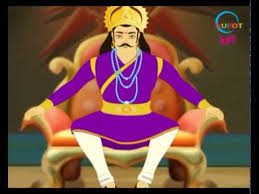
    Many years ago there lived a deceitful king who always blamed God for anything wrong that happened in his kingdom by saying, “It’s all God’s doing.” But at the same time, for anything good that happened in his kingdom he always said, “It’s the king’s doing.”

    When there were floods in his kingdom he blamed God. When there was an epidemic he blamed God. When there was a war he blamed God. When there was a drought then too he blamed God. In utter disgust he often used to blurt, ‘it’s all God’s doing,’ and slowly that became his catchphrase. In a vast kingdom such as his, something was always going wrong and that gave him umpteen opportunities to curse God.

    Fed up, one day, God approached the king and said,

    ‘Rajan … While ruling over such a vast kingdom, many things will go wrong and many things will go right and it is but the king’s duty, to take the sum total of it, in his stride. But what I find here is something very strange. For all the things that go wrong in your kingdom, you pass it off as God’s doing, and for all the things that go right, you pat your shoulder, to pass it off as the king’s achievement. Now is that fair?”

    The king replied, ‘Prabhu … Of course it is fair.’

    ‘Then explain how.’ God reasoned.

    ‘Prabhu … blaming you is like blaming destiny which is ultimately God’s will. Now, who can question destiny that happens to be God in disguise. And yes, I definitely pat myself for things that go right in my kingdom because it only increases my halo, aura and my command over my subjects.’

    ‘God smiled at the king and said.’

    ‘Rajan … I suggest for some time now, reverse the trend and witness the change.’

    ‘Prabhu … I didn’t get you.’

    ‘Rajan, it’s very simple. For all the things going wrong in your kingdom take the blame upon yourself. Say, it’s the king’s doing and, for all the things going right in your kingdom say, it’s the God’s doing. And, I’ll meet you after a year when we’ll see how the change has affected you and your kingdom.’

    King folded his hands, closed his eyes and said, ‘As you wish Prabhu. After which God left for his heavenly abode.

    Soon, the king instructed his ministers, to badge him for everything, that was going wrong in his kingdom and praise God Almighty for whatever was going right in the kingdom. The ministers were surprised at this gesture of the king, but then they remained silent since they were subordinates.

    Gradually, the work pressure on the king, started increasing, when ‘destiny’ started turning into, shabby governance. The king was now feeling more responsible as he didn’t want his name to get spoilt—earlier it didn’t matter, as it was God’s name that was getting spoilt.  So, he immediately took some proactive measures and started participating much more effectively in the day-to-day running of the kingdom. He built suitable embankments before the floods arrived. He got wells dug up before the crop was sown, for irrigation. He built night shelters for the poor before arrival of winters. And when, the kingdom was attacked by enemies he led by example and fought the battle himself from the frontline. He was able to unearth the frauds that were being committed under the banner of destiny by his ministers. The king was now a changed personality.

    When the rising waters of the river could not enter the kingdom because of the embankment the king praised the God. Upon the bumper harvest because of the new wells that were dug up before the sowing, he praised God. On the day of inauguration of night shelter he again praised God. And thereafter whenever there was something good happening in the kingdom he only praised God Almighty and said it was all because of his grace.

    In a year’s time the reputation of the king took an about-turn. The citizens of his kingdom were now convinced that they couldn’t have had a better king than him. For he took direct responsibility in terms of tackling every challenge that erupted in his kingdom. And at the same time for any success he showed humility and praised God Almighty. This gave an impression to people that the king has become very humble. And with that his overall aura went up.

    After exactly a year God came to meet the king. The king was very busy sorting out urgent issues of his kingdom. He requested God to give him some moments so that he could close certain pressing matters and then sit with him with a free mind. God agreed to wait. But in the rush of work the king forgot that God was waiting for him. The king did return to his castle but only after finishing his work which was after a couple of days and found God still waiting for him. The king fell on God’s feet for the delay in attending to him and pleaded forgiveness, profusely.

    God helped the king to stand on his feet and then said.

    ‘Rajan I’m happy to see the change in you, and for worthy King’s like you God doesn’t mind waiting.’

    Moral of the story: Work is worship.

Written by Kamlesh Tripathi

*

https://kamleshsujata.wordpress.com

*

Share it if you like it

*

Shravan Charity Mission is an NGO that works for poor children suffering from life threatening diseases especially cancer. Our posts are meant for our readers that includes both children and adults and it has a huge variety in terms of content. We also accept donations for our mission. Should you wish to donate for the cause. The bank details are given below:

NAME OF ACCOUNT: SHRAVAN CHARITY MISSION

Account no: 680510110004635 (BANK OF INDIA)

IFSC code: BKID0006805

*

Our publications

GLOOM BEHIND THE SMILE

(The book is about a young cancer patient. Now archived in 7 prestigious libraries of the US, including, Harvard University and Library of Congress. It can also be accessed in MIT through Worldcat.org. Besides, it is also available for reading in Libraries and archives of Canada and Cancer Aid and Research Foundation Mumbai)  

ONE TO TANGO … RIA’S ODYSSEY

(Is a book on ‘singlehood’ about a Delhi girl now archived in Connemara Library, Chennai and Delhi Public Library, GOI, Ministry of Culture, Delhi)

AADAB LUCKNOW … FOND MEMORIES

(Is a fiction written around the great city of Nawabs—Lucknow. It describes Lucknow in great detail and also talks about its Hindu-Muslim amity. That happens to be its undying characteristic. The book was launched in Lucknow International Literary Festival of 2014)

REFRACTIONS … FROM THE PRISM OF GOD

(Co-published by Cankids–Kidscan, a pan India NGO and Shravan Charity Mission, that works for Child cancer in India. The book is endorsed by Ms Preetha Reddy, MD Apollo Hospitals Group. It was launched in Lucknow International Literary Festival 2016)

TYPICAL TALE OF AN INDIAN SALESMAN

(Is a story of an Indian salesman who is, humbly qualified. Yet he fights his ways through unceasing uncertainties to reach the top. A good read not only for salesmen. The book was launched on 10th February, 2018 in Gorakhpur Lit-Fest. Now available in Amazon, Flipkart and Onlinegatha)

RHYTHM … in poems

(Published in January 2019. The book contains 50 poems. The poems describe our day to day life. The book is available in Amazon, Flipkart and Onlinegatha)

MIRAGE

(Published in February 2020. The book is a collection of eight short stories. It is available in Amazon, Flipkart and Notion Press)

(ALL THE ABOVE TITLES ARE AVAILABLE FOR SALE IN AMAZON, FLIPKART AND OTHER ONLINE STORES OR YOU COULD EVEN WRITE TO US FOR A COPY)

*****


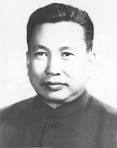
Facts & Figures: KHYMER ROUGE, The Story of Marxist Dictator Pol Pot, Cambodia

Copyright@shravancharitymission

(Pol Pot)

    The Khmer Rouge was a brutal regime that ruled Cambodia, under the horrendous leadership of Marxist dictator Pol Pot, from 1975 to 1979. Pol Pot’s attempts to create a Cambodian “master race” through social engineering ultimately led to the deaths of more than 2 million people in this Southeast Asian nation. Those killed were either executed as enemies of the regime, or they died from starvation, disease or overwork. Historically, this period—is depicted in a film titled, ‘The Killing Fields.’ Referred as Cambodian Genocide.  Cambodia as we all know is surrounded by Thailand, Laos, Vietnam and the Gulf of Thailand.

    Although, Pol Pot and the Khmer Rouge didn’t come to power until the mid-1970s, the roots of their takeover can be traced back to the 1960s, when a communist insurgency first became active in Cambodia, which was then ruled by a monarch.

    Throughout the 1960s, the Khmer Rouge, operated as, the armed wing of the Communist Party of Kampuchea, the name the party used for Cambodia. Operating primarily out of remote jungles and mountain areas in the northeast of the country, near its border with Vietnam, which at that time was involved in its own civil war. Khmer Rouge did not have popular support across Cambodia, particularly in the cities, including its capital Phnom Penh.

    After a 1970 military coup that led to the ouster of Cambodia’s ruling monarch, Prince Norodom Sihanouk, the Khmer Rouge decided to join forces with the deposed leader and form a political coalition. This was because the monarch had been popular among city-dwelling Cambodians, and through this coalition the Khmer Rouge began to garner more and more support of the city-dwelling Cambodians.

    For the next five years, a civil war unleashed between the right-leaning military that had led the coup, and those supporting the alliance of Prince Norodom and the Khmer Rouge in Cambodia. Eventually, the Khmer Rouge side, seized the advantage of the conflict, after gaining control of, increasing amounts of territory in the Cambodian countryside.

    In 1975, Khmer Rouge fighters invaded Phnom Penh and took over the city. And with the capital in its grasp, the Khmer Rouge had won the civil war and, thus, started ruling over the country.

    But notably, the Khmer Rouge opted, not to restore power to Prince Norodom, and instead, handed it over to Pol Pot, leader of the Khmer Rouge. And Prince Norodom was forced to live in exile.

    As a leader of the Khmer Rouge during the days of insurgent movement, Pol Pot had come to admire the tribes in Cambodia’s rural northeast. These tribes were self-sufficient and lived on the goods that they produced through subsistence farming.

   The tribes, he felt, were like communes that worked together, shared the spoils of their labour, and were untainted by the evils of money, wealth and religion, the latter being the Buddhism, quite common in urban Cambodia.

    Once installed as the country’s leader by the Khmer Rouge, Pol Pot and the forces loyal to him quickly set about, remaking Cambodia, which they had renamed Kampuchea, in the model of these rural tribes, with the hopes of creating a communist-style, agricultural utopia.

    They declared 1975 as the “Year Zero” in the country. Pol Pot isolated Kampuchea from the global community. He resettled hundreds of thousands of the country’s city-dwellers into rural farming communes and abolished the country’s currency. He also outlawed the ownership of private property and the practice of religion in the new nation.

    Workers on the collective farms established by Pol Pot soon began suffering from the effects of overwork and lack of food. Hundreds of thousands died from disease, starvation and even damage to their bodies sustained during back-breaking work or abuse from the ruthless Khmer Rouge guards overseeing the camps.

    Pol Pot’s regime also executed thousands of people that it deemed as enemies of the state. Those seen as intellectuals, or potential leaders of a revolutionary movement, were also executed. Legend has it that, some were executed for merely appearing to be intellectuals, because they wore glasses and were able to speak a foreign language.

    As part of this effort, hundreds of thousands of the educated, middle-class Cambodians were tortured and executed in special centres established in the cities. Most infamous of which was Tuol Sleng jail in Phnom Penh, where nearly 17,000 men, women and children were imprisoned during the regime’s four years in power. In what became to be known as the Cambodian Genocide, an estimated 1.7 to 2.2 million Cambodians died during Pol Pot’s regime.

    Finally, the Vietnamese Army invaded Cambodia in 1979 and dislodged Pol Pot and the Khmer Rouge from power, after a series of violent battles on the border between the two countries. Pol Pot had sought to extend his influence into the newly unified Vietnam, but his forces were suitably rebuffed.

    After the invasion, Pol Pot and his Khmer Rouge fighters quickly retreated to remote areas of the country. Where, they remained active as an insurgent group, albeit with declining influence. Vietnam retained control of the country, with a military presence, for much of the 1980s, even over the objections of the United States.

    After the fall of the Khmer Rouge that happened decades back. Cambodia has gradually re-established ties with the world community, although the country still faces problems, including widespread poverty and illiteracy. Prince Norodom returned to govern Cambodia in 1993, but he now rules under a constitutional monarchy.

    Pol Pot himself lived in the rural northeast of the country until 1997, when he was tried by the Khmer Rouge for his crimes against the state. The trial of course was an eyewash, and the former dictator died while under house arrest in his jungle home. Since he had died in his jungle house his body parts were sent for a DNA test.

    The stories of the suffering of the Cambodian people at the hands of Pol Pot and the Khmer Rouge have garnered worldwide attention in the years since their rise and fall, including through a fictional account of the atrocities in the popular 1984 movie The Killing Fields.

    Corona Virus reminds me of the filthy communist dictator Pol Pot.

    Stay home. Stay safe.

***

By Kamlesh Tripathi

*

https://kamleshsujata.wordpress.com

*

Share it if you like it

*

Shravan Charity Mission is an NGO that works for poor children suffering from life threatening diseases especially cancer. Our posts are meant for our readers that includes both children and adults and it has a huge variety in terms of content. We also accept donations for our mission. Should you wish to donate for the cause. The bank details are given below:

NAME OF ACCOUNT: SHRAVAN CHARITY MISSION

Account no: 680510110004635 (BANK OF INDIA)

IFSC code: BKID0006805

*

Our publications

GLOOM BEHIND THE SMILE

(The book is about a young cancer patient. Now archived in 7 prestigious libraries of the US, including, Harvard University and Library of Congress. It can also be accessed in MIT through Worldcat.org. Besides, it is also available for reading in Libraries and archives of Canada and Cancer Aid and Research Foundation Mumbai)  

ONE TO TANGO … RIA’S ODYSSEY

(Is a book on ‘singlehood’ about a Delhi girl now archived in Connemara Library, Chennai and Delhi Public Library, GOI, Ministry of Culture, Delhi)

AADAB LUCKNOW … FOND MEMORIES

(Is a fiction written around the great city of Nawabs—Lucknow. It describes Lucknow in great detail and also talks about its Hindu-Muslim amity. That happens to be its undying characteristic. The book was launched in Lucknow International Literary Festival of 2014)

REFRACTIONS … FROM THE PRISM OF GOD

(Co-published by Cankids–Kidscan, a pan India NGO and Shravan Charity Mission, that works for Child cancer in India. The book is endorsed by Ms Preetha Reddy, MD Apollo Hospitals Group. It was launched in Lucknow International Literary Festival 2016)

TYPICAL TALE OF AN INDIAN SALESMAN

(Is a story of an Indian salesman who is, humbly qualified. Yet he fights his ways through unceasing uncertainties to reach the top. A good read not only for salesmen. The book was launched on 10th February, 2018 in Gorakhpur Lit-Fest. Now available in Amazon, Flipkart and Onlinegatha)

RHYTHM … in poems

(Published in January 2019. The book contains 50 poems. The poems describe our day to day life. The book is available in Amazon, Flipkart and Onlinegatha)

MIRAGE

(Published in February 2020. The book is a collection of eight short stories. It is available in Amazon, Flipkart and Notion Press)

(ALL THE ABOVE TITLES ARE AVAILABLE FOR SALE IN AMAZON, FLIPKART AND OTHER ONLINE STORES OR YOU COULD EVEN WRITE TO US FOR A COPY)

*****


SHORT STORY: BIG JOB WRONG MESSAGE

Copyright@shravancharitymission

    There was once a king who had this strange habit of meeting all the wrong kind of people in his kingdom. He met prisoners charged with murder, theft, so on and so forth. He had directed his prison chief to send him five prisoners every night for a one-on-one. He used to meet them alone but no one knew why.

    He had also left instructions that post his meeting no one should cross check with the prisoner about the conversation the king had had with him. And, if ever, it came to his notice that someone in the prison has tried to coax the prisoner to reveal the conversation the prisoner had had with the king that person’s head would be guillotined … he would be beheaded.

    The learned class in the kingdom could not comprehend this uncommon trait of the king. Failing which, they became extremely weary of this habit of his.

    Unable to hold the suspense one day the queen asked the king.

    ‘I understand from the wives of the courtiers that the courtiers are extremely unhappy and suspicious of your habit of meeting prisoners every night. What is it that you want to know from them?’

    The king said, ‘I get a lot of ground level wisdom from them.’

    ‘Maharaj … wisdom and ground level don’t go hand in hand. Moreover, you have your guru, teachers, scriptures and your courtiers for the wisdom required to govern the kingdom. Why don’t you keep consulting them on a regular basis instead of meeting these prisoners?’

    ‘Maharani, I keep doing that from time to time. But for governing a kingdom that alone is not sufficient.’

    ‘But why Maharaj? Who could be more intelligent than you and your courtiers? They are the cream and elixir of your kingdom.’ The king remained quiet.

    One day when the king was passing through his office he saw without being noticed that his courtiers were having a serious discussion. The topic, of course was, the king’s meetings with the prisoners. But the king chose not to disturb them. Rather, he remained unfazed and continued with his normal duties.

    One day the chief-Priest approached the king. It appeared he wanted to say something. The king got up from his chair with folded hands and said, ‘pranam acharya.’

    ‘Aayushman vatsya.’ replied the chief priest. But he did not stop there and continued.

    ‘Maharaj! You are such a wise and vivacious personality. In addition, you have, intelligent and renowned courtiers too, and that includes me, yet you keep meeting these immoral prisoners. What wisdom do you derive out of them? Our scriptures alone are so very rich that you could efficiently rule your kingdom with the help of them.’

    The king looked at the Chief-Priest and politely said,

    ‘Be that as it may. There is no denying the fact that I have the best of courtiers, and I too, am intelligent enough, to rule the kingdom in the most quintessential manner. But then there are certain limitations.’

    ‘What limitations Maharaj?’

    ‘Limitation of … grassroots wisdom.’

    ‘Can you please explain Maharaj?’ said the Chief-Priest.

    Hey Acharya, ‘Crime is a symptom and not the disease. I meet different kinds of criminals only to find out where I’m faltering in ruling my kingdom. For example when I meet a thief, he gives me, grassroots reality, of why he stole, which my official, may not give me. The information that I get from the prisoner, gives me a sense of, what is in short supply, and where and when. Theft, also conveys to me, that the wealth of the country is disproportionately distributed and that indeed is the reason why some are stealing and some are amassing. A murderer tells me why he murdered a person. He narrates the softer issues, whether it was for money, love or revenge and that conveys to me the unease in the society.

    After the crop is harvested, the incidents of food thefts come down because, food is abundantly available, but after a few months it starts all over again when the stocks start depleting. When the crop is sown, theft of water goes up because more water is required to irrigate the crops. This teaches me the equation of demand-supply. So, by meeting prisoners I get these titbits. That gives me the ground sense of the happenings in my kingdom.’

    The Chief Priest after a while, thought, it was pointless attempting to convince the king so he left for the day. Nonetheless, the king continued meeting prisoners every day as his routine. While the courtiers did not appreciate the king’s gesture of meeting prisoners, the citizenry of his kingdom on the contrary admired and appreciated the gesture.

    Time flew. One day the king was interfaced with a young thief. The king asked why he committed the theft.

    The young thief replied, ‘Maharaj I committed the theft only to meet you. I had heard, every night you meet five criminals … five criminals, so I took a chance and here I am in front of you. Please bless me.’

    The king froze as if he was struck by a thunderbolt.

    Moral of the story: Although, the king was doing a great job, he was passing the wrong message. The young thief took the easiest route to meet the king by becoming a criminal.

    The story goes out as a caution for our rulers and the media.


Written by Kamlesh Tripathi

*

https://kamleshsujata.wordpress.com

*

Share it if you like it

*

Shravan Charity Mission is an NGO that works for poor children suffering from life threatening diseases especially cancer. Our posts are meant for our readers that includes both children and adults and it has a huge variety in terms of content. We also accept donations for our mission. Should you wish to donate for the cause. The bank details are given below:

NAME OF ACCOUNT: SHRAVAN CHARITY MISSION

Account no: 680510110004635 (BANK OF INDIA)

IFSC code: BKID0006805

*

Our publications

GLOOM BEHIND THE SMILE

(The book is about a young cancer patient. Now archived in 7 prestigious libraries of the US, including, Harvard University and Library of Congress. It can also be accessed in MIT through Worldcat.org. Besides, it is also available for reading in Libraries and archives of Canada and Cancer Aid and Research Foundation Mumbai)  

ONE TO TANGO … RIA’S ODYSSEY

(Is a book on ‘singlehood’ about a Delhi girl now archived in Connemara Library, Chennai and Delhi Public Library, GOI, Ministry of Culture, Delhi)

AADAB LUCKNOW … FOND MEMORIES

(Is a fiction written around the great city of Nawabs—Lucknow. It describes Lucknow in great detail and also talks about its Hindu-Muslim amity. That happens to be its undying characteristic. The book was launched in Lucknow International Literary Festival of 2014)

REFRACTIONS … FROM THE PRISM OF GOD

(Co-published by Cankids–Kidscan, a pan India NGO and Shravan Charity Mission, that works for Child cancer in India. The book is endorsed by Ms Preetha Reddy, MD Apollo Hospitals Group. It was launched in Lucknow International Literary Festival 2016)

TYPICAL TALE OF AN INDIAN SALESMAN

(Is a story of an Indian salesman who is, humbly qualified. Yet he fights his ways through unceasing uncertainties to reach the top. A good read not only for salesmen. The book was launched on 10th February, 2018 in Gorakhpur Lit-Fest. Now available in Amazon, Flipkart and Onlinegatha)

RHYTHM … in poems

(Published in January 2019. The book contains 50 poems. The poems describe our day to day life. The book is available in Amazon, Flipkart and Onlinegatha)

MIRAGE

(Published in February 2020. The book is a collection of eight short stories. It is available in Amazon, Flipkart and Notion Press)

(ALL THE ABOVE TITLES ARE AVAILABLE FOR SALE IN AMAZON, FLIPKART AND OTHER ONLINE STORES OR YOU COULD EVEN WRITE TO US FOR A COPY)

*****


BOOK REVIEW: RUSKIN BOND: Captain Young’s Ghost–Ghostly Tales from the Indian Hills

Copyright@shravancharitymission

Khidki (Window)

–Read India Initiative—

This is only an attempt to create interest in reading. We may not get the time to read all the books in our lifetime. But such reviews, talk and synopsis will at least convey what the book is all about.

    Neither can book lovers, step out of their homes, nor can they, order books online, due to the lockdown. So in this period of utter dilemma let me take you through an interesting book titled ‘Captain Young’s Ghost’ –Ghostly Tales from the Indian Hills by none other than Ruskin Bond. Friends, he is one author who has a universal appeal. He is read both by children and adults. Surely … there’s something about him.

    Ruskin Bond has created many unforgettable characters in his novels among them are ghosts and spirits that haunt the hills and foothills of the Himalayas. These ghosts are not always horrific. They are mysterious and often benevolent, or lonely creatures looking for company among humans. The collection in this book are new stories. The publisher is Speaking Tiger. Year of publication is 1918. It is available in all online stores.

    The book in all has, over twenty stories. Superb for light reading and also as bedtime stories. It’ll not be possible for me to relate to, all the stories in this short clip. But yes let me give you a glimmer of the title story that is, Captain Young’s Ghost.

    ‘Captain Young’s Ghost,’ is a story, set up, in the hills of Mussoorie, Barlowganj and Landour. It’s written in first person. Where, the narrator is sitting in a bar enjoying his Martini. It’s a cold day in February, and it’s been raining all along, when a person a visitor who looks familiar to the narrator walks up to him and requests if he can join him as the bar-cum-restaurant is practically empty. The narrator doesn’t say no.

    Thereafter, the visitor orders whiskey. The barman gives him a choice ‘Indian or Scotch.’ But the man orders Irish whiskey. The barman declines. He says, ‘No Irish, sir. Only Scotch is available.’ Finally with a certain amount of distaste the person settles for a Scotch.

    Thereafter the person settles in his chair, scans across the room, which is largely empty except for a pianist in the far corner, tinkling away to glory. He asks, ‘Why do they call it, Captain Young’s Bar? That’s an Irish name. Does he own this place?’ The narrator says no.

    Thereafter, the visitor, and the narrator, get into an interesting conversation. They discuss Captain Young at length. The narrator describes the military lives of one General Gillespie and Captain Young both in British Army, when there is a sudden commotion outside.

    It so happens that there is one Mr Foster whom the hotel has hired for a unique rendition. He often comes on a horse dressed as Captain Young’s Ghost, to entertain guests since it is perceived that Captain Young’s ghost is harmless. But since Mr Foster on that very day stumbles off his horse which is actually a pony the secret is unintentionally let out that Foster indeed is the protagonist dressed as Captain Young’s Ghost.

    In the meanwhile the Assistant Manager of the hotel asks the narrator if liked Mr Foster’s show. Narrator says he didn’t. But by the time he returns to his table in the bar he finds to his surprise that the person or the visitor who had joined him for a drink has vanished and he was heard saying, ‘he had  seen enough nonsense for one evening.’

    Finally, the narrator too, leaves the bar and while walking up the hill he comes across an old acquaintance Bahadur the chowkidar who recognises him as Captain Young’s Ghost and knows that he is harmless. But he comments, ‘sir how come you are not in uniform today and without your horse.’

    The story closes with the narrator walking up the steep hill. The mist gradually lifts and the moon comes out where he finds his white horse waiting for him as a homeless ghost, just like his master. He realises he shouldn’t have gone away to England, for this was the town he had created, and he should have breathed his last years here. Unfortunately that did not happen, so he keeps returning to his beloved town.

    The book overall is extremely interesting especially if you like short stories. I like them hell of a lot. I would give the book seven out of ten.

By Kamlesh Tripathi

*

https://kamleshsujata.wordpress.com

*

Share it if you like it

*

Shravan Charity Mission is an NGO that works for poor children suffering from life threatening diseases especially cancer. Our posts are meant for our readers that includes both children and adults and it has a huge variety in terms of content. We also accept donations for our mission. Should you wish to donate for the cause. The bank details are given below:

NAME OF ACCOUNT: SHRAVAN CHARITY MISSION

Account no: 680510110004635 (BANK OF INDIA)

IFSC code: BKID0006805

*

Our publications

GLOOM BEHIND THE SMILE

(The book is about a young cancer patient. Now archived in 7 prestigious libraries of the US, including, Harvard University and Library of Congress. It can also be accessed in MIT through Worldcat.org. Besides, it is also available for reading in Libraries and archives of Canada and Cancer Aid and Research Foundation Mumbai)  

ONE TO TANGO … RIA’S ODYSSEY

(Is a book on ‘singlehood’ about a Delhi girl now archived in Connemara Library, Chennai and Delhi Public Library, GOI, Ministry of Culture, Delhi)

AADAB LUCKNOW … FOND MEMORIES

(Is a fiction written around the great city of Nawabs—Lucknow. It describes Lucknow in great detail and also talks about its Hindu-Muslim amity. That happens to be its undying characteristic. The book was launched in Lucknow International Literary Festival of 2014)

REFRACTIONS … FROM THE PRISM OF GOD

(Co-published by Cankids–Kidscan, a pan India NGO and Shravan Charity Mission, that works for Child cancer in India. The book is endorsed by Ms Preetha Reddy, MD Apollo Hospitals Group. It was launched in Lucknow International Literary Festival 2016)

TYPICAL TALE OF AN INDIAN SALESMAN

(Is a story of an Indian salesman who is, humbly qualified. Yet he fights his ways through unceasing uncertainties to reach the top. A good read not only for salesmen. The book was launched on 10th February, 2018 in Gorakhpur Lit-Fest. Now available in Amazon, Flipkart and Onlinegatha)

RHYTHM … in poems

(Published in January 2019. The book contains 50 poems. The poems describe our day to day life. The book is available in Amazon, Flipkart and Onlinegatha)

MIRAGE

(Published in February 2020. The book is a collection of eight short stories. It is available in Amazon, Flipkart and Notion Press)

(ALL THE ABOVE TITLES ARE AVAILABLE FOR SALE IN AMAZON, FLIPKART AND OTHER ONLINE STORES OR YOU COULD EVEN WRITE TO US FOR A COPY)

*****


FACTS & FIGURES: SPANISH FLU (1918)

Copyright@shravancharitymission

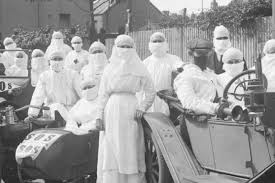
    In this dismaying season of Covid-19 here are a few facts about The Spanish Flu.

    The Spanish flu also known as the 1918 flu pandemic was an unusually deadly influenza pandemic. An influenza pandemic is an epidemic of an influenza virus that spreads on a worldwide scale and infects a large proportion of the world population.  Lasting from January 1918 to December 1920, it infected some 500 million people – say about a quarter of the world’s population at that time. The death toll is estimated to have been anywhere from 17 million to 50 million, and possibly as high as 100 million, making it one of the deadliest pandemics in human history, behind the Black Death.

    The Black Death, has many names such as Pestilence, the Great Bubonic Plague, the Great Plague or simply the Plague, or less commonly the Great Mortality or the Black Plague. It was the most devastating pandemic recorded in human history, resulting in the deaths of an estimated 75 to 200 million people in Eurasia, peaking in Europe from 1347 to 1351.

    What is Eurasia? Eurasia is the largest continental area on Earth, comprising all of Europe and Asia. Located primarily in the Northern and Eastern Hemispheres, it is bordered by the Atlantic Ocean on the west, the Pacific Ocean on the east, the Arctic Ocean on the north, and by Africa, the Mediterranean Sea, and the Indian Ocean in the south. 

    The bacterium Yersinia pestis is a kind of organism, which results in several forms of plagues such as septicemic, pneumonic and the most common bubonic. The Black Death was the first major European outbreak of plague and the second plague pandemic. The first being the Plague of Justinian.

    The Plague of Justinian (541–542 AD, with recurrences until 750) was a pandemic that afflicted the Byzantine (Eastern Roman) Empire and especially its capital, Constantinople, as well as the Sasanian Empire and port cities around the entire Mediterranean Sea, as merchant ships harboured rats with plague that came from fleas a small flightless insect. Some historians believe the plague of Justinian was one of the deadliest pandemics in history, resulting in the deaths of an estimated 25–100 million people during the two centuries of recurrence, a death toll equivalent to as much as half of Europe’s population at the time of, the first outbreak. The plague’s social and cultural impact has been compared to that of the Black Death, that devastated Eurasia in the fourteenth century, but research published in 2019 argued that the plague’s death toll and social effects have been exaggerated.

     The plague created religious, social, and economic upheavals, with profound effects in the course of European history.

    The Black Death probably originated in Central Asia or East Asia, from where it travelled along the Silk Road, reaching Crimea (a peninsula located on the northern coast of the Black Sea in in Eastern Europe) by 1343. From there, it was most likely carried by fleas again–a small wingless jumping insect that feeds on the blood of mammals and birds. It at times transmitted diseases through its bite also, including plague and myxomatosis, and lived on black rats that travelled on Genoese merchant ships of, The Republic of Genoa that lies in present day Italy and was an independent state from 1005 to 1797 on the north western Italian coast, incorporating Corsica an island, from 1347 to 1768, and numerous other territories, throughout the Mediterranean, reaching the rest of Europe via the Italian Peninsula.

    The Black Death also travelled through The Silk Road. Silk Road was a network of trade routes that connected the East and West, and was central to the economic, cultural, political, and religious interactions between these regions from the 2nd century BCE up to the 18th century. The Silk Road primarily refers to the land routes connecting East Asia and Southeast Asia with South Asia, Persia, the Arabian Peninsula, East Africa and Southern Europe.

    The Black Death is estimated to have killed 30 to 60% of Europe’s population. In total, the plague may have reduced the world population from an estimated 475 million to 350–375 million in the 14th century. It took 200 years for Europe’s population to recover to its previous level, and some regions such as Florence did not recover until the 19th century. Outbreaks of the plague recurred until the early 20th century. The point to note is that, even in Covid-19 pandemic, both Spain and Italy are very badly affected.

    To maintain the morale, World War I censors minimized early reports of illness and mortality in Germany, the United Kingdom, France, and the United States. But newspapers were free to report the epidemic’s effects in neutral Spain, such as the grave illness of King Alfonso XIII, and these stories created a false impression of Spain as especially hard hit. This gave rise to the name Spanish flu. This indeed is the reason why countries don’t want to name pandemics on names of countries. American President Donald Trump called Covid 19 as a Chinese Virus for which there was a lot of criticism. Historical and epidemiological data are inadequate to identify with certainty the pandemic’s geographic origin, with varying views to its exact location.

    Most influenza outbreaks disproportionately kill the very young and the very old, with a higher survival rate for those in between, but the Spanish flu pandemic resulted in a higher than expected mortality rate for young adults. Scientists offer several possible explanations for the high mortality rate of the 1918 influenza pandemic. Some analyses have shown the virus to be particularly deadly because it triggers a cytokine storm. Cytokine release syndrome (CRS) is a form of systemic inflammatory response syndrome (SIRS) that can be triggered by a variety of factors such as infections and certain drugs that ravages the stronger immune system of young adults. In contrast, a 2007 analysis of medical journals from the period of the pandemic found that the viral infection was no more aggressive than previous influenza strains. Instead, malnourishment, overcrowded medical camps and hospitals, and poor hygiene promoted bacterial super-infection. This super-infection killed most of the victims, typically after a prolonged bedridden illness. The Spanish flu was the first of two pandemics caused by the H1N1 influenza virus; the second was the swine flu in 2009.

    Covid19 is suspected to have come from the bats in China.

    Stay safe stay at home.

By Kamlesh Tripathi

*

https://kamleshsujata.wordpress.com

*

Share it if you like it

*

Shravan Charity Mission is an NGO that works for poor children suffering from life threatening diseases especially cancer. Our posts are meant for our readers that includes both children and adults and it has a huge variety in terms of content. We also accept donations for our mission. Should you wish to donate for the cause. The bank details are given below:

NAME OF ACCOUNT: SHRAVAN CHARITY MISSION

Account no: 680510110004635 (BANK OF INDIA)

IFSC code: BKID0006805

*

Our publications

GLOOM BEHIND THE SMILE

(The book is about a young cancer patient. Now archived in 7 prestigious libraries of the US, including, Harvard University and Library of Congress. It can also be accessed in MIT through Worldcat.org. Besides, it is also available for reading in Libraries and archives of Canada and Cancer Aid and Research Foundation Mumbai)  

ONE TO TANGO … RIA’S ODYSSEY

(Is a book on ‘singlehood’ about a Delhi girl now archived in Connemara Library, Chennai and Delhi Public Library, GOI, Ministry of Culture, Delhi)

AADAB LUCKNOW … FOND MEMORIES

(Is a fiction written around the great city of Nawabs—Lucknow. It describes Lucknow in great detail and also talks about its Hindu-Muslim amity. That happens to be its undying characteristic. The book was launched in Lucknow International Literary Festival of 2014)

REFRACTIONS … FROM THE PRISM OF GOD

(Co-published by Cankids–Kidscan, a pan India NGO and Shravan Charity Mission, that works for Child cancer in India. The book is endorsed by Ms Preetha Reddy, MD Apollo Hospitals Group. It was launched in Lucknow International Literary Festival 2016)

TYPICAL TALE OF AN INDIAN SALESMAN

(Is a story of an Indian salesman who is, humbly qualified. Yet he fights his ways through unceasing uncertainties to reach the top. A good read not only for salesmen. The book was launched on 10th February, 2018 in Gorakhpur Lit-Fest. Now available in Amazon, Flipkart and Onlinegatha)

RHYTHM … in poems

(Published in January 2019. The book contains 50 poems. The poems describe our day to day life. The book is available in Amazon, Flipkart and Onlinegatha)

MIRAGE

(Published in February 2020. The book is a collection of eight short stories. It is available in Amazon, Flipkart and Notion Press)

(ALL THE ABOVE TITLES ARE AVAILABLE FOR SALE IN AMAZON, FLIPKART AND OTHER ONLINE STORES OR YOU COULD EVEN WRITE TO US FOR A COPY)

*****


SHORT STORY: CORONA ANIMAL CONFERENCE

Copyright@shravancharitymission

Sit and enjoy the conference during these rare days of the lockdown. Here we go:

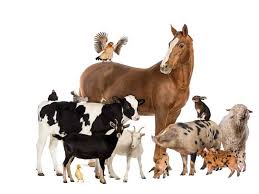
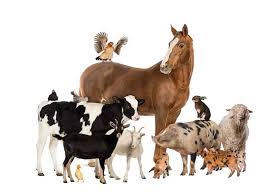
    Pained by human atrocities some likeminded animals who even happened to be old friends, prominent among them, being a cat, cow, dog, donkey, horse and monkey decided to meet somewhere, to discuss the burning issue, and chalk out a way forward, as human lunacy was troubling them big time. But, tiger the king of the jungle excused himself, as his species, was already under threat, from human beings and he didn’t want to take an adverse position against them any further.

    The scheming cat who happened to be a relative of, the king of the jungle opened the conversation by saying, ‘Friends! To us, all human beings look the same but they are divided by something called the religion, and unlike us, who don’t follow any religion but only follow our heart, human beings are guided by their religion. And if we could only exploit their religion, we could divert their attention from us to save ourselves.’

    ‘But what is religion? Asked, the donkey.

    ‘Arrey yaar! You don’t know religion? No wonder you’re called a donkey. You must have often seen human beings walking into differently looking buildings to pray. That is called religion.’ Clarified the cat.

    ‘But what is religion supposed to do?’ Enquired, the donkey again, exposing his ignorance further.

    ‘Well, it is supposed to divide human beings. And it is doing that quite effectively.  For you might have noticed, human beings fight tooth and nail for anything and everything. And since I keep gallivanting most of the times. I see that with my own eyes. They might be our enemies but they are the biggest enemies of themselves’ Said the relaxing horse.

    Thereafter, the animals decided to go for a long walk just to graze and relax since they were old friends and had met after a long-long time, to have a heart-to-heart conversation with each other. And they all were leisurely walking side by side, along the river, while the monkey was happily sitting atop the donkey’s back is when the donkey asked the horse,

    ‘Arrey boss, the government is planning a lot, for the employment of human beings but what about us? In the present scenario I neither have a job nor a peaceful place to stand, nor even an assured morsel of food. Every day, I need to walk quite a distance and that too across the road to feed myself where, you only get some dry grass and pesticides laden dry leaves to munch. A few years back I used to get the same food, in fact much better in quality, right here, where we are walking, but today because of these multi-storeyed buildings there is nothing left for us. The horse felt sad for the donkey, and while maintaining his pace he softly said,

    ‘I know, it’s very sad, but yaar, you’re a donkey, at least you know the art of survival and no one expects wonders from you. But look at my plight. A bright talented horse that used to participate in derbies and equestrian shows. But with age catching up I was thrown out of my job. I was then bought by a tangewalla and he used me mercilessly in Chandini Chowk for some time, but when tongas went out of circulation, he kept me for a month thinking he’ll be able to sell me off, but when he couldn’t he just left me here one day and never came back. And today a skilled guy like me is not only unemployed but even harassed on the roads by moving vehicles and the traffic police.

    ‘My dear horse, that’s indeed sad. Such a skilled personality like you, meeting up with such a fate.’ Donkey consoled the horse.

    ‘My dear dog, how are things with you?’ asked the cow.

    ‘Not too good. These Indians could never get out of their colonial mindset. They still keep foreign breeds as their pets, and that leaves we—the Indian mongrels on the lurch, and it really takes a humongous effort to fend for ourselves. And how about you?’ the dog asked the cat. The cat beamed and stretched itself while lazing atop the horse’s back.

    ‘Well … well, surviving somehow, only because we cats are of no use to a man. Neither, they require our skin, nor bones, nor our flesh. And that makes things somewhat easier for us; otherwise you can see how they have massacred the tigers of our family. But I guess in today’s time cows are the real VIPs’

    ‘But why do you say so?’ asked the cow meekly.

    ‘Boss because, you are hitting the headlines practically every day.’ Replied the cat.

    ‘But for political reasons,’ was the doleful moo of the cow.

    ‘So then, what should we do to survive, and improve our lives? Let’s ask the monkey who is very quiet.’ Suggested the dog.

    Monkey, who was sitting merrily, on the donkey’s back, with his eyes closed, enjoying the spring sun and the sprawling boulevard of India Gate on account of Covid lockdown was a bit amused at the melancholic conversation that was going around. He preferred to remain quiet even when the dog had asked a pertinent question. After a few moments when the monkey didn’t answer, the cow repeated the question and coaxed the monkey for an answer.

    Clever monkey kept quiet for a while and then blinked his eyes and said,

   ‘Well … Man might change. Let’s wait for the Corona Virus to get over.’

   But … will man ever change? Well I would like to believe the monkey.

By Kamlesh Tripathi

*

https://kamleshsujata.wordpress.com

*

Share it if you like it

*

Shravan Charity Mission is an NGO that works for poor children suffering from life threatening diseases especially cancer. Our posts are meant for our readers that includes both children and adults and it has a huge variety in terms of content. We also accept donations for our mission. Should you wish to donate for the cause. The bank details are given below:

NAME OF ACCOUNT: SHRAVAN CHARITY MISSION

Account no: 680510110004635 (BANK OF INDIA)

IFSC code: BKID0006805

*

Our publications

GLOOM BEHIND THE SMILE

(The book is about a young cancer patient. Now archived in 7 prestigious libraries of the US, including, Harvard University and Library of Congress. It can also be accessed in MIT through Worldcat.org. Besides, it is also available for reading in Libraries and archives of Canada and Cancer Aid and Research Foundation Mumbai)  

ONE TO TANGO … RIA’S ODYSSEY

(Is a book on ‘singlehood’ about a Delhi girl now archived in Connemara Library, Chennai and Delhi Public Library, GOI, Ministry of Culture, Delhi)

AADAB LUCKNOW … FOND MEMORIES

(Is a fiction written around the great city of Nawabs—Lucknow. It describes Lucknow in great detail and also talks about its Hindu-Muslim amity. That happens to be its undying characteristic. The book was launched in Lucknow International Literary Festival of 2014)

REFRACTIONS … FROM THE PRISM OF GOD

(Co-published by Cankids–Kidscan, a pan India NGO and Shravan Charity Mission, that works for Child cancer in India. The book is endorsed by Ms Preetha Reddy, MD Apollo Hospitals Group. It was launched in Lucknow International Literary Festival 2016)

TYPICAL TALE OF AN INDIAN SALESMAN

(Is a story of an Indian salesman who is, humbly qualified. Yet he fights his ways through unceasing uncertainties to reach the top. A good read not only for salesmen. The book was launched on 10th February, 2018 in Gorakhpur Lit-Fest. Now available in Amazon, Flipkart and Onlinegatha)

RHYTHM … in poems

(Published in January 2019. The book contains 50 poems. The poems describe our day to day life. The book is available in Amazon, Flipkart and Onlinegatha)

MIRAGE

(Published in February 2020. The book is a collection of eight short stories. It is available in Amazon, Flipkart and Notion Press)

(ALL THE ABOVE TITLES ARE AVAILABLE FOR SALE IN AMAZON, FLIPKART AND OTHER ONLINE STORES OR YOU COULD EVEN WRITE TO US FOR A COPY)

*****


FACTS FIGURES & QUOTES: THE DOCTOR’S PLOT

Copyright@shravancharitymission

    It happened many years back in Russia.

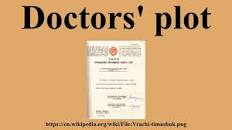
    The Doctors’ Plot is also known as the case of saboteur-doctors or killer-doctors. It was an anti-Semitic campaign also called anti-semitism. Don’t confuse it with the Doctor’s trial in Nuremberg.

   What is anti-Semitism? Anti-semitism is the strong dislike, or cruel and unfair treatment of Jewish people. Anti-semitism in the Russian Empire included numerous pogroms, acts of cruel behaviour, killings, organized massacre, of a particular ethnic group, in particular, that of the Jews in Russia or Eastern Europe and the designation or areas of the Pale of Settlement. Pale of Settlement is the territory of contemporary Ukraine, Belarus, Lithuania and Poland, from which Jews were forbidden to migrate into the interior parts of Russia, unless they converted to the Russian Orthodox state religion, in some ways the Moscow-Patriarchate or Moscow Church. The Pale of Settlement was a western region of the Imperial Russia with varying borders that existed between, 1791 and 1917, in which, permanent residency by Jews was allowed but beyond which Jewish residency, permanent or temporary, was largely forbidden.

    Now let’s come to the Russian Revolution of 1917: It was a period of political and social revolution across the territory of the Russian Empire, commencing with the abolition of the monarchy in 1917, and concluded in 1923 after the Bolshevik establishment (that is the radical far left Marxist faction), of the Soviet Union, along with five other Soviet Republics, namely Ukraine, Belarus, Amenia, Azerbaijan and Georgia, resulting in the end of the civil war.

     Anti-semitism campaign in the Soviet Union was organized by Joseph Stalin. In 1951–1953, a group of predominantly Jewish doctors from Moscow were accused of a conspiracy to assassinate Soviet leaders. This was later accompanied by publications of anti-Semitic character in the media, which talked about the threats of Zionism (a political movement whose original aim was the creation of a country, for the Jewish people, and that now supports the state of Israel). The publications went on to condemn people with Jewish names. Many doctors, officials and others, both Jews and non-Jews, were promptly dismissed from their jobs and arrested. But only after a few weeks of Stalin’s death, the new Soviet leadership said there was a lack of evidence, so the cases was dropped. Soon after, it was declared to have been fabricated. This was the gist of the doctor’s plot. Let me now give you some details about it.

    The anti-Jewish campaign was presum-ably set in motion by Stalin as a pretext to dismiss and replace Lavrenty Beria his close aide, and prosecute some other Soviet leaders, and to launch a massive purge within the Communist Party, and, according to some, even to prepare and consolidate the country for a future World War III.

   In 1951, (MGB) the Soviet Secret Police investigator Mikhail Ryu-min reported to his superior, Viktor Aba-kumov, Minister of the MGB, that Professor Yakov Etinger, who was arrested as a “bourgeois nationalist” with connections to the Jewish Anti-Fascist Committee, had in fact committed malpractice in treating Andrei Zhdanov (died in 1948) and Alexander Shcherbakov (died in 1945), and allegedly had done so with the intention of killing them. However, Abakumov the minister, refused to believe the story. Etinger later died in prison on 2nd March 1951 due to interrogations and harsh conditions. Mikhail Ryumin was then dismissed from his position in the MGB for misappropriating money and was held responsible for the death of Etinger. With the assistance of Georgy Malenkov a Soviet politician who briefly succeeded Joseph Stalin, Ryumin wrote a letter to Stalin, accusing Viktor Abakumov of killing Etinger in order to hide a conspiracy to kill the Soviet leadership. On 4 July 1951, the Politburo set up a commission (headed by Malenkov and Beria) to investigate the issue. Based on the commission’s report, the Politburo soon passed a resolution on the “bad situation in the MGB” and Abakumov was fired. Later both Beria and Malenkov tried to use the situation to expand their power through gaining control of the MGB.

    Abakumov was arrested and tortured soon after being dismissed as head of the MGB. He was charged with being a sympathizer and protector of the criminal Jewish underground. This arrest was followed by the arrests of many agents who worked for him in the central apparatus of the MGB, including most Jews.

    In December 1952, Stalin accused a large group of Jewish doctors, along with the minister of security Viktor Aba-kumov, and the head of the Kremlin Guards Nikolai Vlasik, and others of having participated in Zhdanov’s murder. The basis of this accusation was a letter written by Lidia Timashuk, the head of the Kremlin hospital’s, cardiographic unit, to Nikolai Vlasik, dated 29 August 1948, in which she warned that the doctors underestimated “the unquestionably grave condition of comrade Zhdanov,” and that “this regimen may lead to a fateful outcome.” Stalin claimed that this letter had been withheld from him by Abakumov. In January 1953, articles in Pravda and Izvestiia exposed the so-called “plot of the doctor-wreckers,” causing worldwide concern about the fate of Soviet Jews.

    From 1948 to 1952, Stalin schemed carefully to give the accusation credibility. Contrary to the legend, he did not discover Timashuk’s letter in December 1952. Rather, he had received it one day after it was sent and had filed it in his personal archive. He signed the document and wrote “archive” across the bottom. Among the doctors Lidia Timashuk accused none were Jewish. No conclusive evidence proved Timashuk’s charge of medical malpractice, but circumstantial evidence suggested that the doctors facilitated Zhdanov’s death, quite plausibly with Stalin’s approval.

    The plot assumed a Jewish character only after the death of the prominent Jewish doctor Iakov Etinger, arrested in November 1950 as part of the liquidation of the Jewish Anti-Fascist Committee. Etinger died under mysterious circumstances in prison in March 1951. In July 1951, without any evidence, a “Secret Letter” composed by the Central Committee at Stalin’s behest alleged that Etinger had confessed to the medical murder in 1945 to the Central Committee secretary Aleksandr Shcherbakov; that this assassination was the work not of Etinger alone, but of a “conspiratorial group” of doctors; and that Victor Abakumov was implicated in the affair.

    From July 1951, when this “Secret Letter” was disseminated, to November 1952, the Ministry of State Security (MGB) sought to establish the specifically Jewish nature of the conspiracy by connecting the death of Zhdanov with the alleged confessions of Etinger.

    A key element in this was the effort to link Abakumov with the “Jewish conspiracy” and to prove that the conspiracy was directed by the American government. Abakumov was arrested in July 1951.

    The core group of 37 doctors (and their wives) arrested between 1951 and January 1953, when the “Plot” vastly expanded, included only 17 Jews. Many others were added between January and March 1953.

    In which a large number of prominent Jewish doctors were arrested. The interrogations of the doctors, were accompanied by torture, sought to establish links within a widespread conspiracy involving Jewish nationalists, and the American government.

    The reasons for Stalin’s actions are traceable to circumstances at the end of World War II: the onset of the cold war; Stalin’s failing physical condition; his desire to prevent the rise of any of his lieutenants to too dominant a role, particularly as undisputed heir apparent; and a revival of international Jewish solidarity associated with the founding of the State of Israel. Soon after the victory over Hitler, Stalin suffered some kind of physical collapse, which necessitated long periods of recovery in his Crimean residence. The exact nature of Stalin’s physical ailment is not known. This left Molotov and other members of the Politburo in charge of the daily affairs of the Soviet state. Western media speculated that Molotov would soon succeed Stalin. Molotov gave reason to believe that he favoured closer relations with the Western powers as well as a relaxation of censorship. Stalin criticized him bitterly for this, calling both him and Politburo member Anastas Mikoyan in December 1952 subversive.

    Upon Stalin’s death, the Doctors’ Plot was repudiated by Soviet authorities. The doctors were released from prison and rehabilitated, and those who put them in prison were themselves incarcerated. Eventually most of the latter were shot. Beria accused Mikhail Riumin, former deputy minister of the MGB, of having concocted the Doctors’ Plot out of opportunism. However, only Stalin had the comprehensive vision to guide the conspiracy from the Kremlin Hospital to the Ministry of Security to the Politburo and Central Committee, culminating in a possible nuclear confrontation with the United States.

    Power corrupts and absolute power corrupts absolutely is a famous quote. I end with that. Goodbye and see you next week.

By Kamlesh Tripathi

*

https://kamleshsujata.wordpress.com

*

Share it if you like it

*

Shravan Charity Mission is an NGO that works for poor children suffering from life threatening diseases especially cancer. Our posts are meant for our readers that includes both children and adults and it has a huge variety in terms of content. We also accept donations for our mission. Should you wish to donate for the cause. The bank details are given below:

NAME OF ACCOUNT: SHRAVAN CHARITY MISSION

Account no: 680510110004635 (BANK OF INDIA)

IFSC code: BKID0006805

*

Our publications

GLOOM BEHIND THE SMILE

(The book is about a young cancer patient. Now archived in 7 prestigious libraries of the US, including, Harvard University and Library of Congress. It can also be accessed in MIT through Worldcat.org. Besides, it is also available for reading in Libraries and archives of Canada and Cancer Aid and Research Foundation Mumbai)  

ONE TO TANGO … RIA’S ODYSSEY

(Is a book on ‘singlehood’ about a Delhi girl now archived in Connemara Library, Chennai and Delhi Public Library, GOI, Ministry of Culture, Delhi)

AADAB LUCKNOW … FOND MEMORIES

(Is a fiction written around the great city of Nawabs—Lucknow. It describes Lucknow in great detail and also talks about its Hindu-Muslim amity. That happens to be its undying characteristic. The book was launched in Lucknow International Literary Festival of 2014)

REFRACTIONS … FROM THE PRISM OF GOD

(Co-published by Cankids–Kidscan, a pan India NGO and Shravan Charity Mission, that works for Child cancer in India. The book is endorsed by Ms Preetha Reddy, MD Apollo Hospitals Group. It was launched in Lucknow International Literary Festival 2016)

TYPICAL TALE OF AN INDIAN SALESMAN

(Is a story of an Indian salesman who is, humbly qualified. Yet he fights his ways through unceasing uncertainties to reach the top. A good read not only for salesmen. The book was launched on 10th February, 2018 in Gorakhpur Lit-Fest. Now available in Amazon, Flipkart and Onlinegatha)

RHYTHM … in poems

(Published in January 2019. The book contains 50 poems. The poems describe our day to day life. The book is available in Amazon, Flipkart and Onlinegatha)

MIRAGE

(Published in February 2020. The book is a collection of eight short stories. It is available in Amazon, Flipkart and Notion Press)

(ALL THE ABOVE TITLES ARE AVAILABLE FOR SALE IN AMAZON, FLIPKART AND OTHER ONLINE STORES OR YOU COULD EVEN WRITE TO US FOR A COPY)

*****


BOOK REVIEW: INDIKA by Megasthenes

Copyright@shravancharitymission

Khidki (Window)

–Read India Initiative—

This is only an attempt to create interest in reading. We may not get the time to read all the books in our lifetime. But such reviews, talk and synopsis will at least convey what the book is all about.

    Indika is an account of Mauryan Empire by the Greek writer Megasthenes. The original book is now lost, but its fragments have survived in later Greek and Latin works. The earliest of these works are those by ancient Greek historian Diodorus Siculus, Strabo a Greek geographer, Pliny a magistrate of ancient Rome, and Arrian another Greek historian.

    Megasthenes’ Indica can be reconstructed using the portions preserved by later writers as direct quotations, rephrase or even paraphrase. The parts that belonged to the original text can be identified from the later works based on similar content, vocabulary and phrasing, even when the content has not been explicitly attributed to Megasthenes. There is a document of Felix Jacoby’s (Fragmente der griechischen Historiker) that contains 36 pages of content that can be traced to Megasthenes.

    E. A. Schwanbeck another historian traced several fragments of writings to Megasthenes, and based on his collection, John Watson McCrindle a Sottish philologist and educator published a reconstructed version of Indika in 1887. But this reconstructed version was not universally accepted.

    Schwanbeck and John Watson McCrindle attributed several fragments in the writings of the 1st century BCE writer Diodorus to Megasthenes. However, Diodorus does not mention Megasthenes even once, unlike Strabo, who explicitly mentions Megasthenes as one of his sources. There are several differences between the accounts of Megasthenes and Diodorus: for example, Diodorus describes India as 28,000 stadia long (a Greek unit of length from which the word stadium has come) from east to west, whereas, Megasthenes gives this number as 16,000. Diodorus states that Indus may be the world’s largest river after Nile, whereas, Megasthenes (as quoted by Arrian) states that Ganges is much larger than Nile.

    There is a description of Gangaridai that appears in the writings of Diodorus. Gangaridai is a term used by the ancient Greco-Roman writers to describe the people or a geographical region of the ancient Indian subcontinent. Some of these writers state that Alexander the Great withdrew from the Indian subcontinent because of the strong war elephant force of the Gangaridai. The writers variously mention Gangaridai as a distinct tribe, or a nation within a larger kingdom (presumably the Nanda Empire).

    A number of modern scholars locate Gangaridai in the Ganges Delta of the Bengal region, although alternative theories also exist. Gange or Ganges, the capital of the Gangaridai (according to Ptolemy a historian), has been identified with several sites in the region, including Chandraketugarh and Wari-bateshwar.

    McCrindle believed that Diodorus’ source for this description was the now-lost book of Megasthenes. However, according to A. B. Bosworth (1996), Diodorus obtained this information from Hieronymus of Cardia: Diodorus described Ganges as 30 stadia wide. It is well-attested by other sources that Megasthenes described the median or minimum width of Ganges as 100 stadia, about 185 to 192 metres.

    According to the text reconstructed by John Watson McCrindle, Megasthenes’ Indika describes India as follows:

    India is a quadrilateral-shaped country, bounded by the ocean on the southern and the eastern side. The Indus River forms the western and the north-western boundary of the country, as far as the ocean. India’s northern border reaches the extremities of Tauros the mountains of southern Turkey. From Ariana (the Latinized form of ancient Greek) to the Eastern Sea, it is bound by mountains that are called Kaukasos by the Macedonians. The various native names for these mountains include Parapamisos, Hemodos and Himaos (the Himalayas). Beyond Hemo-dos, lies Scythia (a region of central Eurasia) inhabited by the Scythians known as Sakai. Besides Scythia, the countries of Bactria, an ancient region in Central Asia. Bactria proper was north of the Hindu Kush mountain range and south of the Amu Darya River, covering the flat region that straddles modern-day Afghanistan, Tajikistan and Uzbekistan. More broadly Bactria was the area north of the Hindu-Kush, west of the Pamirs and south of the Tian-Shan, with the Amu Darya flowing west through the center, and Ariana bordering India.

    At the extreme point of India, there is this gnomon the projecting piece of the sundial that often casts no shadow, and the Ursa Major constellation that is completely invisible at night. In the remotest parts, the shadows fall southward, when even Arcturus the brightest star is not visible.

    India has many large and navigable rivers, which arise in the mountains on its northern border. Many of these rivers merge into Ganges, which is 30 stadia wide at its source, and runs from north to south. The Ganges empties into the ocean that forms the eastern boundary of Gangaridai. Other nations feared Gangaridai’s huge force of the biggest elephants, and therefore, Gangaridai had never been conquered by any foreign king.

    Indus also runs from north to south, and has several navigable tributaries. The most notable tributaries are Hupanis, the Hudaspes, and the Akesines (all difficult names to pronounce). One peculiar river is Sillas, which originates from a fountain of the same name. Everything cast into this river sinks down to the bottom – nothing floats in it. In addition, there are a large number of other rivers, supplying abundant water for agriculture. According to the native philosophers and natural scientists, the reason for this is that the bordering countries are more elevated than India, so their waters run down to India, resulting in such a large number of rivers.

    In the primitive times, Indians lived on fruits and wore clothes made of animal skin, just like the Greeks. The most learned Indian scholars say that Dionysus the god of the grape-harvest, winemaking and wine of fertility, ritual madness, religious ecstasy, and theatre in ancient Greek religion and myth invaded India, and conquered it. When his army was unable to bear the excessive heat, he led his soldiers to the mountains called Meros for recovery. This led to the Greek legend about Dionysus being bred in his father’s thigh Dionysus taught Indians several things including how to grow plants, make wine and worship. He founded several large cities, introduced laws and established courts. For this reason, he was regarded as a deity by the Indians. He ruled entire India for 52 years, before dying of old age. His descendants ruled India for several generations, before being dethroned and replaced by democratic city-states.

    The Indians who inhabit the hill country also claim that Herakles a Greek deity was one of them. Like the Greeks, they characterize him with the club and the lion’s skin. According to them, Her-akles was a powerful man who subjugated evil beasts. He had several sons and one daughter, who became rulers in different parts of his dominion. He founded several cities, the greatest of which was Patliputra. Herakles built several places in this city, fortified it with water-filled trenches and settled a number of people in the city. His descendants ruled India for several generations, but never launched an expedition beyond India. After several years, the royal rule was replaced by democratic city states, although there existed a few kings when Alexander invaded India.

    India has several mountains with fruit trees of every kind. There are a large number of animal species in India. The Indian elephants are far stronger than the Libyan elephants, because of the abundance of food on the Indian soil. The elephants are domesticated in large numbers, and trained for war. The gestation period of the elephants range from 16 to 18 months, and the oldest of the elephants live up to 200 years.

   Gold, silver, copper and iron are abundant on Indian soil. Tin and other metals are used for making a number of tools, weapons, ornaments, and other articles.

    India has very fertile plains, and irrigation is practised widely. The main crops include rice, millet, a crop called bosporum, other cereals, were pulses and other food plants. There are two crop cycles per year, since rain falls in both summer and winter. At the time of summer solstice, rice, millet, bosporum and sesamum are sown. During winter, wheat is sown.

    No famines have ever occurred in India because of the following reasons:

  • The Indians are always assured of at least one of the two seasonal crops
  • There are a number of spontaneously growing fruits and edible roots available.
  • The Indian warriors regard those engaged in agriculture and animal husbandry as sacred. Unlike the warriors in other countries, they do not ravage farms during war conquests. Moreover, the warring sides never destroy the enemy land with fire or cut down its trees.

    Because of its large size, India is inhabited by many diverse races, all of which are indigenous. India has no foreign colony, and Indians have not established any colonies outside India. The Indians are of pure air. They are well-skilled in art, above average stature, because of abundant food, fine water and air.

    A law, prescribed by ancient Indian philosophers, bans slavery. The law treats everyone equally, but allows the property to be unevenly distributed.

The population of India is divided into 7 endogamous and hereditary castes:

    One must appreciate Megasthenes who wrote such an illustrative books when knowledge was very limited. Unfortunately the original book is not available now. He was born in 350 BC and lived for 60 years.

Posted by Kamlesh Tripathi

*

https://kamleshsujata.wordpress.com

*

Share it if you like it

*

Shravan Charity Mission is an NGO that works for poor children suffering from life threatening diseases especially cancer. Our posts are meant for our readers that includes both children and adults and it has a huge variety in terms of content. We also accept donations for our mission. Should you wish to donate for the cause. The bank details are given below:

NAME OF ACCOUNT: SHRAVAN CHARITY MISSION

Account no: 680510110004635 (BANK OF INDIA)

IFSC code: BKID0006805

*

Our publications

GLOOM BEHIND THE SMILE

(The book is about a young cancer patient. Now archived in 7 prestigious libraries of the US, including, Harvard University and Library of Congress. It can also be accessed in MIT through Worldcat.org. Besides, it is also available for reading in Libraries and archives of Canada and Cancer Aid and Research Foundation Mumbai)  

ONE TO TANGO … RIA’S ODYSSEY

(Is a book on ‘singlehood’ about a Delhi girl now archived in Connemara Library, Chennai and Delhi Public Library, GOI, Ministry of Culture, Delhi)

AADAB LUCKNOW … FOND MEMORIES

(Is a fiction written around the great city of Nawabs—Lucknow. It describes Lucknow in great detail and also talks about its Hindu-Muslim amity. That happens to be its undying characteristic. The book was launched in Lucknow International Literary Festival of 2014)

REFRACTIONS … FROM THE PRISM OF GOD

(Co-published by Cankids–Kidscan, a pan India NGO and Shravan Charity Mission, that works for Child cancer in India. The book is endorsed by Ms Preetha Reddy, MD Apollo Hospitals Group. It was launched in Lucknow International Literary Festival 2016)

TYPICAL TALE OF AN INDIAN SALESMAN

(Is a story of an Indian salesman who is, humbly qualified. Yet he fights his ways through unceasing uncertainties to reach the top. A good read not only for salesmen. The book was launched on 10th February, 2018 in Gorakhpur Lit-Fest. Now available in Amazon, Flipkart and Onlinegatha)

RHYTHM … in poems

(Published in January 2019. The book contains 50 poems. The poems describe our day to day life. The book is available in Amazon, Flipkart and Onlinegatha)

MIRAGE

(Published in February 2020. The book is a collection of eight short stories. It is available in Amazon, Flipkart and Notion Press)

(ALL THE ABOVE TITLES ARE AVAILABLE FOR SALE IN AMAZON, FLIPKART AND OTHER ONLINE STORES OR YOU COULD EVEN WRITE TO US FOR A COPY)

*****


LESSON FROM POET & AUTHOR HERMANN HESSE

Copyright@shravancharitymission

    According to a study conducted sometime back, it has been established, that those who attempt suicide but don’t succeed, develop in them a great incentive to live and later emerge as heroes.

    In this context let me narrate a factual story to you. It is about Hermann Hesse. Hermann Hesse was a famous German poet and novelist who lived between (1877-1962). In his early days, Hermann experienced severe personal turmoil and conflict with his parents. The situation led to extreme frustration. So much so that at the age of 15 in 1892, he attempted suicide. But luckily he was saved.

    Thereafter Hermann completed his education and subsequently took to writing, as a career. After a long struggle, he became a great writer and in 1946 he was awarded the Nobel Prize in Literature.

    Friends, human beings are not born in this world by accident. On the contrary they are born in accordance with a divine plan. The creator has endowed us with great qualities. It is therefore incumbent of every human being to unfold these qualities, unlock one’s potential, and play the role that is destined for him by providence. According to God Almighty, the Creator of this planet, every person must live in hope and should be positive. There is no reason or excuse for becoming pessimistic.

    The world is full of opportunities. If someone fails in doing something, he should, take it as a temporary setback, and not as an inordinate delay leading to a final failure. Under no situation, committing suicide is an option for an individual. One has to adopt the formula of wait and watch, rather than killing oneself, for then, one leaves, no other option open for himself because he is gone.

    Be positive … that’s the essence of life.

By Kamlesh Tripathi

*

https://kamleshsujata.wordpress.com

*

Share it if you like it

*

Shravan Charity Mission is an NGO that works for poor children suffering from life threatening diseases especially cancer. Our posts are meant for our readers that includes both children and adults and it has a huge variety in terms of content. We also accept donations for our mission. Should you wish to donate for the cause. The bank details are given below:

NAME OF ACCOUNT: SHRAVAN CHARITY MISSION

Account no: 680510110004635 (BANK OF INDIA)

IFSC code: BKID0006805

*

Our publications

GLOOM BEHIND THE SMILE

(The book is about a young cancer patient. Now archived in 7 prestigious libraries of the US, including, Harvard University and Library of Congress. It can also be accessed in MIT through Worldcat.org. Besides, it is also available for reading in Libraries and archives of Canada and Cancer Aid and Research Foundation Mumbai)  

ONE TO TANGO … RIA’S ODYSSEY

(Is a book on ‘singlehood’ about a Delhi girl now archived in Connemara Library, Chennai and Delhi Public Library, GOI, Ministry of Culture, Delhi)

AADAB LUCKNOW … FOND MEMORIES

(Is a fiction written around the great city of Nawabs—Lucknow. It describes Lucknow in great detail and also talks about its Hindu-Muslim amity. That happens to be its undying characteristic. The book was launched in Lucknow International Literary Festival of 2014)

REFRACTIONS … FROM THE PRISM OF GOD

(Co-published by Cankids–Kidscan, a pan India NGO and Shravan Charity Mission, that works for Child cancer in India. The book is endorsed by Ms Preetha Reddy, MD Apollo Hospitals Group. It was launched in Lucknow International Literary Festival 2016)

TYPICAL TALE OF AN INDIAN SALESMAN

(Is a story of an Indian salesman who is, humbly qualified. Yet he fights his ways through unceasing uncertainties to reach the top. A good read not only for salesmen. The book was launched on 10th February, 2018 in Gorakhpur Lit-Fest. Now available in Amazon, Flipkart and Onlinegatha)

RHYTHM … in poems

(Published in January 2019. The book contains 50 poems. The poems describe our day to day life. The book is available in Amazon, Flipkart and Onlinegatha)

MIRAGE

(Published in February 2020. The book is a collection of eight short stories. It is available in Amazon, Flipkart and Notion Press)

(ALL THE ABOVE TITLES ARE AVAILABLE FOR SALE IN AMAZON, FLIPKART AND OTHER ONLINE STORES OR YOU COULD EVEN WRITE TO US FOR A COPY)

*****