Copyright@shravancharitymission

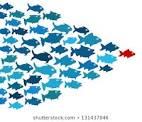
U.S. academic environments, define leadership as, ‘a process of social influence in which a person can enlist the aid and support of others in the accomplishment of a common task.’ Leadership is a primordial trait. Where, the ancient leaders were of course, the ‘Blue Bloods.’
Says Henry Kissinger, ‘The task of the leader is to get his people from where they are to where they have not been.’ Says John C Maxwell, American author, ‘A leader is one who knows the way, goes the way, and shows the way.’
To me, leadership is neither a tough ball game, for all times to come, nor a child’s play, but the cyclic median of the two. It’s about motivating people to achieve both, covert and overt success, in their hitherto unproven life. For people, who enjoy leadership challenges, it’s a child’s play right up to the grand finale, and for those who don’t, it’s a tough ball game … a Herculean task, akin to boiling the ocean or even the ‘Achilles heel.’ But I guess the toughness of ‘leadership’ wanes in front of dexterity, passion and perseverance, the hallmarks to fame.
Sanskrit literature professes ten types of leaders. Aristocratic thinkers of the past have postulated that leadership depends on one’s ‘blue blood’ or ‘genes’. Where monarchy takes an extreme view of the same idea.
The flock of leadership largely depends on the number of challenges that the environment emits. Environment could be both micro and macro. As and when the number of challenges goes up, one will find new leaders are born to handle those challenges. So, one can safely assume that challenges create leadership and concomitantly one can say leaderships envision new challenges?
Leadership is a stubborn labyrinth to begin with and so, a hard nut to crack at the initial stages. But once the tricks of the trade are learnt, it becomes a feather touch to operate.
A number of theories have sprung up on leadership. Where, the trait theory, explores at length about the authority of monarchs, lords and even bishops and how their authority later began to wane, is sumptuously spoken about. The writings of Thomas Carlyle, Scottish philosopher, and Francis Galton, a Victorian era statistician, whose works have prompted decades of research on the subject are equally popular. Carlyle identified the talents, skills, and physical characteristics of people who rose to power. Meanwhile, Galton’s Hereditary Genius (1869) examined leadership qualities, in the families of powerful men. However, the numbers of eminent relatives dropped off when his focus moved from first-degree to second-degree relatives, Galton concluded that qualities of leadership are inherited. In other words, leaders are born, not developed. So, both these notable works, lent, great initial support to the notion that leadership is rooted in the characteristics of a leader. But then, how does one decipher if leadership is a tough ball game or a child’s play. Also, how do you explain a recent example of Prime Minister, Narendra Modi who is not a blue blood nor a born dynast and comes from a humble back ground? Yet, he turns out to be one of the most popular Prime Ministers of India.
Over a period of time the essence of leadership has evolved into, simplification of traits and virtues. But before I move forward let me also tell you, that leadership is, an extensively written and described art, that touches the research area along with practical skills that burnishes the brand of an organization, and within that the team or an individual, to achieve the specialised goal. Exceptions are however there. Just as we have Orwellian states running into dystopia we also have Orwellian organisations that semaphores as one man show. But then that is not the epitome of sound leadership.
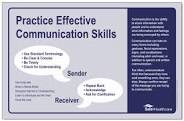
Leadership has an umbrella of qualities. I would for your immediate practice, list out some of them. These are indeed effective tools to practice.
‘The supreme quality for leadership is unquestionably integrity. Without it, no real success is possible, no matter whether it is on a section gang, a football field, in an army, or in an office.’—said President Dwight D Eisenhower. Honesty and integrity are two bliss ingredients that make a good leader. How can one expect, one’s followers, to be honest when you yourself lack in these qualities. Leaders succeed when they stick to their values and core beliefs. Remember, without ethics, this will not be possible.
Confidence is the core attribute an effective leader must have, at his, or her command. If you are unsure about your own decisions, then your subordinates will never follow you. As a leader, you have to be oozing with confidence. Where, one needs to exhibit a ray of swagger and assertiveness to gain the confidence of one’s subordinates. But the caution is that confidence should not translate into overconfidence.
A leader needs to inspire his or her subjects. They look up to him for guidance. The most difficult job of a leader is to persuade others to follow him. You can only inspire by setting a good example. When the going gets tough the tough get going, and that is where you come in. A positive leader is calm and positive in all situations and keeps the motivation level high. Says American statesman, John Quincy Adams, “If your actions inspire others to dream more, learn more, do more and become more, you are a leader.”
If you have commitment and passion in you nothing remains a challenge. When your teammates see a hands on person they too will give their best shot.
An effective leader needs to be an effective communicator too. Until you communicate clearly and effectively to your team things will not move. The other important prowess of leadership qualities is the art of decision making. Sound decision making comes with good on the job knowledge. This also requires long term vision. And then we come to accountability. Where, one needs to follow the approach of late Arnold H Glasow, a U.S. businessman when he said, “A good leader takes little more than his share of the blame and little less than his share of the credit.”
Focus on the core issues. Issues that will take the organisation to greater heights and into the formidable bracket, while delegate and empower the rest to your subordinates. For that will give the right synergy, to both, the organisation and the subordinates to grow.
Steve Jobs was way ahead of times along with his visionary thoughts and ideas. Perhaps, he had the sixth, the seventh and even the eight sense about leadership. He went on to say ‘Innovation distinguishes between a leader and a follower.’ True enough, in order to get ahead in today’s fast-paced world, a leader must be both creative and innovative at the same time. Creative thinking and constant innovation is what makes you and your team stand out from the crowd. Think out of the box to come up with unique ideas and turn those ideas and goals into reality.
Last but not the least is empathy. A true leader should have a reserve of empathy for his followers. But on the contrary, most leaders, only follow a dictatorial style of working these days, that lacks empathy altogether. Due to this, they fail to make a closer connect with their followers. The first step towards becoming an effective leader is to understand the problems and feel the pain of your followers. This should be supplemented by the endeavour to provide them with suitable solutions to solve their issues.
There is no fixed mould of learning for an effective leader. The path traverses through the high frequency highs and lows of life. And that is why for some people leadership is a tough ball game and for some others a child’s play. But yes, there is a lot to learn from the day-to-day.
Let me cite the example of the most influential economist of the twentieth century. His name was John Maynard Keynes. Although, he was an economist, he did not have a formal degree in Economics. And, if I remember correctly, he had, just about eight days of formal training and the rest was all, on the job learning. Yet, he turned out to be one of the most influential economist of the world. A revered leader.
The offbeat para above, solely, tells us, that for an open mind everything is a child’s play. But for a closed mind everything is a hard ball game. And of course in life one thing that doesn’t have a cul-de-sac is the razzmatazz of leadership.
By Kamlesh Tripathi
*
https://kamleshsujata.wordpress.com
*
Share it if you like it
*
Shravan Charity Mission is an NGO that works for poor children suffering from life threatening diseases especially cancer. Our posts are meant for our readers that includes both children and adults and it has a huge variety in terms of content. We also accept donations for our mission. Should you wish to donate for the cause. The bank details are given below:
NAME OF ACCOUNT: SHRAVAN CHARITY MISSION
Account no: 680510110004635 (BANK OF INDIA)
IFSC code: BKID0006805
*
Our publications
GLOOM BEHIND THE SMILE
(The book is about a young cancer patient. Now archived in 7 prestigious libraries of the US, including, Harvard University and Library of Congress. It can also be accessed in MIT through Worldcat.org. Besides, it is also available for reading in Libraries and archives of Canada and Cancer Aid and Research Foundation Mumbai)
ONE TO TANGO … RIA’S ODYSSEY
(Is a book on ‘singlehood’ about a Delhi girl now archived in Connemara Library, Chennai and Delhi Public Library, GOI, Ministry of Culture, Delhi)
AADAB LUCKNOW … FOND MEMORIES
(Is a fiction written around the great city of Nawabs—Lucknow. It describes Lucknow in great detail and also talks about its Hindu-Muslim amity. That happens to be its undying characteristic. The book was launched in Lucknow International Literary Festival of 2014)
REFRACTIONS … FROM THE PRISM OF GOD
(Co-published by Cankids–Kidscan, a pan India NGO and Shravan Charity Mission, that works for Child cancer in India. The book is endorsed by Ms Preetha Reddy, MD Apollo Hospitals Group. It was launched in Lucknow International Literary Festival 2016)
TYPICAL TALE OF AN INDIAN SALESMAN
(Is a story of an Indian salesman who is, humbly qualified. Yet he fights his ways through unceasing uncertainties to reach the top. A good read not only for salesmen. The book was launched on 10th February, 2018 in Gorakhpur Lit-Fest. Now available in Amazon, Flipkart and Onlinegatha)
RHYTHM … in poems
(Published in January 2019. The book contains 50 poems. The poems describe our day to day life. The book is available in Amazon, Flipkart and Onlinegatha)
(ALL THE ABOVE TITLES ARE AVAILABLE FOR SALE IN AMAZON, FLIPKART AND OTHER ONLINE STORES OR YOU COULD EVEN WRITE TO US FOR A COPY)
*****


 Shravan charity mission