Shravan Charity Mission is an NGO that works for poor children suffering from life-threatening diseases, especially cancer. Our posts are meant for our readers, including children and adults, and have a huge variety of content. We also accept donations for our mission. Should you wish to donate to the cause of cancer? The bank details are given below:
Italian sailor Christopher Columbus completed four voyages across the pond (Atlantic Ocean) sponsored by the Catholic Monarchs, opening the way for the widespread European exploration and colonisation of America in the 15th century. But for Christopher, the Colonisation of America would have been delayed. Portuguese sailor and explorer Vasco Da Gama sailed to India through the Cape of Good Hope at the tail-end of the fifteenth century, becoming the first link between Europe and Asia; but for him, India would have remained undiscovered like some planet in the galaxy for some more time. Cartographer, explorer and British naval officer, Captain James Cook, became the first European to discover Australia, New Zealand and the Hawaiian Islands during his three voyages between 1768 and 1779 in the Pacific Ocean. But were they planned discoveries or accidental ones? Well, that’s not relevant now. What matters is the final result.
Ralph Fitch and John Mildenhall were the initial Englishmen who travelled to India, around 1600. They were British merchants who came to India in search of trade opportunities. But no Indian thought of going in the direction they came from. Such iconic journeys and voyages were rare. But they inspired writers to come up with some famous novels.
Renowned author Jonathan Swift fanned his creativity and penned ‘Gulliver’s Travels in 1726. Swift sent Gulliver on multiple voyages just like Christopher and Vasco. Surely he must have drawn inspiration from them. During his first voyage, Gulliver is washed ashore after a shipwreck and he finds himself a prisoner of a race of tiny people from the island country of Liliput, less than 6 inches (15 cm) much like the tiny Valakhilya Rishis in Bharatvarsh who too were thumb-sized but had great ascetic powers.
Gulliver’s second voyage took him to Brobdingnag, inhabited by a race of giants. The grass in Brobdingnag was as tall as a tree. Gulliver is rescued by a farm worker who delivers him to a farm owner, who is about 72 feet tall and whose single step is 10 yards, reminding you of the mighty Veer Ghatotkach of the Mahabharat fame. The farmer exhibits Gulliver for money, and his young daughter, Glumdalclitch, takes care of him.
While setting out again, Gulliver’s ship is attacked by pirates, leaving him stranded on a desolate rocky island near India (discovered by Vasco da Gama). He is then rescued by the flying Laputa Island (after he was left adrift by pirates).
The next time, Gulliver returns to sea as the captain of a merchant vessel because he is bored with his assignment as a surgeon. On this voyage, he is forced to find new additions to his crew who, he believes, have turned against him. His crew then committed mutiny. After keeping him contained for some time, they resolve to leave him on the first piece of land they come across and continue as pirates.
After over a century of Jonathan Swift’s penning ‘Gulliver’s Travels’ in 1726, Benjamin Disraeli who later became the Prime Minister of the United Kingdom, wrote ‘The Voyage of Captain Popanilla’ in 1828. Did Disraeli get the idea of writing this novel from Christopher Columbus or Vasco-Da-Gama or Jonathan Swift or all put together?
‘The Voyage of Popanilla’ is an allegorical adventure story narrating the dream voyage of Captain Popanilla and his crew to distant lands and is a satire on contemporary society. It aligns with the genre of Menippean Satire. The wit is very direct, and the satire, though it lacks the teeth of Jonathan Swift, is surely rubbing. It contains hues of utopia, in which the author creates a confrontation between an innocent and happy life on a blissful Arcadian island in the South Pacific and the principles of Benthamite Utilitarianism, which Disraeli despised. Obliquely, the narration is a satire on utilitarianism, where the author through appropriations of sea-voyages tries to give a message to England where he later goes on to become the Prime Minister. A brilliant fiction again.
French writer Jules Verne, in 1869-70, wrote Twenty Thousand Leagues Under the Sea, a classic in which ships of various nationalities sight a sea monster, which is speculated to be a gigantic narwhal. The U.S. government takes the lead in destroying the monster. It reminds you of the Bermuda Triangle, where ships and planes disappear under mysterious circumstances.
Travel and voyage reminds me of the popular Indian song … ‘Duniya ki sair kar lo, Insan ke dost banker insa se pyar kar lo … Around the world in eight dollars’ from the Indian film ‘Around the World’ made in 1967. While travelling I pondered so much. Travel takes you to places, places are stark realities that encourage you to write. Writing encourages fiction and details of fiction lend verisimilitude to books. The world is a book and those who do not travel read only one page … Saint Augustine.
Shravan Charity Mission is an NGO that works for poor children suffering from life-threatening diseases, especially cancer. Our posts are meant for our readers, including children and adults, and have a huge variety of content. We also accept donations for our mission. Should you wish to donate to the cause of cancer? The bank details are given below:
NAME OF ACCOUNT: SHRAVAN CHARITY MISSION
Account no: 680510110004635 (BANK OF INDIA)
IFSC code: BKID0006805
*
Publications of Kamlesh Tripathi
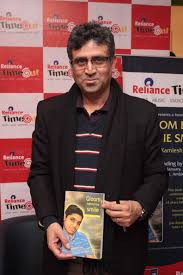
BOOK TITLE: GLOOM BEHIND THE SMILE
(The book is about a young cancer patient. Now archived in eight prestigious libraries of the US which include Harvard College Library; Harvard University Library; Library of Congress; University of Washington, Seattle; University of Minnesota, Minneapolis; Yale University, New Haven; University of Chicago; University of North Carolina, at Chapel Hill University Libraries. It can also be accessed at MIT through Worldcat.org. Besides, it is also available for reading in the libraries and archives of Canada; the Open Library; Cancer Aid and Research Foundation Mumbai; Jaipuria Institute of Management, Noida, India; Shoolini University, Yogananda Knowledge Center, Himachal Pradesh and Azim Premzi University, Bangalore and the Library of Cancer Aid and Research Foundation, Mumbai. The title also finds a mention in a book titled ‘Enduring Cancer: Life, Death and Diagnosis in Delhi’ by Dwaipayan Banerjee published by the Duke University Press).
BOOK TITLE: ONE TO TANGO … RIA’S ODYSSEY
(It is a book on ‘singlehood’ about a Delhi girl now archived in Connemara Library, Chennai and Delhi Public Library, GOI, Ministry of Culture, Delhi; It is also available for reading in the Indian National Bibliography, March 2016, in the literature section, in Central Reference Library, Ministry of Culture, India, Belvedere, Kolkata-700022)
BOOK TITLE: AADAB LUCKNOW … FOND MEMORIES
(This is a fiction written around the great city of Nawabs—Lucknow. It describes Lucknow in great detail and also talks about its Hindu-Muslim amity, which is the undying characteristic of Lucknow. The book was launched at the Lucknow International Literary Festival in 2014. It is catalogued and included for reading in Askews and Holts Library Services, Lancashire, U.K; Herrick District Library, Holland; Charlotte-Mecklenburg Library, Mecklenburg County, North Carolina, USA; Black Gold Cooperative Library Administration, Arroyo Grande, California; Berkeley Library, University of California; The Peshastin Public Library and The George Public Library near Washington, a Northern Central Washington Libraries branch; the Flagstaff City-Coconino County Public Library in Arizona in the US and the Salina Public Library, Kansas, USA.
BOOK TITLE: REFRACTIONS … FROM THE PRISM OF GOD
(Co-published by Cankids–Kidscan, a pan India NGO and Shravan Charity Mission, that works for child cancer in India. The book is endorsed by Ms Preetha Reddy, MD Apollo Hospitals Group. It was launched at the Lucknow International Literary Festival in 2016).
BOOK TITLE: TYPICAL TALE OF AN INDIAN SALESMAN
(Is a story of an Indian salesman who is, humbly qualified. Yet he fights his way through unceasing uncertainties to reach the top. A good read not only for salesmen but for any reader. The book was launched on 10th February 2018 at Gorakhpur Lit-Fest. Now available on Amazon, Flipkart and Onlinegatha)
BOOK TITLE: RHYTHM … IN POEMS
(Published in January 2019. The book contains 50 poems. The poems are about our day-to-day life. Poems from this book have been published in Shillong Times, Bandra Times, Bhavan’s Journal and Arunachal Times and Goan net. The book is available on Amazon, Flipkart and Onlinegatha)
BOOK TITLE: MIRAGE
(Published in February 2020. The book is a collection of eight short stories available on Amazon, Flipkart and Notion Press)
BOOK TITLE: AWADH ASSAM AND DALAI LAMA … The Kalachakra
(It is the story of the man who received His Holiness The Dalai Lama and his retinue in 1959 as a GOI representative when he fled Tibet in 1959. The book was launched on 21st November 2022 by His Holiness The Dalai Lama at Dharmshala. The title is archived in the library of the Department of Information and International Relations (DIIR) Government of Tibet, Tibet Policy Institute (TPI) and the personal library of His Holiness The Dalai Lama. The title is also archived in The Ohio Digital Library, USA. It was recently included in the digital library of the world-renowned company APPLE. Included in the library of Friends of Tibet and Maharashtra Mitra Mandal Library in Bandra, Mumbai.
(POEMS, SHORT STORIES AND ARTICLES OF KAMLESH TRIPATHI PUBLISHED IN JOURNALS AND MAGAZINES)
BHAVANS JOURNAL
Short stories, Book reviews and Articles published in Bhavan’s Journal: 1. Reality and Perception, 15.10.19; 2. Sending the Wrong Message, 31.5.20; 3. Eagle versus Scholars, June, 15 & 20, 2020; 4. Indica, 15.8.20; 5. The Story of King Chitraketu, August 31 2020; 6. Breaking Through the Chakravyuh, September 30 2020. 7. The Questioning Spouse, October 31, 2020; 8. Happy Days, November 15, 2020; 9. The Karma Cycle of Paddy and Wheat, December 15, 2020; 10. Power Vs Influence, January 31, 2021; 11. Three Refugees, March 15, 2021; 12. Rise and Fall of Ajatashatru, March 31, 2021; 13. Reformed Ruler, May 15, 2021; 14. A Lasting Name, May 31, 2021; 15. Are Animals Better Teachers? June 16, 2021; 16. Book Review: The Gram Swaraj, 1.7.21; 17. Right Age for Achievements, 15.7.21; 18. Big Things Have Small Beginnings, 15.8.21; 19. Where is Gangaridai?, 15.9.21; 20. Confront the Donkey Within You 30.9.21; 21. Know Your Strengths 15.10.21; 22. Poverty 15.11.21; 23. Top View 30.11.21; 24. The Bansuriwala 15.1.22; 25. Sale of Alaska 15.2.22; 26. The Dimasa Kingdom 28.2.22;27. Buried Treasure 15.4.22; 28. The Kingdom of Pragjyotisha 30.4.22; 29. Who is more useful? 15.5.22; 30. The White Swan from Lake Mansarovar 30.6.22; 31. Bhool Bhulayya 15.9.22; 32. Good Karma 30.9.22; 33. Good Name vs Bad Name 15.10.22; 34. Uttarapath—The Grand Trunk Road 1.12.22; 35. When Gods Get Angry 1.1.23; 36. Holinshed’s Chronicles 15.1.23; 37. Theogony 15.2.23; 38. Poem: Mother 14.5.23; 39. The Nag Mandir 30.6.23; 40. The Story of Garuda 30.7.23; 41. Janmabhoomi vs Karmabhoomi 31.8.23; 42. The Ghost Town of Kuldhara 15.9.23; 43. The Tale of Genji 15.10.23; 44. The Soul Connection 1.12.23; 45.Book review: Jungle Nama … a story of the Sundarban 16.3.24; 46. Book review: A Forgotten Chapter 16.5.24; 47. Exploring Ancient Egypt, 1.8.24; 48. The Story of Dhruva, 16.8.24; 49. Two Hundred Years of Tea in Assam 16.9.24; 50. The Cosmic Messenger 16.10.24; 51. Biblioburro: The Four-Legged Library 16.11.24
THE SHILLONG TIMES
Articles & Poems: 1. Poem: Happy New Year 8.1.23; 2.Poem: Spring 12.3.23; 3.Poem: Right and Wrong 20.3.23; 4.The Gush of Emotion—Writing, 26.3.23; 5. The Nag Mandir, 7.5.23; 6. Poem: Mother 7.5.23; 7. Poem: Rain Rain 9.7.23; 8. Poem:You Come Alone You Go Alone 6.8.23; 9. Poem: Rain Rain (Second Time) 10.8.23; 10. Poem: Guru Teacher 1.10.23; 11. Poem: Autumn … The Interim Heaven 15.10.23; 12. Poem: Happy Diwali 12.11.23; 13. Overcoming Blindness: Learn it the John Milton Way 10.12.23; 14. The Happy Prince and The Happy Man’s Shirt 31.12.23; 15. Annus Mirabilis -2024 7.1.24; 16. Gandhi to Mahatma Gandhi- Incidents that Shaped Gandhi in South Africa 28.1.24; 17. Poem: Together But Not Made For Each Other, 11.2.24; 18. The Birds Bees and The Spiders of Nicholas Guildford and Jonathan Swift 25.2.24; 19. The Overcoats of Nikolai Gogol and Ruskin Bond 10.3.24; 20. The Ethnic Colours of Holi 24.3.24; 21. A Lesson from Dalai Lama, 21.4.24; 22. Poem: Morning Walk 28.4.24; 23. Trip to Rhine Falls, Switzerland, 19.5.24; 24. Poem: Hurt 2.6.24; 25. Poem: Your Conscience Was My Sign On 16.6.24; 26.Poem: The Eerie Ways of Time 7.7.24; 27.Poem: Celebrating the T20 World Champions 14.7.24;28. Read to Rise above mediocrity, 4.8.24; 29. Poem: Desire vs Reality 11.8.24; 30. Jack Ma’s Pristine Advice to Employers, Employees and the Youth 22.9.24; 31. Tagore and Kipling 3.11.24;
THE ASSAM TRIBUNE
Article: 1. The Magic of Reading 11.12.23; 2. Gandhi to Mahatma 29.1.24; 3. Geography of Solitude 8.4.24; 4. A Lesson From Dalai Lama, 22.4.24; 5. A Source of Inspiration, 29.4.24; 6. The Four-LeggedLibrary, 12.5.24; 7. Age and Achievement, 10.6.24; 8. Read … To Rise Above Mediocrity, 1.7.24; 9. Crusade for a College, 25.8.24; 10. Hemingway’s Iceberg Theory (Panorama) 27.9.24; 11. Short story: Love in the Air, 20.10.24;
THE ARUNACHAL TIMES
Poem: 1. Hope—In The Arc of Twilight, 13.8.23; 2.Poem: Spring 3.3.24; 3.Poem: The Morning Walk 10.3.24;
BANDRA TIMES, MUMBAI
Articles & Poems: 1. Poem: SPRING, 1.4.23; 2. Poem: Mother, 1.6.23; 3. Poem: Rain Rain, 1.8.23; 4. A Lesson From Dalai Lama, 1.6.24; 5. Read to rise above Mediocrity 1.8.24
Aritcles: 29.12.2020: Indica by Megasthenes; 14.3.22: About The Dimasa Kingdom Assam; 10.12.22: Grand Trunk Road–Uttarapath; 5.10.23: The Ghost Town of Kuldhara Near Jaisalmer;
(ALL THE ABOVE BOOK TITLES ARE AVAILABLE FOR SALE ON AMAZON, FLIPKART AND OTHER ONLINE STORES OR YOU COULD EVEN WRITE TO US FOR A COPY)
Marine navigation is the art and science of steering a ship from a starting point and sailing it to a destination, efficiently and responsibly. It is an art because of the skill that the navigator must have to avoid the dangers of navigation, and it is a science because it is based on physical, mathematical, oceanographic, cartographic, astronomical, and other kinds of knowledge.
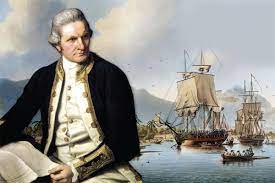
Captain James Cook was a British explorer of seas. He was also a cartographer and naval officer for his three voyages between 1768 and 1779 in the Pacific Ocean, particularly to New Zealand and Australia.
He made comprehensive maps of Newfoundland prior to embarking on his three voyages. Cook has a significant role in bringing about science and equipment into the field of navigation. His eleven years of sailing around the Pacific Ocean contributed significantly to the learning curve of the Europeans.
Cook’s mapping of large areas of the Pacific was his major achievement. This gave navigational accuracy on account of which the Europeans were able to sail to several sets of islands, which also included the Hawaiian group of islands.
Please note for accurate maps you need to determine accurate latitude and longitude. Between latitude and longitude, longitude was always more difficult to measure correctly. Navigators were able to work out latitude accurately for centuries by measuring the angle of the sun or a star above the horizon with an instrument such as a backstaff or a quadrant– A navigational instrument that was used to measure the altitude of a celestial body, particularly the Sun or the Moon.
But longitude was always more difficult to measure accurately because it required the exact knowledge of the time difference between points on the surface of the earth. The Earth turns a full 360 degrees in relation to the sun each day. Thus longitude corresponds to time which is 15 degrees every hour, or 1 degree every 4 minutes. In all three voyages of Captain Cook, he gathered detailed information that helped him in his navigation. During his first voyage, he gathered accurate longitude measurements with his navigational skills and with the help of British astronomer Charles Green who helped him gather all the information. They also used newly published Nautical Almanac tables which were part of the official British Alamanac using the lunar distance method – measuring the angular distance from the moon to either the sun during the daytime or one of the eight bright stars during the nighttime to determine the time at the Royal Observatory, Greenwich, and comparing that to his local time determined via the altitude of the sun, moon, or stars.
Many faces were behind Captain Cook in making his voyages successful, especially, watchmakers who had a great sense of purpose vis-a-vis sailors. On his second voyage, Cook used the K1 chronometer developed by Larcum Kendall, a British watchmaker, which was in the shape of a large pocket watch, 5 inches (13 cm) in diameter. It was a copy of the H4 clock made by John Harrison, a self-educated English carpenter and clockmaker who proved to be the first to keep accurate time at sea when used on Deptford’s journey to Jamaica in 1761-62.
Cook was a man with a treasure of common sense. He was successful in circumnavigating the world on his first voyage without losing a single sailor to scurvy (a disease resulting from lack of vitamin C), which was an unusual achievement of those times. He tested several preventive measures, the most important one being frequent replenishment of fresh food. He later on presented a paper on this perspective of the voyage to the Royal Society for which he was awarded the Copley Medal, a prestigious award of the Royal Society in 1776. Cook became the first European to develop extensive contacts with various communities in the Pacific. He correctly postulated a language link among all the people of the Pacific despite their being separated by great ocean stretches (see Malayo- Polynesian languages a subgroup of the Austronesian languages, spoken by approximately 385.5 million people). Cook theorised that Polynesians originated from Asia, which scientist Bryan Sykes a British geneticist later verified. In New Zealand, the coming of Cook is often used to signify the onset of the colonization which officially started more than 70 years after his crew became the second group of Europeans to visit that archipelago.
Without scientists, there are no discoveries. Cook carried several scientists on his voyages. They made significant observations and discoveries. Two botanists, Joseph Banks and the Swede Daniel Solander, sailed on the first voyage. The two collected over 3,000 plant species. Joseph Banks subsequently promoted the British settlement of Australia, establishing New South Wales as a penal settlement in 1788. Artists too sailed on Cook’s first voyage. Sydney Parkinson, a Scottish botanical illustrator was heavily involved in documenting the botanists’ findings, completing 264 drawings before his death near the end of the voyage. They were of immense scientific value to British botanists. Cook’s second expedition included William Hodges, who produced notable landscape paintings of Tahiti, Easter Island, and other locations. Several officers who served under Cook went on to distinctive accomplishments. William Bligh, a British officer in the Royal Navy who was Cook’s sailing master. He was given command of HMS Bounty in 1787 to sail to Tahiti and return with breadfruit. William Bligh became known for the mutiny of his crew, which resulted in his being set adrift in 1789. He later became Governor of New South Wales, where he was the subject of another mutiny – the 1808 Rum Rebellion. George Vancouver, one of Cook’s midshipmen, (officer of a low rank) led a voyage of exploration to the Pacific Coast of North America (a four-and-a-half-year voyage of exploration and diplomacy, commanded by Captain George Vancouver of the Royal Navy) from 1791 to 1794. In honour of Vancouver’s former commander, his ship was named Discovery. George Dixon, who sailed under Cook on his third expedition, later commanded his own ship. Henry Roberts, a lieutenant under Cook, spent many years after that voyage preparing the detailed charts that went into Cook’s posthumous atlas, published around 1784.
Cook’s contributions to knowledge gained international recognition during his lifetime. In 1779, while the American colonies were fighting Britain for their independence, Benjamin Franklin, an American polymath wrote to captains of colonial warships at sea, recommending that if they came into contact with Cook’s vessel, they were to “not consider her an enemy, nor suffer any plunder to be made of the effects contained in her, nor obstruct her immediate return to England by detaining her or sending her into any other part of Europe or to America; but that you treat the said Captain Cook and his people with all civility and kindness … as common friends to mankind.
Shravan Charity Mission is an NGO that works for poor children suffering from life threatening diseases especially cancer. Our posts are meant for our readers that includes both children and adults and it has a huge variety in terms of content. We also accept donations for our mission. Should you wish to donate for the cause. The bank details are given below:
NAME OF ACCOUNT: SHRAVAN CHARITY MISSION
Account no: 680510110004635 (BANK OF INDIA)
IFSC code: BKID0006805
*
Our Publications
GLOOM BEHIND THE SMILE
(The book is about a young cancer patient. Now archived in 8 prestigious libraries of the US that includes Harvard College Library; Harvard University Library; Library of Congress; University of Washington, Seattle; University of Minnesota, Minneapolis; Yale University, New Haven; University of Chicago; University of North Carolina, at Chapel Hill University Libraries. It can also be accessed in MIT through Worldcat.org. Besides, it is also available for reading in libraries and archives of Canada, Cancer Aid and Research Foundation Mumbai; Jaipuria Institute of Management, Noida; India. Shoolini University, Yogananda Knowledge Center, Himachal Pradesh and Azim Premzi University, Bangalore).
ONE TO TANGO … RIA’S ODYSSEY
(Is a book on ‘singlehood’ about a Delhi girl now archived in Connemara Library, Chennai and Delhi Public Library, GOI, Ministry of Culture, Delhi; Available for reading in Indian National Bibliography, March 2016, in the literature section, in Central Reference Library, Ministry of Culture, India, Belvedere, Kolkata-700022)
AADAB LUCKNOW … FOND MEMORIES
(Is a fiction written around the great city of Nawabs—Lucknow. It describes Lucknow in great detail and also talks about its Hindu-Muslim amity. That happens to be the undying characteristic of Lucknow. The book was launched in the Lucknow International Literary Festival of 2014. It is included for reading in Askews and Holts Library Services, Lancashire, U.K; Herrick District Library, Holland and Charlotte-Mecklenburg Library, Mecklenburg County in North Carolina, USA; Black Gold Cooperative Library Administration, Arroyo Grande, California).
REFRACTIONS … FROM THE PRISM OF GOD
(Co-published by Cankids–Kidscan, a pan India NGO and Shravan Charity Mission, that works for Child cancer in India. The book is endorsed by Ms Preetha Reddy, MD Apollo Hospitals Group. It was launched at Lucknow International Literary Festival in 2016)
TYPICAL TALE OF AN INDIAN SALESMAN
(Is a story of an Indian salesman who is, humbly qualified. Yet he fights his way through unceasing uncertainties to reach the top. A good read not only for salesmen. The book was launched on 10th February 2018 at Gorakhpur Lit-Fest. Now available on Amazon, Flipkart and Onlinegatha)
RHYTHM … in poems
(Published in January 2019. The book contains 50 poems. The poems describe our day-to-day life. A few poems from the book have been published in Shillong Times, Bandra Times and Bhavan’s Journal. The book is available on Amazon, Flipkart and Onlinegatha)
MIRAGE
(Published in February 2020. The book is a collection of eight short stories available in Amazon, Flipkart and Notion Press)
AWADH ASSAM AND DALAI LAMA … The Kalachakra
(The story of the man who received His Holiness The Dalai Lama and his retinue in 1959 as a GOI representative when he fled Tibet in 1959. The book was launched on 21st November 2022 by His Holiness The Dalai Lama at Dharmshala. The title is archived in the library of the Department of Information and International Relations (DIIR) Government of Tibet, Tibet Policy Institute (TPI) and the personal library of His Holiness. The title is also archived in The Ohio Digital Library, USA).
BHAVANS JOURNAL
Short stories, Book reviews and Articles published in Bhavan’s Journal: 1. Reality and Perception, 15.10.19; 2. Sending the Wrong Message, 31.5.20; 3.Eagle versus Scholars June, 15 & 20 2020; 4.Indica, 15.8.20; 5.The Story of King Chitraketu, August 31 2020; 6.Breaking Through the Chakravyuh, September 30 2020. 7. The Questioning Spouse, October 31, 2020; 8. Happy Days, November 15, 2020; 9.The Karma Cycle of Paddy and Wheat, December 15, 2020; 10.Power Vs Influence, January 31, 2021; 11.Three Refugees, March 15, 2021; 12.Rise and Fall of Ajatashatru, March 31, 2021; 13.Reformed Ruler, May 15, 2021; 14.A Lasting Name, May 31, 2021; 15.Are Animals Better Teachers? June 16, 2021; 16.Book Review: The Gram Swaraj, 1.7.21; 17.Right Age for Achievements, 15.7.21; 18.Big Things Have Small Beginnings, 15.8.21; 19.Where is Gangaridai?, 15.9.21; 20.Confront the Donkey Within You 30.9.21; 21. Know Your Strengths 15.10.21; 22. Poverty 15.11.21; 23. Top View 30.11.21; 24. The Bansuriwala 15.1.22; 25.Sale of Alaska 15.2.22; 26.The Dimasa Kingdom 28.2.22; 27. Buried Treasure 15.4.22; 28. The Kingdom of Pragjyotisha 30.4.22; 29.Who is more useful? 15.5.22; 30. The White Swan from Lake Mansarovar 30.6.22; 31. Bhool Bhulayya 15.9.22; 32. Good Karma 30.9.22; 33. Good Name vs Bad Name 15.10.22; 34.Uttarapath—The Grand Trunk Road 1.12.22; 35.When Gods Get Angry 1.1.23; 36. Holinshed’s Chronicles 15.1.23; 37. Theogony 15.2.23; 38. Poem: Mother 14.5.23
SUNDAY SHILLONG TIMES
ARTICLES & POEMS: 1. POEM: HAPPY NEW YEAR 8.1.23; 2. POEM: SPRING 12.3.23; 3. POEM: RIGHT AND WRONG 20.3.23, 4. THE GUSH OF EMOTION—WRITING, 26.3.23; 5. THE NAG MANDIR 7.5.23; 6. POEM:MOTHER 7.5.23;
There is an old saying, ‘The sun never sets on the British Empire’ because it spanned its tentacles across the globe. But how did all this happen is indeed surprising? While going through world history one will find that the Europeans dared many sea voyages and overland journeys in the earlier centuries which resulted in their cross-globe explorations and discoveries. The first British explorer to make an overland journey to India was John Mildenhall in Circa 1560-1614 and the one who sailed to Australia all the way from England was ‘Captain James Cook’. Cook an eminent cartographer is one of the most popular names in Australian History. He circumnavigated the globe at the extreme southern latitude. He was described in the House of Lords as the first navigator of Europe. But the public opinion about Cook is competing and is divided because he spent only about forty days on the Australian shores. His two brief visits to Australia out of his voyages were in the years 1770 and 1773 to discover the South Pacific for signs of the postulated rich southern continent of Terra Australis were beginning to surface by then. During these visits, Cook and his crew carefully examined the coast and the waters of Australia. They collected in-depth information for the British Empire about the economic potential of the land and how the British ships could navigate the Australian coast. The Britishers did a similar thing when they landed in India in 1600 only to colonize her later. Cook and his crew members were the harbingers of the British Colonization of Australia. They were also the centuries of British influence in the Pacific more broadly.
COOK’S PACIFIC VOYAGES:
Cook’s three voyages of discovery in the Pacific in the 1770s marked a significant turning point in the history of Britain and the Pacific. Other Europeans, particularly the Spanish, had been crossing the Pacific Ocean since the 1500s, but largely for trade. However, it was Cook’s journey that signalled the advent of the British influence in the region, and the beginning of significant, ongoing disruption to the First Nations peoples (Indigenous people) and their lands.
1768-1771 VOYAGE IN SHIP ENDEAVOUR
The first Pacific voyage captained by James Cook had scientific and military goals. He was to observe and record the movement of the planet Venus across the sun from a location in the South Pacific so that the scientists could calculate the distance from the Earth to the sun. He was also instructed to fathom the sea depth and coastlines as a guide for future voyages. Cook was also supposed to look out for opportunities to expand the empire with the east coast of Australia in mind. The Endeavour observed the transit of Venus (also known as Earth’s “sister” or “twin”) from the islands of Tahiti located in the South Pacific in July 1769. Cook also mapped the north and south islands of Aotearoa New Zealand and the east coast of Australia. On his return home, Cook’s charts and journals were used to assert a claim against other colonial powers that Britain had lawfully taken possession of vast areas of Australia’s east.
1772-1775 VOYAGE IN SHIP NAMED RESOLUTION AND ADVENTURE:
On his second voyage, Cook captained the HMS Resolution. He was accompanied by a companion-ship HMS Adventure, commanded by Tobias Furneaux. This time Cook aimed to further explore the far south of the Pacific to determine whether or not there is a major southern continent in the Antarctic region. Between them, the two ships made several forays into the south of the Antarctic Circle. The voyages included Tasmania, Aotearoa—New Zealand, Tahiti, Tonga, Rapa Nui (Easter Island), Vanuatu (New Hebrides), New Caledonia and Norfolk Island.
1776-1780 VOYAGE IN SHIP NAMED RESOLUTION AND DISCOVERY:
The focus of Cook’s third voyage which was his last was towards the North Pacific with the hope of finding a shipping route from the Atlantic to the Pacific – a ‘North-West Passage’. The journey went through the Kergueen/Kerguelen group of islands, Tasmania, Aotearoa—New Zealand, Tonga, Tahiti, Hawaii, Vancouver Island, Alaska and the Arctic Circle. From there the voyage headed back to Hawaii, where a dispute ended in Cook being killed along with 4 of his crew members and 16 Kanaka Maoli the native Hawaiians. A replacement captain then helmed the ship.
The voyages gave the British government an overview of the layout of the entire Oceania region (Central and South Pacific Ocean) and a good understanding of their prospects for exploiting its lands and resources. This process of exploitation began soon after Cook’s third voyage, with various vessels soon setting sail to Australia, Tahiti, the southern oceans, the north coast of America and Aotearoa New Zealand to seek produce, hunt whales and establish settler colonies. Given the importance of Cook’s role on the voyages, he is considered a highly symbolic figure for First Nations communities of the Pacific.
ABORIGINAL AND TORRES STRAIT ISLANDER PEOPLES’ OBSERVATION OF COOK
Aboriginal Australians first encountered Cook on 14 April 1770 when he sailed within the view of ‘Point Hicks’ in the East Gippsland region of Victoria, Australia. They immediately sent smoke signals of warning up the coast in the direction of the Endeavour’s travel.
CROSS-CULTURAL ENCOUNTERS
Each of Cook’s voyages lasted three to four years. There were hundreds of meetings, understandings and conflicts between Cook and his crew and First Nations peoples and communities during these years.
Captain Cook followed the coastlines closely to record shipping information and create charts. He made many stops at many Pacific Islands to refuel and restock food supplies. At times, he negotiated with First Nations peoples, exchanging European items such as metal tools in return for the use of local resources. If he met resistance to his visits or his requests for supplies, Cook and his crew forced their way through with a variety of weapons. He wrote in his diary:
‘We attempt to land in a peaceable manner, if this succeeds its well, if not we land nevertheless and maintain the footing we thus got by the superiority of our firearms, in what other light can they then at first look upon us but as invaders of the Country …’
While Cook went on to say he wanted to be seen as a friendly visitor, in reality, he laid the groundwork for armed colonizers. However, many non-indigenous Australians resist the label of ‘invasion’ even today.
Cook took heavy weaponry on his journeys. If First Nations people impeded him during his journeys or his refuelling and at the stops to rest, Cook used small shots as a first warning, followed by a musket ball, or firing the great guns overhead to demonstrate the ship’s firepower. Only in the last resort would he allow his men to shoot to kill.’
SECRET INSTRUCTIONS
Before Cook set out on his first journey, the British Admiralty gave him secret instructions. They were both written and verbal. He was not allowed to read the written instructions until he had reached Tahiti and finished observing an important planetary event, the transit of Venus. Cook’s instructions were to head towards Australia and assess the east coast of the continent and its resources in all aspects: the beasts, fowls, fishes; the strata of the soil; for mines, minerals or valuable stones; trees, fruits and grains; and the number of natives and their genius, temper and disposition.
The instructions also said, ‘With the Consent of the Natives take possession of convenient situations in the Country in the name of the King of Great Britain: Or: if you find the Country uninhabited take possession for his Majesty by setting up proper marks and inscriptions, as first discoverers and possessors.’
Cook’s diaries of 1770 and 1773 show that he was a bit confused about his rejection by Aboriginals on the east coast and later Lutruwita (Tasmania). Cook failed to get the consent of the natives to enter the law and ceremony of the land. However, Cook went on to claim to the rest of the world that he had established ‘possession’ of the continent for the purposes of international law. He had broken Aboriginal laws and disregarded many of the existing rules of colonization. Millions of non-Indigenous people followed Cook’s footsteps, resulting in illegal land grabs and genocide. This is why Cook is remembered as ‘the original invader’ and a harbinger of the death of Aboriginal people and culture. In fact, to many First Nations people all over the Pacific, Cook remains a ‘Great White Evil.’
NAVIGATING EACH OTHER’S WORLDS
During the first journey, Cook had some excellent luck. A remarkable Raiatean (an archipelago located in the South Pacific) man called Tupaia came aboard the Endeavour in Tahiti. He seemed very interested to join the journey. It turned out that Tupaia was a highly skilled navigator and was willing to share his extensive knowledge with Cook and Joseph Banks an English naturalist to translate his knowledge into at least two charts: ‘Tupaia’s Chart’, which showed the locations of 74 islands from the reference point of Tahiti, and ‘A chart of the Society Isles in the South Sea’.
Tupaia was able to list all these islands despite not having visited all of them- his map was recorded as oral memory, the accumulated wisdom of generations of Pacific navigators. It is possible that Tupaia was interested in joining Cook’s journey as an opportunity to exercise his own knowledge.
As Cook recorded in his diary: ‘I have before hinted that these people have an extensive knowledge of the islands situated in these seas.’ First Nations peoples of the Pacific were also able to predict the weather more accurately than Europeans at that time.
THE TURTLE STORY
Each time Cook stopped to refuel and restock he relied on the generosity of the local people. He would typically stop at each place for at least a few weeks. At times his requests for wood, freshwater and vegetables pushed the limits of what local people had to spare. When it came to fishing, Cook and his crew generally helped themselves and they were keen to catch as much as possible. Towards the end of their stay in Guugu Yimithirr country, the Endeavour crew broke the law by catching too many turtles in the unseasoned period. Guugu Yimithirr community members tried to get the crew to hand some turtles back, but the crew resisted. The Guugu Yimithirr resisted by letting them know this was not okay by setting fire to parts of Cook’s onshore camp. Cook and Banks tried to save their equipment, and both of them fired their guns at the Guugu Yimithirr.
DEATH OF COOK
Something similar happened in Hawaii too, leading to Cook’s death – an event that has been interpreted and re-interpreted many times by European historians and anthropologists. But why did this experienced traveller get stabbed to death late in his third journey is the question?
Was it due to a misunderstanding by the Kanaka Maolis (The Native Hawaiians)? It’s possible that when Cook first arrived he might have been accommodated as a kind of religious figure because he accidentally turned up in the middle of an important religious festival (the Makahiki). However, Cook and his crew definitely overstayed their welcome and after enjoying lavish hospitality they returned too soon, needing to repair a broken mast and that created all the trouble.
IS COOK ALIVE OR DEAD
Even though Cook definitely died in 1779, the strange thing is that the non-Aboriginal people in Australia seem to want to pretend that he lives on. Mudburra man Hobbles Danayarri an aboriginal lawman and community leader has noticed this, He says: ‘Aboriginal people all know that Captain Cook is dead. It’s the white people, European people, who don’t know that he’s dead, or who don’t accept that he’s dead, or who refuse to allow him to die because they still “follow his law”’.
Maybe Cook’s Cottage is evidence of white Australia’s refusal to deal with these issues and to finally say goodbye to Cook – after all, the Cottage does have a life-sized statue of Cook standing in the back garden.
Shravan Charity Mission is an NGO that works for poor children suffering from life threatening diseases especially cancer. Our posts are meant for our readers that includes both children and adults and it has a huge variety in terms of content. We also accept donations for our mission. Should you wish to donate for the cause. The bank details are given below:
NAME OF ACCOUNT: SHRAVAN CHARITY MISSION
Account no: 680510110004635 (BANK OF INDIA)
IFSC code: BKID0006805
*
Our Publications
GLOOM BEHIND THE SMILE
(The book is about a young cancer patient. Now archived in 8 prestigious libraries of the US that includes Harvard College Library; Harvard University Library; Library of Congress; University of Washington, Seattle; University of Minnesota, Minneapolis; Yale University, New Haven; University of Chicago; University of North Carolina, at Chapel Hill University Libraries. It can also be accessed in MIT through Worldcat.org. Besides, it is also available for reading in libraries and archives of Canada, Cancer Aid and Research Foundation Mumbai; Jaipuria Institute of Management, Noida; India. Shoolini University, Yogananda Knowledge Center, Himachal Pradesh and Azim Premzi University, Bangalore).
ONE TO TANGO … RIA’S ODYSSEY
(Is a book on ‘singlehood’ about a Delhi girl now archived in Connemara Library, Chennai and Delhi Public Library, GOI, Ministry of Culture, Delhi; Available for reading in Indian National Bibliography, March 2016, in the literature section, in Central Reference Library, Ministry of Culture, India, Belvedere, Kolkata-700022)
AADAB LUCKNOW … FOND MEMORIES
(Is a fiction written around the great city of Nawabs—Lucknow. It describes Lucknow in great detail and also talks about its Hindu-Muslim amity. That happens to be the undying characteristics of Lucknow. The book was launched in Lucknow International Literary Festival of 2014. It is included for reading in Askews and Holts Library Services, Lancashire, U.K; Herrick District Library, Holland and Charlotte-Mecklenburg Library, Mecklenburg County in North Carolina, USA; Black Gold Cooperative Library Administration, Arroyo Grande, California).
REFRACTIONS … FROM THE PRISM OF GOD
(Co-published by Cankids–Kidscan, a pan India NGO and Shravan Charity Mission, that works for Child cancer in India. The book is endorsed by Ms Preetha Reddy, MD Apollo Hospitals Group. It was launched in Lucknow International Literary Festival 2016)
TYPICAL TALE OF AN INDIAN SALESMAN
(Is a story of an Indian salesman who is, humbly qualified. Yet he fights his way through unceasing uncertainties to reach the top. A good read not only for salesmen. The book was launched on 10th February 2018 in Gorakhpur Lit-Fest. Now available on Amazon, Flipkart and Onlinegatha)
RHYTHM … in poems
(Published in January 2019. The book contains 50 poems. The poems describe our day-to-day life. The book is available on Amazon, Flipkart and Onlinegatha)
MIRAGE
(Published in February 2020. The book is a collection of eight short stories available in Amazon, Flipkart and Notion Press)
AWADH ASSAM AND DALAI LAMA … The Kalachakra
(The story of the man who received His Holiness The Dalai Lama and his retinue in 1959 as a GOI representative when he fled Tibet in 1959. The book was launched on 21st November 2022 by His Holiness The Dalai Lama at Dharmshala. The titled is archived in the library of the Department of Information and International Relations (DIIR) Government of Tibet, Tibet Policy Institute (TPI) and the personal library of His Holiness. The title is also archived in The Ohio Digital Library, USA).
BHAVANS JOURNAL
Short stories, Book reviews and Articles published in Bhavan’s Journal: 1. Reality and Perception, 15.10.19; 2. Sending the Wrong Message, 31.5.20; 3.Eagle versus Scholars June, 15 & 20 2020; 4.Indica, 15.8.20; 5.The Story of King Chitraketu, August 31 2020; 6.Breaking Through the Chakravyuh, September 30 2020. 7. The Questioning Spouse, October 31, 2020; 8. Happy Days, November 15, 2020; 9.The Karma Cycle of Paddy and Wheat, December 15, 2020; 10.Power Vs Influence, January 31, 2021; 11.Three Refugees, March 15, 2021; 12.Rise and Fall of Ajatashatru, March 31, 2021; 13.Reformed Ruler, May 15, 2021; 14.A Lasting Name, May 31, 2021; 15.Are Animals Better Teachers?, June 16, 2021; 16.Book Review: The Gram Swaraj, 1.7.21; 17.Right Age for Achievements, 15.7.21; 18.Big Things Have Small Beginnings, 15.8.21; 19.Where is Gangaridai?, 15.9.21; 20.Confront the Donkey Within You 30.9.21; 21. Know Your Strengths 15.10.21; 22. Poverty 15.11.21; 23. Top View 30.11.21; 24. The Bansuriwala 15.1.22; 25.Sale of Alaska 15.2.22; 26.The Dimasa Kingdom 28.2.22; 27. Buried Treasure 15.4.22; 28. The Kingdom of Pragjyotisha 30.4.22; 29.Who is more useful? 15.5.22; 30. The White Swan from Lake Mansarovar 30.6.22; 31. Bhool Bhulayya 15.9.22; 32. Good Karma 30.9.22; 33. Good name vs Bad Name 15.10.22; 34.Uttarapath—The Grand Trunk Road 1.12.22; 35.When Gods Get Angry 1.1.23; 36. Holinshed’s Chronicles 15.1.23; 37. Theogony 15.2.23
SUNDAY SHILLONG TIMES
ARTICLES & POEMS: 1. POEM: HAPPY NEW YEAR 8.1.23; 2. POEM: SPRING 12.3.23; 3. POEM: RIGHT AND WRONG 20.3.23, 4. THE GUSH OF EMOTION—WRITING, 26.3.23;
(ALL THE ABOVE BOOK TITLES ARE AVAILABLE FOR SALE ON AMAZON, FLIPKART AND OTHER ONLINE STORES OR YOU COULD EVEN WRITE TO US FOR A COPY)




 Shravan charity mission