BIOGRAPHY POINT: AUTHOR GRAHAM GREENE

Copyright@shravancharitymission
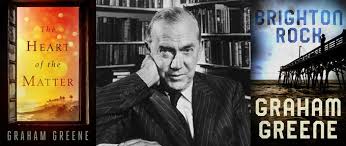
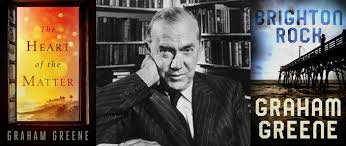
    Henry Graham Greene (2 October 1904 – 3 April 1991), is better known by his pen name Graham Greene. He is regarded by many as one of the leading English novelists of the 20th century. Greene combined literary acclaim with widespread popularity. He acquired a reputation early in his lifetime as a major writer, both of serious Catholic novels, and of thrillers (or “entertainments” as he termed them). He was shortlisted, in 1966 and 1967, for the Nobel Prize for Literature. In his 67 years of writings, which included over 25 novels, he explored both, the ambivalent moral, and political issues of the modern world, often through a Catholic perspective.

    Although Greene objected strongly to his being described as a Roman Catholic novelist, rather than a novelist who happened to be Catholic, Catholic religious themes are at the root, of most of his writings, especially, in four of his major Catholic novels such as, Brighton Rock, The Power and the Glory, The Heart of the Matter, and The End of the Affair. Several of his works, such as The Confidential Agent, The Quiet American, Our Man in Havana, The Human Factor, and his screenplay for The Third Man, also show Greene’s avid interest in the workings and intrigues of international politics and espionage.

    Greene was born in Berkhamsted in Hertfordshire into a large, influential family that included the owners of the Greene King Brewery. He boarded at Berkhamsted School in Hertfordshire, where his father taught and became headmaster. Unhappy at the school, he attempted suicide several times. He attended Balliol College, Oxford, to study history, where, as an undergraduate, he published his first work in 1925—a poorly received volume of poetry titled, Babbling April. He converted to a Catholic, in 1926 after meeting his future wife, Vivien Dayrell-Browning. Later in life he took to calling himself a “Catholic agnostic.” He published his first novel, The Man Within, in 1929. Its favourable response enabled him to work full-time as a novelist. He supplemented his novel’s income with freelance journalism, and book and film reviews.

    Greene originally divided his fiction into two genres (which he described as “entertainments” and “novels”). His thrillers often had notable philosophic edges—such as The Ministry of Fear. His literary works on which he thought his literary reputation rested was The Power and the Glory.

    Greene had a history of depression, which had a profound effect on his writing and personal life. In a letter to his wife Vivien, he told her that, he had, “a character, profoundly antagonistic, to ordinary domestic life,”

    Henry Graham Greene was born in 1904 in St. John’s House, a boarding house of Berkhamsted School, in Hertfordshire, where his father was a housemaster. He was fourth of the six children. His younger brother Hugh became the Director-General of the BBC, and his elder brother Raymond an eminent physician and mountaineer.

    Greene’s father, Charles Henry Greene and mother Marion Raymond Greene, were first cousins, both members of a large, influential family that included the owners of Greene King Brewery, bankers, and statesmen. His mother was the cousin of novelist Robert Louis Stevenson. Charles Greene, Graham Greene’s father was the second master at Berkhamsted School, where the headmaster was Dr Thomas Fry, who was married to Charles’ cousin.

    In his childhood, Greene spent his summers with his uncle, Sir Graham Greene, at Harston House in Cambridgeshire.

    In 1910, Graham Greene’s father Charles Greene succeeded Dr Fry as headmaster of Berkhamsted School. Graham also attended the school as a boarder. Bullied and profoundly depressed, he made several suicide attempts, that he even wrote in his autobiography, by trying the Russian Roulette (a practice of loading a bullet into one chamber of a revolver, spinning the cylinder, and then pulling the trigger while pointing the gun at one’s own head) and also by taking aspirin before going swimming in the school pool. In 1920, at the age of 16, he was sent for psychoanalysis for six months in London, after which he returned to school as a day scholar. His school friends included British journalist Claud Cockburn and Peter Quennel the historian.

    In 1922, Greene was for a short time a member of the Communist Party of Great Britain, and sought an invitation to the new Soviet Union, of which nothing came through. 

    Since Greene suffered from periodic bouts of depression while at Oxford, he largely kept to himself. His contemporary in Oxford, Evelyn Waugh noted that: “Graham Greene looked down upon us (and perhaps all undergraduates) as childish and ostentatious. He certainly shared in none of our revelry. He graduated in 1925 with a second-class degree in history.

    After leaving Oxford, Greene worked for a period of time as a private tutor and then turned to journalism—first in Nottingham Journal, and then as a sub-editor in The Times. While he was working in Nottingham, he started corresponding with Vivien Dayrell-Browning, who had written to him to correct him on a point of Catholic doctrine. Greene was agnostic at the time, but later when he began to think of marrying Vivien he started associating himself with Catholic faith.  Greene was baptised on 26 February 1926. They married on 15 October 1927 at St Mary’s Church, Hampstead, in North London.

    Greene’s first published novel was The Man Within in 1929. Favourable response emboldened him to quit his sub-editor’s job in The Times and work as a full-time novelist. The next two books, The Name of Action (1930) and Rumour at Nightfall (1932), were unsuccessful. He later disowned them. His first true success was Stamboul Train (1932) which was taken over by the Book Society and adapted as the film Orient Express, in 1934.

    He supplemented his novelist’s income with freelance journalism, book and film reviews for The Spectator, and co-editing magazine Night and Day. Greene’s 1937 film review of Wee Willie Winkie, for Night and Day—which said that the nine-year-old star, Shirley Temple, displayed “a dubious coquetry” that appealed to “middle-aged men and clergymen”—provoked Twentieth Century Fox successfully to sue Greene for £3,500 plus costs, and Greene leaving the UK to live in Mexico until after the trial was over. While in Mexico, Greene developed the ideas for his novel often considered his masterpiece, The Power and the Glory. By the 1950s, Greene had become known as one of the finest writers of his generation.

    As his career lengthened, both Greene and his readers found the distinction between entertainments and novels increasingly problematic. The last book of his oeuvre that Greene termed an entertainment was Our Man in Havana in 1958.

    Greene also wrote short stories and plays, which were well received, though he was known first and foremost as a novelist. His first play, The Living Room, debuted in 1953.

    Michael Korda, a lifelong friend of Greene and later his editor at Simon & Schuster, once observed Greene at work: Greene wrote in a small black leather notebook with a black fountain pen and would write approximately 500 words. Korda described this as Graham’s daily penance—once he finished, he would put the notebook away, for the rest of the day.

    His writing influences included Conrad, Ford, Haggard, Stevenson, James, Proust, Buchan and Peguy.

TRAVEL & ESPIONAGE

    Greene travelled far from England, to what he called the world’s wild and remote places. The travels led to his being recruited into MI6 by his sister, Elisabeth, who worked for the agency. Accordingly, he was posted to Sierra Leone during the Second World War. Kim Philby, who was later revealed as a Soviet agent, was Greene’s supervisor and friend at MI6. Greene later wrote an introduction for Philby’s 1968 memoir, My Silent War. As a novelist Greene wove the characters he met and the places where he lived into the fabric of his novels.

    Greene first left Europe at the age of 30 in 1935 on a trip to Liberia that produced the travel book, Journey Without Maps. His 1938 trip to Mexico to see the effects of the government’s campaign of forced anti-Catholic secularisation was paid for by the publishing company Longman, thanks to his friendship with Tom Burns. That voyage produced two books, The Lawless Roads (published as ‘Another Mexico’ in the U.S.) and the novel The Power and the Glory. In 1953, the Holy Office informed Greene that The Power and the Glory was damaging to the reputation of the priesthood, but later, in a private audience with Greene, Pope Paul VI told him that, although parts of his novels would offend some Catholics, he should ignore the criticism.

    Greene first travelled to Haiti in 1954, where his novel The Comedians (1966) is set, which was then under the rule of dictator Francois Duvalier, known as “Papa Doc”, frequently staying at the Hotel Oloffson in Port-au-Prince. And, in the late 1950s, as inspiration for his novel, A Burnt-Out Case (published in 1960), Greene spent time travelling around Africa visiting a number of leper colonies in the Congo Basin, and in, what were then, the British Cameroons. During this trip in late February and early March 1959, he met Andree de Jongh several times, a Belgian, resistance fighter, responsible for establishing an escape route for downed airmen from Belgium to the Pyrenees, somewhere between Spain and France.

    In 1957, just months after Fidel Castro began his final revolutionary assault on the Batista Regime in Cubs, Greene played a small role in helping the revolutionaries, as a secret courier transporting warm clothing for Castro’s rebels hiding in the hills during the Cuban winter. Greene was said to have a fascination with strong leaders, which may have accounted for his interest in Castro, whom he later met. After one visit Castro gave Greene a painting he had done, which hung in the living room of the French house where the author spent the last years of his life. Greene did later voice doubts about Castro’s Cuba, telling a French interviewer in 1983, “I admire him for his courage and his efficiency, but I question his authoritarianism,” adding: “All successful revolutions, however idealistic, probably betray themselves in time.”

    After falling victim to a financial swindler, Greene chose to leave Britain in 1966, moving to Antibes in France, to be close to Yvonne Cloetta, whom he had known since 1959, a relationship that endured until his death. In 1973, he had an uncredited cameo appearance as an insurance company representative in Francois Truffaut’s film, Day for Night. In 1981, Greene was awarded the Jerusalem Prize, generally awarded to writers concerned with the freedom of the individual in society.

    In the last years of his life he lived in Vevey, on Lake Geneva in Switzerland, the same town where Charlie Chaplin was living, at this time. He visited Chaplin often, and the two were good friends. His book Doctor Fischer of Geneva or the Bomb Party (published in 1980) is based on themes of combined philosophical and geographical influences. He ceased going to mass and confession in the 1950s, but in his final years he began to receive the sacraments again from Father Leopoldo Durán, a Spanish priest, who became a friend.

    In one of his final works, a pamphlet titled J’Accuse (which means a strong denunciation): The Dark Side of Nice (1982), Greene wrote of a legal matter that embroiled him and his extended family in Nice, and declared that organised crime flourished in Nice because the city’s upper levels of civic government protected, judicial and police corruption. The accusation provoked a libel lawsuit that Greene lost. But he was vindicated after his death when, in 1994, the former mayor of Nice, Jacques Medecin, was imprisoned for corruption and associated crimes.

    In 1984, in celebration of his 80th birthday, the brewery which Greene’s great-grandfather founded in 1799 made a special edition of its ‘St. Edmunds’ ale for him, with a special label in his honour. 

    In 1986, Greene was awarded Britain’s Order of Merit. He died in 1991 at age 86 of leukaemia and was buried in Corseaux cemetery.

Posted by Kamlesh Tripathi

*

https://kamleshsujata.wordpress.com

*

Share it if you like it

*

Shravan Charity Mission is an NGO that works for poor children suffering from life threatening diseases especially cancer. Our posts are meant for our readers that includes both children and adults and it has a huge variety in terms of content. We also accept donations for our mission. Should you wish to donate for the cause. The bank details are given below:

NAME OF ACCOUNT: SHRAVAN CHARITY MISSION

Account no: 680510110004635 (BANK OF INDIA)

IFSC code: BKID0006805

*

Our publications

GLOOM BEHIND THE SMILE

(The book is about a young cancer patient. Now archived in 7 prestigious libraries of the US, including, Harvard University and Library of Congress. It can also be accessed in MIT through Worldcat.org. Besides, it is also available for reading in Libraries and archives of Canada and Cancer Aid and Research Foundation Mumbai)  

ONE TO TANGO … RIA’S ODYSSEY

(Is a book on ‘singlehood’ about a Delhi girl now archived in Connemara Library, Chennai and Delhi Public Library, GOI, Ministry of Culture, Delhi)

AADAB LUCKNOW … FOND MEMORIES

(Is a fiction written around the great city of Nawabs—Lucknow. It describes Lucknow in great detail and also talks about its Hindu-Muslim amity. That happens to be its undying characteristic. The book was launched in Lucknow International Literary Festival of 2014)

REFRACTIONS … FROM THE PRISM OF GOD

(Co-published by Cankids–Kidscan, a pan India NGO and Shravan Charity Mission, that works for Child cancer in India. The book is endorsed by Ms Preetha Reddy, MD Apollo Hospitals Group. It was launched in Lucknow International Literary Festival 2016)

TYPICAL TALE OF AN INDIAN SALESMAN

(Is a story of an Indian salesman who is, humbly qualified. Yet he fights his ways through unceasing uncertainties to reach the top. A good read not only for salesmen. The book was launched on 10th February, 2018 in Gorakhpur Lit-Fest. Now available in Amazon, Flipkart and Onlinegatha)

RHYTHM … in poems

(Published in January 2019. The book contains 50 poems. The poems describe our day to day life. The book is available in Amazon, Flipkart and Onlinegatha)

(ALL THE ABOVE TITLES ARE AVAILABLE FOR SALE IN AMAZON, FLIPKART AND OTHER ONLINE STORES OR YOU COULD EVEN WRITE TO US FOR A COPY)

*****


Book review: Macbeth by William Shakespeare

Copyright@shravancharitymission

Khidki (Window)

–Read India Initiative—

This is only an attempt to create interest in reading. We may not get the time to read all the books in our lifetime. But such reviews, talk and synopsis will at least convey what the book is all about.

    The complete title of the play is, ‘The Tragedy of Macbeth’ written by one and only one, William Shakespeare. The play is thought to have been first performed in 1606. It dramatizes the political ambition of those who seek power for their own sake. Of all the plays that Shakespeare wrote during the reign of James I, who was the patron of Shakespeare’s acting company, Macbeth, most clearly, reflects, the playwright’s relationship with his sovereign. It was first published in the Folio of 1623, possibly from a prompt book, and is Shakespeare’s shortest tragedy. Some famous quotes of Macbeth are …

    ‘Double, double toil and trouble; Fire burn, and cauldron bubble—this is a rhyming couplet in the play chanted by the supernatural three witches. The witches represent pure evil. They are not real characters, and, indeed, they can be seen simply as the voice of temptation in the mind of Macbeth.

    Another quote that I liked was, ‘Fair is foul, and foul is fair.’ 

    Vishal Bhardwaj’s movie, Maqbool is an adaptation of the play Macbeth. The master quote of the play is, ‘by the pricking of my thumbs, something wicked this way comes’ rhymed by the second witch in the play.

    Macbeth has a sinister plot. A brave Scottish General named Macbeth receives a prophecy from a witch-trio that one day he will become the King of Scotland. Driven by ambition, and spurred to action, by his wife, Macbeth murders King Duncan and occupies the Scottish throne. He is then wracked with guilt and paranoia. Forced to commit more and more murders to protect himself from enmity and suspicion, he soon becomes a tyrannical ruler. The bloodbath and consequent civil war swiftly take Macbeth and Lady Macbeth into the realms of madness and death.

    Shakespeare’s source for the story is the account of Macbeth, King of Scotland, Macduff, and Duncan in Holinshed’s Chronicles (1587), a history of England, Scotland, and Ireland familiar to Shakespeare and his contemporaries. Although, the events in the play differ extensively from the history of the real Macbeth. The events of the tragedy are usually associated with the execution of Henry Garnet for complicity in the Gunpowder Plot of 1605.

    In the backstage world of theatre, some believe that the play is cursed, and generally they don’t mention, its title aloud, referring to it instead as, “The Scottish Play”. Over the course of many centuries, the play has attracted some of the most renowned actors to the roles of Macbeth and Lady Macbeth. It has been adapted to film, television, opera, novels, comics, and other media.

    Three witches tell the Scottish general Macbeth that he will one day be King of Scotland. Prompted by his wife, Macbeth kills the king, becomes the new king, and kills more people out of paranoia. Civil war erupts to overthrow Macbeth, resulting in more deaths.

    On a bleak Scottish moorland, Macbeth and Banquo, two of King Duncan’s generals, discover three strange women (witches). The witches prophesy that Macbeth will be promoted twice. Once to the Thane of Cawdor (a rank of the aristocracy bestowed by grateful kings) and second as the King of Scotland. But the caution is, only Banquo’s descendants, will be further kings, and where Banquo isn’t promised any kingdom himself. The generals want to hear more, but the “weird sisters” the witches suddenly disappear. 

    Soon afterwards, King Duncan names Macbeth, Thane of Cawdor as a reward for his success in the recent battles. The promotion seems to support the prophecy. The King then proposes to make a brief visit that night to Macbeth’s castle at Inverness. Lady Macbeth receives news from her husband about the prophecy and his new title. She vows to help him become king by whatever means necessary. 

    Macbeth returns to his castle, followed almost immediately, by King Duncan. The Macbeths plot together, to kill Duncan and wait until everyone is asleep. At the appointed time, Lady Macbeth gives the guards, drugged wine, so that Macbeth can enter and kill the King. But he regrets the act almost immediately, but his wife reassures him. She leaves the bloody daggers by the side of the dead king, just before Macduff, a nobleman, arrives. When Macduff discovers the murder, Macbeth kills the drunken guards in a show of rage and retribution. Duncan’s sons, Malcolm and Donalbain, flee, fearing for their own lives; but they are, nevertheless, blamed for the murder. 

    Macbeth becomes the King of Scotland but is plagued by feelings of insecurity. He remembers the prophecy that Banquo’s descendants will inherit the throne and arranges for Banquo and his son Fleance to be killed. In the darkness, Banquo is murdered, but his son escapes the assassins. At his state banquet that night, Macbeth sees the ghost of Banquo and worries the courtiers with his mad response. Lady Macbeth dismisses the court and unsuccessfully tries to calm her husband.

    The witches still prophesy that the Scottish succession will still come from Banquo’s son. Macbeth embarks on a reign of terror, slaughtering many, including Macduff’s family. Macduff goes to seek Malcolm (one of Duncan’s sons who had fled) at the court of the English King. Malcolm is young and unsure of himself, but Macduff, pained with grief, persuades him to lead an army against Macbeth. 

    Macbeth looks out for the witches who say that he will be safe until the local wood, by the name of Birnam Wood, marches into the battle against him. Finally the wood of Birnam from Perthshire, Scotland comes to Dunsinane, Macbeth’s castle.

    Macbeth feels safe in his remote castle at Dunsinane until he is told that now Birnam Wood is moving towards him. Malcolm’s army is carrying branches from the forest as camouflage for their assault on Macbeth’s stronghold. Meanwhile, an overwrought, and conscience-ridden, Lady Macbeth, walks in her sleep and tells her secrets to her doctor. She then commits suicide. As the final battle commences, Macbeth hears of Lady Macbeth’s suicide and mourns.

    In the battle, Macbeth hews violently, but the English forces gradually, overwhelm his army and castle. On the battlefield, Macbeth encounters the vengeful Macduff, who declares that he was not “of woman born” but was instead “untimely ripped” from his mother’s womb (what we now call birth by caesarean section). Though he realizes that he is doomed, Macbeth continues to fight until Macduff kills and beheads him. Malcolm, now the King of Scotland, declares his benevolent intentions for the country and invites all to see him crowned at Scone in Scotland.

By Kamlesh Tripathi

*

https://kamleshsujata.wordpress.com

*

Share it if you like it

*

Shravan Charity Mission is an NGO that works for poor children suffering from life threatening diseases especially cancer. Our posts are meant for our readers that includes both children and adults and it has a huge variety in terms of content. We also accept donations for our mission. Should you wish to donate for the cause. The bank details are given below:

NAME OF ACCOUNT: SHRAVAN CHARITY MISSION

Account no: 680510110004635 (BANK OF INDIA)

IFSC code: BKID0006805

*

Our publications

GLOOM BEHIND THE SMILE

(The book is about a young cancer patient. Now archived in 7 prestigious libraries of the US, including, Harvard University and Library of Congress. It can also be accessed in MIT through Worldcat.org. Besides, it is also available for reading in Libraries and archives of Canada and Cancer Aid and Research Foundation Mumbai)  

ONE TO TANGO … RIA’S ODYSSEY

(Is a book on ‘singlehood’ about a Delhi girl now archived in Connemara Library, Chennai and Delhi Public Library, GOI, Ministry of Culture, Delhi)

AADAB LUCKNOW … FOND MEMORIES

(Is a fiction written around the great city of Nawabs—Lucknow. It describes Lucknow in great detail and also talks about its Hindu-Muslim amity. That happens to be its undying characteristic. The book was launched in Lucknow International Literary Festival of 2014)

REFRACTIONS … FROM THE PRISM OF GOD

(Co-published by Cankids–Kidscan, a pan India NGO and Shravan Charity Mission, that works for Child cancer in India. The book is endorsed by Ms Preetha Reddy, MD Apollo Hospitals Group. It was launched in Lucknow International Literary Festival 2016)

TYPICAL TALE OF AN INDIAN SALESMAN

(Is a story of an Indian salesman who is, humbly qualified. Yet he fights his ways through unceasing uncertainties to reach the top. A good read not only for salesmen. The book was launched on 10th February, 2018 in Gorakhpur Lit-Fest. Now available in Amazon, Flipkart and Onlinegatha)

RHYTHM … in poems

(Published in January 2019. The book contains 50 poems. The poems describe our day to day life. The book is available in Amazon, Flipkart and Onlinegatha)

(ALL THE ABOVE TITLES ARE AVAILABLE FOR SALE IN AMAZON, FLIPKART AND OTHER ONLINE STORES OR YOU COULD EVEN WRITE TO US FOR A COPY)

*****

   

BRIEF HISTORY OF NEW YORK

Copyright@shravancharitymission

    New York is the world’s first megacity. Most people know New York. Nevertheless let me tell you a few interesting facts about it.

    New York has always been a city of superlatives and first—the richest, most populated, most diverse, most innovative, home to the world’s longest bridge, tallest skyscraper, largest public park, most elaborate subway system, the first to have electricity, telephones, potato chips, pneumatic railway, teddy bears, credit cards, air-conditioning, Silicon Valley and Scrabble, among other things. It has attracted business people and artists, rich and poor, and privileged and persecuted. Today, let’s look at the journey of this vibrant city.

BORN FROM A SHEET OF ICE!

    New York originated when a massive sheet of ice started melting, some 12,000 years ago. Pine trees and grasses grew as the climate became warmer. Woolly mammoths, bison, bears and other large land mammals, as well as hunter-gatherers appeared. As many as 3,000 years later, those animals and humans vanished. The melting ice caused oceans to rise, turning valleys into estuaries and forming new islands and peninsulas. Soon, a new generation of human beings who called themselves “Lenape” arrived. Initially, they lived off deer, fish, nuts, berries and fruits. And about 1,000 years ago, they started growing their own food.

    In the 16th Century, Italian navigator Giovanni da Verazzano set out to find a shorter route to India and China. His quest was unsuccessful but it motivated other explorations, many of which ended up in Lenape-hoking. (Lenape-hoking is a term for the lands historically inhabited by the Native American people known as the Lenape in what is now the Mid-Atlantic United States), where the explorers started selling furs from Canada and Russia, as well as kettles, blankets, hoes, knives, etc., to the Lenape. In 1609, Henry Hudson, an English sailor, claimed an area up the North River (now the Hudson) for the Dutch East India Company. This area, was named New Amsterdam, and became a Dutch trading post in 1624.

    BOUGHT WITH GLASS BEADS

    In 1626, Dutch colonial governor Peter Minuit purchased New Amsterdam from the Lenape tribe, allegedly for glass beads worth $24. New Amsterdam’s population was just 1,500 people then, and included Dutch, Belgians, French and English. Dutch farmers built the earliest settlements. Jews and African slaves soon arrived, and by the 18th Century, it was an upmarket address. The Dutch eventually lost New Amsterdam to the British, who renamed it New York in honour of the Duke of York.

    In 1700, New York’s population was just 5,000 but it was growing rapidly. It multiplied 12 times within a century, and New York became an important trading hub with a slave-labour-driven economy. In 1785—almost 10 years after a failed attempt at achieving freedom from the British, and 13 years after the Great Fire of New York—President George Washington declared New York the largest city in the US, the capital of free America. (The capital shifted to Philadelphia later that year.) The Bank of New York was founded in 1784 and the New York Stock Exchange, in 1792.

    By 1810, New York was a major cotton trading port, and by 1817, thanks to the completion of the Erie Canal from Hudson river to Lake Erie, it was the undisputed trading capital with a population approaching 1,23,000. In the manner of rapidly growing urban spaces, the city’s growth was haphazard. To combat that, the governor appointed a commission to plan the layout of the city. In 1811, the “Commissioner’s Plan” proposed a neat, grid-like arrangement of streets and avenues for the entire city, including Manhattan. By the 1830s, the population swelled to 3,12,000 and efforts were initiated to provide clean water. The New York Police Department was established in 1844.

    THE 10-MILLION MARK

    Between 1892 and 1924, more than 12 million immigrants, arrived from Ireland, Germany, Europe, Asia and other places, and passed through New York and “settled” in the U.S.—forming communities, starting businesses and building places of worship. It was relatively recent, in the 20th century, that New York City took its present shape. Geographically, the city is situated on one of the world’s largest natural harbours and is composed of five boroughs—Brooklyn, Queens, Manhattan, The Bronx and Staten Island. Each borough is a county in the State of New York. In 1895, the citizens of all five counties unanimously voted to merge with Manhattan to form Greater New York. Before the counties united, New York’s population was roughly two million people. After the merger, it increased to three million. By the 1920s, it had overtaken London, and by the 1930s, it had crossed the 10-million mark to become the first megacity in the world.

    The US economy, suffering after the Great Depression in the 1930s, picked up, because of increased wartime spending during World War II, and New York became the world’s leading city. Wall Street consolidated the country’s position in the global economy.

THE CITY TODAY

    New York continues to cope successfully with the pressures of explosive growth. The increased crime rates due to job losses triggered by industrial restructuring in the 1970s and 80s were effectively controlled by the 1990s. The 24-hour rapid transport system, buses, ferries and taxis continue to support the population that needs to be constantly on the move. Streets, expressways and nearly 2,000 bridges and tunnels—many of which are internationally acclaimed engineering marvels—link the various boroughs, supporting vehicles and pedestrians. The sprawling 843-acre Central Park, the New York Botanical Gardens, lavish baseball, soccer and basketball stadiums, internationally renowned museums, cultural institutions and historic sites, as well as Broadway—the dream destination for every theatre professional—provide open spaces as well as physical and intellectual stimulation.

    New York, symbolised by the iconic Manhattan skyline, altered, after 9/11, yet continues to be the world’s financial and architectural hub. It has something for everyone.

ACTIVITY

    The Empire State Building and Times Square are iconic spots in New York.

Posted by Kamlesh Tripathi

*

https://kamleshsujata.wordpress.com

*

Share it if you like it

*

Shravan Charity Mission is an NGO that works for poor children suffering from life threatening diseases especially cancer. Our posts are meant for our readers that includes both children and adults and it has a huge variety in terms of content. We also accept donations for our mission. Should you wish to donate for the cause. The bank details are given below:

NAME OF ACCOUNT: SHRAVAN CHARITY MISSION

Account no: 680510110004635 (BANK OF INDIA)

IFSC code: BKID0006805

*

Our publications

GLOOM BEHIND THE SMILE

(The book is about a young cancer patient. Now archived in 7 prestigious libraries of the US, including, Harvard University and Library of Congress. It can also be accessed in MIT through Worldcat.org. Besides, it is also available for reading in Libraries and archives of Canada and Cancer Aid and Research Foundation Mumbai)  

ONE TO TANGO … RIA’S ODYSSEY

(Is a book on ‘singlehood’ about a Delhi girl now archived in Connemara Library, Chennai and Delhi Public Library, GOI, Ministry of Culture, Delhi)

AADAB LUCKNOW … FOND MEMORIES

(Is a fiction written around the great city of Nawabs—Lucknow. It describes Lucknow in great detail and also talks about its Hindu-Muslim amity. That happens to be its undying characteristic. The book was launched in Lucknow International Literary Festival of 2014)

REFRACTIONS … FROM THE PRISM OF GOD

(Co-published by Cankids–Kidscan, a pan India NGO and Shravan Charity Mission, that works for Child cancer in India. The book is endorsed by Ms Preetha Reddy, MD Apollo Hospitals Group. It was launched in Lucknow International Literary Festival 2016)

TYPICAL TALE OF AN INDIAN SALESMAN

(Is a story of an Indian salesman who is, humbly qualified. Yet he fights his ways through unceasing uncertainties to reach the top. A good read not only for salesmen. The book was launched on 10th February, 2018 in Gorakhpur Lit-Fest. Now available in Amazon, Flipkart and Onlinegatha)

RHYTHM … in poems

(Published in January 2019. The book contains 50 poems. The poems describe our day to day life. The book is available in Amazon, Flipkart and Onlinegatha)

(ALL THE ABOVE TITLES ARE AVAILABLE FOR SALE IN AMAZON, FLIPKART AND OTHER ONLINE STORES OR YOU COULD EVEN WRITE TO US FOR A COPY)

*****


BOOK REVIEW: THE OVERCOAT by Ruskin Bond

Copyright@shravancharitymission

Khidki (Window)

–Read India Initiative—

This is only an attempt to create interest in reading. We may not get the time to read all the books in our lifetime. But such reviews, talk and synopsis will at least convey what the book is all about.

    Ruskin Bond is one of India’s best known authors. He was born in Kasauli, Himachal Pradesh in 1934. He wrote his first novel, The Room on the Roof, at the age of 17. Some years later, it won the John Llewellyn Rhys Memorial Prize in 1957.

    Bond spent his growing years in Jamnagar, Dehradun, Delhi and Shimla, all of which occupy a central place in his writing. After a four year stint in London and Channel Islands in the early 1950s, Bond returned to India and made Landour, Mussoorie, his home.

    A prolific writer, Bond has written several books, short stories, poems and essays. He won the Sahitya Academy Award in 1993 and was awarded the Padma Shri by the Government of India in 1999.

    The story Overcoat is set up in a hill station. It’s about a merry encounter with a ghost. And here it goes.

    The weather was clear and frosty. But as the noon came up over the Himalayan peaks, I could see patches of snow still lay on the roads of the hill station. I would have been quite happy in bed, with a book and a hot-water bottle by my side, but I’d promised the Kapadias that I’d go to their party, and I felt it would be churlish of me to stay away at the last moment. So I padded up myself before setting out for Kapadias on the moonlit road.

    It was a walk of just over a mile to the Kapadias’ house. I had covered about half the distance, when I saw a girl standing in the middle of the road.

    She must have been sixteen or seventeen. But she looked rather old-fashioned, with long hair hanging up to her waist, and a flouncy sequined dress, pink and lavender in colour that reminded me of the photos, in my grandmother’s family album. When I went closer, I noticed she had lovely eyes and a winning smile.

    ‘Good evening,’ I said. ‘It’s a cold night to be out.’

    ‘Are you going to the party?’ she asked.

    ‘That’s right. And I can see from your lovely dress that you too are going. Come along, we’re nearly there.’

    She fell into steps beside me as she commenced walking. We soon saw lights from the Kapadias’ house shining brightly through the deodars. The girl told me her name was Julie. I hadn’t seen her before, but then, I’d only been in the hill station for a few months.

    There was quite a crowd at the party, but no one seemed to know Julie. Everyone thought she was a friend of mine. I did not deny it either. Obviously, she was someone who was feeling lonely and wanted to be friendly with people. And she was certainly enjoying herself. I did not see her do much of eating or drinking, but she flitted from one group to another, talking, listening laughing and enjoying. When the music began, she started dancing and continued alone, or with partners, for it didn’t matter to her, as she was completely wrapped up in music.

    It was almost midnight when I got up to go. I had drank a fair amount of punch, and was ready for bed. As I was saying goodnight to my hosts and wishing everyone a merry Christmas, Julie slipped her arm into mine and said she too would be going home.

    When we were outside, I asked, ‘Where do you live Julie?’

    ‘At Wolfsburn,’ she said. ‘Right at the top of the hill.’

    ‘There’s a cold wind,’ I said. ‘And although your dress is beautiful, it doesn’t look very warm. Here, you’d better wear my overcoat. I’ve plenty of protection.’

    She did not protest, and allowed me to slip my overcoat over her shoulders. Then we started walking back home. But I did not have to escort her all the way. At about the spot where we had met, she said, ‘There’s a shortcut from here. I’ll just scramble up the hillside.’

    ‘Do you know it well?’ I asked. ‘It’s a very narrow path.’

    ‘Oh, I know every stone on the path. I use it all the time. And besides, it’s really a bright night.’

    ‘Well, keep the coat on,’ I said. ‘I can collect it tomorrow.’

    She hesitated for a moment, then smiled and nodded. She then disappeared up the hill, and I went home alone.

    The next day, I walked up to Wolfsburn. I crossed a little brook, from which the house had probably got its name, and entered, an open iron gate. But little had remained of the house. Just a roofless ruin, a pile of stones, a shattered chimney, a few Doric pillars where a veranda had once stood.

    Had Julie played a joke on me? Or had I found the wrong house?

    I walked around the hill, to the mission house where the Taylors live and asked old Mrs Taylor if she knew a girl named Julie.

    ‘No I don’t think so,’ she said. ‘Where does she live?’

    ‘At Wolfsburn, I was told. But the house is just a ruin.’

    ‘Nobody has lived at Wolfsburn for over forty years, the Mackinnons once lived there. One of the old families who settled here. But when their girl died …’ She stopped with that and gave me a queer look. ‘I think her name was Julie … Anyway, when she died, they sold the house and went away. No one ever lived in it again, and it fell into decay. But it couldn’t be the same Julie you’re looking for. She died of consumption (Tuberculosis)—there wasn’t much you could do about it in those days. Her grave is in the cemetery, just down the road.’

    I thanked Mrs Taylor and walked slowly down the road, to the cemetery. Not really wanting to know any more, but propelled forward almost against my will.

    It was a small cemetery under the deodars. You could see the eternal snows of the Himalayas standing out against the pristine blue sky. Here lay the bones of forgotten empire-builders—soldiers, merchants, adventurers, their wives and children. It did not take me long to find Julie’s grave. It had a simple headstone with her name clearly outlined on it:

Julie Mackinnon

1923-39

‘With us one moment,

Taken the next,

Gone to her Maker,

Gone to her rest.’

    Although, many monsoons had swept across the cemetery, wearing down the stones, but they had not touched this little tombstone.

    I was turning to leave, when I got a glimpse of something familiar behind the headstone. I walked around to where it lay.

    Neatly folded on the grass was my overcoat.

    There was no thank-you note. But something soft and invisible brushed against my cheek, and I knew someone was trying to thank me. And that was no one else but Julie … Julie’s soul.

    It is an interesting story and I would give this story seven out of ten.

By Kamlesh Tripathi

*

https://kamleshsujata.wordpress.com

*

Share it if you like it

*

Shravan Charity Mission is an NGO that works for poor children suffering from life threatening diseases especially cancer. Our posts are meant for our readers that includes both children and adults and it has a huge variety in terms of content. We also accept donations for our mission. Should you wish to donate for the cause. The bank details are given below:

NAME OF ACCOUNT: SHRAVAN CHARITY MISSION

Account no: 680510110004635 (BANK OF INDIA)

IFSC code: BKID0006805

*

Our publications

GLOOM BEHIND THE SMILE

(The book is about a young cancer patient. Now archived in 7 prestigious libraries of the US, including, Harvard University and Library of Congress. It can also be accessed in MIT through Worldcat.org. Besides, it is also available for reading in Libraries and archives of Canada and Cancer Aid and Research Foundation Mumbai)  

ONE TO TANGO … RIA’S ODYSSEY

(Is a book on ‘singlehood’ about a Delhi girl now archived in Connemara Library, Chennai and Delhi Public Library, GOI, Ministry of Culture, Delhi)

AADAB LUCKNOW … FOND MEMORIES

(Is a fiction written around the great city of Nawabs—Lucknow. It describes Lucknow in great detail and also talks about its Hindu-Muslim amity. That happens to be its undying characteristic. The book was launched in Lucknow International Literary Festival of 2014)

REFRACTIONS … FROM THE PRISM OF GOD

(Co-published by Cankids–Kidscan, a pan India NGO and Shravan Charity Mission, that works for Child cancer in India. The book is endorsed by Ms Preetha Reddy, MD Apollo Hospitals Group. It was launched in Lucknow International Literary Festival 2016)

TYPICAL TALE OF AN INDIAN SALESMAN

(Is a story of an Indian salesman who is, humbly qualified. Yet he fights his ways through unceasing uncertainties to reach the top. A good read not only for salesmen. The book was launched on 10th February, 2018 in Gorakhpur Lit-Fest. Now available in Amazon, Flipkart and Onlinegatha)

RHYTHM … in poems

(Published in January 2019. The book contains 50 poems. The poems describe our day to day life. The book is available in Amazon, Flipkart and Onlinegatha)

(ALL THE ABOVE TITLES ARE AVAILABLE FOR SALE IN AMAZON, FLIPKART AND OTHER ONLINE STORES OR YOU COULD EVEN WRITE TO US FOR A COPY)

*****



SHORT STORY: EXPECTATIONS

Copyright@shravancharitymission

    Love blossoms with No Expectations

    Two travelers who survived a shipwreck, were washed ashore on a lonely island. With nothing to eat, nothing to protect them from the vagaries of the weather and with no one to listen to their woes, they started weeping in desperation. But soon, they realised that crying was of no consequence. So they decided to carry on with life.

    The two castaways toiled hard to scratch out an existence. Thirty years went past during the course of which they built a beautiful village with the help of the local tribe that they had befriended. They married local women and had children and grandchildren. Whatever they had learnt during their student days, they passed on to their newfound community and the new generation and soon the village became quite developed. The two men now commanded respect from one and all and were made heads of the village. Both lived like brothers and had great love for each other.

    As they grew older, they began to wish if they could spend the last few years of their lives with their blood relations from whom they had got separated long back. So they embarked upon a voyage, on an unknown route. At a distance, they discovered a city that looked prosperous, and was modern with all amenities. Both were shell-shocked at the beautiful sight. “Were we really so close to such a good place? Then why didn’t we travel these five hundred miles earlier? Possibly, we could have reached our country and kin and that would have saved us from the toil, struggle and the difficult times that we underwent all these years,” they said to themselves, bemoaning at their fate.

    Angry with themselves, their destiny and angry with God, they sat on the river bank and started weeping. That drew the attention of a sage passing by and he rushed to them. After he got to know their story, he asked them to follow him. Soon, they were in a palatial bungalow. Pointing to the house owner, the sage said, “His father was the wealthiest person of the state. He is younger than you but various ailments have left him immobile. Whereas, you have undertaken an arduous voyage, and that too on an uncharted route at this ripe age. The big mansion facing this, belongs to his real brother but the brothers hardly speak to each other. Their families remain estranged because each of them nurses a grouse that their parents didn’t do justice in property division. Worse, the parents spent their last few years in an old age home. You are strangers, but destiny brought you together. But I can see that you live like real brothers and are committed to live and die together.”

    By now the two men had come to the understand ground realities. Filled with gratitude, they asked the sage the reason for this unusual conduct of human beings. The sage replied, “You met as strangers so you had no expectations from each other. You had nothing, so you started creating things on your own with your hard work and that was a source of immense satisfaction to you. On the other hand, most of us, who are blessed with family and friends have only expectations from them. And that becomes the cause of unhappiness and estrangement. Instead of having the will to do something new and constructive, we want to own and enjoy what is created by others.”

    Upon hearing this the two men gave up their plans to go back to their country. They instead returned to their village that they had helped establish.

Posted by Kamlesh Tripathi (inspired by a story that I read)

*

https://kamleshsujata.wordpress.com

*

Share it if you like it

*

Shravan Charity Mission is an NGO that works for poor children suffering from life threatening diseases especially cancer. Our posts are meant for our readers that includes both children and adults and it has a huge variety in terms of content. We also accept donations for our mission. Should you wish to donate for the cause. The bank details are given below:

NAME OF ACCOUNT: SHRAVAN CHARITY MISSION

Account no: 680510110004635 (BANK OF INDIA)

IFSC code: BKID0006805

*

Our publications

GLOOM BEHIND THE SMILE

(The book is about a young cancer patient. Now archived in 7 prestigious libraries of the US, including, Harvard University and Library of Congress. It can also be accessed in MIT through Worldcat.org. Besides, it is also available for reading in Libraries and archives of Canada and Cancer Aid and Research Foundation Mumbai)  

ONE TO TANGO … RIA’S ODYSSEY

(Is a book on ‘singlehood’ about a Delhi girl now archived in Connemara Library, Chennai and Delhi Public Library, GOI, Ministry of Culture, Delhi)

AADAB LUCKNOW … FOND MEMORIES

(Is a fiction written around the great city of Nawabs—Lucknow. It describes Lucknow in great detail and also talks about its Hindu-Muslim amity. That happens to be its undying characteristic. The book was launched in Lucknow International Literary Festival of 2014)

REFRACTIONS … FROM THE PRISM OF GOD

(Co-published by Cankids–Kidscan, a pan India NGO and Shravan Charity Mission, that works for Child cancer in India. The book is endorsed by Ms Preetha Reddy, MD Apollo Hospitals Group. It was launched in Lucknow International Literary Festival 2016)

TYPICAL TALE OF AN INDIAN SALESMAN

(Is a story of an Indian salesman who is, humbly qualified. Yet he fights his ways through unceasing uncertainties to reach the top. A good read not only for salesmen. The book was launched on 10th February, 2018 in Gorakhpur Lit-Fest. Now available in Amazon, Flipkart and Onlinegatha)

RHYTHM … in poems

(Published in January 2019. The book contains 50 poems. The poems describe our day to day life. The book is available in Amazon, Flipkart and Onlinegatha)

(ALL THE ABOVE TITLES ARE AVAILABLE FOR SALE IN AMAZON, FLIPKART AND OTHER ONLINE STORES OR YOU COULD EVEN WRITE TO US FOR A COPY)

*****



CRICKET WEST INDIES

Copyright@shravancharitymission

    The Cricket Team of West Indies doesn’t belong to any particular country. The West Indies cricket team is a multi-national men’s cricket team representing the Anglophone (that is English speaking) Caribbean region and is administered by Cricket West Indies. The players on this composite team are selected from a chain of fifteen Caribbean territories, which are parts of several different countries and dependencies. Some out of them are sovereign states such as: Antigua and Barbuda, Barbados, Dominica, Grenada, Guyana, Jamaica, Saint Lucia, Saint Vincent and the Grenadines, Trinidad and Tobago, Parts of Saint Kitts and Nevis (which is an island country in the West Indies), then you have British Overseas Territories of Anguilla, Montserrat and the British Virgin Islands, then you have Saint Maarten a constituent country of the kingdom of Netherlands and the finally the US Virgin Islands.

    Cricket West Indies (CWI), formerly known as West Indies Cricket Board (WICB), is the governing body for cricket in the West Indies (a sporting confederation of over a dozen mainly English-speaking Caribbean countries and dependencies that once formed the British West Indies). It was originally formed in the early 1920s as the West Indies Cricket Board of Control, but changed its name to West Indies Cricket Board in 1996. In November 2015, the Board resolved to rename itself as Cricket West Indies as part of a restructuring exercise that also saw the creation of a separate commercial body. This rebranding formally occurred in May 2017.

    Cricket West Indies has been a full member of the International Cricket Council (ICC) since 1926. It operates the West Indies Cricket Team and West Indies A Cricket Team, that organises Test tours and one-day internationals with other teams. It also organises domestic cricket in West Indies, including the Regional Four Day Competition and the Regional Super 50 domestic one-day (List A) competition. The CWI has also collaborated with Sir Allen Stanford in the organisation of the domestic Stanford 20/20 competition for the Twenty20 format of cricket. Later they created their own Twenty20 league called Caribbean Twenty 20 after disbanding Stanford 20/20. In 2013 they Created Caribbean Premier League, a Professional Twenty20 league.

    Cricket West Indies membership includes the six territorial cricket associations of the various countries and territories which contest the West Indies first-class and limited-overs competition in the Caribbean. Each provides two directors, in addition to a number of non-member directors. Two of these associations are themselves multi-national boards representing a number of countries and dependencies.

    The present President of CWI is Ricky Skerritt, who replaced Dave Cameron in 2019. Johnny Grave is the Chief Executive Officer.

   Since 2005, as per an ICC mandate, the West Indies Women’s Cricket Federation (WIWCF) has been integrated with CWI. The President of the WIWCF is Carol Whilby-Maxwell and the Secretary is Michael Seepersaud.

    CWI is charged with aiding regional development of cricket in Americas region, under the ICC’s development program.

    The West Indies have won the ICC Cricket World Cup twice (1975 and 1979), the ICC World Twenty20 twice (2012 and 2016), the ICC Champions Trophy once (2004), the ICC Under 19 Cricket World Cup once (2016), and have also finished as runners-up in the Cricket World Cup (1983), the Under 19 Cricket World Cup (2004), and the ICC Champions Trophy (2006). The West Indies appeared in three consecutive World Cup finals (1975, 1979 and 1983), and were the first team to win back-to-back World Cups (1975 and 1979).

    The West Indies has hosted the 2007 Cricket World Cup and the 2010 ICC World Twenty20. In June 2019, during the 2019 Cricket World Cup, the West Indies played their 800th ODI match.[11]

    Cricket West Indies (CWI), formerly known as West Indies Cricket Board (WICB), is the governing body for cricket in the West Indies (a sporting confederation of over a dozen mainly English-speaking Caribbean countries and dependencies that once formed the British West Indies). It was originally formed in the early 1920s as the West Indies Cricket Board of Control, but changed its name to West Indies Cricket Board in 1996. In November 2015, the Board resolved to rename itself as Cricket West Indies as part of a restructuring exercise that would also see the creation of a separate commercial body. This rebranding formally occurred in May 2017.

    CWI has been a full member of the International Cricket Council (ICC) since 1926. It operates the West Indies Cricket Team and West Indies A Cricket Team, organising Test tours and one-day internationals with other teams. It also organises domestic cricket in West Indies, including the Regional Four Day Competition and the Regional Super 50 domestic one-day (List A) competition. The CWI has also collaborated with Sir Allen Stanford in the organisation of the domestic Stanford 20/20 competition for the Twenty20 format of cricket. Later they created their own Twenty20 league called Caribbean Twenty 20 after disbanding Stanford 20/20. In 2013 they Created Caribbean Premier League, a Professional Twenty20 league.

    CWI’s membership includes the six territorial cricket associations of the various countries and territories which contest the West Indies first-class and limited-overs competition in the Caribbean. Each provides two directors, in addition to a number of non-member directors. Two of these associations are themselves multi-national boards representing a number of countries and dependencies.

    The President of CWI is Ricky Skerritt, who replaced Dave Cameron in 2019. Johnny Grave is the Chief Executive Officer.

    Since 2005, as per an ICC mandate, the West Indies Women’s Cricket Federation (WIWCF) has been integrated with CWI. The President of the WIWCF is Carol Whilby-Maxwell and the Secretary is Michael Seepersaud.

    CWI is charged with aiding regional development of cricket in the Americas region, under the ICC’s development program.

By Kamlesh Tripathi

*

https://kamleshsujata.wordpress.com

*

Share it if you like it

*

Shravan Charity Mission is an NGO that works for poor children suffering from life threatening diseases especially cancer. Our posts are meant for our readers that includes both children and adults and it has a huge variety in terms of content. We also accept donations for our mission. Should you wish to donate for the cause. The bank details are given below:

NAME OF ACCOUNT: SHRAVAN CHARITY MISSION

Account no: 680510110004635 (BANK OF INDIA)

IFSC code: BKID0006805

*

Our publications

GLOOM BEHIND THE SMILE

(The book is about a young cancer patient. Now archived in 7 prestigious libraries of the US, including, Harvard University and Library of Congress. It can also be accessed in MIT through Worldcat.org. Besides, it is also available for reading in Libraries and archives of Canada and Cancer Aid and Research Foundation Mumbai)  

ONE TO TANGO … RIA’S ODYSSEY

(Is a book on ‘singlehood’ about a Delhi girl now archived in Connemara Library, Chennai and Delhi Public Library, GOI, Ministry of Culture, Delhi)

AADAB LUCKNOW … FOND MEMORIES

(Is a fiction written around the great city of Nawabs—Lucknow. It describes Lucknow in great detail and also talks about its Hindu-Muslim amity. That happens to be its undying characteristic. The book was launched in Lucknow International Literary Festival of 2014)

REFRACTIONS … FROM THE PRISM OF GOD

(Co-published by Cankids–Kidscan, a pan India NGO and Shravan Charity Mission, that works for Child cancer in India. The book is endorsed by Ms Preetha Reddy, MD Apollo Hospitals Group. It was launched in Lucknow International Literary Festival 2016)

TYPICAL TALE OF AN INDIAN SALESMAN

(Is a story of an Indian salesman who is, humbly qualified. Yet he fights his ways through unceasing uncertainties to reach the top. A good read not only for salesmen. The book was launched on 10th February, 2018 in Gorakhpur Lit-Fest. Now available in Amazon, Flipkart and Onlinegatha)

RHYTHM … in poems

(Published in January 2019. The book contains 50 poems. The poems describe our day to day life. The book is available in Amazon, Flipkart and Onlinegatha)

(ALL THE ABOVE TITLES ARE AVAILABLE FOR SALE IN AMAZON, FLIPKART AND OTHER ONLINE STORES OR YOU COULD EVEN WRITE TO US FOR A COPY)

*****


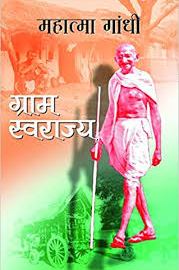
BOOK REVEIW: GRAM SWARAJ by Mohandas Karamchand Gandhi (Mahatma Gandhi)

Copyright@shravancharitymission

Khidki (Window)

–Read India Initiative—

This is only an attempt to create interest in reading. We may not get the time to read all the books in our lifetime. But such reviews, talk and synopsis will at least convey what the book is all about.

    This book was compiled by H.M.Vyas. He has taken the writings of Gandhi from various sources (but primarily from Harijan and Young India magazines) and has converted it into a useful handbook. Printed and published by Navajivan Publishing, first in the year 1962.

    The book encapsulates the thoughts and ethos of Gandhi in the form of excerpts. Indeed Gandhi ji was an amazing thinker and a genius who had the blueprint of India ready even before she was born. The book diagrams the functioning of the smallest community unit of human habitat—that is the village and then sums it up for the nation. The book simplifies an average Indian’s life. It gives that margdarshan specifically to each Indian and perhaps even to all the citizens of the world.

    This publication contains Gandhi’s views on different aspects of rural life including agriculture, village industry, animal husbandry, transport, basic education, health and hygiene.

    For Gandhi Swaraj was a sacred word, a Vedic word, meaning self-rule and self-restraint, and not freedom from all restraint which ‘independence’ often means. As every country is fit to eat, drink and breathe, and so is every nation fit to manage its own affairs, no matter how badly.

    By Swaraj Gandhi meant government of India by the consent of the people as ascertained by the largest number of adult population, male or female, native-born or domiciled, who have contributed by manual labour to the service of the State and who have taken the trouble of having registered their names as voters. Real Swaraj will come not by the acquisition of authority by a few but by the acquisition of the capacity by all to resist authority when it is abused. In other words, Swaraj is to be obtained by educating the masses to a sense of their capacity to regulate and control authority.

    The book has 29 chapters and within that you have sub chapters: Let me briefly take you through the headings of the main chapters in brief as that itself will give you a comprehensive flavour of the book.

  1. Meaning of Swaraj: Swaraj can be maintained, only where, there is a majority of loyal patriotic people to whom the good of the nation is paramount and above all other considerations including personal profit. Swaraj means government by many. But where, the many are immoral or selfish, their government will only spell anarchy and nothing else.
  2. A picture of an ideal society: There will be neither paupers nor beggars, nor high nor low, neither millionaire employers nor half-starved employees, nor intoxicating drinks, or drugs. There will be the same respect for women as vouchsafed to men and the chastity and purity of men and women will be jealously guarded. Where, every woman except one’s wife, will be treated by men of all religions, as mother, sister or daughter according to her age. Where there will be no untouchability and where there will be equal respect for all faiths. They will be all proudly, joyously and voluntarily bread labourers.
  3. Which way lies hope: Industrialism on a mass scale will necessarily lead to passive or active exploitation of the villagers as the problems of competition and marketing come in. Therefore, we have to concentrate on the village being self-contained, manufacturing mainly for use. Provided this character of the industry is maintained, there would be no objection to villagers using even the modern machines and tools that they can make and can afford to use. Only they should not be used as a means of exploitation of others.
  4. Cities and villages: There are two schools of thought in the world. One wants to divide the world into cities and the other into villages. The village civilization and the city civilization are totally different things. One depends on machinery and industrialization, and the other on agriculture and handicrafts. We have given preference to the latter.
  5. Village Swaraj: To serve our villages is to establish Swaraj. Everything else is but an idle dream. If the village perishes India too will perish. It will be no more India. Her own mission in the world will get lost.
  6. Basic Principles of village Swaraj: According to me the economic constitution of India and for that matter of the world, should be such that no one under it should suffer from want of food and clothing. In other words everybody should be able to get sufficient work to enable him to make the two ends meet. And this ideal can be universally realized only if the means of production of the elementary necessaries of life remain in control of the masses. These should be freely available to all as God’s air and water ought to be. They should not be made a vehicle of traffic for the exploitation of others. Their monopolization by any country, nation or group of persons would be unjust. The neglect of this simple principle is the cause of the destitution that we witness today not only in this unhappy land but in other parts of the world too.
  7. Bread labour: The great nature has intended us to earn our bread in the sweat of our brow. Everyone, therefore, who idles away a single minute becomes to that extent a burden upon his neighbours, and to do so is to commit a breach of the very first lesson of Ahimsa. The divine law, that a man must earn his bread by labouring with his own hands, was first stressed by a Russian writer named T. M. Bondaref. Tolstoy advertised it and gave it wide publicity. In my view the same principle has been set forth in the third chapter of Gita, where we are told, that he who eats without offering sacrifice eats stolen food. Sacrifice here can only mean bread labour.
  8. Equality: My idea of a society is that while we all are born equal which means we have a right to equal opportunity, all do not have the same capacity. It is, in the nature of things, impossible. For instance, all cannot have the same height, or colour or degree of intelligence, etc.; therefore in the nature of things, some will have the ability to earn more and others less. People with talents will have more, and they will utilize their talents for this purpose. If they utilize their talents effectively, they will be performing the work of the State. Such people would exist as trustees, on no other terms. I would allow a man of intellect to earn more, I would not cramp his talent. But the bulk of his greater earnings must be used for the good of the State, just as the incomes of all earning sons of the father go to the common family fund.
  9. Theory of Trustee-ship: Suppose I have earned a fair amount of wealth either by way of legacy, or by means of trade and industry, I must know that all that wealth does not belong to me, what belongs to me is the right to an honourable livelihood, no better than that enjoyed by millions of others. The rest of my wealth belongs to the community and must be used for the welfare of the community.
  10. Swadeshi: There is a verse in Bhagavad Gita that says, masses follow the classes. Even, concept of Swadeshi like any other good thing can collapse and die if it is made out to be a fetish. That is the danger that must be guarded against. To reject foreign manufactures, merely because they are foreign and to go on wasting national time and money in the promotion in one’s own country of manufactures for which it is not suited, would be a criminal folly and a negation of the Swadeshi spirit. Remember Swadeshi is not a cult of hatred. On the contrary a doctrine of selfless service that has its roots in the purest Ahimsa, i.e., love.
  11. Self-sufficiency and coo-operation: Truth and non-violence form the foundation of the order of my conception. Our first duty is that we should not be a burden on society, i.e., we should be self-dependent. From this point of view self-sufficiency itself is a kind of service.
  12. Panchayat Raj—Gandhi writes about Panchayats in pre-independence days: Panchayat has an ancient flavour; it is a good word. It literally means an assembly of five elected by villagers. It represents the system, by which the innumerable village republics of India were governed. But the British Government, by its ruthlessly thorough method of revenue collection, almost destroyed these ancient republics, which could not stand the shock of this revenue collection. Congressmen are now making a crude attempt to revive the system by giving village elders civil and criminal jurisdiction.
  13. Nai Talim: was popularly and correctly described as education through handicrafts. This was part of the truth. The root of this new education went much deeper. It lay in the application of truth and love in every variety of human activity, whether in individual life or a corporate one.
  14. Chapters 14 to 18 are on Agriculture and cattle welfare and deals with various agriculture related issues of those times. Our villagers who are mostly Kisans depend on agriculture and cattle for ploughing. I am rather ignorant in this respect for I have no personal experience. But there is not a single village where we have no agriculture or cattle. Our workers will have to keep a careful eye on the cattle wealth of their village. If we cannot use this wealth properly, India will be doomed to disaster and with that we shall also perish. For these animals will then, as in the West, become an economic burden on us and we shall have no option before us except for killing them.

    The book deals with the problem of ownership of land: The Kisan is the salt of the earth which rightly belongs or should belong to him, and not to the absentee landlord or the Zamindar.

    The other important question for consideration… was whether cow farming should be in the hands of individuals or done collectively. I myself had no hesitation in saying that she could never be saved by individual farming. Her salvation, and with her that of buffalo, could only be brought about by collective endeavour. It is quite impossible for an individual farmer to look after the welfare of his cattle in his own home in a proper and scientific manner. Amongst other causes lack of collective effort has been the principal cause of the deterioration of the cow and hence of cattle/ in general. The world today is moving towards the ideal of collective or co-operative effort in every department of life.

    One potent way of increasing crop production is proper manuring. Artificial manures, I am told, are harmful to the soil. The compost manure emit no bad odour. It would save lakhs of rupees and also increase the fertility of the soil without exhausting it.

    Food Shortage in India is not unfamiliar with starvation and death of tens of thousands, if not millions, due to famine, natural or man-made. I claim that in a well-ordered society there should always be prearranged methods of successful treatment of scarcity of water and food crops.

  1. Khadi & spinning: Every family with a plot of land can grow cotton at least for family use. Cotton growing is an easy process. In Bihar farmers by law were compelled to grow indigo (a tropical plant of the pea family, which was formerly cultivated as a source of dark blue dye) in one of their cultivable land. This was in the interest of the foreign indigo planter. So, why cannot we grow cotton voluntarily for the nation on a certain portion of our land? Decentralization commences from the beginning of the Khadi processes. Today, cotton crop is centralized and has to be sent to distant parts of India. Before the war it used to be sent principally to Britain and Japan. It was and still is a cash crop and therefore, subject to fluctuations of the market. Under the Khadi scheme cotton growing becomes free from this uncertainty and gamble. The grower grows what he needs. The farmer needs to know that his first business is to grow for his own needs. When he does that, he will reduce the chance of a low market ruining him. A combination of home grown cotton and charkha.
  2. Other village industries: I recall a conversation I had with Fazalbhai in 1920 when I was on the eve of launching the movement of Swadeshi. He characteristically said to me, ‘If you, Congressmen, become advertising agents of ours, you will do no good to the country except to put a premium on our wares and to raise the prices of our manufactures. His argument was sound. But he was nonplussed when I informed him that I was to encourage hand-spun and hand-woven Khadi which had been woefully neglected and which needed to be revived if the starving and unemployed millions were to be served. But Khadi is not the only such struggling industry. I therefore suggest to you to direct your attention and effort to all the small-scale, minor, unorganized industries that are today in need of public support.
  3. Village transport—a plea for the village cart: “Animal power is not costlier than machine power in fields or short distance work and hence can compete with the latter in most cases. The present day tendency is towards discarding animal power in preference to machine power. If a farmer has his own cart and travels in it, he has not to spend anything in the form of ready money but uses the produce of his own field in producing power by feeding bullocks. Really grass and grain should be looked upon by the farmer as his petrol, and the cart the motor lorry, and bullocks as the engine converting grass into power. The machine will neither consume grass nor will it yield manure, an article of vast importance. Then the villager has to have his bullocks; where, in any case he has his grass. And if he has a cart, he is also maintaining the village carpenter and the blacksmith; and if he is keeping a cow, he is maintaining a hydrogenation plant converting vegetable oil into solid butter or ghee and also at the same time a bullock manufacturing machine—thus serving a twofold purpose.”
  4. CURRENCY, EXCHANGE AND TAX: Under my system, it is the labour which is the current coin, and not the metal. Any person who can use his labour has that coin, has wealth. He converts his labour into cloth, he converts his labour into grain. If he wants paraffin oil, which he cannot himself produce, he uses his surplus grain for getting the oil. It is this exchange of labour on a free, fair and equal terms—hence it is no robbery. You may object that this is a reversion to the primitive system of barter. But then is not all international trade based on the barter system?
  5. VILLAGE SANITATION: Divorce between intelligence and labour has resulted in criminal negligence of the villages. And so, instead of having graceful hamlets dotting the land, we have dung-heaps. The approach to, many villages, is not a refreshing experience. Often one would like to shut one’s eyes and stuff one’s nose; such is the surrounding dirt and offending smell. If the majority of Congressmen were derived from our villages, as they should be, they should be able to make our villages models of cleanliness in every sense of the word. But they have never considered it their duty to identify themselves with the villagers in their daily lives. A sense of national or social sanitation is not a virtue among us. While taking a bath, we do not mind dirtying the well or the tank or the river by whose side or in which we perform our ablutions. I regard this defect as a great vice which is responsible for the disgraceful state of our villages and the sacred banks of the sacred rivers and for the diseases that spring from insanitation.
  6. VILLAGE HEALTH AND HYGIENE: In a well-ordered society the citizens know and observe the laws of health and hygiene. It is established beyond doubt that ignorance and neglect of the laws of health and hygiene are responsible for the majority of diseases to which mankind is privy. The very high death rate among us is no doubt largely due to our gnawing poverty, but it could be mitigated if the people were properly educated about health and hygiene. “Mens sana in corpore sano” a Latin phrase is perhaps the first law for humanity. Which means “A healthy mind in a healthy body” is a self-evident truth. There is an inevitable connection between mind and body.
  7. Diet: Gandhi suggests a diet chart for men with sedentary habits as follows: Cow’s milk 2 lbs. Cereals (wheat, rice, bajra, in all) 6 oz. Vegetables leafy 3 oz, others 5 oz. Raw 1 oz. Ghee 1½ oz. Or Butter 2 oz. Gur or white sugar 1½ oz. Fresh fruit according to one’s own taste and purse. In any case it is good to take two sour limes a day. The juice should be squeezed and taken with vegetables or in water, cold or hot. All these weights are of raw stuff. I have not put down the amount of salt. It should be added afterwards according to taste. Now, how often should one eat? Many people take two meals a day. The general rule is to take three meals: breakfast early in the morning and before going out to work, dinner at midday and supper in the evening or later. So try it out.
  8. VILLAGE PROTECTION: Peace Brigade. Some time ago I suggested the formation of a Peace Brigade whose members would risk their lives in dealing with riots, especially communal. The idea was, that this Brigade should substitute the police and even the military. This reads ambitious. The achievement may prove impossible. Yet, if the Congress is to succeed in its non-violent struggle, it must develop the power to deal peacefully with such situations.
  9. THE VILLAGE WORKER: The centre of the village worker’s life will be the spinning wheel. The idea at the back of Khadi is, that it is an industry supplementary to agriculture and co-extensive with it. The spinning wheel cannot be said to have been established in its own proper place in our life, until we can banish idleness from our villages and make every village home a busy hive. The worker will not only be spinning regularly but will be working for his bread with the adze or the spade or the last, as the case may be. All his hours minus the eight hours of sleep and rest will be fully occupied with some work. He will have no time to waste. He will allow himself no laziness and allow others none. His life will be a constant lesson to his neighbours in ceaseless and joy-giving industry. Our compulsory or voluntary idleness has to go.

    In chapters 28 & 29 he has covered Government and the village and its links with Khaddar and India and the world.

    Overall it’s a great book just in case you want to know about Gandhi in a much more comprehensive manner. Even, when, the book was written way back one finds the central theme so very relevant for India even today. I’m convinced every Indian should read it.

By Kamlesh Tripathi

*

https://kamleshsujata.wordpress.com

*

Share it if you like it

*

Shravan Charity Mission is an NGO that works for poor children suffering from life threatening diseases especially cancer. Our posts are meant for our readers that includes both children and adults and it has a huge variety in terms of content. We also accept donations for our mission. Should you wish to donate for the cause. The bank details are given below:

NAME OF ACCOUNT: SHRAVAN CHARITY MISSION

Account no: 680510110004635 (BANK OF INDIA)

IFSC code: BKID0006805

*

Our publications

GLOOM BEHIND THE SMILE

(The book is about a young cancer patient. Now archived in 7 prestigious libraries of the US, including, Harvard University and Library of Congress. It can also be accessed in MIT through Worldcat.org. Besides, it is also available for reading in Libraries and archives of Canada and Cancer Aid and Research Foundation Mumbai)  

ONE TO TANGO … RIA’S ODYSSEY

(Is a book on ‘singlehood’ about a Delhi girl now archived in Connemara Library, Chennai and Delhi Public Library, GOI, Ministry of Culture, Delhi)

AADAB LUCKNOW … FOND MEMORIES

(Is a fiction written around the great city of Nawabs—Lucknow. It describes Lucknow in great detail and also talks about its Hindu-Muslim amity. That happens to be its undying characteristic. The book was launched in Lucknow International Literary Festival of 2014)

REFRACTIONS … FROM THE PRISM OF GOD

(Co-published by Cankids–Kidscan, a pan India NGO and Shravan Charity Mission, that works for Child cancer in India. The book is endorsed by Ms Preetha Reddy, MD Apollo Hospitals Group. It was launched in Lucknow International Literary Festival 2016)

TYPICAL TALE OF AN INDIAN SALESMAN

(Is a story of an Indian salesman who is, humbly qualified. Yet he fights his ways through unceasing uncertainties to reach the top. A good read not only for salesmen. The book was launched on 10th February, 2018 in Gorakhpur Lit-Fest. Now available in Amazon, Flipkart and Onlinegatha)

RHYTHM … in poems

(Published in January 2019. The book contains 50 poems. The poems describe our day to day life. The book is available in Amazon, Flipkart and Onlinegatha)

(ALL THE ABOVE TITLES ARE AVAILABLE FOR SALE IN AMAZON, FLIPKART AND OTHER ONLINE STORES OR YOU COULD EVEN WRITE TO US FOR A COPY)

*****



SHORT STORY: TWO FRIENDS AND THE BEAR

Copyright@shravancharitymission

    Vijay and Raju were friends. Once, while they were on a holiday they went into a forest. Where, they were enjoying the beauty of nature when suddenly they saw a bear charging at them. They were frightened. Raju who knew how to climb a tree, ran towards it and climbed it up in no time. He did not think of Vijay. Vijay did not know how to climb a tree.

    So Vijay got nervous and thought for a second. He had heard, animals do not prefer dead bodies. So, he fell on the ground and held his breath. The bear sniffed him for a few moments and thought he was dead and decided to carry on. Upon witnessing this scene Raju asked Vijay. ‘What did the bear whisper in your ears?’ 

    Vijay replied, The bear asked me to keep away from friends like you.’ 

    Moral of the story: A friend in need is a friend indeed.

By Kamlesh Tripathi

*

https://kamleshsujata.wordpress.com

*

Share it if you like it

*

Shravan Charity Mission is an NGO that works for poor children suffering from life threatening diseases especially cancer. Our posts are meant for our readers that includes both children and adults and it has a huge variety in terms of content. We also accept donations for our mission. Should you wish to donate for the cause. The bank details are given below:

NAME OF ACCOUNT: SHRAVAN CHARITY MISSION

Account no: 680510110004635 (BANK OF INDIA)

IFSC code: BKID0006805

*

Our publications

GLOOM BEHIND THE SMILE

(The book is about a young cancer patient. Now archived in 7 prestigious libraries of the US, including, Harvard University and Library of Congress. It can also be accessed in MIT through Worldcat.org. Besides, it is also available for reading in Libraries and archives of Canada and Cancer Aid and Research Foundation Mumbai)  

ONE TO TANGO … RIA’S ODYSSEY

(Is a book on ‘singlehood’ about a Delhi girl now archived in Connemara Library, Chennai and Delhi Public Library, GOI, Ministry of Culture, Delhi)

AADAB LUCKNOW … FOND MEMORIES

(Is a fiction written around the great city of Nawabs—Lucknow. It describes Lucknow in great detail and also talks about its Hindu-Muslim amity. That happens to be its undying characteristic. The book was launched in Lucknow International Literary Festival of 2014)

REFRACTIONS … FROM THE PRISM OF GOD

(Co-published by Cankids–Kidscan, a pan India NGO and Shravan Charity Mission, that works for Child cancer in India. The book is endorsed by Ms Preetha Reddy, MD Apollo Hospitals Group. It was launched in Lucknow International Literary Festival 2016)

TYPICAL TALE OF AN INDIAN SALESMAN

(Is a story of an Indian salesman who is, humbly qualified. Yet he fights his ways through unceasing uncertainties to reach the top. A good read not only for salesmen. The book was launched on 10th February, 2018 in Gorakhpur Lit-Fest. Now available in Amazon, Flipkart and Onlinegatha)

RHYTHM … in poems

(Published in January 2019. The book contains 50 poems. The poems describe our day to day life. The book is available in Amazon, Flipkart and Onlinegatha)

(ALL THE ABOVE TITLES ARE AVAILABLE FOR SALE IN AMAZON, FLIPKART AND OTHER ONLINE STORES OR YOU COULD EVEN WRITE TO US FOR A COPY)

*****


SHORT STORY: LESSON FROM THE BEST FRIEND

Copyright@shravancharitymission

     Once, two friends were walking through the desert. At some point of the journey they had an argument, and in the heat of the moment one friend slapped the others face.   The one who got slapped was hurt, but without saying a word he wrote on the sand.  “Today my best friend slapped me on the face.”

    Thereafter, they kept on walking until they found an oasis, where they decided to take a bath and rest. But by accident the friend who had been slapped got stuck in the wetland and he started drowning, but the friend saved him. After he recovered from the near drowning situation, he wrote on a stone.     “Today my best friend saved my life.”

    The friend who had slapped and saved his best friend asked him, “After I hurt you, you wrote in the sand and now, you write on a stone, why?” The friend replied—“When someone hurts us we should write it down in sand where winds of forgiveness can erase it away. But when, someone does something good for us, we must engrave it in a stone where no wind can ever erase it.”

By Kamlesh Tripathi

*

https://kamleshsujata.wordpress.com

*

Share it if you like it

*

Shravan Charity Mission is an NGO that works for poor children suffering from life threatening diseases especially cancer. Our posts are meant for our readers that includes both children and adults and it has a huge variety in terms of content. We also accept donations for our mission. Should you wish to donate for the cause. The bank details are given below:

NAME OF ACCOUNT: SHRAVAN CHARITY MISSION

Account no: 680510110004635 (BANK OF INDIA)

IFSC code: BKID0006805

*

Our publications

GLOOM BEHIND THE SMILE

(The book is about a young cancer patient. Now archived in 7 prestigious libraries of the US, including, Harvard University and Library of Congress. It can also be accessed in MIT through Worldcat.org. Besides, it is also available for reading in Libraries and archives of Canada and Cancer Aid and Research Foundation Mumbai)  

ONE TO TANGO … RIA’S ODYSSEY

(Is a book on ‘singlehood’ about a Delhi girl now archived in Connemara Library, Chennai and Delhi Public Library, GOI, Ministry of Culture, Delhi)

AADAB LUCKNOW … FOND MEMORIES

(Is a fiction written around the great city of Nawabs—Lucknow. It describes Lucknow in great detail and also talks about its Hindu-Muslim amity. That happens to be its undying characteristic. The book was launched in Lucknow International Literary Festival of 2014)

REFRACTIONS … FROM THE PRISM OF GOD

(Co-published by Cankids–Kidscan, a pan India NGO and Shravan Charity Mission, that works for Child cancer in India. The book is endorsed by Ms Preetha Reddy, MD Apollo Hospitals Group. It was launched in Lucknow International Literary Festival 2016)

TYPICAL TALE OF AN INDIAN SALESMAN

(Is a story of an Indian salesman who is, humbly qualified. Yet he fights his ways through unceasing uncertainties to reach the top. A good read not only for salesmen. The book was launched on 10th February, 2018 in Gorakhpur Lit-Fest. Now available in Amazon, Flipkart and Onlinegatha)

RHYTHM … in poems

(Published in January 2019. The book contains 50 poems. The poems describe our day to day life. The book is available in Amazon, Flipkart and Onlinegatha)

(ALL THE ABOVE TITLES ARE AVAILABLE FOR SALE IN AMAZON, FLIPKART AND OTHER ONLINE STORES OR YOU COULD EVEN WRITE TO US FOR A COPY)

*****


BOOK REVIEW: THE SUNSET CLUB by Khushwant Singh

Copyright@shravancharitymission

Khidki (Window)

–Read India Initiative—

This is only an attempt to create interest in reading. We may not get the time to read all the books in our lifetime. But such reviews, talk and synopsis will at least convey what the book is all about.

    The Sunset Club is about three men (all fictitious characters) – Sardar Boota Singh, Nawab Barkatullah Baig, and Pandit Preetam Sharma. They have been friends for more than forty years. They’re all octogenarians and are a part of the sunset club. Every evening, during sunset hours these men sit in the Lodhi Gardens, and indulge in conversations about a number of controversial topics. These topics range from religion and politics to love, sex, and scandals.

    In the book, the author, delicately portrays, the life and problems of old age. He keeps track of this trio for a year, from January 26, 2009 to January 26, 2010. The different events that take place through a year include violence, general elections, corruption, and natural disasters. The ways in which the conversations of the trio keep changing as per time, are narrated quite well in the book.

    The book not only gives a picture of old India, but it also highlights her various social complexities and irony. The readers can experience an emotional roller-coaster ride with sadness and laughter simultaneously in the book. The Sunset Club was published by Penguin India in 2011. It is available in paperback. The price of the book in Amazon for a print copy is Rs 254 and kindle version is Rs 174.

    Khushwant Singh was one of India’s best-known writer and columnist. He was the founder-editor of Yojana, the editor of the Illustrated Weekly of India, the National Herald and Hindustan Times. He is the author of classics such as Train to Pakistan, I shall Not Hear the Nightingale (re-titled as The Lost Victory) and Delhi. His non-fiction includes the classic two-volume of ‘A History of the Sikhs,’ a number of translations and works on Sikh religion and culture, Delhi, nature, current affairs and Urdu poetry. In 2007, he was awarded the Padma Vibhushan. Among the other awards that he has received are, the Punjab Ratan, the Sulabh International award for the most honest Indian of the year, and honorary doctorates from several universities. He passed away in 2014 at the age of ninety-nine.

    Khushwant Singh at the age of 95 wrote ‘The Sunset Club’ a novel about three friends in their 80s who spend the evenings in Delhi’s Lodhi Gardens talking about love, lust, sex and scandal towards the end of their lives.

    The prime protagonists of Sunset Club are Pandit Preetam Sharma, Nawab Barkatullah Baig and Sardar Boota Singh. They are friends for over forty years. They all are now in their eighties. Every evening, at the hour of sunset, they come and sit together on a bench in Lodhi Gardens. There they exchange news, views, events that have gone past during the day, talking about everything from love, lust, sex and scandal to religion and politics.

    The book follows a year in the lives of the three men—from January 26 2009 to January 26 2010— Khushwant Singh brings his characters vibrantly to life, with his appetising portrayals, of their fantasies and foibles. His accurate unerring ear for dialogue and his genius for capturing the flavour and texture of everyday life in their households is just fantastic. He interweaves this with the compelling Indian human story as a parallel chronicle of this book. He talks of a year in the life of India, as the country goes through the cycle of seasons, the tumult of general elections, violence, natural disasters and corruption in high places. The narrative is garnished with ribald and is lyrical, poignant and profound, The book is a deeply moving exploration of friendship, sexuality, old age and infirmity. A joyous celebration of nature, an insightful portrait of India’s paradoxes and complexities. A masterpiece from one of India’s most-loved storytellers, The Sunset Club will have you in tears and laughter, and grip you from the first page to the last.

    Khushwant Singh has remained a rarity – an almost completely a home-grown success. The Sunset Club, his most recent novel, is an achievement of great measure because of his age—to produce a novel at 95 is testimony of his interest to the cause of writing.

    He was a great writer and in that provocateur, raconteur and a celebrated editor of India. He wrote without pomposity and that’s the hallmark of his success as a writer. Even in the autumn of his life the Sardar’s zest for life was undiminished and ‘The Sunset Club is a proof of that. The Sunset Club, tagged as analects of the year 2009, chronicles the friendship of three oldies- a Hindu, A Sikh and a Muslim—but in reality you get to see contemporary India, especially between January 26, 2009 and January 26, 2010.

    It does not take a great effort on the reader’s part to realize that Sardar Boota Singh is Khushwant Singh himself. At one point Nawab Barkatullah Baig tells his wife about Boota “He is good company. He spices his talk with anecdotes, quotations and improper language. One can never tell how much of what he says is true, but it doesn’t matter. I enjoy listening to him.” Readers too, enjoy reading it. The book has some Hindi abuses too that come out naturally while in conversation that produces cheap sexy thrills. The author has tried to keep the old men’s bench at Lodhi Gardens warm throughout the pages mainly by the sexual jaunts of bachelor Punjabi Brahmin Sharma, Baig and Boota. These jaunts add to the reader’s interest and tow well with the portrait of contemporary India that lures you to finish the book. Old age and infirmity lurks in the background but it is the recollections of the youth and hope for the next day that is remarkable about the Sunset. Despite the departure of Baig and Sharma, it is the hope that makes Boota gaze upon Bara Gumbaz and makes you feel that it still resembles the fully rounded bosom of a young woman.

    The book is an appropriate homage to Delhi, emanating from the Lodhi Gardens, and in the environs of Sujan Singh Park, where Khushwant Singh has lived much of his life. But the real achievement of the book is the mere fact that it simply exists. It’s the kind of book that few writers would attempt today. The sentences and narration is very sharp and upfront. Khushwant Singh’s greatest achievements as a writer came early on, with his monumental and unparalleled ‘History of the Sikhs’ and the Partition classic ‘Train to Pakistan.’ The hold he has on our minds, and the claim he has on our hearts, comes from the rest of his life.

    He is the most un-hypocritical of writers, confessing to his preference for tanpura-like buttocks and his enthusiasm for Scotch and women with tremendous zest. His home in Sujan Singh Park has always been open to a stream of writers and publishers who wanted either his blessings or his gossip. His weekly column – carried on without a break, except in rare cases of illness, for decades—has made Santa—Banta jokes famous. And he was proud of, the dirty-minded schoolboy humour that seeped into all his novels,

    If you’ve not read this book you’ve indeed missed the spice of life. I would give this book seven out of ten.

By Kamlesh Tripathi

*

https://kamleshsujata.wordpress.com

*

Share it if you like it

*

Shravan Charity Mission is an NGO that works for poor children suffering from life threatening diseases especially cancer. Our posts are meant for our readers that includes both children and adults and it has a huge variety in terms of content. We also accept donations for our mission. Should you wish to donate for the cause. The bank details are given below:

NAME OF ACCOUNT: SHRAVAN CHARITY MISSION

Account no: 680510110004635 (BANK OF INDIA)

IFSC code: BKID0006805

*

Our publications

GLOOM BEHIND THE SMILE

(The book is about a young cancer patient. Now archived in 7 prestigious libraries of the US, including, Harvard University and Library of Congress. It can also be accessed in MIT through Worldcat.org. Besides, it is also available for reading in Libraries and archives of Canada and Cancer Aid and Research Foundation Mumbai)  

ONE TO TANGO … RIA’S ODYSSEY

(Is a book on ‘singlehood’ about a Delhi girl now archived in Connemara Library, Chennai and Delhi Public Library, GOI, Ministry of Culture, Delhi)

AADAB LUCKNOW … FOND MEMORIES

(Is a fiction written around the great city of Nawabs—Lucknow. It describes Lucknow in great detail and also talks about its Hindu-Muslim amity. That happens to be its undying characteristic. The book was launched in Lucknow International Literary Festival of 2014)

REFRACTIONS … FROM THE PRISM OF GOD

(Co-published by Cankids–Kidscan, a pan India NGO and Shravan Charity Mission, that works for Child cancer in India. The book is endorsed by Ms Preetha Reddy, MD Apollo Hospitals Group. It was launched in Lucknow International Literary Festival 2016)

TYPICAL TALE OF AN INDIAN SALESMAN

(Is a story of an Indian salesman who is, humbly qualified. Yet he fights his ways through unceasing uncertainties to reach the top. A good read not only for salesmen. The book was launched on 10th February, 2018 in Gorakhpur Lit-Fest. Now available in Amazon, Flipkart and Onlinegatha)

RHYTHM … in poems

(Published in January 2019. The book contains 50 poems. The poems describe our day to day life. The book is available in Amazon, Flipkart and Onlinegatha)

(ALL THE ABOVE TITLES ARE AVAILABLE FOR SALE IN AMAZON, FLIPKART AND OTHER ONLINE STORES OR YOU COULD EVEN WRITE TO US FOR A COPY)

*****