Category Archives: book talk,

Friends of Tibet

Book review: Political History of Assam 1947 -1971 Vol-1

Oplus_131072

READ … TO RISE ABOVE MEDIOCRITY

    BOOK REVIEW: A BRIEF HISTORY OF TIMEKEEPING: THE SCIENCE OF MARKING TIME, FROM STONEHENGE TO ATOMIC CLOCKS BY CHAD ORZEL

    I give this book eight out of ten. Don’t miss reading it.

    THE ‘OVERCOATS’ OF NIKOLAI GOGOL AND RUSKIN BOND

    GANDHI TO MAHATMA GANDHI-Incidents that Shaped Gandhi in South Africa

    CAPTAIN POPANILLA THE MODERN GULLIVER’S TRAVELS

    BOOK REVIEW: A CASE OF IDENTITY–Sherlock Holmes: Sir Arthur Conan Doyle

    Copyright@shravancharitymission

    Khidki (Window)

    –Read Initiative—

    This is only an attempt to create interest in reading. We may not get the time to read all the books in our lifetime. But such reviews, talk and synopsis will at least convey what the book is all about.

    The ‘Case of identity’ by Sir Arthur Conan Doyle first appeared in the Strand Magazine in 1891. It is considered to be, despite its, evasive and dry title, a corner stone in the detective novel history. It is appreciated not only by the admirers of this unappreciated genre and Sherlock Holmes’ devotees, but also by the specialists of crime detection and forensic science. The latter pay tribute to the inductive way of thinking, and to the use of traces and imprints, left by a criminal action initiated in this story. One can find references of it in Criminology and Police Science papers even nowadays. The reader is amazed by the multiplicity of meaning and interpretations of ‘identities’ revealed (or concealed) in a masterly manner in this story.

        Sir Arthur Conan Doyle’s detective Sherlock Holmes appeared in fifty-six short stories and four full length novels. “A Case of Identity” is one of the lesser known stories in the series, possibly because the case does not focus on a major crime in the same way as the majority of the other tales do. “A Case of Identity” was first published in 1891 in Strand Magazine, a month after the publication of Conan Doyle’s better known story, “The Red Headed League”. The following year ‘A Case of Identity’ was included in the collection, The Adventures of Sherlock Holmes. In ‘A Case of Identity,’ Holmes does not deal with a robbery or a murder, as in earlier cases, but with the disappearance of his client, Mary Sutherland’s fiancé. Holmes’ ever-present colleague, Dr. Watson, does not know what to make of the case, but Holmes on the other hand, doesn’t even need to leave the confines of his flat at 221B Baker Street to solve the case.

    When Mary explains her situation to Holmes and Watson, they learn that she lives with her mother and her mother’s new husband, Windibank. Mary has an income of one hundred pound per year, as a result of an inheritance from her Uncle Ned. This money she gives to her mother and stepfather so as not to be a burden on them. In spite of having poor eyesight, Mary is able to do typing work to earn a bit of extra money. Mary is unhappy that her mother has remarried, a much younger Windibank. Windibank has amassed a considerable amount of money for Mary’s mother, by selling her late husband’s business for her. He doesn’t like to socialize and is upset when his wife goes to the gasfitters’ ball with Mary. At the time of the ball, Windibank goes on a business trip to France. At the ball, Mary one day meets one Mr. Hosmer Angel and within a short time they get engaged. Mary and her mother do not tell Mr. Windibank about the engagement.

    When Windibank returns from France, Mary and Hosmer decide that they will communicate with each other via letter alone, rather than in person. While Hosmer, types his letters, he requests, that Mary make hers, more romantic, by writing them by hand. Mary knows little about Hosmer. She does not know where he works or lives. The letters she sends him are addressed to the Leadenball Street Post Office, where he picks them up. Being a shy man, Hosmer likes to walk with Mary only by night, rather than, by day. His voice is also weak as a result of some childhood illness. He wears tinted glasses because his eyes are sensitive to light. When Windibank returns to France on business, Hosmer convinces Mary to marry him before her stepfather returns. He makes her promise that she will always be true to him, regardless of anything that might happen. Mary’s mother makes Mary agree to this and accordingly makes a promise to Hosmer.

    Mary does not believe she needs her stepfather’s permission to get married, yet she feels uncomfortable doing so without his knowledge. Hosmer, tells Mary and her mother not to worry about Windibank, but he does write to him. But the letter is returned by the post office. Mary sees this as an indication that Windibank must have left before the letter reached him, and so, he is on his way back to England. Meanwhile a small wedding is planned. Hosmer arrives in a Hansom cab to bring Mary and her mother to the church. Once again, he insists that Mary vow to remain true to him no matter what. Hosmer takes a separate cab to the church because there is not enough room in the Hansom cab. But later, when Hosmer’s cab, arrives at the church, it is found empty, and the driver can offer an explanation, though he had seen Hosmer get on board.

    Mary defends Hosmer while talking to Holmes, even when, Holmes points out, how shabbily he has treated Mary. She fears that he has been in some sort of accident and is sure he will be in touch as soon as he is able to. She thinks he must have felt that something is to happen, which is why he made her promise to remain true to him. In response to Holmes’ questions about other people’s reactions to Hosmer’s disappearance, Mary says that her mother is too angry to discuss the situation, while her stepfather agrees that something unfortunate must have happened to Hosmer and that Mary will hear from him in time. Holmes, advices Mary that she should forget Hosmer, as she will never see him again. But when she presses him for more information, Holmes asks Mary for the typed letters, Hosmer had sent her and also for a description of him. He also takes note of Mary’s address, which is the same as Windibank’s, and the name of the company Windibank works for. As Mary takes her leave, Holmes reminds her once again to forget about Hosmer, but she continues to pledge her allegiance to him.

    Holmes, writes a letter to Windibank and receives a response, typed on the same machine, as Hosmer’s letters. This confirms, what Holmes, already knows, that Windibank and Hosmer are the same person, and which also explains why they are never in the same room at the same time. At the end, it comes out that the missing fiancé is the ‘double’ of her stepfather, Mr. Windibank. Windibank, in disguise had been taking advantage of Mary’s poor eyesight. He pretended to be Hosmer, to engage Mary in a love affair which would have never fructified in marriage. All of this was designed to help Windibank and Mary’s mother retain the one hundred pounds per year they received from Mary’s inheritance. Holmes chooses not to tell Mary the outcome of the situation—that Windibank and Hosmer are the same person, believing Windibank someday will follow a path that will ultimately lead him to the gallows.

        After solving the mystery, Holmes chooses not to tell his client the solution. He feels, “If I tell her she will not believe me. Remember, the old Persian saying, ‘There is danger for him who taketh the tiger cub, and danger also for whoso snatches a delusion from a woman.’ There is as much sense in Hafiz as in Horace, and as much knowledge of the world.” Holmes had earlier advised his client to forget “Mr. Angel Hosmer,” but Miss Sutherland refused to take Holmes’ advice and vowed to remain faithful to “Angel” until he reappears, for at least ten years.

    Holmes predicts Windibank will continue a career in crime and end up on the gallows.

    By Kamlesh Tripathi

    *

    https://kamleshsujata.wordpress.com

    *

    Share it if you like it

    *

    Shravan Charity Mission is an NGO that works for poor children suffering from life threatening diseases especially cancer. Our posts are meant for our readers that includes both children and adults and it has a huge variety in terms of content. We also accept donations for our mission. Should you wish to donate for the cause. The bank details are given below:

    NAME OF ACCOUNT: SHRAVAN CHARITY MISSION

    Account no: 680510110004635 (BANK OF INDIA)

    IFSC code: BKID0006805

    *

    Our publications

    GLOOM BEHIND THE SMILE

    (The book is about a young cancer patient. Now archived in 8 prestigious libraries of the US that includes Harvard College Library; Harvard University Library; Library of Congress; University of Washington, Seattle; University of Minnesota, Minneapolis; Yale University, New Haven; University of Chicago; University of North Carolina, at Chapel Hill University Libraries. It can also be accessed in MIT through Worldcat.org. Besides, it is also available for reading in libraries and archives of Canada, Cancer Aid and Research Foundation Mumbai and Jaipuria Institute of Management, Noida, India)  

    ONE TO TANGO … RIA’S ODYSSEY

    (Is a book on ‘singlehood’ about a Delhi girl now archived in Connemara Library, Chennai and Delhi Public Library, GOI, Ministry of Culture, Delhi; Available for reading in Indian National Bibliography, March 2016, in the literature section, in Central Reference Library, Ministry of Culture, India, Belvedere, Kolkata-700022)

    AADAB LUCKNOW … FOND MEMORIES

    (Is a fiction written around the great city of Nawabs—Lucknow. It describes Lucknow in great detail and also talks about its Hindu-Muslim amity. That happens to be the undying characteristics of Lucknow. The book was launched in Lucknow International Literary Festival of 2014. It is included for reading in Askews and Holts Library Services, Lancashire, U.K.)

    REFRACTIONS … FROM THE PRISM OF GOD

    (Co-published by Cankids–Kidscan, a pan India NGO and Shravan Charity Mission, that works for Child cancer in India. The book is endorsed by Ms Preetha Reddy, MD Apollo Hospitals Group. It was launched in Lucknow International Literary Festival 2016)

    TYPICAL TALE OF AN INDIAN SALESMAN

    (Is a story of an Indian salesman who is, humbly qualified. Yet he fights his ways through unceasing uncertainties to reach the top. A good read not only for salesmen. The book was launched on 10th February, 2018 in Gorakhpur Lit-Fest. Now available in Amazon, Flipkart and Onlinegatha)

    RHYTHM … in poems

    (Published in January 2019. The book contains 50 poems. The poems describe our day to day life. The book is available in Amazon, Flipkart and Onlinegatha)

    MIRAGE

    (Published in February 2020. The book is a collection of eight short stories. It is available in Amazon, Flipkart and Notion Press)

    Short stories and Articles published in Bhavan’s Journal: Reality and Perception, 15.10.19; Sending the Wrong Message, 31.5.20; Eagle versus Scholars June, 15 & 20 2020; Indica, 15.8.20; The Story of King Chitraketu, August 31 2020; Breaking Through the Chakravyuh, September 30 2020. The Questioning Spouse, October 31, 2020; Happy Days, November 15, 2020,

    (ALL THE ABOVE TITLES ARE AVAILABLE FOR SALE IN AMAZON, FLIPKART AND OTHER ONLINE STORES OR YOU COULD EVEN WRITE TO US FOR A COPY)

    *****

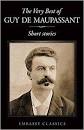
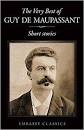
    Book Review: ‘A Sale’ by Guy De Maupassant

    Copyright@shravancharitymission

    Khidki (Window)

    –Read India Initiative—

    This is only an attempt to create interest in reading. We may not get the time to read all the books in our lifetime. But such reviews, talk and synopsis will at least convey what the book is all about.

        This is a unique and interesting story with a lot of tongue twisting French names. The story picks up only after the first half. It opens in the courtroom.

        There are two defendants, Cesaire-Isidore Brument and Prosper-Napoleon Cornu. They appear before the Court of Assizes of the Seine-Inferieure, on a charge of attempted murder, by drowning, of Mme (Madam)Brument, the lawful wife of Brument mentioned earlier.

        The two prisoners are seated side by side on a traditional bench. They are two peasants. The first one Brument is small and stout, with short arms, short legs, and a round head with a red pimply face, planted directly on his trunk, which is also round and short, and with apparently no neck. He is a raiser of pigs and lives somewhere in France at Cacheville-la-Goupil, in the district of Criquetot.

        On the other hand Cornu is thin, of medium height, with enormously long arms. His head was on crooked, his jaw awry, and he squinted. He wore a blue blouse, as long as a shirt that hung down to his knees, and his yellow hair, which was scanty and plastered down on his head, gave his face a worn-out, dirty look, a dilapidated look that is was frightful. He was nicknamed “the cure” because he could imitate to perfection the chanting in church, and even the sound of the serpent. This talent attracted people to his cafe — for he was a saloon keeper at Criquetot — a great many customers who preferred the “mass at Cornu” to the mass in church.

        The court scene begins with Mme. Brument. She is seated on the witness bench. She is a thin peasant woman who seems to be always asleep. She has been sitting there motionless, her hands crossed on her knees, gazing fixedly before her with a stupid expression.

        The judge continues with his interrogation.

        “Well, then, Mme. Brument, they came into your house and threw you into a barrel full of water. Tell us the details. Stand up.”

        She rose. She looked as tall as a flag pole with her cap that looked like a white skull cap. She said in a drawling tone:

        “I was shelling beans. Just then they came in. I said to myself, ‘What is the matter with them? They do not seem natural, they seem, up to some mischief.’ They watched me sideways, like this, especially Cornu, because he squints. I do not like to see them together, for the two collectively are good-for-nothing when they are in the company of each other. I said: ‘What do you want from me?’ They did not answer. And with that I had a sort of mistrust ——”

        The defendant Brument interrupted the witness hastily, saying:

        “I was full.” (Full means drunk here).

        Then Cornu, turned towards his accomplice and said in a deep tone … like the deep tone of an organ:

        “Say that we were both full, and you will be telling no lie.”

        The judge, intervened:

        “You mean by that that you were both drunk?”

        “There can be no question about it.” replied Brument.

        “That might happen to anyone.” said Cornu.

        The judge said to the victim: “Continue with your testimony, lady Brument.”

      Lady Brument continued, “Well, Mr Brument said to me, ‘Do you wish to earn a hundred sous?’ (French coins) ‘Yes,’ I replied. Then he said: ‘Open your eyes and do as I do,’ and he went to fetch the large empty barrel which was lying under the rain pipe in the corner, and he turned it over and brought it into my kitchen, and kept it in the middle of the floor, and then he said to me: ‘Go and fetch water until it is full.’

        “So I went to the pond with two pails and carried water, and still more water for an hour, seeing that the barrel was as large as a huge tank.

        “All this time Brument and Cornu were drinking, drinking and drinking—a glass, and then another glass, and then another. When they were finishing their drinks I said to them: ‘You are full, fuller than this barrel.’ Brument answered. ‘Do not worry, go on with your work, your turn will come, each one has his share.’ I paid no attention to what he said as he was full.

        “When the barrel was full to the brim, I said: ‘There, that’s done.’

        “And then Cornu gave me a hundred sous, and not Brument.

        Brument said: ‘Do you wish to earn a hundred sous more?’ ‘Yes,’ I said, for I am not accustomed to presents like that. Then he said: ‘Take off your clothes!

        ‘Take off my clothes?’ I reacted.

        ‘Yes,’ he said.

        ‘How many shall I take off?’

        ‘If it worries you at all, keep on your chemise on, that won’t bother us.’

        “A hundred sous is a hundred sous, even if I have to undress myself. But I did not fancy undressing before those two, good-for-nothings. I took off my cap, and then my jacket, and then my skirt, and then my sabots. Brument said, ‘Keep your stockings on, as we are good fellows.’

        “And Cornu added, ‘We are good fellows.’

        “So there I was, almost like mother Eve. And they got up from their chairs, but could not stand straight, they were so full, your honour.”

        “I said to myself: ‘What are they up to?’

        “Brument asked: ‘Are you ready?’

        “Cornu replied: ‘I’m ready!’

        “And then they lifted me, Brument by the head, and Cornu by the feet, as one might take, for instance, a sheet that has been washed. Then I began to bawl.

        “And Brument said: ‘Keep still, wretched creature!’

        “And they lifted me up in the air and put me into the barrel, which was full of water. I had a check of the circulation, a chill went to my very insides.

        “Brument said: ‘Is that all?’

        “Cornu said: ‘That is all.’

        “Brument said: ‘The head is not in, that will make a difference in the measure.’

        “Cornu said: ‘Put in her head.’

        “And then Brument pushed down my head down as if to drown me, so that the water ran into my nose. He pushed me down further and I disappeared.

        “And then he must have been frightened. He pulled me out and said: ‘Go and get dry, carcass.’

        “I took to my heels and ran to my father as far as M. le cure’s. He lent me a skirt belonging to his servant, for I was almost in a state of nature, and he went to fetch Maitre Chicot, the country watchman who in turn went to Criquetot to fetch the police who came to my house with me.

        “Then we found Brument and Cornu fighting each other like two rams.

        “Brument was bawling: ‘It isn’t true, I tell you that there is at least a cubic metre in it. It is the method that was no good.’

        “Cornu bawled: ‘Four pails that is almost half a cubic metre. You need not reply, that’s what it is.’

        “The police captain put them both under arrest. I have nothing more to tell.”

        She sat down. The audience in the court room laughed. The jurors looked at one another in astonishment. The judge said:

        “Defendant Cornu, you seem to have been the instigator of this infamous plot. What have you to say?” Cornu rose in his turn.

        “Your honour Judge,” he replied, “I was full.”

        The Judge answered gravely:

        “I know it. Proceed.”

        “I will. Well, Brument came to my place about nine o’clock, and ordered two drinks, and said: ‘There’s one for you, Cornu.’ I sat down opposite him and drank, and out of politeness, I offered him a glass. Then he returned the compliment and so did I, and so it went on from glass to glass until noon, when we were full.

        “Then Brument began to cry. That touched me. I asked him what was the matter. He said: ‘I must have a thousand francs by Thursday.’ That cooled me off a little, you understand. Then he said to me all at once:

        ‘I will sell you my wife.’

        “I was full, and I was a widower. That stirred me up. I did not know his wife, but she was a woman, wasn’t she? I asked him: ‘How much would you sell her for?’

        “He reflected, or pretended to reflect. When, one is full one is not very clear-headed, and he replied: ‘I will sell her by the cubic metre.’

        “That did not surprise me, for I was as drunk as he was, and I knew what a cubic metre is in my business. It is a thousand litres, and that suited me.

        “But the price remained to be settled. All depends on the quality. I said: ‘How much do you want for a cubic metre?’

        “He answered: ‘Two thousand francs.’

        “I jumped like a rabbit, and then reflected that a woman ought, not to measure more than three hundred litres. So I said: ‘That’s too dear.’

        “He answered: ‘I cannot do it for less, as I would lose.’

        “You understand, one is not a dealer in hogs for nothing. One understands one’s business. But, if he is smart, the seller of bacon, I am smarter, seeing that I sell them also. Ha, Ha, Ha! So I said to him: ‘If she were new, I would not say anything, but she has been married to you for some time, so she is not as fresh as she was. I will give you fifteen hundred francs a cubic metre, not a sou more. Will that suit you?’ said Cornu.

        “He answered: ‘That will do. That’s a bargain!’

        “I agreed, and we started out, arm in arm. We must help each other in times of need.”

        “But a thought came to me: ‘How can you measure her, unless you dip her in liquid?’

        “Then he explained his idea, not without difficulty for he was full. He said to me: ‘I’ll take a barrel, and fill it with water up to the brim. I’ll put her in it. All the water that comes out we will measure, that is the way to fix it.’

        “I said: ‘I see, I understand. But the water that overflows will run away; so how will you measure it? How will you gather it back?’

        “Then he began stuffing me and explained to me that all we will have to do would be to refill the barrel with the water his wife had displaced as soon as she comes out of it. All the water we pour in would be the measure. I supposed about ten pails; that would be a cubic metre.

        “We finally reached his house and I took a look at his wife. She was certainly not a beautiful woman. And anyone could see that, for there she is. I said to myself, ‘I am disappointed, but never mind, she will be off value handsome or ugly, it is all the same, is it not monsieur le president (your honour)?’ And then I saw that she was as thin as a rail. I said to myself: ‘She will not measure four hundred litres.’ I understand the matter better, being in liquor trade.

        “She has already told you about the proceeding your honour. I even let her keep on her chemise and stockings, to my own disadvantage.

        “When that was done she ran away. I said: ‘Look out, Brument! She is escaping.’

        “He replied: ‘Do not be afraid. I will catch her all right. She will have to come back to sleep, I will measure the deficit.’

        “We measured. It was not four bucket fulls. Ha, Ha, Ha!”

        At this Brument began to laugh so hysterically that a cop was obliged to punch him in the back. Having quieted down, he resumed:

        “In short, Brument exclaimed: ‘Nothing doing that is not enough.’ I shouted, and shouted and shouted again, he punched me, I hit back.

        That would have kept on till the Day of judgment, seeing we were both drunk.

        “Then came the gendarmes (policemen)! They stared at us, and took us off to prison.”

        Cornu finally He sat down after his long statement.

        Brument corroborated the statements of his accomplice. The jury, in consternation, retired to deliberate.

        At the end of an hour they returned a verdict of acquittal for the defendants, with some severe strictures on the dignity of marriage, and establishing the precise limitations of business transactions.

        Brument went home accompanied by his wife.

        Cornu went back to his business.

        I would give the story seven out of ten. As always if reflects how some perverted men get away with ghastly crime on women. And it happens even today.

    By Kamlesh Tripathi

    *

    https://kamleshsujata.wordpress.com

    *

    Share it if you like it

    *

    Shravan Charity Mission is an NGO that works for poor children suffering from life threatening diseases especially cancer. Our posts are meant for our readers that includes both children and adults and it has a huge variety in terms of content. We also accept donations for our mission. Should you wish to donate for the cause. The bank details are given below:

    NAME OF ACCOUNT: SHRAVAN CHARITY MISSION

    Account no: 680510110004635 (BANK OF INDIA)

    IFSC code: BKID0006805

    *

    Our publications

    GLOOM BEHIND THE SMILE

    (The book is about a young cancer patient. Now archived in 7 prestigious libraries of the US, including, Harvard University and Library of Congress. It can also be accessed in MIT through Worldcat.org. Besides, it is also available for reading in Libraries and archives of Canada and Cancer Aid and Research Foundation Mumbai)  

    ONE TO TANGO … RIA’S ODYSSEY

    (Is a book on ‘singlehood’ about a Delhi girl now archived in Connemara Library, Chennai and Delhi Public Library, GOI, Ministry of Culture, Delhi)

    AADAB LUCKNOW … FOND MEMORIES

    (Is a fiction written around the great city of Nawabs—Lucknow. It describes Lucknow in great detail and also talks about its Hindu-Muslim amity. That happens to be its undying characteristic. The book was launched in Lucknow International Literary Festival of 2014)

    REFRACTIONS … FROM THE PRISM OF GOD

    (Co-published by Cankids–Kidscan, a pan India NGO and Shravan Charity Mission, that works for Child cancer in India. The book is endorsed by Ms Preetha Reddy, MD Apollo Hospitals Group. It was launched in Lucknow International Literary Festival 2016)

    TYPICAL TALE OF AN INDIAN SALESMAN

    (Is a story of an Indian salesman who is, humbly qualified. Yet he fights his ways through unceasing uncertainties to reach the top. A good read not only for salesmen. The book was launched on 10th February, 2018 in Gorakhpur Lit-Fest. Now available in Amazon, Flipkart and Onlinegatha)

    RHYTHM … in poems

    (Published in January 2019. The book contains 50 poems. The poems describe our day to day life. The book is available in Amazon, Flipkart and Onlinegatha)

    (ALL THE ABOVE TITLES ARE AVAILABLE FOR SALE IN AMAZON, FLIPKART AND OTHER ONLINE STORES OR YOU COULD EVEN WRITE TO US FOR A COPY)

    *****



    BOOK REVIEW: IKIGAI BY HECTOR GARCIA AND CO-AUTHOR FRANSESC MIRALLES

    Copyright@shravancharitymission

    Khidki (Window)

    –Read India Initiative—

    This is only an attempt to create interest in reading. We may not get the time to read all the books in our lifetime. But such reviews, talk and synopsis will at least convey what the book is all about.

        Ikigai is a Japanese word. The meaning of which translates roughly to a reason for being in this world, it encompasses a sense of joy, a sense of purpose and meaning in life, and an overall feeling of well-being. The word derives from iki, meaning life and kai, meaning the realisation of hopes and expectations in Japanese.

        Japanese ikigai is the thing that makes you get out of bed happy every morning. A few years ago, everyone was talking about hygge, a Danish concept that cannot be translated to one single word but encompasses a feeling of cozy contentment and well-being through enjoying the simple things in life. For example on a snowy day, you’ve might have experienced hygge without even knowing about it. In the same vein, another untranslatable word—ikigai—has captured the imagination of those searching for the key to living a long and happy life. Hector Garcia, a software engineer who was born in Spain but has lived in Japan for over a decade, and his co-author Fransesc Miralles delved deep into the secrets of Japan’s super-centenarians to distil the essence of this Japanese philosophy to produce a bestselling book titled ‘Ikigai: The Japanese secret to a long and happy life’.

        Ikigai is a Japanese word, that’s almost, impossible to translate—that’s why we had to write a book about it, say the authors. You can think of it, as the thing that makes you, get out of bed happy every morning. The literal meaning of it is the purpose of your life, but it’s a lot more than that. For me, one of my most significant Ikigai is, writing the best I can, in order to make, other people’s lives better, says the author. The book is all about connecting with everything—what you love, what you’re good at, what you can be paid for and what the world needs.

        Ogimi is a village in Okinawa, Japan, where people live the longest in the world. The authors learn from their interviews with hundreds of elders there that they always keep themselves busy, but in a good manner. Elders shouldn’t have a dream that they’ll retire and then do nothing in life they say. In big cities, people are too busy racing through life. Their lifestyle is either doing a lot or doing nothing. That’s an extreme, and they need to find a middle ground.

        The book has some interesting tips on food and diet. These days there are thousands of diet charts out there, and each one tells you to do something different. It becomes very aimless and stressful to follow them. The idea here is you eat whatever you want, but you stop when you’re 80% full. That could mean not having that ice cream or a sweet to round off your meal.

        Start of the day is very important. So, ask yourself, what are the important things you want to do when you wake up in the morning? If that’s difficult for you to answer, you can spend some minutes every morning writing down what you’re looking forward to, in your day. After some days of doing this, you will start noticing a pattern. For example, you might realise that you enjoy your job, but don’t like your boss. So, you can try to find a job in the same industry. An interesting statistic that the author finds is that 90% of people in their 40s and 50s, have changed careers—and only 10% study something and then work on it forever. Connecting with your Ikigai isn’t going to be sudden, the key is discovering yourself and the things you like and dislike.

        But what does one do in cases where their Ikigai is financially unviable? It’s the most difficult question, and the one the author is still trying to find an answer to. With the internet, one can try various things while doing a job. Maybe, you can start pursuing whatever interests, one has, and slowly try to get paid for it. Interesting things start happening when one starts pursuing what one loves. It’s worse to not even try.

         There is a great amount of sense in being with a community for living a long and happy life. Ogimi is a small village full of people with similar life philosophies. But this indeed is a rare case as most of us live in unequal societies rife with disagreement.

        In Ogimi people are neither poor nor rich so it’s easy to make communities where everyone puts the same amount of money together for common goals. But this doesn’t work so smoothly in different environments. However, one can start developing these communities with the people they trust. Where, one will gradually feel supported, and the community will only grow.

        The book also talks about anti-fragility as a concept. It’s like bacteria—the more they get attacked, the stronger they become. In everyone’s lives, disaster and bad things happen. A family member may die, or you could get an illness. It’s important to remember that you get stronger by each damage done to you.

        The response to this book has been overwhelming. It is being translated into more than 54 languages around the world. In fact it has become the most translated Spanish book in history. Soon, it will be translated into Telugu, Hindi and Marathi. In case you have not found your Ikigai in life this indeed is the book. I won’t hesitate in giving it a rating of eight out of ten.

    By Kamlesh Tripathi

    *

    https://kamleshsujata.wordpress.com

    *

    Share it if you like it

    *

    Shravan Charity Mission is an NGO that works for poor children suffering from life threatening diseases especially cancer. Our posts are meant for our readers that includes both children and adults and it has a huge variety in terms of content. We also accept donations for our mission. Should you wish to donate for the cause. The bank details are given below:

    NAME OF ACCOUNT: SHRAVAN CHARITY MISSION

    Account no: 680510110004635 (BANK OF INDIA)

    IFSC code: BKID0006805

    *

    Our publications

    GLOOM BEHIND THE SMILE

    (The book is about a young cancer patient. Now archived in 7 prestigious libraries of the US, including, Harvard University and Library of Congress. It can also be accessed in MIT through Worldcat.org. Besides, it is also available for reading in Libraries and archives of Canada and Cancer Aid and Research Foundation Mumbai)  

    ONE TO TANGO … RIA’S ODYSSEY

    (Is a book on ‘singlehood’ about a Delhi girl now archived in Connemara Library, Chennai and Delhi Public Library, GOI, Ministry of Culture, Delhi)

    AADAB LUCKNOW … FOND MEMORIES

    (Is a fiction written around the great city of Nawabs—Lucknow. It describes Lucknow in great detail and also talks about its Hindu-Muslim amity. That happens to be its undying characteristic. The book was launched in Lucknow International Literary Festival of 2014)

    REFRACTIONS … FROM THE PRISM OF GOD

    (Co-published by Cankids–Kidscan, a pan India NGO and Shravan Charity Mission, that works for Child cancer in India. The book is endorsed by Ms Preetha Reddy, MD Apollo Hospitals Group. It was launched in Lucknow International Literary Festival 2016)

    TYPICAL TALE OF AN INDIAN SALESMAN

    (Is a story of an Indian salesman who is, humbly qualified. Yet he fights his ways through unceasing uncertainties to reach the top. A good read not only for salesmen. The book was launched on 10th February, 2018 in Gorakhpur Lit-Fest. Now available in Amazon, Flipkart and Onlinegatha)

    RHYTHM … in poems

    (Published in January 2019. The book contains 50 poems. The poems describe our day to day life. The book is available in Amazon, Flipkart and Onlinegatha)

    (ALL THE ABOVE TITLES ARE AVAILABLE FOR SALE IN AMAZON, FLIPKART AND OTHER ONLINE STORES OR YOU COULD EVEN WRITE TO US FOR A COPY)

    *****