Tag Archives: shravancharitymission

INTERESTING FACTS FIGURES & QUOTES-42

Copyright@shravancharitymission

What is the future of trash? Humans today create a lot of garbage. In the past it was much less. People owned fewer things, used things longer, and much of their waste decomposed. Today, trash has the staying power, made from materials that will still be intact, when we are no longer there.     In the US, trash sometimes goes for landfill, where it is dumped in a lined pit, compacted, and converted with soil in a sequence of layers. Other garbage is incinerated (destroyed by burning). More and more localities are making it necessary for residents to separate recyclable materials. These are reprocessed or, sometimes, incinerated to produce energy.    Some areas of the planet face extreme waste disposal situations. Out of which Antarctica is surprisingly one. Decades of exploration in these areas have produced more than 70 waste sites that contain solid waste of all kinds as well as chemicals and heavy metals that must be contained. Cycles of freezing and thawing, paired with the logistics and expense of transporting waste or neutralizing contaminated land, pose formidable challenges. Charged chemical compounds that trap pollutants have shown some success and may have applications in similar habitats, such as northern Russia and Alaska.     Landfills receive about 55 percent of all garbage in the US. Researchers are investigating ways to turn trash into fuel, such as extracting cellulosic ethanol from paper refuse. In India the government is on the verge of banning single use plastic and is also planning to utilise trash in road building.

*

Copper is one of those metals that man started using very early. As a matter of fact, copper was the first metal that man discovered in 9000 BCE. The other metals used in pre-historic times were gold, silver, tin, lead, and iron.

*

Do not wait; the time will never be ‘just right’. Start where you stand, and work with whatever tools you may have at your command, and better tools will be found as you go along—said George Herbert Welsh-born poet, orator, and priest of the Church of England.

*

 The philosophy of the school room in one generation will be the philosophy of government in the next—ABRAHAM LINCOLN

*

 In a very recent survey in the US 84% people could not name the capital of Ukraine as reported by a TV channel. Well the capital of Ukraine is Kiev. Ukraine is in the news for the wrong reason on account of a conversation between President Donald Trump and the President of Ukraine.

***

By Kamlesh Tripathi

*

https://kamleshsujata.wordpress.com

*

Share it if you like it

*

Shravan Charity Mission is an NGO that works for poor children suffering from life threatening diseases especially cancer. Our posts are meant for our readers that includes both children and adults and it has a huge variety in terms of content. We also accept donations for our mission. Should you wish to donate for the cause. The bank details are given below:

NAME OF ACCOUNT: SHRAVAN CHARITY MISSION

Account no: 680510110004635 (BANK OF INDIA)

IFSC code: BKID0006805

*

Our publications

GLOOM BEHIND THE SMILE

(The book is about a young cancer patient. Now archived in 7 prestigious libraries of the US, including, Harvard University and Library of Congress. It can also be accessed in MIT through Worldcat.org. Besides, it is also available for reading in Libraries and archives of Canada and Cancer Aid and Research Foundation Mumbai)  

ONE TO TANGO … RIA’S ODYSSEY

(Is a book on ‘singlehood’ about a Delhi girl now archived in Connemara Library, Chennai and Delhi Public Library, GOI, Ministry of Culture, Delhi)

AADAB LUCKNOW … FOND MEMORIES

(Is a fiction written around the great city of Nawabs—Lucknow. It describes Lucknow in great detail and also talks about its Hindu-Muslim amity. That happens to be its undying characteristic. The book was launched in Lucknow International Literary Festival of 2014)

REFRACTIONS … FROM THE PRISM OF GOD

(Co-published by Cankids–Kidscan, a pan India NGO and Shravan Charity Mission, that works for Child cancer in India. The book is endorsed by Ms Preetha Reddy, MD Apollo Hospitals Group. It was launched in Lucknow International Literary Festival 2016)

TYPICAL TALE OF AN INDIAN SALESMAN

(Is a story of an Indian salesman who is, humbly qualified. Yet he fights his ways through unceasing uncertainties to reach the top. A good read not only for salesmen. The book was launched on 10th February, 2018 in Gorakhpur Lit-Fest. Now available in Amazon, Flipkart and Onlinegatha)

RHYTHM … in poems

(Published in January 2019. The book contains 50 poems. The poems describe our day to day life. The book is available in Amazon, Flipkart and Onlinegatha)

(ALL THE ABOVE TITLES ARE AVAILABLE FOR SALE IN AMAZON, FLIPKART AND OTHER ONLINE STORES OR YOU COULD EVEN WRITE TO US FOR A COPY)

*****



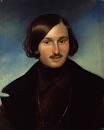
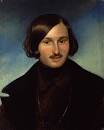
Author: Nikolai Gogol

Copyright@shravancharitymission

Nikolai Vasilievich Gogol

    Short lifespan 43 years (31 March 1809–4 March 1852) was a Russian dramatist of Ukranian origin.

    The popularity of Nikolai Gogol in India can be judged by the fact that the main character in Jhumpa Lahiri’s 2003 novel The Namesake and its 2006 movie is named after Nikolai Gogol, because his father survives a train crash while clutching onto a copy of one of Gogol’s books in his hand.

    An eponymous poem “Gogol” by poet-diplomat Abhay Kumar refers to some of the great works of Gogol such as “The Nose”, “The Overcoat”, “Nevsky Prospekt”, “Dead Souls” and “The Government Inspector.”

    Gogol’s story “The Tale of How Ivan Ivanovich Quarreled with Ivan Nikiforovich” was adapted into a Marathi movie titled, Katha Don Ganpatravanchi in 1996. The movie was directed by Arun Khopkar and dialogues are written by Satish Alekar. The movie had Dilip Prabhawalkar and Mohan Agashe in lead roles.

    Although, Gogol was considered by his contemporaries to be one of the pre-eminent figures of the natural school of Russian literary realism. Later his critics have found in his work a fundamentally romantic sensibility, with strands of surrealism and grotesque in works such as, “The Nose”, “Viy”, (a horror story) “The Overcoat” and “Nevsky  Prospekt”. His early works, such as “Evenings on a Farm Near Dikanka,” were influenced by his Ukrainian upbringing, Ukranian culture and folklore. His later writing satirised political corruption in the Russian Empire which includes (The Government Inspector and Dead Souls,). His novels “Taras Bulba” (1835) and his play “Marriage” (1842), along with the short stories “Diary of a Madman”, “The Tale of How Ivan Ivanovich Quarreled with Ivan Nikiforovich”, “The Portrait” and “The Carriage”, are all among his best-known works.

    Gogol was born in the Ukrainian Cossack town of Sorochyntsi, in Poltava Governorate of the Russian Empire. His mother descended from Leonty Kosyarovsky, an officer of the Lubny Regiment in 1710. His father Vasily Gogol-Yanovsky, was a descendant of Ukrainian Cossacks who died when Gogol was 15 years old. He belonged to the ‘petty gentry’, who wrote poetry in Ukrainian and Russian, and was an amateur Ukranian-language playwright. As was typical of the left-bank Ukrainian gentry of the early nineteenth century. The family spoke Ukrainian as well as Russian. As a child, Gogol helped stage, Ukrainian-language plays, in his uncle’s home theatre.

    In 1820, Gogol went to a school of higher art in Nizhyn (now Nizhyn Gogol State University) and remained there until 1828. It was there that he began writing. He was not popular among his schoolmates, who called him a “mysterious dwarf”, but with two or three of them he formed lasting friendships. Very early he developed a dark and secretive disposition, marked by a painful self-consciousness and boundless ambition. Equally early, he developed a talent for mimicry, which later made him a matchless reader of his own works and induced him to toy with the idea of becoming an actor.

    In 1828, upon leaving school, Gogol came to Saint Petersburg, with vague but ambitious hopes. He wanted literary fame, and brought with him a Romantic poem of German idyllic life – Hans Küchelgarten. He had it published, at his own expense, under the name of “V Alov.” The magazines he sent it to, almost universally, derided it. He bought all the copies and destroyed them, swearing never to write poetry again. Gogol was always in touch with the “literary aristocracy.”

    In 1831 Gogol brought out the first volume of his Ukranian stories—‘Evenings on a Farm Near Dikanka’ that met with immediate success. He followed it in 1832 with a second volume and in 1835 by two more volumes and in 1835 by two volumes of stories entitled Mirgorod as well as miscellaneous prose titled Arabesques. With all this Gogol emerged more as an Ukranian writer than a Russian one. The themes and style of Gogol’s prose were similar to the work of Ukranian writers.

    Gogol developed a passion for Ukranian history and tried to obtain an appointment in the history department at Kiev University. Where, despite the support of Pushkin and Sergey Uvarov the Russian Minister for education his appointment was blocked by a Kyivan bureaucrat on the grounds that Gogol was unqualified.

    In 1834 Gogol was made professor of medieval history at the University of St. Petersburg, a job for which he had no qualifications. At the final examination, he sat in utter silence with a black handkerchief wrapped around his head, simulating a toothache, while another professor interrogated the students. This academic venture proved a failure and he resigned his chair in 1835.

    Between 1832 and 1836 Gogol worked with great energy. It was, only after the presentation, at the Saint Petersburg, State Theatre, on 19 April 1836, of his comedy “The Government Inspector” that he finally came to believe in his literary capabilities. The comedy, was a violent satire of Russian provincial bureaucracy. From 1836 to 1848 Gogol lived abroad, travelling through Germany and Switzerland. Gogol spent the winter of 1836–37 in Paris, among Russian expatriates and Polish exiles, He eventually settled in Rome. For much of the twelve years from 1836 Gogol was in Italy developing an admiration for Rome. He studied art, read Italian literature and developed a passion for opera.

    In 1841 the first part of Dead Souls was ready, and Gogol took it to Russia to supervise its printing. The book instantly established his reputation as the greatest prose writer in the language.

   After the triumph of Dead Souls, Gogol’s contemporaries came to regard him as a great satirist who lampooned the unseemly sides of Imperial Russia.  

    In April 1848 Gogol returned to Russia from a pilgrimage to Jerusalem and passed his last years in restless movement throughout the country. He fell into a state of deep depression. On the night of 24 February 1852 he burned some of his manuscripts, which contained most of the second part of Dead Souls. He explained this, as a mistake, a practical joke played on him by the Devil. Soon thereafter, he took to bed, refused all food, and died in great pain nine days later.

    Gogol was mourned in the Saint Tatiana church at the Moscow University before his burial and then buried at the Danilov Monastery. His grave was marked by a large stone (Golgotha), topped by a Russian Orthodox cross. In 1931, Moscow authorities decided to demolish the monastery and had Gogol’s remains transferred to a cemetery in Moscow, Russia.

    His body was discovered lying face down, which gave rise to the story that Gogol had been buried alive. The authorities moved the Golgotha stone to the new gravesite, but removed the cross. In 1952 the Soviets replaced the stone with a bust of Gogol.

    Gogol was a great destroyer of prohibitions, and of romantic illusions. He undermined Russian Romanticism by making vulgarity reign where only the sublime and the beautiful had been before.

By Kamlesh Tripathi

*

https://kamleshsujata.wordpress.com

*

Share it if you like it

*

Shravan Charity Mission is an NGO that works for poor children suffering from life threatening diseases especially cancer. Our posts are meant for our readers that includes both children and adults and it has a huge variety in terms of content. We also accept donations for our mission. Should you wish to donate for the cause. The bank details are given below:

NAME OF ACCOUNT: SHRAVAN CHARITY MISSION

Account no: 680510110004635 (BANK OF INDIA)

IFSC code: BKID0006805

*

Our publications

GLOOM BEHIND THE SMILE

(The book is about a young cancer patient. Now archived in 7 prestigious libraries of the US, including, Harvard University and Library of Congress. It can also be accessed in MIT through Worldcat.org. Besides, it is also available for reading in Libraries and archives of Canada and Cancer Aid and Research Foundation Mumbai)  

ONE TO TANGO … RIA’S ODYSSEY

(Is a book on ‘singlehood’ about a Delhi girl now archived in Connemara Library, Chennai and Delhi Public Library, GOI, Ministry of Culture, Delhi)

AADAB LUCKNOW … FOND MEMORIES

(Is a fiction written around the great city of Nawabs—Lucknow. It describes Lucknow in great detail and also talks about its Hindu-Muslim amity. That happens to be its undying characteristic. The book was launched in Lucknow International Literary Festival of 2014)

REFRACTIONS … FROM THE PRISM OF GOD

(Co-published by Cankids–Kidscan, a pan India NGO and Shravan Charity Mission, that works for Child cancer in India. The book is endorsed by Ms Preetha Reddy, MD Apollo Hospitals Group. It was launched in Lucknow International Literary Festival 2016)

TYPICAL TALE OF AN INDIAN SALESMAN

(Is a story of an Indian salesman who is, humbly qualified. Yet he fights his ways through unceasing uncertainties to reach the top. A good read not only for salesmen. The book was launched on 10th February, 2018 in Gorakhpur Lit-Fest. Now available in Amazon, Flipkart and Onlinegatha)

RHYTHM … in poems

(Published in January 2019. The book contains 50 poems. The poems describe our day to day life. The book is available in Amazon, Flipkart and Onlinegatha)

(ALL THE ABOVE TITLES ARE AVAILABLE FOR SALE IN AMAZON, FLIPKART AND OTHER ONLINE STORES OR YOU COULD EVEN WRITE TO US FOR A COPY)

*****


SHORT STORY: HUNDRED GOLD COINS AND BIRBAL

Copyright@shravancharitymission

    The wisdom of Birbal was unparalleled during the reign of Emperor Akbar. But Akbar’s brother in law was extremely jealous of him. He asked the Emperor to dispense with Birbal’s services and appoint him in his place. He gave ample assurance that he would prove to be more efficient and capable than Birbal. But before Akbar could take a decision on the matter, the news reached Birbal.

    Birbal resigned and left. Akbar’s brother in law was thus made the minister in place of Birbal. Akbar decided to test the new minister. He gave three hundred gold coins to him and said, “Spend these gold coins in such a manner that I get a hundred gold coins here in this life; a hundred gold coins in the other world and another hundred gold coins neither here nor there.”

    The minister found the entire situation to be a maze of confusion and hopelessness. He spent sleepless nights worrying how he would get himself out of this mess. Thinking in circles was making him go crazy. Eventually, on the advice of his wife, he sought Birbal’s help. Birbal said, “Just give me the gold coins. I shall handle the rest.”

    Birbal walked the streets of the city holding the bag of gold coins in his hand. He noticed a rich merchant celebrating his son’s wedding. Birbal gave a hundred gold coins to him and bowed courteously saying, ‘Emperor Akbar sends you his good wishes and blessings for the wedding of your son. Please accept the gift he has sent.’ The merchant felt honoured that the king had sent a special messenger with such a precious gift. He honoured Birbal in return and gave him a large number of expensive gifts and a bag of gold coins as a return gift for the king.

    Thereafter, Birbal went to the area of the city where the poor people lived. There he bought food and clothing in exchange for a hundred gold coins and distributed them in the name of the Emperor.

    When he came back to town he organized a concert of music and dance. He spent a hundred gold coins on it.

    The next day Birbal entered Akbar’s Darbar and announced that he had done all that the king had asked his brother-in-law to do. The Emperor wanted to know what he had done. Birbal repeated the sequence of all the events and then said, ‘The money that I gave to the merchant for the wedding of his son – you have got back while on this earth as return gift. The money I spent on buying food and clothing for the poor – you will get it in the other world. The money I spent on the musical concert – you will get neither here nor there.” Akbar’s brother in law understood his mistake and resigned. Birbal got his place back.

    Moral of the story: The money you spend on friends is returned or reciprocated in some form or the other in this life only. The money spent on charity gets converted into blessings from God which will be your eternal property. The money spent on pleasures is just frittered away. So think wisely before you spend your money.

By Kamlesh Tripathi

*

https://kamleshsujata.wordpress.com

*

Share it if you like it

*

Shravan Charity Mission is an NGO that works for poor children suffering from life threatening diseases especially cancer. Our posts are meant for our readers that includes both children and adults and it has a huge variety in terms of content. We also accept donations for our mission. Should you wish to donate for the cause. The bank details are given below:

NAME OF ACCOUNT: SHRAVAN CHARITY MISSION

Account no: 680510110004635 (BANK OF INDIA)

IFSC code: BKID0006805

*

Our publications

GLOOM BEHIND THE SMILE

(The book is about a young cancer patient. Now archived in 7 prestigious libraries of the US, including, Harvard University and Library of Congress. It can also be accessed in MIT through Worldcat.org. Besides, it is also available for reading in Libraries and archives of Canada and Cancer Aid and Research Foundation Mumbai)  

ONE TO TANGO … RIA’S ODYSSEY

(Is a book on ‘singlehood’ about a Delhi girl now archived in Connemara Library, Chennai and Delhi Public Library, GOI, Ministry of Culture, Delhi)

AADAB LUCKNOW … FOND MEMORIES

(Is a fiction written around the great city of Nawabs—Lucknow. It describes Lucknow in great detail and also talks about its Hindu-Muslim amity. That happens to be its undying characteristic. The book was launched in Lucknow International Literary Festival of 2014)

REFRACTIONS … FROM THE PRISM OF GOD

(Co-published by Cankids–Kidscan, a pan India NGO and Shravan Charity Mission, that works for Child cancer in India. The book is endorsed by Ms Preetha Reddy, MD Apollo Hospitals Group. It was launched in Lucknow International Literary Festival 2016)

TYPICAL TALE OF AN INDIAN SALESMAN

(Is a story of an Indian salesman who is, humbly qualified. Yet he fights his ways through unceasing uncertainties to reach the top. A good read not only for salesmen. The book was launched on 10th February, 2018 in Gorakhpur Lit-Fest. Now available in Amazon, Flipkart and Onlinegatha)

RHYTHM … in poems

(Published in January 2019. The book contains 50 poems. The poems describe our day to day life. The book is available in Amazon, Flipkart and Onlinegatha)

(ALL THE ABOVE TITLES ARE AVAILABLE FOR SALE IN AMAZON, FLIPKART AND OTHER ONLINE STORES OR YOU COULD EVEN WRITE TO US FOR A COPY)

*****


INTERESTING FACTS FIGURES & QUOTES–41

Copyright@shravancharitymission

  1. HOW DO DAMS WORK?

    A dam is a structure built across a river to control its flow. Sometimes a reservoir or lake is created behind the dam and can be used for recreation. Water flow controlled by a dam may be used to supply water to nearby communities, to power a hydroelectric plant, or to irrigate crops.

    Dams can be built in different designs, and of different materials such as earth, rock, or concrete. Most large dams are made of concrete. They are often designed to arch toward the incoming flow of water, a design that provides additional strength and distributes the weight of the water to the ends of the dam.

    Dams typically have a valve, built in, to allow operators to release excess water from the upstream side. They also have spill-ways to release larger amounts of water in order to prevent unwanted flooding.

    Dam building—as in the case of the construction of Aswan Dam in the late 19th century on river Nile in Egypt or of China’s Three Gorges Dam on Yangtze River built in the 20th century—at times, floods, land, that has importance economically, culturally, or even as a wildlife habitat. Dams must be designed to withstand the challenge of floods or earthquakes. Enormous damage can occur when a major dam breaks, often including loss of life.

HOOVER DAM on river Colorado US withstands pressures up to 45,000 pounds per square foot and generates over four billion kilowatt-hours of power a year.

  1. Lake Eyre is officially known as Kati Thanda. Lake Eyre, is located at the lowest natural point in Australia, at approximately 15 m (49 ft) below sea level (as per Australian Height Datum). On rare occasions when it fills up, it is the largest lake in Australia, covering 9,500 km2 (3,668 sq miles). The shallow endorheic lake is the depocentre of the vast Lake Eyre basin and is found in Northern South Australia, some 700 km (435 miles) north of Adelaide.

    When the lake is full, it has the same salinity level as the sea, but as the lake dries up          and the water evaporates, salinity increases.

    The lake was named by Europeans in honour of Edward John Eyre, who was the first        European to see it, in 1840. The lake’s official name was changed in December 2012 to        combine the name “Lake Eyre” with its indigenous name, Kati Thanda.

  1. There are only three surgeons to look after elective and emergency surgeries in Jigme Dorji Wangchuk National Referral Hospital (JDWNRH) the only tertiary care hospital in Bhutan. They literally work 24×7, 7 days a week.

    But that is not all. For they have another ‘honorary standby surgeon’—the Prime                Minister of Bhutan himself, who comes to the hospital every week on Friday to                   operate. Though he is trained in urology, he can do all abdominal surgeries ‘as there is      no one else.’

         If there is an emergency or a difficult problem, just ‘call the PM’.

         He comes even if it’s midnight. The nursing staff is pretty happy to help their PM in conducting operations. No hang ups. Just normal scrubs and slippers for him.

    Kudos to ‘Dr Lotay Tshering—the Surgeon Prime Minister of Bhutan.’

  1. The Rusty-Spotted Cat (Prionailurus rubiginosus) wins the title for the world’s smallest wild cat weighing a mere 1.8-3.5 lbs (0.8-1.6 kg)and is 14 to 19 inches (35 to 48 cm) in length (not counting the tail which is half the size of the body). This feline has short grey fur, over, most of its body with rusty spots over its back and flanks, from where it derives its name. Their underbellies are white with large dark spots and they have six dark streaks on each side of their head, extending over their cheeks and forehead.

    The Rusty-Spotted Cat, known as the “hummingbird of the cat family”, is only found in India and Sri Lanka. There are 10,000 Rusty-Spotted Cats in the wild and the species is listed as Vulnerable by the IUCN. Like other wild cats, the Rusty-Spotted Cat is on the decline mostly due to habitat loss and hunting pressures.

  1. Yesterday is but a dream. Tomorrow is only a vision. But today well lived makes every yesterday a dream of happiness, and every tomorrow a vision of hope—said famous poet Kalidasa.

By Kamlesh Tripathi

*

https://kamleshsujata.wordpress.com

*

Share it if you like it

*

Shravan Charity Mission is an NGO that works for poor children suffering from life threatening diseases especially cancer. Our posts are meant for our readers that includes both children and adults and it has a huge variety in terms of content. We also accept donations for our mission. Should you wish to donate for the cause. The bank details are given below:

NAME OF ACCOUNT: SHRAVAN CHARITY MISSION

Account no: 680510110004635 (BANK OF INDIA)

IFSC code: BKID0006805

*

Our publications

GLOOM BEHIND THE SMILE

(The book is about a young cancer patient. Now archived in 7 prestigious libraries of the US, including, Harvard University and Library of Congress. It can also be accessed in MIT through Worldcat.org. Besides, it is also available for reading in Libraries and archives of Canada and Cancer Aid and Research Foundation Mumbai)  

ONE TO TANGO … RIA’S ODYSSEY

(Is a book on ‘singlehood’ about a Delhi girl now archived in Connemara Library, Chennai and Delhi Public Library, GOI, Ministry of Culture, Delhi)

AADAB LUCKNOW … FOND MEMORIES

(Is a fiction written around the great city of Nawabs—Lucknow. It describes Lucknow in great detail and also talks about its Hindu-Muslim amity. That happens to be its undying characteristic. The book was launched in Lucknow International Literary Festival of 2014)

REFRACTIONS … FROM THE PRISM OF GOD

(Co-published by Cankids–Kidscan, a pan India NGO and Shravan Charity Mission, that works for Child cancer in India. The book is endorsed by Ms Preetha Reddy, MD Apollo Hospitals Group. It was launched in Lucknow International Literary Festival 2016)

TYPICAL TALE OF AN INDIAN SALESMAN

(Is a story of an Indian salesman who is, humbly qualified. Yet he fights his ways through unceasing uncertainties to reach the top. A good read not only for salesmen. The book was launched on 10th February, 2018 in Gorakhpur Lit-Fest. Now available in Amazon, Flipkart and Onlinegatha)

RHYTHM … in poems

(Published in January 2019. The book contains 50 poems. The poems describe our day to day life. The book is available in Amazon, Flipkart and Onlinegatha)

(ALL THE ABOVE TITLES ARE AVAILABLE FOR SALE IN AMAZON, FLIPKART AND OTHER ONLINE STORES OR YOU COULD EVEN WRITE TO US FOR A COPY)

*****


ALISTAIR MACLEAN… Did he enjoy writing?

Copyright@shravancharitymission

    We all think we know a celebrity quite well. But when, one gets down, to really know, about him, in the minutest of details, one finds, there are many things one doesn’t about the celebrity.  A case in point is Alistair Maclean. Alistair Maclean full name Alistair Stuart MacLean (Scottish Gaelic: Alasdair MacGill-Eain; Lifespan: 21 April 1922 – 2 February 1987) was a Scottish novelist who wrote popular thrillers and adventure stories. His works include The Guns of Navarone, Ice Station Zebra and Where Eagles Dare – all three were made into popular films. He also wrote two novels under the pseudonym Ian Stuart. His books are estimated to have sold over 150 million copies, making him one of the best-selling fiction authors of all time.

    Alistair Maclean descended from clan Maclean. MacLean was the son of a Church of Scotland minister and learnt English as a second language after his mother tongue, Scottish Gaelic. He was born in Glasgow but spent much of his childhood and youth in Daviot, ten miles south of Inverness. He was the third of four sons.

    In 1941, during World War II he joined the Royal Navy in the ranks of Ordinary Seaman, Able Seaman, and Leading Torpedo Operator. He was first assigned to Paddle Steamer Bournemouth Queen, a converted excursion ship, fitted for anti-aircraft guns, on duty off the coasts of England and Scotland.

    Beginning 1943, he served on HMS Royalist, a Dido-class light cruiser. There he saw action in 1943, in the Atlantic theatre, on two Arctic convoys, and escorting, aircraft carrier groups, in operations against Tirpitz and other targets off the Norwegian coast. He also took part in Convoy PQ 17 on Royalist.

    In 1944 he and the Royalist served in the Mediterranean theatre of the World War-II, as part of the invasion of southern France and in helping to sink blockade runners (a merchant vessel) off Crete and bombard Milos near Greece in the Aegean sea. During this period, MacLean, may have been injured, in a gunnery practice in an accident.

    In 1945, in the Far East theatre of World War-II, MacLean and the Royalist, saw action, escorting carrier groups in operations, against Japanese targets in Burma, Malaya, and Sumatra. (MacLean’s late-in-life claims that he was captured by the Japanese after blowing up bridges and tortured by having his teeth pulled out have been dismissed by both his son and his biographer as drunken ravings.) After the Japanese surrender, Royalist, helped evacuate, liberated POWs from Changi Prison in Singapore.

    MacLean was discharged from the Royal Navy in 1946. He then studied English at the University of Glasgow, working at the post office and as a street sweeper. He graduated in 1953, and briefly worked as a hospital porter, and then worked as a school teacher at Gallow Flat School in Rutherglen.

    As a university student, MacLean began writing short stories for extra income, winning a competition in 1954 with the maritime story “Dileas”. The publishing company Collins asked him for a novel and he responded with HMS Ulysses, based on his own war experiences, as well as credited insight from his brother Ian, a master mariner. The book was written over three months.

    Maclean later described his writing process in a very interesting manner:

    I drew a cross square, lines down representing the characters, lines across representing chapters 1–15. Most of the characters died, in fact only one survived the book, but when I came to the end the graph looked somewhat lopsided, there were too many people dying in the first, fifth and tenth chapters so I had to rewrite it, giving an even dying space throughout. I suppose it sounds cold blooded and calculated, but that’s the way I did it.

    The book sold a quarter of a million copies in hardback in England in the first six months of publication. It went on to sell millions more. Film rights were sold, though, a movie was never made. MacLean then was able to devote himself to writing.

    His next novel, The Guns of Navarone (1957), was about an attack on the fictitious island of Navarone (based on Melos). The book was very successful, selling over 400,000 copies in its first six months. He followed it with South by Java Head (1958), based on his experiences in the South East Asia seas in World War—II, and The last Frontier (1959), a thriller about the Hungarian Uprising of 1956. Film rights for Java Head were sold but no movie resulted out of it. His next novels were Night Without End (1959) and Fear Is the Key (1961). The Last Frontier was turned into a movie, The Secret Ways (1961), which was not very successful while the film version of The Guns of Navarone (1961) was hugely successful.

    In the early 1960s, MacLean published two novels under the pseudonym “Ian Stuart” in order to prove that the popularity of his books was due to their content rather than his name on the cover. These were The Dark Crusader (1961) and The Satan Bug (1962). They sold well, and MacLean made no attempt to change his writing style. He also continued to publish novels under his own name such as The Golden Rendezvous (1962) and Ice Station Zebra (1963).

    “I’m not a novelist,” he once said. “That’s too pretentious a claim. I’m a storyteller, that’s all. I’m a professional and a craftsman. I will make that claim for myself.”  Maclean also claimed he wrote very fast (35 days for a novel) because he disliked writing and the “sooner he finished the better”. He never re-read a book after he finished. His novels were notable for their lack of sex. “I like girls,” said MacLean. “I just don’t write them well. Everyone knows that men and women make love, laddie – there is no need to show it.”

    MacLean’s books eventually sold so well that he moved to Switzerland as a tax exile. From 1963 to 1966, he took a hiatus from writing to run a hotel business in England, purchasing the Jamaica Inn on Bodmin Moor.

    During this time a film was made of The Satan Bug (1965). MacLean returned to writing with, When Eight Bells Toll (1966).

    Producer Elliot Kastner approached MacLean looking for film scripts which prompted MacLean to write Where Eagles Dare. In July 1966 Kastner and his producing partner Jerry Gershwin had purchased five screenplays from MacLean: Where Eagles Dare, When Eight Bells Toll, and three other unnamed ones. (Kastner made four MacLean movies.) MacLean also wrote a novel for Where Eagles Dare which was published in 1967. The book was a best seller and the 1968 film version was a huge hit. “MacLean is a natural storyteller,” said Kastner. “He is a master of adventure. All his books are conceived in cinematic terms. They hardly need to be adapted for the screen; when you read them, the screen is in front of your mind.” MacLean wrote a sequel to Guns of Navarone, Force 10 from Navarone (1968). A film version was announced in 1967 but did not result for another decade. The same year saw the release of an expensive film based on Ice Station Zebra (1968).

    Maclean wrote a thriller about narcotics, Puppet on a Chain (1969), and Caravan to Vaccares (1970). These books all began as screenplays for Kastner. MacLean then wrote Bear Island (1971), the last of his first person narratives. Kastner produced a film version of When Eight Bells Toll (1971) and Fear Is the Key (1972); another producer made Puppet on a Chain (1971). Neither performed particularly strongly at the box office. This delayed plans announced in 1972 for MacLean’s then-wife Marcelle to produce three films based on his books. One of these proposed films was The Way to Dusty Death, which was to star Jackie Stewart. It ended up being a 1973 novel and a 1995 film.

     Geoffrey Reeve, directed a film titled Caravan to Vaccares (1974). By 1973 MacLean had sold over 24 million novels. “I am not a writer,” he said in 1972. “I am a businessman. My business is writing.” MacLean had spent a number of years focusing on screenplays but disliked it and decided to return to being predominantly a novel writer. “Hollywood destroys writers,” he said. He wrote a biography of James Cook which was published in 1972. He wrote Breakheart Pass (1974), Circus (1975), The Golden Gate (1976), Seawitch (1977), Goodbye California (1979) and Athabasca (1980).

      “I read a lot, I travel some,” he said in 1975. “But mostly what I don’t know I invent.” In 1978 MacLean said he “just can’t understand” why people bought his novels. “It’s not as if I write that well… I blunder along from one book to the next always hopeful that one day I will write something really good.” Films were still being made out of his novels including Breakheart Pass (1975) (from Kastner), Golden Rendezvous (1977), Force 10 from Navarone (1978), and Bear Island (1979) but none did very well.

    Alistair Maclean decided to focus on American television. He wrote a 120-page novella for a television series called Air Force One is Down which was initially turned down by NBC but later filmed in 2012). Maclean then pitched six new ideas to networks, each with a 25–30 page treatment. The Hostage Tower was approved by CBS and aired in 1980.

 His later works include River of Death (1981) (filmed in 1989), Partisans (1982), Floodgate (1983), and San Andreas (1984). Often these novels were worked on by ghost writers, with MacLean providing only the outline. His last novel was Santorini (1986), published after his death. His estate left behind several outlines. One of them was filmed as Death Train (1993).

    MacLean’s later books were not as well received as the earlier publications and, in an attempt to keep his stories in keeping with the time, he sometimes lapsed into unduly improbable plots. He also struggled constantly with alcoholism, which eventually brought about his death in Munich on 2 February 1987. He died of a stroke. He is buried a few yards from Richard Burton in Celigny, Switzerland. He was married twice and had two sons by his first wife, as well as an adopted third son. His niece Shona MacLean (also published under S.G. Maclean) is a writer and historical novelist.

    MacLean was awarded a Doctor of Letters by the University of Glasgow in 1983.

By Kamlesh Tripathi

*

https://kamleshsujata.wordpress.com

*

Share it if you like it

*

Shravan Charity Mission is an NGO that works for poor children suffering from life threatening diseases especially cancer. Our posts are meant for our readers that includes both children and adults and it has a huge variety in terms of content. We also accept donations for our mission. Should you wish to donate for the cause. The bank details are given below:

NAME OF ACCOUNT: SHRAVAN CHARITY MISSION

Account no: 680510110004635 (BANK OF INDIA)

IFSC code: BKID0006805

*

Our publications

GLOOM BEHIND THE SMILE

(The book is about a young cancer patient. Now archived in 7 prestigious libraries of the US, including, Harvard University and Library of Congress. It can also be accessed in MIT through Worldcat.org. Besides, it is also available for reading in Libraries and archives of Canada and Cancer Aid and Research Foundation Mumbai)  

ONE TO TANGO … RIA’S ODYSSEY

(Is a book on ‘singlehood’ about a Delhi girl now archived in Connemara Library, Chennai and Delhi Public Library, GOI, Ministry of Culture, Delhi)

AADAB LUCKNOW … FOND MEMORIES

(Is a fiction written around the great city of Nawabs—Lucknow. It describes Lucknow in great detail and also talks about its Hindu-Muslim amity. That happens to be its undying characteristic. The book was launched in Lucknow International Literary Festival of 2014)

REFRACTIONS … FROM THE PRISM OF GOD

(Co-published by Cankids–Kidscan, a pan India NGO and Shravan Charity Mission, that works for Child cancer in India. The book is endorsed by Ms Preetha Reddy, MD Apollo Hospitals Group. It was launched in Lucknow International Literary Festival 2016)

TYPICAL TALE OF AN INDIAN SALESMAN

(Is a story of an Indian salesman who is, humbly qualified. Yet he fights his ways through unceasing uncertainties to reach the top. A good read not only for salesmen. The book was launched on 10th February, 2018 in Gorakhpur Lit-Fest. Now available in Amazon, Flipkart and Onlinegatha)

RHYTHM … in poems

(Published in January 2019. The book contains 50 poems. The poems describe our day to day life. The book is available in Amazon, Flipkart and Onlinegatha)

(ALL THE ABOVE TITLES ARE AVAILABLE FOR SALE IN AMAZON, FLIPKART AND OTHER ONLINE STORES OR YOU COULD EVEN WRITE TO US FOR A COPY)

*****


INTERESTING FACTS FIGURES AND QUOTES–40

Copyright@shravancharitymission

  1. WHAT IS A DOPPLER RADAR?

    By tracking changes in the speed and direction of wind and precipitation, Doppler  radar helps detect when dangerous rotational patterns are developing as precursors to things like tornadoes and hurricanes. The installation of short-range Doppler radar at airports has given air traffic controllers the ability to know when conditions are ripe for microbursts or wind shear or change in wind velocity, a phenomenon that has caused planes to crash at take-off and landing.

    Astronomers have applied the Doppler effect to measure the change in the wavelength of light emitted by a moving star—to show that galaxies are moving away from one another. Meteorologists use the phenomenon to improve their ability to warn of an imminent weather.

    A Doppler Radar Antenna tracks storms. Weather radar tools sense precipitation’s intensity and motion; the information is projected onto maps for the general public, using colours to distinguish different types of precipitation.

  1. Criticism is something we can avoid by saying nothing, doing nothing, being nothing—said ARISTOTLE
  2. Get thee to a nunnery” is a play on words. Although a nunnery is a place for pure women who give their body and souls to God, a nunnery also means a whore house. Nunnery has a double meaning. Essentially, Hamlet is telling Ophelia that she is both pure and impure.
  3. When religion and politics ride in the same cart, the whirlwind follows—FRANK HERBERT, US author
  4. I think we can move up from the 7.5% growth which is not enough to employ the 12 million people coming to the labour force every year in good jobs—says RAGHURAM RAJAN. So India needs a higher growth rate and not 5%.

By Kamlesh Tripathi

*

https://kamleshsujata.wordpress.com

*

Share it if you like it

*

Shravan Charity Mission is an NGO that works for poor children suffering from life threatening diseases especially cancer. Our posts are meant for our readers that includes both children and adults and it has a huge variety in terms of content. We also accept donations for our mission. Should you wish to donate for the cause. The bank details are given below:

NAME OF ACCOUNT: SHRAVAN CHARITY MISSION

Account no: 680510110004635 (BANK OF INDIA)

IFSC code: BKID0006805

*

Our publications

GLOOM BEHIND THE SMILE

(The book is about a young cancer patient. Now archived in 7 prestigious libraries of the US, including, Harvard University and Library of Congress. It can also be accessed in MIT through Worldcat.org. Besides, it is also available for reading in Libraries and archives of Canada and Cancer Aid and Research Foundation Mumbai)  

ONE TO TANGO … RIA’S ODYSSEY

(Is a book on ‘singlehood’ about a Delhi girl now archived in Connemara Library, Chennai and Delhi Public Library, GOI, Ministry of Culture, Delhi)

AADAB LUCKNOW … FOND MEMORIES

(Is a fiction written around the great city of Nawabs—Lucknow. It describes Lucknow in great detail and also talks about its Hindu-Muslim amity. That happens to be its undying characteristic. The book was launched in Lucknow International Literary Festival of 2014)

REFRACTIONS … FROM THE PRISM OF GOD

(Co-published by Cankids–Kidscan, a pan India NGO and Shravan Charity Mission, that works for Child cancer in India. The book is endorsed by Ms Preetha Reddy, MD Apollo Hospitals Group. It was launched in Lucknow International Literary Festival 2016)

TYPICAL TALE OF AN INDIAN SALESMAN

(Is a story of an Indian salesman who is, humbly qualified. Yet he fights his ways through unceasing uncertainties to reach the top. A good read not only for salesmen. The book was launched on 10th February, 2018 in Gorakhpur Lit-Fest. Now available in Amazon, Flipkart and Onlinegatha)

RHYTHM … in poems

(Published in January 2019. The book contains 50 poems. The poems describe our day to day life. The book is available in Amazon, Flipkart and Onlinegatha)

(ALL THE ABOVE TITLES ARE AVAILABLE FOR SALE IN AMAZON, FLIPKART AND OTHER ONLINE STORES OR YOU COULD EVEN WRITE TO US FOR A COPY)

*****


BOOK REVIEW: GOING ROGUE–An American Life by Sarah Palin

Copyright@shravancharitymission

Khidki (Window)

–Read India Initiative—

This is only an attempt to create interest in reading. We may not get the time to read all the books in our lifetime. But such reviews, talk and synopsis will at least convey what the book is all about.

    Going Rogue—An American Life (2009) is a personal and political memoir by politician Sarah Palin, former governor of Alaska and 2008 Republican candidate for U.S. Vice President on the ticket with Senator John McCain. She wrote this wonderful book with Lynn Vincent.

    The book became a New York Times #1 bestseller in its first week of release, and remained there for six weeks. It is one of the four political memoirs published since the 1990s to sell more than two million copies.

    Let me comment on this book more from an Indian perspective—Kafi dil khol kar likha hai Sarah Palin ne is kitab ko—She has really poured her heart into this book. What, she could, really bring out, is how, the political grid, of the U.S works. And within that, how American politicians, operate. Sarah belongs to Alaska and boy-oh-boy what a vivid description she has given of Alaska. Its mind boggling. She perhaps hasn’t left any aspect of Alaska untouched—be it oil, pipeline, gold, snow and the caribou. Sitting here in India one thinks Alaska is but cold cold and cold and nothing more, but Sarah Palin has showcased Alaska, the biggest state of the US in its full glory and elements.

    Although the book is a thick marathon spine of—some 341 pages and that too the big ones 6 x 9 inches, yet you won’t feel like keeping it aside, as the narration, only keeps, cheeringly swishing, all along. It’s a happening book. It’s a moving book and so is the life of Sarah Palin. Price of the book is 16$.

    It’s a narration that every Indian politician should read. It gives a hands on account of how election campaigns are conducted in the US. Their value system—and why America is America. It dwells deep into Sarah Palin’s personal life. How she balances between career, home, children and the rub-off of these on politics and vice-versa.

    Sarah is a mother of five children, youngest was born, when she was, the governor of Alaska, with down-syndrome. But she knows how to fight it out. She is blessed with a gentleman husband Todd, who is full of understanding. Her eldest son is in the army posted in Iraq. In the book she is extremely transparent about her family and her views and doesn’t mince words. She is against teen pregnancies yet she supports her daughter when she conceives and is in the family way. The piece on election campaign is superbly written.

    The book has six chapters:

  1. The Last Frontier
  2. Kitchen-Table Politics
  3. Drill, Baby Drill
  4. Going Rogue
  5. The Thumpin
  6. The Way Forward followed by Epilogue, A view from Alaska by Dewey Whetsell, Afterword and Acknowledgments

    Delving deeper. On September 3, 2008, Alaska Governor Sarah Palin gave a speech at the Republican National Convention that electrified the nation and instantly made her one of the most recognizable women in the world. As chief executive of America’s largest state, she had built a record as a reformer who cast aside politics-as-usual and pushed through changes other politicians only talk about: Energy independence. Ethics reform. And the biggest private sector infrastructure project in U.S. history. While revitalizing public-school funding and ensuring the state met its responsibilities to seniors and Alaska Native populations, Palin also beats the political “good ol’ boys club” at their own game and brought Big Oil to heel.

    In this eagerly anticipated memoir, Palin paints an intimate portrait of growing up in the wilds of Alaska, meeting her lifelong love, her decision to enter politics, the importance of faith and family, and the unique joys and trials of life as a high-profile working mother. She also opens up for the first time about the 2008 presidential race, providing a rare mom’s-eye view of high-stakes national politics—from patriots dedicated to “Country First” to slick politicos bent on winning at any cost. Going Rogue traces one ordinary citizen’s extraordinary journey, and imparts Palin’s vision of a way forward for America and her unfailing hope in the greatest nation on earth.

Writing process

    The book deal was announced in May 2009 when Palin was still Governor of Alaska. She said that she wanted the public to hear her true story, “unrestrained and unfiltered”. She reportedly received an advance of $1.25 million from publisher Harper Collins, with two projected additional payouts of between $2.5 million and $5 million each.

    Palin announced that although she would have a ghostwriter to help, she would be doing a lot of the writing herself, employing her journalism skills and the personal diaries and notes that she had kept throughout her life. Critics questioned whether Palin could write a book.

    Responding to concerns that writing and promoting the book would interfere with her duties as governor, Palin said she would only work on the book after working hours and would promote the book whenever she has the rightful opportunity. The Alaska law department issued a legal opinion which okayed the project, stating: “A book publication project is compatible with your position as governor so long as it does not interfere with your official duties”.

    Conservative journalist and author Lynn Vincent worked on the book with Palin for several weeks shortly after she resigned the governorship in the summer of 2009. Palin met with HarperCollins editors for intensive editing sessions in New York City. HarperCollins publisher Jonathan Burnham said that Palin had been “unbelievably conscientious and hands-on at every stage”, adding that the book was “her words, her life … in full and fascinating detail”. 

 The publisher attributed completion of the memoir early to Palin’s devoting full-time to the writing process after she left office. A paperback version of the book, with new material, was released on August 24, 2010.

    The first part of the book is devoted to Palin’s life before the 2008 campaign; the second part details her life as a candidate for national office. The book is written in a personal tone similar to Palin’s manner of speaking. Palin discusses the disagreements she had with campaign advisers of her running mate John McCain, criticizes the national media, and talks about the importance of religion and family life.

    The “Going Rogue” part of the title refers to criticism leveled at Palin by McCain campaign advisers that she was straying from their carefully crafted message and publicly disagreeing with McCain on several issues. The subtitle, “An American Life”, mirrors the title of President Ronald Reagan’s 1990 autobiography.

    Palin ends the book by quoting her own father saying, “Sarah’s not retreating, she’s reloading.”, suggesting she would return to public life.

    I would give it eight out of ten.

By Kamlesh Tripathi

*

https://kamleshsujata.wordpress.com

*

Share it if you like it

*

Shravan Charity Mission is an NGO that works for poor children suffering from life threatening diseases especially cancer. Our posts are meant for our readers that includes both children and adults and it has a huge variety in terms of content. We also accept donations for our mission. Should you wish to donate for the cause. The bank details are given below:

NAME OF ACCOUNT: SHRAVAN CHARITY MISSION

Account no: 680510110004635 (BANK OF INDIA)

IFSC code: BKID0006805

*

Our publications

GLOOM BEHIND THE SMILE

(The book is about a young cancer patient. Now archived in 7 prestigious libraries of the US, including, Harvard University and Library of Congress. It can also be accessed in MIT through Worldcat.org. Besides, it is also available for reading in Libraries and archives of Canada and Cancer Aid and Research Foundation Mumbai)  

ONE TO TANGO … RIA’S ODYSSEY

(Is a book on ‘singlehood’ about a Delhi girl now archived in Connemara Library, Chennai and Delhi Public Library, GOI, Ministry of Culture, Delhi)

AADAB LUCKNOW … FOND MEMORIES

(Is a fiction written around the great city of Nawabs—Lucknow. It describes Lucknow in great detail and also talks about its Hindu-Muslim amity. That happens to be its undying characteristic. The book was launched in Lucknow International Literary Festival of 2014)

REFRACTIONS … FROM THE PRISM OF GOD

(Co-published by Cankids–Kidscan, a pan India NGO and Shravan Charity Mission, that works for Child cancer in India. The book is endorsed by Ms Preetha Reddy, MD Apollo Hospitals Group. It was launched in Lucknow International Literary Festival 2016)

TYPICAL TALE OF AN INDIAN SALESMAN

(Is a story of an Indian salesman who is, humbly qualified. Yet he fights his ways through unceasing uncertainties to reach the top. A good read not only for salesmen. The book was launched on 10th February, 2018 in Gorakhpur Lit-Fest. Now available in Amazon, Flipkart and Onlinegatha)

RHYTHM … in poems

(Published in January 2019. The book contains 50 poems. The poems describe our day to day life. The book is available in Amazon, Flipkart and Onlinegatha)

(ALL THE ABOVE TITLES ARE AVAILABLE FOR SALE IN AMAZON, FLIPKART AND OTHER ONLINE STORES OR YOU COULD EVEN WRITE TO US FOR A COPY)

*****



INTERESTING FACTS FIGURES AND QUOTES-39

Copyright@shravancharitymission

  1. WHO INVENTED CONTAINERIZATION?

    American businessman Malcolm McLean started out as a truck driver hauling farm goods during the Depression, but he ultimately developed a system that revolutionized world trade and that is containerization. McLean recognised that unloading trucks and ships crate by crate was slow and inefficient. He visualised that cargo could be packed and shipped more easily if goods were packed into separate, detachable freight containers that could be hauled by trucks or trains without being emptied.

    Containerization soon broke down transport barriers and created vast networks comprising merchant ships, rail, and road links. With standardized units shipping costs fall as their payload increases. Containers have greatly reduced time and costs in shipping. Today, a shipment from Hong Kong to New York that took 50 days in 1970 now takes just 17 days.

    2. WHAT IS RAIN?     Rain is one of the stages in the planet’s hydrologic cycle (also called the water cycle), the constant circulation of moisture through levels in earth and its atmosphere. Evaporation transports water vapour from land and ocean to the atmosphere. Water returns to earth in the form of precipitation. On land water constantly seeks lower ground and ultimately flows into the ocean.

   3. According to Buddha , rather than controlling others or trying to change external reality, we must focus on mastering ourselves—“If one man conquers in battle a thousand times a thousand men, and if another conquers himself, he is the greatest of conquerors.” So friends conquering yourself is the biggest victory.

    4. No Indian University has featured in the top 300 in the latest Times Higher Education World University Rankings. IISc Bangalore has fallen from the 251-300 bracket to the 301—350 category. Although, the total number of Indian entries went up from 49 to 56 this year, in the overall 1,300-university list, only six universities made it to the 300 to 500 rankings.

            In contrast, China has seven of its universities in the top 200 and it’s Tsinghua University—ranked 23rd—is the highest ranked Asian university. This is the result of China’s focused and sustained investment in education. Interestingly, despite being a communist regime, China realised the importance of quality education vital for their nation and moved to implement best global practices for their universities.

    5. I am convinced that life is 10 percent what happens to me and 90 percent how I react to it. And so it is with you … we are in charge of our attitudes—says Charles Swindoll, evangelical Christian pastor, author, educator, and radio preacher.

By Kamlesh Tripathi

*

https://kamleshsujata.wordpress.com

*

Share it if you like it

*

Shravan Charity Mission is an NGO that works for poor children suffering from life threatening diseases especially cancer. Our posts are meant for our readers that includes both children and adults and it has a huge variety in terms of content. We also accept donations for our mission. Should you wish to donate for the cause. The bank details are given below:

NAME OF ACCOUNT: SHRAVAN CHARITY MISSION

Account no: 680510110004635 (BANK OF INDIA)

IFSC code: BKID0006805

*

Our publications

GLOOM BEHIND THE SMILE

(The book is about a young cancer patient. Now archived in 7 prestigious libraries of the US, including, Harvard University and Library of Congress. It can also be accessed in MIT through Worldcat.org. Besides, it is also available for reading in Libraries and archives of Canada and Cancer Aid and Research Foundation Mumbai)  

ONE TO TANGO … RIA’S ODYSSEY

(Is a book on ‘singlehood’ about a Delhi girl now archived in Connemara Library, Chennai and Delhi Public Library, GOI, Ministry of Culture, Delhi)

AADAB LUCKNOW … FOND MEMORIES

(Is a fiction written around the great city of Nawabs—Lucknow. It describes Lucknow in great detail and also talks about its Hindu-Muslim amity. That happens to be its undying characteristic. The book was launched in Lucknow International Literary Festival of 2014)

REFRACTIONS … FROM THE PRISM OF GOD

(Co-published by Cankids–Kidscan, a pan India NGO and Shravan Charity Mission, that works for Child cancer in India. The book is endorsed by Ms Preetha Reddy, MD Apollo Hospitals Group. It was launched in Lucknow International Literary Festival 2016)

TYPICAL TALE OF AN INDIAN SALESMAN

(Is a story of an Indian salesman who is, humbly qualified. Yet he fights his ways through unceasing uncertainties to reach the top. A good read not only for salesmen. The book was launched on 10th February, 2018 in Gorakhpur Lit-Fest. Now available in Amazon, Flipkart and Onlinegatha)

RHYTHM … in poems

(Published in January 2019. The book contains 50 poems. The poems describe our day to day life. The book is available in Amazon, Flipkart and Onlinegatha)

(ALL THE ABOVE TITLES ARE AVAILABLE FOR SALE IN AMAZON, FLIPKART AND OTHER ONLINE STORES OR YOU COULD EVEN WRITE TO US FOR A COPY)

*****


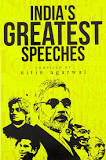
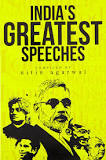
INDIA’S GREATEST SPEECHES compiled by Nitin Agarwal

Copyright@shravancharitymission

Khidki (Window)

–Read India Initiative—

This is only an attempt to create interest in reading. We may not get the time to read all the books in our lifetime. But such reviews, talk and synopsis will at least convey what the book is all about.

     The publisher of this book is Grapevine India Publishers Ltd, published in 2014. The price of this book is Rs 195. It comprises of 325 pages. Most of the speeches are available in the archives. Yet, I would say Nitin has done a good job of providing them in a readymade platter.  The selection of speeches and the introduction of the personality before each speech is also quite absorbing. Friends, at times we all feel we know a celebrity quite well but when you start reading about him you feel otherwise.

    Overall, it’s a stimulating collection of thoughtful speeches delivered by some of the most prominent personalities of India. But then, one view point could be, why, read these speeches at all? And, what do you gain out of them? Well, let me tell you. Behind every speech lies the covert and overt accomplishment of the personality. Rather, the essence of the orator’s personality, which knowingly or unknowingly, directly or indirectly comes out for the betterment of the common man. There is a verse in Gita that says, ‘Masses follow the classes.’ Moreover, speeches often silhouette the inveterate mindset of the orator. It at times even doubles up as a mini biography of the personality.

    Set to inspire, the book includes some of the most stirring and eloquent addresses by Rabindranath Tagore, Swami Vivekananda, Sardar Vallabhbhai Patel, Mother Teresa, JRD Tata, Abdul Kalam, Narendra Modi and many other influential Indian leaders.

    Book starts with a short insight from Bhagavad Gita. It then goes on to cover twenty five speeches of 23 cynosure personalities of India. One will find, a good amount of historical perspective in some of the speeches. Almost all speeches are loaded with aspects of challenge, failure, success struggle, decision making, telling of tough tales and life lessons and in the ultimate, the making of those towering personalities.

    An interesting pattern that unknowingly emerges out of the book is, the feel, of what India, or the bigwigs of India were, towards the end of the nineteenth century, when Swami Vivekananda delivered that famous speech in Chicago in 1893 up to almost a decade and a half after independence say 1965, and how India changed after 1965, and with that, the personalities, the viewpoints, the values and even the ambitions. The world of today has become more complex, competition has intensified, struggles have become long and even tougher. Globalisation has taken over issues and nothing is isolated and everything is known to everyone. The speeches post 1965 reflect that in some way or the other.  So, times have changed. The span of speeches is from 1893 to present days.

    There are two speeches of Mahatma Gandhi delivered in the years 1912 and 1922. When you read these speeches you get an eerie feeling, as to how different, India has become, since then. Shaheed Bhagat Singh’s famous daring statement before Lahore High Court Bench exhibits his jasba … his passion for his motherland—India.

    In the year 1937 Veer Damodar Savarkar then president of Akhil Bharatiya Hindu Mahasabha delivered a speech in Karnavati defining Hinduism which is very interesting. There are other master pieces too, namely Tagore in 1941, and Dr Radhakrishnan in 1947.

    Then you have the famous speeches of Subhas Chandra Bose—Give me Blood and I promise you Freedom, and Nehru’s ‘Tryst with Destiny.’

    In the year 1948 Sardar Vallabhbai Patel delivered his famous speech at Calcutta Maidan on unification of India. Pandit Deendayal Upadhyaya a very important leader of Jana Sangh, (now morphed into BJP) in the year 1965 had addressed a full house on Integral Humanism. One is really moved by the humbleness of Mother Teresa when one goes through her address that she made in 1979 in that historic speech at the time of accepting the Nobel Peace Prize and JRD Tata’s, superlative speech in the year 1982 on his Historic Flight Re-enactment and that famous speech of Mrs Gandhi, her last one in 1984 after which she was assassinated.

    Who can forget Atal Bihari Vajpayee’s famous 2001 address in United Nations General Assembly. And, Narayana Murthy, in his 2007, Pre-commencement address at New York University describing his volatile journey.

    There are two Speeches of Prime Minister Narendra Modi delivered in 2014, one at FICCI Ahmedabad and the second on Independence Day that outlines India’s future and what he intends doing for the country. Then we have President Abdul Kalam’s par-excellence speech that he delivered in 2011 which is so very educative.

    On the creative side there are AR Rahman’s 2009, Oscar Awards Acceptance address and Shahrukh Khan’s famous, ‘Courage in Success’ delivered in 2013.

    Lifetime Achievement Awards don’t come easy. Everyone knows about the struggle Azim Premji took to erect his mighty Empire. He speaks on the occasion in the year 2013, at the Economic Times Awards.  And last but not the least the making of the world champions. Sports achievements are one of the toughest where you start alone and if you’re not successful you go into oblivion followed by depression. There are three wonderful speeches. One is by Viswanathan Anand, 2007, Speech at NIIT Chennai, second is by Abhinav Bindra, 2013, at GoSports Foundation Conclave and the third is by Master Blaster Sachin Tendular, 2013, A Farewell to Cricket.

    Overall it’s an interesting read, if you want to know about these personalities and their tedious journey to fame.

    A list of speeches follows:     

  1. Swami Vivekananda 1893 The Chicago Address (Opening Day)
  2. Mahatma Gandhi 1912 Banaras Hindu University Speech
  3. Mahatma Gandhi 1922 The Great Trial of 1922
  4. Shaheed Bhagat Singh 1930 Statement before the Lahore High Court Bench
  5. Veer Damodar Savarkar 1937 Presidential Address, Akhil Bharatiya Hindu Mahasabha defining Hinduism.
  6. Rabindranath Tagore, 1941, Civilization’s Crisis, The Last Testament of Tagore
  7. Subhas Chandra Bose, 1944, Give Me Blood and I Promise You Freedom
  8. Dr Sarvepalli Radhakrishnan, 1947, Speech as First Vice-President of India
  9. Pandit Jawaharlal Nehru, 1947, Tryst with Destiny
  10. Sardar Vallabhbhai Patel, 1948, Speech at Calcutta Maidan
  11. Pandit Deendayal Upadhyaya, 1965, Lecture on Integral Humanism
  12. Mother Teresa, 1979, Nobel Peace Prize Acceptance
  13. JRD Tata, 1982, Historic Flight Re-enactment
  14. Indira Gandhi, 1984, The Last Speech
  15. Atal Bihari Vajpayee, 2001, United Nations General Assembly Speech
  16. Narayana Murthy, 2007, Pre-commencement address at New York University
  17. Viswanathan Anand, 2007, Speech at NIIT, Chennai
  18. AR Rahman, 2009, Oscar Awards Acceptance
  19. APJ Abdul Kalam, 2011, Vision of India
  20. Abhinav Bindra, 2013, GoSports Foundation Conclave
  21. Shahrukh Khan, 2013, Courage in Success
  22. Sachin Tendulkar, 2013, A Farewell to Cricket
  23. Azim Premji, 2013, Lifetime Achievement Award Acceptance, Economic Times Awards
  24. Narendra Modi, 2014, Speech at FICCI, Ahmedabad
  25. Narendra Modi, 2014, Independence Day Speech

By Kamlesh Tripathi

*

https://kamleshsujata.wordpress.com

*

Share it if you like it

*

Shravan Charity Mission is an NGO that works for poor children suffering from life threatening diseases especially cancer. Our posts are meant for our readers that includes both children and adults and it has a huge variety in terms of content. We also accept donations for our mission. Should you wish to donate for the cause. The bank details are given below:

NAME OF ACCOUNT: SHRAVAN CHARITY MISSION

Account no: 680510110004635 (BANK OF INDIA)

IFSC code: BKID0006805

*

Our publications

GLOOM BEHIND THE SMILE

(The book is about a young cancer patient. Now archived in 7 prestigious libraries of the US, including, Harvard University and Library of Congress. It can also be accessed in MIT through Worldcat.org. Besides, it is also available for reading in Libraries and archives of Canada and Cancer Aid and Research Foundation Mumbai)  

ONE TO TANGO … RIA’S ODYSSEY

(Is a book on ‘singlehood’ about a Delhi girl now archived in Connemara Library, Chennai and Delhi Public Library, GOI, Ministry of Culture, Delhi)

AADAB LUCKNOW … FOND MEMORIES

(Is a fiction written around the great city of Nawabs—Lucknow. It describes Lucknow in great detail and also talks about its Hindu-Muslim amity. That happens to be its undying characteristic. The book was launched in Lucknow International Literary Festival of 2014)

REFRACTIONS … FROM THE PRISM OF GOD

(Co-published by Cankids–Kidscan, a pan India NGO and Shravan Charity Mission, that works for Child cancer in India. The book is endorsed by Ms Preetha Reddy, MD Apollo Hospitals Group. It was launched in Lucknow International Literary Festival 2016)

TYPICAL TALE OF AN INDIAN SALESMAN

(Is a story of an Indian salesman who is, humbly qualified. Yet he fights his ways through unceasing uncertainties to reach the top. A good read not only for salesmen. The book was launched on 10th February, 2018 in Gorakhpur Lit-Fest. Now available in Amazon, Flipkart and Onlinegatha)

RHYTHM … in poems

(Published in January 2019. The book contains 50 poems. The poems describe our day to day life. The book is available in Amazon, Flipkart and Onlinegatha)

(ALL THE ABOVE TITLES ARE AVAILABLE FOR SALE IN AMAZON, FLIPKART AND OTHER ONLINE STORES OR YOU COULD EVEN WRITE TO US FOR A COPY)

*****



INTERESTING FACTS FIGURES AND QUOTES–38

Copyright@shravancharitymission

The world moves with GPS. But how does GPS work? Let’s find out. GPS—global positioning system—is a space-age version of triangulation. Originally developed for military use, GPS has three components: satellites orbiting earth, master control stations around the world, and receivers installed in locations ranging from naval destroyers to private golf carts.             In the U.S. GPS system, two dozen Navstar satellites     orbit the planet every 12 hours, following six different orbits. Three additional satellites orbit as backup. The satellites contain atomic clocks that send precise times with each signal. The control stations monitor the satellites, using remote controlled on-board thrusters to manage their positions.     When a GPS user on land or sea calls for location information, signals pass from orbiting satellites to user’s receiver. The length of time taken by the transmissions—usually a fraction of a second—helps determine distance to a point on an imaginary sphere, and the user’s latitude and longitude can be calculated by using the mathematics and triangulation. Three satellites would suffice, but more provide redundancy and compensate for inaccuracies. GPS signals are broadcast on two different frequencies, one for military use and one for civilian use. Civilian augmentation can provide precise location to within 0.4 of an inch.

***

WHY ARE THERE 360 DEGREES IN A CIRCLE?

    A degree is a fraction of a circle, and there are 360 degrees in each of the imaginary circles that describe the surface of the Earth. The number 360, in this context, usually is, attributed to the Babylonians, (present day Iraq) who devised a base—60 number system. (Our modern system is 10). They probably were the first to divide a circle into 360 degrees (6 x 60). Some historians think that the base—60 system derives from the approximate length in days of a calendar year, but others claim that the Babylonians chose 60 because it is divisible by so many numbers. Hipparchus, the Greek astronomer, who invented the formal system of latitude and longitude, divided each Earth circle into 360 degrees, each degree, having 60 minutes. and each minute, having 60 seconds.

***

India Inc. is a common term used by the Indian media to refer to the formal sector (comprising government and corporate) sector of the nation. It employed 7 percent of the workforce in 2000 and contributed 60 per cent of the nominal GDP of the nation.

***

Famous English novelist George Orwell who wrote the famous novel ‘Animal Farm’ was born in Motihari, Bihar.

***

J&K became part of India 10 weeks after Independence when Maharaja Hari Singh, alarmed by the rapid advance of armed Pakistani tribesman, hurriedly signed the instrument of accession. In legal—if not moral—terms, the decision was his alone.

By Kamlesh Tripathi

*

https://kamleshsujata.wordpress.com

*

Share it if you like it

*

Shravan Charity Mission is an NGO that works for poor children suffering from life threatening diseases especially cancer. Our posts are meant for our readers that includes both children and adults and it has a huge variety in terms of content. We also accept donations for our mission. Should you wish to donate for the cause. The bank details are given below:

NAME OF ACCOUNT: SHRAVAN CHARITY MISSION

Account no: 680510110004635 (BANK OF INDIA)

IFSC code: BKID0006805

*

Our publications

GLOOM BEHIND THE SMILE

(The book is about a young cancer patient. Now archived in 7 prestigious libraries of the US, including, Harvard University and Library of Congress. It can also be accessed in MIT through Worldcat.org. Besides, it is also available for reading in Libraries and archives of Canada and Cancer Aid and Research Foundation Mumbai)  

ONE TO TANGO … RIA’S ODYSSEY

(Is a book on ‘singlehood’ about a Delhi girl now archived in Connemara Library, Chennai and Delhi Public Library, GOI, Ministry of Culture, Delhi)

AADAB LUCKNOW … FOND MEMORIES

(Is a fiction written around the great city of Nawabs—Lucknow. It describes Lucknow in great detail and also talks about its Hindu-Muslim amity. That happens to be its undying characteristic. The book was launched in Lucknow International Literary Festival of 2014)

REFRACTIONS … FROM THE PRISM OF GOD

(Co-published by Cankids–Kidscan, a pan India NGO and Shravan Charity Mission, that works for Child cancer in India. The book is endorsed by Ms Preetha Reddy, MD Apollo Hospitals Group. It was launched in Lucknow International Literary Festival 2016)

TYPICAL TALE OF AN INDIAN SALESMAN

(Is a story of an Indian salesman who is, humbly qualified. Yet he fights his ways through unceasing uncertainties to reach the top. A good read not only for salesmen. The book was launched on 10th February, 2018 in Gorakhpur Lit-Fest. Now available in Amazon, Flipkart and Onlinegatha)

RHYTHM … in poems

(Published in January 2019. The book contains 50 poems. The poems describe our day to day life. The book is available in Amazon, Flipkart and Onlinegatha)

(ALL THE ABOVE TITLES ARE AVAILABLE FOR SALE IN AMAZON, FLIPKART AND OTHER ONLINE STORES OR YOU COULD EVEN WRITE TO US FOR A COPY)

*****