Tag Archives: jinnah

INTERESTING FACTS: HOW HYDERABAD, JUNAGADH HELD UP INDIA’S INTEGRATION


Pakistan: An Atrocious Copy-Paste Master … by Kamlesh Tripathi


Author Sam Dalrymple on India-Pakistan Divide

THE GUJARATI DNA

BOOK CORNER: THE DEOLI WALLAHS: The True Story of the 1962 Chinese-Indian Internment … Joy Ma … Dilip D’Souza

Copyright@shravancharitymission

    ‘THE DEOLI WALLAHS—The True Story of the 1962 Chinese—Indian Internment’ by Joy Ma & Dilip D’Souza.

    The subject title was first published in 2020 by Pan Macmillan. A citation at the bottom of the cover page of the book by Pratap Bhanu Mehta an Indian Political Scientist says, ‘Humanly compelling, beautifully told … brings to light a forgotten chapter of Indian history, one we need to remember in these troubled times.’

    The title is an untold account of the internment of some 3,000 Chinese—Indians just after the 1962 Sino-Indian War. The narration commences with a long ‘Preface’ followed by the ‘Origins’ chapter which explains where these Chinese-Indians came from. It describes the Chinese debut in India in Achipur and Calcutta, to begin with, and later their migration to other parts of the country which slowly expanded for nearly 200 years after Atchew’s arrival—The first ancestor of the Chinese in India.  

    The title is a mid-length narration of fewer than 200 pages divided into 17 chapters plus Notes and Annexures. In Chinese, they refer to Deoli Camp as chap chung yin (Hakka) or chi chung yin (Pinyin) which translates into a ‘gathered-together camp’ or a ‘concentration camp.’ The Deoli Camp was also used for incarcerating Indian political prisoners and for prisoners of war during World War II.

    Just after the Sino-Indian War of 1962, about 3,000 Chinese-Indians were sent to languish in a disused World War II prisoner of war camp in Deoli, Rajasthan, marking the beginning of a painful five-year-long internment without resolution. At the time of war with China, these ‘Chinese-looking’ people had fallen prey to government suspicion and paranoia which soon seeped into the public consciousness just because their features were Chinese. This is a page of Indian history that comes wrapped in prejudice and fear and is today largely forgotten. But over five decades on, survivors of the internment camp are finally starting to tell their stories. So, is there an apology due from the Government of India to them is a point in question raised in the book.

    The authors of the book record these untold stories through extensive interviews of survivors of the Deoli internment. Through these personal accounts, the authors not only discover a crucial chapter in our history but also document for the first time how the Chinese came to be in India, how they made this country their home and became a significant community, until the war of 1962 that brought on a terrible incarceration, displacement and tragedy to them. The narration is primarily structured around the Chinese-Indian community, who open their hearts and minds to the authors. The Chinese-Indians were considered spies during those times of the Indo-China conflict. I know it for sure because I lived in Shillong then, where my father was a minister in the Assam Cabinet. But then the government had little leeway in terms of thinking otherwise.

    And now my observation on the storytelling. The narration could have been even more forthright. The language is plain English in easy to read format. Since the narration has many personal accounts it gives you a feel as if much is happening in the book but the general plot moves slowly. I particularly found the chapter titled ‘A CONTESTED LINE’ to be very interesting and informative. It gives you a good open view of why the Chinese conflict took place at all. After the Indian-Chinese were released from Deoli Prison they had a long struggle rebuilding their lives. Some stayed back in India and some left for greener pastures abroad. Not many would know that even a ship had docked at the Madras port to take the internees from Deoli to China the ones who were willing to go. The book is a gratifying mix of the China conflict and Deoli’s internment camp in the 5th chapter titled ‘WAR.’ But was there any sense in adding this chapter to the narration because to me it diluted the central agonizing story of those interned at the Deoli camp? However, the chapter titled ‘War’ does raise the Indian flag when it describes the Rezang La Ridge, the scene of the fierce battle that is still remembered in India as the lone glorious chapter in the otherwise depressing story of the 1962 war. But yes, the continuity of the story is momentarily derailed by the chapter titled ‘WAR.’ The book has some illustrating pictures of the Deoli barracks too. The narration lacks the flourish of emotions considering what the families of the protagonists underwent. The authors could have definitely scripted the narrative to be more emotional taking into account the sentiments of the protagonists. The narration of the central plot is not a continuous happening in the book. It is in staccato-bursts because of the several personal accounts. The sequencing of the chapters could have been better. The historical facts are engrossing and interesting when you look back. I guess the chapters don’t sequence well because of certain heavyweight chapters in between the normal chapters that override the main plot of the book but then they are vital for the consummation of the ultimate story. The plot reveals that the Indian Government’s approach towards the ‘Chinese-Indian’ in those times was not soft due to their being treated as spies.

    The authors have compared the Deoli prison camp with the Manzanar prison camp in the US where American-Japanese prisoners were housed during World War II. The book makes a gentle request to the Government of India for a ‘Chinese-Indian memorial’ to mark their trauma. The narration compares the Chinese-Indian prisoners of India with the Japanese-American prisoners of the US which is asymmetric. It highlights that a majority of the Japanese internees remained in the US after their release and even got an official apology from the government of the US after forty-six years, whereas a majority of the Chinese internees left India to start a new life in other countries and never got an apology from the government of India. Towards the end, the narration expresses a flurry of holistic emotions.

    As a reader, I felt the narration should have been more along the central theme of the book than deviating from it off and on or the sequencing of the chapters could have been shuffled when the authors had a meaty story to tell. Of course, the book is more like a personal account of several families that were interned.

    Buried under the ‘Himalayan Blunder’ of 1962 – the humiliating India-China war – is also a tragic story of many Chinese-Indian that is not known to most of India and was quietly ignored by successive governments. Did one know that Deoli in Rajasthan had an internment camp during World War II? Starting in 1931 the British used to detain various leaders of the burgeoning Indian freedom struggle. Five hundred freedom fighters from Bengal to begin with and then, in the 1940s, Jayaprakash Narayan, S.A. Dange, Muhammad Ali Jinnah, Jawaharlal Nehru, B.T. Ranadive, S.S. Batliwala, S.G. Patkar and many others were detained here. In the National Archives in New Delhi, there are petitions from the wives of some of these men, asking for a maintenance allowance during their husbands’ incarceration or for their travel expenses to meet their husbands to be reimbursed. The British not surprisingly, rejected them all.

     What I liked about the book was the initiative of the authors to have woven a book around the happenings of the Indo-China conflict which otherwise was unknown to Indians especially when it affected only a minuscule of Chinese-Indian population. The story sets you thinking.

By Kamlesh Tripathi

*

https://kamleshsujata.wordpress.com

*

Share it if you like it

*

Shravan Charity Mission is an NGO that works for poor children suffering from life threatening diseases especially cancer. Our posts are meant for our readers that includes both children and adults and it has a huge variety in terms of content. We also accept donations for our mission. Should you wish to donate for the cause. The bank details are given below:

NAME OF ACCOUNT: SHRAVAN CHARITY MISSION

Account no: 680510110004635 (BANK OF INDIA)

IFSC code: BKID0006805

*

Our Publications

GLOOM BEHIND THE SMILE

(The book is about a young cancer patient. Now archived in 8 prestigious libraries of the US that includes Harvard College Library; Harvard University Library; Library of Congress; University of Washington, Seattle; University of Minnesota, Minneapolis; Yale University, New Haven; University of Chicago; University of North Carolina, at Chapel Hill University Libraries. It can also be accessed in MIT through Worldcat.org. Besides, it is also available for reading in libraries and archives of Canada, Cancer Aid and Research Foundation Mumbai; Jaipuria Institute of Management, Noida; India. Shoolini University, Yogananda Knowledge Center, Himachal Pradesh and Azim Premzi University, Bangalore).  

ONE TO TANGO … RIA’S ODYSSEY

(Is a book on ‘singlehood’ about a Delhi girl now archived in Connemara Library, Chennai and Delhi Public Library, GOI, Ministry of Culture, Delhi; Available for reading in Indian National Bibliography, March 2016, in the literature section, in Central Reference Library, Ministry of Culture, India, Belvedere, Kolkata-700022)

AADAB LUCKNOW … FOND MEMORIES

(Is a fiction written around the great city of Nawabs—Lucknow. It describes Lucknow in great detail and also talks about its Hindu-Muslim amity. That happens to be the undying characteristics of Lucknow. The book was launched in Lucknow International Literary Festival of 2014. It is included for reading in Askews and Holts Library Services, Lancashire, U.K; Herrick District Library, Holland and Charlotte-Mecklenburg Library, Mecklenburg County in North Carolina, USA; Black Gold Cooperative Library Administration, Arroyo Grande, California).

REFRACTIONS … FROM THE PRISM OF GOD

(Co-published by Cankids–Kidscan, a pan India NGO and Shravan Charity Mission, that works for Child cancer in India. The book is endorsed by Ms Preetha Reddy, MD Apollo Hospitals Group. It was launched in Lucknow International Literary Festival 2016)

TYPICAL TALE OF AN INDIAN SALESMAN

(Is a story of an Indian salesman who is, humbly qualified. Yet he fights his way through unceasing uncertainties to reach the top. A good read not only for salesmen. The book was launched on 10th February 2018 in Gorakhpur Lit-Fest. Now available on Amazon, Flipkart and Onlinegatha)

RHYTHM … in poems

(Published in January 2019. The book contains 50 poems. The poems describe our day-to-day life. The book is available on Amazon, Flipkart and Onlinegatha)

MIRAGE

(Published in February 2020. The book is a collection of eight short stories available in Amazon, Flipkart and Notion Press)

AWADH ASSAM AND DALAI LAMA … The Kalachakra

(The story of the man who received His Holiness The Dalai Lama and his retinue in 1959 as a GOI representative when he fled Tibet in 1959. The book was recently launched on 21st November 2022 by His Holiness The Dalai Lama).

Short stories, Book reviews and Articles published in Bhavan’s Journal: 1. Reality and Perception, 15.10.19; 2. Sending the Wrong Message, 31.5.20; 3. Eagle versus Scholars June, 15 & 20 2020; 4. Indica, 15.8.20; 5. The Story of King Chitraketu, August 31 2020; 6. Breaking Through the Chakravyuh, September 30 2020. 7. The Questioning Spouse, October 31, 2020; 8. Happy Days, November 15, 2020; 9. The Karma Cycle of Paddy and Wheat, December 15, 2020; 10. Power Vs Influence, January 31, 2021; 11. Three Refugees, March 15, 2021; 12. Rise and Fall of Ajatashatru, March 31, 2021; 13. Reformed Ruler, May 15, 2021; 14. A Lasting Name, May 31, 2021; 15. Are Animals Better Teachers?, June 16, 2021; 16. Book Review: The Gram Swaraj, 1.7.21; 17. Right Age for Achievements, 15.7.21; 18. Big Things Have Small Beginnings, 15.8.21; 19. Where is Gangaridai?, 15.9.21; 20. Confront the Donkey Within You 30.9.21; 21. Know Your Strengths 15.10.21; 22. Poverty 15.11.21; 23. Top View 30.11.21; 24. The Bansuriwala 15.1.22; 25. Sale of Alaska 15.2.22; 26. The Dimasa Kingdom 28.2.22; 27. Buried Treasure 15.4.22; 28. The Kingdom of Pragjyotisha 30.4.22; 29. Who is more useful? 15.5.22; 30. The White Swan from Lake Mansarovar 30.6.22; 31. Bhool Bhulayya 15.9.22; 32. Good Karma 30.9.22; 33. Good name vs Bad Name 15.10.22; Uttarapath—The Grand Trunk Road 1.12.22;

(ALL THE ABOVE BOOK TITLES ARE AVAILABLE FOR SALE IN AMAZON, FLIPKART AND OTHER ONLINE STORES OR YOU COULD EVEN WRITE TO US FOR A COPY)

*****

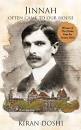
BOOK REVIEW: JINNAH – Often Came To Our House– Kiran Doshi

Copyright@shravancharitymission

Khidki (Window)

–Read India Initiative—

This is only an attempt to create interest in reading. We may not get the time to read all the books in our lifetime. But such reviews, talk and synopsis will at least convey what the book is all about

    Let me first begin by introducing the author Kiran Doshi. Kiran Doshi studied history, politics and law in Bombay before he joined the Indian Foreign Service in the year 1962, where, he had a 35-year-long career that frequently saw him tackling, India’s relations with Pakistan, always an important, exciting, but eventually a frustrating task.

    The book falls in the genre of historical fiction, published by Tranquebar Westlandbooks in 2015. It is available in both print and e-book format, and is a thick spine—some 490 pages. It is divided into 35 rhapsodic chapters and spans between the eventful years of the making of India. That is from 1904 to 1948 which includes the struggle for freedom, Partition of India and the formation of Pakistan out of India.

    Kiran has two more books in his oeuvre titled, ‘Birds of Passage’ which I believe is an engrossing and hilarious novel set in the diplomatic space of India-Pakistan-USA diplomacy, and the other book is titled, ‘Diplomatic Tales’ which is a collection of short stories in comic verse. Kiran lives in Delhi with his wife Razia.

    I’m not aware of the spark that prompted the author to write this book. But since the author has dedicated the book, to his mother-in-law Umrao Baig, (1915-1981), it does suggest, a character in the book could be resembling her. But this is only my hunch. Umrao Baig was expelled from her convent school for wearing khadi and singing Bande Mataram. She went on to study medicine at Grant Medical College and set up a hospital named after, Lokmanya Tilak in a part of Bombay, then inhabited, by mill workers.

    The book although titled Jinnah is a work of historical fiction cautions the author—all the incidents and characters in it (except those known to history) are fictitious—even if touched, here and there, by the brush of family lore.

    Coming to the brief plot. The young and dashing Sultan Kowaishi has just returned from London to Bombay after acquiring a barrister’s degree. Among the first persons he meets in Bombay is Mohammed Ali Jinnah, already a quintessential advocate, and is quickly drawn to him. It is around this time Jinnah decides to join the Indian National Congress, soon to become its brightest star in the fight for freedom. But the stir for freedom holds no interest for Sultan, but yes, it attracts his wife Rehana, and, inexorably weaves its way, into their lives. Another strong character happens to be Barri Phuphi. The main story is about Rehana opening a school, Sultan succeeding as a lawyer, them separating, and years later Sultan going in search of his children and finally his grandchild.

    The book has a large canvass of characters and events. It makes, its presence, felt in, more than one ways. It starts with the showcasing of, the lifestyle of, upper class Muslims, in Bombay, largely with, familial, connect, in Gujarat and Hyderabad around the beginning of the twentieth century.

    Kiran has focused on the core topic of freedom struggle leading to independence quite well. He brings alive the court cases along with decades of India’s struggle for freedom that is interrupted by the British in various ways, especially, when they change the laws for partition of Bengal, revocation of partition of Bengal. Tilak’s exile, Morley Minto Reforms, formation of Muslim League, the Rowlatt Act, the Montagu-Chelmsford Reforms, Simon Commission and its opposition, the two World Words, provincial elections and Constituent Assembly and the Khilafat movement—linked to the Ottoman Empire and of course the partition of India.

    The book revolves around Rehana, Sultan and Jinnah mostly in Bombay, London, Delhi, Lucknow, Hyderabad, Ahmedabad, Afghanistan and Pakistan. It has many other characters such as Dhondav—Rehana’s thread brother and the tall politicians of those times. But Rehana happens to be the longest and the toughest string that connects the book from the beginning to the end.

    The book eventually serves India with independence but not before breaking and destroying the complete family of Sultan Kowaishi who on a mere doubt of infidelity, disowns his wife and children without realising how devious, can an Englishman of, the British Raj, could be. Shak destroys Sultan completely.  Jiska ilaj hakeem Luqman ke pas bhi nahi tha.

    The story thereon moves like a tragedy and finally ends like a family tragedy. The hatred between Hindus and Muslims has been captured quite comprehensively. The book picks up somewhere between page 23 and page 45. There are too many a characters in the story and it takes a while before one can actually imbibe and familiarise oneself with the characters.

    There are certain pages in the book that I quite liked, such as, description of a voyage from Bombay to London which is now a rarity. The relation between Jinnah and Rehana is well written. The presentation of Gokhale, Tilak and Gandhi from time to time and some other leaders is interesting. The conversation about Rasool and Koran is quite informative. Overall, it’s a very happening book. But towards the last hundred pages it becomes quite depressing. Perhaps, had the author squeezed the book around 400 pages the action points of the novel could have been more intense.

The author pays homage to Shakespeare by using his quotes quite generously and aptly. His lines make for an engaging conversation-long repartee between Rehana and Jinnah.

The tone of the writer is quite flowing and inviting with the prowess to alter the reader’s emotion without provoking him. The author has used easy English with a mix of Urdu, Hindi and the colloquials.  

    The novel has a host of characters, some are well-known in history such as Gandhi, Tilak, Nehru, Subhash Chandra Bose and many are fictional characters such as, Dhondav, Griffiths, Pandey, Tehmina, Firoz, Hina and others whose lives change with the turn of pages. The rigour of writing is evident in how the writer ties up every thread and no character is left hanging. A resounding line that Kiran picks is attributed to Sir Syed Ahmed Khan, “Hindus and Muslims are the two eyes of India, they can never be separated. But sadly, the novel ends with the independence and partition of India,

    Through Jinnah and the Congress, the author shows how random laws define the fate of societies, through Dhondav he shows how bans on the freedom of press or media influence public opinion, through the main character Rehana and her travails at school, he shows how language and text books can become a conflict point.

For older readers, this novel would be a delight, but for the younger generation, twice removed from Independence and partition, the novel would serve as a space to reflect over the ironies of our times. For the sweeping story Jinnah… I would give the book four stars. A must read.

By Kamlesh Tripathi

*

https://kamleshsujata.wordpress.com

*

Share it if you like it

*

Shravan Charity Mission is an NGO that works for poor children suffering from life threatening diseases especially cancer. Our posts are meant for our readers that includes both children and adults and it has a huge variety in terms of content. We also accept donations for our mission. Should you wish to donate for the cause. The bank details are given below:

NAME OF ACCOUNT: SHRAVAN CHARITY MISSION

Account no: 680510110004635 (BANK OF INDIA)

IFSC code: BKID0006805

*

Our publications

GLOOM BEHIND THE SMILE

(The book is about a young cancer patient. Now archived in 7 prestigious libraries of the US, including, Harvard University and Library of Congress. It can also be accessed in MIT through Worldcat.org. Besides, it is also available for reading in Libraries and archives of Canada and Cancer Aid and Research Foundation Mumbai)  

ONE TO TANGO … RIA’S ODYSSEY

(Is a book on ‘singlehood’ about a Delhi girl now archived in Connemara Library, Chennai and Delhi Public Library, GOI, Ministry of Culture, Delhi)

AADAB LUCKNOW … FOND MEMORIES

(Is a fiction written around the great city of Nawabs—Lucknow. It describes Lucknow in great detail and also talks about its Hindu-Muslim amity. That happens to be its undying characteristic. The book was launched in Lucknow International Literary Festival of 2014)

REFRACTIONS … FROM THE PRISM OF GOD

(Co-published by Cankids–Kidscan, a pan India NGO and Shravan Charity Mission, that works for Child cancer in India. The book is endorsed by Ms Preetha Reddy, MD Apollo Hospitals Group. It was launched in Lucknow International Literary Festival 2016)

TYPICAL TALE OF AN INDIAN SALESMAN

(Is a story of an Indian salesman who is, humbly qualified. Yet he fights his ways through unceasing uncertainties to reach the top. A good read not only for salesmen. The book was launched on 10th February, 2018 in Gorakhpur Lit-Fest. Now available in Amazon, Flipkart and Onlinegatha)

RHYTHM … in poems

(Published in January 2019. The book contains 50 poems. The poems describe our day to day life. The book is available in Amazon, Flipkart and Onlinegatha)

MIRAGE

(Published in February 2020. The book is a collection of eight short stories. It is available in Amazon, Flipkart and Notion Press)

(ALL THE ABOVE TITLES ARE AVAILABLE FOR SALE IN AMAZON, FLIPKART AND OTHER ONLINE STORES OR YOU COULD EVEN WRITE TO US FOR A COPY)

*****