Copyright@shravancharitymission

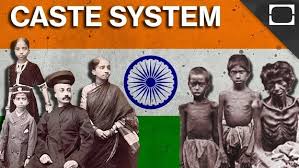
Dr. Bhim Rao Ambedkar’s life indeed serves as a beacon of inspiration for those committed to equality, social justice, and dismantling oppressive systems. His insights into the caste system were groundbreaking and remain relevant even today. His statement about the caste system being a “monster” that must be eradicated for any real political and economic reform resonates deeply. By acknowledging that caste is not just a division of labor but also a division of people, Ambedkar illuminated how deeply it harms not only individuals but society as a whole.
His critique of the caste system’s eugenic claims and its failure to produce a better society reflects his understanding of how it stunts human potential. Caste, in his view, doesn’t just harm the oppressed; it also disorganizes the social fabric of those who perpetuate it. Ambedkar’s assertion that caste doesn’t improve the race but instead demoralizes it points to a broader critique of how hierarchies and inequality can stunt collective progress.
These perspectives are not just theoretical but were put into action in his tireless efforts to reshape India’s Constitution, fight for the rights of Dalits, and challenge the deep-seated social structures that perpetuated caste-based discrimination. His contributions laid the groundwork for a more just and equitable society, making him one of the most significant social reformers in modern history.
He was born into a Mahar family, one of the castes considered untouchable in the rigid caste hierarchy of India, on April 14, 1891, in Mhow, Madya Pradesh, where his father served in the army. Despite facing severe social discrimination, his early life was marked by a strong desire for education and an urge to challenge the status quo that oppressed people like him.
He studied at some of the best institutions globally, including Columbia University and the London School of Economics, where he earned doctorates in Economics. He later trained as a lawyer at Gray’s Inn, London, and became one of the most highly educated individuals in India at that time. Dr. Ambedkar’s life was devoted to fighting for the rights of the Dalits and the marginalized communities in India. His famous slogan, “Educate, Agitate, Organise”, continues to resonate, urging oppressed people to seek knowledge, actively resist oppression, and unite for their rights. Bernard Shaw once stated, “Dr. Ambedkar’s struggle against the caste system and his determination to free the Indian masses from the shackles of superstition and inequality was truly revolutionary. He understood that real progress could only come through education and social reform.”
As the Chairman of the Drafting Committee of the Constitution of India, Dr. Ambedkar played a pivotal role in shaping India’s legal and political framework. His vision helped enshrine fundamental rights such as equality, freedom of religion, and the abolition of untouchability in the Constitution. His contributions were critical in ensuring that India’s Constitution became a beacon of justice and equality, not just for Dalits but for all marginalized groups. He held a belief that, Constitution is not just a lawyers’ document but a vehicle of life, and its spirit is always the spirit of age.
He was also a staunch advocate for women’s rights and fought for their protection and upliftment within Indian society. He was instrumental in introducing provisions for reservations for Dalits, Tribals, and Other Backward Classes, ensuring their access to education and employment. Author of umpteen titles, he chose to embrace Buddhism as a response to the caste-based discrimination entrenched in Hinduism. His conversion was a radical act of defiance and transformation.
His contributions to the Indian Constitution and his steadfast fight against caste-based discrimination laid the foundation for the rights of the marginalized in India. In 1990, India’s highest civilian honor, the Bharat Ratna, was posthumously awarded to him. The salutation “Jai Bhim”, popular among his followers, remains a powerful symbol of his ongoing impact. ‘I want all people to be Indians first, Indian last and nothing else but Indian’ He said.
Posted by Kamlesh Tripathi
Author, Poet, & Columnist
*
https://kamleshsujata.wordpress.com
*
Like it and Share it
*
Shravan Charity Mission is an NGO that works for poor children suffering from life-threatening diseases, especially cancer. Our posts are meant for our readers, including children and adults, and have a huge variety of content. We also accept donations for our mission. Should you wish to donate to the cause of cancer? The bank details are given below:
NAME OF ACCOUNT: SHRAVAN CHARITY MISSION
Account no: 680510110004635 (BANK OF INDIA)
IFSC code: BKID0006805
*

 Shravan charity mission