https://books.apple.com/ec/book/awadh-assam-and-dalai-lama-the-kalachakra/id6443952295
Lebanonisation
INTERESTING FACTS: INDIA MUST GIVE TAIWAN A HELPING HAND
Copyright@shravancharitymission

TIMES OF INDIA 18.1.22 : INDIA MUST GIVE TAIWAN A HELPING HAND BY BRAHMA CHELLANEY
After swallowing Hong Kong, redrawing the South China Sea’s geopolitical map and encroaching on Indian and Bhutanese borderlands, an expansionist China is itching to move on Taiwan. This island democracy is a technological powerhouse central to the international semiconductor business. Taiwan also plays an indirect role in the defence of India because its autonomous existence ties up a sizable portion of China’s armed forces.
CHINA’S EXAGGERATED CLAIMS
Beijing’s claim that Taiwan has “always been” part of China is dubious, at best, and based on revisionist history. For most of its history, Taiwan was inhabited by Malayo-Polynesian tribes and had no ties with China until the island’s Dutch colonial rulers in the 17th century invited Chinese workers to emigrate. In that sense, Taiwan is closer to the Philippines than China.
The world cannot afford to let Taiwan go the way of the once-autonomous Tibet, which was gobbled up by the Mao Zedong’s regime in the early 1950s. Tibet’s annexation remains one of the most far-reaching geopolitical developments in post-World War II history, which resulted in China imposing itself as India’s neighbour and waging unending aggression.
Today, Taiwan has all the attributes of a robust independent state, and most Taiwanese want it to stay that way. But China’s new Mao, Xi Jingping, calls the island’s incorporation a “historic mission”. Xi is working to implement the expansionist agenda that Mao left unfinished, which explains why he has not spared even tiny Bhutan.
In the way a porcupine’s quills protect it from larger predators by making it difficult to digest, Taiwan needs to create porcupine-like defences with weapons like anti-ship and anti-aircraft missiles. By turning a Chinese invasion into a bloody and protracted guerrilla campaign, a porcupine Taiwan would inflict high costs on China, including major military casualties.
CREATING INTERNATIONAL SPACE
But no less important than bolstering its defences is Taiwan’s imperative to carve out greater international space for itself. If Taiwan gains greater presence on the global stage, it will be able to shore up its status as a defacto nation, making it more difficult for China to seize the island in the way it occupied Tibet and Xinjiang soon after coming under communist rule in 1949. The then-independent Tibet, for example, should have applied for United Nations membership shortly after that international body came into existence in 1945, but it never did.
China, as a step towards annexing Taiwan, is working to wipe out its international identity by bribing countries to break off diplomatic ties with Taipei and by vetoing Taiwan’s presence even in international forums. Its poaching has left only 13 nations and the Vatican is still recognising Taiwan.
But recently, China has been forced to eat humble pie by a puny nation. Lithuania, with just 18,500 active military personnel, has set an example for bigger countries on how to stand up to the global Goliath’s bullying. Undeterred by China’s sanctions campaign against it, Lithuania has allowed Taiwan to open a de facto embassy. With some other European states- from the Czech Republic and Poland to Slovakia – already seeking to deepen ties with Taiwan, Lithuania indeed promises to serve as a bellwether of sorts.
THE INDIA CONNECT
India, locked in several military standoffs with China, needs to think and act creatively, including helping Taiwan by learning from its historical mistake on Tibet. When China invaded Tibet in 1950, India opposed Tibet’s desperate plea for a UN discussion before acquiescing in the Chinese annexation of the buffer, including withdrawing its military escorts from Tibet and handing over Tibet’s postal, telegraph and telephone services that it was running.
If Taiwan is not to go Tibet’s way, India must do its part to help Taiwan reinforce its defences and self-governing status. India must follow the lead of Japan and the US in strengthening ties with Taipei. And it should emulate the example set by minnow Lithuania and allow Taiwan to rename its “Taipei Economic and Cultural Centre” in New Delhi as the “Taiwanese Representative Office”, while rebranding its own mission in Taipei as the “India Representative Office”.
Make no mistake: Taiwan is on the frontline of international defence against Xi’s totalitarianism and expansionism, which have spawned a Muslim gulag Xinjiang, brutal repression in Tibet and Himalayan aggression. Major democracies must act before it becomes too late to save Taiwan, a democratic success story. If China succeeds in recolonising Taiwan, India’s security will come under greater pressure.
(The writer is a professor of strategic studies, Centre for Policy Research)
Times of India 18/1/22
Posted by Kamlesh Tripathi
Author, Poet, & Columnist
*
https://kamleshsujata.wordpress.com
*
Like it and Share it
*
Shravan Charity Mission is an NGO that works for poor children suffering from life-threatening diseases, especially cancer. Our posts are meant for our readers, including children and adults, and have a huge variety of content. We also accept donations for our mission. Should you wish to donate to the cause of cancer? The bank details are given below:
NAME OF ACCOUNT: SHRAVAN CHARITY MISSION
Account no: 680510110004635 (BANK OF INDIA)
IFSC code: BKID0006805
***

AUSTRALIA: THE RIVERBOAT POSTMAN
Copyright@shravancharitymission
This is a place worth visiting.


Posted by Kamlesh Tripathi
Author, Poet, & Columnist
*
https://kamleshsujata.wordpress.com
*
Like it and Share it
*
Shravan Charity Mission is an NGO that works for poor children suffering from life-threatening diseases, especially cancer. Our posts are meant for our readers, including children and adults, and have a huge variety of content. We also accept donations for our mission. Should you wish to donate to the cause of cancer? The bank details are given below:
NAME OF ACCOUNT: SHRAVAN CHARITY MISSION
Account no: 680510110004635 (BANK OF INDIA)
IFSC code: BKID0006805
***
INTERESTING FACTS: OLD AND NEW DELHI: A COMPARISON
COPYRIGHT@shravancharitymission

BIGGER, MESSIER DELHI STILL HAS ITS ARMS WIDE OPEN
…. DELHI IS A RARE CITY WITH A LONG PAST BUT NO HANKERING TO TIE ITSELF DOWN TO IT. WHETHER IT’S PEOPLE OR SPACES, IT ABSORBS THEM ALL WITHOUT RESERVE
Delhi changed for me forever one day in the mid-1980s when a friend took me with him to the site where he was planning to buy a flat. There wasn’t much to see. The large tracts of nothingness, which became what we know today as Vasant Kunj, had no redeeming features. What was astonishing to me, however, was that when I looked towards Delhi, between me and the city stood the visage of Qutub Minar. That there could be a Delhi beyond Qutub Minar was something that made no sense to me. For in my imagination, it was pretty much at the very edge of the city. After all, that was a time when I remember going on a picnic in a bus with family friends to the exotic destination called Deer Park, far from our residence in Karol Bagh.
. The Delhi that resides permanently in my mind is a cross between the city shown in Chashme Buddoor (the original, not the ghastly remake) and Oye Lucky, Lucky Oye. On the one hand, there are memories of wide open roads, a time scented with languidness, glorious winter mornings, neighbourhoods basking in leafy silence, and on the other hand, the untidy energy, the hustle, the ability to live loudly and publicly, and friends called Lovely, Pinky, Tinkle, Kuki and OK.
The biggest change Delhi has seen is physical. It has burst out of its seams in all directions and has colonised spaces around it. It began with the conquest of Jamnapaar, which started out as a relocation drive of ‘unauthorised settlements’ under the watch of Sanjay Gandhi, but then took on a life of its own. Noida and Gurgaon are now cities in their own right, with their own cultural imprints, while drawing liberally from the mother ship.
There are many more cars and there is a lot more money, which gives Delhi more mediums to express itself in. Delhi traffic nips at the heels of those in front, ready to kill to gain an inch of space. The murderous intent is expressed first in sound, achieved by honking persistently, and then sometimes followed by action, as evidenced by the number of road rage incidents. The money is visible everywhere – the old colony markets that continue to thrive, lavish weddings at farmhouses, crowds at high-end restaurants, and homes that overflow with decor.
Perhaps the biggest loss is that of the Delhi winter. Delhi’s best, most glorious feature is now shrouded in noxious pollution that hangs like a foreboding and stings like regret. The joy of the outdoors, the enlivening experience of bone-chilling cold being thawed out by the sun as one sat on a charpoy and ate rewari and moongphali, basking for several glorious hours, is now an alleged memory, so far removed it has become. Winters are the time now to start muttering about migrating out of the city, while anxiously looking out for an AQI reading that tells us it is safe to step out of the home for a short walk.
There are other losses, too. The cinema theatres, which served as a practical guide to different localities in the city, included Plaza, Odeon, Regal, and Rivoli in CP; Golcha, Novelty, Ritz, Delite, and Moti, which marked out Old Delhi; and Anupam, Savitri, Sapna, and the infamous Uphaar, which dotted areas of South Delhi. Some of these theatres remain, some have been refurbished, while others lie in dilapidated disuse. Nirula’s exists, but it is hard to believe it was at the cultural heart of Delhi’s upper-middle-class youth once. The classic Delhi restaurants – Kwality, Embassy, Moti Mahal and Gaylord- are still around, but their role today is to serve as nostalgic artefacts. One goes there to savour the memory of a Delhi that once was. And while street food in Delhi continues to be as delicious, the famous names are now tourist spots more than unselfconscious, humble eating places.
And yet, while Delhi has changed in so many ways, at its core, it feels the same. The life that one leads today is poles apart from one’s experiences growing up, but the idea of Delhi has not shown much change. It still lives fiercely in the present and remains unmindful of the history it is set smack in the middle of. Contrary to its popular image, Delhi is India’s only genuinely cosmopolitan city, in that only a small fraction of its residents can claim to be originally from the city. Everyone is a stranger, and everyone is in the city as a user. Delhi hones our appetite, keeps our competitive edge intact and gives us many opportunities to advertise our success. It might have sprawled in ungainly ways in the last few decades and become even louder and shinier, but there is nothing unrecognisable about Delhi.
(WRITTEN BY SANTOSH DESAI. TOI COLUMNIST AND AUTHOR)
TIMES OF INDIA ARTICLE 12.9.21

Posted by Kamlesh Tripathi
Author, Poet, & Columnist
*
https://kamleshsujata.wordpress.com
*
Like it and Share it
*
Shravan Charity Mission is an NGO that works for poor children suffering from life-threatening diseases, especially cancer. Our posts are meant for our readers, including children and adults, and have a huge variety of content. We also accept donations for our mission. Should you wish to donate to the cause of cancer? The bank details are given below:
NAME OF ACCOUNT: SHRAVAN CHARITY MISSION
Account no: 680510110004635 (BANK OF INDIA)
IFSC code: BKID0006805
***
AUSTRALIA: THE BEST WAY TO SEE SYDNEY HARBOUR
Copyright@shravancharitymission
Australia is a lovely country to see.


Posted by Kamlesh Tripathi
Author, Poet, & Columnist
*
https://kamleshsujata.wordpress.com
*
Like it and Share it
*
Shravan Charity Mission is an NGO that works for poor children suffering from life-threatening diseases, especially cancer. Our posts are meant for our readers, including children and adults, and have a huge variety of content. We also accept donations for our mission. Should you wish to donate to the cause of cancer? The bank details are given below:
NAME OF ACCOUNT: SHRAVAN CHARITY MISSION
Account no: 680510110004635 (BANK OF INDIA)
IFSC code: BKID0006805
***
KABIR: BRIDGING FAITHS THROUGH VERSE
Copyright@shravancharitymission

Imagine a wandering poet in 15th-century India, reciting verses that touched both kings and commoners. That was Kabir Das, a weaver who spun not just threads, but words that would echo through centuries. His dohe (two-line verses) weren’t just poetry. They were life lessons presented in everyday parlance, cutting across the noise of religious divisions and social barriers. Even today, his razor-sharp wisdom hits home, whether you’re puzzling over life’s essential questions or just trying to be a better person.
Kabir is one of the most fascinating personalities in the history of Indian mysticism. Born in or near Benares to Muslim parents, likely around the year 1440, he became a disciple of the renowned Hindu ascetic Ramananda early in life. Ramananda had brought to North India the religious revival that Ramanuja, the great twelfth-century reformer of Brahmanism, initiated in the South.
At a time when the great Persian mystical poets like Attar, Sadi, Jalaluddin Rumi, and Hafiz were exercising a powerful influence on India’s religious thought process, Kabir dreamt of reconciling the intense and personal Muslim mysticism with the traditional theology of Brahmanism. Kabir was a significant religious reformer and the founder of a sect to which millions of north Indian Hindus still belong.
A hater of religious exclusivism, his wonderful dohe (self-contained rhyming couplets) survive to convey the spontaneous expressions of his vision and love for all religions. It is impossible to tell if Kabir was a Brahman, Sufi, Vedantist, or Vaishnavite. He is, as he says himself, “at once the child of Allah and of Ram.”
Kabir’s life is steeped in contradictory legends, none of which can be verified. Some originate from Hindu sources, while others come from Muslim traditions. They depict him as either a Sufi or a Brahmin saint. Nonetheless, his name serves as definitive proof of his Muslim heritage. A credible story portrays him as the biological or adopted child of a Muslim weaver from Benares, where the chief events of his life transpired.
The syncretic tendencies of the Bhakti religion had reached their full potential in the fifteenth century. The Sufis and Brahmins often had disagreements. Kabir, who was born with religious passion, saw in Ramananda his destined teacher. But he knew the chances were slight that a Hindu guru would accept a Muslim as his disciple. Nevertheless, he hid on the steps of the River Ganges, where Ramananda used to frequent to bathe. The guru, while coming down the steps to the water, trod upon his body unexpectedly, and exclaimed in amazement, “Ram! Ram!” … the name of the incarnation that he worshipped. Kabir then announced that he had received the mantra of initiation from Ramananda’s lips and was, by it, admitted to his discipleship. This led to protests by orthodox Brahmins and Muslims. They both were equally annoyed by this contempt, but Kabir persisted with his claim. It appears Ramananda accepted him. Though Muslim legends speak of the famous Sufi Pir, Takki of Jhansi, as Kabir’s guru in his later life, the Hindu saint is the only human teacher to whom, in his dohe, he acknowledges indebtedness.
Kabir, for years, remained the disciple of Ramananda. He participated in the theological debates which his guru held with the Mullahs and Brahmins of the day. He may or may not have submitted to the traditional education of the Hindu or the Sufi ruminative. And he never adopted the life of the professional ascetic. He remained grounded as a householder and weaver.
Kabir can certainly be considered a unifier, especially in the context of religious and spiritual thought processes in medieval India. His fearless critique of both Hinduism and Islam, as well as his rejection of empty ritualism and dogma, was par excellence. It places him among the most important voices of syncretic spirituality in the Indian subcontinent.
He was certainly an isthmus between Hindu and Muslim traditions. Kabir was born at a time (15th century India) when religious tensions between Hindus and Muslims were rampant. Despite this, his poetry flourished from both traditions. He used Hindu concepts like Rama and Karma. He invoked Sufi Islamic ideas such as Allah, soul-union with the divine, and the murshid (spiritual guide). But he was critical of both Brahmanical orthodoxy and Muslim clergy, often mocking the meaningless rituals of both groups. His criticism had an oblique humour which blunted the ill feeling, if any, like the verse below:
“Mo ko kahan dhunro bande/Main toh tere paas mein/Naa main deval naa main masjid/Naa kaabe kailaas mein/Naa mein koune kriya karam mein/Nahi yog vairaag mein/Khoji ho to turate mila-ihe pal bhar ki talaas mein/Kahyen Kabir suno bhaai saadho sab swason ki swans mein.” (O Servant, where are you seeking Me? I am beside you. I am neither in a temple nor a mosque; I am neither in Kaaba nor in Kailash: Neither am I in rites and ceremonies, nor in Yoga and renunciation. If you are a true seeker, you shall at once see Me: You shall meet Me in a moment of time. Kabir says, “O Sadhu! God is the breath of all breath.”)
Kabir’s mysticism was Bhakti in form, but Sufi in essence. He focused on the inner connection with God, a theme shared by both traditions. He believed in the emphasis of inner experience over rituals. He emphasised personal devotion (Bhakti) over temple rituals. Like Sufi mystics, he stressed on love, surrender, and the heart’s experience of the Divine.
Kabir wrote in vernacular Hindi (a mix of Awadhi, Braj, and Bhojpuri), not in Sanskrit or Persian. For example, “Guru Govind dono khade, kaake laagu pai/Balihaari guru aapne, Jin Govind diyo batay. (When Guru and God both are standing before you, whom will you bow to first? I am indebted to the Guru, who has shown me the path to God, hence, I will bow to him first.)
This made his teachings accessible to ordinary people across caste and religious boundaries, uniting them through shared human concerns such as life, death, love, hypocrisy, suffering, and salvation. Kabir is revered among communities such as Hindus, Muslims, and Sikhs. Several of Kabir’s verses are included in the Guru Granth Sahib. The Kabir Panthis is a sect that still follows his teachings and promotes interfaith harmony.
Kabir can be seen as a harmoniser. Not because he merged religions into one, but because he rose above sectarian identities and pointed toward a universal spiritual truth that transcended dogmas. His fearless voice called for a unity of hearts, not of institutions. He remains a timeless symbol of spiritual integrity, courage and harmony.
Kabir’s dohas (couplets) and poems are a key part of his fearless critique of religious dogma. He did not spare either Hinduism or Islam in pointing out hypocrisy, meaningless rituals, or spiritual arrogance.
Kabir wasn’t against religion per se, but against the ritualistic, dogmatic, and divisive practices that religions had become associated with. His criticism was not destructive—it was reformative, calling people back to the core spiritual experience, love of God, and inner transformation.
Written by author & columnist Kamlesh Tripathi
Author, Poet, & Columnist
*
https://kamleshsujata.wordpress.com
*
Like it and Share it
*
Shravan Charity Mission is an NGO that works for poor children suffering from life-threatening diseases, especially cancer. Our posts are meant for our readers, including children and adults, and have a huge variety of content. We also accept donations for our mission. Should you wish to donate to the cause of cancer? The bank details are given below:
NAME OF ACCOUNT: SHRAVAN CHARITY MISSION
Account no: 680510110004635 (BANK OF INDIA)
IFSC code: BKID0006805
***
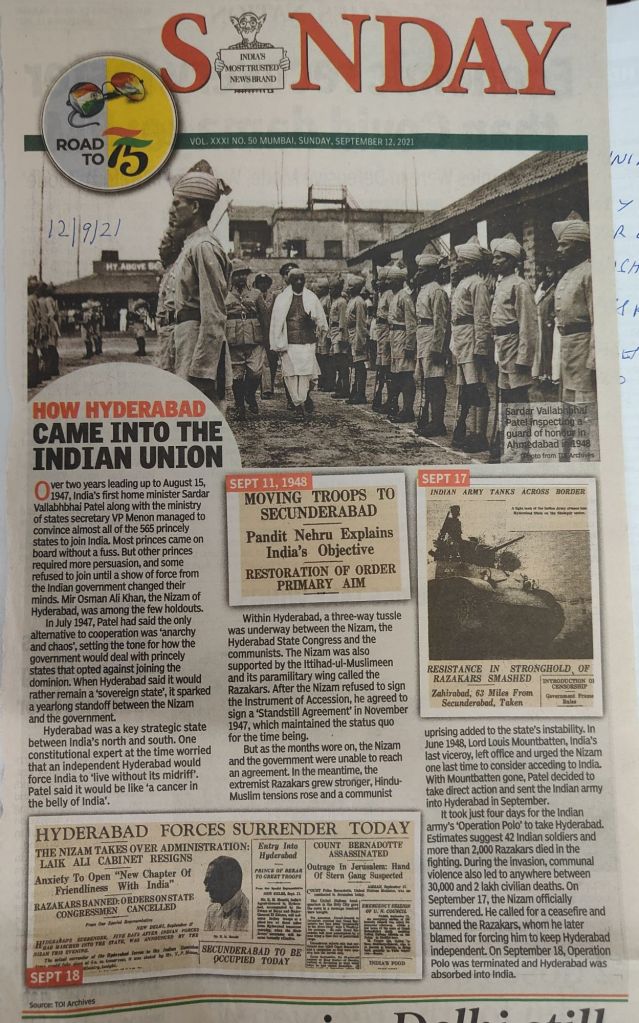
HOW HYDERABAD CAME TO THE INDIAN UNION
Copyright@shravancharitymission
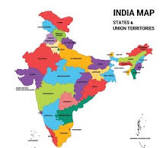
Over two years leading up to August 15, 1947, India’s first home minister, Sardar Vallabhbhai Patel, along with the Ministry of States secretary VP Menon, managed to convince almost all the 565 princely states to join India. Most princes came on board without a fuss. But other princes required more persuasion, and some refused to join until a show of force from the Indian government changed their minds. Mir Osman Ali Khan, the Nizam of Hyderabad, was among the few holdouts.
In July 1947, Patel had said the only alternative to cooperation was ‘anarchy and chaos’, setting the tone for how the government would deal with princely states that opted against joining the dominion. When Hyderabad said it would rather remain a ‘sovereign state’, it sparked a year-long standoff between the Nizam and the government.
Hyderabad was a key strategic state between India’s north and south. One constitutional expert at the time worried that an independent Hyderabad would force India to ‘live without the midriff’. Patel said it would be like ‘a cancer in the belly of India’.
Within Hyderabad, a three-way tussle was underway between the Nizam, the Hyderabad State Congress and the communists. The Nizam was also supported by the Ittihad-ul-Muslimeen and its paramilitary wing called the Razakars. After the Nizam refused to sign the instrument of Accession, he agreed to sign a ‘Standstill Agreement’ in November 1947, which maintained the status quo for the time being.
But as the months wore on, the Nizam and the government were unable to reach an agreement. In the meantime, the extremist Razakars grew stronger, Hindu-Muslim tensions rose and a communist uprising added to the state’s instability. In June 1948, Lord Louis Mountbatten, India’s last viceroy, left office and urged the Nizam one last time to consider acceding to India. With Mountbatten gone, Patel decided to take direct action and sent the Indian army into Hyderabad in September.
It took just four days for the Indian army’s ‘Operation Polo’ to take Hyderabad. Estimates suggest 42 Indian soldiers and more than 2,000 Razakars died in the fighting. During the invasion, communal violence also led to anywhere between 30,000 and 2 lakh civilian deaths. On September 17, the Nizam officially surrendered. He called for a ceasefire and banned the Razakars, whom he later blamed for forcing him to keep Hyderabad independent. On September 18, Operation Polo was terminated, and Hyderabad was absorbed into India.
MAIN POINTS
- SEPTEMBER 11, 1948,
- Moving troops to Secunderabad.
- Pandit Nehru Explains India’s Objective
- Restoration of Order: Primary Aim
- SEPTEMBER 17, 1948
- Indian Army Tanks Cross Border
- Resistance in the Stronghold of Razakars Smashed
Times of India 12.9.21
Posted by Kamlesh Tripathi
Author, Poet, & Columnist
*
https://kamleshsujata.wordpress.com
*
Like it and Share it
*
Shravan Charity Mission is an NGO that works for poor children suffering from life-threatening diseases, especially cancer. Our posts are meant for our readers, including children and adults, and have a huge variety of content. We also accept donations for our mission. Should you wish to donate to the cause of cancer? The bank details are given below:
NAME OF ACCOUNT: SHRAVAN CHARITY MISSION
Account no: 680510110004635 (BANK OF INDIA)
IFSC code: BKID0006805
***
WATCHOUT: HOW MUCH MEAT ARE YOU CONSUMING?
Copyright@shravancharitymission

MEAT FOR THOUGHT: WHY 100 BN ANIMALS DIE EVERY YEAR …. THE SCALE OF ANIMAL SLAUGHTER FOR FOOD IS UNSUSTAINABLE. MAY BE, JUST MAYBE, SCIENCE WILL FIND A WAY…..
The global demand for animal protein is growing fast. That demand has been met by a sharp increase in meat and fish production. Animal farming has grown to the point that almost a third of all land is used for raising livestock. This, in turn, has increased carbon emissions. The most jarring statistic is that to meet this demand, 900,000 cows, 1.4 million goats, 1.7 million sheep, 3.8 million pigs, 12 million ducks and 202 million chickens are slaughtered daily for human consumption, per FAO 2021 data. Add to that, fish consumed – an average of 211 million killed daily, by one estimate. Caveat: fish sticks, production and consumption are reported in tonnes, so the number of fish killed daily has various estimates. Annually, close to 100 billion farmed animals are killed worldwide for human consumption. The scale at which meat is farmed is unsustainable on several fronts, not least for the environmental impact. The numbers are an eye-opener. Over 70% of bird biomass is poultry livestock. Poultry outweighs wild birds by a factor of more than 3 to 1. It’s worse for mammals. Almost 95% of global mammal biomass, excluding humans, is livestock. Livestock outweigh wild mammals by a factor of 15 to 1. The world is getting weighed down by the need for meat. And the global population of farmed animals is not only a driver of climate change but also its victim.
PRESSURE ON LAND: About 45% of the world’s habitable land is used for agriculture. Crops are grown on just a third of this; the rest of it is mostly grazing land. Just half of the cropland is grown for crops that humans consume. The other half is used to grow crops for animal feed, biofuels, etc. In short, the majority of the world’s cropland is used to raise livestock for meat and dairy. Worse, animal feed is largely monoculture crops, which results in soil degradation.
RISK OF DISEASE: As demand increases, farms that ‘grow’ cows, chickens and pigs face their own challenges. Burgeoning populations mean animals are packed close together, often in cramped and unhygienic conditions. This is a direct risk for epidemic-level viruses to spread. The African swine fever (ASF) is estimated to have killed one in four pigs worldwide since it was first detected in 2018, and has a 100% case fatality rate. FAO’s 2023 outlook noted that the global impact of ASF resulted in a dip in demand for pork and its products, accompanied by a rise in demand for poultry.
ANTIBIOTIC RESISTANCE: There is excessive use of antibiotics in livestock farming, especially poultry. This leads to antibiotic resistance. Animals are often given antibiotics routinely to promote growth and prevent illness in their crowded conditions. Such overuse allows antibiotic-resistant bacteria to thrive and spread. These resistant bacteria pass from livestock to humans via food. This impacts how we respond to life-saving antibiotics if we fall ill.
CHAOTIC CLIMATE: Weather extremes impact all farming. But the loss to animals is not given due recognition. Freak storms, floods and forest fires burn farms, killing livestock. Heavy rains and floods in East Africa in June not only devastated cropland but also killed almost 10,000 farm animals. Floods contaminated rivers, lakes and ponds from where fish are sourced. All of this has sparked fears of a food crisis.
EMISSIONS & MORE: The cattle industry is a significant contributor to greenhouse gases (GHGs), primarily through the production of methane from livestock digestion and manure management. Cattle belch large amounts of methane, a GHG more harmful than carbon dioxide. Additionally, deforestation for grazing land, fertiliser use, and fossil fuel consumption in meat production processes all generate substantial GHG emissions. Beef typically has the largest emissions, followed by lamb, pork, chicken, then eggs and fish. About 26% of global GHG emissions are from food: grains, pulses, dairy, meat, the works. Of this, livestock and fisheries contribute almost a third. As scientists, environmentalists, governments and civil society grapple with climate change, the focus is largely on curbing plastics, focusing on energy mix, on pollutants and development models, but as the human population booms, and meat-eating spreads faster, the impact of a plate of food cannot be ignored. So, what are the solutions? For sure, not for much longer can it be business as usual on the animal farm. It is essential to use science and technology to reconstruct and upgrade how meat is sourced.
EAT LESS: Less meat is nearly always better than current options of lab-grown meat, both for the environment and health, given that today’s lab-grown meat (single-cell cultures) falls not only in the highly processed foods category but also did not quite impress consumers once the initial novelty wore off. ENGINEER THE BIOLOGY: Called “cellular agriculture”, the essence of such tissue engineering is just that – farming cells and growing meat from them. The idea behind it, under research in labs across the world, is to grow meat from cells extracted from animal organs and grown in a lab. Pioneer and proponent of cellular agriculture, bioengineer Isha Datar argues that we already consume several such cell culture products – as vitamins, flavours and enzymes. If the question on meat is how to feed more using less land, without emitting GHGs and without killing animals, science will – must – provide the answer.
(TIMES OF INDIA 20/6/24) TEXT: NANDITA SENGUPTA. SOURCES: POORE & NEMECEK (2018), HANNAH RITCHIE, MAX ROSER (OUR WORLD IN DATA), TED CLIMATE.
Posted by Kamlesh Tripathi
Author, Poet, & Columnist
*
https://kamleshsujata.wordpress.com
*
Like it and Share it
*
Shravan Charity Mission is an NGO that works for poor children suffering from life-threatening diseases, especially cancer. Our posts are meant for our readers, including children and adults, and have a huge variety of content. We also accept donations for our mission. Should you wish to donate to the cause of cancer? The bank details are given below:
NAME OF ACCOUNT: SHRAVAN CHARITY MISSION
Account no: 680510110004635 (BANK OF INDIA)
IFSC code: BKID0006805
***
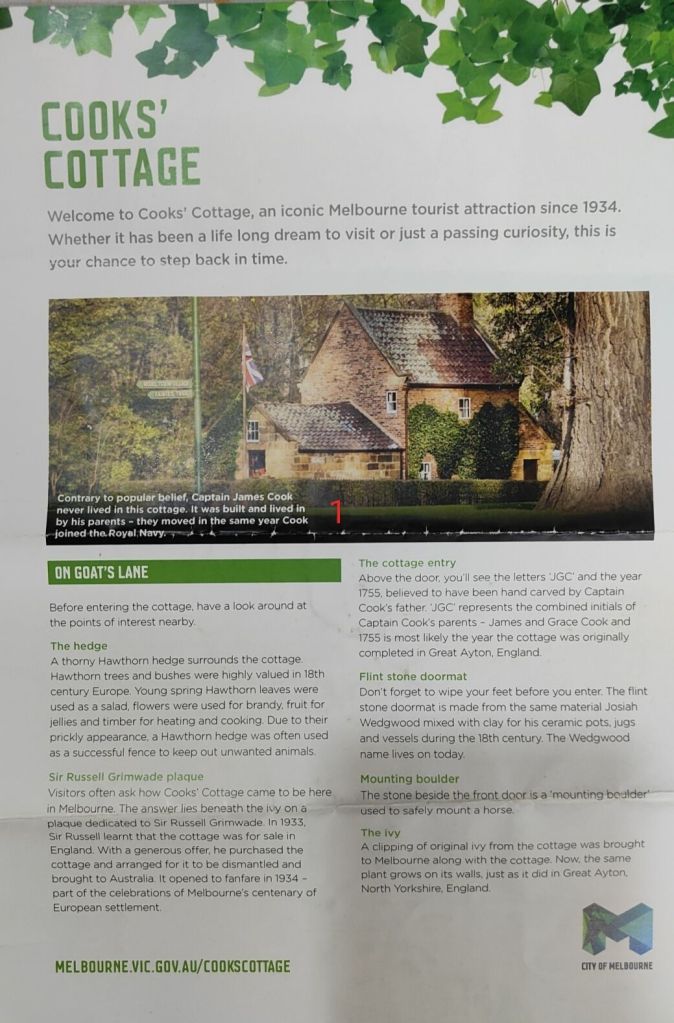
Australia… Cook’s Cottage
Copyright@shravancharitymission

The trip to Cook’s Cottage was wonderful.

Posted by Kamlesh Tripathi
Author, Poet, & Columnist
*
https://kamleshsujata.wordpress.com
*
Like it and Share it
*
Shravan Charity Mission is an NGO that works for poor children suffering from life-threatening diseases, especially cancer. Our posts are meant for our readers, including children and adults, and have a huge variety of content. We also accept donations for our mission. Should you wish to donate to the cause of cancer? The bank details are given below:
NAME OF ACCOUNT: SHRAVAN CHARITY MISSION
Account no: 680510110004635 (BANK OF INDIA)
IFSC code: BKID0006805
*
 Shravan charity mission