Category Archives: communication skills article

HIDDEN FACTS

Copyright@shravancharitymission

By Kamlesh Tripathi

hidden-facts2


HIDDEN FACTS


A survey shows around 70% of Indians are non-vegetarian these days.

*

There is a huge amount of debate about GM crops these days. It has tremendous potential to impact on yields if used with appropriate safeguards. Without GM we need another 175-222 million hectares of farmland to feed our population.

*

China on demand side, is trying to nudge its population towards a more vegetarian diet.

*

One estimate pegs the economic loss because of Bengaluru traffic congestion at Rs 3,700 crore a year; including a whopping 50 crore litres of annual fuel losses. Extrapolate these figures to Delhi, Mumbai and other Indian cities and we have a full-blown economic crisis on hand.

hidden-facts

*

Traffic jams: I can easily do 5 or more meetings in a day even if they are spread across Singapore or any European city. In Delhi or Bengaluru, I can never plan more than 2 or maximum 3.”—Rishi Seth—A PR and marketing start-up person.

*

Gadkari’s ministry measures its performance in kilometres of new roads built per year. What good are these new roads, or the existing roads for that matter, when they are rank incapable of moving people and goods quickly—Rishi Seth, PR and marketing startup professional.

*

India has the worst record of road accident deaths in the world; every four minutes a person dies on our roads.

*

India is held at ranson by some of the most corrupt and incompetent civic bodies.

*

WHO’s report on Road Safety 2015 gave India a rating of 3 or 4 out of 10 for enforcement of laws on speed limits, drunk driving or wearing helmets on two wheelers.

*

Tata sons is into over 100 lines of business.

*
hiddenfacts1

In 2016 air passengers in India grew by an impressive 23.17%

*

Nearly 4% of New Zealand’s population is of Indian origin and Hindi is the third most widely spoken language in Auckland.

*

India is New Zealand’s largest source of skilled migrants and 29,000 Indian students are currently enrolled at our academic institutions making them the 2nd largest overseas student population studying in New Zealand.

*

India’s GDP is valued today at $2 trillion. Amitabh Kant, chief executive of Niti Aayog says if all goes well it could touch $10 trillion by 2032. A shorter term assessment would have it reaching $ 5 trillion in the next decade, by 2025-26

*

India is now the fastest growing major aviation market—the number of air passengers has been growing more than 20% year-on-year. In the past 12 months, more than 9 crore passengers flew and another 5 crores  or so flew internationally. In the next few years India will become the 3rd largest aviation market in the world after the US and China.

*****


COMMUNICATION SKILLS AT WORKPLACE

Copyright@shravancharitymission

c2c1c3

Just think of the modes in which our distant forebears communicated long ago- the evolution of the written word, speech, smoke signals, semaphores and the Morse code-one can go on and on. Here, of course, we need to concern ourselves with communication skills and time management in work place and home in the present times. Popular work culture does not perceive separate rules for men and women. We are all global managers in the local set up. Consider home, for a moment, as an extension of work place, particularly in the context of Indian women. While life at home may be laid back, care free, but is not without responsibility. And there the difference ends. The modern employee needs oral, written and technological skills to excel. Even the most naïve housewife is expected to operate the washing machine, handle the microwave oven, run the mixie, to draw money from an ATM and even to drive a car- that is if she wants to contribute meaningfully to the chores of routine but modern domestic life.

Nearly all work involves interaction and communication with others. Clear and effective communication between individuals, between teams and among departments is a vital part of any successful organization. Without effective communication in work place, business results and team relationships suffer. Poor performers continue to perform poorly and productivity drops. Good people are overburdened with more responsibility. In our personal lives we blame each other for lack of communication and agree to live in companionable silence.

We can see that employees still need written communication skills. Yet interpersonal oral communication skills are the ones most prized by employers in the new informal workplace atmosphere. At home the oral word has to be more precise as well as concise to avoid attrition. The ability to follow oral instructions is an important parameter in the overall persona of an employee, especially for front office employees. Considering the important nature of this faculty even CBSE has incorporated it in the form of ‘Listening & Writing skills, in their curricula. Employees who work with the public or closely with teams need skills in empathy and feedback techniques, especially in fields such as customer service, medical, and legal. Critical thinking and the ability to function as part of a problem-solving group are also skills that employers look for. Today’s worker must remain cool under pressure, adaptable to new technology and to a fast pace.

With benefit of hindsight I’ve shortlisted a few points which may be of some help to you while interacting with people.

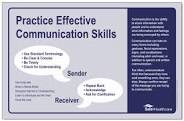
  1. Clarity: Ensure the information you need to convey is, firstly, intelligible to you. Communicate it clearly and directly. Use language that is specific and unambiguous. Check that the receiver understands the message as you intended. Avoid acronyms lest they be confused.
  2. Be attentive Without becoming an active listener means you cannot make a conscious effort to truly hear what the other person is saying—don’t interrupt or respond until the other person has quite finished. It should come as no surprise that the best communicators are also the best listeners.
  3. Deportment: this means using the other person’s name, looking them in the eye, and nodding to aid in demonstrating you understand what they are saying. If you are communicating in writing, reread before sending your message to ensure that it could not be misinterpreted or taken as disrespectful.
  4. Message & Medium. Some of us are better communicating in writing and some are better at speaking. Consider the preference of your receiver.
  5. Who is the end-user : you may have to style your communication with your boss, co-worker, customer or supplier, differently.
  6. Mode: More and more of our workplace communication is done via email, voice mail and text messaging. There are advantages and disadvantages to each of these, depending on the message and the audience. Texting can be especially effective when a quick question or answer is required without further explanation or repeated follow up, e.g., “What time is the school council meeting.”

The important thing is to stay focused on behavior or performance and not character. You are not a judge of character. Avoid being biased or opinionated. When you are on the receiving end, avoid getting triggered by difficult messages. Keep in mind the bigger picture and the long term implications.

Don’t be yourself all the time. Be someone a little nicer and never confuse motion with action. After all, “ a man diligent at his work shall stand before kings”

A.K.Tripathi

Anubhab Apartments                                                                       26/03/2015