Copyright@shravancharitymission
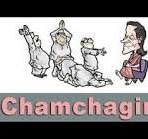
In India, some things need no translation. Chamchagiri or sycophancy is one of them. Even the “Queen’s English” crowd knows what it means. Nothing meaty lands on your plate without practising this mother of all arts. Chanakya in Arthashastra advises kings how to handle courtiers and spies — and implicitly recognises the “art” of flattery in royal courts. Samuel Johnson in the Rambler magazine wrote scathingly about sycophants. Once a secret ritual whispered in corridors, it is now prime-time entertainment, performed daily in the hallways of power, on TV debates, in offices, and even at kitty parties. As Shakespeare warned in King Lear: “That way madness lies,” but here, madness is a career ladder.
We spend our youth mugging up equations and case laws to become engineers, doctors, lawyers, bureaucrats, chartered accountants, you name it. But for this art? No IIT, no IIM, no UPSC. Entry is free, the returns are tax-free, and the syllabus is refreshingly short. Yet, it remains the single most powerful skill for climbing ladders without moving a muscle. As Hamlet said, “Though this be madness, yet there is method in’t.”
It’s a two-way affair. If you’re a VIP, you must have chamchas around you. No entourage, no aura. Without chamchas, your VIP status is like a king without a crown or a biryani without the meat. Conversely, to survive and “grow” in this competitive jungle, you need to do chamchagiri. It’s like a booster rocket that propels you ahead while others sweat on the launch pad. Noted author Ramachandra Guha has written a book titled “Á Short History of Congress Chamchagiri.”
Make no mistake … Chamchagiri didn’t start with TV anchors or corporate off-sites. It’s been around since the first darbar had its first court jester. Kings, queens, emperors, colonial sahibs—everybody had their own chamcha squad. In earlier times, it was treated like begging with better clothes. Today, it’s been upgraded to an art installation that pays handsome lifetime dividends, provided you know how to mix flattery with timing. “The better part of valour is discretion” says Shakespeare in Henry IV, and discretion is precisely what separates the amateur flatterer from the professional chamcha.
The masters of this craft are everywhere. Buzzing in bureaucratic circles, swarming corporate corridors, hovering in political arenas, occasionally even tiptoeing into the judiciary. Some take it to operatic heights. Remember Dev Kant Barua’s immortal “Indira is India and India is Indira”? That was a standing ovation moment in the Chamchagiri Oscars. Others prefer silent gestures: a Chief Minister bending down to slip chappals back on the Prime Minister’s son in a muddy field; a police officer touching a senior neta’s feet in full uniform; security staff polishing the sandal of a lady Chief Minister; or the advanced-level prostrations before Tamil Nadu’s “Amma.” Truly, “all the world’s a stage” (Bard’s … As You Like It), and these are its players.
And the recent “Vidhayak ka Pratinidhi” number plate? That was pure performance art: “If I can’t be an MLA, let me at least be his shadow.” Some learn this telling art just to earn a living, not to catapult their careers, which is still a humble, almost a mild form of chamchagiri.
I’ve often wondered about the origins of this delightful disease. To me, it feels like a colonial-feudal survival tactic that, instead of fading, has aged like fine wine. In an ideal world, the HRD Ministry should at least launch a “Certificate Course in Chamchagiri” to reduce unemployment. Imagine the convocation, mortarboard on your head, silver spoon in your hand, and a degree that reads “Master of Arts (Flattery).” Two square meals guaranteed, three if you prostrate with conviction. Or as the Bard wrote in Hamlet, “Give me that man that is not passion’s slave and I will wear him in my heart’s core.” Chamchagiri bhi ek kala hai, fark bas itna hai ki isme rang nahi chaploosi chadti hai.
Written and posted by Kamlesh Tripathi
Author, Poet, & Columnist
*
https://kamleshsujata.wordpress.com
*
Like it and Share it
*
Shravan Charity Mission is an NGO that works for poor children suffering from life-threatening diseases, especially cancer. Our posts are meant for our readers, including children and adults, and have a huge variety of content. We also accept donations for our mission. Should you wish to donate to the cause of cancer? The bank details are given below:
NAME OF ACCOUNT: SHRAVAN CHARITY MISSION
Account no: 680510110004635 (BANK OF INDIA)
IFSC code: BKID0006805
***
 Shravan charity mission