What is the right age to achieve something in life? Is 40 years, too little time, or adequate time to achieve something in life? Let us consider the lives of five luminaries of the 19th century who were more or less contemporaries and who became world-renowned figures in their short lifespans. Let’s start with Swami Vivekananda, an Indian Hindu monk, a spiritual guru and a literary luminary, lifespan 12 January 1863- 4 July 1902, a total of 39 years. Then you have the American writer Edgar Allan Poe, who was born on 19 January 1809 and died on 7 October 1849, a life span of 40 years, followed by the French writer Guy De Maupassant, born on 5 August 1850 and passed away on 6 July 1893, a life span of 42 years. On the rostrum, there is also Nikolai Gogol, a Russian writer of Ukrainian origin. He was born on 20 March 1809 and he died on 21 February 1852, a life span of 42 years. And last but not least, we have Anton Pavlovich Chekhov, a Russian playwright and short-story writer born on 29 January 1860, and he died on 15 July 1904, at the age of 44. They all left behind a phenomenal legacy of success and heaps of lessons for future generations within the ebbs and flows of their limited lifespan.
The mean life expectancy in the 19th century was 40-45 years. Global life expectancy today is around 72 years. There are two offshoots to this. One, the subject authors lived for around ninety to a hundred per cent of the average life expectancy of those times. Two, they only lived for a minus-plus of some forty years – a period, perhaps, too short for any milestone achievement, barring sports and maybe some other careers. When we compare 40 years with today’s life expectancy, it is only 55%. So then, does life expectancy have anything to do with your major achievements? The case study of the quintet doesn’t say so. There are authors, poets, and literary figures from other countries too, who gained fame but died very young, prominent among them is John Keats, to cite an example, who died at the age of 25. So, isn’t it ironic that some in a short lifespan of 25-40 years made gigantic strides, while others couldn’t manage to do that even in a century?
In the 19th century, when these five were alive, they witnessed watershed changes in their countries. Some major events were as follows: India had the First War of Independence in 1857. The British East India Company was replaced by the British Crown in 1858. Russia had the Crimean War between 1853 and 1856; the Caucasian War, between 1817 and 1864; and the capture of Tashkent by the Russian Army in 1865. In addition, Alaska was sold to the US in 1867; the Russian-Turkish War happened in 1877, and the Russian famine in 1891. Alexander III, the emperor of Russia, passed away in 1894, and the first congress of the Russian Social Democratic Labour Party (RSDLP) was held in 1898 in Minsk, now in Belarus. In America and Europe, slavery was abolished through an act; the First and Second Industrial Revolutions, which overlapped with the 18th and 20th centuries, respectively, led to massive urbanisation. Construction of the Suez Canal commenced in 1859, linking the Mediterranean Sea with the Indian Ocean through the Red Sea, providing a more direct shipping route between Europe and Asia. The Islamic gunpowder empires (Ottoman Empire, Safavid and the Mughal) were formerly dissolved, and European imperialism brought much of South Asia, Southeast Asia and almost all of Africa under colonial rule. It was also marked by the collapse of the Spanish, Zulu Kingdom, First French Empire, Holy Roman and the Mughal Empire.
Even with all the hullabaloo in their country and continent, there was calm and composure in these five lit luminaries. They had a single focus, just like Arjuna’s concentration – the eye of the fish, and that was to keep writing till their last breath. Though born in a Bengali Kayastha family in Calcutta, Swami Vivekananda was inclined towards spirituality. He was influenced by his guru, Ramakrishna, from whom he learnt that all living beings were an embodiment of the divine self. Therefore, service to God could only be rendered by service to mankind. Anton Chekhov, even when he fell sick in 1885, kept writing till he died of tuberculosis in 1904. Some of them even had financial problems, leading to trying times to obtain education, and some even had to support their education by writing scripts for magazines and even by selling fish. Edgar Allan Poe was born in Boston, the second child of actors David and Elizabeth Poe. His father abandoned the family in 1810, and his mother died the following year. He became an orphan, yet he fought back to become one of the most formidable writers of short stories. When Maupassant was 11, his mother, an independent-minded woman, divorced her husband. Afterwards, Maupassant lived with his mother, who was the single biggest influence on him, but that entailed hardships. Gogol lost his father at the age of fifteen, yet he aspired to become a writer.
The short lifespan of these great writers only teaches us that achievements are not a function of your age.
Shravan Charity Mission is an NGO that works for poor children suffering from life-threatening diseases, especially cancer. Our posts are meant for our readers, including children and adults, and have a huge variety of content. We also accept donations for our mission. Should you wish to donate to the cause of cancer? The bank details are given below:
What is the right age to achieve something in life? Is 40 years, too little time, or adequate time to achieve something in life? Let us consider the lives of five lit luminaries of the 19th century who were more or less contemporaries and who became world-renowned figures in their short lifespans. Let’s start with Swami Vivekananda a Hindu monk, a spiritual guru and a literary-luminary, lifespan 12 January 1863- 4 July 1902, a total of 39 years. Then you have the American writer Edgar Allan Poe, who was born on 19 January 1809 and died on 7 October 1849, a life span of 40 years, followed by the French writer Guy De Maupassant, born on 5 August 1850 and passed away on 6 July 1893 a life span of 42 years. On the rostrum, there is also Nikolai Gogol, a Russian writer of Ukrainian origin, who was born on 20 March 1809 and died on 21 February 1852, a life span of 42 years. And last but not least we have Anton Pavlovich Chekhov, a Russian playwright and short-story writer born on 29 January 1860, and died on 15 July 1904, at the age of 44. They all left behind a phenomenal legacy of success and heaps of lessons for future generations within the ebbs and flows of their limited lifespan.
The mean life expectancy in the 19th century was 40-45 years. Global life expectancy today is around 72 years. There are two off-shoots to this. One, the subject authors lived for around ninety to hundred per cent of the average life expectancy of those times. Two, they only lived for around forty years – a period, perhaps, too less for any milestone achievement, barring sports and maybe some other careers. When we compare 40 years with today’s life expectancy, it is only 55% in terms of years. The point then is: Does life expectancy have anything to do with your major achievements in life? The case study of the quintet doesn’t say so. There are authors, poets, and literary figures from other countries too, who gained fame but died very young, prominent among them is John Keats to cite an example who died at the age of 25. So, isn’t it ironic that some in a short lifespan of 25 to 40 years made gigantic strides, while others couldn’t manage to do that even in a century?
In the 19th century, these five authors witnessed watershed changes in their countries. Some major events were as follows: India had the First War of Independence in 1857. British East India Company was replaced by the British Crown in 1858. Russia had the Crimean War between 1853 and 1856; the Caucasian War, between 1817 and 1864; and the capture of Tashkent by the Russian Army in 1865. In addition, Alaska was sold in a sale in 1867; the Russian-Turkish War happened in 1877, and the Russian famine in 1891. Alexander III the emperor of Russia passed away in 1894, and the first congress of the Russian Social Democratic Labour Party (RSDLP) was held in 1898 in Minsk now in Belarus. In America and Europe, slavery was abolished through an act; the First and Second Industrial Revolutions which overlapped with the 18th and 20th centuries respectively led to massive urbanization. Construction of the Suez Canal commenced in 1859, linking the Mediterranean Sea with the Indian Ocean through the Red Sea, providing a more direct shipping route between Europe and Asia. The Islamic gunpowder empires (Ottoman Empire, Safavid and the Mughal) were formerly dissolved and the European imperialism, brought much of South Asia, Southeast Asia and almost all of Africa under colonial rule. It was also marked by the collapse of the Spanish, Zulu Kingdom, First French Empire, Holy Roman and the Mughal Empire.
Even with all the hullabaloo in their country and continent, there was calm and composure in these five lit luminaries. They had a single focus, just like the Arjuna’s concentration – the eye of the fish and that was – to keep writing till their last breath. Though born in a Bengali Kayastha family in Calcutta, Swami Vivekananda was inclined towards spirituality. He was influenced by his guru, Ramakrishna, from whom he learnt that all living beings, were an embodiment of the divine self. Therefore, service to God could only be rendered by service to mankind. Anton Chekhov even when he fell sick in 1885, kept writing till he died of tuberculosis in 1904. Edgar Allan Poe was born in Boston, the second child of actors David and Elizabeth Poe. His father abandoned the family in 1810, and his mother died the following year. He became an orphan yet he fought back to become one of the most formidable writers of short stories. When Maupassant was 11, his mother, an independent-minded woman, divorced her husband. Afterwards, Maupassant lived with his mother, who was the single biggest influence on him, but that entailed hardships. Gogol lost his father at the age of fifteen, yet he aspired to become a writer.
The short lifespan of these great writers only teaches us that achievements are not a function of a long lifespan.
Shravan Charity Mission is an NGO that works for poor children suffering from life-threatening diseases, especially cancer. Our posts are meant for our readers, including children and adults, and have a huge variety in content. We also accept donations for our mission. Should you wish to donate to the cause? The bank details are given below:
NAME OF ACCOUNT: SHRAVAN CHARITY MISSION
Account no: 680510110004635 (BANK OF INDIA)
IFSC code: BKID0006805
*
Kamlesh Tripathi’s Publications
GLOOM BEHIND THE SMILE
(The book is about a young cancer patient. Now archived in 8 prestigious libraries of the US which include Harvard College Library; Harvard University Library; Library of Congress; University of Washington, Seattle; University of Minnesota, Minneapolis; Yale University, New Haven; University of Chicago; University of North Carolina, at Chapel Hill University Libraries. It can also be accessed at MIT through Worldcat.org. Besides, it is also available for reading in libraries and archives of Canada; Cancer Aid and Research Foundation Mumbai; Jaipuria Institute of Management, Noida, India; Shoolini University, Yogananda Knowledge Center, Himachal Pradesh and Azim Premzi University, Bangalore).
ONE TO TANGO … RIA’S ODYSSEY
(Is a book on ‘singlehood’ about a Delhi girl now archived in Connemara Library, Chennai and Delhi Public Library, GOI, Ministry of Culture, Delhi; It is also available for reading in the Indian National Bibliography, March 2016, in the literature section, in Central Reference Library, Ministry of Culture, India, Belvedere, Kolkata-700022)
AADAB LUCKNOW … FOND MEMORIES
(Is a fiction written around the great city of Nawabs—Lucknow. It describes Lucknow in great detail and also talks about its Hindu-Muslim amity, which is the undying characteristic of Lucknow. The book was launched at the Lucknow International Literary Festival in 2014. It is included for reading in Askews and Holts Library Services, Lancashire, U.K; Herrick District Library, Holland and Charlotte-Mecklenburg Library, Mecklenburg County in North Carolina, USA; Black Gold Cooperative Library Administration, Arroyo Grande, California; Berkeley Library, University of California).
REFRACTIONS … FROM THE PRISM OF GOD
(Co-published by Cankids–Kidscan, a pan India NGO and Shravan Charity Mission, that works for child cancer in India. The book is endorsed by Ms Preetha Reddy, MD Apollo Hospitals Group. It was launched at the Lucknow International Literary Festival in 2016).
TYPICAL TALE OF AN INDIAN SALESMAN
(Is a story of an Indian salesman who is, humbly qualified. Yet he fights his way through unceasing uncertainties to reach the top. A good read not only for salesmen. The book was launched on 10th February 2018 at Gorakhpur Lit-Fest. Now available on Amazon, Flipkart and Onlinegatha)
RHYTHM … in poems
(Published in January 2019. The book contains 50 poems. The poems describe our day-to-day life. A few poems from the book have been published in Shillong Times, Bandra Times and Bhavan’s Journal. The book is available on Amazon, Flipkart and Onlinegatha)
MIRAGE
(Published in February 2020. The book is a collection of eight short stories available on Amazon, Flipkart and Notion Press)
AWADH ASSAM AND DALAI LAMA … The Kalachakra
(The story of the man who received His Holiness The Dalai Lama and his retinue in 1959 as a GOI representative when he fled Tibet in 1959. The book was launched on 21st November 2022 by His Holiness The Dalai Lama at Dharmshala. The title is archived in the library of the Department of Information and International Relations (DIIR) Government of Tibet, Tibet Policy Institute (TPI) and the personal library of His Holiness The Dalai Lama. The title is also archived in The Ohio Digital Library, USA. It was recently included in the digital library of the world-renowned company APPLE).
BHAVANS JOURNAL
Short stories, Book reviews and Articles published in Bhavan’s Journal: 1. Reality and Perception, 15.10.19; 2. Sending the Wrong Message, 31.5.20; 3. Eagle versus Scholars June, 15 & 20, 2020; 4. Indica, 15.8.20; 5. The Story of King Chitraketu, August 31 2020; 6. Breaking Through the Chakravyuh, September 30 2020. 7. The Questioning Spouse, October 31, 2020; 8. Happy Days, November 15, 2020; 9. The Karma Cycle of Paddy and Wheat, December 15, 2020; 10. Power Vs Influence, January 31, 2021; 11. Three Refugees, March 15, 2021; 12. Rise and Fall of Ajatashatru, March 31, 2021; 13. Reformed Ruler, May 15, 2021; 14. A Lasting Name, May 31, 2021; 15. Are Animals Better Teachers? June 16, 2021; 16. Book Review: The Gram Swaraj, 1.7.21; 17. Right Age for Achievements, 15.7.21; 18. Big Things Have Small Beginnings, 15.8.21; 19. Where is Gangaridai?, 15.9.21; 20. Confront the Donkey Within You 30.9.21; 21. Know Your Strengths 15.10.21; 22. Poverty 15.11.21; 23. Top View 30.11.21; 24. The Bansuriwala 15.1.22; 25. Sale of Alaska 15.2.22; 26. The Dimasa Kingdom 28.2.22;27. Buried Treasure 15.4.22; 28. The Kingdom of Pragjyotisha 30.4.22; 29. Who is more useful? 15.5.22; 30. The White Swan from Lake Mansarovar 30.6.22; 31. Bhool Bhulayya 15.9.22; 32. Good Karma 30.9.22; 33. Good Name vs Bad Name 15.10.22; 34. Uttarapath—The Grand Trunk Road 1.12.22; 35. When Gods Get Angry 1.1.23; 36. Holinshed’s Chronicles 15.1.23; 37. Theogony 15.2.23; 38. Poem: Mother 14.5.23; 39. THE NAG MANDIR 30.6.23; 40. The Story of Garuda 30.7.23; 41. Janmabhoomi vs Karmabhoomi 31.8.23; 42. The Ghost Town of Kuldhara 15.9.23; 43. The Tale of Genji 15.10.23; 44. The Soul Connection 1.12.23; 45.Book review: Jungle Nama … a story of the Sundarban 16.3.24; 46. Book review: A Forgotten Chapter 16.5.24;
THE SHILLONG TIMES
ARTICLES & POEMS: 1. POEM: HAPPY NEW YEAR 8.1.23; 2. POEM: SPRING 12.3.23; 3. POEM: RIGHT AND WRONG 20.3.23; 4.THE GUSH OF EMOTION—WRITING, 26.3.23; 5. THE NAG MANDIR, 7.5.23; 6. POEM:MOTHER 7.5.23; 7. POEM: RAIN RAIN 9.7.23; 8. POEM:YOU COME ALONE YOUGO ALONE 6.8.23; 9. RAIN RAIN (SECOND TIME) 10.8.23; 10. POEM: GURU TEACHER 10.8.23; 11. POEM: AUTUMN … THE INTERIM HEAVEN 15.10.23; 12. POEM: HAPPY DIWALI 12.11.23; 13. OVERCOMING BLINDNESS: LEARN IT THE JOHN MILTON WAY 10.12.23; 14. THE HAPPY PRINCE AND THE HAPPY MAN’S SHIRT 31.12.23; 15. ANNUS MIRABILIS 2024 7.1.24; 16. GANDHI TO MAHATMA GANDHI- Incidents that Shaped Gandhi in South Africa 28.1.24; 17. POEM: TOGETHER BUT NOT MADE FOR EACH OTHER, 11.2.24; 18. THE BIRDS BEES AND THE SPIDERS OF NICHOLAS GUILDFORD AND JONATHAN SWIFT 25.2.24; 19. THE OVERCOATS OF NIKOLAI GOGOL AND RUSKIN BOND 10.3.24; 20. THE ETHNIC COLOURS OF HOLI 24.3.24; 21. A LESSON FROM DALAI LAMA, 21.4.24; 22. POEM: MORNING WALK 28.4.24; 23. TRIP TO RHINE FALLS, SWITZERLAND, 19.5.24;
THE ASSAM TRIBUNE
ARTICLE: 1. THE MAGIC OF READING 11.12.23; 2. GANDHI TO MAHATMA 29.1.24; 3. GEOGRAPHY OF SOLITUDE 8.4.24; 4. A LESSON FROM DALAI LAMA, 22.4.24; 5. A SOURCE OF INSPIRATION, 29.4.24; 6. THE FOUR-LEGGED LIBRARY, 12.5.24;
29.12.2020: INDICA BY MEGASTHENES; 14.3.22: ABOUT THE DIMASA KINGDOM ASSAM; 10.12.22: GRAND TRUNK ROAD-UTTARAPATH; 5.10.23: THE GHOST TOWN OF KULDHARA NEAR JAISALMER;
(ALL THE ABOVE BOOK TITLES ARE AVAILABLE FOR SALE ON AMAZON, FLIPKART AND OTHER ONLINE STORES OR YOU COULD EVEN WRITE TO US FOR A COPY)
Go back and pick your beads. You may have left so many behind. Rewind your life. See who all inspired you, and who was your ultimate Saranga in life. Saranga, the beautiful Bollywood treasure of 1961, that still grips you, through that romantic number … ‘Saranga teri yaad mein, naine hue bechain.’ Replay all those achievements of your life in your mind. Think of the debacles that you may have overcome with the aid of those faces that may have now changed, for they don’t wish to be the ‘Dorian Gray’ of Oscar Wild. Or be happy, that you are not Guy-De-Maupassant’s ‘Mother and Son’ combination. Nor are you so unfortunate to earn the ‘Overcoat’ of Nikolai Gogol in the cold winters of Ukraine because of which he lost his life. Yeh raat bhegee-bhegee, yeh mast fizayan, will they ever return post Covid. Yes they would.
Be happy that you’ve crossed the initial tornado of Covid. Try and achieve as much as you can, just as Swami Vivekanand, Guy-De-Maupassant, Edgar Allan Poe, Nikolai Vasilie Gogol and Anton Pavlovich Chekov a deadly cocktail of geniuses who wrote and wrote but died early. But did the Russians die of cold—was cold a virus then. Edgar Allan Poe, certainly didn’t die of his own ‘Black-Cat.’ I remembered the lightning legs of Diego Maradona with which he entertained the world, and the Yankee shrill of Michael Jackson and the band of Beatles that serenaded for decades.
Life looks so elementary in the eyes of Sherlock Holmes when he says ‘elementary my dear Watson’ but that elementary sounds so complicated to Dr Watson. Let’s cut the cackle and come to the horses, lets come to Agatha Christie—The Mouse Trap is forever. And I still dread the dark room, having read Bram Stokers—Dracula. The motorcycle in me is still alive, as it is alive, in the duo of Amitabh and Dharmendra in Sholay. And for the humourist there is still the lord and master of comedy, PG Wodehouse and his golfing links. And if time came upon you heavily, as heavily as a parachute remember its creator, Frenchman Andre-Jacques Garnerin. Let me end by remembering, ‘Gungadin’ out of Rudyad’s chart. The selfless Gungadin. God is kind and the world is no Tantulus. So God will soon lift Covid. The vaccine has arrived. In the days of pandemic I thought so much.
Shravan Charity Mission is an NGO that works for poor children suffering from life threatening diseases especially cancer. Our posts are meant for our readers that includes both children and adults and it has a huge variety in terms of content. We also accept donations for our mission. Should you wish to donate for the cause. The bank details are given below:
NAME OF ACCOUNT: SHRAVAN CHARITY MISSION
Account no: 680510110004635 (BANK OF INDIA)
IFSC code: BKID0006805
*
Our publications
GLOOM BEHIND THE SMILE
(The book is about a young cancer patient. Now archived in 8 prestigious libraries of the US that includes Harvard College Library; Harvard University Library; Library of Congress; University of Washington, Seattle; University of Minnesota, Minneapolis; Yale University, New Haven; University of Chicago; University of North Carolina, at Chapel Hill University Libraries. It can also be accessed in MIT through Worldcat.org. Besides, it is also available for reading in libraries and archives of Canada, Cancer Aid and Research Foundation Mumbai and Jaipuria Institute of Management, Noida, India)
ONE TO TANGO … RIA’S ODYSSEY
(Is a book on ‘singlehood’ about a Delhi girl now archived in Connemara Library, Chennai and Delhi Public Library, GOI, Ministry of Culture, Delhi; Available for reading in Indian National Bibliography, March 2016, in the literature section, in Central Reference Library, Ministry of Culture, India, Belvedere, Kolkata-700022)
AADAB LUCKNOW … FOND MEMORIES
(Is a fiction written around the great city of Nawabs—Lucknow. It describes Lucknow in great detail and also talks about its Hindu-Muslim amity. That happens to be the undying characteristics of Lucknow. The book was launched in Lucknow International Literary Festival of 2014. It is included for reading in Askews and Holts Library Services, Lancashire, U.K.)
REFRACTIONS … FROM THE PRISM OF GOD
(Co-published by Cankids–Kidscan, a pan India NGO and Shravan Charity Mission, that works for Child cancer in India. The book is endorsed by Ms Preetha Reddy, MD Apollo Hospitals Group. It was launched in Lucknow International Literary Festival 2016)
TYPICAL TALE OF AN INDIAN SALESMAN
(Is a story of an Indian salesman who is, humbly qualified. Yet he fights his ways through unceasing uncertainties to reach the top. A good read not only for salesmen. The book was launched on 10th February, 2018 in Gorakhpur Lit-Fest. Now available in Amazon, Flipkart and Onlinegatha)
RHYTHM … in poems
(Published in January 2019. The book contains 50 poems. The poems describe our day to day life. The book is available in Amazon, Flipkart and Onlinegatha)
MIRAGE
(Published in February 2020. The book is a collection of eight short stories available in Amazon, Flipkart and Notion Press)
Short stories and Articles published in Bhavan’s Journal: Reality and Perception, 15.10.19; Sending the Wrong Message, 31.5.20; Eagle versus Scholars June, 15 & 20 2020; Indica, 15.8.20; The Story of King Chitraketu, August 31 2020; Breaking Through the Chakravyuh, September 30 2020. The Questioning Spouse, October 31, 2020; Happy Days, November 15, 2020; The Karma Cycle of Paddy and Wheat, December 15,2020;
(ALL THE ABOVE TITLES ARE AVAILABLE FOR SALE IN AMAZON, FLIPKART AND OTHER ONLINE STORES OR YOU COULD EVEN WRITE TO US FOR A COPY)
This is only an attempt to create interest in reading. We may not get the time to read all the books in our lifetime. But such reviews, talk and synopsis will at least convey what the book is all about.
“The Overcoat” sometimes also translated as ‘The Cloak’ was written by Ukrainian-born Russian author Nikolai Gogol. It is a short story that was published in the year 1842. Both the story and the author have had a great influence on Russian literature, as expressed in a quote about Russian realist writers, by French lit-critic Eugene-Melchoir de Vogue, often misattributed to Russian Novelist Fyodor Dostoyevsky that says, “We all come out from Gogol’s ‘Overcoat’.” While writing in 1941, American-Russian novelist Vladmir Nabakov called it ‘The greatest Russian short story ever written.’ The story has been adapted into a variety of stage and film interpretations.
The story narrates very sharply the life and death of a titular councillor Akaky Akakievich Bashmachkin, an impoverished government clerk and copyist in the Russian capital of St. Petersburg. Although Akaky is dedicated to his job, he is faintly recognized in his department for his hard work. Instead, the younger clerks tease him and attempt to distract him whenever they can. His threadbare overcoat is often the centre of their jokes. One day Akaky decides it is now necessary to have the coat repaired. He takes it to his tailor Petrovich, who declares, the coat is now irreparable, and tells him that he must now buy a new overcoat.
The cost of a new overcoat is beyond Akaky’s meager salary, so he forces himself to live within a strict budget to save sufficient money to buy the new overcoat. Meanwhile, he and Petrovich frequently meet to discuss the style of the new coat. During that time, Akaky’s zeal for his work of copying is replaced with excitement about his new overcoat, to the point that he stops thinking about anything else. Finally, with the addition of an unexpected large holiday salary bonus, Akaky has saved enough money to buy a new overcoat.
Akaky and Petrovich go to various shops in St. Petersburg and pick the finest materials that they can afford. Marten fur is too expensive, so they use cat fur for the collar. The new coat finally emerges impressive and of good quality and appearance and becomes the talk of Akaky’s office on the day he arrives wearing it. His superior decides to host a party in the honour of the new overcoat, but Akaky who is habitually solitary feels out of place. After the party, Akaky goes home, far later than he normally would. But en route home, two ruffians short shrift him, take his coat, kick him down badly, and leave him in the snow to die.
Akaky gets no help from the authorities in recovering his lost overcoat. Finally, on the advice of another clerk in his department, he asks for help from an important person, a Russian general recently promoted to his position who belittles and shouts at his subordinates to solidify his self-importance. After keeping Akaky waiting, the general demands of him exactly why he has brought such a trivial matter to him, personally, and not presented it to his secretary. Socially inept, Akaky makes an unflattering remark about departmental secretaries, provoking, so powerful a scolding from the general that he nearly faints and has to be led away from the general’s office. Soon thereafter, Akaky falls seriously ill with fever. In his last hours, he is delirious, imagining himself again sitting before the general. At first, Akaky pleads forgiveness, but as his death nears, he curses the general.
Soon, a corpse, identified as Akaky’s ghost, haunts areas of St. Petersburg, taking overcoats from people. The police find it difficult to capture him. Finally, Akaky’s ghost catches up with the general—who, since Akaky’s death, had begun to feel guilty over having mistreated him—and takes his overcoat by frightening him intensely. Satisfied, Akaky is not seen again. The narrator ends his narration with the account of another ghost seen in another part of the city.
Apparently it is a simple story of a common man and his tribulations, and the final denouement. But when you dig in deeper, you see the condition of Russia in the early 1800s, and a parable of the yoke of feudalism and how it crushes individuality. Akaky-Bashmachkin is the representation of the common man that is victimized under the feudal regime and its social and economic structure. He is a man who has no grasp at all of the true meaning of freedom. Gogol expresses it very well through the fabric of a simple, everyday story of that subaltern copying clerk.
Gogol is considered the father of realism in Russian literature, and he, along with Pushkin brought about the emergence of Russian literature as we know it. He wrote about people on the ground and his protagonists and their troubles are troubles of your and mines. The Overcoat is a good read.
Shravan Charity Mission is an NGO that works for poor children suffering from life threatening diseases especially cancer. Our posts are meant for our readers that includes both children and adults and it has a huge variety in terms of content. We also accept donations for our mission. Should you wish to donate for the cause. The bank details are given below:
NAME OF ACCOUNT: SHRAVAN CHARITY MISSION
Account no: 680510110004635 (BANK OF INDIA)
IFSC code: BKID0006805
*
Our publications
GLOOM BEHIND THE SMILE
(The book is about a young cancer patient. Now archived in 8 prestigious libraries of the US that includes Harvard College Library; Harvard University Library; Library of Congress; University of Washington, Seattle; University of Minnesota, Minneapolis; Yale University, New Haven; University of Chicago; University of North Carolina, at Chapel Hill University Libraries. It can also be accessed in MIT through Worldcat.org. Besides, it is also available for reading in libraries and archives of Canada, Cancer Aid and Research Foundation Mumbai and Jaipuria Institute of Management, Noida, India)
ONE TO TANGO … RIA’S ODYSSEY
(Is a book on ‘singlehood’ about a Delhi girl now archived in Connemara Library, Chennai and Delhi Public Library, GOI, Ministry of Culture, Delhi)
AADAB LUCKNOW … FOND MEMORIES
(Is a fiction written around the great city of Nawabs—Lucknow. It describes Lucknow in great detail and also talks about its Hindu-Muslim amity. That happens to be the undying characteristics of Lucknow. The book was launched in Lucknow International Literary Festival of 2014. It is included for reading in Askews and Holts Library Services, Lancashire, U.K.)
REFRACTIONS … FROM THE PRISM OF GOD
(Co-published by Cankids–Kidscan, a pan India NGO and Shravan Charity Mission, that works for Child cancer in India. The book is endorsed by Ms Preetha Reddy, MD Apollo Hospitals Group. It was launched in Lucknow International Literary Festival 2016)
TYPICAL TALE OF AN INDIAN SALESMAN
(Is a story of an Indian salesman who is, humbly qualified. Yet he fights his ways through unceasing uncertainties to reach the top. A good read not only for salesmen. The book was launched on 10th February, 2018 in Gorakhpur Lit-Fest. Now available in Amazon, Flipkart and Onlinegatha)
RHYTHM … in poems
(Published in January 2019. The book contains 50 poems. The poems describe our day to day life. The book is available in Amazon, Flipkart and Onlinegatha)
MIRAGE
(Published in February 2020. The book is a collection of eight short stories. It is available in Amazon, Flipkart and Notion Press)
Short stories and Articles published in Bhavan’s Journal: Reality and Perception 15.10.19; Sending the Wrong Message 31.5.20; Eagle versus Scholars June 15 & 20 2020; Indica 15.8.20; The Story of King Chitraketu August 31 2020; Breaking Through the Chakravyuh September 30 2020.
(ALL THE ABOVE TITLES ARE AVAILABLE FOR SALE IN AMAZON, FLIPKART AND OTHER ONLINE STORES OR YOU COULD EVEN WRITE TO US FOR A COPY)
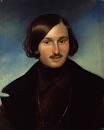
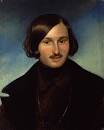
Short lifespan 43 years (31 March 1809–4 March 1852) was a Russian dramatist of Ukranian origin.
The popularity of Nikolai Gogol in India can be judged by the fact that the main character in Jhumpa Lahiri’s 2003 novel The Namesake and its 2006 movie is named after Nikolai Gogol, because his father survives a train crash while clutching onto a copy of one of Gogol’s books in his hand.
An eponymous poem “Gogol” by poet-diplomat Abhay Kumar refers to some of the great works of Gogol such as “The Nose”, “The Overcoat”, “Nevsky Prospekt”, “Dead Souls” and “The Government Inspector.”
Gogol’s story “The Tale of How Ivan Ivanovich Quarreled with Ivan Nikiforovich” was adapted into a Marathi movie titled, Katha Don Ganpatravanchi in 1996. The movie was directed by Arun Khopkar and dialogues are written by Satish Alekar. The movie had Dilip Prabhawalkar and Mohan Agashe in lead roles.
Although, Gogol was considered by his contemporaries to be one of the pre-eminent figures of the natural school of Russian literary realism. Later his critics have found in his work a fundamentally romantic sensibility, with strands of surrealism and grotesque in works such as, “The Nose”, “Viy”, (a horror story) “The Overcoat” and “Nevsky Prospekt”. His early works, such as “Evenings on a Farm Near Dikanka,” were influenced by his Ukrainian upbringing, Ukranian culture and folklore. His later writing satirised political corruption in the Russian Empire which includes (The Government Inspector and Dead Souls,). His novels “Taras Bulba” (1835) and his play “Marriage” (1842), along with the short stories “Diary of a Madman”, “The Tale of How Ivan Ivanovich Quarreled with Ivan Nikiforovich”, “The Portrait” and “The Carriage”, are all among his best-known works.
Gogol was born in the Ukrainian Cossack town of Sorochyntsi, in Poltava Governorate of the Russian Empire. His mother descended from Leonty Kosyarovsky, an officer of the Lubny Regiment in 1710. His father Vasily Gogol-Yanovsky, was a descendant of Ukrainian Cossacks who died when Gogol was 15 years old. He belonged to the ‘petty gentry’, who wrote poetry in Ukrainian and Russian, and was an amateur Ukranian-language playwright. As was typical of the left-bank Ukrainian gentry of the early nineteenth century. The family spoke Ukrainian as well as Russian. As a child, Gogol helped stage, Ukrainian-language plays, in his uncle’s home theatre.
In 1820, Gogol went to a school of higher art in Nizhyn (now Nizhyn Gogol State University) and remained there until 1828. It was there that he began writing. He was not popular among his schoolmates, who called him a “mysterious dwarf”, but with two or three of them he formed lasting friendships. Very early he developed a dark and secretive disposition, marked by a painful self-consciousness and boundless ambition. Equally early, he developed a talent for mimicry, which later made him a matchless reader of his own works and induced him to toy with the idea of becoming an actor.
In 1828, upon leaving school, Gogol came to Saint Petersburg, with vague but ambitious hopes. He wanted literary fame, and brought with him a Romantic poem of German idyllic life – Hans Küchelgarten. He had it published, at his own expense, under the name of “V Alov.” The magazines he sent it to, almost universally, derided it. He bought all the copies and destroyed them, swearing never to write poetry again. Gogol was always in touch with the “literary aristocracy.”
In 1831 Gogol brought out the first volume of his Ukranian stories—‘Evenings on a Farm Near Dikanka’ that met with immediate success. He followed it in 1832 with a second volume and in 1835 by two more volumes and in 1835 by two volumes of stories entitled Mirgorod as well as miscellaneous prose titled Arabesques. With all this Gogol emerged more as an Ukranian writer than a Russian one. The themes and style of Gogol’s prose were similar to the work of Ukranian writers.
Gogol developed a passion for Ukranian history and tried to obtain an appointment in the history department at Kiev University. Where, despite the support of Pushkin and Sergey Uvarov the Russian Minister for education his appointment was blocked by a Kyivan bureaucrat on the grounds that Gogol was unqualified.
In 1834 Gogol was made professor of medieval history at the University of St. Petersburg, a job for which he had no qualifications. At the final examination, he sat in utter silence with a black handkerchief wrapped around his head, simulating a toothache, while another professor interrogated the students. This academic venture proved a failure and he resigned his chair in 1835.
Between 1832 and 1836 Gogol worked with great energy. It was, only after the presentation, at the Saint Petersburg, State Theatre, on 19 April 1836, of his comedy “The Government Inspector” that he finally came to believe in his literary capabilities. The comedy, was a violent satire of Russian provincial bureaucracy. From 1836 to 1848 Gogol lived abroad, travelling through Germany and Switzerland. Gogol spent the winter of 1836–37 in Paris, among Russian expatriates and Polish exiles, He eventually settled in Rome. For much of the twelve years from 1836 Gogol was in Italy developing an admiration for Rome. He studied art, read Italian literature and developed a passion for opera.
In 1841 the first part of Dead Souls was ready, and Gogol took it to Russia to supervise its printing. The book instantly established his reputation as the greatest prose writer in the language.
After the triumph of Dead Souls, Gogol’s contemporaries came to regard him as a great satirist who lampooned the unseemly sides of Imperial Russia.
In April 1848 Gogol returned to Russia from a pilgrimage to Jerusalem and passed his last years in restless movement throughout the country. He fell into a state of deep depression. On the night of 24 February 1852 he burned some of his manuscripts, which contained most of the second part of Dead Souls. He explained this, as a mistake, a practical joke played on him by the Devil. Soon thereafter, he took to bed, refused all food, and died in great pain nine days later.
Gogol was mourned in the Saint Tatiana church at the Moscow University before his burial and then buried at the Danilov Monastery. His grave was marked by a large stone (Golgotha), topped by a Russian Orthodox cross. In 1931, Moscow authorities decided to demolish the monastery and had Gogol’s remains transferred to a cemetery in Moscow, Russia.
His body was discovered lying face down, which gave rise to the story that Gogol had been buried alive. The authorities moved the Golgotha stone to the new gravesite, but removed the cross. In 1952 the Soviets replaced the stone with a bust of Gogol.
Gogol was a great destroyer of prohibitions, and of romantic illusions. He undermined Russian Romanticism by making vulgarity reign where only the sublime and the beautiful had been before.
Shravan Charity Mission is an NGO that works for poor children suffering from life threatening diseases especially cancer. Our posts are meant for our readers that includes both children and adults and it has a huge variety in terms of content. We also accept donations for our mission. Should you wish to donate for the cause. The bank details are given below:
NAME OF ACCOUNT: SHRAVAN CHARITY MISSION
Account no: 680510110004635 (BANK OF INDIA)
IFSC code: BKID0006805
*
Our publications
GLOOM BEHIND THE SMILE
(The book is about a young cancer patient. Now archived in 7 prestigious libraries of the US, including, Harvard University and Library of Congress. It can also be accessed in MIT through Worldcat.org. Besides, it is also available for reading in Libraries and archives of Canada and Cancer Aid and Research Foundation Mumbai)
ONE TO TANGO … RIA’S ODYSSEY
(Is a book on ‘singlehood’ about a Delhi girl now archived in Connemara Library, Chennai and Delhi Public Library, GOI, Ministry of Culture, Delhi)
AADAB LUCKNOW … FOND MEMORIES
(Is a fiction written around the great city of Nawabs—Lucknow. It describes Lucknow in great detail and also talks about its Hindu-Muslim amity. That happens to be its undying characteristic. The book was launched in Lucknow International Literary Festival of 2014)
REFRACTIONS … FROM THE PRISM OF GOD
(Co-published by Cankids–Kidscan, a pan India NGO and Shravan Charity Mission, that works for Child cancer in India. The book is endorsed by Ms Preetha Reddy, MD Apollo Hospitals Group. It was launched in Lucknow International Literary Festival 2016)
TYPICAL TALE OF AN INDIAN SALESMAN
(Is a story of an Indian salesman who is, humbly qualified. Yet he fights his ways through unceasing uncertainties to reach the top. A good read not only for salesmen. The book was launched on 10th February, 2018 in Gorakhpur Lit-Fest. Now available in Amazon, Flipkart and Onlinegatha)
RHYTHM … in poems
(Published in January 2019. The book contains 50 poems. The poems describe our day to day life. The book is available in Amazon, Flipkart and Onlinegatha)
(ALL THE ABOVE TITLES ARE AVAILABLE FOR SALE IN AMAZON, FLIPKART AND OTHER ONLINE STORES OR YOU COULD EVEN WRITE TO US FOR A COPY)



 Shravan charity mission